声学与景观的精妙平衡:该项目最核心的精髓在于其对声学性能和场地文脉的深刻理解与整合。通过将建筑主体近三分之二置于地下,设计巧妙地解决了校园内对噪音隔离的严格要求,同时最大限度地保护了周边具有历史价值的景观视野。建筑师运用了复杂的“盒中盒”声学隔离技术,并邀请专业声学顾问进行精细的测试与调整,确保了实践空间的专业性。这种对功能需求的极致追求,与对场地敏感性的尊重(如利用地形、保持视野开阔)相结合,体现了当代建筑解决复杂问题的能力。
材料的对话与“音乐盒”的意象:建筑在形式和材料上呈现出一种克制的诗意。“音乐盒”这一概念贯穿始终,象征着建筑不仅是容器,更是声音的发生器与容纳器。裸露的混凝土体块象征着坚实的外部结构,而内部温暖的木饰面则为声学环境提供了必要的吸声和柔化效果,形成了技术(混凝土的坚固)与感官(木材的温暖)的鲜明对比。中央的采光中庭不仅是光线和空气的引入点,更是声音自由交流的共鸣腔,这种对内部空间的动态处理,赋予了建筑生命力和叙事性。
空间策略与场所精神的延续:建筑成功地在现有校园肌理中实现了“静默的连接”。通过近乎隐形的设计策略,新建筑谦逊地嵌入到建筑学院和圣何塞旧馆之间,避免了对现有遗产的压迫感。无柱的下层空间和连续的玻璃幕墙,在厚重的混凝土结构下创造出轻盈的透明感,模糊了室内外的界限。更重要的是,这个“音乐盒”不仅仅是一个功能设施,它已成为学生日常生活中的重要参照点和情感枢纽,它在尊重既有建筑连续性的基础上,为校园带来了新的场所精神和活力。
In the silence of concrete and the resonance of wood, a new building quietly stands on the campus of the Universidad de los Andes. The "Music Box" is a work whose content goes far beyond its appearance: an architecture that does not seek to assert itself, but rather to resonate.
在混凝土的静谧与木材的回响之间,一座新建筑悄然矗立于安第斯大学校园之中。“音乐盒”是一件内涵远超其表象的作品:一座不求彰显自我,但求引发共鸣的建筑。
© Mónica Barreneche
© Mónica Barreneche
This project originated from a 2017 competition aimed at graduates under 40, bringing together three architects who graduated from the same university—Carolina Jaimes, Juan Esteban López, and Alejandro Puentes. López recalls, "We had never collaborated, but this seemed like an opportunity to do something interesting." The call for entries was jointly organized by the School of Architecture and the Music Department, seeking to address a dual challenge: providing the university with specialized musical practice spaces while maintaining the urban and landscape balance of the heritage-rich campus.
该项目源于 2017 年一场面向 40 岁以下毕业生的竞赛,汇聚了三位同校毕业的建筑师——卡罗琳娜·海梅斯(Carolina Jaimes)、胡安·埃斯特班·洛佩兹(Juan Esteban López)和亚历杭德罗·普恩特斯(Alejandro Puentes)。洛佩兹回忆道:“我们从未合作过,但这似乎是一个做点有趣事情的机会。”此次征集由建筑学院与音乐系联合组织,旨在解决双重挑战:为大学提供专业化的音乐实践空间,同时维护具有遗产价值的校园的城市与景观平衡。
© Mónica Barreneche
© Mónica Barreneche
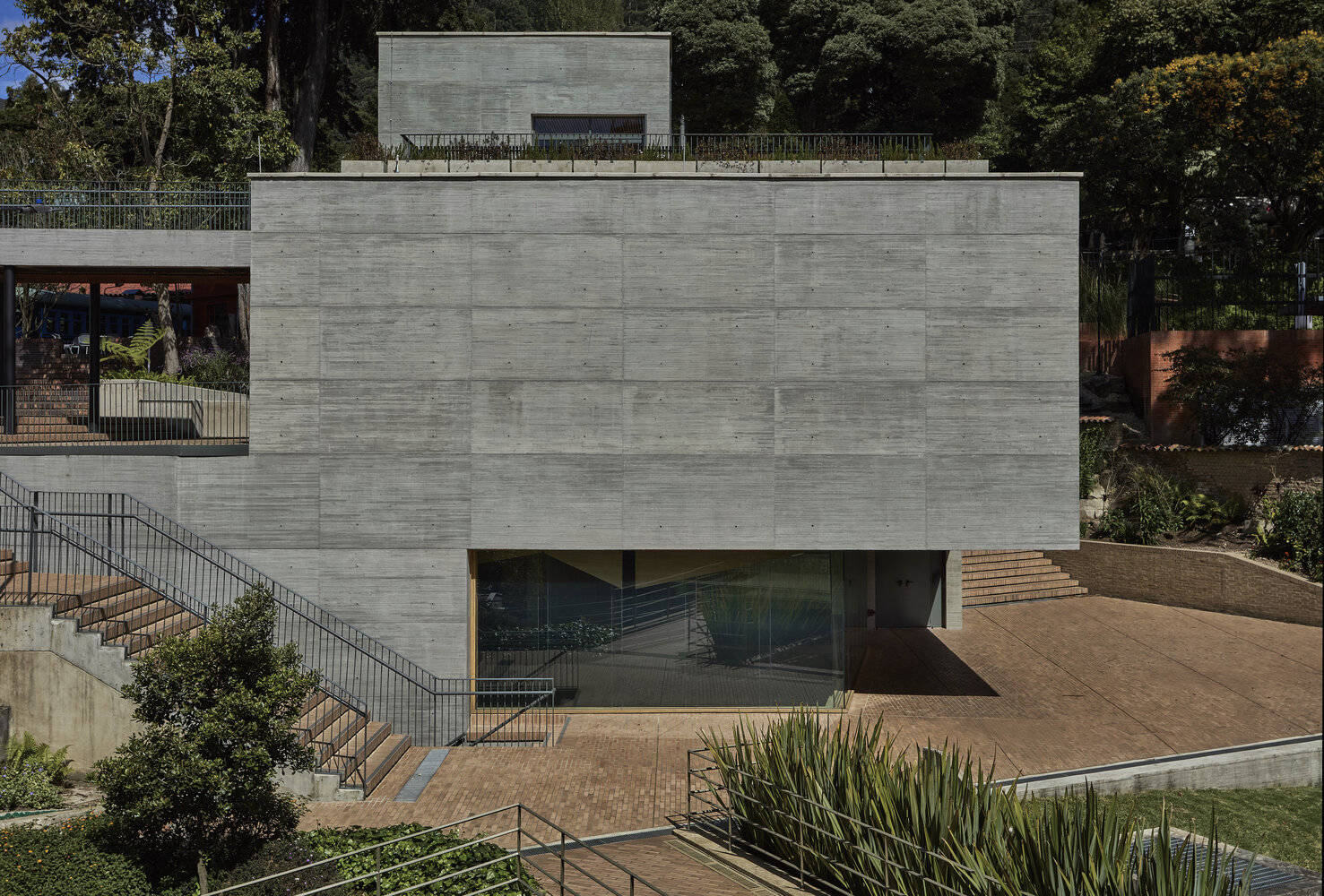
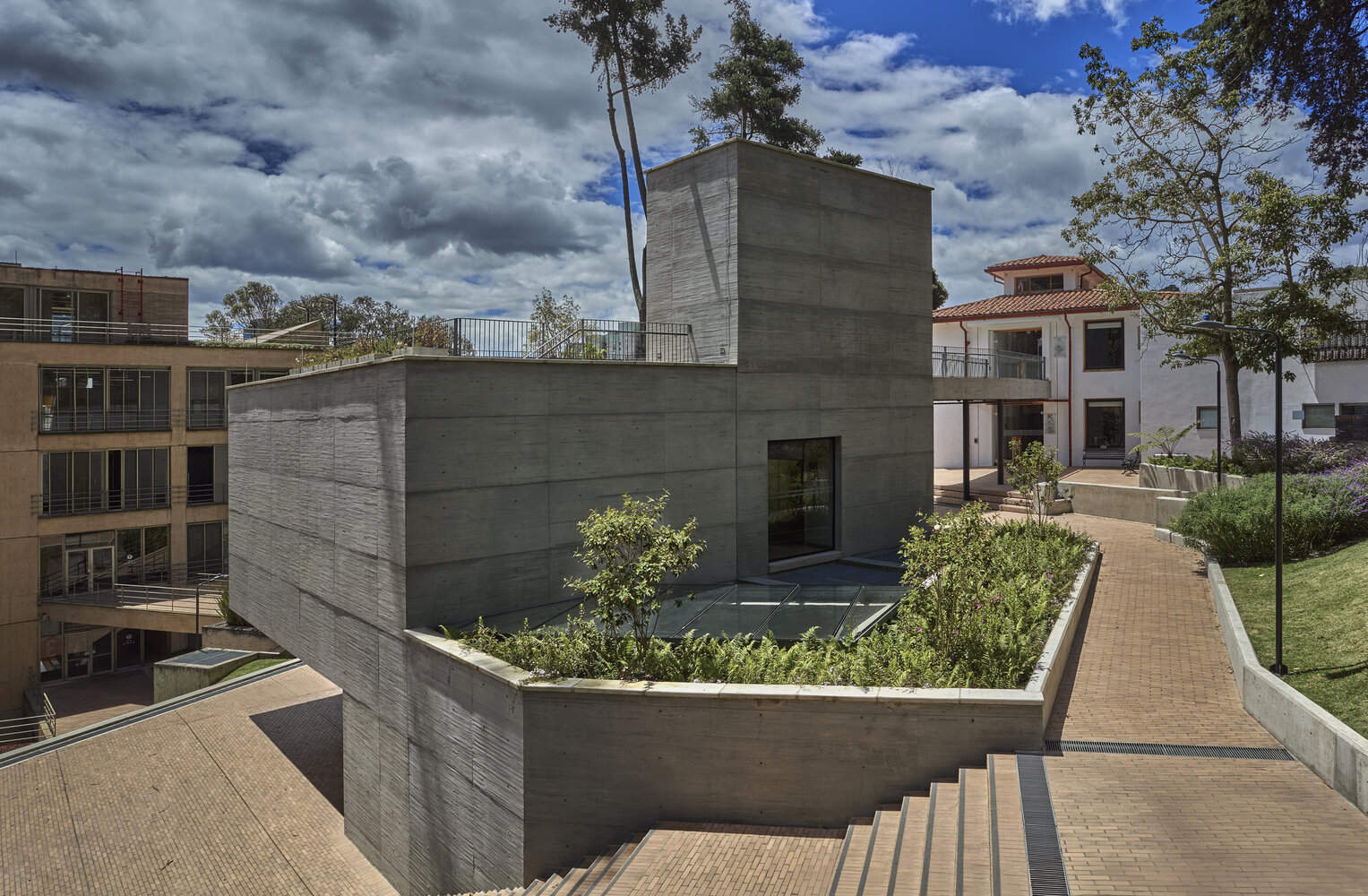
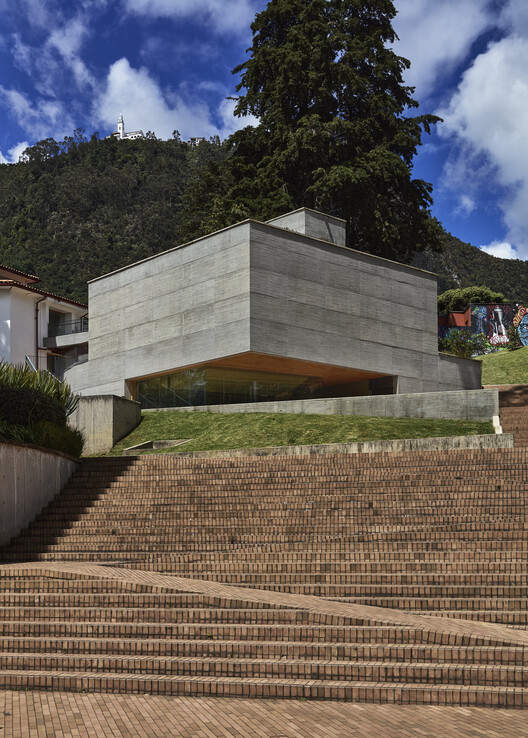
Seven years later, the 750-square-meter building presents itself in a state of silence, partially buried between the School of Architecture and the old Campito de San José (the university's social, cultural, and art center). "We wanted to connect the campus in an almost silent manner," explains Puentes. Two-thirds of the building is underground, a design decision motivated not only by acoustic considerations but also by the desire to maintain open views towards the eastern hills.
七年后,这座 750 平方米的建筑以静默之姿呈现,部分埋藏于建筑学院与圣何塞旧馆(Campito de San José,大学的社会、文化与艺术中心)之间。“我们希望以一种近乎静默的方式连接校园,”普恩特斯解释道。建筑三分之二位于地下,这一设计不仅出于声学考量,也旨在保持向东山丘的开阔视野。
© Mónica Barreneche
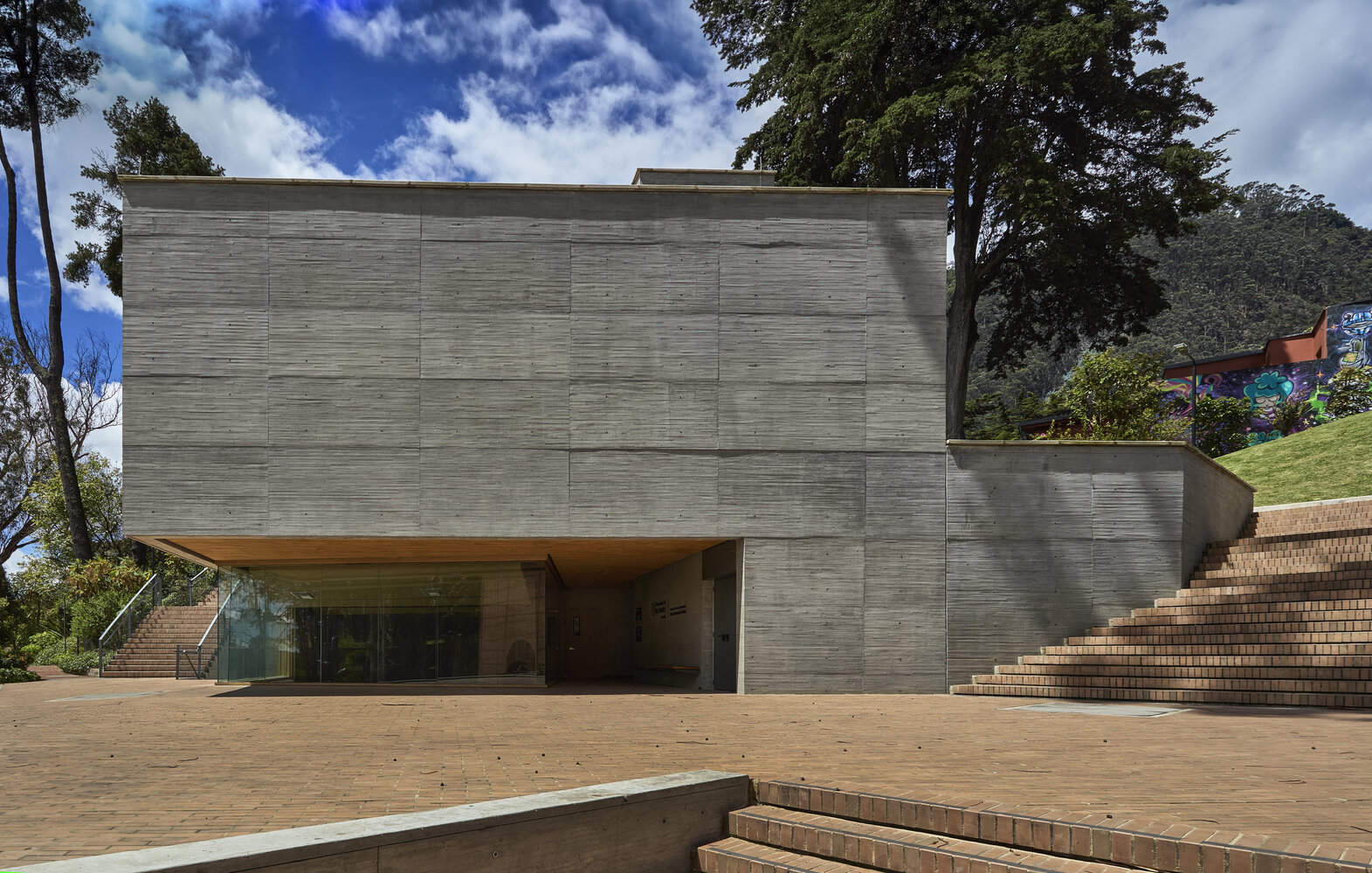
Externally, the building appears as a raw exposed concrete block. Unadorned and quiet, it waits to be discovered with a restrained posture. At its center, a void breaks the compactness of the mass, allowing natural light into the lower levels. This void is far more than a simple atrium; it functions as a space for meeting, rehearsal, and performance—a space where sound can freely expand and then be contained again.
从外观上看,建筑呈现为一块质朴的裸露混凝土体块。无装饰,不喧哗,仅以一种克制的姿态静候发现。其中心,一处空腔打破了体块的紧凑,为下层引入自然光。这一空腔 远非简单的中庭,兼具会面、排练与表演功能,是一个声音自由扩展后再度被容纳的空间。
© Mónica Barreneche
The name "Music Box" arose both from team discussions and the competition brief. "We started talking about a music box... and then realized the brief mentioned it too," recalls Jaimes. This coincidence became the conceptual core: a building conceived as an architectural instrument that releases its sound when opened.
“音乐盒”之名,既源于团队对话,也见于竞赛简章。“我们开始谈论音乐盒……然后发现简章中也如此提及,”海梅斯回忆道。这一巧合成为概念核心:一座被构想为建筑乐器的建筑,开启时释放其声音。
© Mónica Barreneche
The project is organized across three levels, corresponding to different acoustic intensities. The lower level houses rehearsal and recording studios, designed based on the "box-in-a-box" principle, meaning each room is separated from the main structure to eliminate vibrations and ensure absolute soundproofing. Testing and calculations were performed in collaboration with the Miami-based acoustics firm WSDG and Colombian engineer Daniel Duplat, who adapted international standards to the tropical conditions of Bogotá's high altitude and humidity.
项目规划分为三层,对应不同声学强度。下层设有排练与录音室,遵循“盒中盒”原则设计,即每个房间与主结构分离,以消除振动,确保绝对隔音。测试与计算由迈阿密的声学公司 WSDG 与哥伦比亚工程师丹尼尔·杜普拉特(Daniel Duplat)合作完成,后者将国际标准适应于波哥大湿热高海拔的热带条件。
© Mónica Barreneche
The upper level includes circulation areas, control rooms, and public spaces, fostering interaction between musicians and architects. "We wanted it to be a place where students could meet informally, where sound wouldn't be locked away but could circulate," Jaimes explains. The central void acts as a resonance chamber between the different floors, creating a vibrant and changing environment depending on the time or activity.
上层包含流通区、控制室与公共空间,促进音乐家与建筑师间的互动。“我们希望它成为一个学生可以非正式会面的地方,声音不会被封锁,而是可以流通,”海梅斯解释道。中央空腔作为不同楼层间的共鸣腔,根据时间或活动类型营造出充满活力与变化的环境。
© Mónica Barreneche
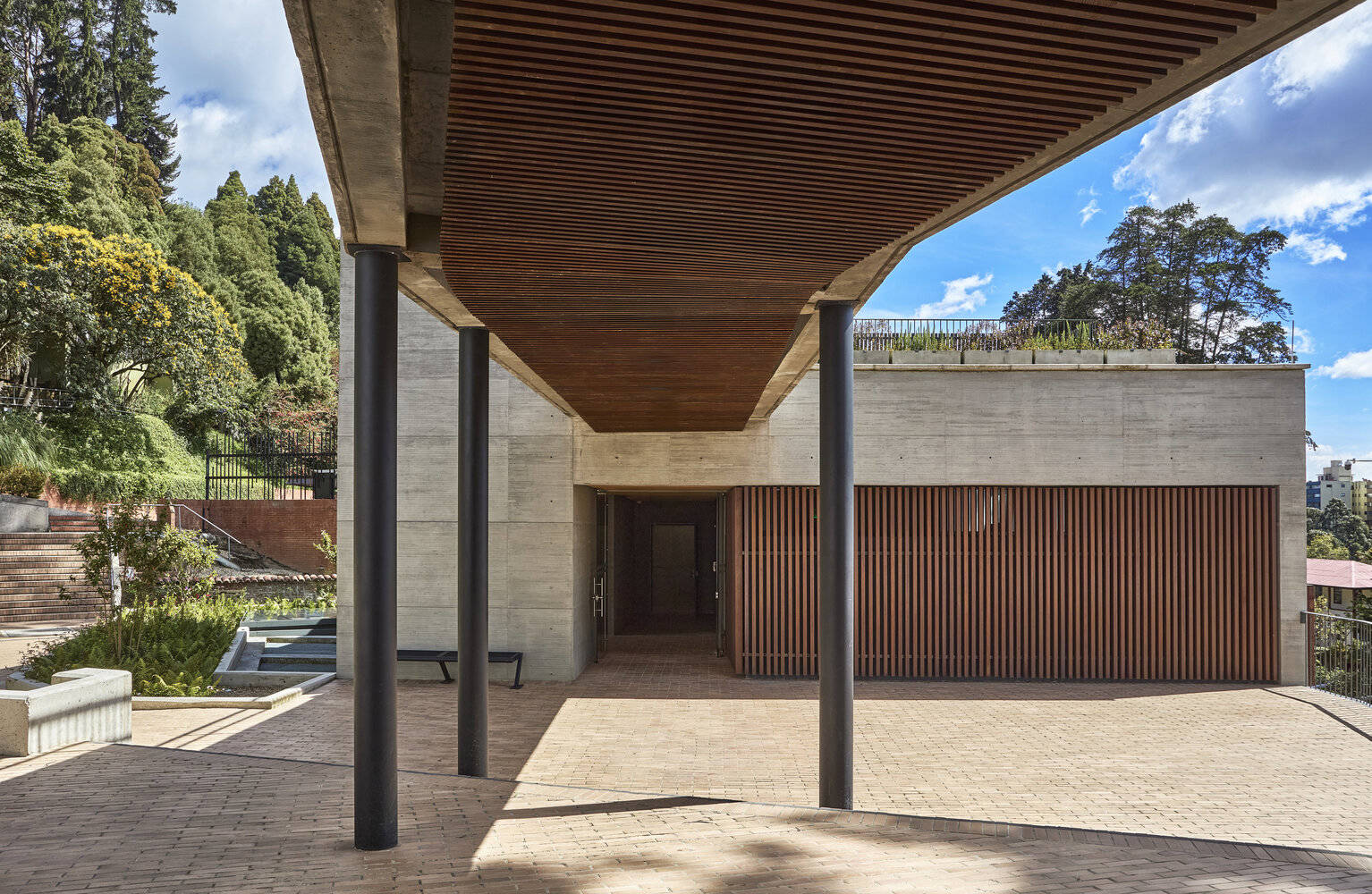
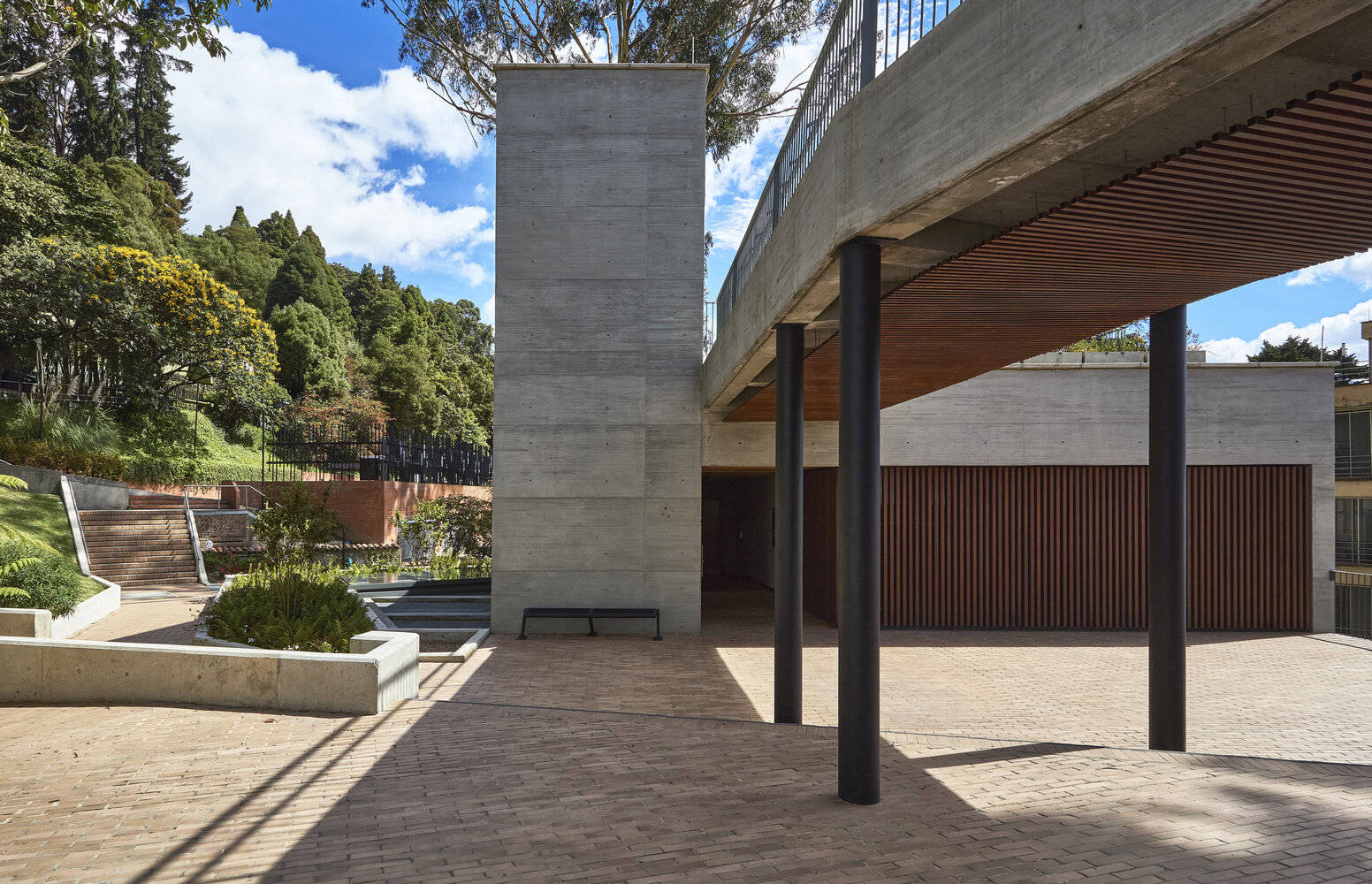
The building's structure is supported by two large concrete beams, completely freeing up the lower space to create an area without columns or visual obstructions. "There isn't a single vertical frame; it's all continuous glass," points out López. This planar continuity generates a sense of architectural transparency, contrasting with the massiveness of the structural material.
建筑结构由两根大型混凝土梁支撑,完全解放了下层空间,创造了一个无柱、无视觉干扰的区域。“没有一根垂直框架,全是连续玻璃,”洛佩兹指出。这种平面的连续性营造出一种建筑透明感,与结构材料的厚重形成对比。
© Mónica Barreneche
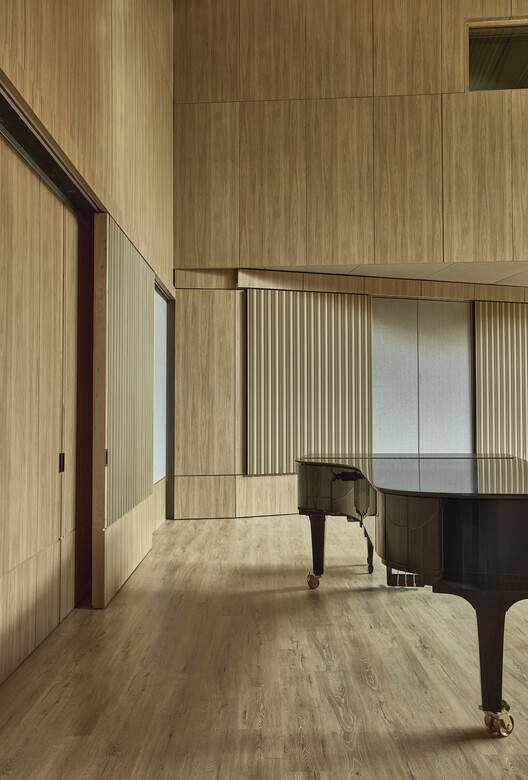
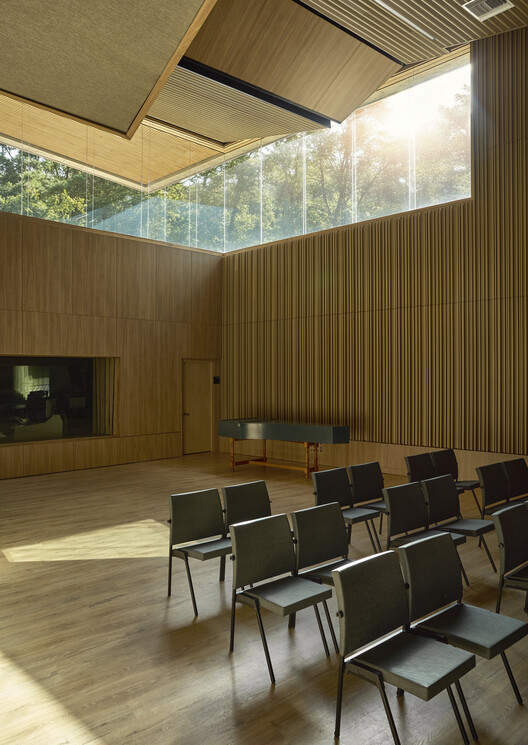
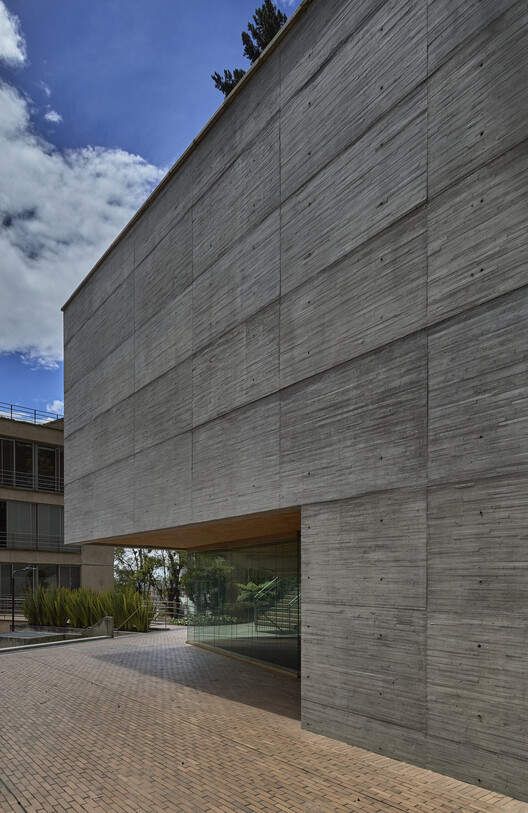
The material usage in the building establishes a dialogue through opposition: the severity of concrete versus the warmth of wood, opacity versus translucency, heaviness versus lightness. "The contrast between the technical and the sensory is vital," comments Jaimes. The exposed cast concrete conveys a sense of permanence, while the clear wooden finishes inside absorb and soften sound, turning each room into an acoustic microclimate.
建筑的材料运用在对立中建立对话:混凝土的冷峻与木材的温暖,不透明与半透明,沉重与轻盈。“技术与感官的对比至关重要,”海梅斯评论道。裸露的浇筑混凝土传递出一种永恒感,而内部清晰的木饰面则吸收并柔化声音,将每个房间转化为声学微气候。
© Mónica Barreneche
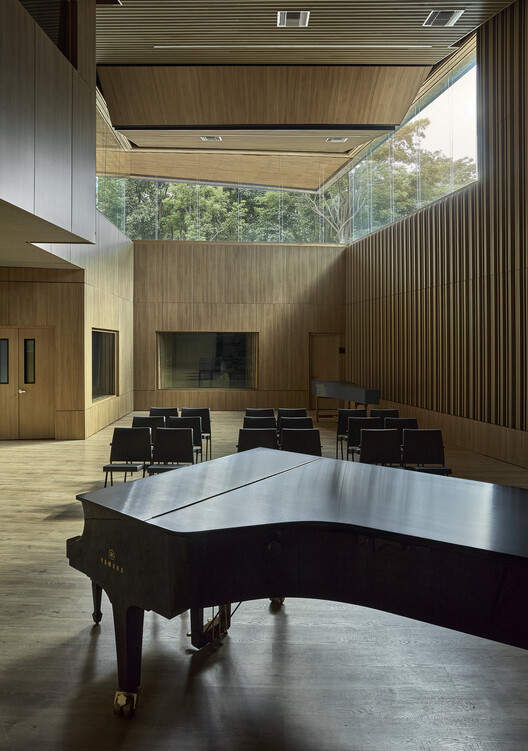
The interior surfaces are meticulously designed: inclined panels, hidden frames, and seamless joints prevent unwanted echoes. Natural light filters through the central void, bathing the wooden walls and revealing their texture over time. The result is a warm and enveloping atmosphere, where every surface seems to participate in the building's rhythm.
室内表面设计精巧:倾斜面板、隐藏框架与隐形接缝防止不必要的回声。自然光透过中央空腔过滤,沐浴在木墙上,随时间变化揭示其纹理。结果是一个温暖而包裹性的氛围,每个表面似乎都参与着建筑的节奏。
© Mónica Barreneche
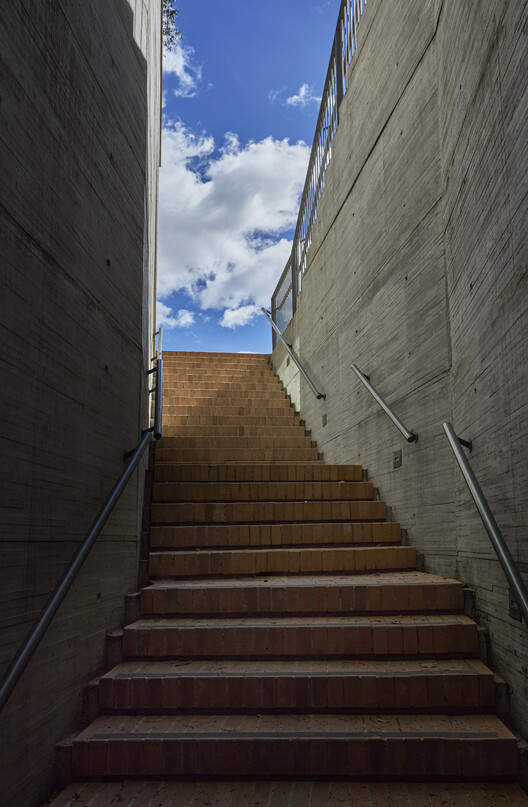
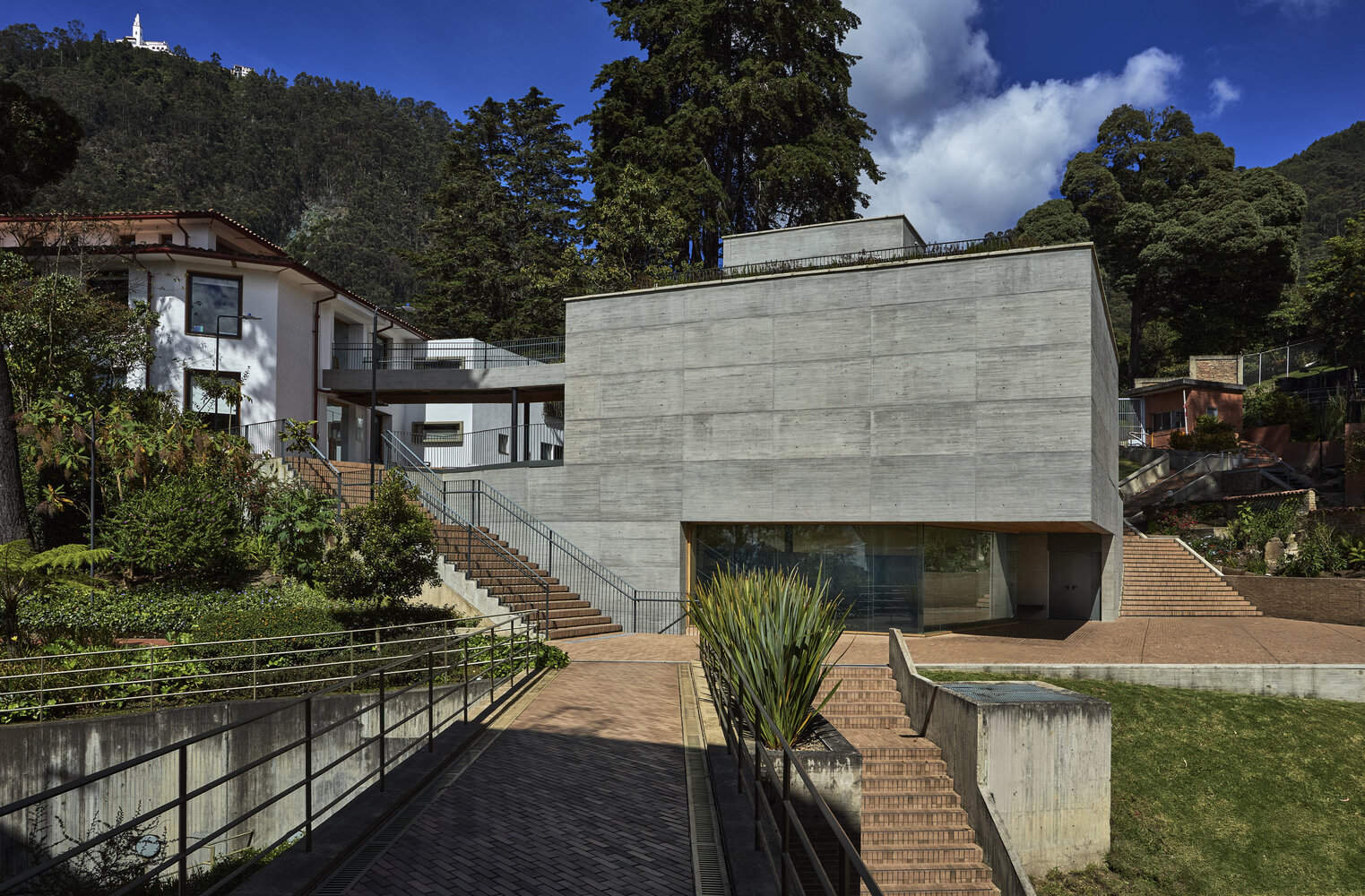
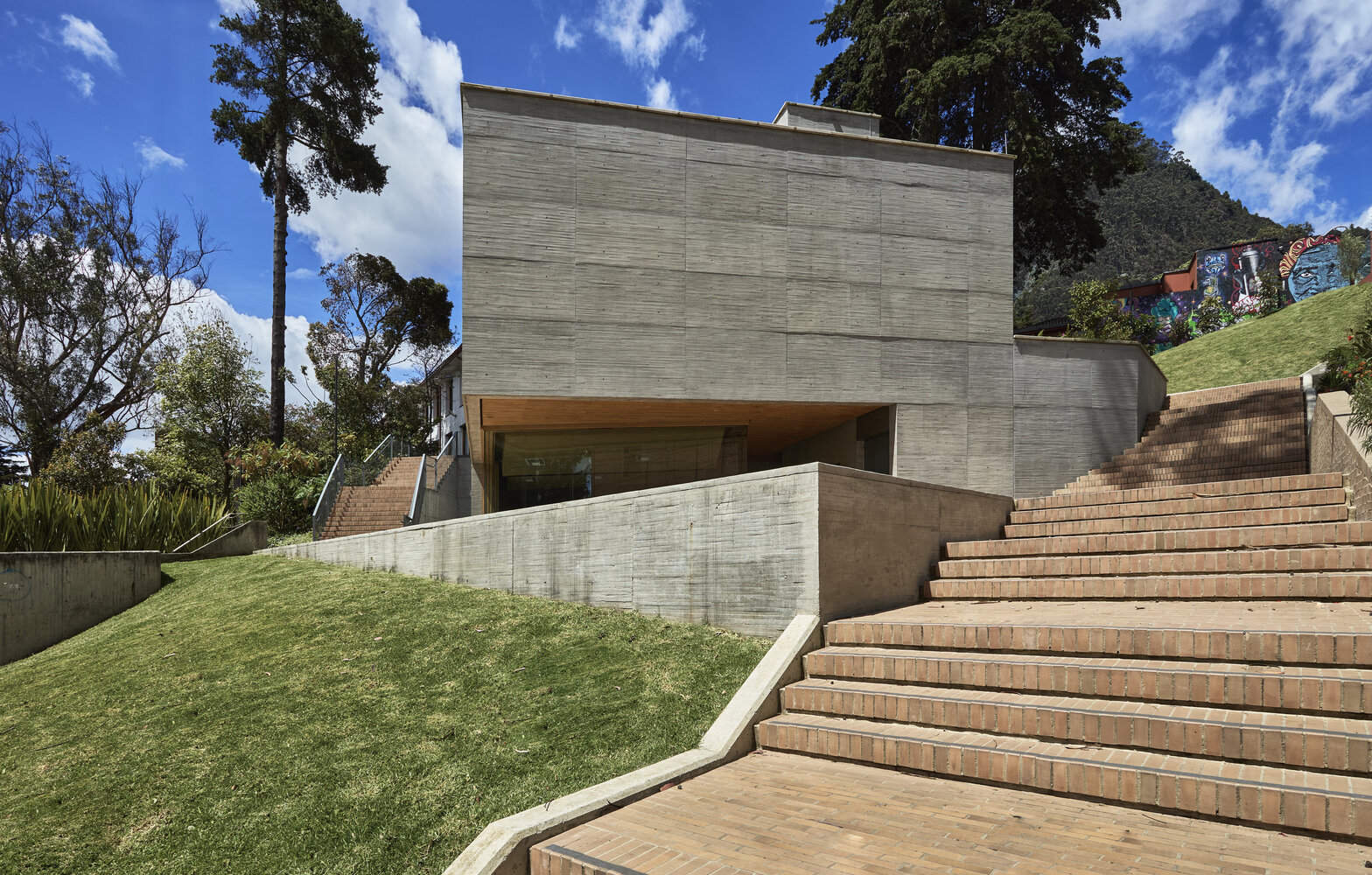
Outdoors, the concrete plays a role in the landscape. The material's gray tone blends with the Bogotá sky, while the green roof and rainwater gardens planted with native species extend the campus topography. Footpaths follow the terrain, connecting the School of Architecture with the old center and addressing accessibility issues without altering the site's character. "The building plays a silent role between the heritage brick red and the orange of the neighboring buildings," López describes.
室外,混凝土扮演着景观角色。材料的灰调与波哥大天空相融,绿色屋顶与种植本土物种的雨水花园延伸了校园的地形。步行路径顺应地势,连接建筑学院与旧馆,解决无障碍路线问题而不改变场地特色。“建筑在遗产砖红色与邻近建筑橙色之间扮演着静默的角色,”洛佩兹描述道。
© Mónica Barreneche
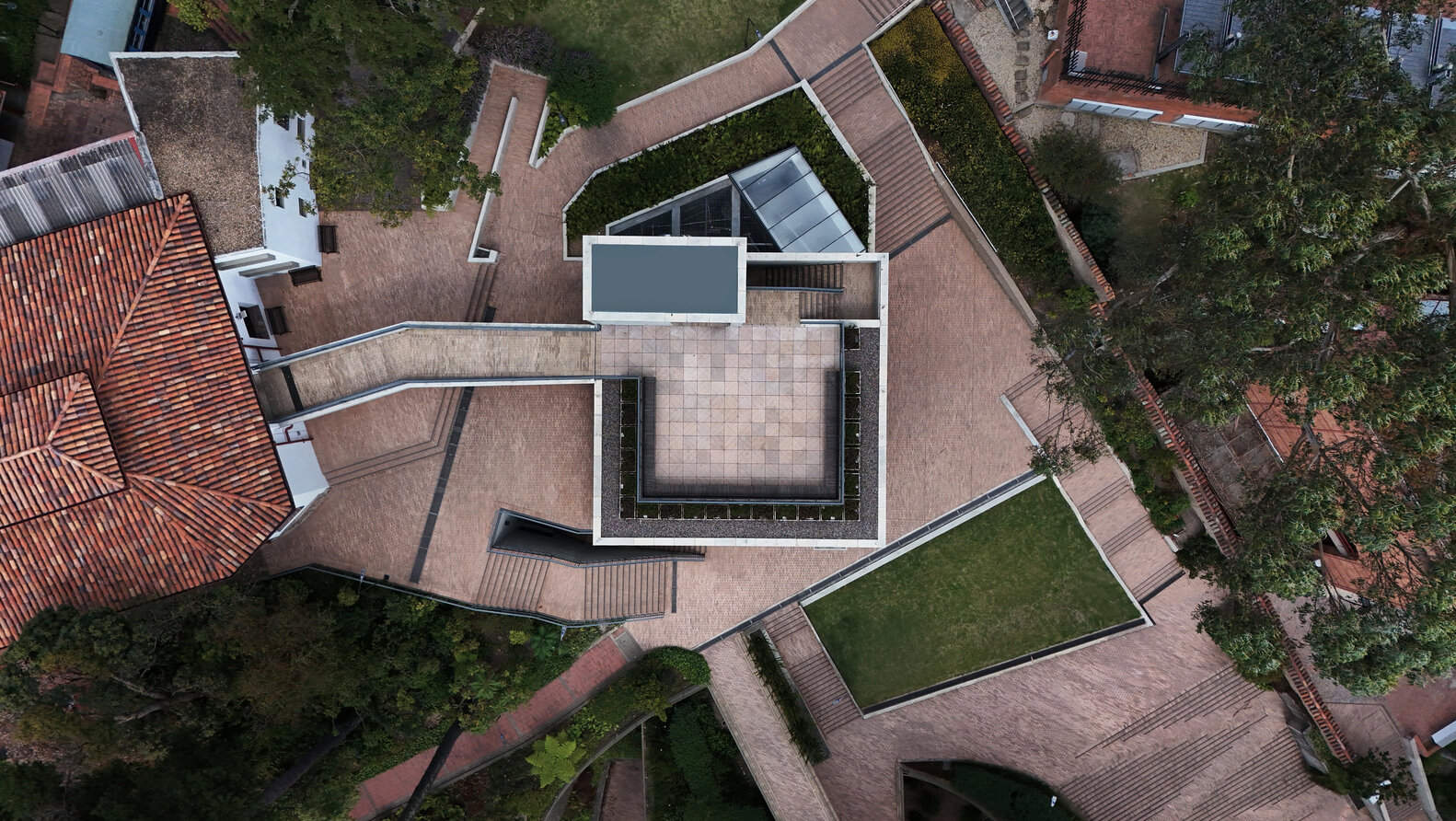
Since its completion in September 2024, the "Music Box" has become a landmark on campus. Its discreet presence and functional versatility allow it to integrate into the daily lives of students and professors. "Sometimes people just say: 'Let's meet at the Music Box,'" comments Puentes. This nickname, which started casually, has ultimately become a testament to the emotion the building inspires.
自 2024 年 9 月落成以来,“音乐盒”已成为大学内的标志性地点。其低调的存在与功能多样性使其融入学生与教授的日常生活。“有时人们会说:‘我们在音乐盒见吧,’”普恩特斯评论道。这个起初看似随意的昵称,最终成为建筑所激发情感的见证。
© Mónica Barreneche
Beyond its immediate use, the project holds deep symbolic meaning for its authors. "It is our world axis, the center of professional practice, a reference point," says Puentes. For the three of them, leaving a mark on the campus that shaped them is an act of gratitude and responsibility: an opportunity to contribute to the architectural continuity defined by iconic works like those by Bermúdez and Cerón.
超越其直接用途,该项目对作者而言承载着深刻的象征意义。“它是我们的世界轴心,职业实践的中心,一个参照点,”普恩特斯说。对他们三人而言,在塑造他们的校园中留下印记,是一种感恩与责任之举:一个为延续由贝尔穆德斯(Bermúdez)和塞隆(Cerón)等标志性作品所定义的建筑连续性提供的机会。
© Mónica Barreneche
Over time, the architects hope the concrete will acquire a natural patina and the vegetation will fully embrace the building, integrating it into the landscape. "It might become a very interesting building in 10, 15, or 20 years," foresees Jaimes. Because the "Music Box" is far from being an ordinary building; it is an acoustic pause in the urban fabric: a resonance that connects memory, matter, and landscape.
随着时间推移,建筑师们希望混凝土将获得自然包浆,植被将完全拥抱建筑,将其融入景观。“它可能在 10 年、15 年或 20 年后成为一座非常有趣的建筑,”海梅斯预见道。因为“音乐盒”,远非一座普通建筑,它是城市肌理中的一声声学停顿:一种将记忆、物质与景观相连的共鸣。
© Mónica Barreneche