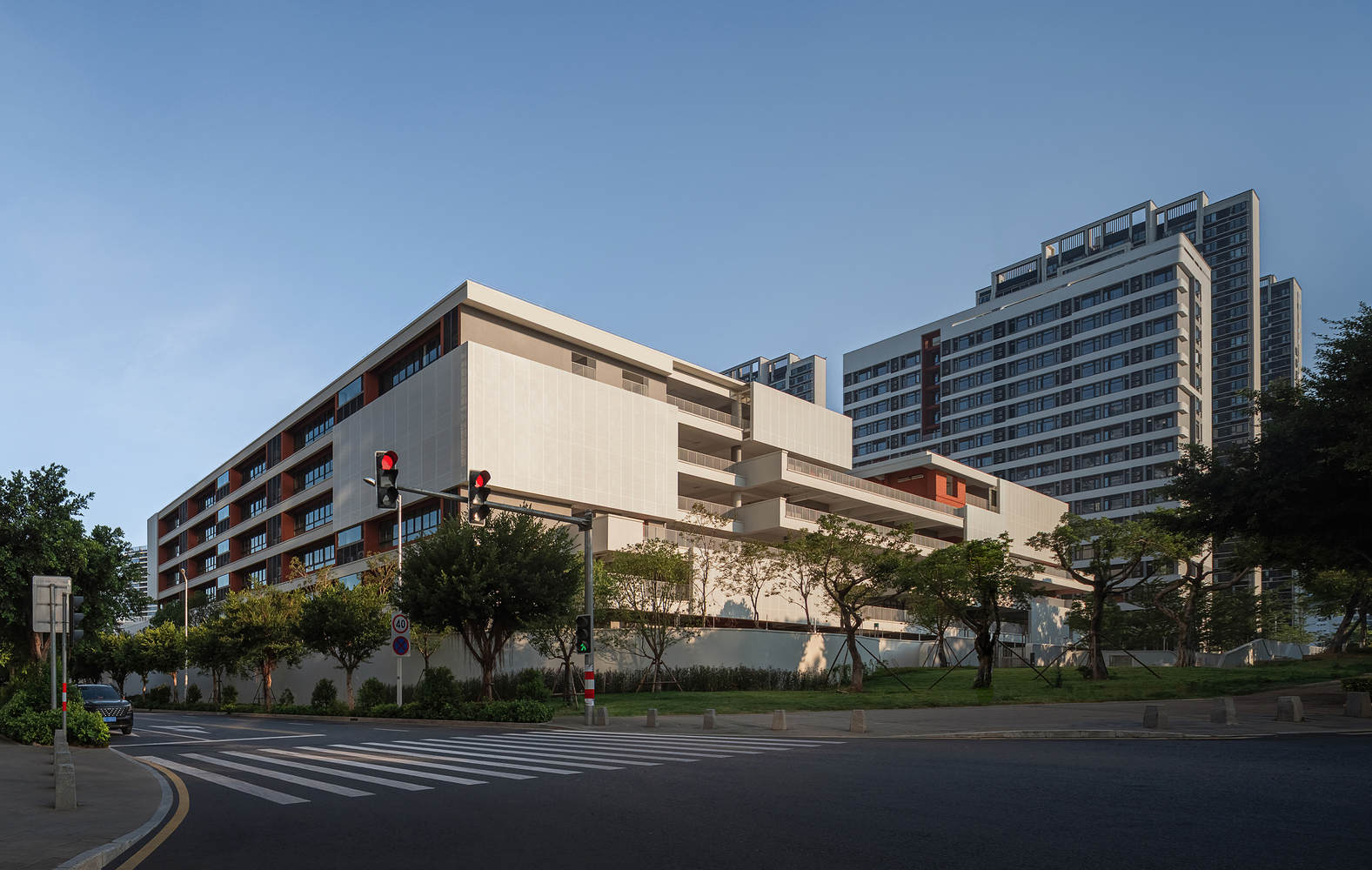
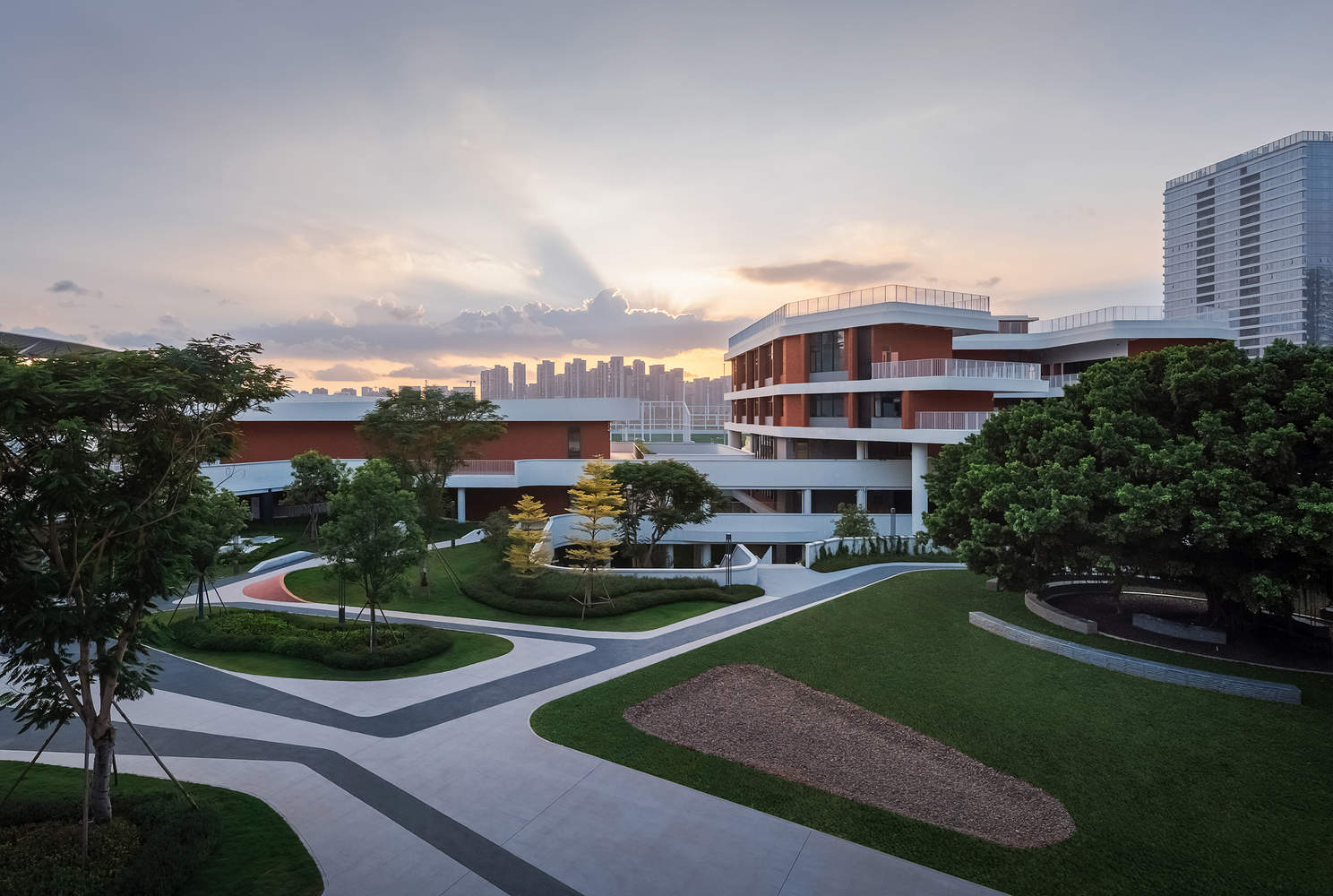
场地文脉的深度融合与场所精神的营造:该项目最精髓之处在于其对厦门五缘湾特殊场域文脉的深刻理解与积极回应。设计巧妙地将城市肌理(TOD综合体)、自然景观(湿地公园)和地域记忆(坂美民俗园的红砖元素)有机地编织进校园空间。通过“城市露台”这一核心骨架,建筑顺应场地坡度层层退台,不仅最大化地引入了滨海风光,还将传统民俗的“地脉留痕”——如红砖铺地和古榕树的保留——融入现代教育空间,成功营造了一个既具地域归属感,又充满现代活力的学习生活场所。
“城市露台”作为多维度的空间织体:建筑设计以“城市露台・教学综合体”为核心概念,构建了一个开放且富有层次感的空间系统。这些退台不仅是观景平台,更是承载多样功能的户外活动场域,将教学、生活与嬉闹活动渗透其中。特别是架空的运动场如同悬浮的巨型露台,拉近了自然、城市与校园的距离。这种设计策略打破了传统校园的封闭性,使建筑成为连接外部环境与内部学习生活的动态界面。
环境策略与空间品质的提升:面对厦门湿热的气候特征,设计采用了以“光影呼吸”为核心的环境策略。通过建筑间嵌套的庭院系统和首层架空设计,有效引导自然风的渗透与流通,为室内创造了舒适的微气候。同时,充分利用自然采光,例如图书馆中庭双层挑空的设计,营造了温暖的学习氛围。此外,对结构逻辑的清晰呈现(如体育馆的胶囊状立柱)和对交通流线的精妙组织,共同构筑了一个高效、有力的现代教育建筑。
In the urban fabric of Xiamen's Wuyuan Bay, the reeds of the wetland park gaze across the street at the glass curtain walls of the TOD complex, while the red bricks of the old Minnan houses in the Banmei Folk Culture Park quietly converse with the metal lines of modern architecture. Xiamen Science and Technology High School Wuyuan Campus grows in this land where nature and city coexist, and tradition and modernity interweave. The site is adjacent to nature and connects to high-end commercial residences and the wetland park TOD in the city; looking east to Xiamen-Kinmen Bay and west to Wuyuan Bay, surrounded by high-end properties, it possesses both the prosperity of a modern metropolis and the depth of regional history, bearing rich site information.
在厦门五缘湾的城市肌理间,湿地公园的芦苇荡与 TOD 综合体的玻璃幕墙隔街相顾,坂美民俗文化园里闽南老宅的红砖,正与现代建筑的金属线条悄然对话 —— 厦门科技中学五缘校区,便生长在这片自然与城市共生、传统与现代交织的土地上。场地既紧邻自然,又衔接城市高端商业住宅与湿地公园 TOD;东望厦金湾,西眺五缘湾,周边高端物业林立,既有现代都市的繁华,亦有地域历史的厚重,承载着丰富的场地信息。
© 吴志盛
© 吴志盛
This project did not position itself as an isolated "education island." Instead, with the "Urban Terrace & Teaching Complex" as its core framework, it weaves together the shimmering waves of Wuyuan Bay, the memories of the Folk Culture Park, and the learning, living, and playing of the students into the architectural space, becoming a unique landscape along the Wuyuan Bay that can be learned from, visited, viewed, and remembered.本案未将自身打造成孤立的 “教育岛”,而是以 “城市露台・教学综合体” 为核心骨架,将五缘湾的波光、民俗园的记忆、学生的学习、生活与嬉闹,尽数编织进建筑空间,成为五缘湾畔一道可学、可游、可望、可忆的独特风景。
© 吴志盛
© 吴志盛
Urban Terrace: Connecting Nature, City, and Architecture
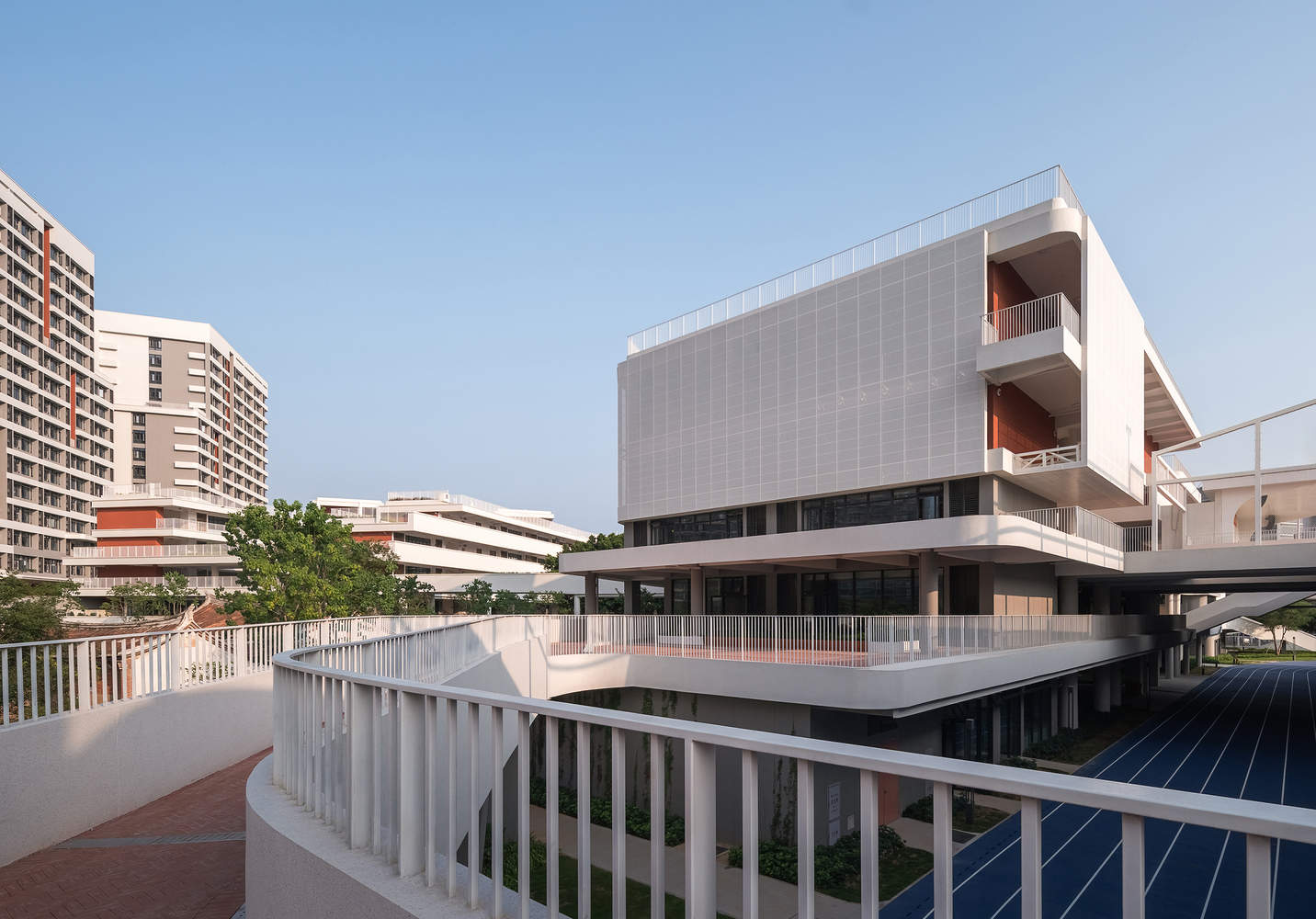
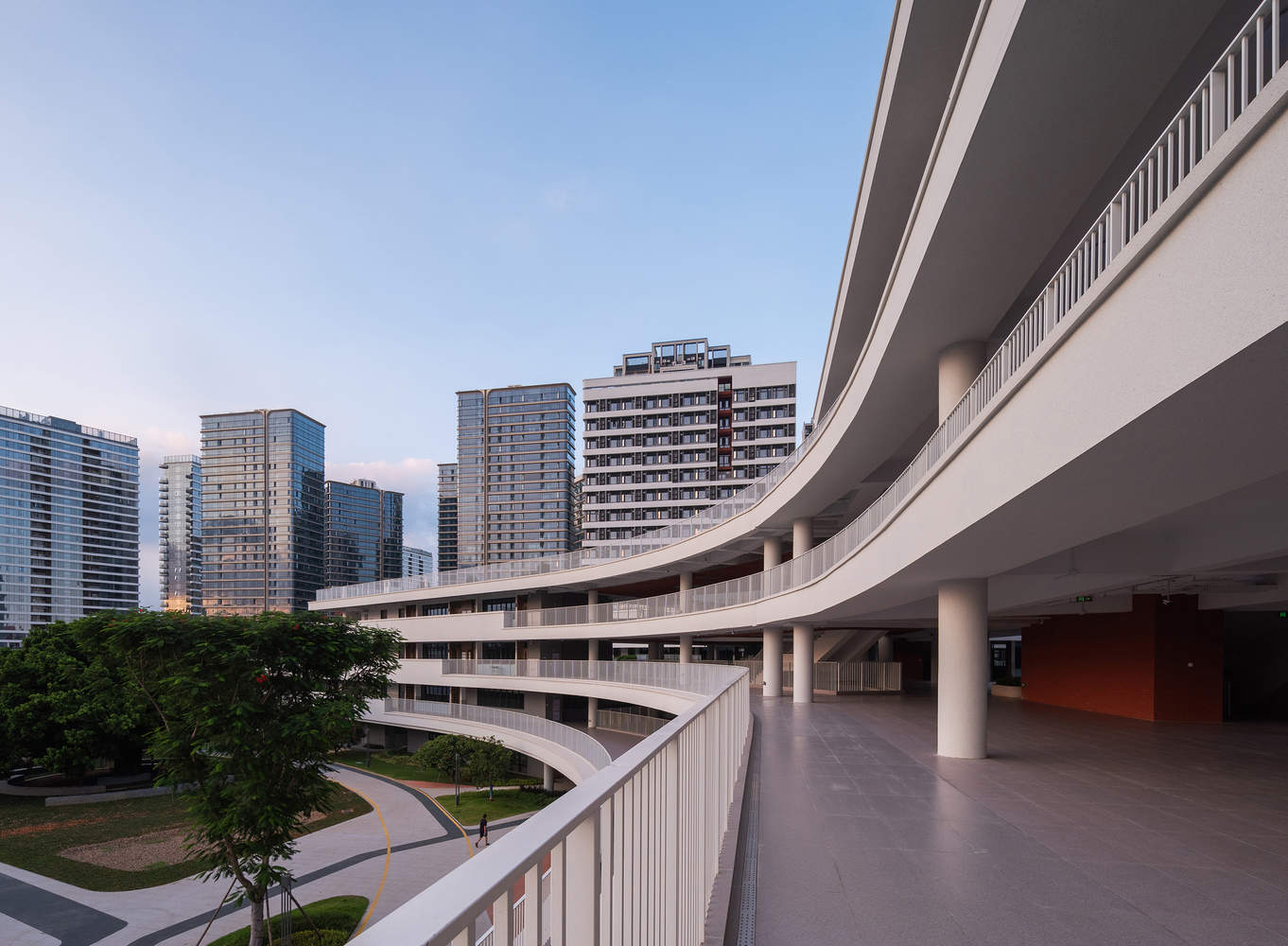
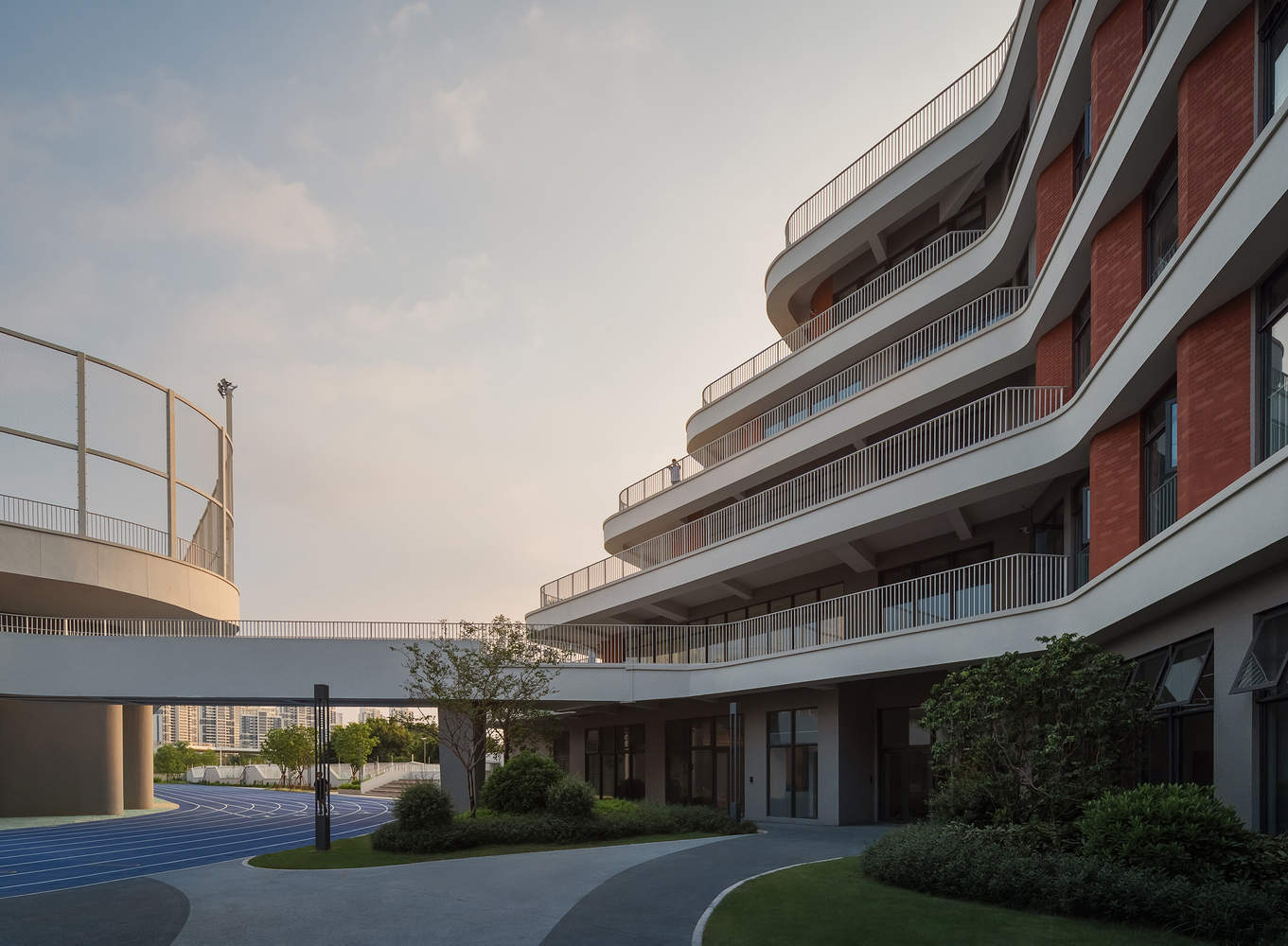
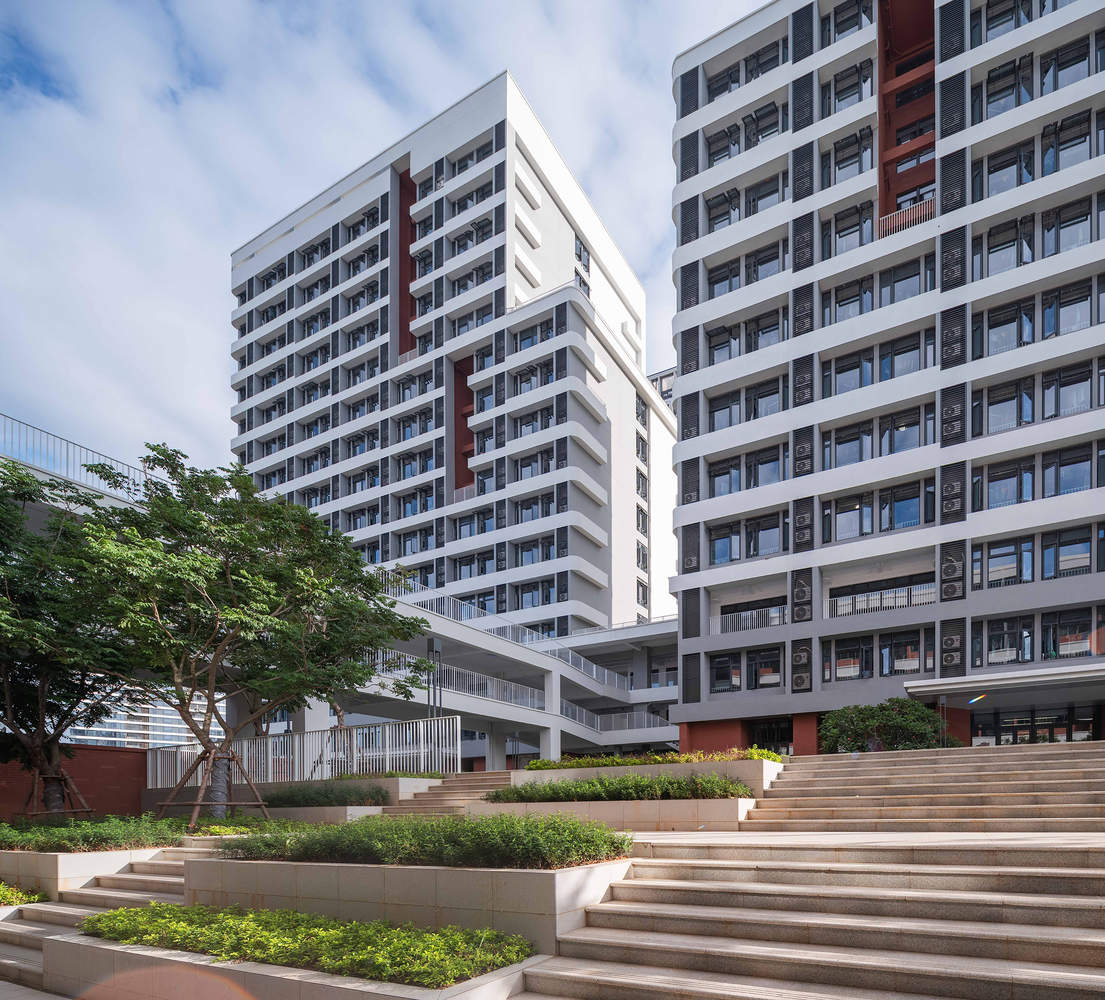
Xiamen residents have always favored listening to the wind and watching the sea. The design of this school follows this regional sentiment, utilizing the natural slope of the site—higher in the northeast and lower in the southwest—to create layered receding terraces according to the needs of different scale spaces. Each terrace can "catch" exclusive views and host diverse activities: looking west, the setbacks of the teaching complex gradually extend to the auditorium and gymnasium, allowing students to lean on the railings for unobstructed views of Wuyuan Bay Wetland Park and the setting sun; looking east, the platforms and balconies of the dormitory building face Xiamen-Kinmen Bay, where the sunset glow dyes the red-brick paved bridges, platforms, and corridors a warm orange hue.
城市露台:衔接于自然、城市与建筑之间
厦门人素来偏爱听风看海,这所学校的设计便循着这份地域情愫,依托场地东北高、西南低的自然坡度,顺着不同尺度空间的需求,叠造出层层退台。每一层露台都能“接住”专属风景,承载多样活动:往西看,教学综合楼的退台逐级延伸至礼堂、运动馆,学生凭栏远眺,五缘湾湿地公园的景致与落日余晖尽收眼底;往东望,宿舍楼的平台与阳台朝向厦金湾,落日晚霞会将红砖铺就的连桥、平台与走廊,染成温暖的橙色调。
© 吴志盛
© 吴志盛
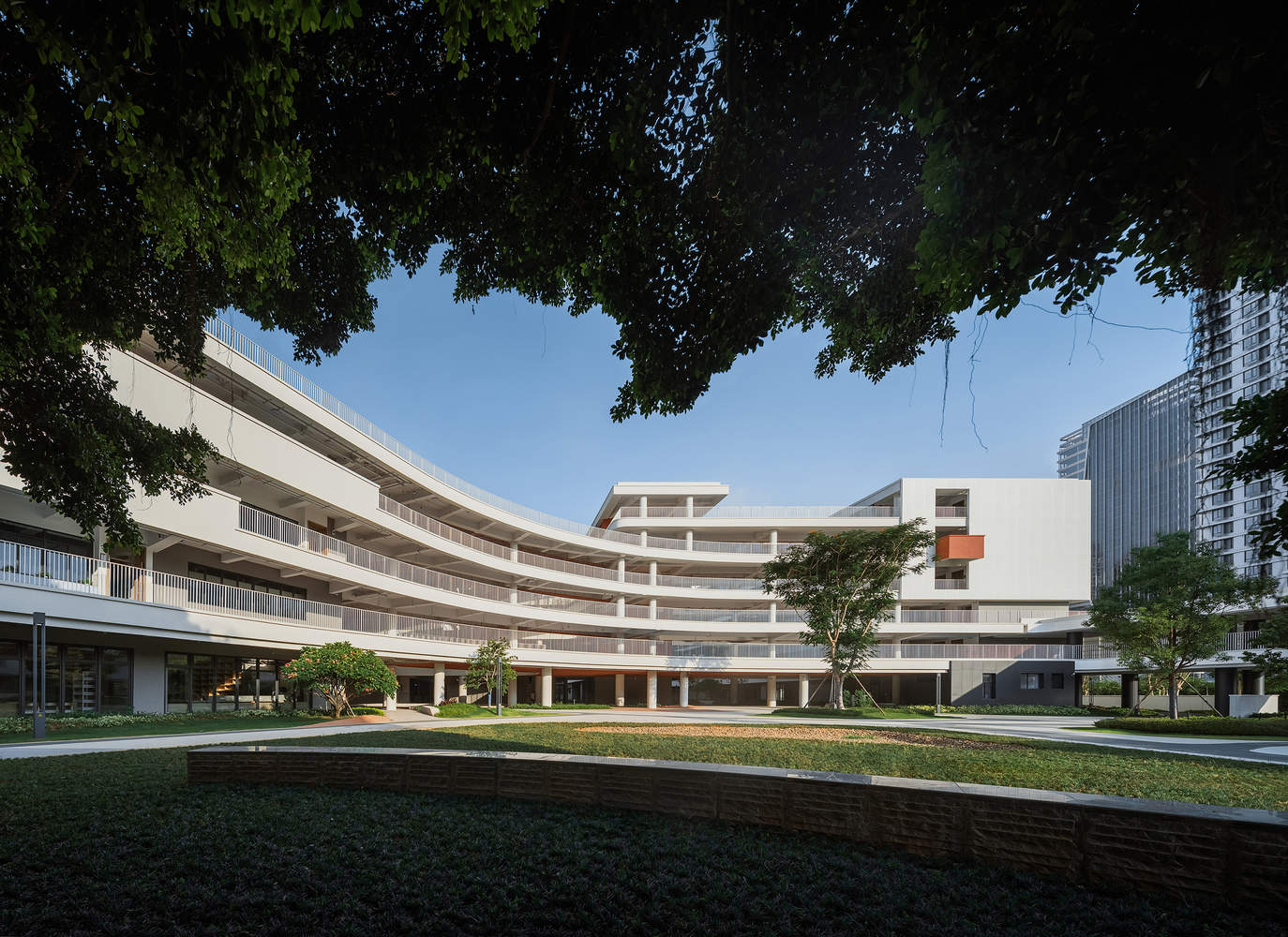
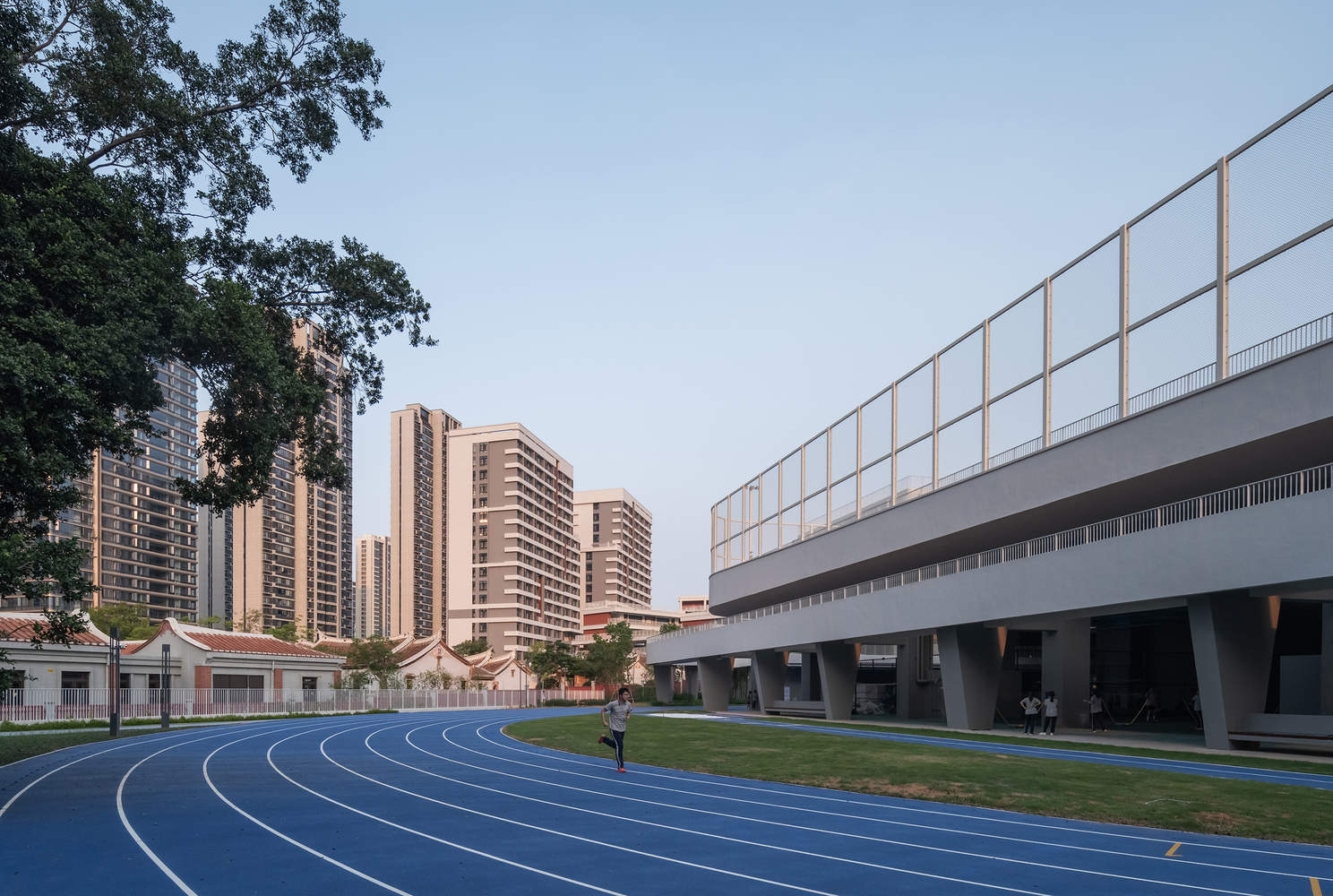
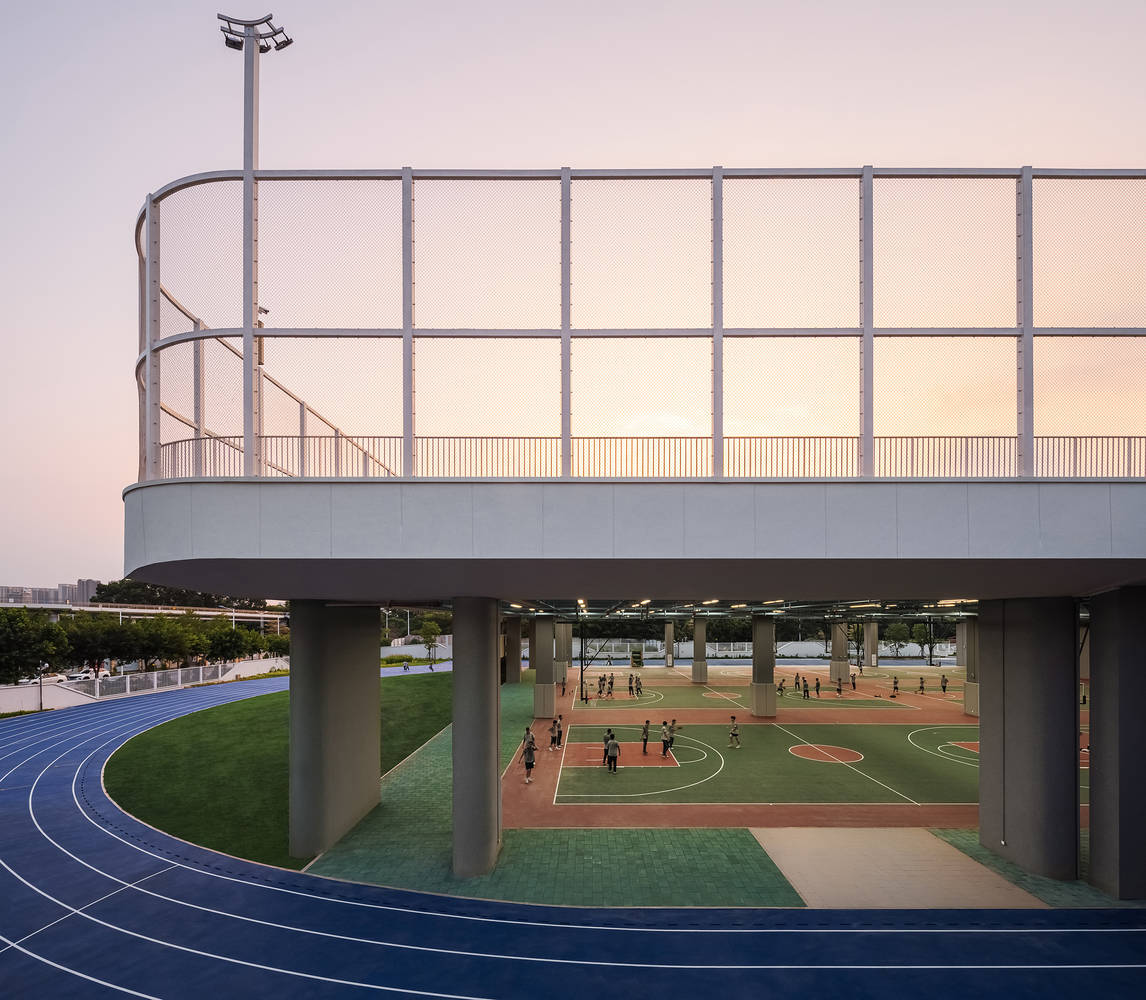
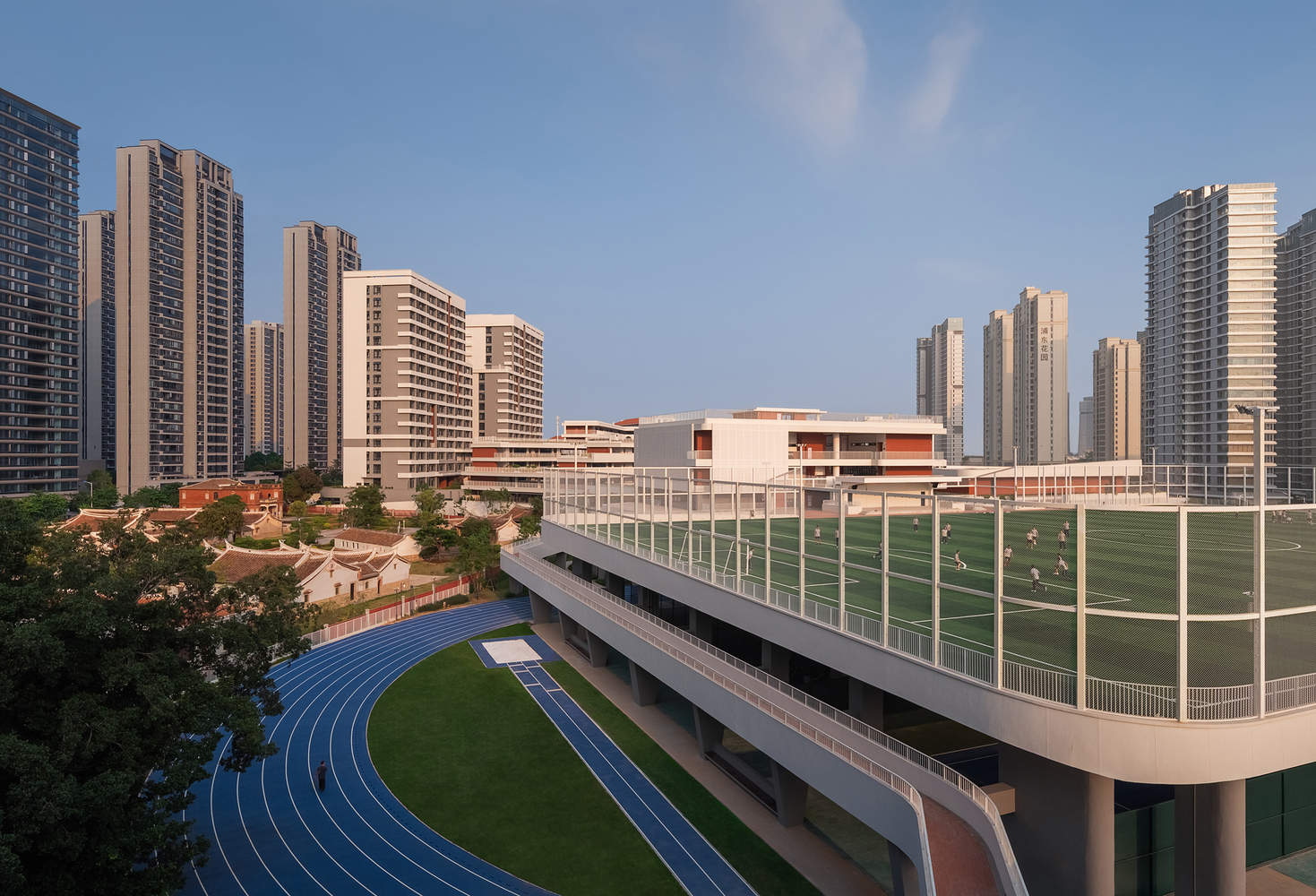
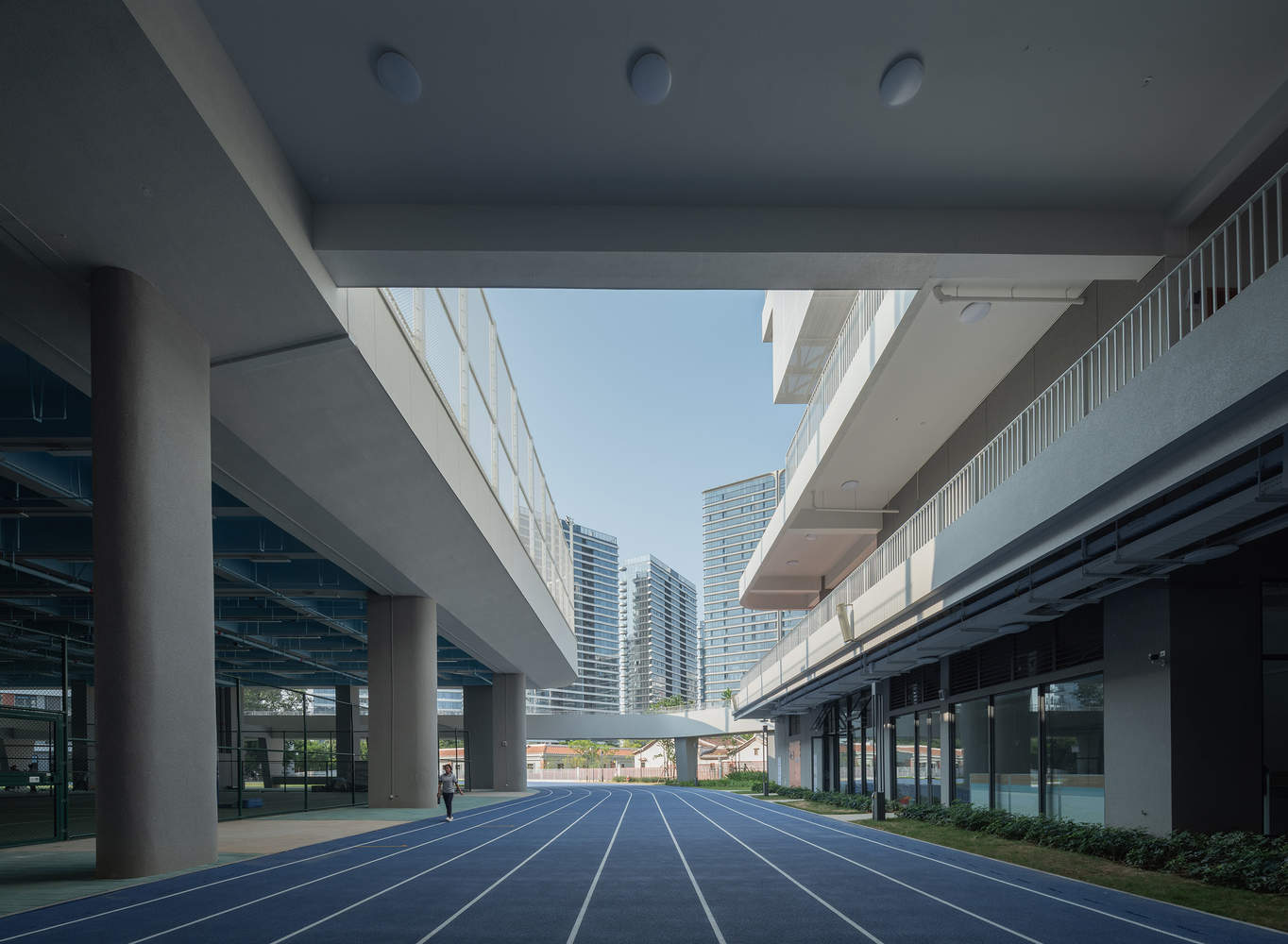
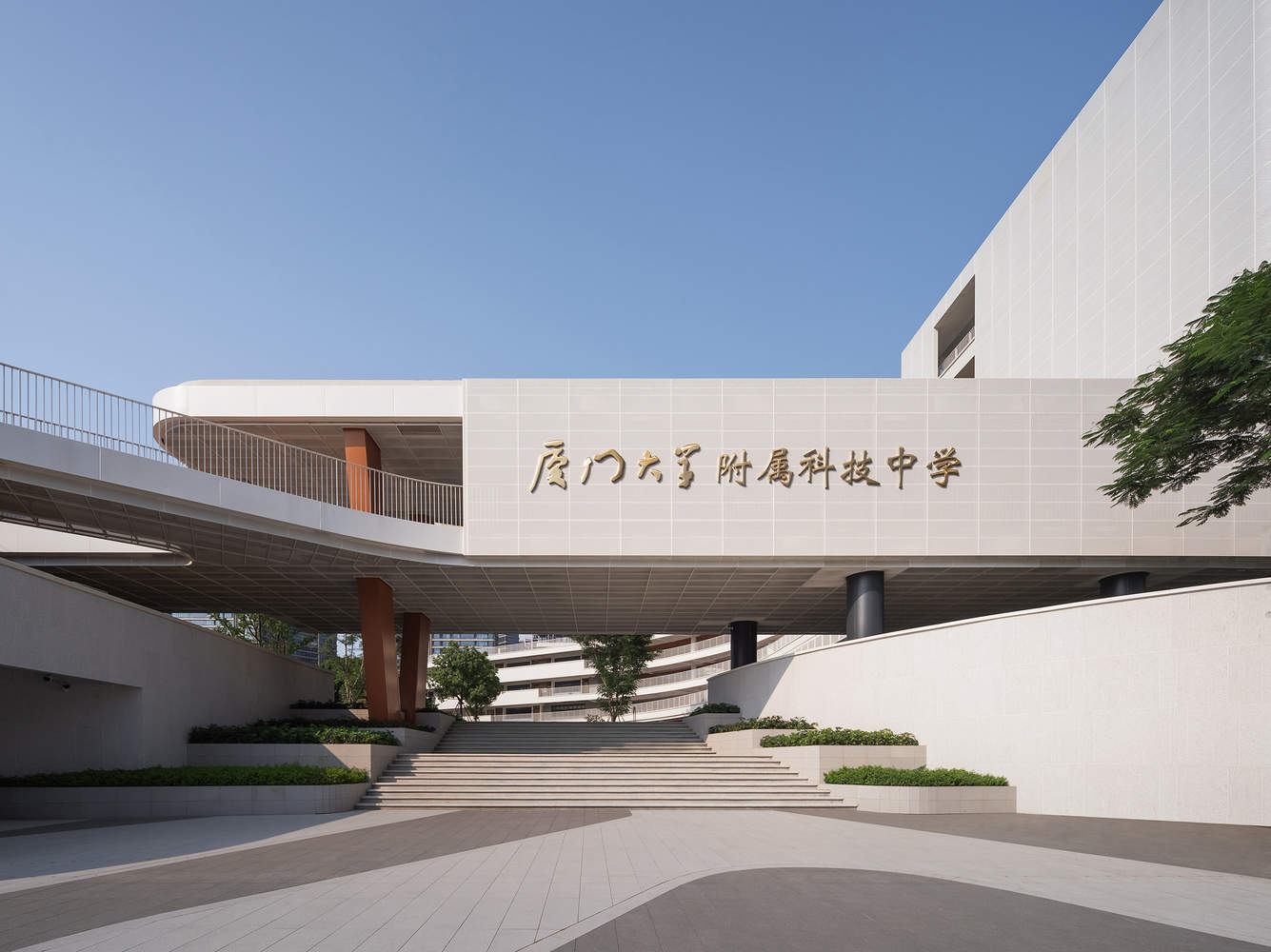
The elevated sports field resembles a giant floating terrace, leaping above the campus—outwardly, it receives the continuous greenery of the wetland park and offers views of the Ring Island Expressway; inwardly, it overlooks the figures of students running on the track. The distance between the natural elements—nature on one side, the city on the other, and the campus in between—is brought closer.The large curve of the teaching building stems from the overall concept of guiding the building mass towards the Folk Culture Park after entering the school gate. The large terraces, receding layer by layer, open towards the west, fully capturing the sunset scenery in every moment of the four seasons. These terrace spaces ultimately create a high-quality free activity area for teachers and students.
架空的运动场如同一块悬浮的巨型露台,腾跃于校园之上——向外,它承接湿地公园的一线绿意,可远眺环岛干道的街景;向内,能俯瞰跑道上奔跑的同学身影。自然、城市与校园,一边是自然,一边是城市,一边是校园,几个不同要素之间的距离被拉进。
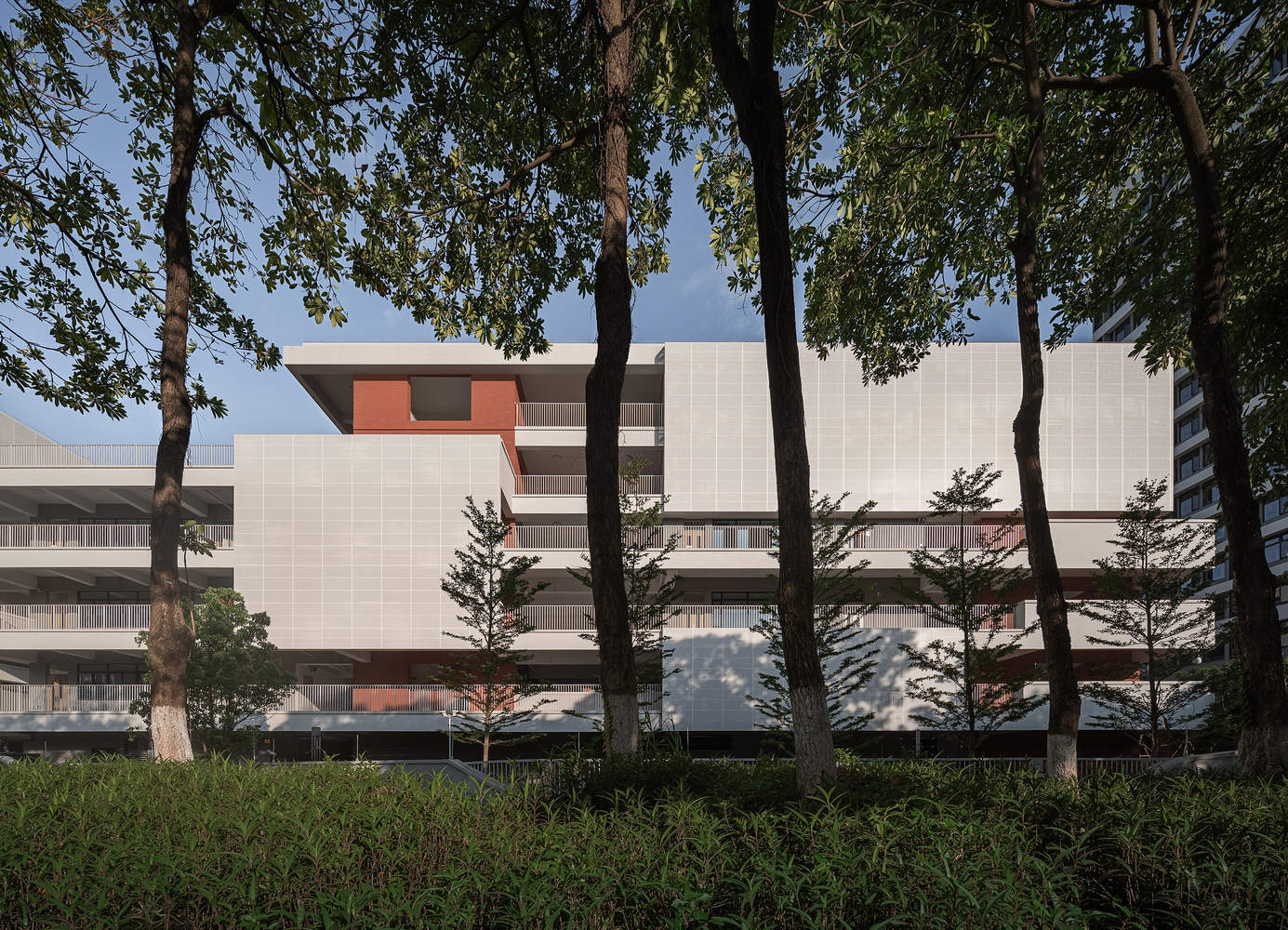
教学楼的大弧线,来源于进入校门之后并把建筑的形体往民俗文化园方向衔接引导的大思路,逐级内推的大露台朝西敞开,四季流转间,每一时刻的落日风光都能被完整收纳。这些露台空间,终为在校师生筑起了高品质的自由活动场域。
© 吴志盛
© 吴志盛
Imprints of the Earth's Veins: Allowing Site Memory to Endure in the Architecture
The design of the Xiamen Science and Technology High School Wuyuan Campus did not allow the site's "story" to fade: although the old buildings on the original site have been relocated to the adjacent Banmei Folk Culture Park, the design "invites" the scenery of the Folk Culture Park into the campus through spatial setbacks and visual continuity.
© 吴志盛
© 吴志盛
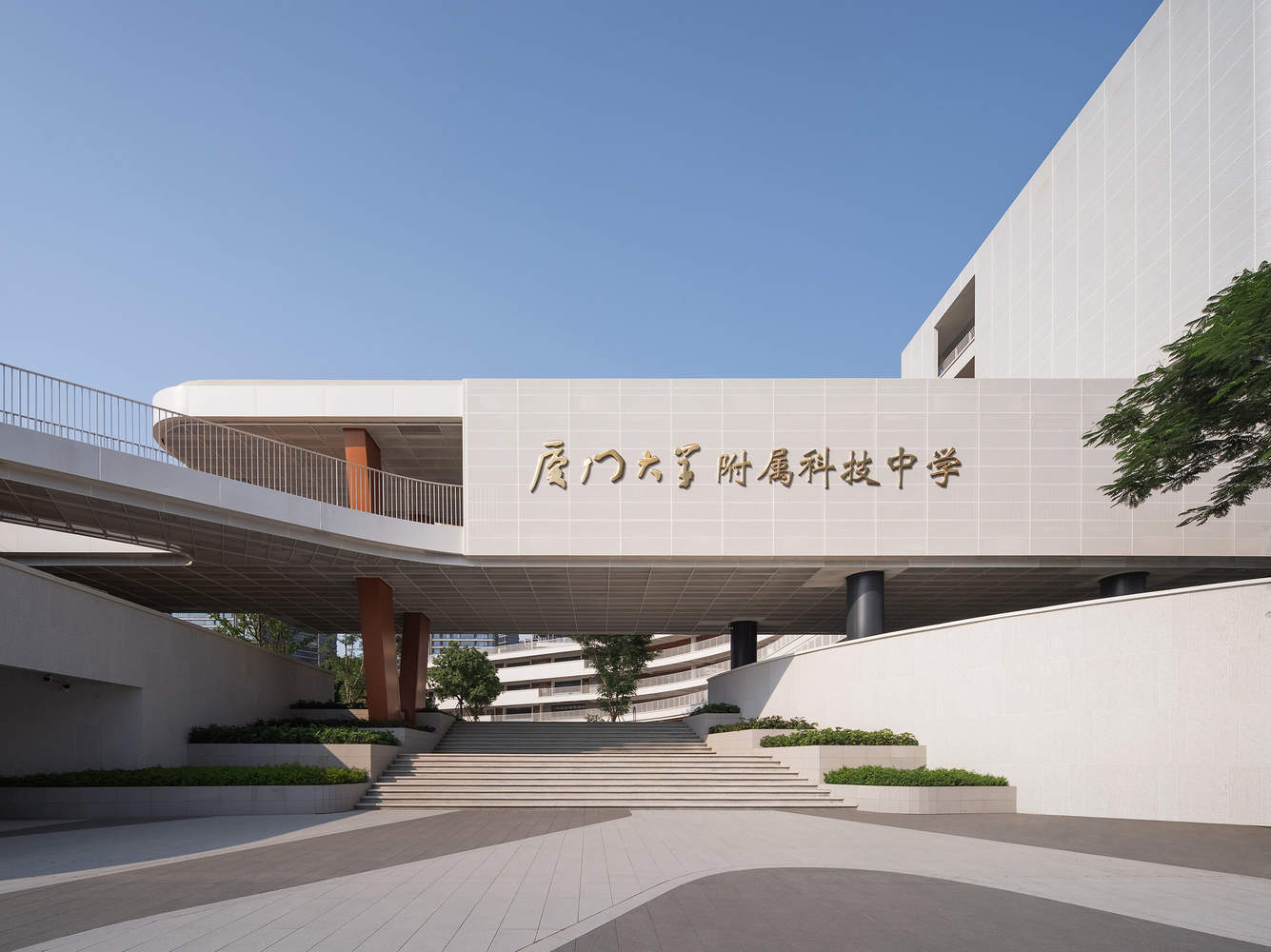
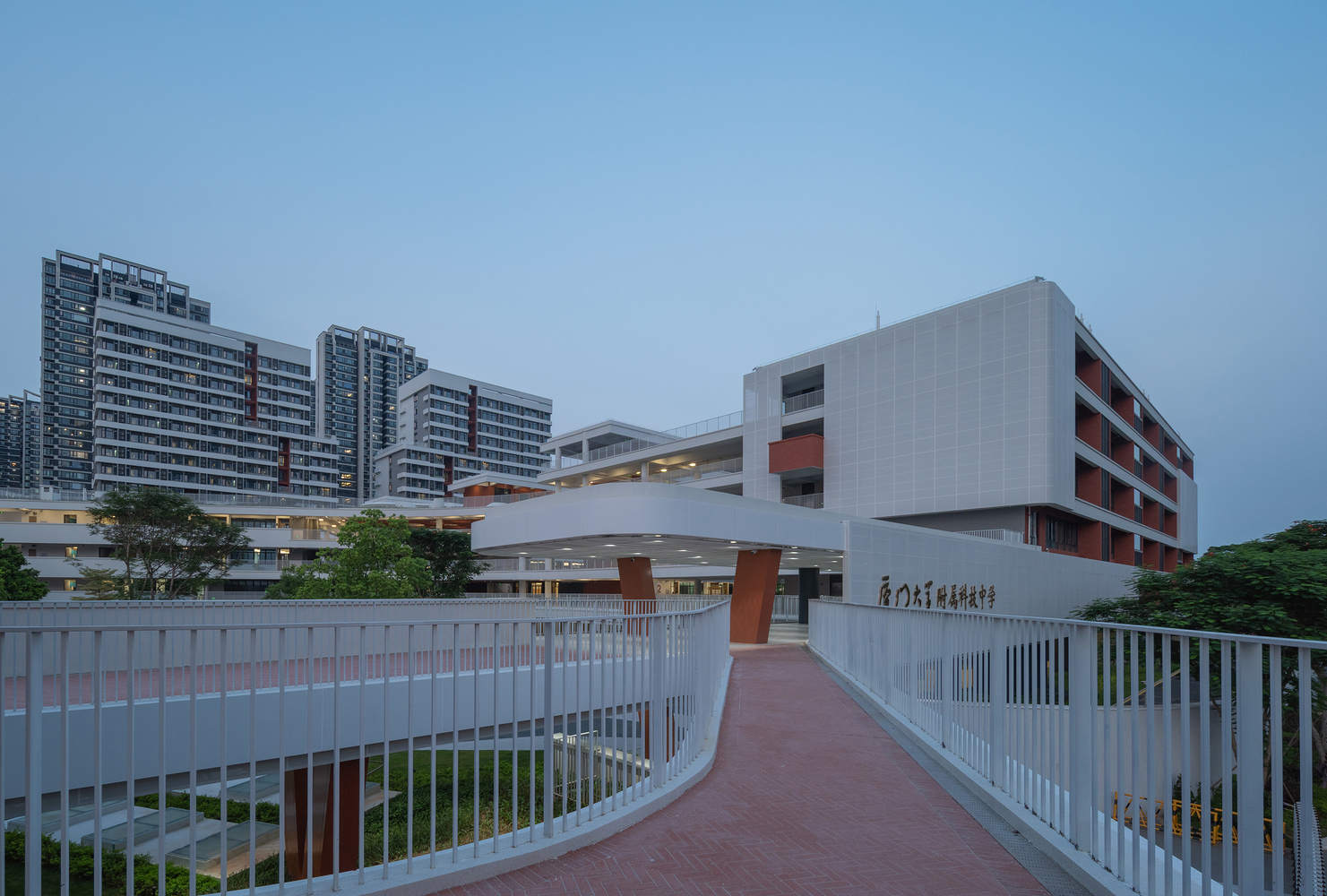
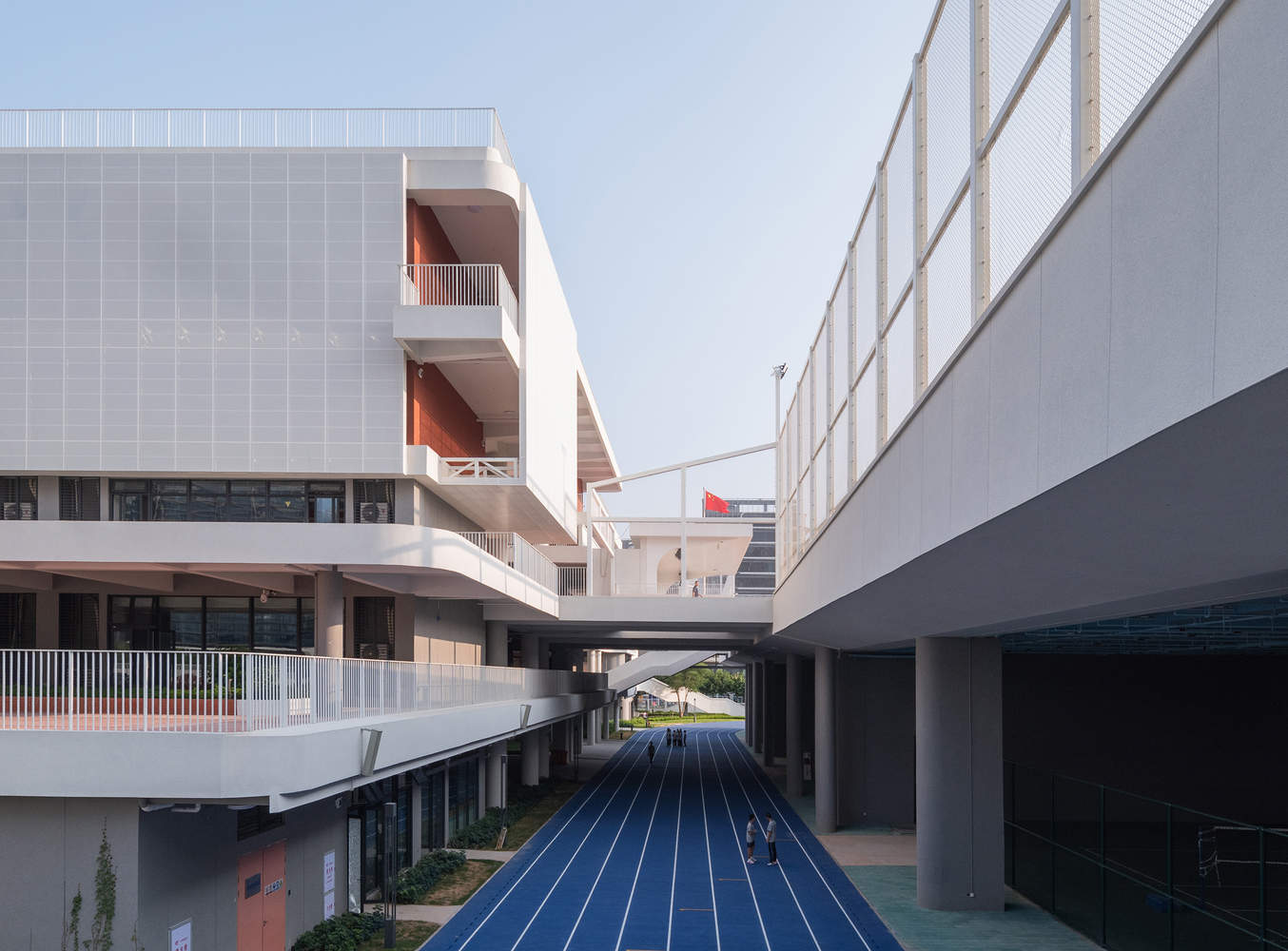
The double-sided setbacks of the Science and Technology Innovation Building echo the views of the Folk Culture Park and the Wetland Park—this not only connects the Folk Culture Park on the east side with the Wetland Park on the west side in terms of urban spatial morphology but also becomes a quiet corner for teachers and students to contemplate and meditate during breaks. Both banyan trees on the site were completely preserved: the one in front of the teaching building is an important focal point for the main campus entrance, where the large curve of the teaching building also converges; the other stands between the Science and Technology Innovation Building and the track, its branches drooping like an umbrella over the track, becoming a key spatial node in the northwest corner of the campus.The red brick gene of the Folk Culture Park is also incorporated into material selection: red bricks are widely used for outdoor paving, rough yet warm to the touch, and conveying the rich texture of old Minnan houses underfoot. Walking among them, the modern campus quietly establishes an emotional connection with the remembered Minnan streets and alleys, and the sense of regional belonging is subtly laid at one's feet.
地脉留痕:让场地记忆长在建筑里
科技中学五缘校区的设计,没有让场地的“故事”消散:原场地的老建筑虽已迁址至紧邻的坂美民俗文化园,但设计通过空间的退让与视线的贯通,将民俗园的景致“请”入校园。
© 吴志盛
© 吴志盛
科创楼双向退台与民俗园、湿地公园形成视线呼应 —— 既在城市空间形态上衔接了东侧民俗园与西侧湿地公园,更成为师生课间思考、冥想的静谧角落。场地内的两棵古榕树均得以完整保留:教学楼前的古榕树,是校园主入口的重要对景,教学楼的大弧线亦在此收束;另一棵矗立在科创楼与跑道之间,枝叶如伞盖般垂落至跑道,成为校园西北角的关键空间节点。民俗园的红砖基因也被揉进材料选择:户外空间铺地大量采用红砖,指尖触之粗糙却温润,足尖踏之满是闽南老厝的温厚质感。行走其间,现代校园与记忆里的闽南街巷悄然建立情感联结,地域归属感便这样悄悄落在脚下。
© 吴志盛
© 吴志盛
Functional Weaving: Great Integration of Teaching and Activity Spaces
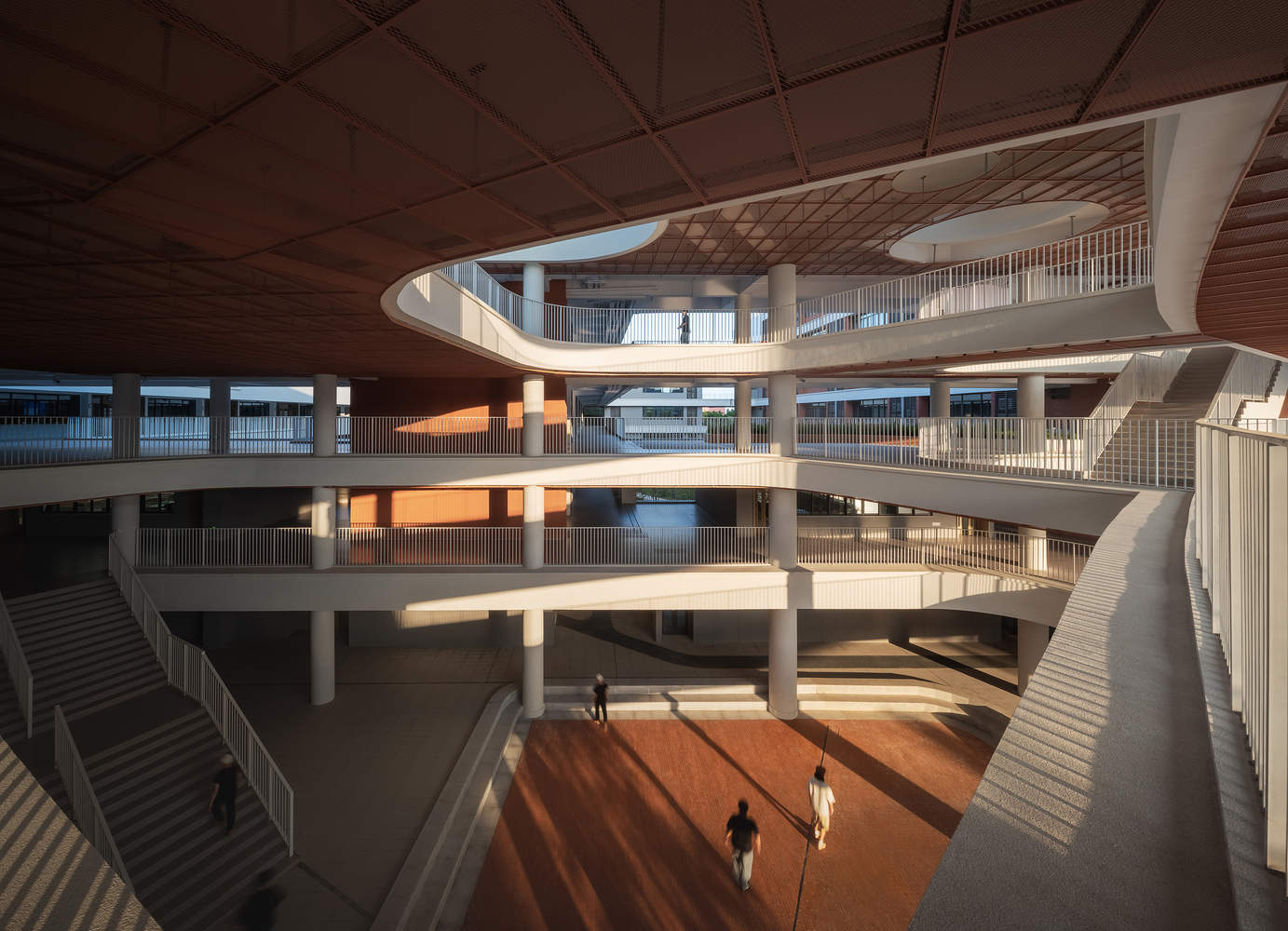
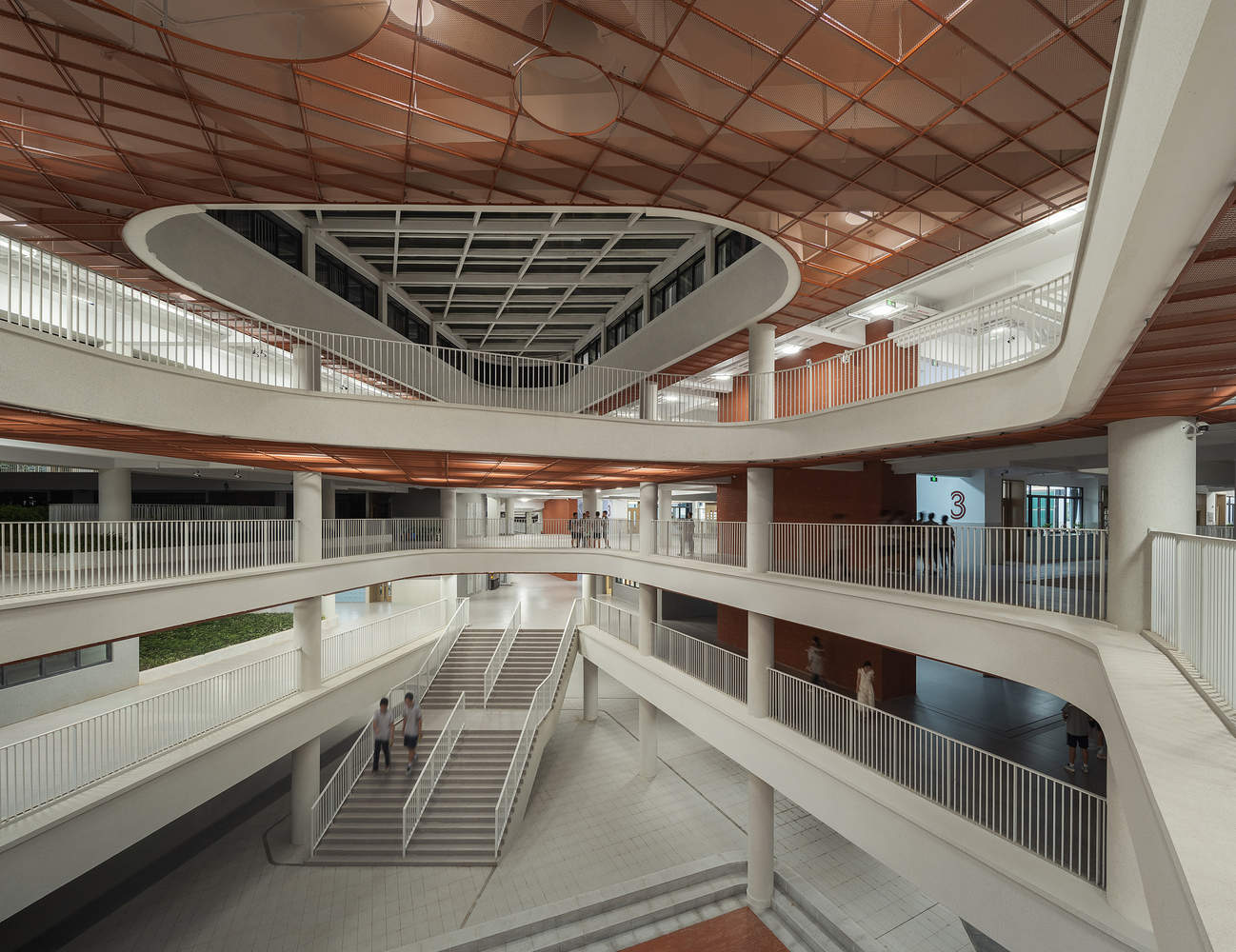
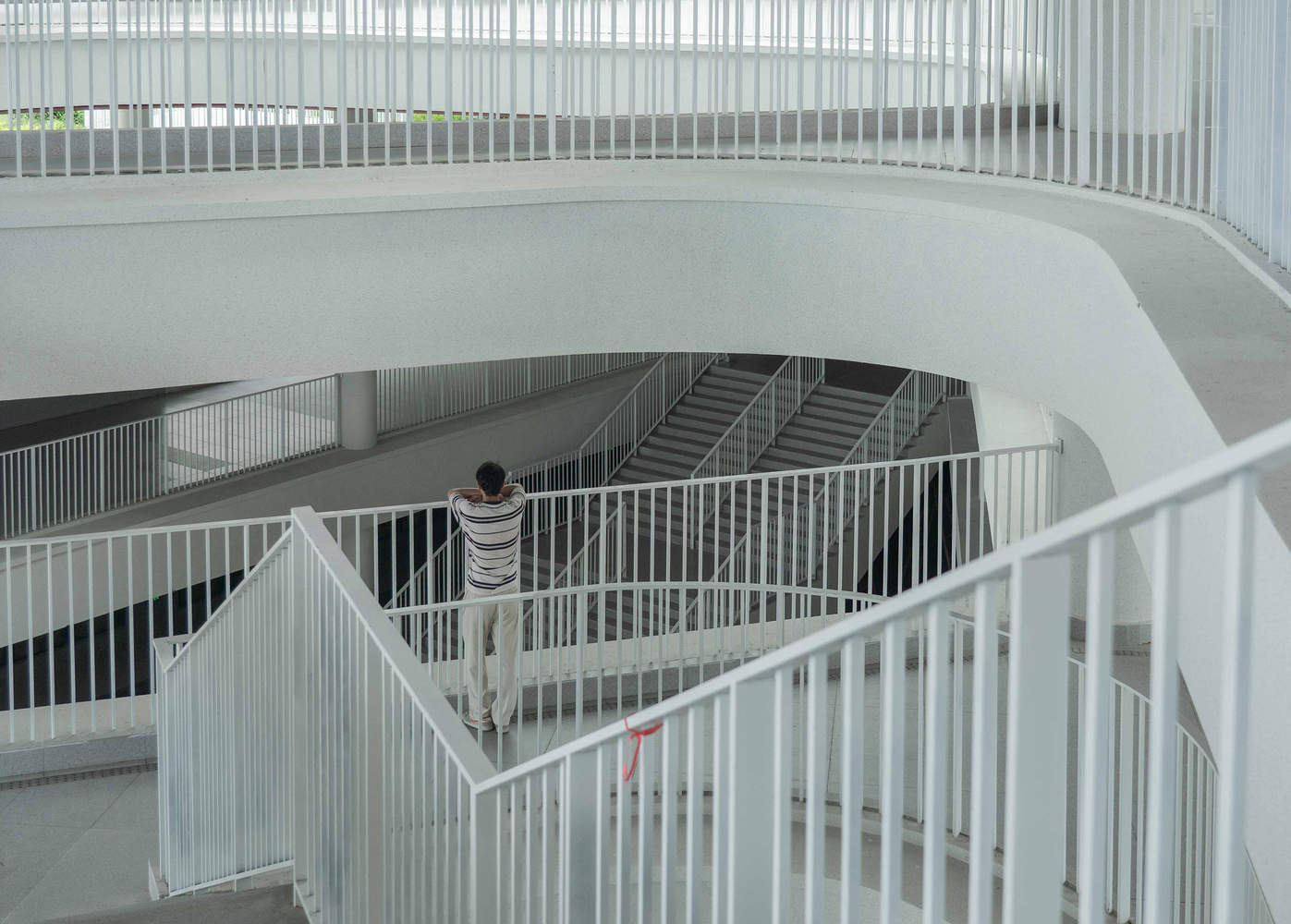
The layout of the teaching spaces in this project is concentrated and clear: music, art, and dance classrooms are centrally located in the Art Building, while all regular classrooms, the library, and subject laboratories are concentrated in the Teaching Complex. The central core atrium of the Teaching Complex features rich spatial hierarchies, orderly progression, and abundant natural light, serving as the "spatial heart" of the building—it gathers all classrooms, the library, and laboratories around it.
© 吴志盛
© 吴志盛
Future usage scenarios here will be diverse and vibrant: they can display students' science and innovation works, host small book clubs, or even allow clubs to set up temporary stages for various exhibitions, becoming a "scene engine" to stimulate free student activities.More noteworthy is that the teaching building, art building, dormitory, auditorium, and sports field are connected by a series of circular circulation routes; the large and small terrace spaces participate in the construction of these routes, ultimately weaving the teaching, art, and living spaces into a closely linked transportation network.
功能织构:教学、活动空间的大融合
本案的教学空间布局集约且简明:音乐、美术、舞蹈教室集中设于艺术楼,所有普通教室、图书馆及各学科实验室,则均集中在教学综合楼内。教学综合楼中央的核心中庭,空间层次丰富、递进有序,且自然光线充沛,堪称教学楼的 “空间心脏”——以它为中心,聚合起所有教室、图书馆与实验室。
© 吴志盛
© 吴志盛
Light and Shadow Respiration: Making Wind and Light Regular Visitors to the Campus
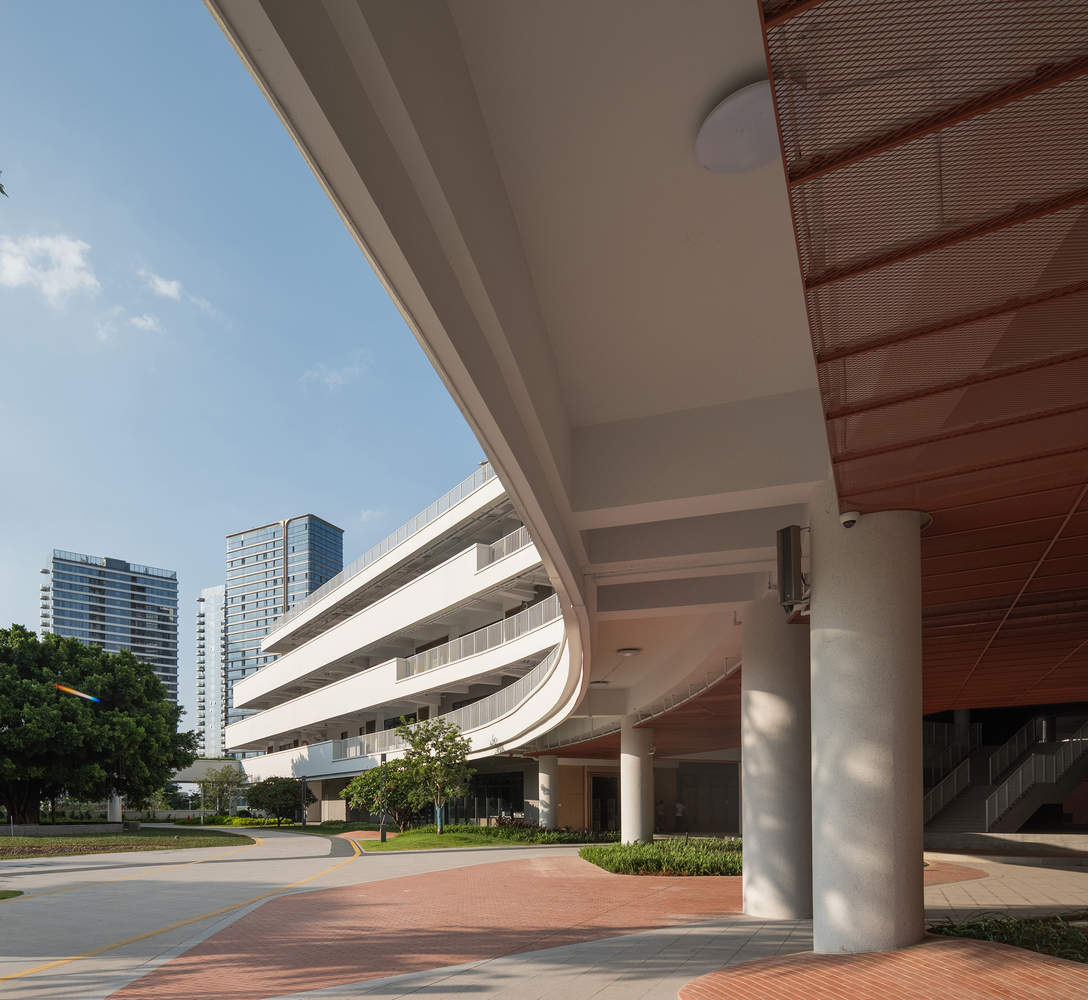
Xiamen’s summers are unbearably hot and humid; the design hopes that in the future campus, wind and light can become the core forces enhancing spatial quality. Multiple courtyards of different systems and scales are nested between and within the buildings, and the ground floor adopts an elevated design—wind can penetrate indoors along the courtyards and flow out from the top of the courtyards, ensuring a comfortable internal wind environment for the campus throughout the seasons.
光影呼吸:让风与光成为校园的常客
厦门的夏季湿热难耐,设计希望在未来的校园里,风与光线能成为提升空间品质的核心力量。建筑之间与内部嵌套着多个不同体系、不同尺度的庭院,首层多采用架空设计——风可循着庭院渗入室内,再从庭院上部流转而出,让校园四季都拥有舒适的内部风环境。
© 吴志盛
The library space unfolds around the atrium, featuring a double-height void at the entrance. Openings at the top and in the courtyard allow sunlight to pour in freely, creating a warm and relaxed atmosphere for reading. The lighting fixtures are hidden behind the tensioned net ceiling; after dark, the light filters through the net, casting dynamic and delicate shadows across the space.图书馆空间围绕中庭展开,入口处设双层挑空设计,顶部与庭院的开窗让阳光肆意洒入,为阅读营造出温暖而松弛的氛围。灯具藏于网状吊顶之后,入夜后,灯光透过张拉网洒满空间,勾勒出灵动而细腻的光影氛围。
© 吴志盛
Structural Presentation: A Structurally Powerful Form
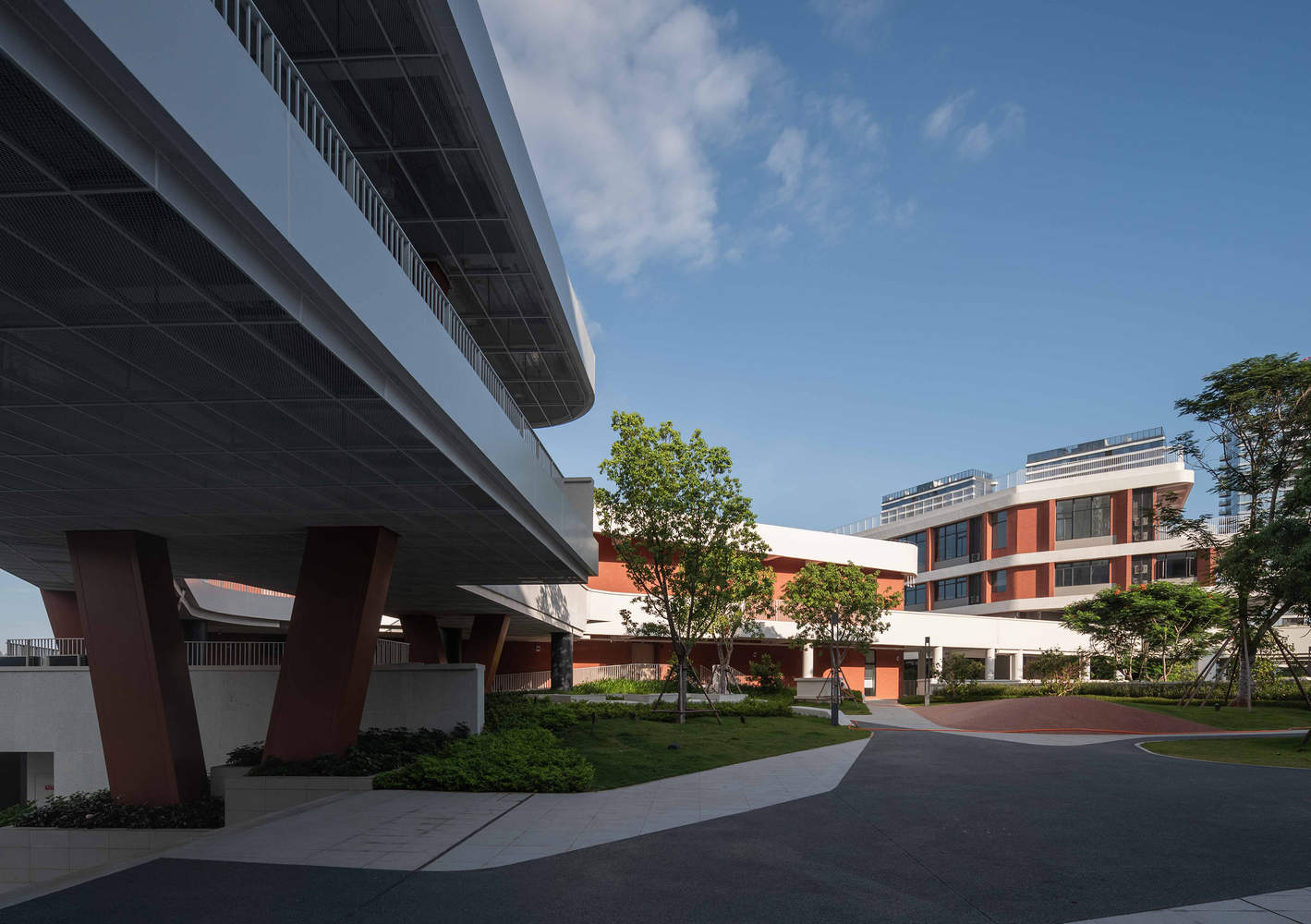
The capsule-shaped columns of the gymnasium wrap various pipe lines within them, conveying an orderly sense of strength that perfectly matches the spatial scale of the gymnasium. The connecting bridges of the Art Building and the Science and Technology Innovation Building adopt a trapezoidal concrete column structure, creating a spatial atmosphere with strong volume under the interplay of light and shadow—and the seating between the columns also becomes an organic component of the structure.
结构呈现:富有力量感的结构形式
体育馆的胶囊状立柱将各类管线包裹其中,既传递出富有秩序的力量感,又与体育馆的空间尺度完美契合;艺术楼与科创楼的连桥,采用梯形混凝土立柱结构,在光影交错间营造出极具体积感的空间氛围 —— 而柱与柱之间的座椅,亦成为结构的有机组成部分。
© 吴志盛
Regret:
For the atrium space of the Teaching Complex, the design team put significant effort and experimentation into the structural design to create a good spatial atmosphere and layering. When the scaffolding was first removed, the space indeed presented a good visual effect; unfortunately, this spatial effect was not properly sustained during subsequent construction, which is the biggest regret of this project.
遗憾:
教学综合楼的中庭空间,为营造良好的空间氛围与层次,设计团队在结构设计上付出了诸多努力与尝试。结构刚拆除脚手架时,也确实呈现出了较好的空间效果;可惜在后续建造过程中,这一空间效果未能得到妥善延续,成为本项目最大的遗憾。
© 吴志盛
Postscript:
The most moving aspect of this school is not its magnificent form, but its strategy and posture tailored to the site—the proper integration of city views, regional memory, and the needs of educational space, feeling both relaxed and intimate. Here, the design hopes that architecture will no longer be a cold vessel, but a friend accompanying students' growth, a bond connecting with the city, and a container preserving the site's memory and the high school years of generations of students. This is probably what a campus should look like: allowing everyone who steps here to feel sincerely—here, I want to both focus on studying and live well.
后记:
这所学校最动人之处,并非华丽的造型,而是其贴合场地的策略与姿态 —— 将城市风景、地域记忆与教育空间的需求妥善融合,既轻松又亲切。在这里,设计希望建筑不再是冰冷的载体,而是能陪伴学生成长的朋友、能与城市对话的纽带、能留存场地记忆与一代代学子高中岁月的容器。这大概就是校园该有的样子:让每一个踏入这里的人,都能由衷感受到 —— 在这里,我既想专注学习,也想好好生活。
© 吴志盛