理念的深度融合与空间序列的叙事性:该项目成功地将适马(SIGMA)“如水般连贯紧密”的制造哲学与“超越技术,回归艺术”(Beyond the technology, is Art)的设计理念进行了深度融合。设计师通过“本”、“造”、“感”三个概念空间(接待、陈列、画廊)构建了清晰的空间叙事序列,引导参观者从品牌的精神内核逐步深入到产品的工艺细节与艺术呈现。这种精心设计的空间流线,使得建筑不再仅仅是产品展示的容器,而是品牌精神的具象化表达,体现了对用户体验和品牌故事叙述的深刻理解。
工艺细节的精妙转化与材料的哲学暗示:设计在具体构筑上体现了对品牌“精密”属性的高度尊重。例如,为展示镜头而定制的三角立柱系统,精确匹配了卡扣规格,形成了极具秩序感的视觉冲击力。此外,入口维修区的透明化处理,直接展现了维修流程,增强了用户信任度与互动性。展厅内运用Kvadrat Acoustics系统确保极致的声学环境,呼应了产品制造的严苛标准。基座处的化石莱姆石的使用,则巧妙地将时间沉淀的自然形态与现代精密科技进行对话,赋予空间深厚的哲学意涵。
环境策略与建筑表皮的灵活性:建筑设计在应对城市环境与功能需求上展现了高度的成熟度。项目定位在“隐于花园的僻静,与热闹的城市相邻”,并通过精巧的建筑策略实现了平衡。北立面的外遮阳系统是亮点之一,它在保证画廊展览所需的私密性、控制日照影响的同时,兼顾了空间的自然采光需求,并优化了施工的便捷性。这种动态的表皮设计,体现了现代可持续设计中对环境敏感性与功能适应性的精细考量,是技术与艺术和谐共存的体现。
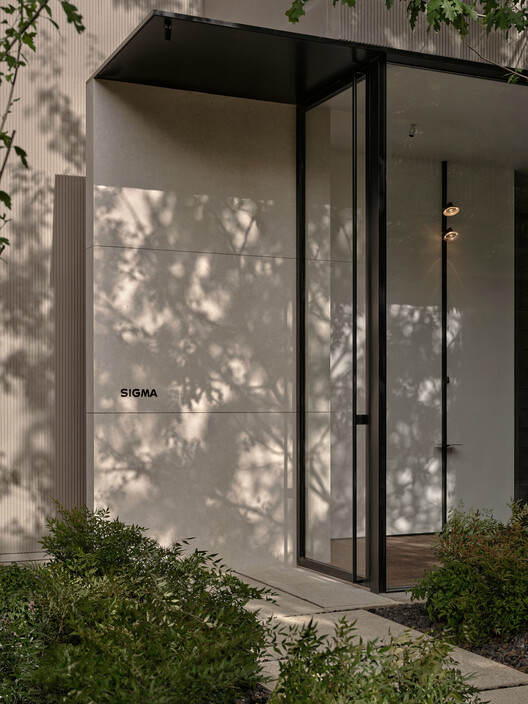
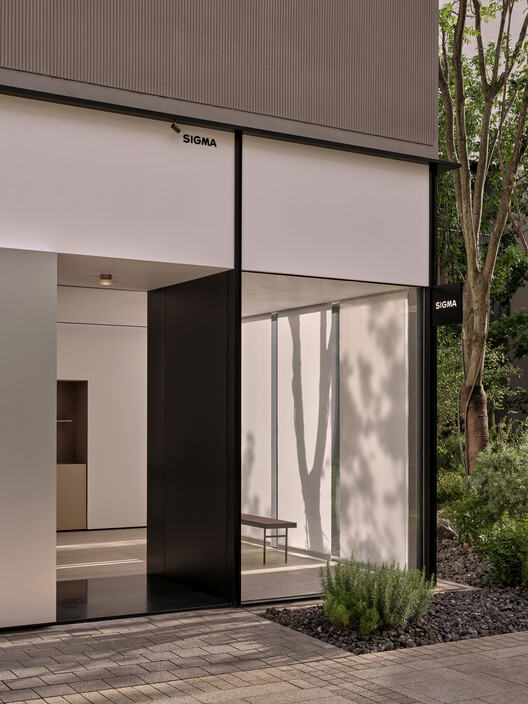
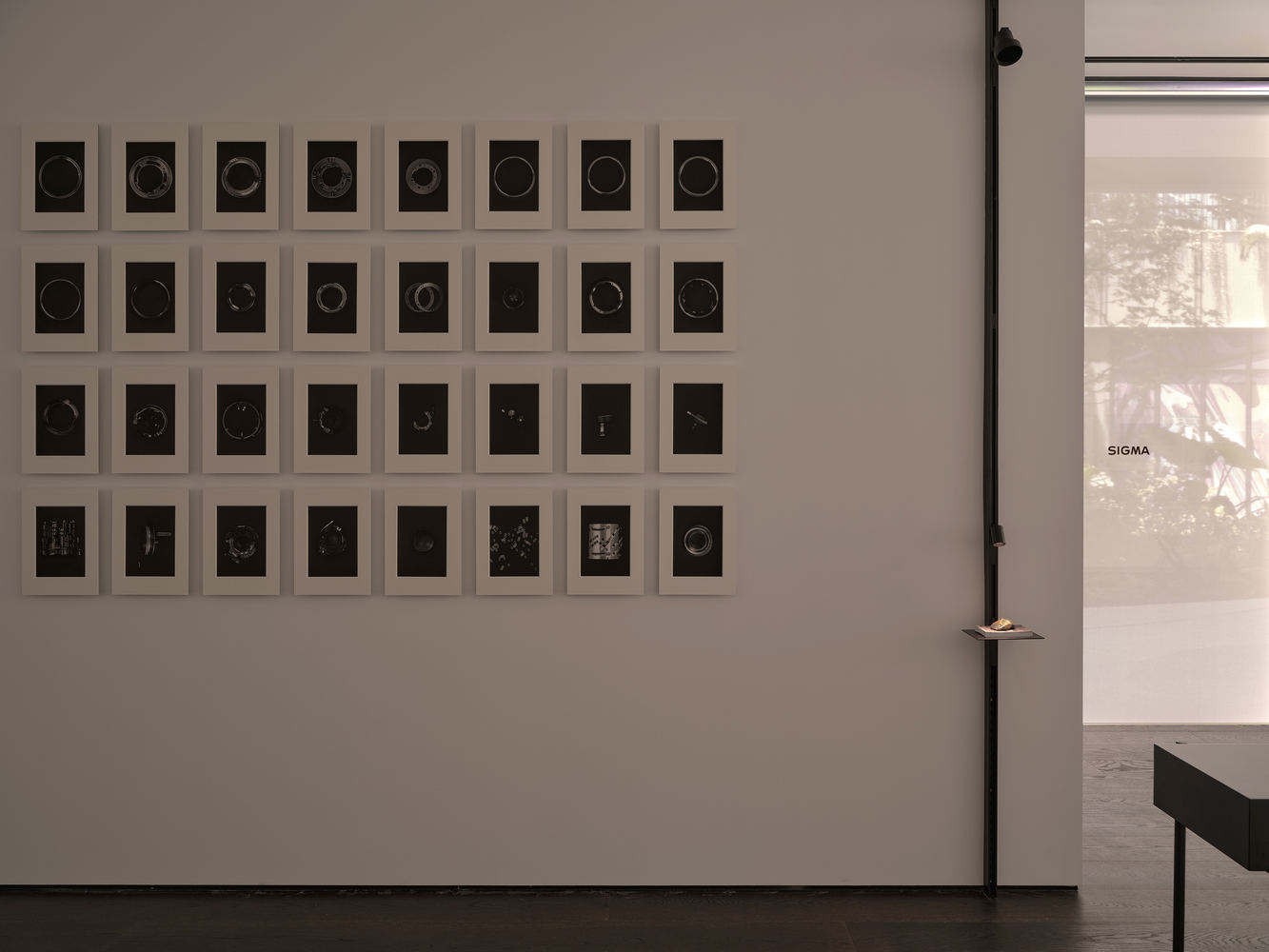
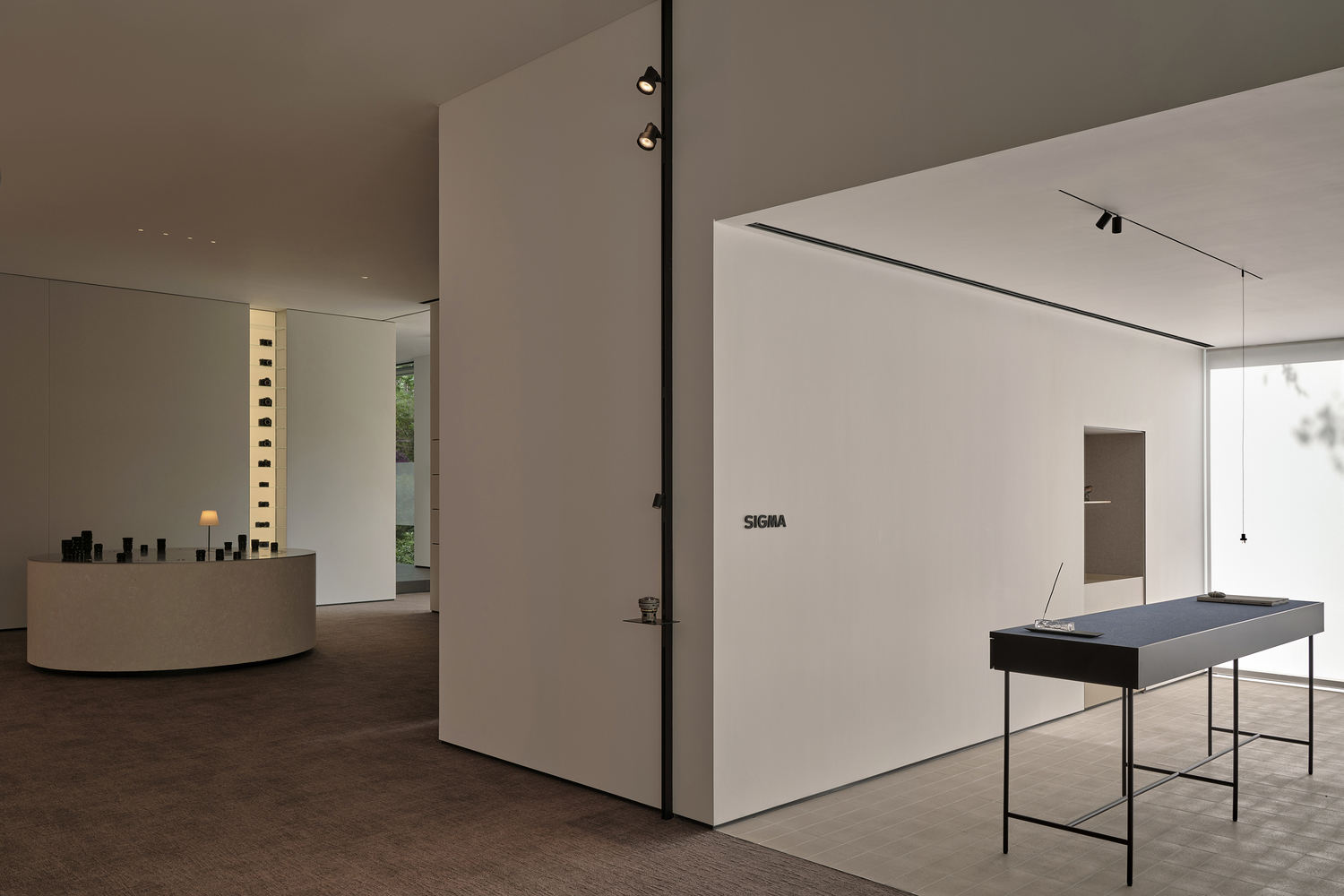
“Like water through a river” (As water flows through a river) – Michihiro Yamaki, Founder of SIGMA. This phrase is used to describe every production line in the Aizu factory in Japan, which manufactures cameras and lenses, flowing continuously and tightly like water. Restraint and prudence are the results of logical thinking, while warmth runs through the heart over time. ONOAA STUDIO hopes to create a space as pure as water, secluded in a garden, yet adjacent to the bustling city. “Beyond the technology, is Art” is also a crucial part of what we want to express in the overall space planning and design. The designer has created three conceptual spaces for the venue: “Hon” (The Ways of Being) for the reception area, “Zou” (The Ways of Crafting) for the display area, and “Kan” (The Ways of Seeing) for the gallery area.
“Like water through a river”(似水穿过河流)—— SIGMA 适马创始人山木道広。这一句用来形容日本会津工厂制造相机与镜头的每一道流水线,如流水般连贯与紧密。克制、审慎是逻辑思考的结果,而温情则是贯穿时间的心意。ONOAA STUDIO 希望打造一个像水一样纯净的空间,隐于花园的僻静,与热闹的城市相邻。“Beyond the technology, is Art” 也是我们整个空间规划与设计想要表达的重要一部分。设计师为空间创造三个概念空间:“本”(The Ways of Being)接待区、“造”(The Ways of Crafting)陈列区、“感”(The Ways of Seeing)画廊区。
© Jonathan Leijonhufvud
© Jonathan Leijonhufvud
© Jonathan Leijonhufvud
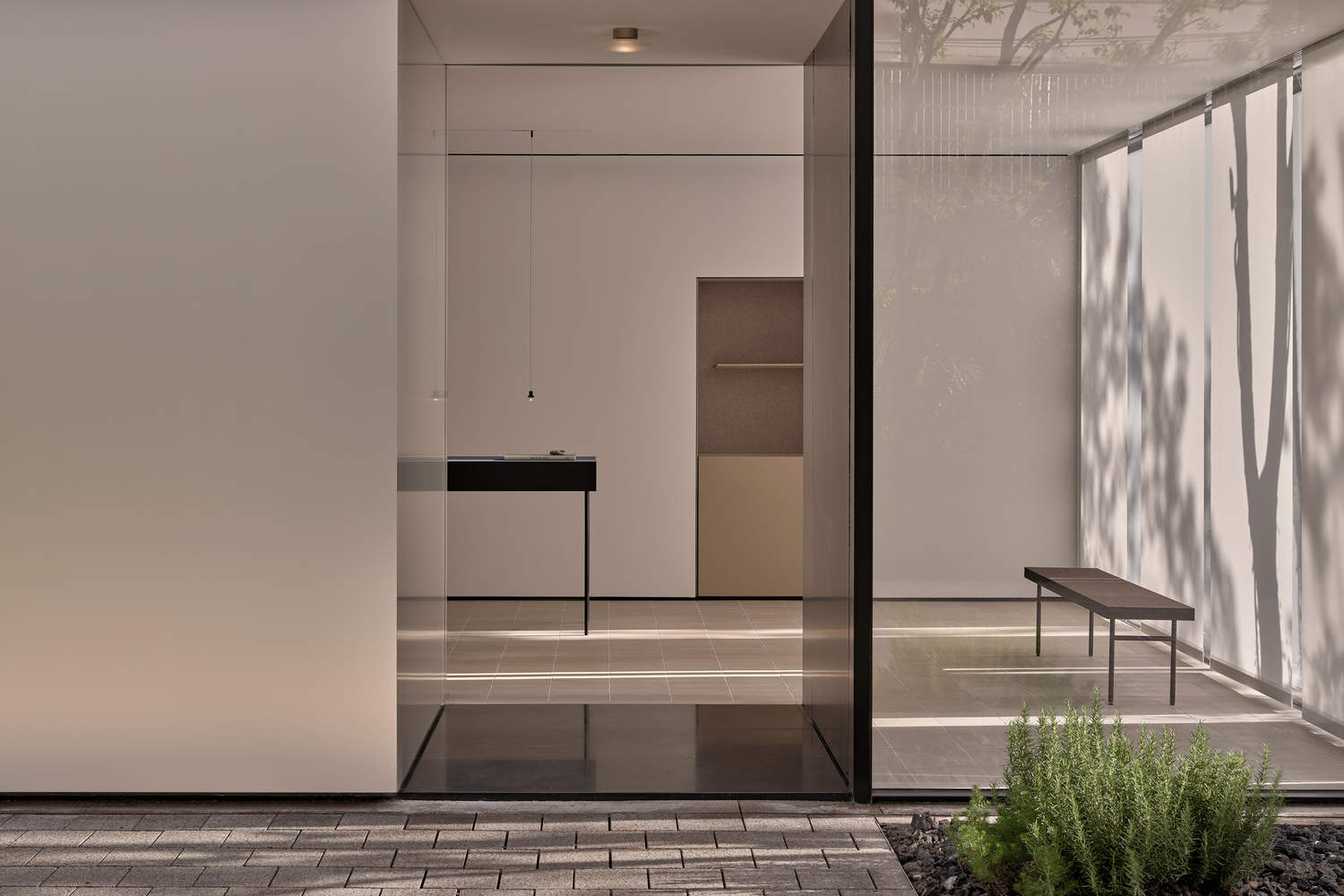
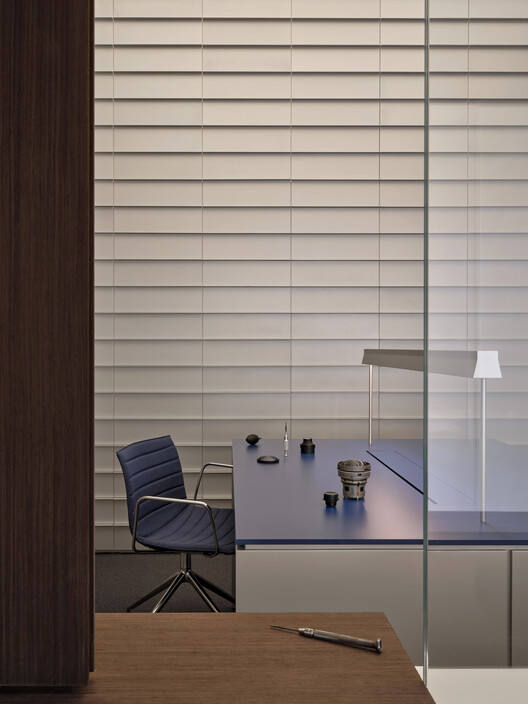
In the entrance reception area, the product repair room allows the entire process of the repair engineer working at the repair bench for customers to be clearly visible through glass, bringing SIGMA and customers closer through face-to-face communication. The walls inside the repair room are composed of drawers from a parts storage system, with each compartment categorized according to the repair technician's usage needs.
入口接待区的产品维修室,通过玻璃,维修工程师坐在维修台边为顾客维修的整个过程清晰明了,面对面的沟通模式拉近了 SIGMA 与顾客之间的互动。维修室内的墙面皆由收纳零件系统的抽屉排列组成,每一格根据维修师的使用方式归类所需零件。
© Jonathan Leijonhufvud
© Jonathan Leijonhufvud
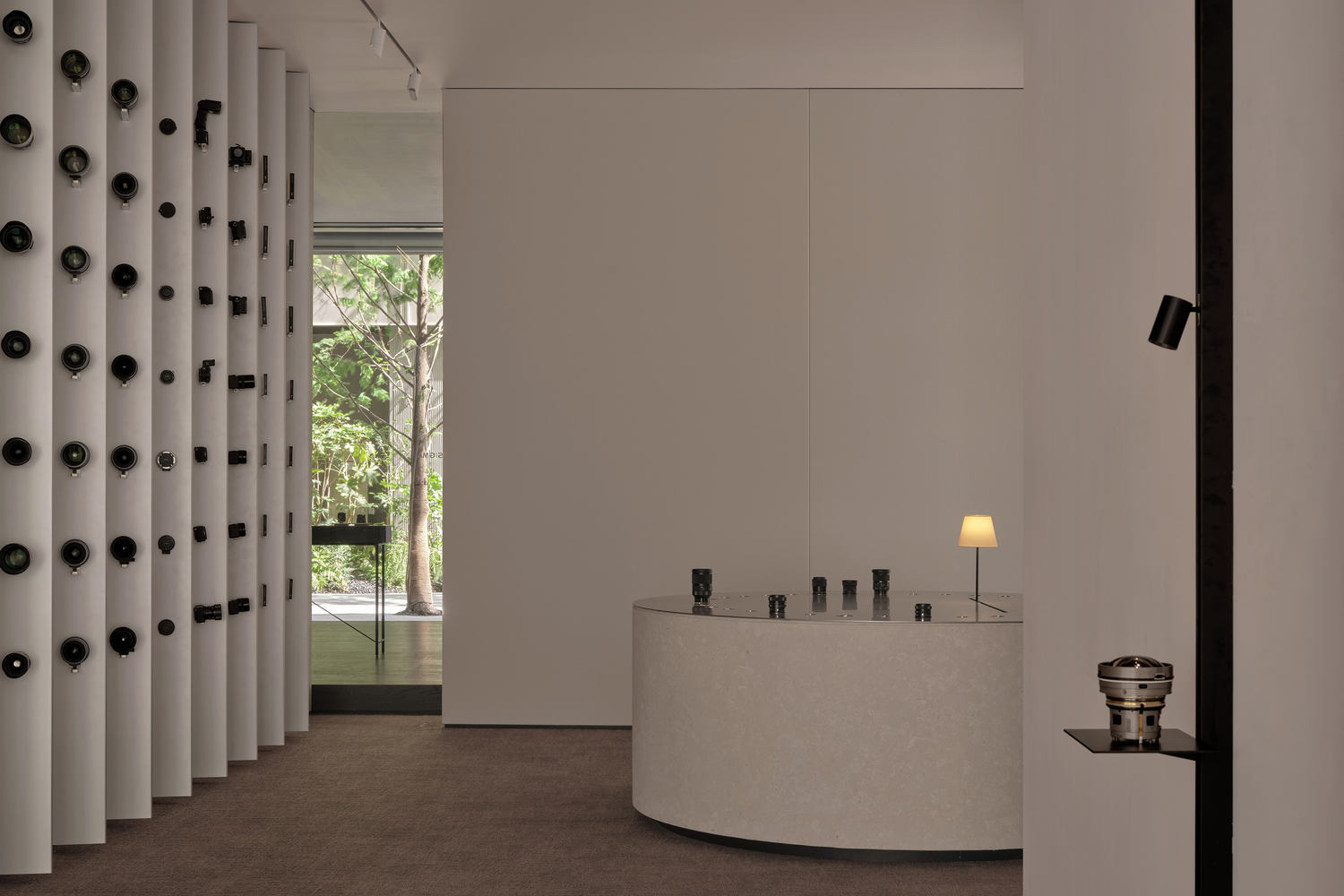
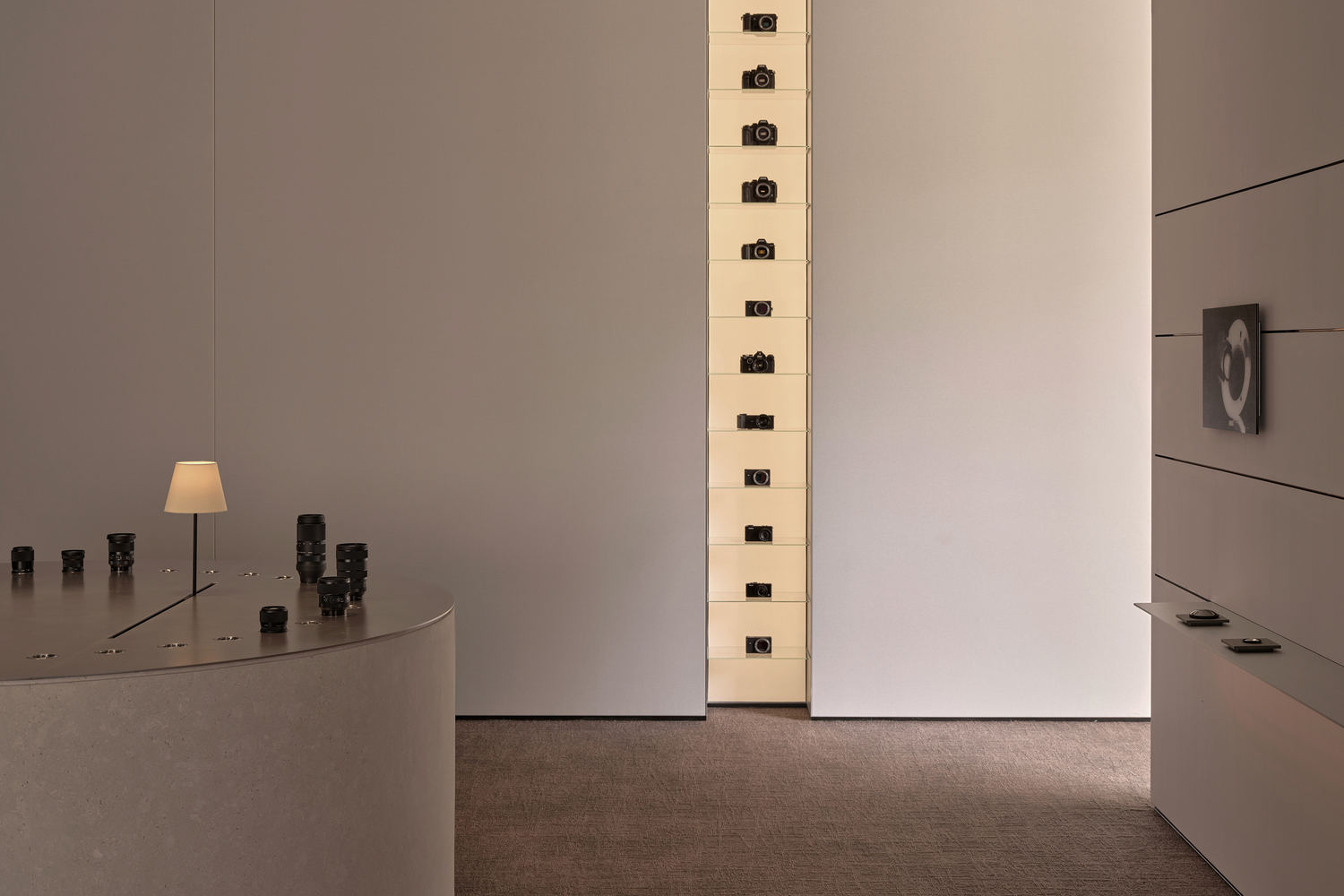
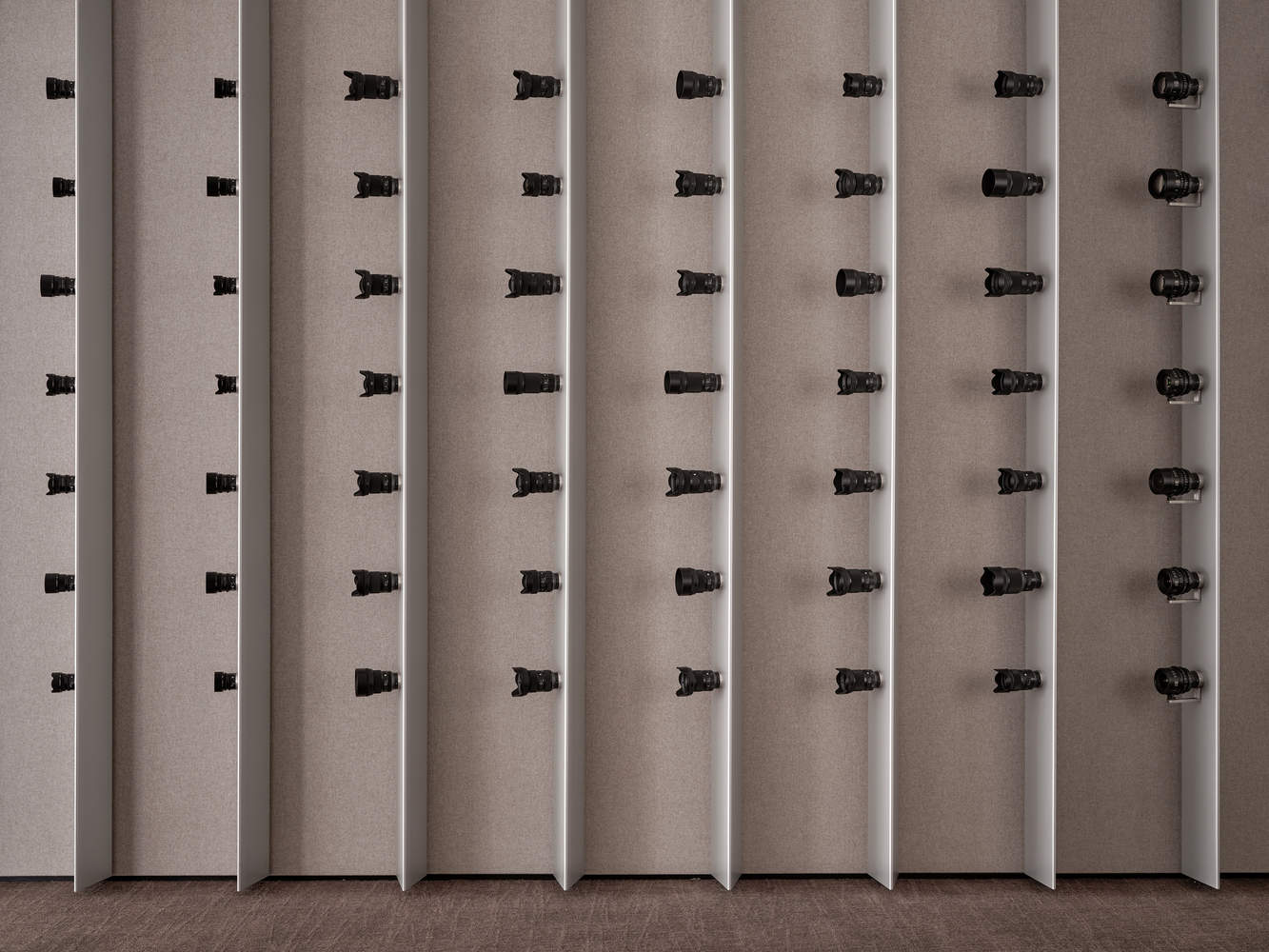
Upon entering the product experience area, visitors are greeted by a large lens wall, extending straight from the floor to the ceiling, displaying generations of products neatly arranged. The designer adopted a triangular column system, studying the buckle systems and product specifications of all lens series, and custom-molding some mounting parts to achieve the visual presentation of a 3-meter high lens wall.
进入产品体验区,映入眼帘的是一大面镜头墙,从地板直指天花,数代产品整整齐齐陈列其上。设计师采用三角立柱系统,研究所有镜头系列的卡扣系统和产品规格,将部分卡件开模,完成一面 3 米高镜头墙的视觉呈现。
© Jonathan Leijonhufvud
© Jonathan Leijonhufvud
Below the lens wall, circular island tables stand, their bases made from a solid block of limestone embedded with fossils and traces carved by wind and frost. Having undergone long-term evolution, weathering, and compression, the final frozen moment is captured by the eyes of every visitor.
镜头墙下,圆岛台矗立其间,基座是一整块聚集着化石、风霜雕刻痕迹的莱姆石。经历过漫长的时间演变,它被风化、挤压,而最后定格的一瞬间,则被每位前来参观的人用眼睛记录了下来。
© Jonathan Leijonhufvud
© Jonathan Leijonhufvud
© Jonathan Leijonhufvud
The interior walls of the exhibition hall utilize the Kvadrat Acoustics system, integrating application, shape, and acoustic function to achieve the widest possible seamless treatment, providing an extremely quiet spatial state. This responds to the brand's attribute of "precision" products and also achieves the strictness and craftsmanship expressed in the spatial concept of "Zou" (The Ways of Crafting).
展厅的室内墙面采用了 Kvadrat Acoustics 系统,将应用、形状和声学功能相结合,做到最大宽幅的无缝隙处理,并提供极安静的空间状态,回应品牌“精密”产品的属性,也达到空间概念中“造”(The Ways of Crafting)所表达的严苛与匠心。
© Jonathan Leijonhufvud
© Jonathan Leijonhufvud
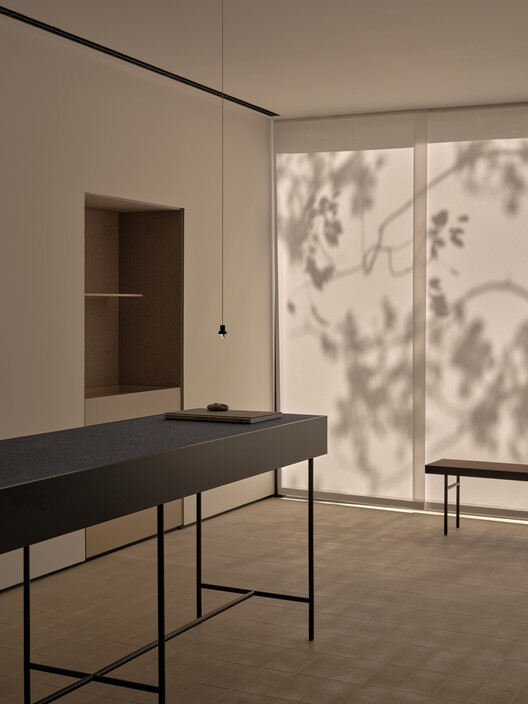
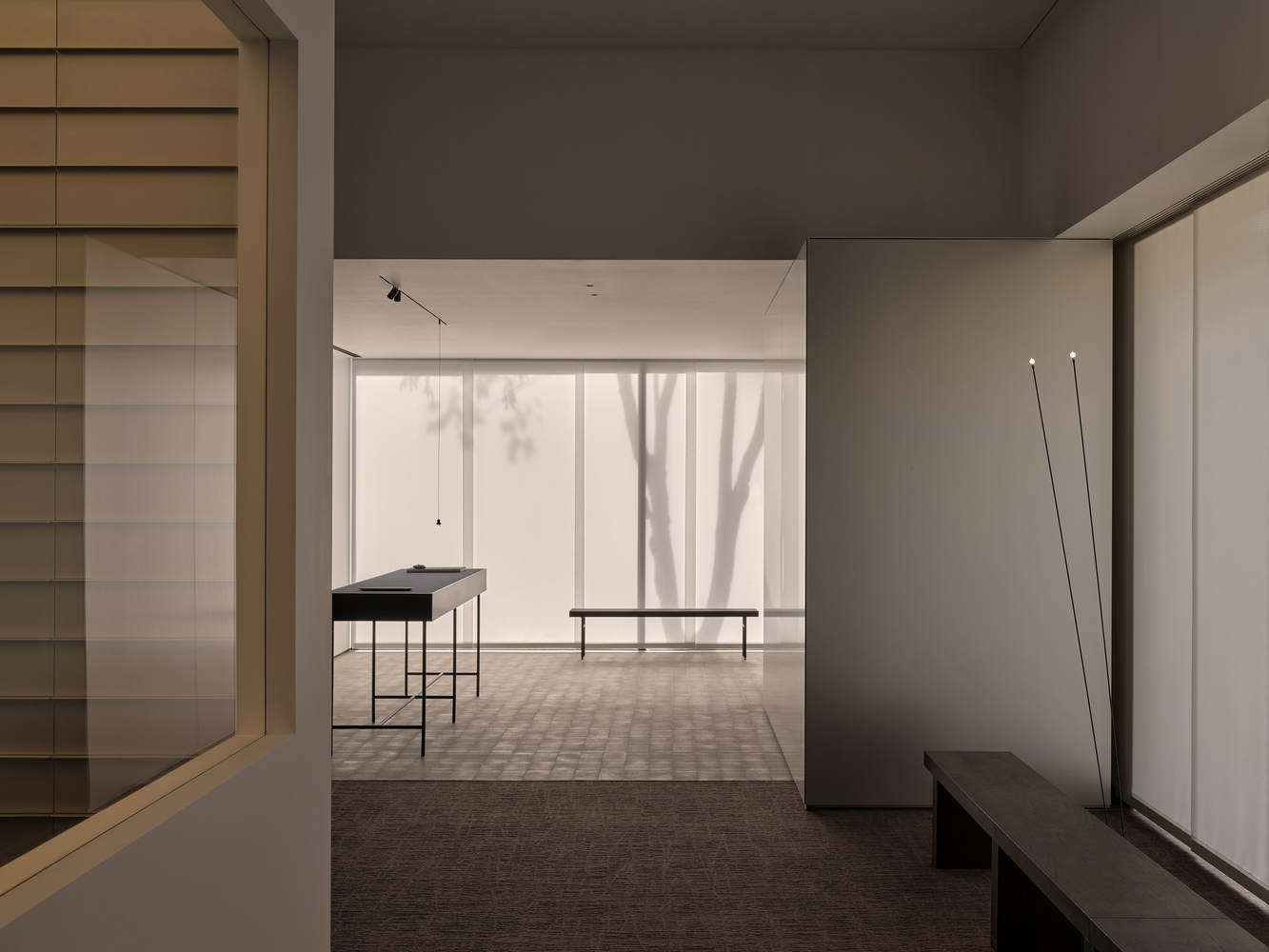
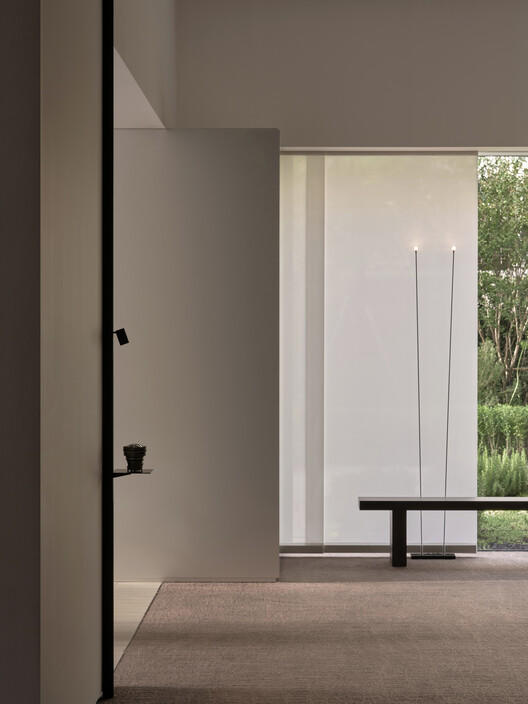
The northern exterior facade of the building employs an external shading system. This not only satisfies the gallery's need for relative privacy during exhibitions but also preserves the space's daylighting. This flexibility can also cope with the impact of solar radiation at different seasons and times on the interior space and greatly improves construction convenience.
北边的建筑外立面采用了外遮阳系统,不仅满足画廊在展览状态下对相对私密空间的需求,同时保留了空间的采光性。这种灵活也能应对不同季节与时段的日照对室内空间的影响,并很好地提升了施工的便捷性。