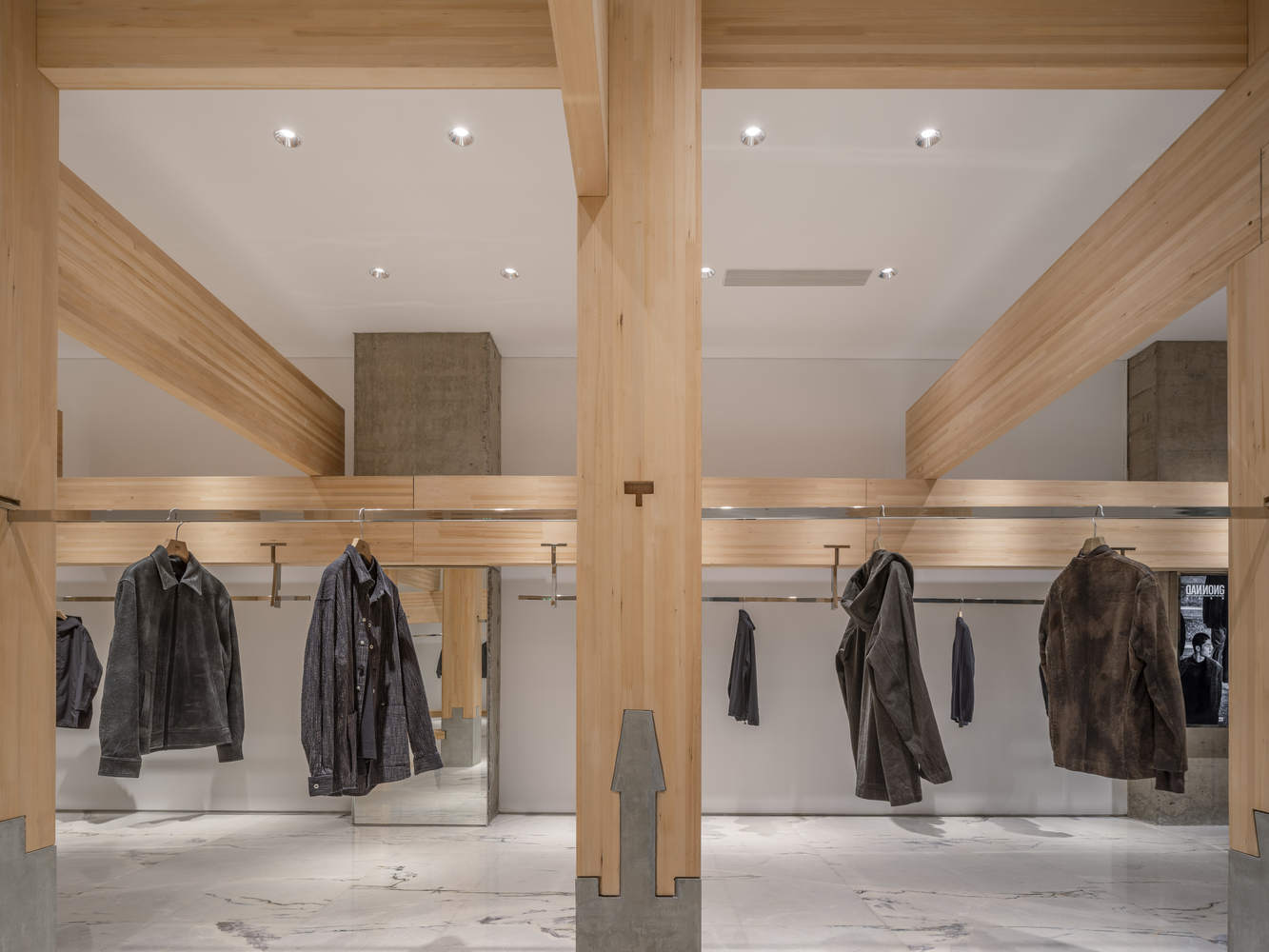
地域文脉的当代转译:该项目巧妙地将山西地区深厚的传统木构建筑文脉,特别是东方殿堂原型,植入到现代商业空间之中。设计以“三开间、四柱跨”的结构布局,呼应了传统正交木框架的线性和秩序感,成功地在现代混凝土框架结构内重构了历史的语境。这种对地域精神的精准捕捉和高水平的当代转译,使得空间不仅仅是一个商业场所,更是文化记忆的载体,实现了地域文脉与商业功能的有机融合。
结构逻辑与物质张力的对话:设计通过“框与衫”的对比,展现了深思熟虑的物质策略。厚重的木框架象征着传统木构的沉稳与分量,与轻柔悬挂的衣物形成了强烈的物质张力,突显了品牌“于细微处尽其工”的精神内涵。此外,设计将榫卯这一核心的东方营造智慧,以极其严谨和创新的方式融入到从基座到梁柱乃至次级构造的每一个细节中,展示了对结构美学和工艺深度的极致追求。
仪式感营造与精神空间构建:该设计超越了单纯的零售功能,致力于构建一个具有物性、秩序性和精神性的当代艺术场域。通过严谨的材料处理、克制的节奏感和明确的轴线序列,引导体验者在框架间穿行、沉思,将“着衣”这一日常行为提升为一种生活的仪式。这种对空间秩序的极致追求,有力地承载和落地了品牌“认真、纯粹、有序”的精神内核,使空间成为品牌理念的最佳物质载体。
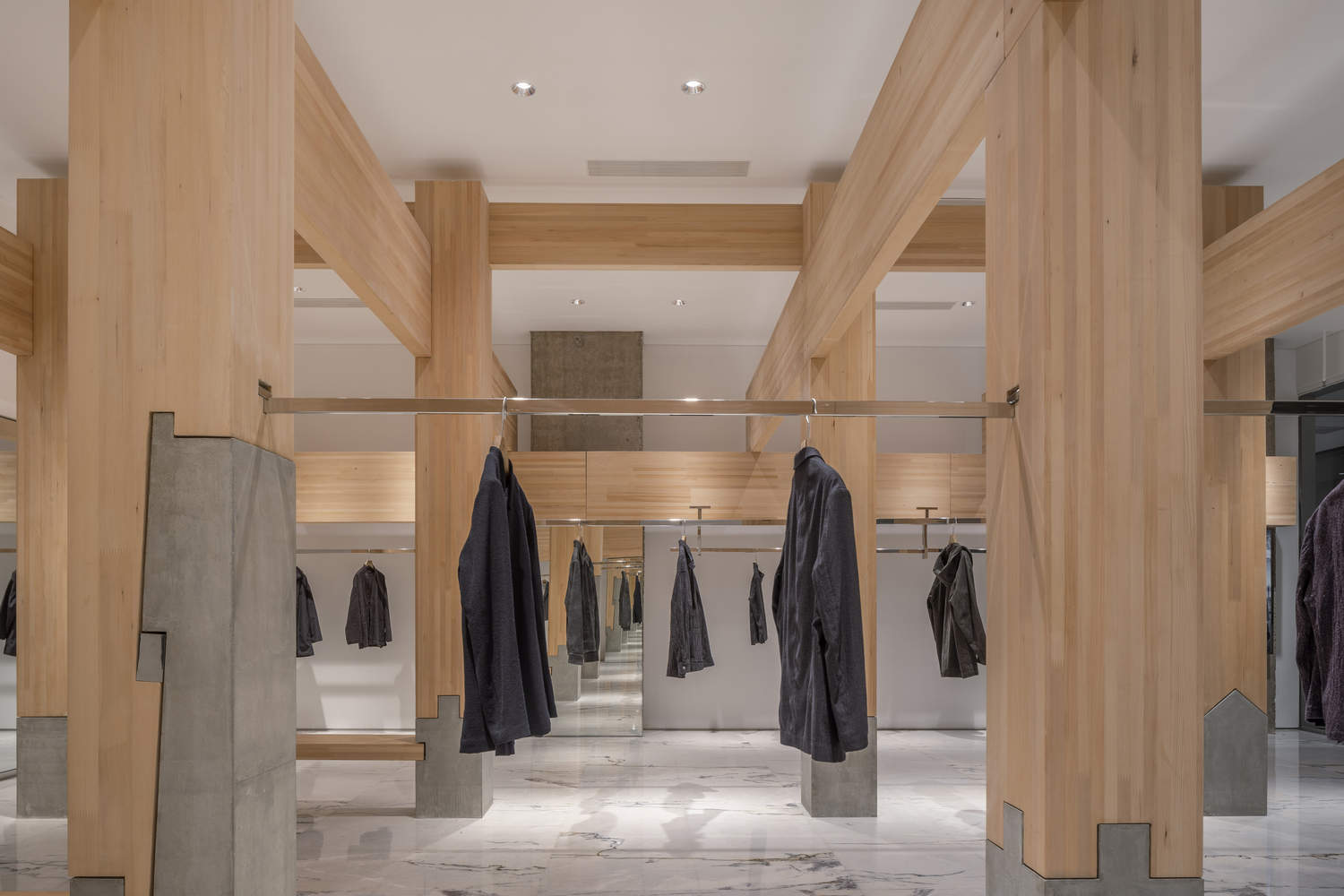
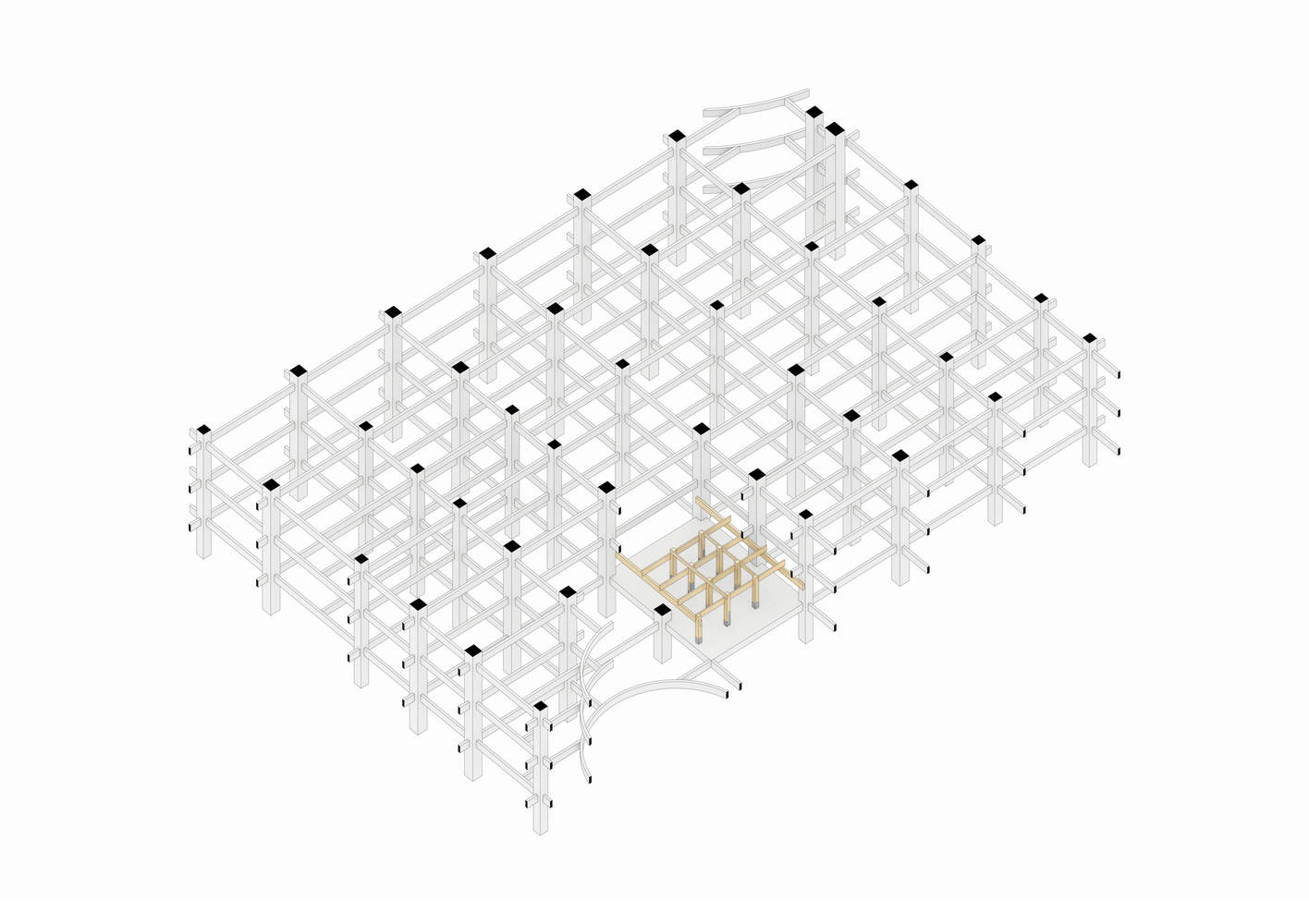
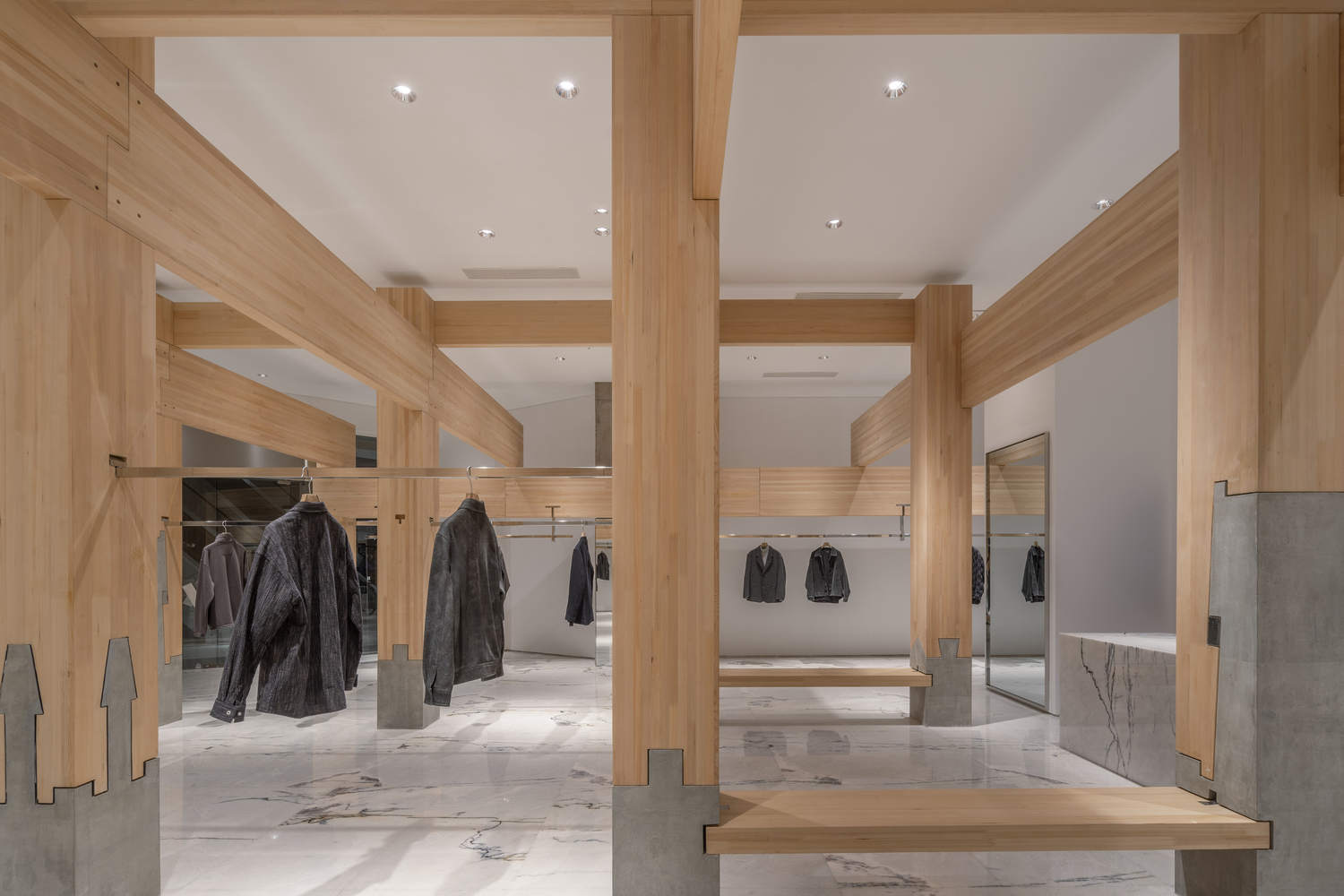
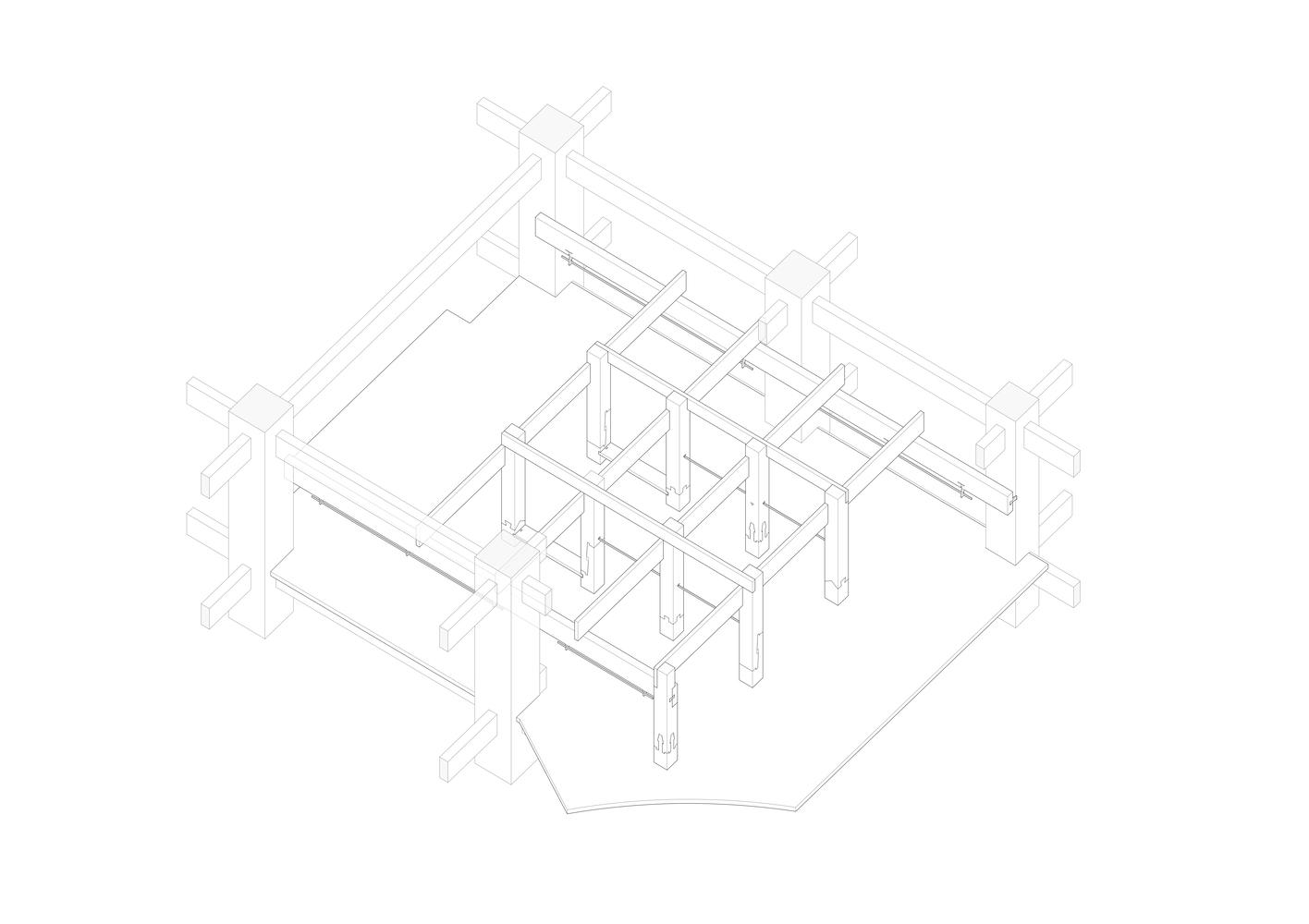
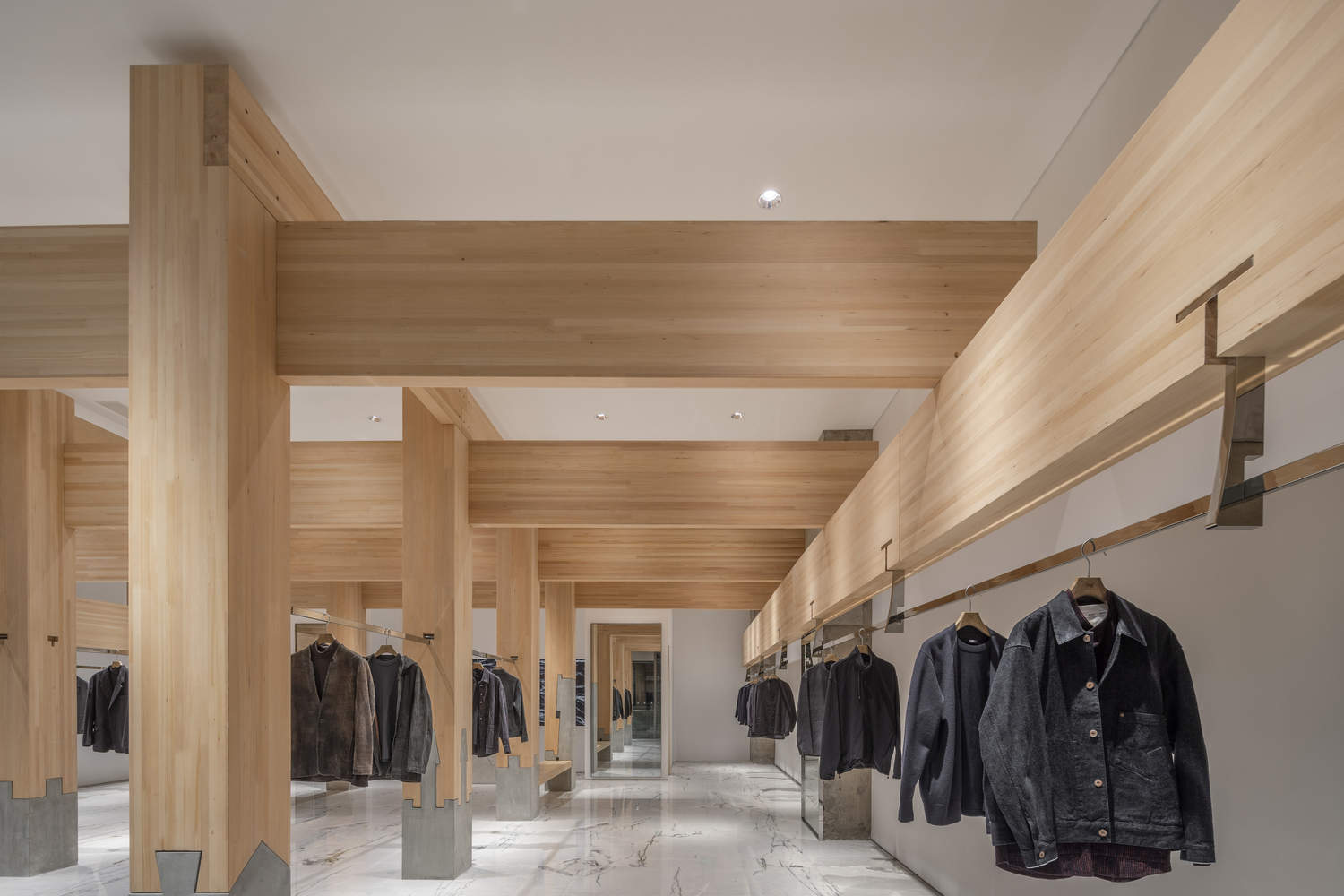
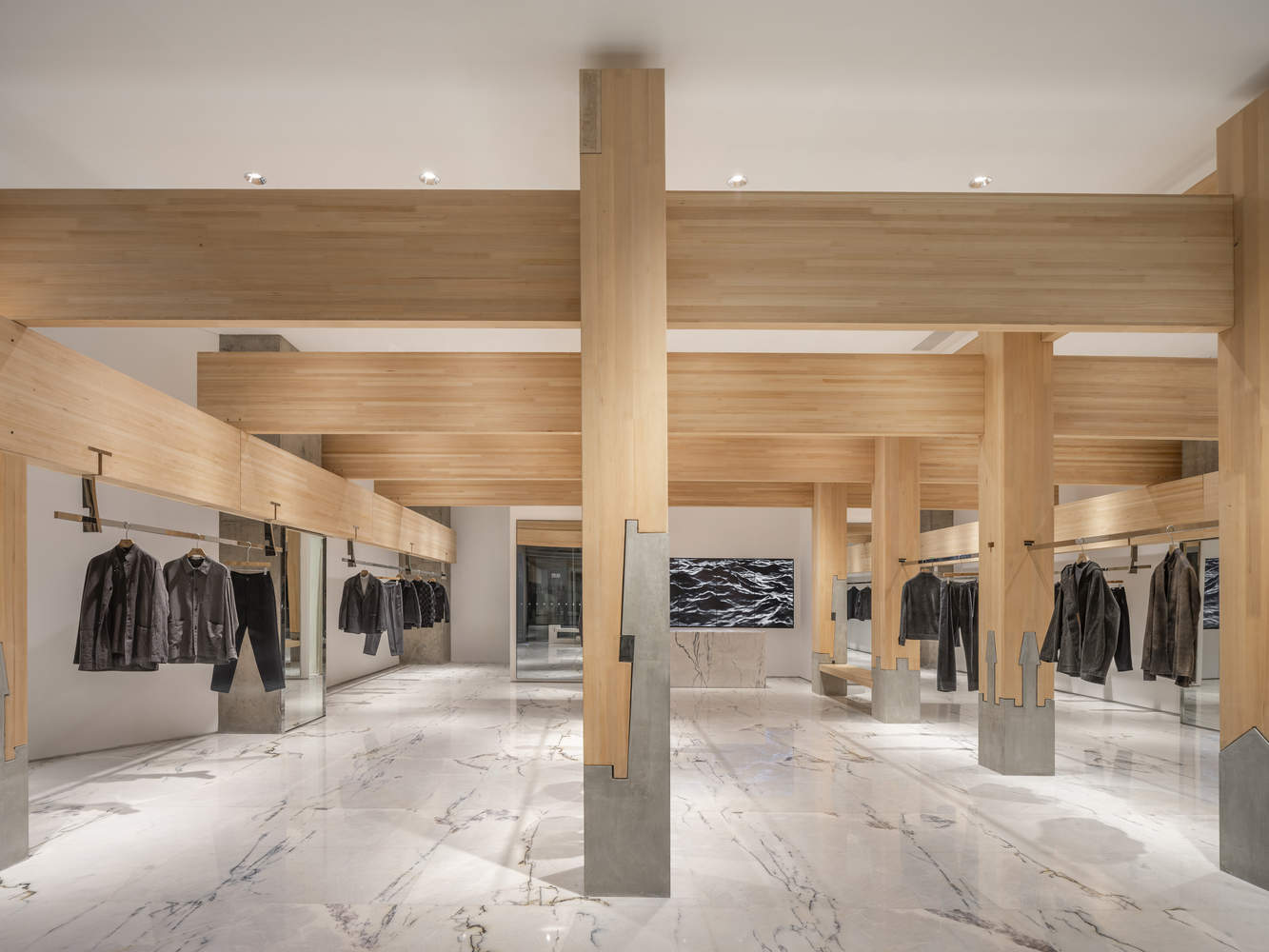
From a plan and section perspective, traditional Eastern wooden structures often exhibit a rectilinear orthogonal arrangement; in terms of graphics, both longitudinal and transverse directions are represented by "lines." The way clothing is hung is also primarily based on "lines," creating a high degree of compatibility between the two in a sense. This project is located within a modern urban public commercial space, where the main structure of the original building is reinforced concrete frame. By implanting a traditional wooden frame within this industrialized system, the design recalls the context of Shanxi's wooden architecture in a contemporary commercial setting. Based on the scale of the existing column spans of the shop, a "three-bay, four-column span" configuration was ultimately deemed appropriate. Consequently, the central bay naturally forms an axial sequence comprising the entrance, seating area, cashier desk, and main image backdrop wall, while the two end bays are equipped with long hanging rod displays for clothing. The suspended garments further reinforce the linear characteristics of the wooden beams and columns.
从平面与剖面视角观之,东方传统木构框架多呈纵横正交之势;于图形学层面,纵与横皆为“线”。衣物的悬挂方式同样以“线”为主,两者在某种意义上具有高度契合性。本案位于现代城市公共商业空间之中,原建筑主体为混凝土框架结构。在这一工业化体系内植入传统木构框架,使其在当代商业场景中回溯山西木构文脉。根据商铺既有柱跨的尺度,最终以“三开间、四柱跨”为宜。由此,中开间顺势生成入口、座椅区、收银台、主影像背景墙的轴线序列,两端开间则配置长挂杆衣物展列。悬挂的衣物进一步强化木梁与柱的线性特征。
© 金伟琦
Analysis Diagram
© 金伟琦
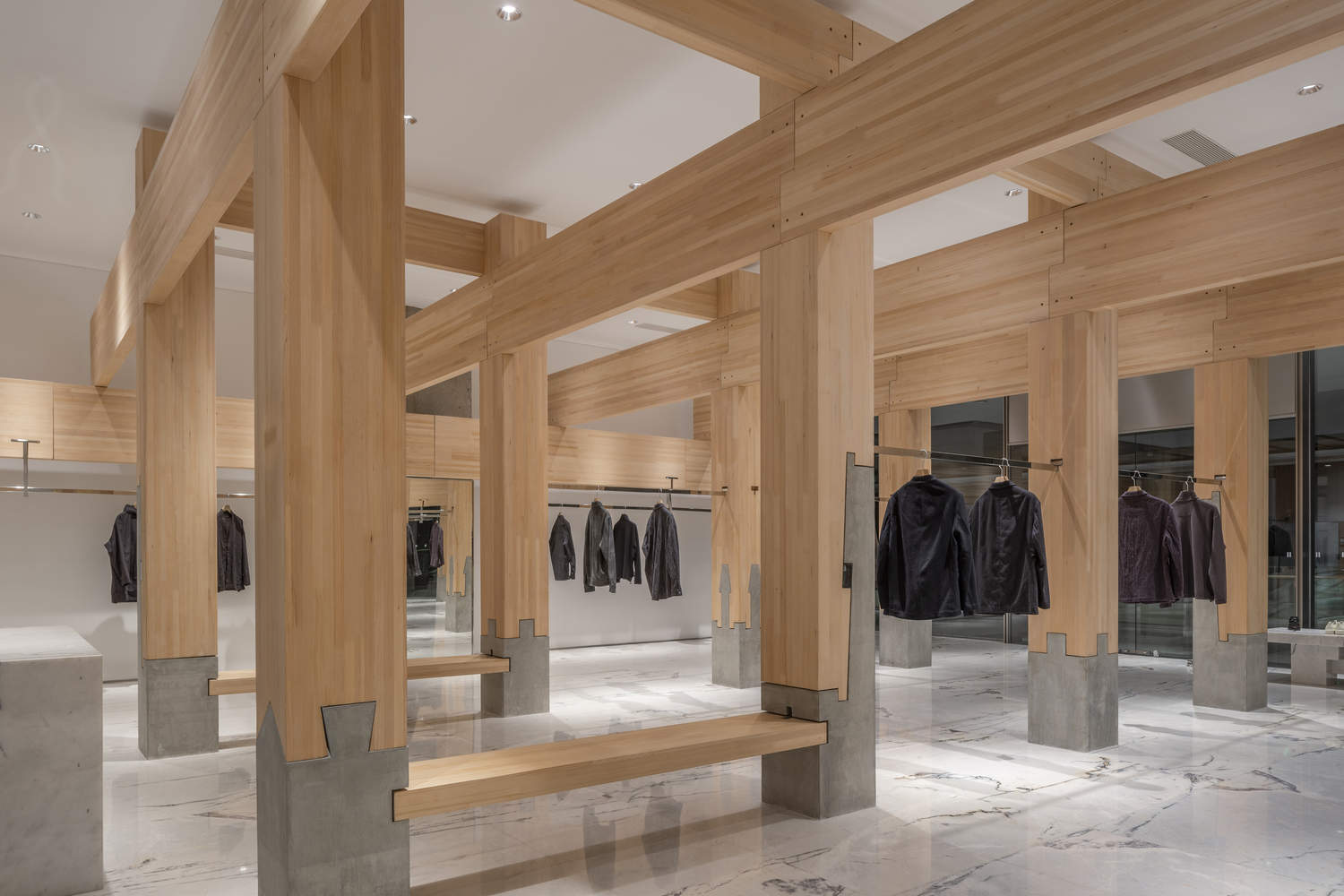
Shanxi traditional wooden structures, exemplified by Nanchan Temple and Foguang Temple, exhibit a strong sense of massiveness, with the scale of their thick timbers conveying significant weight. The choice of timber cross-section in this project also follows this principle, employing thick square timber to echo the characteristics of Jin-style wooden architecture. Beneath the heavy beams and trusses lie the soft textiles. Compared to the thick, heavy square timber, the clothing is presented as light and soft, and this contrast accentuates the material properties of both. It is akin to "magnificent beams suspending delicate objects," subtly aligning with the spirit in Dannong's garment-making: "achieving perfection in the minute details."
以南禅寺、佛光寺为例的山西传统木构,呈现出极强的厚重感,其粗壮木料的尺度给人以分量之重。本案的木料截面选择亦遵循此原则,以厚重的方木呼应晋地木构特征。厚重梁架之下,是轻柔的织物。相较粗、重方木,衣料以轻、柔示人,两者之对比使彼此的物质特性更为凸显。仿佛“大梁悬挂巧物”,暗合单农造衣中“于细微处尽其工”的精神。
© 金伟琦
Analysis Diagram
© 金伟琦
The Art of Mortise and Tenon
Mortise and tenon joinery, as a significant manifestation of Eastern wisdom and the concept of creation, not only carries cultural heritage but also holds critical structural significance in the pre-industrial era. Its "flexible" connection demonstrates remarkable resilience in earthquakes; furthermore, in small woodworking, various tenon joints can effectively accommodate deformation and cracking caused by changes in climate humidity.
榫卯之功
榫卯嵌合作为东方智慧与造物观念的重要显征,在前工业时代不仅承载文脉,更具有关键结构意义。其“柔性”连接在地震中表现出卓越的韧性;在小木作中,各类榫接亦能良好应对气候湿度差异带来的形变与开裂。
© 金伟琦
© 金伟琦
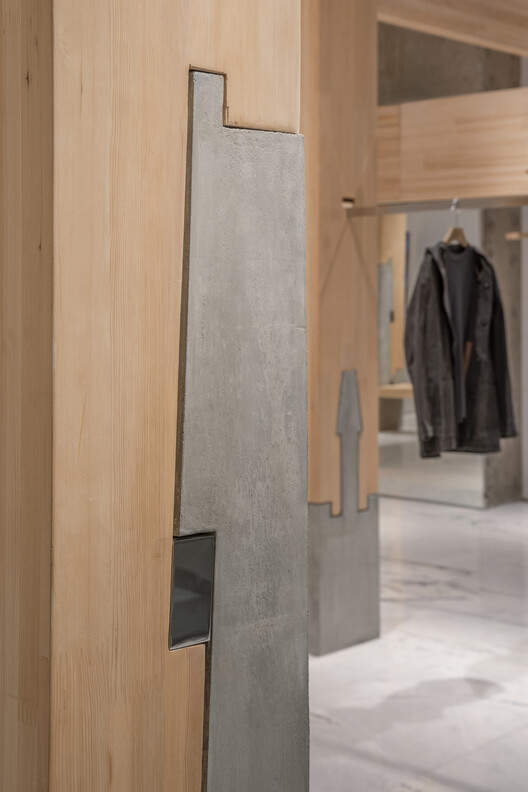
For example, a column at the northeast corner of an exterior wall at Nanchan Temple, damaged by insects, was repaired (reportedly in the Song Dynasty) using a "mantis-head tenon." Simulation revealed that this special tenon type can be inserted laterally, making it particularly suitable for corner repairs, showcasing the subtlety of the mortise and tenon mechanism.
南禅寺一处外墙东北角柱,因虫损而在唐之后(据称为宋)以“螳螂头榫”修复,通过模拟发现其特殊榫型可侧向推入,尤适合角部修补,体现了榫卯机制的精妙。
© 金伟琦
In this space, the design aims to implement the "Art of Mortise and Tenon" as follows:
1. Column tenons on the plinth:
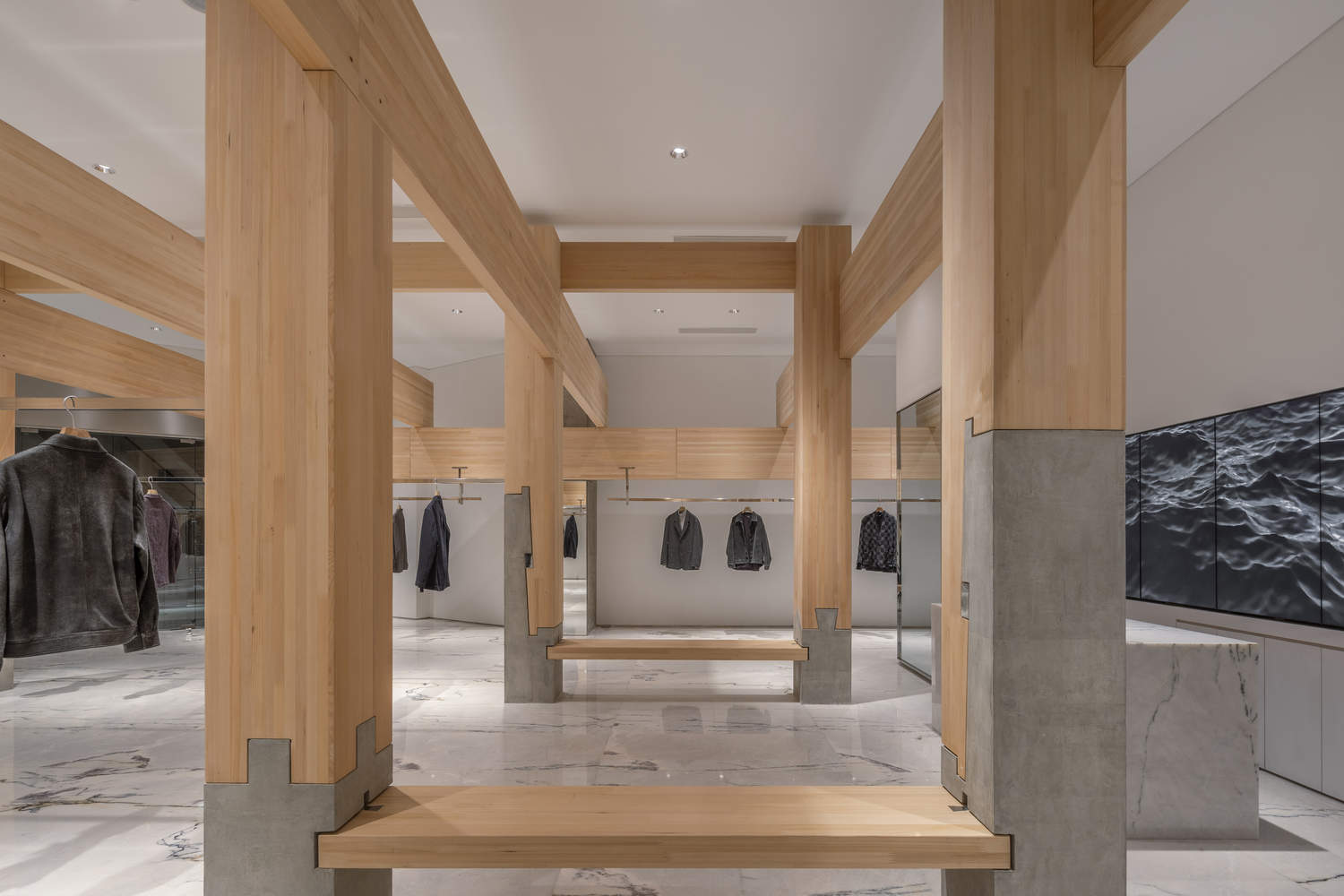
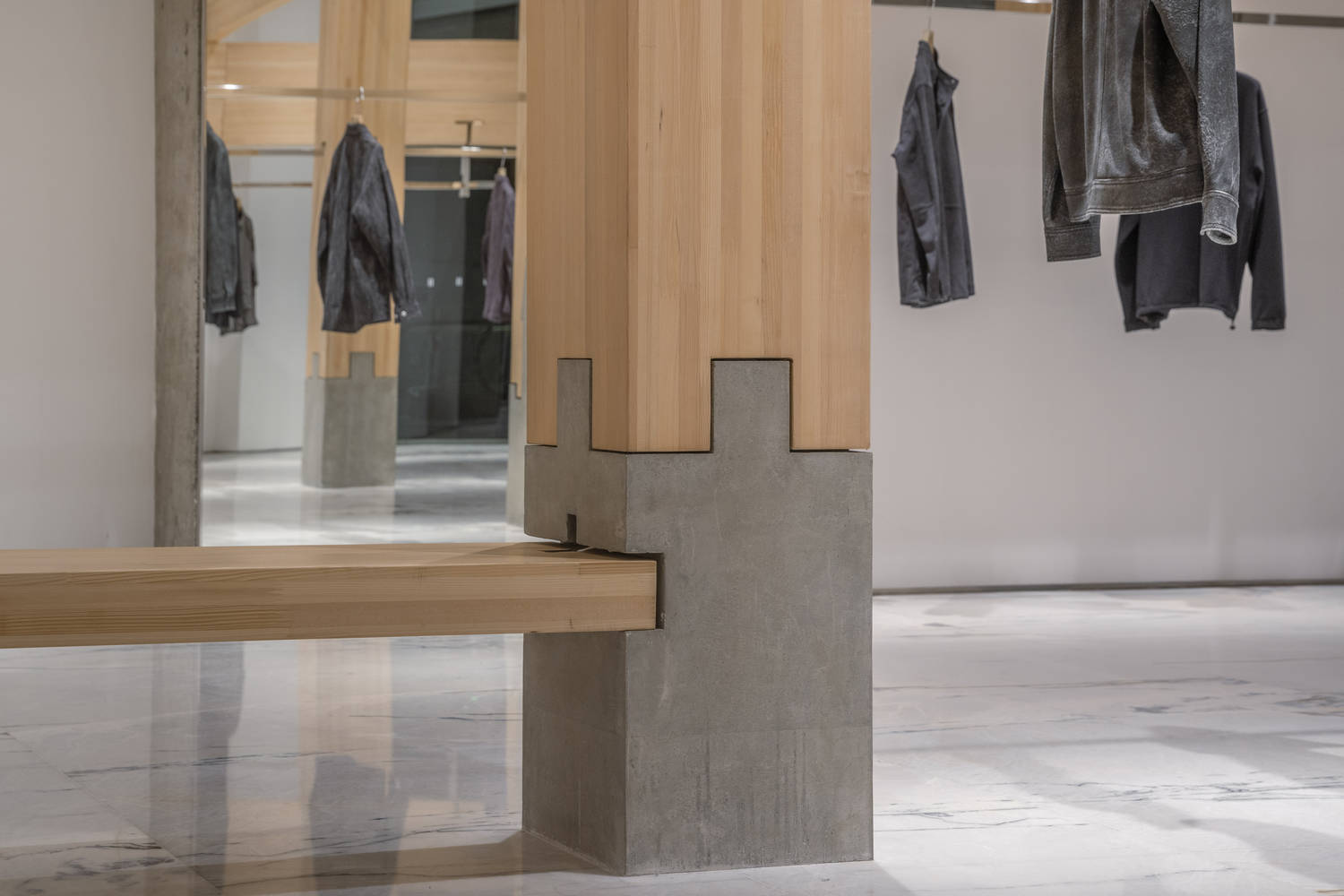
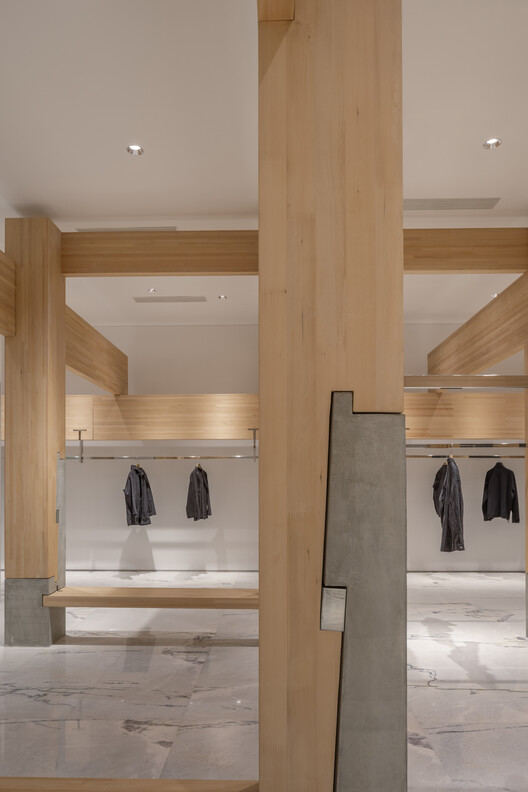
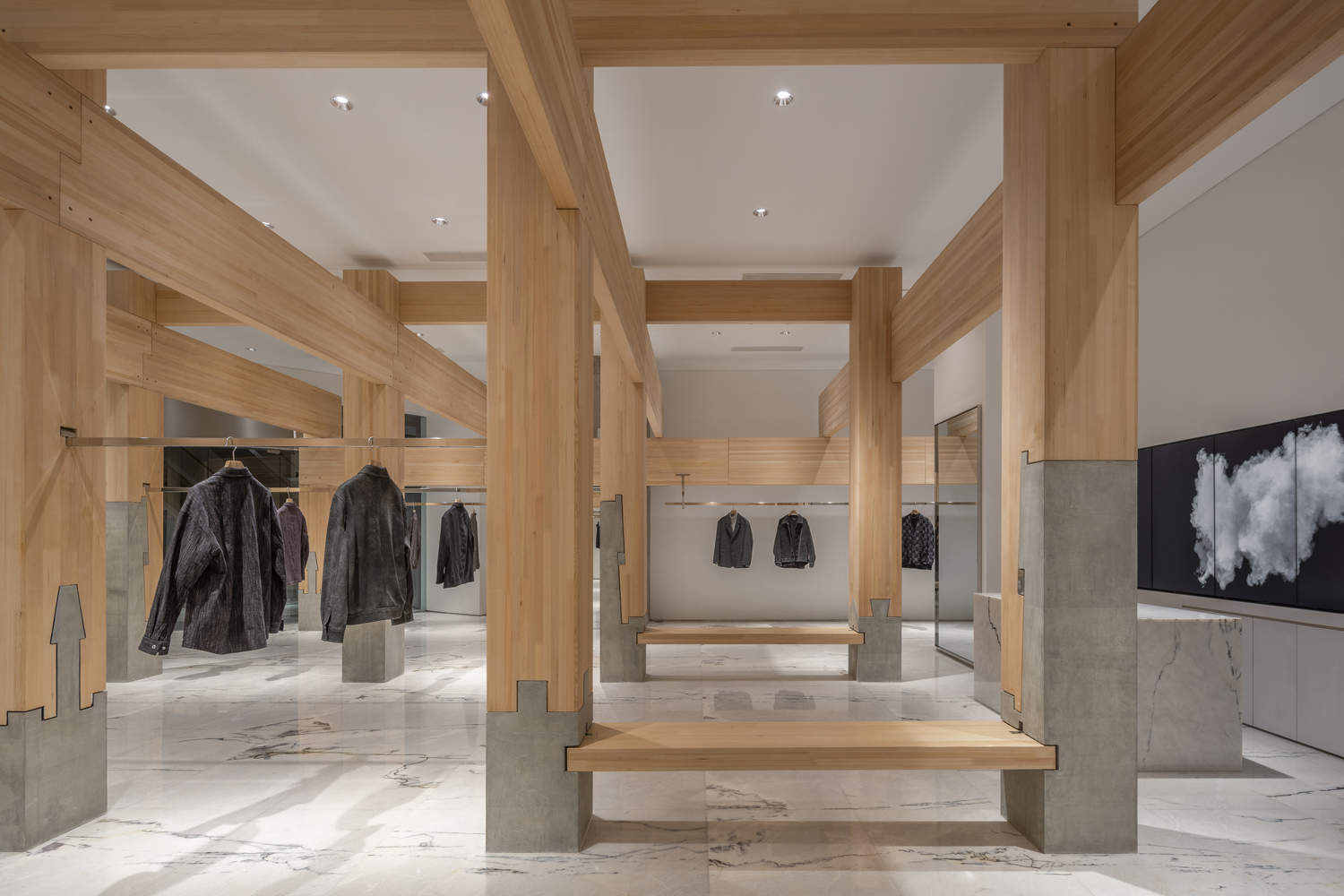
After researching, collecting, and studying numerous mortise and tenon materials and creating comparative models, four types of mortise and tenon joints were ultimately selected: the lateral oblique insertion tenon used in the Nanchan Temple repair was prioritized—the Mantis Head Tenon; two others are shorter forms featuring vertical interlocking—the Cross Tenon; a third is a taller form with a central locking pin and vertical interlocking—the Palm Tenon; and the final type is a complex form requiring lateral downward engagement along a 45° spatial path. These four types of mortise and tenon joints each possess distinct characteristics in form, logic, and installation path, giving the spatial details a rich layer of craftsmanship.
在此空间中,设计希望贯彻“榫卯之功”,具体如下:
1. 基座柱绌
查阅、收集、研讨大量榫卯资料并制作模型比对后,最终选定四种榫卯制式:南禅寺修复的侧向斜推榫被优先确定 —— 螳螂头榫;其他之二为上下垂直卡合的偏矮形式 —— 十字榫;之三为带中心梢锁、垂直卡合且更高的形式 —— 巴掌榫;以及最后一种需以 45° 空间路径侧下卡合的复杂形式。四类榫卯在形制、逻辑、安装路径上均各具特性,使空间细部呈现丰富工艺层次。
© 金伟琦
© 金伟琦
2. Mortise and tenon relationship between wooden columns and beams
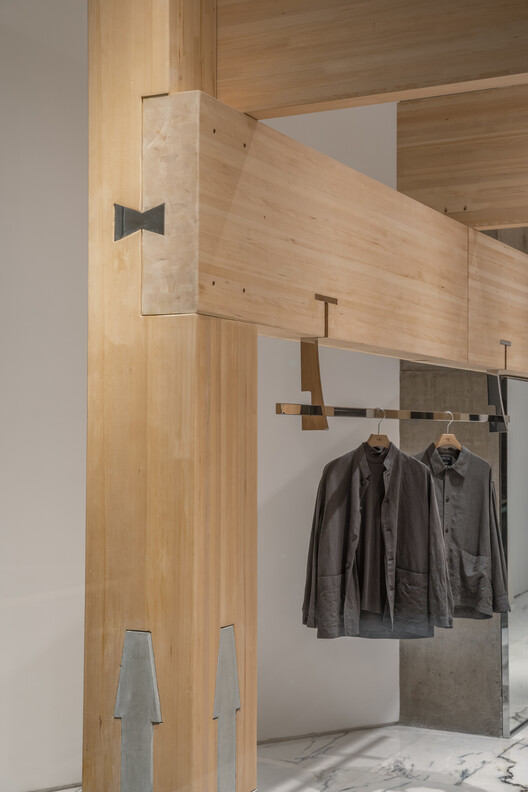
Although traditional stacked-beam wooden frames rarely use mortise and tenon joints between columns and beams, in order to maintain the overall construction logic, this project employs half-lap joints. Due to transportation and on-site installation constraints, the full-length wooden beams must be segmented, with these segment joints also treated with half-lap joints, ensuring that the details are clearly presented while retaining the structural mortise and tenon nature.
2. 木柱与梁的榫接关系
虽传统抬梁式木架多不在柱梁间使用榫卯,但为保持整体建造逻辑,本案采用半咬合榫接。由于运输与现场安装限制,通长的木梁须分段设置,分段处亦以半榫方式处理,使细节既清晰呈现,又保持结构榫卯性。
© 金伟琦
© 金伟琦
3. Integration of mortise and tenon in secondary structures such as hanging rods and seating:
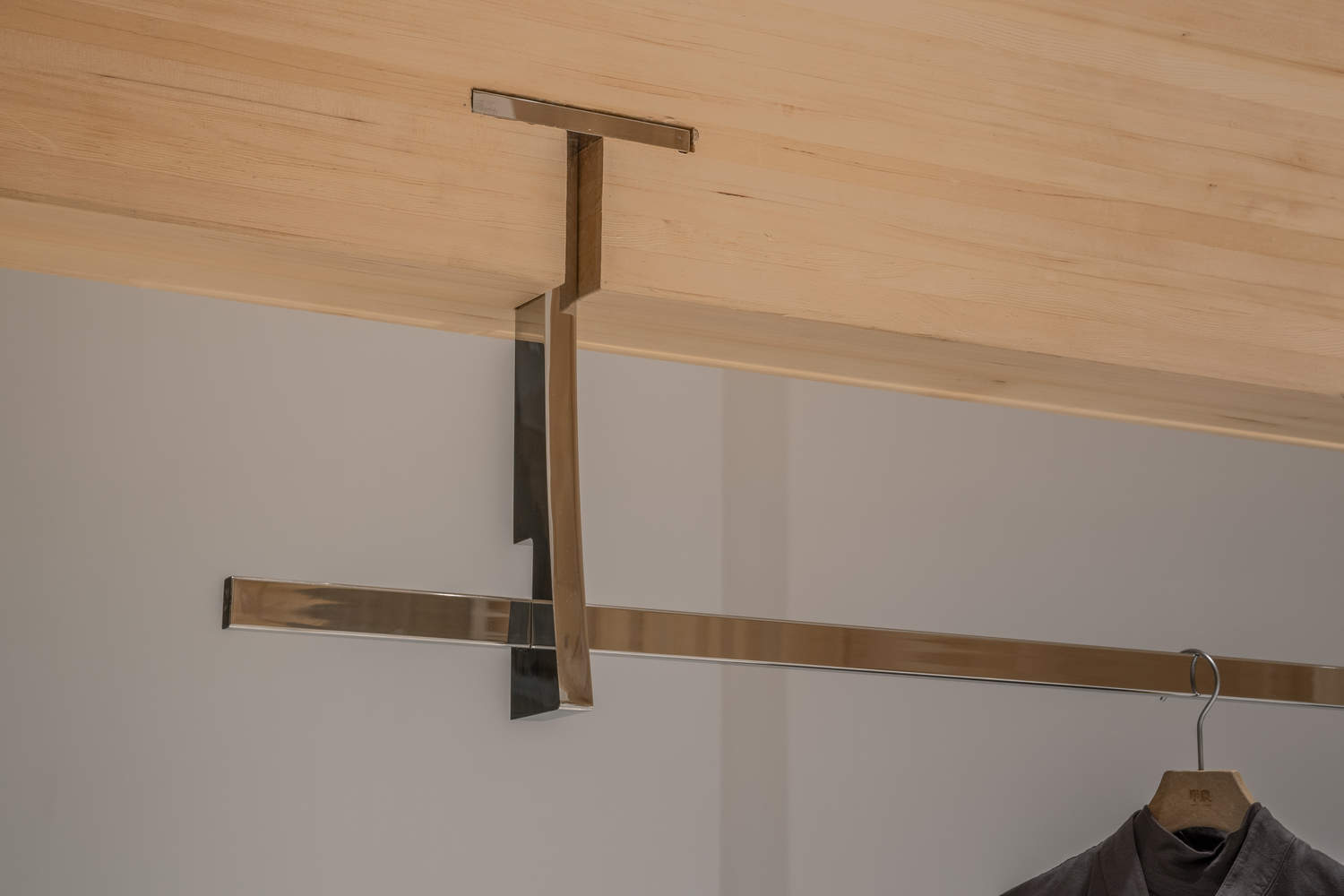
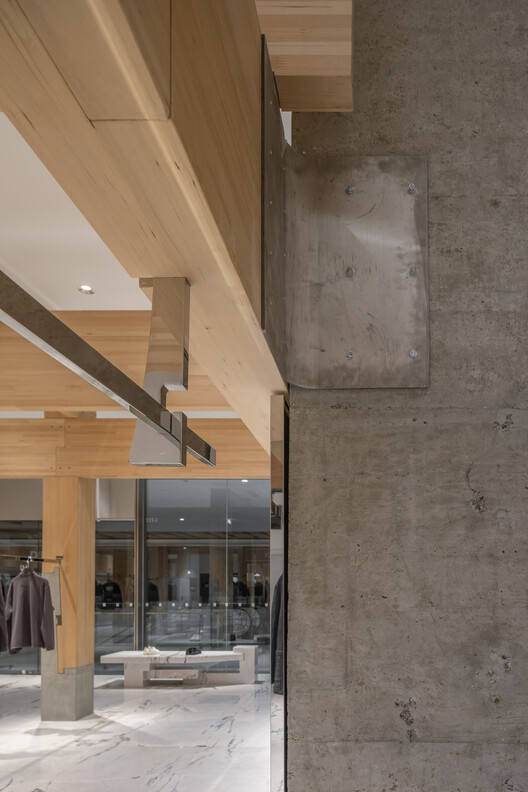
Traditional Eastern wooden construction emphasizes a unified logic between furniture and architectural components. The seating in the store is fitted into the concrete column tenons via mortise and tenon joints, making the furniture an integral part of the structural system; for the hanging rods, mortise openings are pre-drilled on the columns, and the metal rods are then inserted via lock-in joints, creating a building system unified in language with a scale transitioning from large to small.
3. 挂衣杆、坐具等次级构造的榫卯整合
东方传统木构讲究家具与建筑构件的统一逻辑。店中的坐具通过榫卯方式卡入混凝土柱绌,使家具成为结构系统一部分;挂衣杆则预先在柱上开卯口,再将金属杆以卡榫方式嵌入,形成尺度由大至小而语言统一的建造体系。
© 金伟琦
© 金伟琦
Ritual and Life
Consumption space is also human space. "City" implies enclosure and gathering; "Market" refers to the exchange of goods, or "consumption." In an era of material redundancy, "dressing" is no longer merely about protection from cold and covering the body, but a path for material to reach the spirit. Therefore, the initial purpose of this space for Dannong was not to "build a clothing store." When all garments are removed, the space should first and foremost be a contemporary work of art possessing materiality, order, and spirituality: constructing the field with authentic materials, rigorous joints, and a restrained rhythm. All materials are treated properly, responding to the logic of traditional wooden structures with a manner of investigating things.
仪式与生活
消费空间亦是人的空间。“城”意味着合围与聚集;“市”则指物的交换,即“消费”。于当下物质冗余的时代,“着衣”已不再只是御寒遮体,而是物质通往精神的路径。因此,单农此空间自始便不以“建造一间服装店”为目的。当所有衣物被抽离,空间首先应是一件具有物性、秩序性与精神性的当代艺术作品:以真实的材料、严谨的节点、克制的节奏构筑场域。物材都被妥善对待,以一种格物的姿态回应传统木构的逻辑。
© 金伟琦
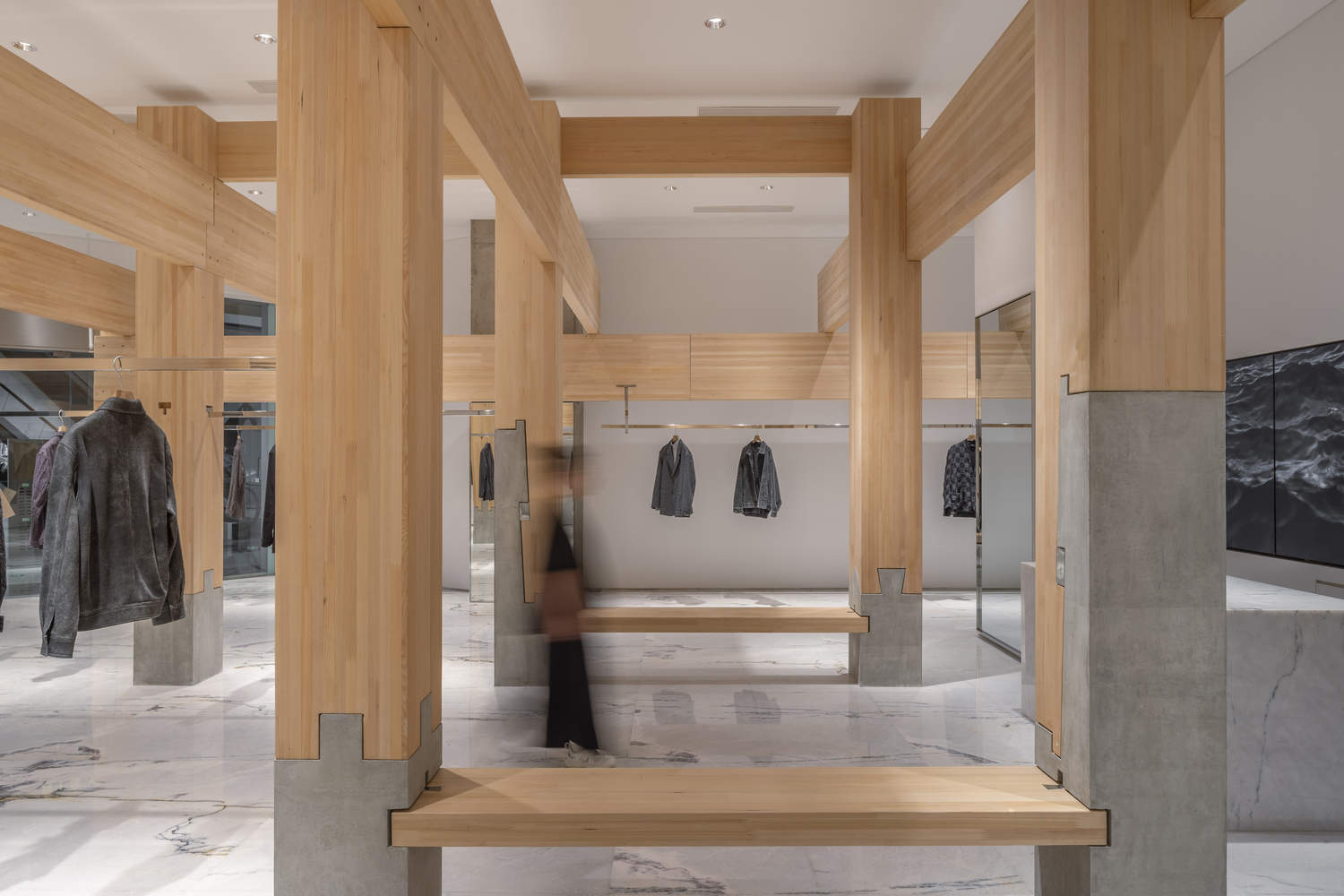
People walk between the frames, touch the materials, and observe the light and shadow, thereby establishing a deeper connection with the objects, the space, and themselves. It is precisely within this minimal yet condensed order that dressing becomes a ritualistic experience of life, truly realizing the brand spirit of "seriousness, purity, and order"—using space to elevate clothing, and using clothing to respond to life. "Selecting clothes, wearing clothes" thus becomes a ritual of life.
人们在框架之间穿行、触碰材质、观察光影,从而与物、与空间、与自身建立更深层次的联系。正是在这种极简而凝练的秩序中,穿衣成为生活的仪式体验,使“认真、纯粹、有序”的品牌精神得以真正落地 —— 以空间托举衣物,以衣物回应生活。“衣、择衣、着衣”成为一种生活的仪式。
© 金伟琦