场地适应性与功能整合:该项目巧妙地利用了基多拉维森蒂纳社区阶梯式地形的限制,将其转化为契合业主自行车生活方式的优势,并充分捕捉了朝向奥基山的壮丽景观。设计通过清晰的功能分区——满足了业主自用、女儿住宅及多功能公共空间的需求——展现了对客户生活方式的深刻理解。建筑的垂直布局和紧凑形态最大化了庭院面积,通过梯形庭院优化了日照采光,同时将现有景观元素如桉树整合入设计,体现了高度的场地适应性与多功能需求的高度集成。
韧性策略与研究驱动的建造:该住宅不仅是居住空间,更是机械工程师主导的韧性建筑研究的“活体实验室”。通过在结构中嵌入传感器收集数据,验证其在赤道地区的性能,项目实现了研究与实践的紧密结合。结构上,采用高强度桉原木作为骨架,结合砖砌外墙提供刚性支撑,解决了地震带的结构挑战。这种策略结合了对本地资源的创新应用和对建筑性能的科学验证,使之成为一个可复制的城市韧性住宅范例。
生态循环与社区构建:项目在材料选择和被动式设计上展现了对环境影响的深刻反思。结构采用本地林地中用于生态恢复的桉树原木,显著降低了隐含碳排放,并最大化材料利用率。砖墙则利用其热质量实现被动式热调节,使室内热舒适时长大幅提升。更重要的是,建筑通过取消围墙、增加街道可见度等设计手法,积极促进了社区的自发监督与社交互动。中央渗水庭院则体现了对城市水文系统的关怀,强调个体行动对宏观环境改善的积极贡献。
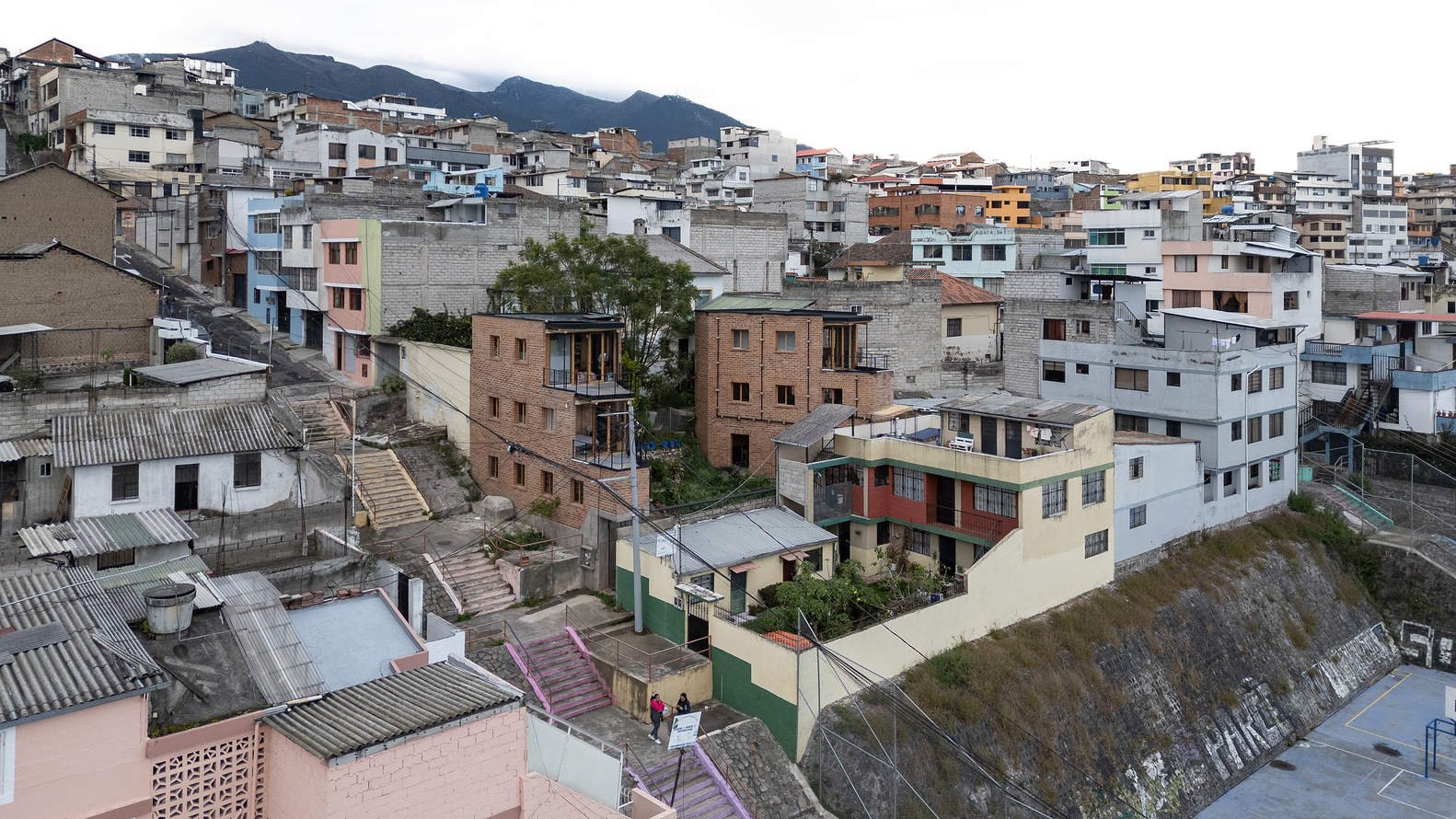
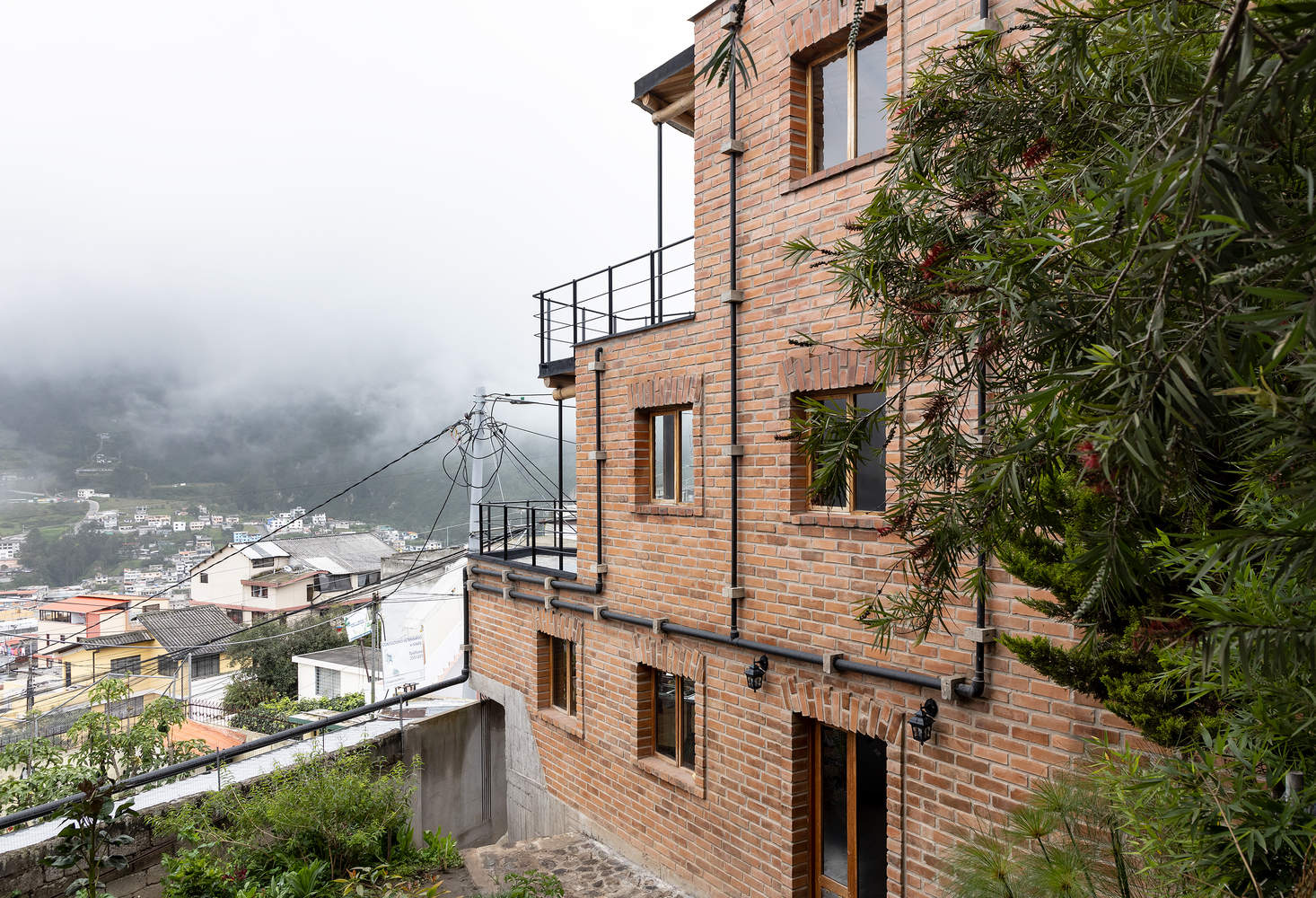
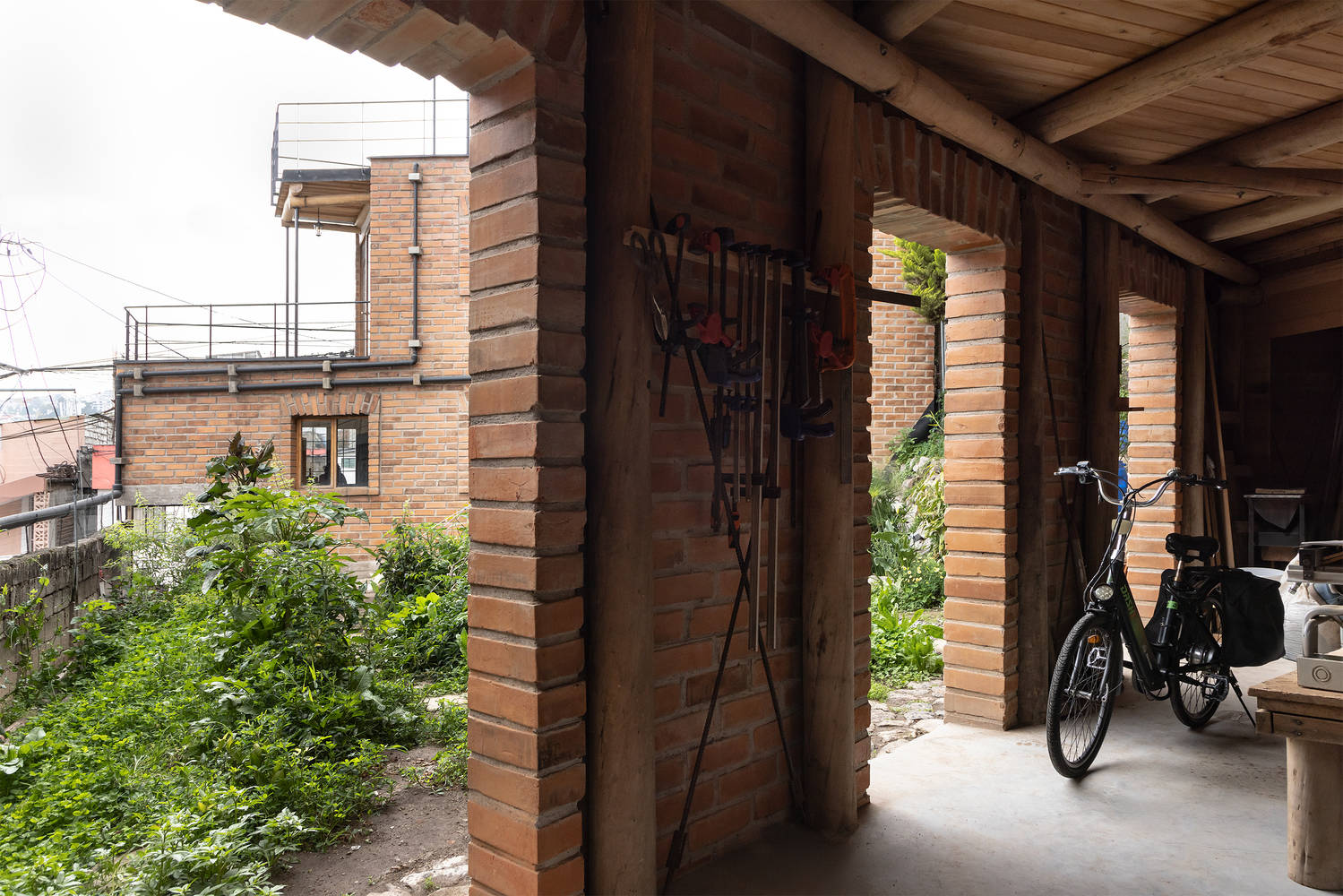
This project is located in La Vicentina, a traditional middle-class neighborhood in Quito, Ecuador. The plot is situated on a stepped area, which made building a parking lot impossible, but this was far from a disadvantage, as it aligned with the owners' lifestyle, who frequently travel by bicycle. Furthermore, the hillside topography offered an opportunity to take full advantage of the views facing Cerro Auqui. In addition to these conditions, there were the client's needs: a residence for themselves, a small residence for their daughter, and a multipurpose public space that could function as a studio or social area.
该项目位于厄瓜多尔基多一个传统中产阶级社区——拉维森蒂纳(La Vicentina)。地块位于一段阶梯之上,这使得建造停车场成为不可能,但这远非劣势,反而与业主的生活方式相契合,因为业主经常骑自行车出行。此外,山坡地形提供了一个机会,可以充分利用朝向奥基山(Cerro Auqui)的景观。除这些条件外,还有客户的需求:一处供自己使用的住宅、一处给女儿的小住宅,以及一个多功能公共空间,该空间可用作工作室或社交区域。
© JAG Studio
© JAG Studio
© JAG Studio
This house is a personal project of Freddy Ordóñez, a mechanical engineer, university professor, and head of the SCINERGY research group at the National Polytechnic School. The project demonstrates the feasibility of building a resilient dwelling in an urban area, with strategies that can be replicated and scaled in the equatorial region. The house is equipped with sensors capable of generating data for the research group to analyze and verify its proper functioning.
这所房子是机械工程师、大学教授兼国立理工学院 SCINERGY 研究小组负责人弗雷迪·奥多涅斯(Freddy Ordóñez)的个人项目。该项目展示了在城市地区建造一座具有韧性的住宅的可行性,其策略可在赤道地区复制推广。这所房子已配备了传感器,能够生成数据,供研究小组分析以验证其运行是否正常。
© JAG Studio
© JAG Studio
© JAG Studio
Community Building
社区建设
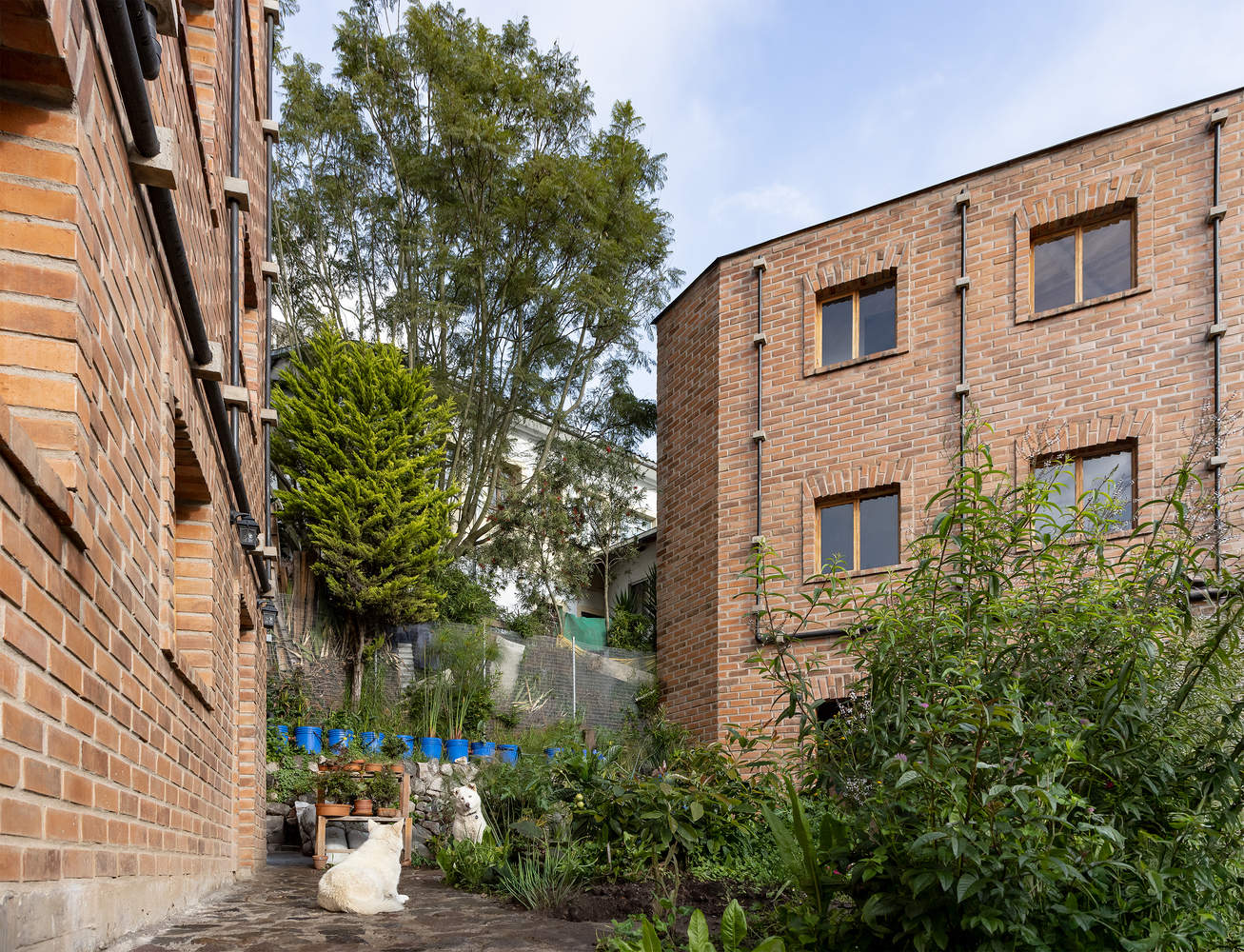
The building's massing emphasizes verticality to free up ground floor space. The design creates two slender building volumes to maximize courtyard surface area. This compact layout forms a central courtyard connected to adjacent ones, integrating the existing Eucalyptus tree. The courtyard is trapezoidal, a result of tapering the east end and expanding the west end to optimize sun exposure and daylighting.
项目造型注重垂直性,以腾出一楼空间。设计打造了两个细长的建筑体量,以最大化庭院表面积。这种紧凑布局形成了一个中央庭院,该庭院与相邻庭院相连,并将现有的桉树融入其中。庭院呈梯形,这是通过缩减东端、扩展西端以优化日照采光效果的结果。
© JAG Studio
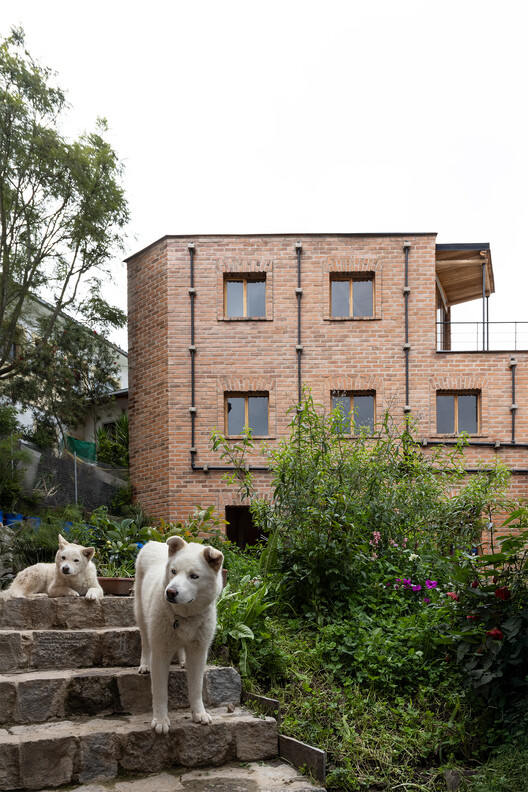
The narrow floor plates mean each level is assigned a primary function: the ground floor for social areas, the second floor for a bedroom and a study, and the third floor for another bedroom. The required area for each floor progressively decreases, allowing them to be set back layer by layer, thus forming east-facing terraces. These terraces offer open views, capture solar radiation, connect with the surrounding community, and strengthen the link to the outside.
楼层狭窄意味着每层都分配有主要功能:一楼为社交区域,二楼设有一间卧室和一间书房,三楼则设有另一间卧室。各楼层所需面积逐步缩减,使得楼层可以逐层退进,从而形成朝东的露台。这些露台视野开阔,可捕捉太阳辐射,与周边社区相连,并强化了与外界的联系。
© JAG Studio
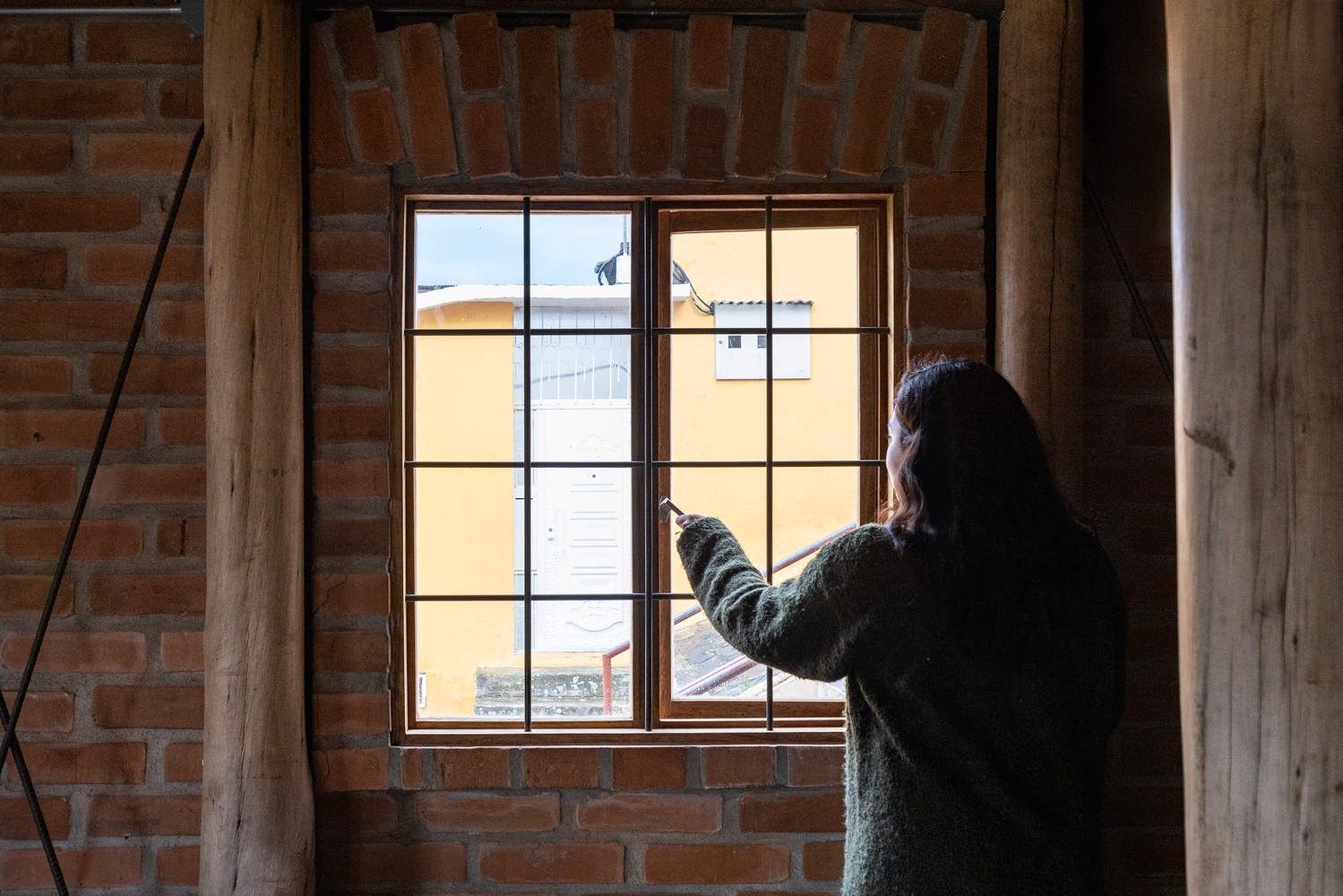
The absence of a perimeter fence between the building and the street, and the orientation of the windows towards public spaces, were not accidental. These design decisions foster spontaneous community supervision, as increased visibility deters criminal activity while promoting social interaction and enhancing a sense of belonging. Thus, the building not only meets the client’s need to connect with the community but also becomes an active tool for its construction.
建筑与街道之间未设围墙,且窗户朝向公共空间,这并非偶然。这些设计决策促成了社区的自发监督,因为更高的可见度可威慑犯罪行为,同时促进社交互动,增强社区归属感。因此,该建筑不仅满足了客户与社区建立联系的需求,还成为构建社区的积极工具。
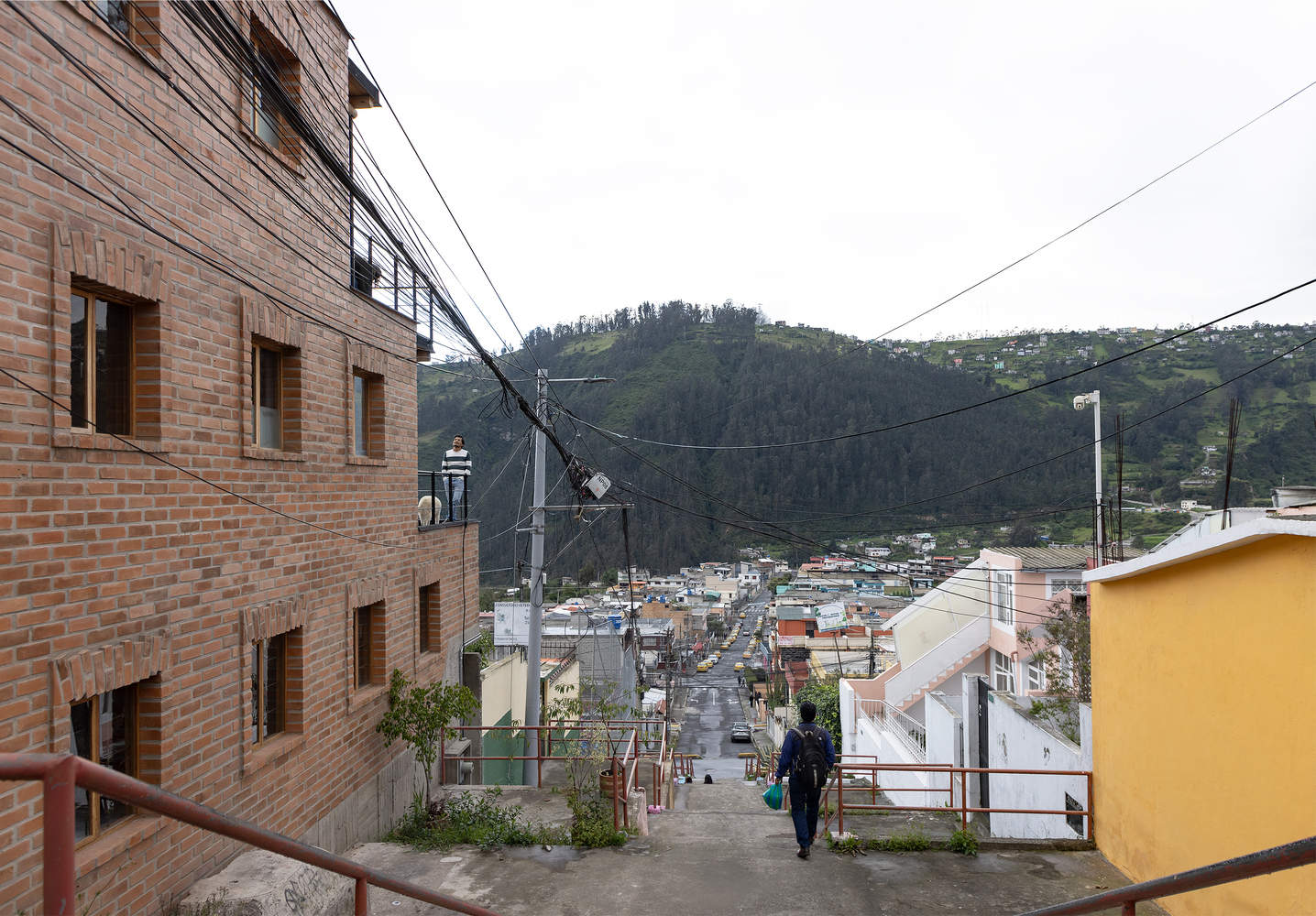
© JAG Studio
Gifts from the Environment
环境赋予我们的馈赠
In Quito’s landscape, the presence of Eucalyptus trees serves as a reminder of past decisions and their long-term consequences. Introduced to Ecuador during the government of Gabriel García Moreno in 1865, Eucalyptus was promoted as a fast-growing resource for construction and reforestation. However, its invasive nature had a negative impact on the Andean ecosystem: Eucalyptus groves expanded rapidly, impeding the growth of native species and leading to soil erosion.
在基多的景观中,桉树的存在提醒着人们过去决策及其长期后果。1865 年,加布里埃尔·加西亚·莫雷诺政府期间,桉树被引入厄瓜多尔,作为快速生长的建筑和造林资源加以推广。然而,其入侵性对安第斯生态系统产生了负面影响:桉树林迅速扩张,阻碍了本地物种的生长,并导致土壤侵蚀。
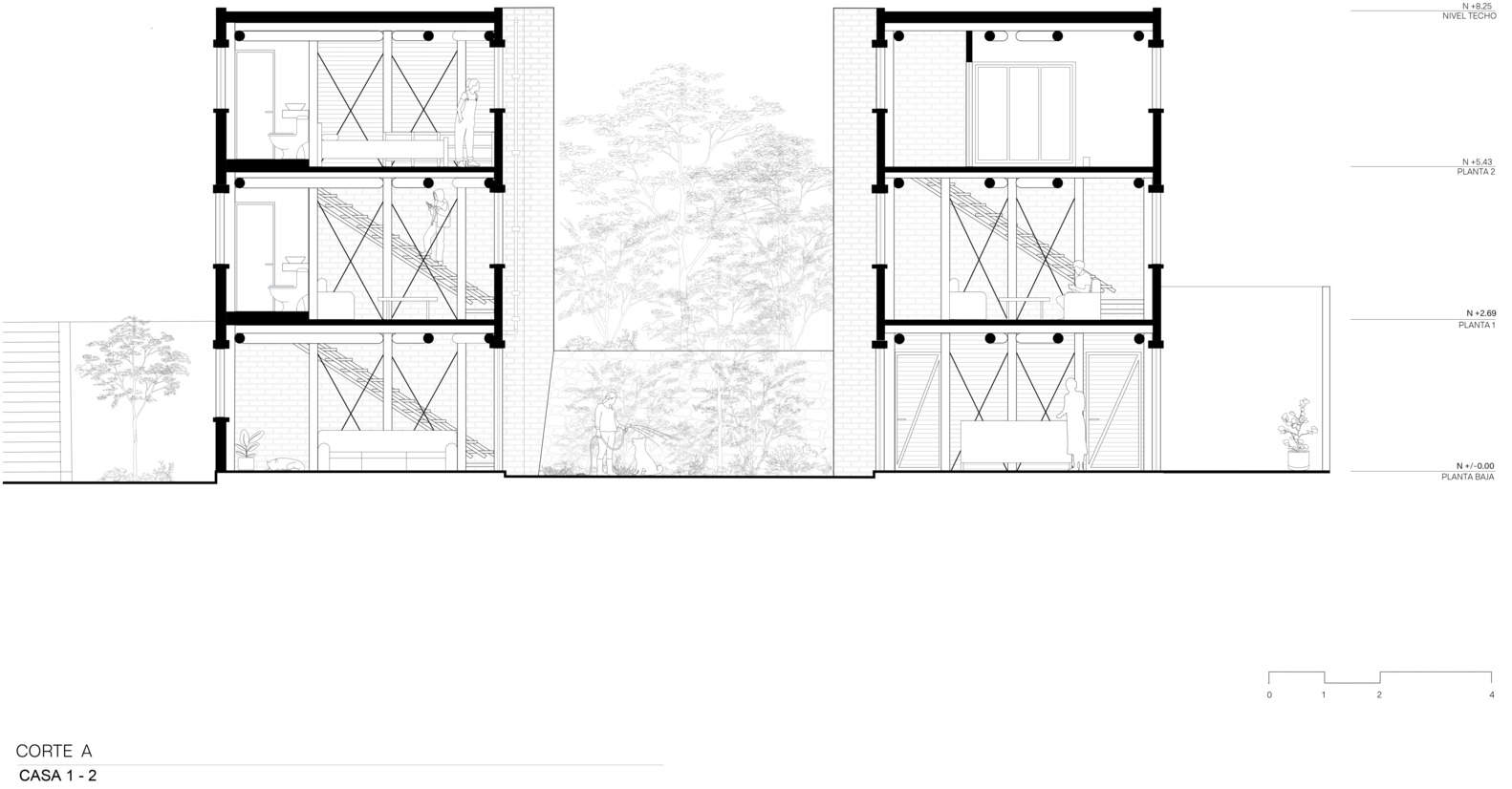
Section
剖面图
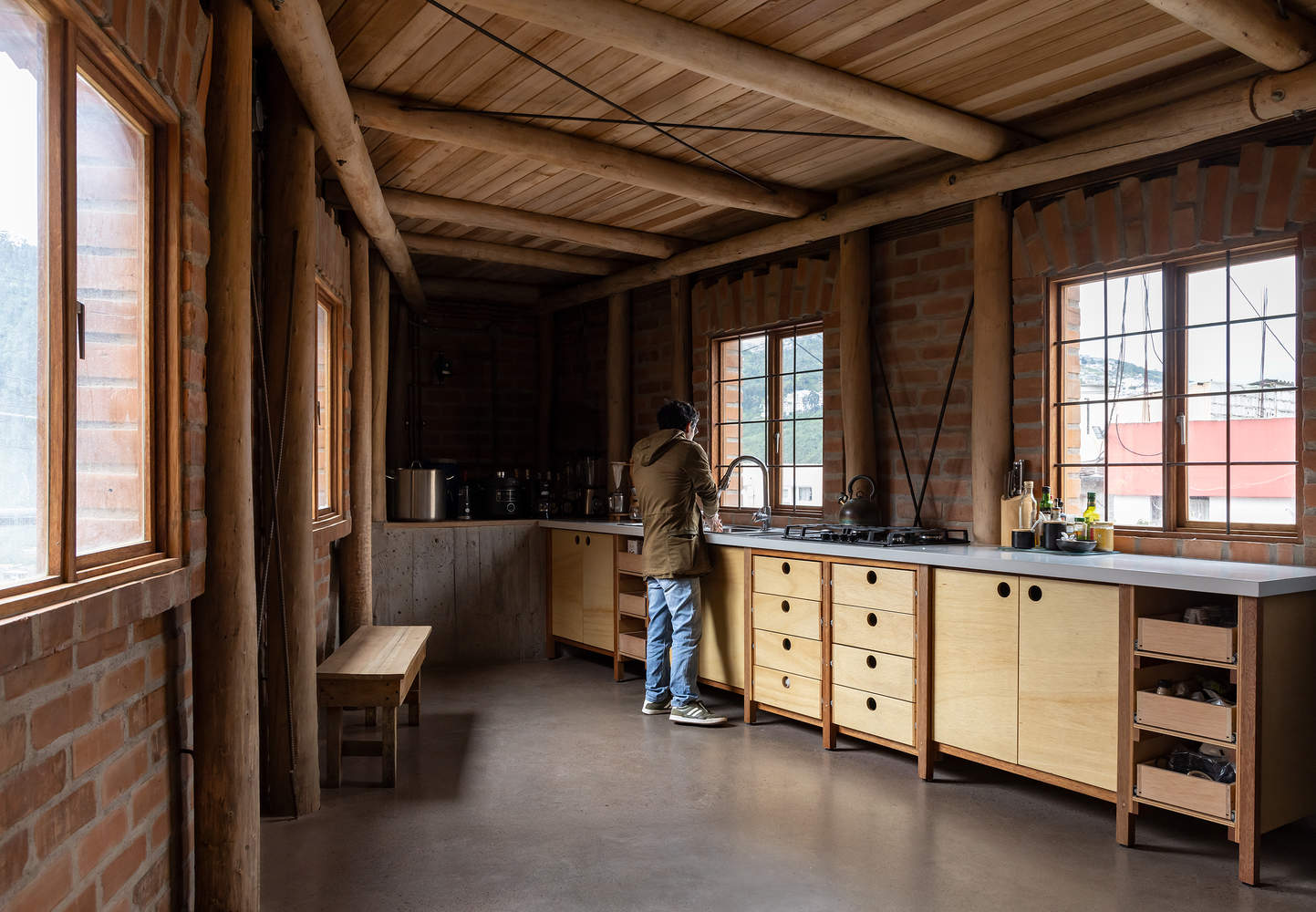
In this project, the columns are made of 9-meter-long Eucalyptus logs, which did not pose a complex technical requirement. These logs were sourced from a nearby forest 12.3 km from the project site, where the owners are replacing Eucalyptus with native species to restore ecological balance. Furthermore, the proximity of the forest allowed for full control over the entire process and ensured material traceability, which is often complex in conventional construction.
在本项目中,立柱采用 9 米长的桉原木(桉树原木)制成,这并不构成复杂的技术要求。这些原木取自距项目现场 12.3 公里的附近森林,业主正在该森林中用本地物种替代桉树,以恢复生态平衡。此外,森林距离较近便于对整个过程进行全面控制,并确保材料可追溯性,这在传统建筑中往往较为复杂。
© JAG Studio
Building with logs offers significant efficiency as it eliminates the wood processing and transformation stages. Utilizing the logs in their natural state maximizes material use, reducing the energy consumption and waste generated during industrialization to obtain standardized orthogonal components. Consequently, choosing logs for the structure significantly lowers both embodied and operational carbon emissions.
使用原木建造具有显著效率,因为它省去了木材加工和转化过程。利用原木的自然状态可最大限度地利用材料,减少工业化过程中为获取标准尺寸的正交构件而产生的能源消耗和废弃物。因此,选择原木作为建筑结构可显著降低隐含碳和运营碳排放。
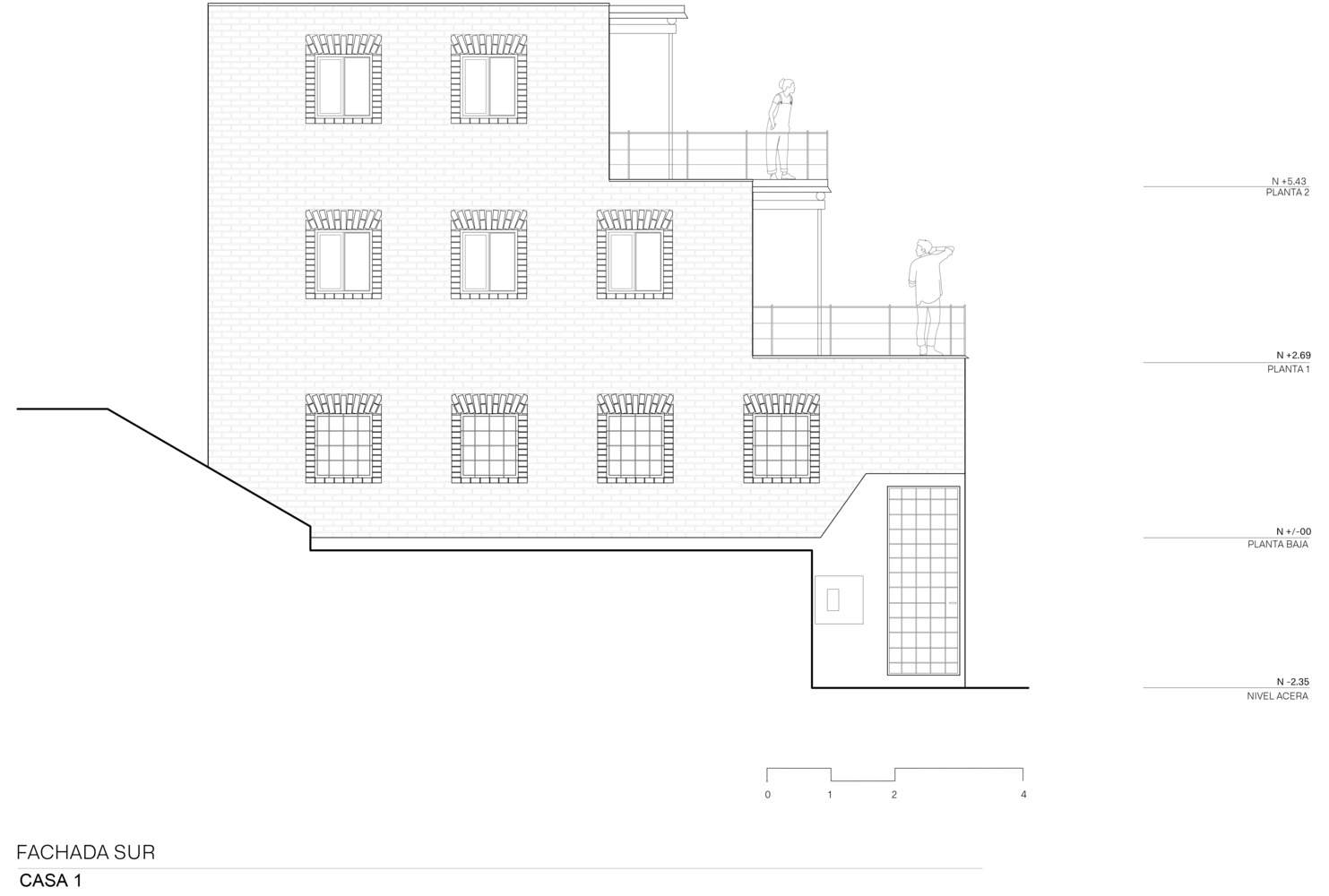
South Elevation
立面图
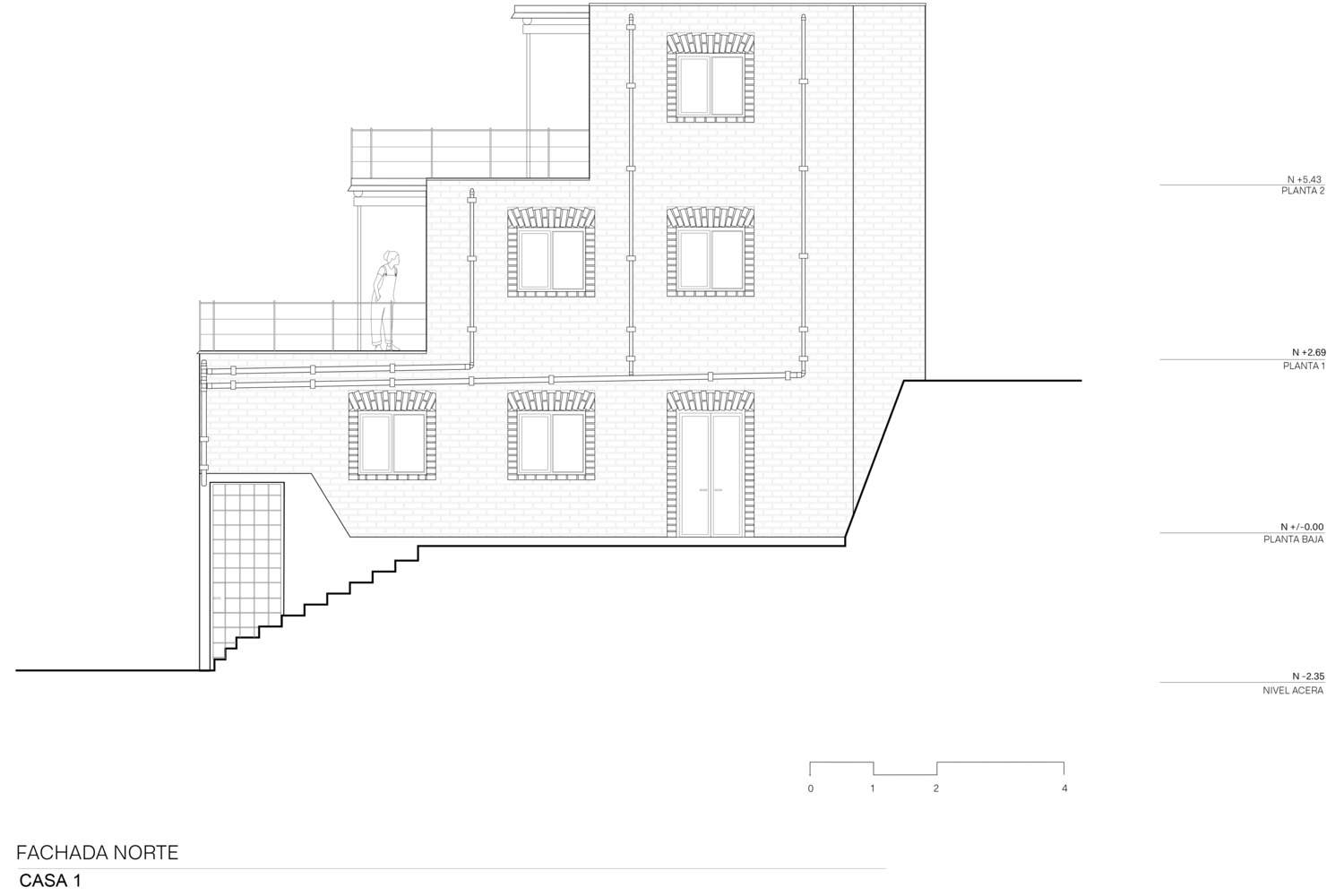
North Elevation
立面图
Brick Cladding
砖砌外墙
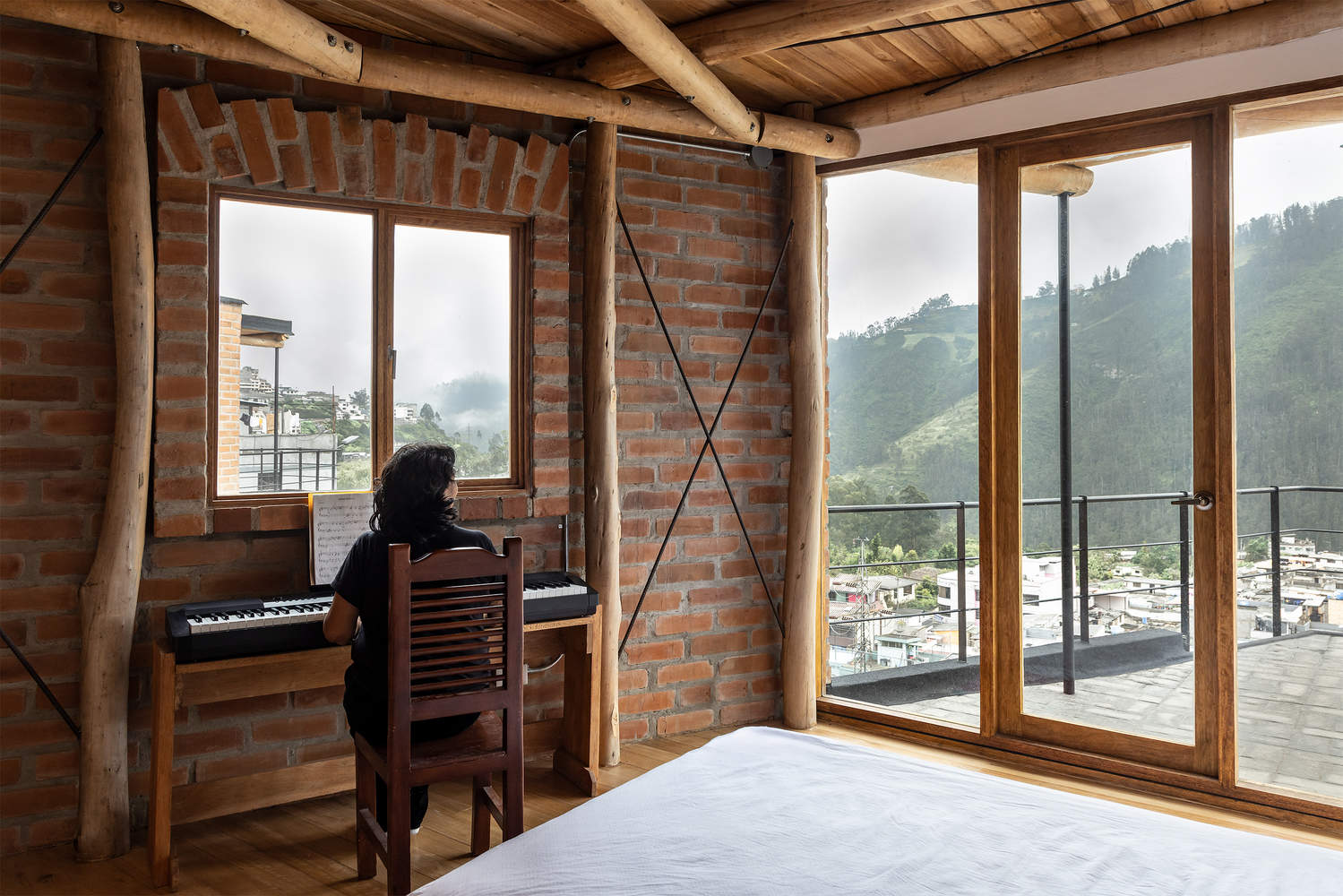
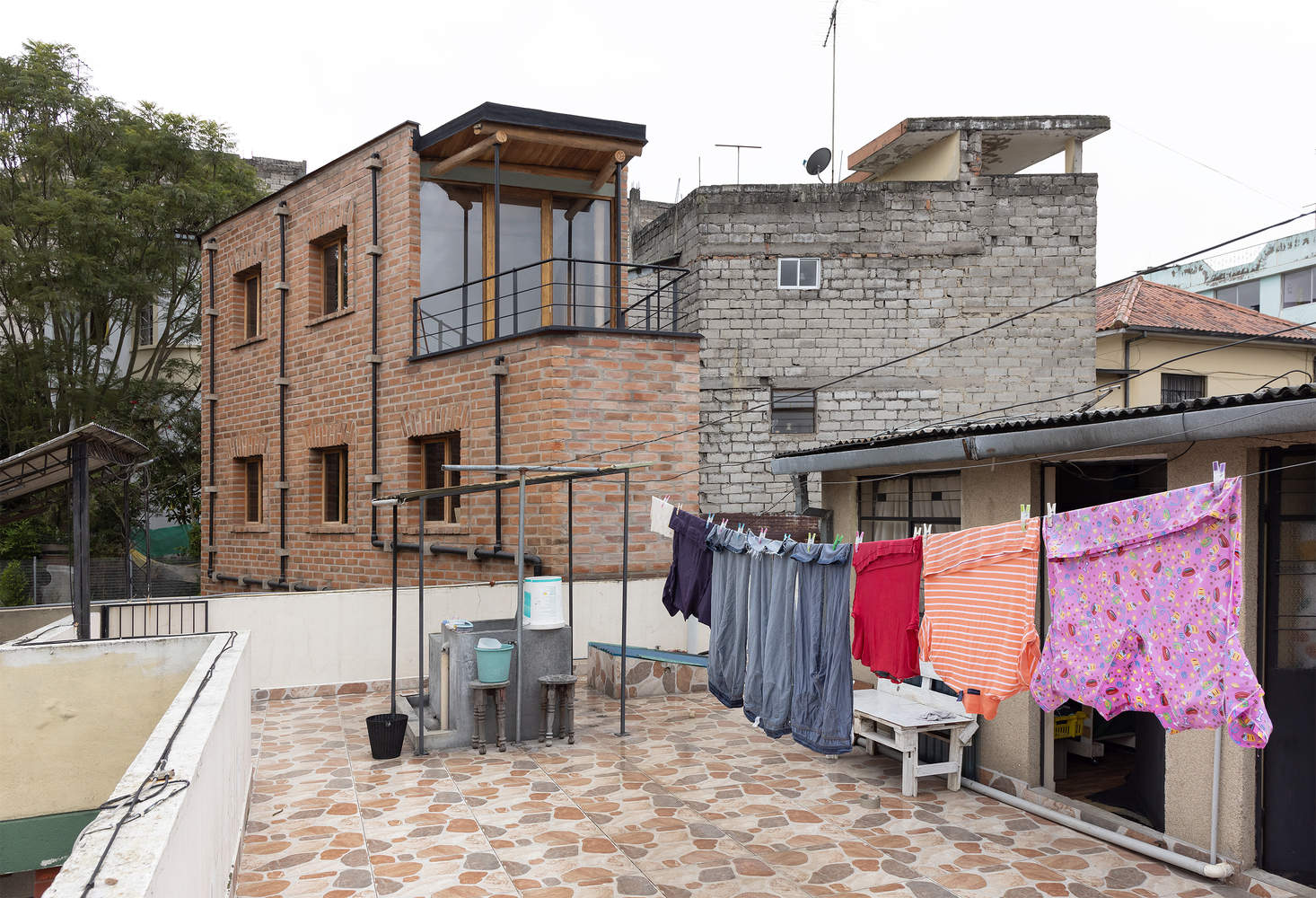
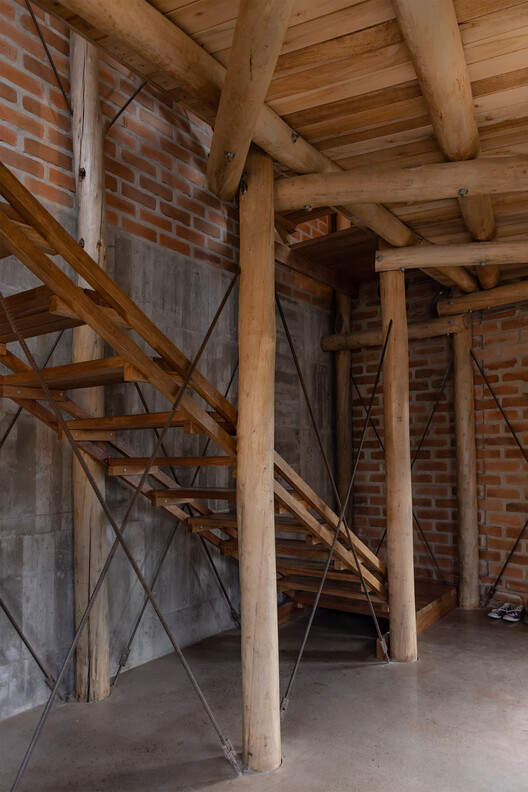
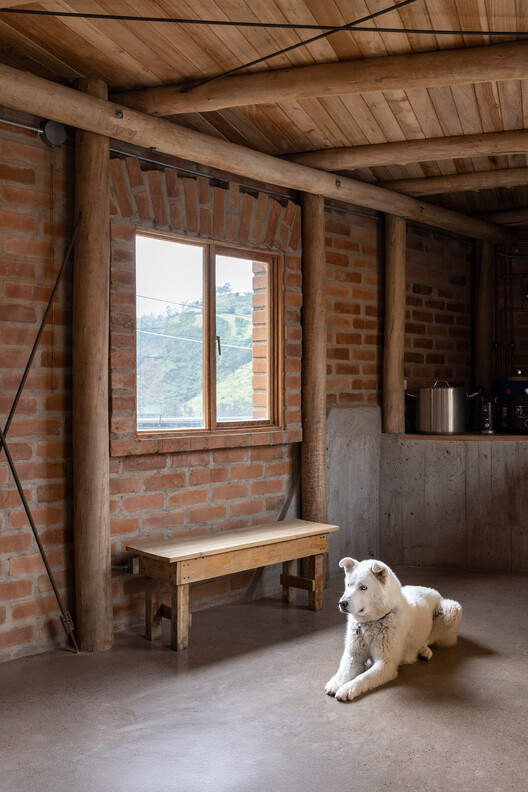
The wood needed protection. Brick was chosen as the protective material, not only for its resistance to harsh weather but also because it provides a crucial function for the project: absorbing, storing, and slowly releasing heat. The exterior wall is separated from the irregular, roughly hewn wood for ease of construction.
木材必须得到保护。选择砖作为保护材料,不仅因其能抵御恶劣天气,还因其能为项目提供一项关键功能:吸收热量、储存热量并缓慢释放热量。外墙与不规则、粗凿的木材分隔开来,以便于施工。
© JAG Studio
© JAG Studio
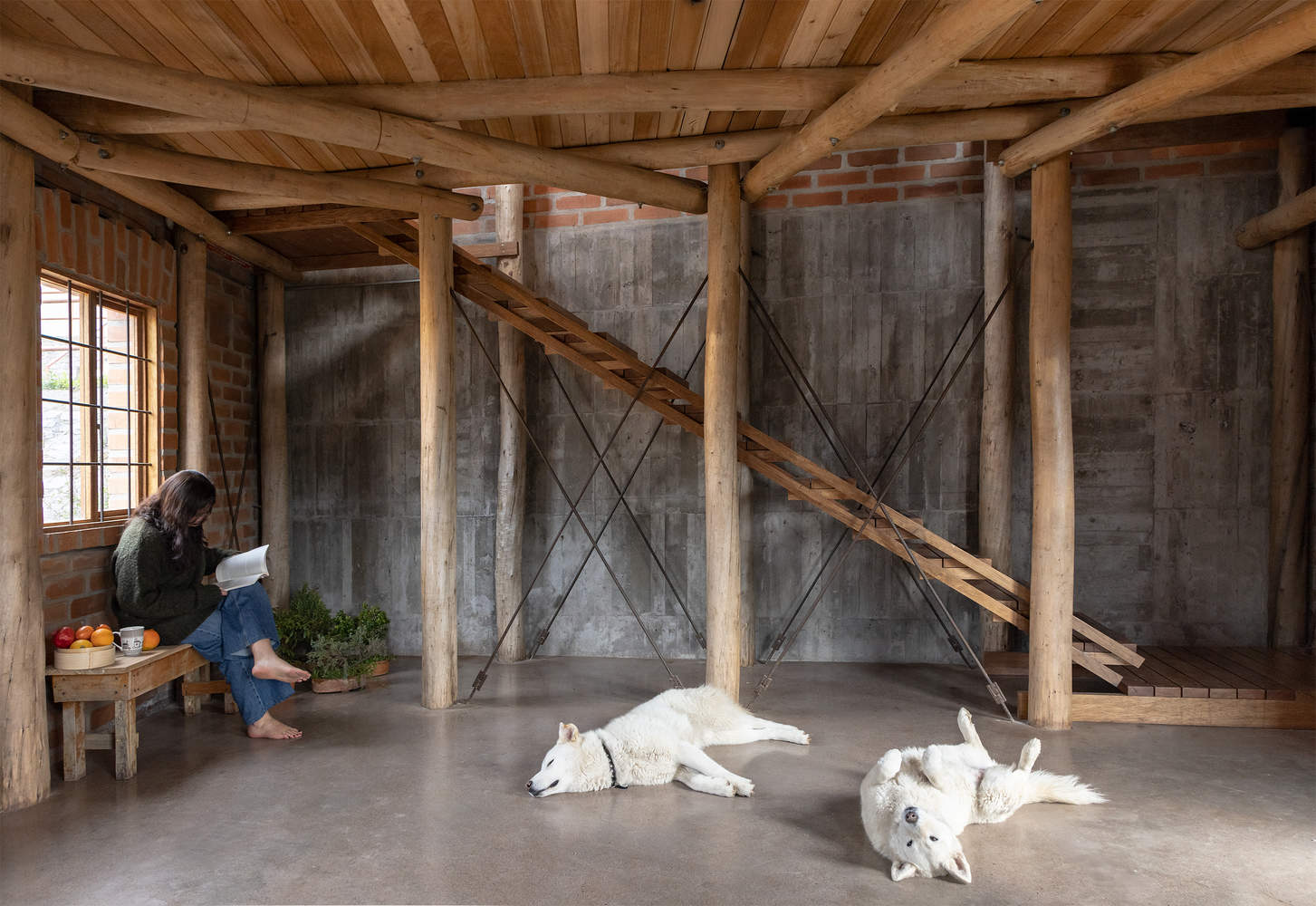
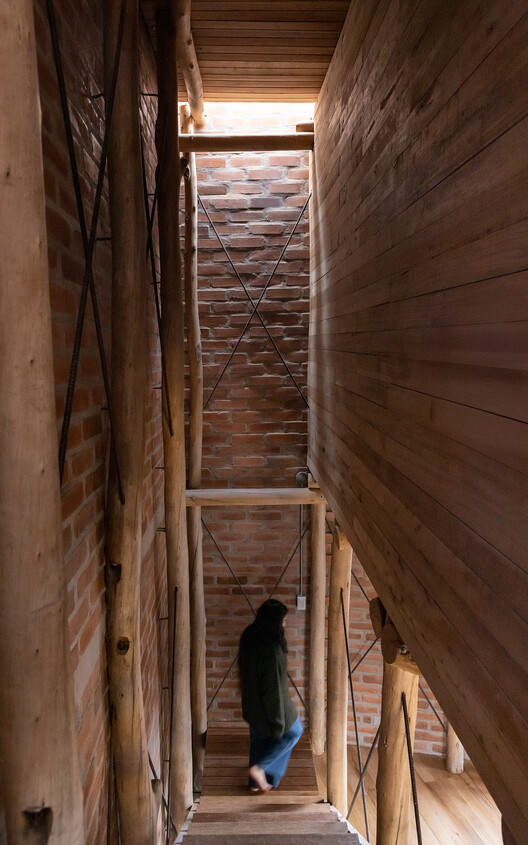
In a seismic zone like Quito, the combination of brick and wood posed structural challenges. The 14 cm thick brick walls could not independently support a three-story building. In this project, the goal was to combine both systems: using Eucalyptus logs to build the frame and brick to provide rigid support.
在基多这样的地震带,砖与木材的结合带来了结构上的挑战。14 厘米厚的砖墙无法独自支撑三层建筑。在本项目中,目标是结合两种体系:以桉原木构建骨架,以砖提供刚性支撑。
© JAG Studio
Handmade bricks produced by a family-owned brickyard were selected for the project. This decision was not due to the inaccessibility of industrial bricks but stemmed from a desire to support local small-scale producers.
项目选用了家族经营砖厂生产的手工砖。这一决定并非因无法获取工业砖,而是出于对当地小型生产者的支持意愿。
© JAG Studio
From Individual to Collective
从个体到集体
The house functions as an open research laboratory. The design prioritizes passive thermal comfort, achieving 72% occupancy of indoor thermal comfort throughout the year—a figure that rarely exceeds 40% in local housing—through strategies like solar orientation, cross-ventilation, thermal mass, and ceiling/floor insulation. The house also achieves net-zero energy consumption thanks to a photovoltaic system, the use of a heat pump for water heating, and reduced electricity consumption. Water consumption is also reduced by 40% through rainwater harvesting and greywater treatment. Finally, based on ongoing research, the choice of Eucalyptus wood for the structure, mezzanine, and roof, and handmade brick for masonry, reduces embodied carbon by 80% compared to conventional construction.
这所房子是一个开放的研究实验室。设计优先考虑被动式热舒适性,采用太阳能朝向、穿堂风、热质量以及天花板和地板的隔热等策略,在这样一座城市中实现了室内热舒适时长占比达 72%,而当地住宅每年的舒适时长占比很少超过 40%。得益于光伏系统、使用热泵加热水以及降低电力消耗,这所房子还实现了电力净零消耗。通过雨水收集和灰水处理,用水量也减少了 40%。最后,根据正在进行的研究,选择桉树木材用于结构、夹层和屋顶,以及选择手工砖用于砌筑,与常规建筑相比,可减少 80% 的隐含碳。
© JAG Studio
The central courtyard of the house is designed as a permeable space, contributing to the replenishment of the urban aquifer. Given the increasing remoteness of water sources and the vulnerability of urban areas to supply problems, every action is crucial. If solutions to urban climate change rely not only on large infrastructure projects but also on promoting small, replicable actions, then the solution is not solely dependent on massive government investment. Instead, the sum of individual actions can reduce reliance on large infrastructure, demonstrating how the micro can influence the macro.
房屋的中央庭院设计为渗水空间,有助于城市含水层的补给。考虑到水源日益遥远,且城市地区更易遭受供水问题困扰,每一项行动都至关重要。如果不仅仅依赖大型基础设施项目来解决城市气候变化问题,而是推广涉及小型、可复制行动的项目,那么解决方案就不仅仅依赖于政府的大规模投资。相反,个体行动的总和可以减少对大型基础设施的依赖,彰显微观如何影响宏观。
© JAG Studio