场地挑战与策略的智慧转化:本项目最精妙之处在于对复杂场地条件的深刻理解和创造性转化。面对京藏高速的噪音压迫、三角形的局促用地以及地铁换乘人流的干扰,建筑师没有选择规避,而是通过“环抱共生”的形态和精妙的台地式布局,将制约转化为设计契机。例如,通过设计渐升的斜坡景观应对高差和城市界面,同时确保地铁人流与社区人流的互不干扰。这种将物理约束转化为空间优势的策略,是高水平城市设计的典范。
几何形态与功能需求的有机融合:项目采用了连续的“反N”造型,这一动态几何形态不仅赋予建筑强烈的现代感和科技基因,打破了传统公寓的呆板,更在功能上巧妙地划分了消防分区,形成了从公共到私密的递进空间秩序。同时,形态的扭转在建筑内部创造了通透的立体庭院,并在高层提供了绝佳的观景视野。这种在形式美学、规范要求与居住体验之间寻求平衡的尝试,体现了对科技人才社区特性的精准把握。
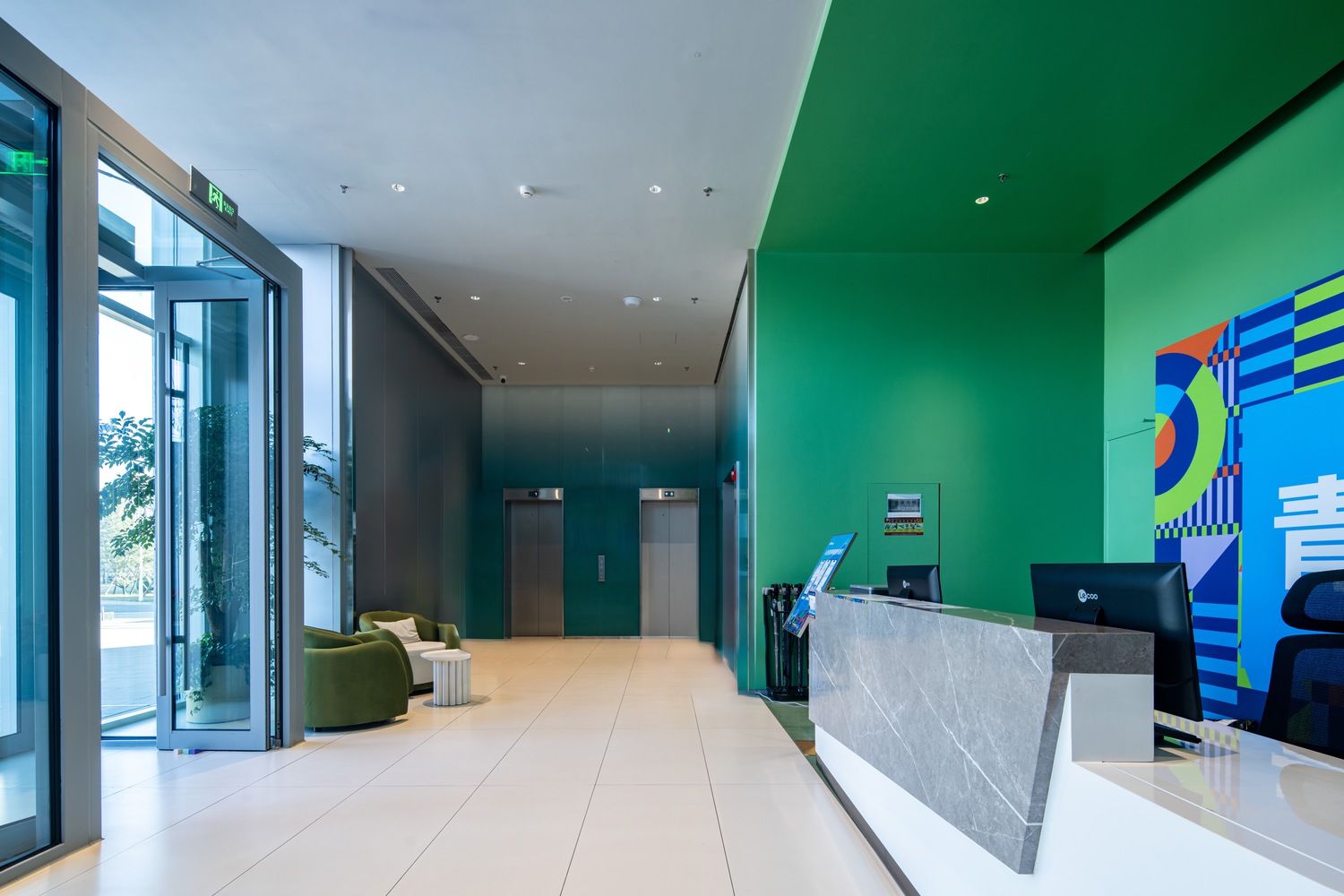
多维复合的社区叙事与活力生成:设计通过三个方向的三角形开口,构建了连接城市与社区、功能与文化的多元空间。东北侧的“城市画廊”面向城市展示文化,西侧“共享台阶”激发即兴讨论,南侧“创新大堂”作为社区客厅激活社群活动。这些精心设计的公共空间与贯穿社区的“活力轴”共同作用,使建筑超越居住功能,成为一个促进创新交流、激发创业文化的“孵化器”,重新定义了当代集体租赁住房的社会价值和人本关怀。
In the urban fabric, architecture is never an isolated existence, but a spatial carrier for deep dialogue with the site, people, and the spirit of the city. Architecture has long transcended its physical functions to become a container for the spirit of the city. The Qinghe INNNG International Talent Community in Qinghe Town, Haidian District, Beijing, is a vivid embodiment of this concept. The architectural generation of this project is rooted in the specificity of its location in the Qinghe INNNG project area in Haidian, Beijing. This specificity arises from a comprehensive consideration of response strategies to multiple boundary factors. This compound youth residential project not only confronts the challenges posed by specific topography and complex urban environments but also constructs a vibrant landmark that inspires innovation, promotes exchange, and integrates with the city through its "embracing symbiosis" architectural form.
在城市的版图上,建筑从来不是孤立的存在,而是与场地、人群、城市精神深度对话的空间载体,建筑早已超越其物理功能,成为承载城市精神的容器。位于北京海淀区清河镇的青核 INNNG 国际人才社区,便是这一理念的生动体现。其建筑生成的背景,正是北京海淀青核 INNNG 项目所在地的特殊性,这特殊性源于对多种边界因素的应对策略进行综合考量的结果。这一复合型青年居住项目不仅直面特殊地形与复杂城市环境带来的挑战,更以“环抱共生”的建筑形态,构建出一处激发创新、促进交流、融入城市的活力地标。
© 张哲鹏、徐晓通
© DONG建筑影像
© 张哲鹏、徐晓通
© 张哲鹏、徐晓通
Site Response: A Youth Settlement at an Urban Node
The project is situated at an important urban node, adjacent to the Beijing-Tibet Expressway (G6) to the east and Xiaoying West Road to the north. The site, squeezed into a triangular shape by urban roads and green spaces, is very constrained and unsuitable for conventional planning layouts. The nearby elevated G6 Expressway imposes spatial pressure and noise disturbance on the site. On the south and north sides of the site, between the stations of Metro Line 19 and the southern extension of the Changping Line, there is a large volume of ground transfer traffic, which may interfere with the long-term residents of the apartments.
项目东临京藏高速,北接小营西路,是城市空间的重要节点。被城市道路与绿地挤压而成三角形用地,空间非常局促,不适合常规的规划布局;紧邻的高架京藏高速对场地产生空间压迫和噪音干扰;场地的南侧和北侧,地铁 19 号线与昌平线南延线的站点之间,存在着大量的地面换乘人流,对公寓的长租人群可能形成干扰。
© DONG建筑影像
© 张哲鹏、徐晓通
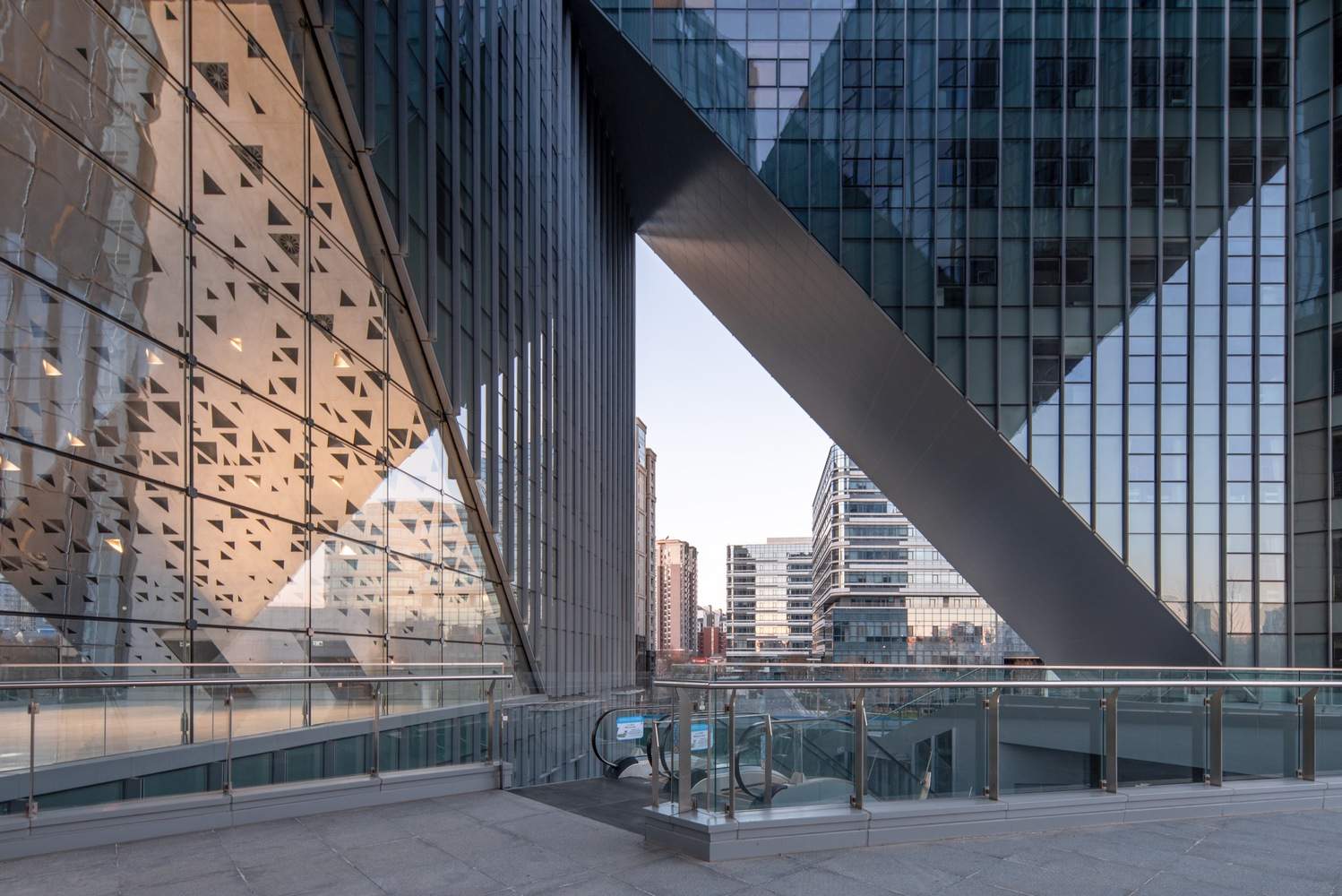
The scheme transforms these constraining factors into unique planning strategies. For the northeastern green space, a gradually rising sloped landscape is designed, which not only forms a three-dimensional display interface facing the urban roads but also creates a main entrance platform for the apartments through the resulting 6-meter height difference. Meanwhile, the subway transfer flow can pass freely on the ground without mutual interference. The awkward gap between the ground level and the elevated highway of the G6 Expressway is cleverly resolved, forming a staggered terraced layout. Commercial facilities can be arranged on the ground floor of the building, serving the daily needs of residents and activating the site's commercial value.
方案将上述制约因素转化为独特的规划策略。对于东北侧的城市绿地,设计成逐渐升高的斜坡景观,既面向城市道路形成立体展示的界面,同时最终形成的 6 米的高差也为公寓提供了主要的入口平台。而地铁换乘的人流可以在地面自由通行,互不干扰。地面与高速公路的高架桥之间的尴尬被巧妙化解,形成错落有致的台地式布局。在建筑首层可以布置商业配套,既服务住户日常需要,也激活场地商业价值。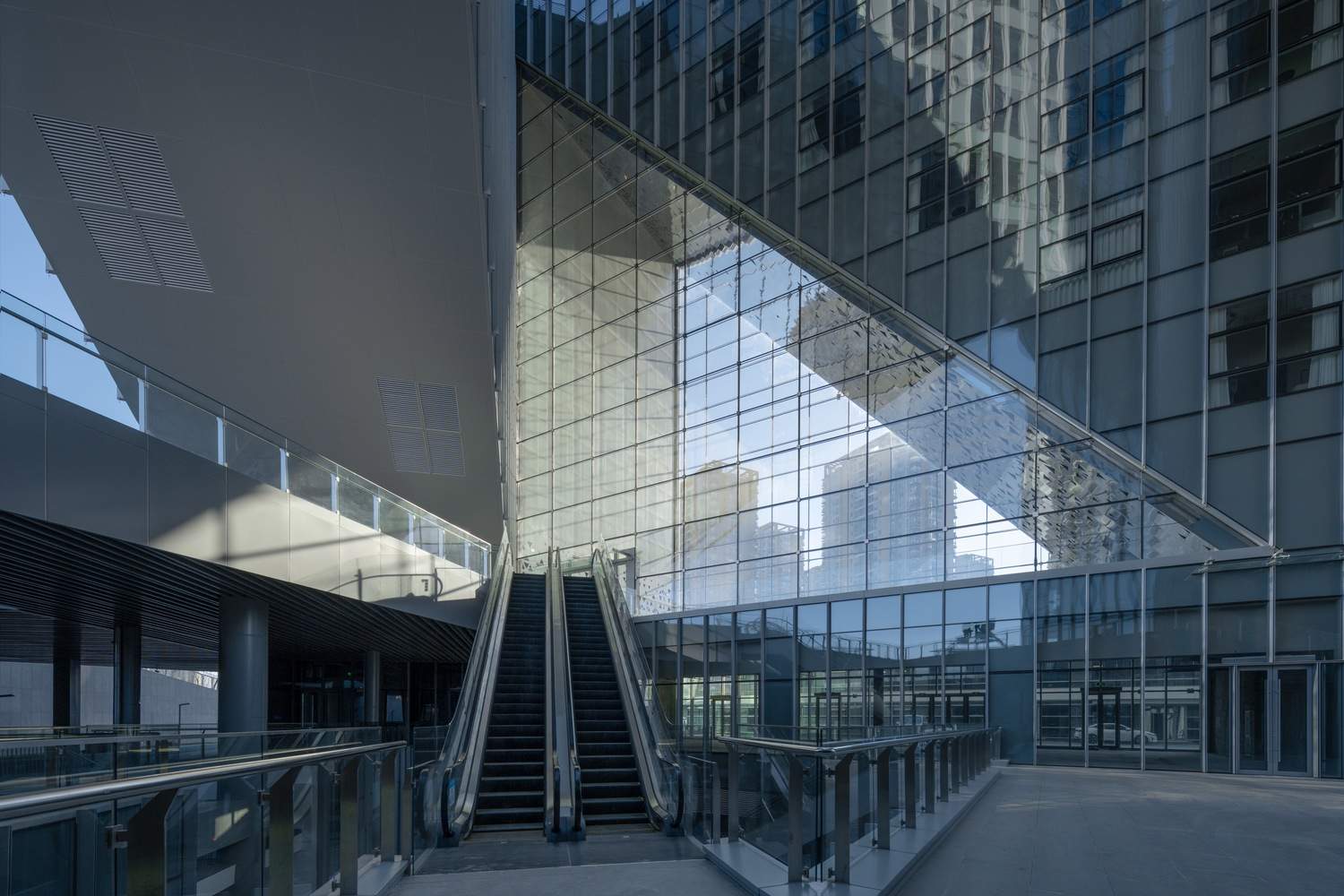
© 张哲鹏、徐晓通
© 张哲鹏、徐晓通
Form Generation: Spatial Expression of Technology Genes
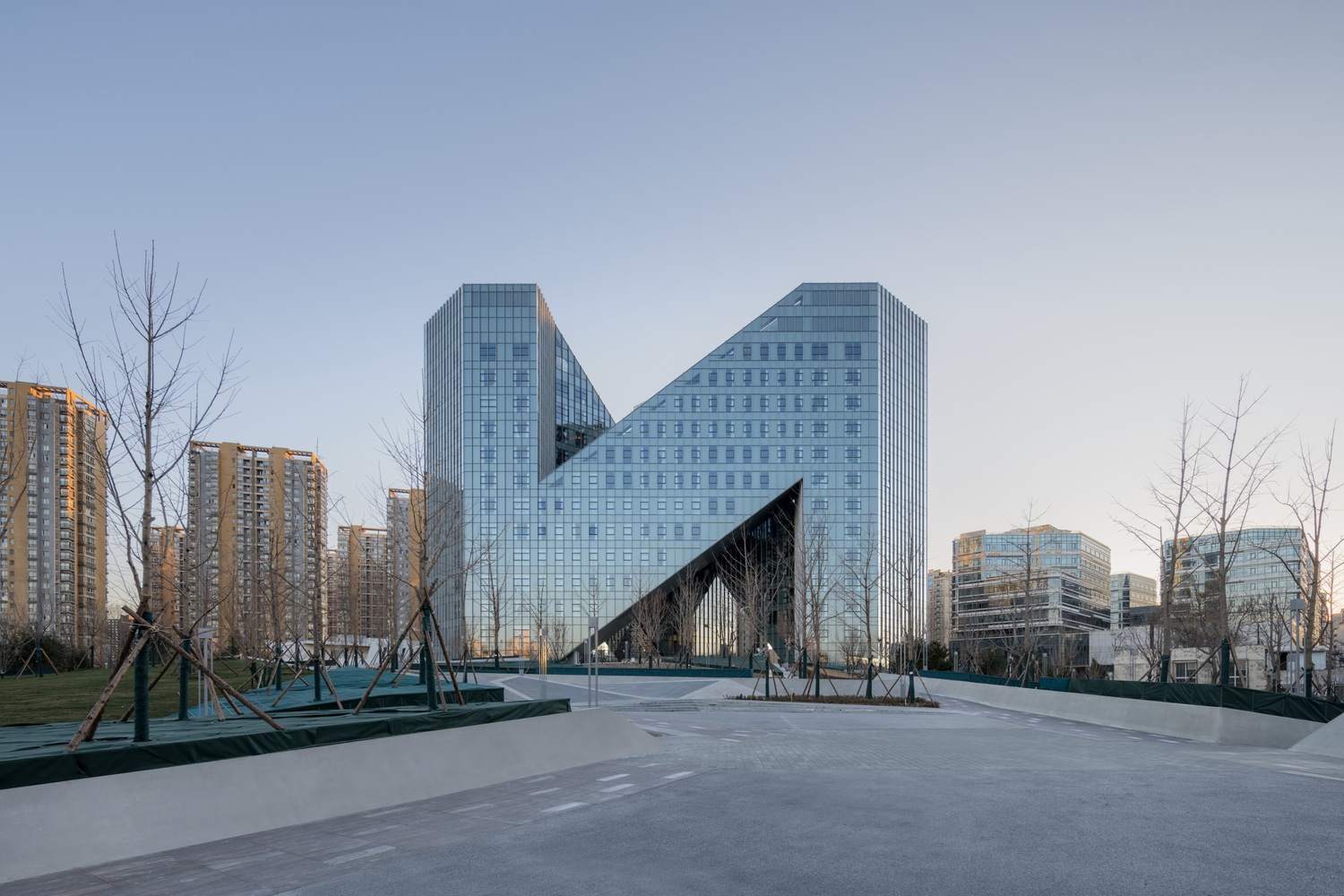
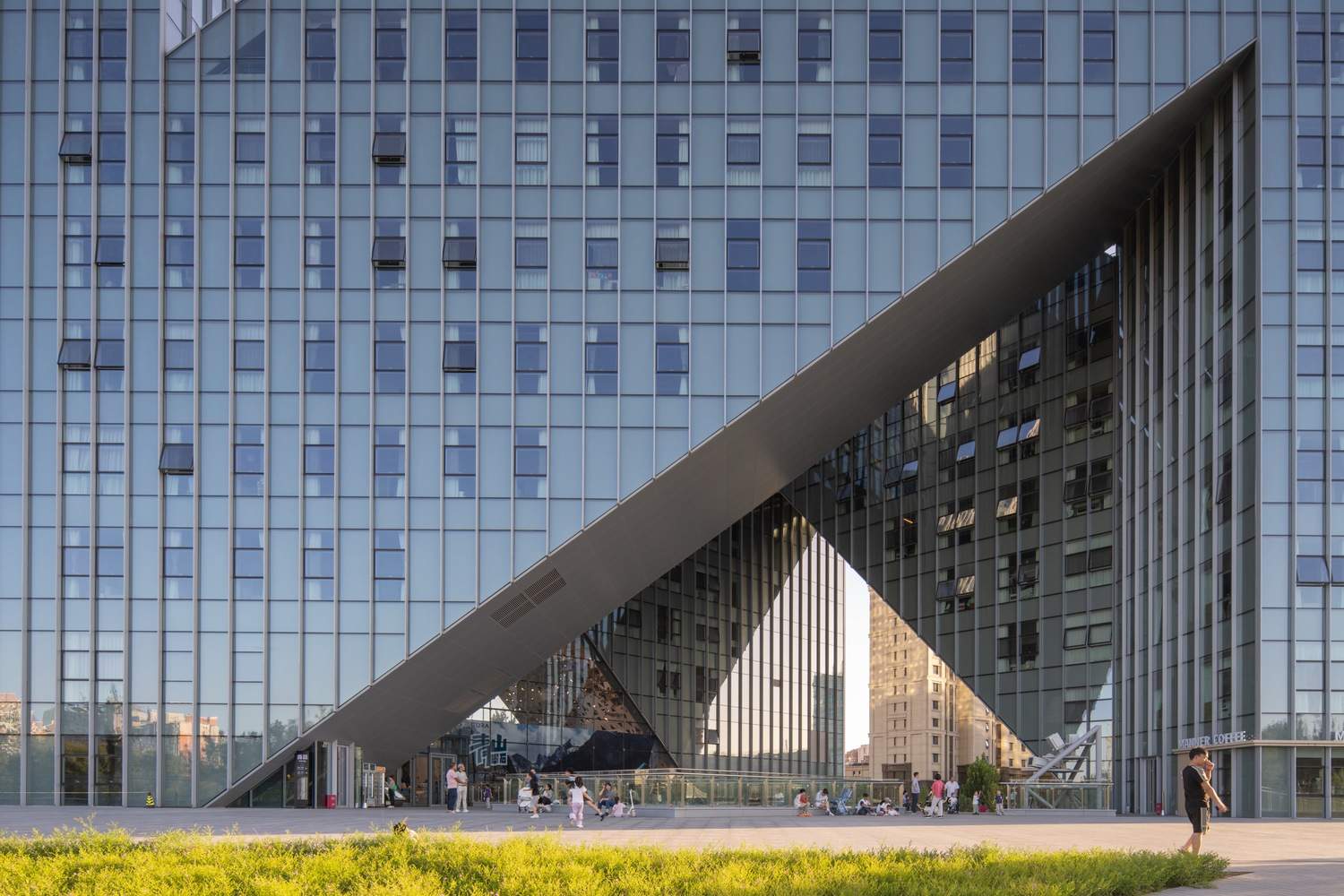
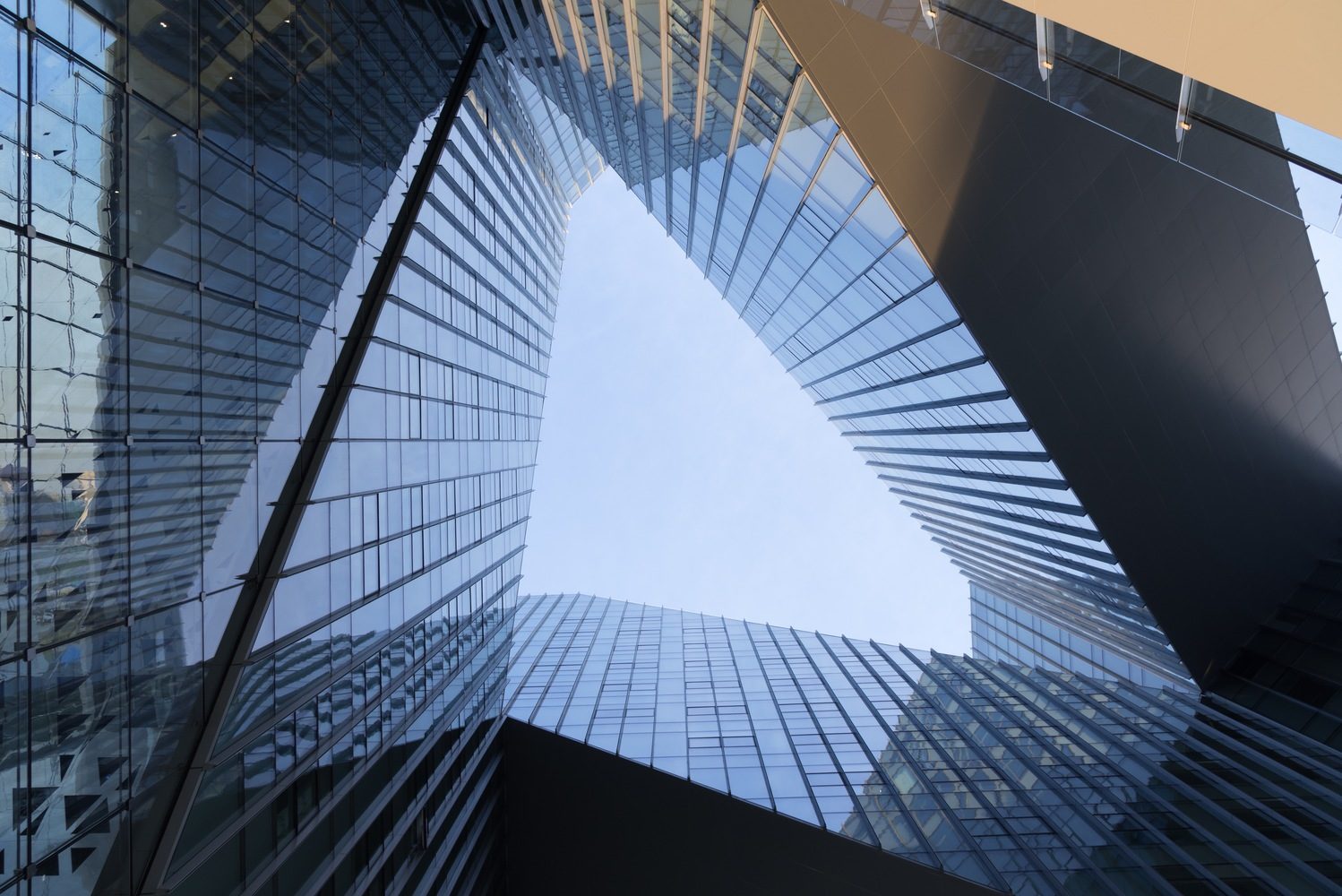
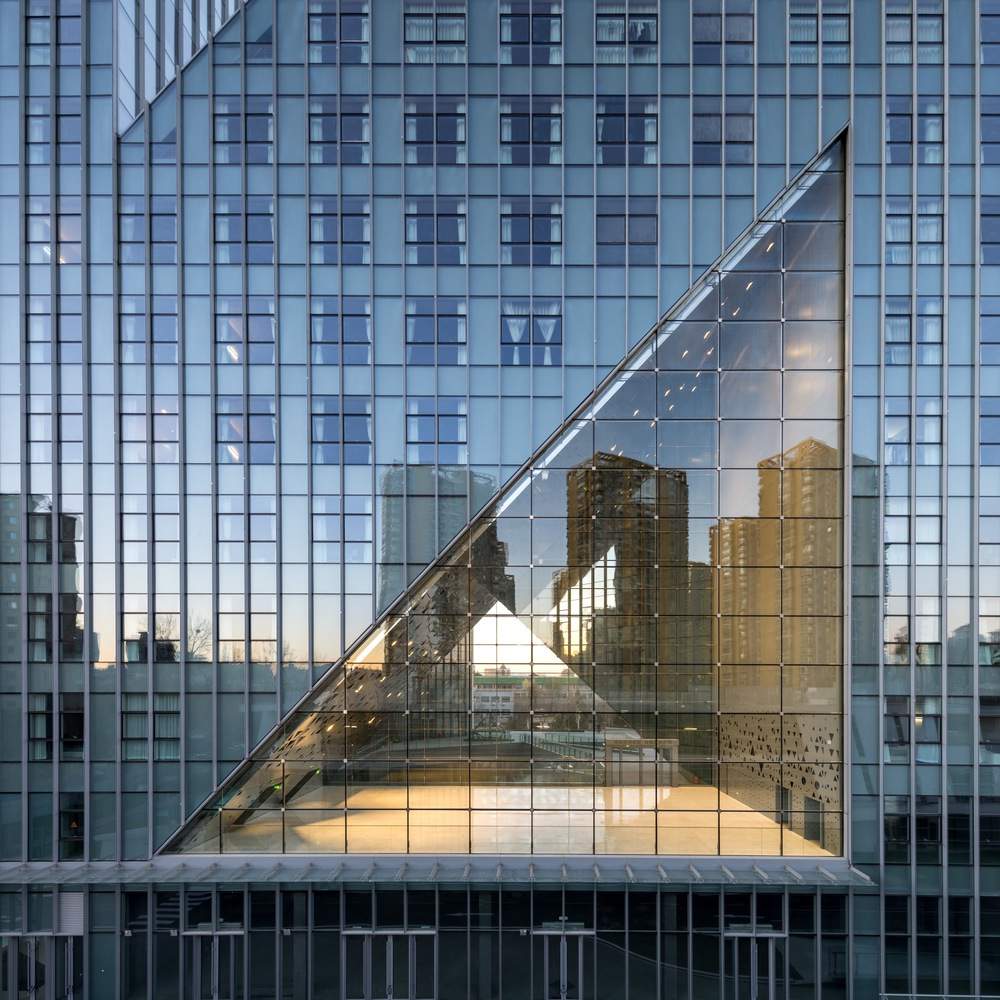
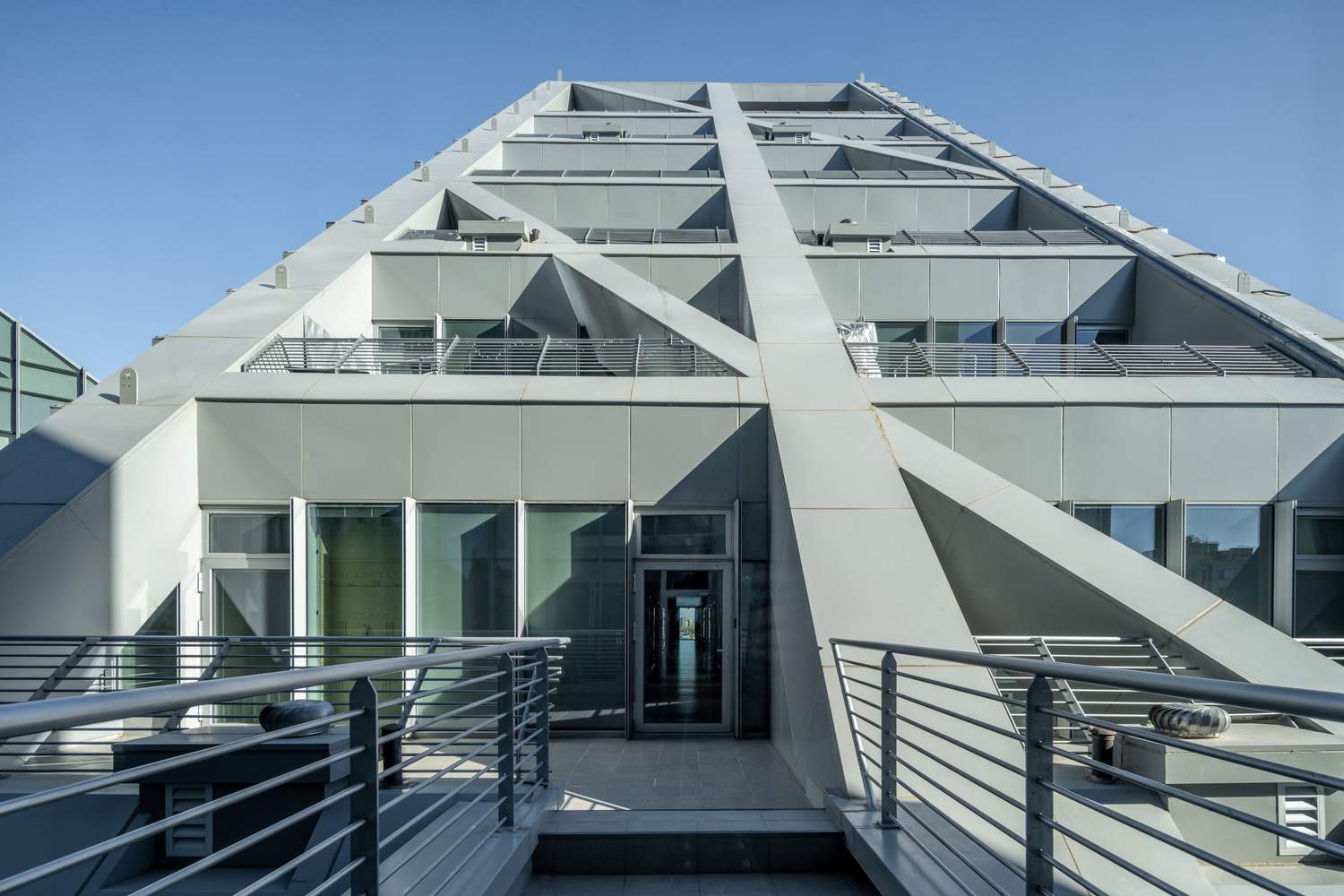
The project abandons the rigid layout of traditional dense tower apartments, adopting a continuous "Reverse N" architectural form, like an excitedly leaping trajectory, shaping a new architectural image and city silhouette. The three towers extend obliquely and connect with each other, creating three massive triangular openings. This not only breaks the monotony of high-rise apartments but also constructs transparent, three-dimensional courtyards. The power of geometric form faces the city with a clear and dynamic image, echoing the modern temperament of Zhongguancun's technology enterprises and metaphorically representing the innovative spirit of technology professionals.
项目摒弃传统密集塔楼公寓的呆板布局,连续 “反 N” 的建筑造型,如同激情跳跃的轨迹一般,塑造崭新的建筑形象和城市轮廓。三座塔楼斜向延伸、彼此衔接,形成三个巨大的三角形开口,既打破高层公寓的单调感,也构建出通透的立体庭院。几何形态的力量感,以明确且富于动感的形象面向城市,既呼应中关科技企业的现代气质,也隐喻着科技人群敢于创新的精神内核。
© 张哲鹏、徐晓通
© DONG建筑影像
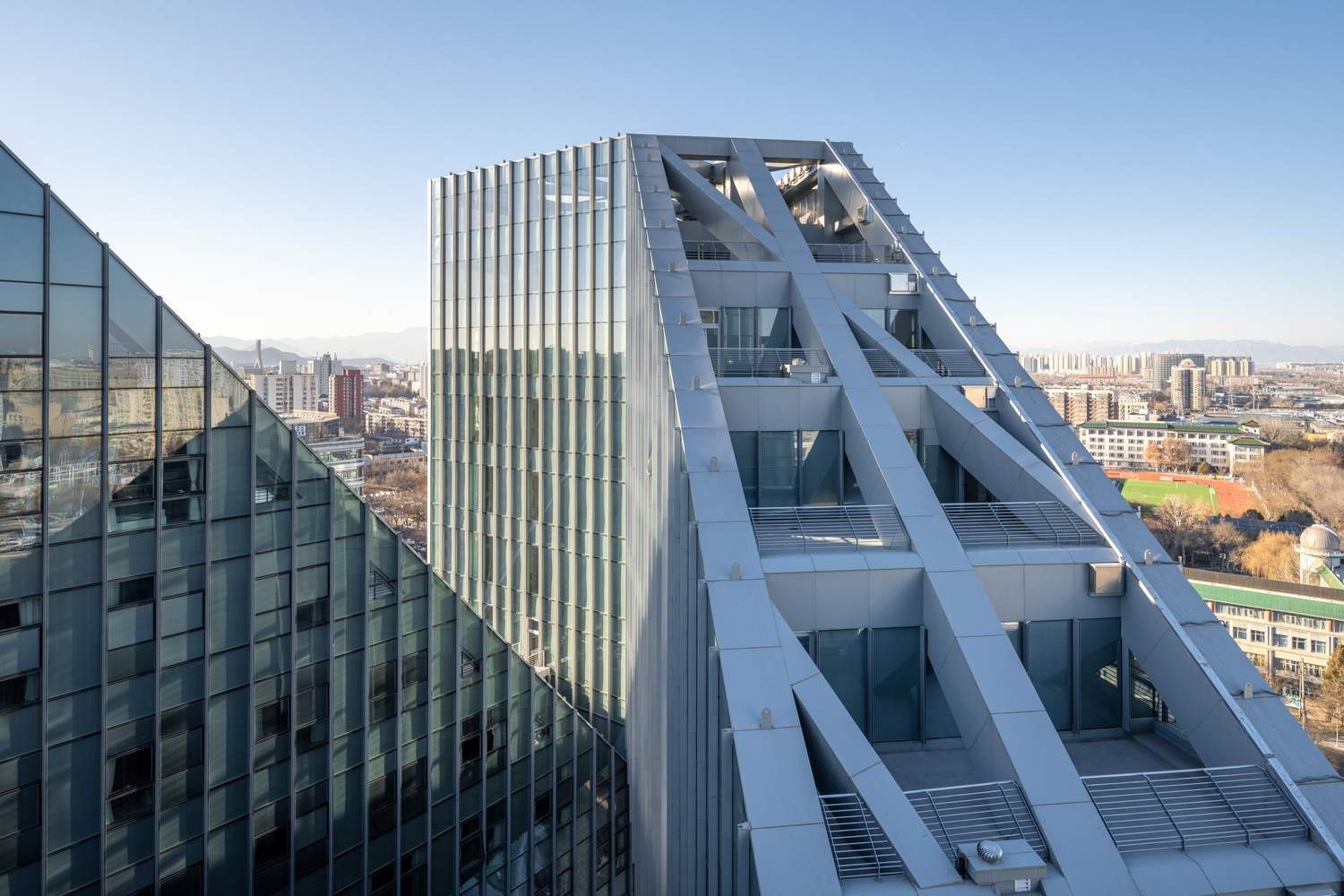
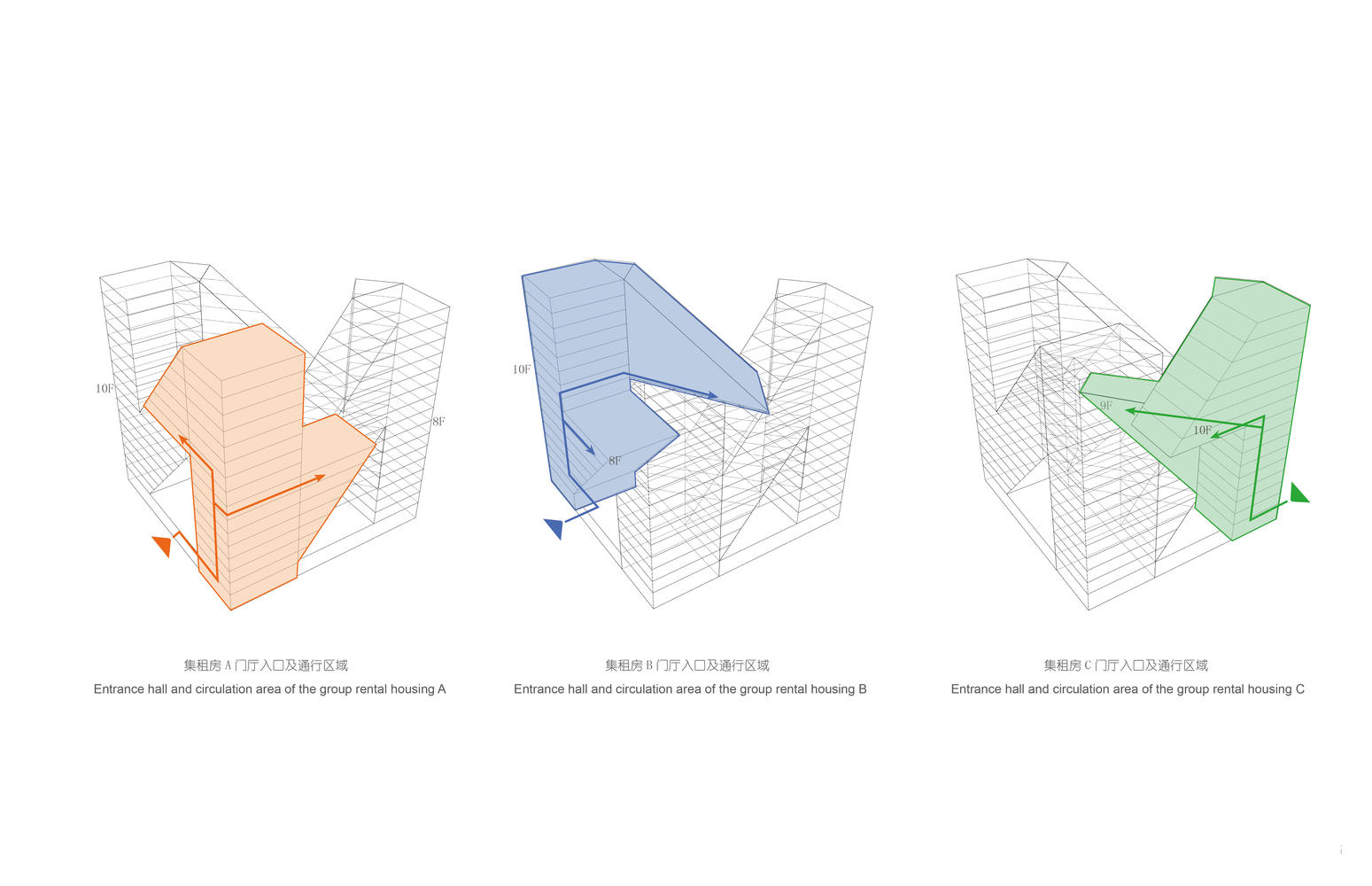
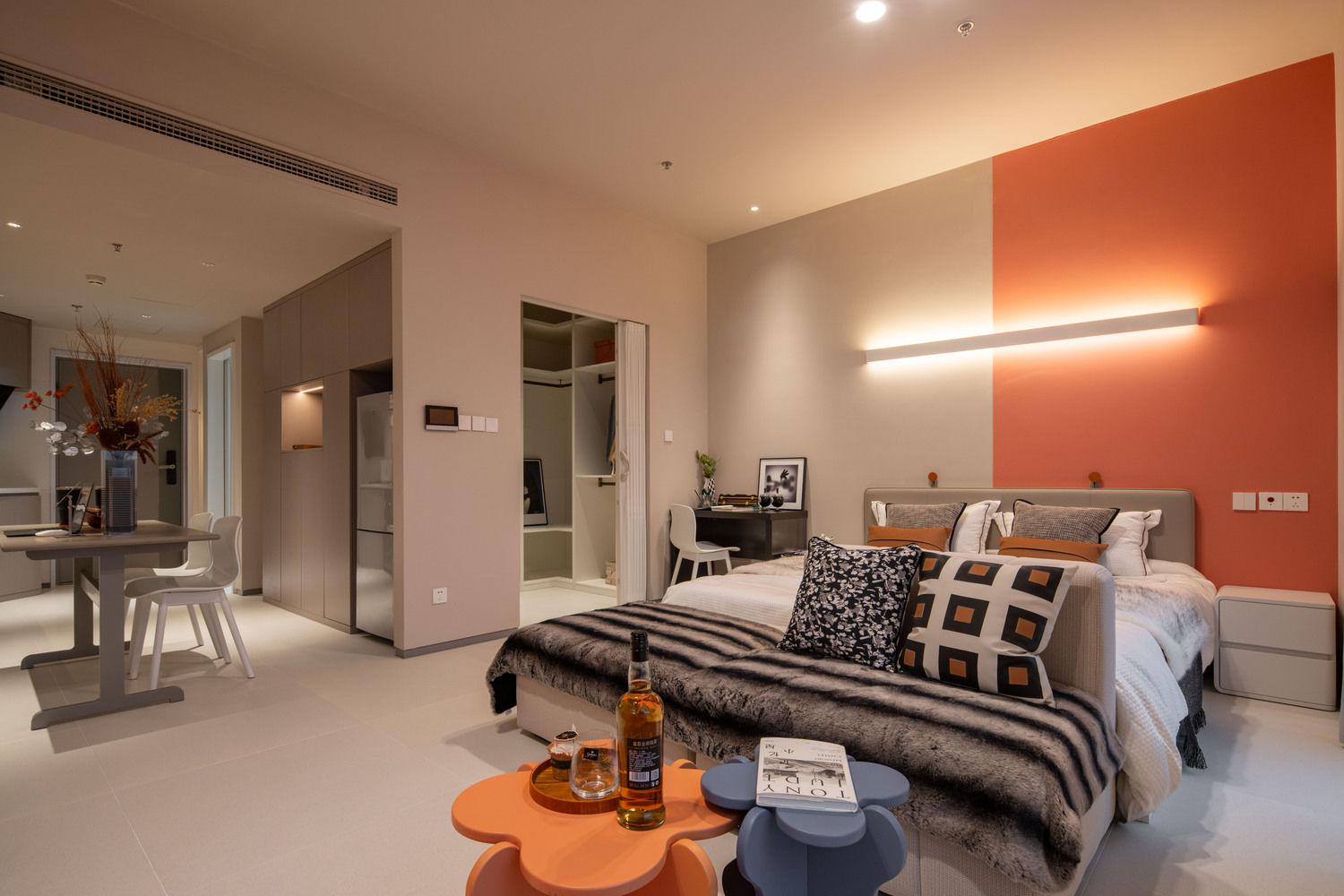
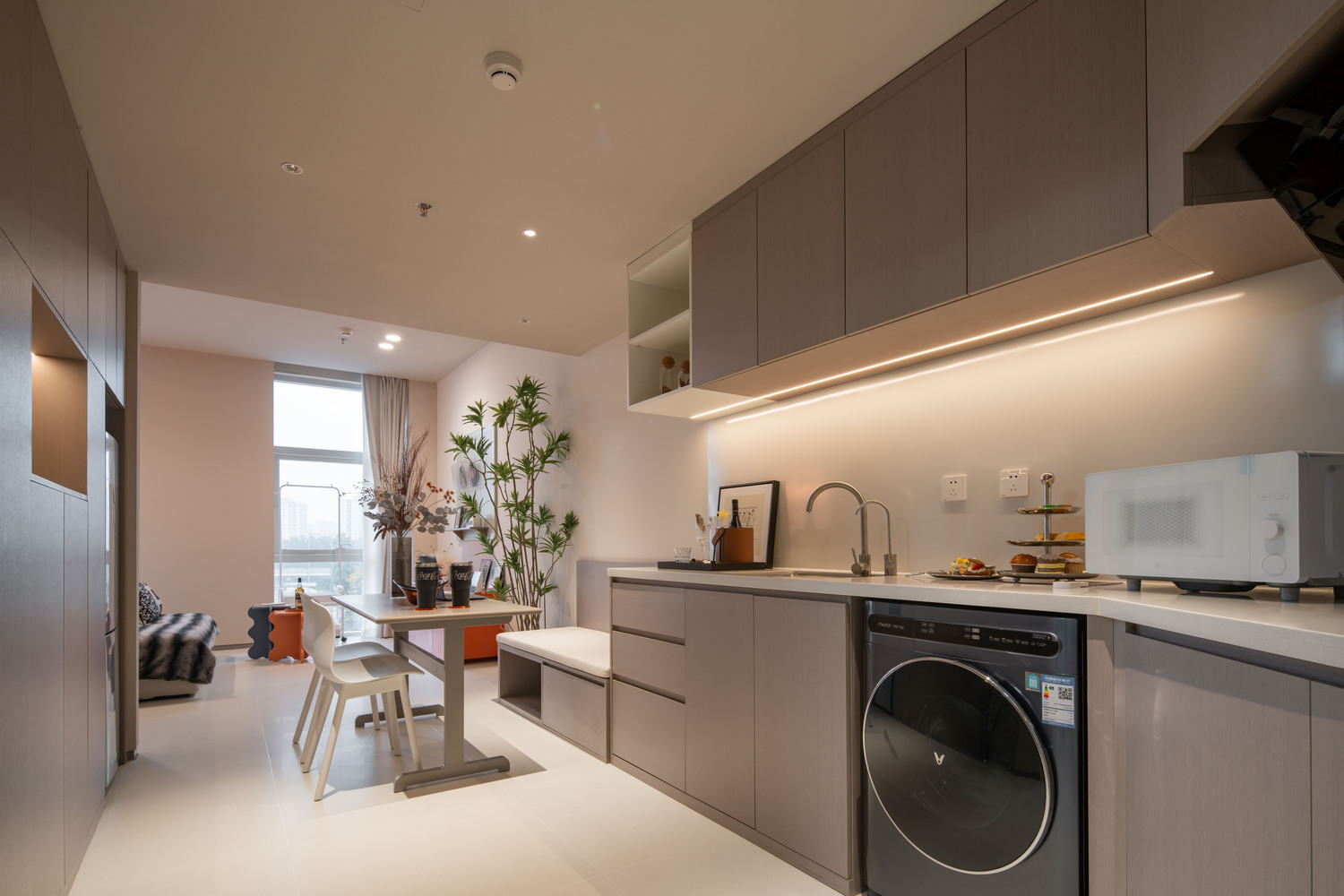
The internal spatial order is constructed through clear functional zoning. To meet fire safety regulations, the continuous building volume is divided into three parts, each forming an independent fire compartment. The relationship progresses from public to private, from the lobby to the elevator hall, and from the corridor into the apartment units. Terraced setbacks above the 10th floor provide viewing terraces with unobstructed views of the Western Hills and the city landscape. Apartment types, ranging from studios to duplex suites, adopt detachable partitions and modular furniture systems, supporting the free switching between living and working to adapt to the diverse needs of technology entrepreneurs.
建筑内部通过清晰的功能分区构建起空间秩序。为满足消防规范,将连续的建筑体量划分为三个部分,分别成为一个独立的消防分区。从门厅到电梯厅,从走廊进入公寓,形成从公共到私密的递进的关系。10 层以上退台提供观景露台,西山与城市景观一览无余。户型从单身公寓至复式套房,均采用可拆卸隔断与模块化家具系统,支持居住与办公的自由切换,适配科技创业者的多元需求。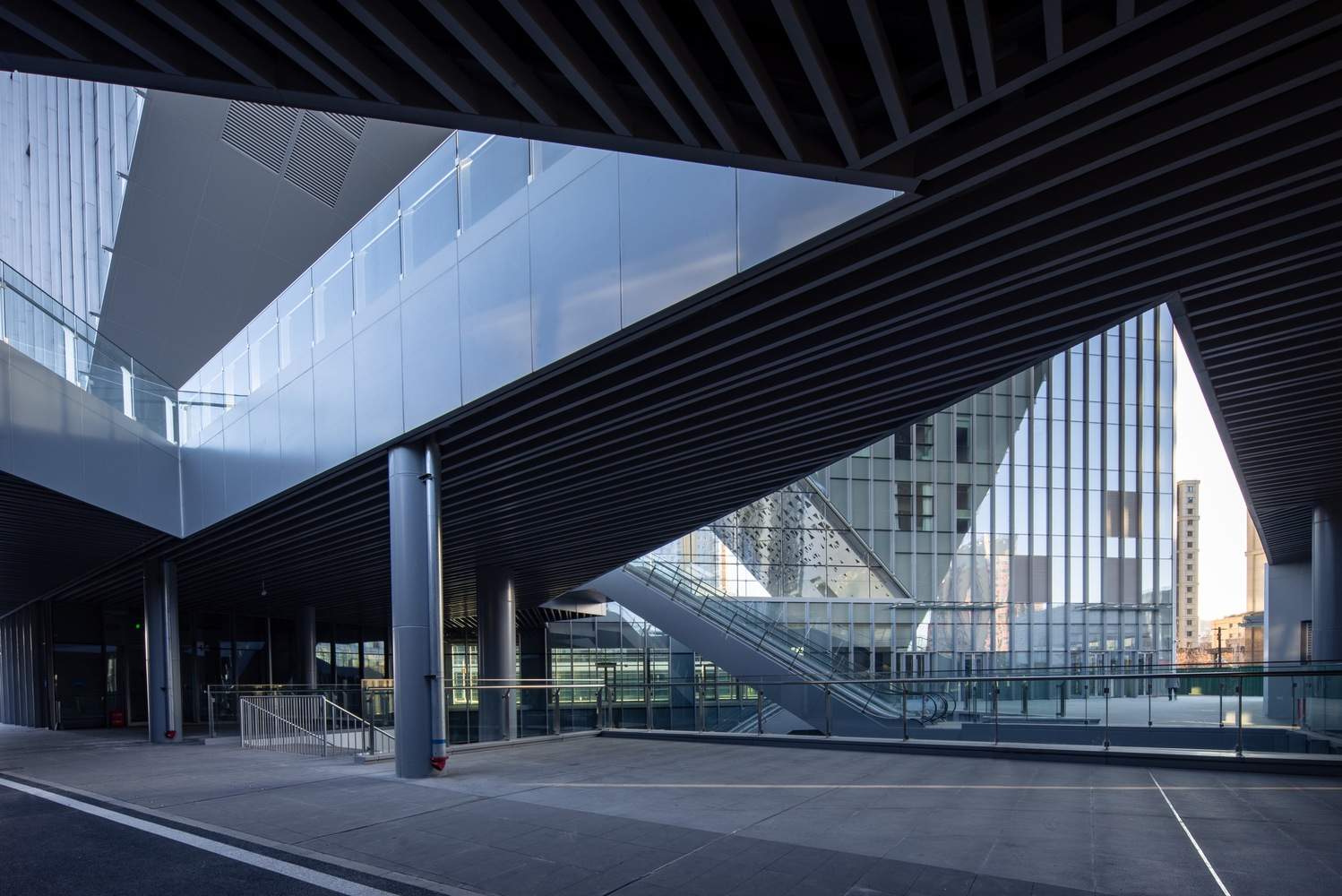
© 张哲鹏、徐晓通
© 北京建院装饰
Spatial Dialogue: A Container Connecting People and Stories
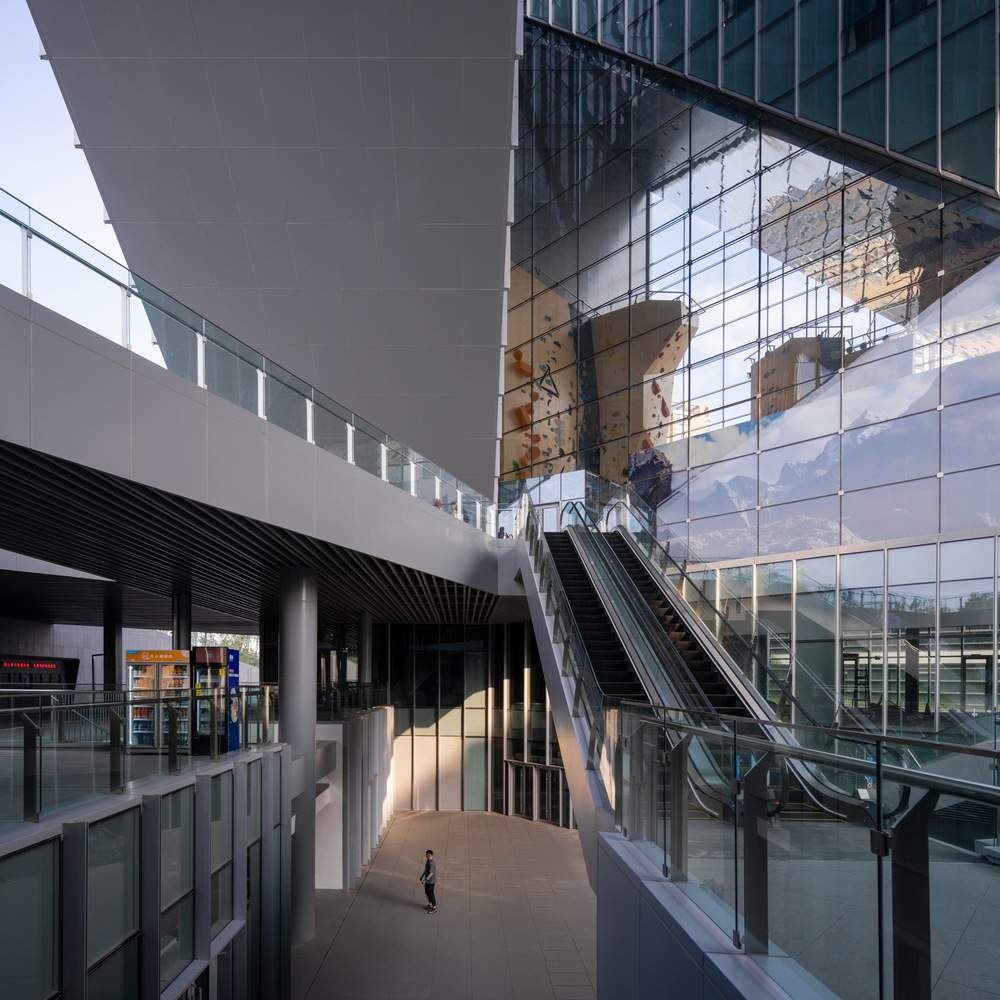
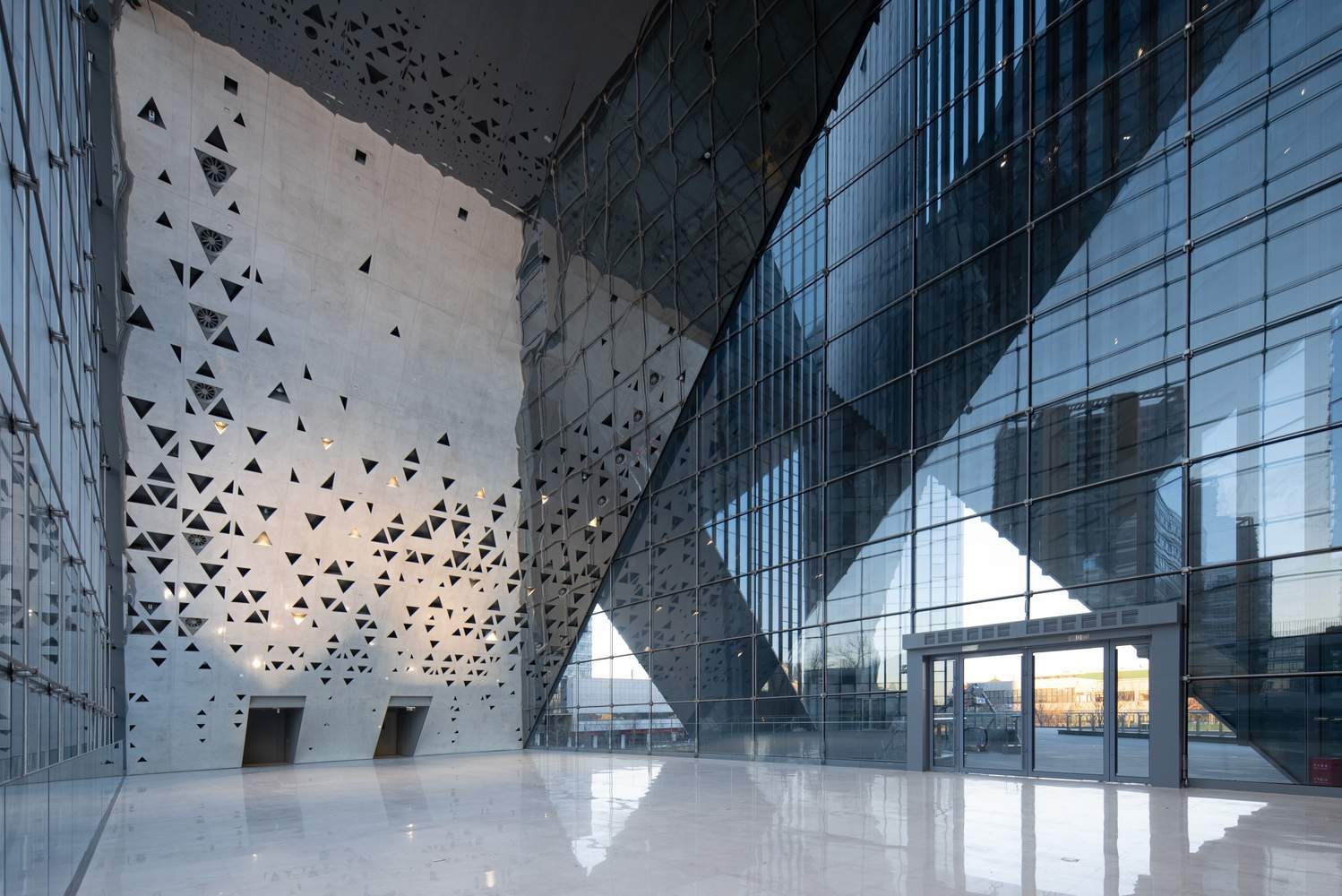
The triangular openings in the three directions are shaped into activity spaces with different themes, making the building a "suture" connecting youth culture and urban life. Space presents more dimensions here; the triangular inner courtyard faces the sky, forming a undulating outline, while on the second, ground, and lower ground floors, it evolves into an interconnected spatial network. The three large, triangular openings on the facade, accompanied by light and shadow, bring the city landscape into the interior.
三个方向的三角形开口被塑造为不同主题的活动场所,让建筑成为青年文化与城市生活的“缝合剂”。空间在这里呈现出更多维度,建筑三角形的内庭面向天空,形成起伏的轮廓,在二层、首层和地下一层又演变为相互连接的空间网络。建筑立面中三个方向三个巨大的、三角形开洞伴随着光影将城市景观引入其中。
© 张哲鹏、徐晓通
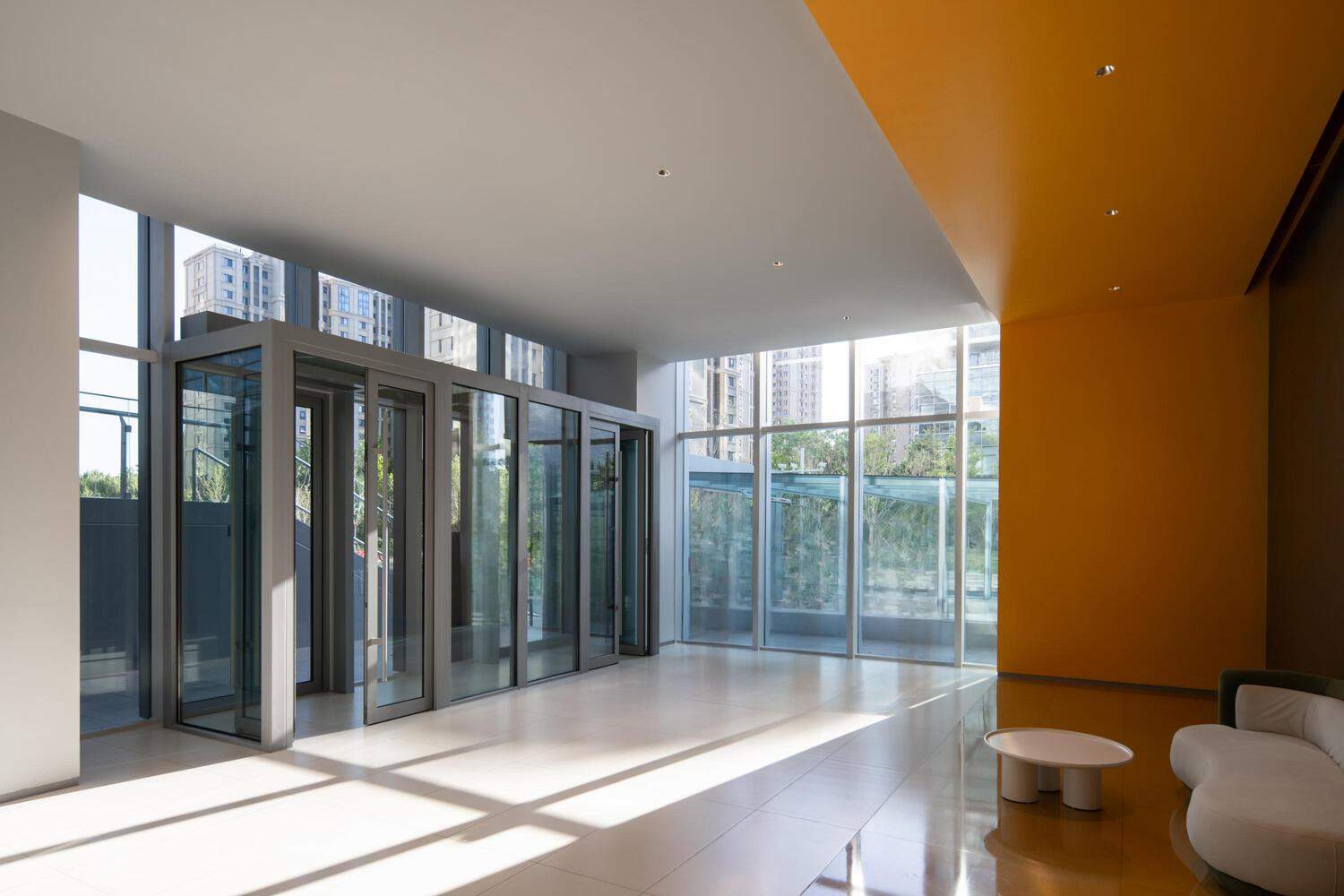
The "Urban Gallery" on the northeast side faces the G6 Expressway, serving as a window to display culture to the city. In the future, art installations and light projections here will become a constantly evolving theater of youth culture. The "Shared Steps" on the west side connect to the large steps on the second-floor platform, naturally forming an outdoor salon area suitable for impromptu discussions, afternoon reading, or small concerts. The "Innovation Lobby" on the south side, an indoor space enclosed by a tensile glass curtain wall, blurs the boundary between inside and outside. This is not only the first stop when returning home but also the community living room, hosting creative markets, project roadshows, and community activities.
东北侧“城市画廊”,应对京藏高速,成为一个向城市展示的窗口,未来这里艺术装置和灯光投影将成为不断演绎的青年文化剧场。西侧“共享台阶”,连接二层平台的大台阶,自然形成户外沙龙区,适合即兴讨论、午后阅读或小型音乐会。南侧“创新大堂”,悬索玻璃幕墙围合的室内空间,打破内外界限。这里不仅是归家的第一站,更是社区客厅,承载创意市集、项目路演与社群活动。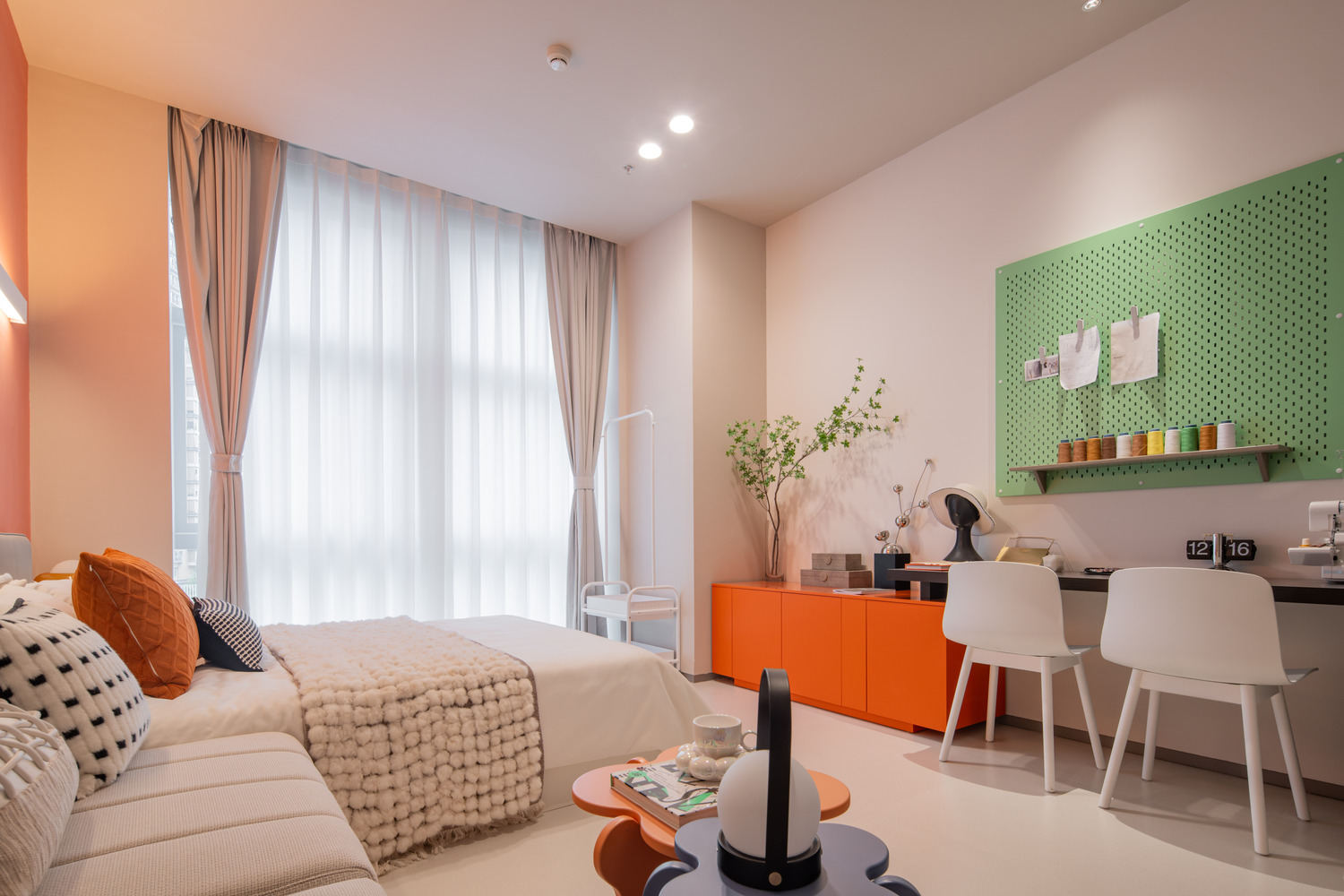
© 北京建院装饰
© 北京建院装饰
© 北京建院装饰
Spirit Empowerment: A Growable Entrepreneurial Culture
For the technology professionals residing here, Qinghe INNNG is not just a residence but an "incubator" for innovation. Open public spaces encourage cross-disciplinary exchange; sparks of ideas can collide anytime in the courtyards, walkways, and lobbies. The rational and rigorous architectural form, combined with flexible and diverse spatial design, collectively conveys a spirit of breaking conventions and continuous exploration.
对居住于此的科技人群而言,青核 INNNG 不仅是居所,更是创新的“孵化器”。开放的公共空间鼓励跨领域交流,庭院、步道、大堂中,随时可能碰撞出思想火花;理性严谨的建筑形态与灵活多元的空间设计,共同传递着突破常规、持续探索的创新精神。
© 北京建院装饰
© 张哲鹏、徐晓通
The leisure walkway running through the community connects the northeastern green space, internal courtyards, and the sports park to the southwest into a complete "Vitality Axis," encouraging people to exercise, stroll, and encounter each other serendipitously. The landscape concept of "rising from the earth" injects an ecological oasis into the city, allowing the architecture to truly integrate into public life. Here, the boundaries between living, working, socializing, and leisure are softened. The building, with an inclusive attitude, accommodates all the imaginations young people have about innovative living. It serves both as an image node facing the city and a living harbor rooted in daily life. The design redefines the value of collective rental housing, providing a vivid interpretation of how contemporary urban architecture can possess both distinctiveness, a sense of community, and humanistic care.
贯穿社区的休闲步道,将东北侧绿地、内部庭院与西南方向的体育公园串联为一条完整的“活力轴”,鼓励人们运动、散步与不期而遇的交流。“破土新生”的景观理念,为城市植入一片生态绿洲,让建筑真正融入公共生活。在这里,居住、工作、社交与休闲的界限被柔化,建筑以包容的姿态,承载年轻人对创新生活的全部想象。它既是面向城市的形象节点,也是扎根日常的生活港湾。设计重新定义集体租赁住房的价值,为新时代城市建筑如何兼具辨识度、社区感与人本关怀,提供了生动的诠释。