场地文脉的几何学介入与材料的在地性表达:该项目成功地将建筑设计转化为一种对现有被扰动场地的几何学回应。建筑师从施工围挡中汲取灵感,以一道直线切入被削平的台地,将功能长廊转化为一种景观装置,既尊重了远景的抽象性,又在人工干预的语境下创造了新的秩序。材料的选择上,利用标准成品木地板浇筑混凝土,创造出独特的纹理节奏,这种在预算约束下的创新实践,使得粗粝的混凝土表面获得了丰富的肌理层次,实现了在地材料的精妙转化与艺术化表达。
“光庭”的叙事空间与时间感知:建筑内部的核心设计在于嵌入了三个与交通动线相连的“光庭”。特别是那个7.5米见方的“垂直光庭”,它不仅是空间流线上的枢纽,更是连接人、天空与大地的媒介。通过光线的动态变化,建筑表达了时间的流逝,并策略性地调控了观者的视线,使人们对建筑的感知是片段化和体验式的。这种对“虚”空间的精妙处理,极大地丰富了内部体验,打破了实体筒体的封闭感,赋予了功能空间以诗意的场所精神。
结构体系的轻量化与表皮的意境营造:为实现无柱大跨度的内部空间和“悬停”的姿态,设计采用了密肋混凝土板构成的三维筒体受力体系,通过精妙的荷载传递路径,弱化了结构本身的体量感。屋面创新性地覆盖了超薄镜面水池,这一设计不仅整合了机电管线和反梁的厚重感,更重要的是,水面倒影的水平反射与远处水库形成视觉呼应,并与山体肌理形成对比,实现了建筑在物理形态上的轻盈感与意境上的诗意表达,完美诠释了“桥梁即几何学领地”的理念。
In the winter of 2023, Moguang Studio was commissioned to design a public support building for a planned guesthouse area, which needed to accommodate various service functions such as light catering, kitchen, café, and conference facilities.
2023年冬,末广建筑受委托为已规划好的民宿区设计一栋公共配套建筑,需要容纳简餐、厨房、咖啡厅及会议等多项服务功能。
© 吴清山
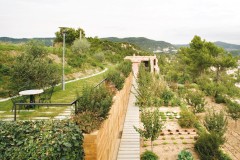
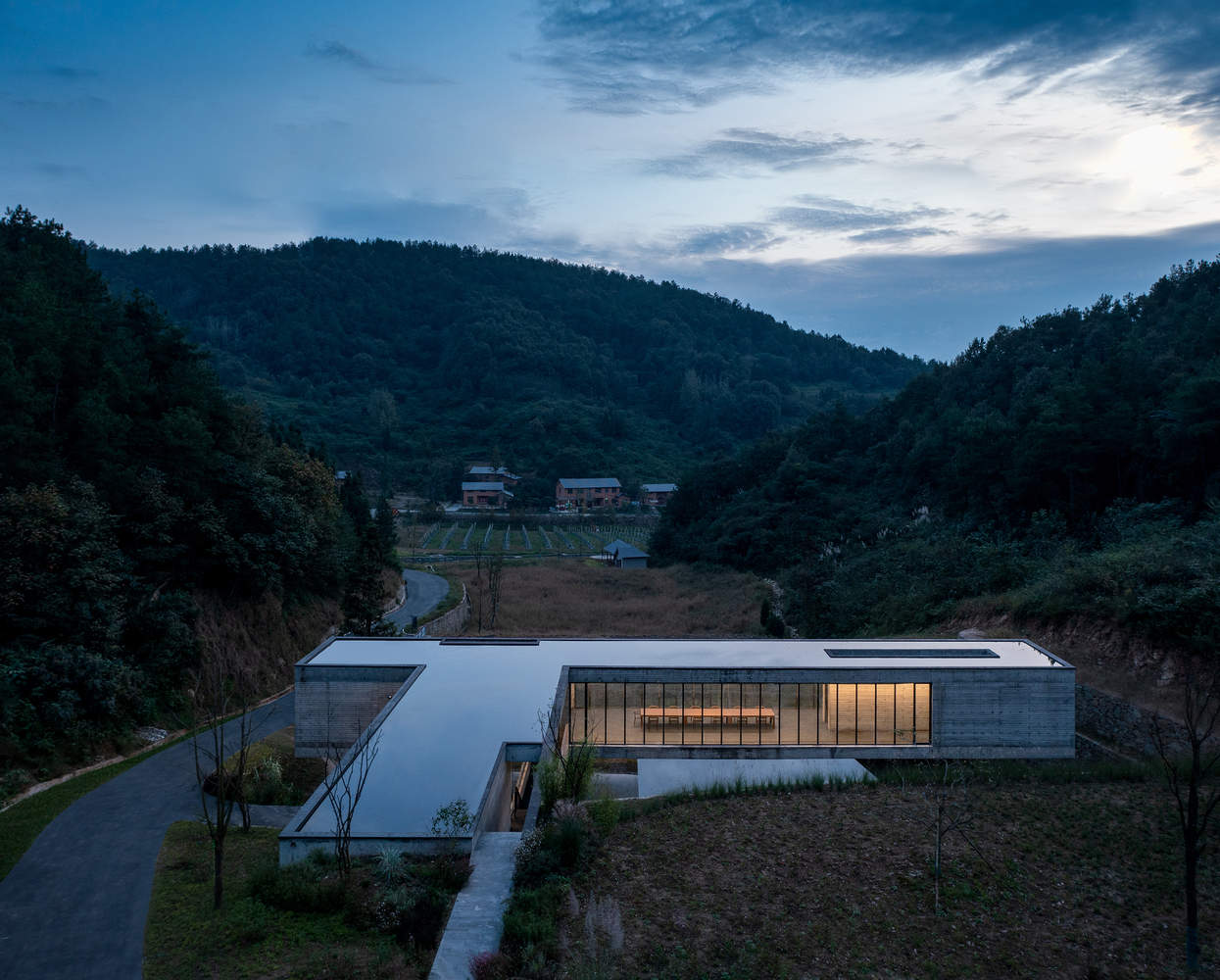
The building is located in Longwanggou Village, Shiyan City, Hubei Province, nestled in a small valley adjacent to the Danjiangkou Reservoir area, where the reservoir banks are characterized by gentle hills and interwoven streams.
建筑选址在湖北十堰市龙王沟村里,此地毗邻丹江口水库区的一处小山谷,水库沿岸多是浅山丘陵,溪谷交织纵横。
© 吴清山
On site, we found that the construction team had already completed road construction and site leveling, transforming the original natural transition to the valley floor and rice paddies into several tiers of artificial terraces and parking lots.
在现场,我们发现施工队伍已经完成了修路与场地平整的工作,原本自然衔接至谷地、水稻的地貌已被削切为数级人工台地和停车场。
© 吴清山
Conceptual Axonometric
© 吴清山
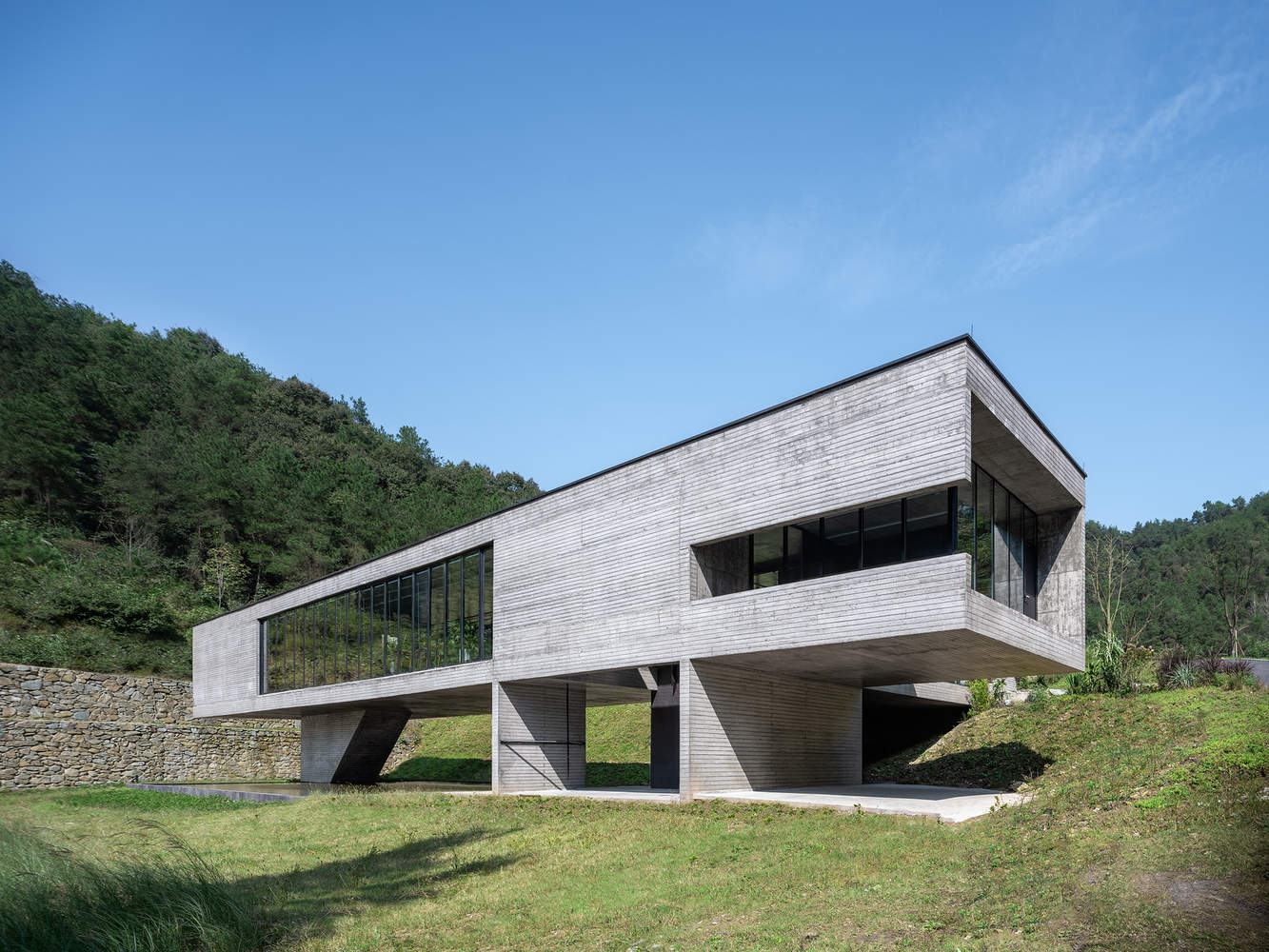
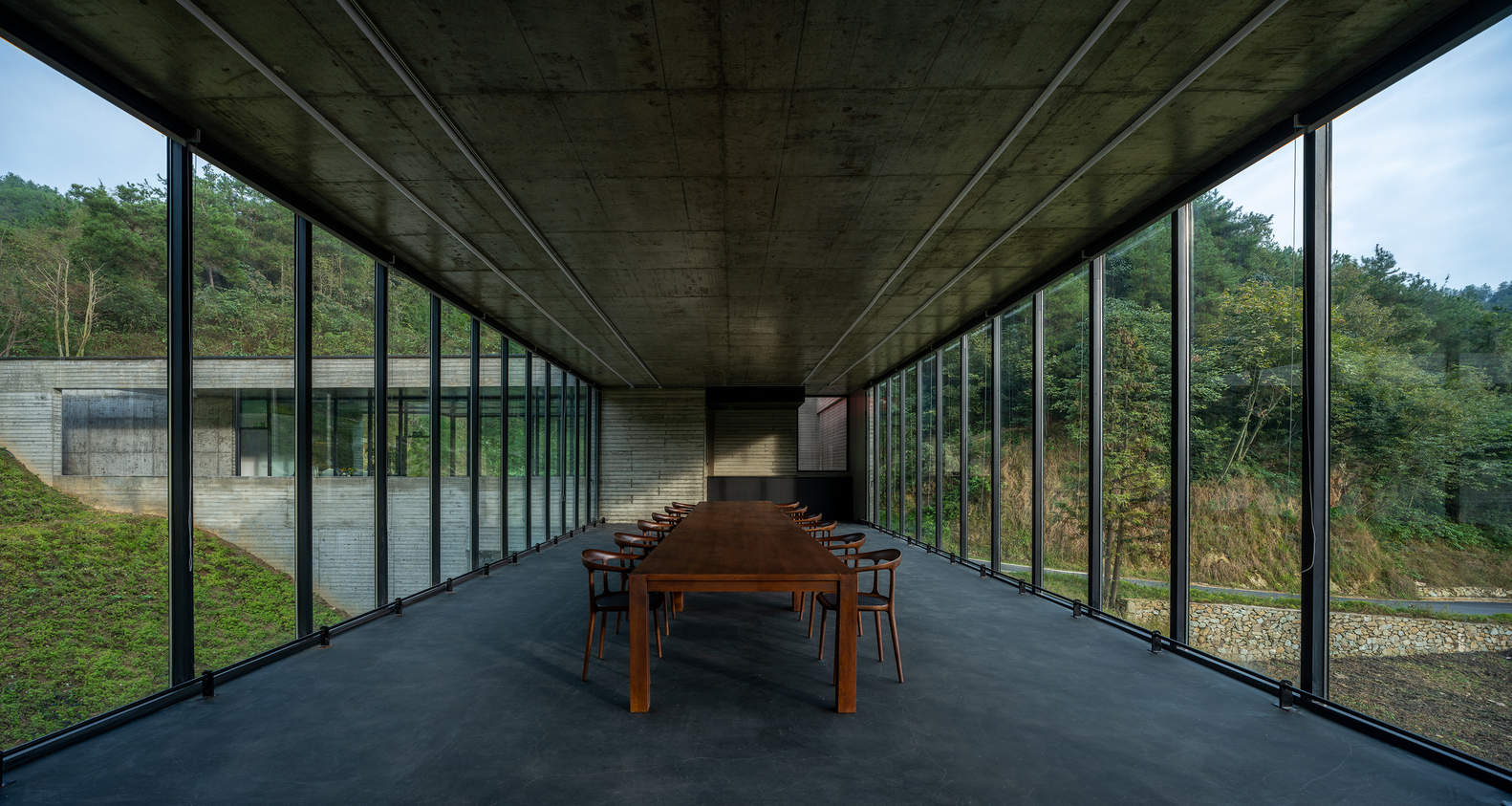
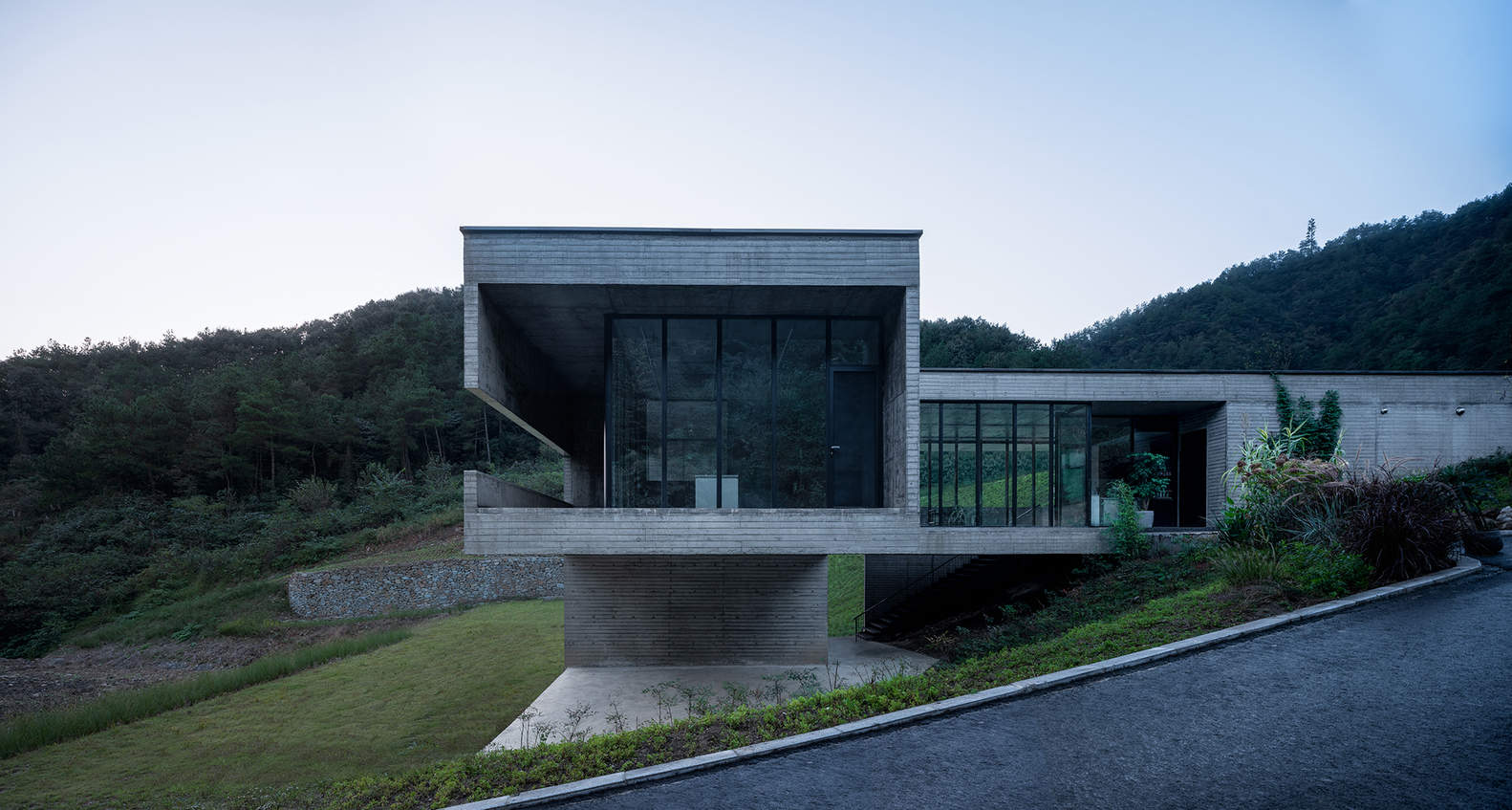
The temporary hoarding erected by the construction team triggered our inspiration. On the cut slope terraces, a blue hoarding line transversed the valley; the corrugation of the color-coated metal sheets and the exposed screws were full of artificial traces, evoking the landscape installations created by land artists Christo and Jeanne-Claude. Our design continues this intervention: the new building cuts into the terrain with a straight line, preserving the abstraction of the distant view while transforming it into a functional landscape corridor. Constrained by the construction budget, standard 150mm wide finished wood flooring was used instead of traditional small wooden formwork. After pouring, the concrete surface exhibited a stronger textural rhythm and directionality, and the texture of the wood flooring integrated into the geometric composition, dissolving the abstraction of the concrete.
施工方搭建的临时围挡触发了我们的灵感,削坡而成的台地上,一道蓝色围挡横切山谷,彩涂金属板的波纹、螺钉又充满了人工痕迹,令人联想到大地艺术家Christo 与Jeanne-Claude所创作的地景装置。我们的设计延续这种介入,新建建筑以一道直线切入地形:保留远景的抽象,也将其转化为承载功能的景观长廊。施工预算约束下,以150mm宽的标准成品木地板替代传统小木模板,浇筑后混凝土表面呈现出更强的纹理节奏与方向感,同时木地板的肌理融入几何构图,消解了混凝土的抽象。
© 吴清山
© 吴清山
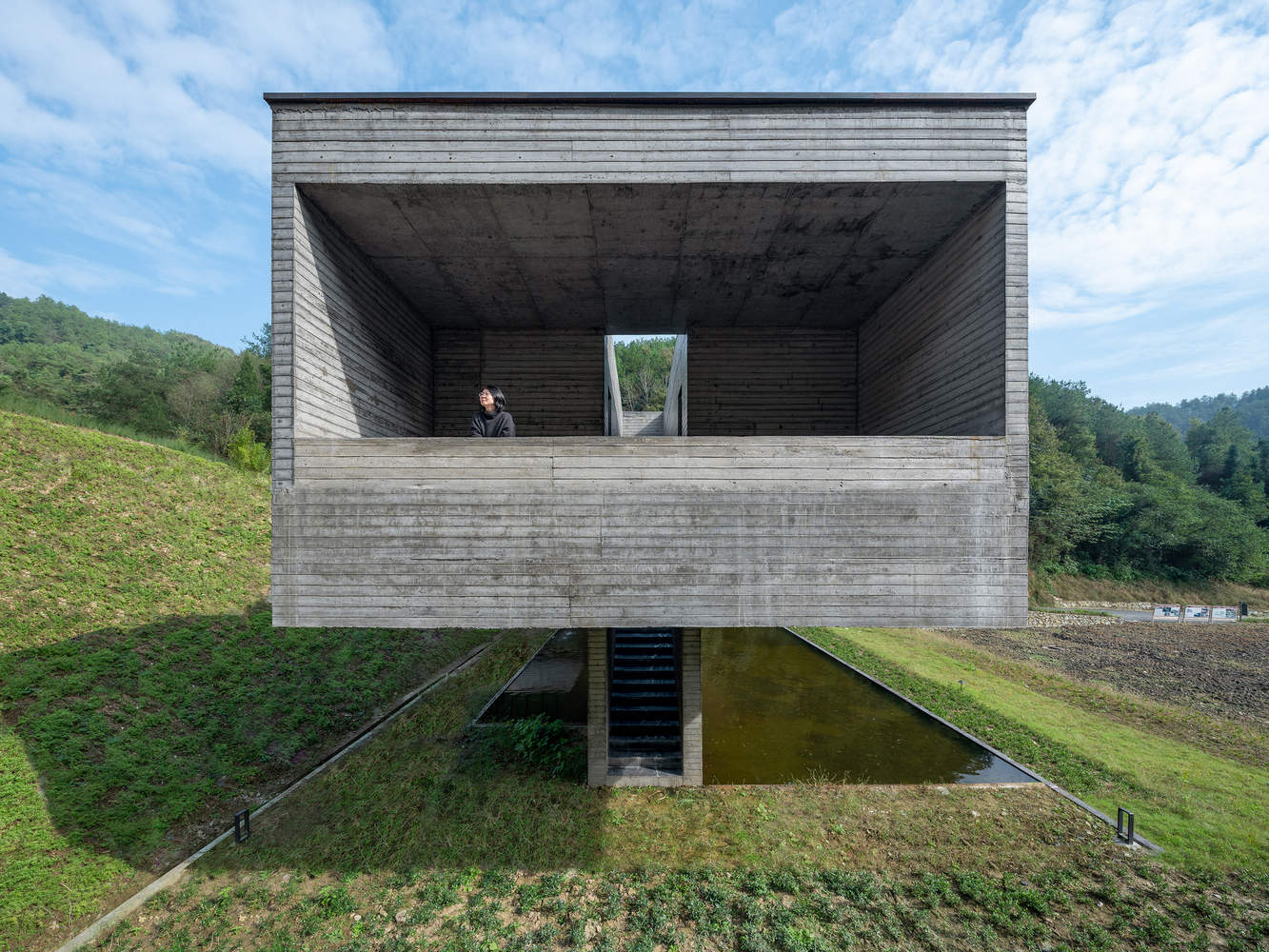
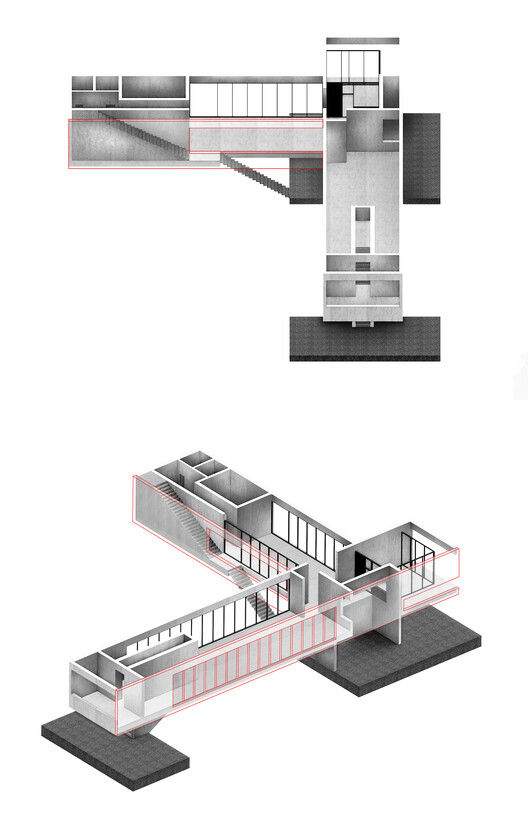
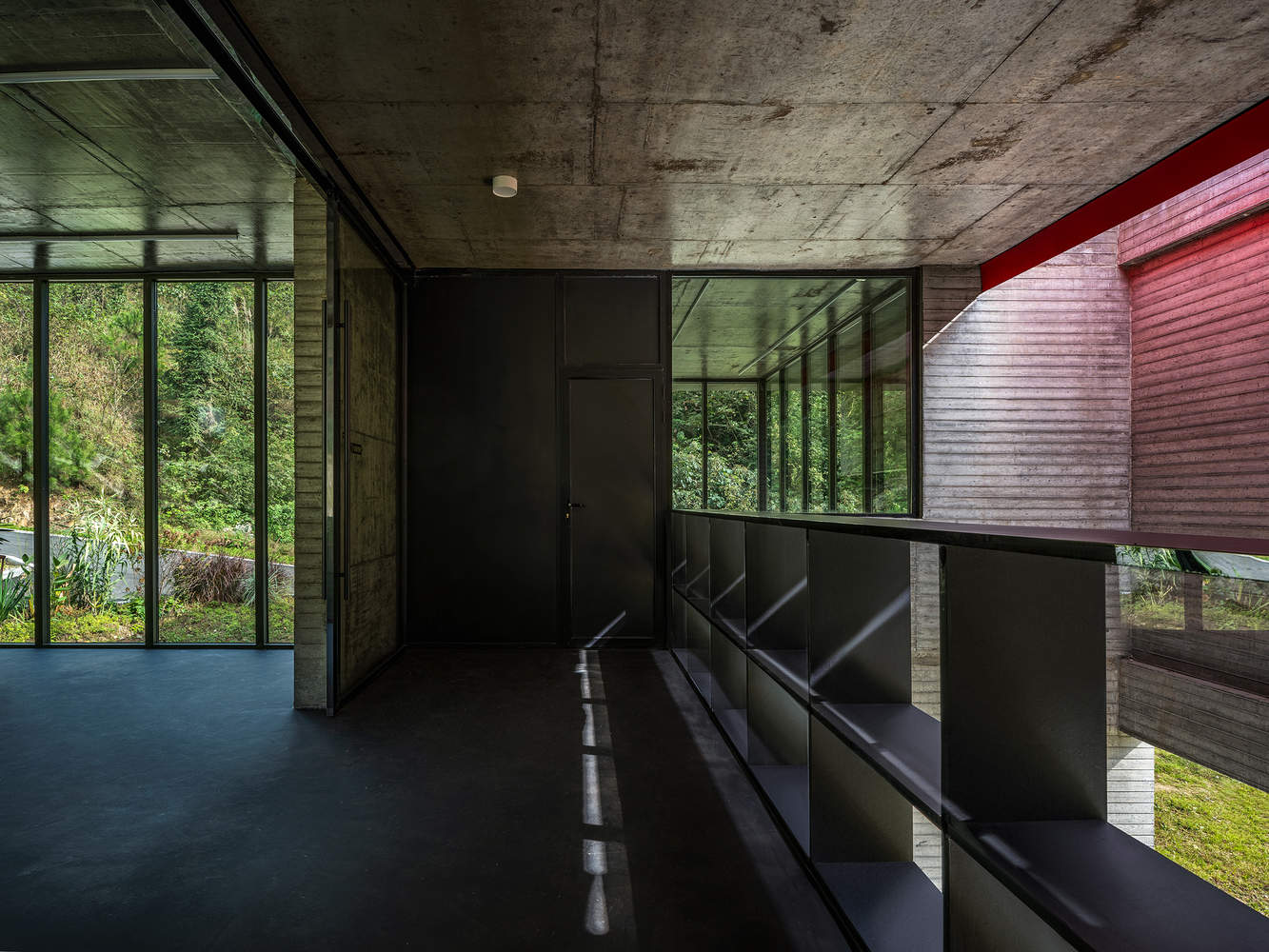
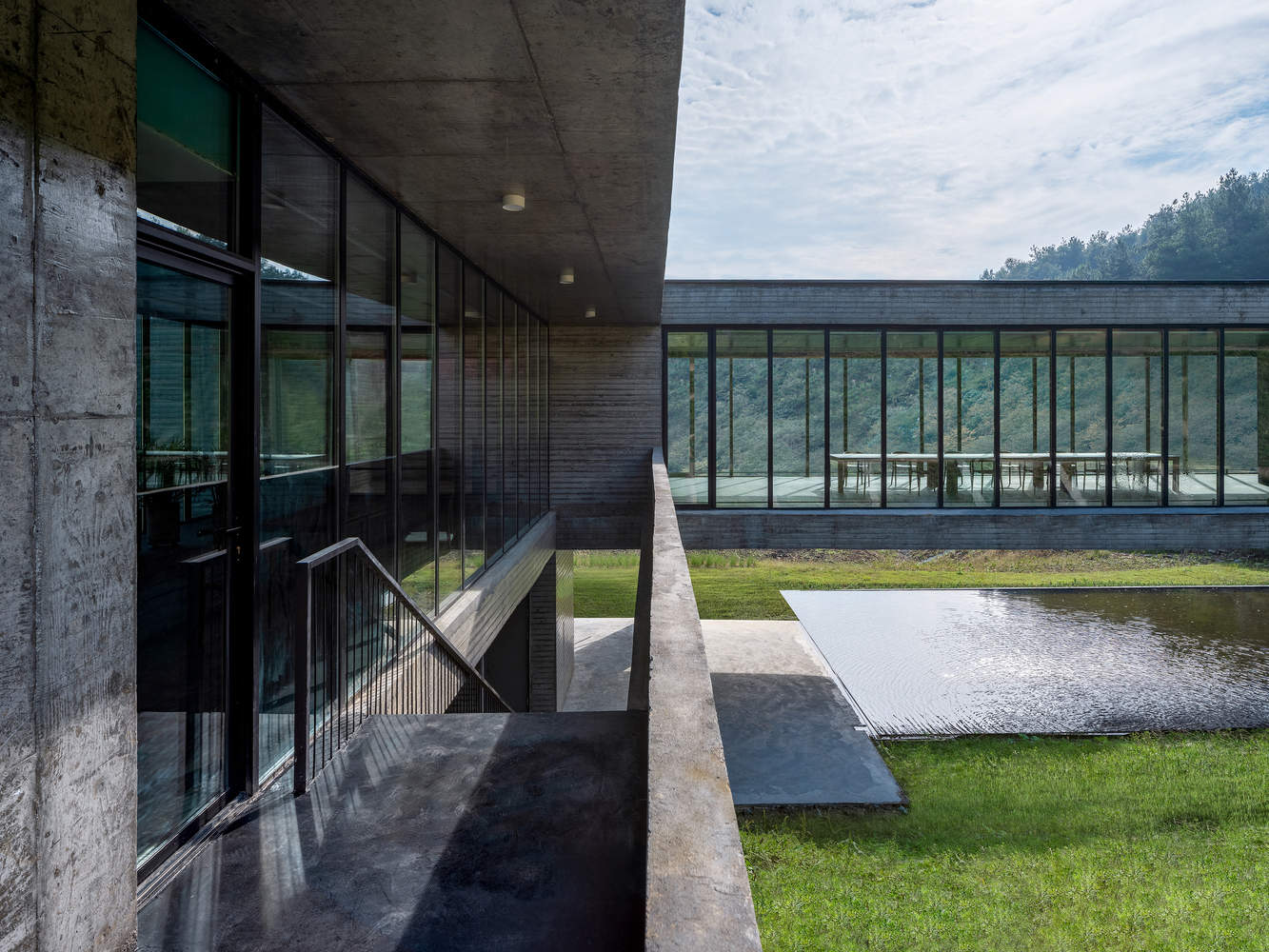
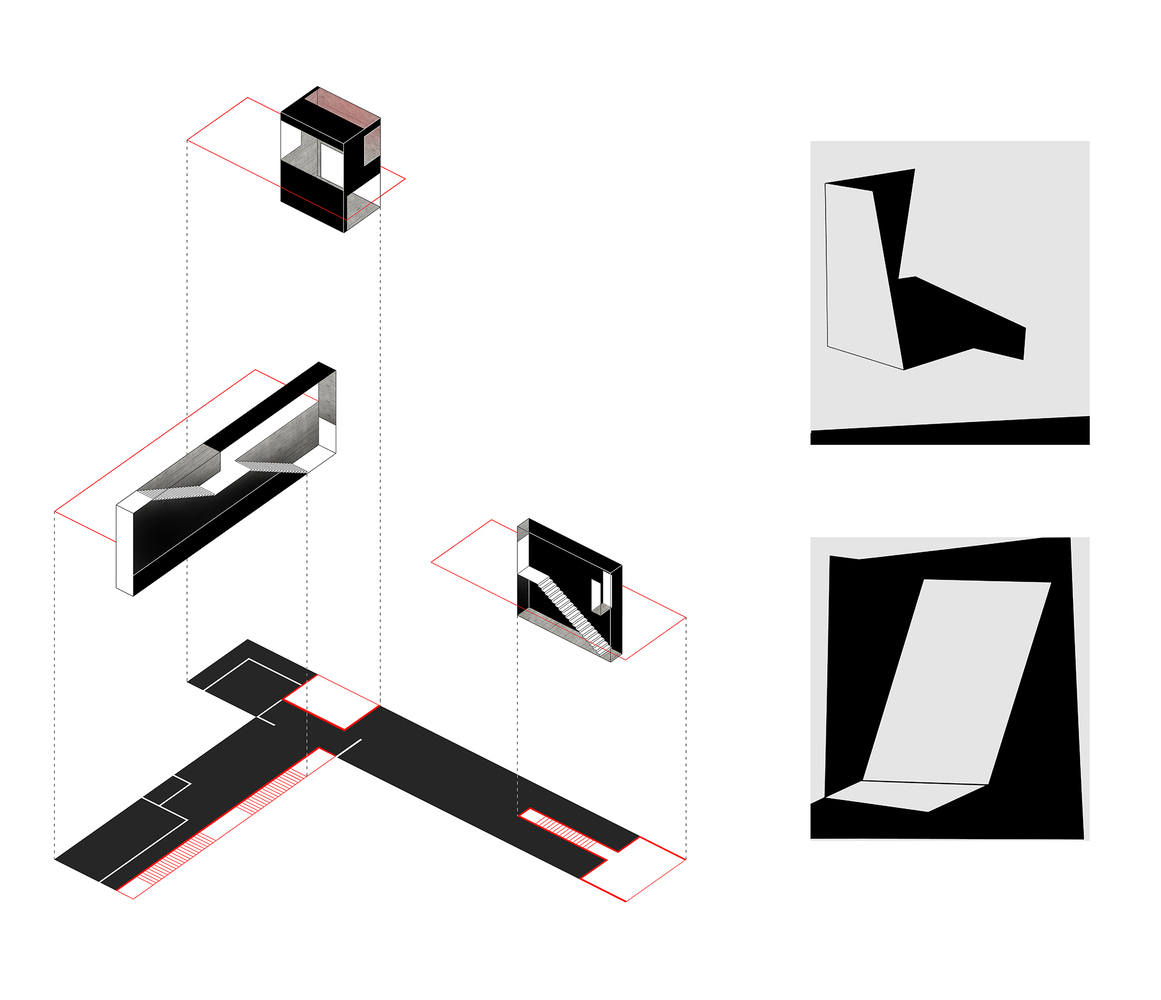
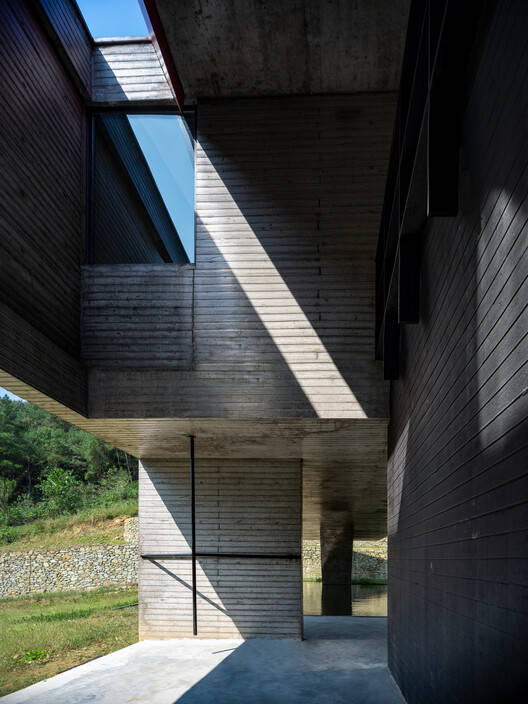
Three courtyards of light are inserted into the concrete solid core of the building, connected to the circulation flow: the "Vertical Light Courtyard" is a full-height, semi-outdoor cube measuring 7.5m×7.5m×7.5m: it horizontally connects the restaurant, open kitchen, and conference room; vertically, it connects people, sky, and earth through changes in light. The flow of light expresses the passage of time and regulates human sightlines, allowing the building to be perceived in fragments.
建筑的混凝土实体筒内插入三个与交通动线相连的光庭:“垂直光庭”是一处通高、半室外的、7.5m×7.5m×7.5m的立方体:横向联通餐厅、开敞厨房与会议室;竖向以光的变化连接人、天空与大地。光线的流动表达了时间的挪移,也调控着人的视线,建筑片段地被人感知。
The interior floor uses an epoxy finish with a texture and color value close to concrete.
室内地面采用质感与色值接近混凝土的环氧地坪。
© 吴清山
Conceptual Diagram
© 吴清山
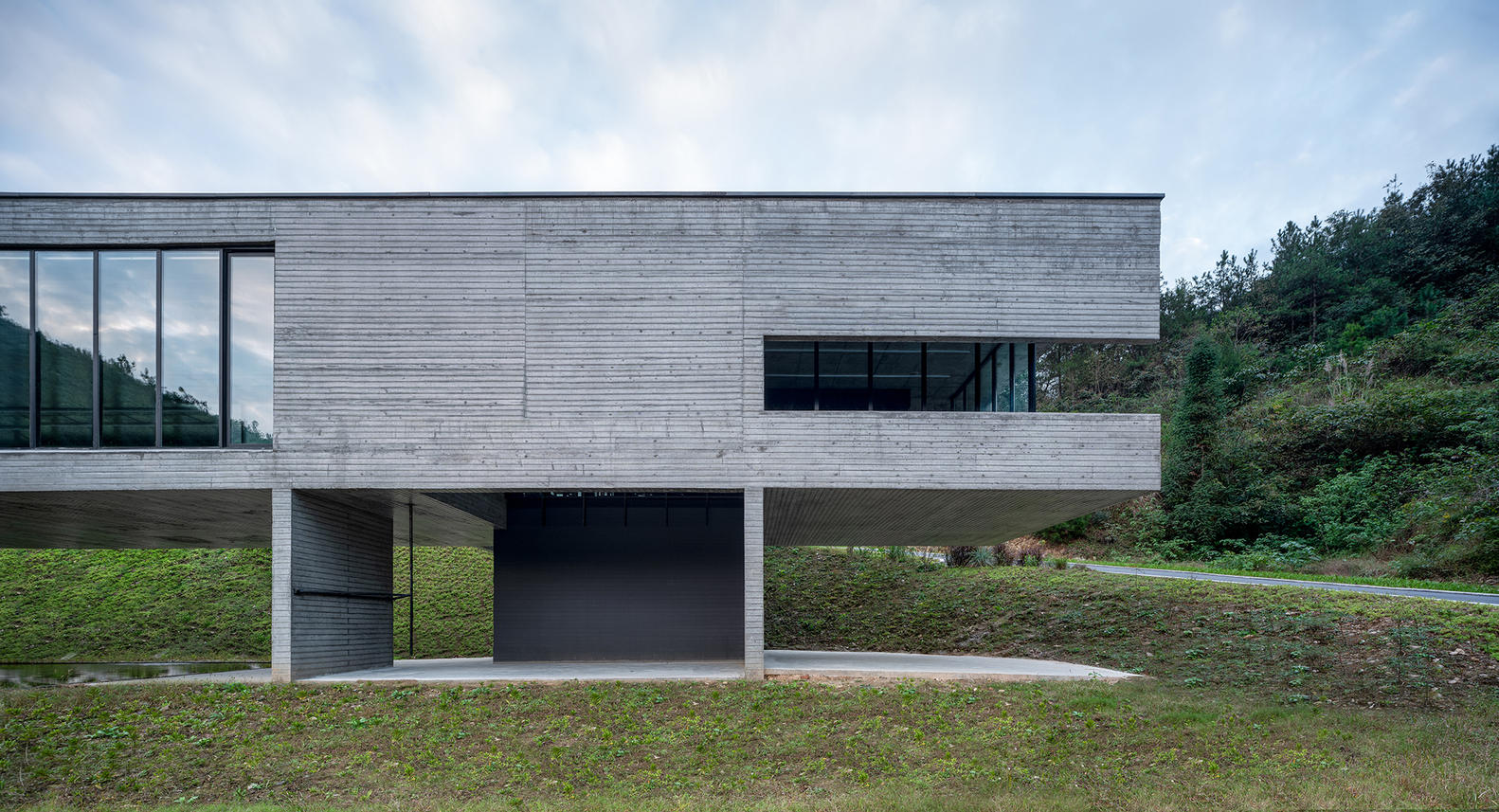
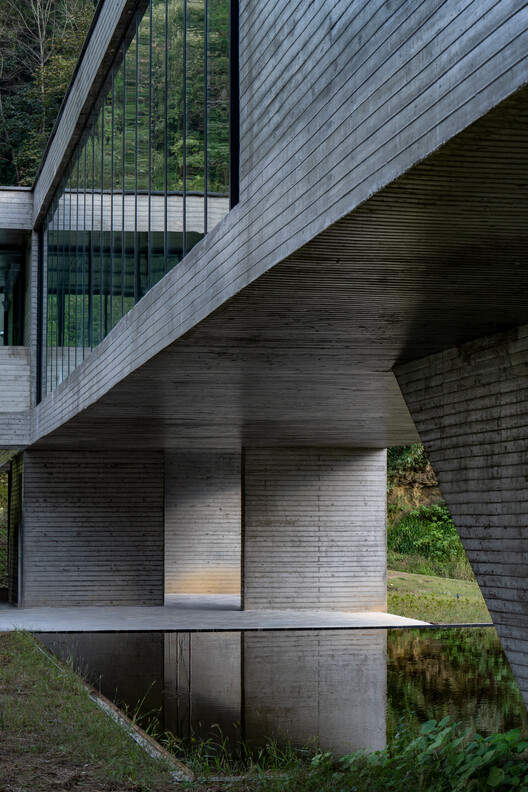
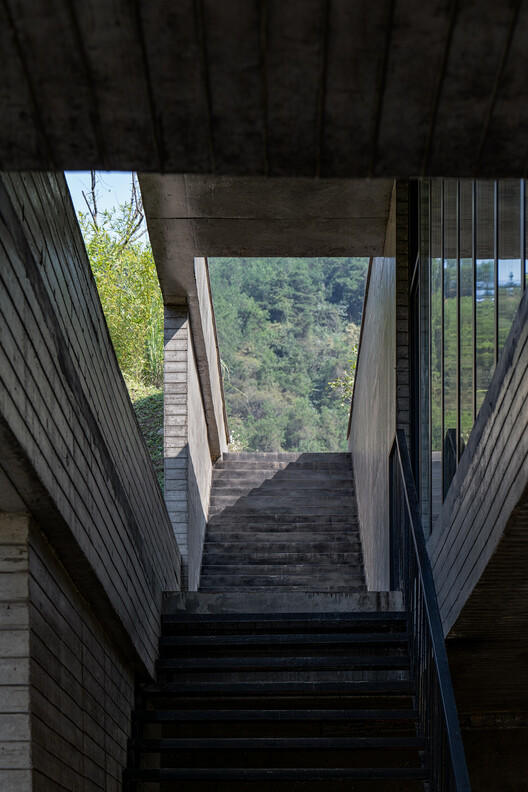
To create a sense of "hovering" and achieve a column-free large span, both the top surface and the ground of the building adopt waffle slabs, forming a three-dimensional tubular structural system. Vertical loads are transferred to the overall raft foundation at the bottom by the staircases at both ends, side walls, and staggered longitudinal shear walls; in non-load-bearing areas, long, large windows are opened as much as possible, with electric opening windows at both ends forming cross ventilation, thereby weakening the structural volume.
为使空间呈现“悬停”姿态并实现无柱大跨度,建筑顶面与地面均采用密肋混凝土板,构成三维筒体受力体系。竖向荷载由两端楼梯、侧墙及纵向交错片墙传递至底部整体筏板;非受力区尽可能通高开设长向大窗,两端配电动开启窗形成对流通风,从而弱化结构体量。
© 吴清山
© 吴清山
© 吴清山
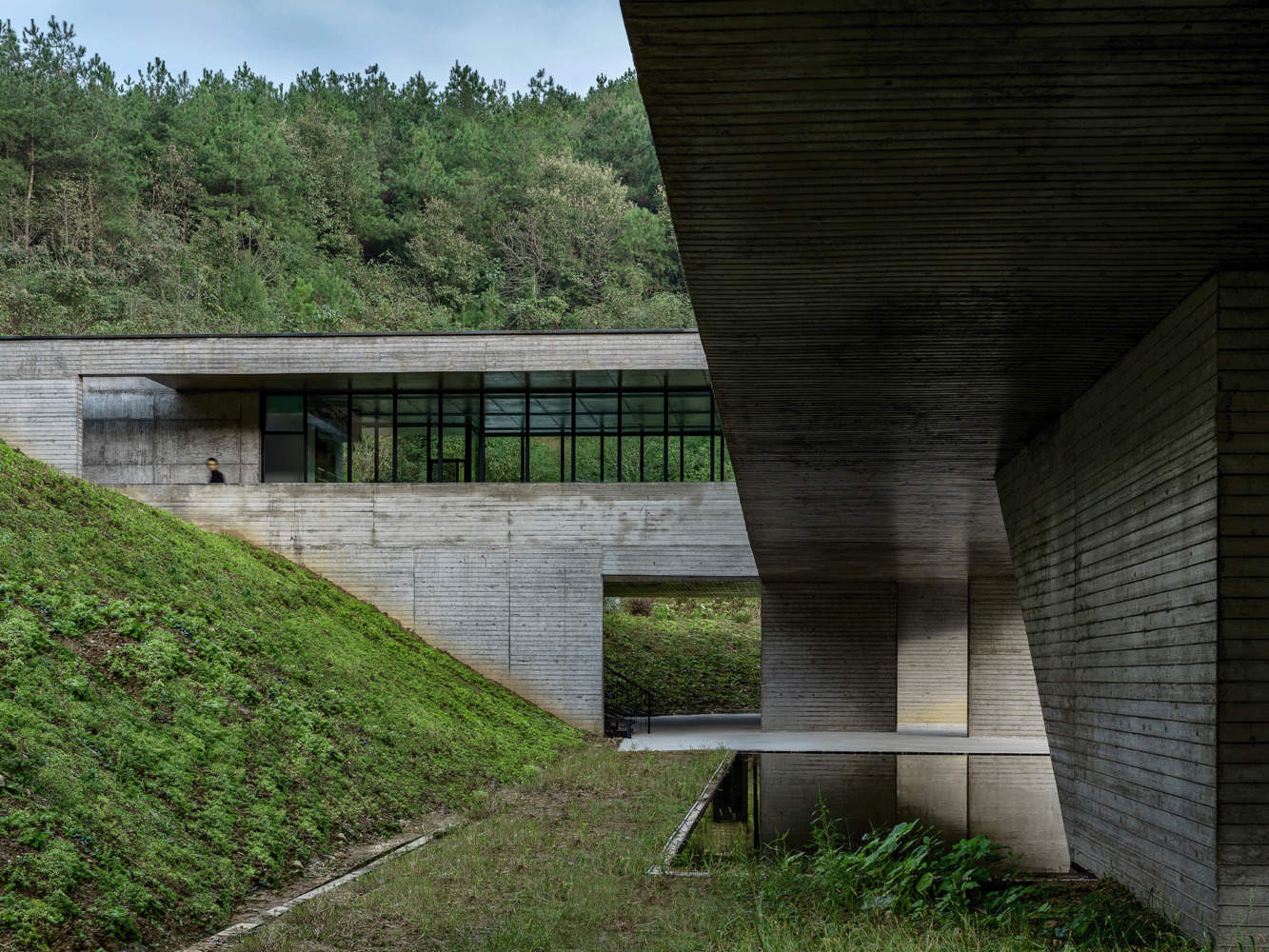
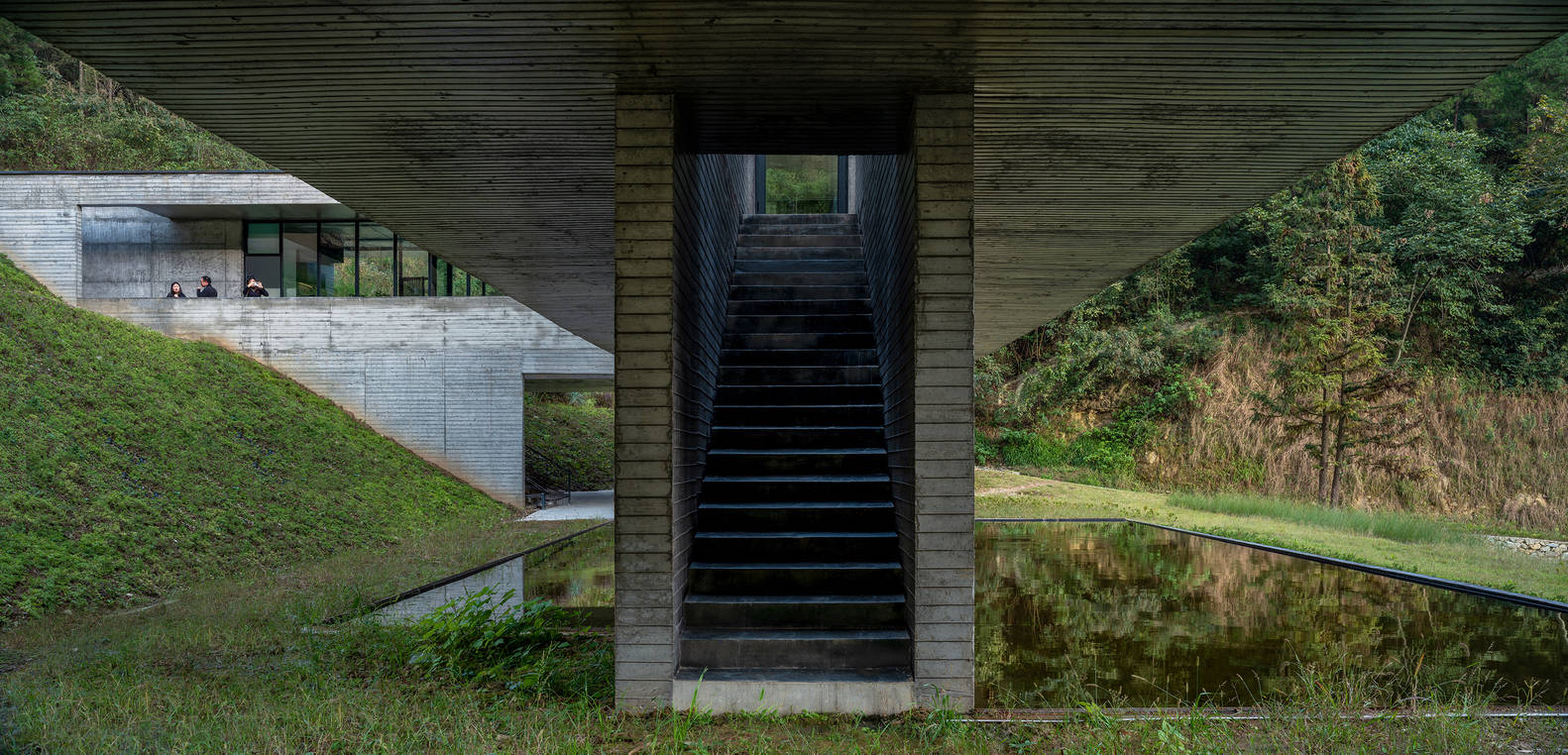
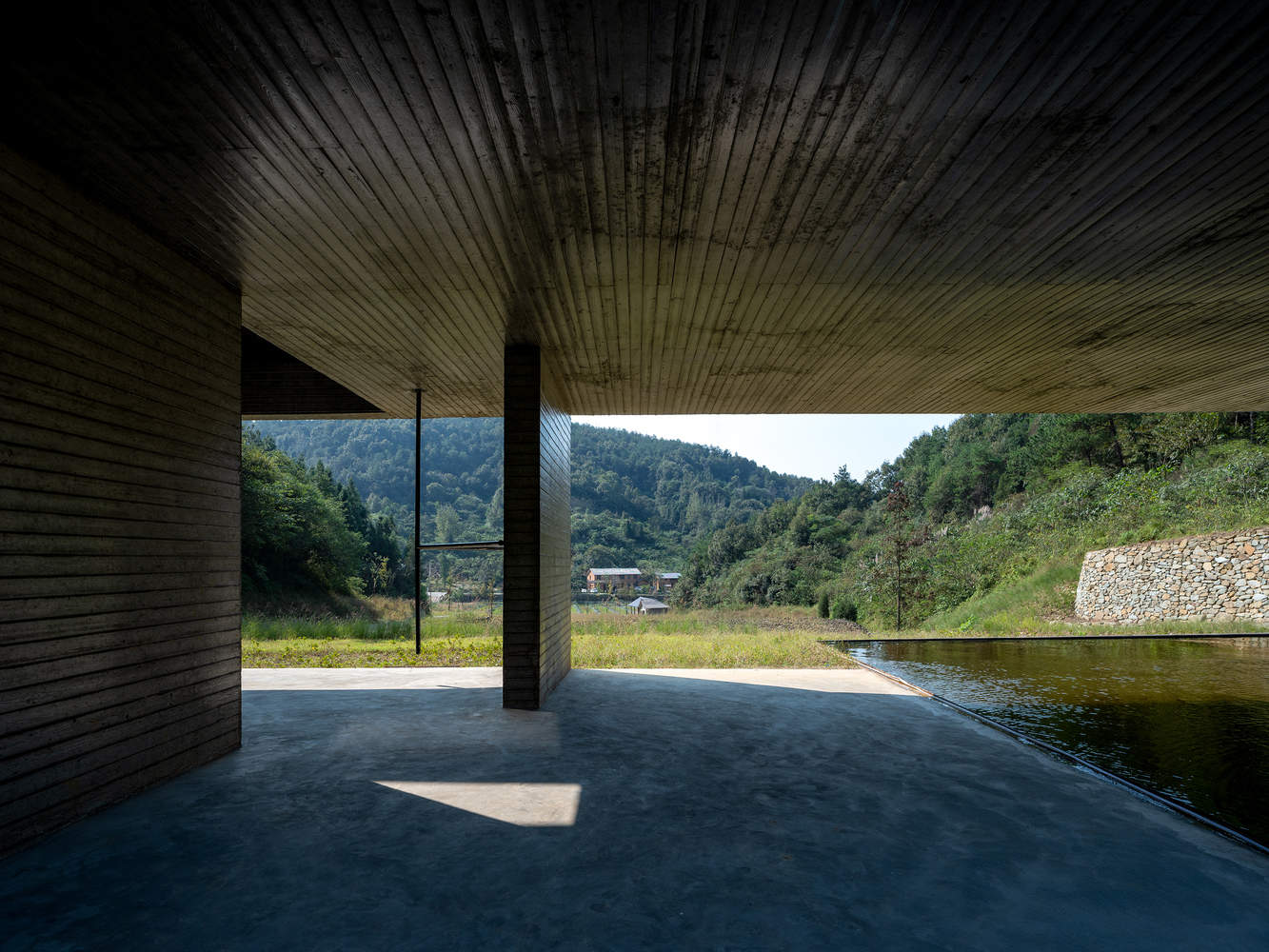
The inverted beams of the top slab integrate mechanical and electrical pipelines, and the raw concrete texture is retained on the building's top surface. The roof is covered with an ultra-thin mirrored pool, used to mitigate the heaviness of the inverted beams; its horizontal reflection contrasts with the complex texture of the mountain, while also echoing the distant reservoir. The concrete tube was cast monolithically; to balance the bending moment in the middle span of the main beams, the top slab and the ground were slightly arched after calculation. Amidst the chaos of nature, a bridge is a territory of geometry.
顶板混凝土反梁整合机电管线,建筑顶面保留清水混凝土肌理。屋面覆以超薄镜面水池,以削弱反梁的厚重感,其水平反射既与山体的复杂肌理形成对照,亦呼应远处水库。混凝土筒体为一次整体浇筑;为平衡主梁中跨弯矩,顶板与地面经计算均作微起拱。在自然界的杂乱无章之中,一座桥梁就是一处几何学的领地。
© 吴清山
© 吴清山
© 吴清山