文脉尊重与场地适应性的精妙平衡:该项目坐落于首尔城北洞,一个保留着历史文脉与适度宁静的区域。建筑师敏锐地捕捉了场地与生俱来的挑战——基岩密布、坡地结构以及紧邻既有挡土墙的敏感性。通过采用裸露混凝土并刻意蚀刻垂直图案,设计师成功地将建筑体量塑造成“从基岩中拔地而起”的雕塑感,这不仅是对场地地质条件的直接回应,更巧妙地融入了地域的粗犷美学。这种对环境的尊重与强有力的形式表达,是该设计最核心的亮点之一。
街道立面策略与法规的动态张力:面对城北路这一高可见度的城市界面,建筑的立面设计成为了关键的表达。由于受到《朝北采光条例》的限制,建筑师采用了从三层开始体量逐步向前突出的策略,以满足后退距离要求的同时,在主干道上创造出动态的、富有张力的视觉效果。这种通过体量退进和悬挑来调节公共视野和私密空间的手法,展示了高超的法规应对能力。裸露混凝土的质感与精心设计的立面吸引力,确保了建筑在遵守规范的前提下,仍能成为引人注目的城市焦点。
情感化叙事与隐性设计的匠心独运:本项目最令人玩味之处在于设计师将个人情感融入结构语言的内敛表达。为了纪念原址上一家常去的“Yum Yum Burger”汉堡店,建筑师在不告知客户的情况下,于设计中融入了叠放汉堡面包的形状作为柔化边角的依据。这种“隐藏的设计元素”体现了建筑师对场所记忆的珍视和对日常生活的深层关怀,超越了纯粹的功能和美学考量,赋予了建筑独特的、只有知情者才能体会的“第二层含义”,体现了高度的建筑人文精神。
A low-rise building located in Seongbuk-dong on Seongbuk-ro, which still retains traces of old houses scattered throughout the area. In the past, the residences of literati and celebrities were concentrated along the old Seongbuk Stream. Although many houses have disappeared and only relics remain, some are still preserved today. I think this unique urban landscape—a mix of moderate prosperity and just the right amount of openness—maintains a leisurely and relaxed rhythm amidst the dense hustle and bustle of central Seoul.
位于城北路的城北洞,仍然保留着散布在该地区的老房子痕迹。在过去,文人和名流的家集中在昔日的城北川沿岸。虽然许多房屋已经消失,仅剩下遗址,但仍有一些保存至今。我认为,这里独特的城市景观——既有适度的繁华,又不失恰到好处的空旷,在首尔市中心的密集喧嚣中,依然保持着一种悠闲舒缓的节奏。
© Mongsang
© Mongsang
Not long after we moved our office to this area, a client visited us wanting to build a building on a plot of land near our new location. I often passed by that plot during my lunch break; it was on a slope and was originally a residence (one basement level, two above ground, accessible from the roadside) that had been converted into a community commercial facility.
我们办公室搬到这个区域不久,一位客户就来拜访,想在我们新址附近的一块地皮上建一栋楼。那块地我午休时经常路过,它位于一个斜坡上,原先是一栋住宅(一层地下室,地上两层,可从路边进入),后来改建成了社区商业设施。
© Mongsang
© Mongsang
We were delighted to undertake construction on a site we were very familiar with, but at the same time, we hesitated slightly due to the potential risks and civil disputes that might arise during construction. The main concern was the stability of the existing structure built atop the stone retaining wall at the rear of the sloping site.
我们很高兴能在一个我们非常熟悉的场地进行施工,但同时,我们也因为施工过程中可能出现的潜在风险和民事纠纷而略感犹豫。最主要的担忧是建在斜坡场地后方石砌挡土墙上的现有结构的稳定性。
© Mongsang
Since the building would be prominently located on Seongbuk-ro, visible to any passerby, the facade of this commercial lease property was crucial for its visibility and appealing texture, even while adhering to legal restrictions.
由于该建筑将建在城北路上的显眼位置,任何过往行人都能轻易看到,因此,即使在遵守法律限制的情况下,该商业租赁物业的立面也具有极强的可见性和吸引人的质感,这一点至关重要。
© Mongsang
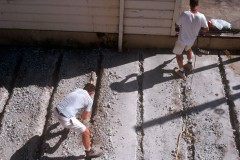
The geographical conditions of Seongbuk-dong also posed challenges. Due to its location at the foot of Bukhansan Mountain, most of the ground is bedrock, making it very difficult to excavate a basement. However, the site’s greatest advantage was its direct access from the road, which we could not give up. To achieve the effect of a massive rock carving emerging from the bedrock, we decided to use the texture of exposed concrete and etch vertical patterns onto its surface.
城北洞的地理条件也颇具挑战性。由于地处北汉山山麓,地基大多为基岩,因此建造地下室十分困难。然而,场地最大的优势在于可直接从公路进入,这是我们无法放弃的。为了营造出仿佛从基岩中拔地而起的巨大岩石雕刻而成的效果,我们决定采用裸露混凝土的质感,并在其表面蚀刻垂直图案。
2F Floor Plan
5F Floor Plan
Right Elevation
The north side of the site borders an adjacent plot of higher ground, and the building height was restricted by the ‘Daylight Access Regulation’ (Jeongbuk Iljo). To ensure that the necessary setbacks, which were not visible from the front, were manifested from the main road, we designed the building volume to gradually project forward starting from the third floor. This layout aimed to create tension and dynamism in the facade as viewed from the roadside.
场地北侧与地势较高的相邻地块接壤,受《朝北采光条例》(Jeongbuk Iljo)的限制,建筑高度受到限制。为了使从正面无法看到的必要退让距离能够从主干道上显现,我们采用了从三层开始建筑体量逐渐向前突出的设计。这种布局旨在从路边视角营造建筑立面的张力与动感。
© Mongsang
To compensate for a slight regret I held, I cleverly incorporated a hidden design element into this building. In the previous building, there was a handmade burger shop called “Yum Yum Burger” that I frequented, often grabbing a burger on my way home. Sensing that I might not be able to visit this shop after the new building was completed, I subtly incorporated the shape of stacked burger buns into the building design to evoke memories of that temporary burger joint. This is a story I recall only now; I did not tell the client. I explained at the time that by softening the building’s corners, I was conceptually extending the building’s front seamlessly into the sides.
为了弥补我心中的一点遗憾,我在这座建筑中巧妙地融入了一个隐藏的设计元素。之前的建筑里有一家名为“Yum Yum Burger”的手工汉堡店,我经常光顾,回家路上也会顺便买些汉堡。预感到新建筑建成后我可能无法再去这家店了,所以我在建筑设计中融入了几个叠放的汉堡面包的形状,以此来巧妙地唤起我对这家临时汉堡店的记忆。这是我现在才想起来的故事,我并没有告诉客户。我当时解释说,通过柔化建筑的边角,我实际上是在概念上将建筑的正面无缝地延伸到了侧面。
© Mongsang
© Mongsang
© Mongsang
Despite numerous challenges during construction, the project was safely completed, and the client was very satisfied. I hope that the owners and users will feel as much love and pride for this building as I do—the project began with a meeting and contract signing in December 2020 and finally received its occupancy permit in the spring of 2025.
尽管施工过程中面临诸多挑战,但项目最终安全竣工,客户非常满意。我希望业主和使用者都能像我一样,对这座建筑充满热爱和自豪——这个项目始于2020年12月的会面和合同签订,并于2025年春季最终获得入住许可证。
© Mongsang