气候适应性与能源自给的创新实践:该项目最核心的亮点在于其在奄美大岛特定亚热带气候下,成功实现了完全脱离国家电网的能源自给,并为四口之家提供了舒适的生活环境。设计师通过对当地太阳辐射的精准评估和对可再生能源(主要为太阳能)的优化配置,克服了当地日照不足的挑战。建筑设计本身高度整合了被动式气候策略,例如借鉴当地高仓结构进行自然通风和遮阳,以及创新的屋顶设计控制热量与采光,体现了对地域气候的深刻理解和精妙的技术转化,是对未来“韧性人居”的有力探索。
地域文脉的当代重构与空间叙事:设计并非单纯的技术堆砌,而是深度根植于奄美大岛的地域记忆和文化传统。通过解构当地的“分栋”式布局,将居住功能拆分为五个独立体块,创造出流动的、共享的中间空间,有效模糊了室内外的界限。这种空间组织方式不仅优化了居住体验,更重要的是,它激活了岛屿文化中“结”(集体合作与仪式)的核心精神,使建筑成为连接人与人、人与自然的文化载体,赋予了现代住宅超越纯粹居住功能的社会价值。
闭环资源管理与生态伦理的落地实践:项目在物质层面对可持续性进行了彻底的实践。从建筑废料用于桑拿房燃料的资源循环,到食物垃圾堆肥回归菜园的食物链闭合,本项目构建了一个微型、自给自足的生态系统。这不仅是对建筑本身能源需求的独立解决,更是对整个生活体系可持续性的全面考量。这种对资源流动的精细化管理,体现了建筑师作为居住环境设计者,对当代环境危机所采取的主动、负责任的伦理姿态,为老龄化和资源受限地区的未来生活方式提供了可复制的范本。
When I started designing my own house in the center of Amami Oshima, I never imagined that it would eventually be disconnected from the power grid. However, as environmental degradation accelerates and extreme weather becomes the norm, this choice became imperative. This decision originated three years ago when I purchased a mountain—there, I began to build my own micro-infrastructure to achieve independent living, both in preparation for unforeseen crises and in anticipation of exploring new resilient lifestyles in regions facing aging populations and decline.
当我在奄美大岛中心开始设计自己的住宅时,从未想过它最终会与电网断开连接。然而,随着环境恶化加剧、极端天气成为常态,这一选择变得势在必行。这一决定源于三年前我购置的一座山 —— 在那里,我开始构建自己的微型基础设施,以实现独立生活,既为应对不可预见的危机做好准备,也憧憬着在老龄化、人口减少的地区探索新的韧性生活方式。
© Toshihisa Ishii
© Toshihisa Ishii
Achieving complete self-sufficiency deep in the mountains is challenging. The main hurdle was that the solar radiation intensity on the island was unexpectedly low—comparable to northern Japan. After evaluating wind, hydro, and geothermal energy, solar power remained the most practical option. To verify its feasibility, I chose my urban residence as the experimental site. Ten days before the groundbreaking ceremony, I decided to sever the connection to the national grid.
在深山中实现完全的自给自足困难重重。主要挑战在于,岛上的太阳辐射强度出人意料地低 —— 堪比日本北部。在评估了风能、水能和地热能后,太阳能仍是最实用的选择。为了验证其可行性,我选择了自己的城市住宅作为实验地点。在破土动工典礼前十日,我决定切断与国家电网的连接。
© Toshihisa Ishii
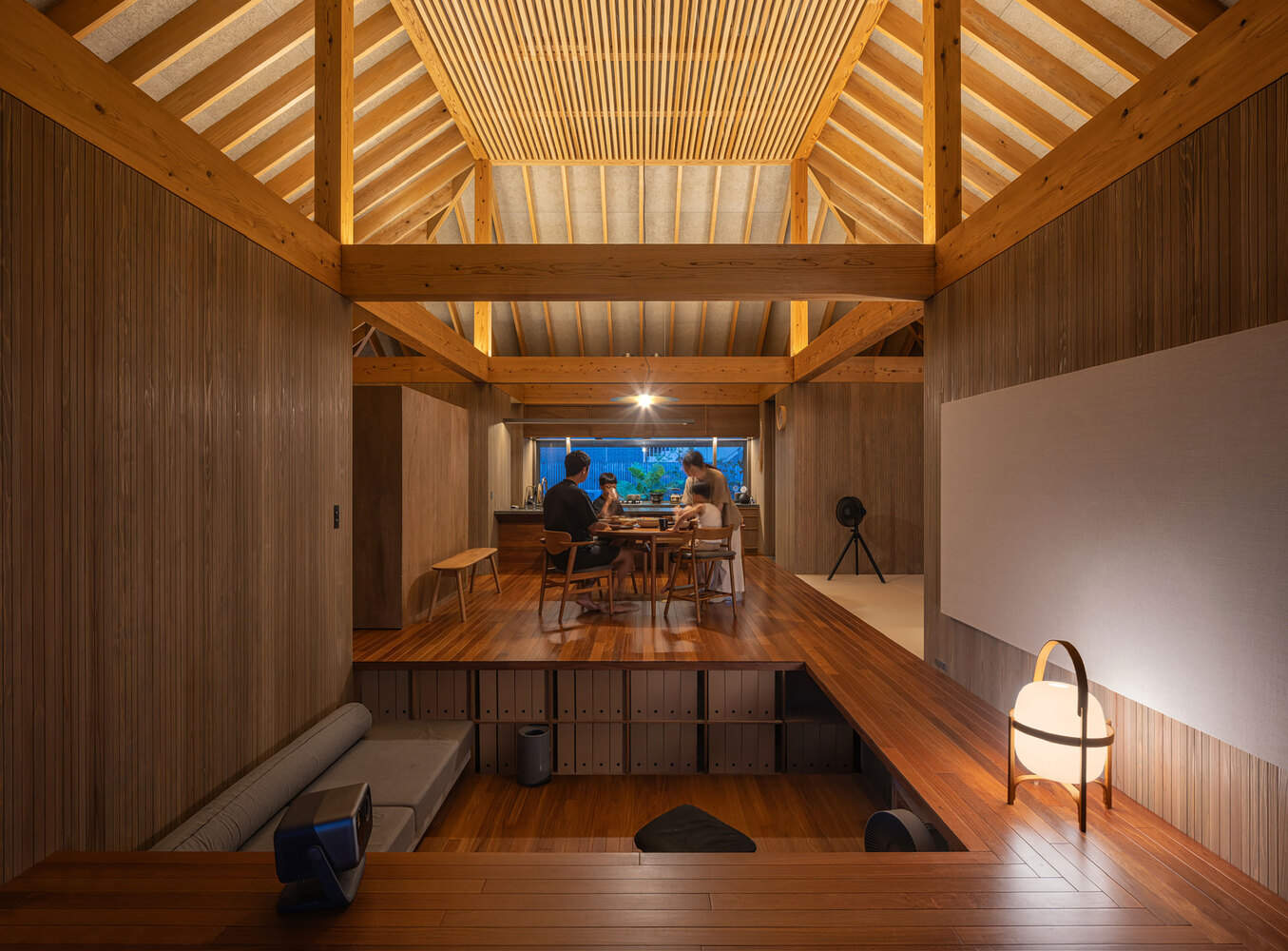
The result is a self-circulating residence that allows a family of four to live comfortably without external electricity or air conditioning, even under the harsh subtropical climate conditions of Amami Island, characterized by high humidity and limited sunshine. The design is rooted in the island's regional memory, reinterpreting traditional spatial logic to create a contemporary lifestyle in symbiosis with nature.
最终建成的是一座自主循环的住宅,即使身处奄美岛高湿度、日照有限的恶劣亚热带气候条件下,也能让一家四口无需外部电力或空调,舒适地生活。设计根植于岛屿的地域记忆,重新诠释了传统空间逻辑,打造出一种与自然共生的当代生活方式。
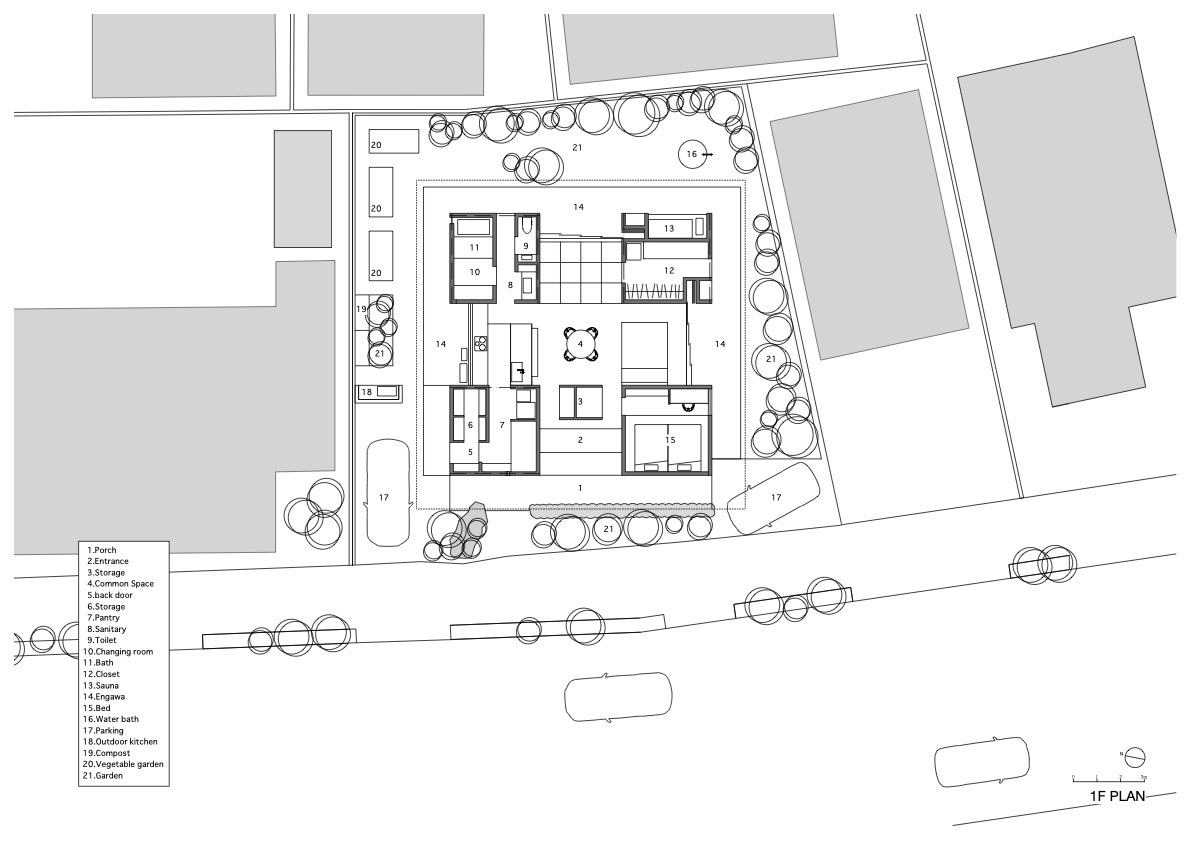
First Floor Plan
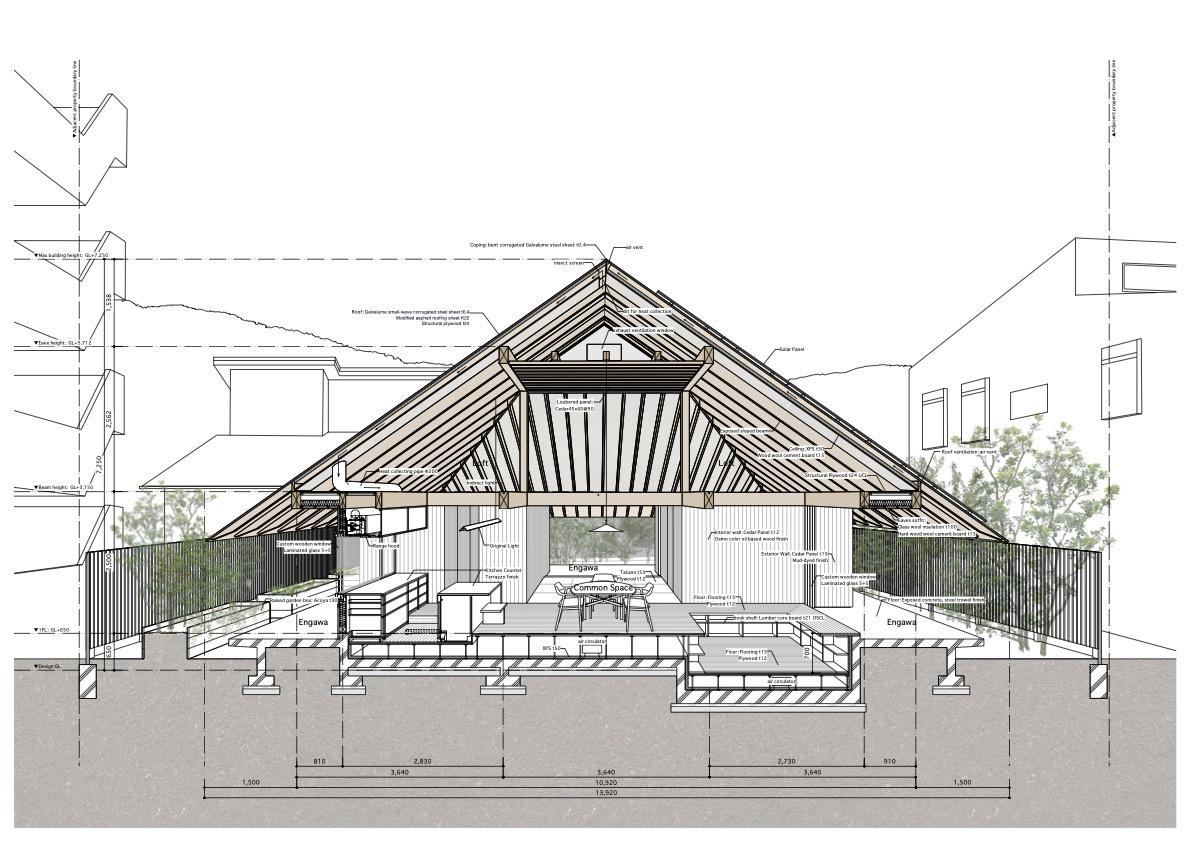
Section
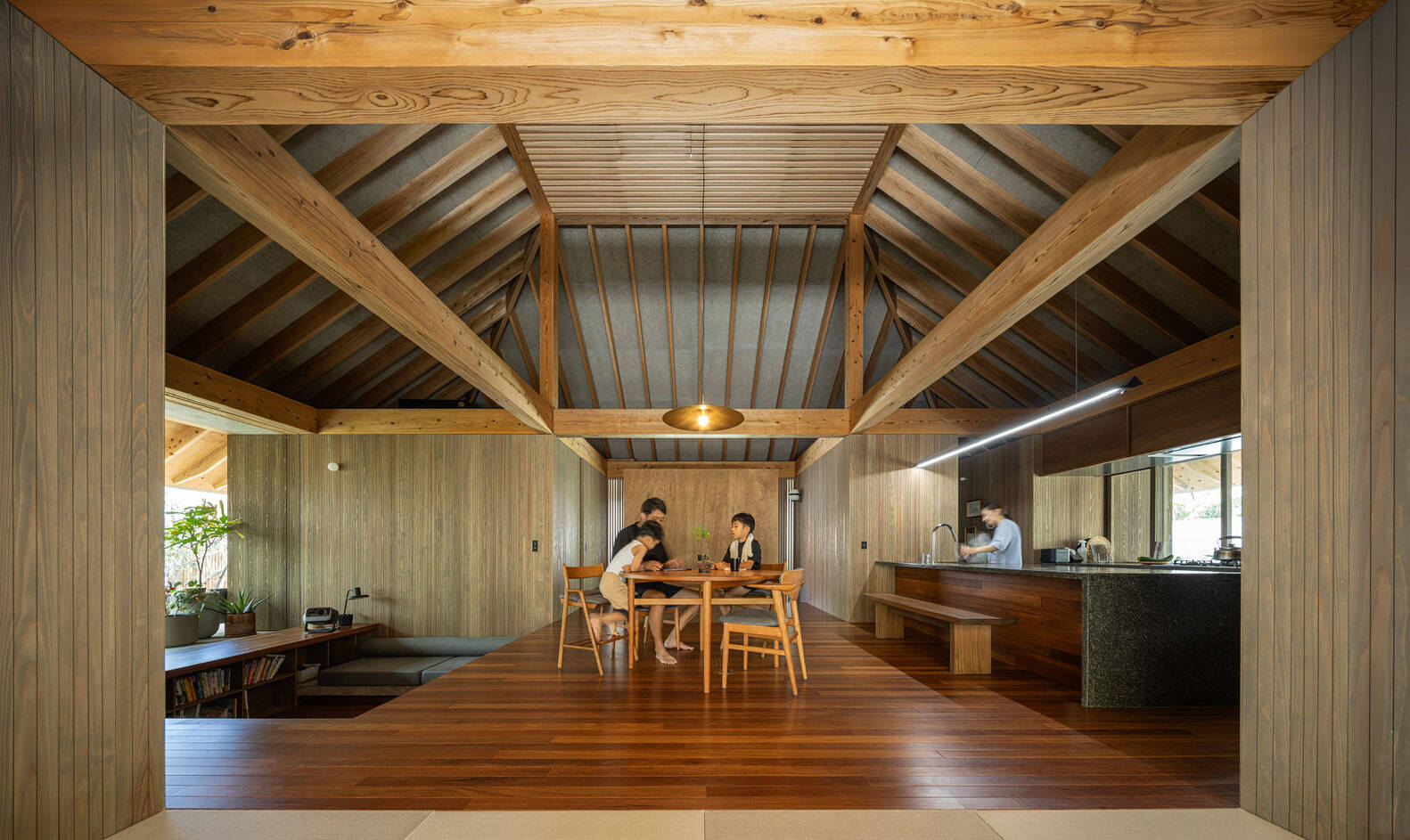
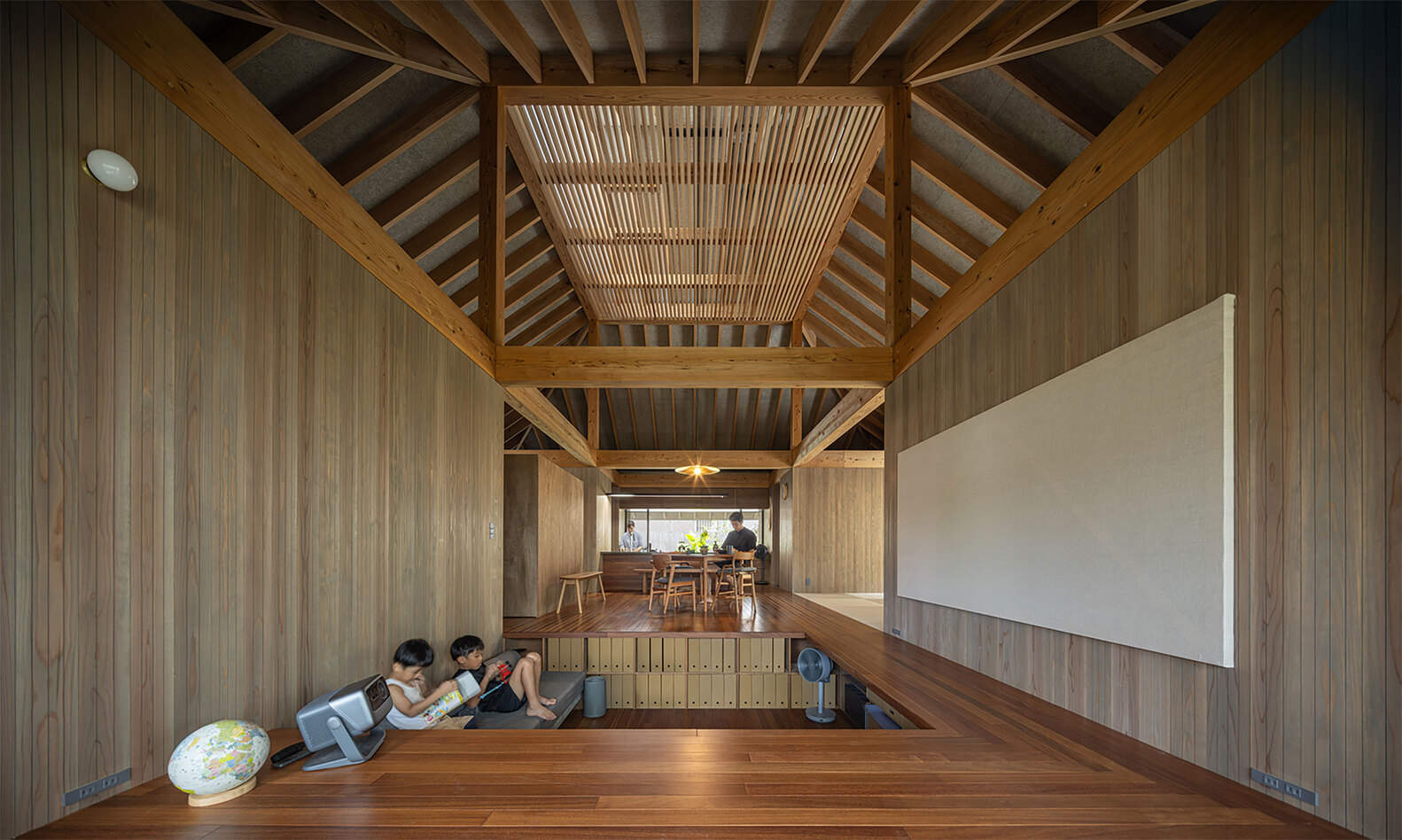
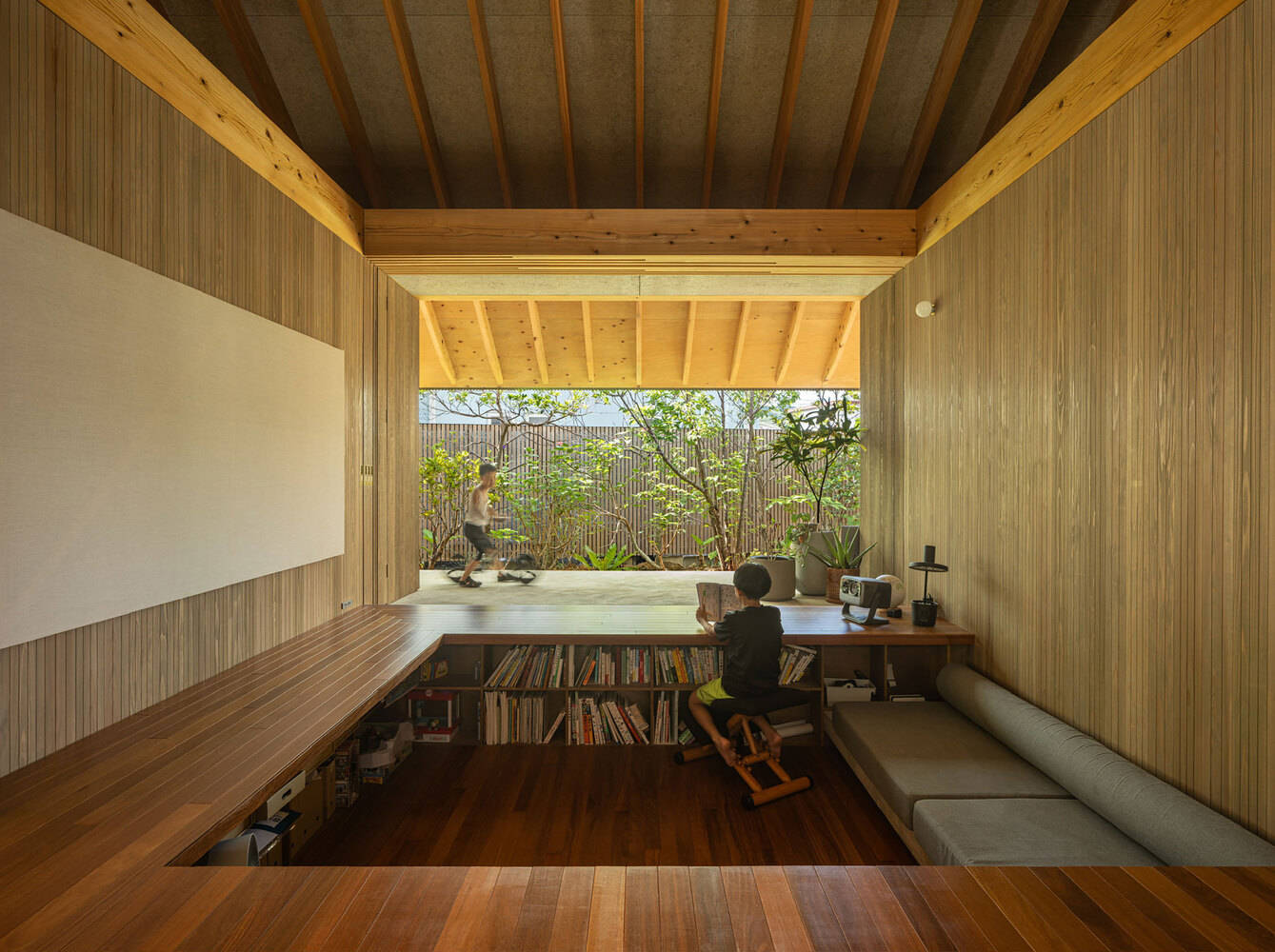
Inspired by the historical "Buntou" (multi-building) layout of the region, the house consists of five independent structures—each serving a different function such as bathroom, bedroom, or storage—arranged geometrically to create intermediate spaces that function as shared living areas. These spaces flow seamlessly into the terraces and gardens, blurring the boundaries between indoor and outdoor, family and community, and humanity and nature.
受该地区历史上的“分栋”(多栋式)布局启发,住宅由五个独立建筑体构成 —— 每个建筑体分别承担浴室、卧室、储藏室等不同功能 —— 它们以几何形式排列,创造出作为共享生活区的中间空间。这些空间与露台和花园流畅相连,模糊了室内与室外、家庭与社区、人与自然的界限。
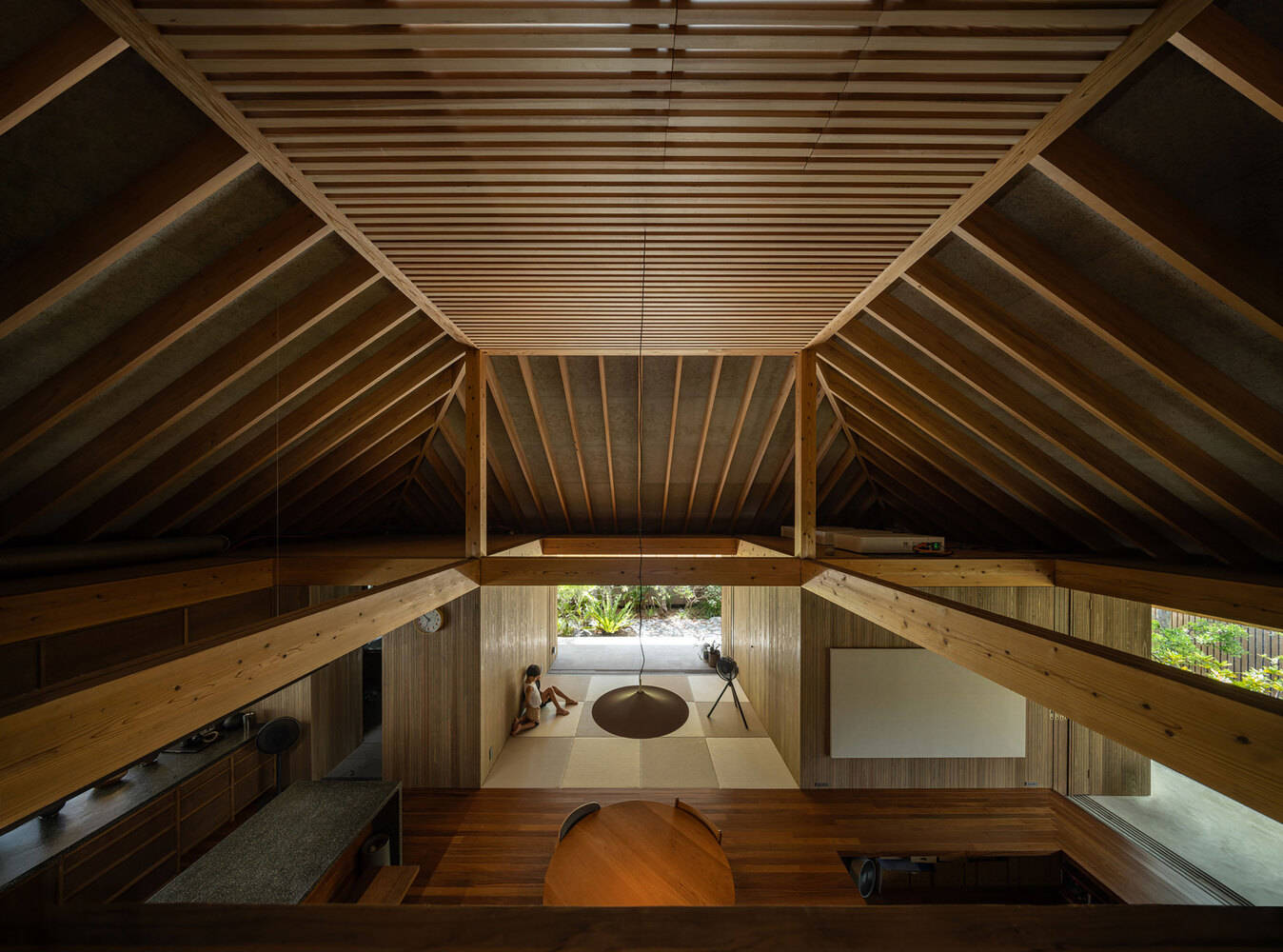
© Toshihisa Ishii
The roof form reinterprets the profile of local corrugated metal and hip-and-gable roofs (Irimoya), integrating multiple functions such as insulation, ventilation, and daylight control to adapt to Amami’s climate. Drawing structural inspiration from local elevated granaries, or "Takakura," the building allows wind to flow freely from all directions, while deep eaves modulate the intense sunlight and sudden tropical downpours.
屋顶形式重新诠释了当地波纹金属和入母屋(歇山式)屋顶的轮廓,集保温、通风和采光控制等多层功能于一体,以适应奄美的气候。借鉴当地高架粮仓“高仓”的结构,建筑允许风从四面八方自由穿过,同时深檐调节强烈阳光和突如其来的热带暴雨。
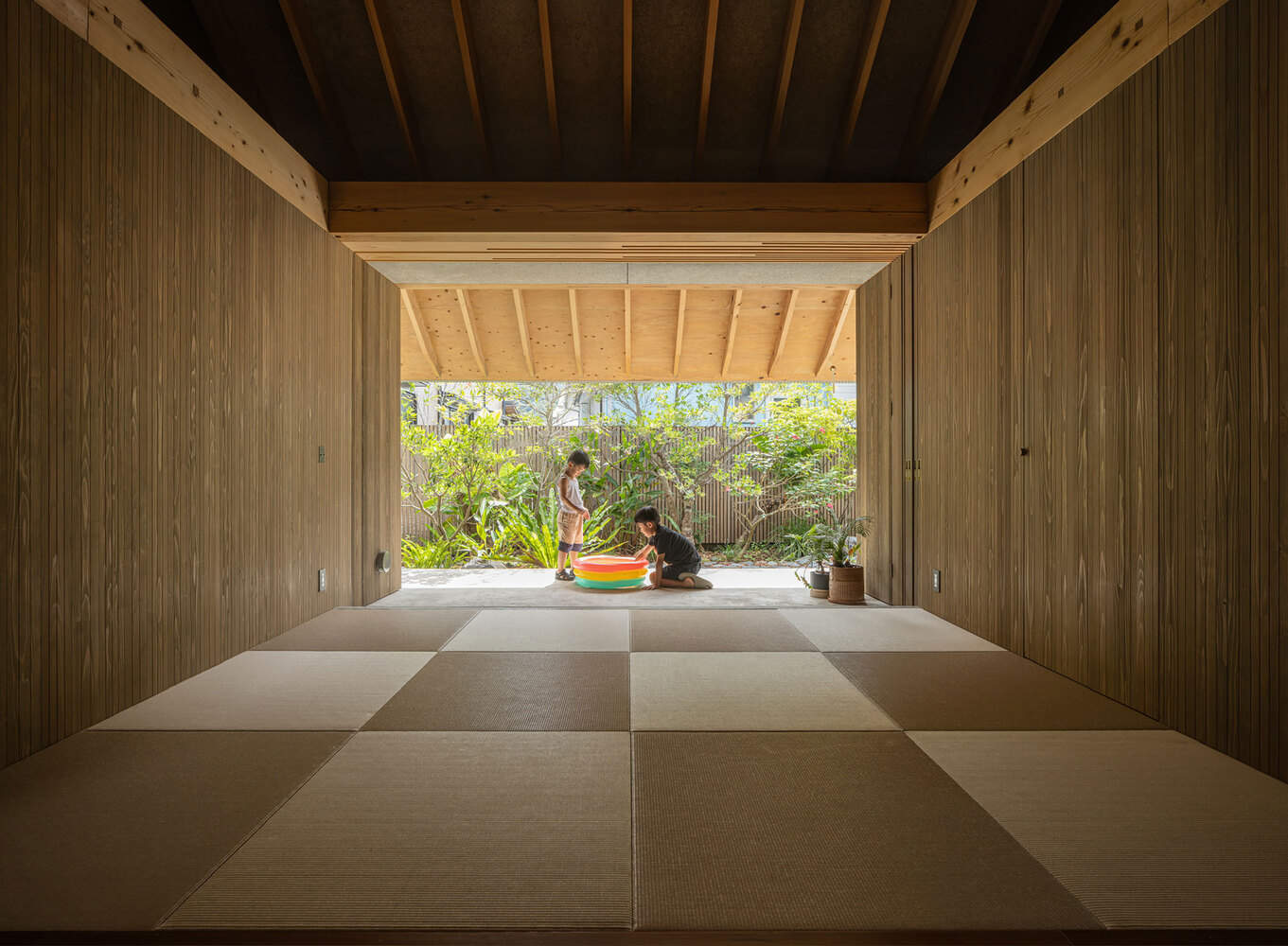
© Toshihisa Ishii
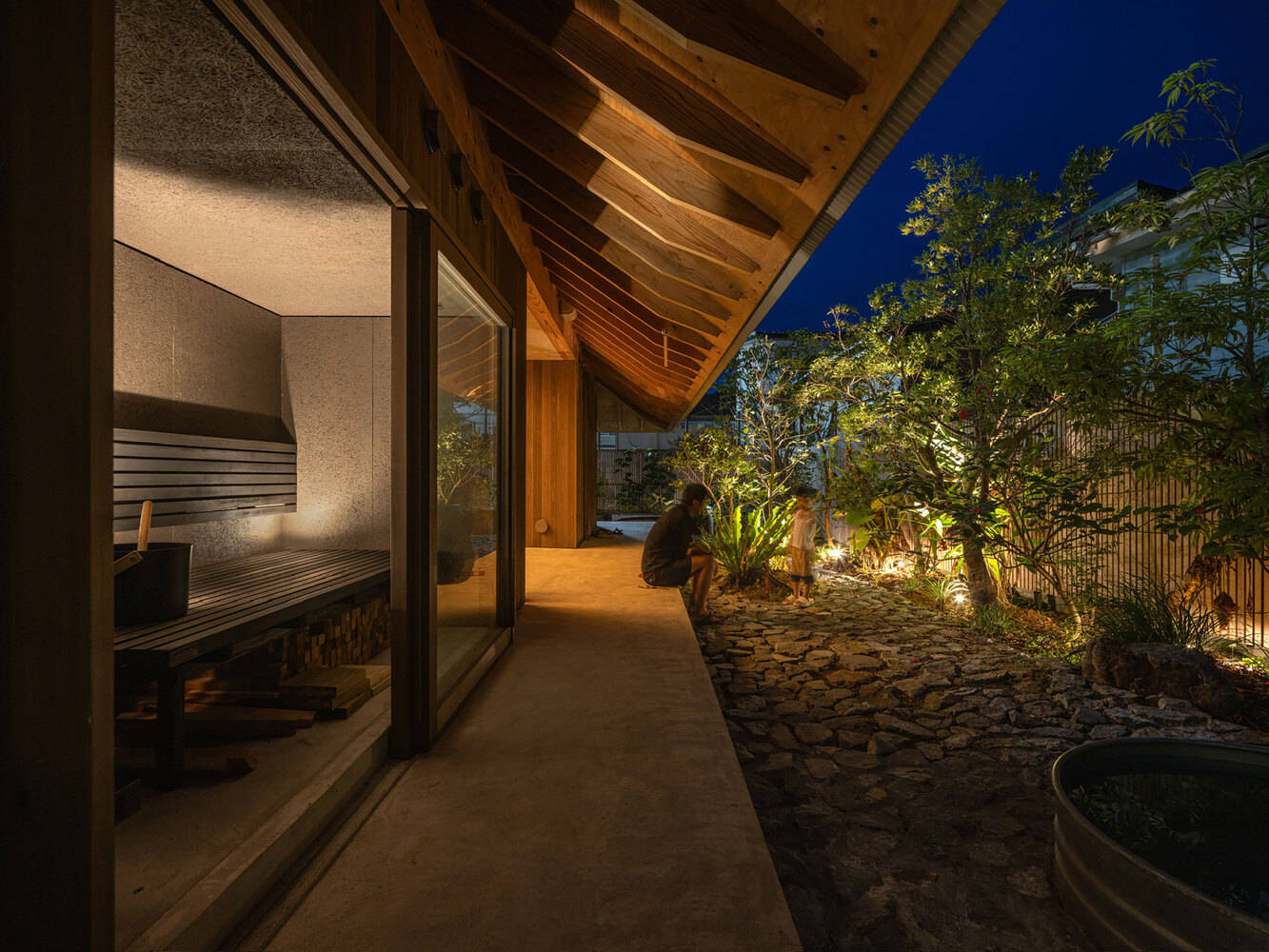
A small wood-burning sauna utilizes fuel made from recycled construction scraps, creating a closed-loop resource cycle between the builders and the site. Food waste is composted and returned to the vegetable garden, and the harvested produce re-enters the family’s daily diet—forming a circularly sustainable ecosystem within the household. Amami Island is known as the "Island of Bonds," where collective rituals remain central to life. Family celebrations often gather over eighty relatives and neighbors, lasting late into the night. Although these traditions have faded with increasing urbanization and isolation, this residence restores this cultural rhythm. The open, inclusive spaces naturally invite people to gather and spend time together, dissolving the boundary between private residence and public space.
一座小型燃木桑拿房使用建筑余料回收制成的燃料,在建造者与场地之间形成了闭环资源循环。食物垃圾被堆肥后回归菜园,收获的农产品又重新进入家庭的日常饮食 —— 在家庭内部形成了一个循环可持续的生态系统。奄美岛被誉为“纽带之岛”,集体仪式仍是生活的核心。家庭庆典常常汇聚八十多位亲戚和邻居,持续到深夜。尽管随着城市化和孤立感的加剧,这些传统逐渐淡化,但这座住宅却恢复了这种文化节奏。开放、包容的空间自然地吸引人们相聚共度时光,模糊了私人住宅与公共场所的界限。
© Toshihisa Ishii
© Toshihisa Ishii
This project redefines contemporary dwelling as both a sanctuary and a cultural platform—an architecture that sustains life while disconnected from the grid, embodying the spirit of "Yui" (collective cooperation). By responding to the unique climatic and cultural ecology of the southern islands, it quietly re-examines the true meaning of "dwelling" in an era of environmental uncertainty.
该项目重新定义了当代住宅,它既是庇护所,也是文化平台 —— 一种在脱离电网的同时延续生命的建筑,传承着 “结” (集体合作)的精神。通过回应南部岛屿独特的气候和文化生态,它悄然重新审视了在环境不确定的时代 “居住” 的真正含义。