极端场地限制下的空间诗学与场所重构:该项目巧妙地应对了城中村“P”字形、44平方米的极端狭小和封闭场地限制。建筑师并未简单地推倒重建,而是通过“时间剖碎”、“微景框借”等策略,将场地原有的限制转化为设计潜力。通过在保留的夯土老墙上进行谨慎的“掏洞”和剖断,引入光线、通风和精心框选的外部景观,成功地将一个物理上的“缝隙空间”转化为一个具有丰富层次感和渗透性的精神场所。这种对限制的积极转化,是当代微更新设计中极具挑战性且成功的典范。
历史文脉的当代转译与精神栖居的营造:项目成功地将家族记忆与地域文化融入设计,超越了商品住宅的纯粹居住功能。通过对“爬梯”、“中心柱”、“谷仓”和“园池”等传统空间原型的当代转译,设计营造了一种具有文化厚度和精神深度的“文化原乡”。特别是弧形屋顶和仪式化的楼梯设计,不仅消解了空间的压迫感,更引导了使用者在空间序列中的身体体验和精神升华,实现了从日常栖居到精神归宿的并置,是对家族精神内核的有力锚定。
精细化被动策略与建造过程的深度介入:面对岭南湿热气候和复杂的邻里关系,项目实施了一套精细的被动式通风策略,结合自然“烟囱效应”和传统木窗的微渗透性,确保了居住的舒适性。同时,建筑师在建造过程中展现了极高的专业投入和项目管理能力,从技术挑战到工人协调,全程深度介入。清水混凝土的运用(转印木纹)结合对定制化施工的坚持,体现了对材料诚实性与在地化建造智慧的尊重,为高密度城中村背景下的微更新提供了宝贵的技术与人文经验。
In the process of urbanization, "urban villages" (Chengzhongcun) are unique spatial forms and social units that are constantly the focus of controversy. They serve as containers for low-cost living and resting places for migrants, but are often synonymous with "dirtiness, chaos, and backwardness," destined to be transformed or erased in the modernization process of the city. However, within the seemingly chaotic textures of these areas lie the city's truest memory codes and vibrant vitality. In recent years, accompanied by the awakening of "cultural confidence" and "nostalgia," a bottom-up, small-scale micro-renewal practice originating from the grassroots has gradually emerged. These practices no longer strive for a completely new appearance, but rather seek to rediscover a "Sense of Place" within the existing fabric—a place that can settle the body and mind and connect with the past. This pursuit is essentially the hope of reconstructing the "homeland" in the bustling metropolis.
在城市化进程中,“城中村”是一种独特的空间形态与社会单元,始终处于争议的焦点。它既是低成本生活的容器、移民的落脚点,也常被视为“脏乱差”的代名词,是城市现代化进程中被改造和抹去的对象。然而,这些看似杂乱无章的肌理深处,蕴藏着城市最为真实的记忆密码和鲜活的生命力。近年来,伴随 “文化自信” 与 “乡愁” 意识的觉醒,一种源自民间的、小规模的、自下而上的微更新实践逐渐浮现。它们不再追求焕然一新的表象,而是试图在既有脉络中,重新找寻一种能够安顿身心、连接过去的“场所感”(Sense of Place)。这种追寻,本质上是于喧嚣都市中重构“原乡”的期望。
© 王策
© 王策
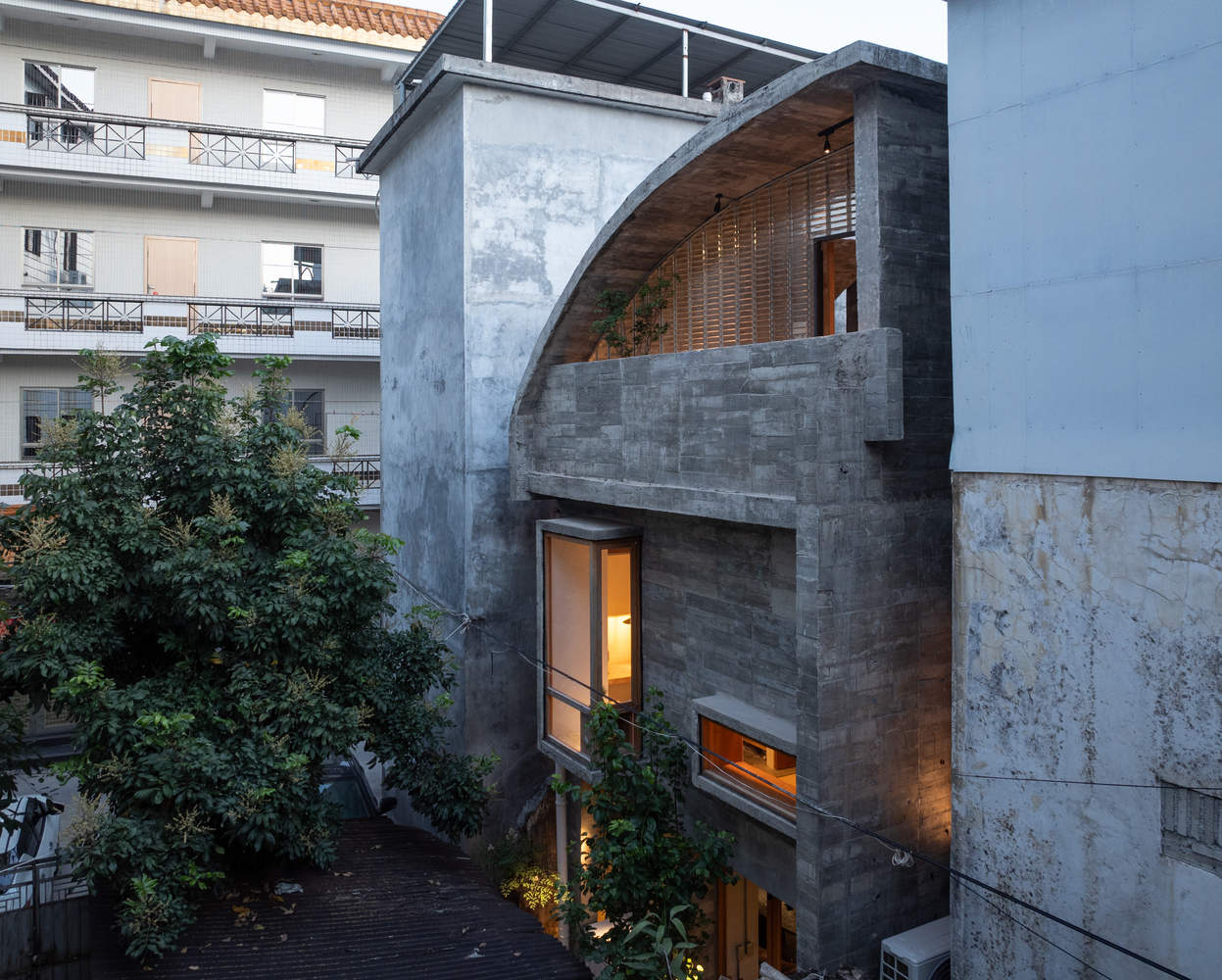
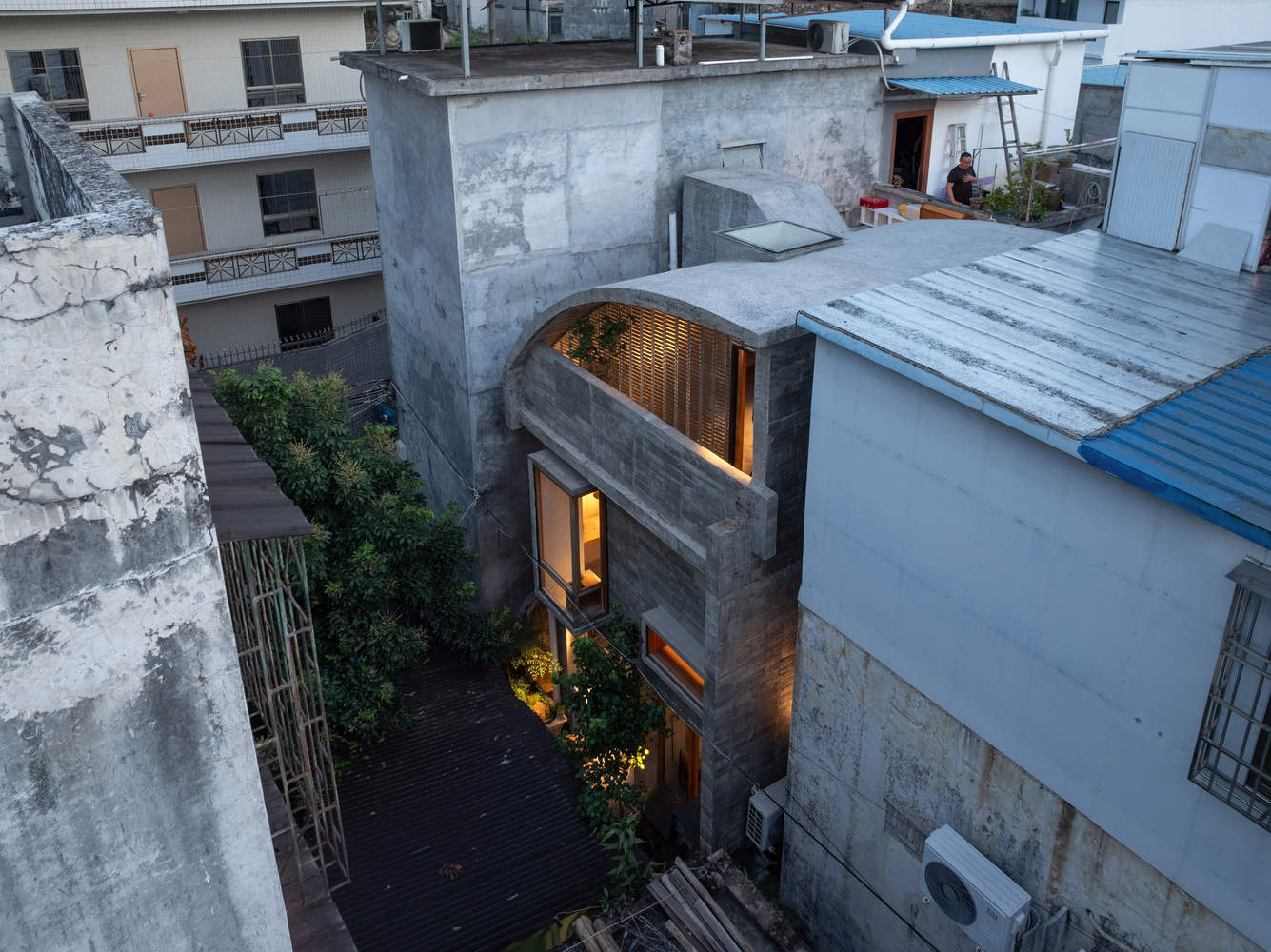
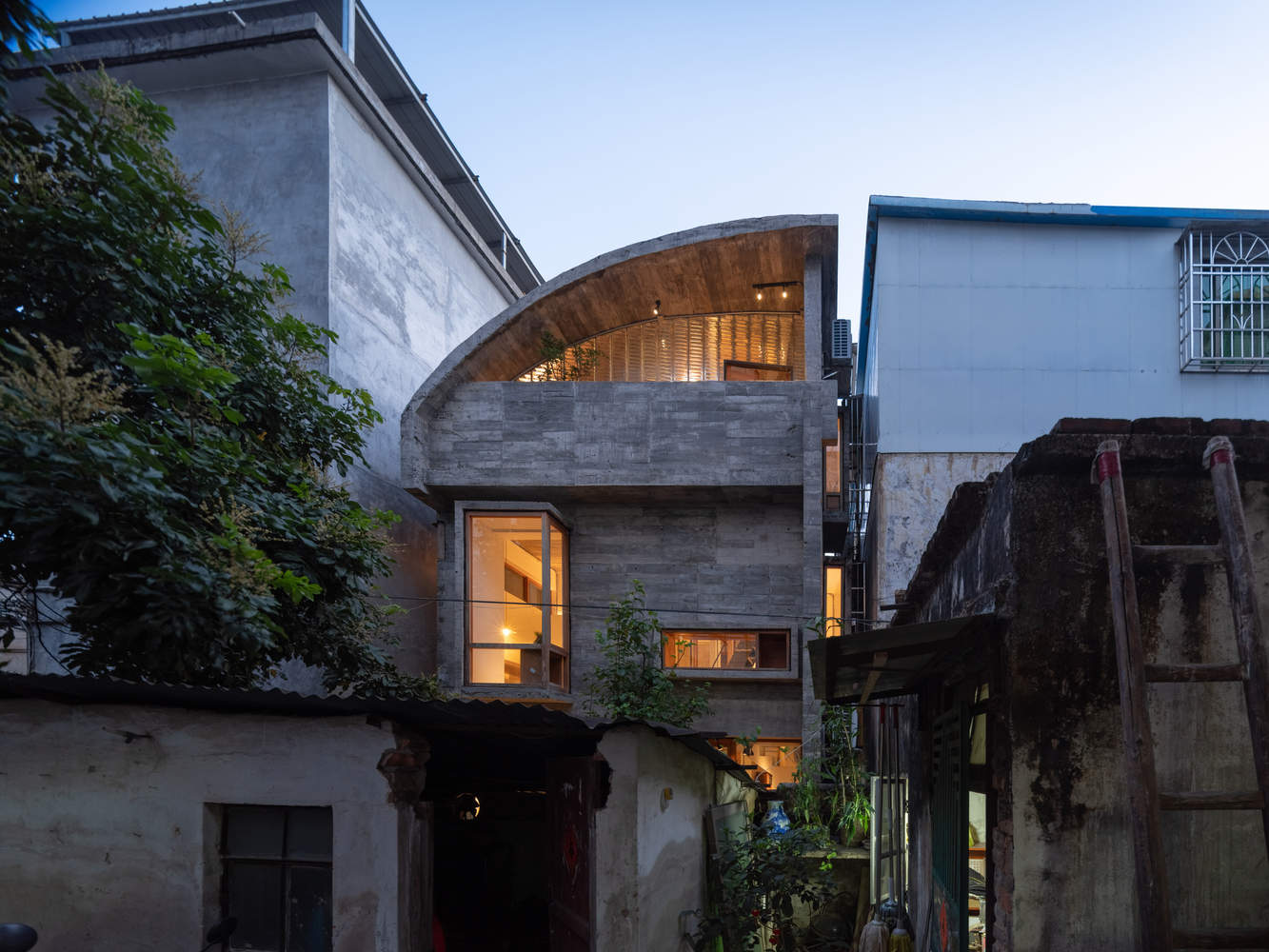
The residential plot is situated amidst lanes enclosed by buildings from different eras, resulting from the division of property among the siblings of the previous generation. The plot is irregularly P-shaped, and after deducting the area of the old foundation walls, the net area is only 44 square meters. It shares party walls with neighboring houses on the East and South sides. The West side has an alley gap of only 40 cm, sealed by brick walls at both ends, creating an almost completely enclosed "gap space." Although there are slight openings in the North-South direction, the narrow alley to the south and a protruding corner of the aunt's house squeeze the only entrance into a space measuring 1.9 x 4.7 meters alongside the 5 x 7 meter "P"-shaped plot. The 85 cm gap to the north is partially obscured by a low corrugated iron shed. This four-sided enclosure, the "P"-shaped configuration, poses significant challenges for lighting, ventilation, view, and construction.
宅地位于不同年代建筑围合的街巷之中,是父辈兄弟分家析产残留的地块,地块呈不规则的 P 字形,经测算,剔除老墙基后,净面积仅 44 平方米。东、南两侧与邻宅共用山墙,西面仅 40CM 墙距的巷隙两端被砖墙封死,形成一个近乎密闭的“缝隙空间”。南北方向虽略有开口,但南侧巷路狭窄和婶婶家凸出一块房角,把唯一出入口挤成 1.9 x 4.7 米与 5 x 7 米的 “P” 字形地块,北侧 85CM 间距被低矮铁皮房半遮挡。这种四面围合的“P”式格局,给采光、通风、视野和施工带来了极大的挑战。
© 王策
© 王策
Despite the severe material constraints, the site itself holds immense emotional value. It is the geographical origin of the Li family's memories and the spiritual destination for the siblings to return to Huizhou for Qingming ancestral worship. The remaining 40 cm thick rammed earth old wall on the site, though dilapidated, serves as direct material evidence of time and history. It is not only a physical boundary but also an emotional carrier. Identifying and transforming the potential within these limitations was the starting point of the design. As an inherited ancestral home serving as the secondary residence for the Li siblings, this type of inherited ancestral house differs from sacrificial places like ancestral halls; spirituality and daily life coexist. It points towards the ancestral hall while providing a place to live; the ancestral hall serves as a place for clan members to pay respects, which in turn reminds them to live their lives. Unlike commercial housing that merely satisfies dwelling functions, the ancestral home is a meaningful place for daily inhabitation, as well as the geographical origin and cultural homeland of family emotion.
尽管物质条件严峻,但场地本身蕴含巨大的情感价值。它是黎氏家族记忆的地理原点,也是兄妹家族清明祭祖回到惠州的精神归宿。场地上残留的 40 厘米厚夯土老墙,虽已残破,却是时间与历史的直接物证。它不仅是物理的边界,更是情感的载体。识别并转化这些限制中的潜力,是设计的起点。作为黎家兄妹第二居所的继承祖屋,这类继承性祖宅有别于宗祠家庙等祭祀性场所,精神性和日常生活是并置的,它指向家庙而在此生活;宗祠为族人在此祭奠的场所,它又提示族人指向生活。祖宅有别于商品住宅仅满足居住功能,是日常栖居的意义场所,也是家族情感的地理原点和文化原乡。
© 王策
分析图
© 王策
Taking advantage of this opportunity, the reconstruction project of this 44-square-meter collapsed ancestral home in Huizhou Qiaodong Old Town serves as a practical case study for how architecture can respond to family memory, regional climate, and complex neighborhood relations within the high-density context of an urban village. Faced with extreme spatial conditions, the project utilizes methods such as "time slicing," "borrowing micro-vistas," "respiratory construction," and "material honesty" to counteract the conventional model of rapid, complete renovation. It anchors the architecture within the historical texture of the site, contemporarily reinterpreting spatial prototypes like "climbing ladders," "central columns," "granaries," and "garden ponds." Through retaining and reconstructing the old walls, employing a curved roof to dissolve the sense of oppression, and constructing a miniature garden pond, a "cultural homeland" connecting the past and the present, embodying both daily life and spirituality, is built in a confined space. This represents a new, humanistic, and finely designed attempt for micro-renewal and community provision in contemporary cities.
暗巧这次机缘,以惠州桥东老城这处 44 平方米坍塌祖宅重建项目,作为实践对象,在高密度城中村语境下,如何用建筑回应家族记忆、地域气候与复杂的邻里关系。项目面对极限的空间条件,用“时间剖碎”、“微景框借”、“呼吸建构”与“材料诚实性”的方法,对抗常规的封闭速成模式,将建筑锚固于场地历史纹理之中,并将 “爬梯”、“中心柱”、“谷仓”“园池” 等空间原型进行当代转译,设计保留并重构老墙、用弧形屋顶消解压迫感,以及建构微缩园池等方式,在方寸之地筑建一个连接过去与现在,兼具日常性与精神性的“文化原乡”。实践当下城市的微更新与社区提供一种基于人文出发与精细设计的新尝试。
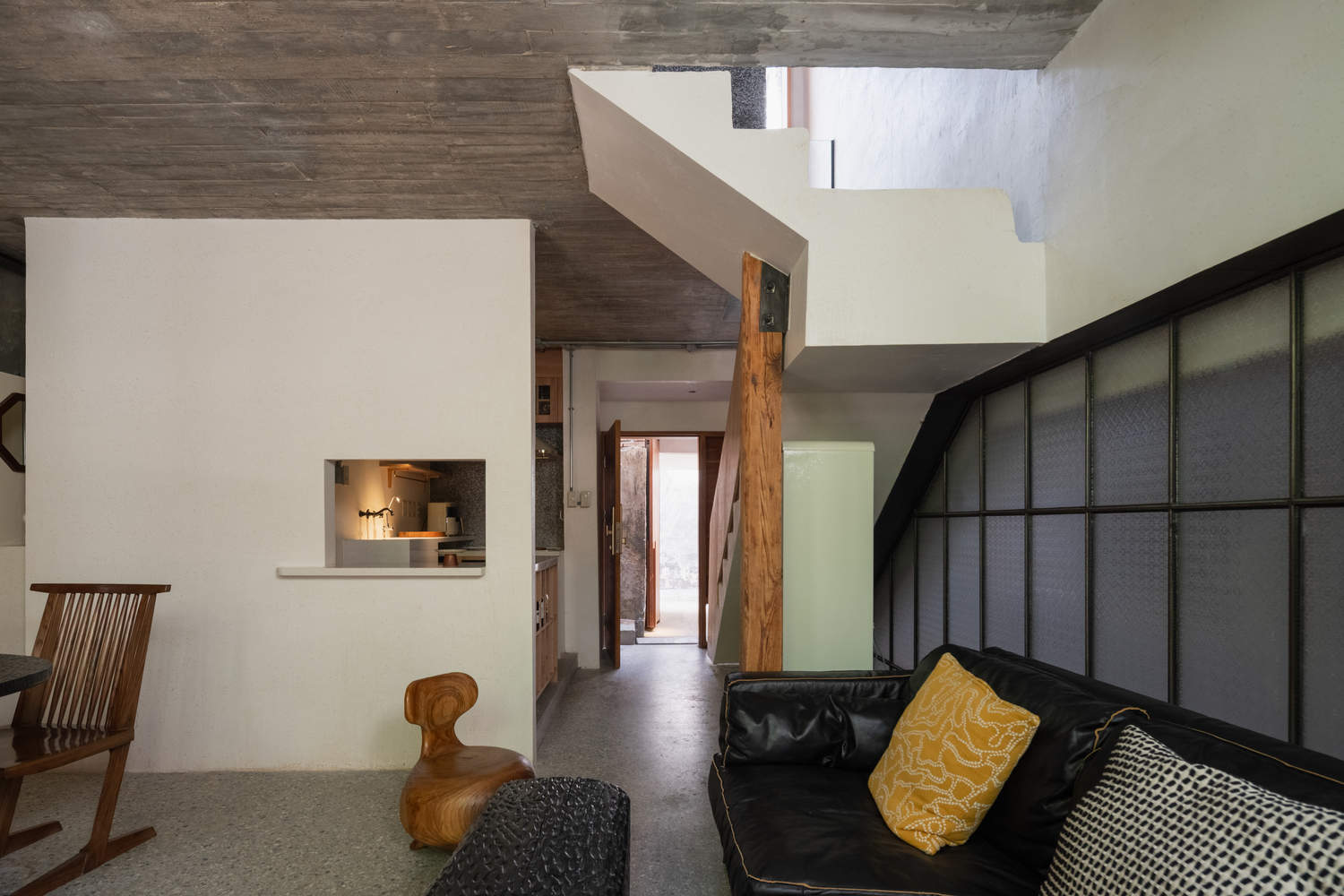
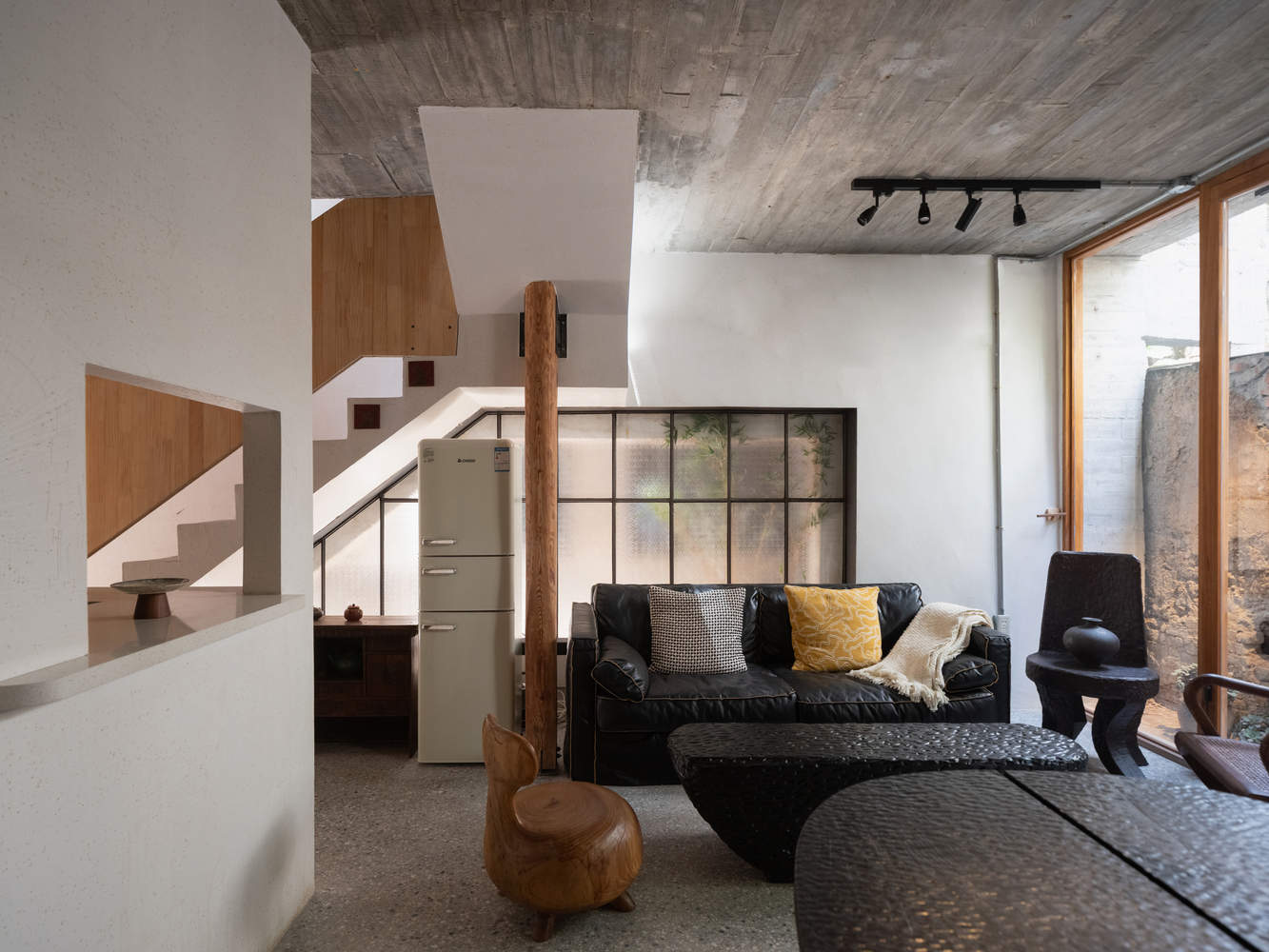
Although I was familiar with these streets from past experience, there was a sense of unfamiliarity upon surveying the site. The street name "Xuebei Street" (School Back Street) where the plot is located originates from the long history of Huizhou Senior High School in the old city of Qiaodong (established in the first year of the Yuan Dynasty's Taiding era, 1324, as Guishan Academy, a century-old famous school). Thus, calling it the "Home on Xuebei" also holds a sense of place. The old walls were not completely demolished but were preserved as the "plinth" or the most significant "relic" of the site. The new exposed concrete structure is not placed alongside the old wall but is carefully embedded within it, forming a coexisting, intertwining relationship with it.
虽然过往熟踏这片街巷,场地踏勘后还是有种未知的陌生感。地块所处的“学背街”路名是因桥东老城中惠阳高级中学校史渊源(元泰定元年,1324 年)归善学宫百年名校而来,姑且就叫它“学背之家”也有场所的含义。不完全拆除老墙,而是将其作为场地的“基座”或最重要的“遗存”予以保留。新建的清水混凝土结构并非与老墙并置,而是小心翼翼地嵌入其中,与之形成一种共时性的缠绕关系 。
© 王策
© 王策
© 王策
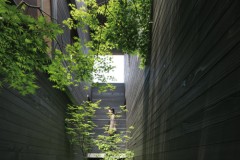
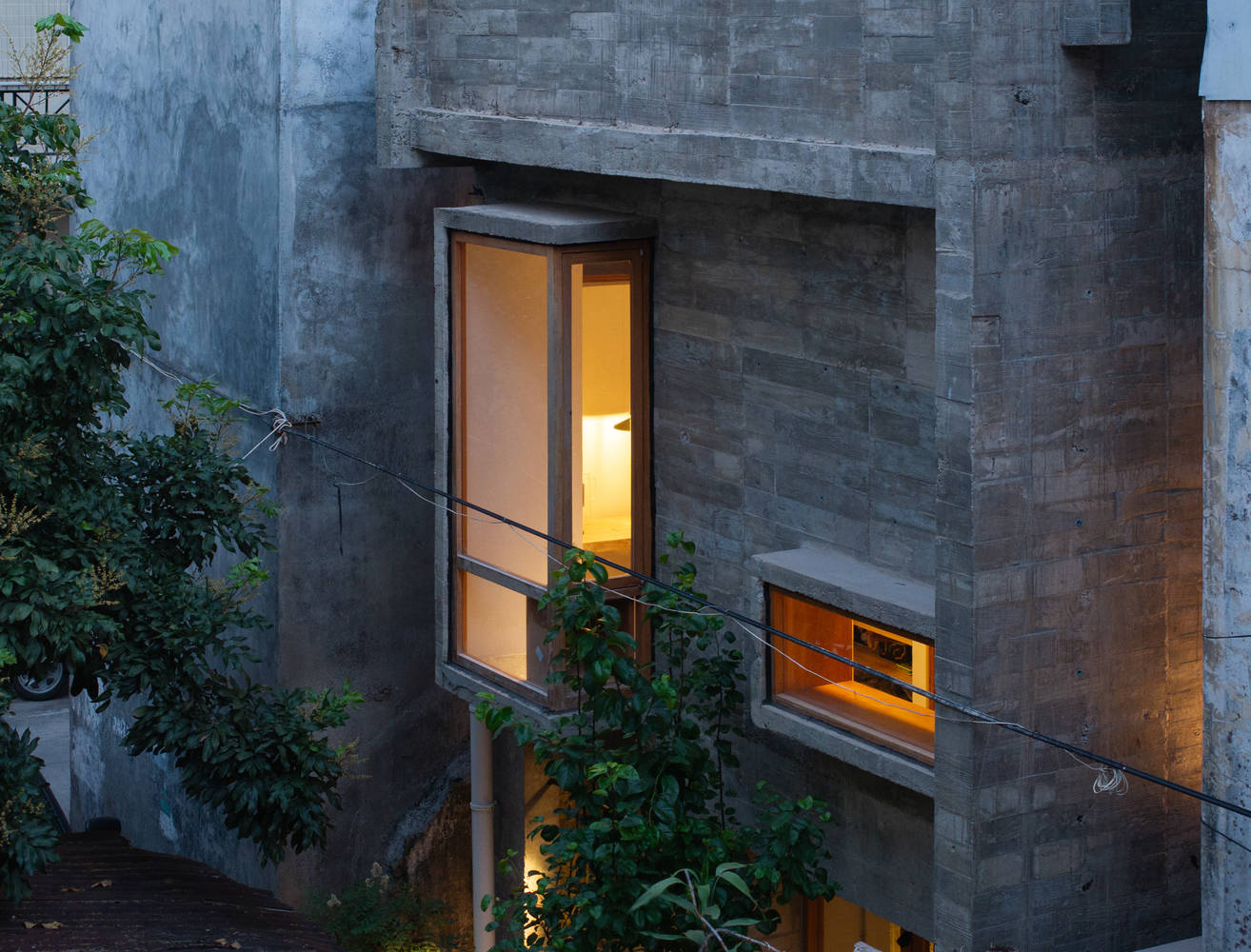
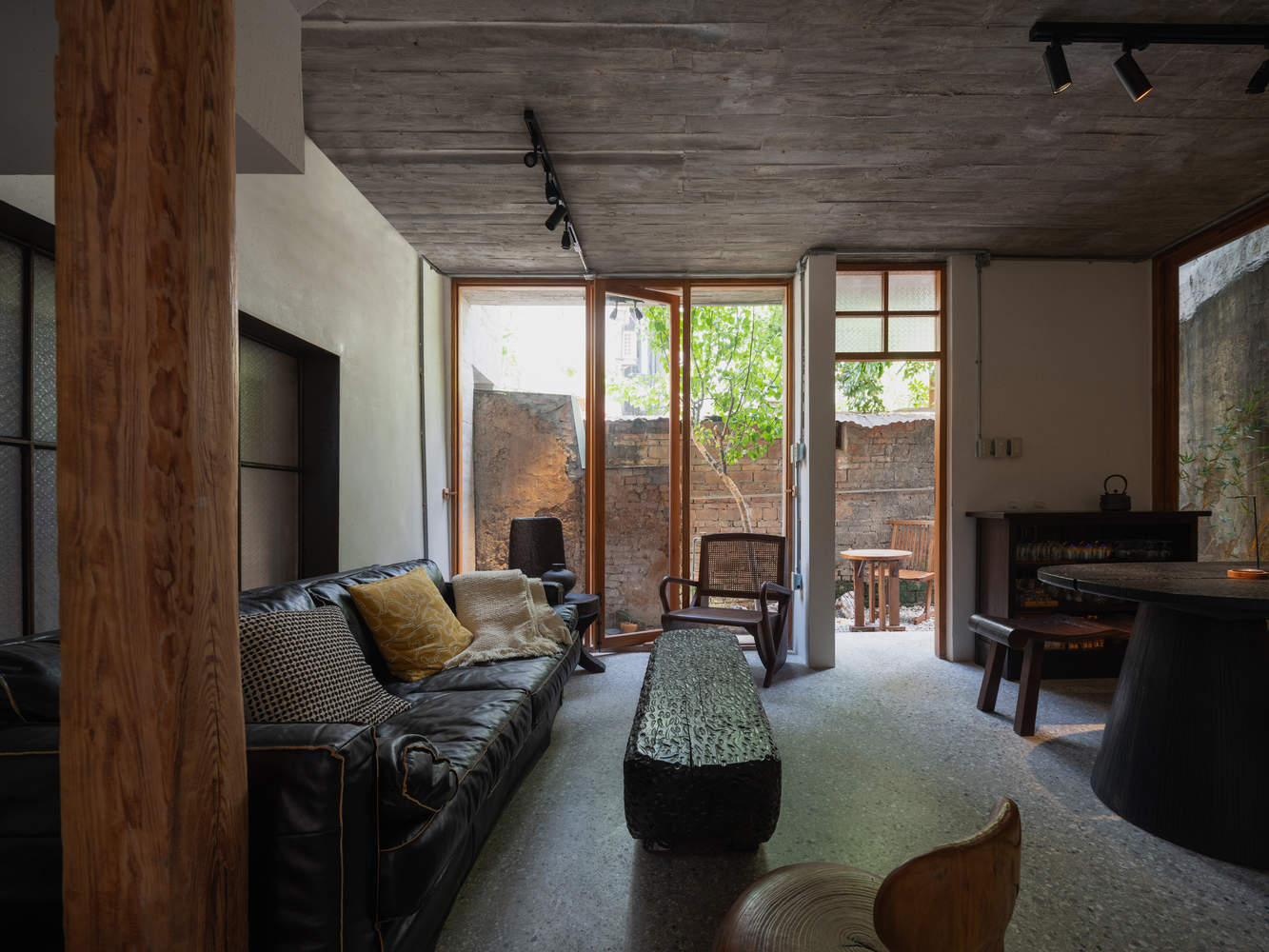
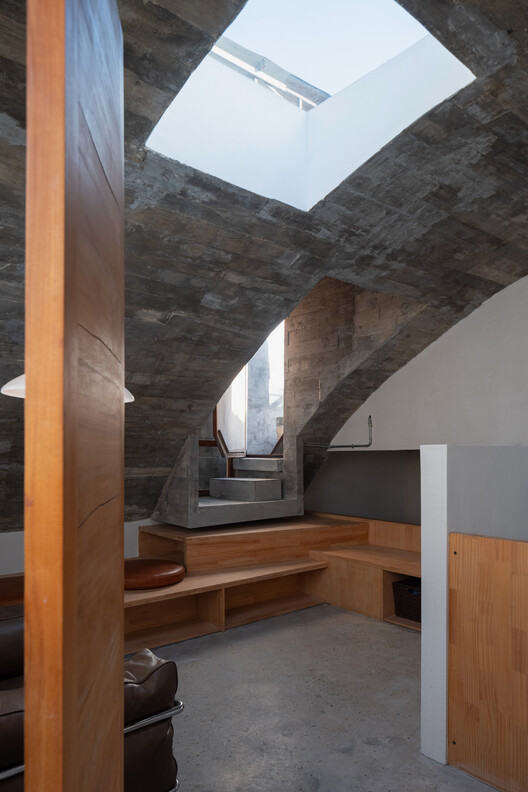
Cautious slicing and new "hollowing out" operations were performed on the preserved old walls. These openings vary in size, shape, and height, serving multiple functions: Firstly, to introduce light, allowing natural light to act as a brush tracing time, casting flowing shadows indoors; Secondly, to guide vision, forming a series of carefully framed scenes that bring the external greenery, sky, and shadows cast by the wall gaps into the interior view; Thirdly, to facilitate ventilation, in conjunction with the subsequent ventilation system. Thus, the old wall transforms from a closed boundary into a permeable medium connecting the outside and inside, the ancient and the present.
在保留的老墙垣上进行谨慎的剖断与新筑的“掏洞”操作。这些洞口大小、形状、高低各异,其功能多元:一是引入光线,使自然光成为刻画时间的画笔,在室内投下流动的光影;二是引导视线,形成一系列精心框取的景致,将外部的绿意、天空乃至墙隙造影引入室内视野;三是促进通风,与后续的通风系统结合。老墙由此从一个封闭的边界,转变为一个具有渗透性的、连接内外与古今的媒介。
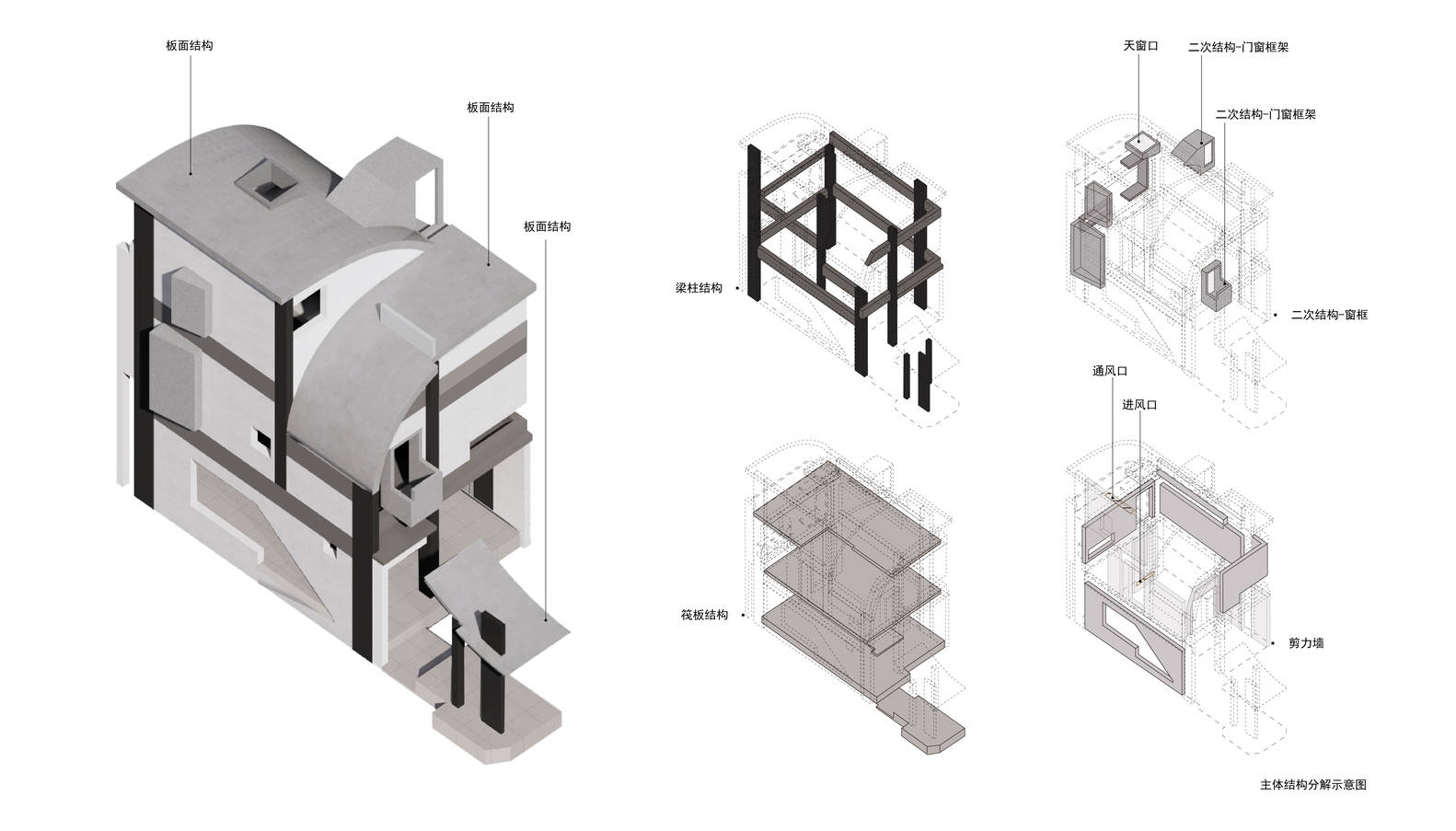
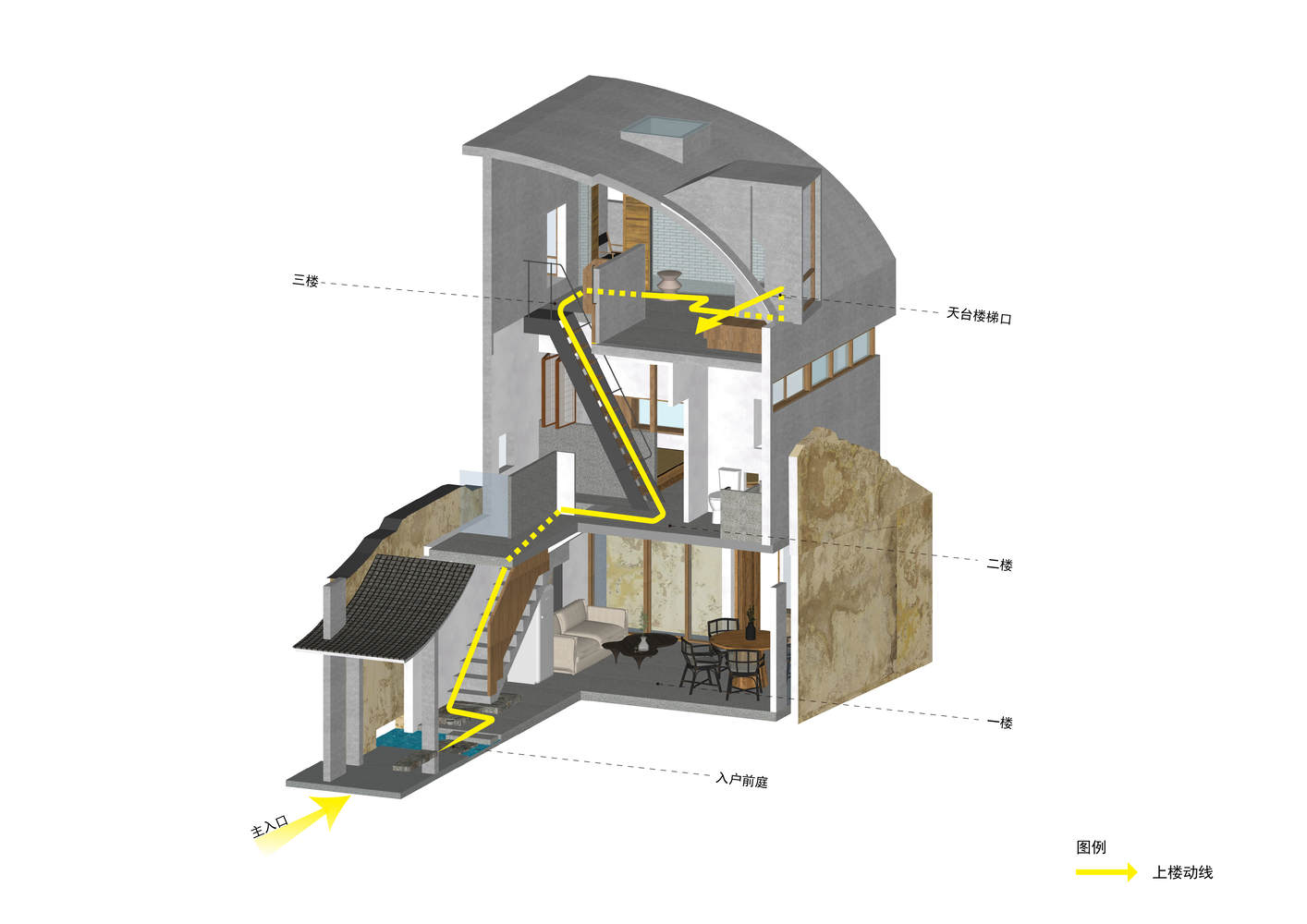
Good ventilation is a prerequisite for comfortable living in the hot and humid climate of the Lingnan region. We designed a meticulous passive ventilation strategy. Firstly, utilizing the North-South openings to organize cross-breezes. Secondly, installing concealed air intake grilles at the base of the first floor and reserving exhaust vents on the roof of the third floor. This utilizes the "stack effect" where hot air rises, ensuring continuous airflow even when there is no wind or doors/windows are closed, drawing out stale hot air indoors and introducing cooler air from below. This system ensures the building can "breathe autonomously."
岭南地区气候闷热潮湿,良好的通风是舒适居住的前提。 我们设计了一套精细的被动式通风策略。首先,利用南北向的开口组织穿堂风。其次,在一楼地脚设置隐蔽的进气格栅,在三楼屋顶预留排气风口,利用热空气上升的“烟囱效应”,即使在无风或门窗关闭时,也能形成持续的气流,将室内浊热空气抽出,引入底部凉爽空气。这套系统确保了建筑能够“自主呼吸”。
When selecting the door and window system, we deliberately avoided highly airtight modern aluminum alloy windows, opting instead for traditional mortise and tenon teak doors and windows. Their slight gaps happen to allow a trace of breeze to permeate, avoiding the stuffiness that results from a small space being completely sealed off, while also providing a softer tactile experience.
选择门窗系统时,刻意避用了气密性极高的现代铝合金窗,转而使用传统榫卯工艺的柚木门窗。因其微弱的缝隙恰好允许一丝微风渗透,避免了小空间完全密闭后的闷塞感,同时也带来了更柔和的触觉体验。
© 王策
分析图
© 王策
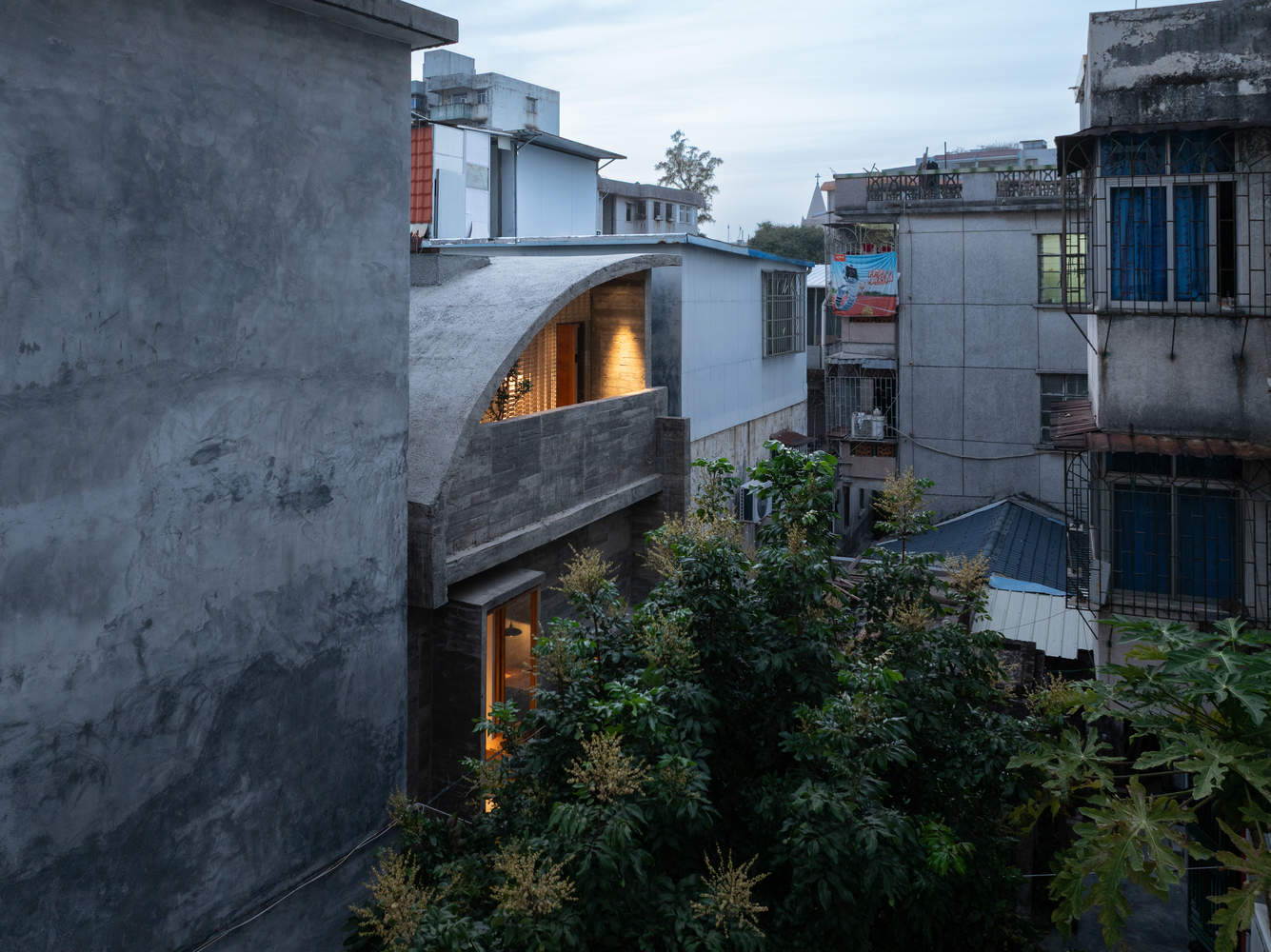
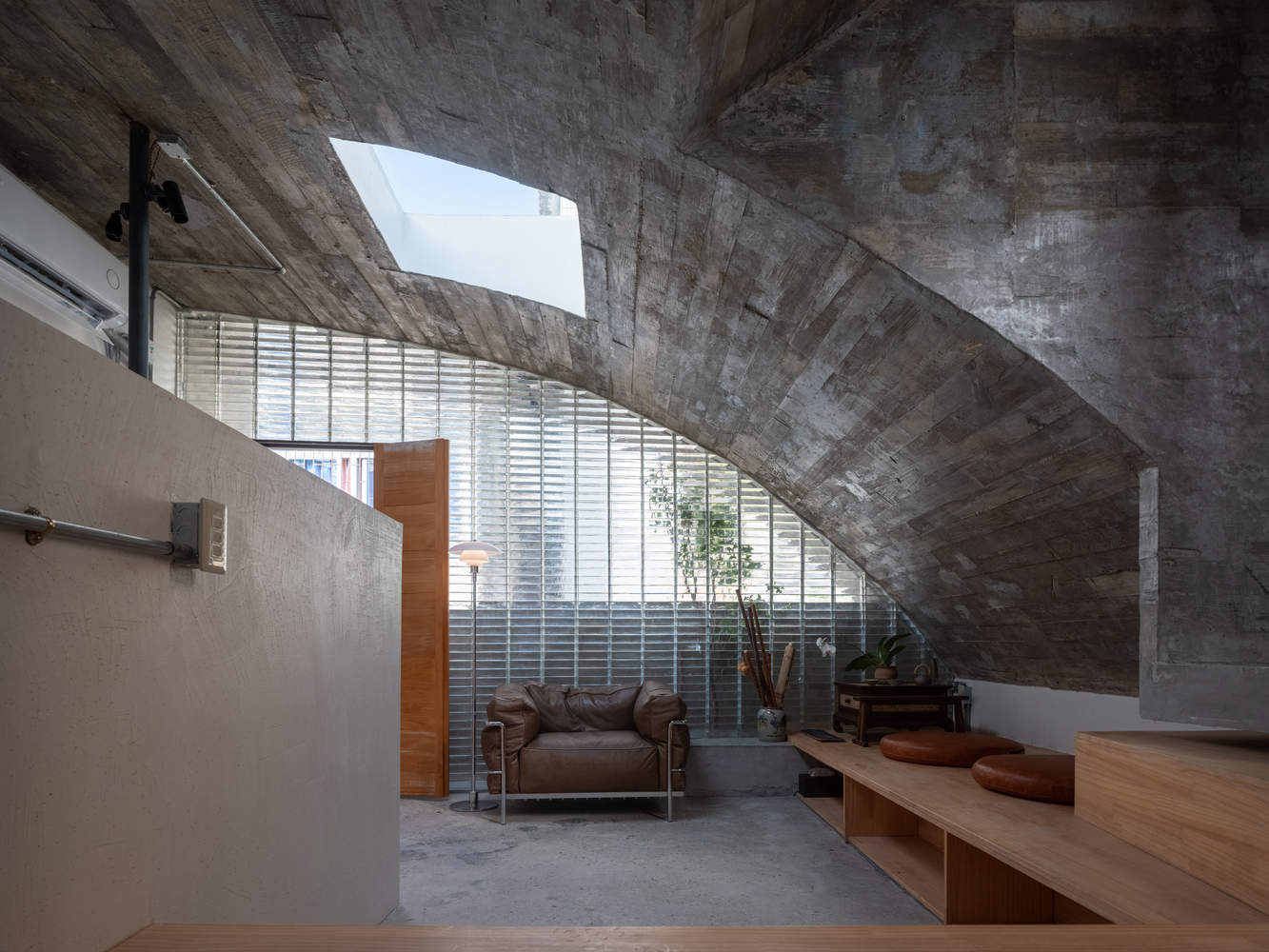
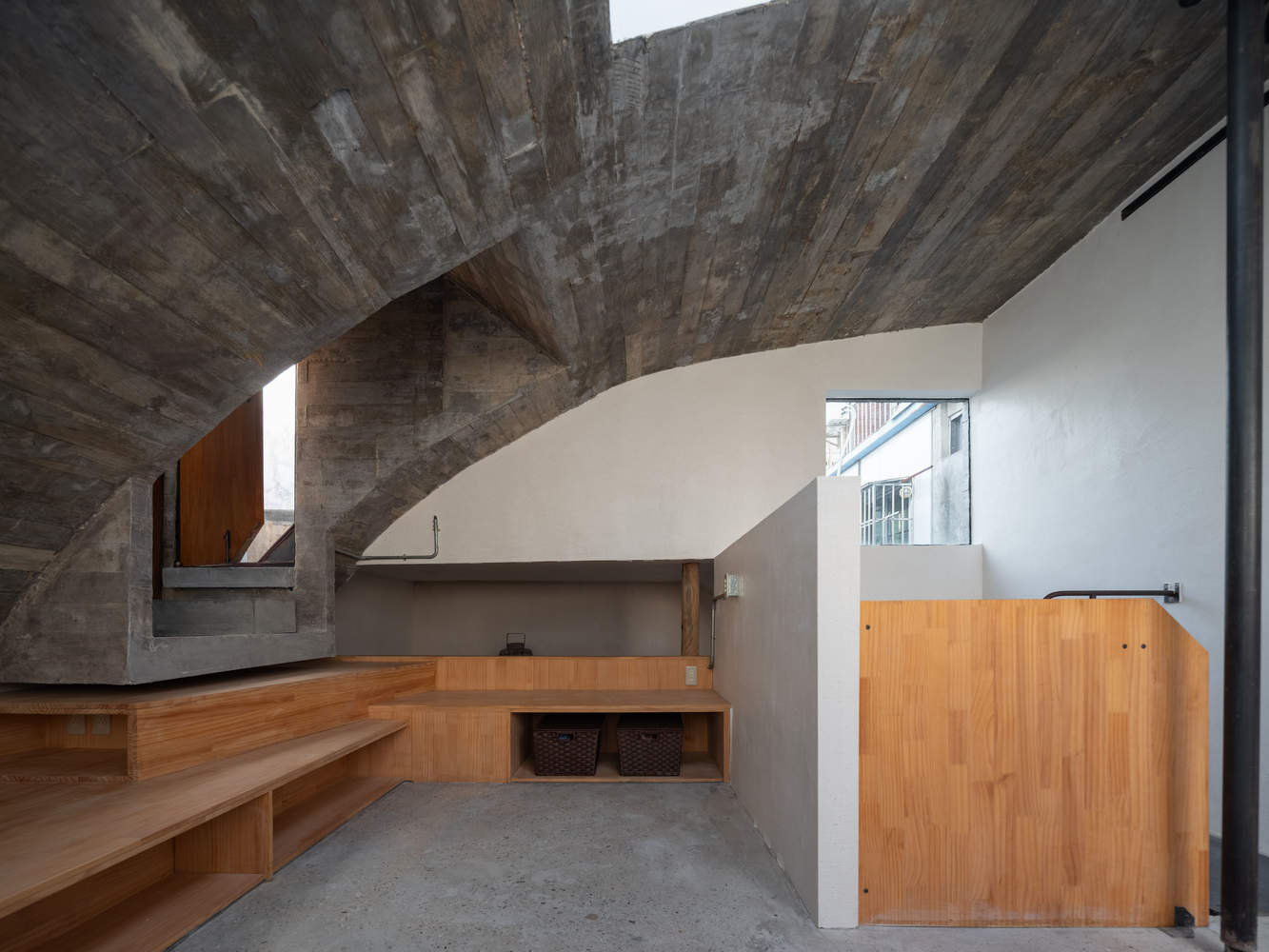
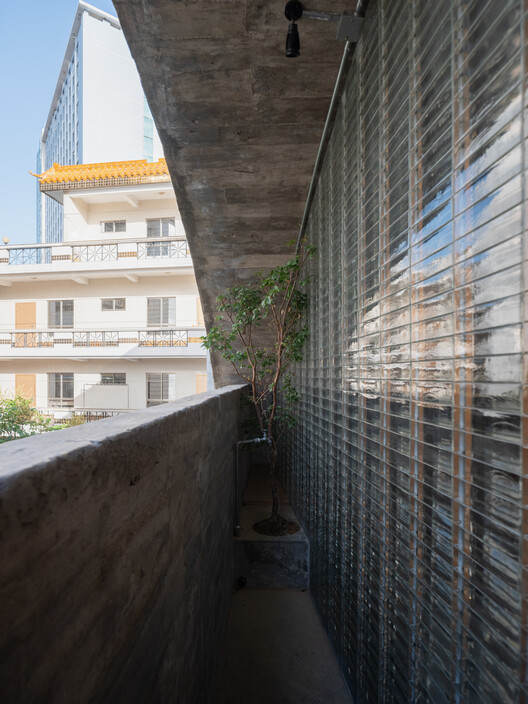
To mitigate the oppression of the high East and West walls, the roof was designed as a gentle arc. This curve not only visually dissolves the rigidity of the square box, lending a light intention to the concrete roof, but also guides vision and spatial experience. The large upward curve makes the visible sky arc outwards, dissolving the internal sense of oppression; when one is situated beneath the three-story vaulted ceiling, reclining on the specially set Luohan daybed, the sightline naturally follows the curved surface to a seemingly deeper distance, and standing on the external balcony achieves the poetic view of "watching the rain from under the eaves."
为化解东西高墙的压迫,屋顶被设计成一道舒缓的弧形。这道弧线不仅从视觉上消解四方盒子的僵直感,赋予混凝土屋顶以轻盈的意向,更是引导视线与空间体验。大上扬,所见的天弧顶向外张弓,消解内部压迫感;人置身于三层弧顶之下,坐卧在特意设置的罗汉床榻上,视线随弧面自然空片段因而显得更为深远,立足外部阳台又实现了“棚下看雨”的诗意。
© 王策
© 王策
The arrangement of all openings and furniture is anchored according to human scale and behavioral patterns (sitting, lying, looking up, gazing, leaning, exploring). The passage to the top floor terrace is designed as a ritualistic experience: the opening in the vault is lowered, requiring one to stoop to pass through, a movement that reinforces the spatial transition from the everyday residence to a spiritual place capable of conversing with the sky and the church.
所有空间的开口与家具的布置,均依据人体的尺度与行为模式(坐、卧、仰、望、眺、倚、探)进行锚定。通往顶层露台的过程被设计为一种仪式性的体验:穹顶开口压低,人需躬身而过,此动作为强化空间的转换,从日常的居室过渡到可与天空、教堂对话的精神性场所。
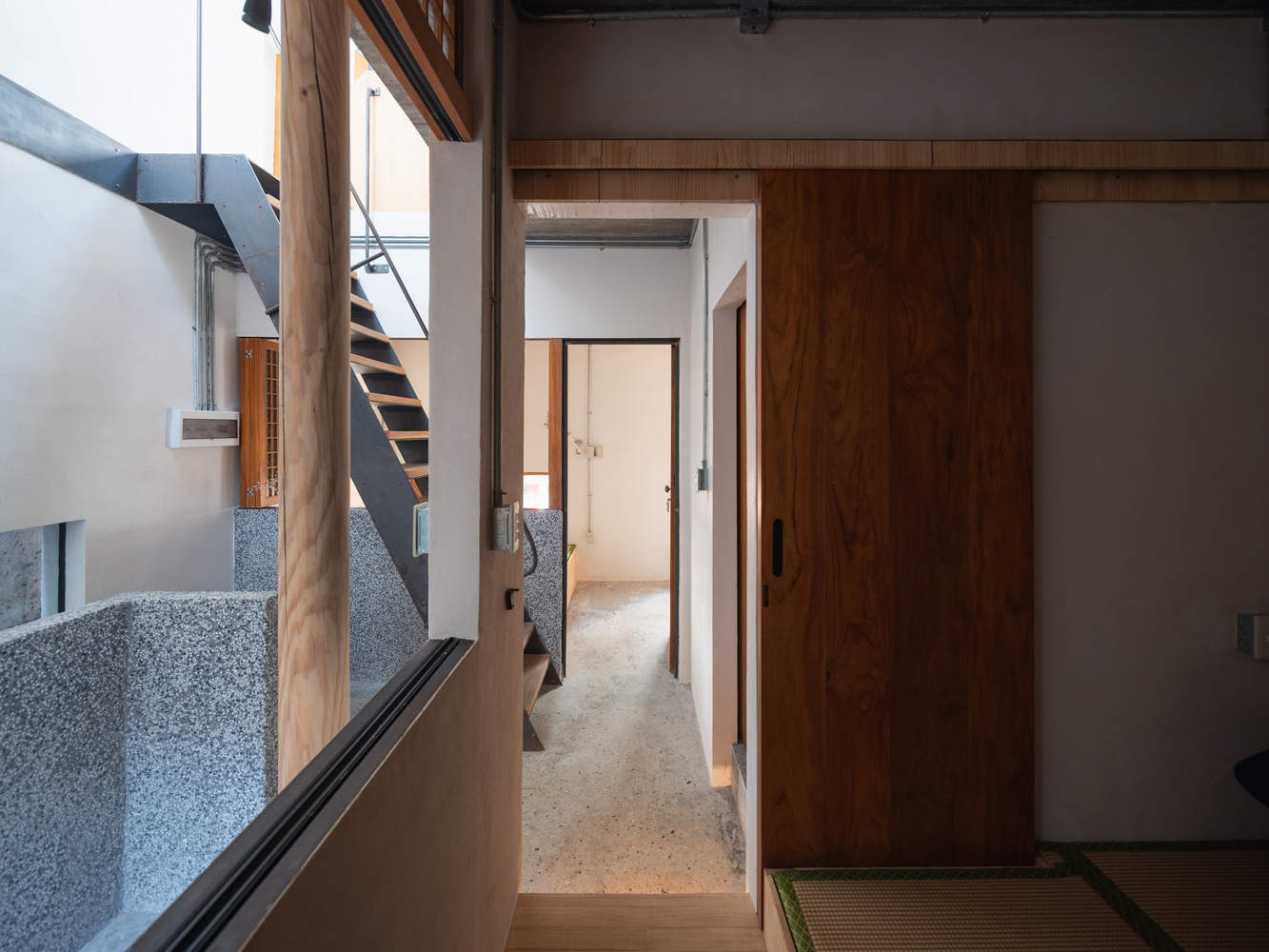
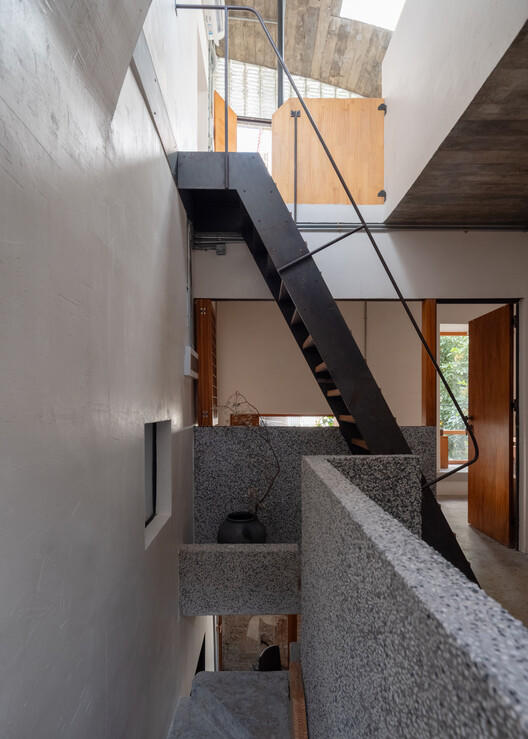
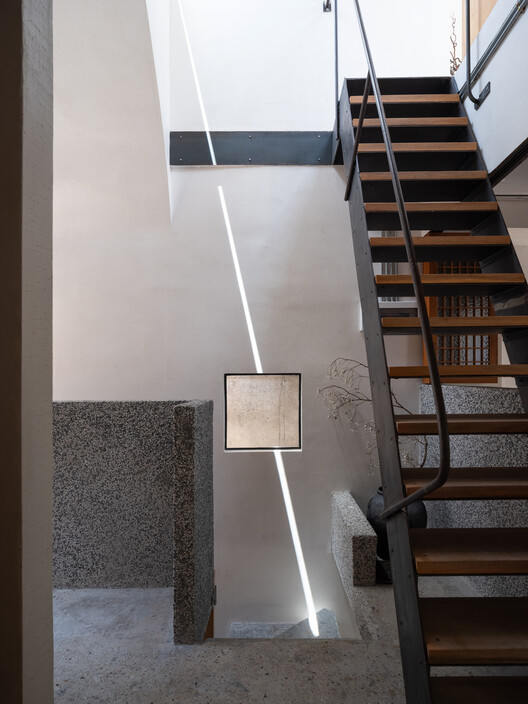
We designed a staircase leading to the third-floor space for cultivation and reading, with a slope and width of 65 cm, deliberately returning to the scale of the narrow stairs in the old city, requiring one to "grasp the handrail and ascend/descend alone." This restricted, highly embodied climbing process stands in stark contrast to the wide, smooth, and efficiently circulating stairs in commercial housing. In terms of spatial conception, the continuous transformation of columns from the first floor upwards, to the Luohan daybed on the third floor, with its strong sense of enclosure and view towards the sky and the church, becomes a spiritual "center." It acts as an anchor, fixing activities such as family gathering, meditation, and gazing, fundamentally distinguishing it from the homogeneous, centerless "living room" of commercial housing.
我们设计了通往三层耕读空间的楼梯,其坡度与宽度 65 厘米刻意回归了老城窄梯的尺度,需“手抓护栏,一人上下”。这种受限的、具有明确身体性的攀爬过程,与商品住宅中宽大、流畅、高效流通的楼梯形成了鲜明对比。在空间意念上,从一层至下而上连续转换的柱子,到三层的罗汉床榻,以其强烈的包裹性和朝向天空、教堂的视野,成为了一个精神性的“中心”。它如同一个锚点,将家族的聚集、冥思、眺望等活动固定下来,与商品住宅中均质、无中心的“客厅”形成了本质区别。
The attic or granary in traditional dwellings symbolizes "accumulation" and "inheritance." The mezzanine in the "Home on Xuebei" signifies retaining the spatial attribute of "storage," a core function of a household. It also implies that this "home" has the capacity to accumulate time and memory. We shaped a miniature garden pond with a sense of "forecourt and backyard." Here, we did not attempt to fill it, but rather employed "leaving blank space" (Liu Bai), allowing light, wind, rainwater, and green plants to grow naturally.
传统民居中的阁楼或谷仓,是“积攒”与“传承”的象征。“学背之家”的夹层,意义在于保留“储存”这一家居核心功能的空间属性。也暗示这个“家”具有积累的能力,是能容纳时间与记忆的容器。我们塑造了一个具有“前庭后院”感的微缩园池。在这里并未试图填满它,而是“留白”,让光、风、雨水和绿植在此自然生长。
Based on the principle of anti-decorationism and in response to the humid environment of Lingnan, exposed concrete was used throughout the building. The structure was cast in one go, with the molds covered by recycled old wooden boards, transferring the warm wood grain onto the concrete surface. Small-scale, highly customized projects face great difficulties in today's efficiency-driven industrial construction system. From the technical challenge of encountering rubbery soil during the foundation work, to rainy season delays and worker turnover, the entire construction process (2021 - 2024) was full of unexpected events. As architects, we had to go beyond traditional roles, becoming construction managers, neighbor coordinators, and even process instructors. Because very few workers were willing to take on such small and complex jobs, it relied entirely on trust, social obligation, and personal care to recruit them. Even then, it wasn't always effective, and the team leaders kept changing workers.
基于反装饰主义的原则和对岭南潮湿环境的回应,建筑全部使用了清水混凝土。结构体一次浇筑完成,模板上覆以回收老木板,将温暖的木纹转印于混凝土表面。小规模、高定制化的项目在当下追求效率的工业化建造体系中举步维艰。从地基遇到橡胶泥层的技术挑战,到雨季延误、工人更替,整个建造过程(2021 - 2024)充满了意外。作为建筑师不得不超越传统角色,成为施工管理者、邻里协调员甚至工艺指导者。因极少工人愿意触碰这样又小又复杂的活,全靠江湖道义和人情关怀拉拢。也时有不奏效,班组领头一直不断更替工人。
© 王策
© 王策
The nearly five years spent building the "Home on Xuebei" was a long journey from a material "homeland" towards a spiritual "original place." By employing the strategies of "time slicing" and "phenomenological transparency," the depth and layering of space were reconstructed in the vertical dimension, transforming the physical "miniaturization" into perceptual "vastness and depth." Through "respiratory construction" and integration with nature; and further, through the contemporary reinterpretation of spatial prototypes like "climbing ladders," "central columns," "granaries," and "garden ponds," the project directly addresses the spiritual core of 'home,' offering a profound spatial reflection on the flattening of family concepts and the meaning of dwelling caused by commercial housing.
“学背之家”历时近五年的营造,是一次从物质性的“故土”迈向精神性“原乡”的漫长旅程。使用“时间剖碎”与 “现象的透明性” 策略,在垂直维度上重构了空间的深度与层次,将物理的“微缩”转化为感知的“旷奥”;通过“呼吸建构”与自然交融;更通过对“爬梯”、“中心柱”、“谷仓”“园池”等空间原型的当代转译,直指家的精神内核,对商品住宅所导致的家族观念与居住意义的扁平化进行了深度的空间反思。
In southern cities, the seeds of the banyan tree probably sprout from the cracks of old walls, and two tiny leaves grow into a large tree. The "Home on Xuebei" should possess this vitality, and those two leaves later became our roof. This experiment with the "Home on Xuebei" once again reveals to me that the true vitality and charm of a city exist within those carefully maintained "vicinities." Perhaps this is the most precious value of architecture in the contemporary era: to reclaim for us that inner peace, continuity of memory, and poetic dwelling amidst a world of noisy homogenization.
在南方的城市中,榕树的种子大抵是从墙垣的砖石缝中,微微萌芽的两片叶子成为大树,“学背之家”应有这种生命力,后来这两片叶子就成了我们的屋顶。“学背之家”的实验再次启示我,城市的真正活力与魅力,存在于那些被精心维系的“附近”之中。这或许正是建筑学在当代最为珍贵的价值所在:于喧嚣同质化的世界中,为我们寻回那份内心的安定、记忆的延续与诗意的栖居。