融合前沿技术与在地材料的生态设计典范:该项目成功地将建筑规模级的 3D 打印技术与本地采购的可生物降解材料(如夯土)相结合,为未来住宅模型设立了可持续性的新标杆。它不仅探索了如何利用在地资源实现低碳建造,更通过混合结构体系(3D 打印夯土墙与传统木构架的结合),实现了结构强度、施工可操作性与美学表达的平衡。这种对材料和技术的深度整合,展现了建筑师在应对气候变化和资源枯竭背景下,创新性地构建“长期和谐居住”环境的决心与能力。
结构创新与空间渗透性的精妙平衡:“利布 B 型土坯房”通过巧妙的结构设计,实现了功能与形态的统一。虽然采用了正交和 45 度轴线以确保木构架的结构整体性,但通过设计曲线形墙体段,不仅增强了横向稳定性,还丰富了内部空间体验。更关键的是,夯土墙作为连续的室内外分隔构件,其灵活的开口布置,使得户外空间得以渗透至房间之间,打破了传统墙体的界限感,营造出与自然紧密相连、适应居住者需求的动态居住环境。
全生命周期的精细化构造与性能优化:从墙体构造到细部节点,项目体现了对建筑性能的精细化控制。450毫米厚的墙体通过填充层实现强度与热工性能的优化,并针对干燥收缩问题设置了精确计算的收缩缝。在施工层面,通过将墙体延伸至屋顶空间以吸收偏差、便于隔热和通风,体现了对现有 3D 打印系统精度不足的务实解决方案。同时,对窗框连接件的研发,保证了天然材料主体与现代构件之间的结构独立性、防水性和气密性,确保了建筑的长期耐久性与宜居性。
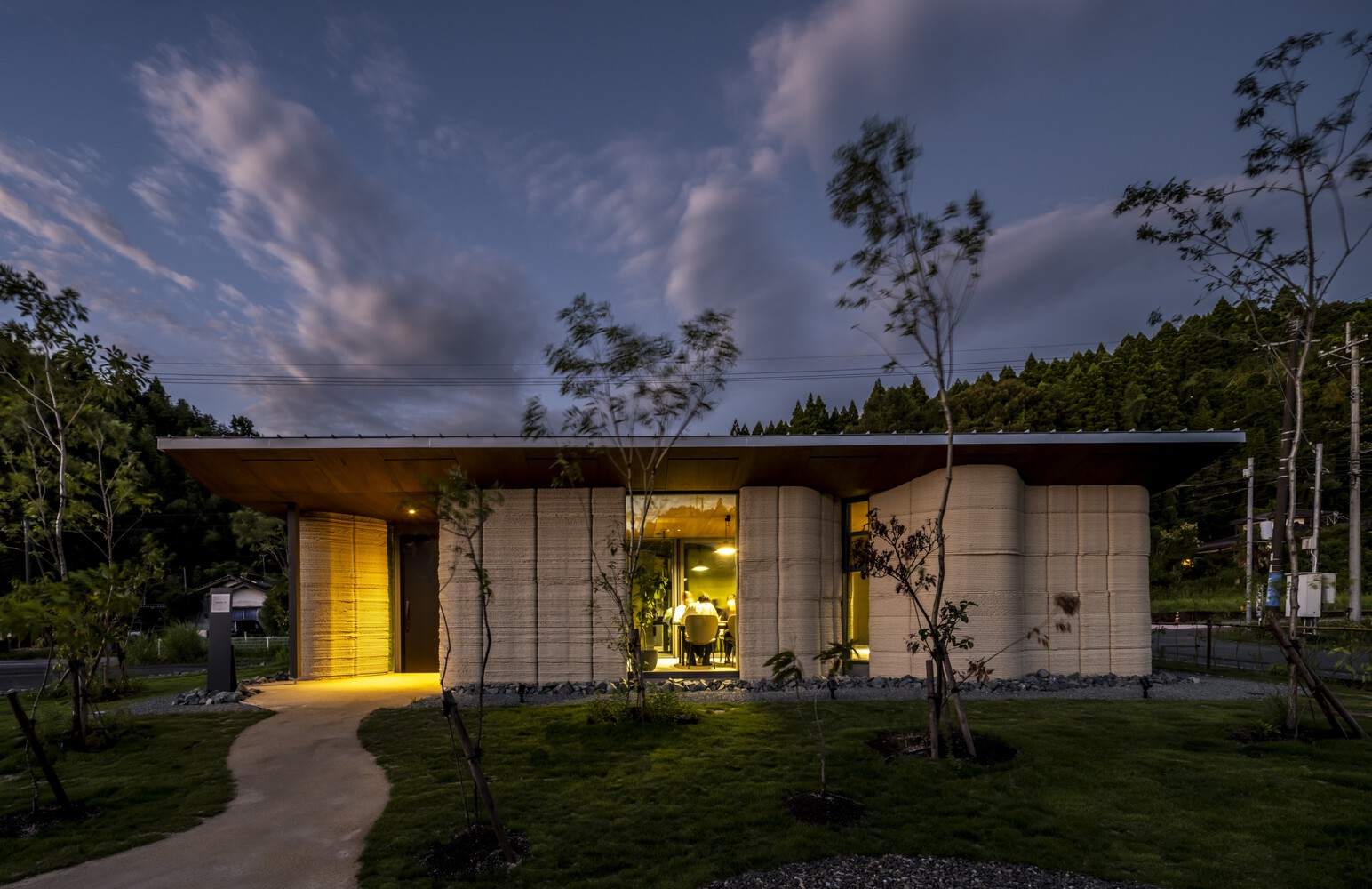
The Rib Earth House project aims to develop future housing models that embody principles of environmental sustainability and habitability. The project utilizes building-scale 3D printing technology to explore how houses can be constructed using only locally sourced, biodegradable materials, thereby promoting long-term harmonious living on Earth. The recently completed "Rib Type B Earth House" is the second prototype realized under this initiative. This single-story experimental residence covers approximately 100 square meters and is constructed with 3D printed rammed earth walls.
利布土坯房项目旨在开发未来住宅模型,这些模型需体现环境可持续性与宜居性原则。该项目运用建筑规模级的 3D 打印技术,探索如何仅采用本地采购的可生物降解材料建造房屋,从而促进地球上的长期和谐居住。近期竣工的“利布 B 型土坯房”是该计划下实现的第二个原型。这座单层实验住宅占地面积约 100 平方米,采用 3D 打印夯土墙建造而成。
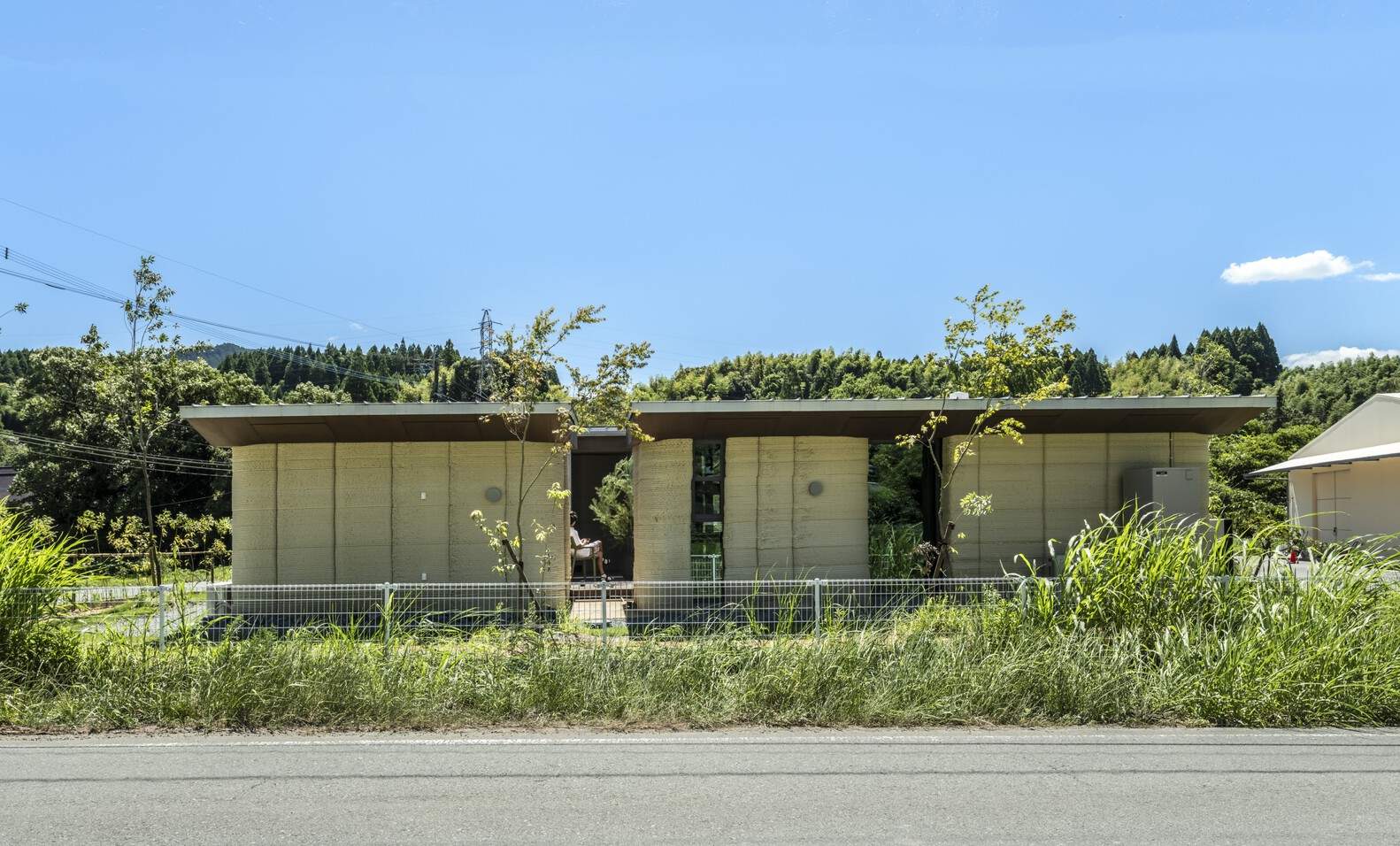
© Akira Ito
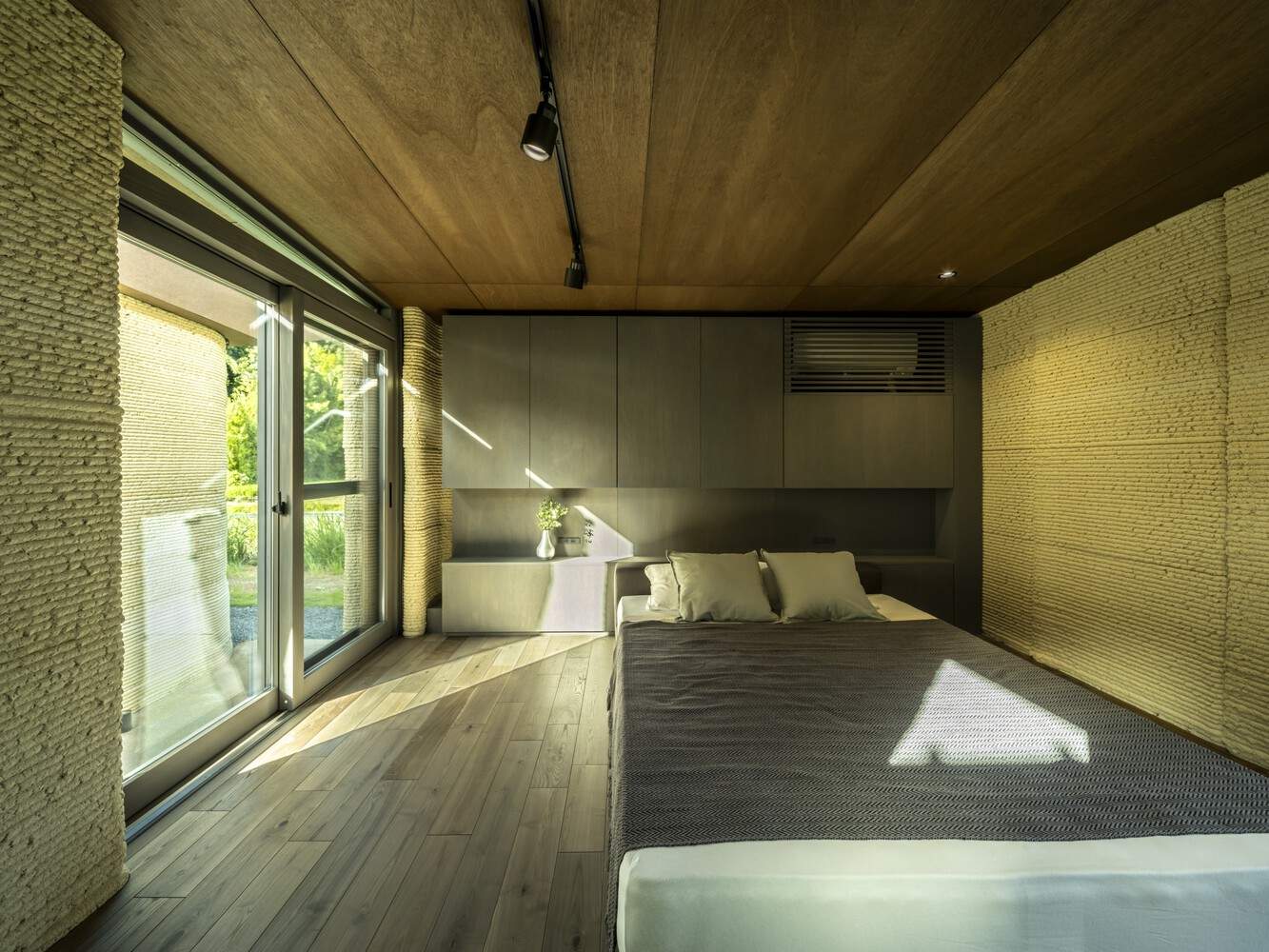
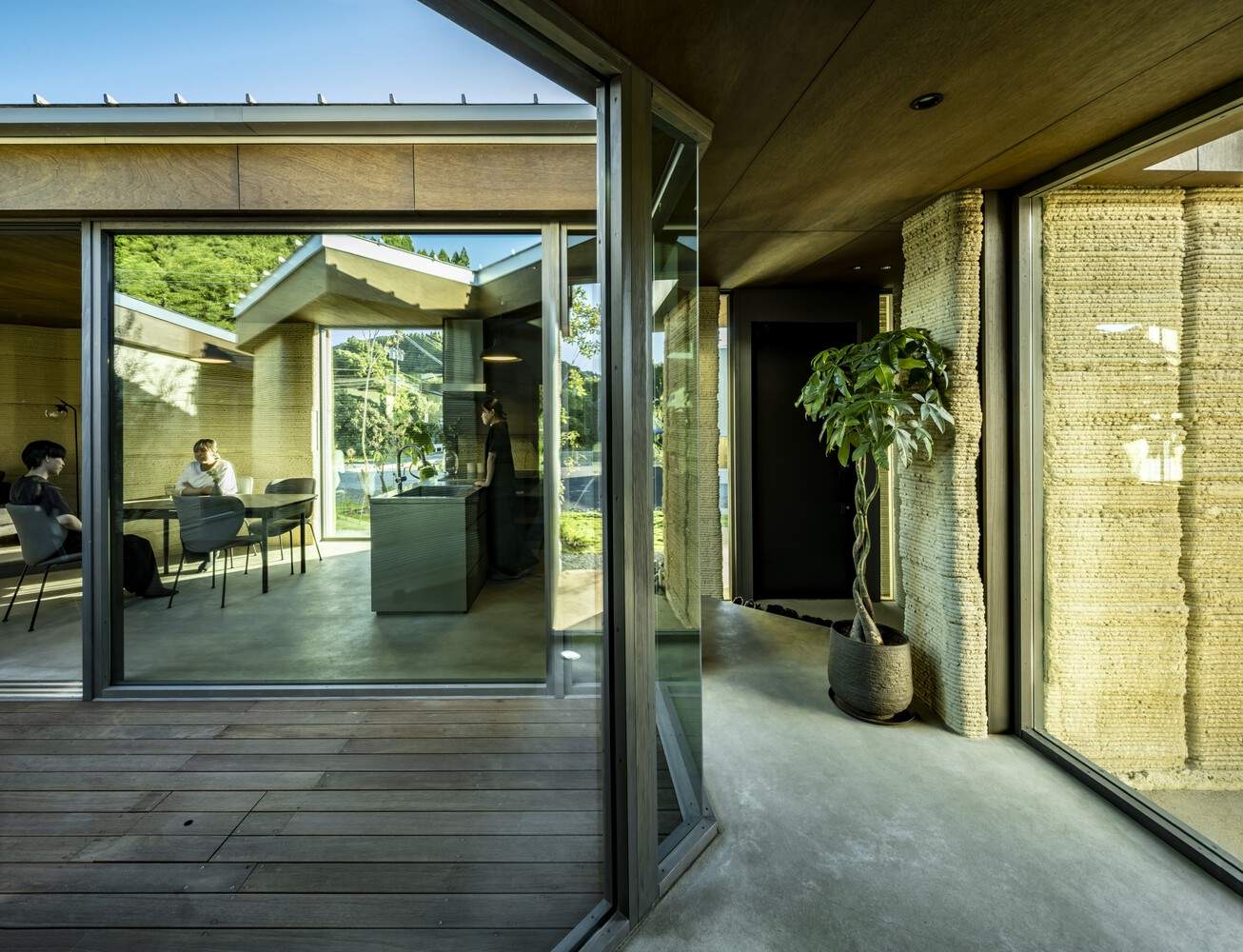
The "Type B Earth House" employs a hybrid structural system that combines 3D printed rammed earth walls with a traditional timber frame. The printed walls are composed of soil, lime, and other natural binders, with a mixed formulation repeatedly tested and optimized for appropriate mechanical strength, shrinkage control, construction operability, and surface quality. The timber frame follows the traditional Japanese post-and-beam construction method, while selectively incorporating steel connectors and hardware to ensure compatibility with the earth components and support the open spatial layout.
“B 型土坯房”采用了一种混合结构体系,将 3D 打印夯土墙与传统木构架相结合。打印墙体由土壤、石灰及其他天然粘结剂构成,其混合配方经过反复测试优化,以实现适宜的机械强度、收缩控制、施工可操作性和表面质量。木构架遵循日本传统的柱梁式建造方式,同时通过选择性融入钢制连接件和五金件,确保与夯土构件的兼容性,并支撑起开阔的空间布局。
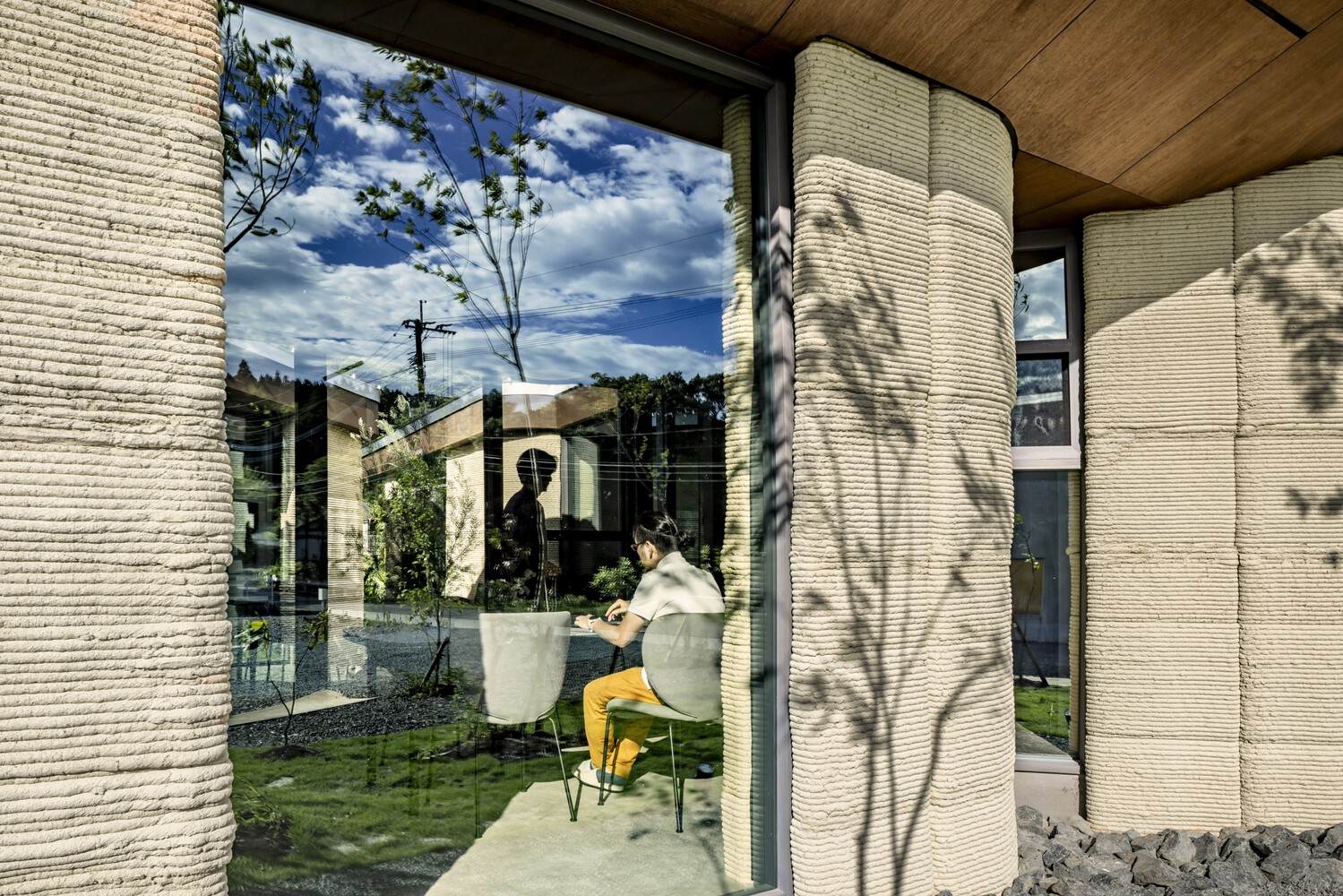
© Akira Ito
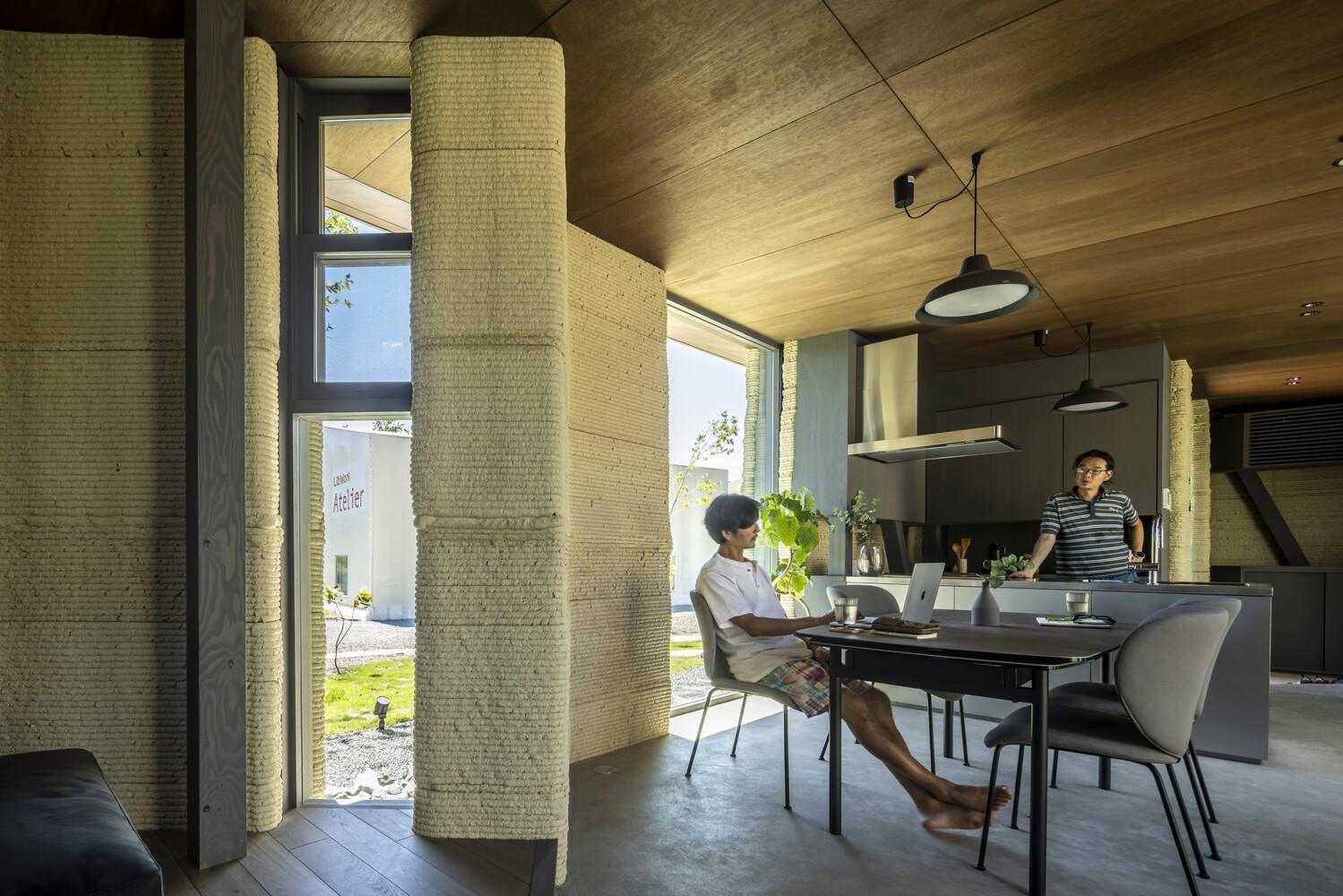
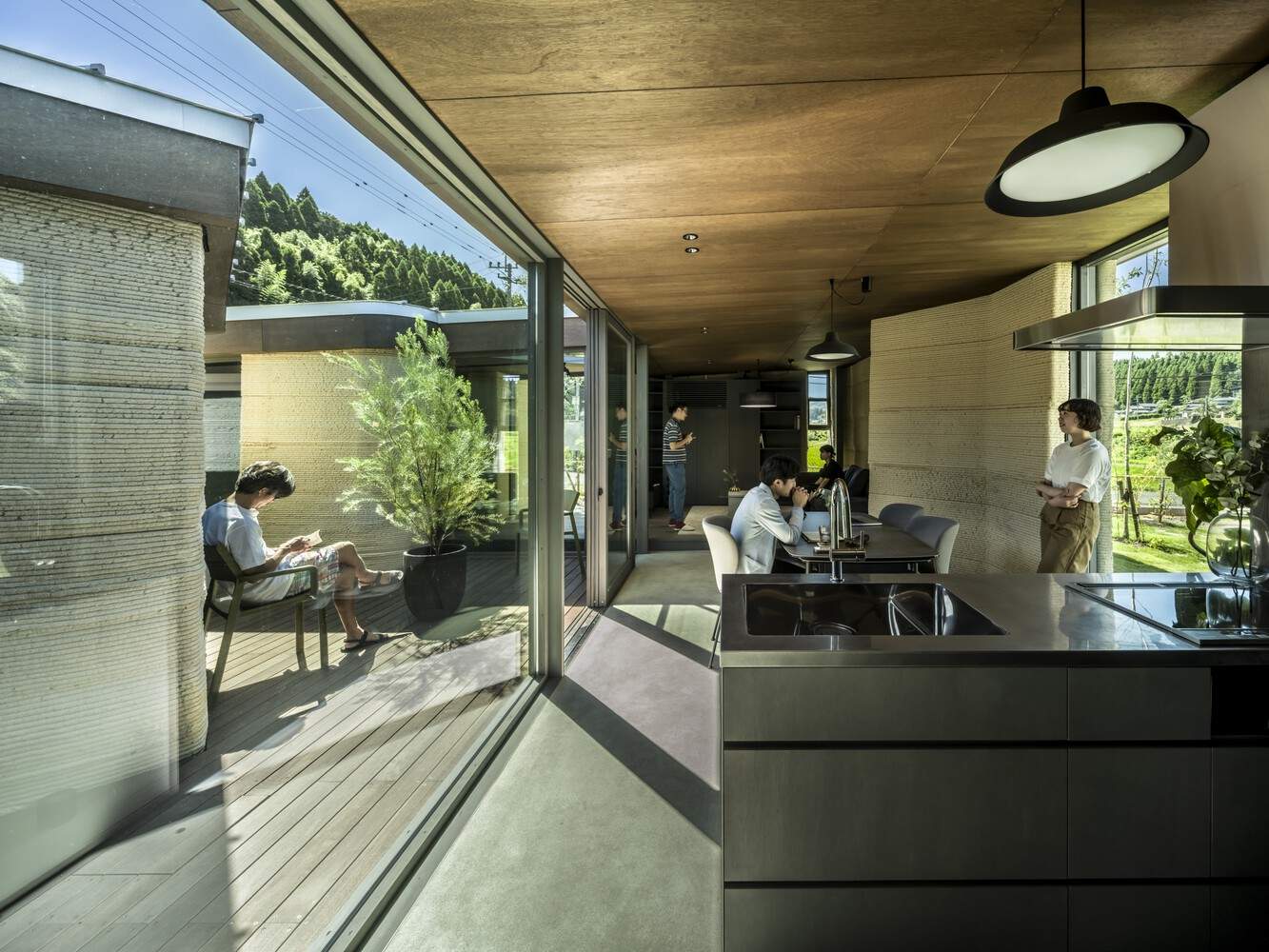
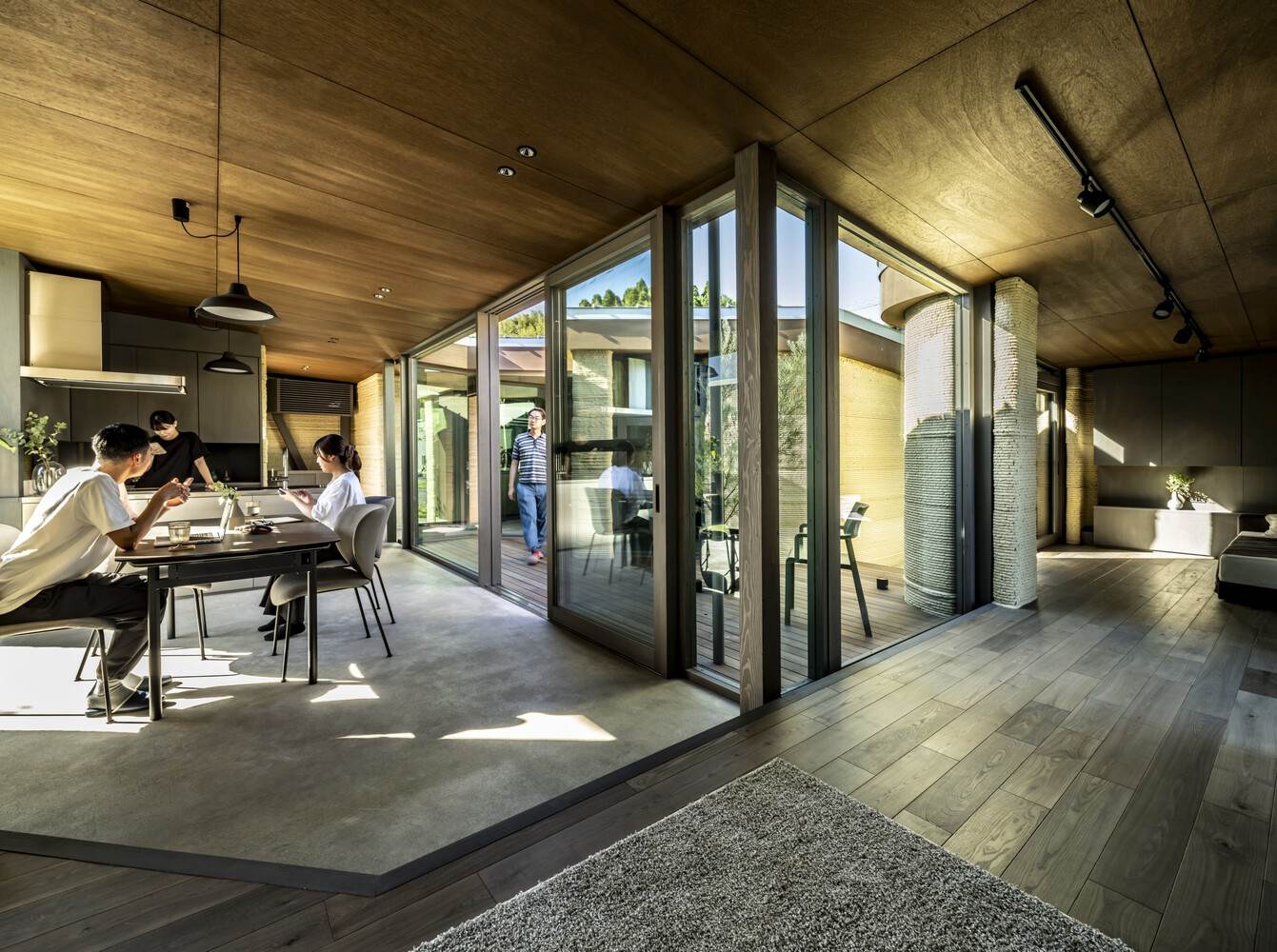
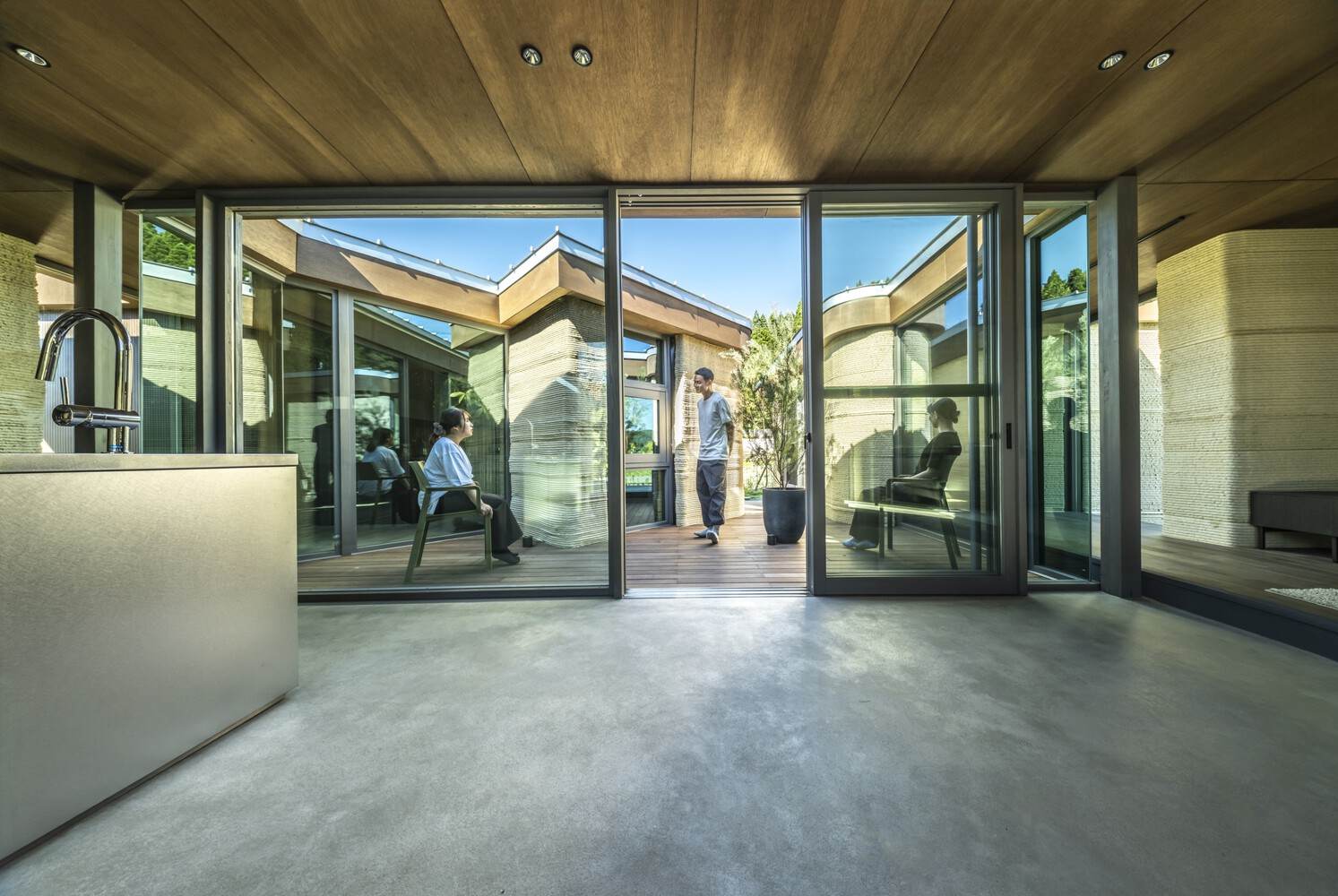
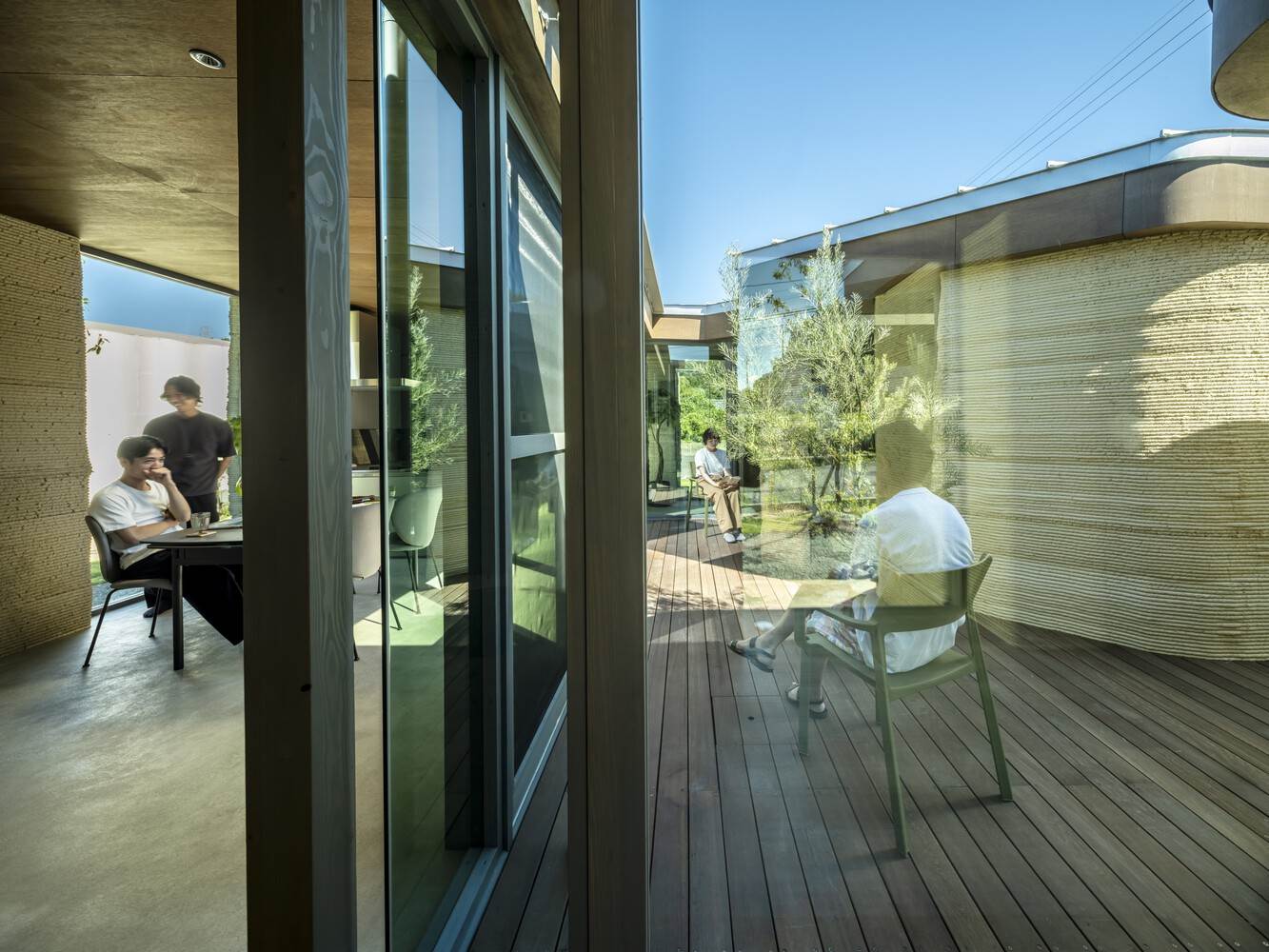
The building layout adopts a clustered plan, allowing outdoor spaces to permeate between rooms, advocating a lifestyle closely connected with nature. The rammed earth walls, acting as continuous indoor-outdoor separators, feature cleverly placed openings and voids that enable flexible spatial arrangements to meet the personalized needs of the residents.
建筑布局采用组团式规划,让户外空间得以渗透至各个房间之间,倡导一种与自然紧密相连的生活方式。夯土墙作为连续的室内外分隔构件,其上巧妙布置的开口与空隙,可实现灵活的空间布局,满足居住者的个性化需求。
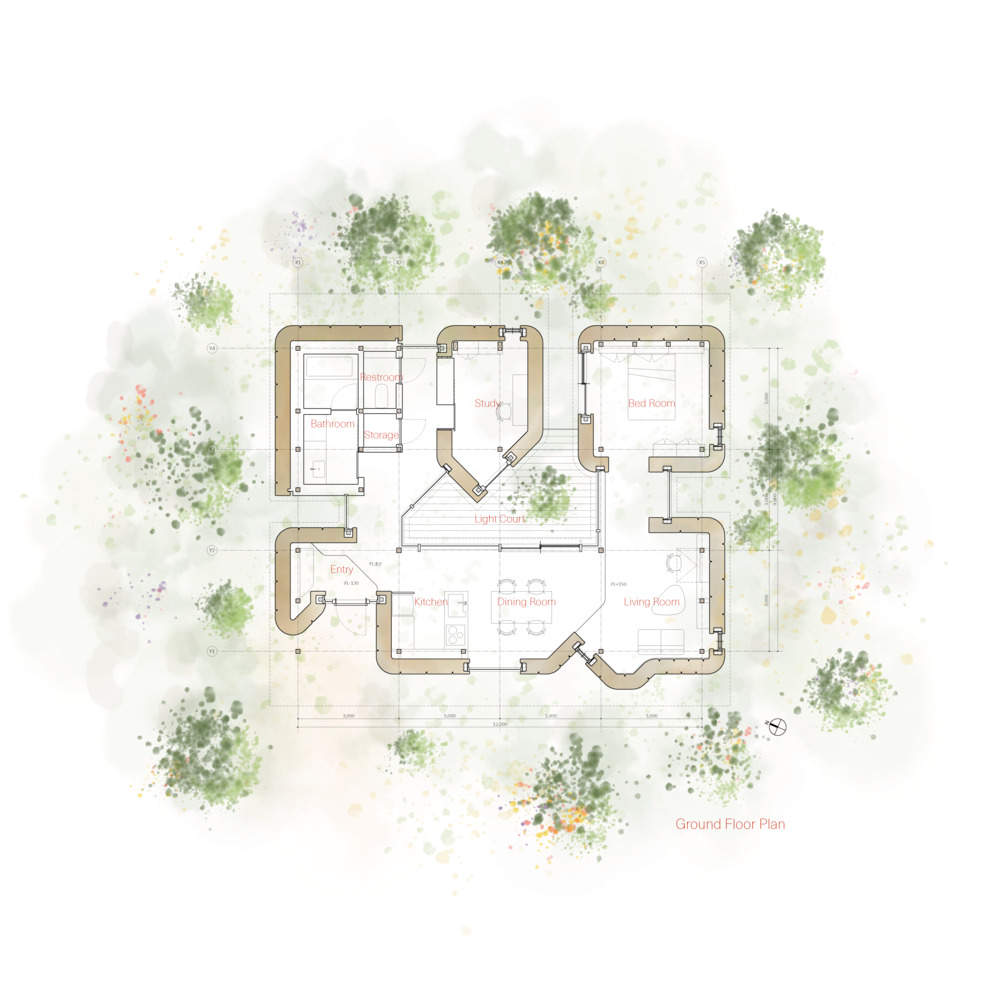
First Floor Plan
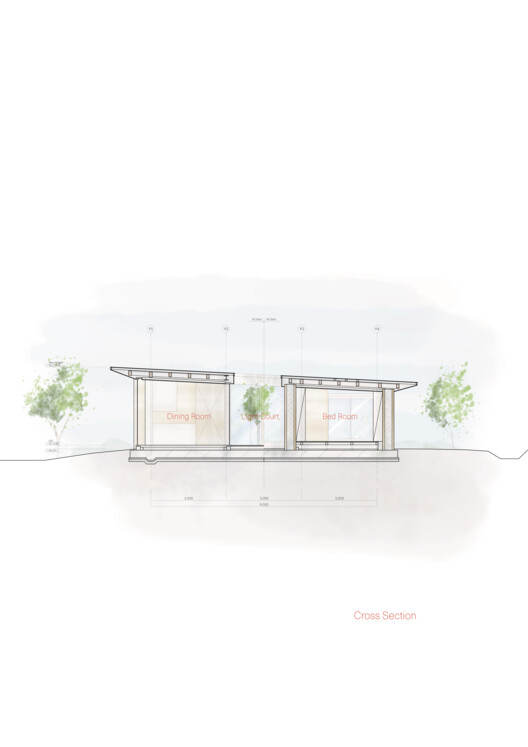
Section
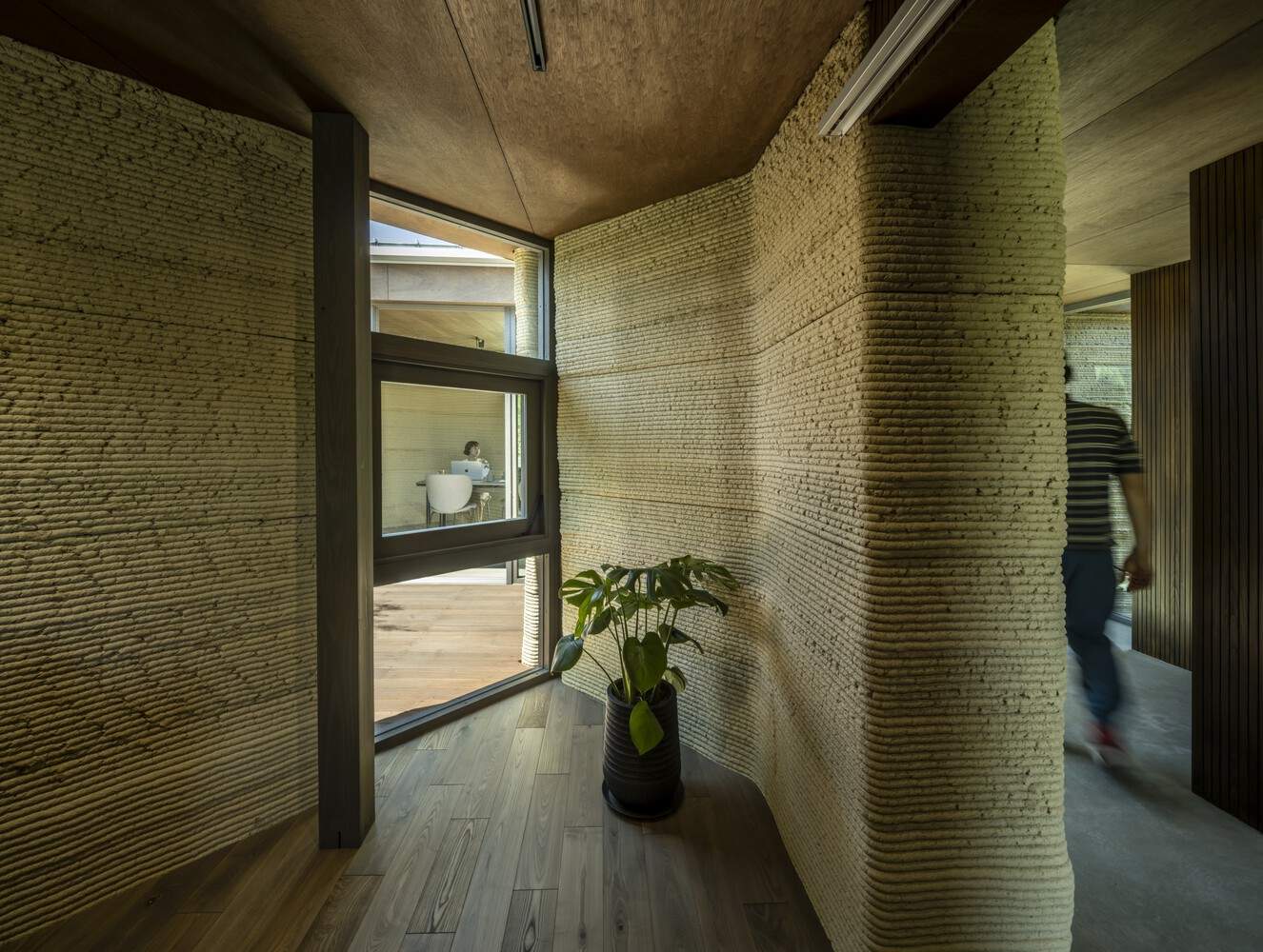
Although 3D printing technology allows for free-form geometry, the wall layout of the "Type B Earth House" is based on orthogonal and 45-degree axes to ensure structural integrity with the timber frame. Curved wall segments enhance lateral stability and enrich the spatial experience. Structural analysis determined that these walls are designed as self-supporting structures, meaning they do not transfer loads to the timber frame while still providing layout flexibility.
尽管 3D 打印技术能够实现自由形态的几何结构,但 “B 型土坯房” 的墙体布局仍基于正交和 45 度轴线设计,以确保与木构架的结构整体性。曲线形墙体段增强了横向稳定性,并丰富了空间体验。经结构分析确定,这些墙体设计为自承重结构,即不将荷载传递至木构架,同时还能提供布局上的灵活性。
© Akira Ito
© Akira Ito
© Akira Ito
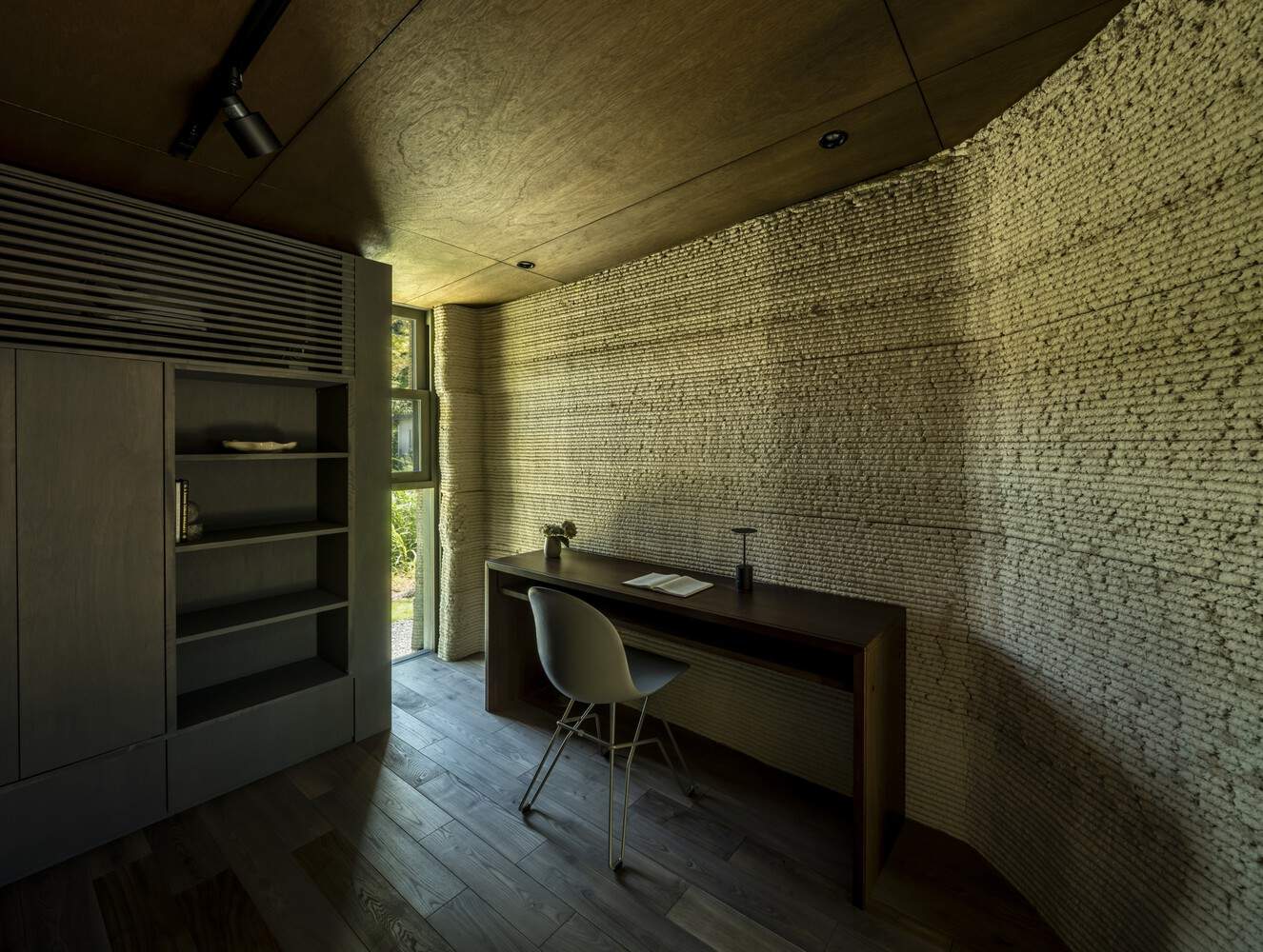
Each wall is approximately 450 mm thick, constructed by connecting an outer and inner layer with a filling material. By optimizing the printing path, material consumption is minimized while ensuring seismic safety and construction feasibility. To mitigate cracking caused by drying shrinkage, control joints are spaced based on calculations derived from soil characteristics, and their effectiveness is continuously monitored.
每面墙厚度约为 450 毫米,由内外两层墙体通过填充层连接而成。通过优化打印路径,在确保抗震安全性和施工可行性的同时,最大程度减少材料消耗。为缓解因干燥收缩导致的开裂问题,根据土壤特性计算确定收缩缝的间隔位置并设置收缩缝,同时持续监测其有效性。
© Akira Ito
© Akira Ito
© Akira Ito
© Akira Ito
The construction process requires printing the rammed earth walls first, followed by the erection of the timber frame. Due to the relatively low precision of current 3D printing systems, adjustments were necessary for detail finishing and tolerance control strategies. The walls extend upwards into the ceiling and roof space to absorb dimensional deviations, facilitate insulation, and allow for attic ventilation. Natural insulating materials are filled into the wall cavities, and embedded sensors continuously monitor their environmental performance.
施工流程要求先打印夯土墙,再进行木构架搭建,由于当前 3D 打印系统的精度较低,因此需对细节处理和公差控制策略进行相应调整。墙体向上延伸至天花板和屋顶空间内,以吸收尺寸偏差、便于隔热处理,并实现阁楼通风。天然隔热材料被填充至墙体空腔中,同时通过嵌入式传感器持续监测其环境性能表现。
© Akira Ito
© Akira Ito
Besides the walls, the design of openings plays a vital role in defining the building's environmental performance. Wooden window frames are fixed to the rammed earth walls using special hardware developed for this project. This hardware ensures that the frames are structurally independent of the timber frame while maintaining waterproofing and airtightness. Interior finishes also utilize natural and recyclable materials, including on-site rammed earth coatings, plant-dyed solid wood flooring, and other low-environmental-impact construction methods.
除墙体之外,开口设计在界定建筑环境性能方面也起着至关重要的作用。木制窗框通过专为本项目研发的特殊五金件固定于夯土墙上,该五金件确保窗框在结构上独立于木构架,同时保持防水与气密性能。室内装修同样采用天然与可循环利用材料,包括就地取材的夯土涂料、植物染色的实木地板,以及其他低环境影响的施工方法。
© Akira Ito
© Akira Ito
This integrated approach, combining emerging technologies with traditional construction techniques, forms the basis of the Rib Earth House project's architectural strategy. By balancing environmental performance and construction efficiency while prioritizing habitability, the project aims to advance sustainable building systems that are both technically feasible and ecologically responsible.
这种将新兴技术与传统施工工艺相结合的综合方法,构成了利布土坯房项目建筑策略的基础。该项目在兼顾环境性能与施工效率的同时,将宜居性置于首位,旨在推动可持续建筑体系的发展,使其既具备技术可行性,又符合生态责任要求。
© Akira Ito