场地限制下的结构创新与形态表达:该项目最精髓之处在于其对场地极端限制(如深邃峡谷、不宜基础施工的区域、以及局部的天然材料限制)的积极转化。建筑师将一座100英尺长的居住桥梁构思为由双曲抛物面组成的悬索结构,巧妙地利用了极少的钢管和拉索提供抗拉力,同时借助当地可得的茅草-泥浆复合材料提供抗压强度。这种张拉-压缩的结构逻辑,不仅解决了跨越峡谷的工程难题,更将结构本身演化为一种诗意的几何形态,体现了以小见大、以弱胜强的设计智慧。
生物形态启发与可持续的表皮策略:项目在材料应用和形态生成上展现了深刻的生态洞察力。桥屋的整体外形被设计成一个隐于树林间的巨大“茧”,其茅草分层的表皮设计直接借鉴了穿山甲的鳞片肌理。这一仿生策略不仅赋予了建筑独特的视觉美感,更提供了高效的隔热和降温性能。关键在于,这种轻量化的表皮策略使得结构得以采用极少的四个基础支撑,将对原始地形的干扰降至最低,实现了对自然环境的尊重与共生。
材料的地域性再利用与内部生态的营造:建筑在材料的选择上践行了高度的地域性和适应性再利用原则。通过使用当地似乎唯一的“野草”构建主体结构,并结合黄麻屏风、网状屏风以及回收船用甲板木材,项目构建了一个既坚固又富有生命力的内部空间。泥浆抹灰层解决了传统茅草建筑的虫害问题,同时增强了结构整体性。中心的天窗庭院设计,将自然光线和雨景引入室内,使得建筑成为一个人居与自然和谐共存的“活的生态系统”。
The project site is located in Khalapur, backed by mountains, with the TATA weir stream cutting through the land, forming a 7-meter deep gorge in the center of the site. Numerous constraints faced the project from the outset: the need to connect two plots of land, but with foundations disallowed within the 100-foot zone of the weir; the possibility of constructing a habitable bridge, but it had to leave sufficient space for JCB (excavator) cleaning below the two streams; we wanted to build the bridge using local materials, but within a five-mile radius, grass seemed to be the only usable material.
该项目场地位于卡尔贾特,背靠群山,塔塔(TATA)溢洪道溪流穿地而过,在场地中央形成了一道 7 米深的峡谷。项目伊始便面临诸多限制:需将两块土地相连,但基础不能设在溢洪道 100 英尺宽的范围内;可建造一座可居住的桥梁,但必须为下方的两条溪流留出足够空间,以便 JCB(挖掘机)进行清理;我们希望使用当地材料建造桥梁,但在方圆五英里内,野草似乎是唯一可用的材料。
© Studio IKSHA
© Studio IKSHA
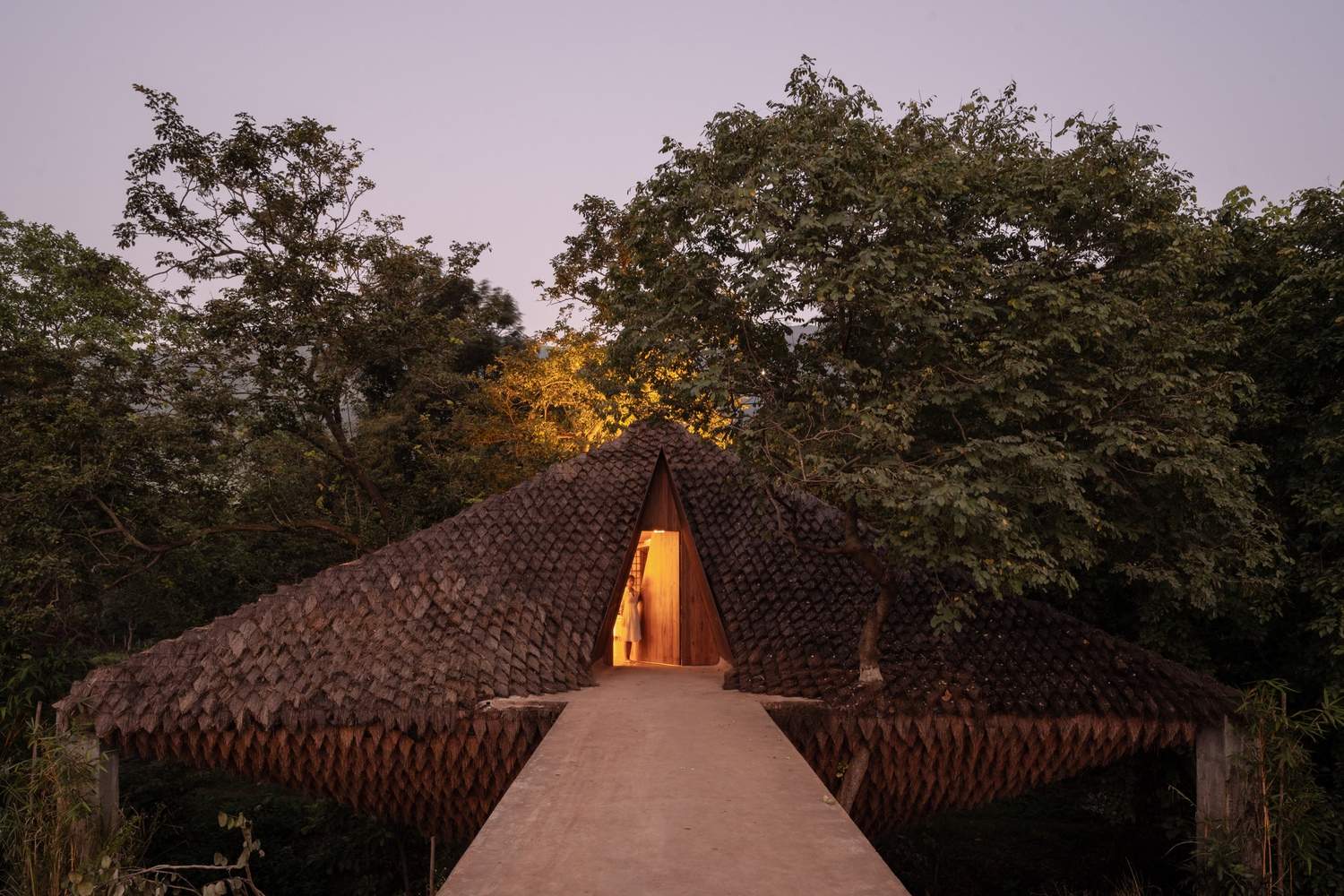
The concept of the Bridge House emerged precisely under these constraints: "A 100-foot-long suspension bridge, composed of 4 hyperbolic paraboloids, using minimal steel tubes and cables for tensile strength, and thatch-mud composite for compressive strength."
桥屋(Bridge House)的构想正是在这些限制条件下应运而生:“一座 100 英尺长的悬索桥,由 4 个双曲抛物面组成,采用最少的钢管和拉索提供抗拉强度,并以茅草-泥浆复合材料提供抗压强度”。
© Studio IKSHA
© Studio IKSHA
© Studio IKSHA
© Studio IKSHA
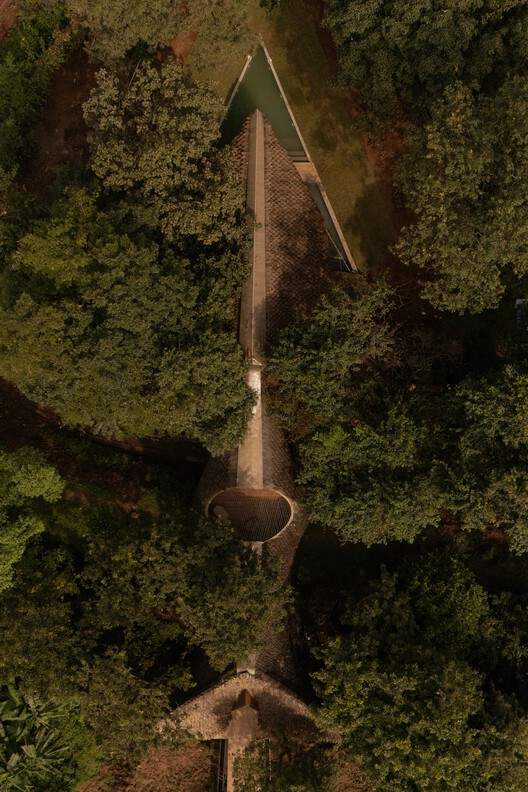
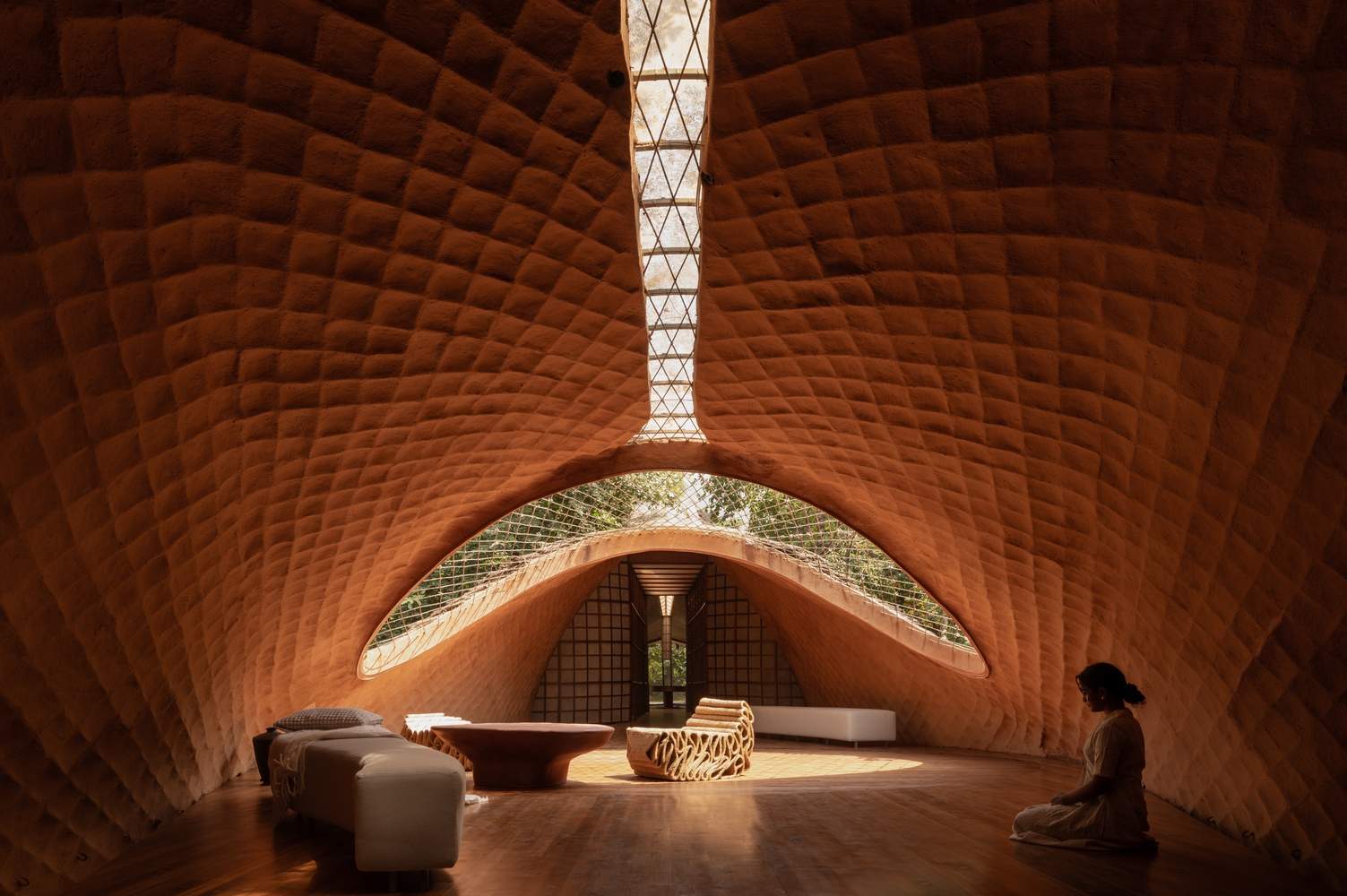
The body of the bridge is hidden among the numerous trees in the gorge, resembling a giant cocoon that easily blends into the dense foliage. The thatched layer's design, inspired by the scales of a pangolin, provides both insulation and effective cooling, while allowing for a lightweight, long-span structure with only 4 foundations, ensuring minimal disturbance to the natural terrain.
桥身隐于峡谷中的众多树木之间,宛如一个巨大的茧,轻易地融入了茂密的树叶之中。茅草层的设计灵感源自穿山甲的鳞片,既提供了隔热和有效降温的功能,也让我们得以采用仅设 4 个基础的轻型大跨度结构,确保对自然地形的干扰降至最低。
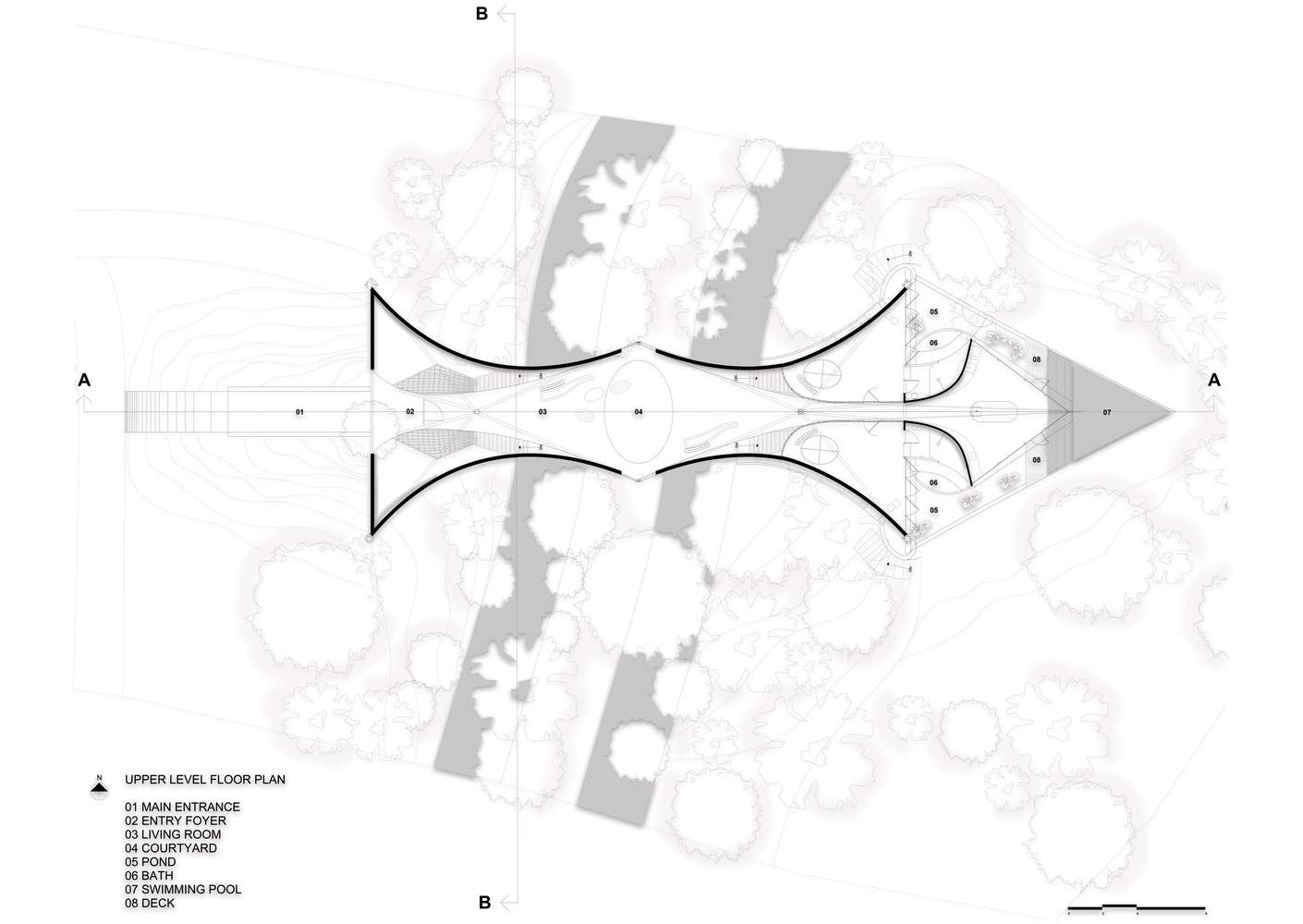
Second Floor Plan
二层平面图
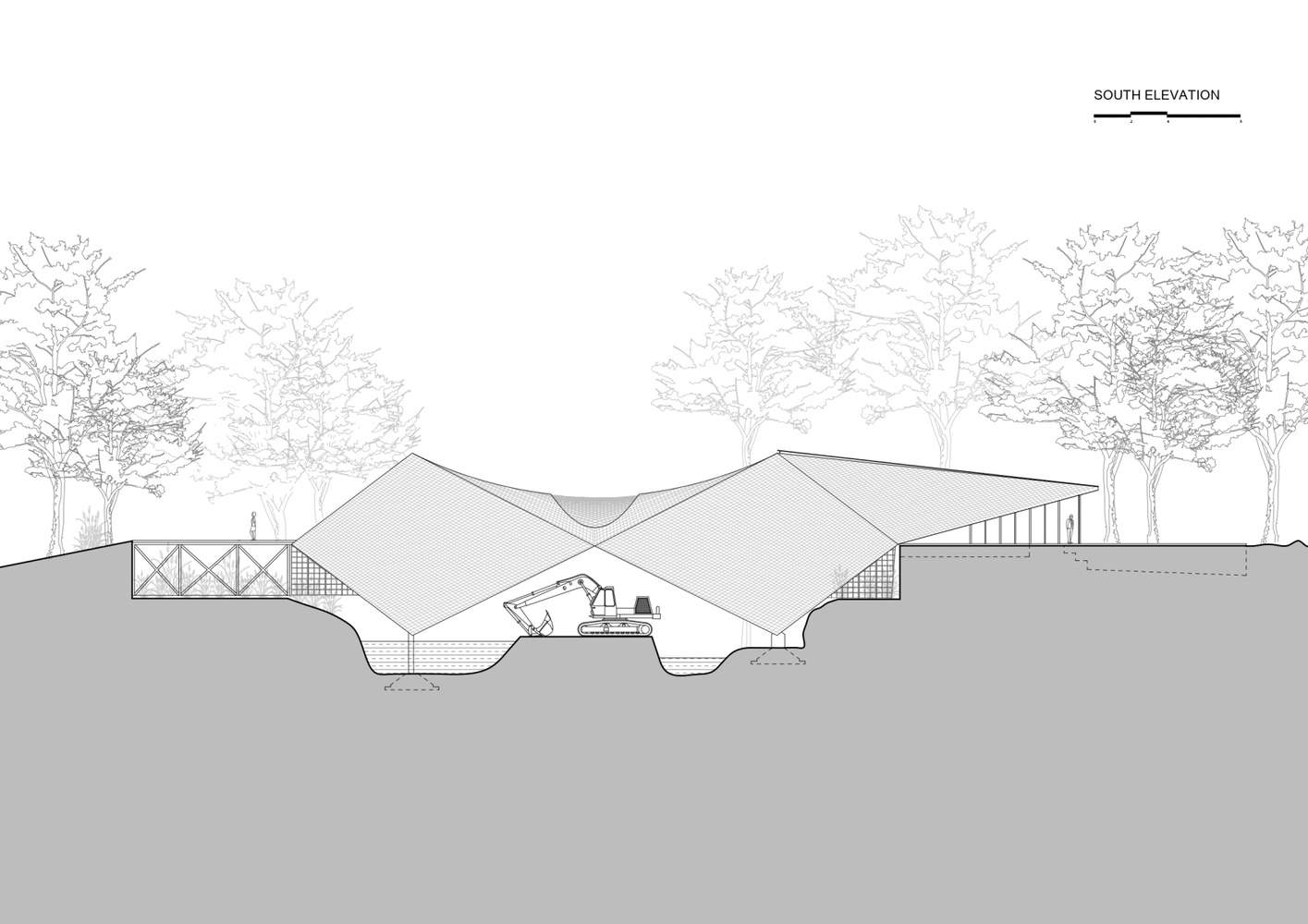
Elevation
立面图
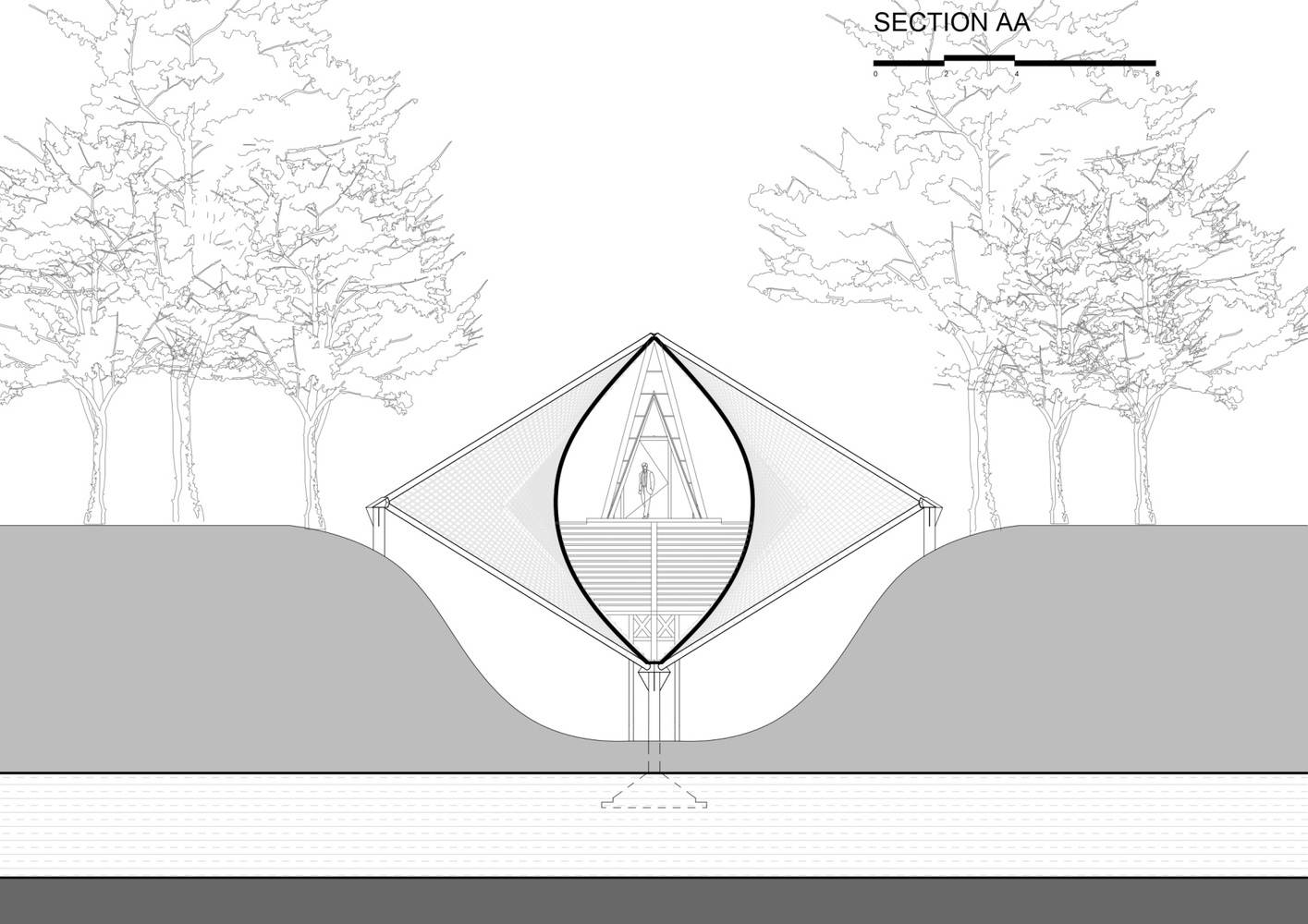
Section
剖面图
The mud plaster layer ensures that rodents or pests cannot burrow into the residence (which is a main reason for the gradual decline of thatched roofs) and enhances the compressive strength of the structure without vertical suspension supports, further stabilizing the overall structure. The building becomes a living ecosystem—humans reside inside, while nature finds its place outside.
泥浆抹灰层则确保了啮齿动物或害虫无法钻入住宅内部(这也是茅草屋顶逐渐失宠的主要原因),并在没有垂直悬吊支柱的情况下,增强了结构的抗压强度,进一步稳定了整体结构。这座建筑成为了一个活的生态系统 —— 人类在内部安居乐业,而自然则在外部找到了自己的位置。
© Studio IKSHA
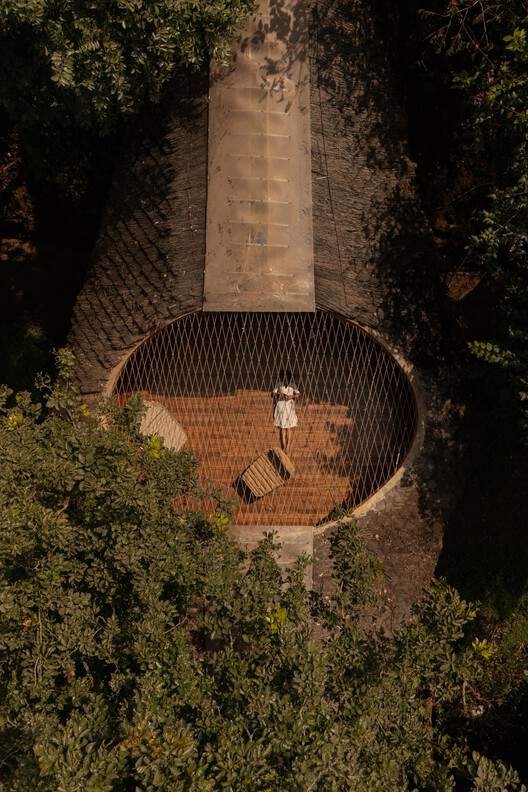
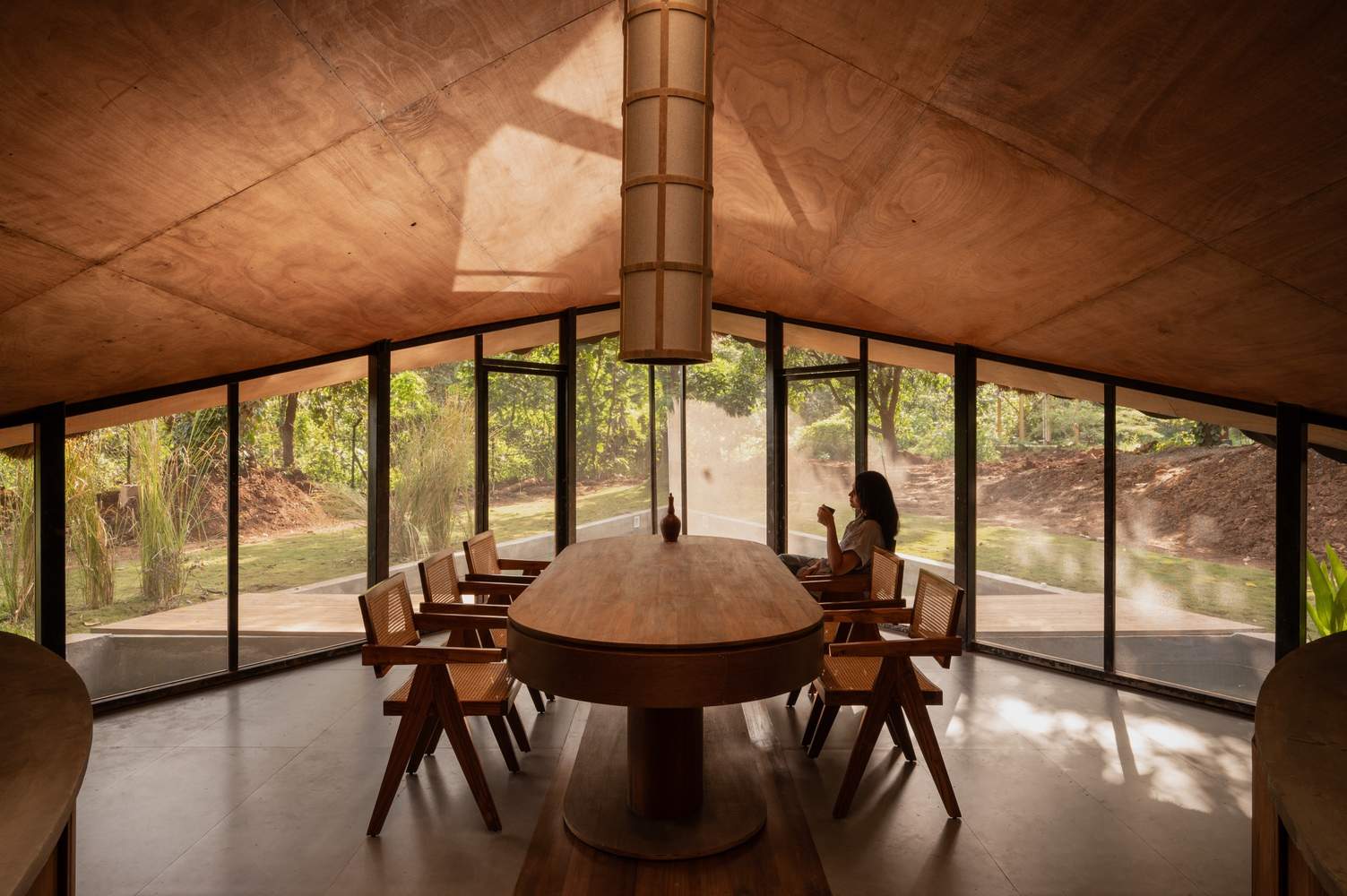
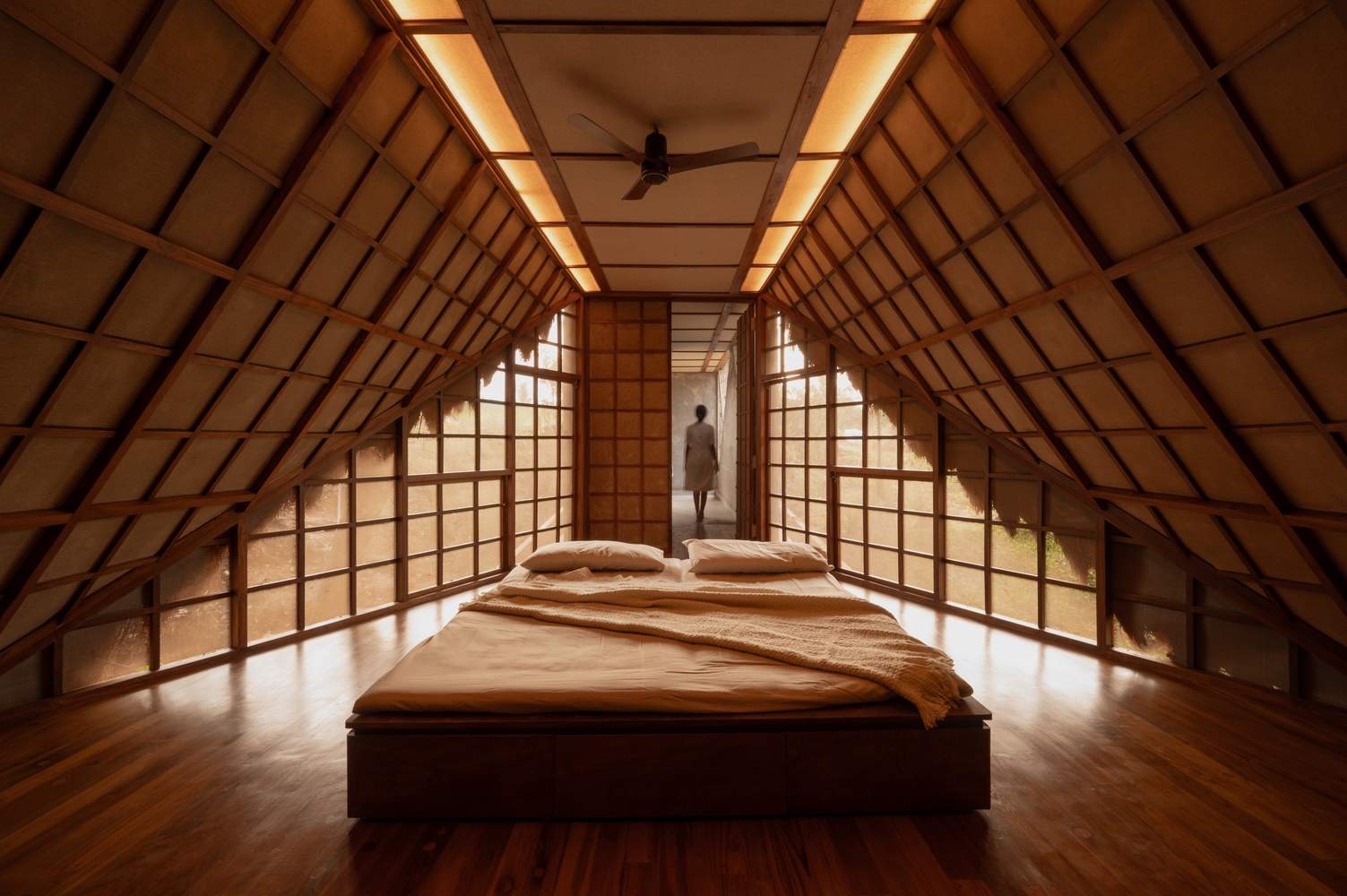
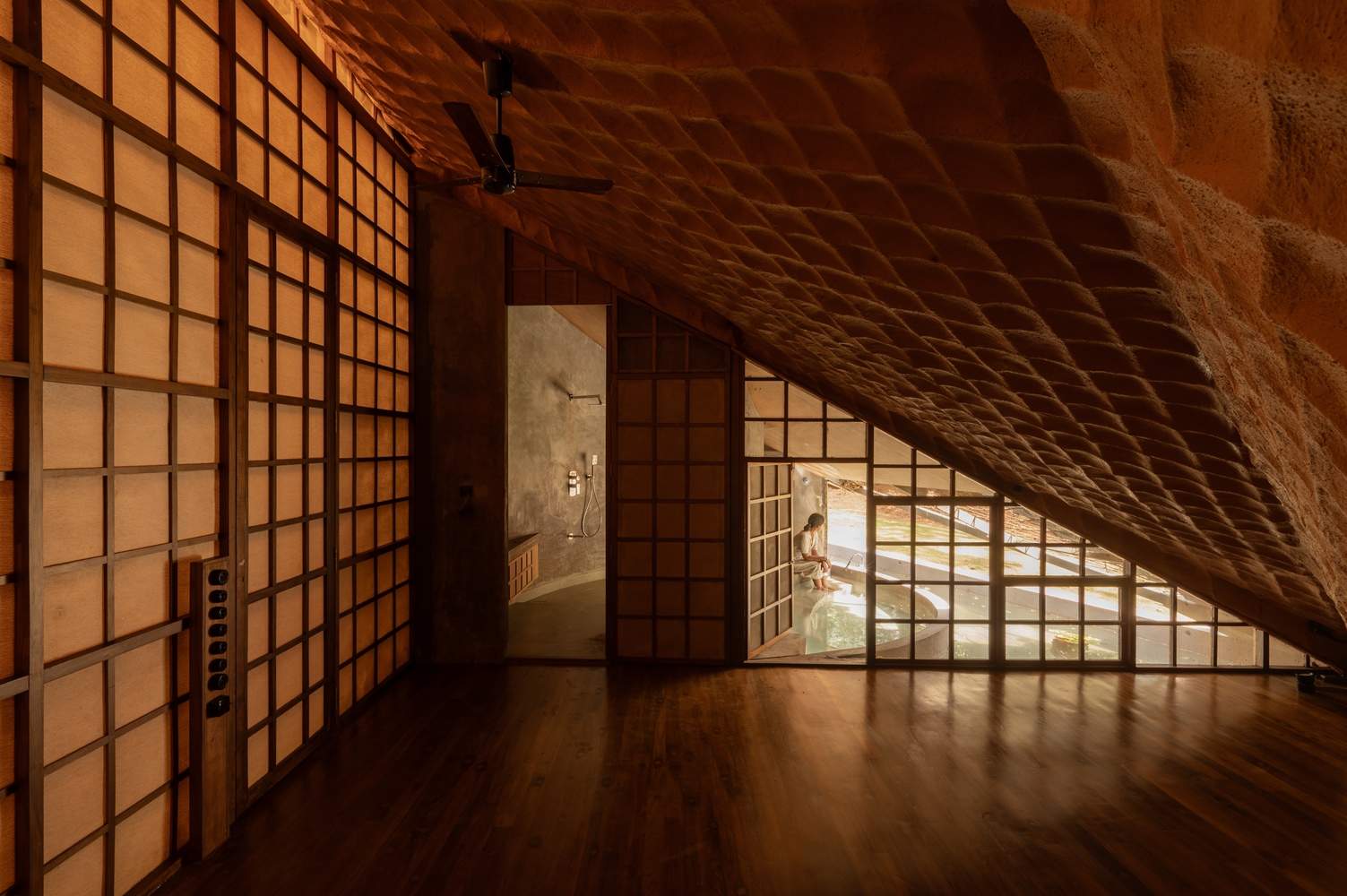
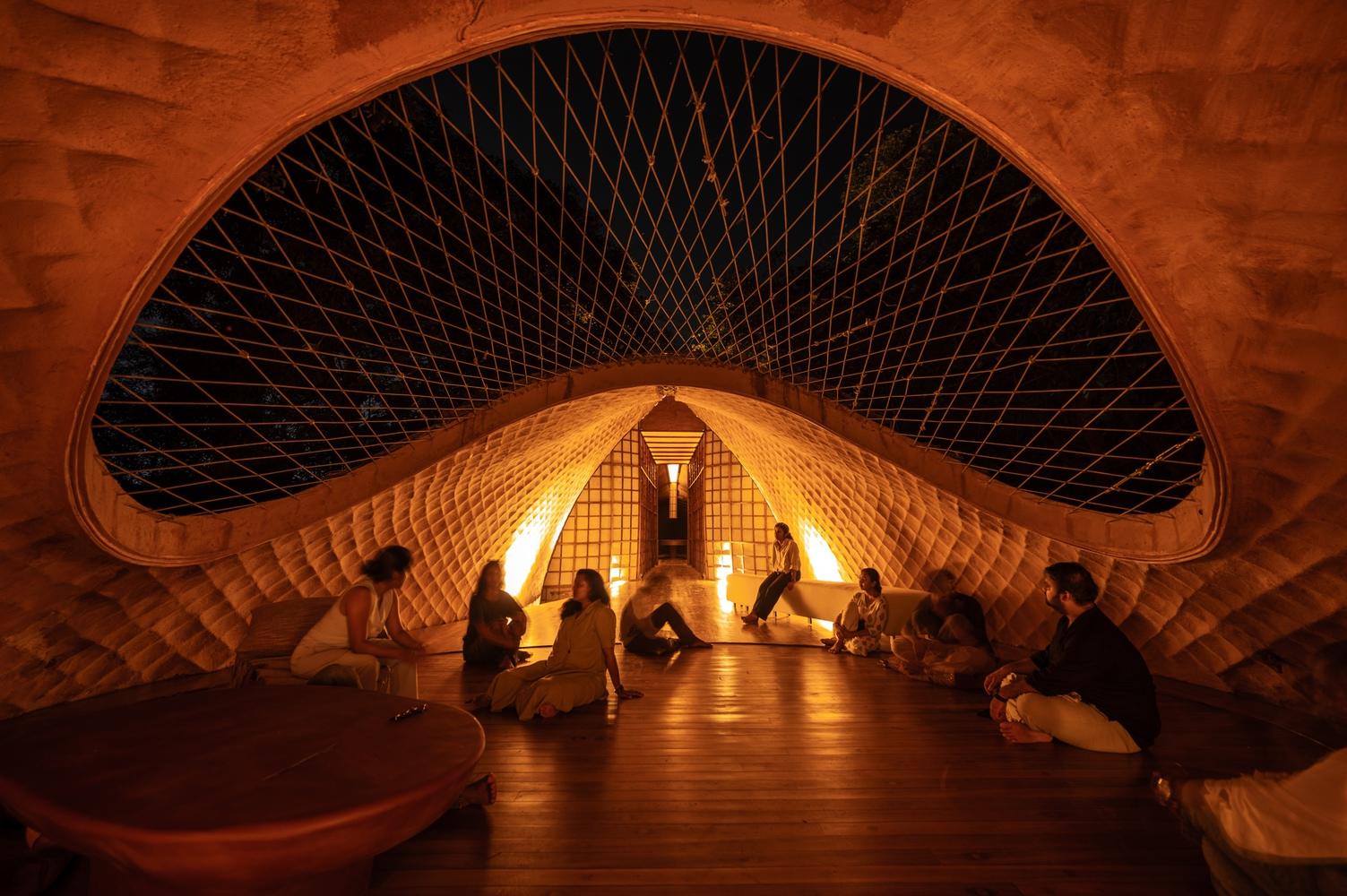
The farmhouse adopts an open layout with a central skylight serving as a courtyard, allowing appreciation of the sky and rain. The four bedrooms feature ample openings, facing the forest or overlooking the stream below. Jute screens, mesh screens, and flooring made from reclaimed wood from ship decks collectively form the farmhouse's simple aesthetic and serve as a paradigm for adaptive reuse. Most importantly, the Bridge House reminds us that the most severe adversity often breeds innovation.
农舍采用开放式布局,中心设有一个天窗,作为庭院,可让人欣赏天空与雨景。四间卧室设计有充足的开口,面向森林或俯瞰下方的溪流。黄麻屏风、网状屏风以及由船用甲板回收木材制成的地板,共同构成了农舍简约的外观,并成为适应性再利用的典范。但最重要的是,桥屋提醒我们,最严峻的逆境往往能催生出创新。
© Studio IKSHA