跨媒介的物质性对话:该项目成功地将摄影、雕塑和建筑设计语言融合于一体,体现了当代展览设计中对多学科交叉的深刻理解。建筑师与艺术家之间的协作,使得展陈结构本身不再是背景,而是成为艺术观念的延伸和物质载体。特别是通过混凝土构件的精妙设计,实现了对传统“墙体”概念的解构与重塑,创造出一种既有雕塑感又具备空间叙事性的展示界面。
结构创新与可操作性:在应对巨大的空间挑战时,设计团队展现了高超的技术能力。通过对混凝土构件进行减重处理(使用EPS砖块核心)并引入创新的移动系统(旋转轮和箱形梁结构),项目在保持宏大视觉冲击力的同时,确保了现场建造的效率和未来的空间布局灵活性。这种对材料性能的精确掌握和对结构力学的巧妙应用,是建筑技术服务于艺术表达的典范。
细节推敲与观念深化:展览的核心精髓在于对“残缺的墙体”这一形态的极致推敲。十二块具有不同调制的混凝土构件,通过断裂、倾斜等形态操作,记录了设计与材料互动的过程,并与所展示的照片形成强烈的视觉和叙事关联。这种“不完美”的有意为之,不仅是技术实现的结果,更是对主题“固执己见”在物质层面上的深刻隐喻,引导观众反思图像的展示与物质存在的本质。
The exhibition "Ideas Fijas," created by artist Cecilia Szalkowicz and curated by Mariano Mayer, integrates photography, sculpture, and architecture within a single show, with the design and development of the exhibition pieces completed in collaboration with architects Leticia Virguez Lalli and Gabriel Huarte from Mater studio.
由艺术家 Cecilia Szalkowicz 创作、Mariano Mayer 策展的展览“固执己见”(“Ideas Fijas”),将摄影、雕塑和建筑融于同一场展览之中,并与 Mater 工作室的建筑师 Leticia Virguez Lalli 和 Gabriel Huarte 合作,共同完成了展品的设计与开发。
© Javier Agustín Rojas
© Javier Agustín Rojas
From the realm of art comes subjectivity, experimentation, experience, emotion, intention, and speech (expression) itself. From the symbolic universe, interests, the search for meaning, the creation of atmosphere, and that quality that transcends time emerge.
来自艺术世界的是主观性、实验性、体验性,是情感、意图与政治性,是言说(表达)本身。而从象征的宇宙中,则浮现出利益诉求、所指探索、氛围营造,以及那超越时间的特质。
© Javier Agustín Rojas
© Javier Agustín Rojas
© Javier Agustín Rojas
© Javier Agustín Rojas
The issue develops through questions, and the challenge lies in occupying a vast empty space to display the pieces. In this last case, spatiality and display become materialized.
问题以提问的形式演变发展,而挑战则体现在如何去占据一片巨大的空白空间并展出作品。在这最后一种情形中,空间性与展示性得以具体化。
© Javier Agustín Rojas
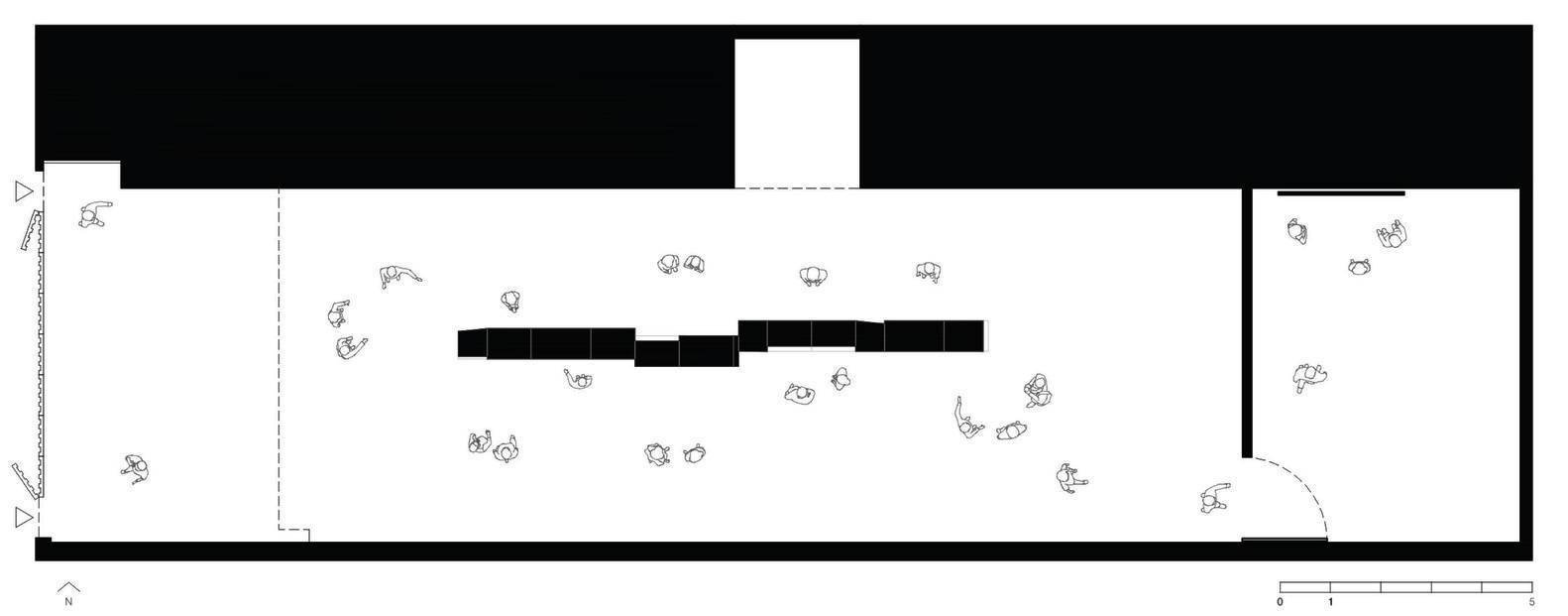
Floor plan
This is a technical problem involving form, stability, weight, material, and movement that dialogues with performance. The completion of this cyclical journey is an experience, which is fulfilled when one can perceive the pieces and return to the subjective world.
这是一个技术领域的问题,涉及形式、稳定性、重量、材质以及与表演性产生对话的运动。完成这一循环之旅本身就是一种体验,而当人们得以感知作品并回归主观世界时,这一体验便得以圆满。
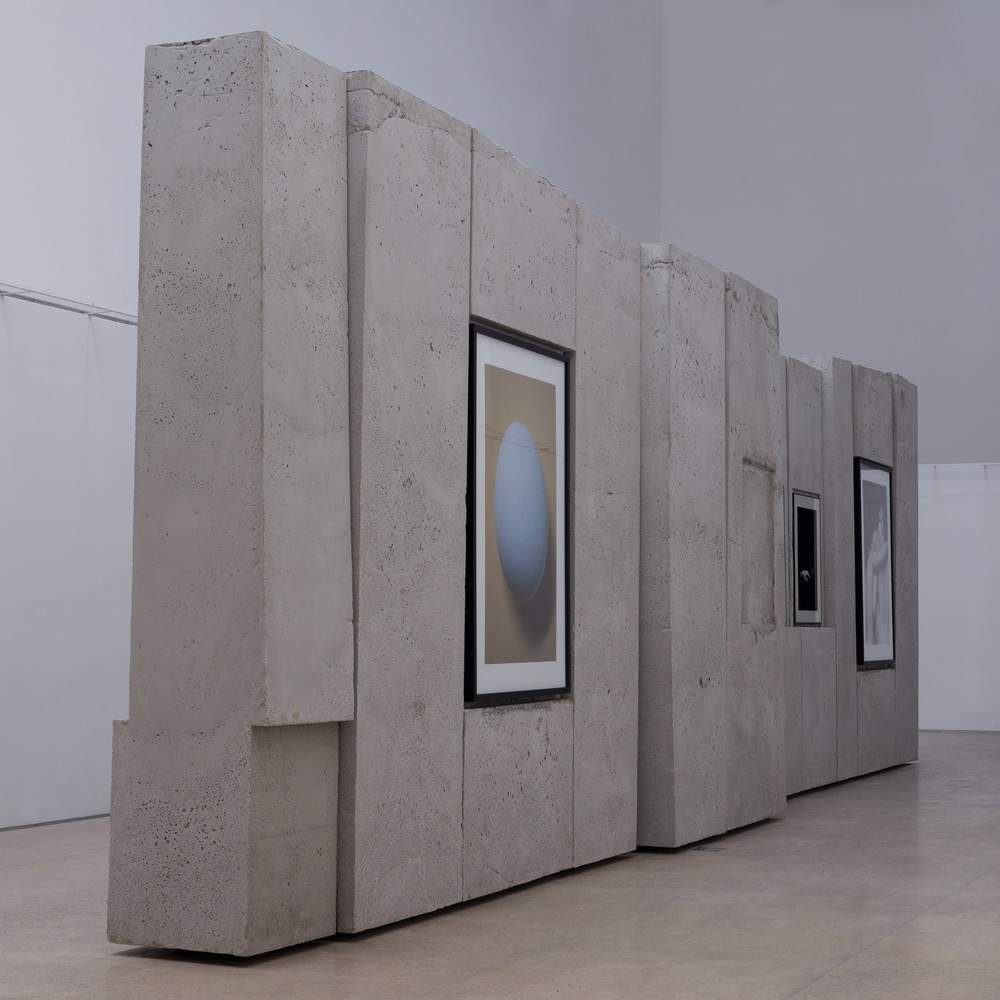
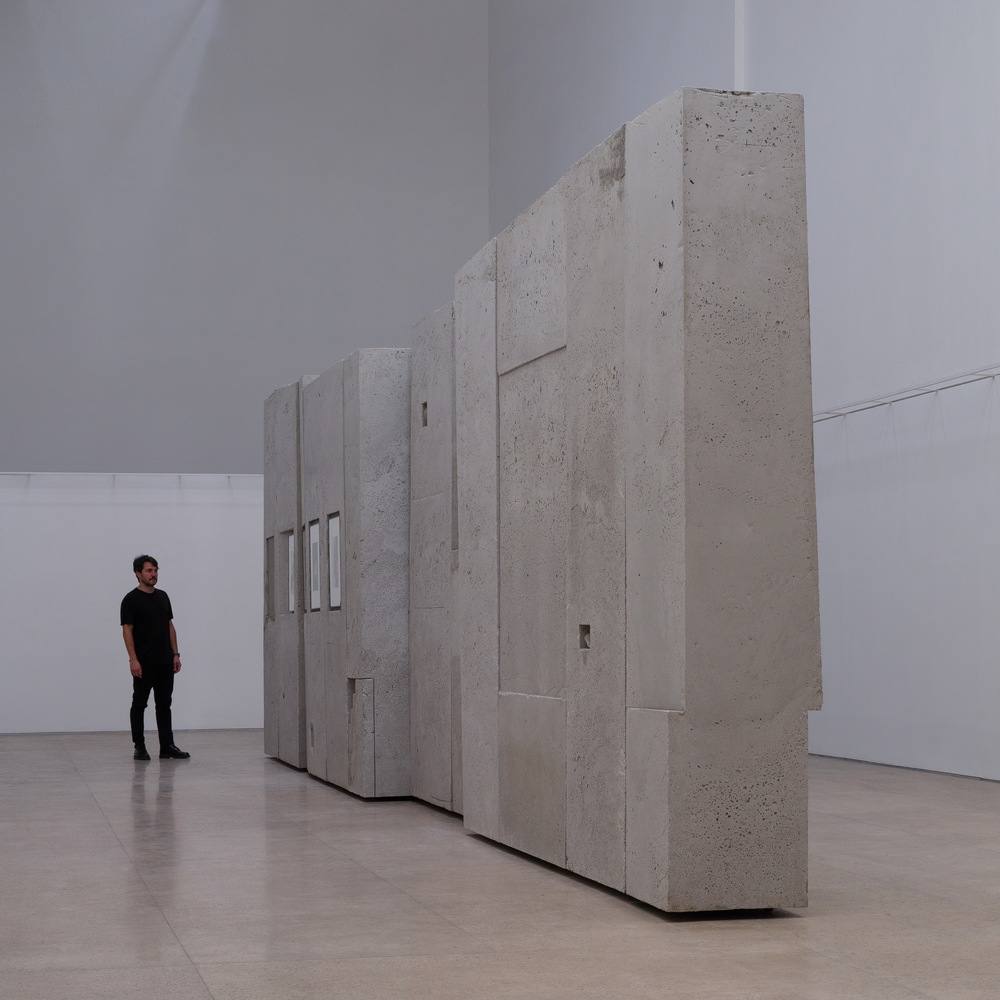
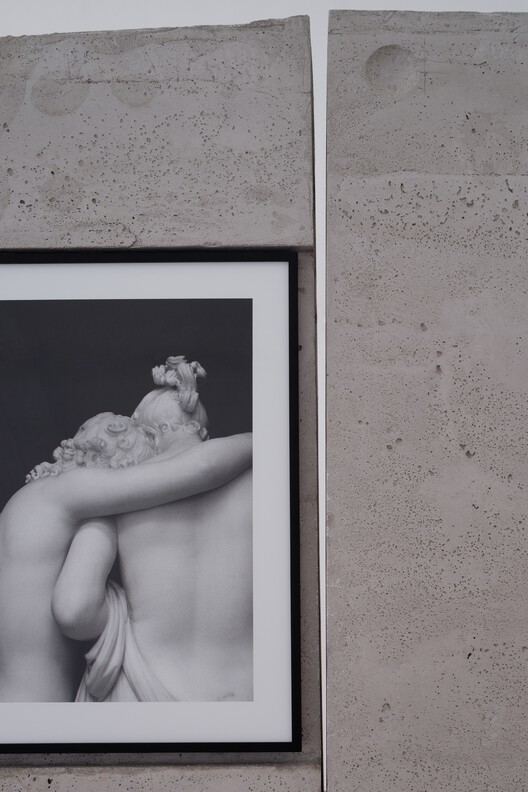
The project aims to design a wall that functions not only as a support for the installation but also as part of the work along with the photographs.
该项目旨在设计一面墙,它不仅是一个悬挂装置,还能与照片共同构成作品的一部分。
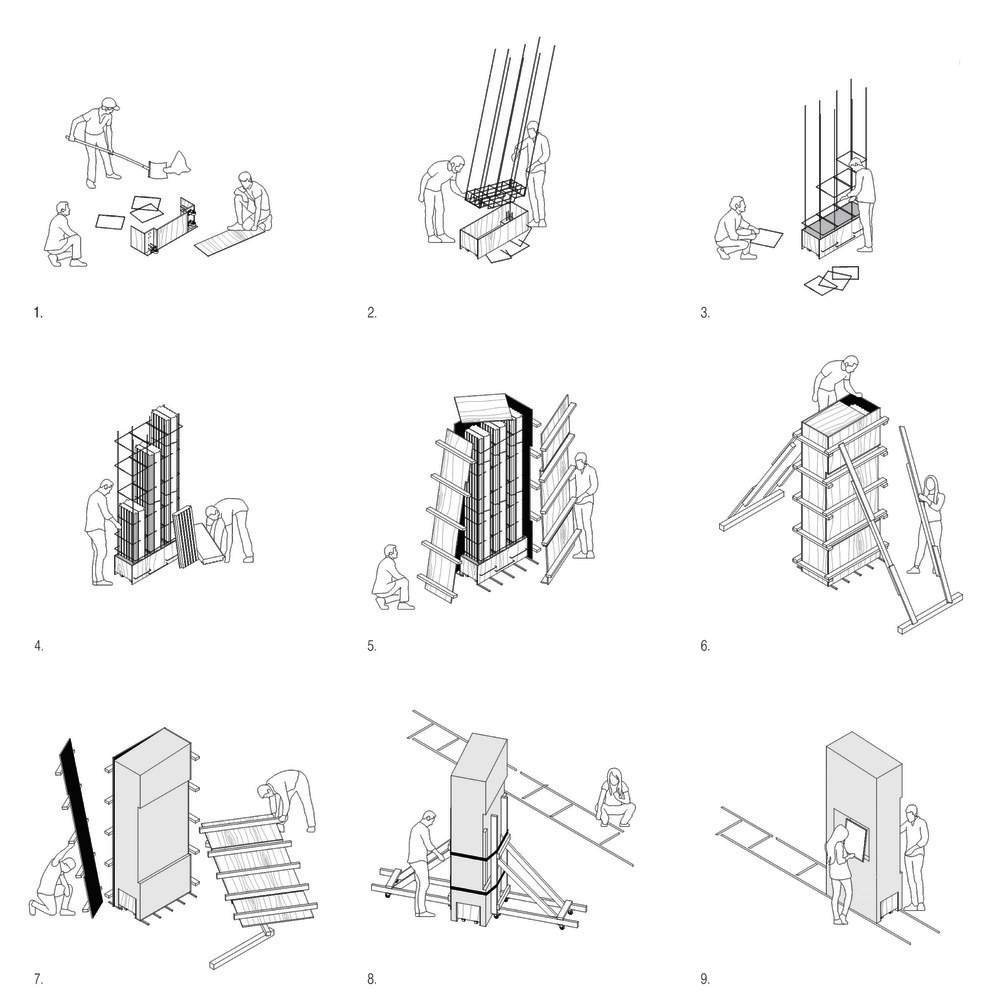
Assembly schematic
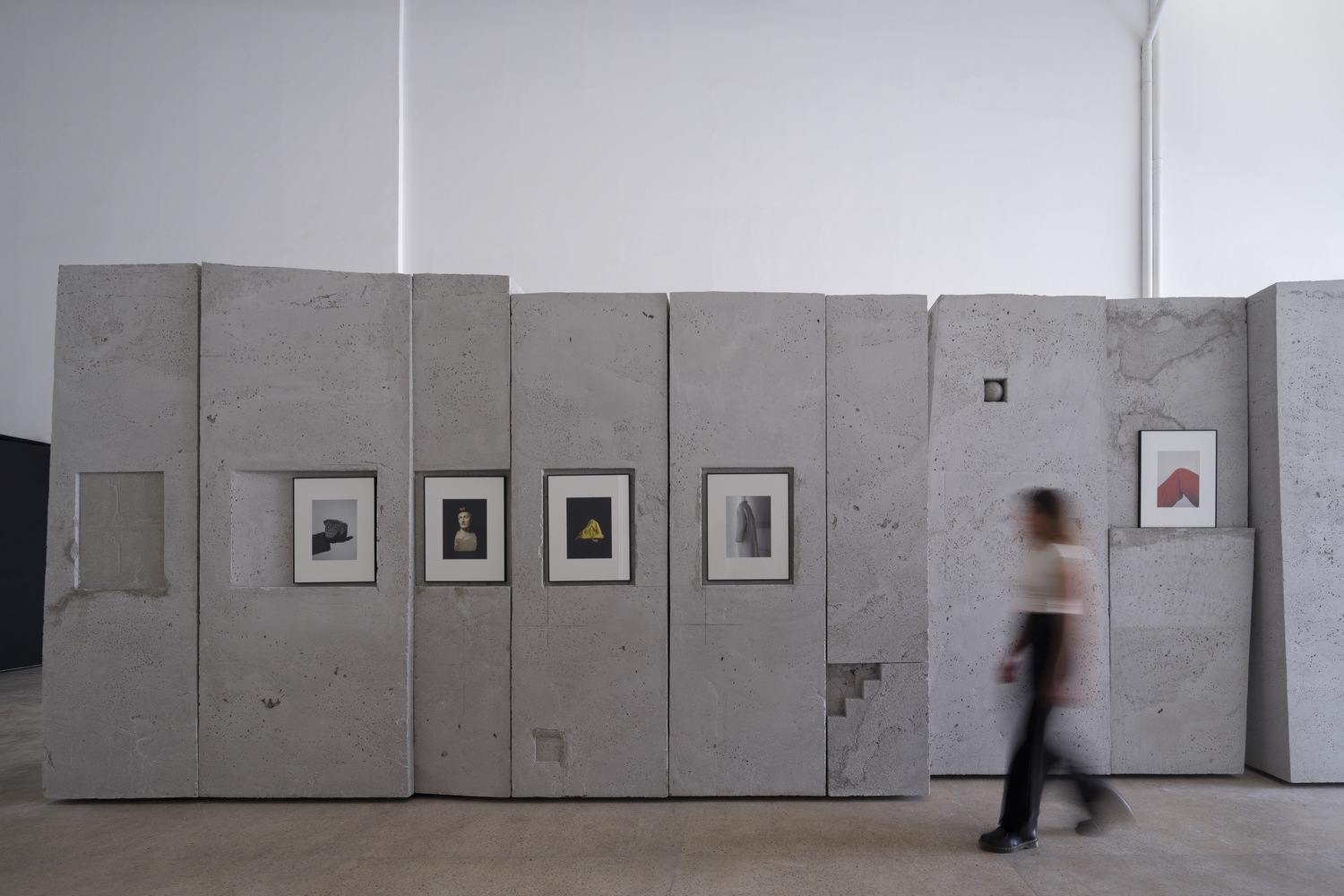
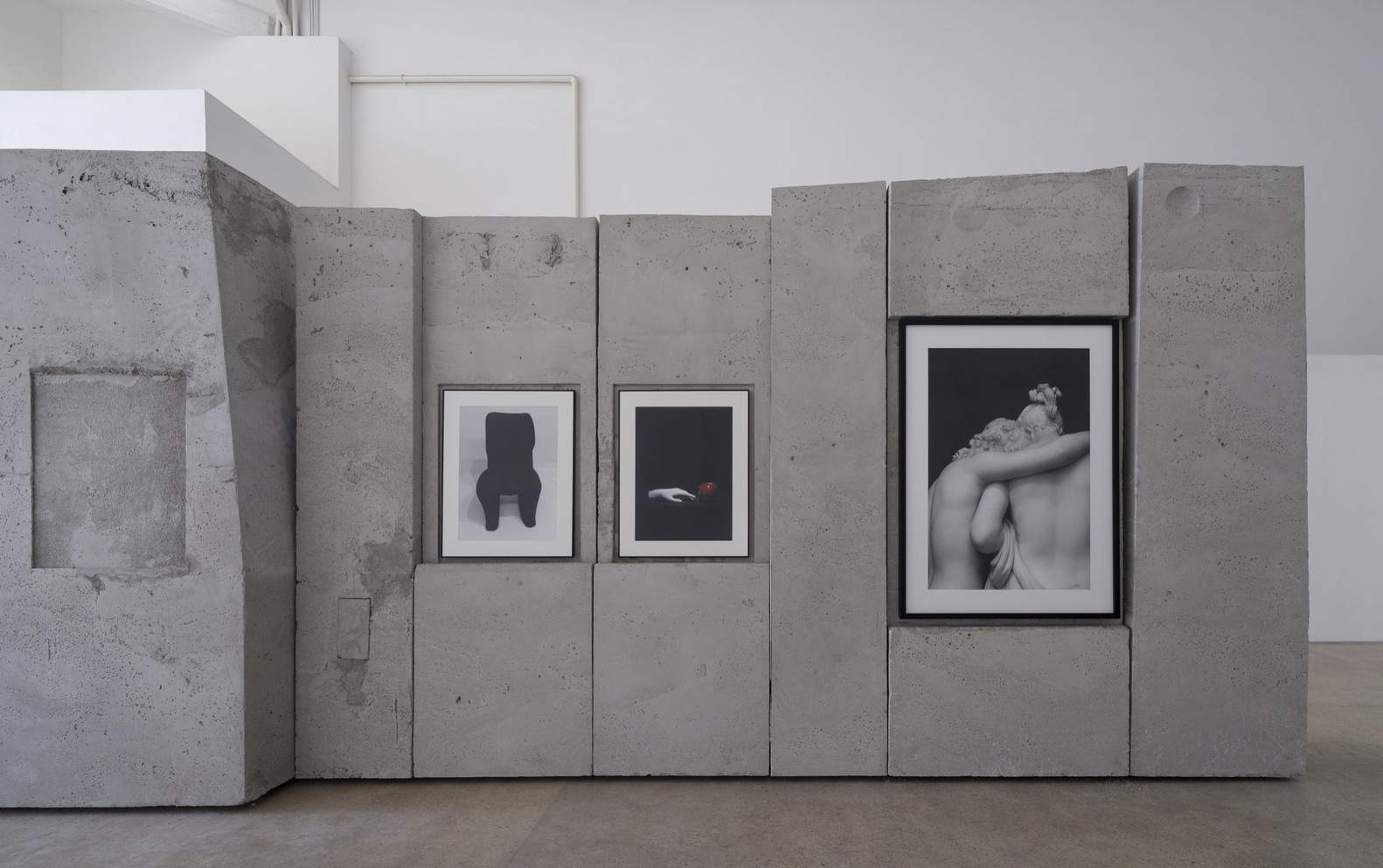
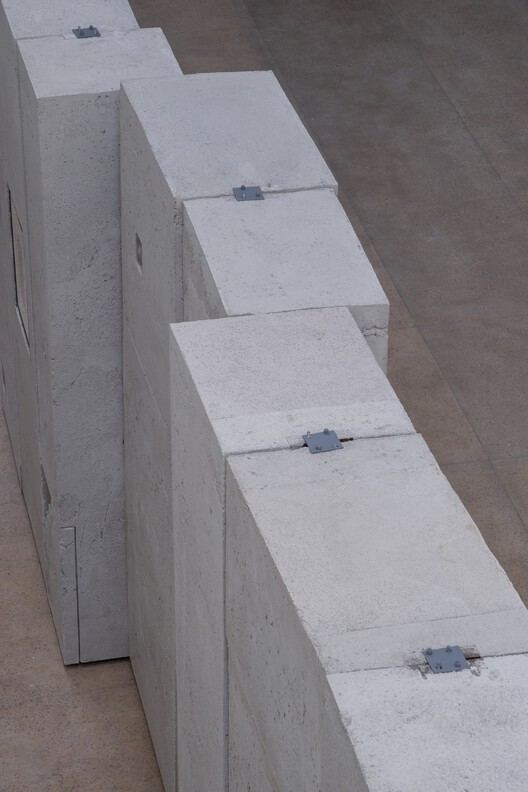
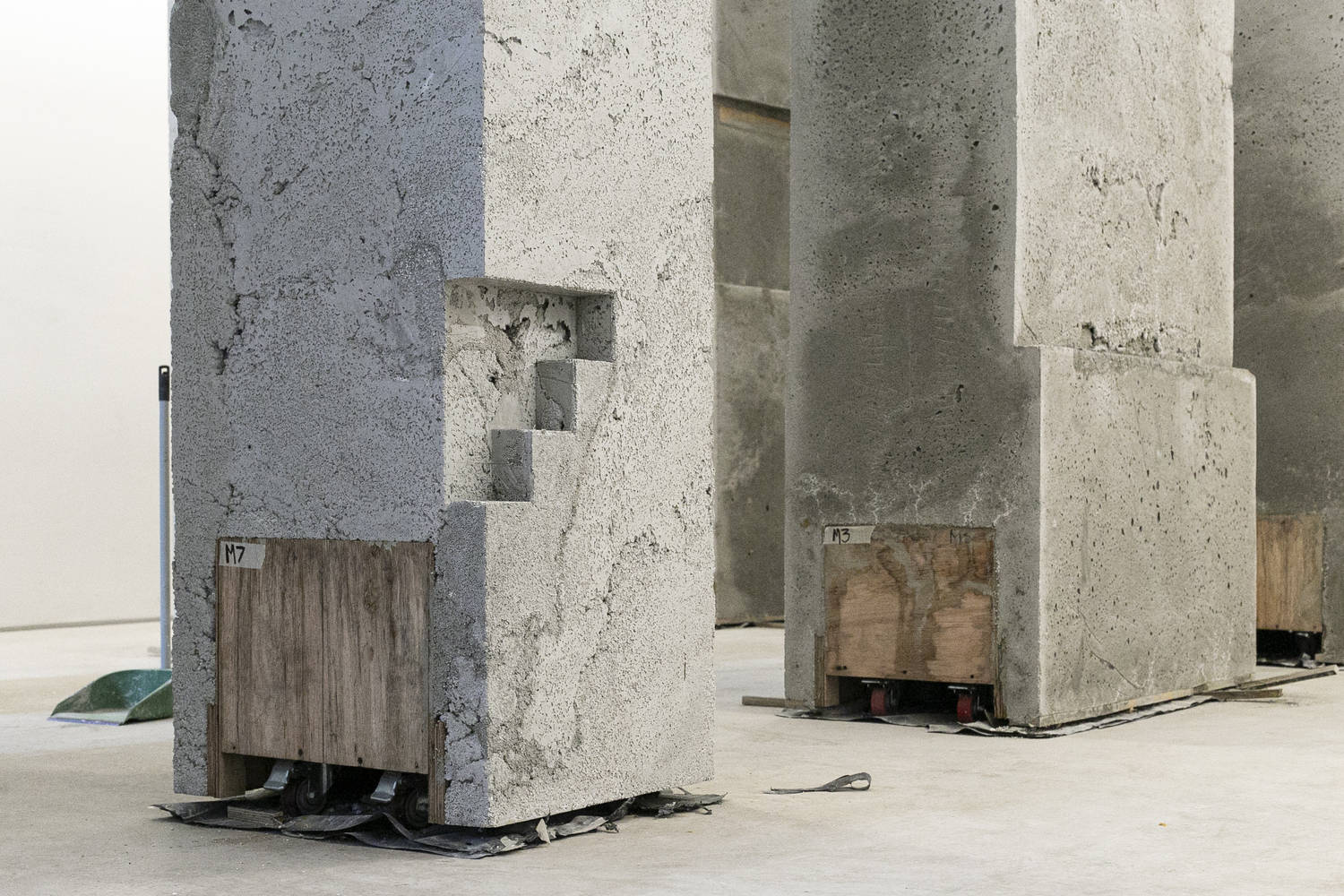
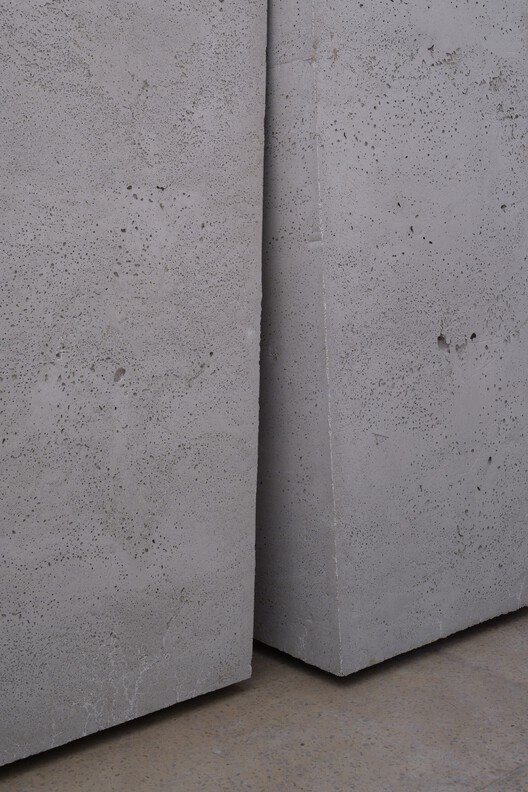
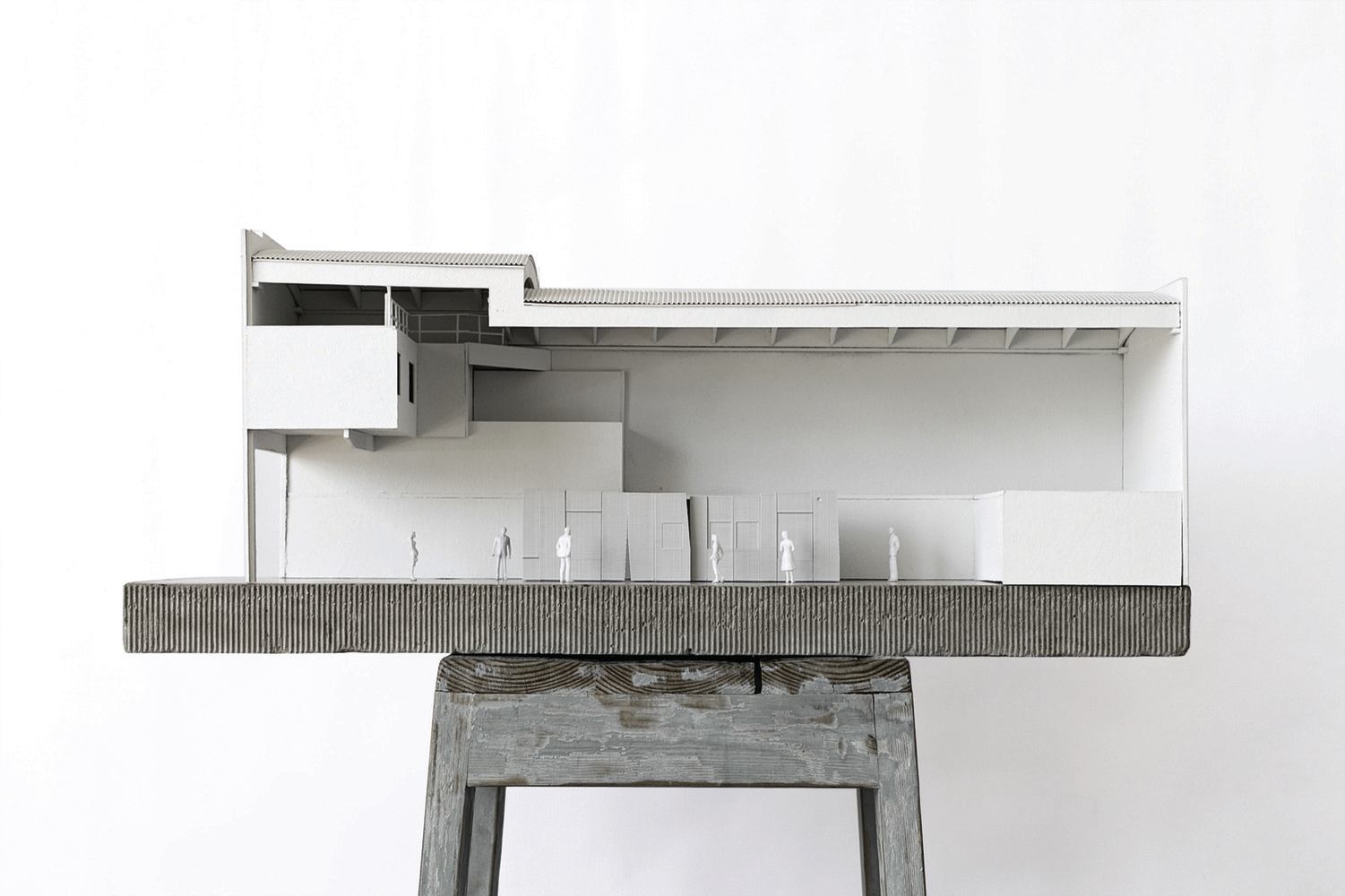
Twelve prefabricated, weight-reduced concrete components with three different modulations are neatly arranged to form a fractured wall, reaching a final extended dimension of 10.50 meters long and 3.10 meters high, intended to prompt reflection on the act of displaying images.
十二块经减重处理、具有三种不同调制的混凝土构件整齐排列,塑造出一面残缺的墙体,其最终延伸尺寸为长 10.50 米、高 3.10 米,旨在引发人们对图像展示行为的思考。
© Javier Agustín Rojas
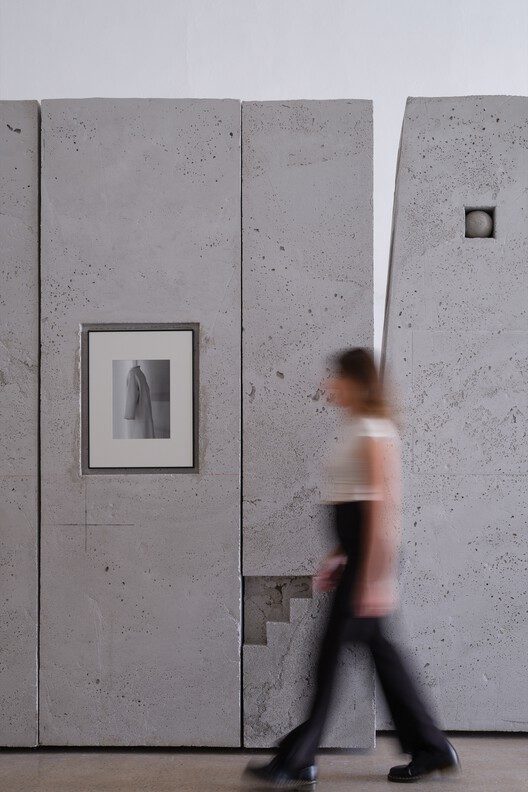
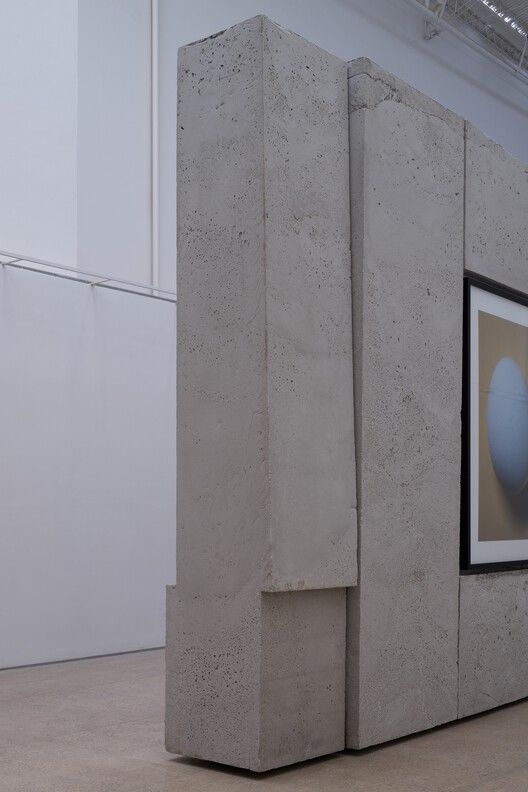
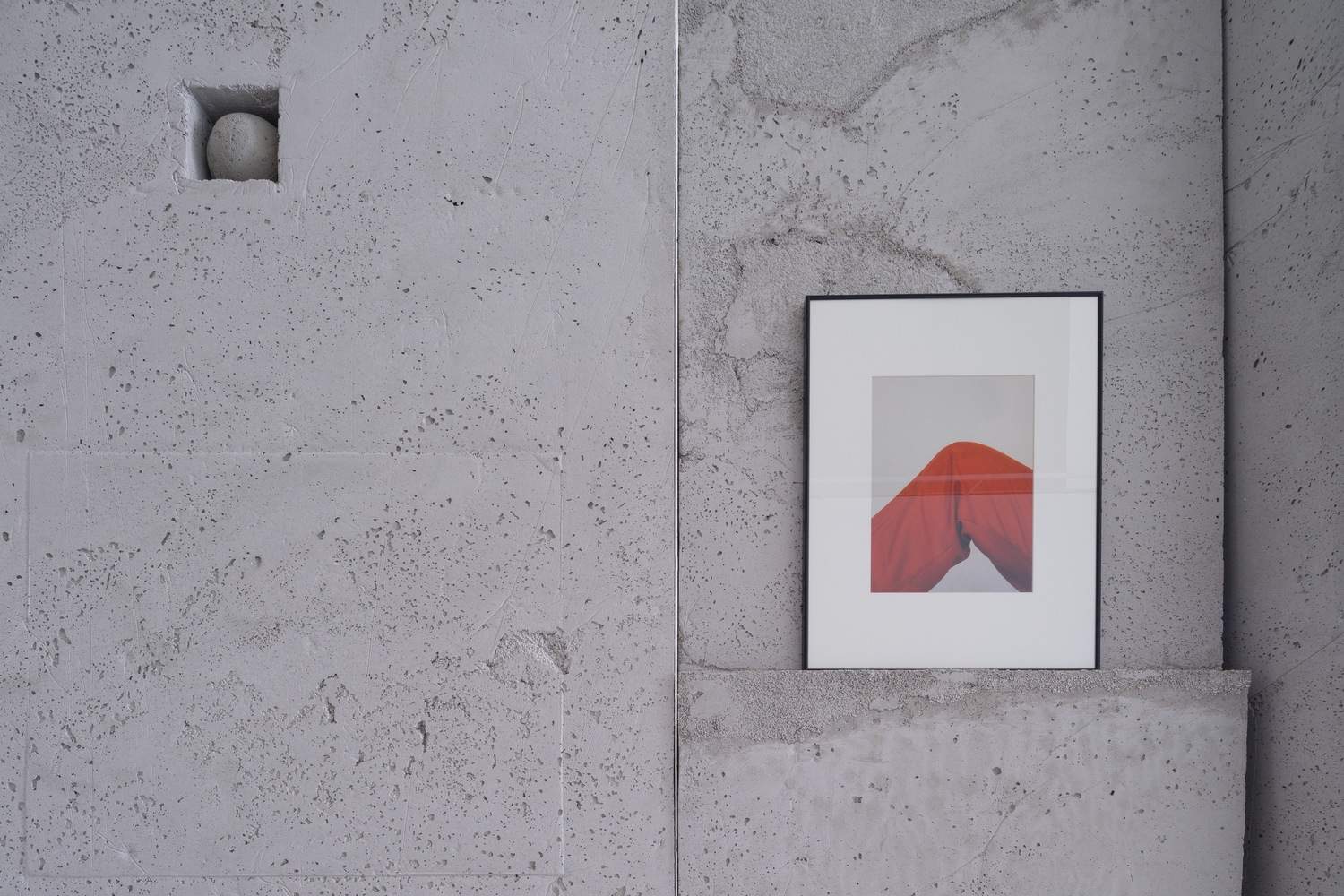
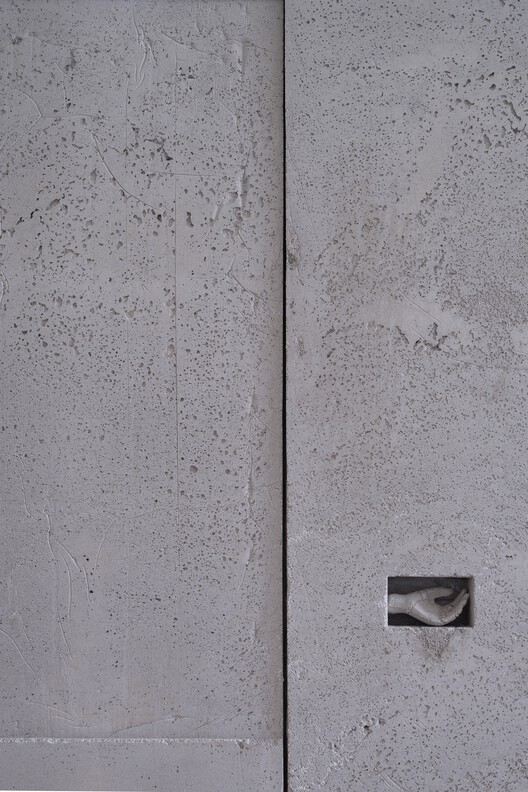
The uniqueness of each component is defined through a series of formal operations that relate to the photographs while responding to each other, seeking a balance between local detail and overall effect. Fractures, inclinations, traces, textures, and symbols are the authentic record of this process.
每块构件的独特性均通过一系列形态操作得以界定,这些操作既与照片建立关联,又使构件间彼此呼应,力求在兼顾局部细节与整体效果的同时达成平衡。断裂处、倾斜角、痕迹、纹理以及符号,皆是这一过程的真实记录。
Cortesía de MATER
Cortesía de MATER
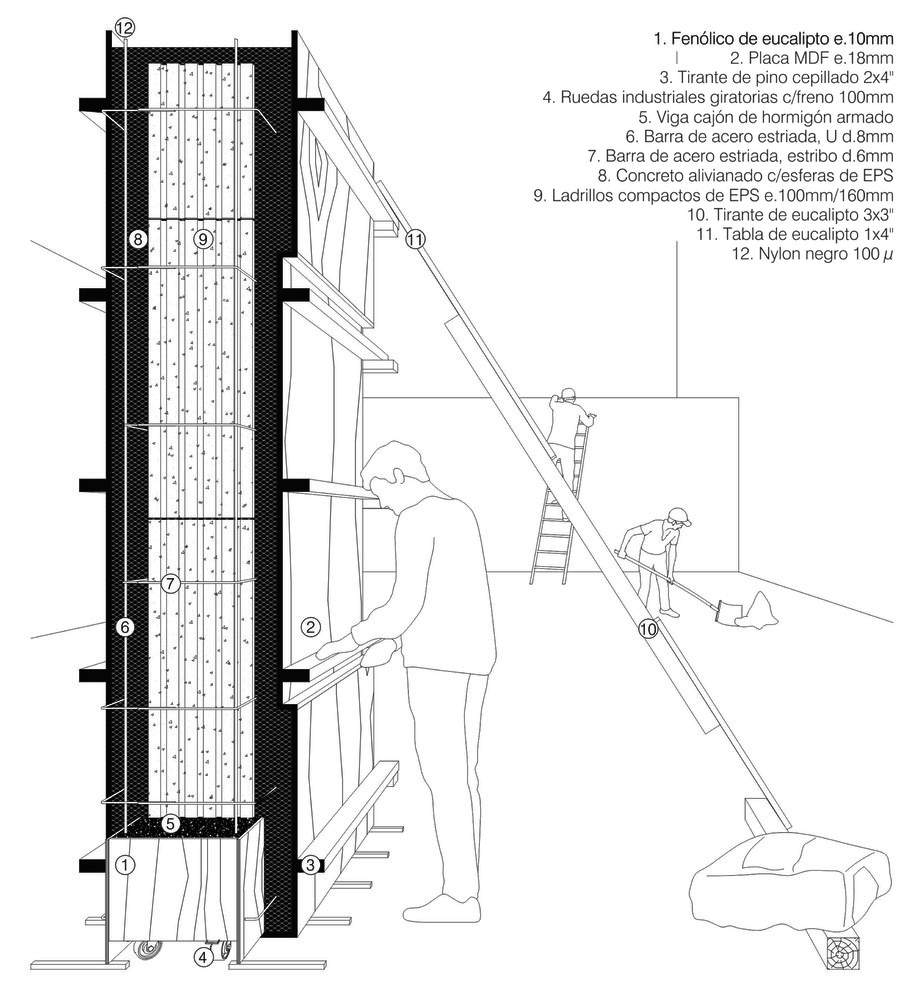
Detail drawing
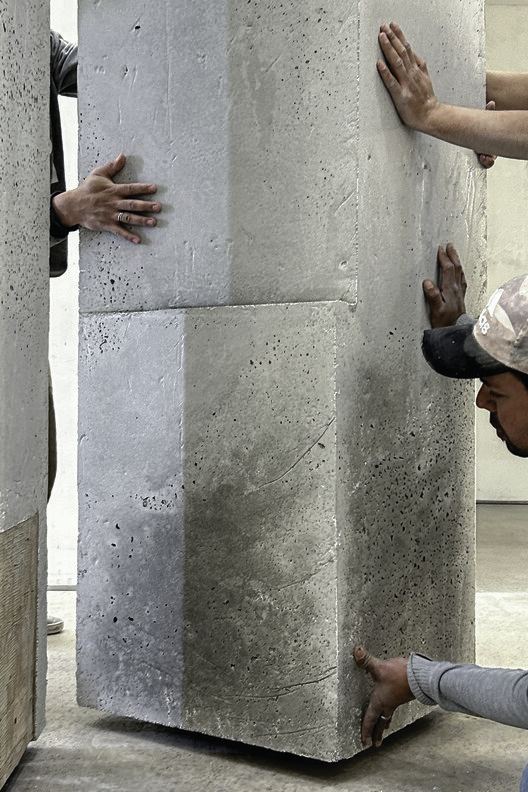
The stability of the components is ensured by a reinforced concrete box acting as a beam, which redistributes the load onto four swivel wheels. This box also adds extra weight to the base, lowering the center of gravity of the components to the ground, allowing for safe movement of the elements and offering more possibilities for future spatial arrangements of the installation.
构件的稳定性由一个作为横梁的钢筋混凝土箱体来确保,该箱体将荷载重新分配至四个旋转轮上。同样,箱体也为基座增加了额外重量,使构件重心下移至地面,从而确保各元素能够安全移动,为未来装置的空间布局提供了更多想象空间。
© Javier Agustín Rojas
© Javier Agustín Rojas
The materials forming the installation were not chosen arbitrarily but were carefully selected based on the three priority requirements: low cost, lightness, and plasticity. Four prototypes were developed before defining the ideal characteristics such as consistency, stability, and surface finish, which were also used to explore other design and formal possibilities.
构成该装置的材料并非随意选择,而是基于满足低成本、轻量化及可塑性的三大优先要求而精心挑选。在确定材料的一致性、稳定性和表面光洁度等理想特性之前,共开发了四个原型,这些原型还用于探索设计和形态上的其他可能性。
© Javier Agustín Rojas
Cortesía de MATER
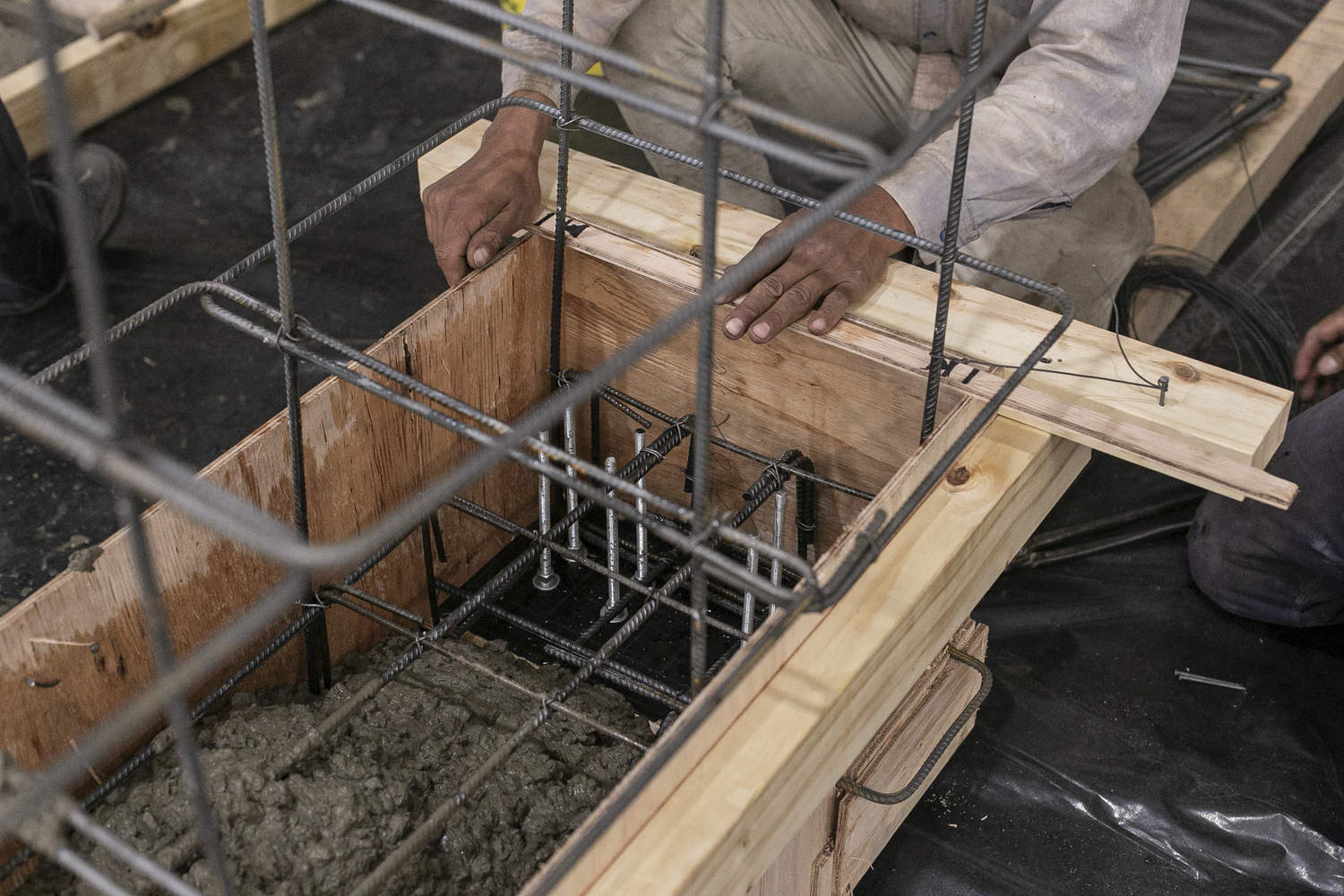
Similar to what is used in the concrete columns, a rebar connects the structural system of the components to the box beam. This not only enhances the dimensional stability of the material but also helps withstand the bending stresses generated during movement. The core of the components consists of compact EPS bricks, reducing their weight by 50%, with an average weight of 600 kg per component.
与混凝土柱中使用的类似,一根钢筋将构件的结构系统与箱形梁连接起来。这一结构不仅增强了材料的尺寸稳定性,还有助于承受因移动而产生的弯曲应力。构件核心由紧凑的 EPS 砖块构成,使重量减轻了 50%,每个构件平均重达 600 公斤。
© Javier Agustín Rojas
The construction of the installation was carried out on-site, transforming the room into a workshop over three weeks.
该装置的建造是在现场完成的,历时三周,将房间转变为一个工作坊。
Cortesía de MATER