深邃的历史对话与当代批判:该项目成功地搭建了一个跨越时空(从万年前的亚马逊祖先基础设施到当代城市矛盾)的叙事框架。它不仅仅是对考古发现的简单展示,而是将其作为批判当代巴西社会环境问题的有力工具。通过双幕剧结构,策展清晰地引导观众从对“和谐共生”历史的追溯,过渡到对当前不平等和生态失衡现状的反思,实现了深远的历史对话与锐利的当代批判的有机结合。
创新的临时性与可持续的装置哲学:装置设计体现了高度的建筑智慧和对可持续性的承诺。特别是第二展厅中,通过巧妙运用木材、石块配重和钢索系统,实现了复杂结构在无永久固定基础下的悬浮与平衡。这种“作用力与反作用力”的结构哲学,不仅呼应了展览主题中对基础设施的重新定义(系统与有机整体),更体现了对展览材料可拆卸、可回收再利用的周到考虑,展现了临时展陈设计中的高阶技术与伦理实践。
对“基础设施”概念的本体论重塑:项目最精髓之处在于对“基础设施”(Infrastructure)概念的本体论挖掘与重塑。它将“基础设施”的理解从单纯的工程系统提升至“栖居方式”(strutura)和“有机整体”(systēma)的层面,融合了技术知识、环境适应与社会结构。这种对现有遗产的价值挖掘,而非简单复原,为当代城市发展提供了新的视角:即在承认现有复杂且不平等遗产的基础上,寻求学习与行动的可能性,激发对“如何共存”的深度思考。
The 19th Venice Biennale Brazilian Pavilion "(RE)Invention" reflects on recent archaeological discoveries of ancestral infrastructures in the Amazon region, aiming to examine the social-environmental contradictions and current status of contemporary cities. Presented in a two-act structure, (Re)Invention builds a narrative that spans time, space, and territory.
第 19 届威尼斯双年展巴西馆 “(RE)Invention”对亚马逊地区近期祖先基础设施考古发现进行反思,旨在审视当代城市的社会环境矛盾与现状。项目以双幕剧形式呈现,(再)发明构建了一个跨越时空与地域的叙事。
© Federico Cairoli
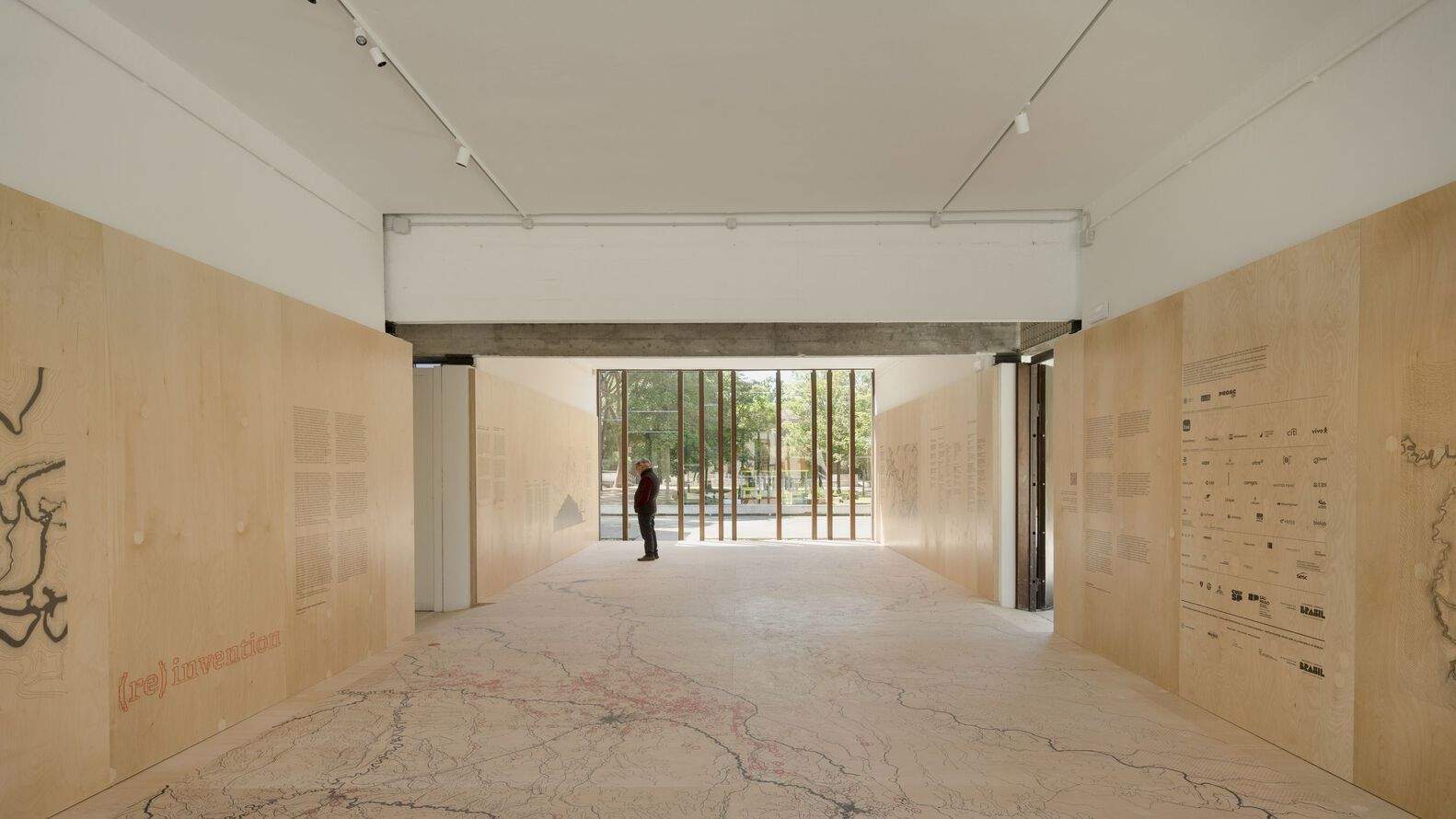
The first act occupies the smaller exhibition room of the Brazilian Pavilion, inviting us to rethink the true antiquity of the Brazilian "forest habitat" based on recent archaeological research in the Middle Amazon region, by narrating the story of ancestral Brazil. For a long period spanning since the beginning of the Holocene, about ten thousand years ago, Indigenous peoples occupied the South American lowlands, shaping the surrounding landscape, creating complex infrastructures that combined technical knowledge with environmental adaptation strategies. Thus, the occupation history of this region is as ancient as that of other Indigenous peoples. People used the earth to build mounds, earthworks, retaining walls, and large structures capable of housing thousands of inhabitants. This significant anthropogenic modification resulting from this occupation allowed for adaptation to nature and created new landscapes. Therefore, the Amazon rainforest can be seen as a product of the harmonious coexistence between humans and nature.
首幕占据巴西馆最小展厅,通过讲述祖先巴西的故事,邀请我们基于中亚马逊地区近期考古研究,重新思考巴西“森林栖居地”的真实年代。约一万年前,自全新世开始以来的漫长岁月里,原住民占据了南美洲低地,塑造了周边的景观,创造出融合技术知识与环境适应策略的复杂基础设施。因此,这片区域的占领历史与其他原住民一样古老。人们利用土壤筑起堤坝、填土、挡土墙和大型建筑,以容纳数千居民。这一占领行为所带来的显著人为改造,实现了对自然的适应并创造了新的景观。因此,亚马逊雨林可视为人类与自然和谐共生的产物。
© Federico Cairoli
The second act, which occupies the largest room of the Brazilian Pavilion, aims to propose design strategies that challenge contemporary Brazilian daily life, seeking social equity and ecological balance. Brazil possesses an extraordinary wealth composed of natural and urban heritage, a product of a vision of development and cultural emancipation. Therefore, the project focuses on recognizing and valuing design strategies and operations that are "contained" within the existing ingenious production, inheritance, and appropriation. Our "inherited infrastructure" is complex yet unequal, functional yet limited. In this context, the project does not aim to restore the image or aesthetic principles of past exemplary projects, but rather to update the question, suspending it to examine contradictions, question the socio-environmental conditions of contemporary cities, and propose possibilities for learning and action for future challenges. What lessons can we draw from this relationship between the built infrastructure heritage and the natural heritage regarding relevance and significance?
次幕占据巴西馆最大展厅,旨在提出设计策略,挑战巴西当代日常生活,寻求社会公平与生态平衡。巴西拥有由自然与城市遗产共同构成的非凡财富,这是发展与文化解放愿景的产物。因此,项目聚焦于认可并重视那些“蕴含”于现有精妙生产、继承与挪用之中的设计策略与操作。我们的“继承基础设施”复杂而又不平等,实用却又有限。在此情况下,项目并非旨在恢复过去典范项目的形象或美学原则,而是更新问题,将其置于悬置状态以审视矛盾,质疑当代城市的社会环境条件,并为未来挑战提出学习与行动的可能性。从这种建成基础设施遗产与自然遗产的关系中,我们能汲取哪些关于相关性与重要性的教训?
Floor Plan
平面图
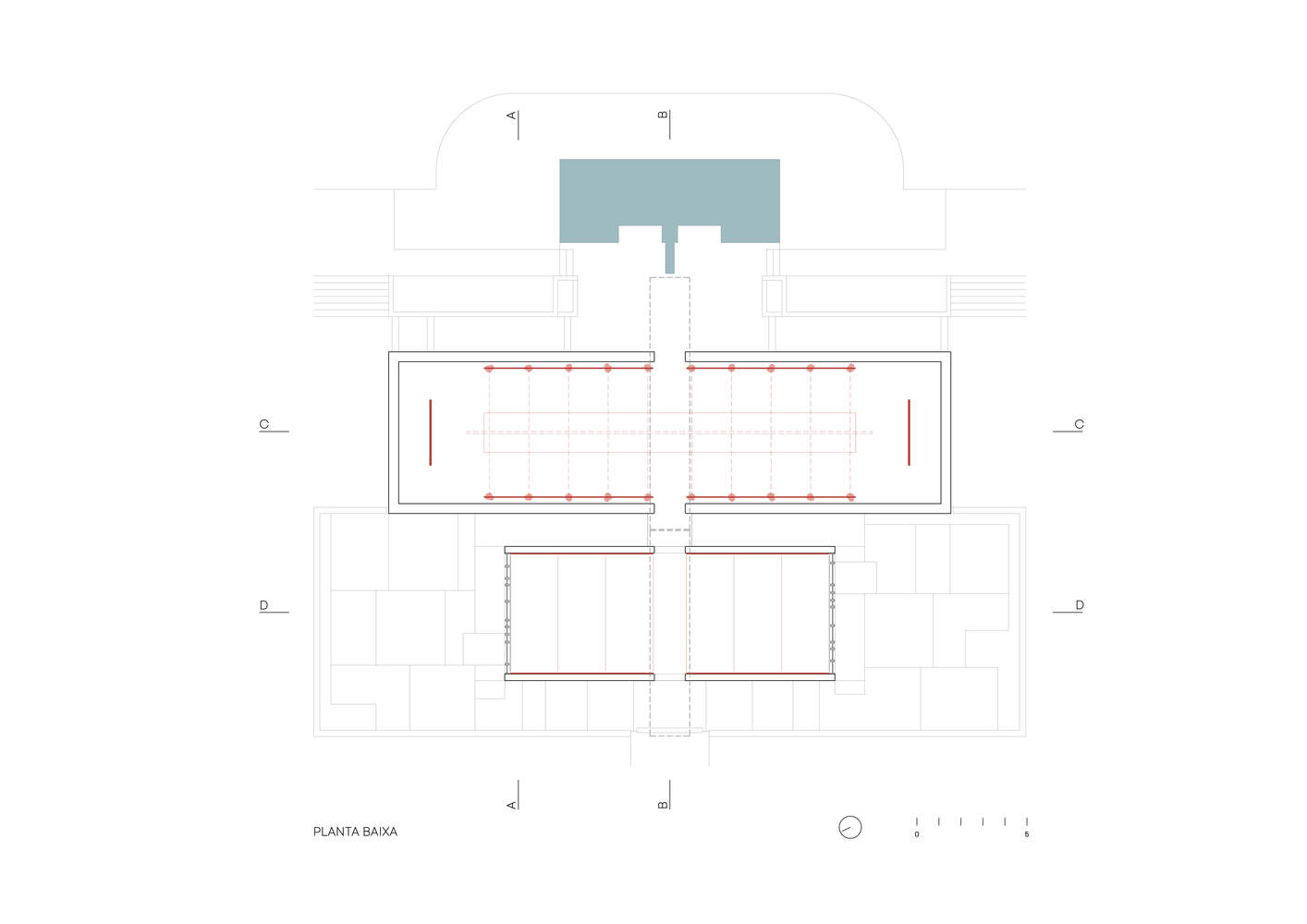
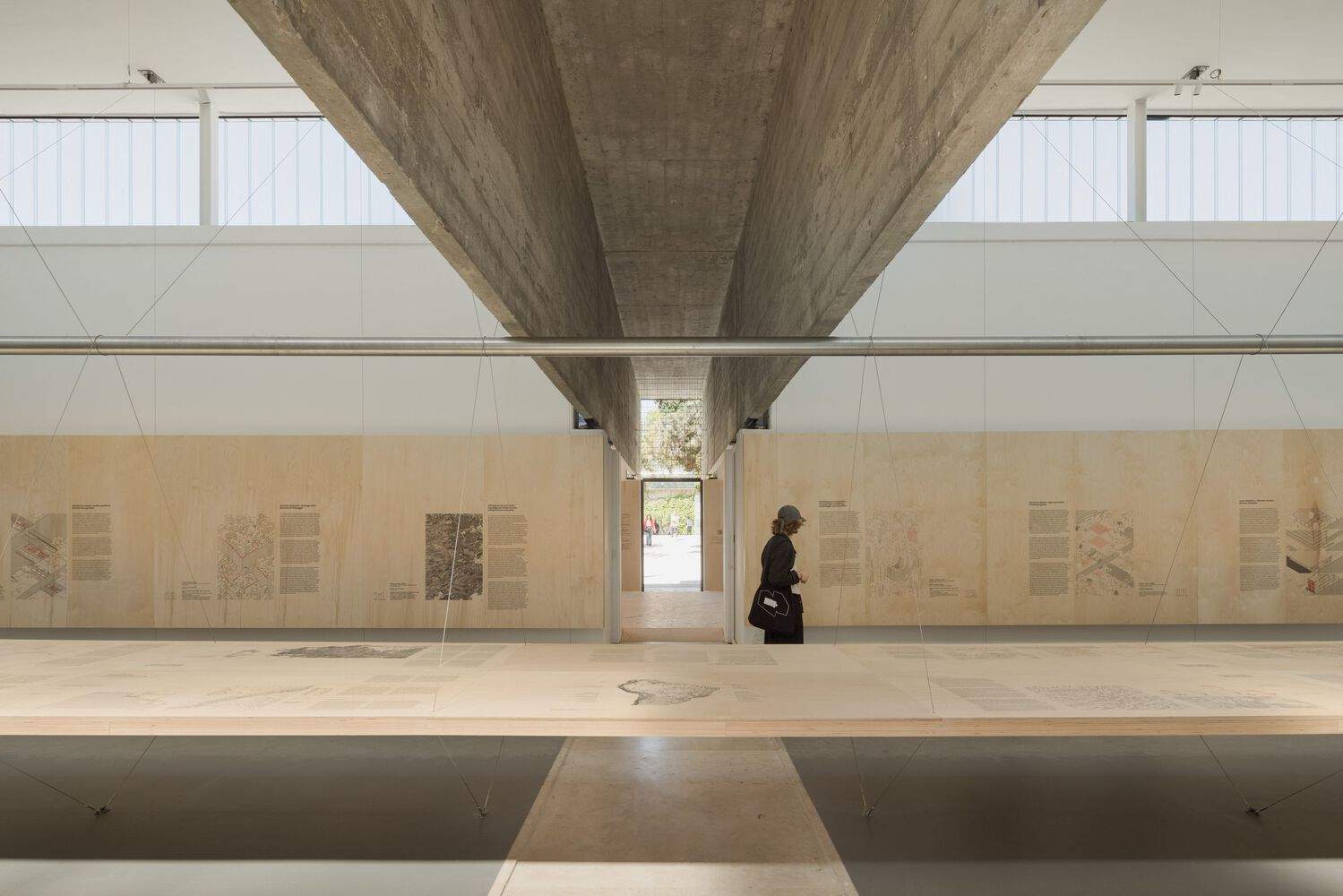
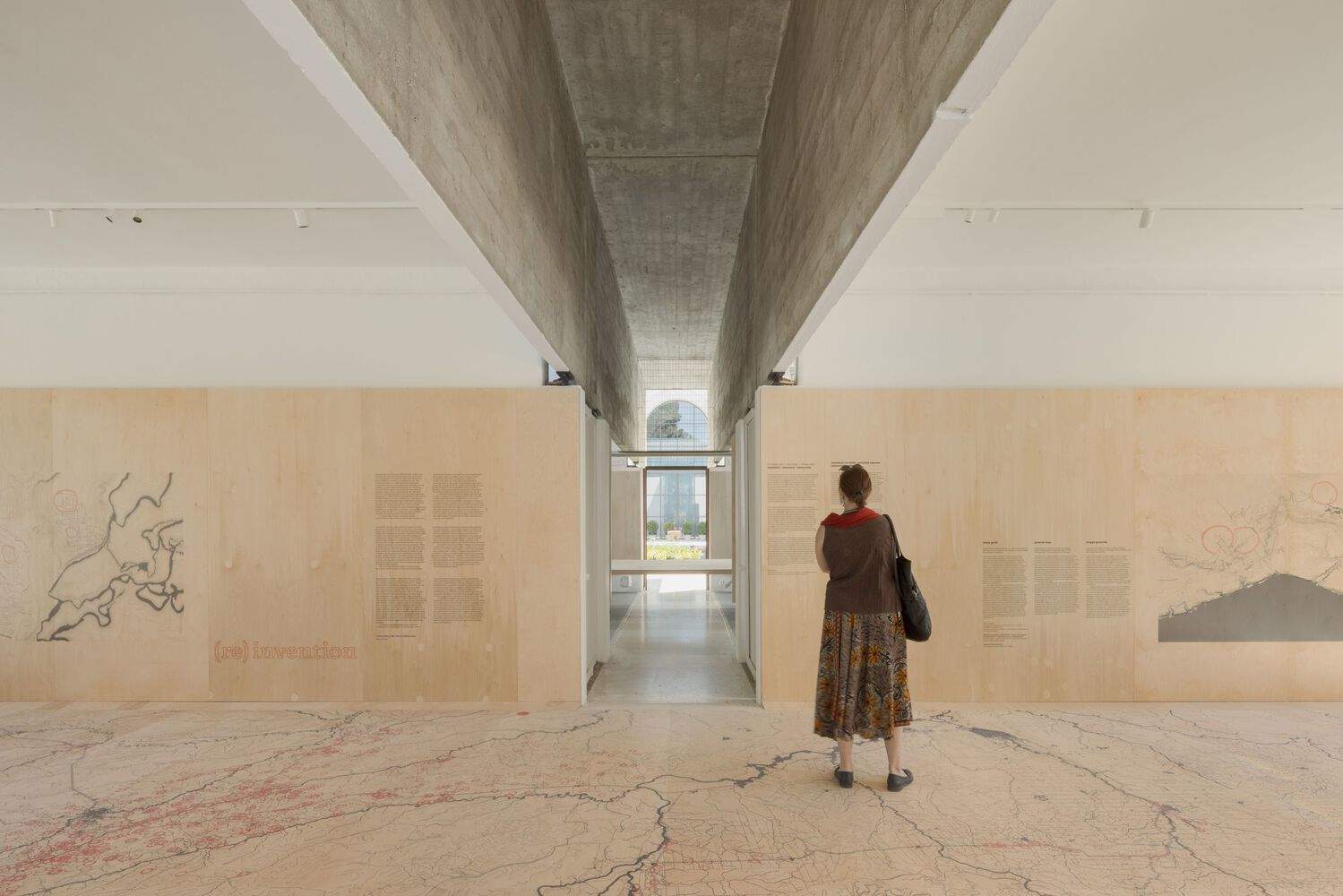
The Brazilian Pavilion in Venice was recently renovated according to the proposal by Arquitetos Associados and Henrique Penha, which was part of the curatorial team's strategy for the 17th International Architecture Exhibition. Designed by architects Henrique Mindlin, Giancarlo Palanti, and Walmir Amaral in 1960, the pavilion features two distinct exhibition halls. The smaller one has large floor-to-ceiling windows opening onto a side terrace. The second hall has no openings at "eye level," with natural light entering through large high windows (made of translucent "U-glass") surrounding the space.
威尼斯巴西馆近期根据 Arquitetos Associados 与 Henrique Penha 的翻新提案进行了修复,该提案是团队策展第 17 届国际建筑展策略的一部分。巴西馆由建筑师 Henrique Mindlin、Giancarlo Palanti 和 Walmir Amaral 于 1960 年设计,包含两个特点鲜明的展厅。较小展厅设有大型落地玻璃窗,面向侧边露台。而第二展厅则“视线高度”无开口,自然光通过环绕空间的大型高窗(由半透明“U 型玻璃”制成)进入室内。
© Federico Cairoli
© Federico Cairoli
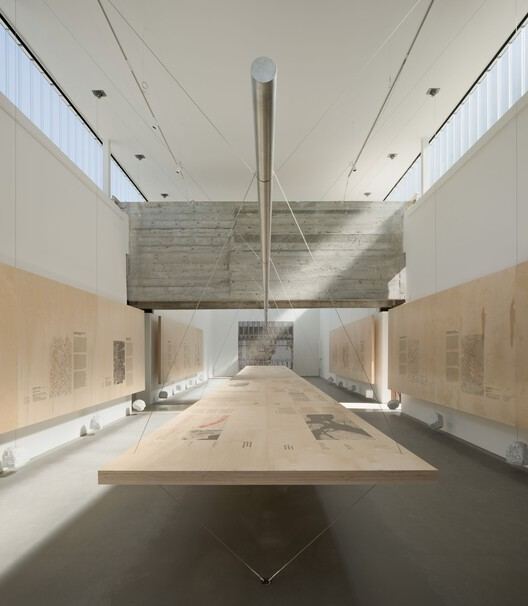
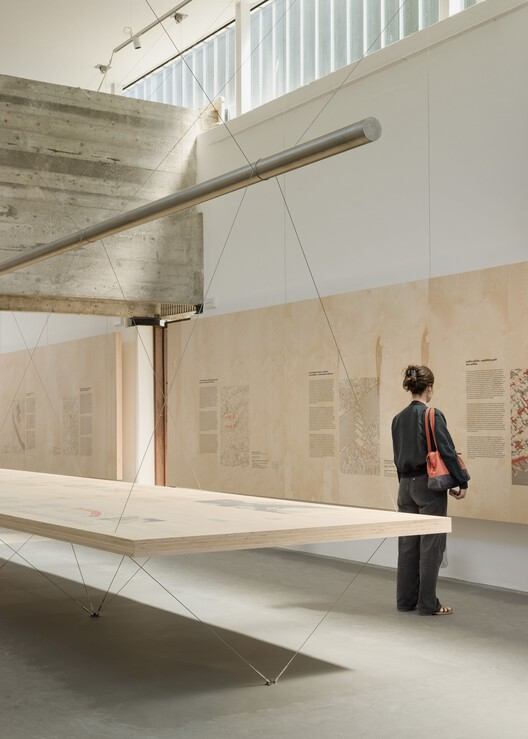
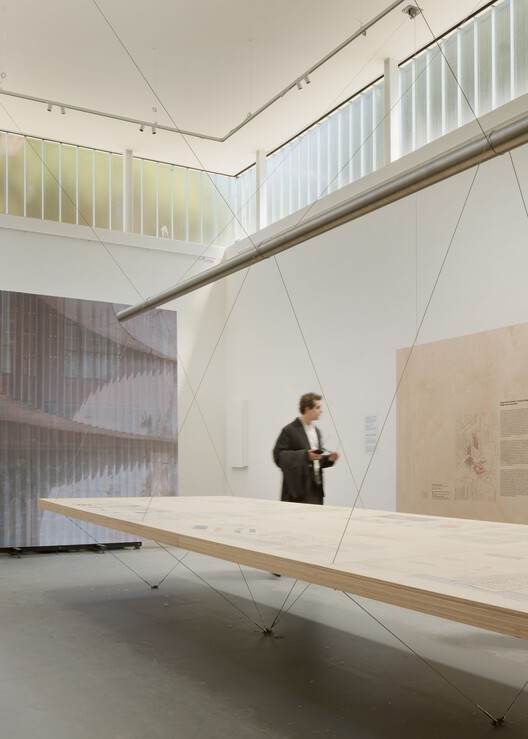
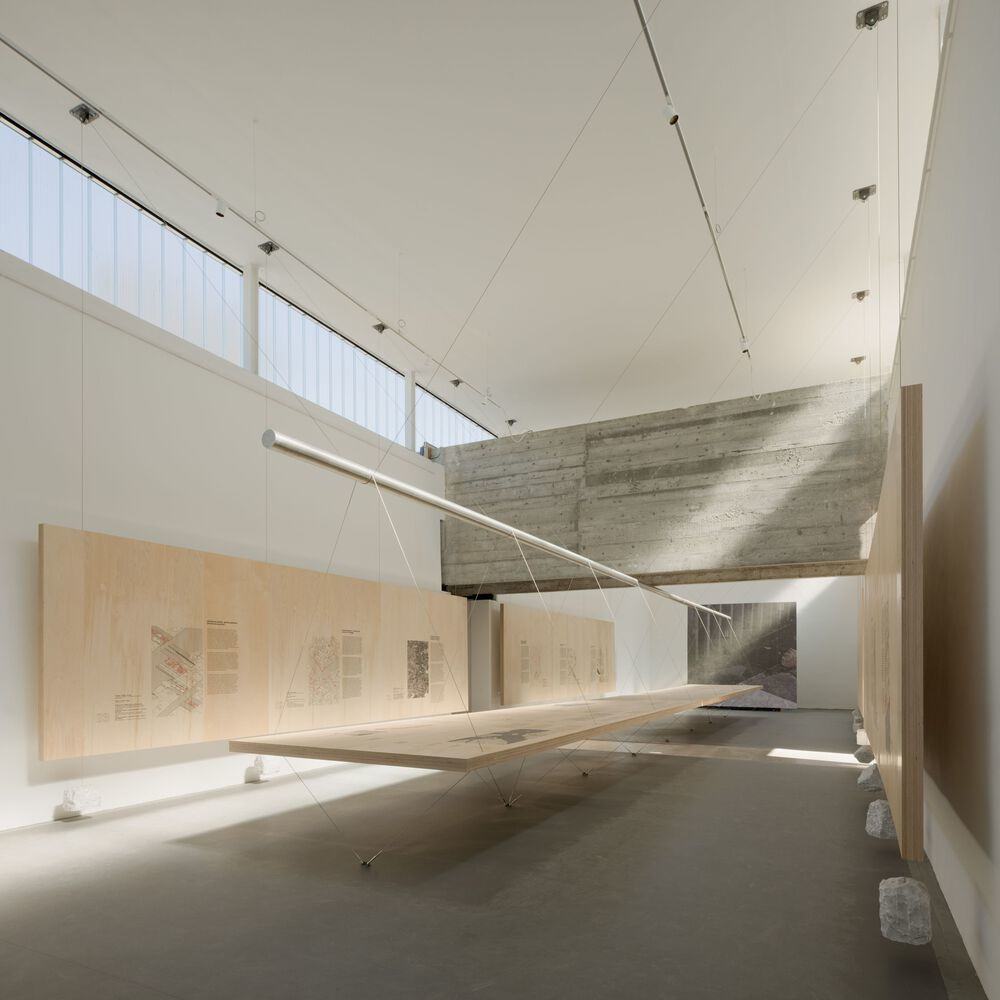
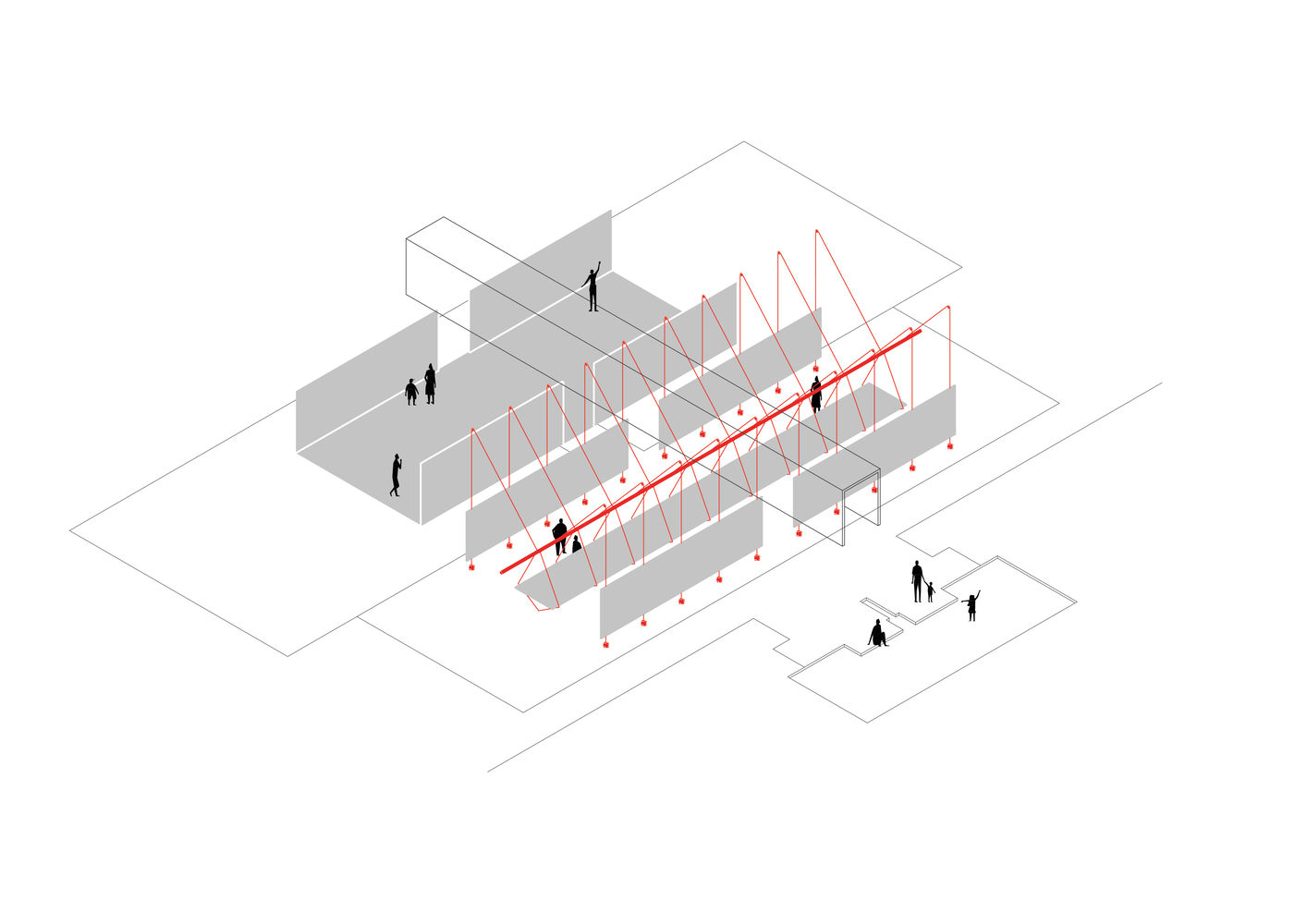
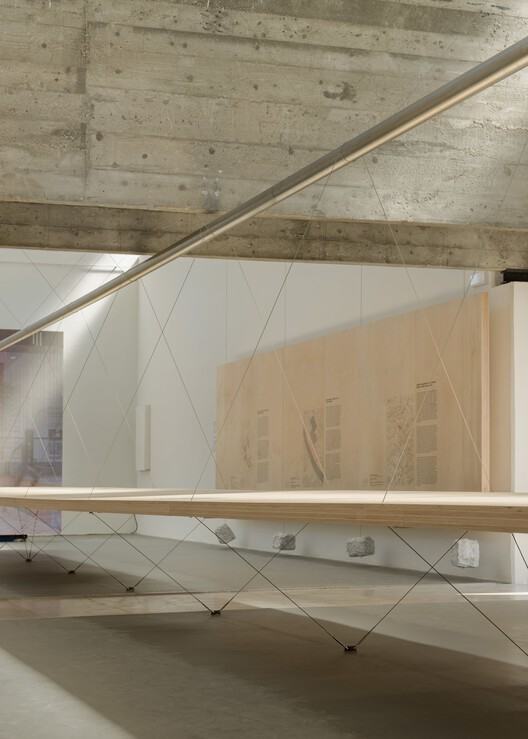
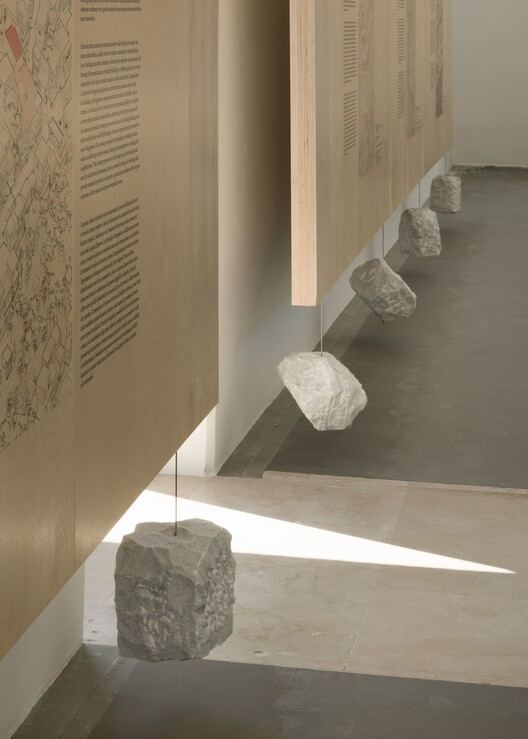
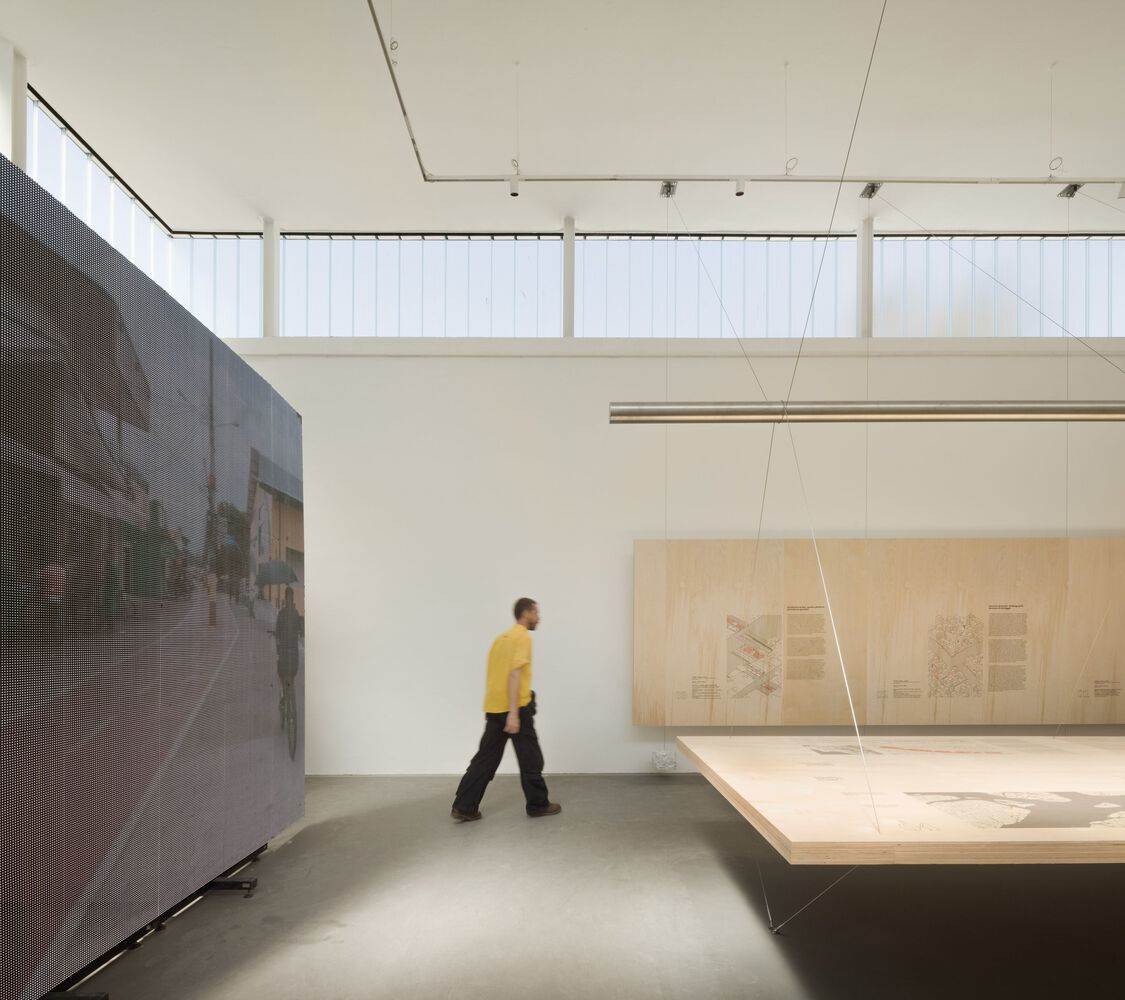
Exhibition installation concept. The exhibition spaces were designed by the curatorial team using minimalist elements, utilizing the structure of the Brazilian Pavilion as support to reconfigure the interior spaces. In the first hall (First Act), all elements of the installation are placed on the floor. In the second hall (Second Act), the installation is constructed from wooden panels, stones used as counterweights, and steel cables, forming a system maintained in suspension and stability by forces and counter-forces. This way, the installation materials can be easily reassembled or recycled after the exhibition.
展览装置概念。展览空间由策展团队设计,采用极简元素,利用巴西馆结构作为支撑,重新配置内部空间。在第一展厅(首幕),装置所有元素均置于地面。在第二展厅(次幕),装置由木质面板、作为配重的石块和钢索构建而成,形成一个由作用力与反作用力维持悬浮与稳定的系统。如此一来,展览结束后,装置材料可轻松重新组装或回收再利用。
© Federico Cairoli
© Federico Cairoli
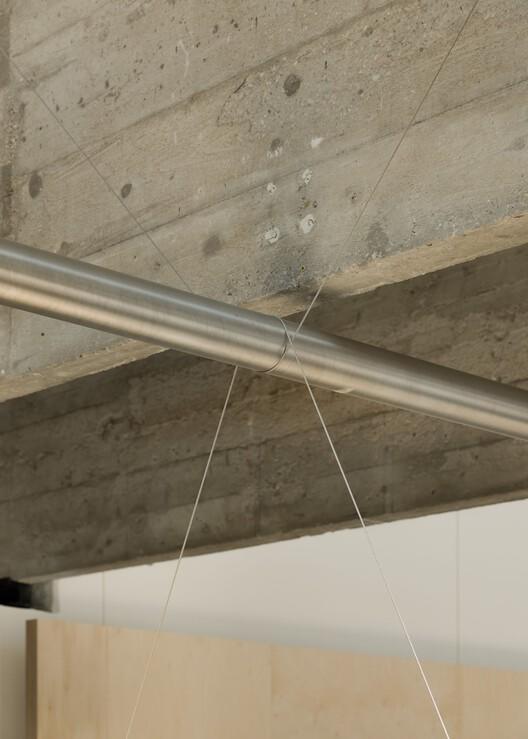
In the second hall, the exhibition system consists of horizontal panels and plywood tables made of wood from regenerative forests, interconnected by taut steel cables. The load balance within the system is achieved by marble blocks acting as counterweights, suspended from pulleys fixed to the ceiling and cables looped around rings fixed to the floor. Each set of panels is secured by two steel cables for load transfer, which interweave at a central point of the system with a circular metal tube, dispersing tension and ensuring structural stability. The tension in the lower cables originates from the vertical reaction force against the rings, causing the tables to balance the horizontal forces through compression. The tables and suspended panels together create a new structure that reconfigures the hall's space. The Carrara marble used for the counterweights was "chipped" by a local sculptor from large marble blocks into smaller pieces, with a maximum weight of 25 kg each.
第二展厅的展览系统由水平面板和由再生林木材制成的胶合板桌组成,通过拉紧的钢索相互连接。系统内负载的平衡由悬挂在固定于天花板的滑轮和固定于地面的环上的电缆上的大理石块配重实现。每组面板均由两根钢索确保负载传递,钢索在系统中心点与圆形金属管交织,分散张力并确保结构稳定。下层钢索的张力源于对环的垂直反作用力方向,使桌子通过压缩平衡水平力。桌子与悬浮面板共同创造新结构,重新配置了展厅空间。用于配重的卡拉拉大理石由当地雕塑家将大块大理石“凿刻”成每块最大重量为25公斤的小块。
© Federico Cairoli
The installation design in both halls uses ordinary wood and is based on the idea of reinterpreting the concept of infrastructure: infrastructure as both a way of dwelling (from the Latin *strutura*) and a system (from the Greek *systēma*): an organic whole composed of parts pursuing a balance between culture and nature. The idea of coexistence present in the ancestral history of the Amazon region inspired our debate on existing contemporary urban strategies and the design of an art of action that makes effective use of available resources.
两个展厅的装置设计均采用普通木材,基于重新诠释基础设施概念的理念:基础设施既是栖居方式(源自拉丁语strutura),也是系统(源自希腊语 systēma):一个由各部分组成、追求文化与自然平衡的有机整体。亚马逊地区祖先历史中的共存理念激发了我们对当代城市现有策略的辩论,并设计出有效利用现有资源的行动艺术。
Analysis Diagram
分析图
© Federico Cairoli
© Federico Cairoli
© Federico Cairoli
**Collective Plan** is a group of architects, professors, and researchers with diverse backgrounds and interests who collaborate freely around two common goals: discussing the urban territory as a critical narrative and reflecting on architecture as socio-environmental action. Currently, the Collective Plan is composed of ten members who collaborate in different ways: André Velloso (ARQBR), Carolina Pescatori (FAU-Unb), Cauê Capillé (FAU-UFRJ), Daniel Mangabeira (BLOCO Arquitetos), Eder Alencar (ARQBR), Guilherme Lassance (FAU-UFRJ), Henrique Coutinho (BLOCO Arquitetos), Luciana Saboia (FAU-Unb), Matheus Seco (BLOCO Arquitetos), and Sérgio Marques (FAU-UFRGS).
Collective Plan 是一个由建筑师、教授和研究人员组成的团体,他们背景各异、兴趣广泛,围绕两个共同目标自由协作:讨论城市地域作为批判性叙事,并反思建筑作为社会环境行动。目前,集体计划由十名成员组成,他们以不同方式相互协作:André Velloso(ARQBR)、Carolina Pescatori(FAU-Unb)、Cauê Capillé(FAU-UFRJ)、Daniel Mangabeira(BLOCO Arquitetos)、Eder Alencar(ARQBR)、Guilherme Lassance(FAU-UFRJ)、Henrique Coutinho(BLOCO Arquitetos)、Luciana Saboia(FAU-Unb)、Matheus Seco(BLOCO Arquitetos)和 Sérgio Marques(FAU-UFRGS)。
© Federico Cairoli