城市肌理的再生与公共活力的注入:该项目成功地将一个位于城市化区域的后工业遗址——具有1400多年历史的采石场,转化为一个充满活力的城市文化与艺术中心。其核心亮点在于对工业遗产的社会经济、生态和文化维度的全面激活。它不仅是对场地地质奇观的尊重与保护,更是通过功能重塑,使其深度融入城市日常节奏,成为服务于更年轻化、更具活力的现代公共节点的典范,体现了对城市更新中历史遗迹再利用的前瞻性思考。
最小干预下的空间叙事与体验重塑:设计策略上,项目坚持“最小干预”原则,巧妙地保留了石窟的原始地质特征,如独特的黄色岩画和蓝绿水体。通过引入精确的交通流线梳理、设置人体尺度停留点,以及创新性地运用编木拱桥结构解决狭小施工面的挑战,实现了工业遗址向“城市客厅”的转型。特别是通过精心设计的灯光(突出黄色岩画)和水路体验(打通一号石窟水体),极大地丰富了参观者的空间感知和文化体验。
多功能复合与结构逻辑的创新应用:项目将三个石窟群落分别赋予了差异化的功能定位——“城市客厅”、“音乐剧场”和“茶歇休闲”,形成功能互补的复合空间体系。精髓在于结构与功能的有机结合:编木拱结构不仅作为连接隧道的屋顶和新结构楼板,还通过不同尺度和密度的变化,在复杂石窟内部构建了清晰的动线关联。这种结构上的“化整为零”和“逻辑呼应”,是应对复杂、脆弱环境的有效设计手法,确保了改造的轻量化与可持续性。
The Huangyan Quarry Revitalization Project represents our sustained attention to the socioeconomic, ecological, and cultural dimensions of post-industrial landscapes. Unlike previous quarry renovations in remote rural areas of Jinyun, the Huangyan Quarry is situated in a more urbanized environment, adjacent to the city center. Consequently, its function is geared towards a younger demographic, transforming it into an active public node integrated into the city's daily rhythm.
黄岩石窟活化利用项目代表着我们对后工业景观的社会经济、生态和文化维度的持续关注。与之前在缙云乡村偏远地区的石宕改造不同,黄岩石窟位于更城市化的环境中,紧邻城区。因此,它的功能更加年轻化,更成为了融入城市日常节奏的活跃公共节点。
Cave No.1 © ZILING WANG
一号石窟 © 王子凌
Cave No.1 © ZILING WANG
一号石窟 © 王子凌
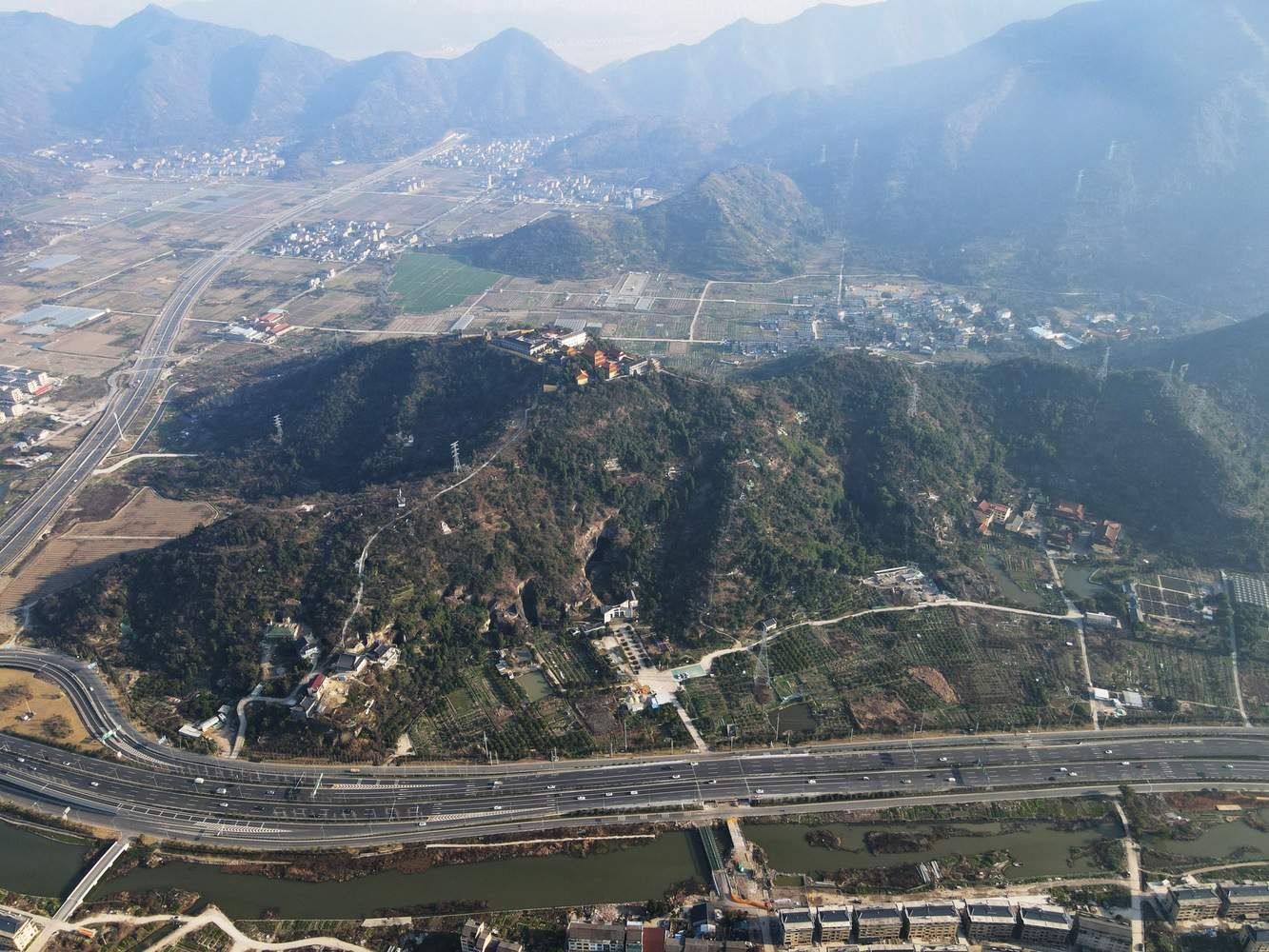
Huangyan District, under the jurisdiction of Taizhou City in Zhejiang Province, is conveniently located on the central gold coast of Zhejiang, 26 kilometers from the airport and 5.3 kilometers from the high-speed rail station. The region boasts abundant forest and mineral resources, holding the "Three Golden Calling Cards" of "Thousand Years of Yongning, Origin of Chinese Oranges, and City of Molds." Large-scale quarrying in the Huangyan area began in the second year of Shangyuan during the Tang Dynasty (675 AD) for the construction of Yongning County and Prefecture cities. After years of continuous quarrying, these spectacular man-made caves, hundreds of meters high, deep, and vast, formed a series of interconnected caverns. Inside the caves, metallic elements seeping from the stone and the water system within the excavated mountain body have created the world's only natural rock painting scenic area and the unique landscapes of the Cave Lake Waterfall and the emerald green pools.
黄岩区,隶属浙江省台州市,位于浙江黄金海岸线中部,距机场 26 公里,距高铁站 5.3 公里,交通便捷。该地区拥有丰富的森林和矿产资源,坐拥“千年永宁、中华橘源、模具之都”三张金名片。黄岩石窟自唐上元二年(公元 675 年)由于永宁县城及府城的建设而开始在此地大规模采石筑城。后经年复一年的采石活动,形成了这些百米高,既深又大的石板仓和几十个洞穴,相环拱而成的壮观的人工洞穴。洞穴内部由于从石头里渗透出的金属元素以及被挖空的山体内的水系,形成了全世界唯一的天然岩画景区和洞庭观瀑,碧绿水潭的独特景观。
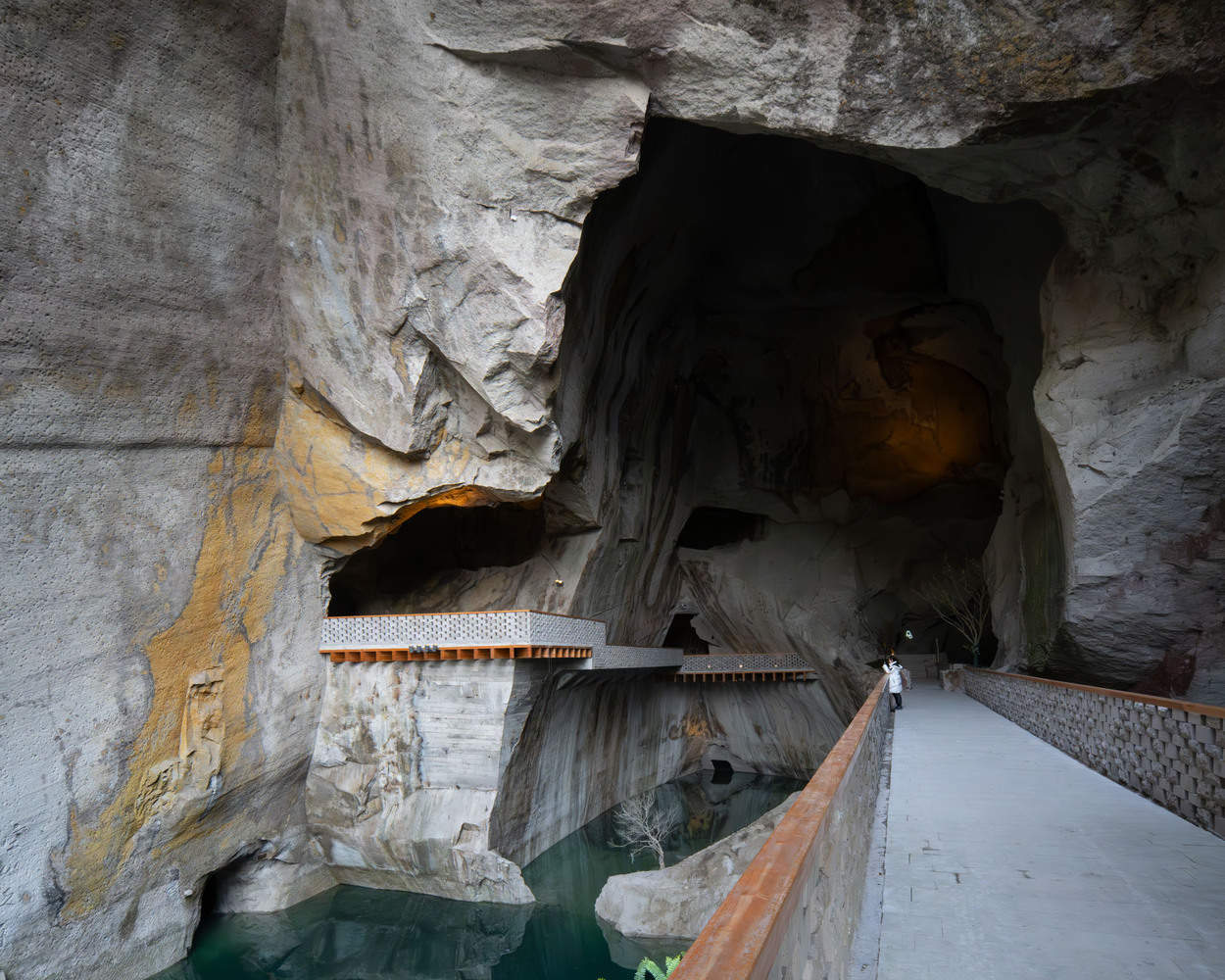
Cave No.1 © ZILING WANG
一号石窟 © 王子凌
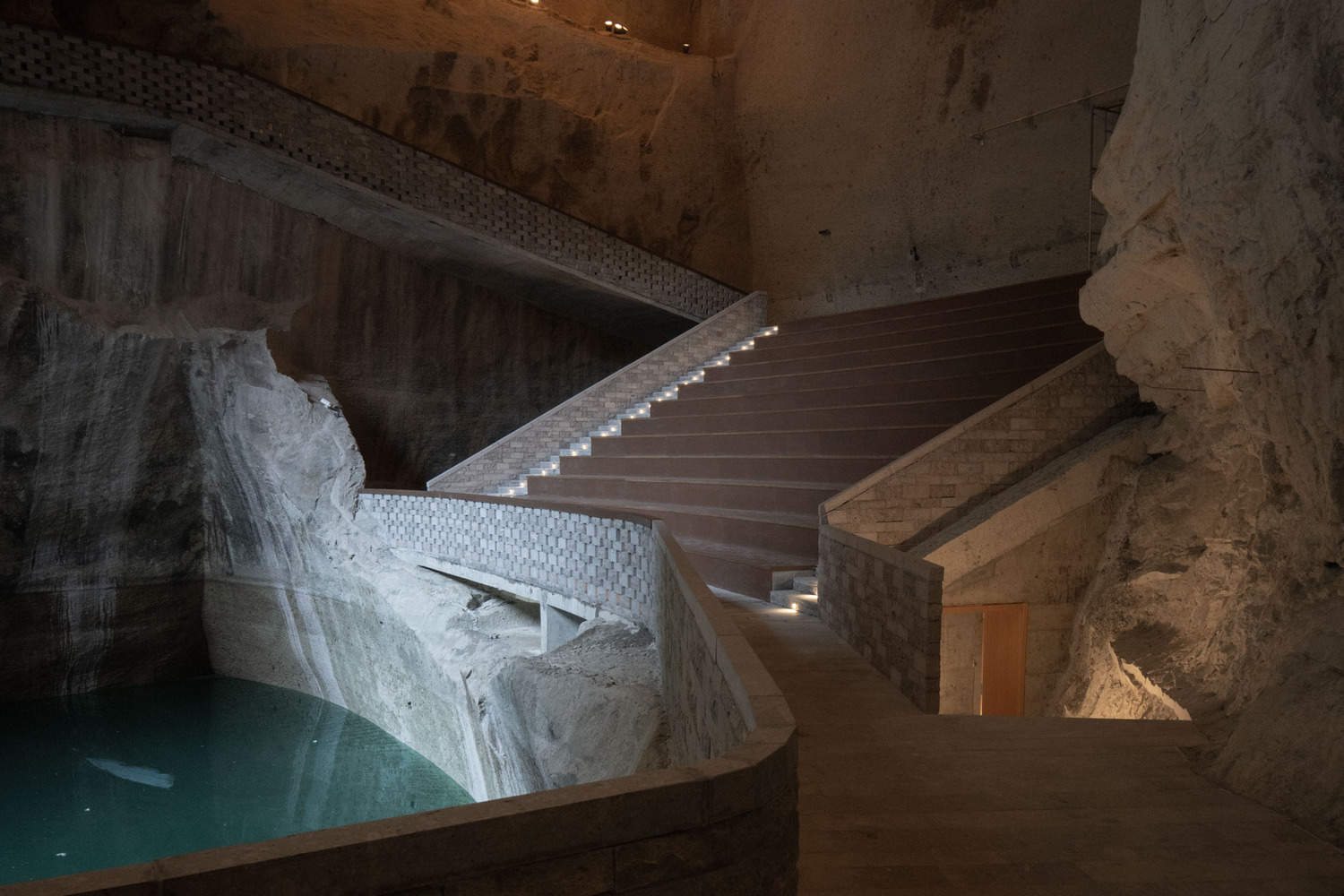
Cave No.2 © ZILING WANG
二号石窟 © 王子凌
The site underwent tourism development in 1989, but due to insufficient investment, unreasonable design, narrow cave spaces, and inadequate promotion, tourist numbers were sparse, leading to operational difficulties, and it was closed in 2015. The project is designed as an art center and urban cultural facility, reflecting the diverse environment of its location. This quarry, situated in a rapidly urbanizing area, is being transformed from a quarry heritage site dating back over 1,400 years into a valuable urban asset.
该场地曾于 1989 年进行过旅游开发,但由于旅游开发投入资金少、设计不合理、岩洞空间面积窄、宣传力度不够等原因,导致游客稀少,经营困难,已于 2015 年关停。该项目被设计为一个艺术中心和城市文化设施,反映了其所在位置的多元化环境。位于快速城市化区域的这个石窟,从一个可以追溯到 1400 多年前的采石场历史遗迹,转变成为宝贵的城市资产。
© ZILING WANG
© 王子凌
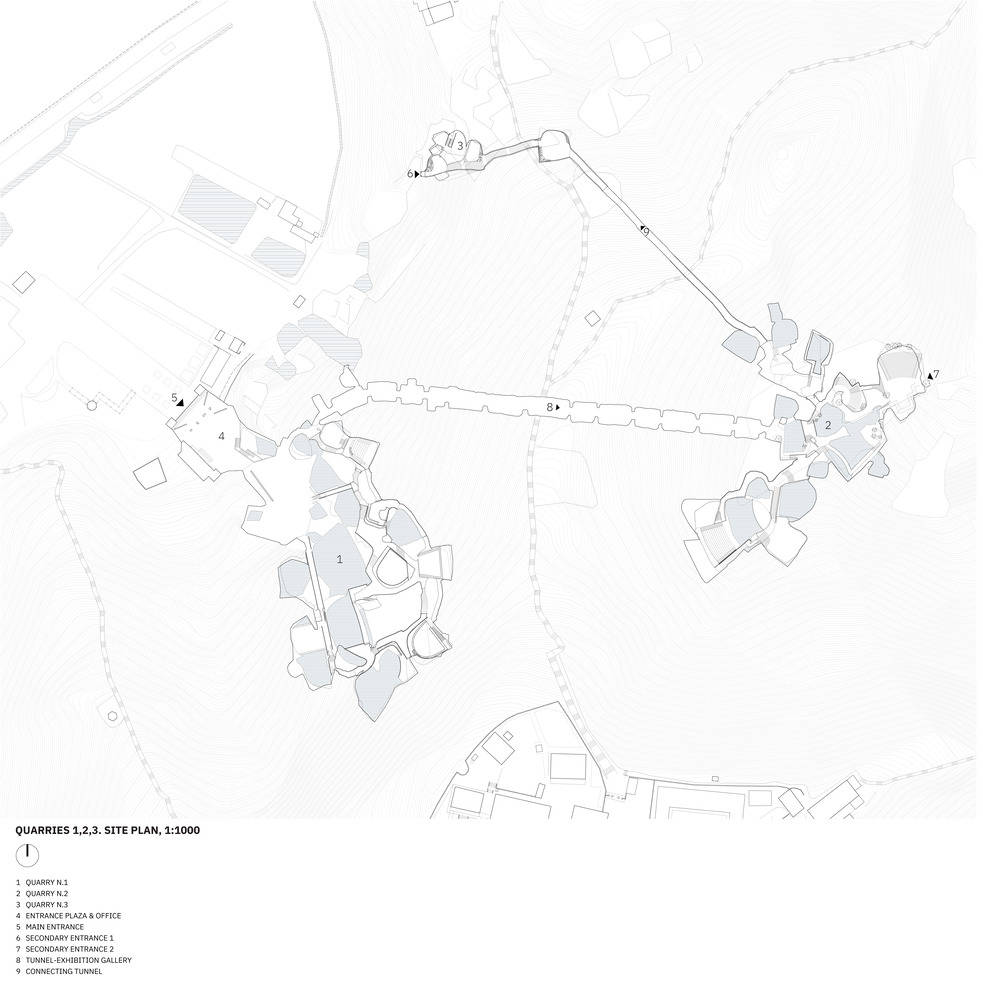
Master Plan
总平面图
Cave No.1 © ZILING WANG
一号石窟 © 王子凌
The design emphasizes minimal intervention to preserve the site's unique geological features while adapting the space for public use. The project aims to create an "Urban Living Room" where visitors can connect with Huangyan's local culture and natural environment. By transforming the abandoned quarry into a multi-functional space, it becomes a showcase for cultural activities and community gatherings.
设计方案强调最小干预,保留场地独特的地质特征,同时改造为公共用途。该项目旨在创造一个"城市客厅",让来访者能够接触黄岩当地的文化和自然环境。通过将废弃的石窟转变为多功能空间,它成为了文化活动和社区聚会的展示场所。
© ZILING WANG
© 王子凌
© ZILING WANG
© 王子凌
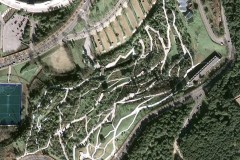
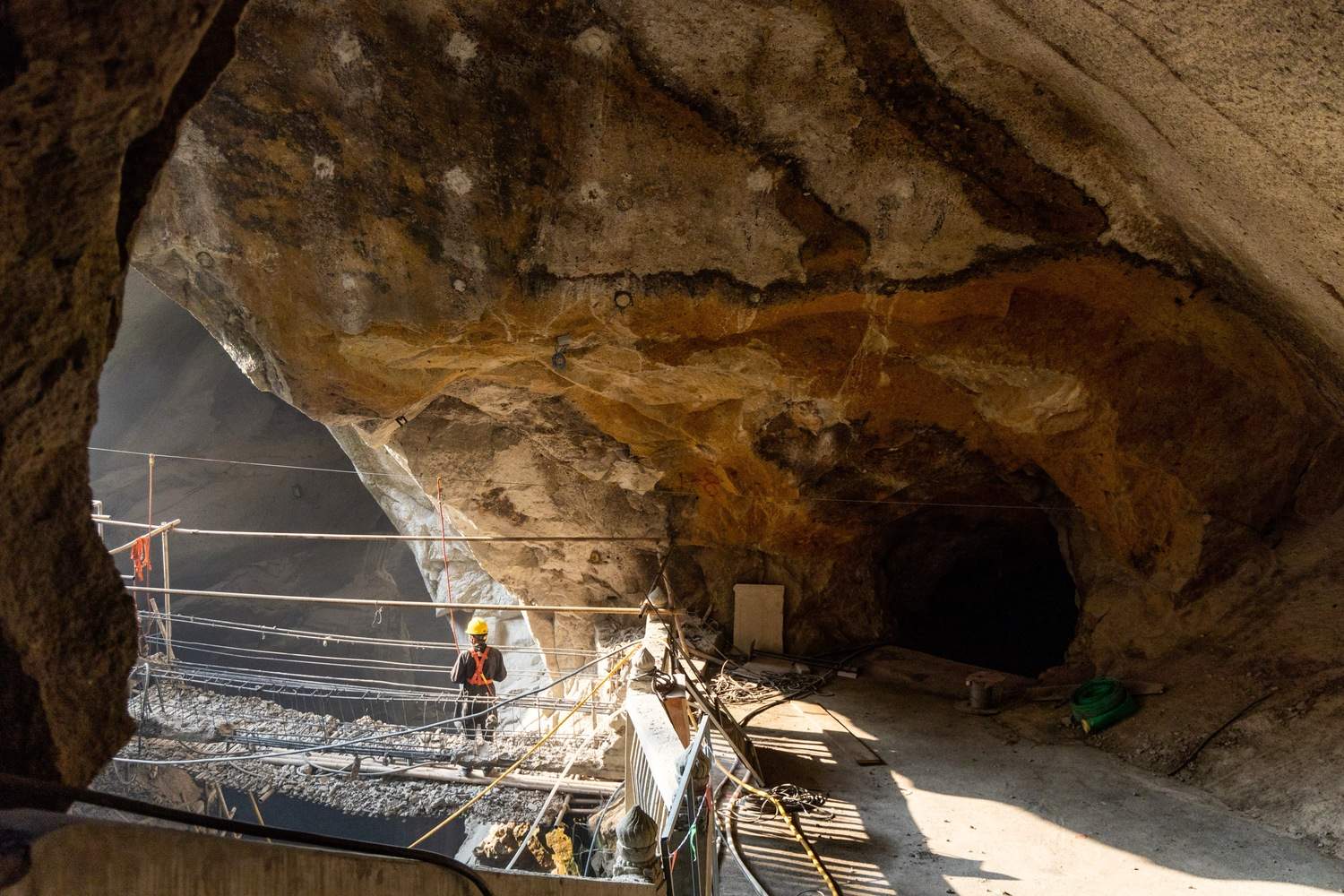
The project covers a total area of approximately 20,000 square meters, comprising three cave clusters. The focus of the renovation is on introducing necessary circulation paths, creating stopping points by expanding platforms and utilizing the existing geometric spaces of the caves. These spaces primarily function as walkways for site circulation, contrasting human-scale activities with the industrial scale of the quarry. Functionally, the design concentrates on organizing paths and traffic while providing space for future uses and activities such as cafes, small theaters, and cultural and creative spaces.
项目总占地面积约 20000 平方米,包含三个洞窟群落。设计改造的重点在于引入必要的通行路径,通过扩大平台和利用石窟现有几何形状的空间来创造停留点。这些空间主要是便于在场地内通行的走道,同时将人体尺度的活动与采石场的工业规模形成对比。在功能上,设计的重点一方面是对路径、交通的梳理,另一方面是提供停留空间,作为未来业态和活动场所,比如咖啡厅、小剧场、文创空间等等。
Cave No.1 © ZILING WANG
一号石窟 © 王子凌
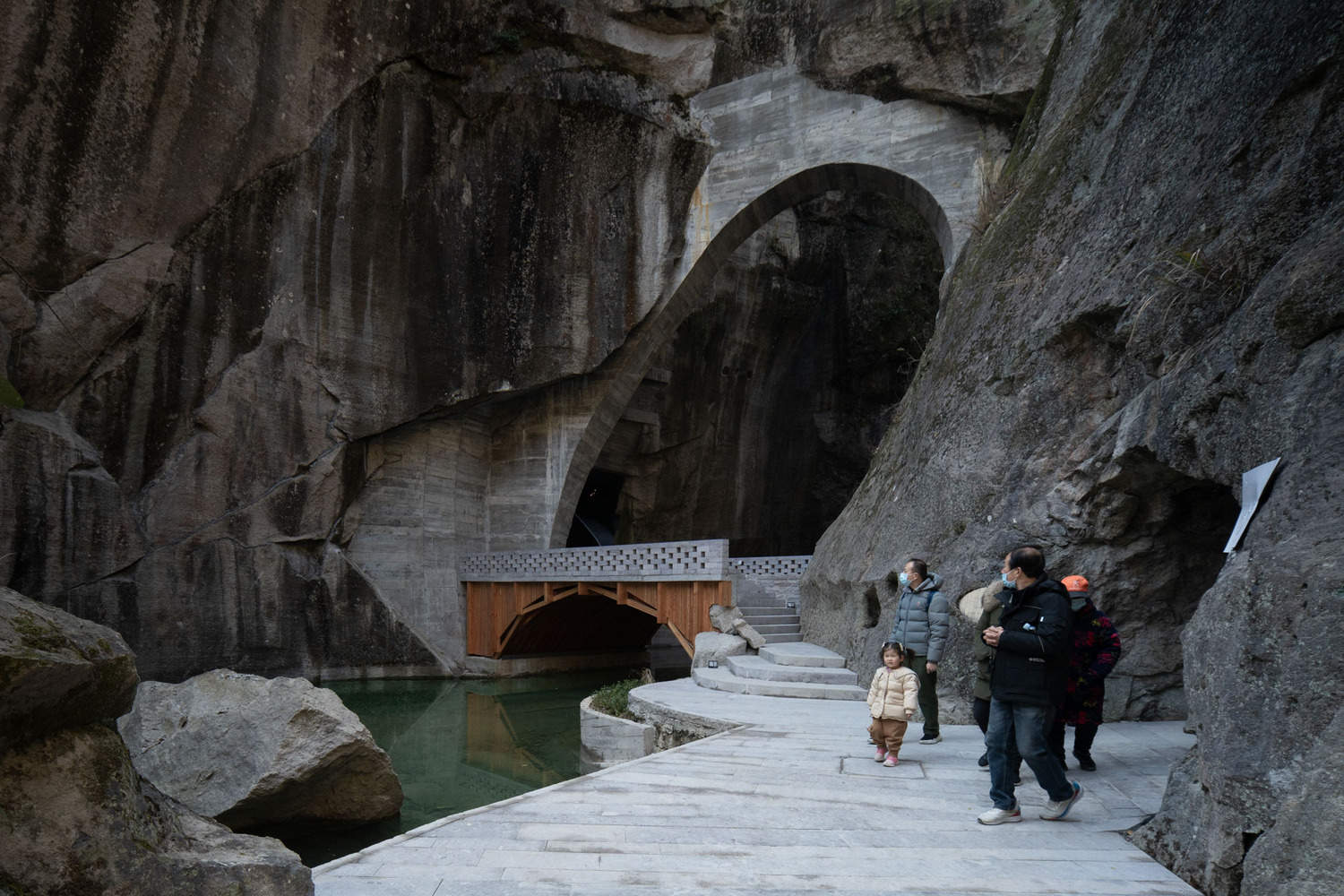
Cave No.2 © ZILING WANG
二号石窟 © 王子凌
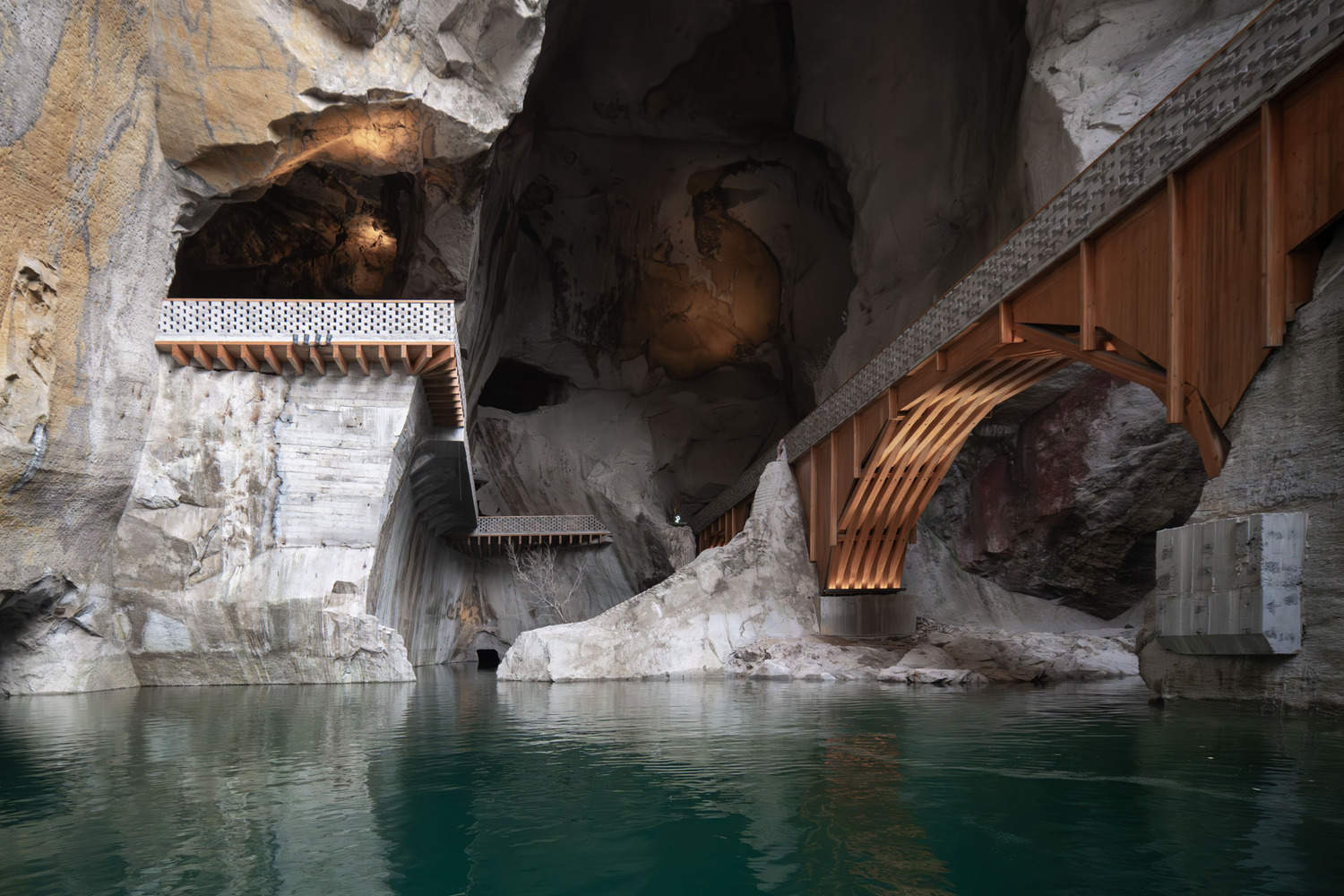
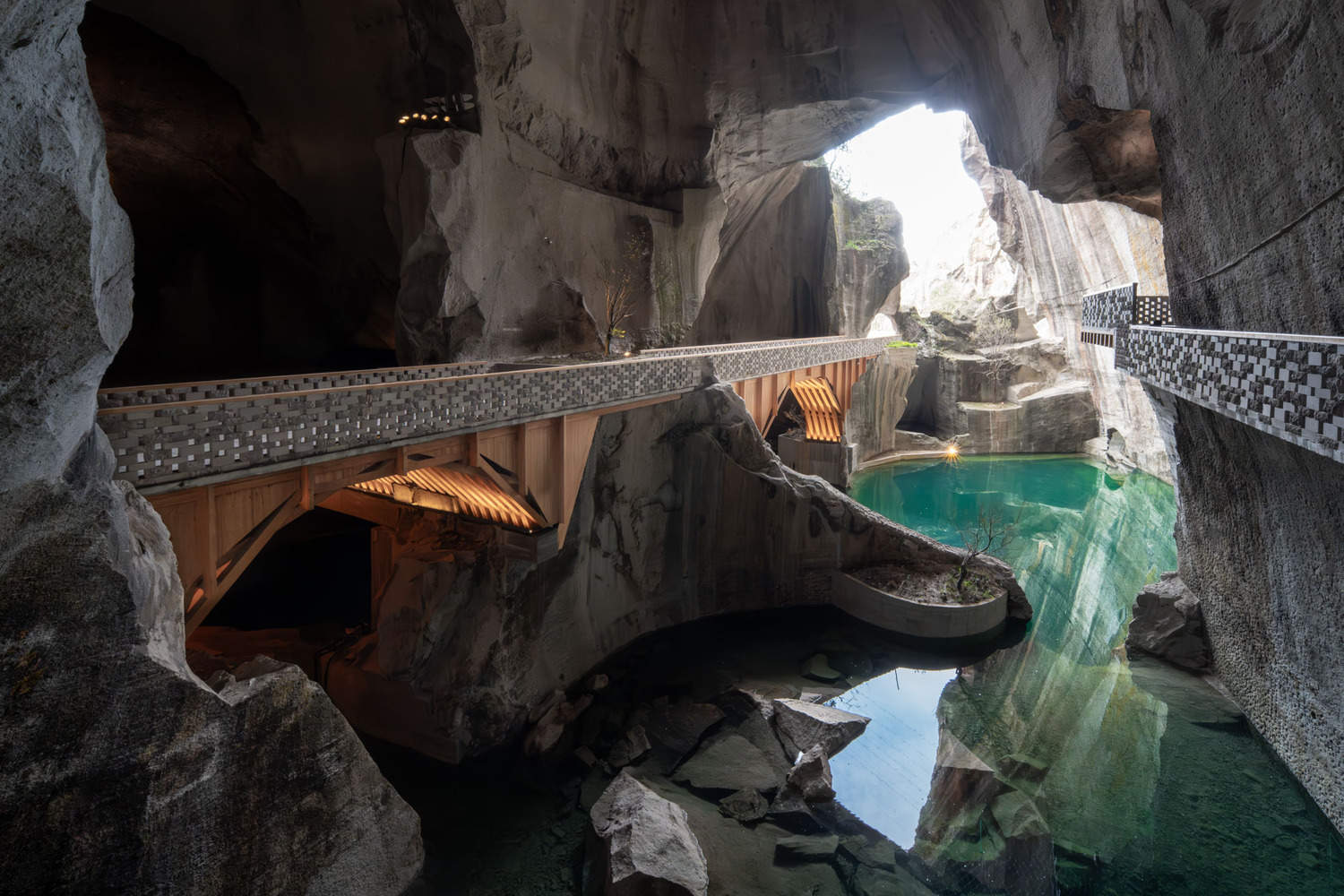
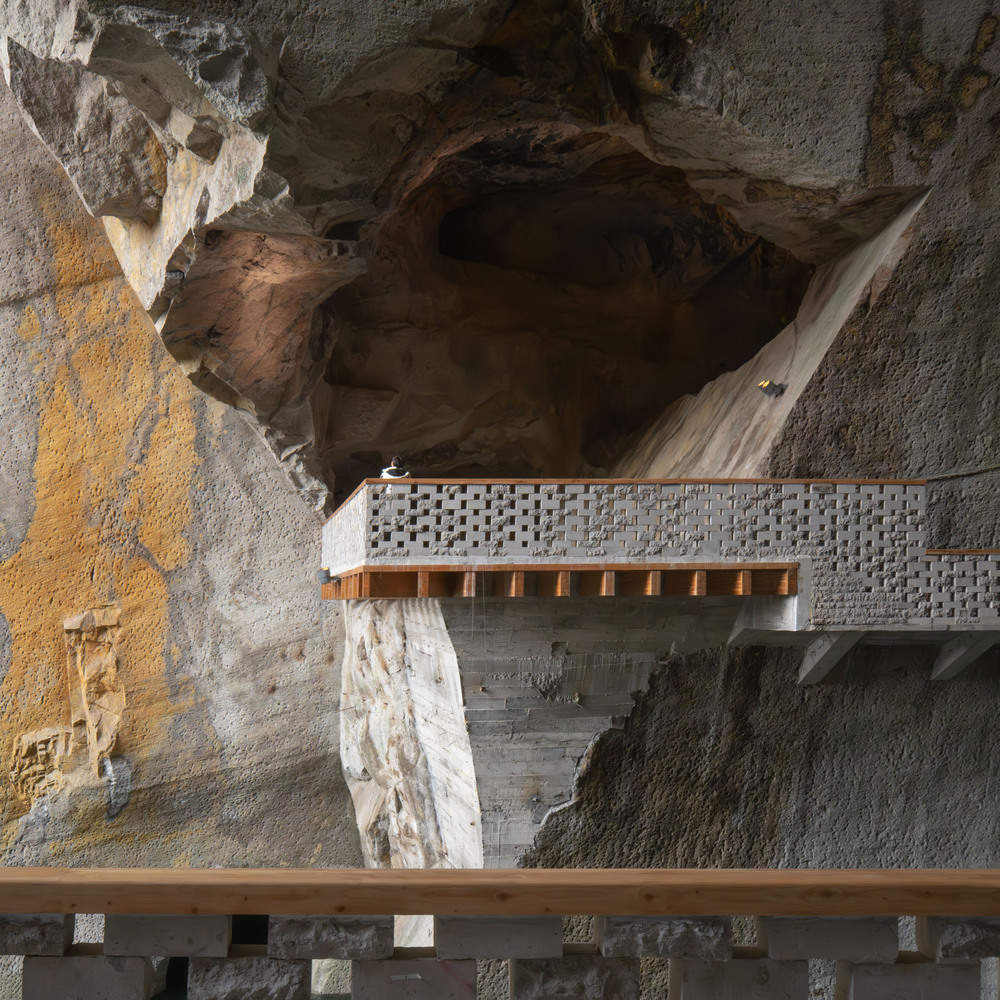
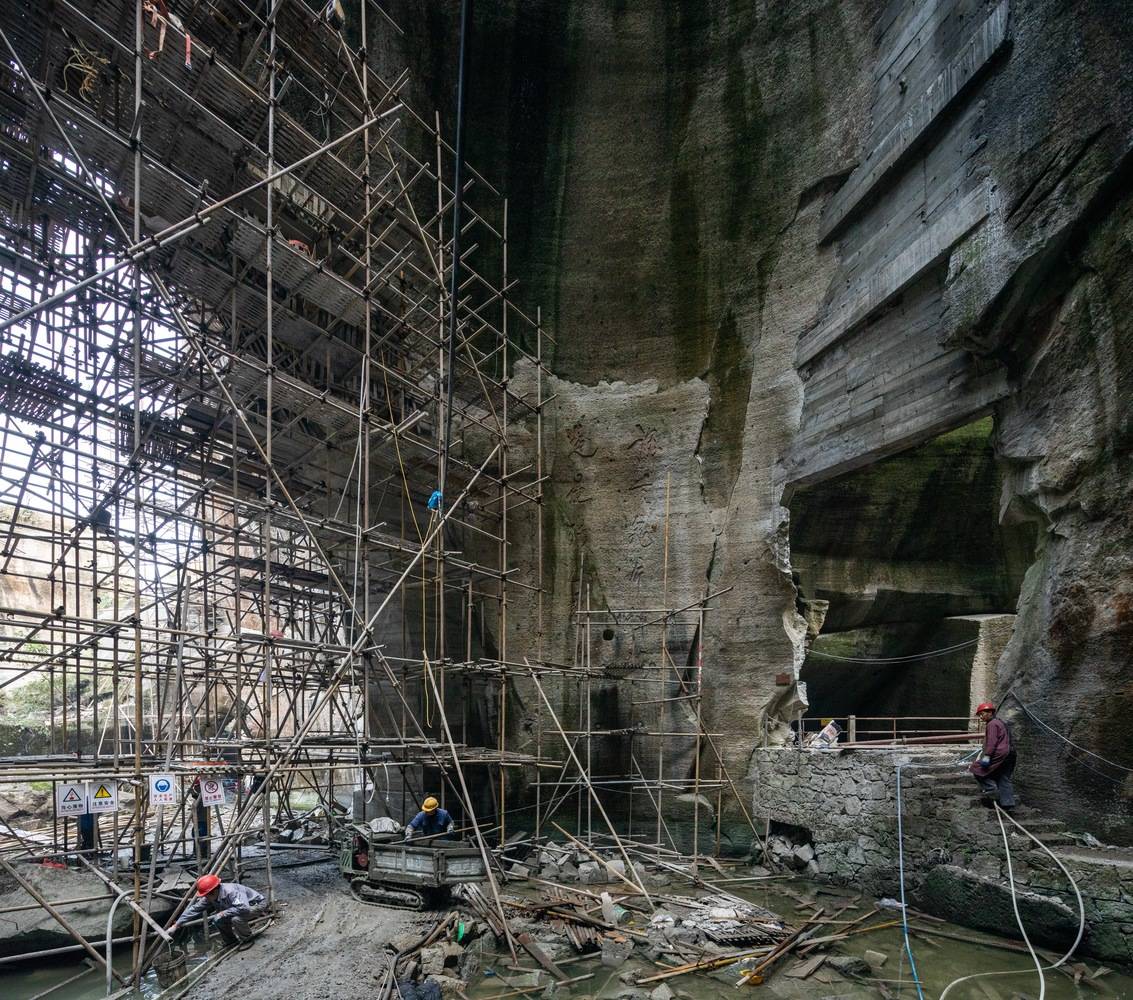
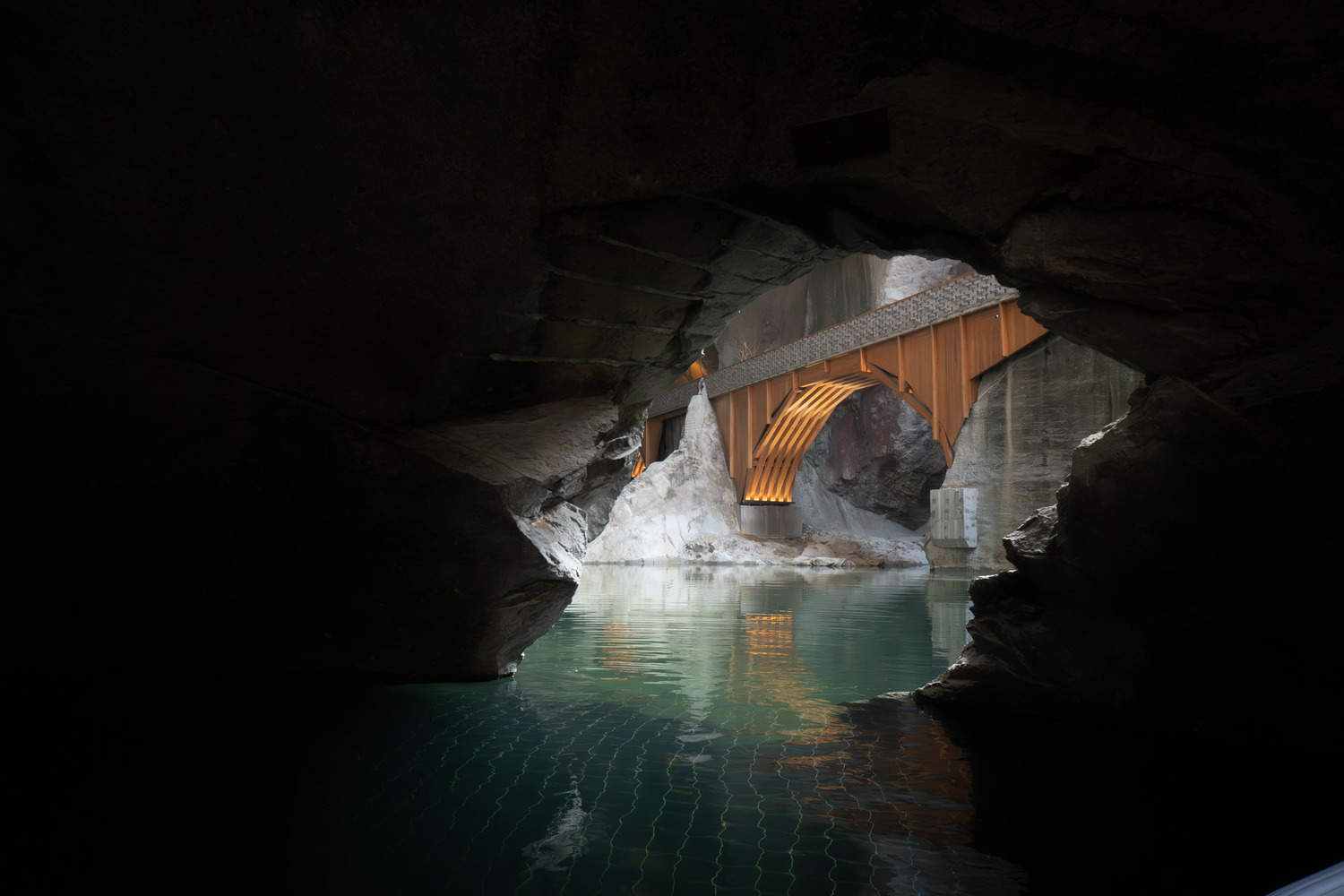
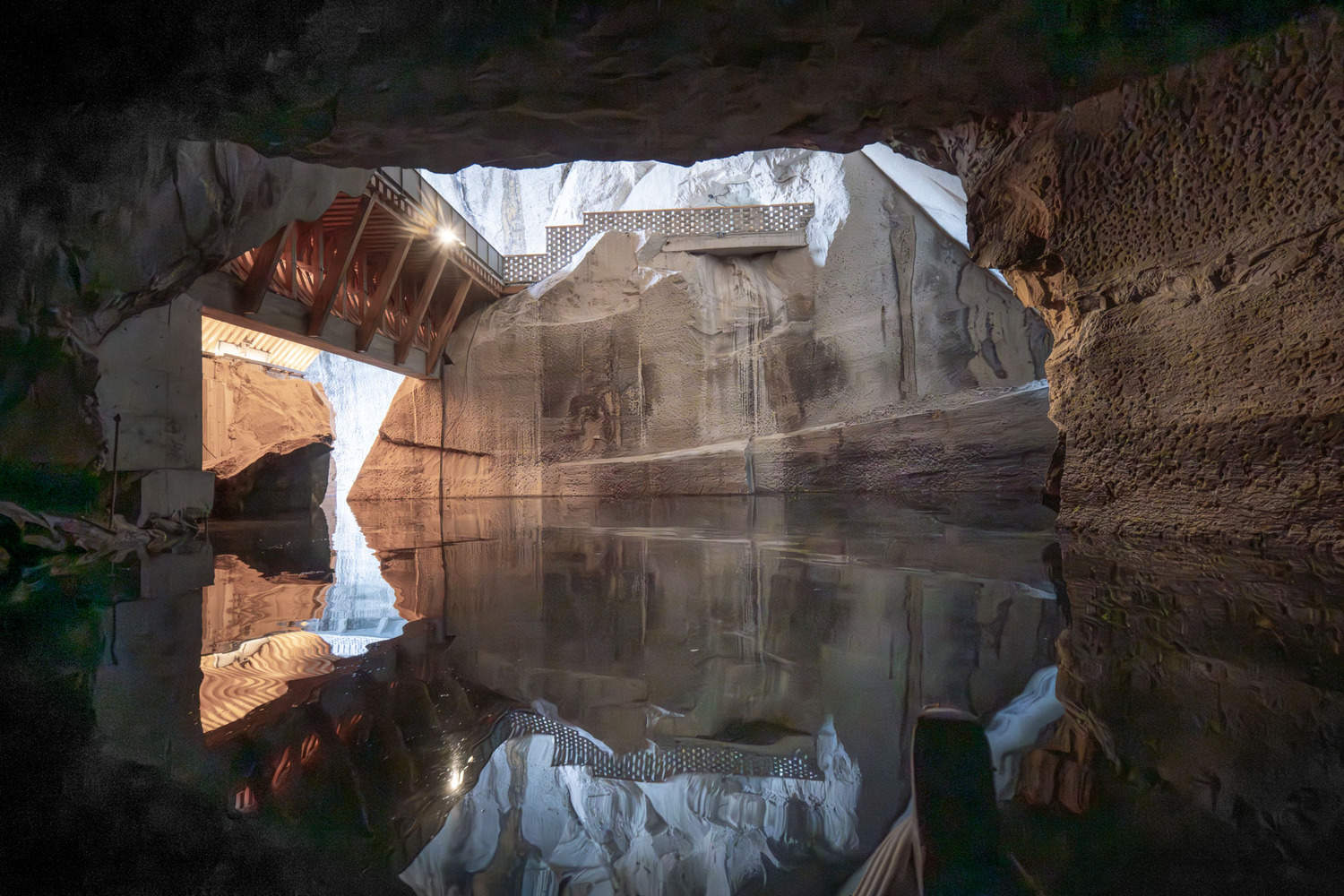
The organization of traffic flow, achieved through the installation of timber arched bridges, serves both as a cultural symbol of mountains and waters and as an effective method to accommodate the narrow entrances and constrained operating surfaces of the caves (this structural form allows components to be broken down and prefabricated). Furthermore, this structural form is scaled up from the bridge structure to the newly added large-span floor slabs, simultaneously acting as the roof for the lower spaces. Cave No.3, being smaller, only requires sealing at the top; the density of the timber arches is reduced to form the roof structure and introduce skylight. Through the repeated appearance of timber arches at different scales and densities across interfaces, they create connections and echoes along the circulation paths within the intricate cave system.
交通流线的梳理,通过设置编木拱桥,一方面作为山水文化符号、同时编木拱桥的结构形式也是满足石窟入口狭小,施工操作面局促的有效做法(这种结构形式让构件化整为零、可以提前预制)。另外,这种结构形式也可以从桥的结构放大为新增加的大跨度楼板的结构,同时作为下层空间的屋面。三号石窟窟体较小只作顶部的封闭,则把编木拱密度减小作为屋顶结构并引入顶光。编木拱结构通过不同尺度密度以及界面的反复出现,在这个空间错综复杂的石窟里形成动线上的关联和呼应。
Cave No.1 © ZILING WANG
一号石窟 © 王子凌
Cave No.1 © ZILING WANG
一号石窟 © 王子凌
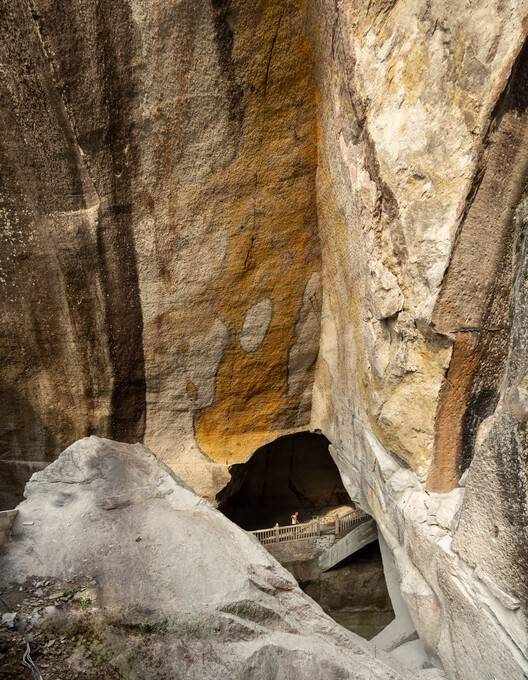
The uneven mineral composition of the mountain rock in the Huangyan Quarry, combined with a thousand years of manual excavation, created giant yellow natural rock paintings on the mineral cross-sections. This is a significant visual feature of the caves, and this body composition containing yellow minerals is the origin of the name "Huangyan" (Yellow Rock). To emphasize this local characteristic and spatial feature, we commissioned lighting designers to focus illumination on these rock paintings. The combination of the mineral's yellow hue and warm-toned lighting makes them act as giant luminous bodies within the space, simultaneously guiding the flow of traffic.
黄岩石窟内因山体成分带有不均匀的矿物成分、后经过千年的手工开采、矿物质的切面形成巨型的黄色的天然岩画。这是石窟的一个重要视觉特征,而这种带黄色矿物质的岩体构成也正是黄岩这个名称的由来。为了强调这种地方特质和空间特征,我们请照明设计将灯光重点投射在这些岩画上、矿物质的黄色和暖色调灯光结合,在空间里成为一个个巨型的发光体,同时提示路径流线。
© ZILING WANG
© 王子凌
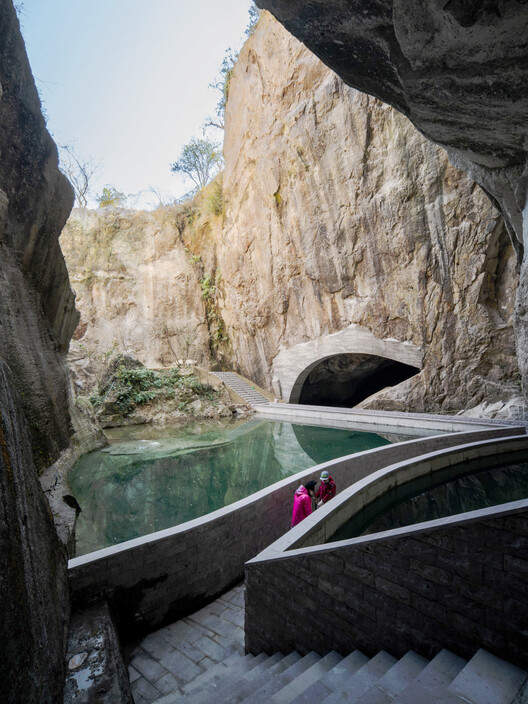
Cave No.2 © ZILING WANG
二号石窟 © 王子凌
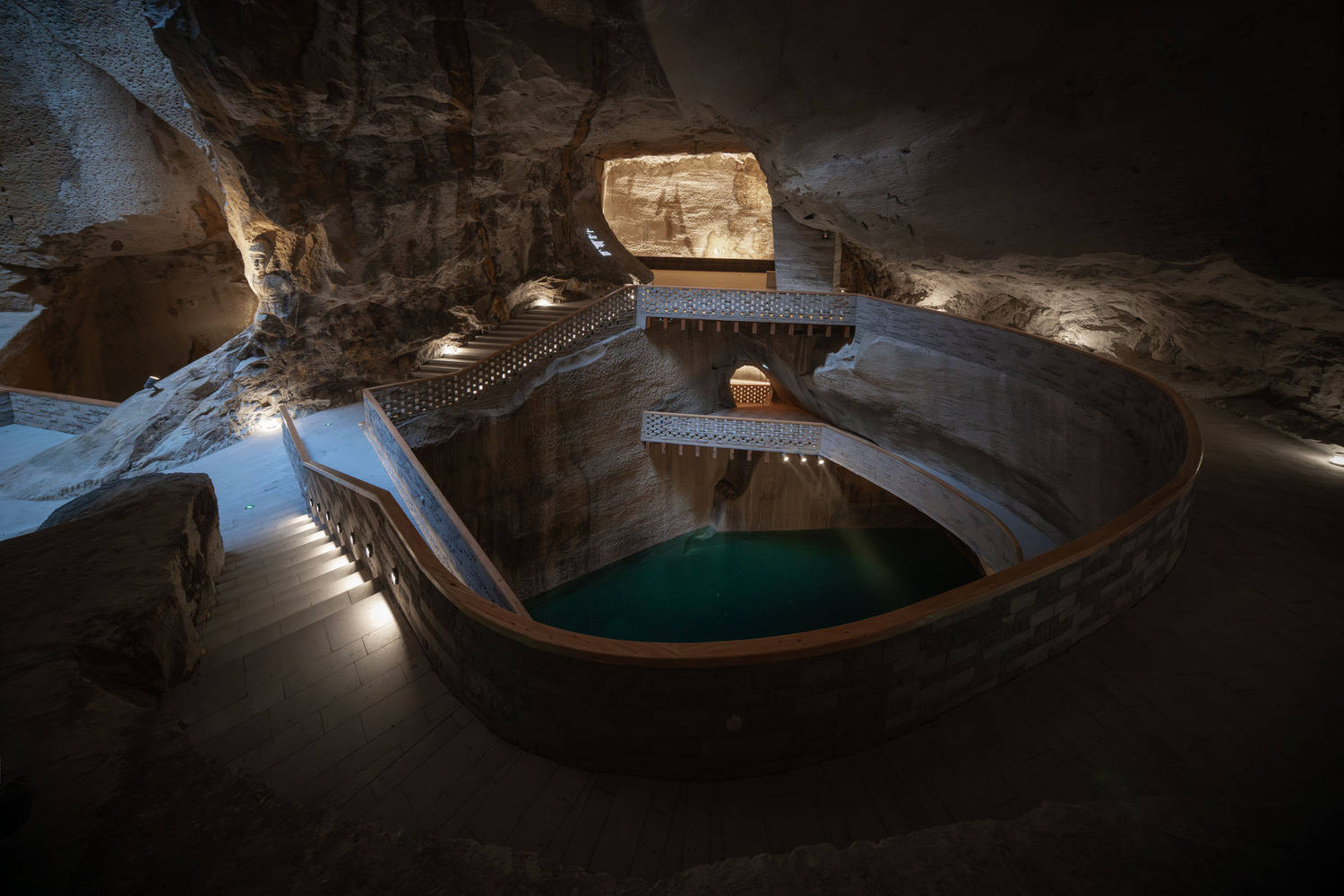
Inside the caves, there are also numerous excavated hollows where groundwater has accumulated, forming blue-green bodies of water in Caves No.1 and No.2. This water contrasts with the yellow rock paintings and is another major spatial feature of the quarry. The design connects the water bodies within Cave No.1, installing three docks for boarding and disembarking boats, thereby creating a waterway inside Cave No.1 that offers multiple perspectives for viewing the grottoes.
石窟内部还有大量的下挖洞窟,由于地下水沉积,在一号和二号石窟内形成蓝绿颜色的水体,和黄色岩画对比, 也是石窟空间内的主要特征。设计在一号洞窟内部将水体打通,设置三个上下船的码头,这样在一号石窟内形成了一条水路,提供观看石窟的多方位视角。
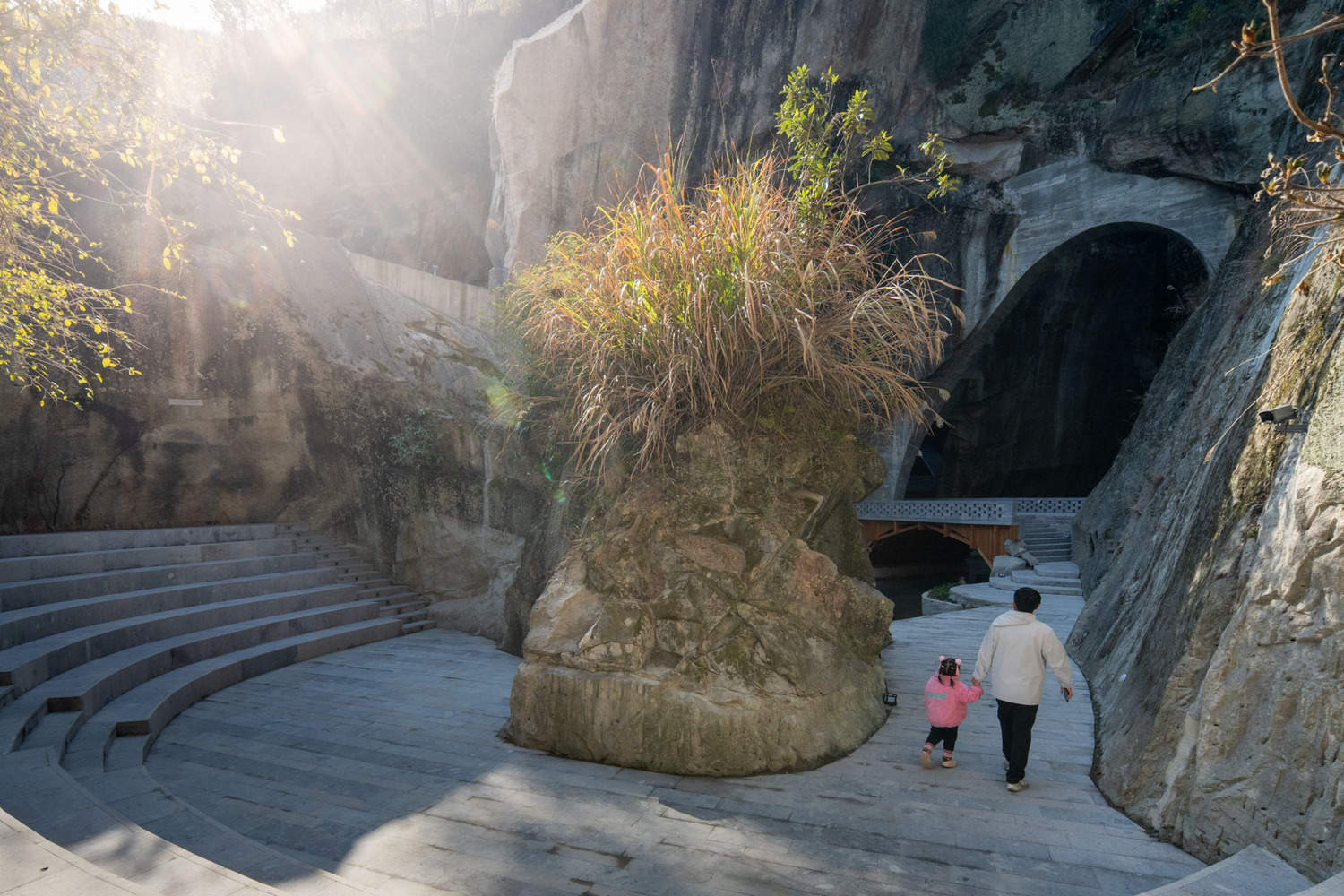
Cave No.2 © ZILING WANG
二号石窟 © 王子凌
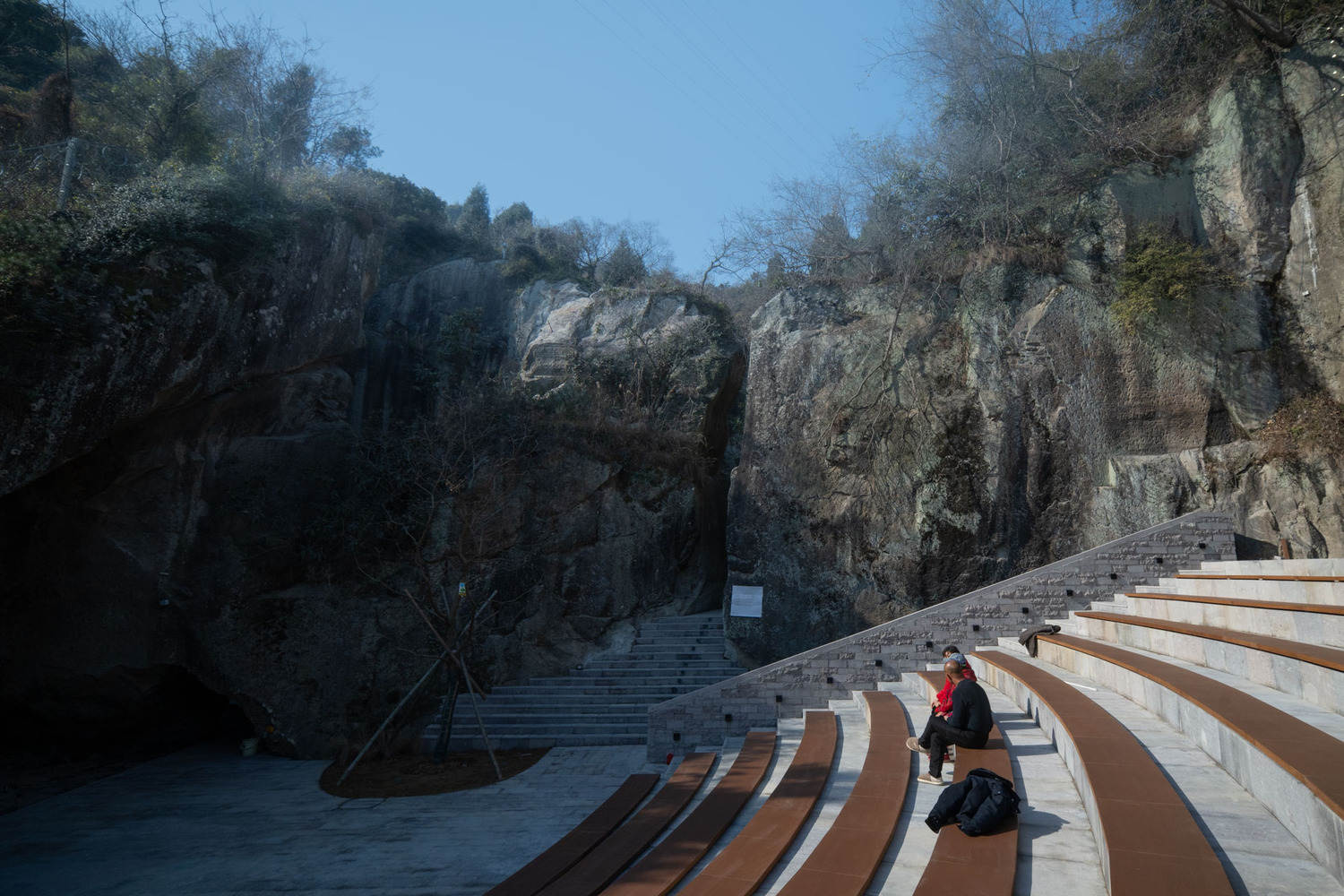
Cave No.2 © ZILING WANG
二号石窟 © 王子凌
Cave No.1 - Urban Living Room
Cave No.1, being the closest to the main entrance, has been themed as an "Urban Living Room" by clarifying the internal morphology and characteristics of the grotto. Using "Old City Memory" as its carrier, it integrates trees, water systems, docks, boats, murals, traditional landscape humanities, and urban public functions. Cave No.1 primarily houses spaces for coffee and leisure, workshops, a book bar, an auditorium, and a water landscape and tunnel experience area.
一号石窟-城市客厅
一号石窟作为最临近主入口的石窟空间,通过梳理石窟内的形态以及特性,以城市客厅为主题,老城记忆为载体,融入树木、水系、码头、船只、壁画、传统山水人文和城市公共功能。一号石窟主要包含了咖啡休闲空间,工坊,书吧,报告厅,和水景及隧道体验空间。
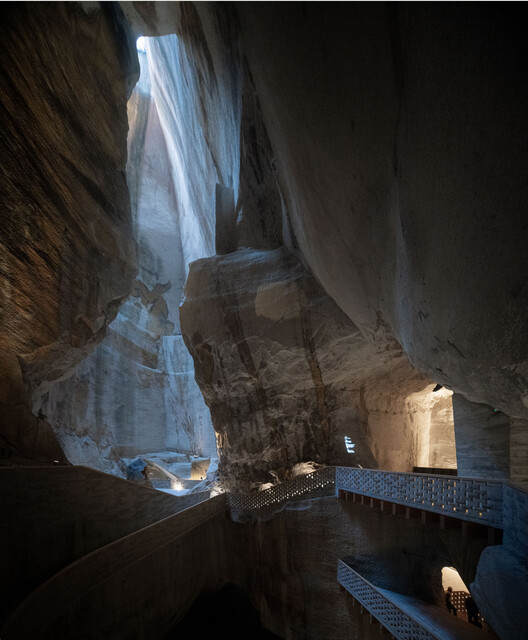
Cave No.1 © ZILING WANG
一号石窟 © 王子凌
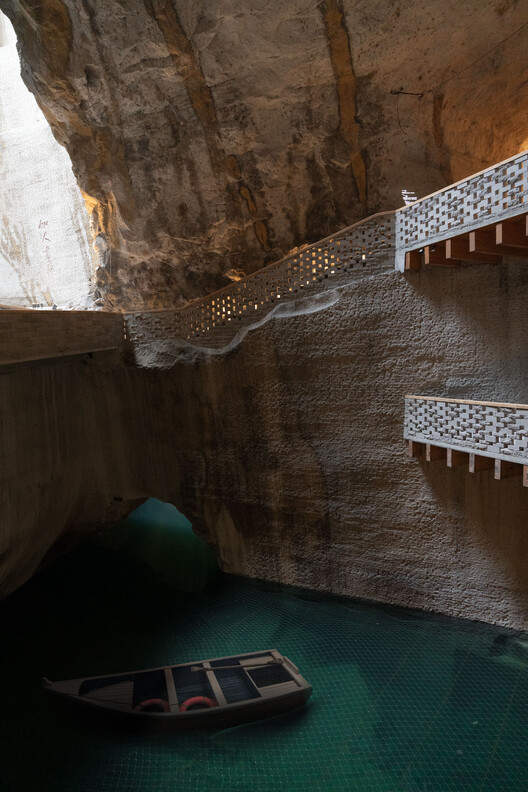
Cave No.1 © ZILING WANG
一号石窟 © 王子凌
Cave No.2 - Musical Theater
Cave No.2 is primarily dedicated to cultural entertainment and leisure functions. The circular rock walls formed by the quarrying process possess excellent natural acoustic properties. Taking advantage of this, a natural theater is created in combination with the topography. Three theater and stage spaces are arranged, with provisions for future additions such as leisure areas, rock climbing, and diving experience spaces.
二号石窟-音乐剧场
二号石窟以文娱休闲为主要功能。场地中因开采石料而形成类的环形石壁具有天然的良好声学效果。以此为契机结合地形,营造天然剧场。布置了三个剧场及舞台空间,未来还可以增设休闲空间,攀岩及潜水体验空间。
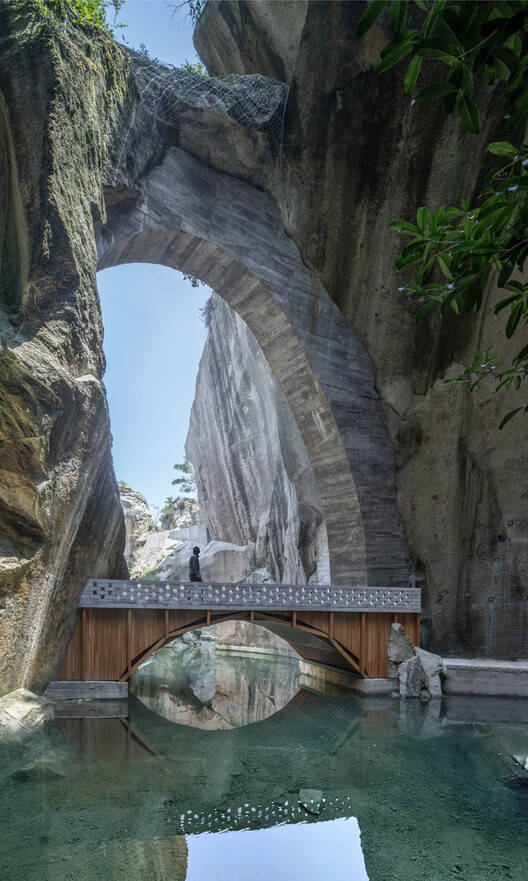
Cave No.2 © ZILING WANG
二号石窟 © 王子凌
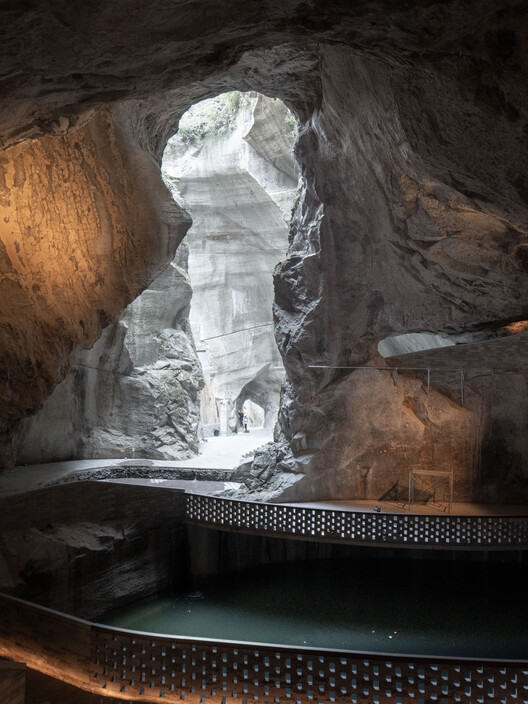
Cave No.2 © ZILING WANG
二号石窟 © 王子凌
Cave No.3 - Tea Break & Leisure
Cave No.3 consists of quiet spaces connected by a series of narrow tunnels. The modification of Cave No.3 utilized timber craftsmanship for the treatment of the openings in the cave ceiling, fulfilling functional requirements in the lightest possible way without damaging the original appearance of the grotto. Cave No.3 will serve functions such as a restaurant, café, and reception.
三号石窟-茶歇休闲
三号石窟由一系列狭长隧道联通的幽静空间所组成。对三号石窟的改造利用了编木工艺赋予石窟顶部开口处的处理,在不破坏石窟原有风貌的前提下以最轻质的方式完善功能的需求。三号石窟功能将作为餐厅,咖啡厅和接待功能。
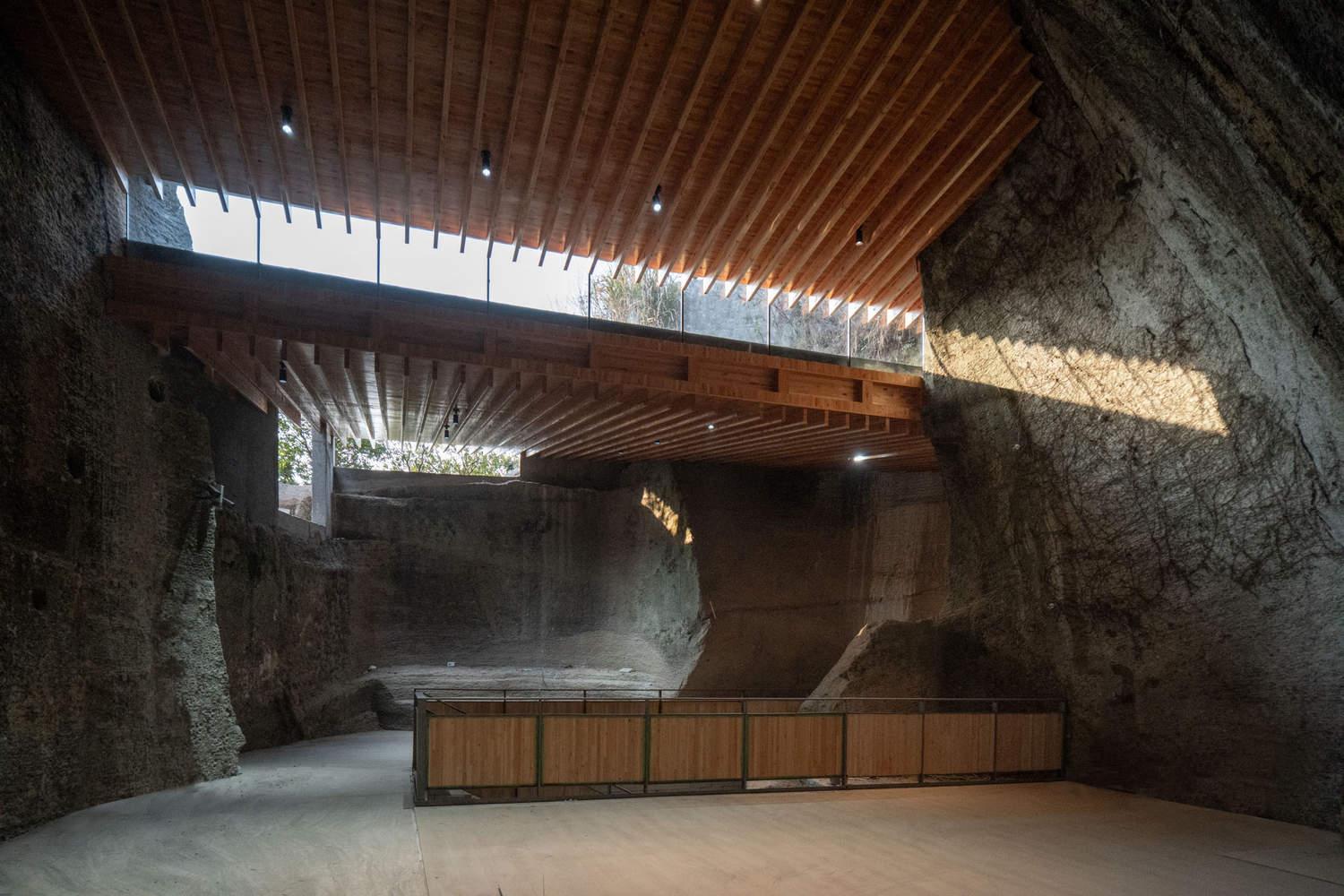
Cave No.3 © ZILING WANG
三号石窟 © 王子凌
Gallery Space
The tunnels originally connecting the three caves have also been repurposed as exhibition spaces, achieving the goal of reasonably utilizing the internal space of the quarry with minimal intervention.
展廊空间
原本用于连通三个石窟之间的隧道也被改造为展览空间,达到以最小干预的方式合理利用石窟内部空间的目标。
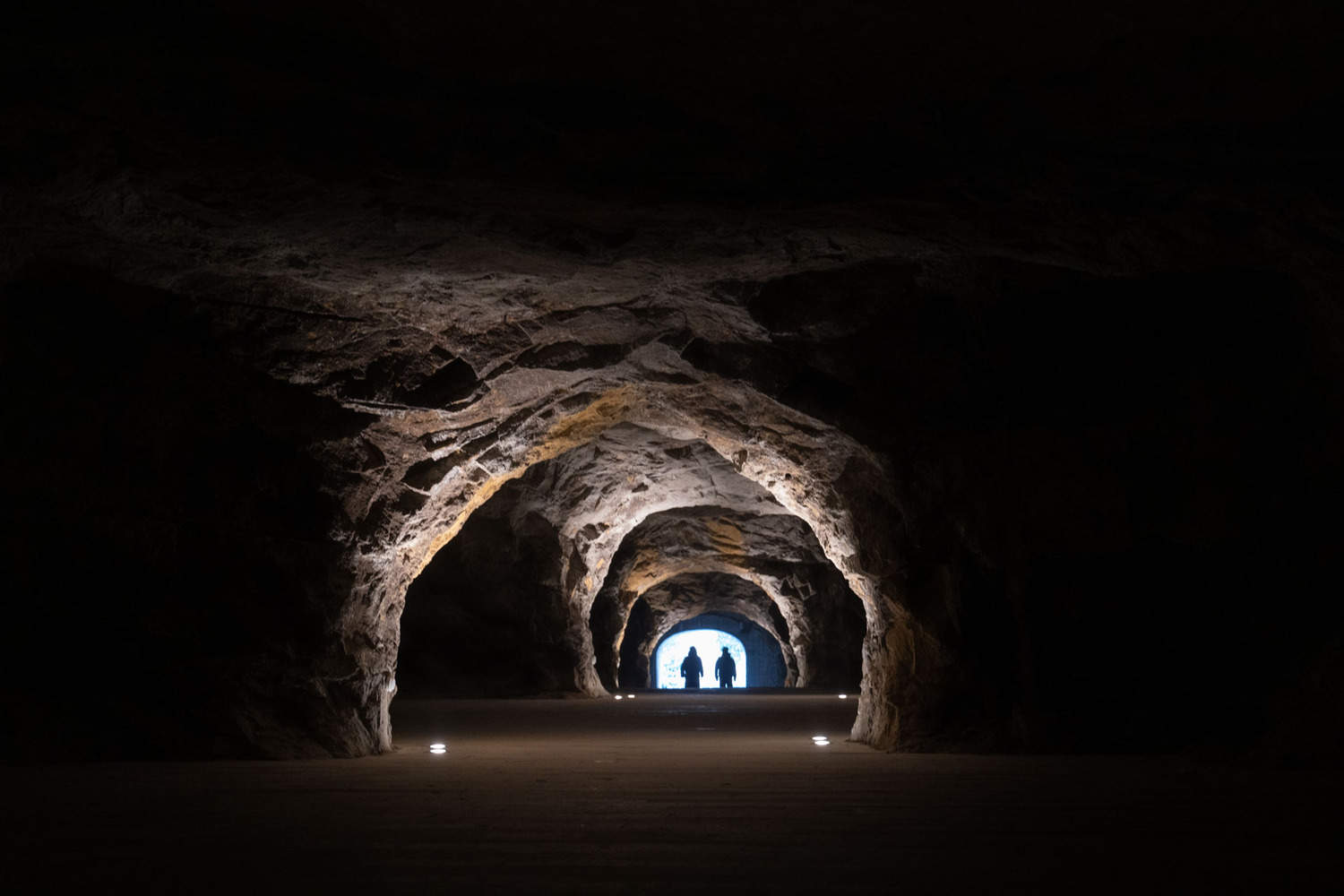
Gallery Space © ZILING WANG
展廊空间 © 王子凌
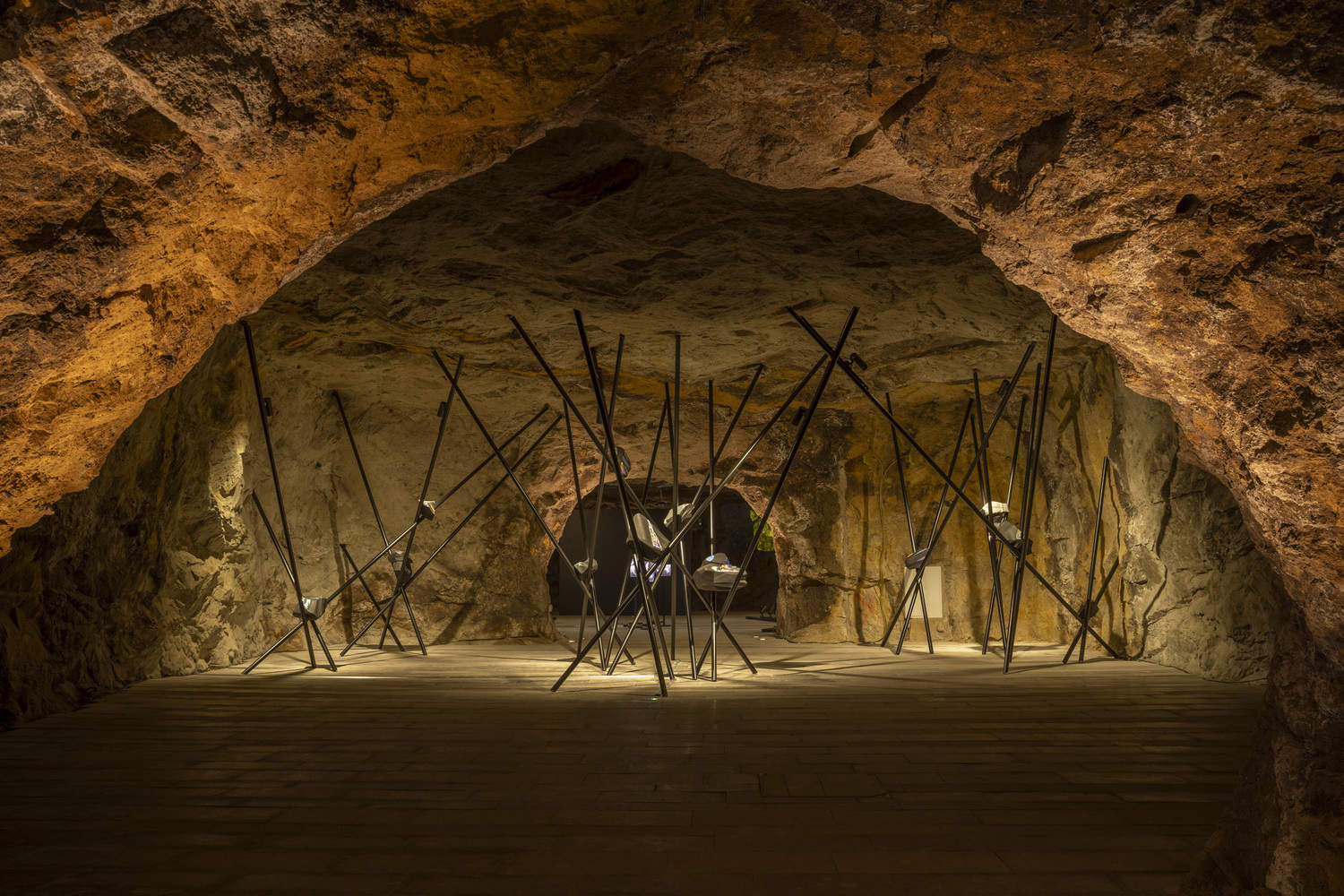
Gallery Space ©
Gallery Space ©
WJQ
金伟琦