场地文脉的深度融合与空间秩序的重塑:该项目最精妙之处在于其对安仁古镇复杂肌理的深刻理解与积极回应。通过借鉴本地公馆建筑的坡屋顶群落形态,设计巧妙地构建了一组尺度逐增、渐次抬升的建筑体量。这一策略不仅成功地将历史遗存(如陈月生老宅)的特征融入当代设计,更重要的是,它有效连接了场地中因发展时序而产生的、具有尺度和朝向矛盾的城市片段,将宏观矛盾消融于建筑形体之中,实现了对割裂城镇肌理的修复和核心公共空间的重塑。
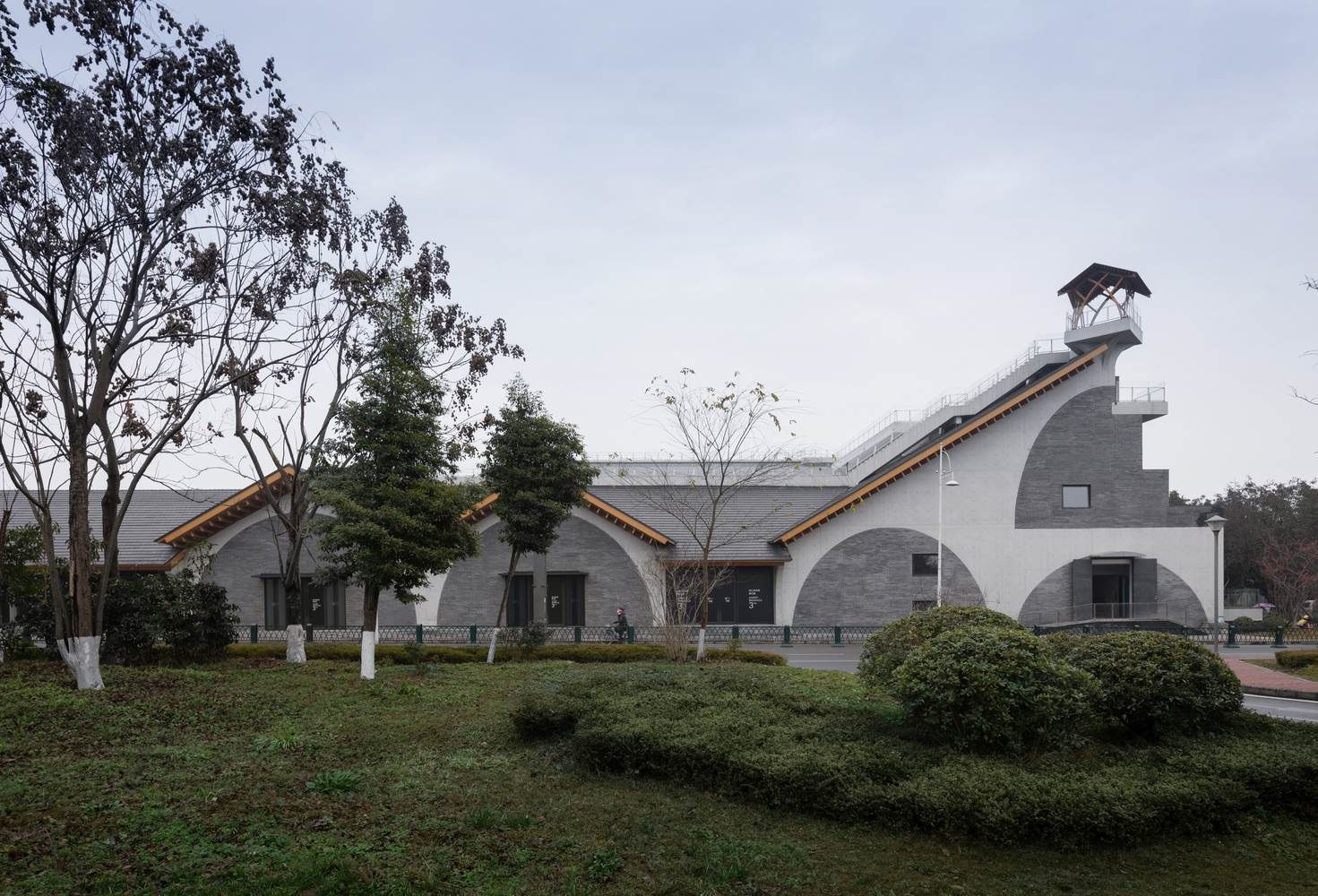
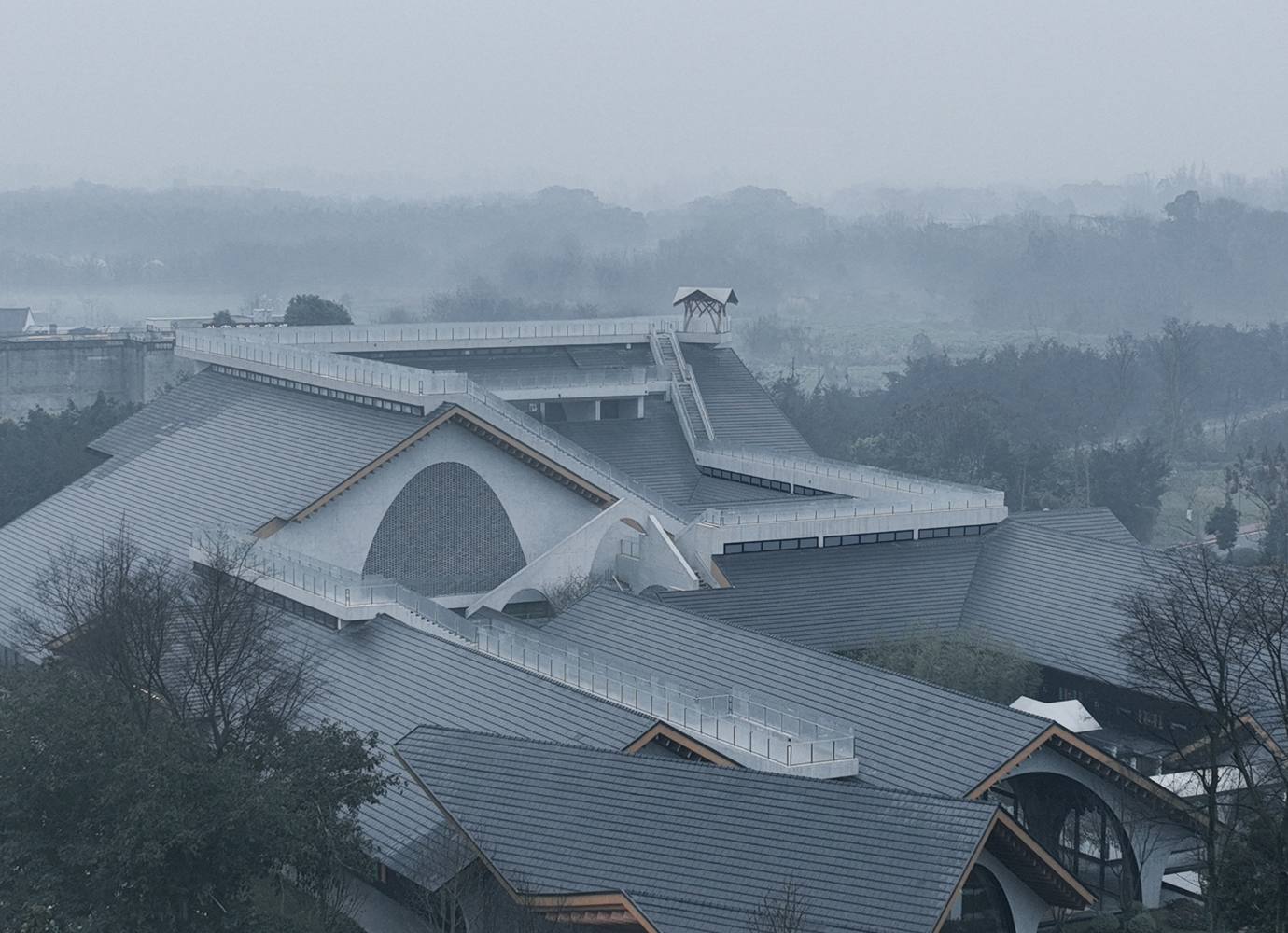
“拟山”意境的屋顶栈道系统:建筑在形态与功能上实现了高度统一的创新。屋顶栈道的设置是设计的点睛之笔,它不仅服务于屋面检修这一实用功能,更重要的是,它为公众提供了连续的水平与垂直探索路径。游人穿行于屋脊与屋涧之间,使连续的坡屋顶获得了“拟山”的哲学意境,在视觉上与远处的自然山脉产生呼应,构建了建筑、城镇与自然山水同构的公共叙事体验,极大地提升了建筑的场所精神和公共性。
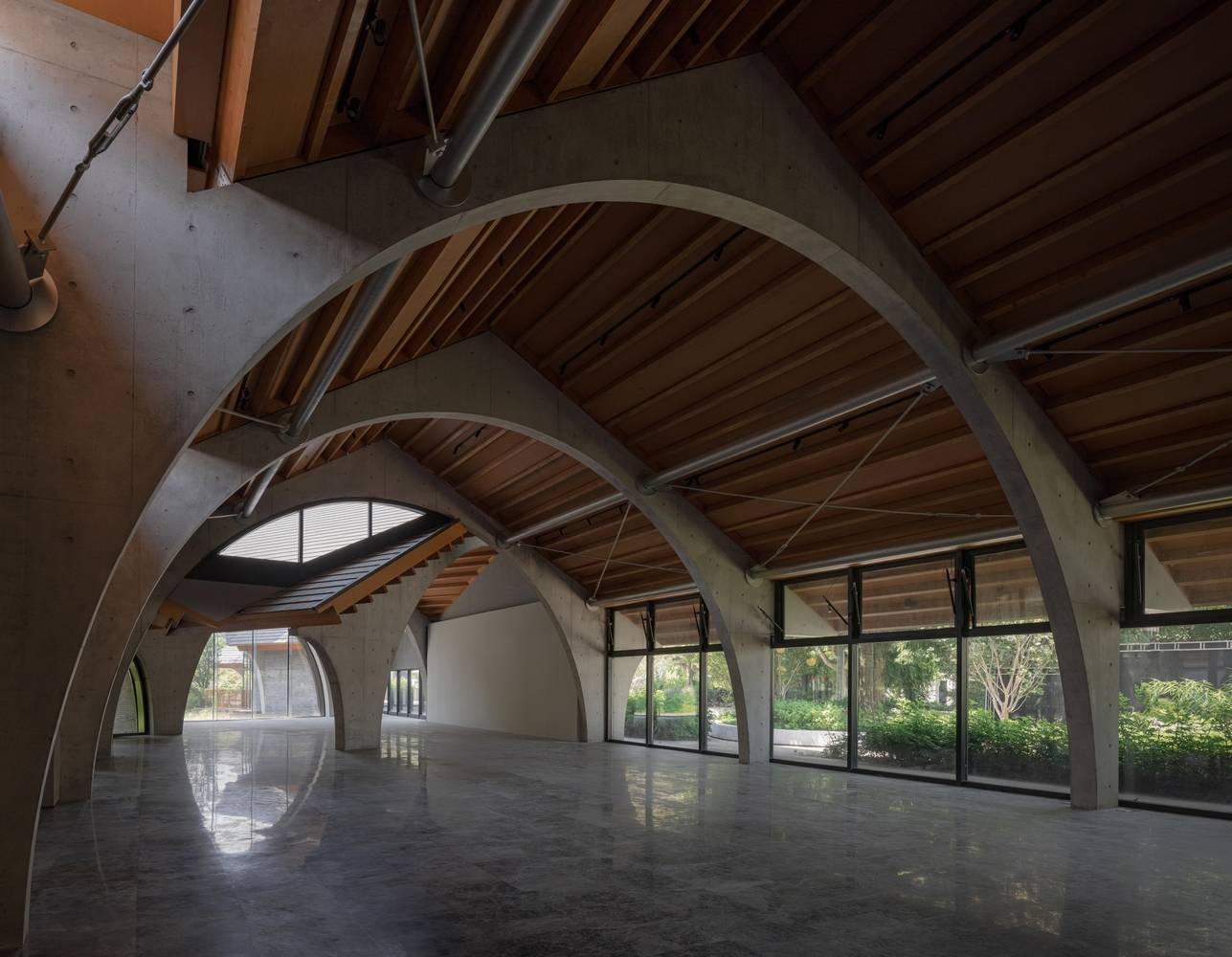
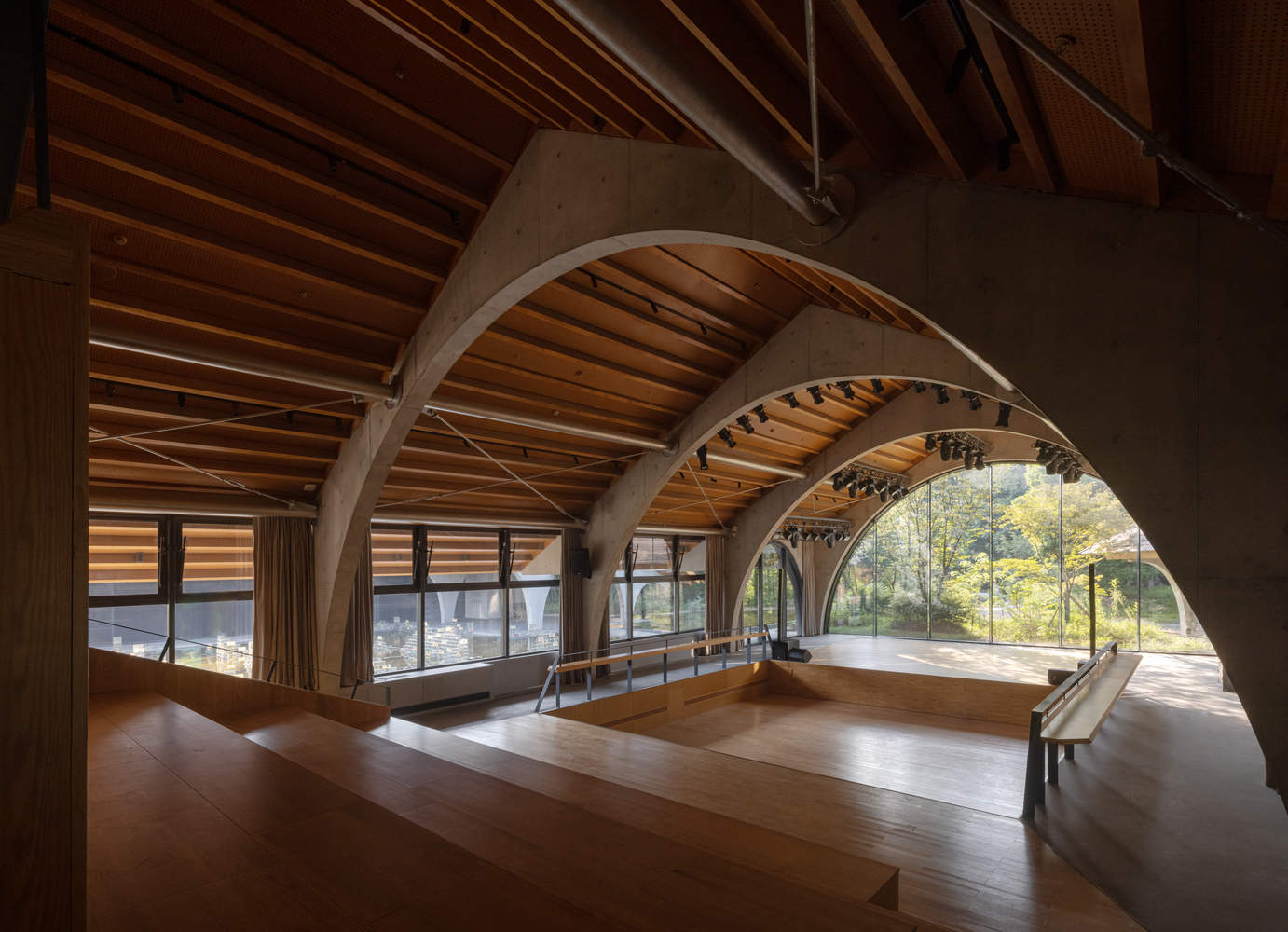
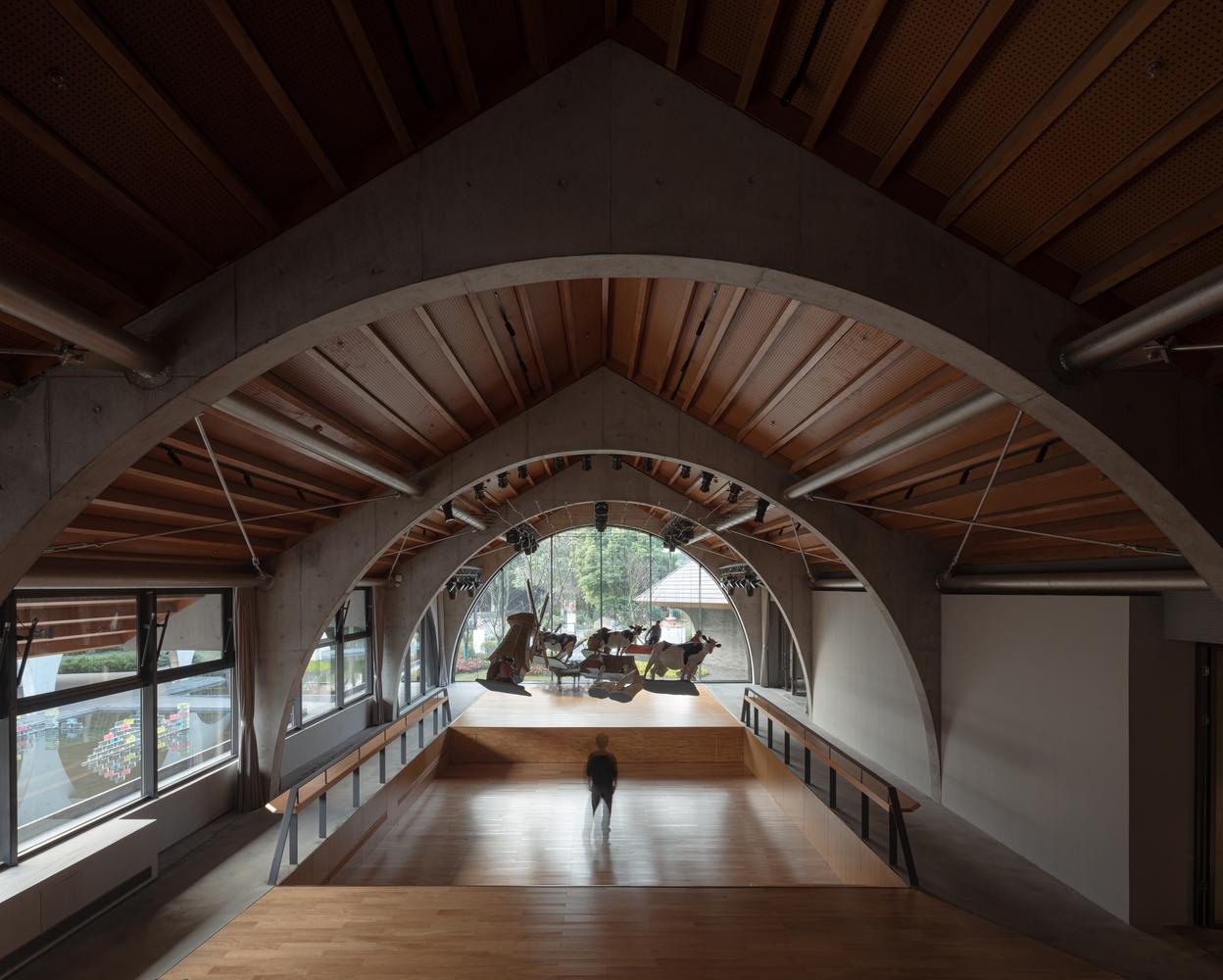
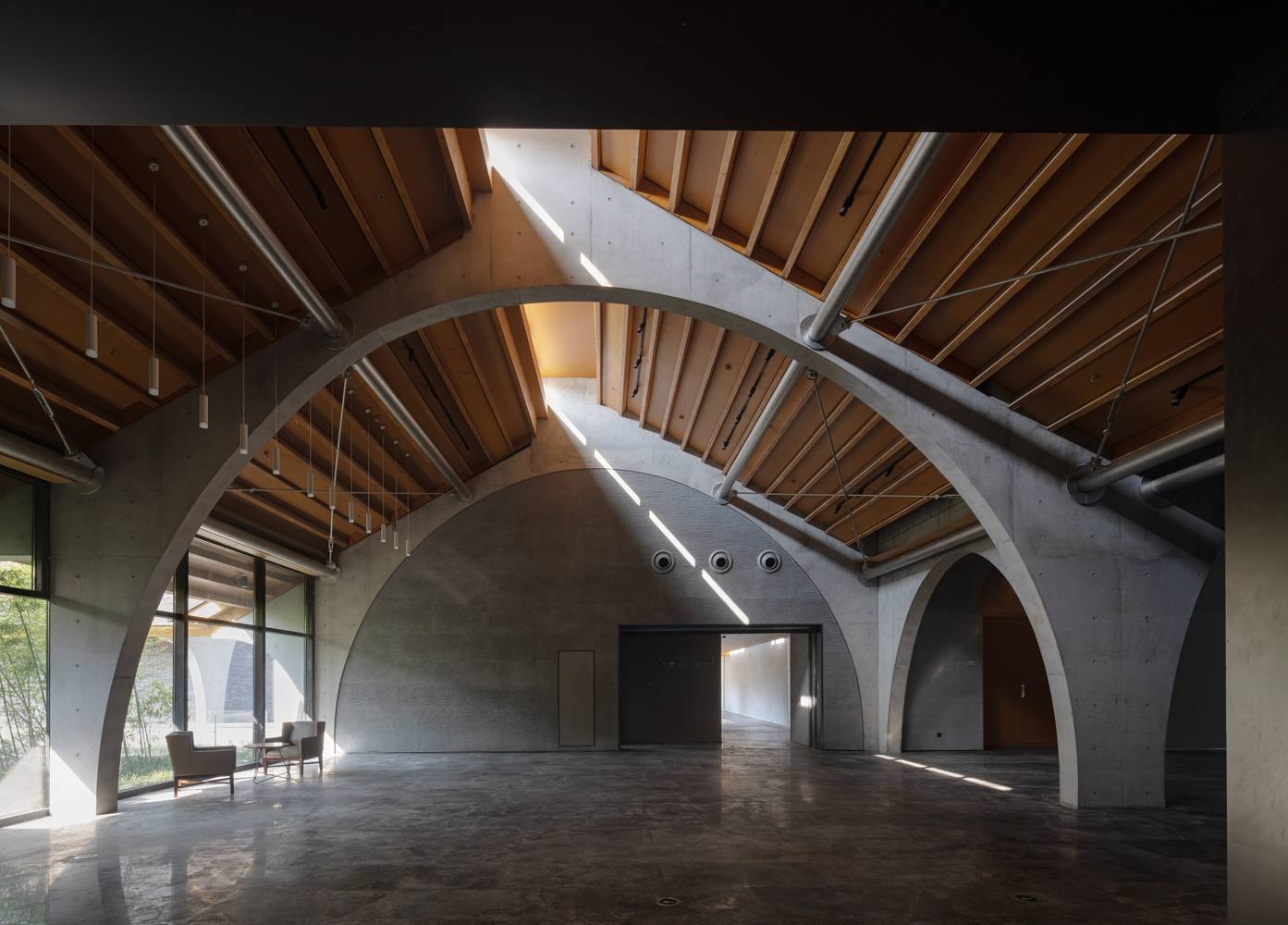
结构与形式的当代诠释与材料的诚实表达:在室内空间的处理上,设计以安仁公馆的牌楼为参照,发展出一套以6m*6m为模度的混凝土“片拱”系统。这一系统既是空间的基本单元,也回应了公馆的折衷主义风格。更具建筑学价值的是,设计采用了混凝土、钢结构(圆管及拉杆)和木结构(屋架)的混合受力体系,并将这三种真实受力的构件完全暴露。这种结构上的诚实表达,不仅是对历史公馆“砖木混合”结构的当代转译,也使得空间层次丰富,深化了建筑在当代语境下对本土类型的延续与拓展。
The Anren Ancient Town, home to the Great Craftsman Culture Center, is located in the southwest of Chengdu, Sichuan Province, where buildings of different periods, styles, and scales have formed a complex, diverse, and often contradictory urban fabric over more than a thousand years of historical evolution.
大匠之门文化中心所在的安仁古镇位于四川省成都市西南部,在千余年的历史演变中,不同时期、不同风格和尺度的建筑共同组成了复合、多元、对立的城镇面貌。
© 是然建筑摄影
© 是然建筑摄影
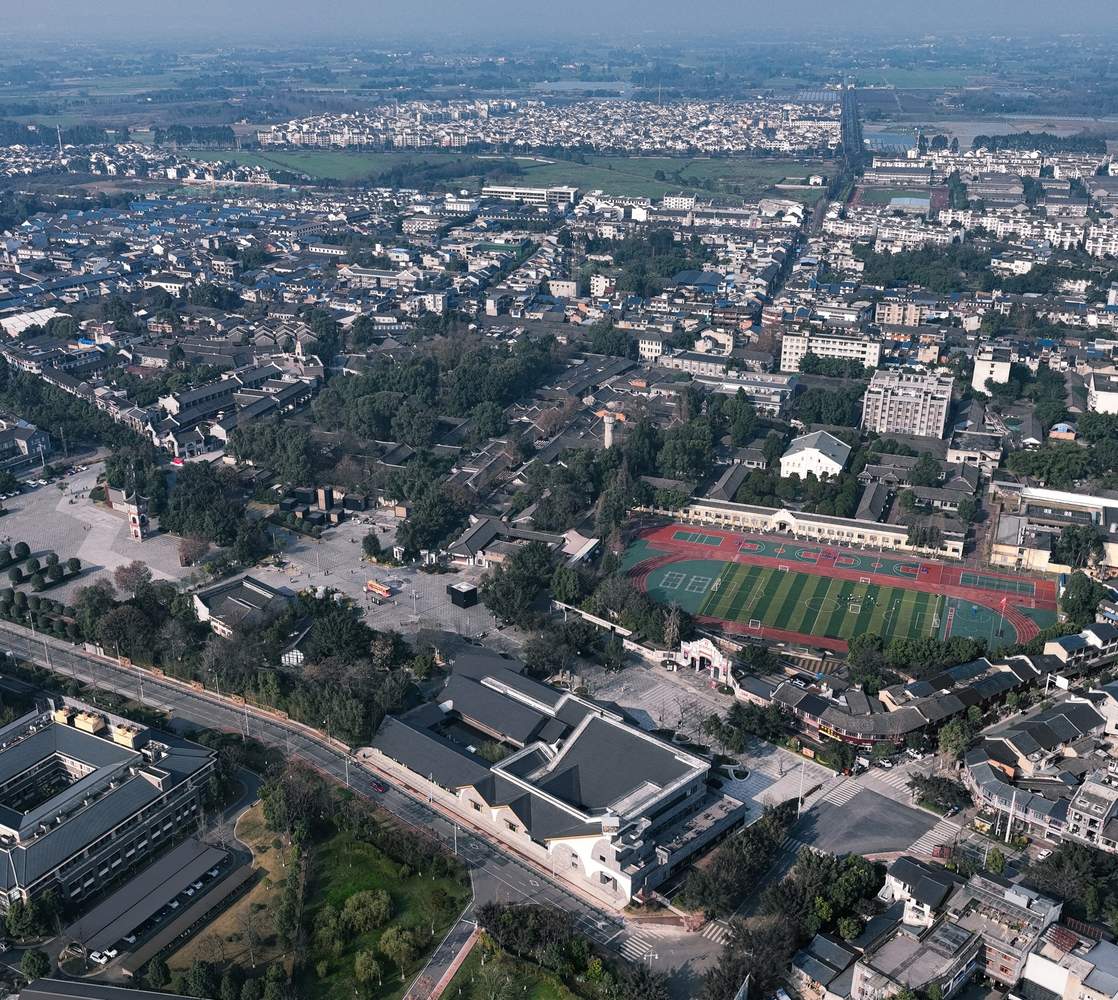
The project site is situated in the core area of the ancient town, traversed by the main town road. It is bordered by the ancient Shuren Street to the north, the Sheraton Hotel to the south, the Liu Family Manor and Jianchuan Museum Cluster to the east, with the Anren Ancient Town Planning Exhibition Hall and Bazi Square at its center. The northern ancient street and mansion complex, built during the Republic of China era, features a compact layout in a typical eclectic style blending Chinese and Western elements. In contrast, the eastern side is characterized by large-scale building clusters formed under the context of rapid urbanization. These two parts of the urban texture are separated by the building site, resulting in a rupture in scale, orientation, and style.
项目用地位于古镇核心区,被城镇主干道贯通,北依树人古街,南临喜来登酒店,东接刘氏庄园和建川博物馆聚落,中心为安仁古镇规划展览馆及坝子广场。其中,北侧古街和公馆群始建于民国,布局紧凑,为典型中西融合的折衷主义样式;另一侧则为快速城镇化建设背景下形成的大尺度建筑群。两部分城市肌理以建筑场地为界,在尺度、朝向、风格上产生了割裂。
© 是然建筑摄影
© 是然建筑摄影
© 是然建筑摄影
© 是然建筑摄影
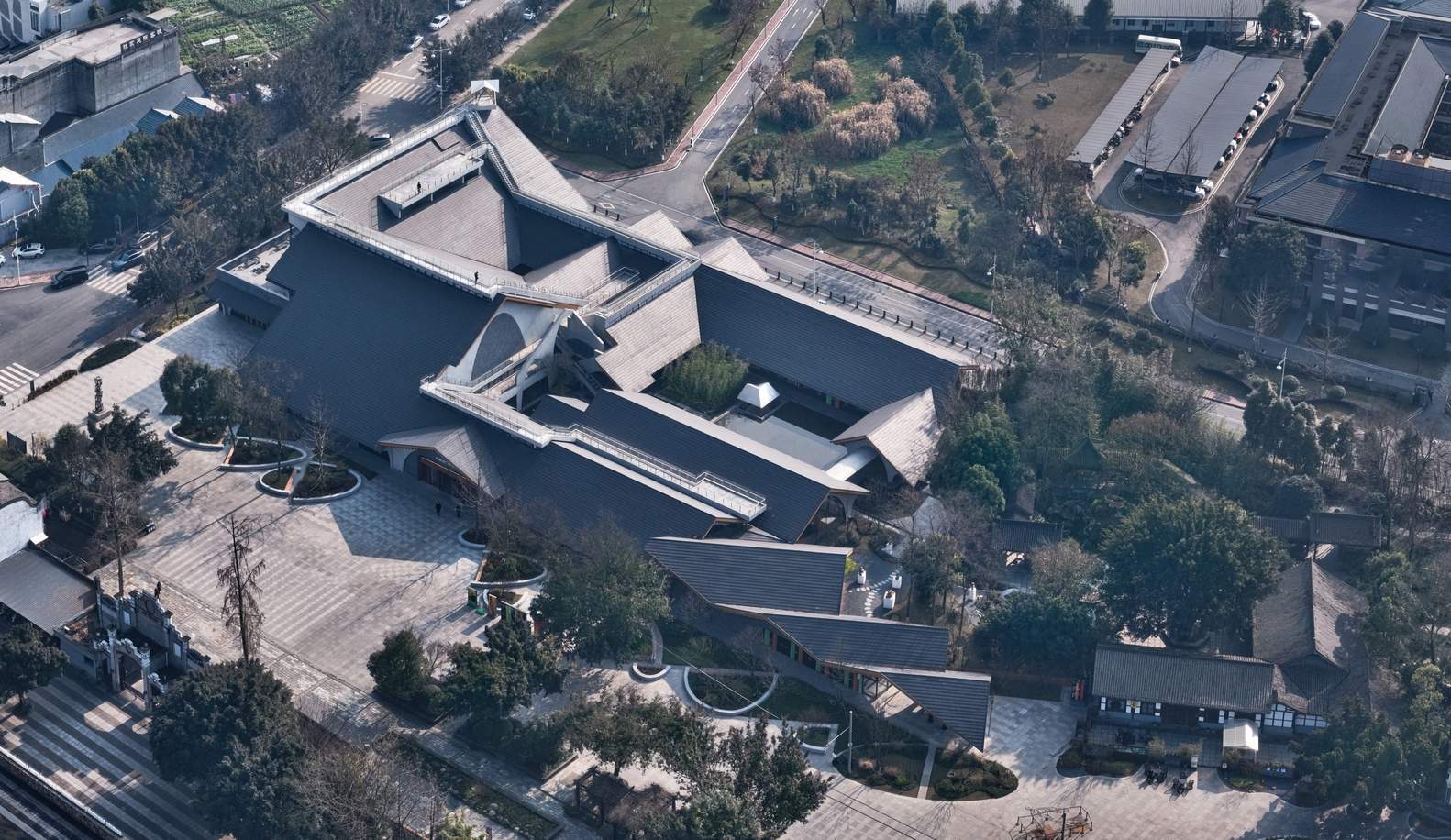
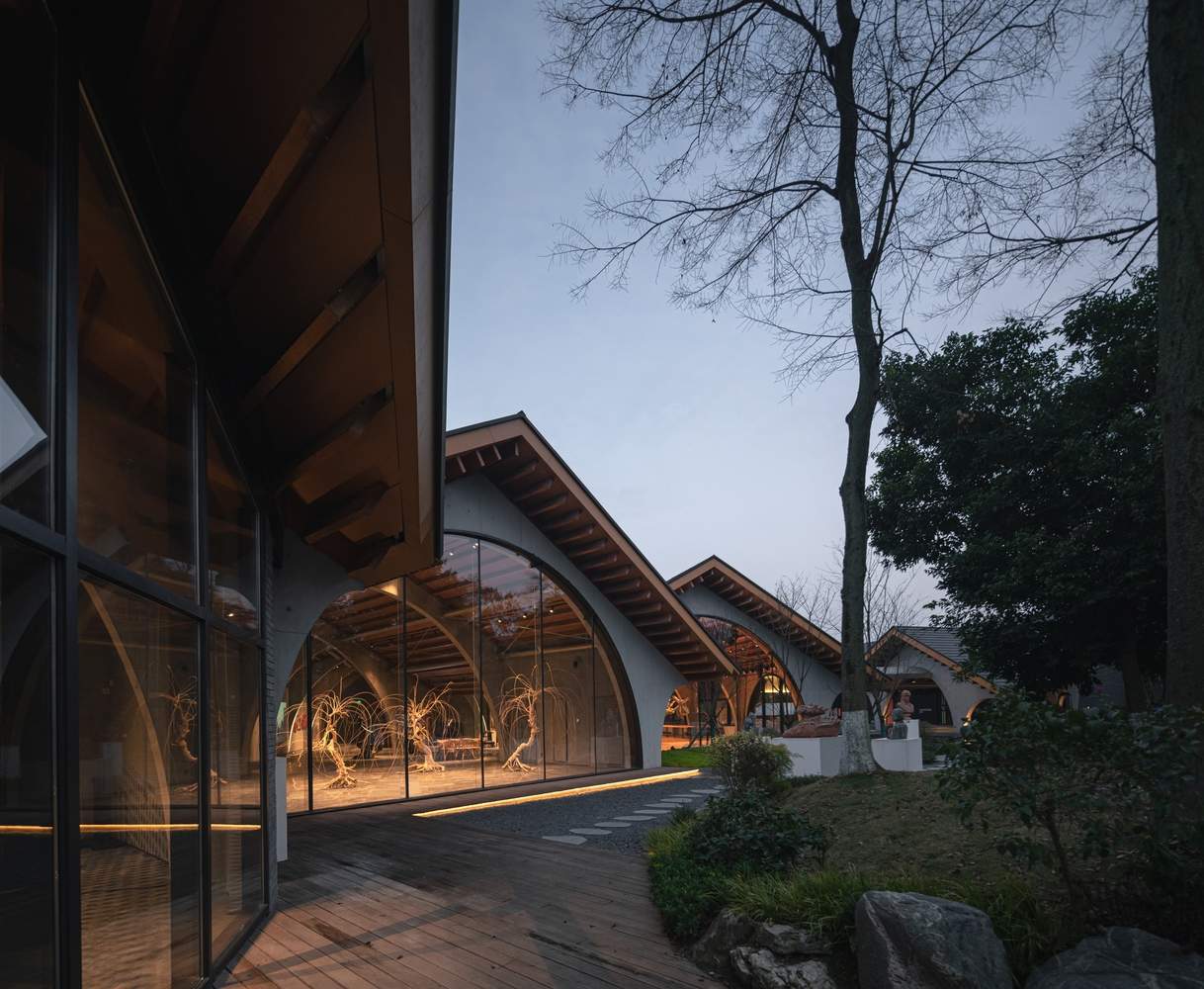
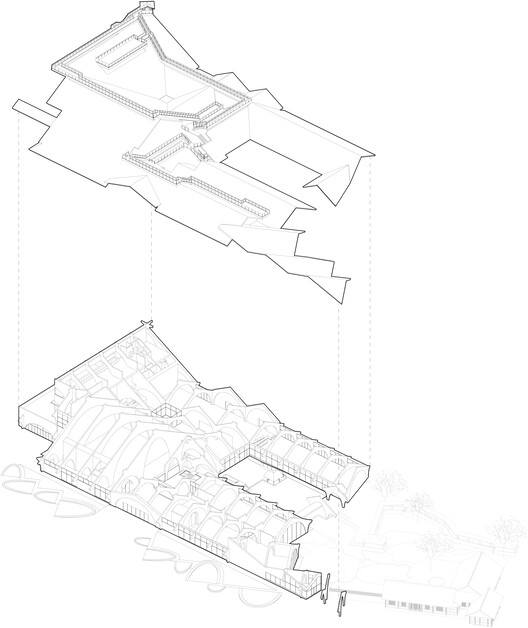
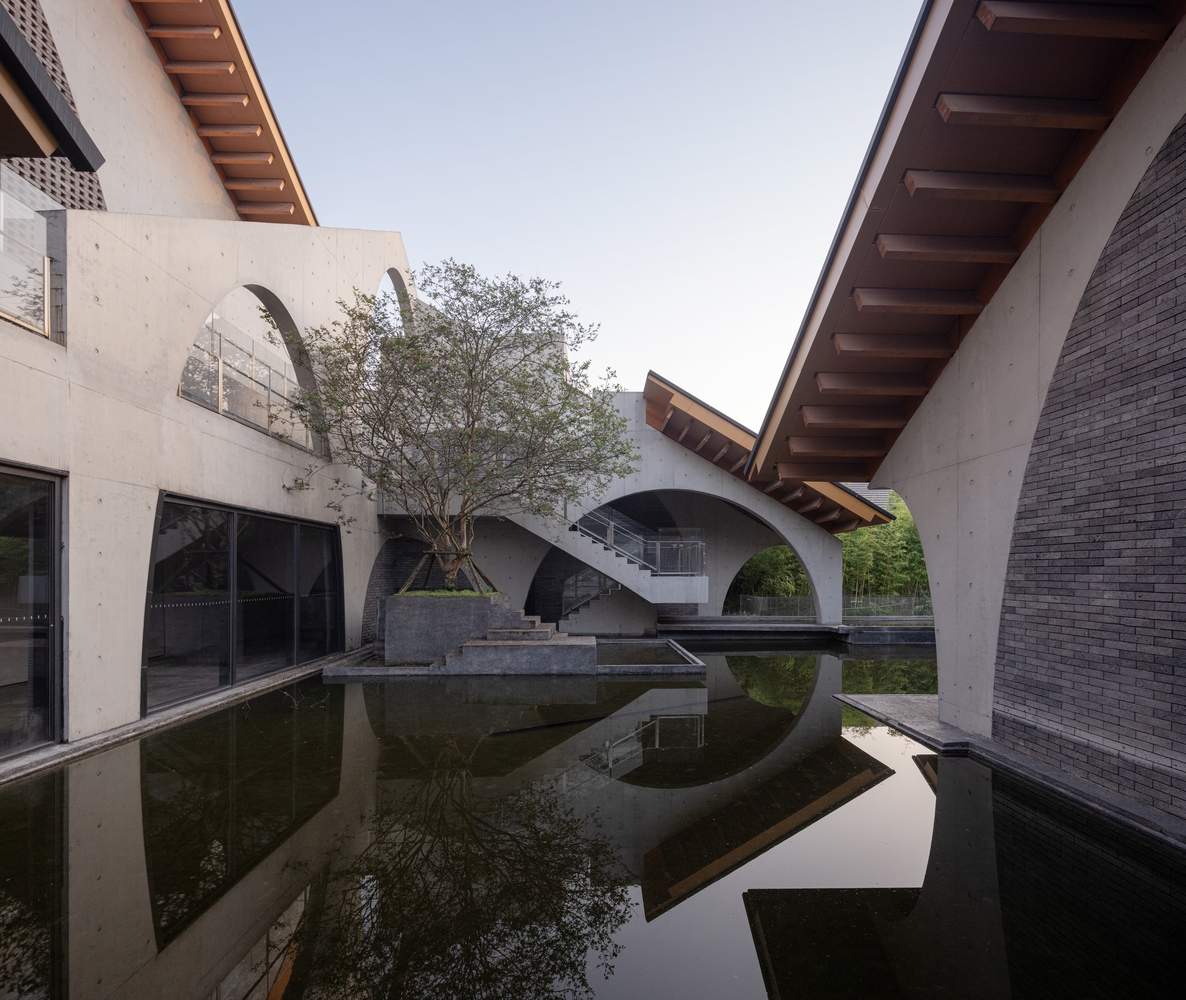
In such a complex and sensitive site environment, the design draws inspiration from the spatial characteristics of Anren’s unique local mansion architecture. Starting from the old residence of Chen Yuesheng, a group of pitched roofs, increasing in scale and progressively rising from west to east, forms an architectural space characterized by a free combination of residences and courtyards. This simultaneously responds to, connects, and reshapes the spatial order of the site, linking the architectural orientations and scales of the two urban fragments. It collects and dissolves the macro contradictions arising from the temporal development sequence within the architecture itself, thus repairing the fractured urban texture and reshaping the core space of the ancient town.
在如此复杂而敏感的场地环境中,设计借鉴了安仁本地独具特色的公馆建筑的空间特质,自陈月生老宅起,以一组自西向东尺度逐增、渐次抬升的坡屋顶群,形成了以自由组合的宅、院为核心特征的建筑空间,并同时回应、连接和重塑场地的空间秩序,联系两部分城镇空间的建筑朝向和尺度,将因发展时序产生的宏观矛盾汇集并消融于建筑本身,修复了割裂的城镇肌理,重塑了古镇的核心空间。
© 是然建筑摄影
Diagram
© 是然建筑摄影
In such a complex and sensitive site environment, the design draws inspiration from the spatial characteristics of Anren’s unique local mansion architecture. Starting from the old residence of Chen Yuesheng, a group of pitched roofs, increasing in scale and progressively rising from west to east, forms an architectural space characterized by a free combination of residences and courtyards. This simultaneously responds to, connects, and reshapes the spatial order of the site, linking the architectural orientations and scales of the two urban fragments. It collects and dissolves the macro contradictions arising from the temporal development sequence within the architecture itself, thus repairing the fractured urban texture and reshaping the core space of the ancient town.
在如此复杂而敏感的场地环境中,设计借鉴了安仁本地独具特色的公馆建筑的空间特质,自陈月生老宅起,以一组自西向东尺度逐增、渐次抬升的坡屋顶群,形成了以自由组合的宅、院为核心特征的建筑空间,并同时回应、连接和重塑场地的空间秩序,联系两部分城镇空间的建筑朝向和尺度,将因发展时序产生的宏观矛盾汇集并消融于建筑本身,修复了割裂的城镇肌理,重塑了古镇的核心空间。
© 是然建筑摄影
© 是然建筑摄影
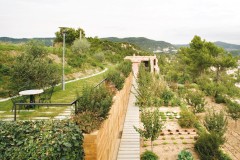
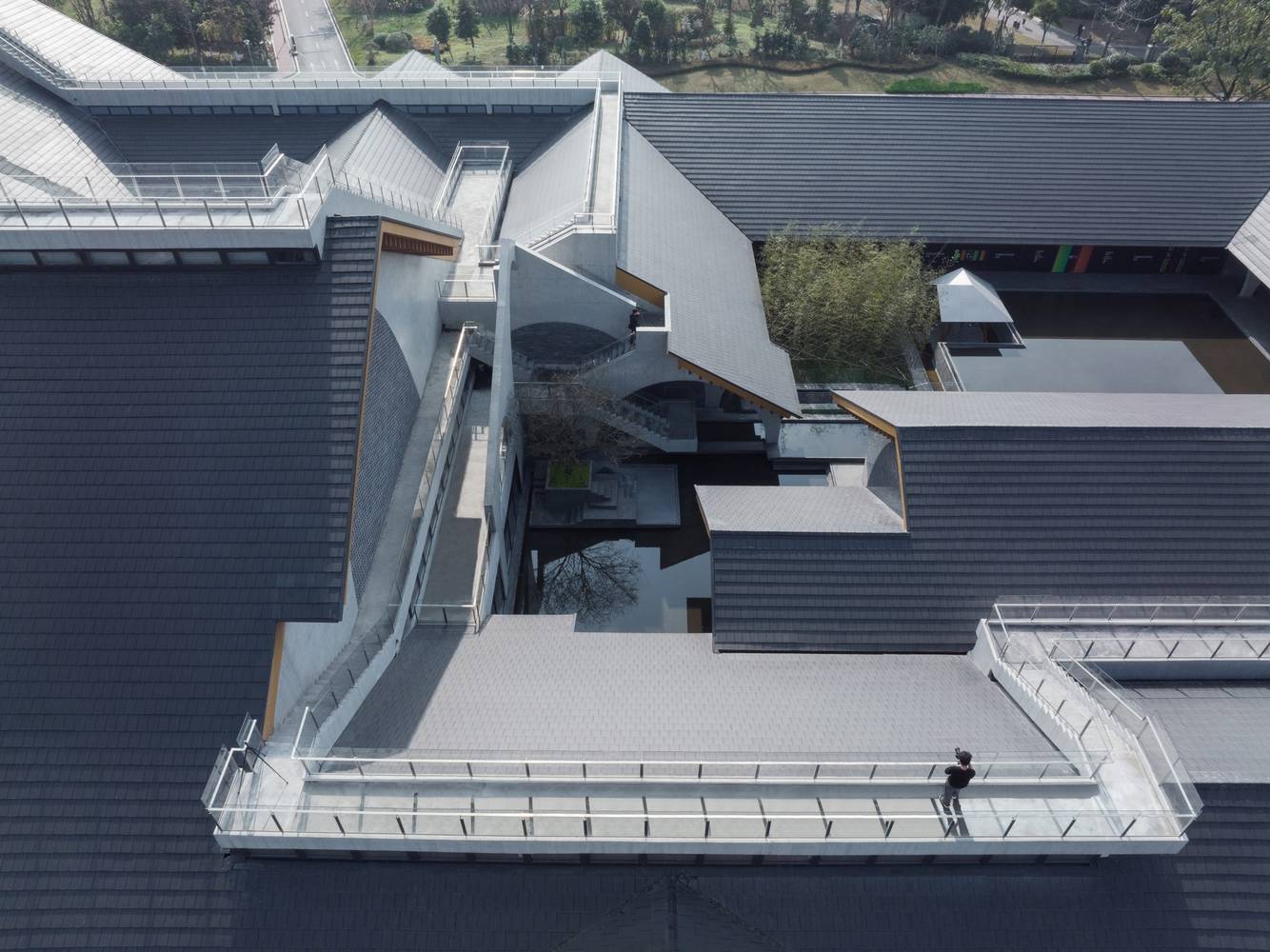
The roof walkway, set along the pitched roof cluster, starts from the central courtyard and meanders across the roof surface. It serves both as an important access route for roof maintenance and is fully open to residents and tourists, connecting the town and the building both horizontally and vertically. As visitors walk along it, sometimes on the ridge and sometimes sinking into the valleys, the surrounding landscape intermittently appears and disappears, imbuing the continuous pitched roof with the metaphor of "simulated mountains" (拟山), which echoes the distant Xiling Snow Mountains, constructing a public narrative where the building, the town, and the natural landscape co-constitute each other.
依附于坡屋顶群设置的屋顶栈道自中心庭院起,游走于屋面。既作为屋面检修的重要通道,亦可对居民及游客完全开放,在水平和垂直方向连接城镇与建筑。游人步行其中,或行于脊或沉入涧,周围景观时隐时显,使延绵连续的坡屋顶获得了“拟山”的意向,与远处的西岭雪山遥相呼应,构建了建筑、城镇与自然山水同构的公共叙事。
© 是然建筑摄影
© 是然建筑摄影
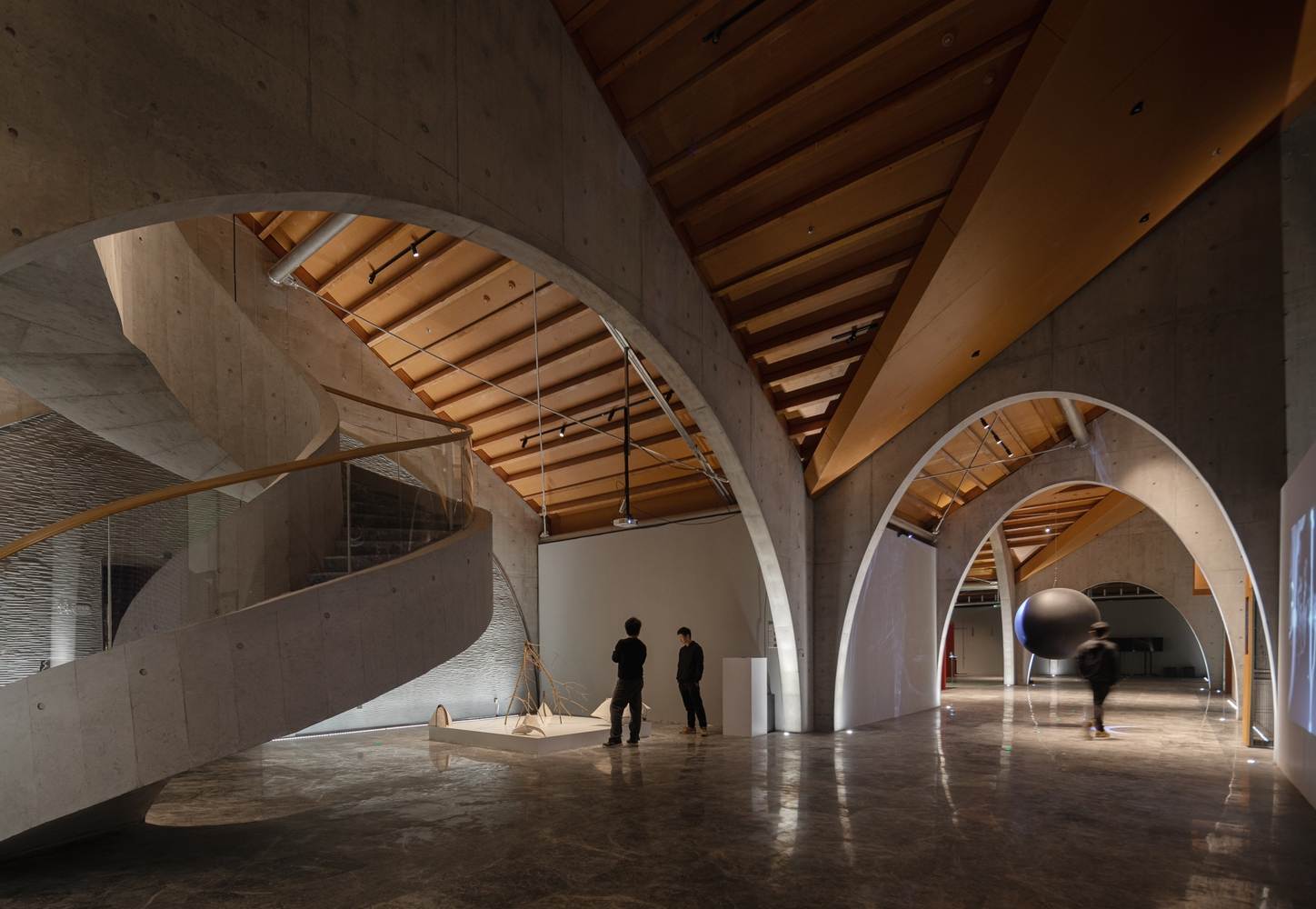
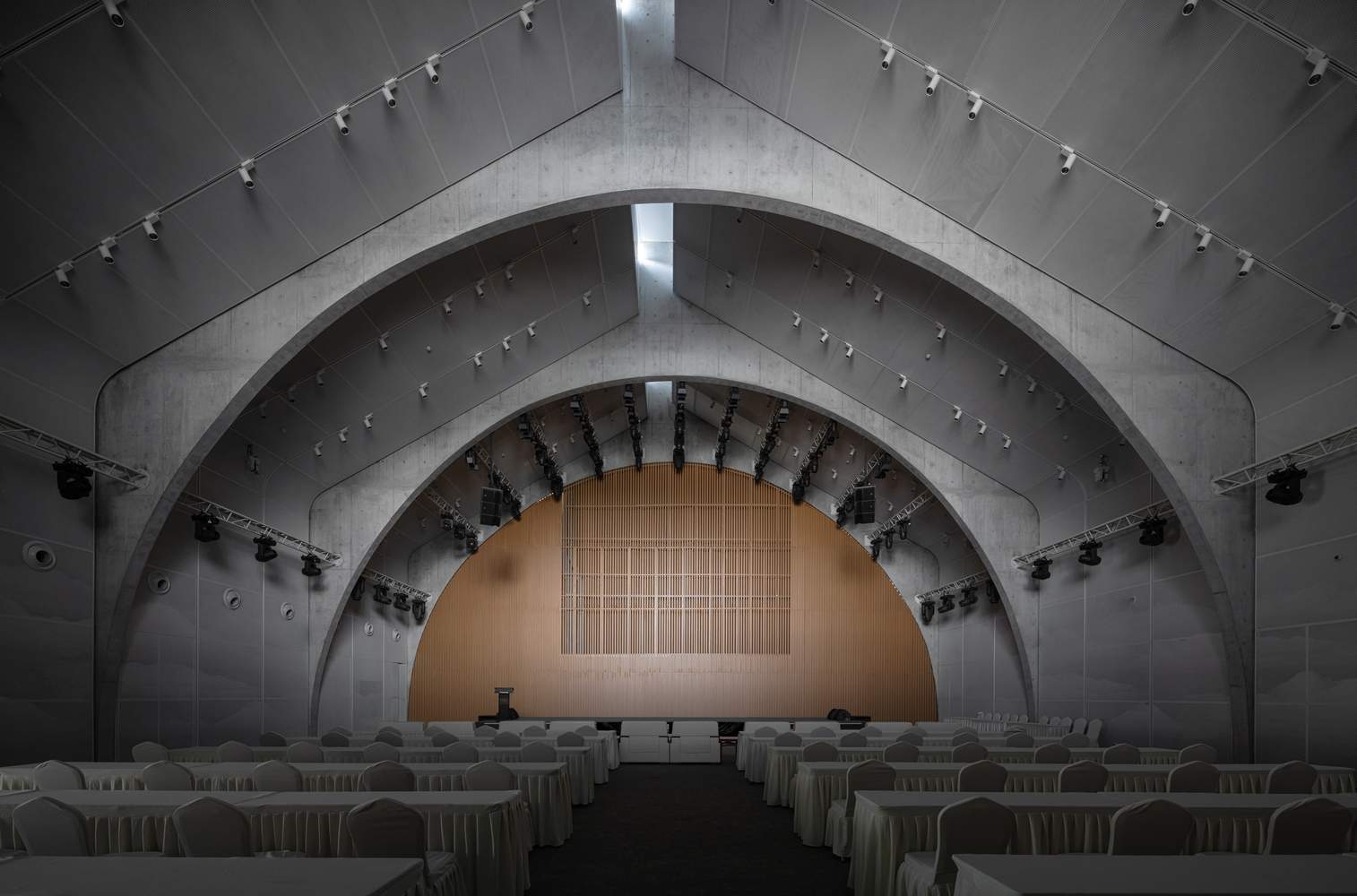
Beneath the pitched roofs, concrete arches of varying scales and forms were shaped as a historical reference, modeled after the distinctive archways (牌楼) of the Anren mansions, serving as a response to Anren's local eclectic architectural style. Based on a fundamental spatial module of 6m*6m, the combination and deformation of the "arch element" formed the basic spatial units adapted to different spatial needs and functions. These arch units, whether soaring or low-lying, correspond one-to-one with the pitched roof forms while simultaneously satisfying the needs for high-window lighting and the construction of the roof walkway.
坡屋顶下,以安仁公馆形色各异的牌楼作为历史参照,设计塑造了一系列尺度和形态各异的混凝土片拱,作为对安仁本土折衷主义建筑风格的回应。以 6m*6m 的基本空间模度为基础,通过对“片拱”元素的组合和变形,形成了适应不同空间需求和使用功能的基本空间单元。这些片拱单元或高耸或匍匐,在与屋顶形态类型 一一 对应同时也满足了高窗采光及屋顶栈道搭建的需求。
© 是然建筑摄影
© 是然建筑摄影
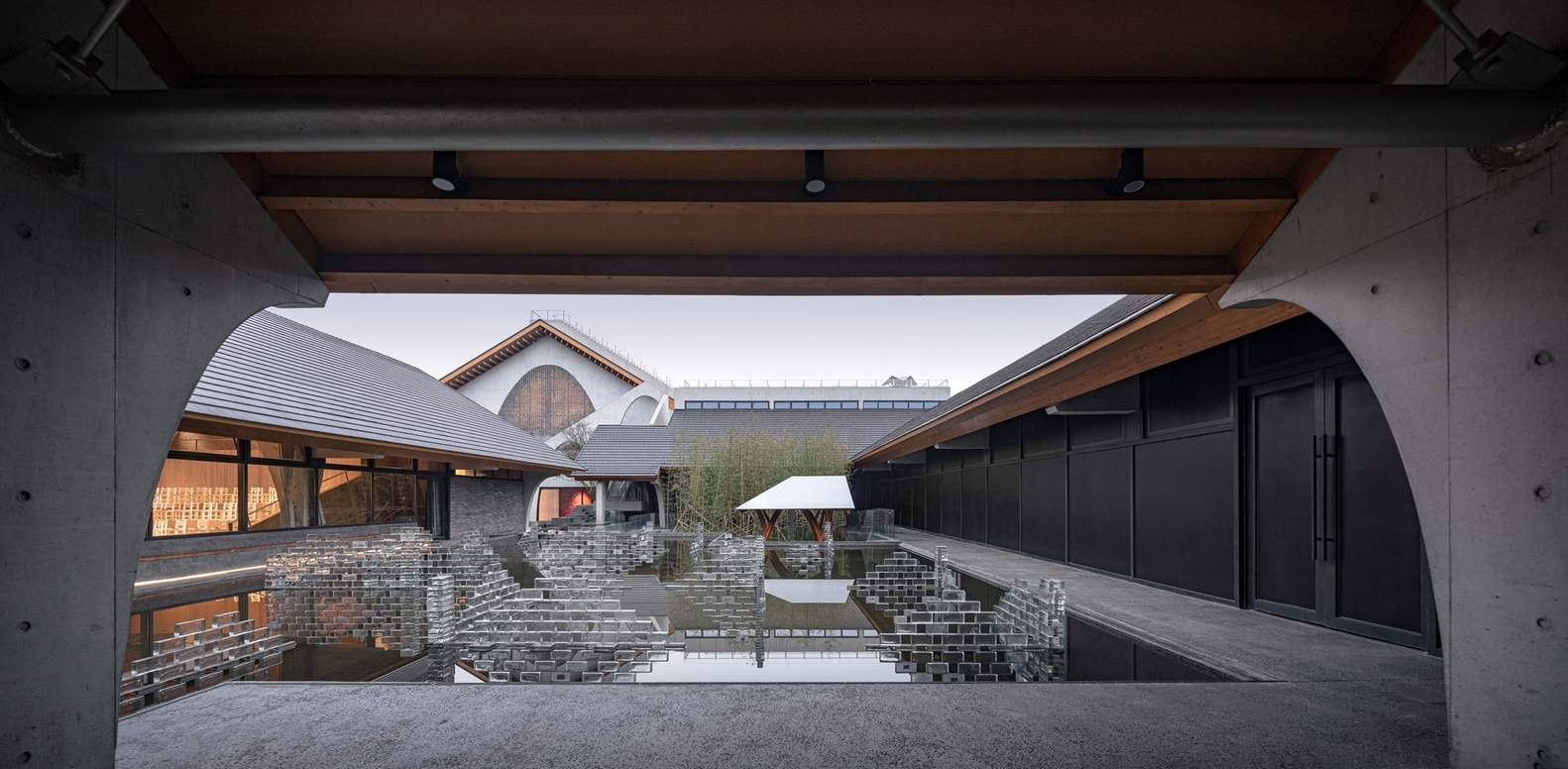
Using the concrete arch system as the framework, the design simultaneously introduced a hybrid structural system of steel and timber to echo the mixed brick-and-wood structure of historical mansion architecture—wooden roof trusses were erected upon the arches, and steel circular tubes and cross bracing were installed between the arches to maintain planar stability. The concrete, steel, and wood components, which truly participate in structural loading, are completely exposed within the building space and establish a close correspondence with the external pitched roof cluster, becoming a continuation and extension of the mansion typology in a contemporary context.
以混凝土片拱系统为骨架,设计还同时引入了钢结构及木结构混合受力以回应历史上公馆建筑砖木混合的结构体系 —— 片拱上架设木屋架,拱间架设钢圆管及交叉拉杆以保持平面稳定。混凝土、钢、木三种真实参与结构受力的构件被完全暴露于建筑空间中并与外部坡屋顶群建立了紧密的对应关系,成为公馆类型建筑在当代语境下的延续和拓展。