场地文脉的诗意回应与空间序曲:本项目以苏东坡“惠州十六快意”中“雨后看山”为灵感源泉,精准捕捉了城市与自然、记忆与未来的微妙张力。建筑师并未试图主导景观,而是将“山邮站”、“乡居亭”和“云亭”这三组轻盈的构造物巧妙地嵌入山体的断层、裂隙和路径起伏之中。这种布局策略体现了对现有地形的尊重与谦逊,使建筑群如同对大地发出的“三个安静的提问”,将地形的韵律转化为空间本身的秩序,成功地为到访者构建了一场穿越古今、被自然环抱的空间叙事序曲。
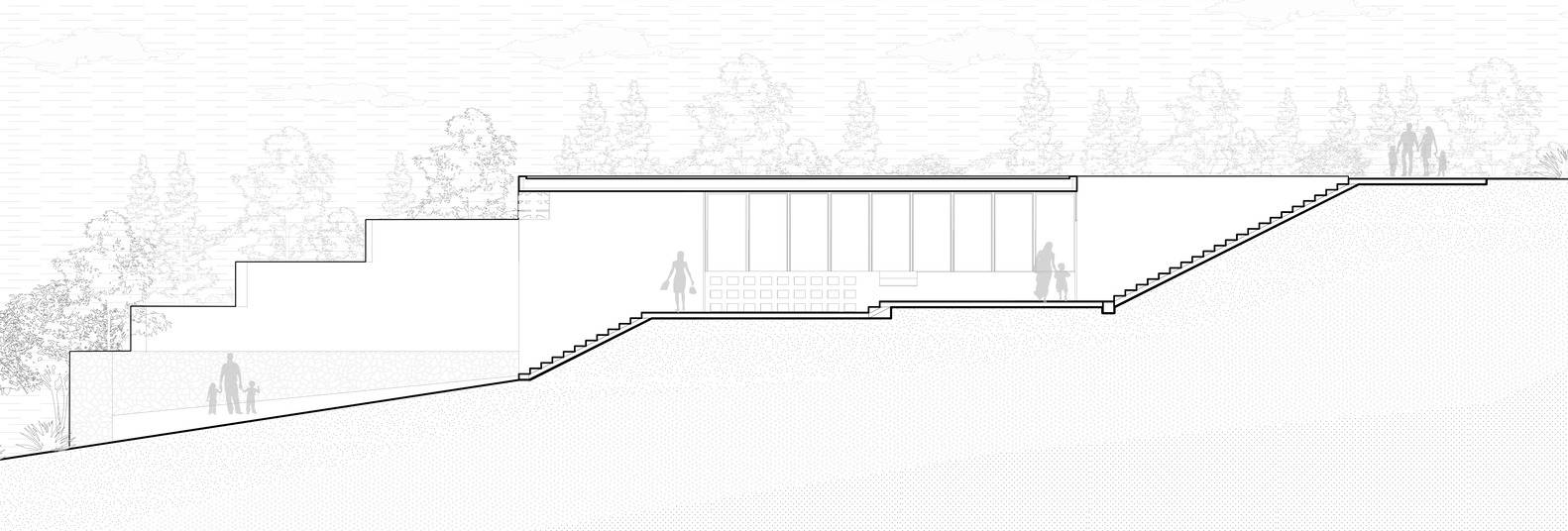
结构嵌入与地貌修复的工程学表达:“山邮站”的设计是项目在工程学层面与场地文脉深度融合的典范。它精准地选址于场地最低的东南角,利用其体量对破碎的地形边缘进行“修复”。通过上层与北侧山坡齐平、下层则顺应南侧道路高程并随山体轮廓向上延伸的双重对齐,建筑体量巧妙地完成了对地貌断层的嵌入。这种“嵌入式”设计不仅解决了高差问题,更通过其体量界定了路径的第一个转折点,强制性地引导游览者从线性的行进模式中抽离,进入对风、雨、材质等多元空间体验的沉浸式探索。
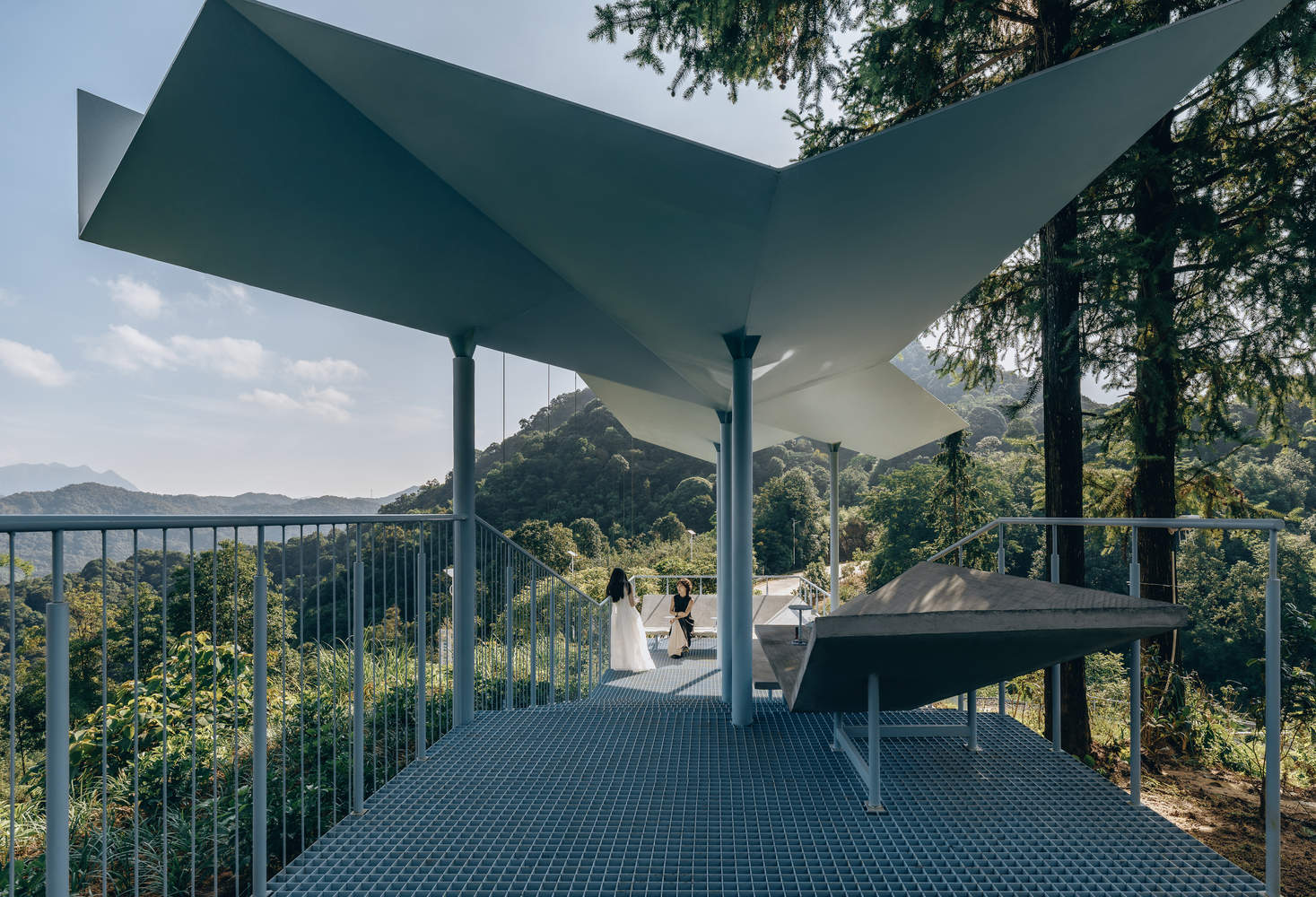
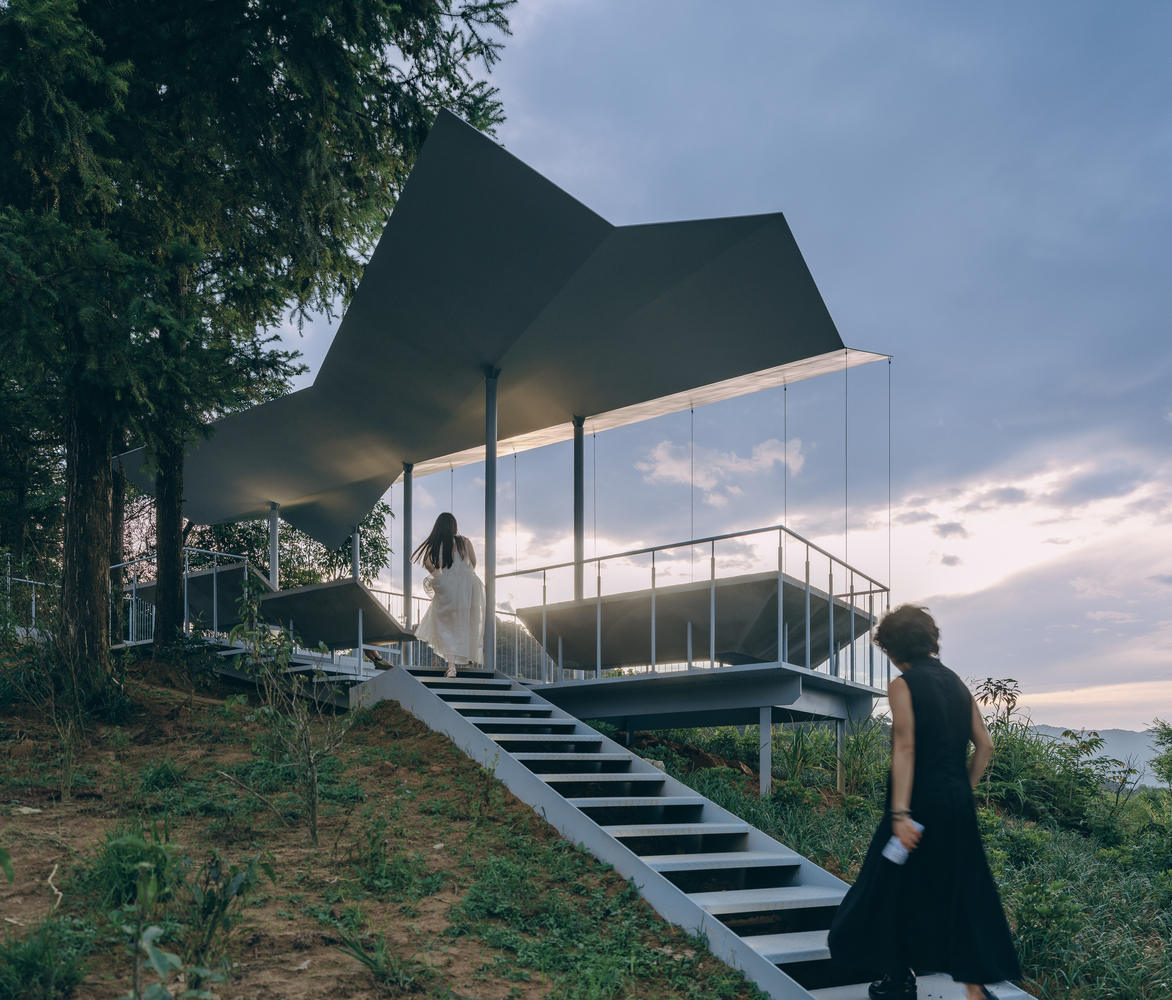
文化意象的物质化与自然现象的艺术捕捉:“乡居亭”和“云亭”则将文化意象与自然物理现象进行了精妙的物质化转译。乡居亭借鉴苏东坡头巾的几何逻辑,以雕塑与建筑之间的尺度,界定了可渗透的空间和流线,使光影与远云共舞,雨滴敲击声成为诗意的回响,是地域文化身份的深刻表达。而“云亭”通过V形折叠钢板屋顶,将暴雨转化为可见的水流轨迹,实现了对惠州雨景的直接艺术化捕捉。这种对自然动态的响应(如风中云海升腾),使得结构不再是静态的庇护所,而是参与到场地日常变化的动态媒介。
English translation of the text from the architect.
来自建筑师。
© Yumeng Zhu
© Yumeng Zhu
From the architect.Located at the foot of Nankun Mountain in Huizhou, Guangdong, Half-Mountain Cloud Station serves as a key node in the "Two-Mountain Architectural Art Program". Inspired by Su Dongpo's "Sixteen Joys of Life in Huizhou", specifically the verse "viewing mountains after rain from a tower", the project responds poetically to the delicate tensions between city and nature, memory and future. Nestled within a mountainous forest, three lightweight constructions pose three quiet questions to the landscape. These constructions neither occupy the center nor dominate the height, rather, they find their own order within fault lines, crevices, and along the shifting path, transforming topographical undulations into a rhythm of space. The three constructions—Mountain Post, Hometown Pavilion, and Cloud Pavilion—are like gentle knocks on the door of time, initiating a dialogue spanning millennia and a journey cradled by nature.
© Yumeng Zhu
© Yumeng Zhu
© Yumeng Zhu
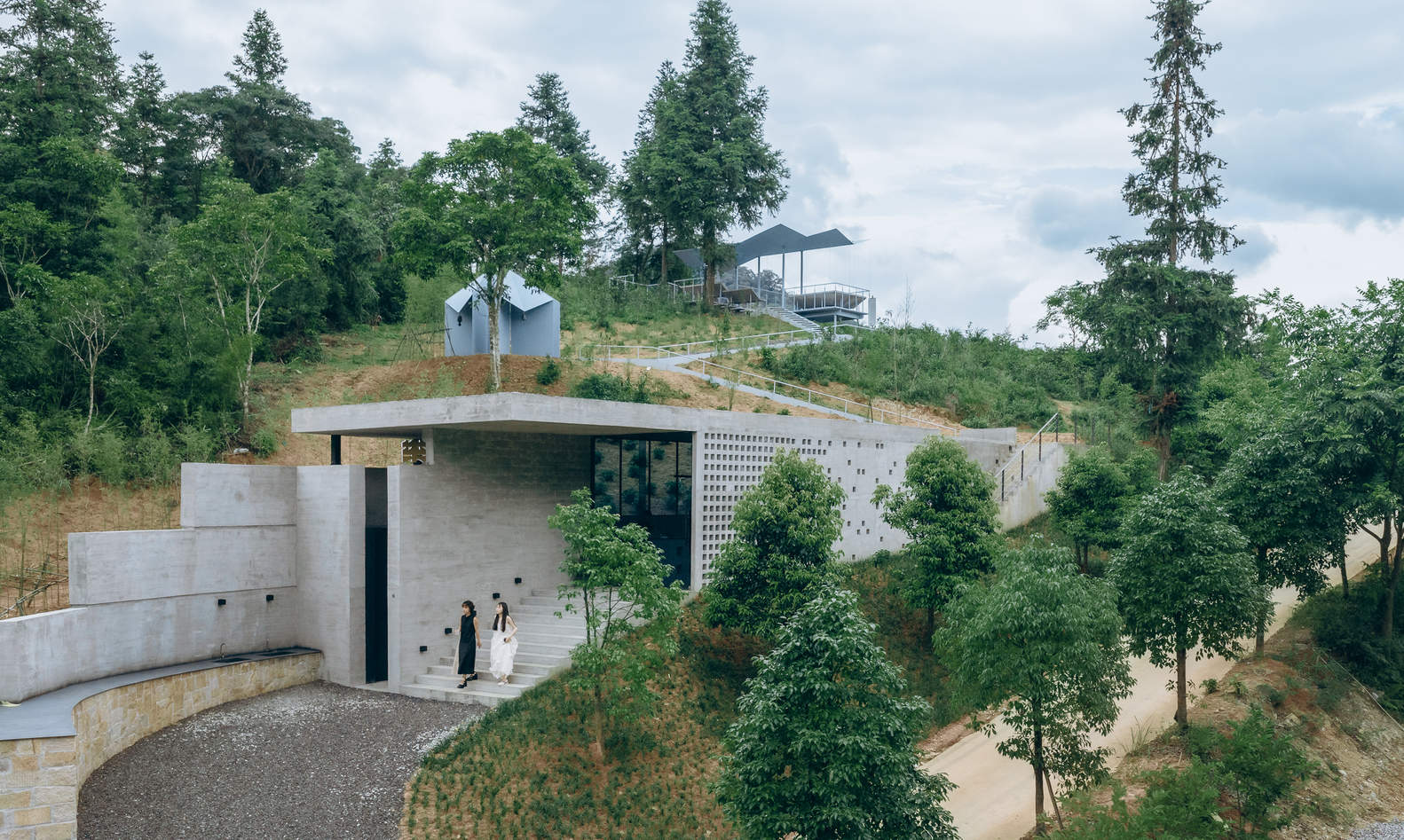
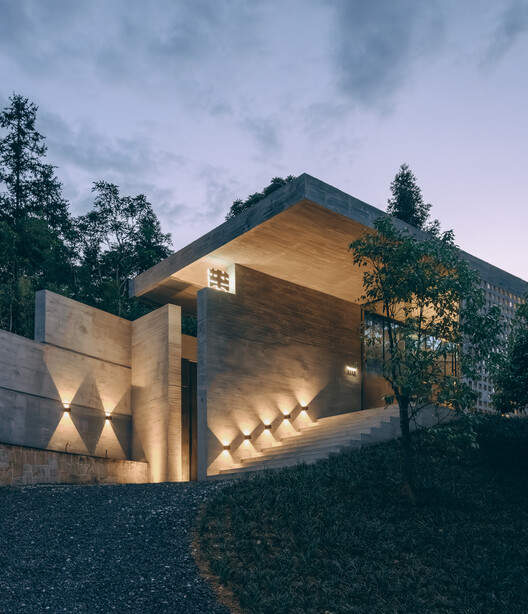
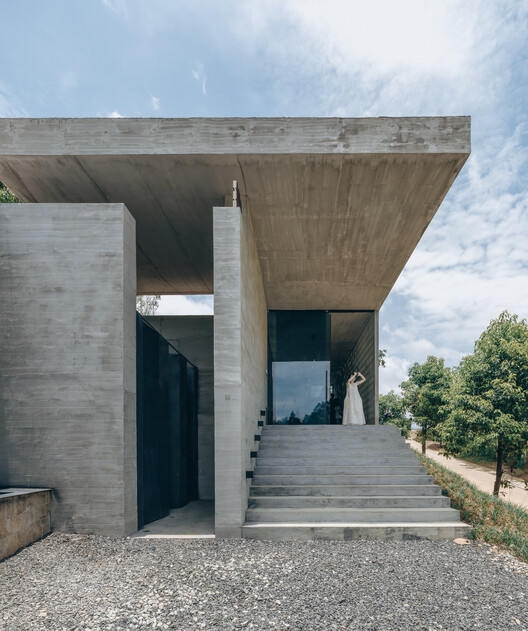
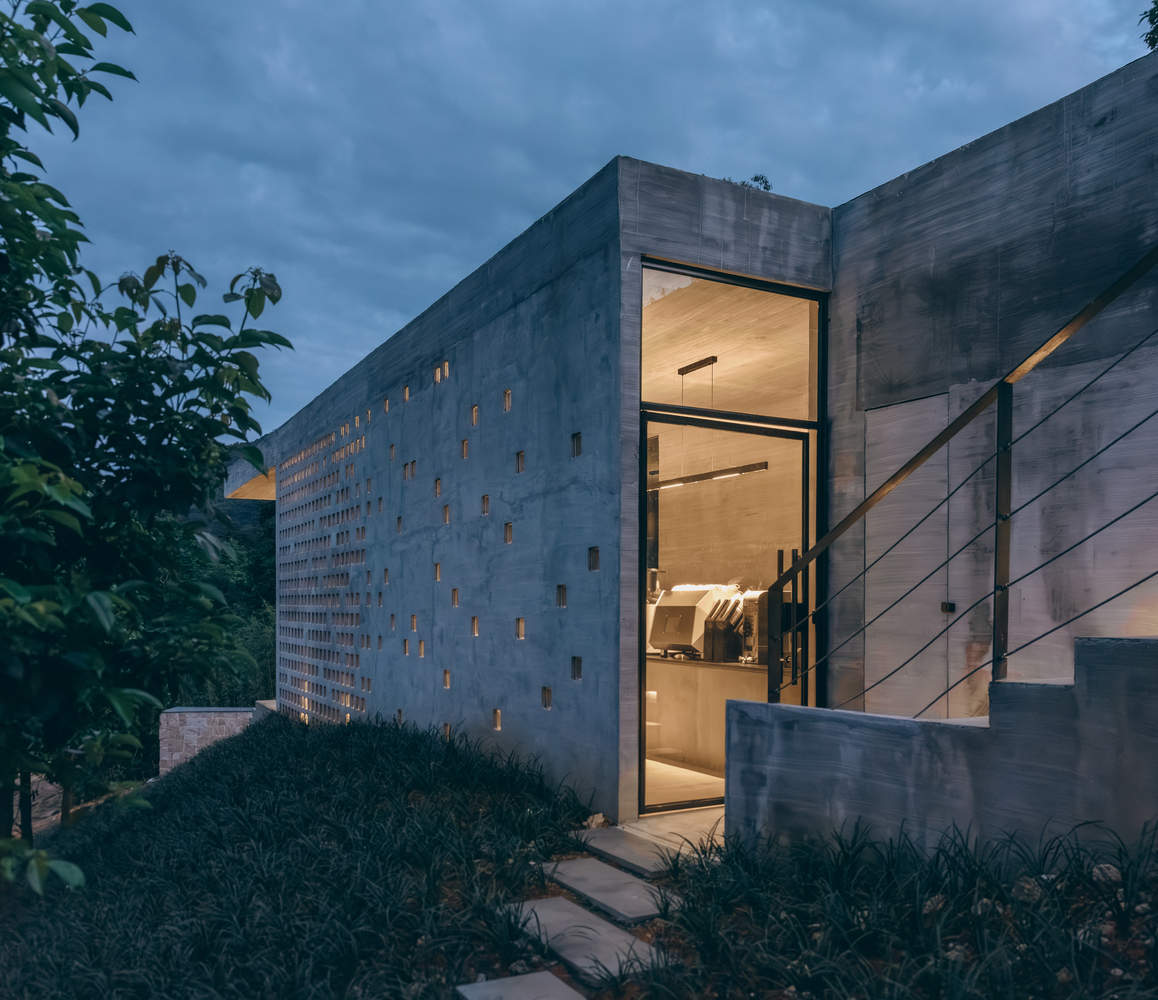
I. Mountain Post — The site descends from north to south, with a local road to the east. A sharp elevation difference exists between the foot of the mountain and the road, where exposed soil and fault lines mark the terrain's edge. Positioned at the lowest southeastern point, Mountain Post initiates the ascent. Embedded into the gentle slope, the structure uses its volume to repair the fractured landscape.
© Yumeng Zhu
© Yumeng Zhu
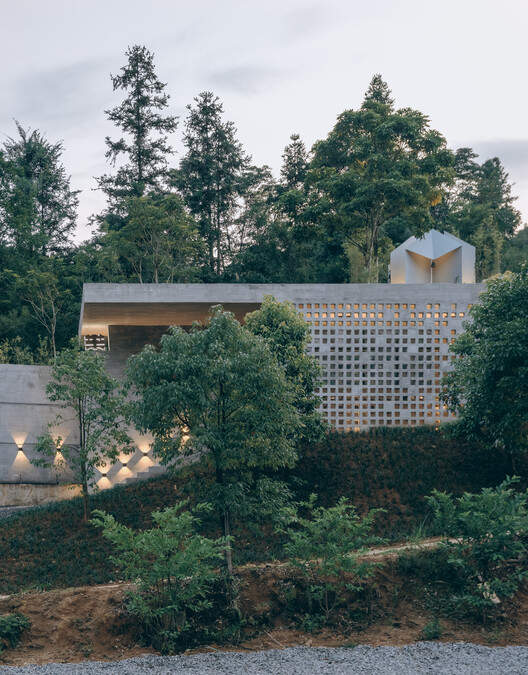
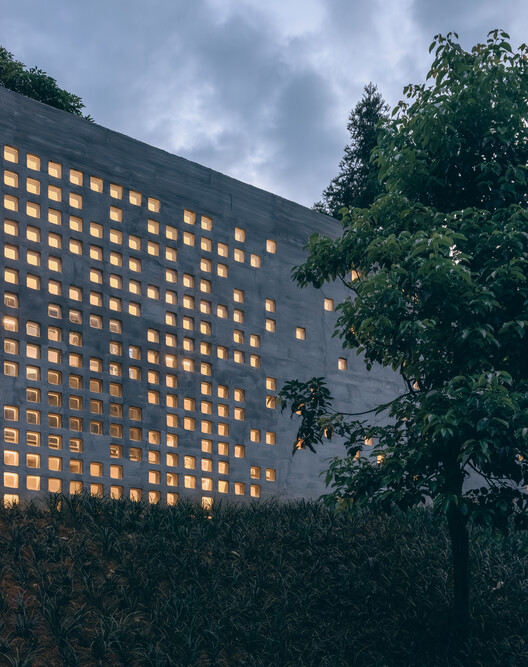
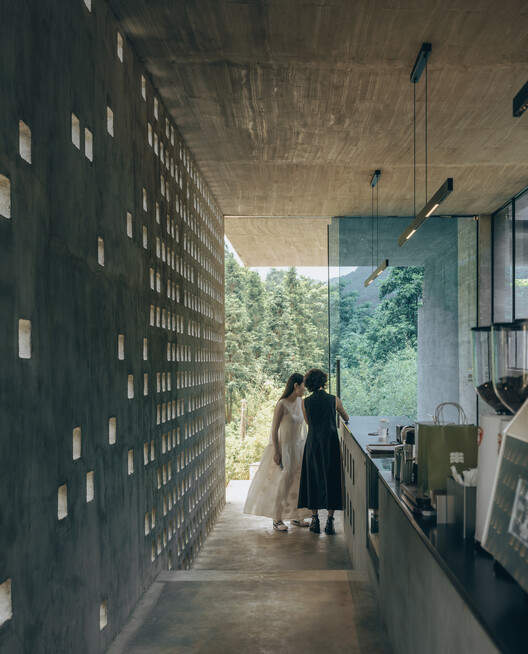
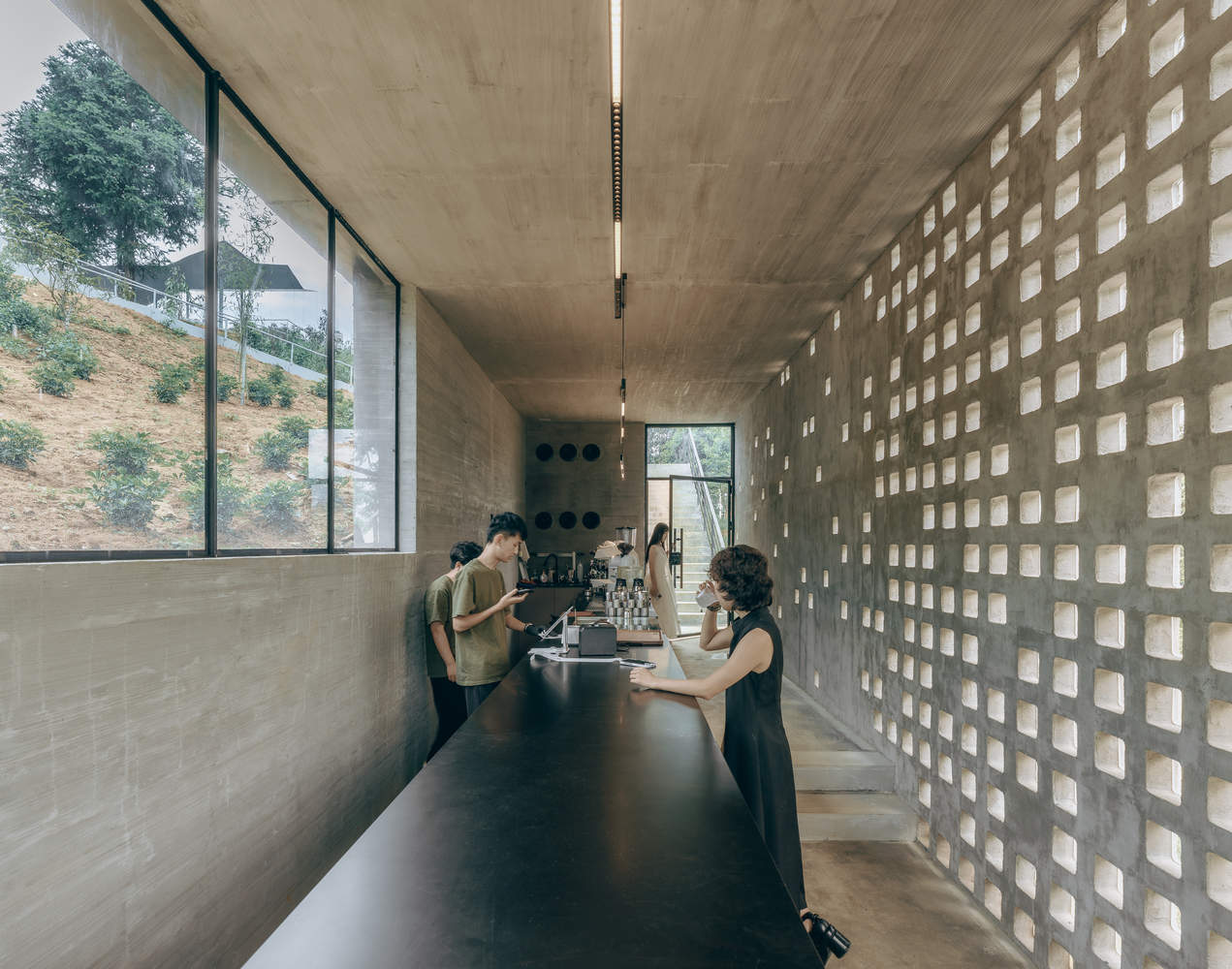
The top level aligns with the northern slope, cantilevering southward to form an interior space housing a café and public restroom. The lower level aligns with the southern road elevation and steps upward with the mountain's contour, subtly merging into the hillside.
© Yumeng Zhu
© Yumeng Zhu
© Yumeng Zhu
It intersects the mountain path in height, marking the first turning point in the route and guiding visitors away from speed and linearity into a spatial polyphony of wind, rain, and shifting textures.
© Yumeng Zhu
Section
© Yumeng Zhu
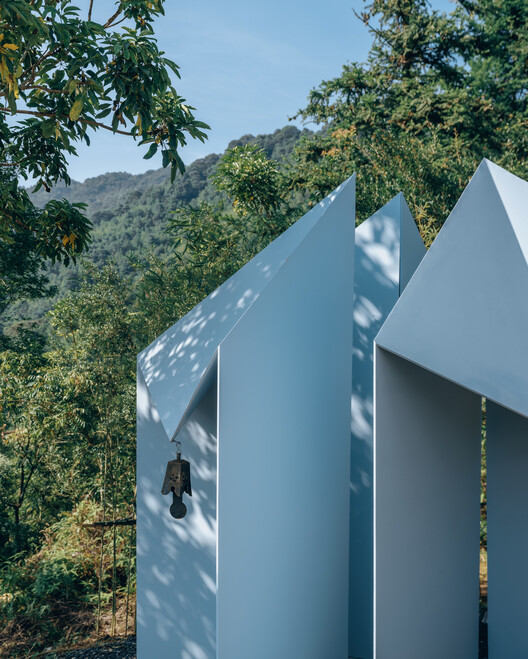
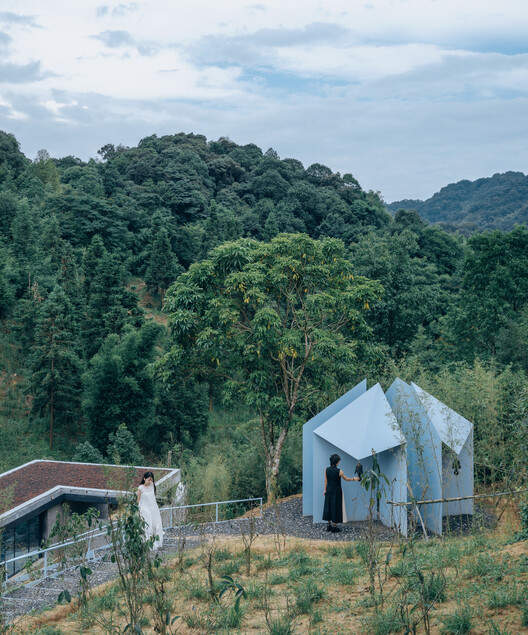
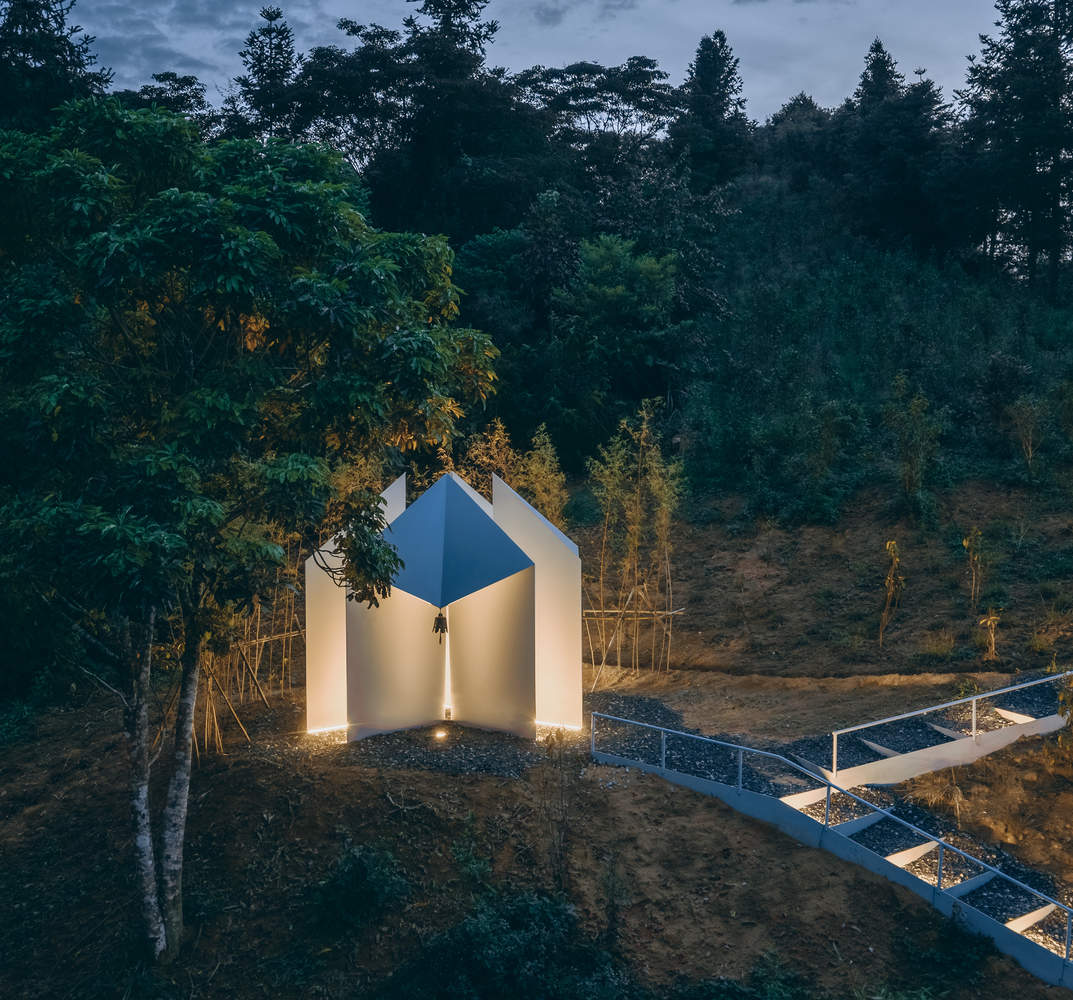
II. Hometown Pavilion — Designed by sculptor Mr. Li Nu, Hometown Pavilion stands at the site's heart as its most culturally resonant node—a semantic construct of "local identity". Evoking the broad sleeves of Northern Song Dynasty robes, its structure reinterprets the geometric logic of Su Dongpo's headscarf into spatial form, honoring the poet and welcoming wanderers.
© Yumeng Zhu
© Yumeng Zhu
Composed of four modules, eight walls, and sixteen steel plates, the pavilion scaled between sculpture and architecture, define permeable spaces and flows: intimate whispers within, circumambulatory gazes outside, and fissures for passage between four pavilion units. Sunlight casts steel reflections that dance with distant clouds; raindrops striking its surface echo like fragments of poetry left by ancient ink-splashing.
© Yumeng Zhu
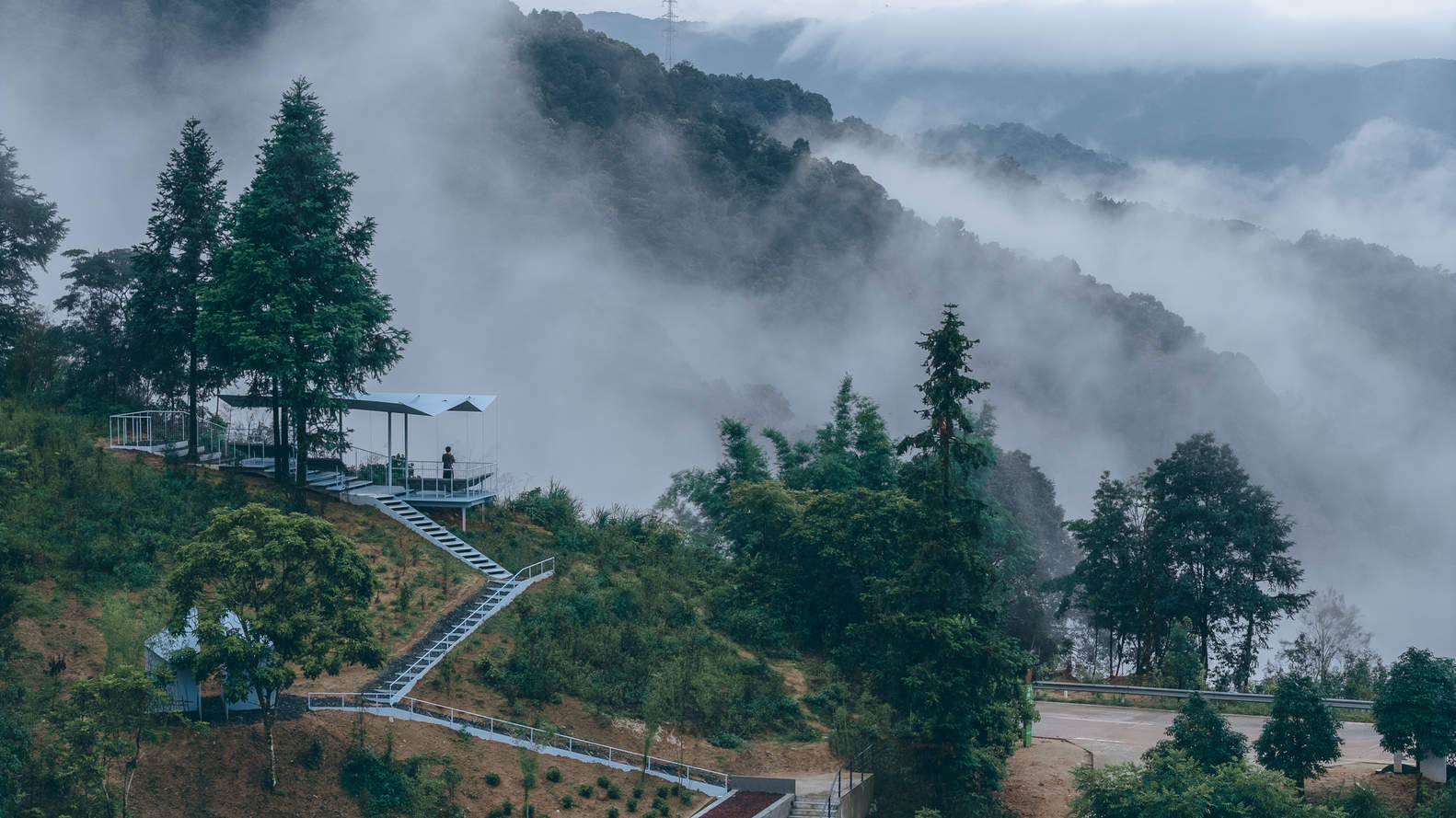
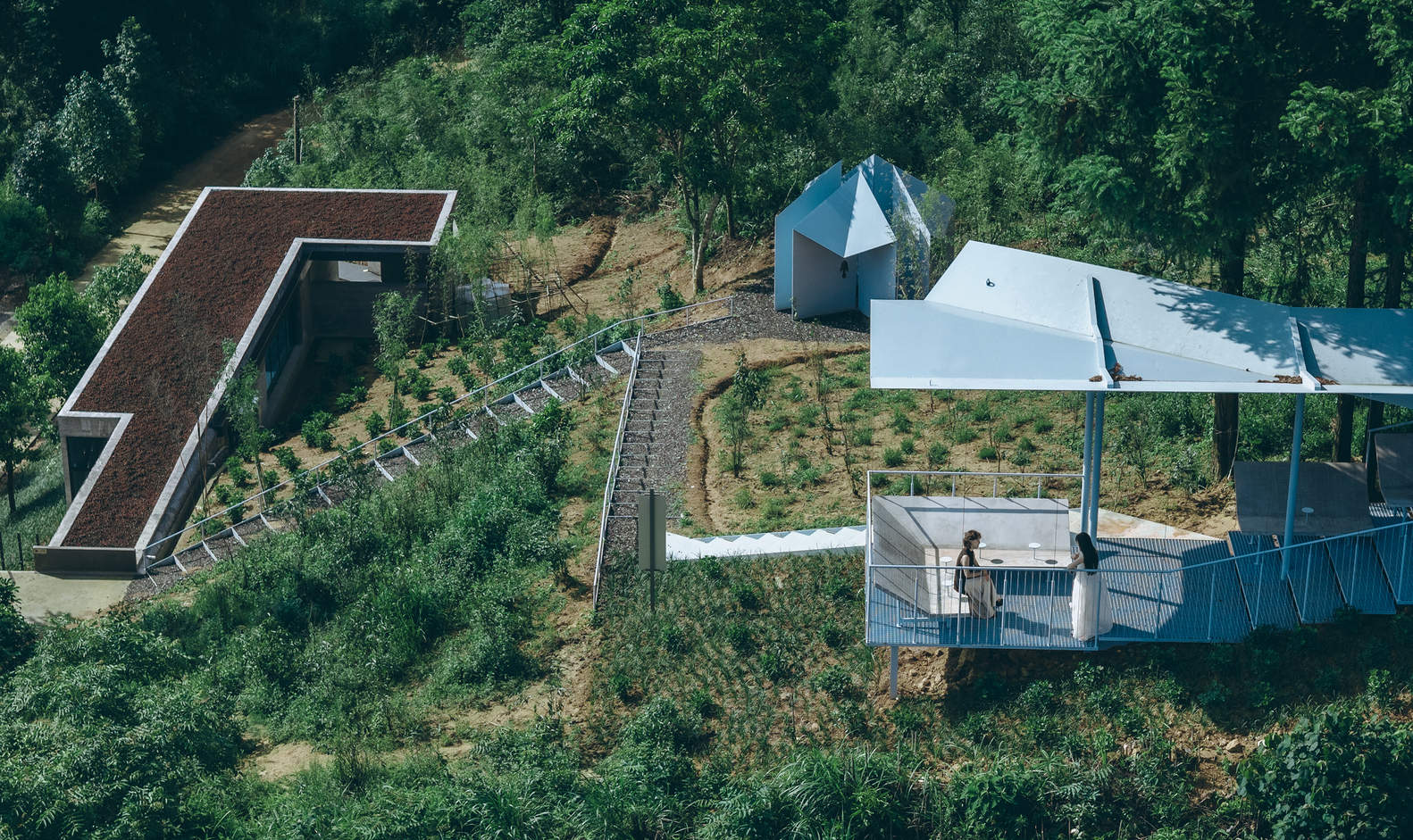
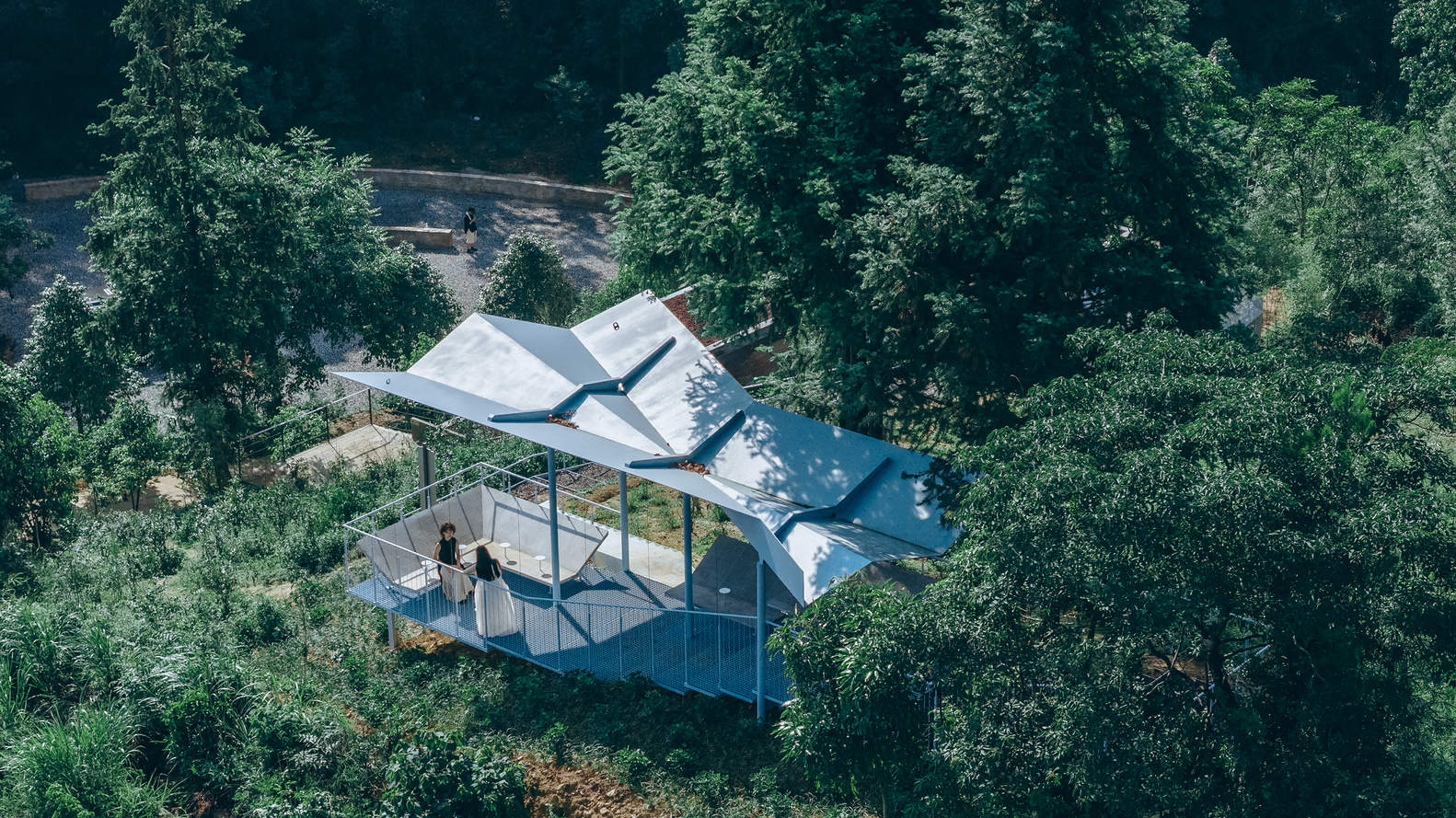
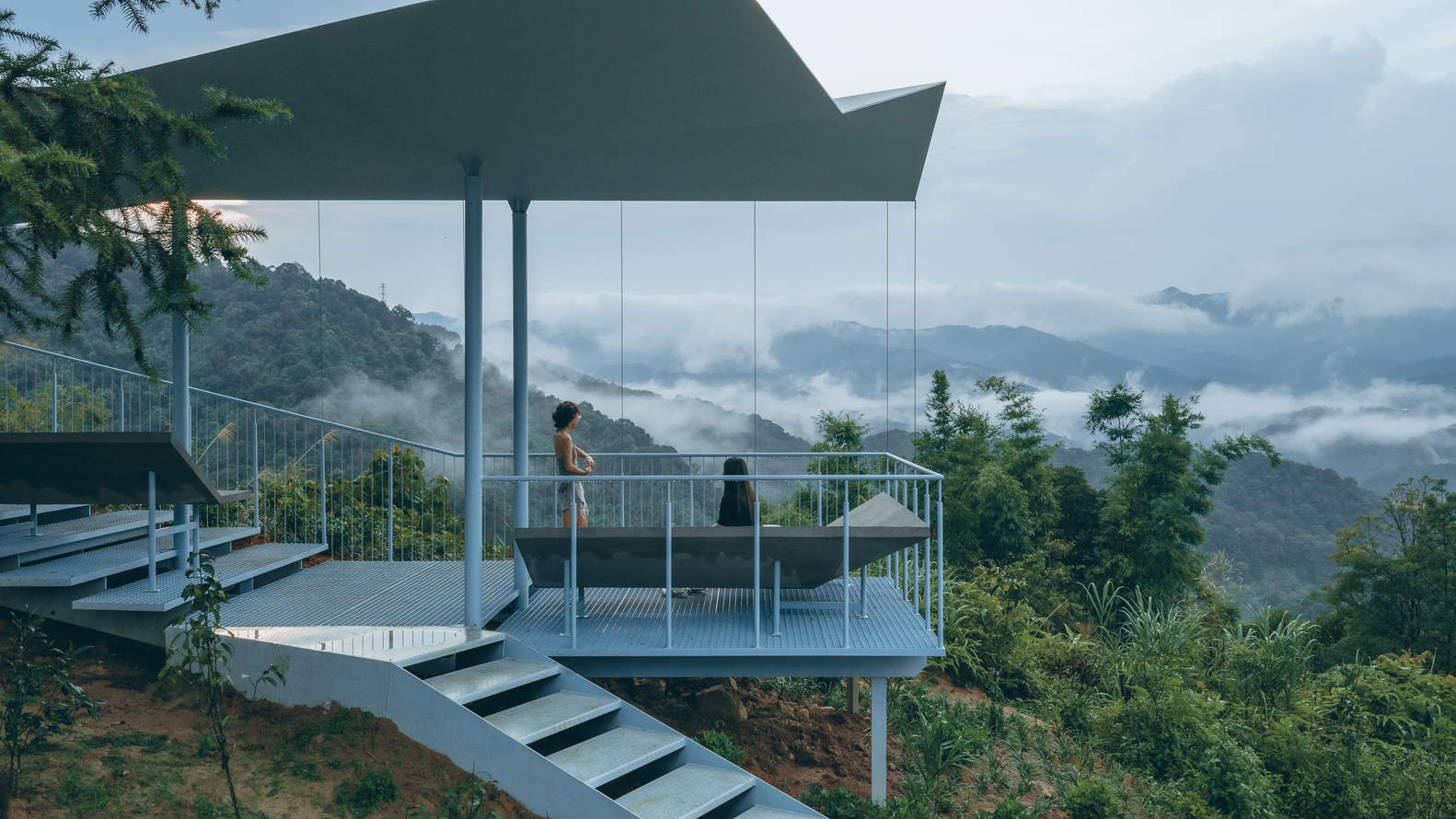
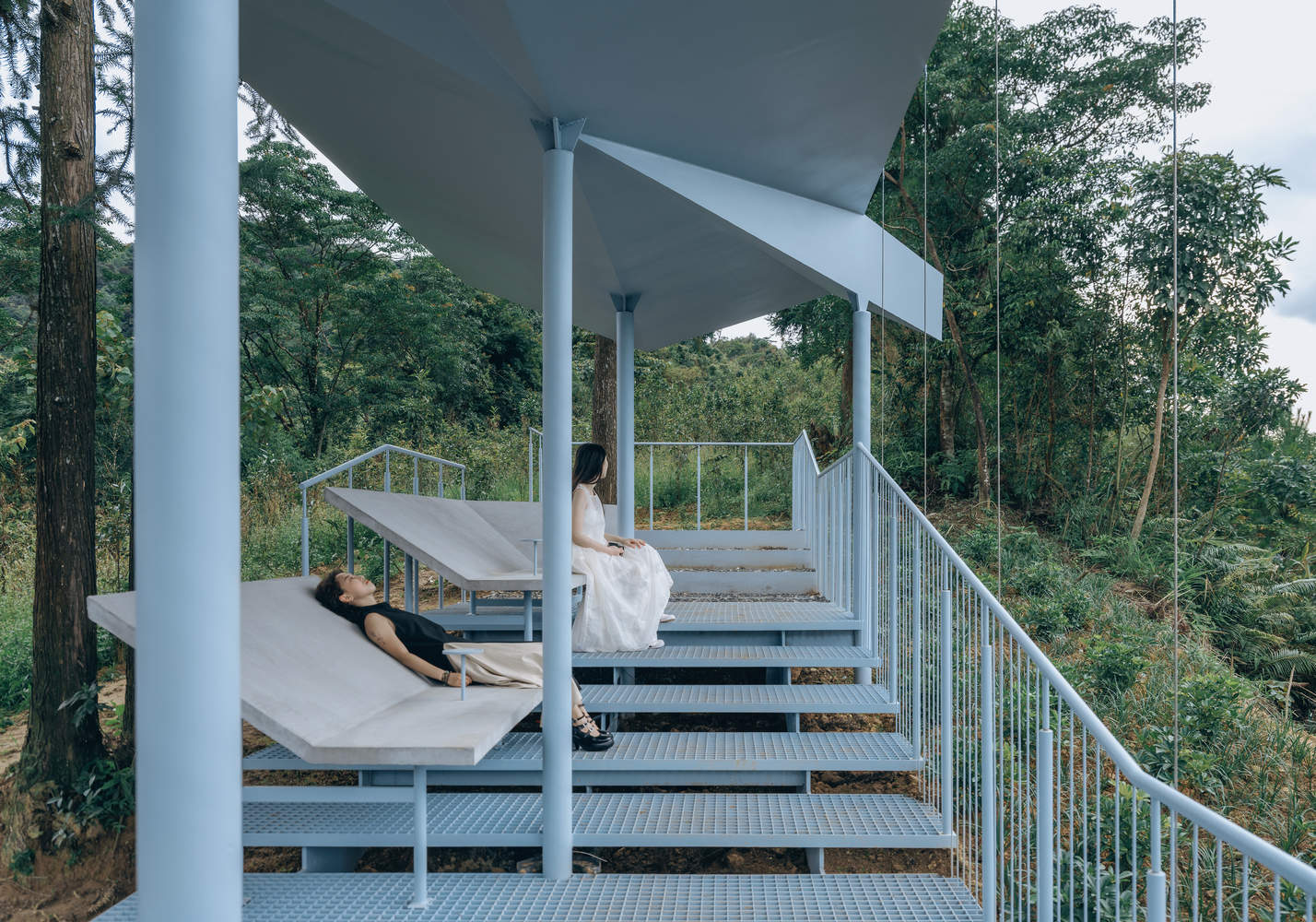
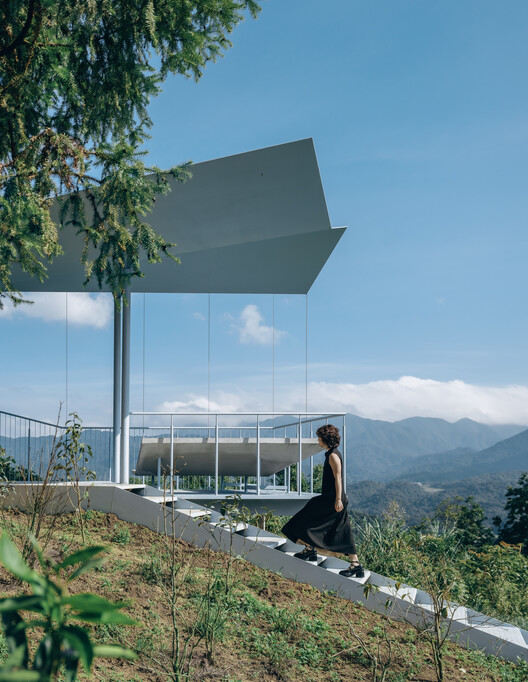
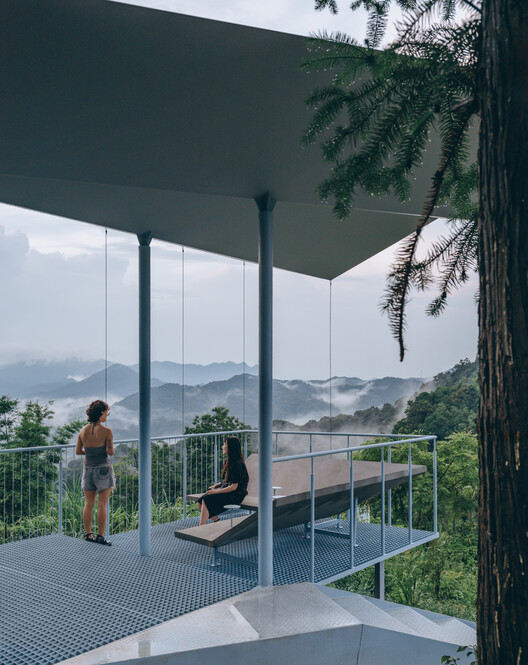
III. Cloud Pavilion — Suspended on an open slope midway up the mountain, Cloud Pavilion marks the end of the path and the opening of the view. Echoing the geometric language of Hometown Pavilion, this structure adopts a lightweight steel system.
© Yumeng Zhu
© Yumeng Zhu
© Yumeng Zhu
Its roof is formed by two interlaced V-shaped folded steel plates oriented toward the mountain path and ridge, respectively. During heavy rain, the V-shapes act as natural gutters, channeling water down via steel cables, sketching Huizhou's rain into visible form.
© Yumeng Zhu
© Yumeng Zhu
As one ascends and descends the path, the folded roof appears in dramatically different profiles. Standing on the terrace, clouds rise beneath your feet when the wind stirs. Surrounded by reclining chairs, one can gaze at the blue sky in calm, or lie back among the clouds when weary.