道教文化符号的精妙转译与空间隐喻:项目在设计中深度挖掘了永乐宫作为道教全真派祖庭的历史与吕洞宾文化的精神内核。通过精心设计的“西区吕公祠再生”,设计者巧妙地将道教概念——如“十二重楼”的内气通道与中央环廊的引流作用相类比,并以“有无相生”的哲学指导空间体验。尤其引人注目的是,通过在庭院中设置刻有“天人合一内经图”的八边形石块,不仅重申了吕公祠的南北中轴线,更将其与本地十二处元代道教遗址的地理布局相结合,成功地将抽象的文化符号转化为可感知的空间线索和文旅路线图,实现了文化精髓的空间化表达。
“虚空显影”的场所营造与遗址边界的重构:面对原址物质痕迹几乎消失殆尽的挑战,项目采取了大胆而克制的“虚空显影”策略。“东区永乐宫再现”通过建筑体量界定出 50 米宽的宫墙边界,用建筑和种植池勾勒出无实体建筑的中轴区域,以“留白”的方式为未来的考古发掘预留了空间和敬意。同时,设计利用坡屋顶种植池和抬高地坪来暗示原有殿宇的轮廓,这种对“虚”的强调,既尊重了历史的不可见性,又通过周边的实体空间强化了核心遗址的感知深度,是处理无痕迹遗址的典范手法。
多重叙事与沉浸式体验的创新融合:该设计成功地将静态的历史遗址转化为动态的、多层次的体验路径。从入口的“吕公祠再生”通过环廊引导,建立起情绪的铺垫和文化预热;到“永乐宫再现”中利用竹林和拱券进行空间“拦腰”的过渡,将访客从世俗引向神圣。最精彩的是,通过设置长达百米的壁画体验厅,运用高科技的镜像反射和背光丝网印刷技术,让游客得以“与神仙共舞”、“点亮壁画”,实现了对元代壁画艺术的现代解读和零距离对话,为文化遗产的活化利用树立了前沿的体验标杆。
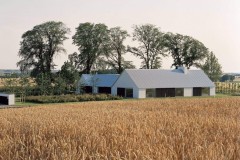
The palace complex, relocated sixty years ago, has left no trace in the fields along the Yellow River bank in Yongle Town, Ruicheng, Shanxi.
六十余年前搬迁走的宫殿群已找不到痕迹。这里是山西芮城永乐镇黄河岸边的田野里。
© TAL
© TAL
This was the birthplace of Lü Dongbin (also known as Chunyangi). During the Jin and Yuan dynasties, the ancestral hall dedicated to him, the "Lü Gong Ancestral Hall," was expanded into a Taoist temple. In the Yuan Dynasty, Lü Zu was canonized as an emperor and further elevated to a palace complex, becoming one of the three major ancestral courts of the Quanzhen School of Taoism.
这里是吕洞宾(号纯阳子)出生地,金元时期把祭祀他的祠堂“吕公祠”扩建为道观,元代封吕祖为帝,再升格为宫观,成为道教全真派三大祖庭之一。
This glory, however, faded into wilderness in modern times. Yongle Palace reappeared in public view in the early 1950s and was listed as a first batch National Key Cultural Relics Protection Unit in 1961. Not long after, due to its location in the inundation area of the Sanmenxia Hydropower Station to be built downstream, relocation was planned starting in 1957, taking 10 years. Regrettably, although the final water level did not reach the designed height, Yongle Palace was entirely moved to the north of Ruicheng County Town, over 20 kilometers away.
这种辉煌却在近代湮没于荒野,直到 1957 年起就开始筹划历时 10 年的搬迁。可悲的是虽然最后的水位并没有达到设计高度,但永乐宫已被整体搬迁到 20 余公里的芮城县城北。因其处于下游将修建的三门峡水电站淹没区,1957 年起就开始筹划历时 10 年的搬迁。可悲的是虽然最后的水位并没有达到设计高度,但永乐宫已被整体搬迁到 20 余公里的芮城县城北。
© TAL
© TAL
The complete emptying of Yongle Town provided returning farmers with a large amount of land for free cultivation. Traditional Chinese architecture was originally built on raised platforms and could not withstand sixty years of intensive farming; the remaining traces of the earth platforms were completely erased after the relocation. In addition to farmland, parts of the original site were further disfigured by successive constructions.
永乐镇的整体腾空给返乡农民提供了大量自由耕种的田地。中国古建本就是建在台明之上,经不起六十年的精耕细作,搬迁后剩余的土台痕迹已被完全抹去。除了农田以外,原址一部分区域又被一次次后续的建设搞得面目全非。
In 2022, Shanxi Province connected the existing Yellow River roads in various counties, forming the 1238-kilometer-long "Yellow River No. 1 Tourist Highway," which passes by the old site of Yongle Palace. Although history here is a legend without obvious material traces, there is no longer any reason to let this piece of history sink into oblivion. How to use spatial language to mark the historical site and how to experience the historical culture became the design challenge for the Lü Zu's Hometown Scenic Area.
2022 年,山西省贯通了各县已有的沿黄河公路,形成全长 1238 公里黄河一号旅游公路,与永乐宫旧址擦肩而过。虽然历史在这里是个没有明显物质痕迹的传说,但再没有理由让这段历史沉没在遗忘之中了。如何用空间的语言将历史地段加以标记、将历史文化加以体验,成为吕祖故里景区设计的挑战。
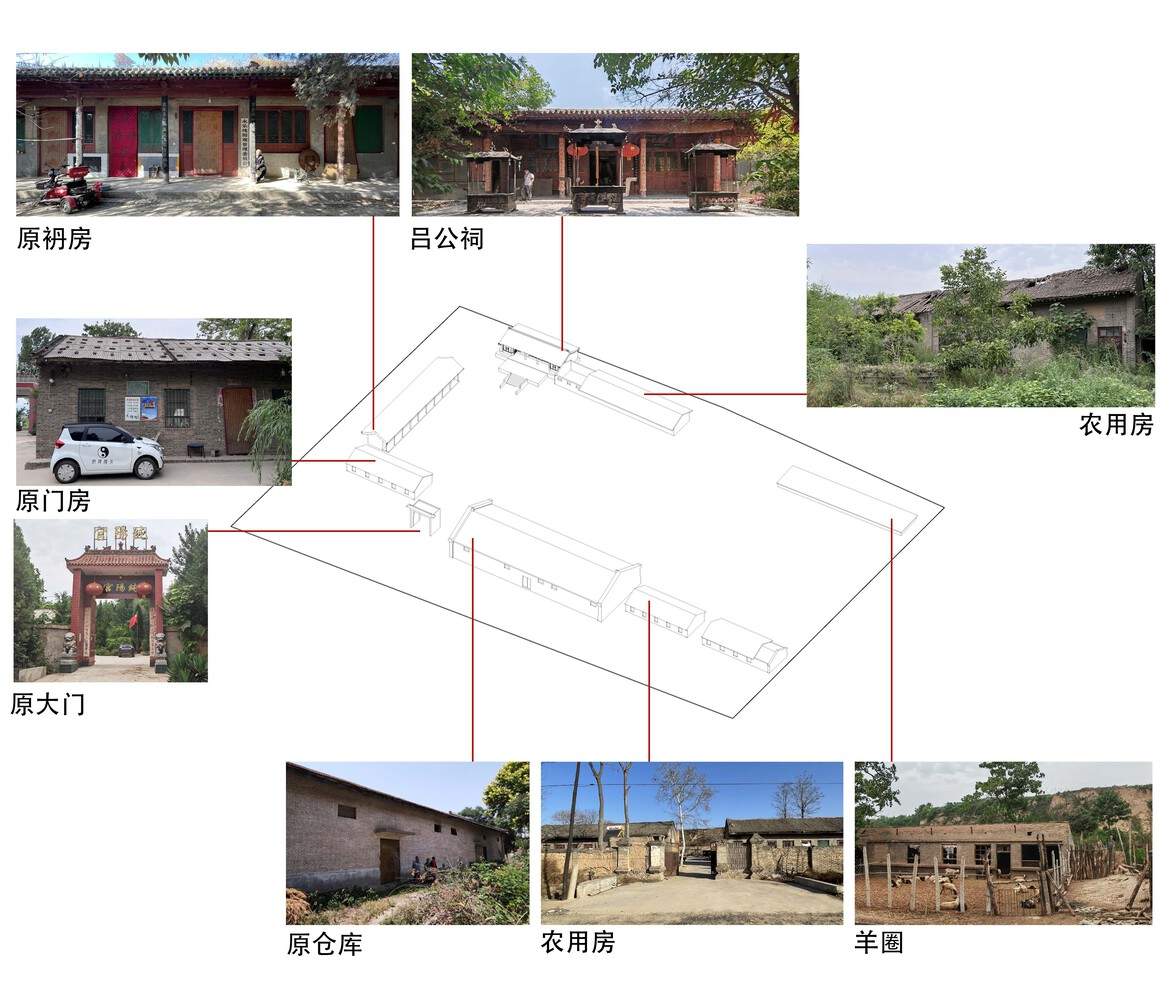
Construction land conditions of the former site of Yongle Palace before revitalization (2022)
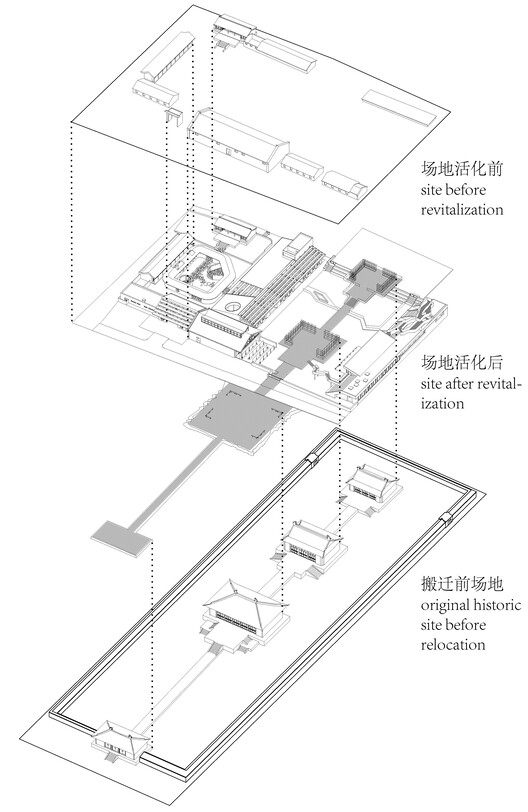
Spatial relationship diagram
West Area "Regeneration of Lü Gong Ancestral Hall"
西区"吕公祠再生"
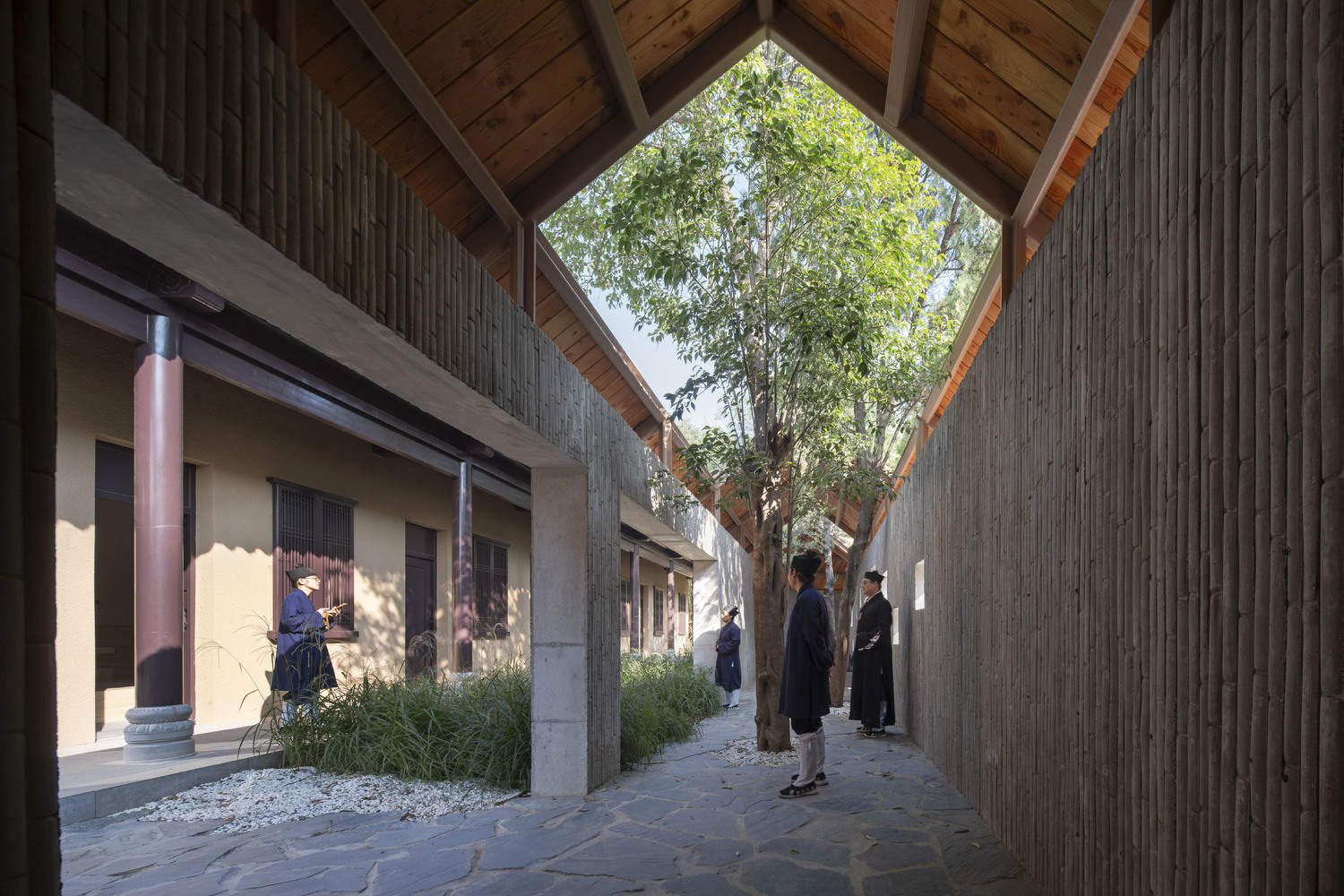
The design logic of "Regeneration of Lü Gong Ancestral Hall" is how to use existing elements without historical value to create emotional value before entering the old site of Yongle Palace. The fulcrum of the design is based on the disordered texture of the existing houses, reconstructing the opening of the scenic area with the central cloister as the medium. The cloister preserves 12 native trees, coincidentally corresponding to the rich symbolic meaning of the number 12 in Taoist culture. For example, the "Twelve-story Pagoda" in the internal alchemy created by Lü Dongbin refers to the twelve soft cartilages of the human throat, connecting the lower Dantian with the middle and upper Dantian, symbolizing the passage for Qi to ascend. This key path for internal energy circulation also metaphorically represents the cloister's key role in guiding traffic.
"吕公祠再生"的设计逻辑是如何利用既有的无历史价值的元素来营造进入永乐宫旧址前的情绪价值。设计的支点是在现有房屋无序的肌理上,以中央环廊为媒介重构景区的开场。环廊保留了 12 棵原生树,巧合了道教文化中数字 12 丰富的象征意义。例如 “十二重楼” 在吕洞宾所创的内丹学中是指人体咽喉部位的十二节软骨,连接下丹田与中上丹田,象征气机上升的通道。这一内气运行的关键路径,也隐喻着环廊对引流的关键作用。
© TAL
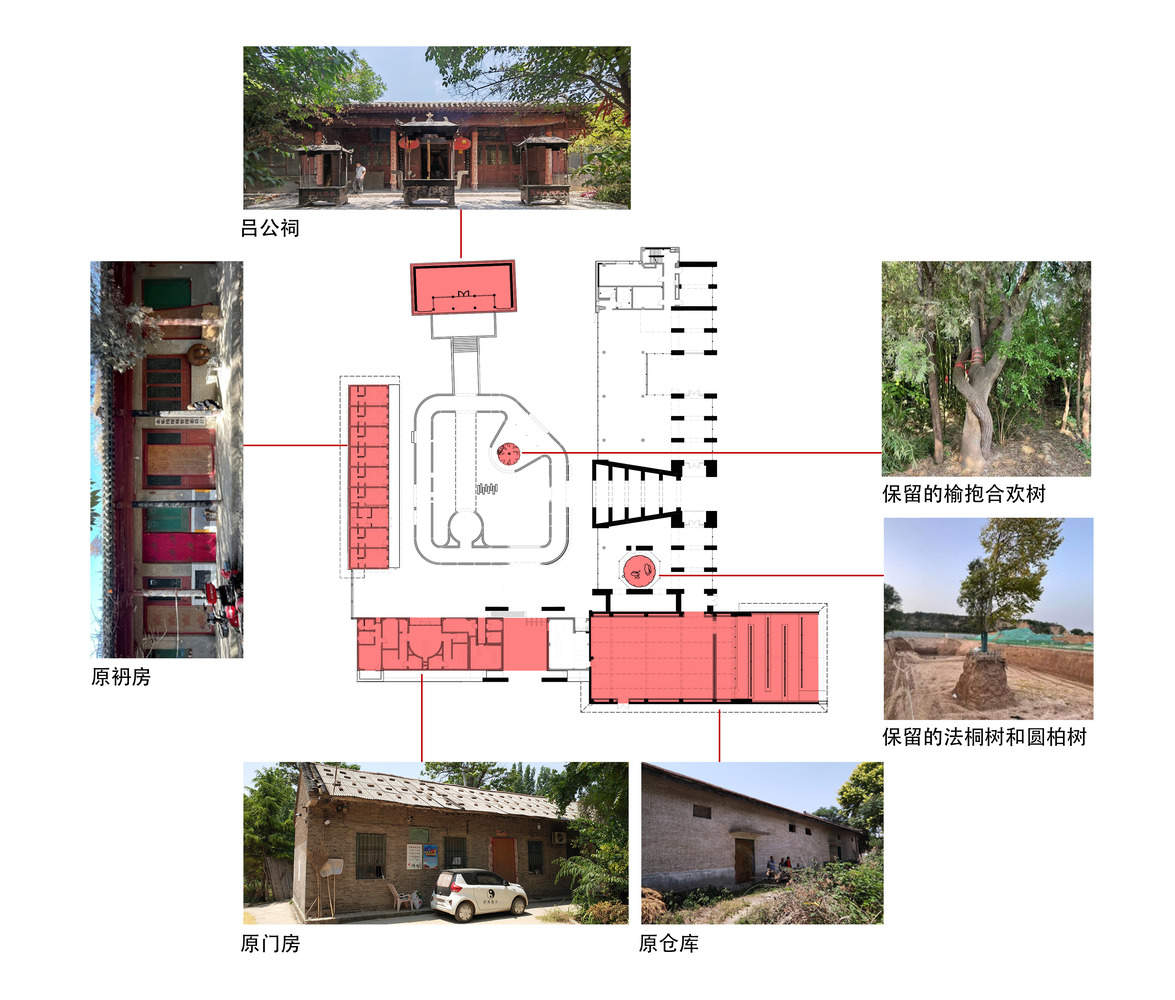
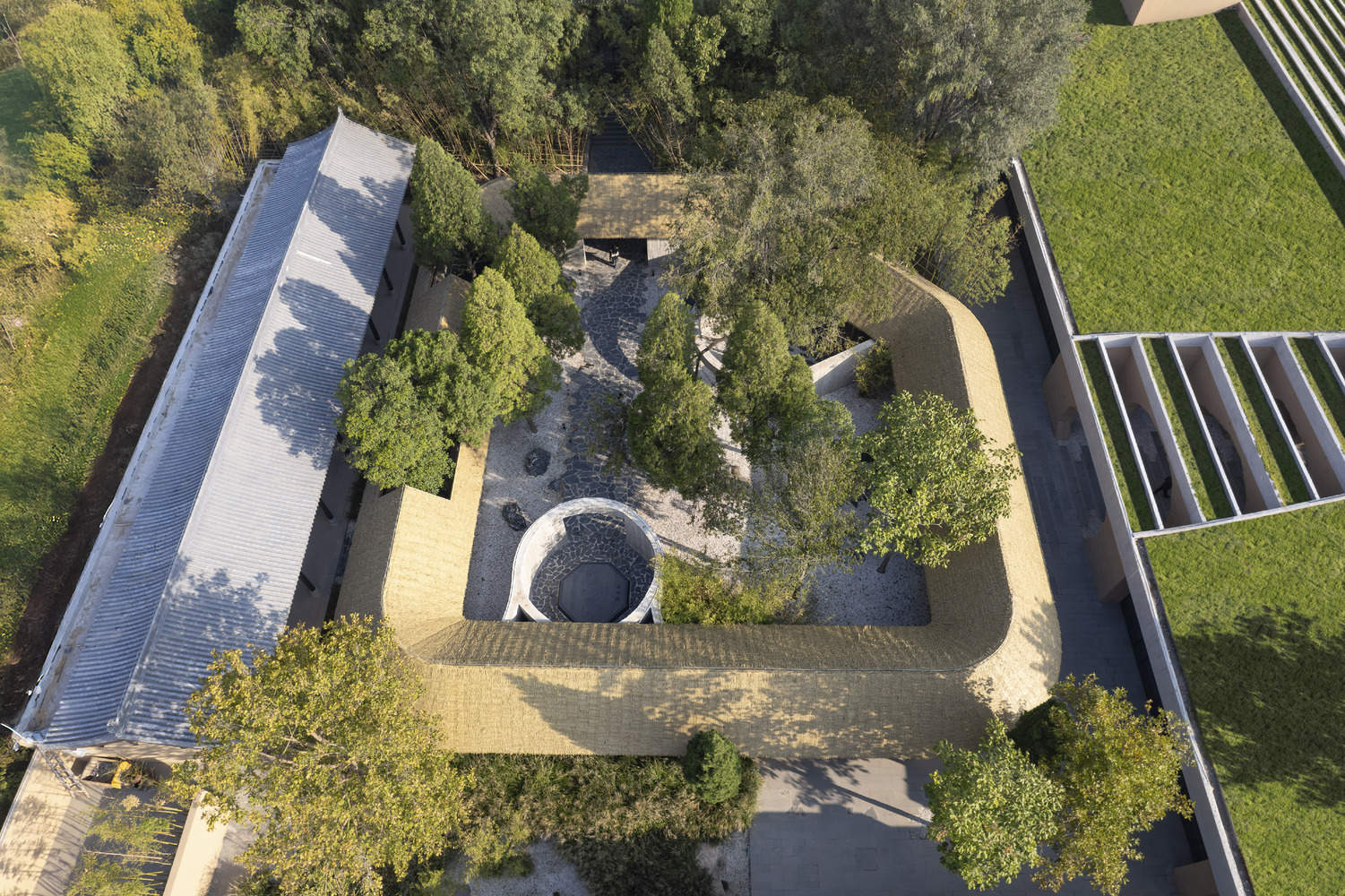
Integrating scattered structures such as gatehouses, granaries, rooms, and Lü Gong Ancestral Hall with native trees
© TAL
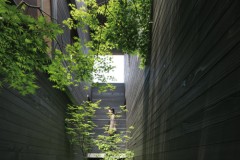
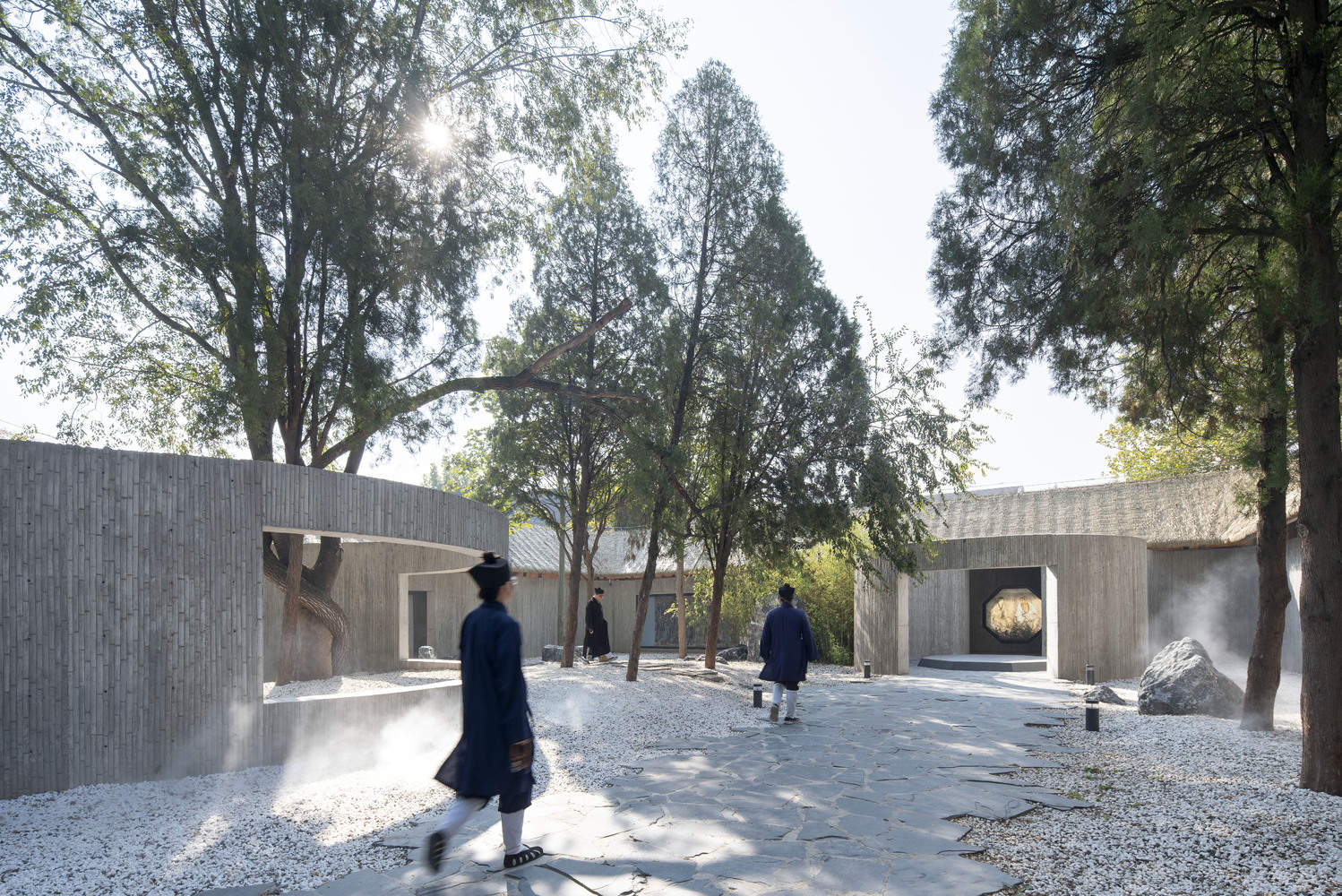
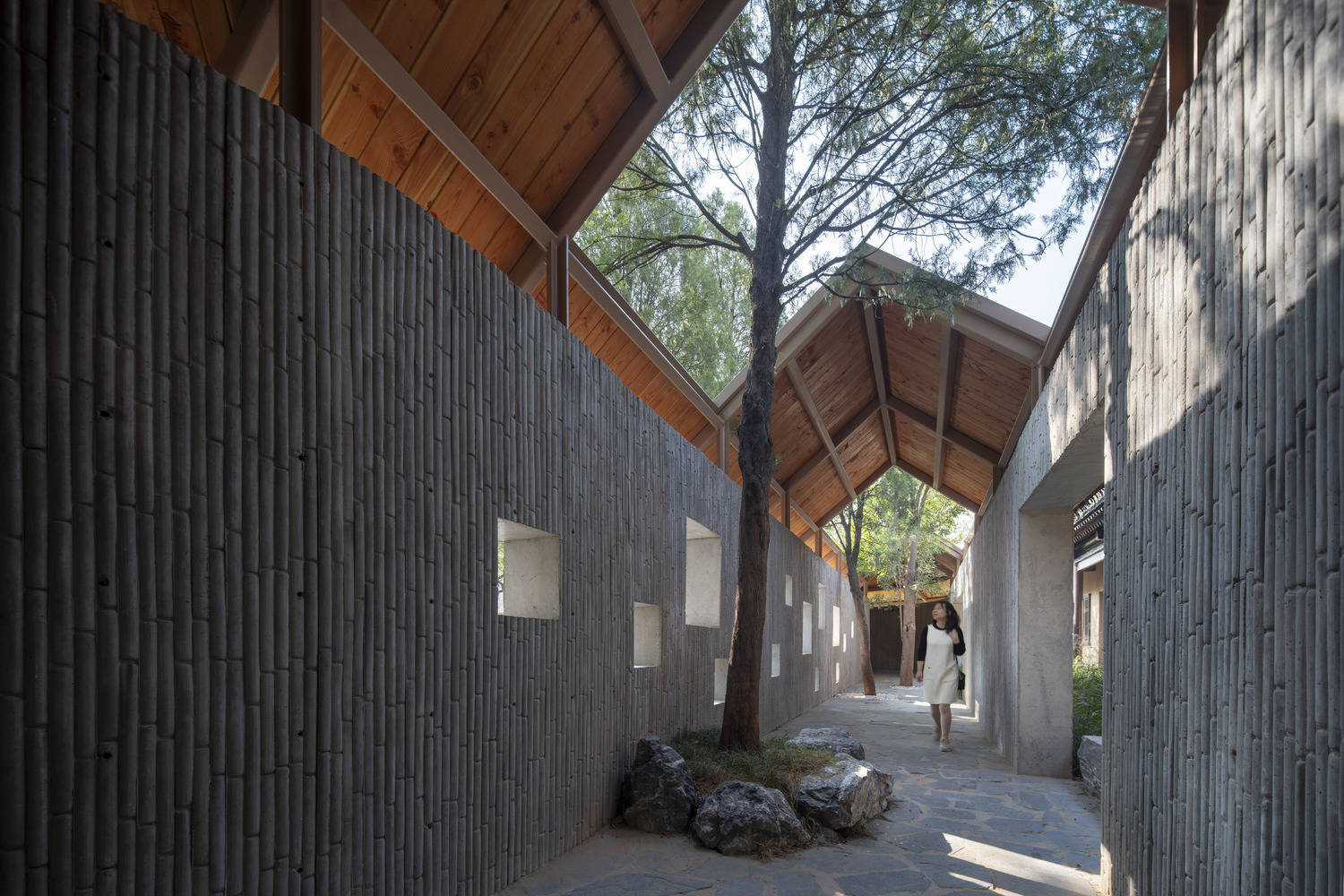
The cloister has three spatial functions: First, as an integrator of historical fragments, it weaves together the scattered gatehouses, granaries, rooms, and Lü Gong Ancestral Hall with the 12 native trees into a community centered around the "Grotto-Heavenly Blessed Land" garden. Its planar form conforms to the existing trees, highlighting preserved trees such as "Elm Reporting Mutual Joy" at key points, and creating an immortal realm atmosphere through a mist spray system.
环廊有三重空间作用:首先,作为历史碎片的整合器,将离散落的门房、谷仓、袇房、吕公祠等建筑与 12 棵原生树木编织成以"洞天福地"园林为核心的共同体。其平面形态顺应现状树木,重点部位还点睛了"榆报合欢"等保留树木,并通过雾喷系统营造仙境氛围。
© TAL
© TAL
Second, as an organizer of the functional sequence, it connects the inverted-row houses (integrating gatehouses/toilets/dormitories), the Lü Gong Ancestral Hall (former management offices converted into guest rooms), the repaired Lü Gong Ancestral Hall, and the relic transition area in a counterclockwise circulation. The outer walls form four independent conceptual spaces, while the inner side encloses a central garden, constructing a meandering system of "self-organization of the Five Directions."
其次,作为功能序列的组织者,以逆时针动线串联倒座房(整合门房/厕所/宿舍)、袇房雅居(旧管理用房改造为客房)、修葺后的吕公祠及遗址过渡区。外侧墙面形成四个独立意境场所,内侧围合出中心园林,构建"五方自组织"的漫游体系。
© TAL
© TAL
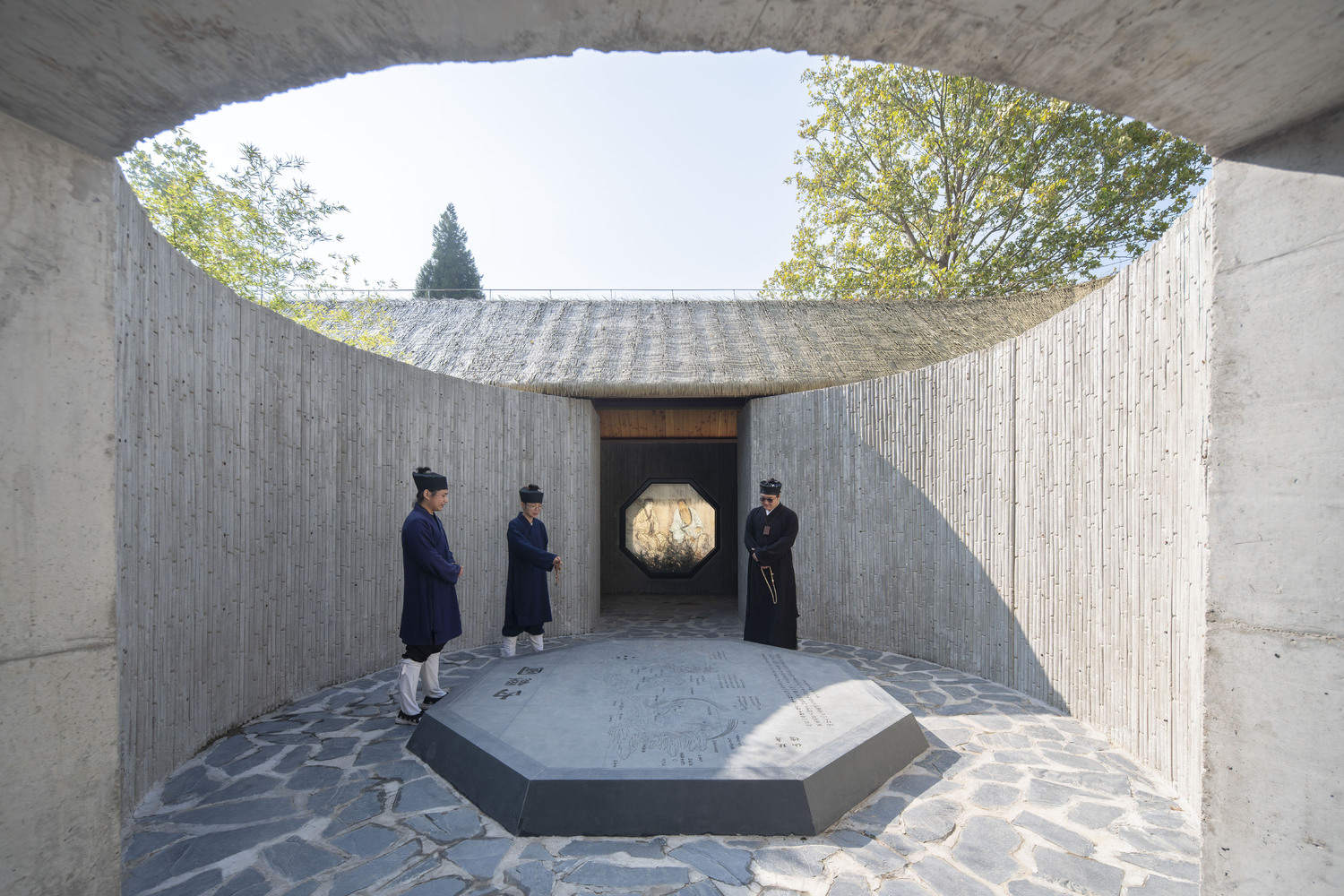
Third, as a translator of spatio-temporal logic, it transforms the Taoist cosmological concept of "interplay of being and non-being" into spatial experience through labyrinthine guidance. The focal point of this area is the north-south axis developed from the original Lü Gong Ancestral Hall. The southern end of the axis features the glass painting "The Dialogue between Zhongli and Lü" embedded in the cloister wall. This core mural from behind the main shrine of the Chuyang Hall depicts the story of the Taoist immortal Zhongli Quan converting Lü Dongbin.
第三,作为时空逻辑的转译者,通过迷宫般的引导,将道家"有无相生"的宇宙观转化为空间体验。这个区域重心是原吕公祠发展出的南北轴线,轴线南端头是环廊墙上镶嵌的玻璃画“钟吕论道图”,这张纯阳殿神龛背面的核心壁画描绘了道教仙人钟离权度化吕洞宾的故事。
© TAL
The cloister curves out a circular courtyard here. In the center of the ground is an octagonal stone carved with the "Neijing Diagram of Harmony between Heaven and Man." This secret image of Taoist internal alchemy cultivation highly matches the 12 Yuan Dynasty Taoist palace relic sites extending from Jiufeng Mountain in the north to the old site of Yongle Palace in the south. It is both a Taoist symbol and a charming local tour map themed around Taoist temples. This thematic attraction reinforces the north-south central axis of the Lü Gong Ancestral Hall.
环廊在此又弯曲出一处圆形庭院,地中央隆起的八边形石块上刻着“天人合一内经图”,这个道教内丹修炼的秘传图像与此处北起九峰山、南至永乐宫旧址的 12 处元代道教宫观遗址高度吻合,既是道教的符号,又是一张迷人的本地道观主题文旅路线图。这个主题化的景点强化了吕公祠的南北中轴线。
© TAL
East Area "Reappearance of Yongle Palace"
东区"永乐宫再现"
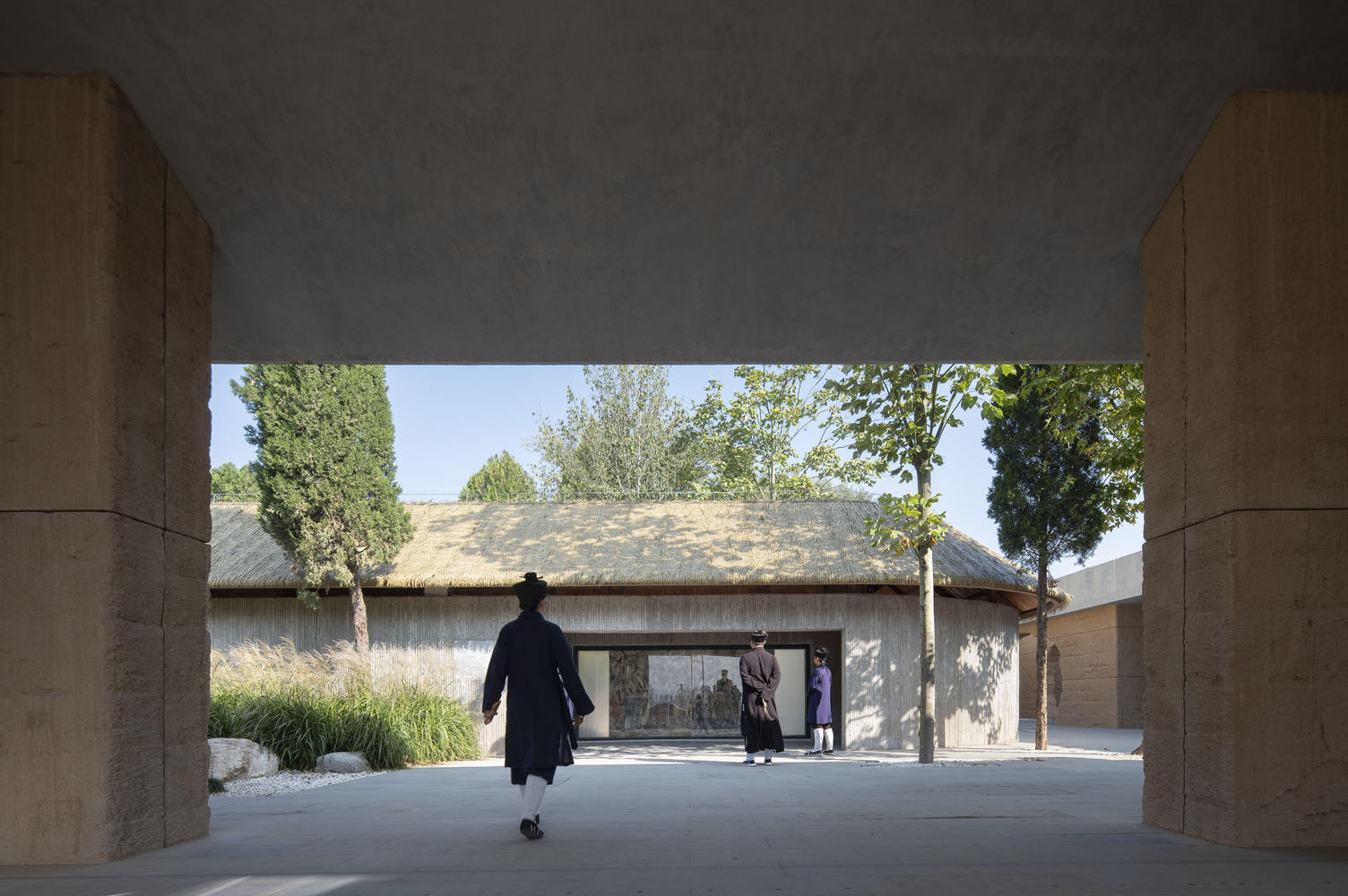
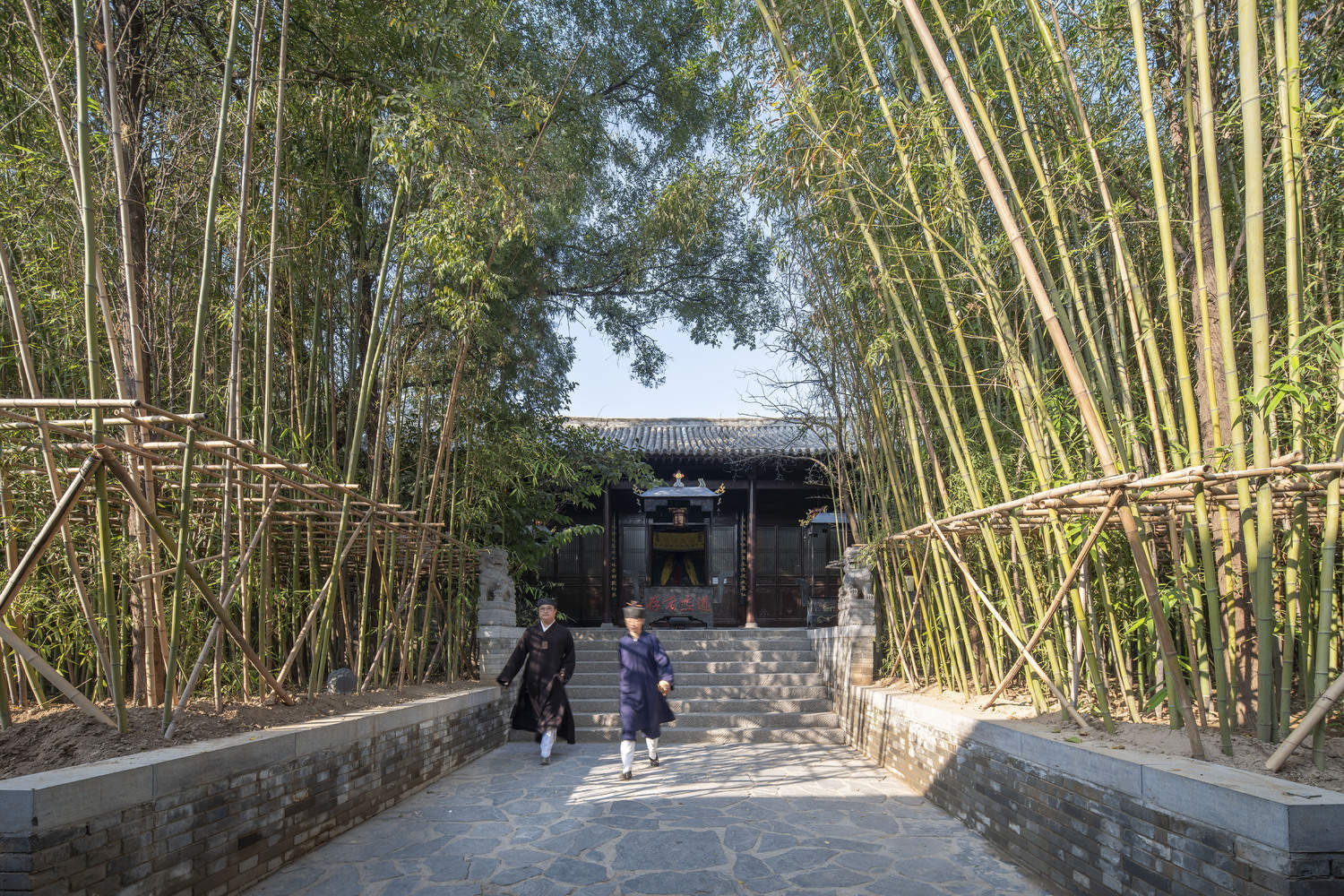
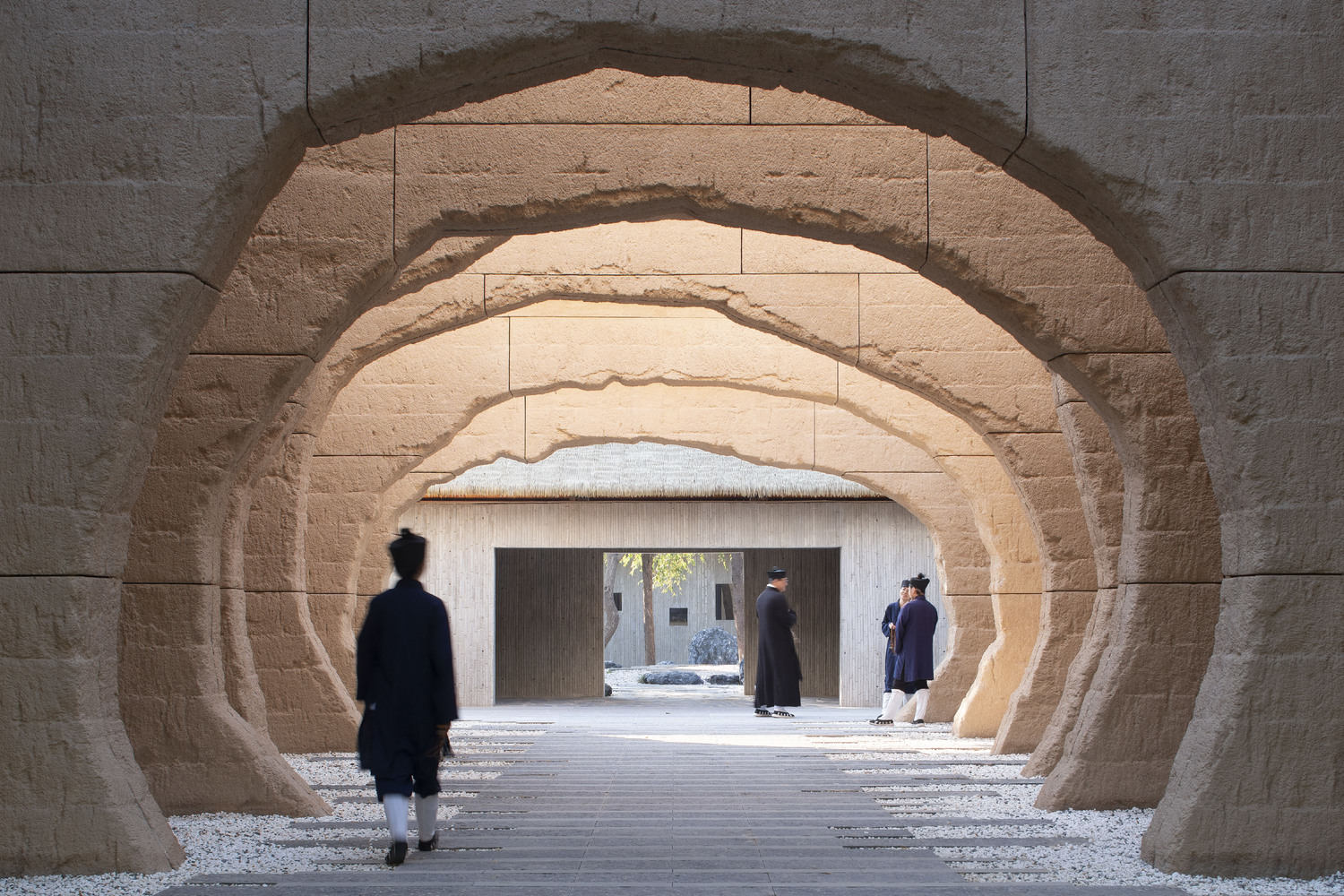
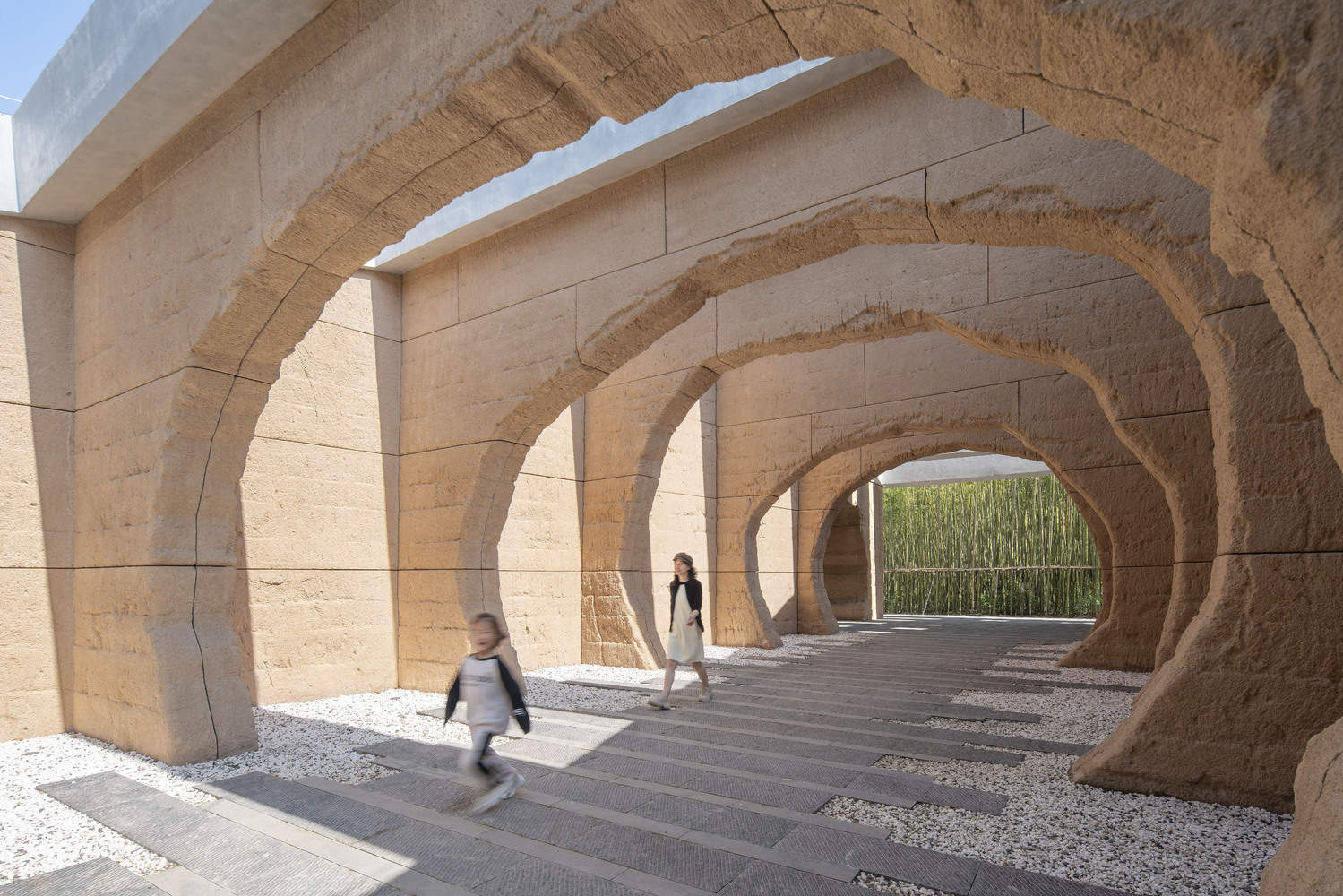
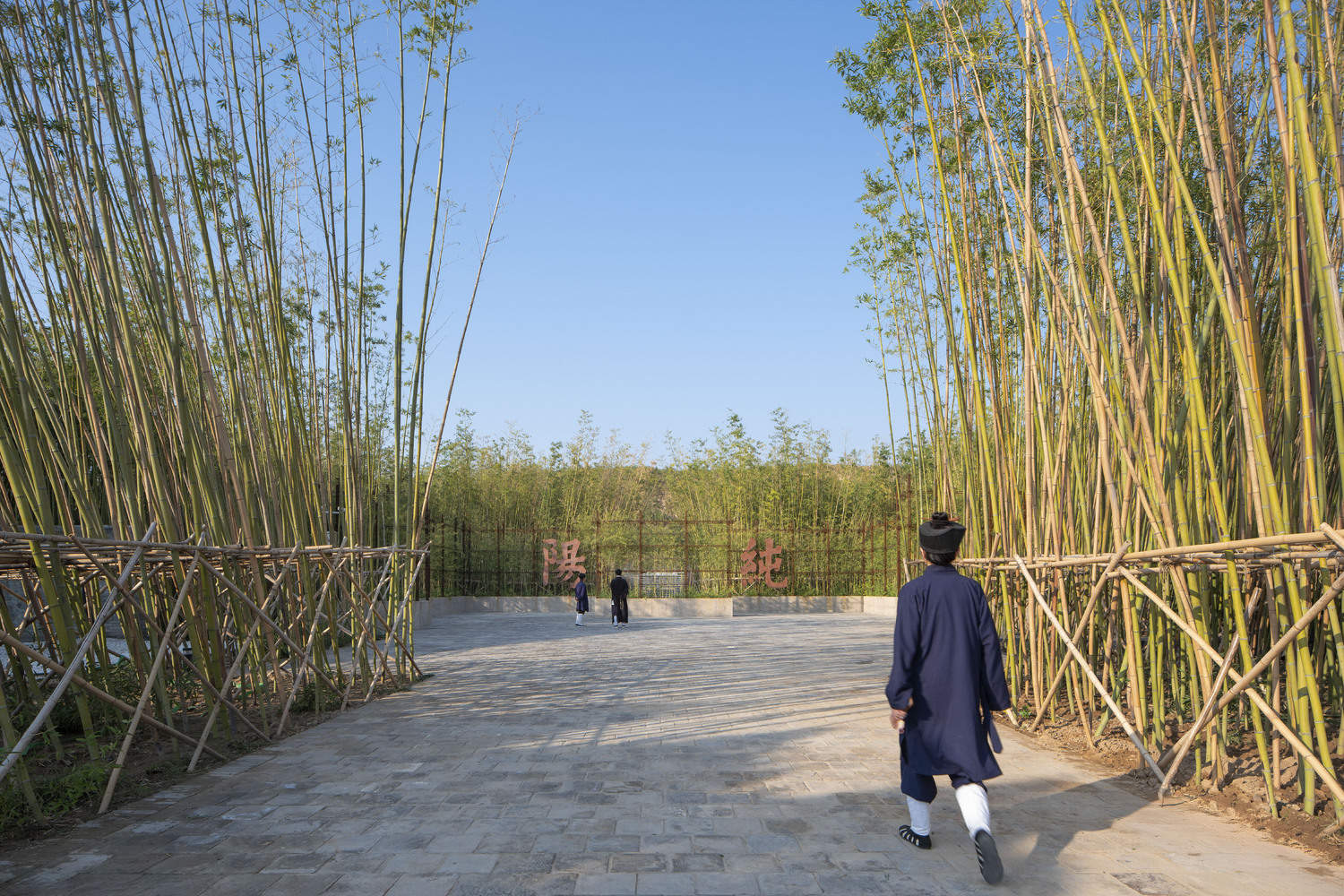
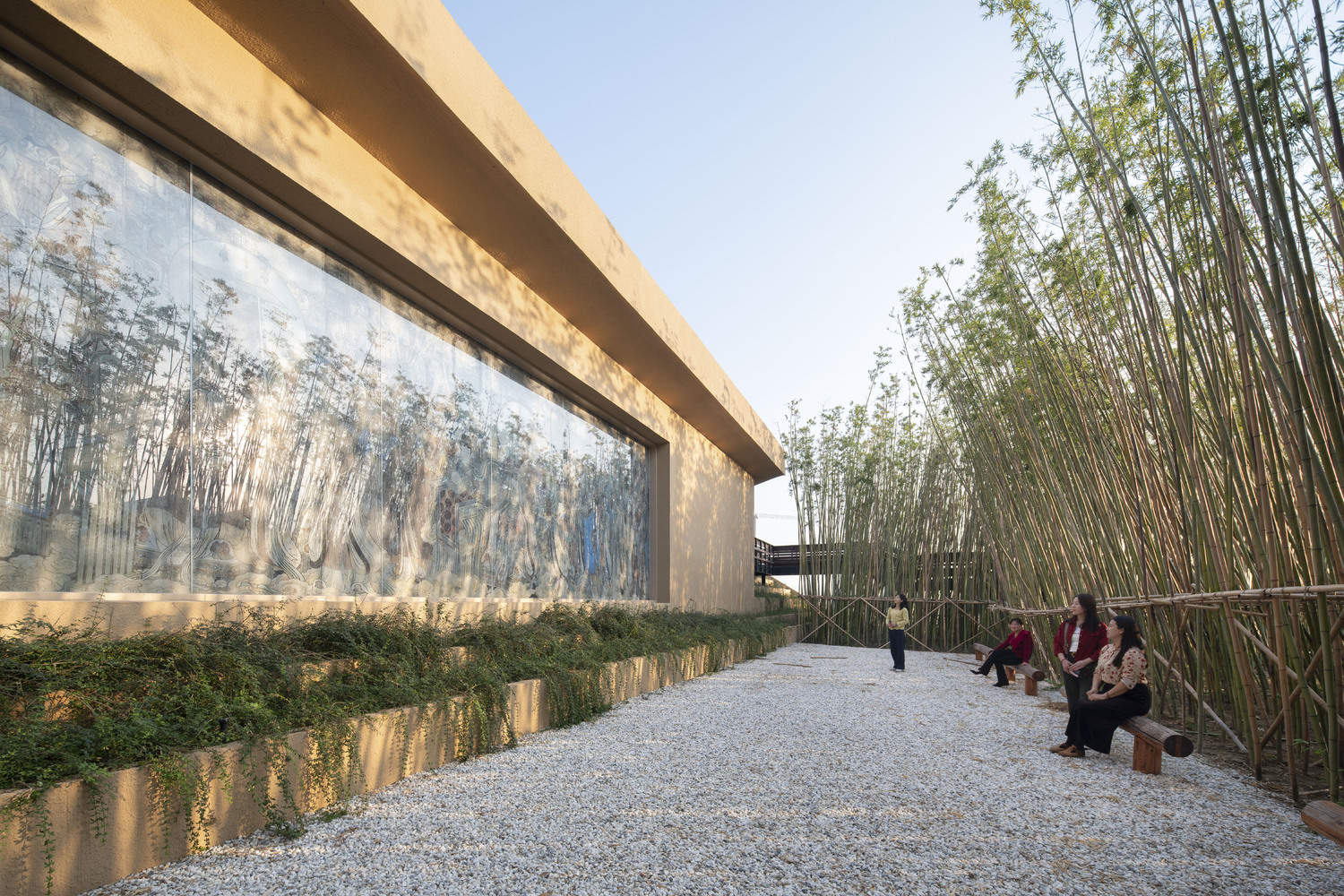
The east-west axis of the cloister points to the "Reappearance of Yongle Palace" on the east side. Since the buildable land is located in the areas of the Chuyang Hall and Chongyang Hall, blocking access midway to the relic area was a challenge. By using bamboo groves as visual screens, the sense of a Grotto-Heavenly Blessed Land created by layers of arches guides people from the west area to the core relic area.
环廊东西轴线指向东侧的“永乐宫再现”。因为可建设用地处于纯阳殿和重阳殿部位,如何拦腰出入遗址区是个难题。通过竹林障景的方式,用层层拱券造成的洞天福地意境把人从西区接引到遗址核心区。
© TAL
© TAL
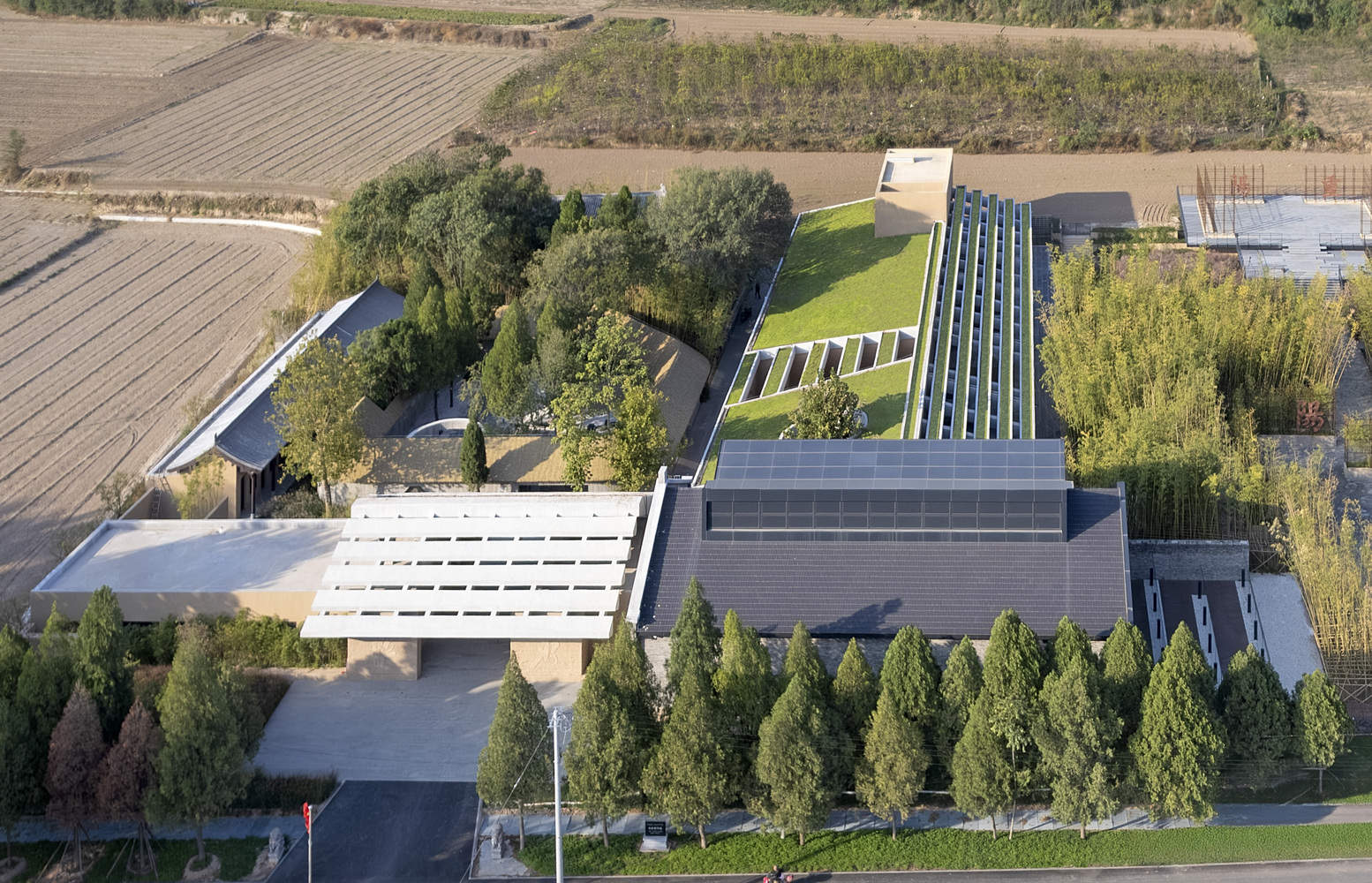
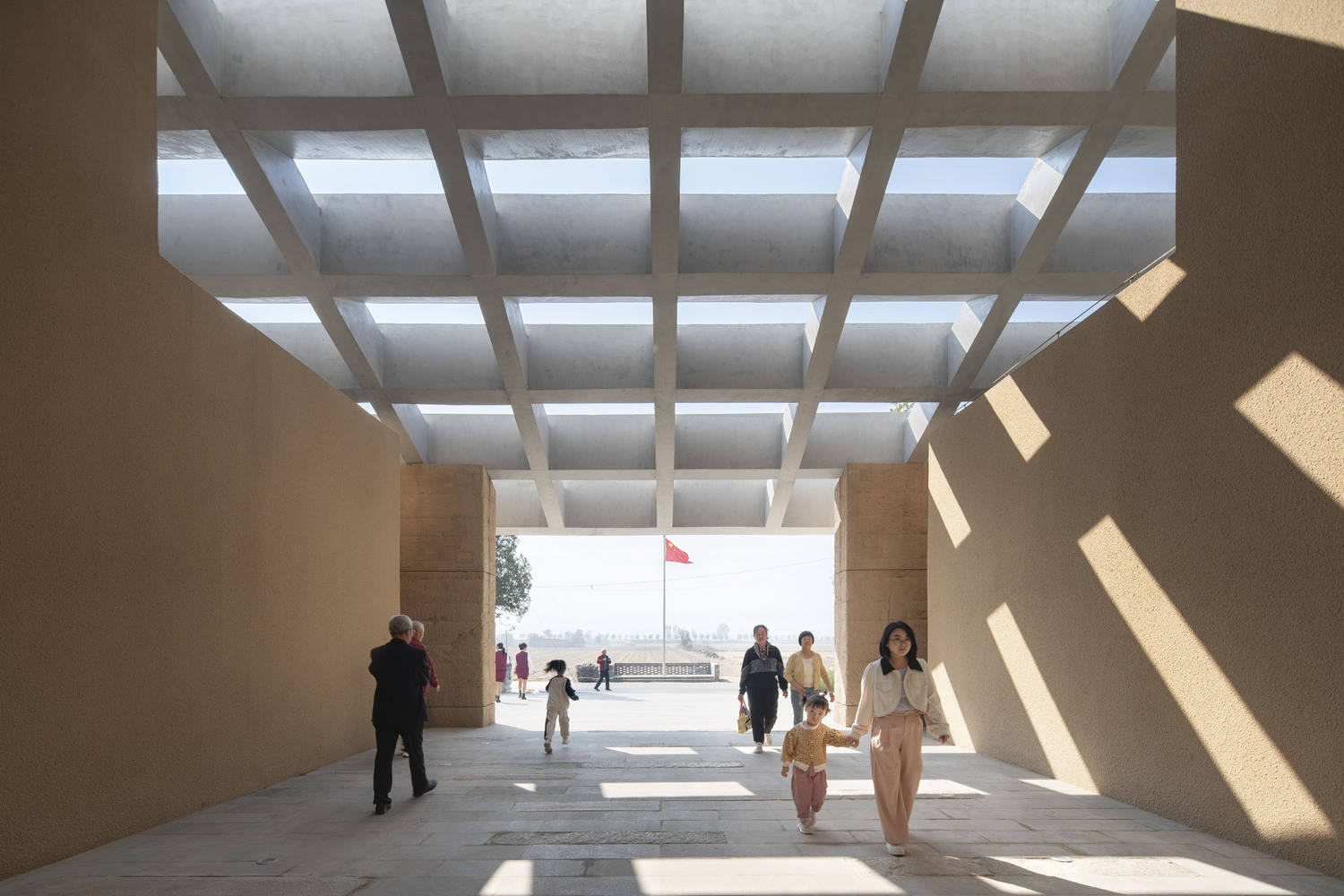
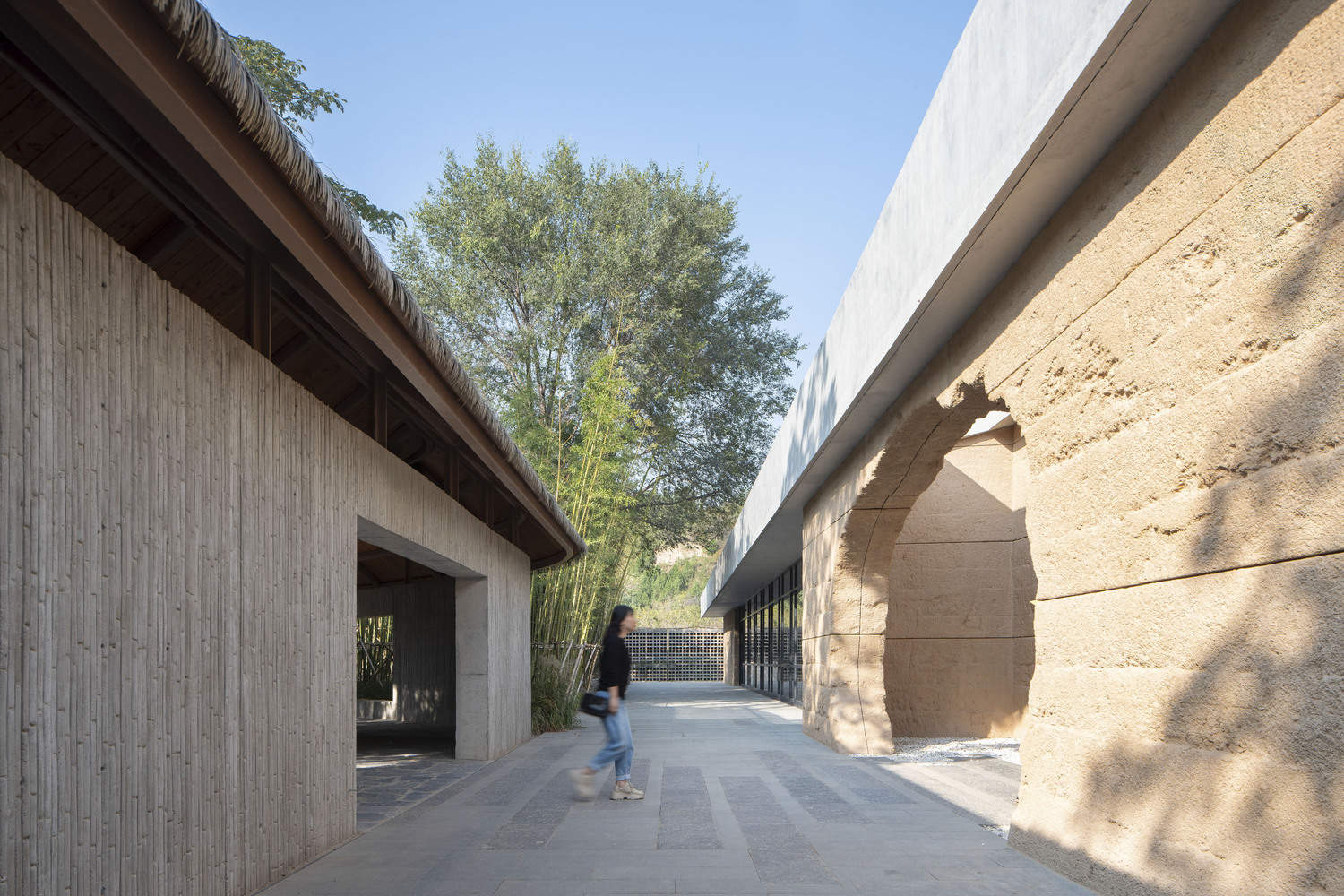
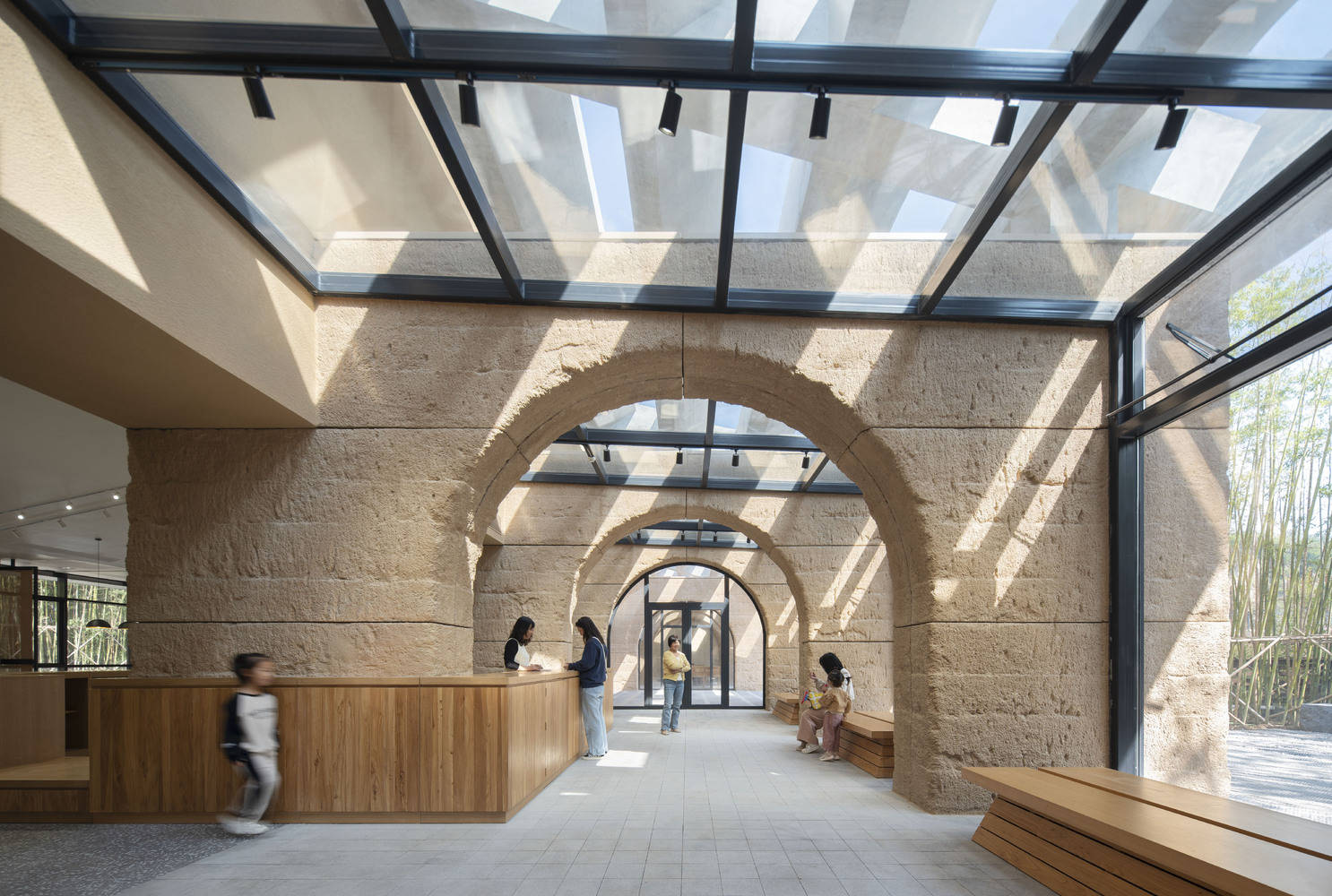
To the north of the entrance path end is the Visitor Center, and to the south is the exhibition space before entering the relic area. This part constitutes the straight and simple west boundary of the main central axis, emphasized by the repeating lines of the planting beds with sloped roofs.
引道端头北侧是游客中心,南侧是进入遗址区前的展陈空间。这部分构成了中央主轴笔直简单的西边界,并用坡屋顶种植池的重复线条来强调。
© TAL
© TAL
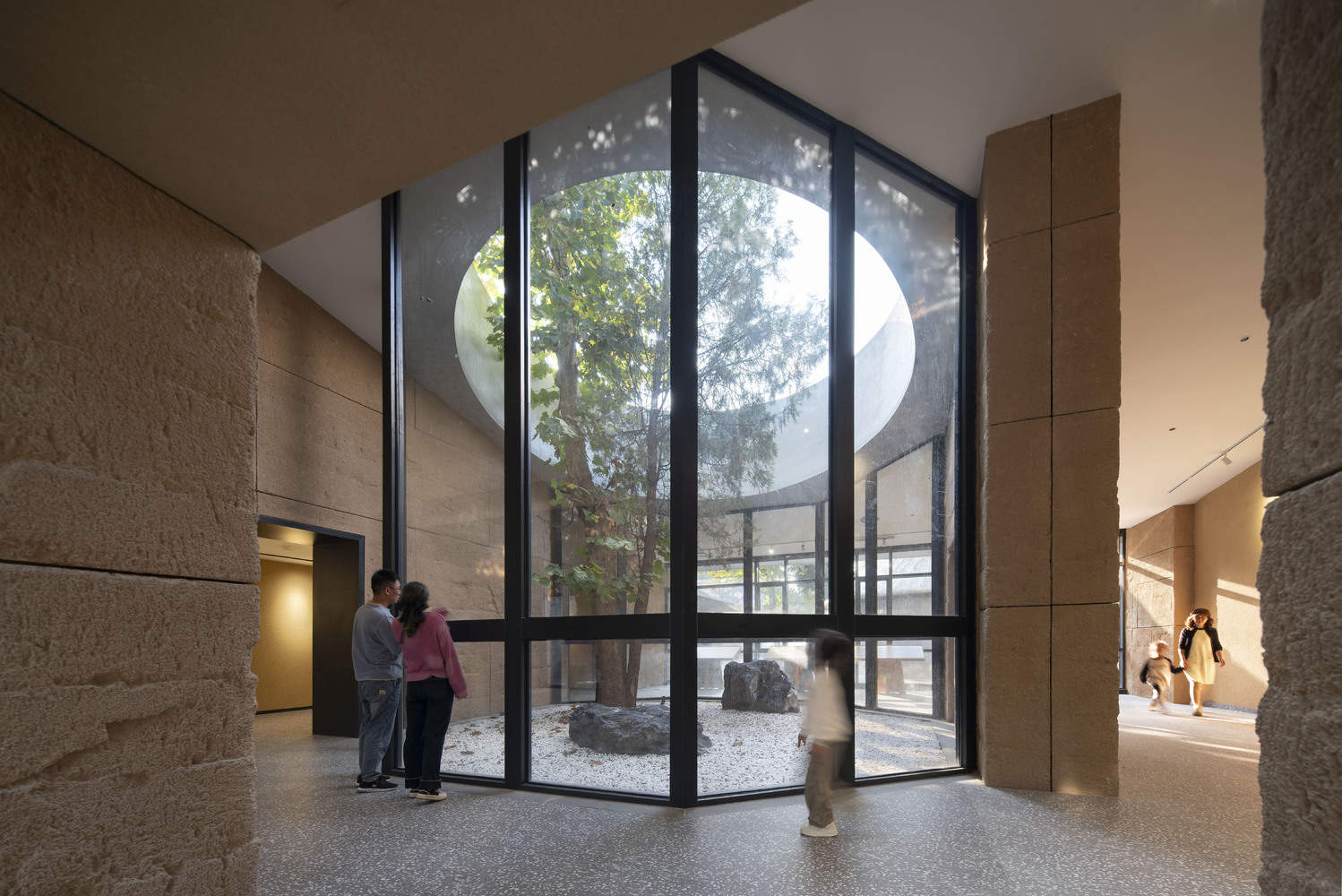
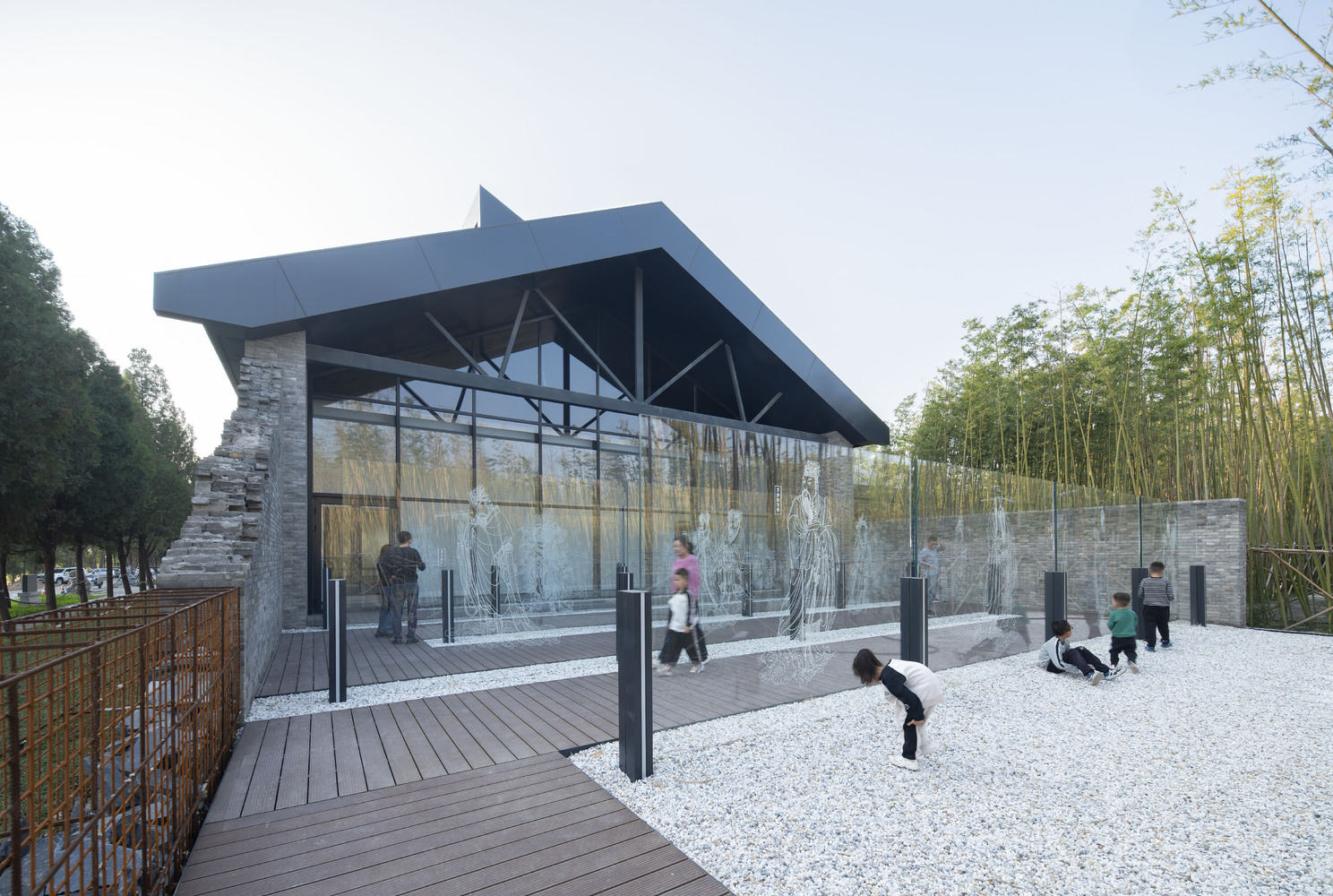
The exhibition space's entry hall is built around the native twin trees. The main hall occupies two-thirds of the original granary space, with its eastern side cut away to extend into the boundary area of Yongle Palace, preserving remaining partial walls on the north and south sides. The open eastern end guides the audience into the relic area. The demolished part of the granary features several winding glass walls, on which line drawings of immortals are printed, allowing tourists to meet the immortals before entering the relic field.
展陈空间序厅环绕原生双树而建,主厅是原粮仓三分之二空间,斩断其东侧伸进了永乐宫的界域部分,保留了南北两侧部分残垣断壁,用开放的东端将观众导流进遗址区。粮仓拆除部分设几道迂回的玻璃墙,玻璃上的线描神仙图让游客进入遗址场域前先和神仙相识。
© TAL
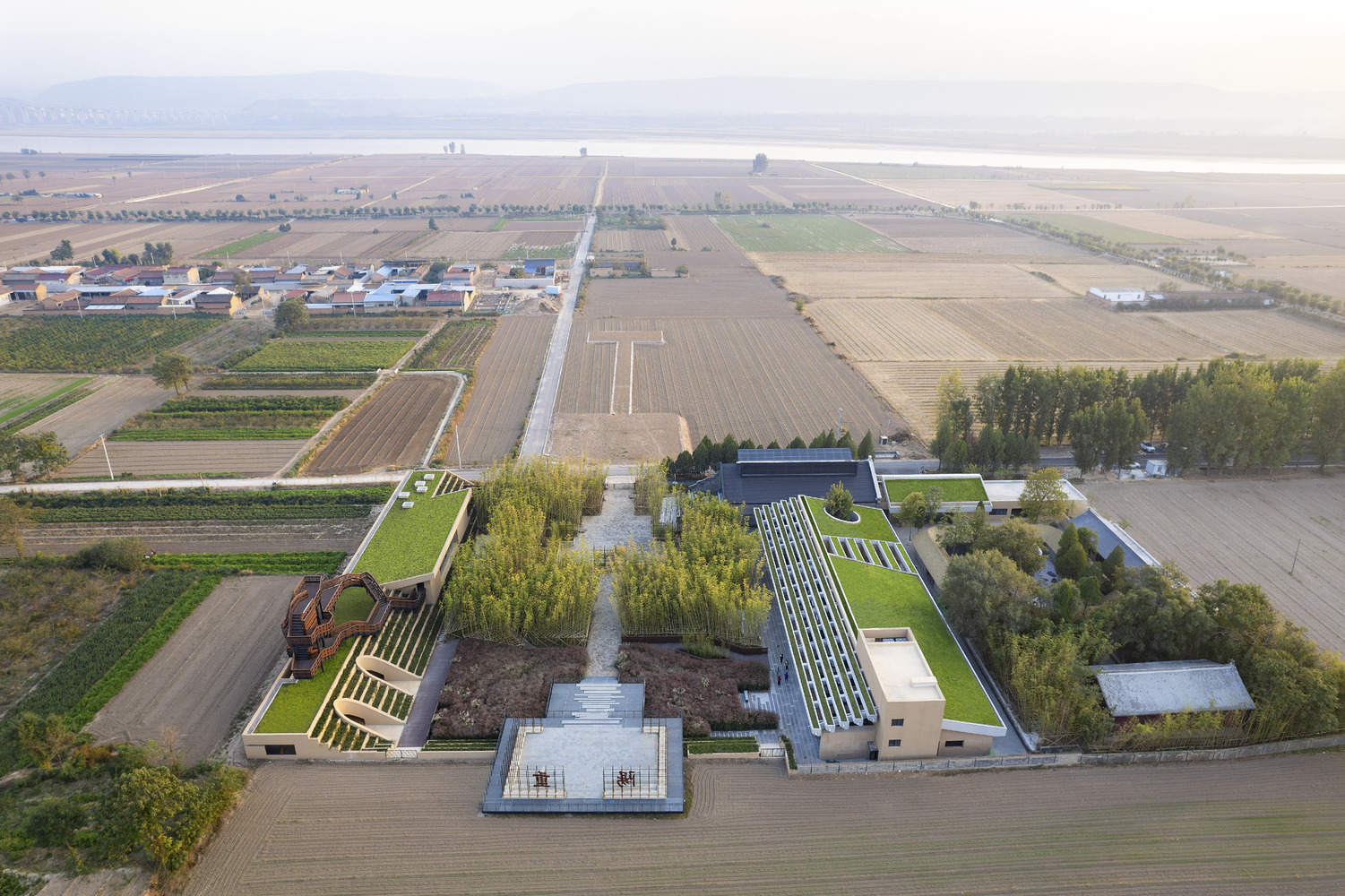
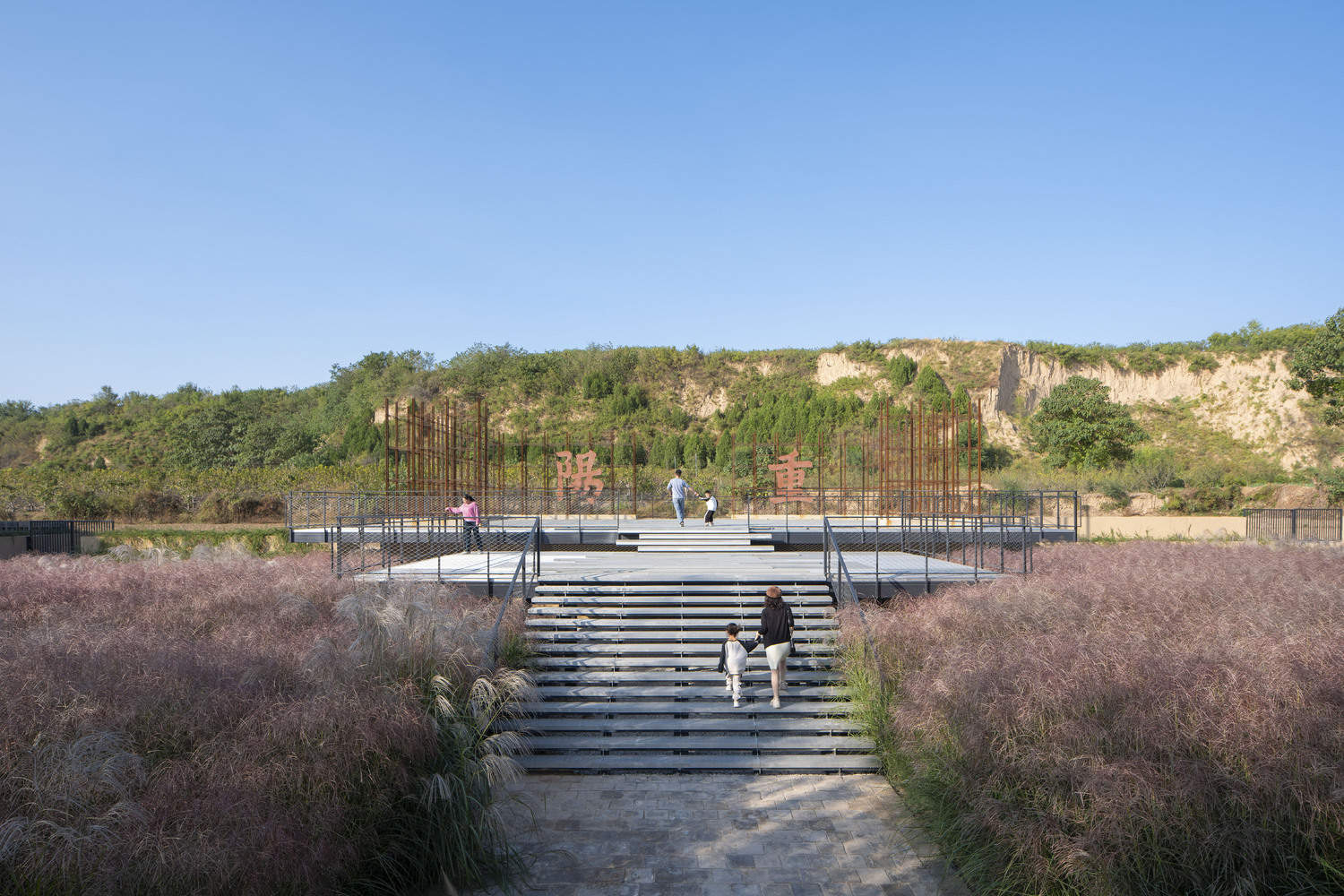
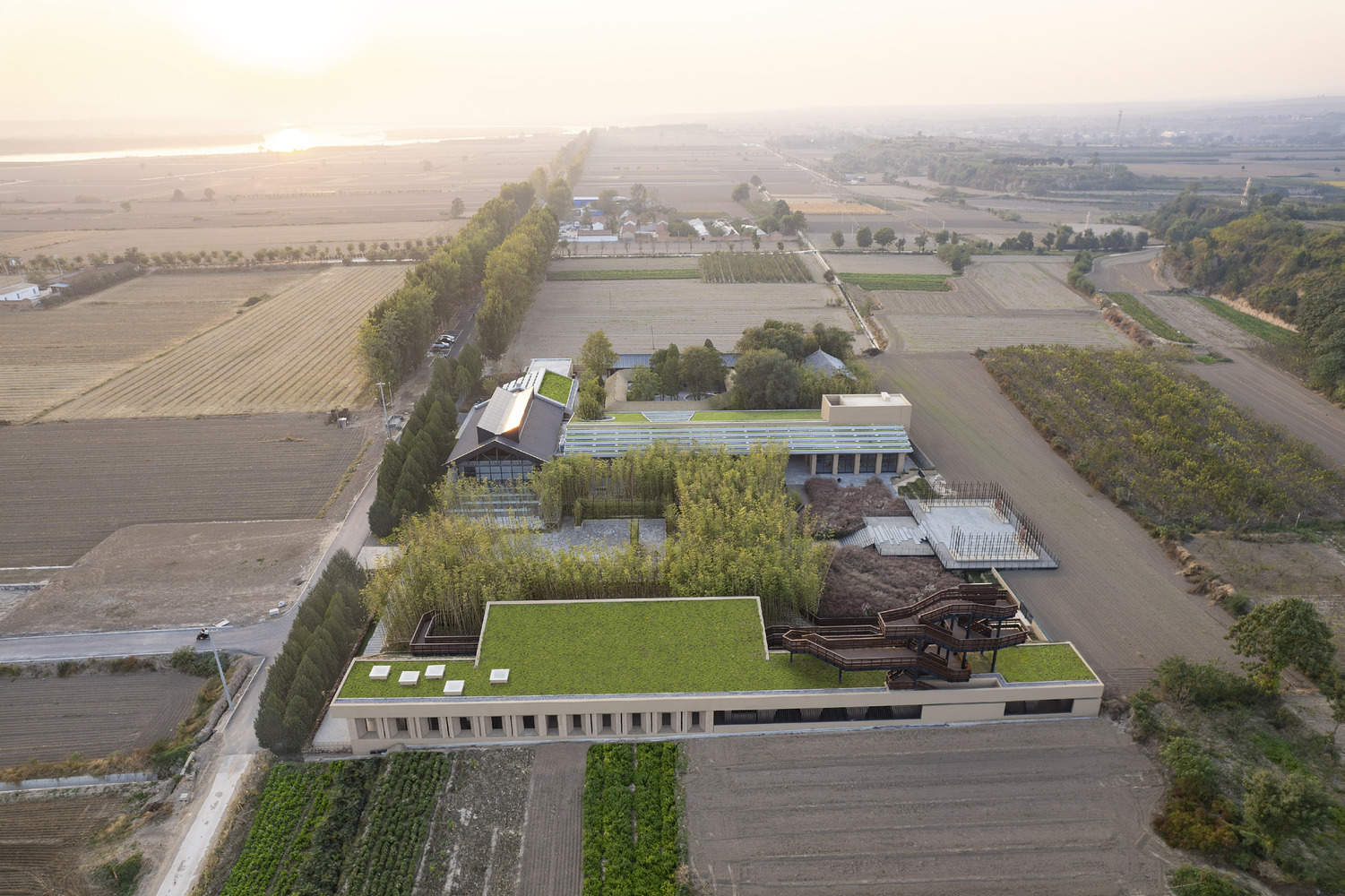
Faced with the dilemma of no surface remains, "Reappearance of Yongle Palace" adopts a "Manifestation through Void" strategy: The building volumes sloping towards the central axis on both sides define the 50-meter-wide boundary of the palace walls. The east and west wings delineate the central axis area as a void outside the palace area with solid content, and the strip-like planting beds in the air strengthen the spatial perception.
针对地表无遗存的困境, "永乐宫再现"采用"虚空显影"策略:两侧坡向中轴的建筑体量界定中间 50 米宽的宫墙边界,东西两厢在宫殿区以外用实体内容勾勒出作为墟空的中轴区,空中视角的条状种植池强化其空间感知。
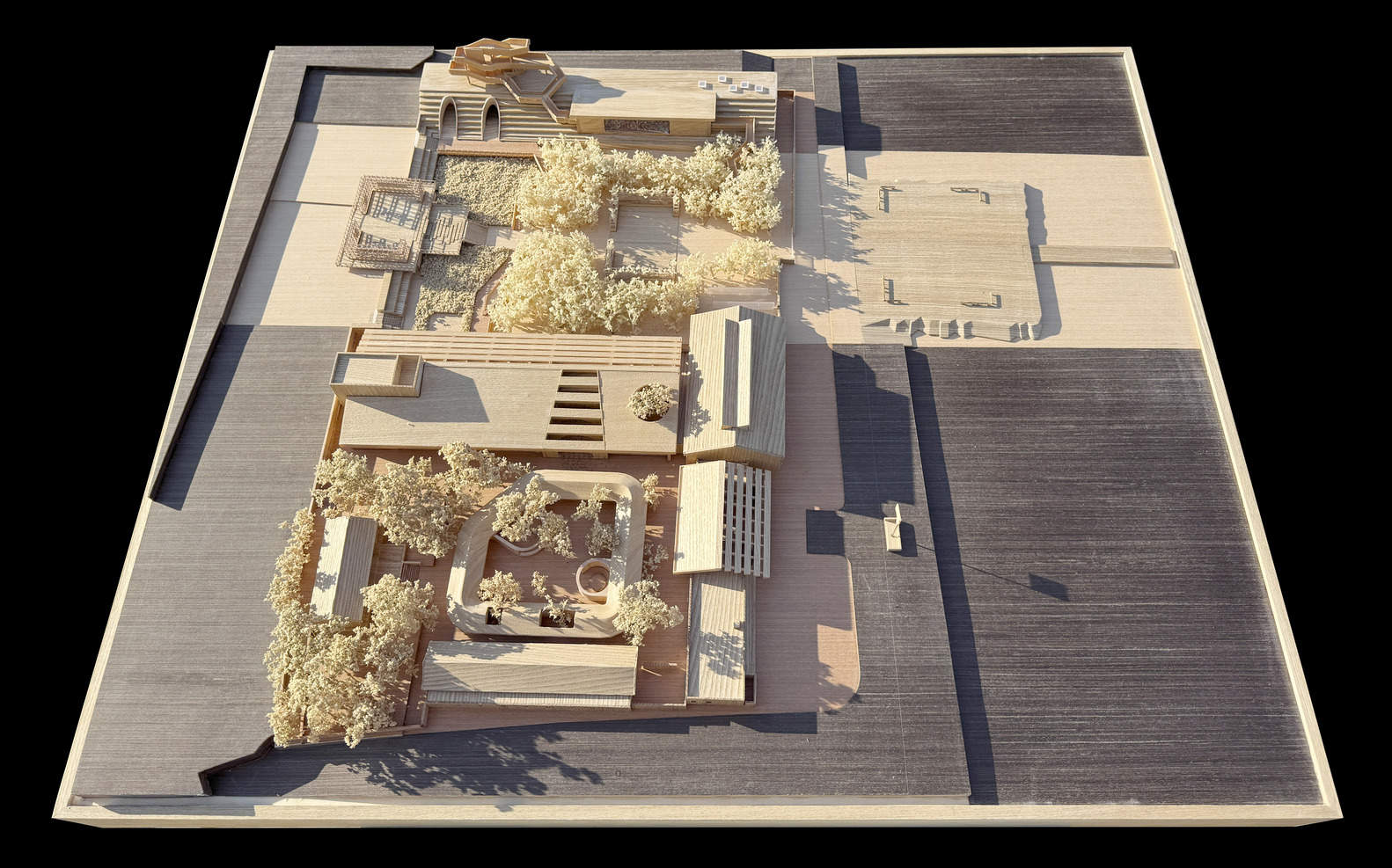
Site model diagram showing East-West direction
© TAL
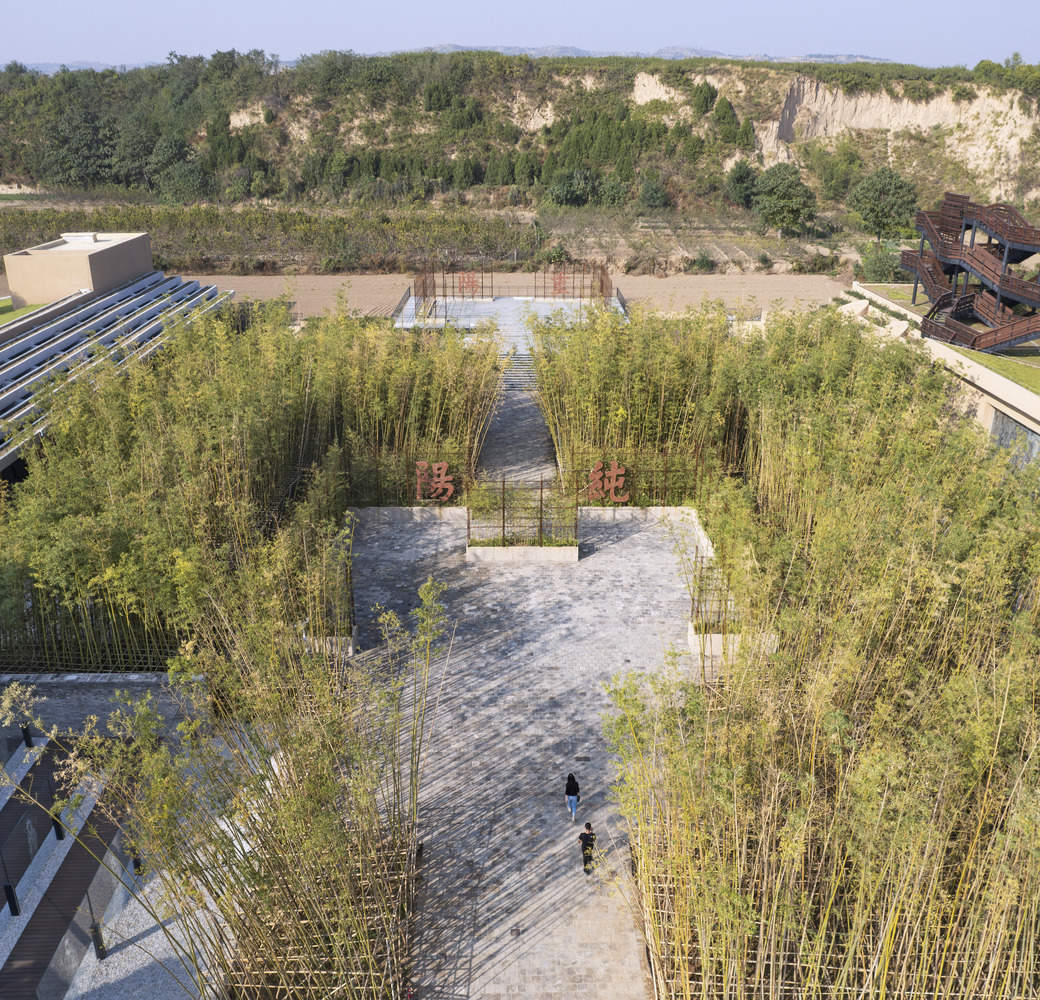
The central axis palace area is where the cultural relics themselves are located. Although there are no surface traces of relics, there is still archaeological value underground. Surface display does not use physical structures, leaving tolerance for future archaeology and using planting voids to express the outline of the four main halls. Since the area outside the buildable land is basic farmland, the outlines of the Longhu Hall, Sanqing Hall, and the corridor between them are expressed by raising the ground level.
中轴的宫殿区是文物的本体所在。虽然地表已没有文物痕迹,地下还是有考古价值。地表展示不做实体,为未来考古留出了宽容度并用种植留白来表达四大殿的轮廓。由于可建设用地之外是基本农田,只能用堆土抬高地坪来表述龙虎殿、三清殿及两者之间的甬道。
© TAL
© TAL
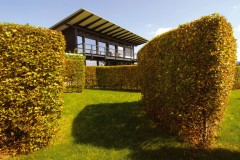
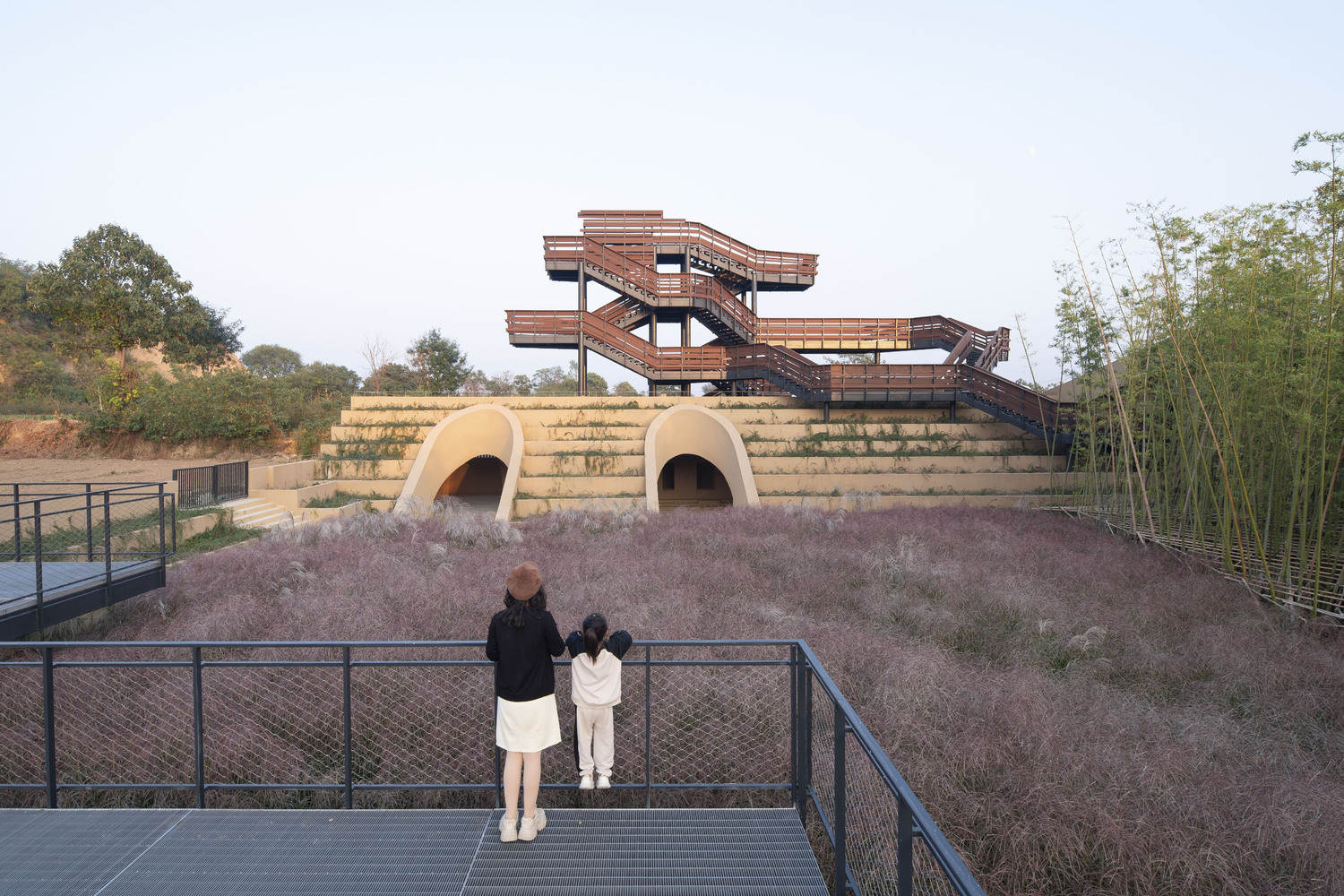
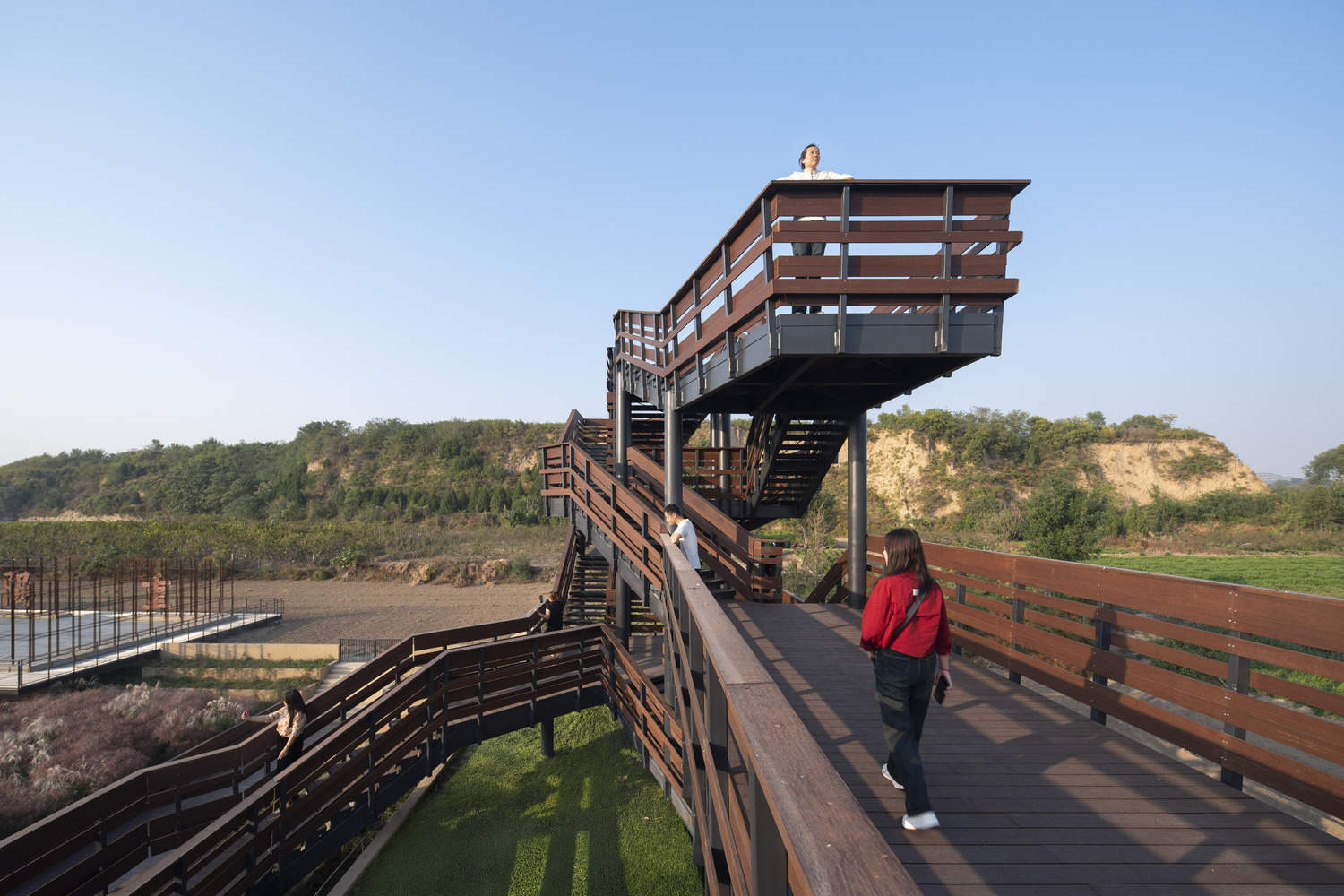
The Chuyang Hall and Chongyang Hall are within the buildable area, hidden in dense woods. Slender steel bars outline walls equal in height to the original mural walls, allowing the audience to gain a sensory understanding of the scale of the murals. The location of Chuyang Hall was originally a courtyard with a thick layer of concrete mat. Tree pools enclosed by steel cages are erected on the mat, without damaging the underground layer. The northern end of Chongyang Hall has a high embankment. To reach that elevation, the contour of the platform base of Chongyang Hall uses elevated steel grating, completely detaching itself from the ground to minimize intervention with the base. The highest point of the entire design, serving as the "Eye of Space," is set on the roof of the northeast building, offering a panoramic view that allows one to appreciate the relationship between Yongle Palace and the surrounding mountains and rivers, looking north to Mount Zhongtiao and Mount Emei Ridge, and south to the Yellow River, answering the question of the original site selection that the current Yongle Palace cannot.
纯阳殿和重阳殿处于可建设区,把它们藏在密林中,并用纤细的钢筋勾勒出与原壁画墙等高的墙体,使观众对壁画的体量有个感性的认识。纯阳殿所在位置原先是场院,已有一层厚厚的混凝土垫层,垫层上竖起用钢筋笼围合成的树池,没有破坏地下层。重阳殿北端是一个高坎,为了达到那个标高,重阳殿的台基轮廓用了架高钢格栅的方式,彻底脱离了场地,以减少对基地的干预。整个设计的制高点作为"空间之眼",设在东北侧建筑屋顶,选择了一个能够体会永乐宫与天地山川环境关系的全景视角,北望中条山和峨眉岭,南朓黄河,可以回答现在的永乐宫所无法回答的选址问题。
This overlooking platform realizes a modern translation of Feng Shui geomancy—the cantilevered staircase alludes to the soaring "Azure Dragon," creating a celestial echo with the "Crouching Tiger" garden in the west area, using the俯瞰 (overlook) to reveal the spatial connection between the central axis and the surrounding mountains, directly solving the geographical code of Yongle Palace's original site.
这个瞭望台实现了风水堪舆的现代转译——悬挑楼梯隐喻"青龙"升腾,与西区"卧虎"园林形成天地呼应,用俯瞰揭示中轴线与周边山脉的空间关联,直观地解答永乐宫选址的地理密码。
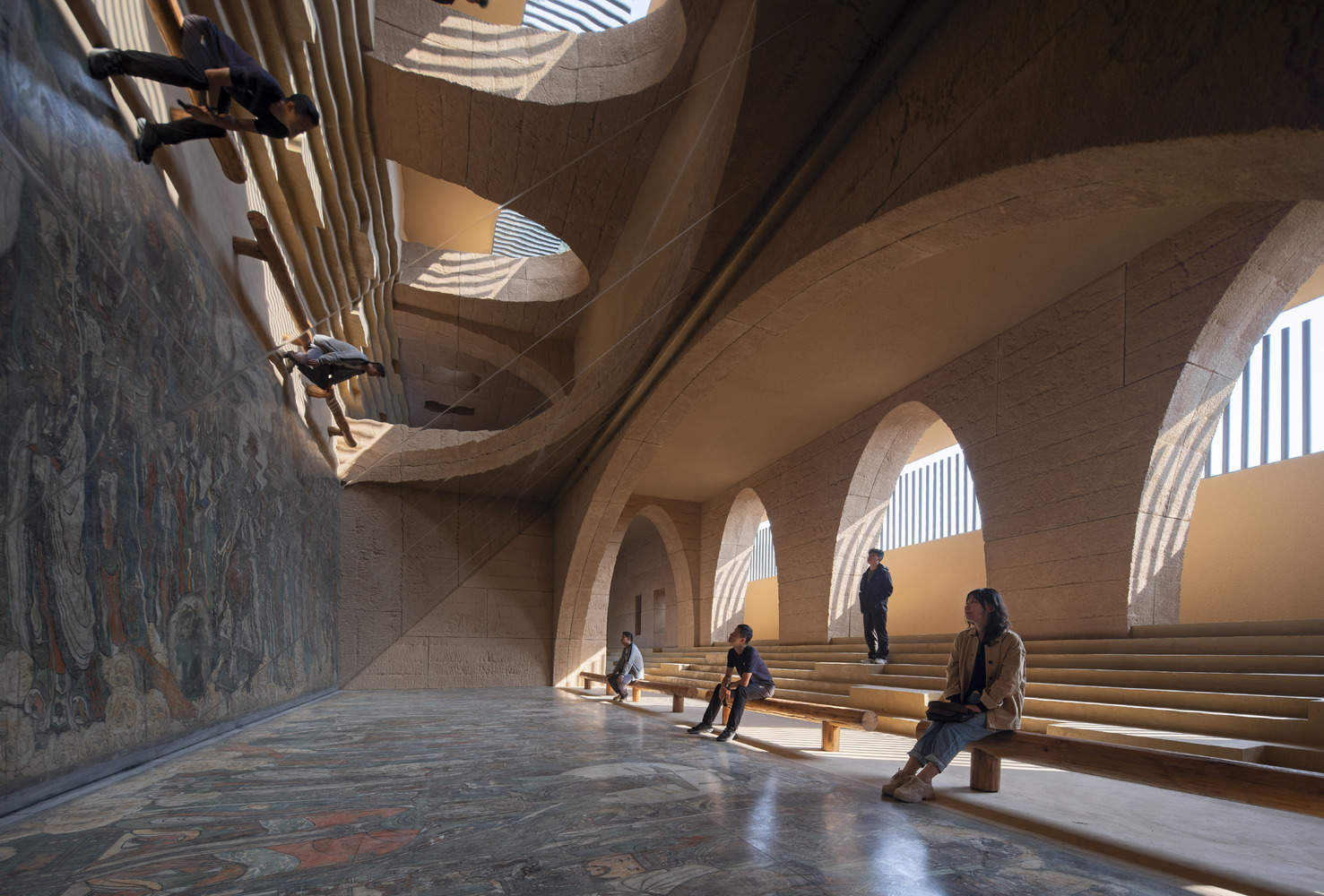
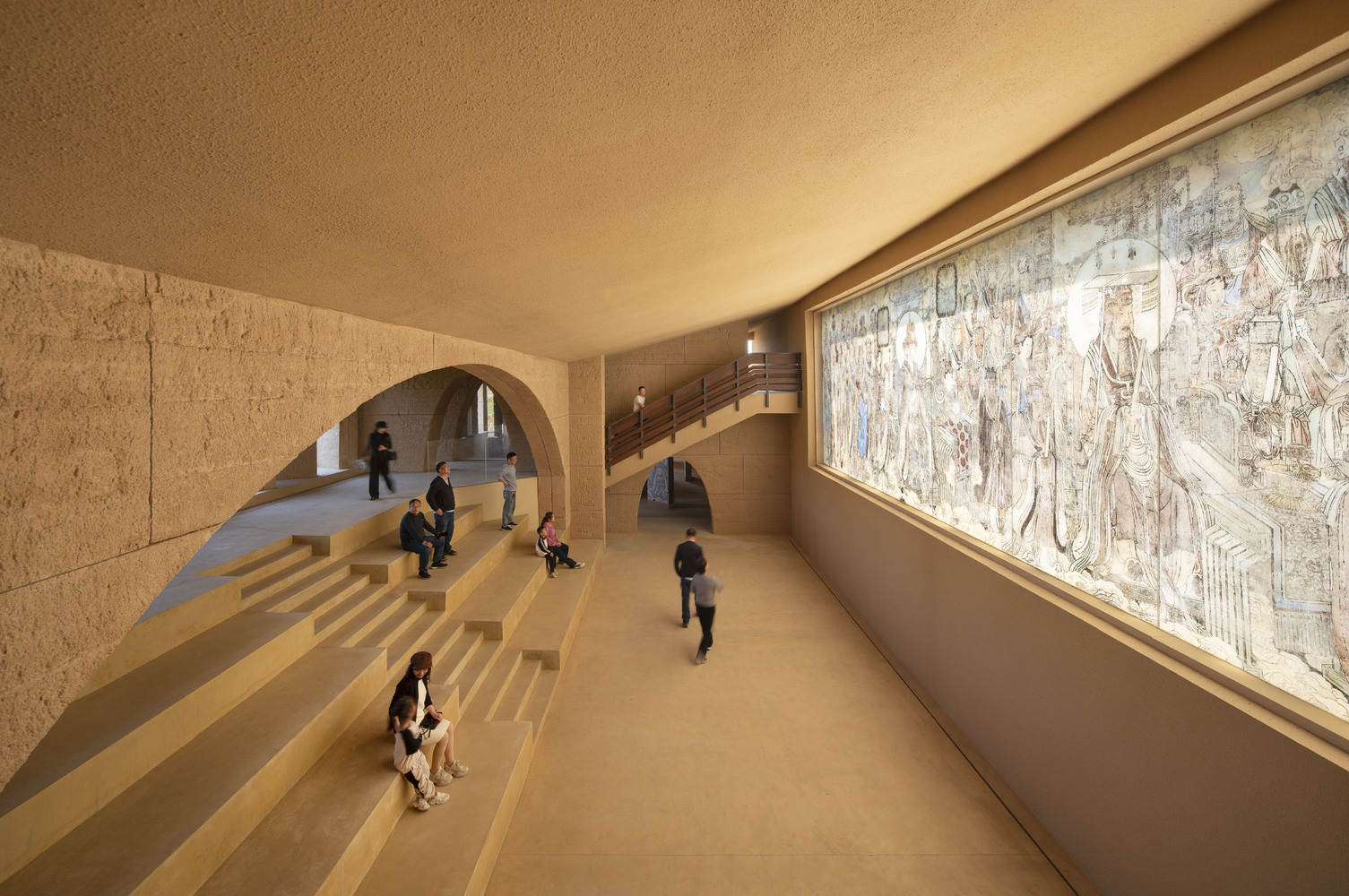
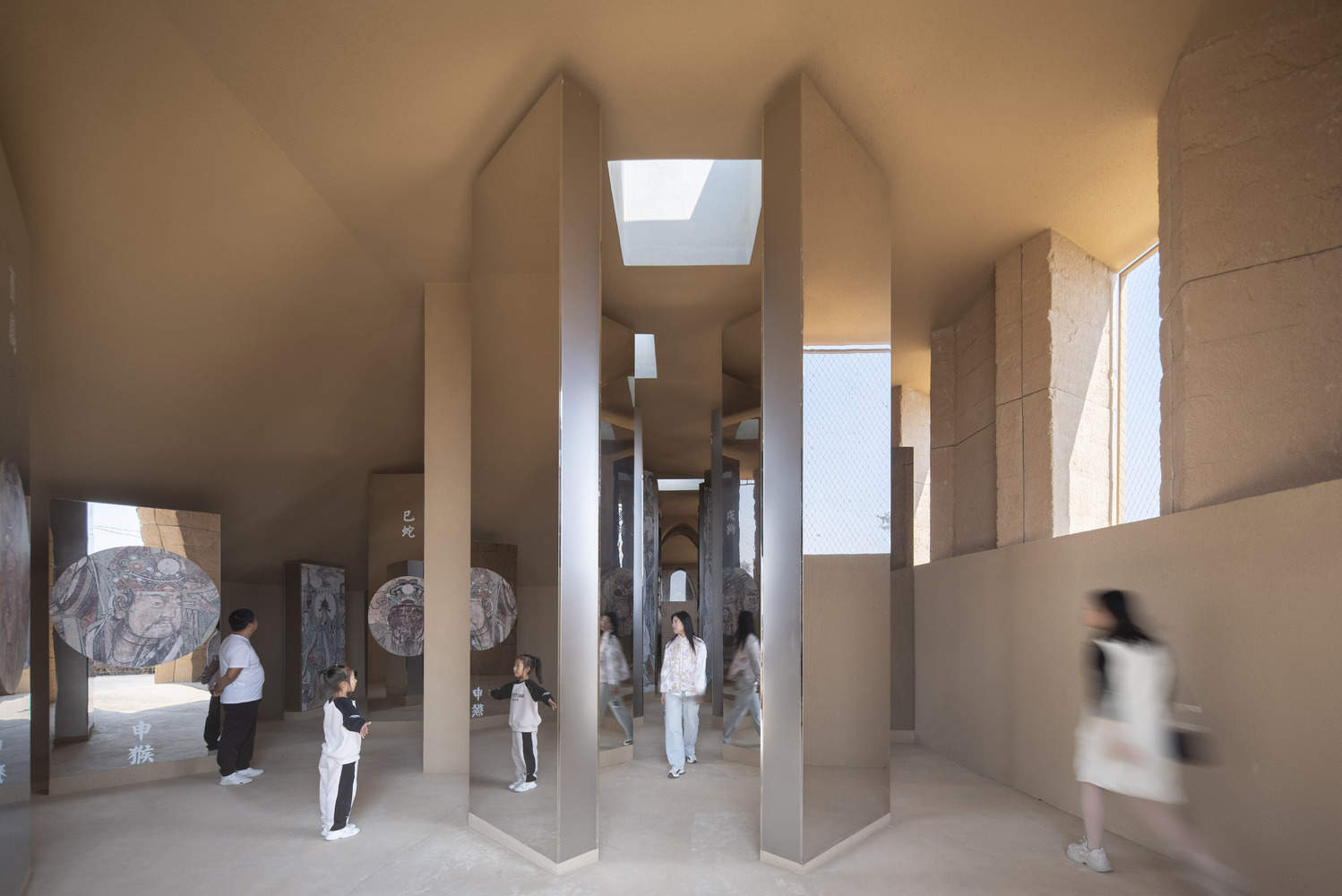
A hundred-meter-long mural experience hall is set up on the eastern boundary of the relic site. The arched corridor inside reinforces the progressive spatial narrative formed by the three experience zones. The northern "Dancing with Immortals" experience zone features large printed ceramic tiles covering the ground, matching the size of the east wall mural of the Sanqing Hall. Stainless steel mirrors angled at 45 degrees to the ground reflect the ground murals into vertical images, allowing visitors lying on the ground to see themselves alongside the reflected immortals on the vertical wall, as if they were in the mural. The central zone is the "Illuminating the Mural" experience area. Yongle Palace murals were originally hidden in the dim light within the halls, but here, the west wall mural of the Sanqing Hall is silk-screen printed 1:1 onto glass. Under the backlighting of the sun, the immortals glow, providing visitors with a comprehensive mural viewing experience. The southern zone is the "Misty Immortal Realm" experience zone, where visitors wander through a mirrored maze to find their own zodiac images from the Yongle Palace murals. This interactive long pavilion provides modern visitors with a zero-distance dialogue with the ancient murals.
遗址东界设置百米长壁画体验厅,内部拱廊强化了三个体验区所形成的递进式空间叙事。北部的与神仙共舞体验区,是在地面铺装上与三清殿东壁壁画等大的大块印刷瓷板,再用与地面相夹45度角的不锈钢镜面,把地面的壁画反射成直立的镜像,游客躺在地面可看到自己在垂直的墙面上与镜中神仙相邻,仿佛置身于壁画中。中部是点亮壁画体验区。永乐宫壁画是隐藏在殿内的昏暗光线中,但在这里,三清殿西壁壁画 1:1 地丝网印刷在玻璃上,在阳光的背光下,神仙们个个发光,为游客带来全面的壁画观看体验。 南部是迷离的仙境体验区,观众穿行在一个镜面迷宫,寻找自己在永乐宫壁画中的生肖图像。整个互动长亭提供了现代游客与古老壁画零距离的对话。
© TAL
© TAL
The Beginning of Relic Display
遗址展示的开端
By adopting a dual structure of "West Shrine, East Palace," the Lü Zu's Hometown Scenic Area vividly reproduces the old site of Yongle Palace based on local conditions. This design itself is a spatial installation that narrates history without traces through augmented reality methods. Since the project itself does not include exhibition content, the current design is only the beginning of the relic display, providing guiding directions for subsequent in-depth operation. This platform, open to the future, will accumulate richer layers of display.
用"西祠东宫"的二元格局打造吕祖故里景区,因地制宜地再现了永乐宫旧址。这个设计本身是个空间装置,用增强现实的方法来叙述已无痕迹的历史。由于工程本身不包含展陈内容,现在的设计只是遗址展示的开端,为后续深度运营提出引导性的方向。这个向未来开放的平台,还会累积出更厚的展示层次。
© TAL
© TAL
© TAL
The revitalization of the old site of Yongle Palace also provides a point of interest for the Yellow River No. 1 Tourist Highway. The future Yellow River No. 1 Tourist Highway will link National Parks along the entire Yellow River Civilization Belt. Under this premise, using historical ruins as "cultural magnets" to amplify and manifest the disappearing civilization points along the Yellow River basin through augmented reality will allow people to experience the layering of history more on-site, making the image of Chinese civilization clearer. This is also the historical legitimacy, current effectiveness, and future sustainability of Ruicheng County's approach to revitalizing a county-level cultural relic protection unit into a scenic area. This is a local cultural tourism strategy that aligns with the overall cultural interests of the nation.
永乐宫旧址的活化也为黄河一号旅游公路提供了一处景点。未来的黄河一号旅游公路将串联起整个黄河文明带上的国家公园。在这个预设下,把历史废墟点作为“文化磁场”,用增强现实的方式去放大和显影黄河流域上一个个消失的文明点,让人们更多地实地体验历史的层积,中华文明的图像才会更清晰。这也是芮城县把一个县级文物保护单位活化为一个景区的做法所具有的历史合法性、当下有效性和未来可持续性。这是一个符合国家整体文化利益的地方文旅战略。
© TAL
© TAL