设计理念的文化深度与叙事张力:该项目不仅仅是一个展示空间,更是西班牙文化与历史精髓的物质化表达。通过巧妙融入 16 世纪黑潮航线和太阳的象征,建筑成功地构建了连接西班牙与日本、过去与未来的叙事桥梁。这种对本土历史遗产的深刻挖掘,结合太阳这一全球共通的符号,使得展馆在文化交流层面具备了超越地域的共鸣力。入口处“水面上的倒影”作为阈限特征,界定和引导了游客的心理预期,体现了深思熟虑的空间叙事手法,使建筑成为一个活态的文化载体。
开放性与地中海精神的空间营造:在世博会普遍追求宏大外形的趋势下,西班牙馆选择回归“地中海广场”的公共精神,以开放、热情和邀请性的姿态面向公众。这种将前场空间设计为可供嬉戏、休憩和互动的公共景观,极大地提升了场所的社会属性和亲和力。内部空间流线则通过模拟“潜水”的下降坡道和群青色调,创造了从世俗到深层体验的递进感。这种动静结合、开合有致的空间策略,平衡了展示需求与市民广场的友好尺度。
极致的循环经济与可持续设计典范:面对大阪世博会“零遗产”的要求,该项目将可持续性提升到了设计哲学的核心。采用天然、本地采购的材料(如日本红雪松)、干式组装接头以及单一元素的多功能性,确保了结构在展览结束后可以被完全拆解和再利用,真正实现了循环设计的承诺。通过与专业工匠和创新材料公司(如使用回收纸张和渔网塑料)的深度合作,项目不仅实现了近乎零的环境足迹,更树立了临时性建筑在生态责任上的新标杆。
This 3,500-square-meter pavilion will offer visitors a unique architectural and exhibition experience, showcasing the country's innovations, cultural heritage, and productive activities. For six months, companies, local authorities, and other institutions will use the pavilion's space to host conferences, displays, and forums. Thus, the building becomes a strategic tool for enhancing international visibility.
这座占地3500平方米的展馆,将为游客带来独一无二的建筑与展览体验,展示该国的创新成果、文化底蕴和生产活动。在六个月的时间里,企业、地方当局和其他机构将利用展馆空间举办会议、展示和论坛活动。如此一来,建筑便成为了提升国际知名度的战略工具。
The Spanish Pavilion blends a collective experience rooted in local character with a global vision, ensuring every visitor feels at home. It also highlights a historical connection between Spain and Japan: in the 16th century, Basque navigator Andrés de Urdaneta opened a prosperous sea route between the Japanese archipelago and the Viceroyalty of New Spain, thanks to the Kuroshio Current flowing through the North Pacific. This heritage inspires the pavilion's motto and substance.
西班牙馆融合了地方特色与全球视野的集体体验,让每位游客都感受到宾至如归。它还彰显了西班牙与日本之间的一段历史渊源:16 世纪,巴斯克航海家安德烈斯·德·乌尔达内塔(Andrés de Urdaneta)借助流经北太平洋的黑潮,开辟了日本列岛与新西班牙总督辖区之间的繁荣海上航线。这段历史遗产为展馆的座右铭提供了灵感与内涵。
© ArchExist
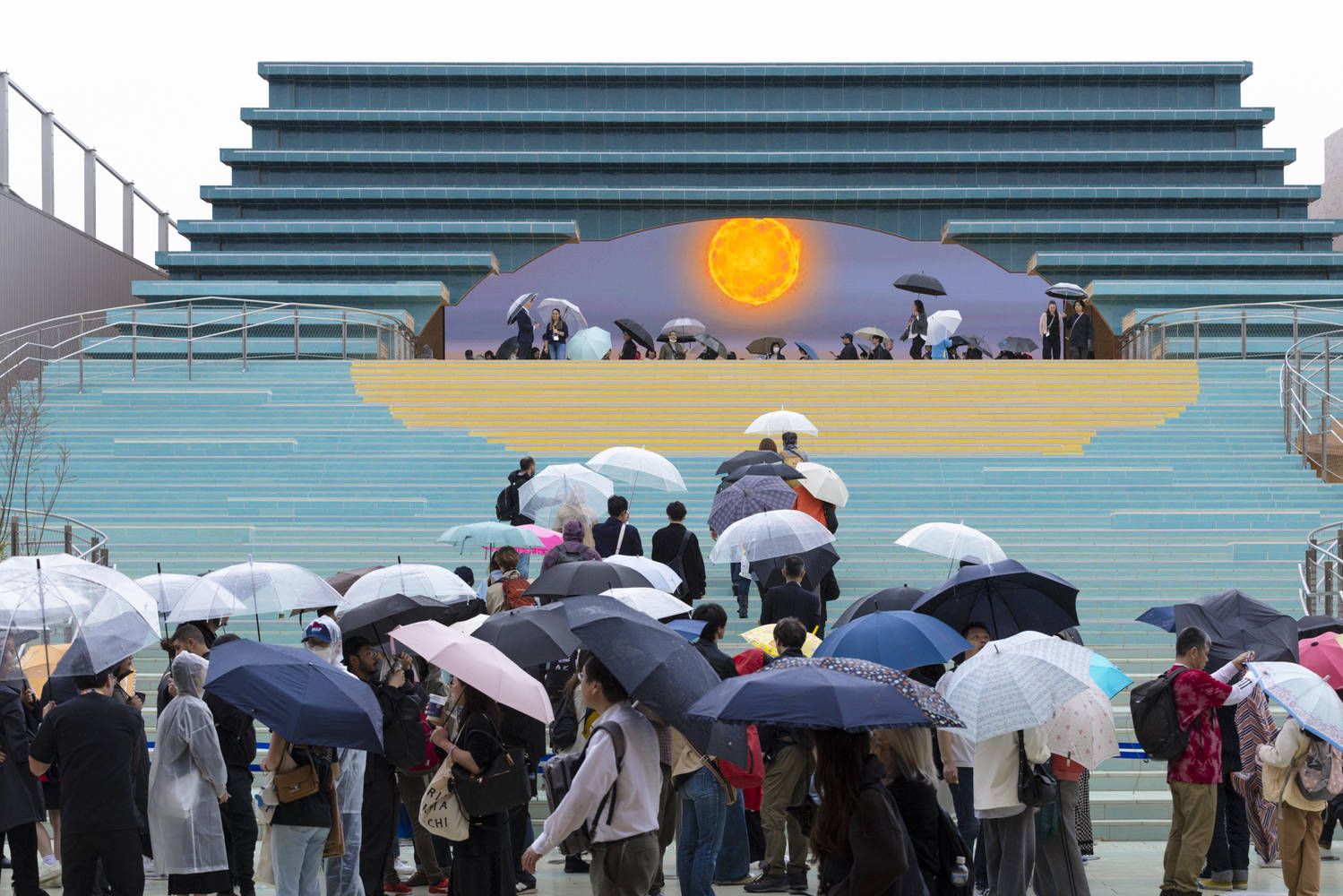
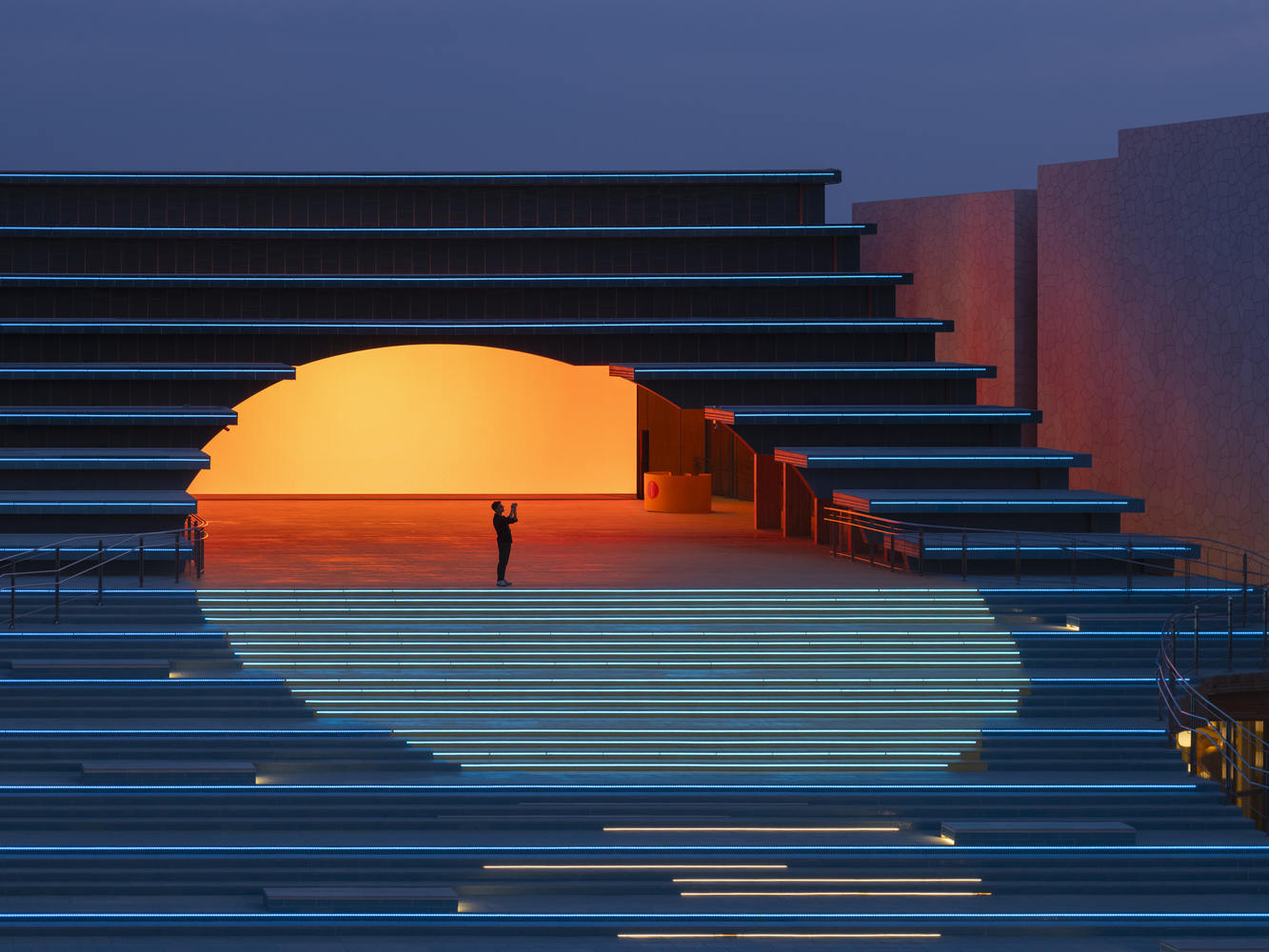
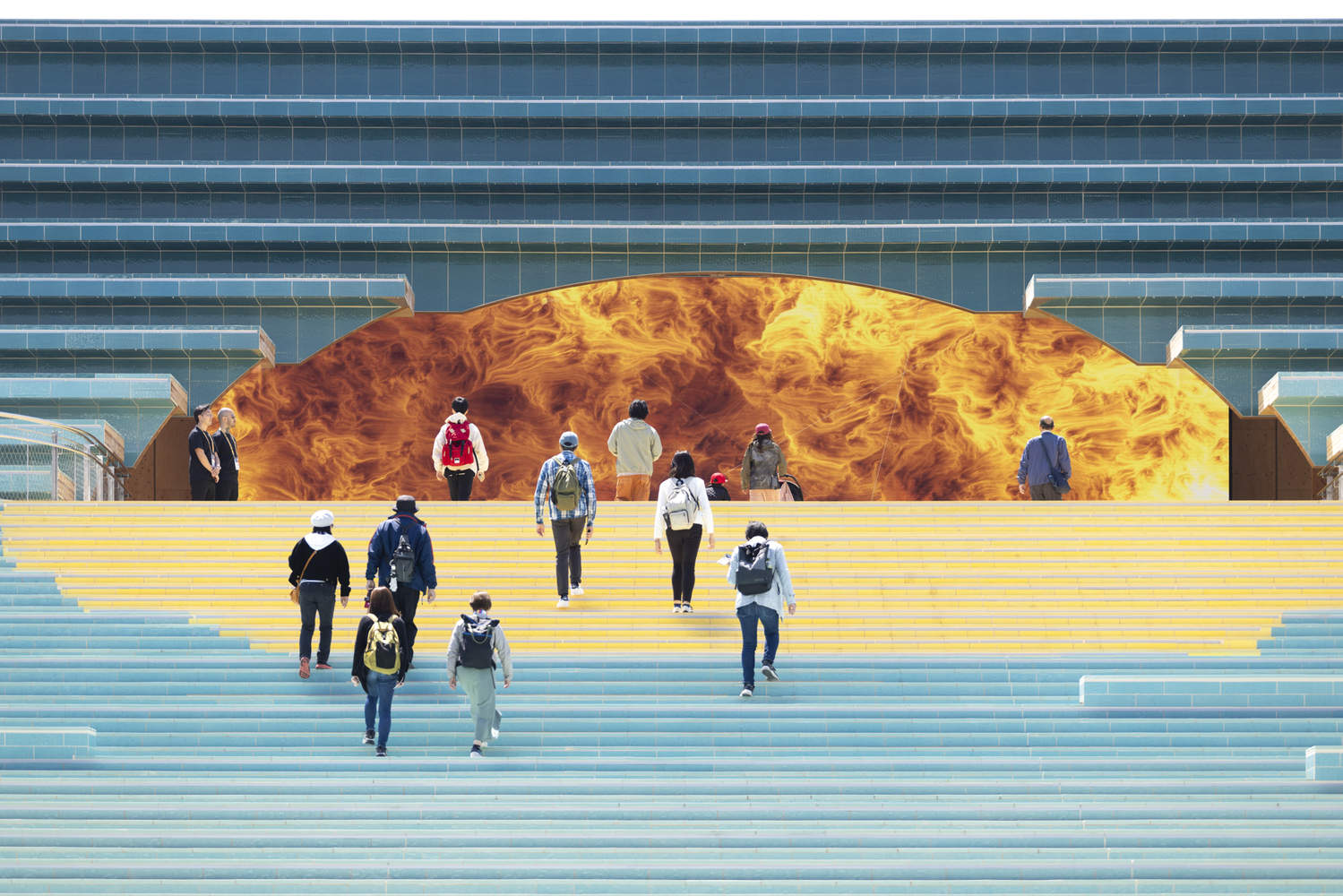
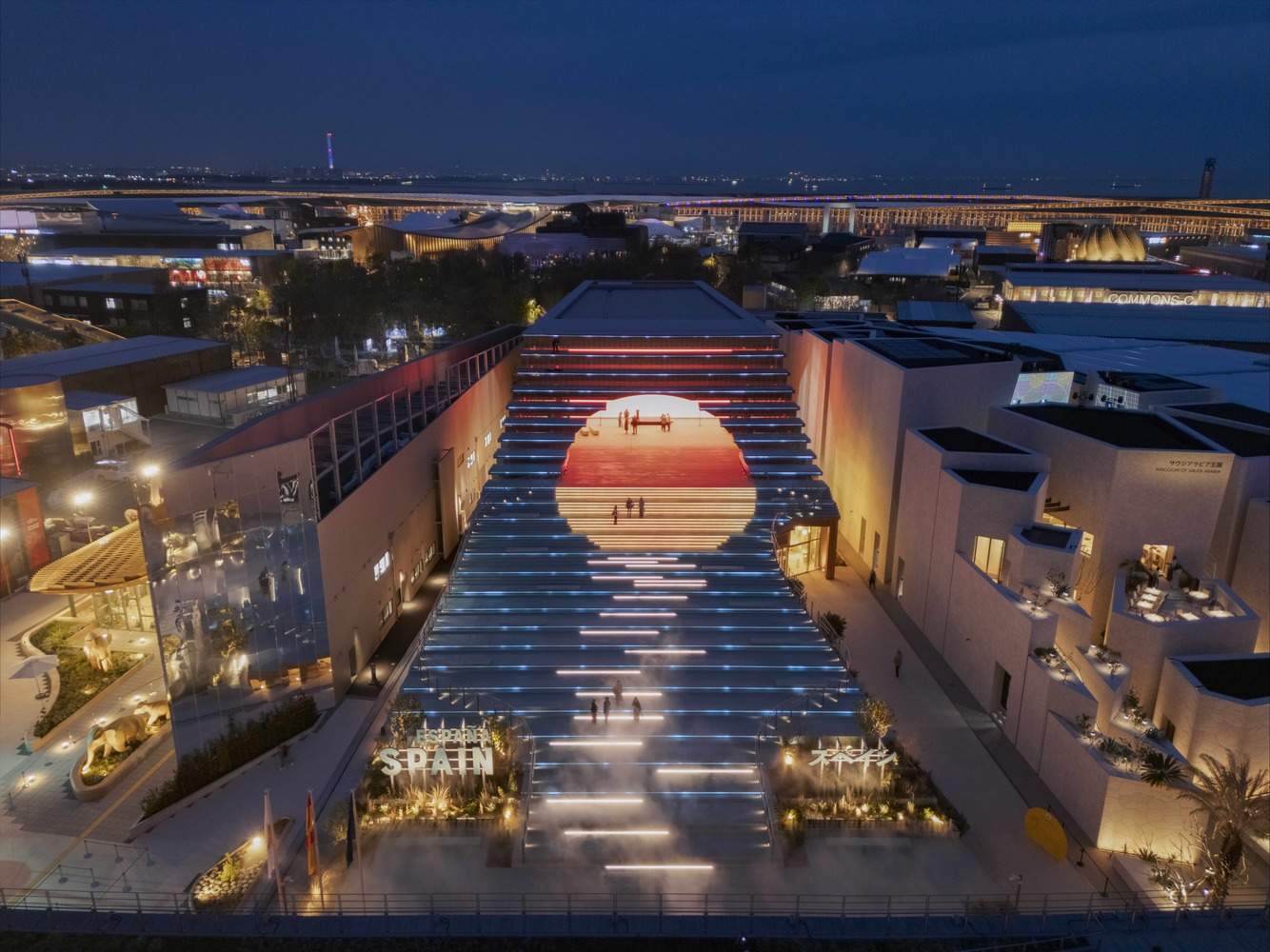
The second symbolic element of the proposal—the sun—reaffirms this shared bond. The sun, present in both Japanese and Spanish cultures, connects both ends of the world on its journey from East to West. Like a reflection on the water's surface, the image of this star becomes the threshold feature that divides the pavilion's entrance from its interior spaces.
提案的第二个象征元素 —— 太阳,重申了这种共同纽带。太阳在日本和西班牙文化中均有体现,它在从东向西的旅程中,连接了世界的两端。如同水面上的倒影,这颗恒星的形象成为了划分展馆入口与内部空间的阈限特征。
© ArchExist
© ArchExist
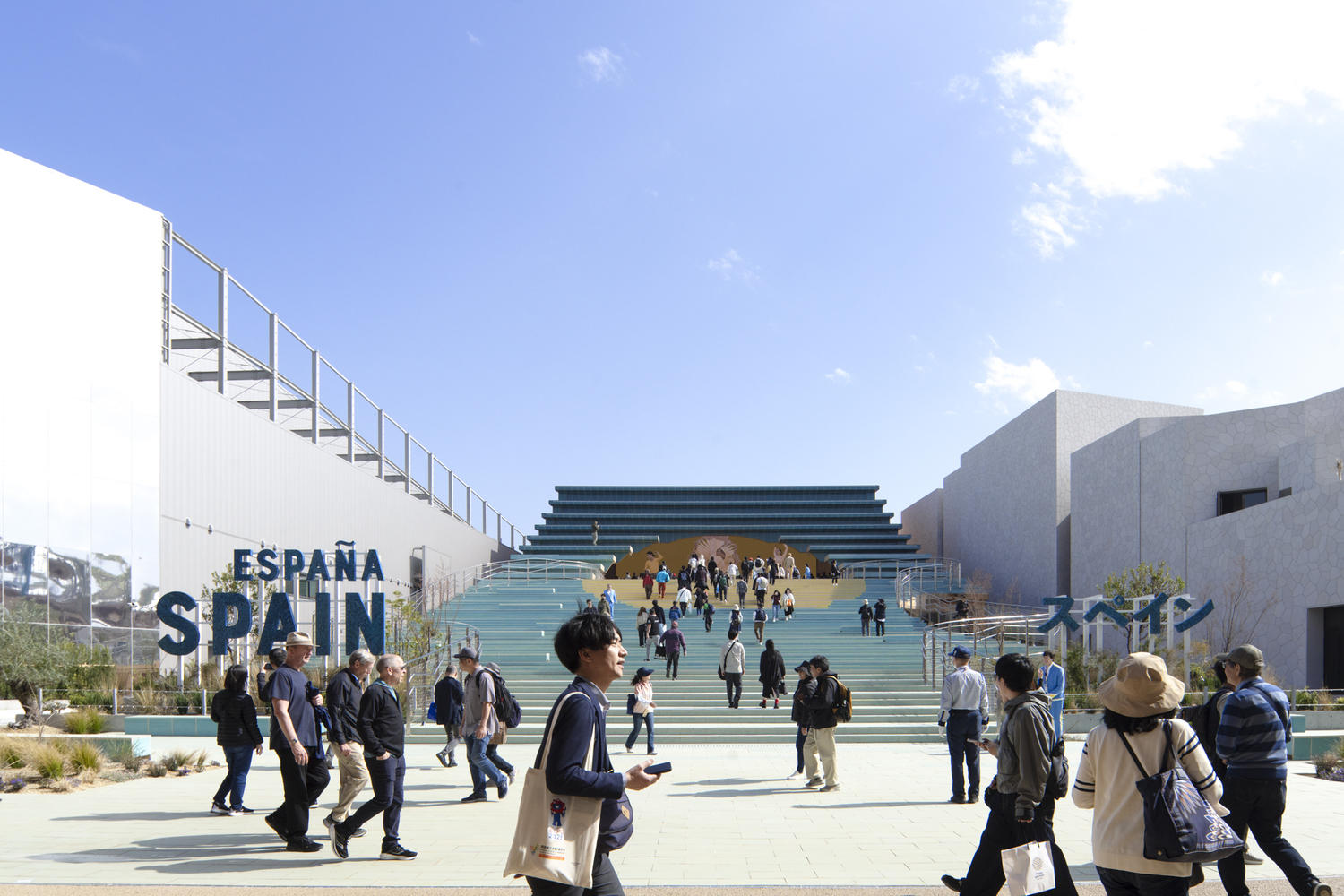
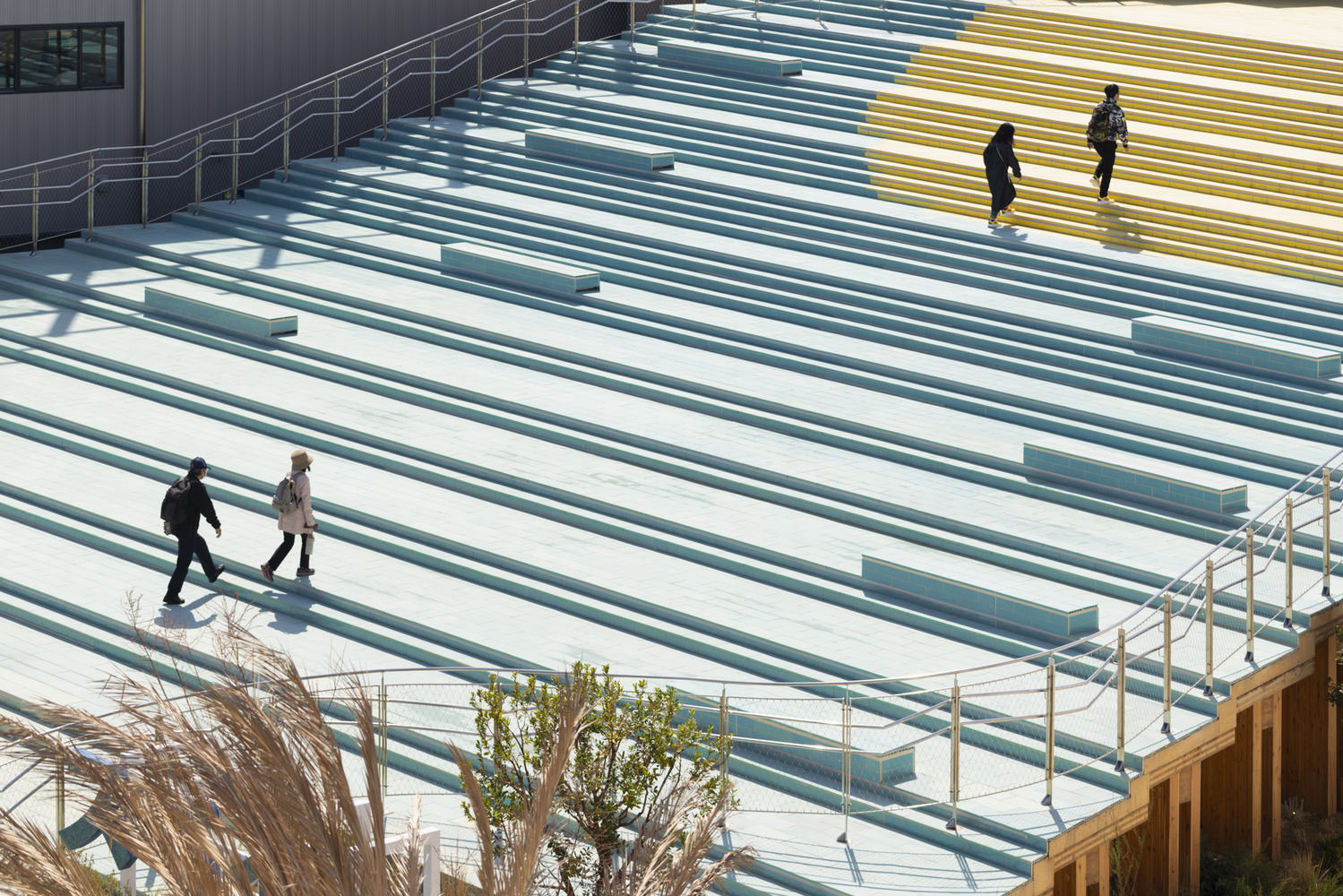
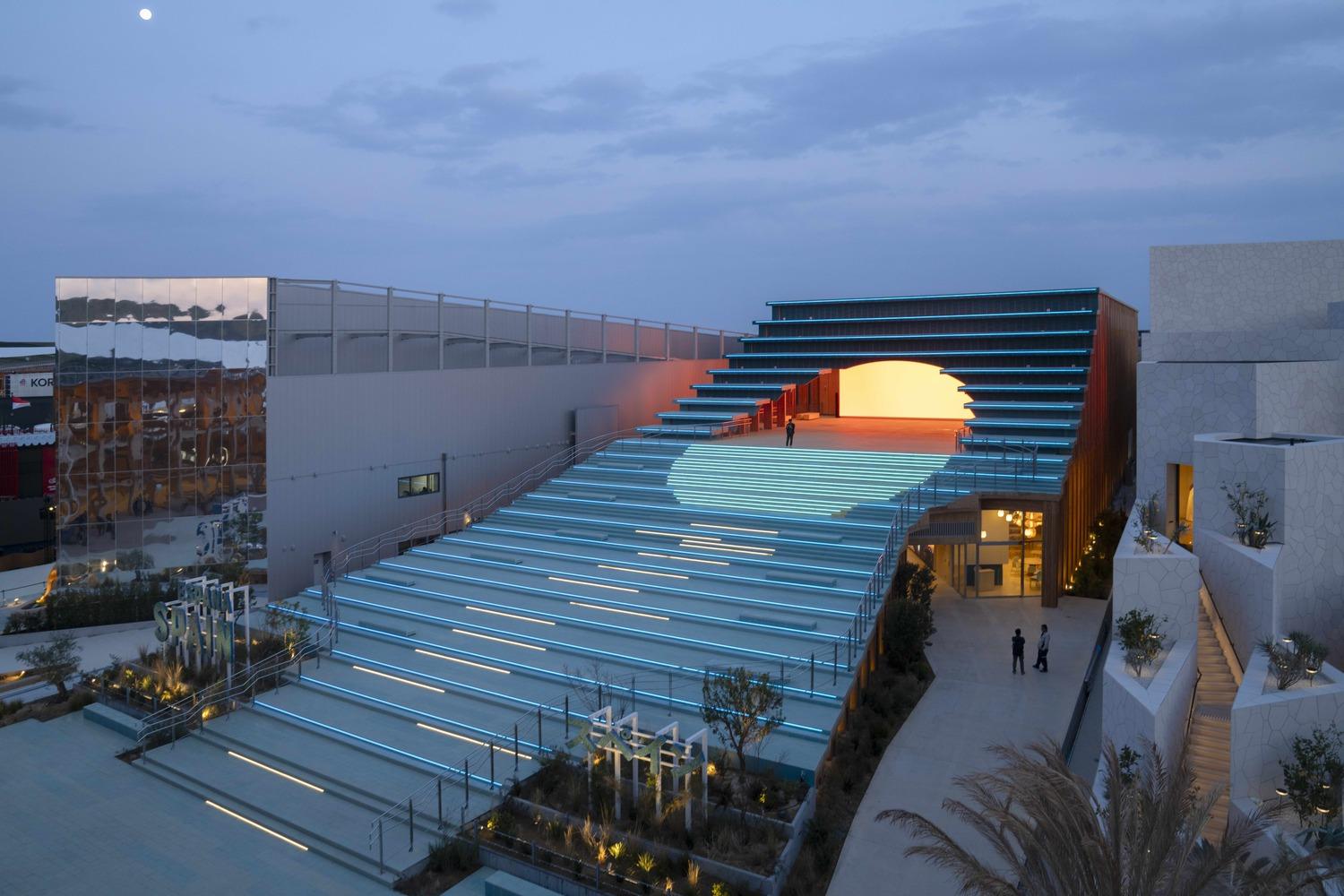
Mediterranean Plaza. Unlike pavilions that rely on grand façades, Spain’s is designed to be open and welcoming. It is conceived as a landscape, inviting visitors into a spacious forecourt—a plaza inspired by the Mediterranean spirit that encourages play, rest, and interaction.
地中海广场。与其他依靠宏伟外墙的展馆不同,西班牙的展馆设计开放而热情。它被构想成一片景观,邀请游客踏入宽敞的前方空间 —— 一个受地中海精神启发的广场,鼓励人们在此嬉戏、休憩与互动。
© ArchExist
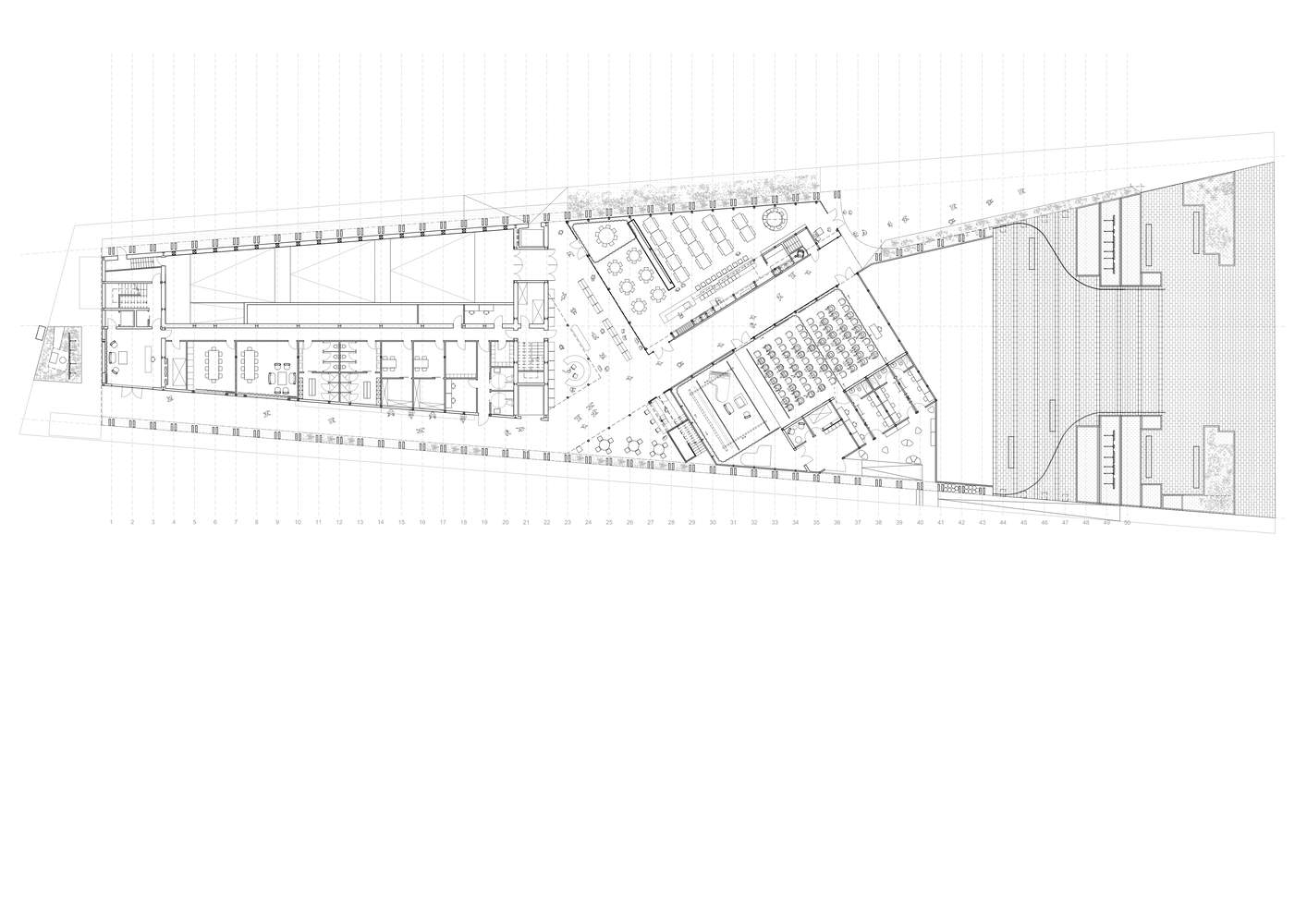
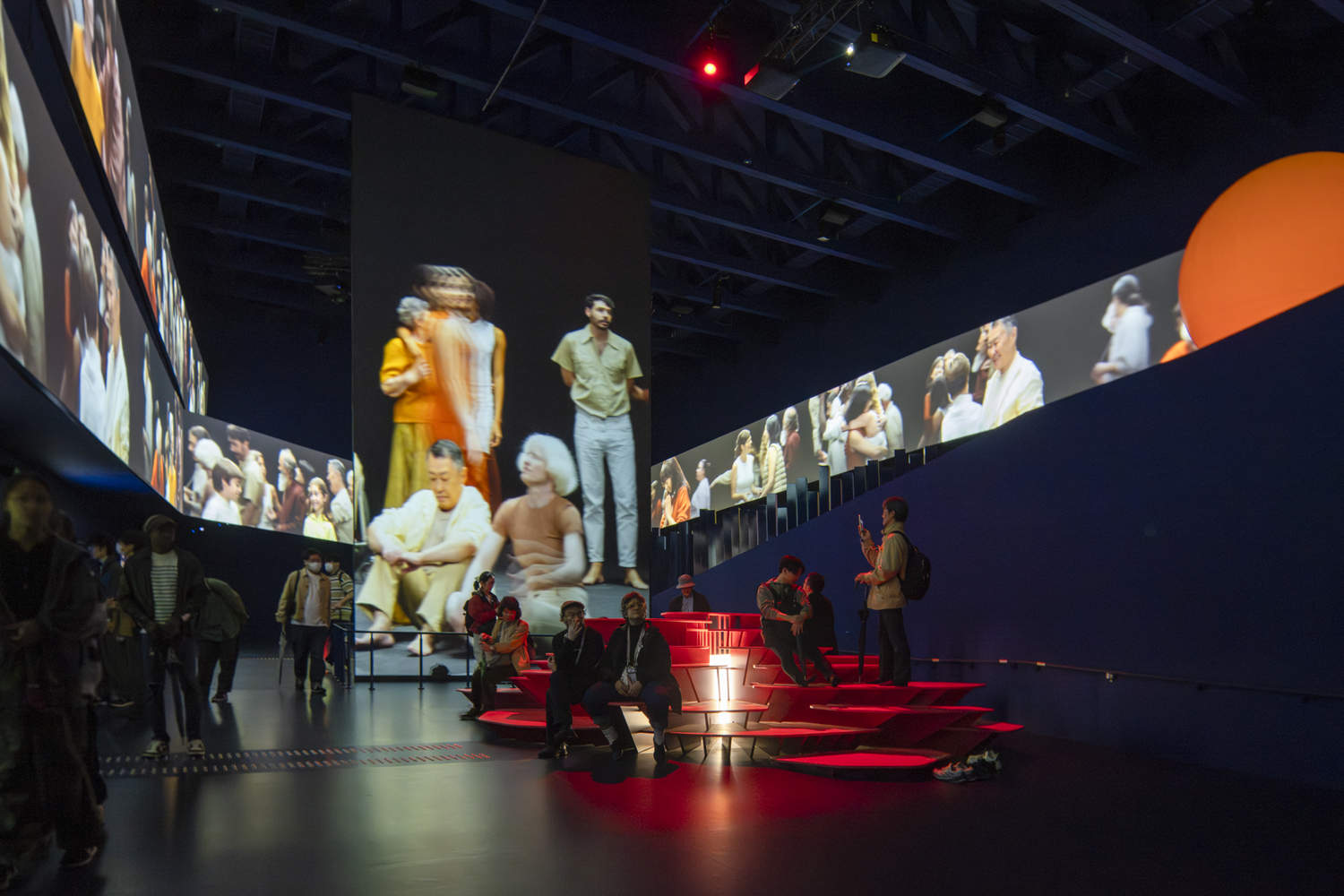
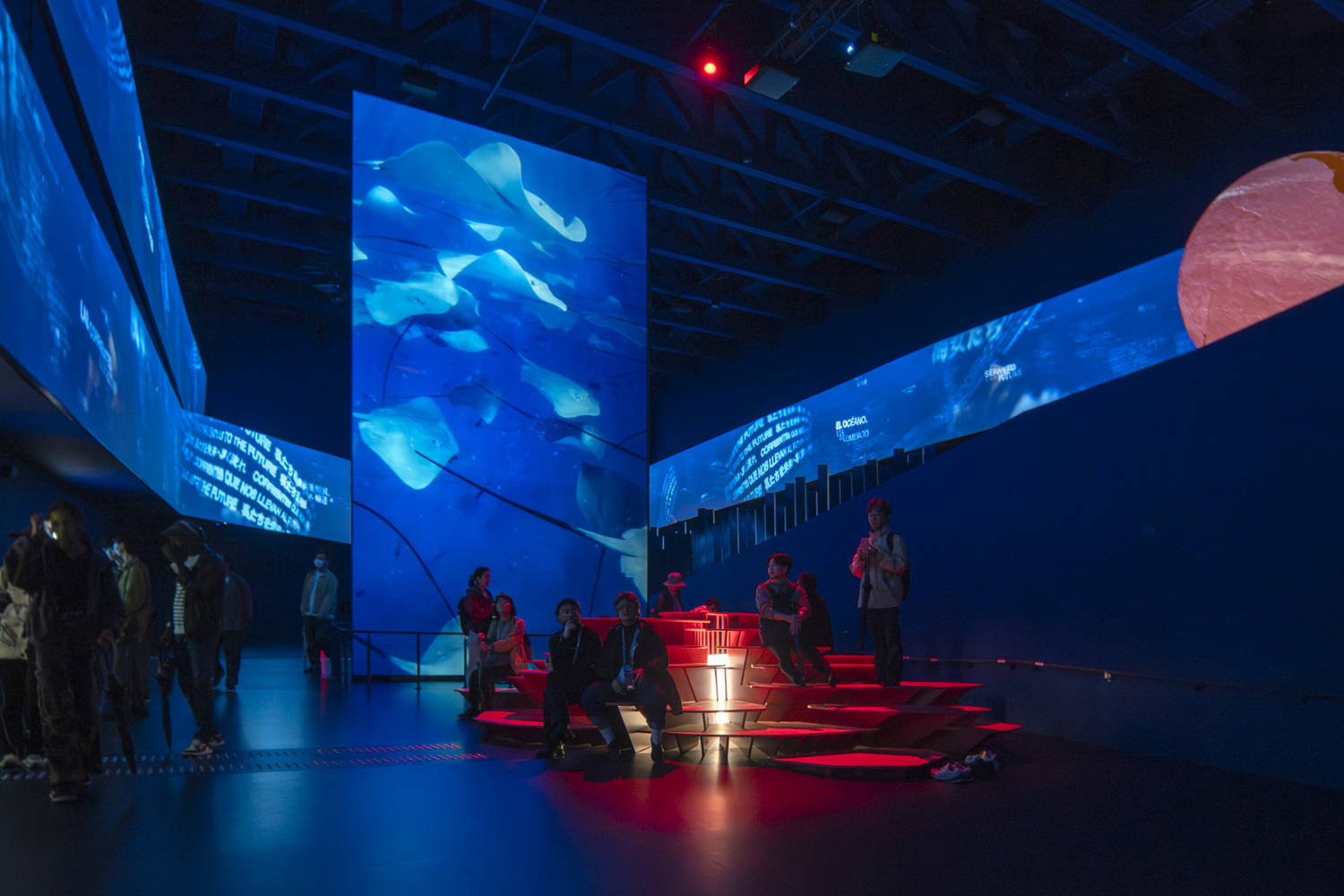
After ascending gentle steps that simulate waves, visitors arrive at the exhibition's antechamber: the Sun Plaza. This space is dominated by an LED screen displaying seven video art pieces exploring the symbolism of the sun—its role in maintaining planetary balance and its potential to inspire imagination towards a more sustainable future. Beyond this "digital façade," the exhibition unfolds along a descending ramp, evoking a sense of diving underwater. The entire route is enveloped in an ultramarine hue, simulating immersion in the deep sea, eventually leading visitors to the exit. The exit, located at street level and connected to the main ring road, features more vibrant colors and a 360-degree audiovisual installation capturing the festive spirit of Spain and its people—symbolizing a return to the light.
游客踏上模拟海浪的柔和台阶后,便抵达了展览的前厅:太阳广场。这一空间由一块 LED 屏幕主导,上面展示着七件探索太阳象征意义的视频艺术作品 —— 太阳在维持地球平衡中的作用,以及它激发人们对更可持续未来想象力的潜力。在这道“数字外墙”之后,展览沿着一条下降的坡道展开,让人仿佛置身于潜水之中。整条路线被群青色调所包裹,模拟了沉浸于海洋深处的体验,最终引领游客到达出口。出口位于街道层面,与大环路相连,采用了更为鲜艳的色彩搭配,并设有一处 360 度视听装置,捕捉了西班牙及其人民的节日精神 —— 这象征着回归光明。
© ArchExist
Sustainability and Circularity. This Osaka Expo will be the first not to leave any architectural heritage in the city, as all structures will be dismantled after the exhibition to restore the island’s port functions. To this end, the Spanish Pavilion is designed as a model of circularity, echoing the ocean—where nothing is wasted, and every resource finds a second life. Each element is designed with future dismantling and potential reuse in mind, whether for reconstruction elsewhere or reintegration into production chains.
可持续性与循环性。本届大阪世博会将是首个在城市中不留下任何建筑遗产的世博会,因为所有结构都将在展览结束后拆除,以便岛屿恢复其港口功能。为此,西班牙馆被设计成了一个循环性的典范,与海洋相呼应 —— 在那里,没有什么是浪费的,每一份资源都能找到第二次生命。每个元素的设计都考虑到了未来的拆卸和可能的再利用,无论是异地重建还是重新融入生产链。
© ArchExist
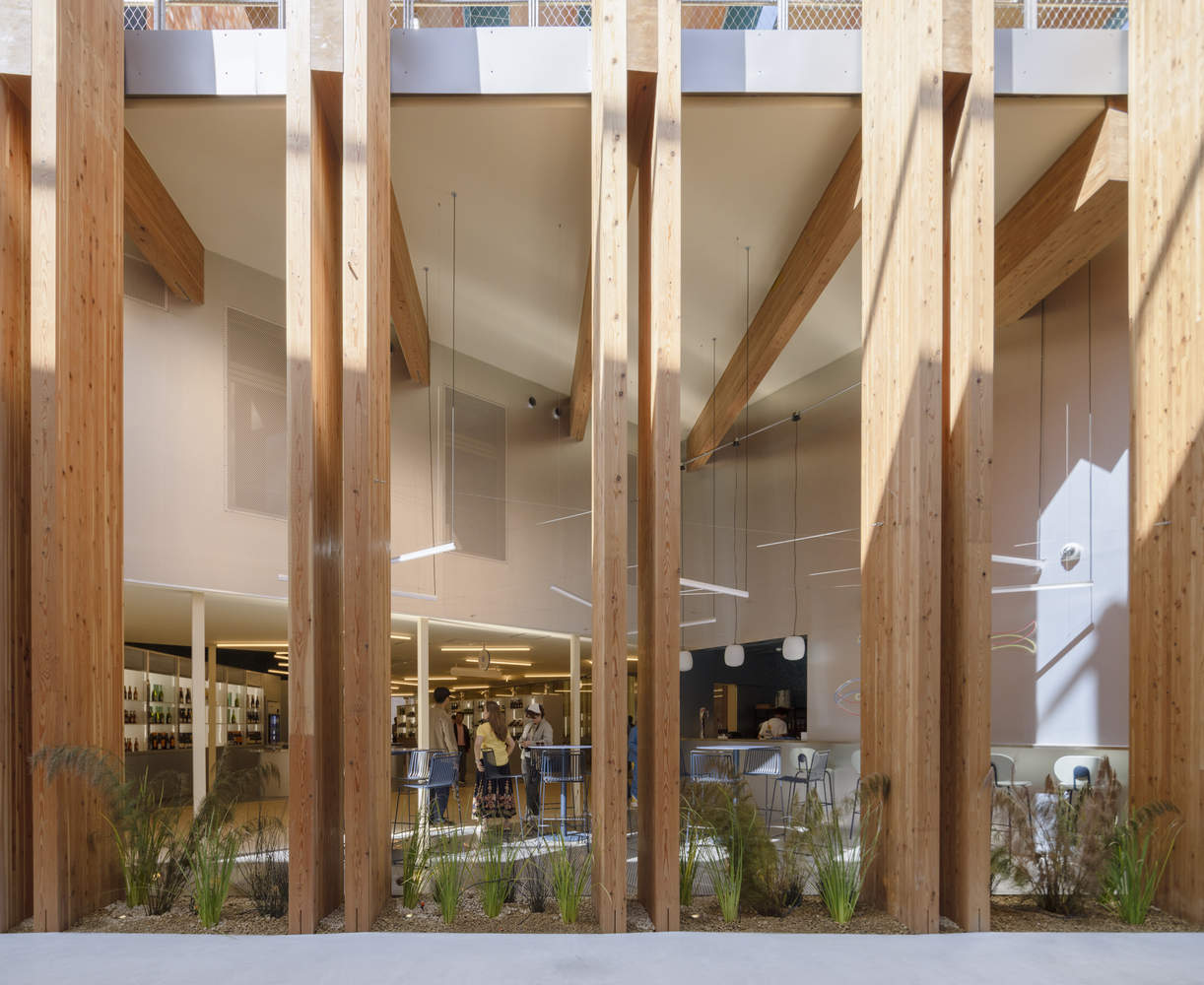
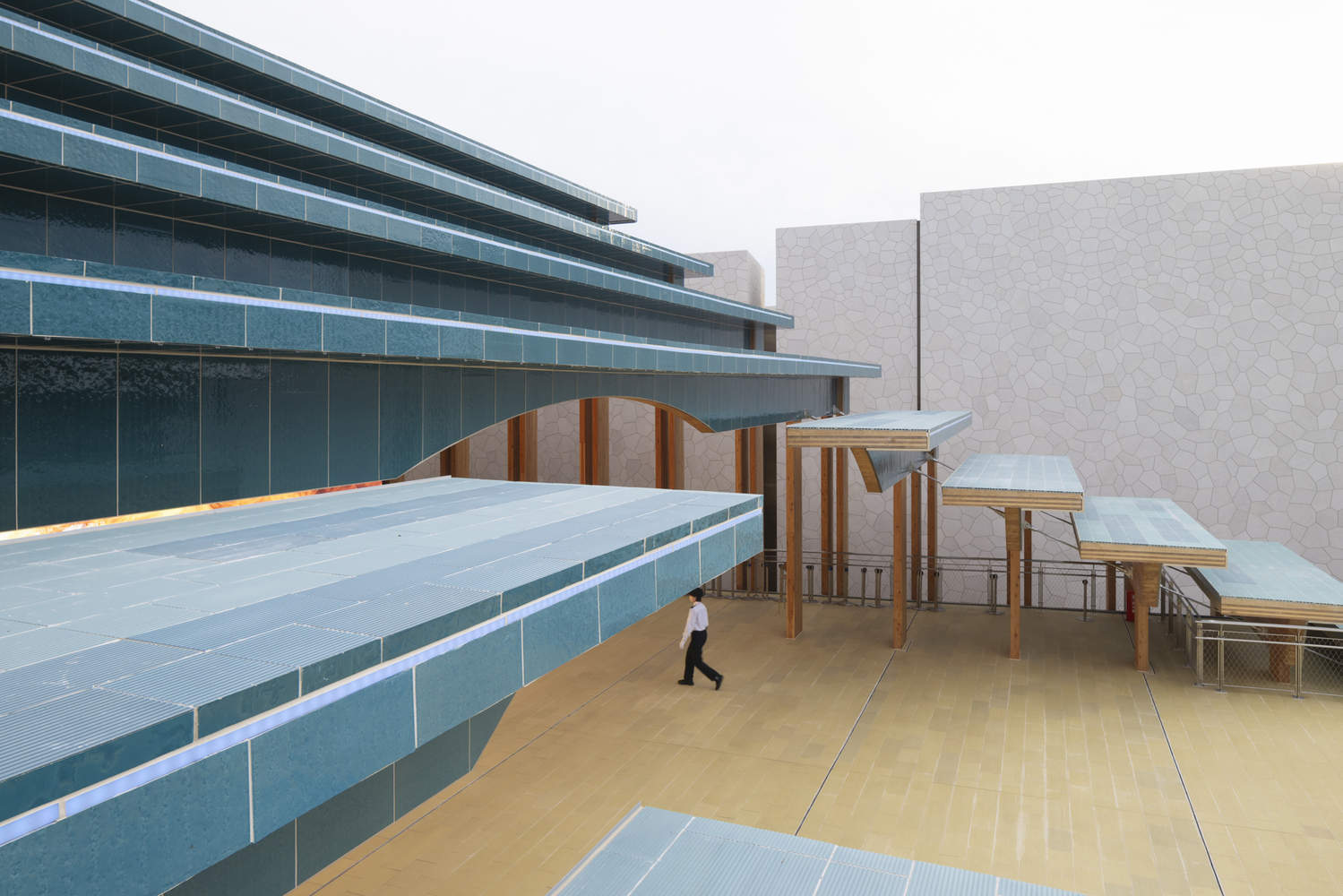
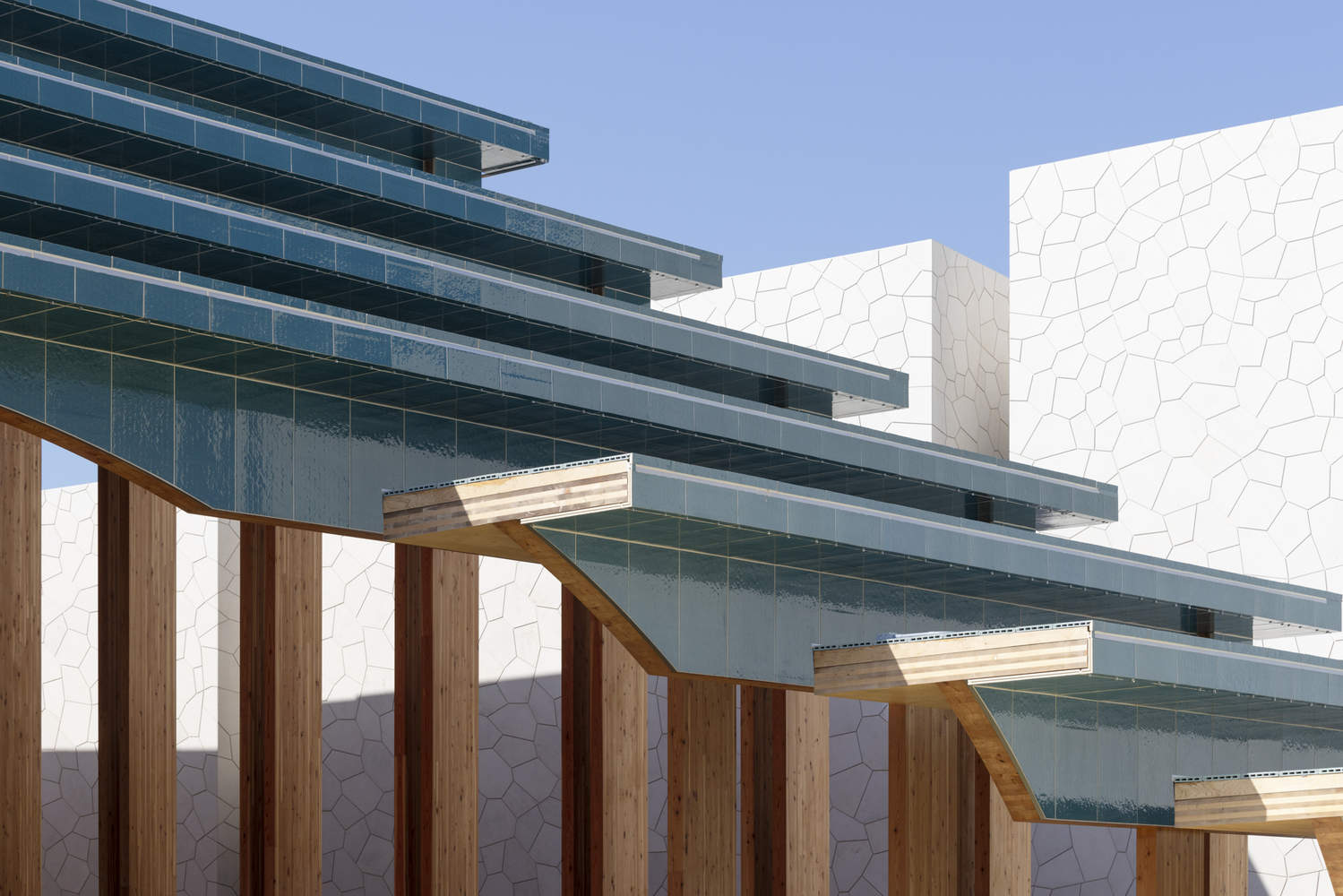
The architectural system uses natural, locally sourced materials, such as Japanese red cedar wood, simple dry-assembly joints, and the use of single elements to satisfy multiple needs. Wood is thus widely used in the porch structure, composed of double columns and T-beams at each end, repeated up to forty times at different heights, shaping the sequence of interior spaces.
建筑系统采用天然、本地采购的材料,如日本红雪松木材、简单的干式组装接头,以及使用单一元素满足多种需求。因此,木材被广泛应用于门廊结构中,该结构由每端的双柱和T形梁组成,以不同高度重复多达四十次,塑造了内部空间的序列。
© ArchExist
The choice of materials facilitates assembly and reduces structural weight, simplifying foundation construction on the artificial island. Consequently, the building achieves almost zero environmental footprint. Like the water cycle itself, it embodies a continuous process, foreshadowing the reuse of components and the incorporation of recycled materials.
材料的选择便于组装,并减轻了结构重量,简化了人工岛上的地基建设。因此,该建筑几乎实现了零环境足迹。它就像水循环本身一样,体现了一个持续的过程,预示着组件的再利用和回收材料的融入。
© ArchExist
© ArchExist
The design team collaborated with specialized artisans, such as Ceràmica Cumella for the colored façade components and Ondarreta for furniture made from certified wood and recycled fabrics. Sustainability guidelines were developed with the support of companies specializing in waste management: CoCircular provided advice throughout the process, while manufacturers Honext and Gravity Waves supplied partitions made from recycled paper and interior finishes made from recycled fishing net plastic, respectively.
设计团队与专业工匠合作,如为彩色外墙部件提供产品的 Ceràmica Cumella,以及提供由认证木材和回收织物制成的家具的 Ondarreta。在专门从事废物管理的公司的支持下,制定了可持续性指南:CoCircular 公司的建议贯穿了整个过程;制造商 Honext 和 Gravity Waves 则分别提供了由回收纸张制成的隔断板和由渔网回收塑料制成的内部装饰。
© ArchExist
© ArchExist
© ArchExist
Visitor Experience. The pavilion's architecture evokes both the ocean and the sun reflected upon it. These elements—the two most important resources on Earth and universal symbols—on one hand, refer to a certain national identity rooted in Spain's position as a Mediterranean peninsula and its unique way of life. On the other hand, they express a shared global identity that allows any visitor to the Expo to resonate with the proposal. These same elements are used in the design of the graphic identity and official logo, following an art direction that unifies architecture, exhibition, and branding.
游客体验。展馆的建筑风格既让人联想到海洋,又让人联想到反射在海洋中的太阳。这些元素 —— 地球上最重要的两种资源和普遍象征 —— 一方面,指的是植根于西班牙作为地中海半岛的地位及其独特生活方式的某种国家身份。另一方面,它们也表达了共享的全球身份,让任何参观世博会的游客都能与这一提案产生共鸣。这些相同的元素也被用于图形标识和官方标志的设计中,遵循了一种将建筑、展览和品牌融为一体的艺术指导。
© ArchExist
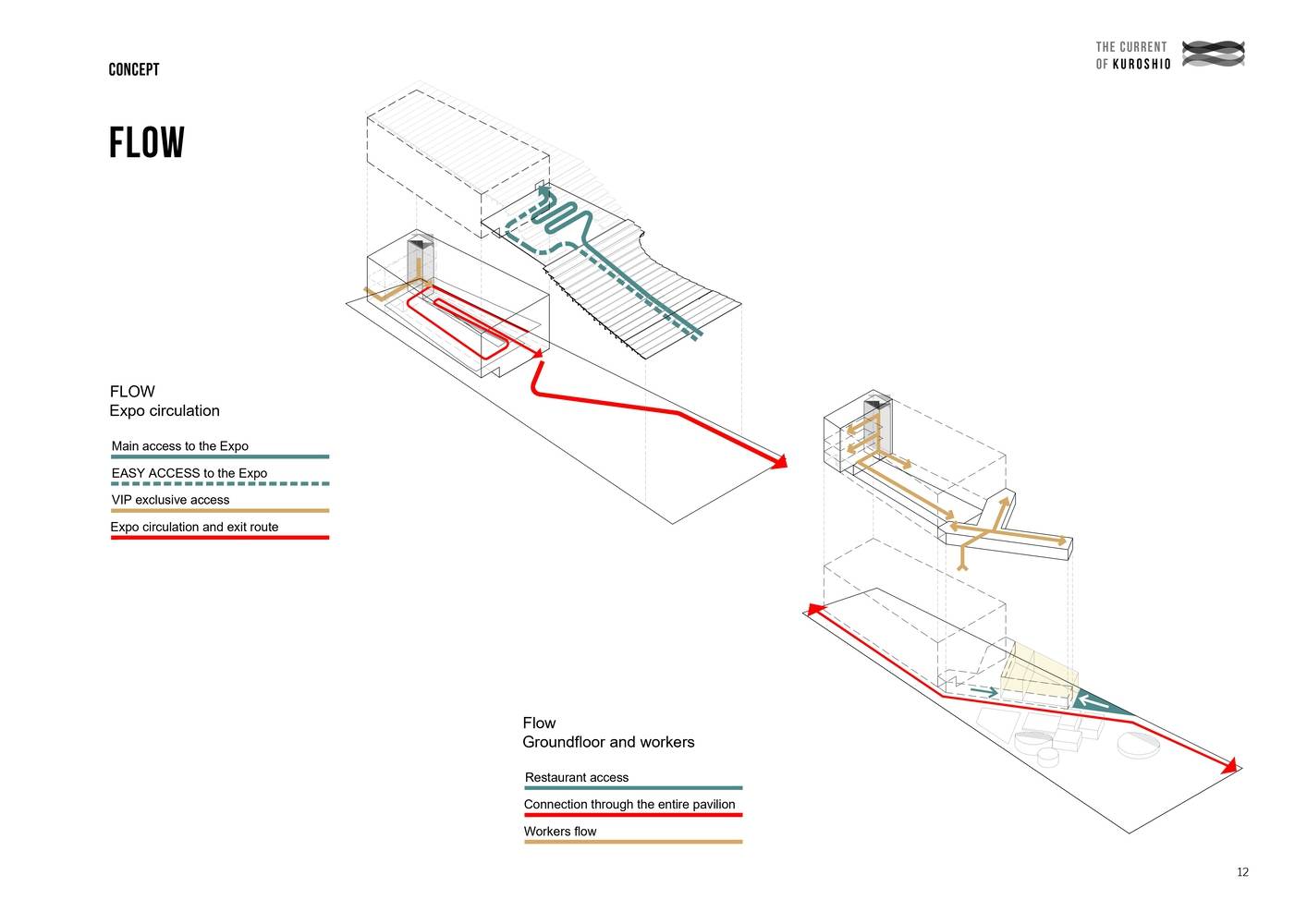
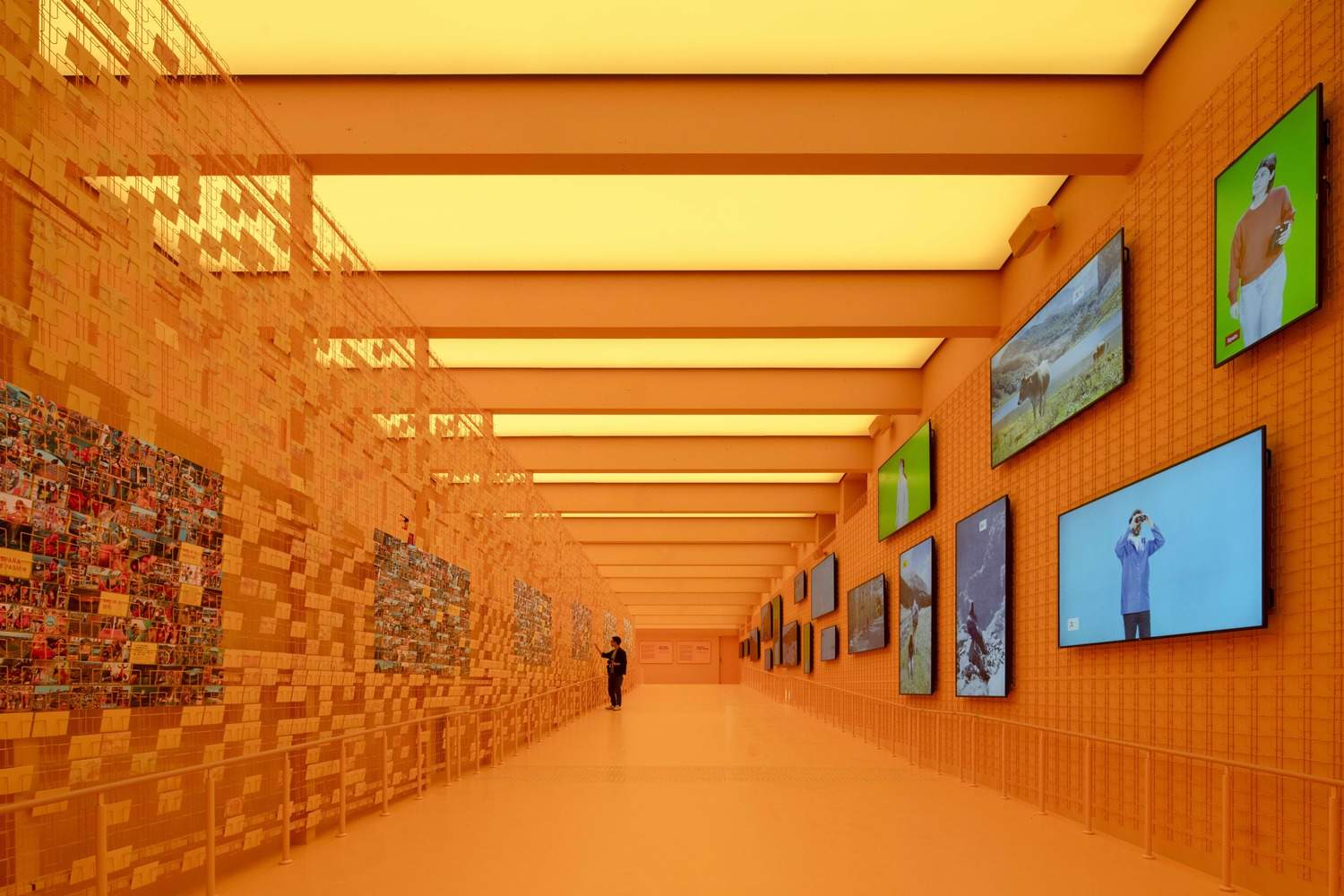
The visitor experience at the Spanish Pavilion unfolds across four spaces that merge immersion, culture, and sustainability. The experience begins at the Sun Plaza, conceived as a waiting area or Spanish square, showcasing an intimate and vibrant lifestyle through audiovisual projections and live performances. Next, "The Current Towards the Future," a journey inspired by the Kuroshio, simulates an immersive ocean experience exploring the blue economy and Spain's connection to the sea. In "Greetings from Spain," an audiovisual installation celebrates the country's festive and creative spirit via postcards and selfies, inviting reflection on tourism and its environmental impact. Finally, "The Diverse Spain" leads visitors towards the exit, through a screen showcasing the regional richness of the 17 autonomous communities, to the shop, restaurant, and multipurpose hall.
西班牙馆的游客体验在四个空间中展开,融合了沉浸感、文化和可持续性。体验始于太阳广场,这是一个被构想成西班牙广场的等候区,通过视听投影和现场表演,展现了一种亲密而充满活力的生活方式。接下来是“驶向未来的潮流”,这是一段受黑潮启发的旅程,模拟了海洋沉浸体验,探索蓝色经济和西班牙与海洋的联系。在“来自西班牙的问候”中,一个视听装置通过明信片和自拍庆祝了该国的节日和创意精神,邀请人们反思旅游业及其环境影响。最后,“多元的西班牙”通过一块屏幕展示了 17 个自治社区的地域丰富性,引领游客走向出口,通往商店、餐厅和多功能厅。

© ArchExist