历史语境与空间对话:该项目成功地将一座现代展览馆植入到历史悠久的卡尔绍伊公园和受保护的艺术学院内院中,体现了对文脉的深刻理解与尊重。建筑师精准地利用了原有规划中预留的扩建空间,实现了新旧建筑的有机融合。其“无背面”的设计理念,确保了建筑能够向四周平等开放,完美融入周围环境,同时通过精心设计的户外空间(如前广场和 Beuys 树绿地)增强了建筑与场地之间的互动性,展现了高超的空间策划能力。
材质对比与结构逻辑的精妙演绎:新展馆采用了精致的木质结构,并通过深色外立面与原有波森申克建筑的粗犷材质形成鲜明对比,但色调上巧妙地呼应了原建筑的钢结构,实现了对话而非模仿。内部结构清晰可见,框架清晰地勾勒出空间轮廓,既是对历史建筑的致敬,也赋予了空间极高的灵活性,能适应从大型展览到分隔工作区的多种功能需求。生态材料(胶合木和 CLT)的使用,体现了对当代可持续性标准的严格遵循。
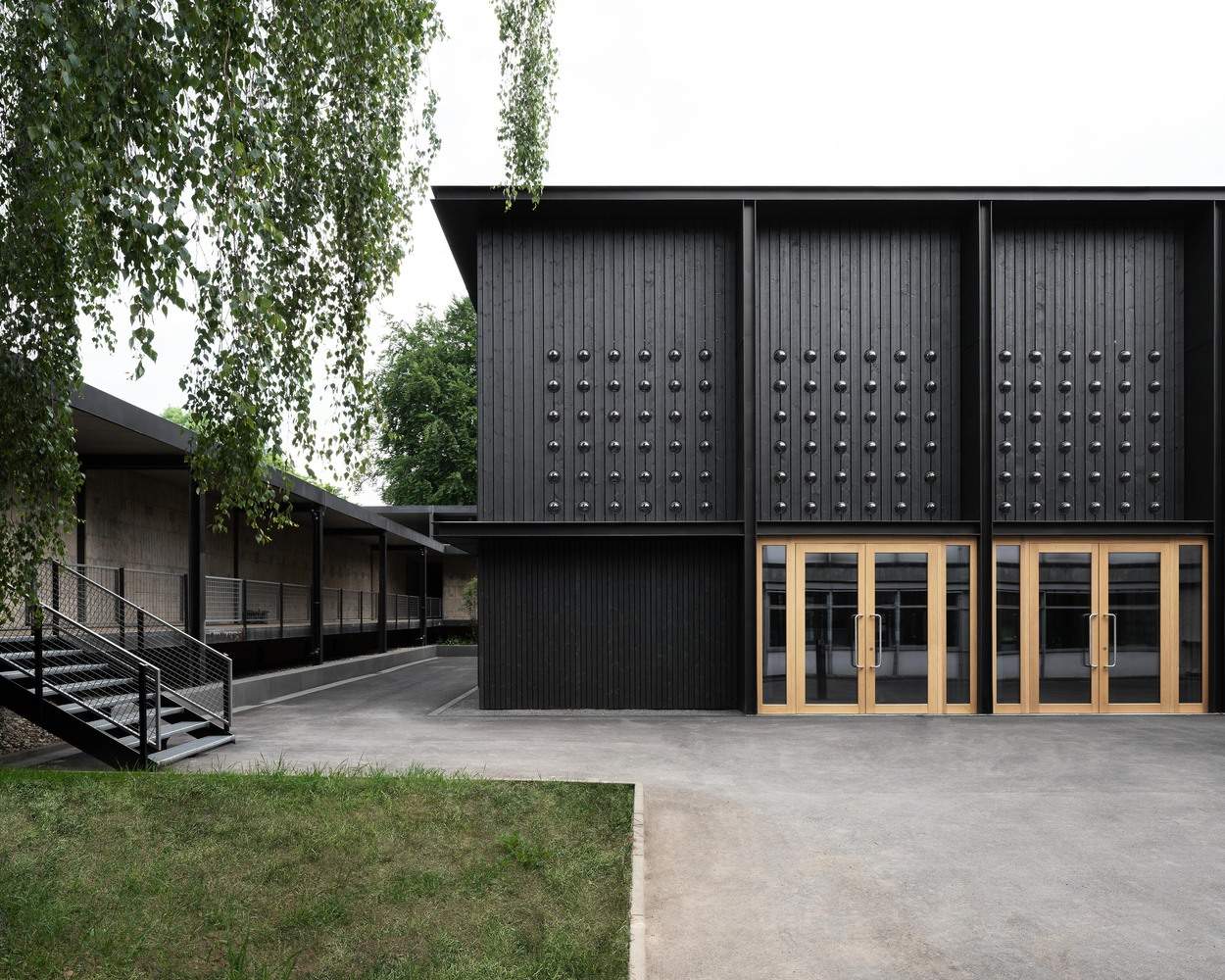
光影艺术与沉浸式体验的创新:最引人注目的是上墙区域定制的 864 块曲面玻璃光透镜。这些元件不仅创造了环绕式、柔和的漫射光照,极大地提升了室内展览体验的品质,更成为建筑本身独特的视觉标识。这种对自然光的精细控制和艺术化处理,使空间在功能性之上获得了雕塑般的精神维度。建筑通过这种方式,在传承场地精神的同时,也为卡塞尔的艺术版图注入了新的活力与亮点。
This new exhibition hall is the latest addition to Kassel's high-quality art and diverse architectural landscape—the home of the "documenta" exhibition. Located on the edge of the Baroque Karlsaue Park, the Academy of Fine Arts, designed by Paul Friedrich Posenenske in 1962, stands nearby. The new exhibition hall is situated within the inner courtyard of this listed building, a site thoughtfully chosen to correspond with the space Paul Friedrich Posenenske originally reserved for potential expansion.
这座新建的展览馆是德国卡塞尔——这座“文献展”(documenta)举办地——高品质艺术与多元文化建筑版图中的最新力作。巴洛克风格的卡尔绍伊公园(Karlsaue)边缘坐落着由 Paul Friedrich Posenenske 于 1962 年设计的艺术学院。新展馆便矗立于这座受历史保护建筑的内院之中,选址巧妙呼应了 Paul Friedrich Posenenske 最初为可能的扩建所预留的空间。
© Nicolas Wefers
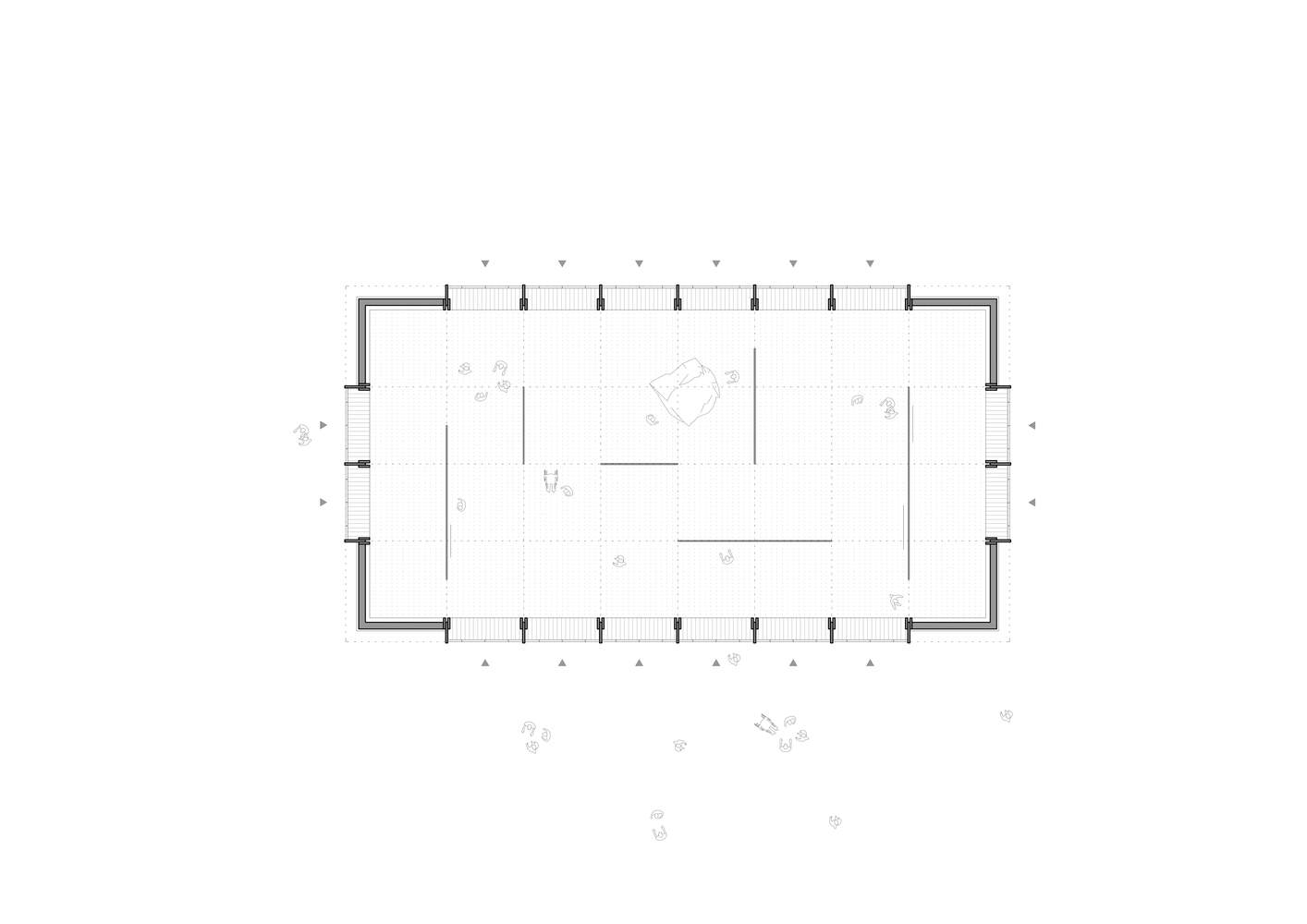
Floor plan
平面图
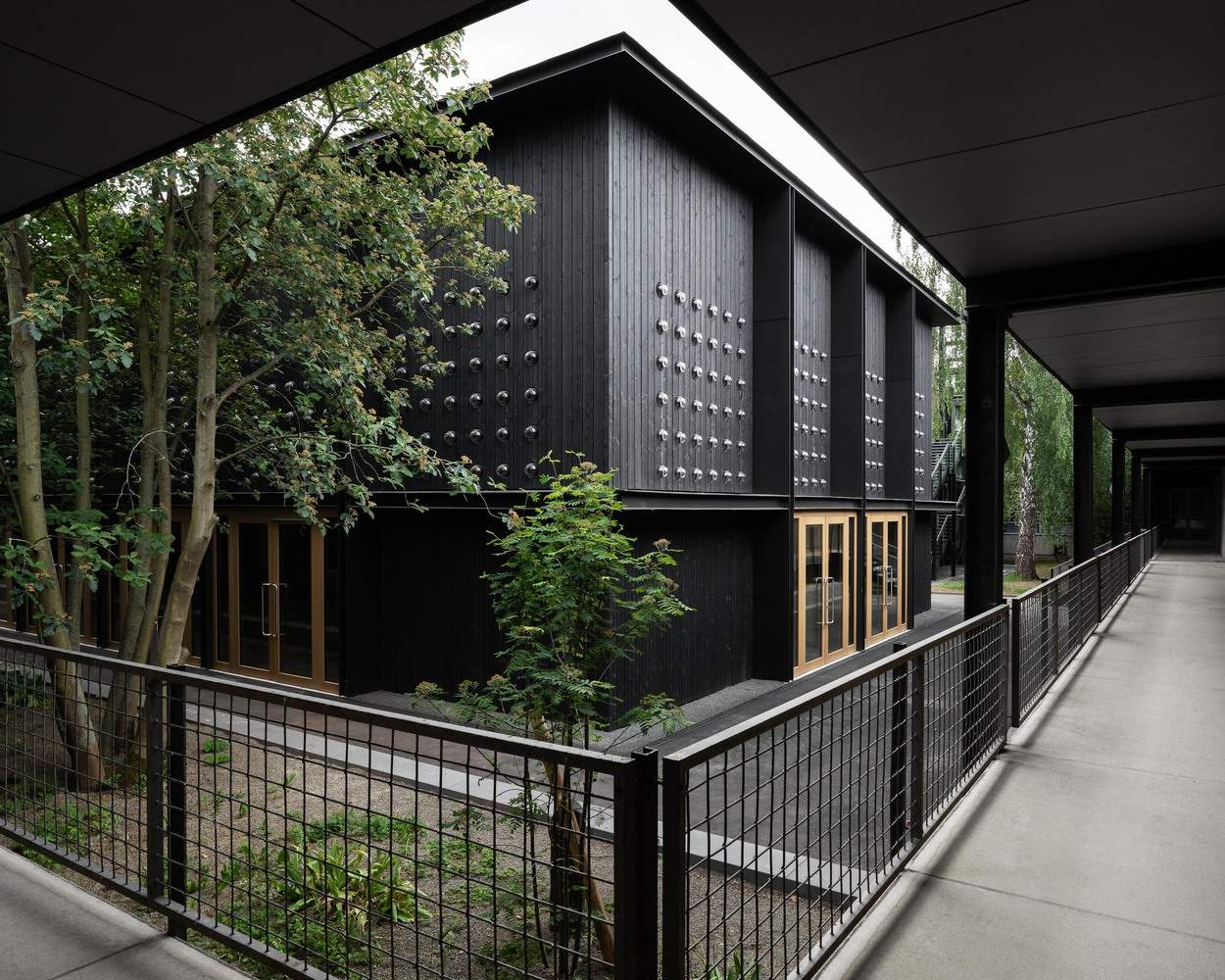
© Nicolas Wefers
The building is an exhibition hall offering approximately 450 square meters of exhibition space, serving both as an "exhibition laboratory" for students and a venue for creating large-scale artworks. The rectangular structure is arranged concentrically in the courtyard, creating distinct, high-quality outdoor spaces. A spacious forecourt appropriately welcomes visitors, next to a tranquil green area planted with 7 Beuys trees. The hall can open on all four sides, integrating the intermediate transitional space into the exhibition area. This building has no "back side"; it opens equally in all directions, fully respecting the existing architectural fabric.
这座建筑是一座展厅,拥有约 450 平方米的展览空间,既可作为学生的“展览实验室”,也可用作大型艺术作品创作的场地。矩形结构的展馆在庭院中呈同心圆式布局,营造出各具特色的优质户外空间。宽敞的前广场可妥善迎接访客,旁边还有一处静谧的绿地,其中种植着 7 棵博伊斯(Beuys)树。展厅四面均可敞开,将中间过渡空间也纳入展览区域。这座建筑没有背面,它向四面八方平等开放,从而充分尊重了原有的建筑风貌。
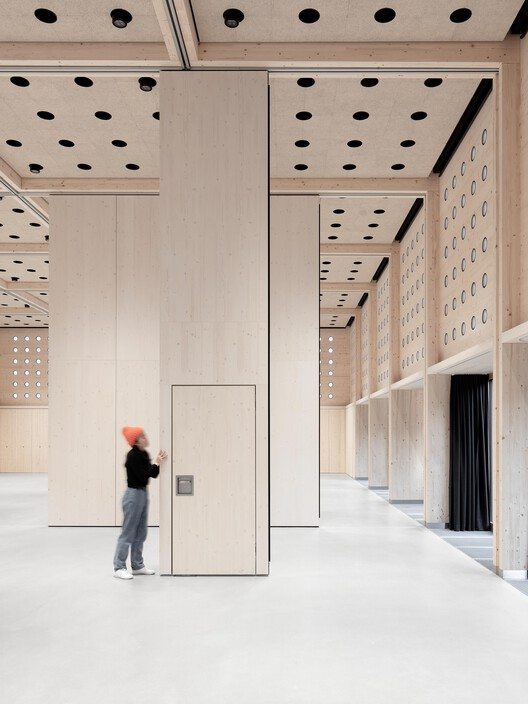
© Nicolas Wefers
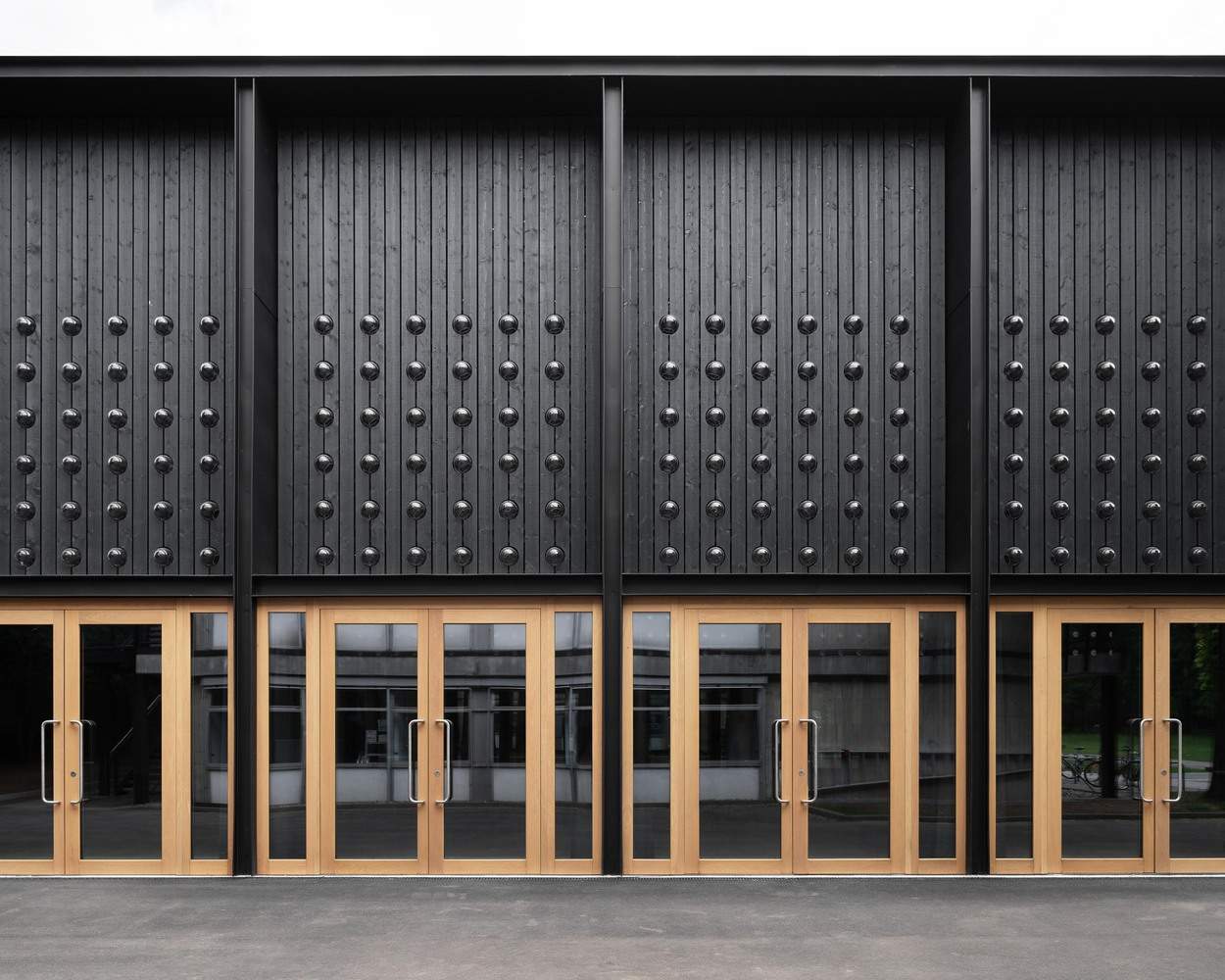
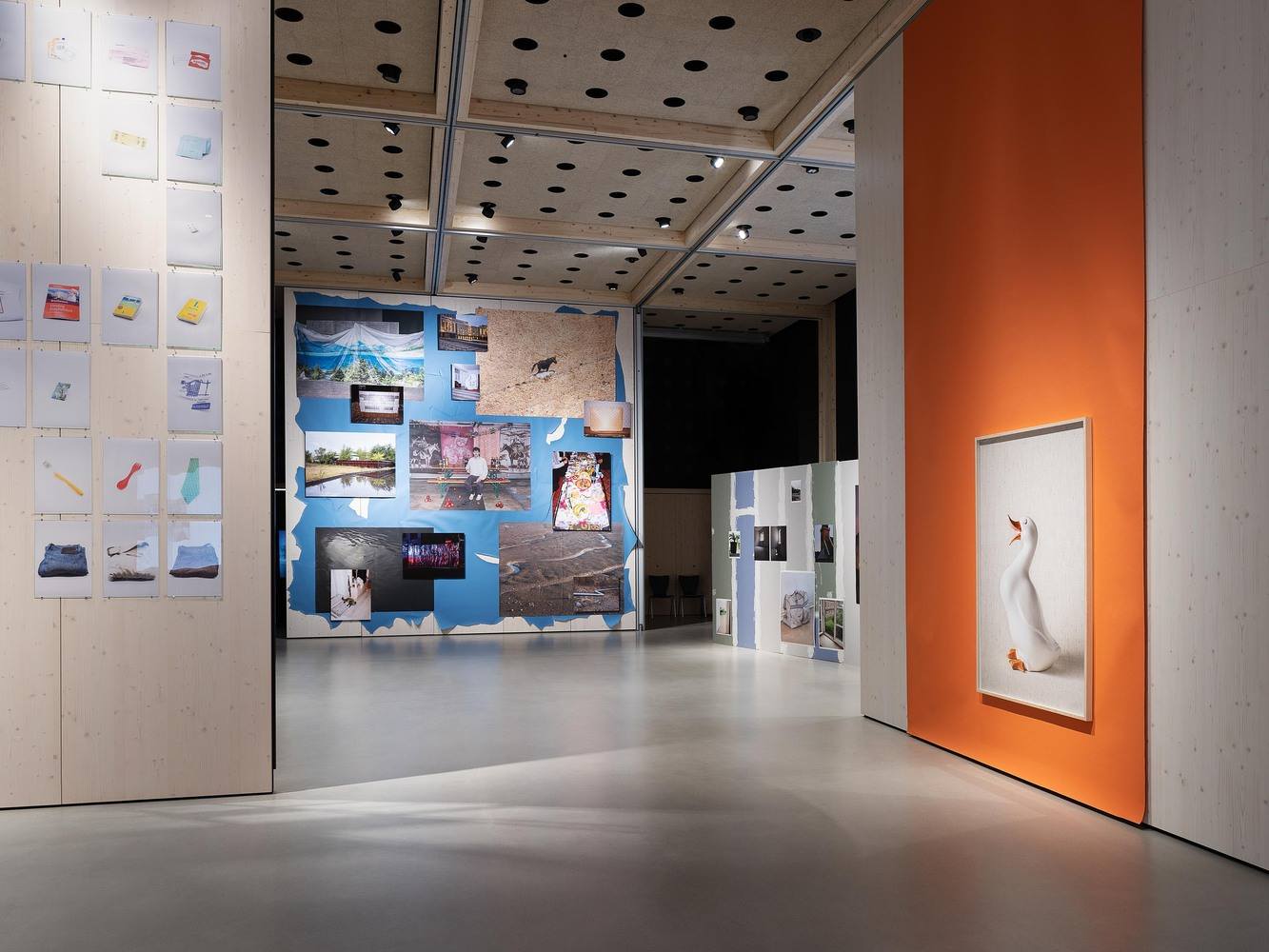
The new structure appears like a wooden pavilion, presented with a refined architectural language. Its dark facade design creates a stark material and color contrast with Posenenske's building, yet it subtly borrows the tone of the original structure's most striking element—its external steel framework. The hall's structure is visible throughout, with frames clearly outlining its contours, which is another clear reference to the listed historical building. The clear internal structural design allows for highly flexible use of space, adaptable as a completely open hall or divisible into several independent work or exhibition areas. The facade area offers diverse access points and various possibilities for light regulation, from translucent to opaque. This space is highly flexible, featuring predominantly raw, untreated wooden surfaces internally, which subtly echo the existing building's roughly sawn, exposed concrete surfaces.
这座新建建筑宛如一座木质亭阁,以精致的建筑语言呈现。其深色外立面设计在材质与色彩上与波森申克的建筑形成鲜明对比,却巧妙借鉴了原建筑最引人注目的元素——外部钢结构的色调。展厅结构全程可见,框架清晰勾勒出其轮廓,这显然是对受历史保护建筑的又一呼应。明晰的内部结构设计使空间用途灵活多变,既可作为完整无隔断的大厅,也可划分为多个独立的工作或展览空间。外立面区域提供了多样化的通行方式,以及从透光到遮光的各种光照调节可能。这个空间极具灵活性,内部以原生态、未经处理的木质表面为主,与现有建筑锯痕斑驳的裸露混凝土表面形成微妙呼应。
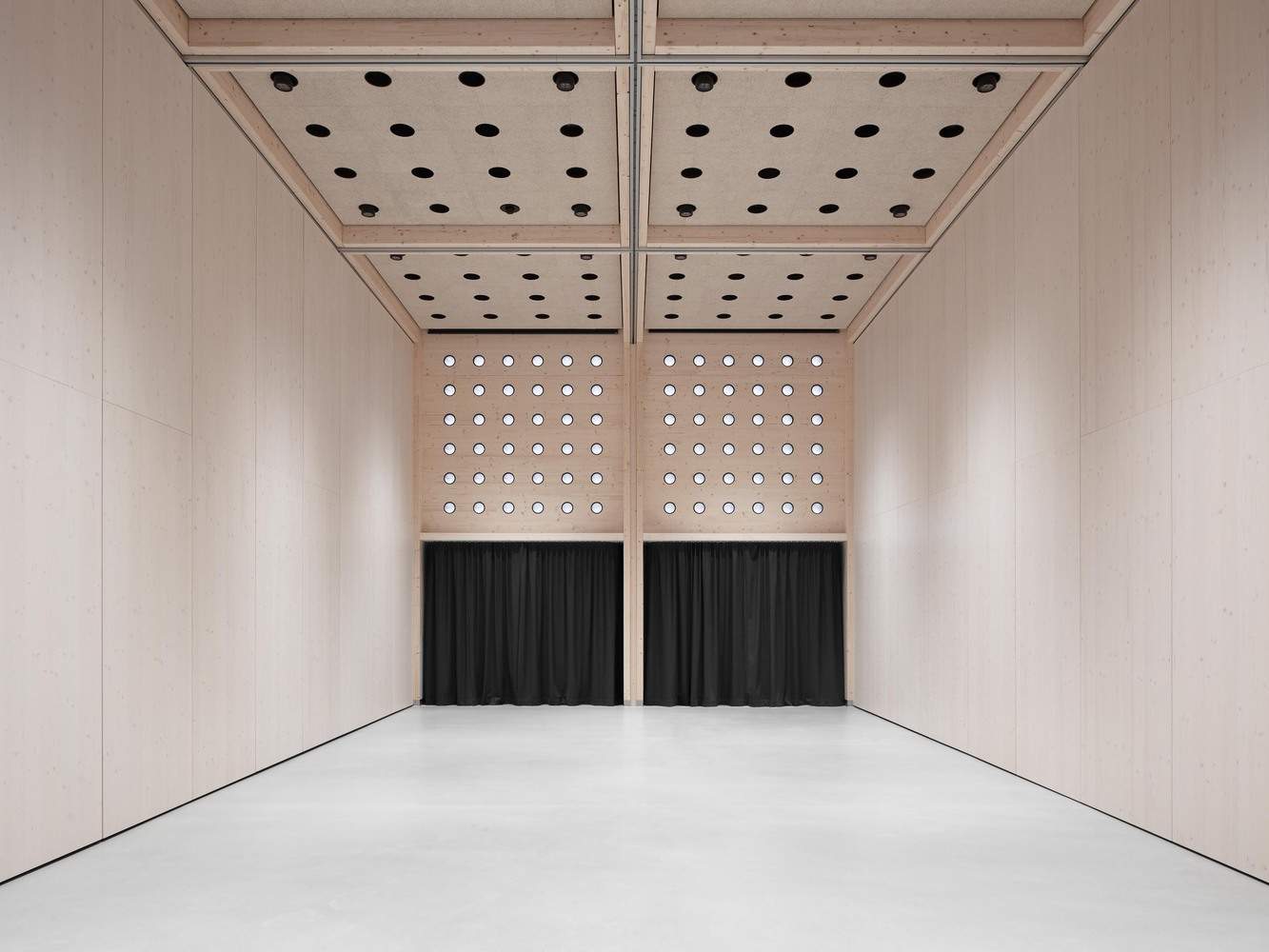
© Nicolas Wefers
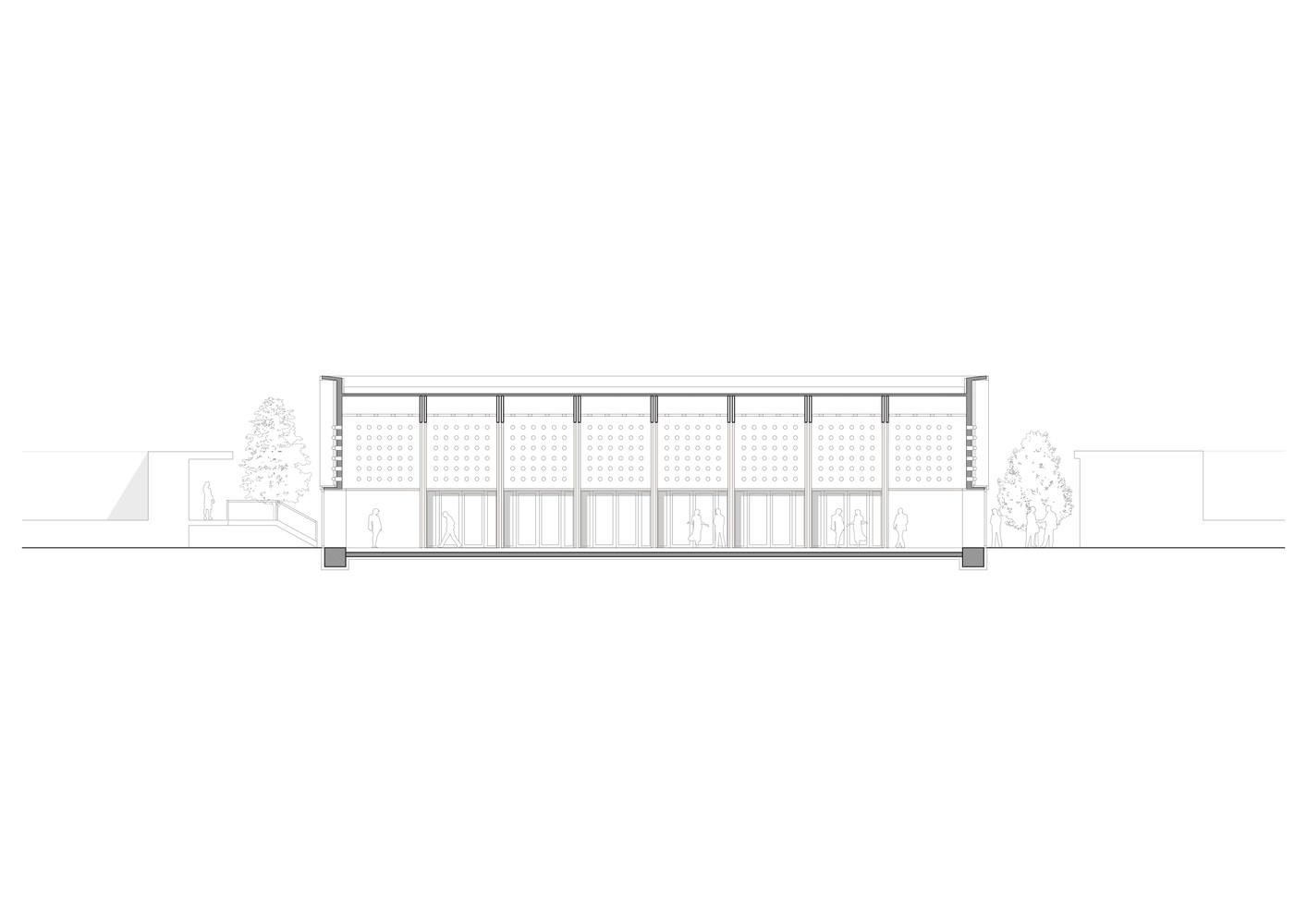
Longitudinal section
剖面图
© Nicolas Wefers
A key feature of the building is the light lenses installed in the upper wall area. The 864 custom-made curved glass elements provide the interior with soft, diffuse, all-encompassing light. These unique and striking glass components give the hall a unique position within the entire building complex. The building's all-wood structure fully meets contemporary energy and ecological requirements, showing outstanding performance, especially in terms of sustainability: Glued laminated timber (glulam) is used for cylindrical components (such as columns, beams, and lintels), while cross-laminated timber (CLT) is used for planar components (such as roof decking and wall panels). All joints are handcrafted. Structure and design, function and economy are harmoniously united here.
这座建筑的一大特色在于上墙区域设置的光透镜。专为该项目设计制作的 864 块曲面玻璃元件,为室内提供环绕式的柔和漫射光。这些玻璃元件以其独特而醒目的视觉效果,赋予展厅在整体建筑群中独一无二的地位。建筑全木结构完全契合当今能源与生态需求,尤其在可持续性方面表现卓越:圆柱形构件(如立柱、横梁和过梁)采用胶合木,平面构件(如屋顶模板和墙板)则使用交叉层压木材。所有接缝均为手工打造。结构与设计、功能与经济性在此和谐统一。
© Nicolas Wefers