历史肌理的有机延续与重塑:该项目以对罗什福尔加尔历史中心的尊重为基石,通过巧妙地整合拥有悠久历史的圣约瑟夫礼拜堂与创新的图书馆空间,实现了历史遗产的活化利用。设计巧妙地利用场地原有的城市肌理,通过结构和材料的对话,使新旧建筑和谐共生。特别是,通过将原有的市政厅(礼拜堂)改造为数字博物馆,并新建图书馆,项目成功地在保护历史风貌的同时,注入了面向未来的公共文化功能,完成了从行政中心到知识共享中心的有机过渡。
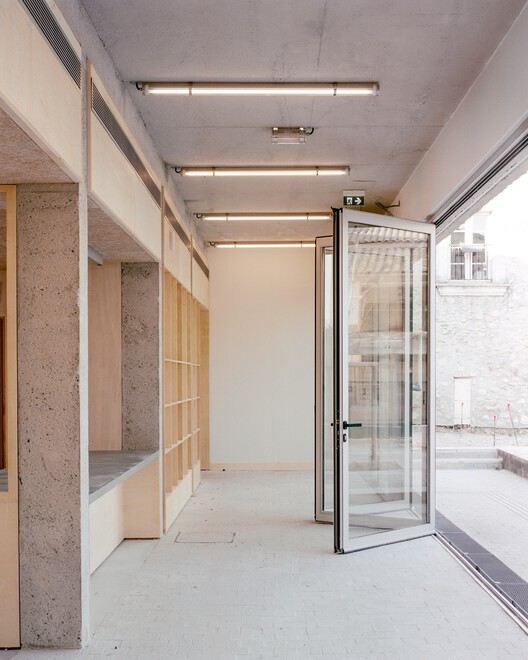
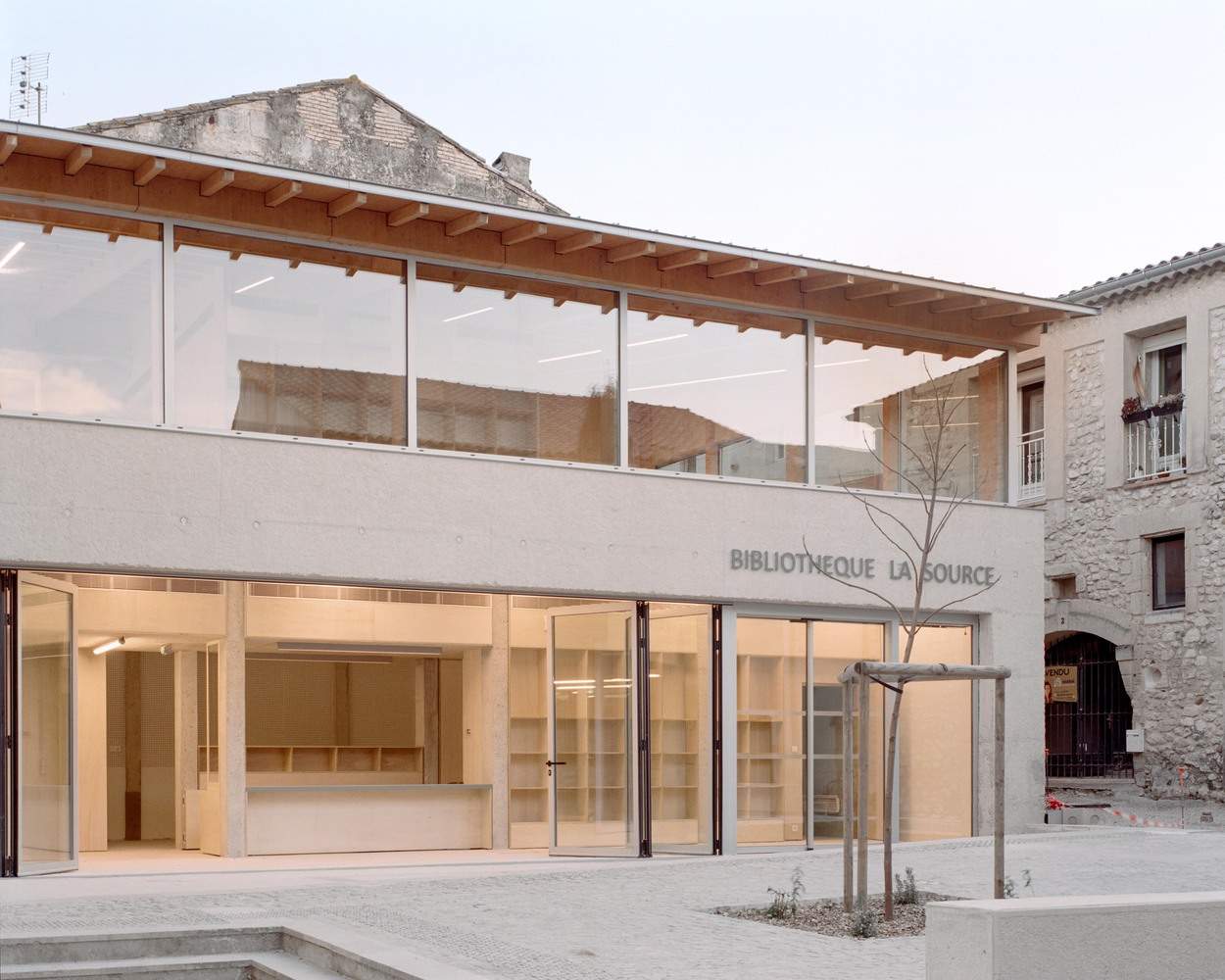
空间界限的模糊与社区的激活:设计的精髓在于对空间界限的积极消解,以促进社区的互动和活力。首层图书馆通过完全可开启的折叠玻璃门,打破了室内外的物理屏障,使文化活动能够自然延伸至广场,实现“第三空间”的理念。这种设计不仅增强了建筑的透明度和可达性,也使得图书馆成为了社区生活的核心枢纽。新建部分在材料和体量上与历史建筑形成对比又相互呼应,特别是混凝土基座的厚重感与上层木结构的轻盈感,构成了富有层次感的空间体验,有力地激活了长期未被充分利用的广场空间。
结构逻辑与材料的叙事性表达:建筑语言清晰而内敛,材料的选择和构造清晰地表达了各自的功能和意图。底层粗粝的混凝土基座提供了坚实的结构基础,呼应了周边石砌建筑的纹理,同时支撑起十五米以上的无柱大跨度空间。上层则采用精致的木构梁柱体系,创造出轻盈、柔和的阅读环境。室内设计强调原始材料的质感和建造逻辑的透明性,通过定制化的木质填充构件整合服务核心区,这种“虚实交替”的节奏感,使得空间既具备功能性,又充满叙事性和人文关怀,最终成功地将历史遗产与现代文化设施无缝连接。
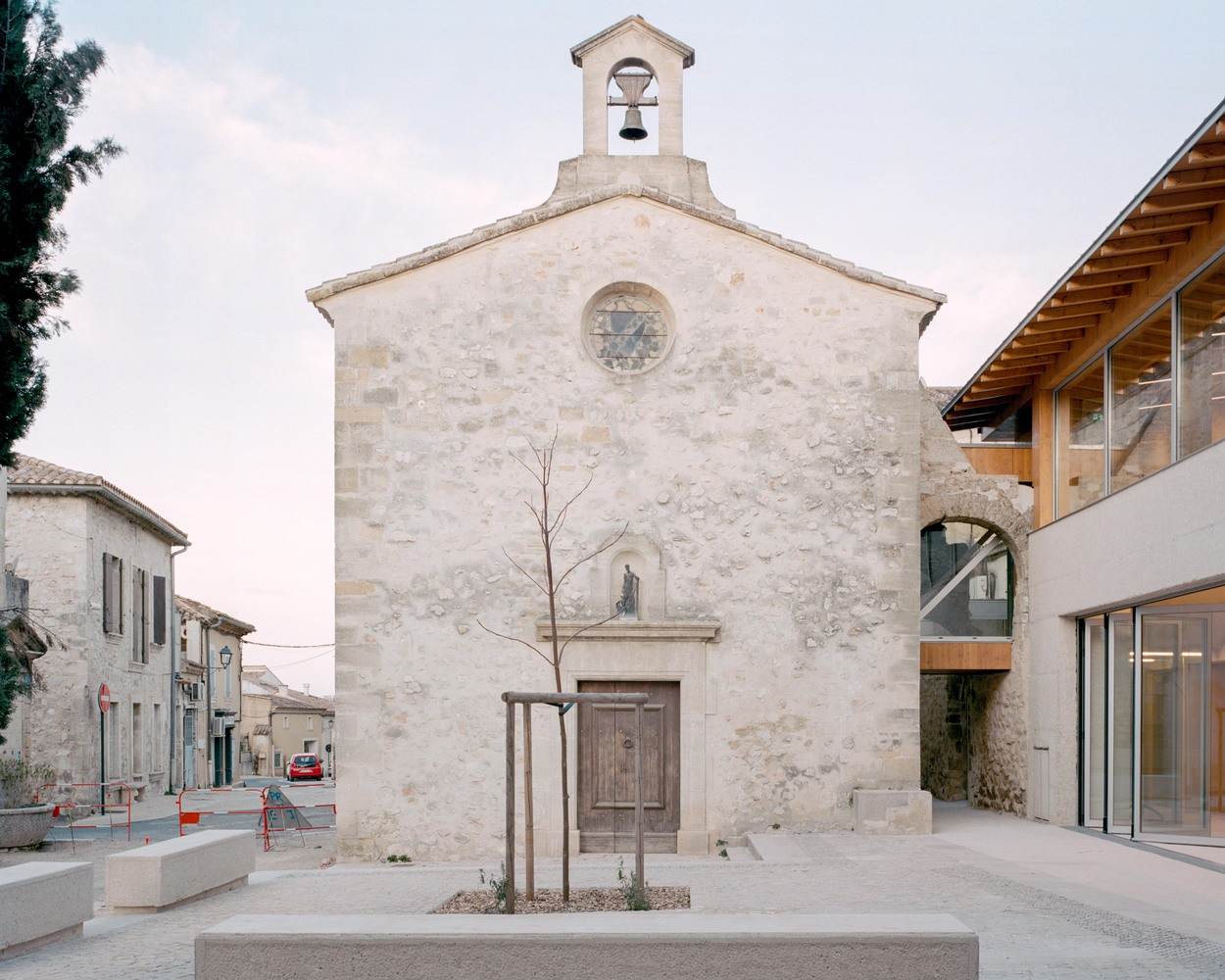
The Saint Joseph Chapel, initially constructed in 1638 and subsequently expanded and renovated before 1734, replaced a simple hermitage, utilizing stone salvaged from the razed Castellas Castle during the Wars of Religion. Since the French Revolution, the chapel has served multiple functions, including as the town hall, a school, and municipal offices. In 1995, the adjacent residential building was demolished, creating a small square at the intersection of Rue de l'Église and Rue du Grand Pont. This open space remained underutilized within the dense urban fabric of Rochefort-du-Gard's historic center. The chapel stood on the eastern side of the square—it served as the town hall until 2017 when it was closed due to structural safety concerns—while an abandoned, windowless barn occupied the south side.
圣约瑟夫礼拜堂始建于 1638 年,后于 1734 年前历经扩建与改建,其取代了原先一座简朴的隐修院,所用石材取自宗教战争期间被毁的卡斯特拉斯城堡(Castellas Castle)。自法国大革命以来,这座礼拜堂多次被改作他用,先后充当过市政厅、学校和市政办公室。1995 年,附属的住宅建筑被拆除,在教堂街(Rue de l'Église)与大桥街(Rue du Grand Pont)交汇处形成了一处小广场。在罗什福尔加尔(Rochefort-du-Gard)历史中心密集的城市肌理中,这片开放空间此前一直未得到充分利用。广场东侧是圣约瑟夫礼拜堂 —— 该建筑直至 2017 年因结构安全隐患关闭前,一直作为市政厅使用;南侧则是一间废弃的、没有窗户的谷仓。
© Severin Malaud
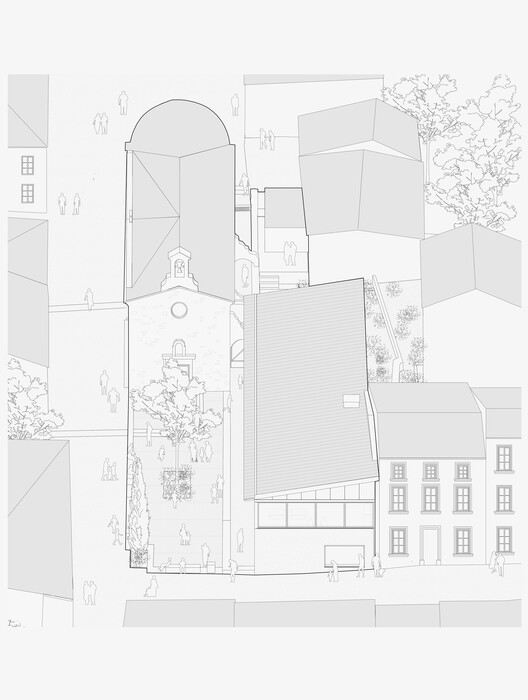
Axonometric view
轴测图
© Severin Malaud
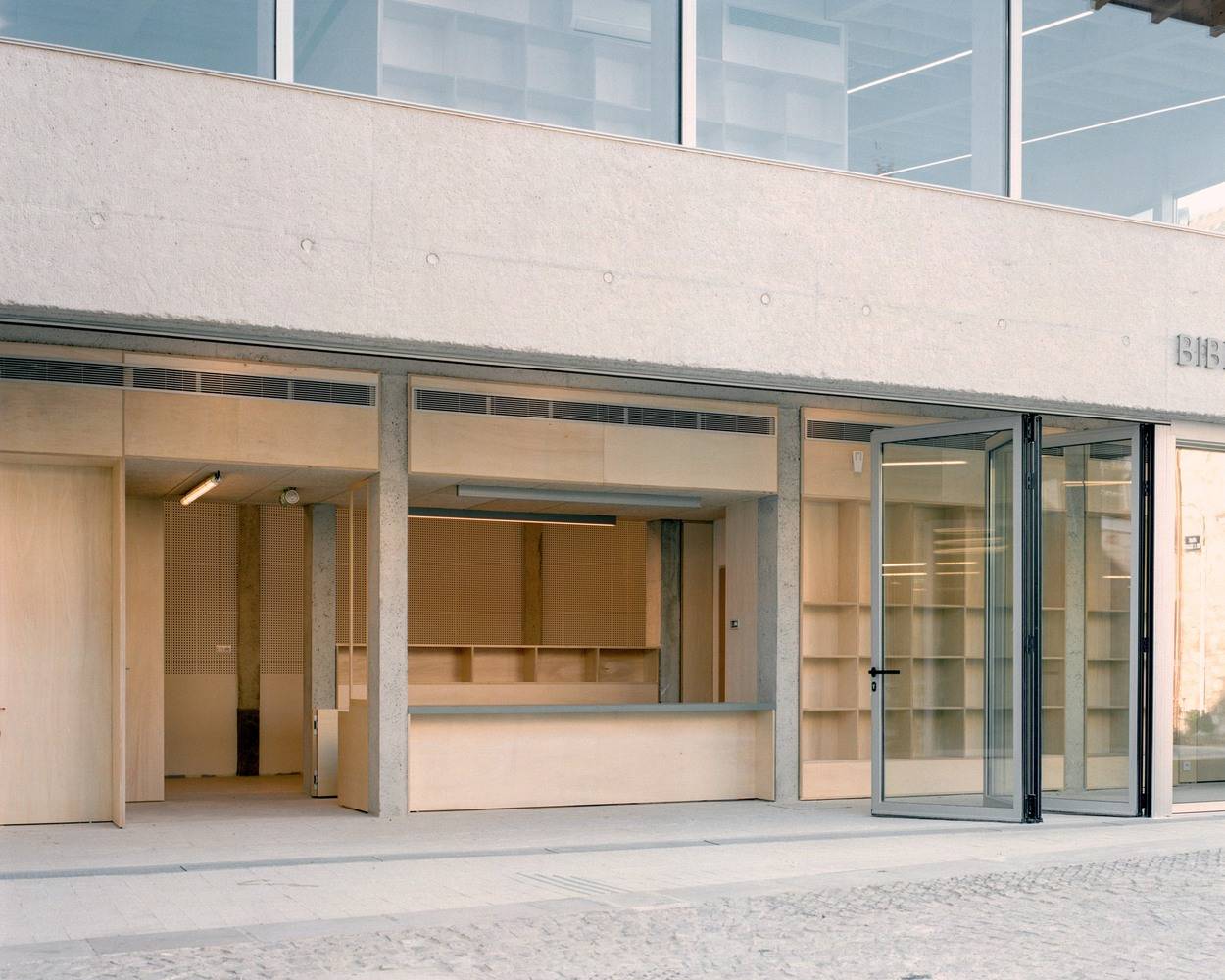
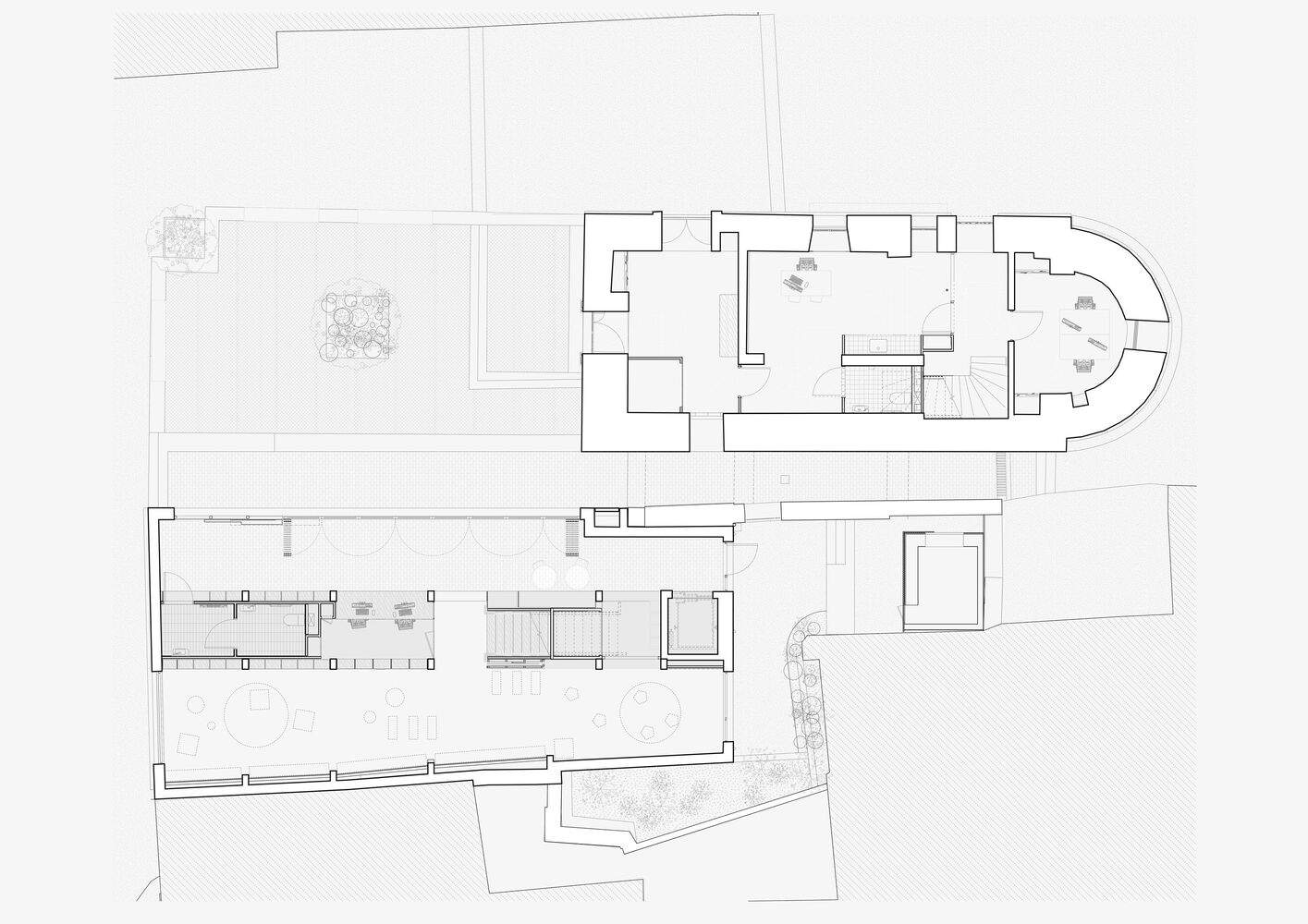
The transformation and extension of the Saint Joseph Chapel into a "third space" library represents a significant urban renewal initiative, revitalizing village daily life, which had been affected by population migration to surrounding areas, while preserving historical heritage. The project's main goal is to unite the community of Rochefort-du-Gard around a vibrant cultural identity. The layout centers around the village square, establishing a close connection between the library's ground floor and the plaza to allow cultural activities to spill out into the outdoor space. Accordion-style folding glass doors on the library's north façade can open completely, promoting interaction and fusion with the town, blurring spatial boundaries and opening up infinite possibilities. A bridge connects the new library to the restored Saint Joseph Chapel, which now houses a digital museum. This museum will host a variety of educational workshops throughout the year based on diverse cultural themes.
将圣约瑟夫礼拜堂改造并扩建为“第三空间”图书馆,是一项意义重大的城市更新举措,它在保护历史遗产的同时,重振了因人口向周边地区迁移而受影响的村庄日常生活。项目的主要目标是围绕充满活力的文化认同,将罗什福尔加尔(Rochefort-du-Gard)的社区居民凝聚在一起。该项目以村庄广场为核心展开布局,使图书馆首层与广场建立紧密联系,以便文化活动能够延伸至户外空间。图书馆北立面安装了手风琴式折叠玻璃门,可完全开启,促进与城镇的互动交融,模糊空间界限,拓展无限可能。一座桥梁将新建的图书馆与修缮一新的圣约瑟夫礼拜堂相连,后者如今设有一座数字博物馆。该博物馆全年将围绕各类文化主题,举办丰富多彩的教育工作坊。
© Severin Malaud
Ground floor plan
一层平面图
© Severin Malaud
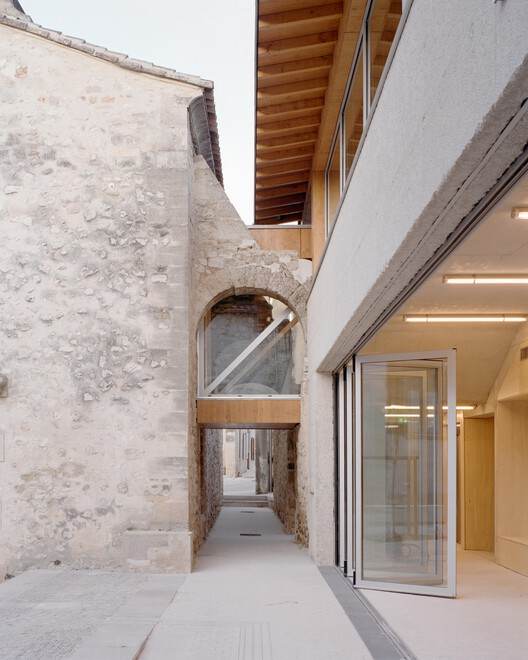
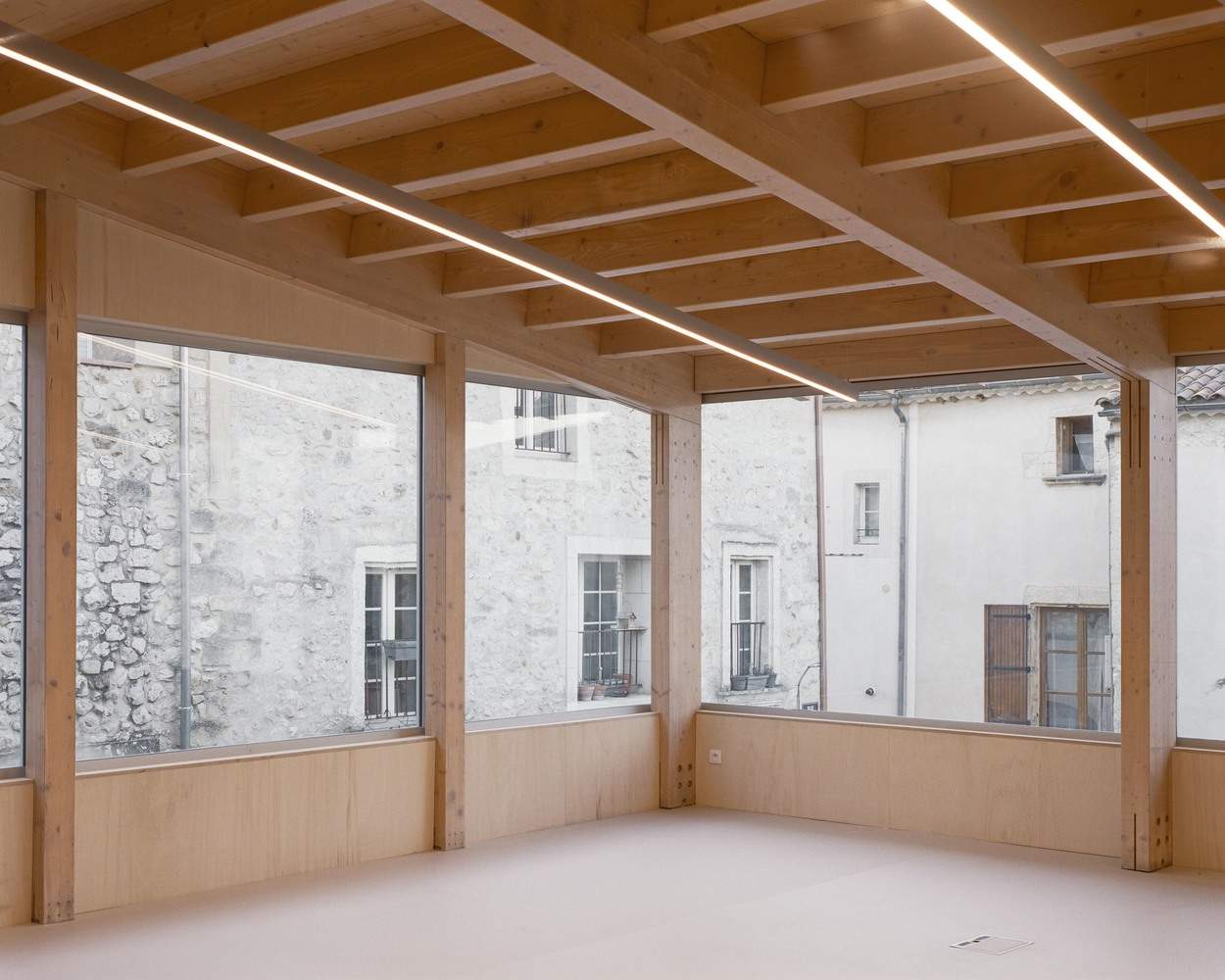
The building materials of the extension express a distinct duality in layers. On the ground floor, the massive volume of the concrete plinth forms a protective base, echoing the stone masonry style of the village. The wall surfaces are bush-hammered to create a texture and color that harmonizes with the surrounding masonry. The use of concrete also leverages its structural strength, making spans exceeding fifteen meters possible, thus completely dissolving the library's boundaries when the folding doors are fully open. The upper level is constructed with a timber frame system, adding a sense of lightness while enabling roof overhangs and concealed rainwater management. The metal roof follows the geometry of the adjacent plots, gently sloping towards the square, reducing the building's mass near the historic chapel. In contrast to the opaque façade of the chapel, the library emphasizes transparency through large horizontal glass windows, inviting residents inside to experience this burgeoning cultural vitality.
扩建部分的建筑材料体现了一种层次分明的双重性。在底层,混凝土基座的庞大体量形成了一个保护性基座,与村庄的石砌建筑风格相呼应。墙面经凿毛处理,形成了与周边砌体相协调的纹理与色泽。混凝土的使用也发挥了其结构强度优势,使跨度超过十五米成为可能,如此一来,当折叠门完全打开时,图书馆的边界便彻底消失。上层采用木构梁柱体系建造,既增添了轻盈感,又实现了屋檐悬挑和隐蔽的雨水管理功能。金属屋顶顺应相邻地块的几何形状,向广场一侧缓缓倾斜,在历史悠久的礼拜堂附近降低了建筑体量感。与礼拜堂不透明的立面形成鲜明对比的是,图书馆通过大面积的横向玻璃窗强调通透性,邀请居民走进其中,共同感受这股新兴的文化活力。
© Severin Malaud
© Severin Malaud
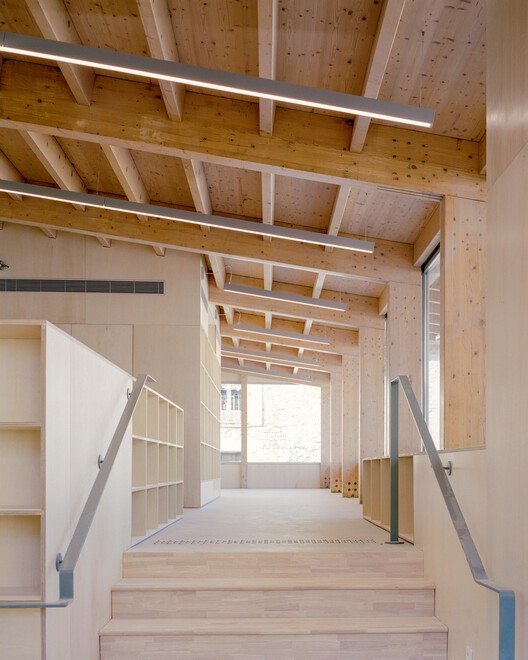
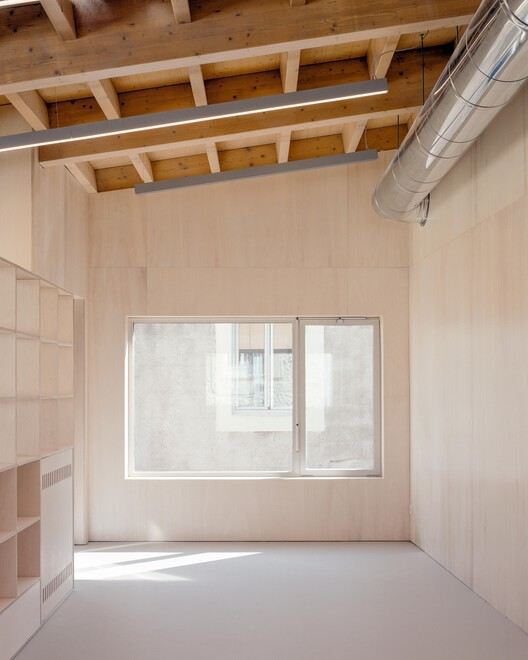
The interior design is characterized by simplicity and restraint, showcasing clear logic and a reserved temperament. The library's unique character stems from its raw materials and transparent construction methods. On the ground floor, the exterior paving extends indoors, leading to a core service area marked by concrete columns. This area integrates functions such as restrooms, reception desks, vertical circulation, and equipment rooms. Wooden infill elements are used both to enclose these spaces and integrate custom furniture, cleverly concealing the pipeline network. This rhythm of void and solid creates a flexible, modular layout. On the upper floor, wooden door and window frames align with each other, guiding the gaze down towards the village square below. The ceiling structure, composed of pine rafters and panels, outlines a soft upper contour for the quiet reading areas.
室内空间设计简洁克制,彰显出清晰的逻辑与内敛的气质。图书馆的独特个性源于其原始材料与明晰的建造方式。底层空间中,室外铺装延伸至室内,通向由混凝土立柱标识的核心服务区。该区域整合了卫生间、接待台、垂直交通及设备机房等功能。木质填充构件既用于围合这些空间,又融入了定制家具,并巧妙地隐藏了管线网络。这种虚实交替的节奏,营造出灵活可变的模块化布局。上层空间中,木质门框与窗框对齐,引导视线投向下方的村庄广场。由松木椽条和面板构成的天花结构,为静谧的阅读区勾勒出柔和的顶部轮廓。
© Severin Malaud
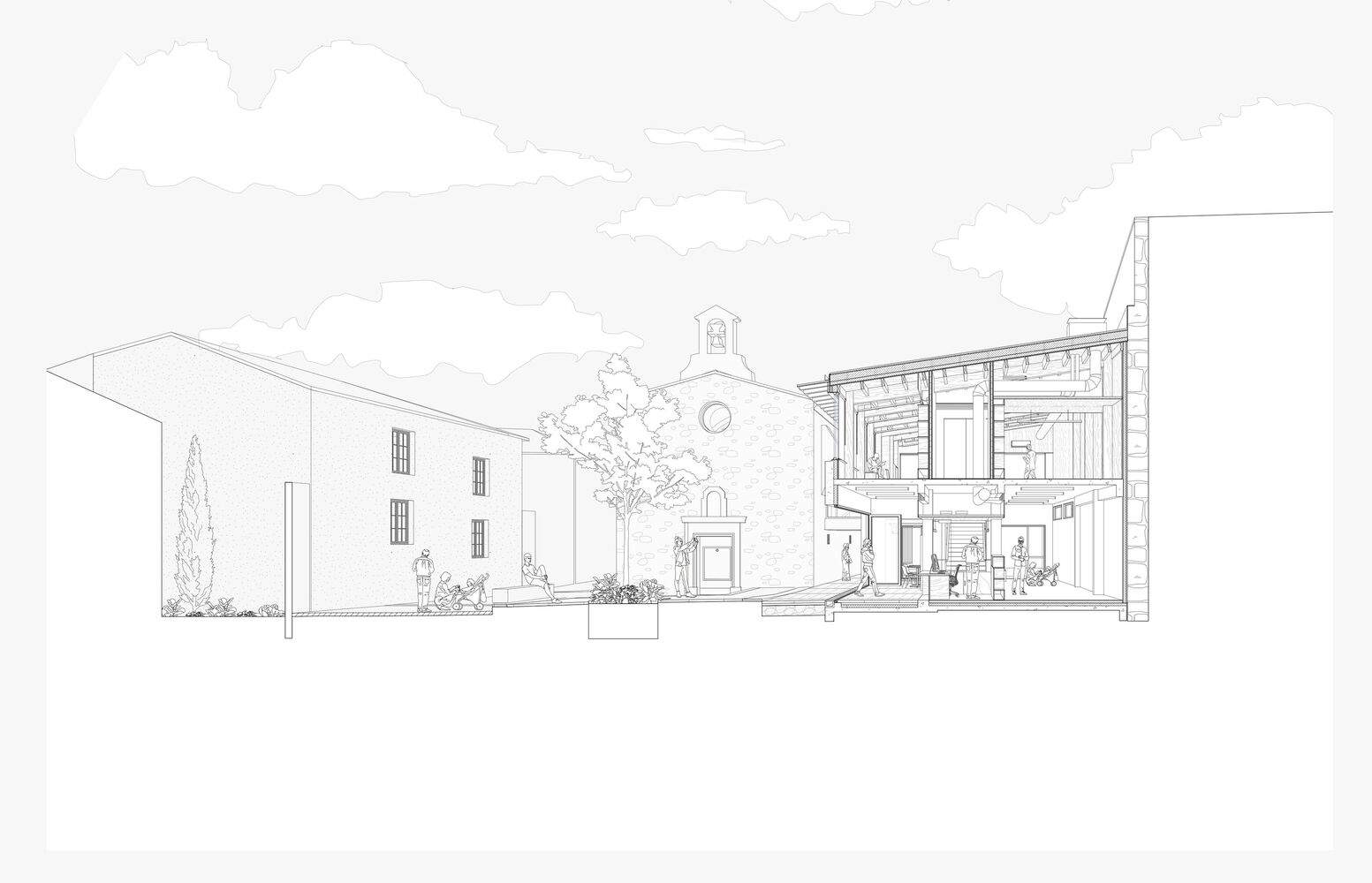
Section
剖面图
© Severin Malaud
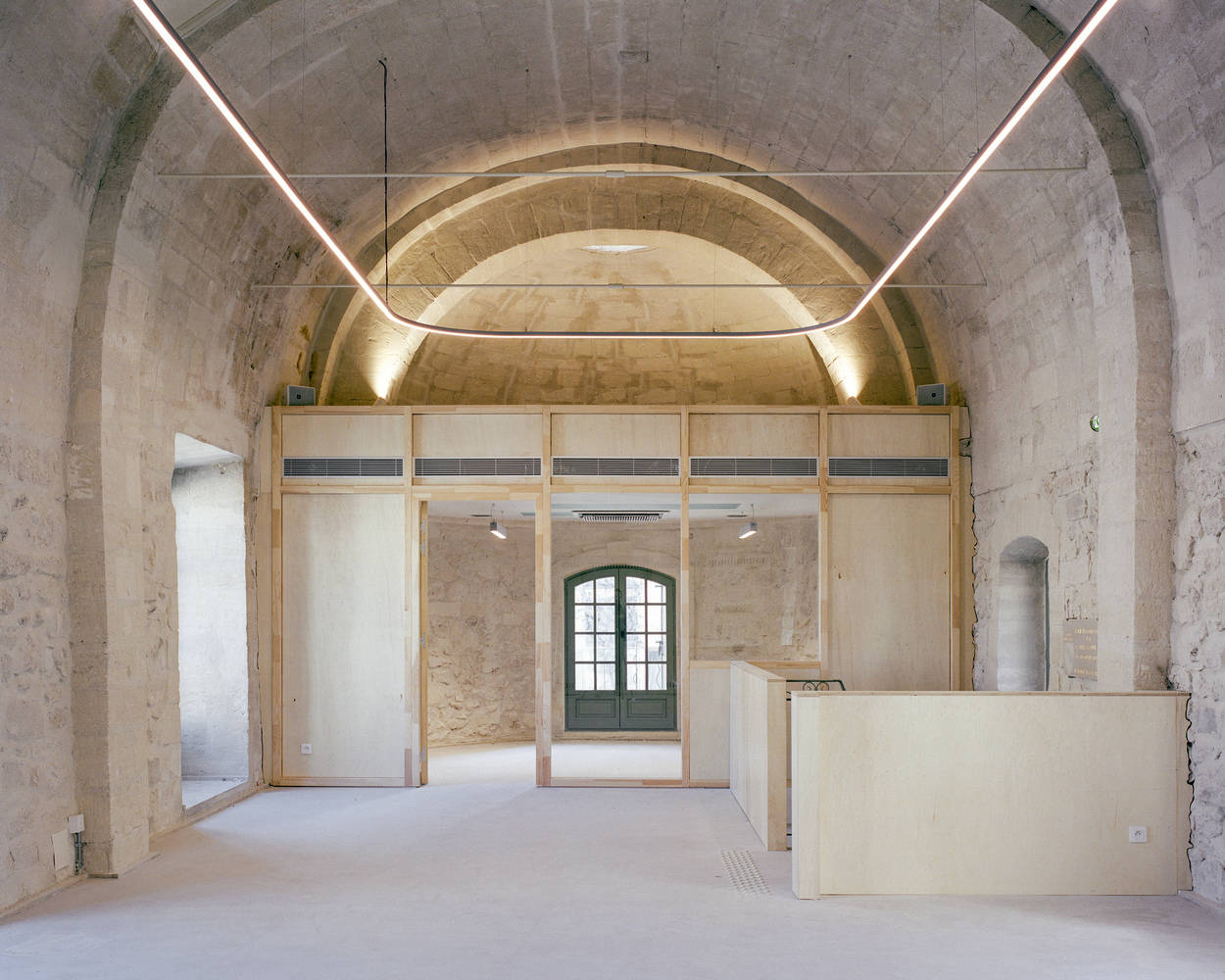
The new wooden furniture accommodates all the equipment needed for the digital museum while defining the curator's office area, which opens to the exhibition space. A large suspended light fixture adds a focal point to this understated renovation, preserving the original spatial character of the chapel while reshaping it into a contemporary cultural venue. The "third space" library acts as a bridge, tightly connecting the important historical heritage of Rochefort-du-Gard with a facility that is resolutely open and dedicated to bringing culture to all citizens.
新型木质家具既收纳了数字博物馆所需的所有设备,又划分出了向展览空间开放的馆长办公室区域。一盏大型吊灯为这一低调的改造画上点睛之笔,既保留了礼拜堂原有的空间特质,又将其重塑为一个面向当代的文化场所。“第三空间”图书馆宛如一座桥梁,将罗什福尔加尔村(Rochefort-du-Gard)的重要历史遗产与一座坚定开放、致力于向全民普及文化的新设施紧密相连。
© Severin Malaud