有机生态与文化叙事的高度融合:该项目巧妙地将意大利馆构想为一个有机的、鲜活的生态系统,打破了传统展览建筑的界限。其核心精髓在于通过沉浸式的感官体验,在传统与创新、艺术与科学之间建立对话,呼应了世博会“闪耀生命的未来社会的设计”主题。建筑设计不仅是物理空间的构建,更是一个承载意大利文化、创造力和可持续发展愿景的“知识殿堂”,通过模块化木构与低碳技术,实现了社会、物质与自然的深度联结。
创新的被动式设计与本土化策略:从建筑技术层面来看,项目在应对气候与场地挑战方面表现出色。建筑师采用了全木结构系统,结合了日本本土认证的胶合木和干式模块化装配,这既体现了对低碳循环经济的承诺,也借鉴了日本匠艺精神。尤其值得称赞的是其“会呼吸”的半透明立面设计,利用纺织肌理膜材进行柔和日照控制和自然通风,实现了优异的能耗效率,并赋予建筑轻盈灵动的生命气质,是可持续被动策略的典范。
面向未来的可逆性与遗产价值:作为临时性世博建筑,该项目在设计之初就融入了全生命周期的思维。采用“可逆建筑”理念,通过模块化和干式装配(DfD/DfMA),确保了结构和材料在展期结束后能够被高效拆解、再利用或原地重建,实现了从临时性向长久遗产的转化。这种对可追溯性、可逆性的极致追求,不仅是对资源浪费的有力回应,更通过“意大利实验室”数字档案的建立,固化了世博期间的创新成果,确保了项目的文化与技术价值超越了建筑本身的使用期限。
As an immersive "laboratory" weaving together senses and narration, the Italian Pavilion for Expo 2025 Osaka, designed by MCA Architects, is conceived as a living, organic ecosystem engaged in a perpetual dialogue between tradition and innovation, art and science, craftsmanship and technology, leading visitors on a journey through Italy.
作为MCA建筑事务所(Mario Cucinella Architects)为2025年大阪世博会设计的意大利馆,它被构想为一个鲜活、有机的生态系统,在传统与创新、艺术与科学、手工艺与科技之间,展开一场永不止息的对话,通过感官与叙事交织的体验,引领观众踏上一段穿越意大利的旅程。
Italy's participation aligns with the Expo's theme, "Designing Future Society for Humanity's Well-being," focusing on the core issue of "Saving Lives," resonating with the UN Sustainable Development Goals (SDGs). The pavilion serves as a declaration of Italy’s vision for sustainable development, circular economy, and a shared future. It is more than an exhibition building; it is a social organism capable of generating energy, enhancing material value, restoring biodiversity, and fostering deep human connections. The modular timber structure exemplifies reversible architecture, integrating low-carbon technology and circular logic to create a stage for the interaction of people, nature, and technology. Poetically named the "Hall of Knowledge," this pavilion will host diverse performances of art, science, culture, and enterprise, showcasing Italy's extraordinary creativity and regional character. It also acts as a platform for international exchange, gathering global ideas and seeds of cooperation to nurture the hope for tomorrow's world.
意大利此次参展,契合世博主题“闪耀生命的未来社会的设计”,聚焦“拯救生命”这一核心议题,与联合国可持续发展目标 SDGs 形成共鸣。展馆是意大利对可持续发展、循环经济和共享未来愿景的宣言。它不仅仅是一座展览建筑,更是一个社会有机体,能够产生能源、提升材料价值、恢复生物多样性,促进人与人之间的深度联结。以模块化木构筑起可逆建筑典范,融合低碳技术与可循环逻辑,成为人、自然和科技互动的舞台。这座展馆被诗意地命名为“知识的殿堂”,将承载艺术、科学、文化与企业的多元展演,呈现意大利非凡的创造力与地域特色。更作为一个国际交流的平台,汇聚全球思想与合作的种子,孕育明日世界的希望。
© Duccio Malagamba
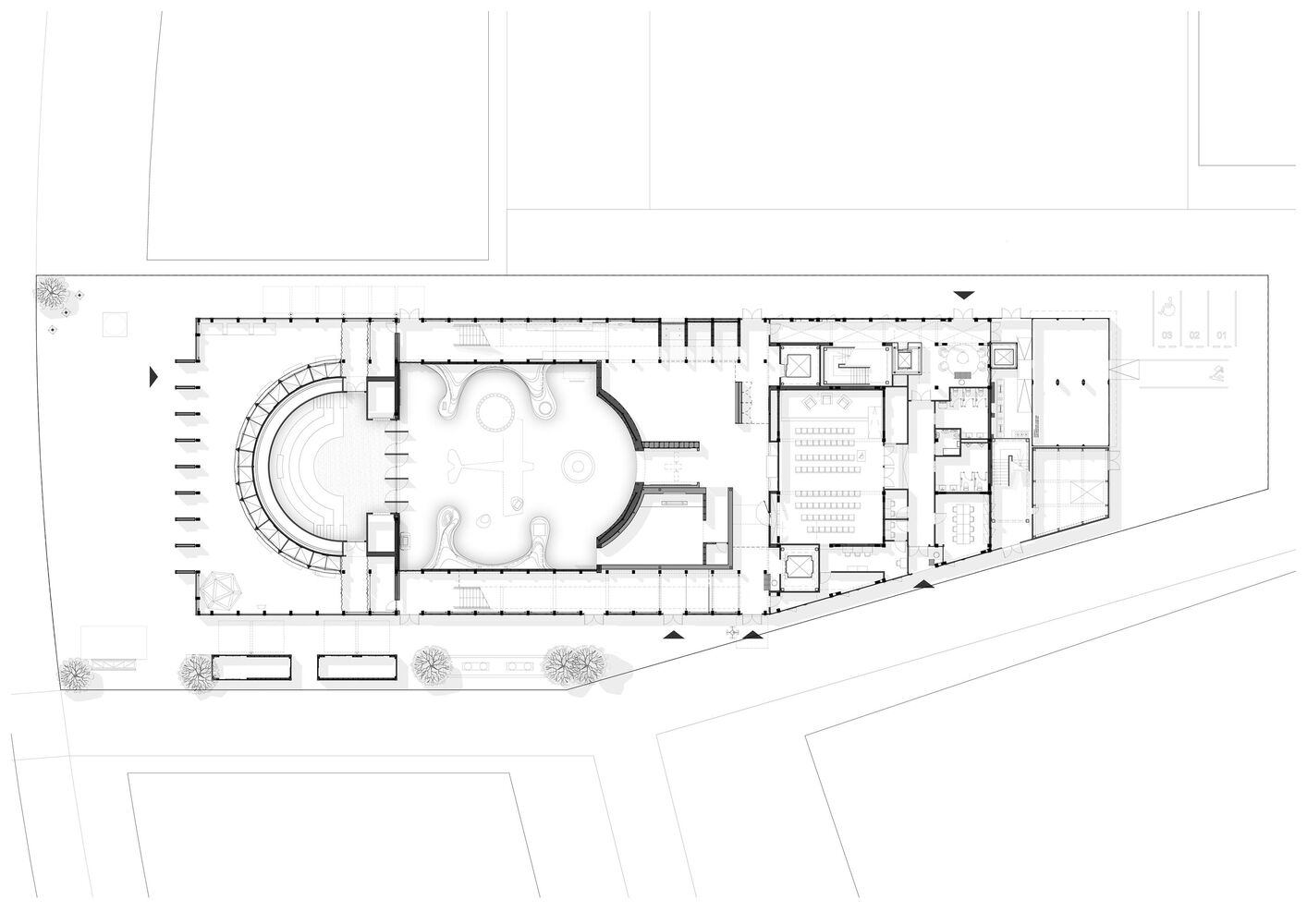
Ground Floor Plan
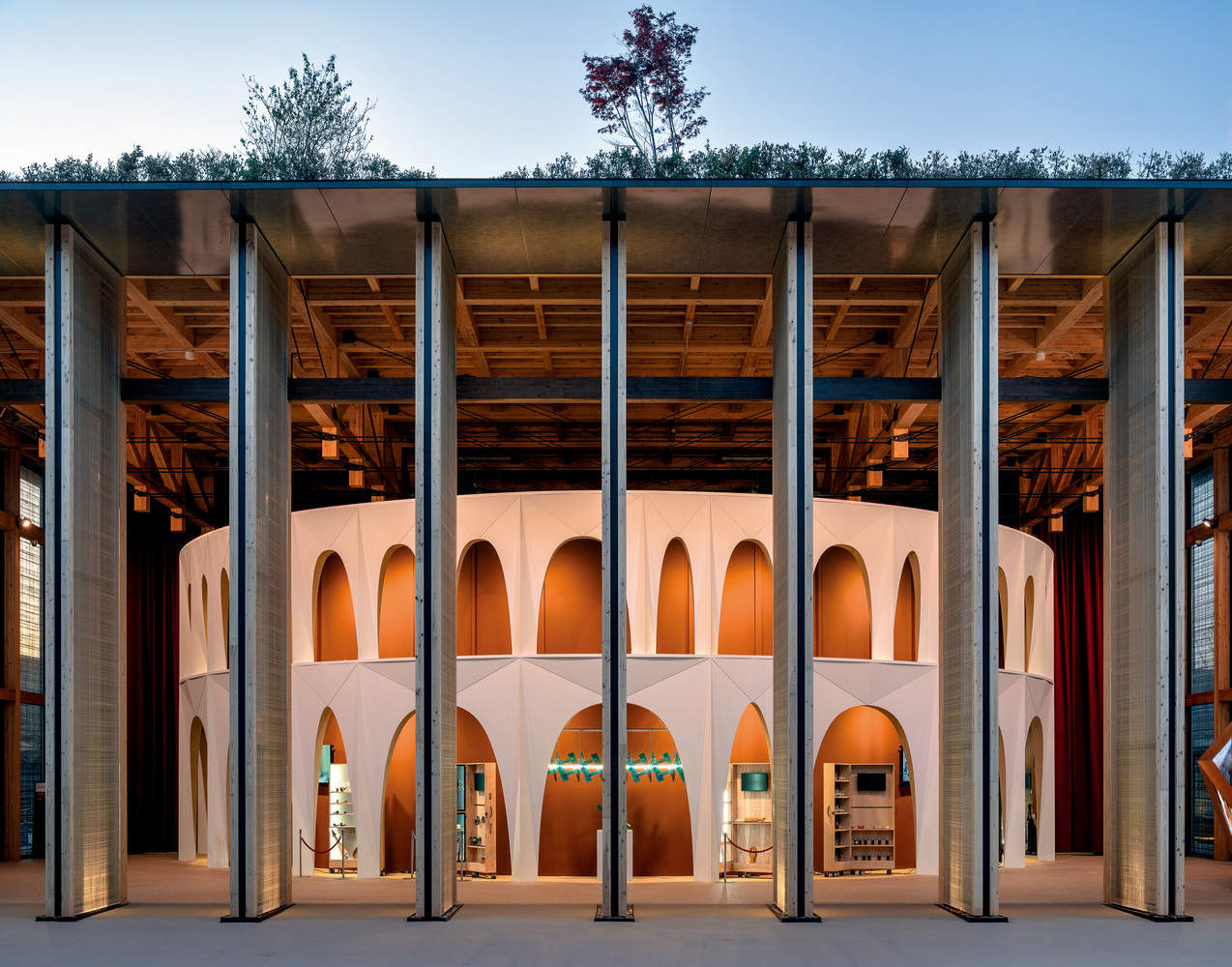
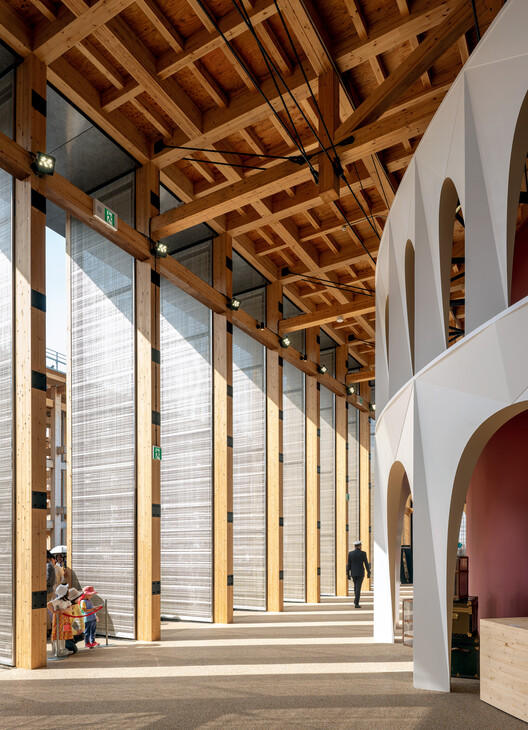
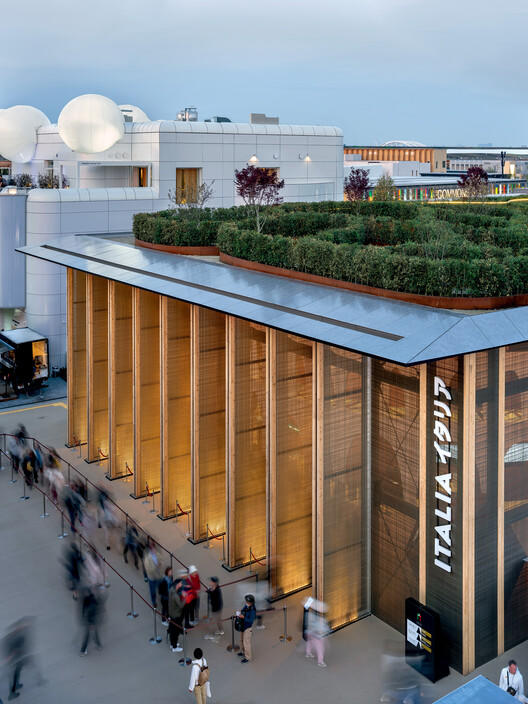
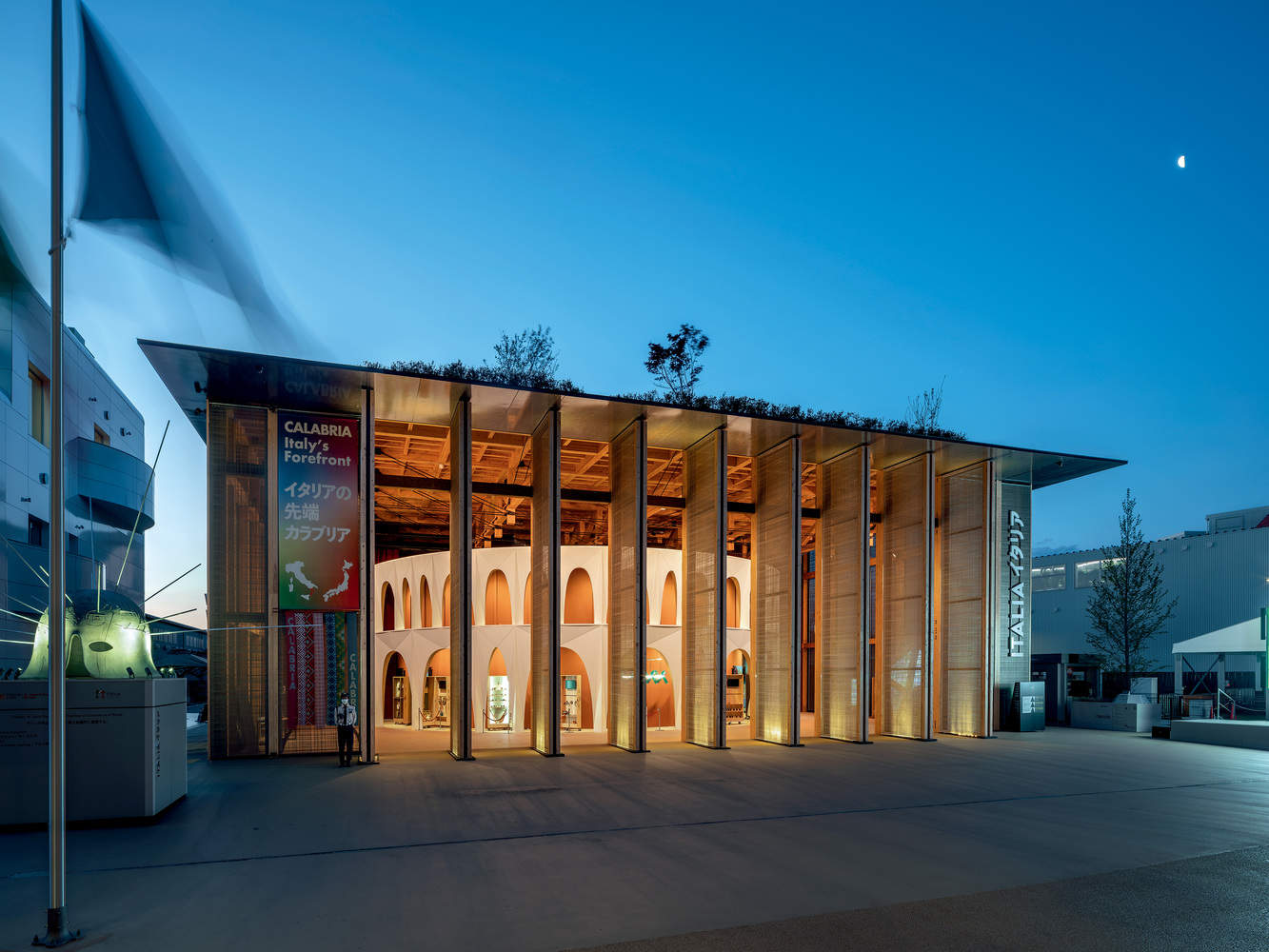
With an open, transparent, and welcoming architectural form, the Italian Pavilion reinterprets the Italian art of hospitality and reverence for nature while presenting a blueprint for future urban life. Constructed entirely of modular wood, combined with translucent organic materials, natural light permeates the space, creating a rhythm of flowing light and shadow. The pavilion guides visitors in through a spacious entrance lobby. The "breathing" translucent facade envelops the lobby; its textile texture, woven from breathable mineral fiber membranes, softens sunlight, facilitates ventilation, and imbues the building with a light and dynamic vital presence, creating a spatial atmosphere where light and shadow flow, interweaving the classical and the modern. This "skin" regulates light and heat, reshapes the indoor-outdoor relationship, and reduces energy consumption, enabling the space to achieve an organic dialogue and continuous symbiosis with its surroundings while conserving energy. The load-bearing structure utilizes certified local solid laminated timber, employing a dry modular system that forms a rhythmic grid of beams and columns, drawing inspiration from Japanese craftsmanship to evoke the beauty of traditional Italian coffered ceilings. The design also fully considers the climate and solar exposure of the Osaka region to achieve harmony between the space and the environment.
意大利馆以开放、通透且亲和的建筑形态,重释意式待客之道与自然礼赞,同时呈现未来城市生活的蓝图。模块化全木结构搭建,结合透光有机材质,自然光穿梭其间,塑造流动光影与空间的节奏感。展馆以一座开阔的入口门厅引导观众步入。“会呼吸”的半透明立面环抱门厅,其纺织肌理由透气矿物纤维膜织成,柔和日照、引导通风的同时赋予建筑轻盈灵动的生命气质,营造出一种光影流动、古典与现代交织的空间氛围。这道“肌肤”调节光热、重塑内外关系且降低能耗,使空间在节能中实现与周围环境的有机对话与连续共生。承重结构采用日本本土认证的实木胶合材,运用干式模块化系统,构成了富有节奏感的梁柱格栅,借鉴日本匠艺,还原意大利传统格状天花之美。设计亦充分考虑大阪地区的气候与光照,实现空间与环境的和谐。
© Duccio Malagamba
The pavilion is composed of two volumes: a grand cultural exhibition hall housing the core exhibits, and a rooftop garden reimagined as a vibrant ecosystem, drawing inspiration from traditional Italian gardens. This contrasts and harmonizes with the circular structure of the Expo site, balancing panoramic views with immersive experiences. Every element, from materials to structural geometry, is guided by ecological friendliness, aiming to minimize environmental impact while fostering a more delicate and profound connection between the architecture, people, and nature. The design does not seek to dominate the environment but humbly integrates into the landscape of Osaka Bay, reflecting the harmonious unity of sustainability principles and aesthetic spirit in Italian design.
展馆由两个体量构成。主空间是一座恢弘的文化展厅,承载展览核心;一座空中花园,取意意大利园林传统,在当代语境下重构为一个生机盎然的生态系统。与展馆景观相映成趣,对话世博园区环形结构,在全景视野与沉浸体验之间演绎对比与和鸣。从材质到结构几何,每一个元素都以生态友好为指引,旨在将环境影响降至最低,同时促成建筑、人与自然之间更细腻而深刻的联结。设计并不试图凌驾于环境之上,而是以谦逊之姿融入大阪湾的风貌之中,映照出意大利设计中可持续理念与审美精神的和谐统一。
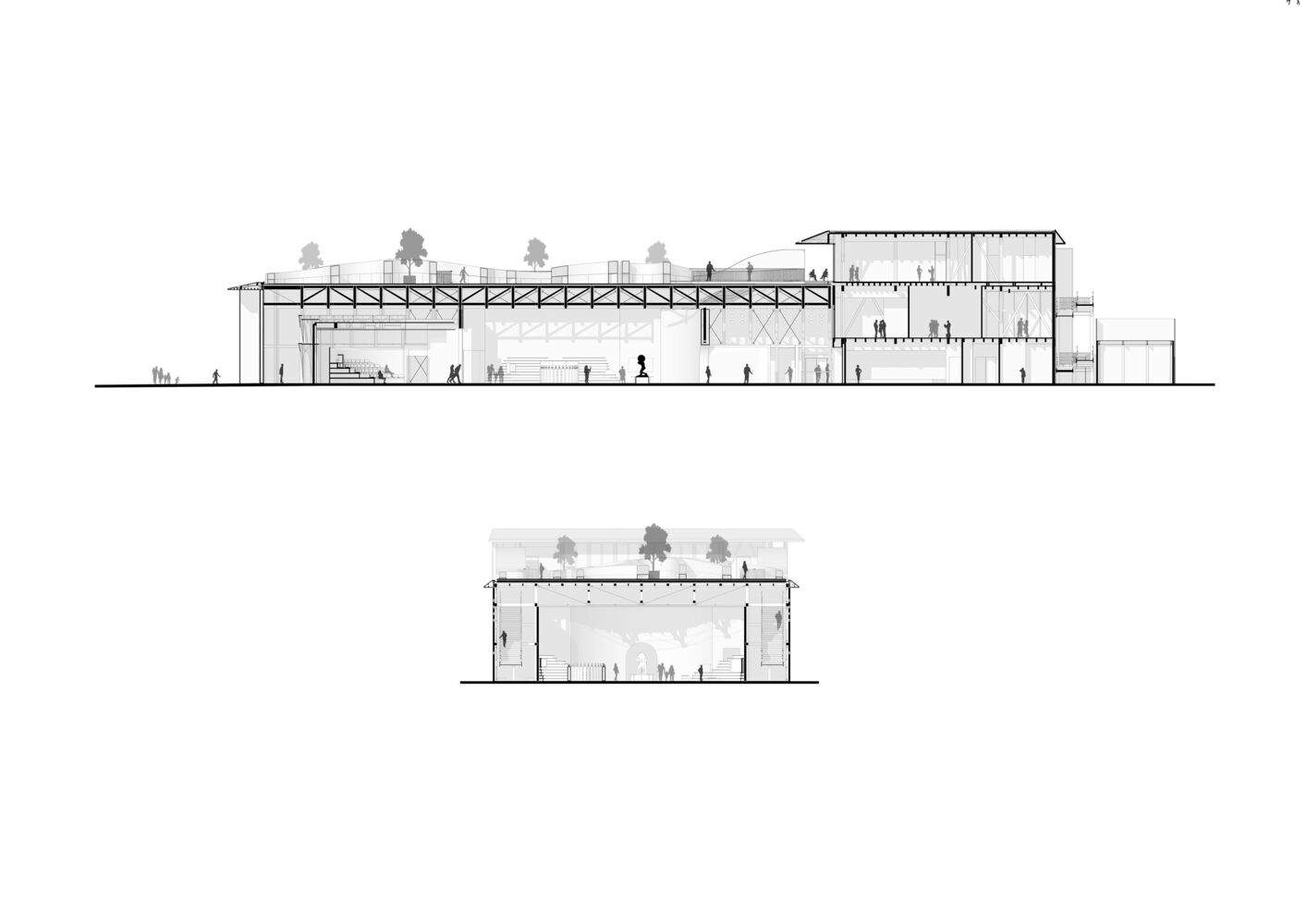
Section
© Duccio Malagamba
A multi-sensory, immersive exhibition experience unfolds like a journey through contemporary Italy, connecting history, innovation, and creativity. Each exhibition area functions as an independent yet interconnected narrative segment, designed to evoke emotion, inspire reflection, and guide visitors into active participation in a collective experience. The journey begins in the "Handmade Arts" area, an introductory space leading visitors into the "Spirit of Craftsmanship" of Italy. Italian creative workshops are transformed into vibrant experimental fields where digital craftsmanship, advanced manufacturing, scientific research, and visual arts converge, showcasing the innovative power deeply rooted in Italy's manufacturing tradition.
Theatre
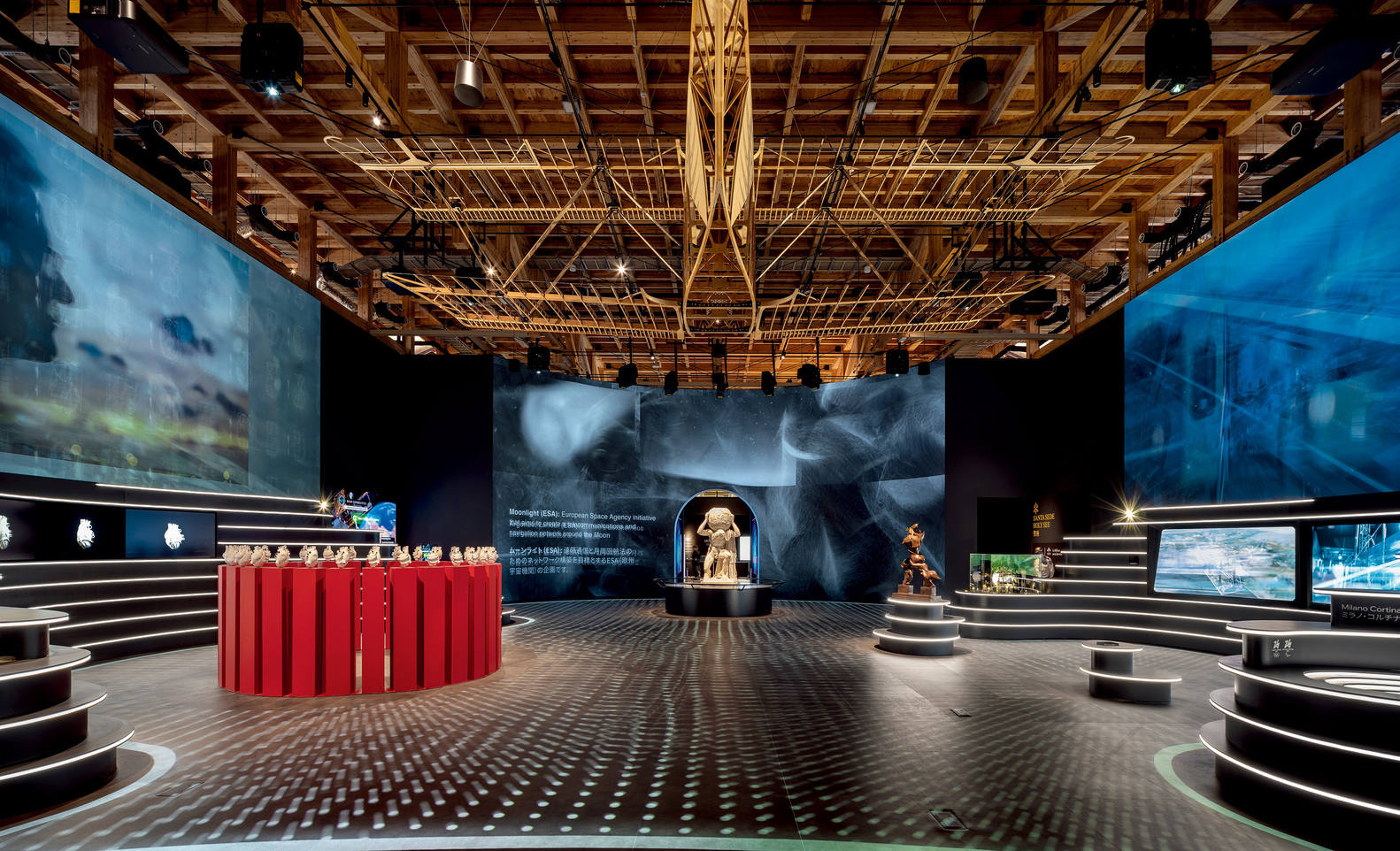
Subsequently, visitors encounter a circular immersive theatre, a typical representation of Italian urban landscapes. Alternating between digital staging and live performance, it reinterprets Renaissance theatre language while engaging in a cross-temporal dialogue with Japanese performance culture. Visitors are no longer passive observers but co-creators of the performance, fully immersed and sensorially resonant.
Ideal City
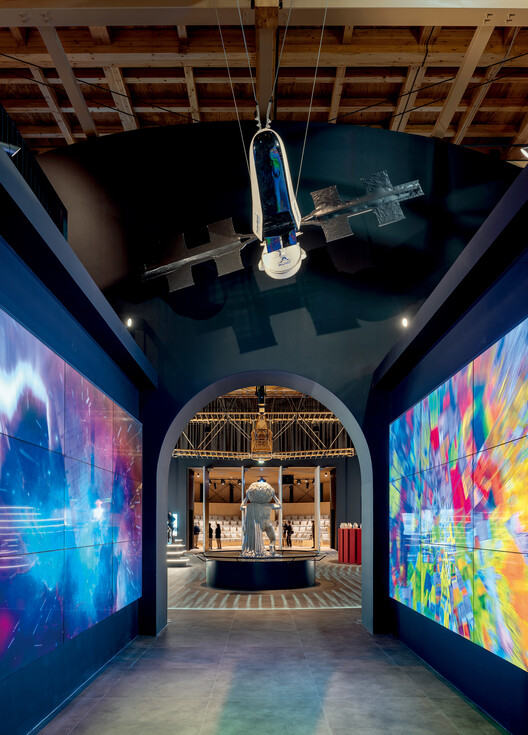
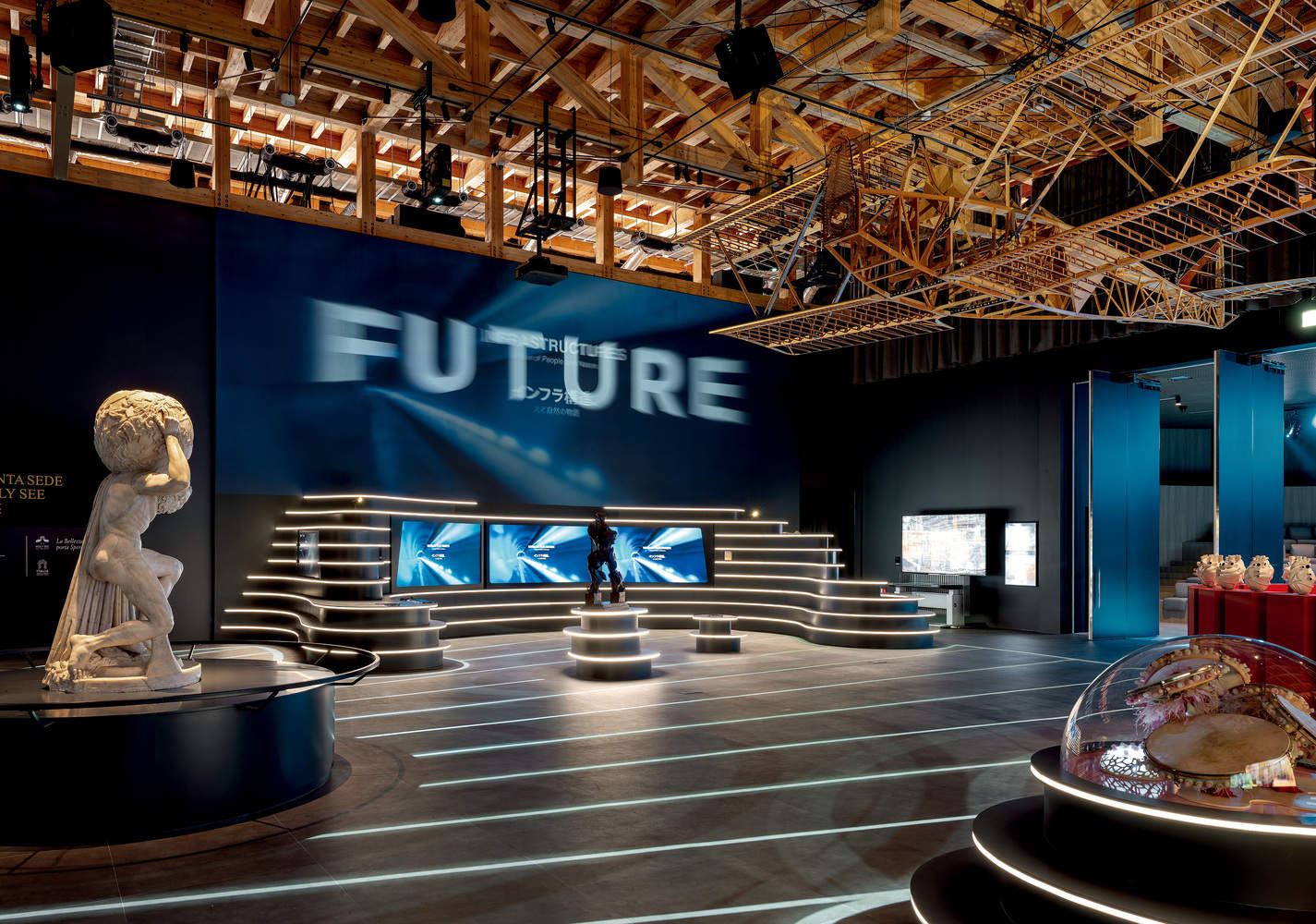
Next is the "Ideal City" exhibition, which reinterprets the Renaissance concept of the "Ideal City" from a contemporary perspective, extending the vision to the deep connection between people and the land. The exhibition focuses on themes such as nature, culture, art, health, air quality, infrastructure, and urban space. Multimedia installations and iconic exhibits, such as the Farnese Atlas sculpture and the Milan-Cortina 2026 Winter Olympics torch displayed in the pavilion, illustrate how the interaction between people, the environment, and culture becomes the driving force for urban and social revival. Among the many sections, the most spiritually profound is the Holy See Pavilion. In a tranquil and meditative atmosphere, visitors will have the rare opportunity to view Caravaggio's original work, "The Entombment of Christ" (Deposizione), from the Vatican Museums, engaging in a dialogue about art, faith, and beauty, awakening a sense of perception and reverence for European cultural heritage. The latter half of the exhibition gradually opens up, inviting visitors to traverse the diverse cultural fabric of Italy’s regions. Through interactive installations, iconic products, audio-visual imagery, and digital storytelling, the industrial vitality, cultural essence, and natural landscapes of various areas are successively presented in dedicated zones. This rotating presentation style showcases the regional beauty of Italy to the world in an intimate yet international language.
Italian Garden
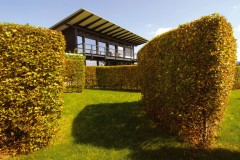
Finally, the journey culminates at the "Green Terrace." Inspired by traditional Italian gardens, this rooftop space outlines an ecological poem through geometric aesthetics. Over 900 meters of Turkey Oak hedges unfold along a winding, labyrinthine organic landscape. Small fragrant plantings are interspersed, combining small tree species from both Italy and Japan. Amidst the greenery, light and shadow play gently, and subtle fragrances drift. This point is not merely an end but a poetic allegory of contemplation and sensory resonance.
© Duccio Malagamba
The Italian Pavilion embodies the concept of a recyclable building, striving to minimize its environmental footprint while imparting cultural, ecological, and social value. The project is based on a comprehensive sustainability approach covering material selection, technology application, resource management, and the building's long-term use. Its core features include:
Reversible Architecture:
Regeneration and sustainability were central to the pavilion's design from the outset, viewing temporariness as an opportunity to rethink construction and assembly methods, systematically planning the building's entire lifecycle. The structure utilizes locally sourced, renewable laminated timber combined with dry assembly and modular design. This simplifies production and assembly processes, reduces material waste, improves resource utilization, and allows for precise control at every stage. The design adheres to the principles of "Design for Disassembly (DfD)" and "Design for Manufacture and Assembly (DfMA)," minimizing the number of components to facilitate dismantling and reuse, embodying a full lifecycle mindset that promotes coexistence among architecture, the circular economy, and local industries.
Energy Efficiency and Resource Management:
Through precise climate analysis, the building integrates strategies such as natural ventilation, passive cooling, and dynamic shading to maximize energy efficiency, reduce its carbon footprint, and achieve a spatial expression that balances ecology and aesthetics.
© Duccio Malagamba
Although the Italian Pavilion is a temporary structure, it is imbued with a lasting legacy in concept—a cultural, technological, and ecological heritage that transcends the exhibition period. The entire pavilion is constructed from prefabricated glued-laminated timber modules with full structural disassembly capability, allowing it to be given a second life as a cultural center, educational facility, or exhibition space.
Every detail, from structure and materials to technology and furnishings, prioritizes traceability, reversibility, and flexibility to minimize waste and maximize the long-term value of public investment. Furthermore, the content presented during the Expo—including performances, installations, data, artworks, and interactive outcomes—will be collected and organized into a "Digital Italian Laboratory," existing both physically and digitally, serving as a permanent archive. This database records innovation research, best practices, and the collaborative achievements between enterprises and institutions. The Italian Pavilion is more than just six months.
© Duccio Malagamba