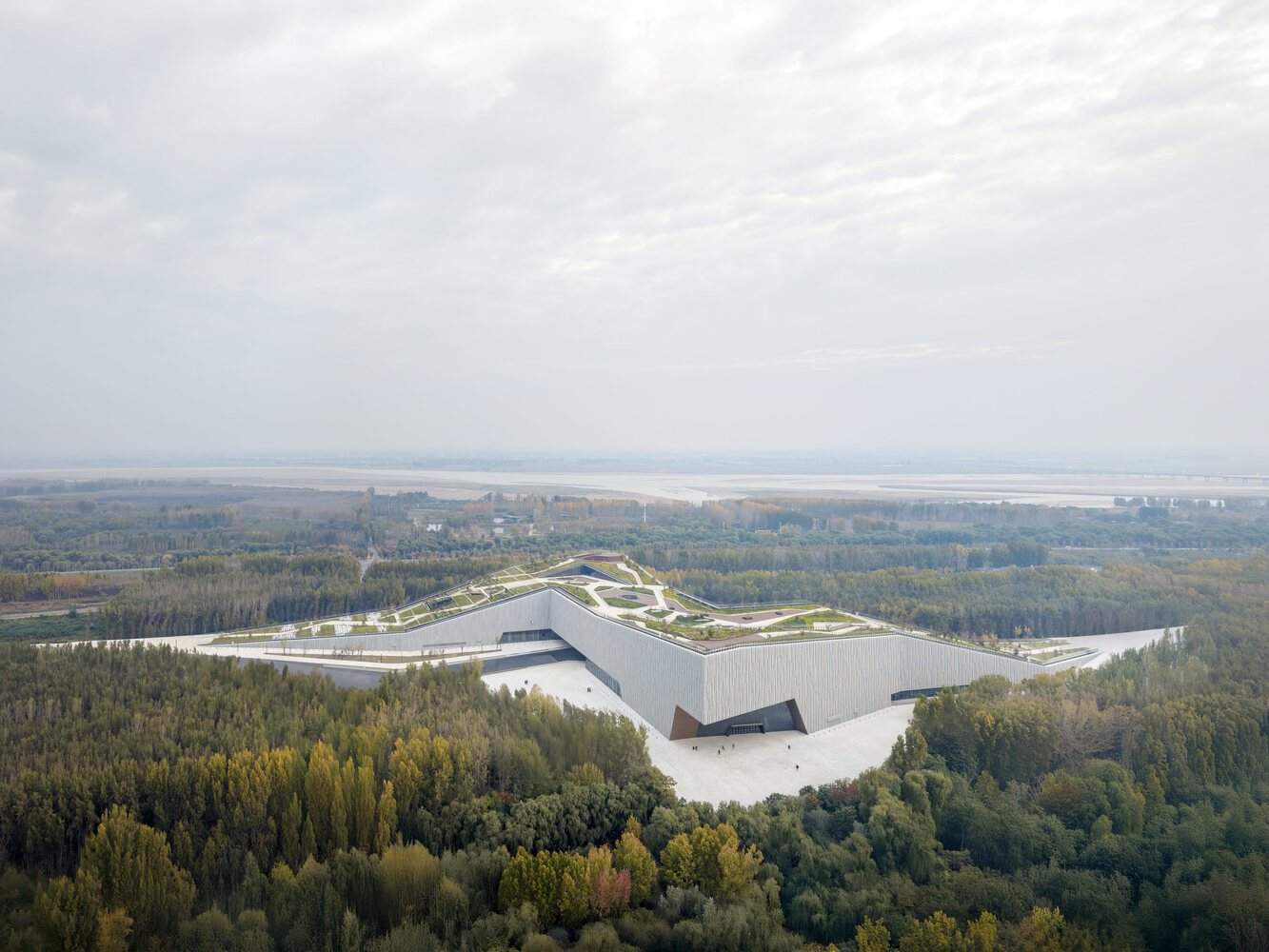
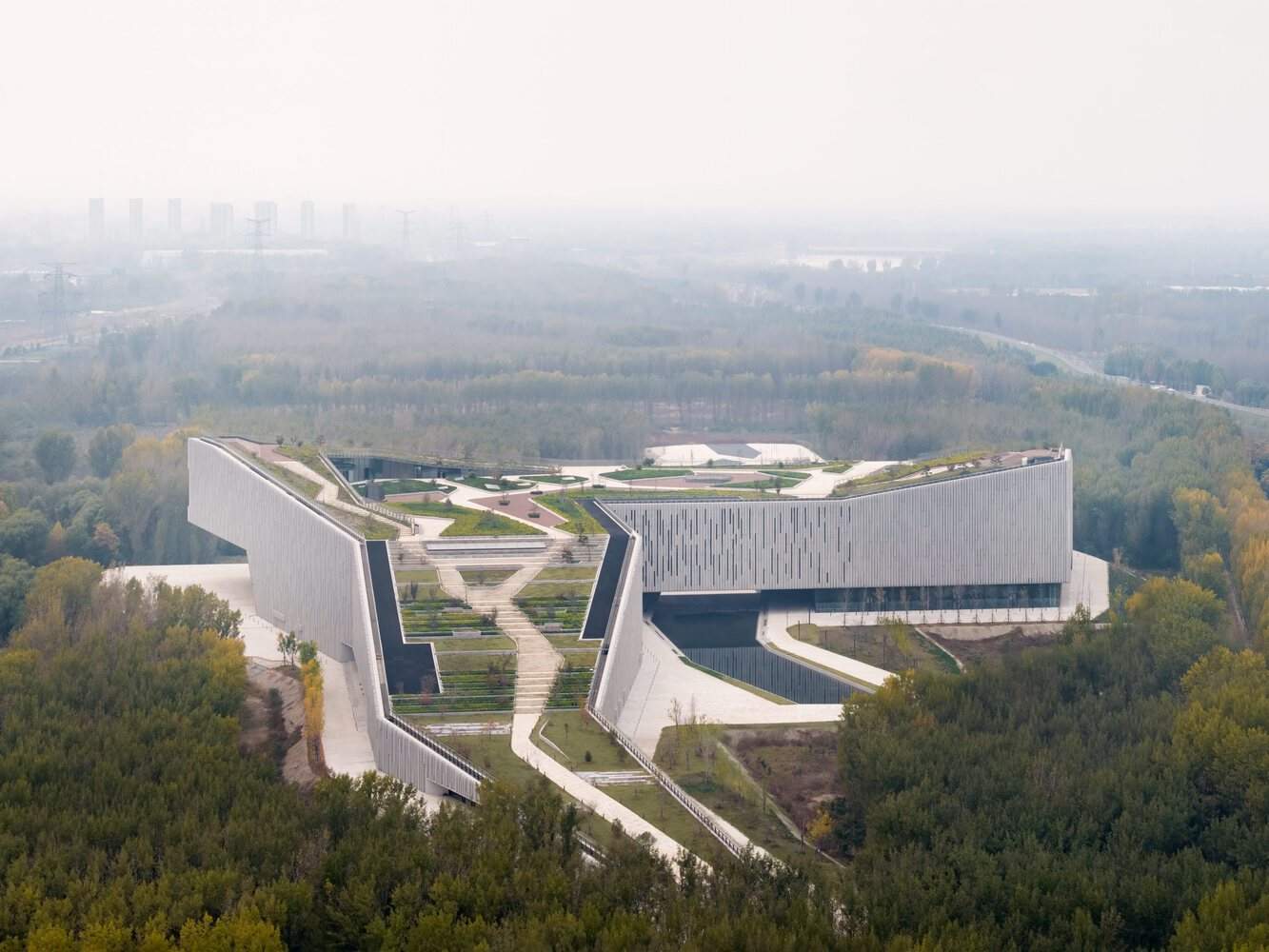
景观与建筑的无缝融合:该项目最精髓之处在于其对场地文脉的深刻理解与场所精神的精妙转译。GMP建筑师事务所将博物馆建筑体量设计为从堤岸山峦中“孕育而出”的形态,流线型的外观与自然景观浑然一体。通过绿化屋顶的设计,建筑不再是割裂的实体,而是将黄河文化公园的自然风光向上延伸,形成一个可供公众使用的、集观景、休闲和展览于一体的高尺度城市界面。这种将功能性建筑转化为“城市景观平台”的策略,极大地提升了建筑的公共性和场所的连续性。
河流意象的结构化表达:设计通过多重元素,将黄河的动态与形态进行抽象和结构化的表达。建筑的曲折多边形体量跨越溪流,形成了对蜿蜒河道的模仿。更具匠心的是,垂直结构外墙采用模块化预制构件,其浮雕般的肌理如同流水冲刷留下的痕迹,赋予了建筑表皮动态的时间感和触感。室内空间延续此设计语言,曲折的墙面与贯穿参观路线的黄铜吊顶,共同引导访客体验从“水流”到“文化核心”的沉浸式旅程。
光影与材料的仪式性引导:建筑在公共空间处理上展现了高超的材料运用和光环境控制能力。主入口悬挑结构下方的玻璃幕墙,辅以熠熠生辉的黄铜材质,营造出强烈的仪式感和向心力。室内通过玻璃采光缝引入自然光,而在需要保护的核心展区则实现严格的防光照处理,体现了对展品保护的专业考量。同时,北侧三面大尺度开窗的设计,精准地框取了黄河的壮阔景观,实现了由人工干预的室内体验向宏大自然背景的直接对话,完成了建筑“桥梁”的使命。
The Yellow River is the cradle that nurtured Chinese civilization. The Yellow River National Museum in Zhengzhou, designed by gmp Architects von Gerkan, Marg and Partners, not only showcases the cultural significance of the Yellow River but also focuses on the ecological evolution of its 5,000-kilometer basin. The new museum building and the Yellow River Cultural Park are built along the winding river course, forming a structural and thematic bridge between nature and civilization, integrating the building with the landscape.
黄河是孕育华夏文明的摇篮。位于郑州北部、由 gmp·冯·格康,玛格及合伙人建筑师事务所主笔设计的黄河国家博物馆不仅展示了黄河的文化意义,还聚焦于 5000 多公里的黄河流域的生态演变。博物馆新建筑及黄河文化公园沿着蜿蜒的河道而建,在结构上和主题上构成了自然与文明之间的桥梁,使建筑与景观融为一体。
© Marcus Bredt
© Marcus Bredt
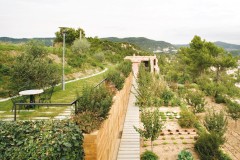
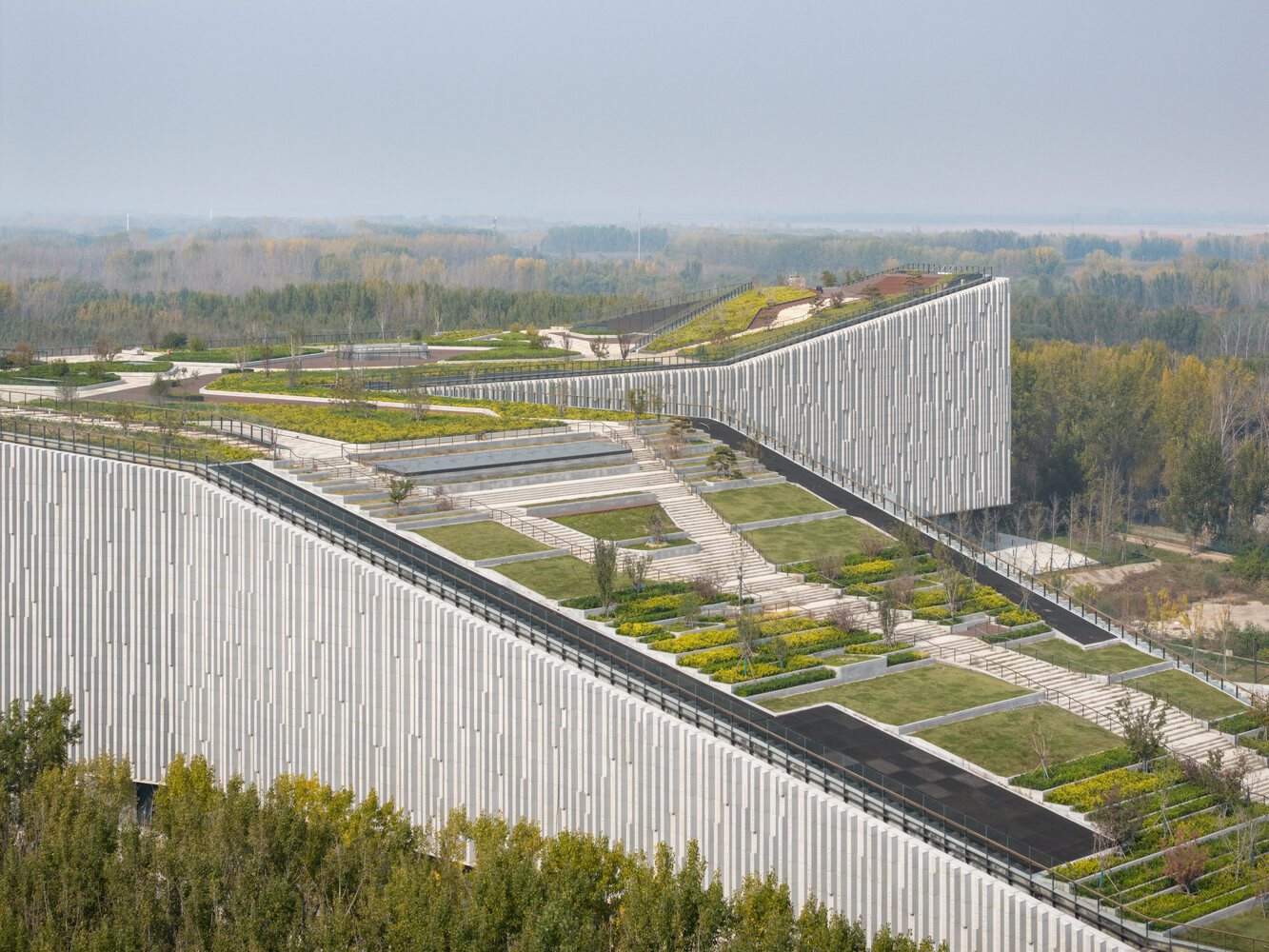
The new museum is the core of the Yellow River National Cultural Park and an important medium for integrating the surrounding green spaces into a continuous landscape. The main body of the building emerges from the embankment hills, with a streamlined appearance that blends seamlessly with the natural landscape. The green roof extends the natural scenery of the national park up to the 40-meter high roof platform, offering visitors an extraordinary view—to the north, a panoramic view of the majestic, surging Yellow River, and to the south, a distant view of the graceful Zhengzhou city skyline. Along winding paths, visitors can experience various river landscapes on the rooftop, including picnic areas, an open-air theater, and exhibition zones.
新博物馆是黄河国家文化公园的核心,是将周边绿地整合为连续景观空间的重要媒介。建筑主体由堤岸山峦中孕育而出,流线型外观与自然景观浑然一体。绿化屋面将国家公园的自然风光延伸至 40 米高的屋顶平台,访客在此享有非凡的观景视野,向北一览雄浑壮美的滔滔黄河,向南远眺优美的郑州城市天际线。沿着曲径通幽的小路,在屋顶上可以体验野餐区、露天剧场和展览区等各具特色的河流景观。
© Marcus Bredt
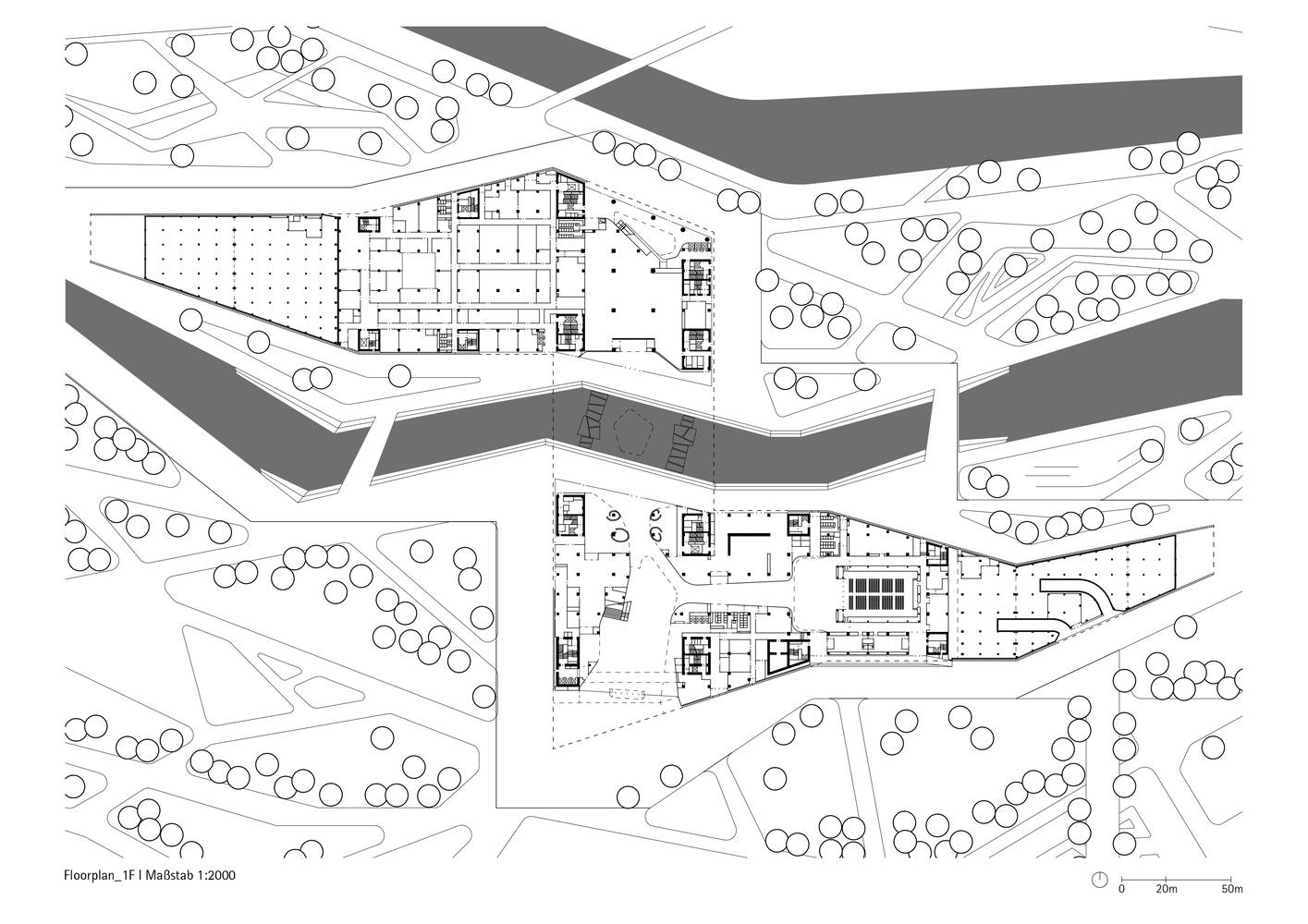
Ground floor plan
The undulating, polygonal building volume spans the winding stream in the park. Where the building meets the water flow, an organically extended atrium is designed as the core lighting space for the museum, cleverly incorporating a water curtain feature at the opening.
曲折多边形的建筑体量缓缓起伏,跨越公园中的蜿蜒溪流。在建筑与水流的交汇处,设计了一个有机延展的中庭作为博物馆的核心采光空间,开口处还巧妙设置了水幕装置。
© Marcus Bredt
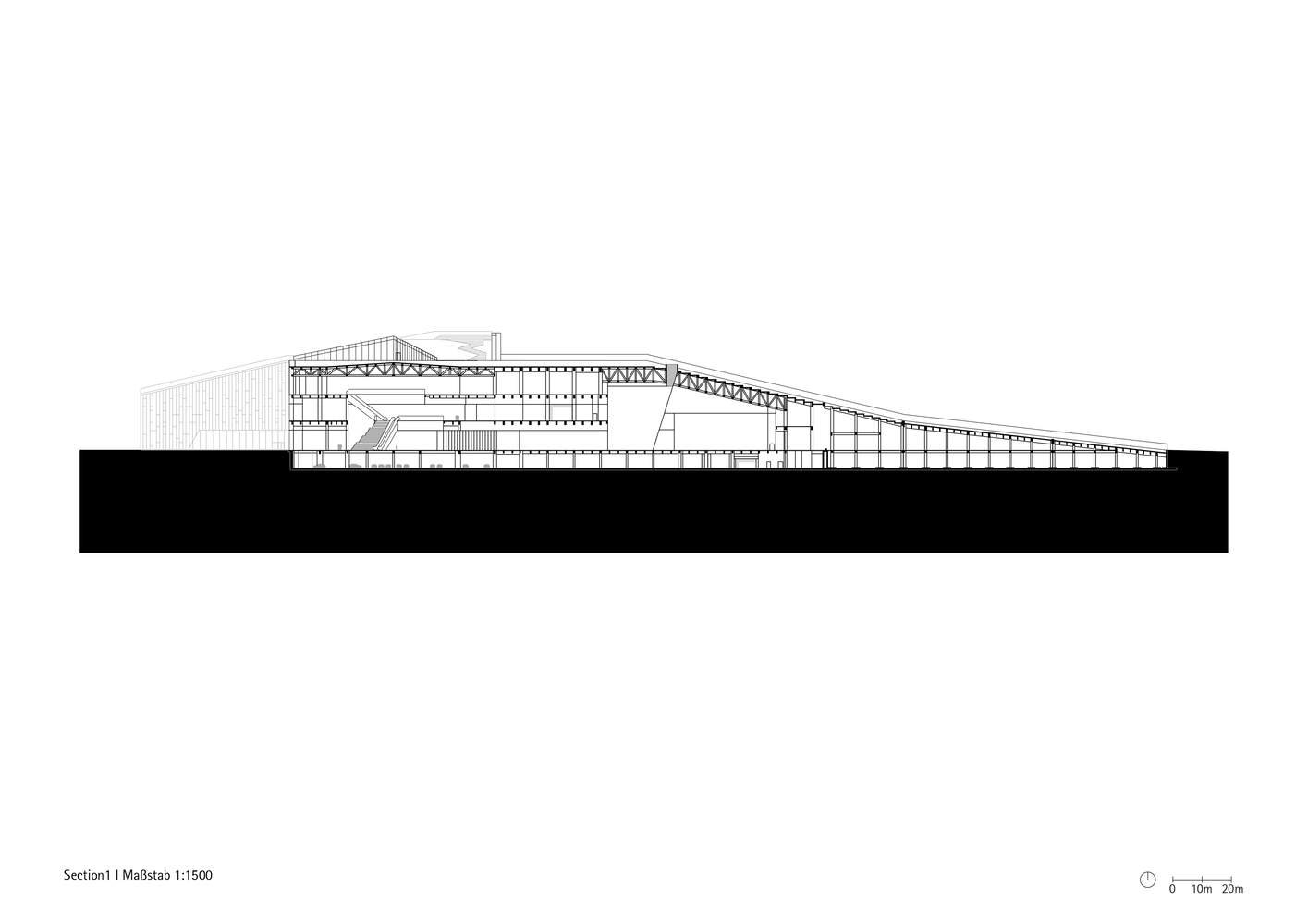
Section view
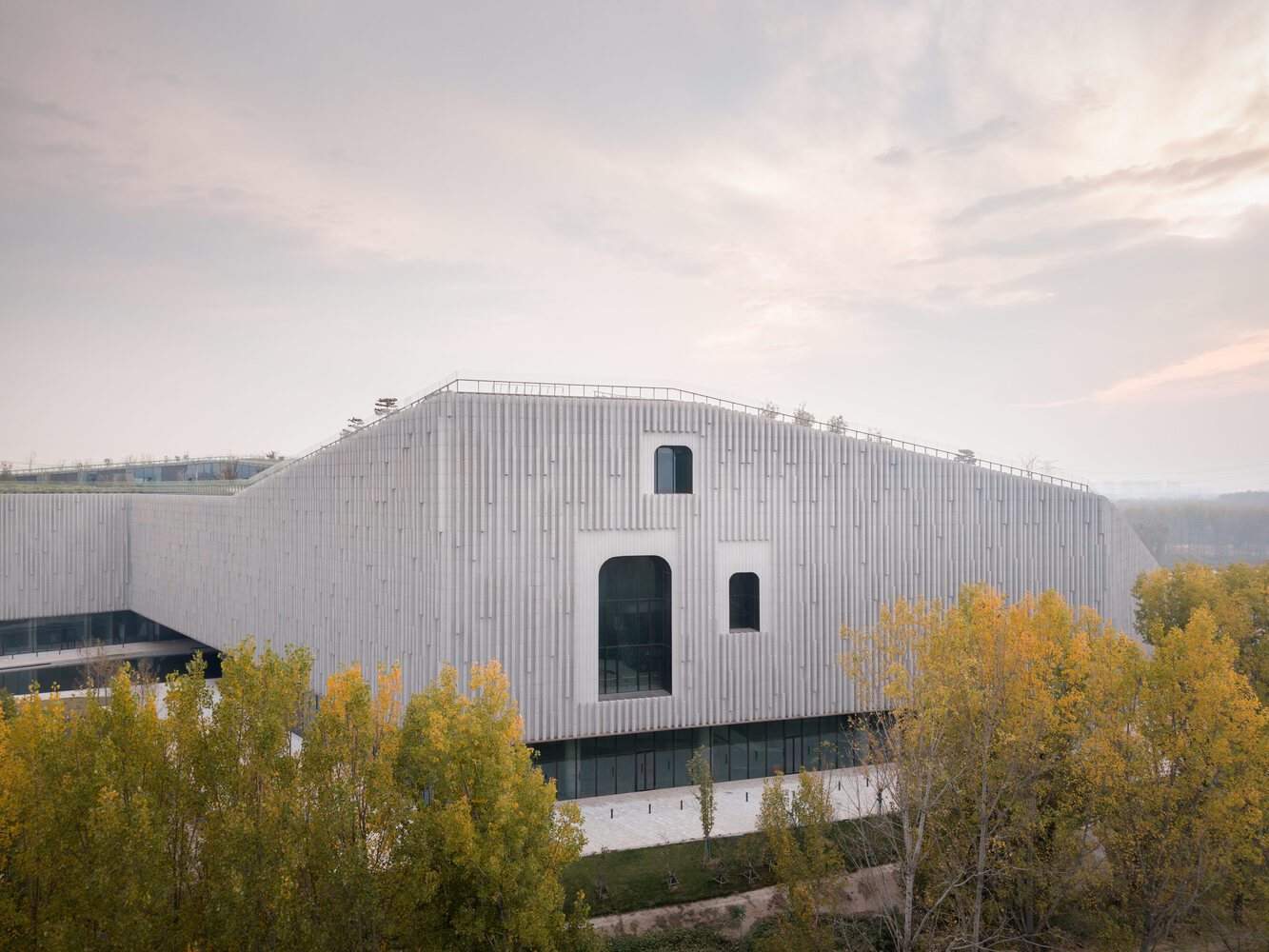
The natural stone retaining walls of the building's vertical structure adopt a modular design, composed of prefabricated facade elements whose relief-like, rhythmic texture suggests the appearance of water erosion. Glazed skylight strips are installed in the public areas, while the main exhibition areas are treated to be light-proof. Large-scale windows on the north façade, spanning three sides, are designed to emulate Yellow River caves, framing the panoramic landscape.
建筑垂直结构的天然石材护墙采用模块化设计,由预制幕墙构件构成,其浮雕般、韵律感的肌理做出流水冲刷的观感。公共区域安装了玻璃采光缝,而主陈展区则做了防光照处理。北侧的三面大尺度开窗仿照黄河洞穴设计,将景观尽收眼底。
© Marcus Bredt
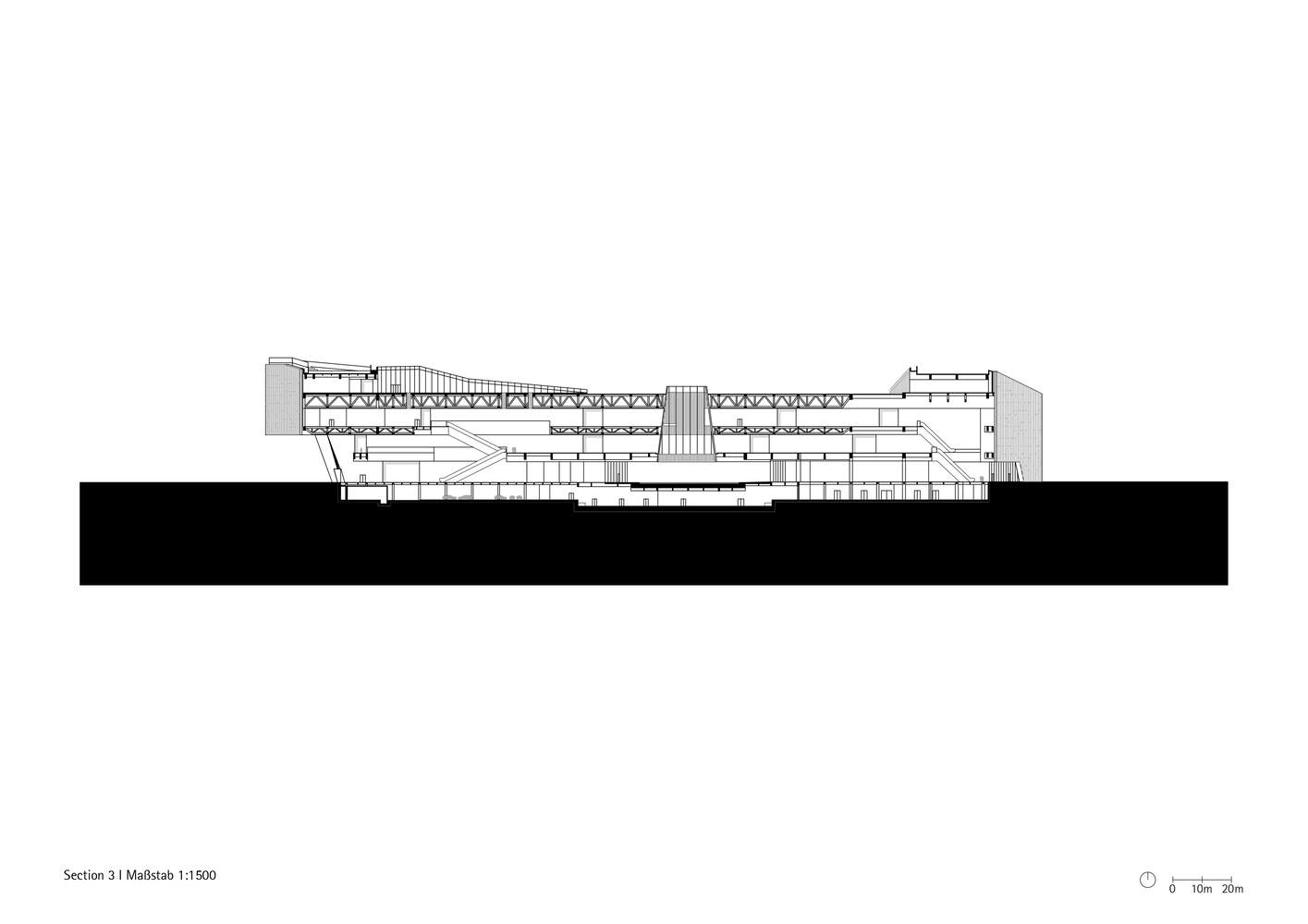
Section view
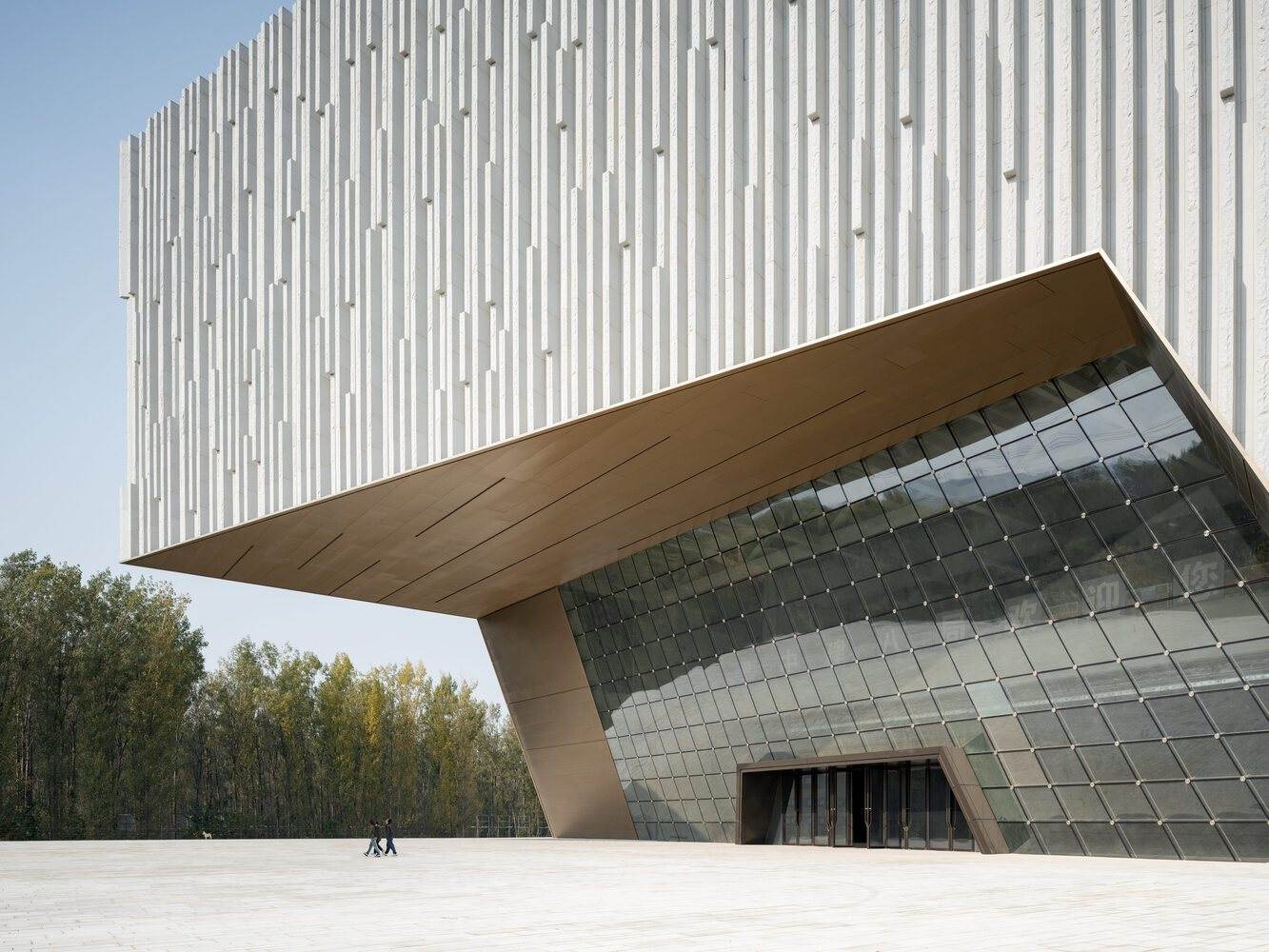
The museum's main glass entrance is located beneath the cantilevered structure on the south side of the building, appearing as if sliced out from the building mass. Gleaming brass material is used for the exterior façade and ceiling panels, further emphasizing the ceremonial nature of the main entrance. The interior spaces continue the exterior design language and material concept, with winding walls creating a visual effect of water erosion, and the brass ceiling running along the main visitor route guiding guests deeper into the exhibition spaces.
博物馆的玻璃主入口设于建筑南侧悬挑结构下方,仿佛自建筑体中剖切而出。熠熠生辉的黄铜材质被用于外立面与天花板镶板,进一步强调了主入口的仪式感。室内空间延续了外部的设计语言与材质理念,曲折的墙面营造出流水冲刷的观感,贯穿主要参观路线的黄铜吊顶引领访客逐步深入展览空间。
© Marcus Bredt