历史文脉的深度激活与场所精神的重塑:该项目精准把握了珍珠采珠业对巴林社会经济和文化的深远影响,将穆哈拉格(Muharraq)的西雅迪建筑群提升至文化遗产保护与展示的前沿。通过审慎地剥离不协调的后期增建,并依据历史地基进行精确的结构延伸和空间重构,建筑师成功地激活了场所的真实历史叙事。新旧元素的对话,尤其是在关键的西雅迪会客厅(Siyadi Majlis)的修复与再利用中,不仅恢复了其作为珍珠贸易核心谈判地的历史功能,更通过对珍贵历史装饰母题的尊重与继承,实现了对地方“场所精神”的深刻重塑,使其成为活态的文化记忆载体。
材料创新与传统工艺的当代转译:项目在材料处理上展现了高超的建筑智慧与对地域工艺的尊重。建筑主体采用当地传统的珊瑚石(froush)和石灰基灰泥,并通过精细的传统双层灰泥工艺(底层粗糙,面层光滑)来致敬历史建筑的肌理。然而,真正的创新体现在对新增墙体的灰泥处理上:通过发明一种新颖的、从下而上部分涂抹的技法,创造出边界不规则、顶部光滑的视觉效果,清晰地区分了新旧结构,同时保留了灰泥的物质性与触感。此外,主展厅中利用银箔饰面,模拟空气氧化后呈现的柔和金色光泽,与历史装饰风格形成高雅的呼应,体现了材料的当代诗意表达。
叙事驱动的展览空间设计:建筑设计策略高度服务于博物馆的叙事目标。项目成功地将西雅迪会客厅的独特历史价值与珍珠文化展示融为一体。通过新建的、用于展示国家博物馆、马塔尔珠宝店及卡地亚典藏珍品的空间,建筑为珍贵的珍珠藏品提供了背景化、仪式感的容器。特别是七米层高的主展室内,银箔墙面不仅在视觉上提升了空间的纪念性,更通过其微妙的光泽变化,间接呼应了珍珠温润的质感,使参观体验从简单的物品陈列升华为对巴林珍珠文明的沉浸式探索。
For thousands of years, the pearl fishing industry and its associated trades shaped the economy and culture of Bahraini islanders. As the center of pearl fishing, Bahrain was a regional economic hub where pearl divers and other crew members from across the Gulf would arrive to board dhows and try their luck. The results of the pearling season provided livelihoods for many local residents and the various trades they were involved in, including merchants, creditors, ship owners and builders, captains, divers, haulers, and sail makers.
数千年来,采珠业及其相关贸易塑造了巴林岛民社会的经济与文化。作为采珠业的中心,巴林曾是区域经济枢纽,来自海湾各地的采珠潜水员和其他船员会来到这里,登上单桅帆船,去搏一搏自己的命运。采珠季的成果为许多当地居民及其从事的各类行业提供了生计,这些行业从业者包括:商人、债权人、船主和造船者、船长、潜水员、搬运工以及帆匠。
© Anne Holtrop
The spatial layout and architectural style evident in the pearling economy of Muharraq and the northern waters of Bahrain represent the last, and therefore most prominent, existing examples that fully illustrate the entire cultural tradition of pearl diving.
穆哈拉格(Muharraq)以及巴林北部水域所呈现的采珠经济在空间布局与建筑风格方面的见证,是现存最后、因而也最为突出的范例,它们完整展现了采珠这一文化传统的全貌。
© Anne Holtrop
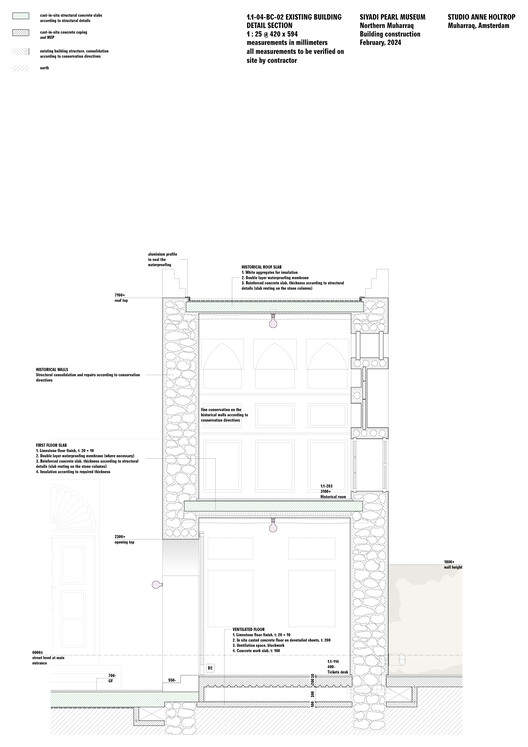
Section view
剖面图
© Anne Holtrop
Among the many landmark buildings, the Siyadi complex and the Murad complex are indispensable components of the "Pearling Path," as both families were deeply involved as pearl merchants. The Siyadi Majlis is architecturally unique and serves as a model of local reception hall architecture, where the pearl merchant Tajir Al-Lulu once hosted pearl buyers from as far away as India and Europe. The Siyadi Majlis was a place for negotiating the trade of special pearl collections.
在众多标志性建筑中,西雅迪(Siyadi)建筑群和穆拉德(Murad)建筑群是“珍珠采珠之路”(Pearling Path)不可或缺的组成部分,因为这两个家族都曾作为珍珠商人深度参与其中。西雅迪会客厅(Siyadi Majlis)在建筑风格上独具特色,是当地会客厅建筑的一个典范,珍珠商人塔吉尔·阿勒·鲁鲁(Tajir Al-Lulu)曾在此接待过来自遥远的印度和欧洲的珍珠买家。西雅迪会客厅曾是就特殊珍珠藏品进行谈判的场所。
© Anne Holtrop
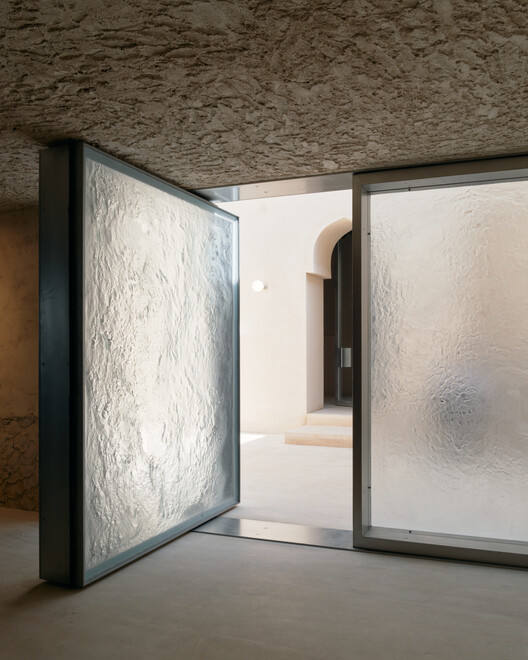
The first step in the restoration of the Siyadi Majlis and the mosque was the removal of additions and modifications accumulated over the years that were inconsistent with the original architectural style. After stripping away these non-original elements and restoring the remaining historical elements of the building, the missing parts were supplemented by extending and adjusting the direction of the existing walls, based on the general condition of the existing historical foundations. The newly created rooms will be used to display pearl jewelry and loose pearls preserved in the Bahrain National Museum, Mattar Jewelers, and the Cartier Collection.
西雅迪会客厅(Siyadi Majlis)与清真寺修缮工程的首要步骤,是拆除那些历经岁月累积、与原有建筑风格不协调的增建部分和改造结构。在剥离这些非原生物件、还原建筑剩余的历史元素之后,将依据现存历史地基的大致情况,通过延伸现有墙体并调整其走向,来补全建筑缺失的部分。新打造的房间将用于展示巴林国家博物馆、马塔尔珠宝店(Mattar Jewelers)以及卡地亚典藏(Cartier Collection)所珍藏的珍珠首饰和散珠。
© Anne Holtrop
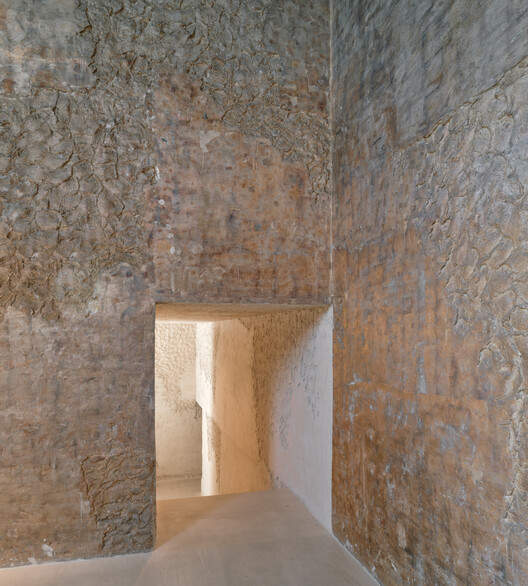
The building material used for this historic structure is coral stone (locally known as froush), and the walls are entirely finished with lime-based plaster. This historic plaster is applied in two layers: first, a thick base coat of plaster is hand-applied to the coral stone walls, followed by a fine, smooth finishing layer for wall decoration. Typically, this top layer would feature gypsum and lime reliefs, and decorative patterns would be painted on it. The impressive guest room of the Siyadi Majlis is adorned with exceptionally outstanding patterns, which are rare elsewhere in Muharraq.
这座历史建筑所用的建材是珊瑚石(当地称作 froush),墙面完全以石灰基灰泥抹面处理。这种历史灰泥分两层涂抹:先在珊瑚石墙体上手工涂抹一层厚厚的灰泥底层,之后再涂抹一层细腻光滑的灰泥面层作为墙面装饰。通常,这层面层上会雕刻有石膏和石灰浮雕,并绘有装饰图案。西雅迪会客厅(Siyadi Majlis)那令人印象深刻的客房,装饰有极为出众的图案纹样,这些装饰在穆哈拉格(Muharraq)的其他地方都难得一见。
© Anne Holtrop
© Anne Holtrop
Section view
剖面图
© Anne Holtrop
© Anne Holtrop
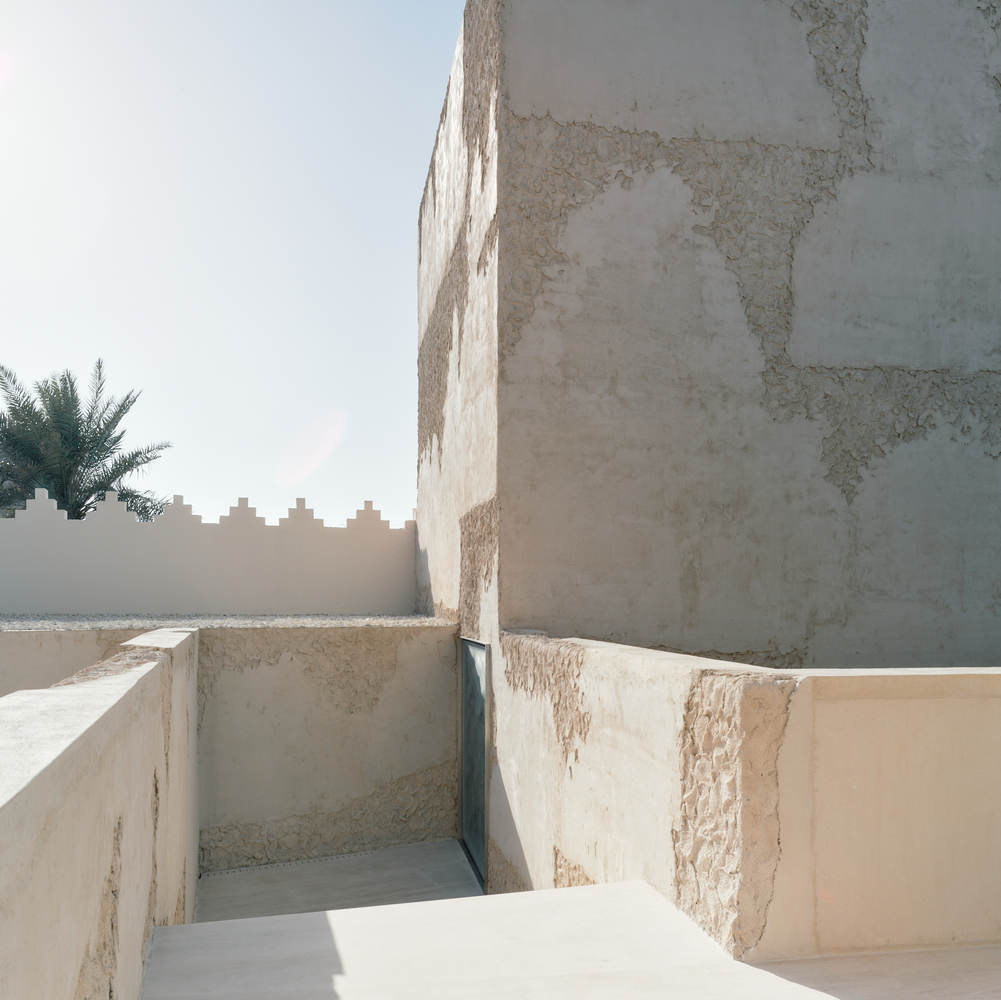
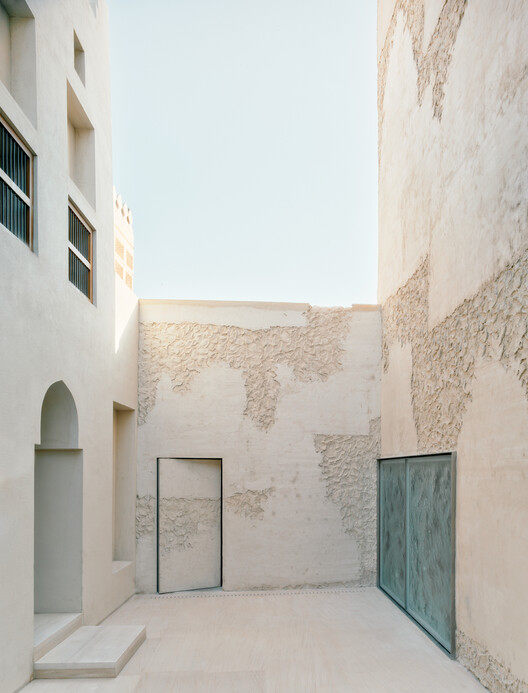
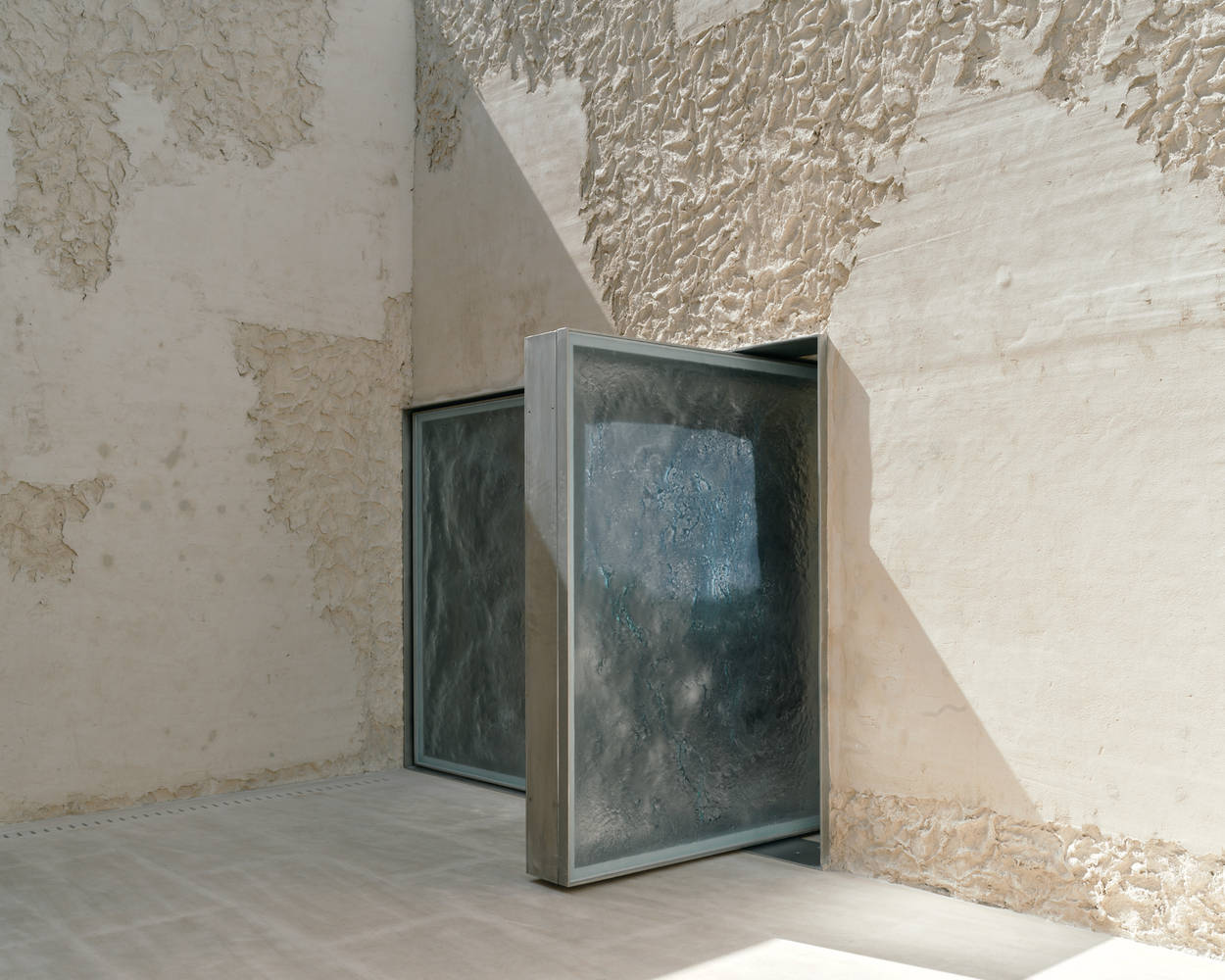
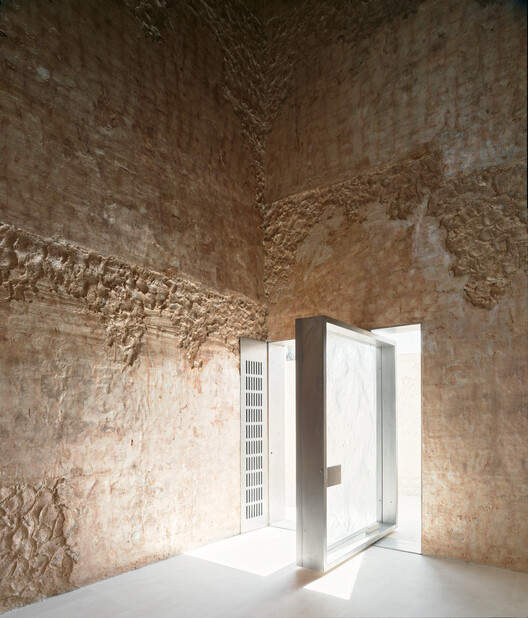
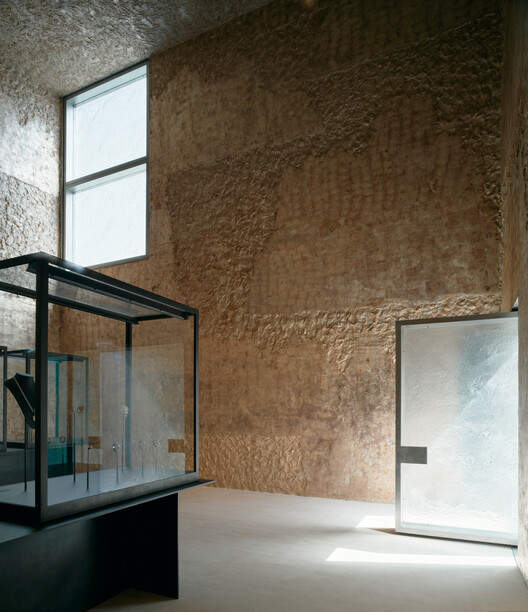
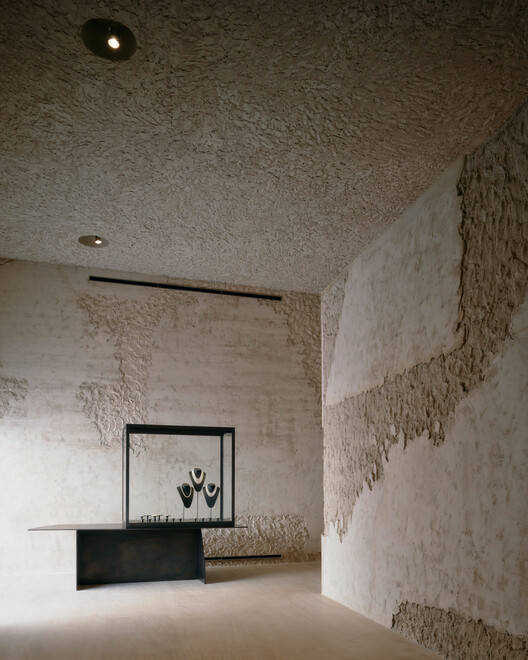
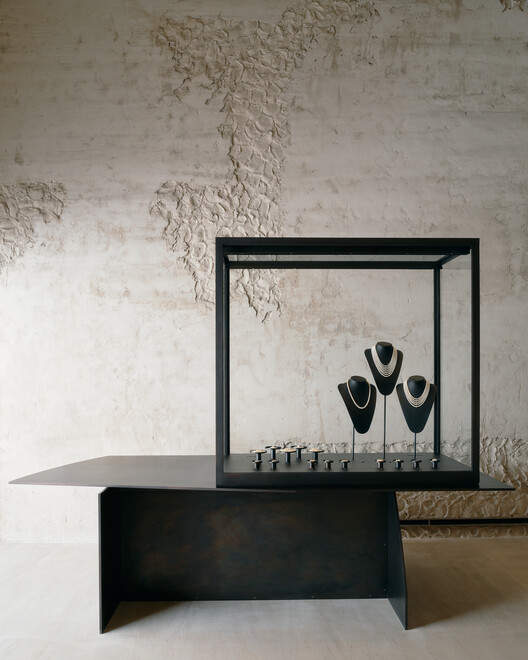
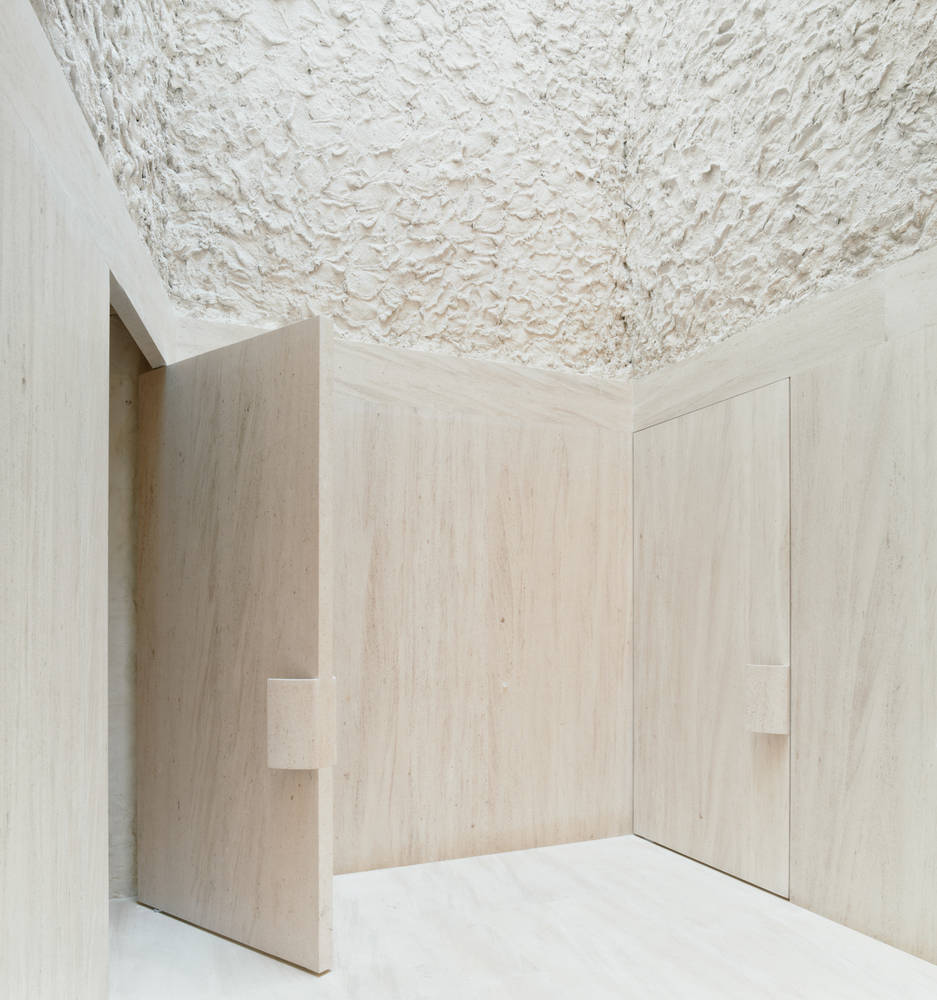
To distinguish the new walls of the Siyadi Pearl Museum from the mosque, a new plastering technique was invented where both layers of plaster are clearly visible. After applying the first rough plaster layer, a fine plaster layer, about 2.5 meters wide, is applied partially from bottom to top, creating a wall effect with large, irregularly bounded areas and smooth top surfaces. This way, while retaining the inherent characteristics of the historical plaster, a novel and unique plastering technique is proposed.
为了区分西雅迪珍珠博物馆与清真寺的新建墙体,我们发明了一种新的灰泥涂抹技法,使灰泥的两层结构都能清晰可见。在涂抹完第一层粗糙的灰泥后,再从下往上部分涂抹一层宽度约 2.5 米的细腻灰泥,从而形成大面积且边界不规则、顶部表面光滑的墙面效果。如此一来,我们在保留过去灰泥固有特性的同时,提出了一种新颖且独特的灰泥涂抹技法。
© Anne Holtrop
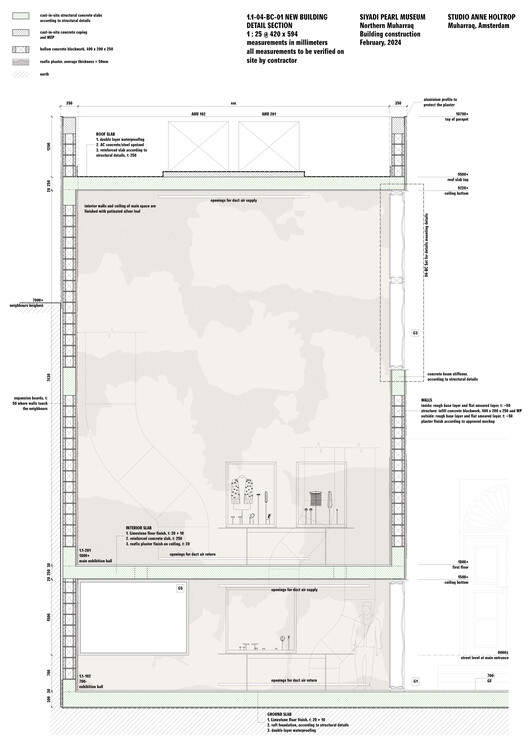
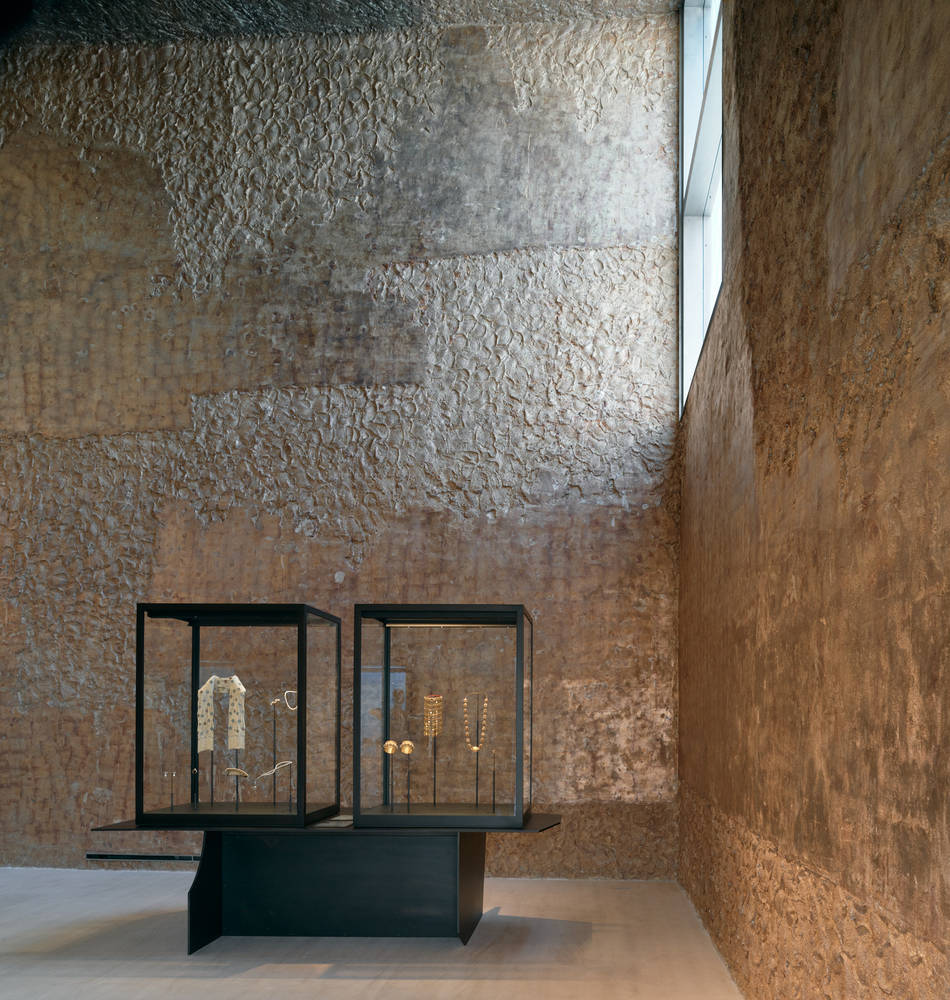
In the main exhibition hall with a ceiling height of 7 meters, the plaster walls are decorated with silver leaf. Silver forms a patina simply by coming into contact with air and moisture, resulting in a soft golden sheen. The silver surface treatment in the main exhibition hall echoes the rich decorative styles historically present in the Siyadi Majlis.
在层高 7 米的主展览室内,灰泥墙面以银箔进行装饰。银仅通过与空气和湿气接触便能形成包浆,从而呈现出柔和的金色光泽。主展览室的银饰表面处理,与室内历史上丰富的装饰风格相呼应,例如西雅迪会客厅(Siyadi Majlis)的装饰风格。
© Anne Holtrop