创新性的低碳结构集成与材料策略:该项目在满足严苛的声学和抗震要求的前提下,巧妙地融合了工程木材、预制混凝土和钢材的混合结构体系。这种选择不仅体现了对环境责任的承诺——通过采用固碳的木材来提升美学与温暖感——同时也确保了结构性能的可靠性。这种结构上的“精算”,即在关键功能区域高效利用高密度材料,而在其他区域偏向可持续木材,是实现高性能与低碳目标平衡的典范。
极致化的能源性能与被动式设计:项目通过超出国标两倍的保温性能和极高的气密性,构建了高性能的热工围护结构,这是长期降低能耗的基石。更值得称赞的是,它引入了成熟的辅助式被动通风和降温系统,结合新西兰当地条件进行优化,使主剧场在适宜气候下可实现自然冷却,显著减少了对主动机械系统的依赖。这种对被动策略的深度挖掘,体现了设计对场地气候的深刻理解和尊重。
技术与人文关怀的无缝融合:在追求技术先进性和可持续性的同时,项目并未忽视建筑的社会功能和包容性。全面的无障碍设计,特别是在礼堂内对轮椅席位的高效布局和对材料易辨识性的考虑,彰显了对所有使用者的人文关怀。此外,结合使用可再生水电驱动的高效空气源热泵,确保了在必要时提供舒适环境的同时,能源来源是清洁的,实现了技术集成与社会责任的高度统一。
As a long-term partnership between Christchurch City Council and The Court Theatre, sustainability was a core driver from the project's inception. The key sustainability highlights integrated into the architectural design are summarized below.
作为克赖斯特彻奇市议会与宫廷剧院之间的长期合作伙伴关系,可持续性从项目伊始便是其背后的核心驱动力。以下总结了融入建筑设计中的可持续性关键要点。
© Simon Devitt
© Simon Devitt
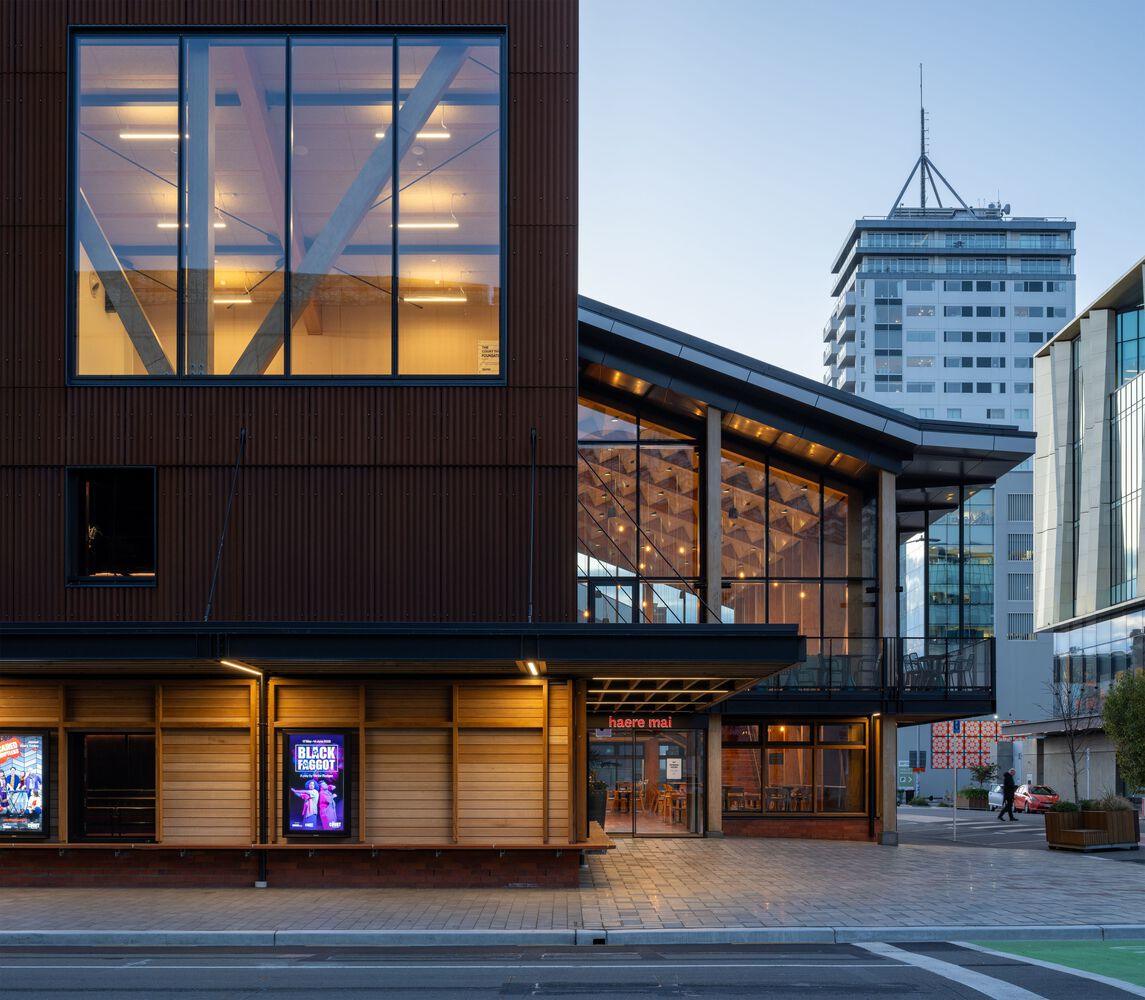
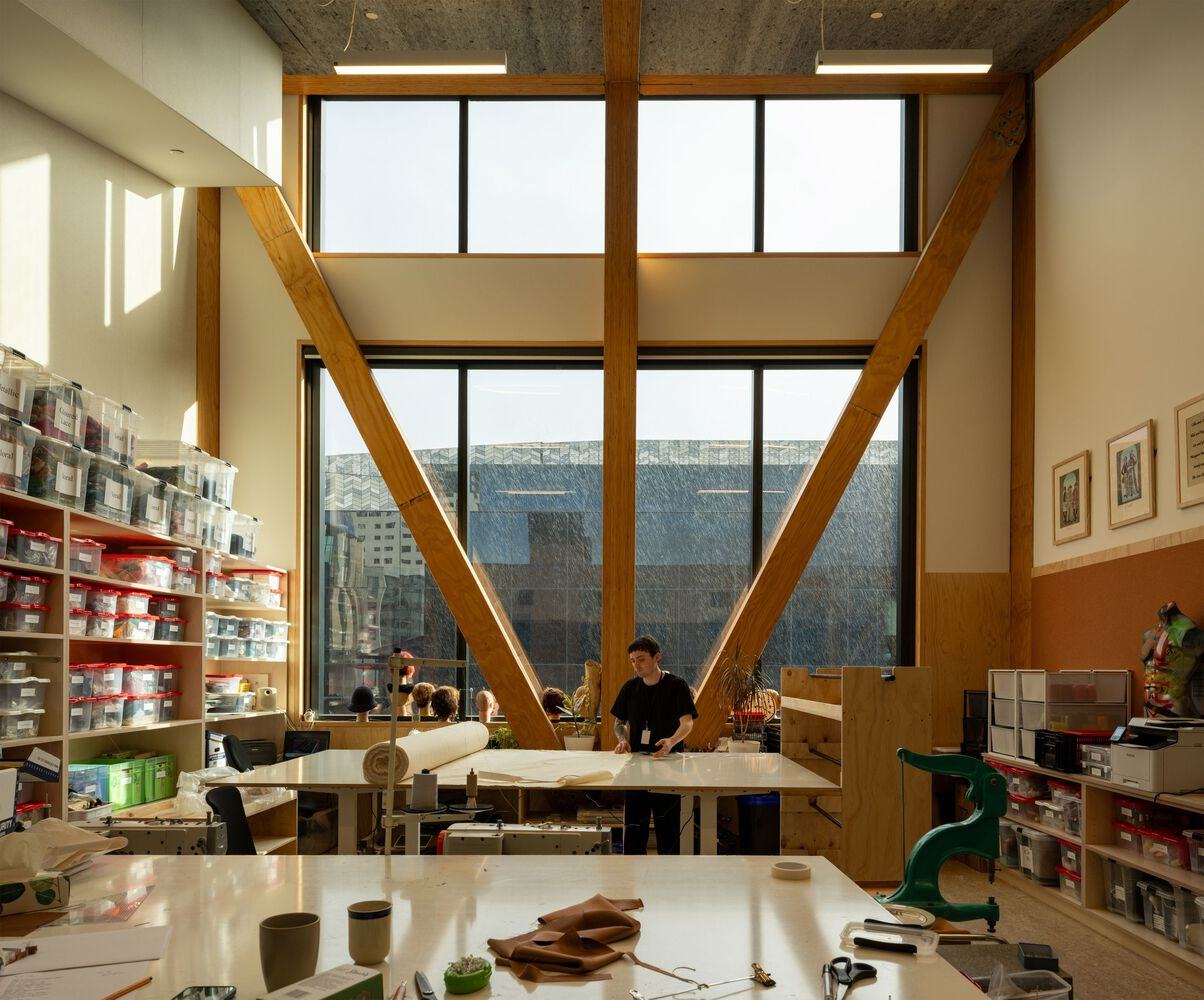
1. Hybrid Low-Carbon Structure System – Where structural and acoustic conditions permit, engineered timber structure components are extensively used, combined with hybrid precast concrete and steel structural elements. Concrete is used efficiently to meet stringent seismic and acoustic requirements, while timber is adopted for its carbon sequestration properties and the aesthetic warmth it brings to the building.
1. 混合低碳结构体系 —— 在结构与声学条件适宜的情况下,广泛采用工程木材结构构件,同时结合混合预制混凝土与钢结构构件。设计中高效利用混凝土,以满足严苛的抗震与声学要求;而木材则因其固碳特性,以及为建筑带来的美感与温馨感而被采用。
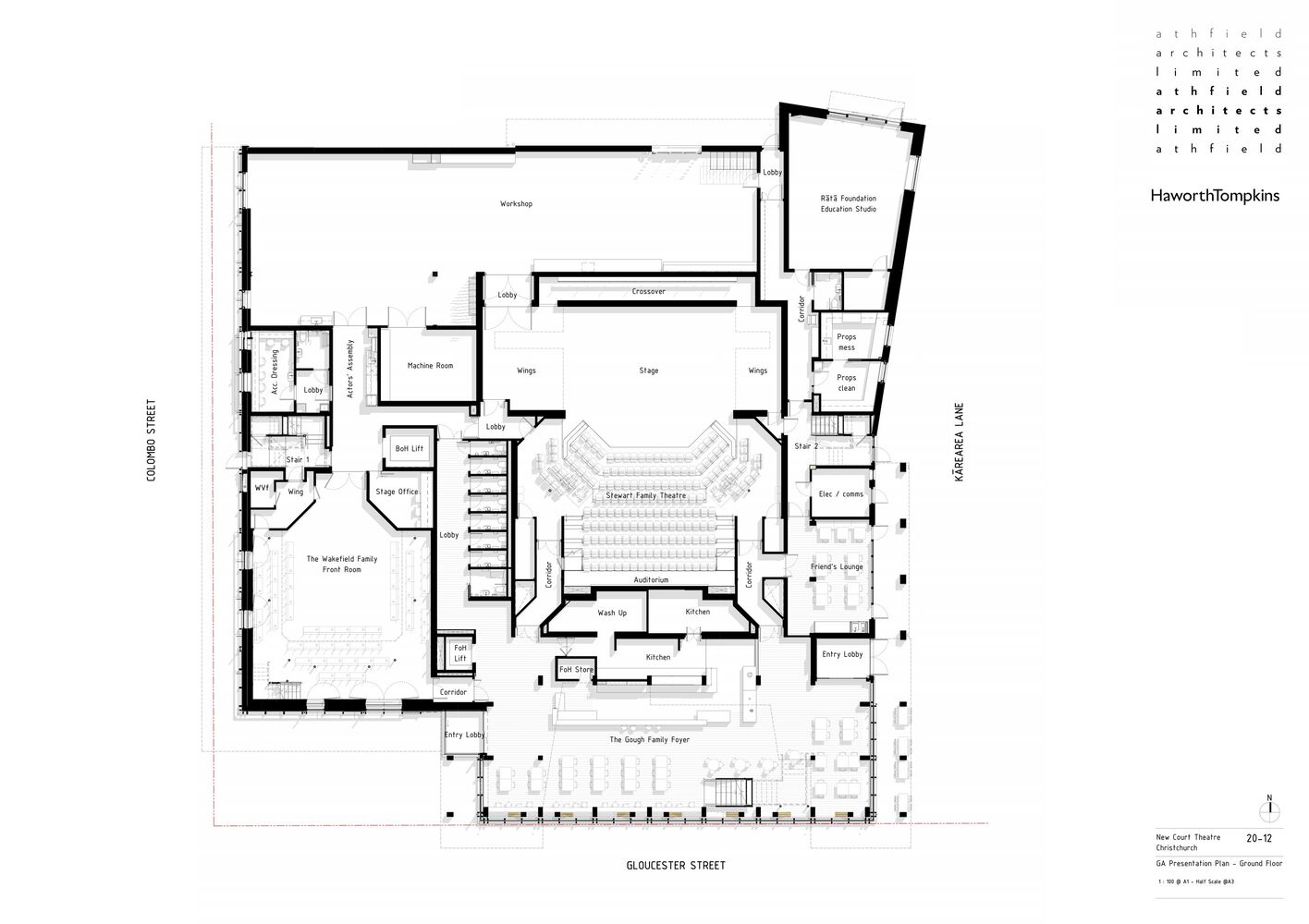
Ground Floor Plan
一层平面图
2. High-Performance Thermal Envelope – To minimise heat loss and gain, enhancing insulation performance and building airtightness are key strategies for reducing long-term energy use. The design specifies insulation values more than double the national building code requirements, combined where possible with exposed thermal mass materials to reduce energy use and regulate internal temperatures.
2. 高性能热工围护结构 —— 为最大限度地减少热量损失与获得,提高保温性能和增强建筑气密性是减少长期能源使用的关键策略。在设计时,保温值远超国家建筑规范要求的两倍,并在可能的情况下结合外露的热质量材料,以减少能源使用并调节室内温度。
© Simon Devitt
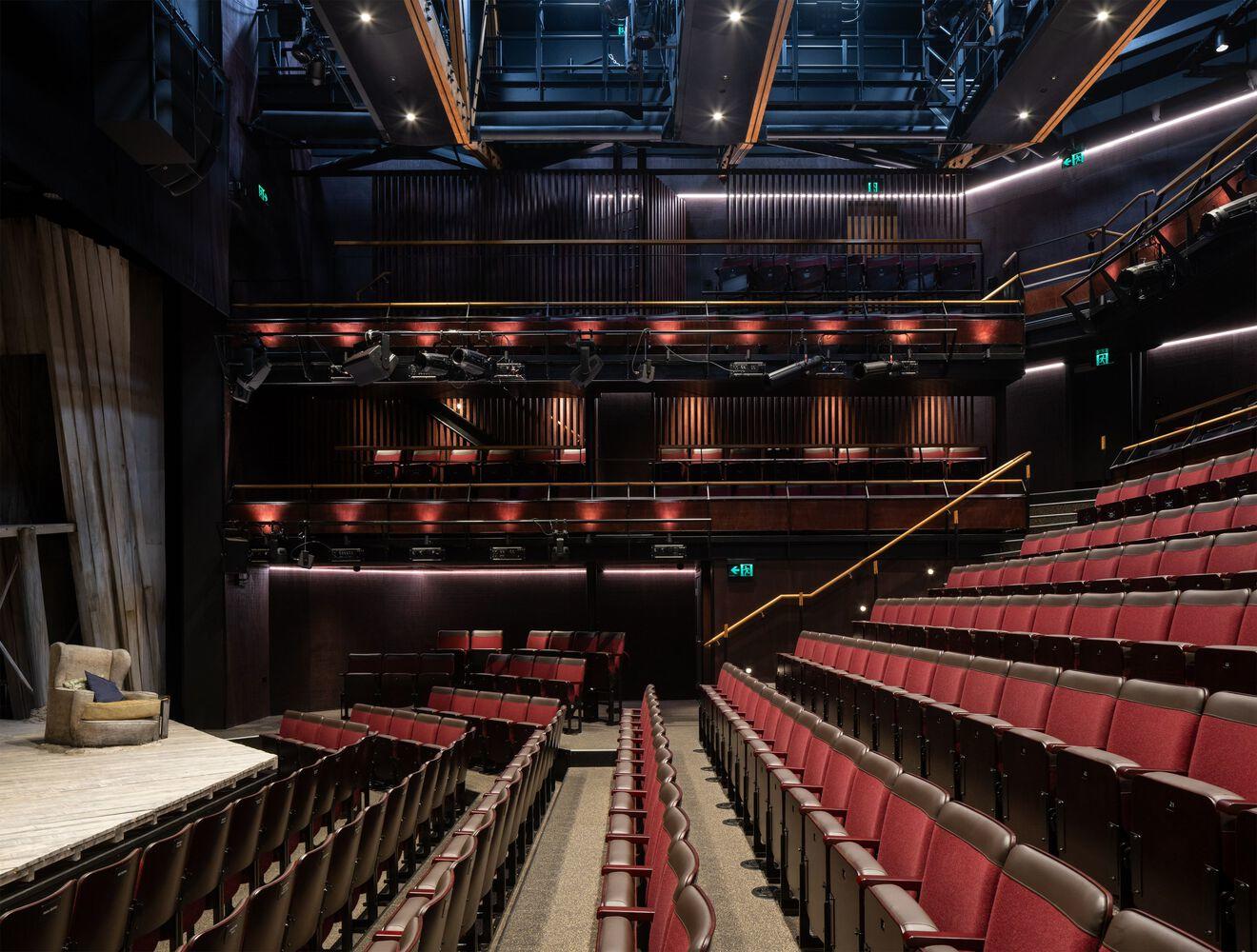
3. Assisted Passive Ventilation and Cooling – The foyer and main theatre spaces feature an assisted passive ventilation and cooling system. Developed from Haworth Tompkins’ experience in the UK, this system is adapted for New Zealand’s conditions. With acoustically treated vents and externally visible chimneys, the main auditorium can benefit from natural cooling during performances when external temperatures are suitable.
3. 辅助式被动通风与降温—— 门厅及主剧场空间采用了辅助式被动通风与降温系统。该系统借鉴了霍沃思·汤普金斯(Haworth Tompkins)在英国的设计经验,并针对新西兰的环境特点进行了调整。通过装有消声装置的通风口和外部可见的烟囱,当室外温度适宜时,主礼堂即使在演出期间也能享受自然冷却。
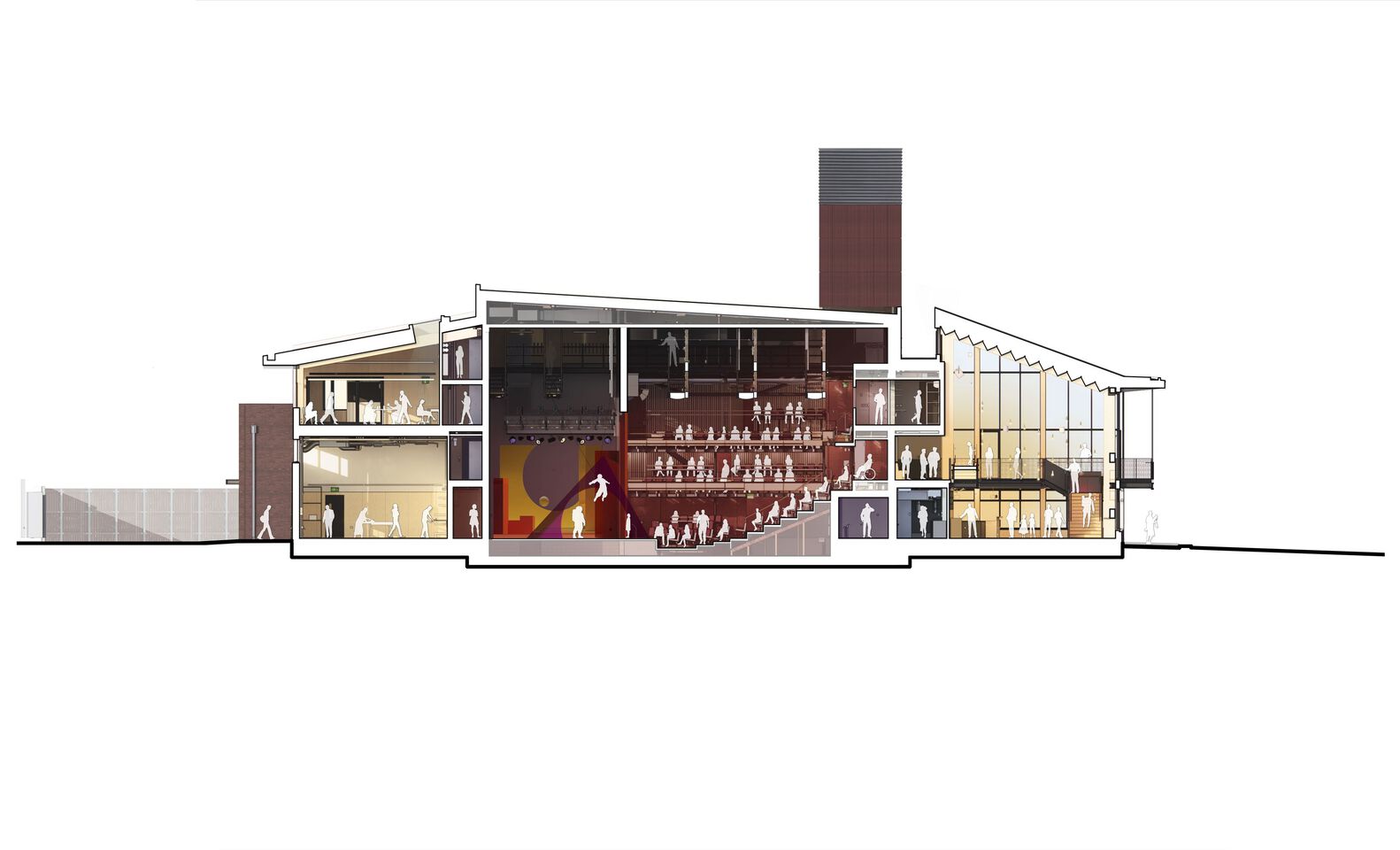
Section
剖面图
4. Air Source Heat Pumps – The building is efficiently heated and cooled using electric air source heat pumps integrated with the assisted passive ventilation and cooling system. The building uses electricity generated from New Zealand’s widely available renewable hydropower.
4. 空气源热泵 —— 电动空气源热泵与辅助式被动通风与降温系统相结合,为建筑提供高效的供暖与制冷。该建筑使用新西兰广泛的可再生水电所产生的电力。
© Simon Devitt
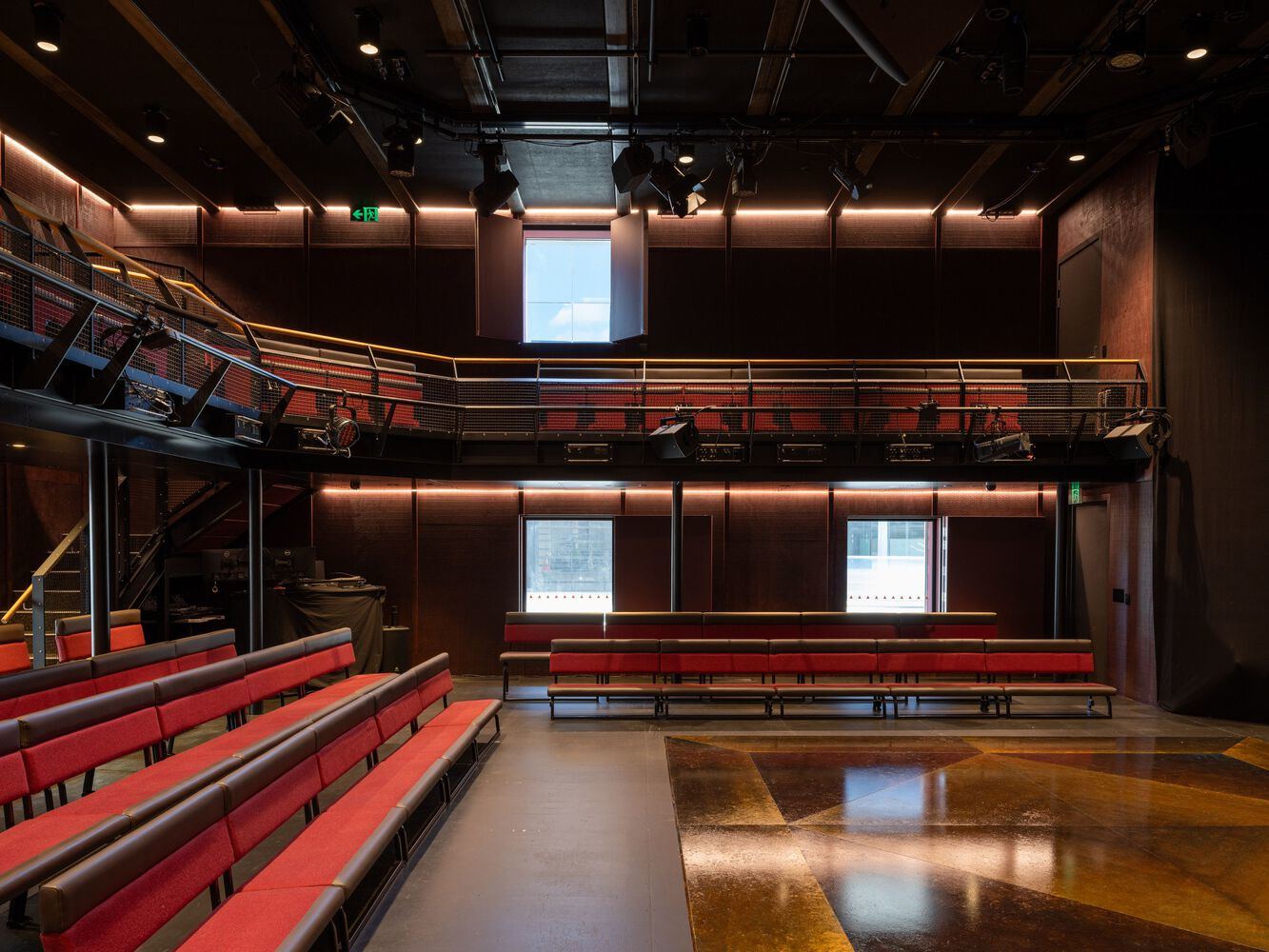
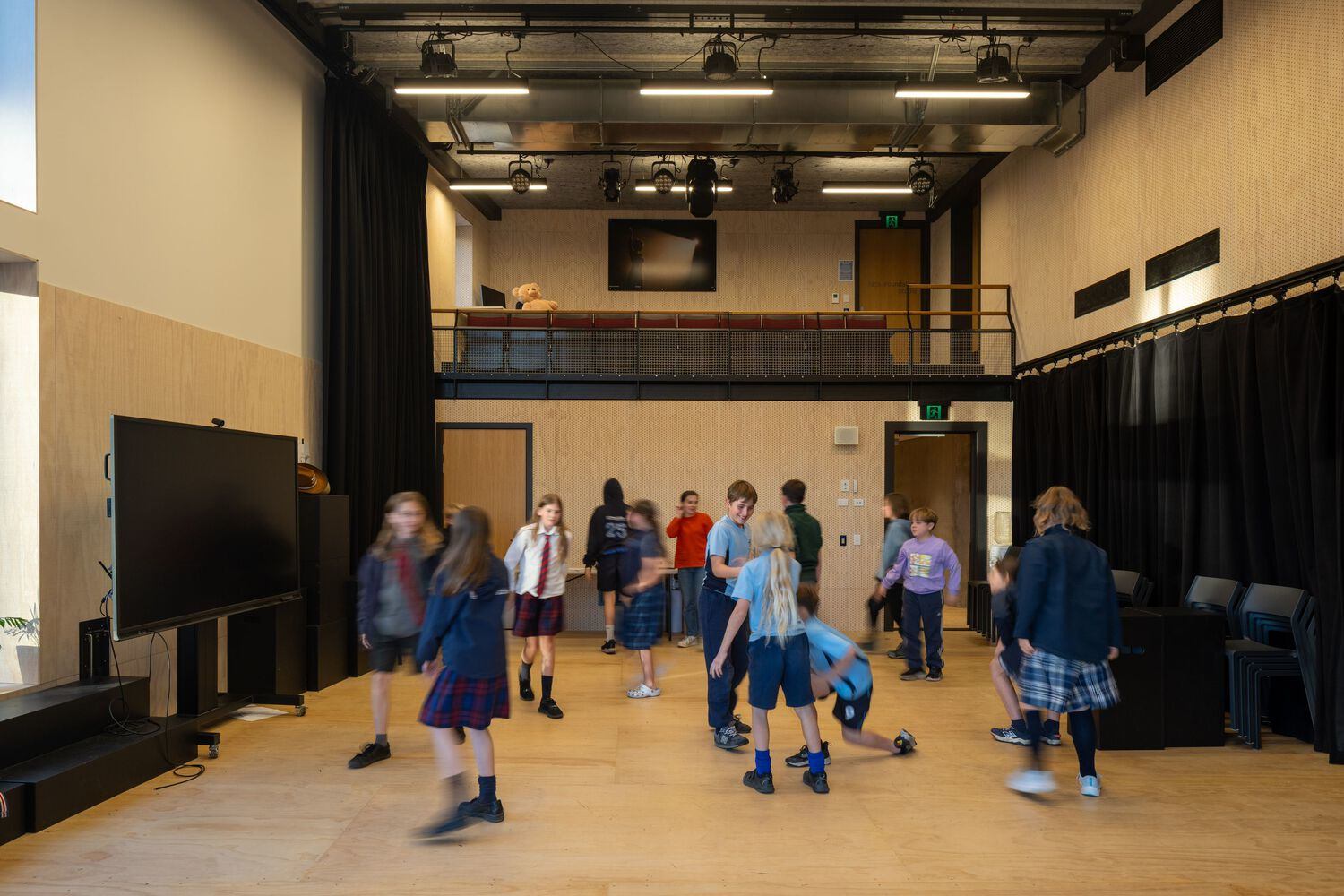
5. Accessible Circulation – The building provides universal accessibility. Specifically within the auditorium, level access is provided across all tiers for wheelchair seating, minimising level changes and incorporating wayfinding features for ease of navigation. Material choices also consider legibility.
5. 无障碍通行 —— 建筑实现了全面无障碍通行。特别是礼堂内,各楼层均设有轮椅席位,尽量减少高度变化,并配备了最大程度方便通行的设施。建筑材料的选择也充分考虑了易辨识性。
© Simon Devitt
© Simon Devitt