中轴线上的轻盈转折与文化对话:该项目成功地将宏大的功能体量转化为轻盈的曲线造型与多孔立面,呼应了北京城市中轴线的历史脉络与现代延展,特别是与巴黎轴线的巧妙对应,体现了建筑师对城市文脉的深刻理解。建筑通过当代设计语言,在庄重感和开放性之间取得了精妙的平衡,塑造了一个既具国家形象的提升,又充满国际交流气度的集会场所。
飞檐意象的当代演绎与“群鸟”的动态美学:设计精髓在于对中国传统“飞檐”的创新转化,以内凹弧线和向上卷翘的屋檐,表达了庇荫与欢迎的场所精神。立面则以参数化设计的菱形搪瓷钢板和三角形开窗,构筑了壮观的“飞鸟画卷”浮雕,这种动感美学不仅赋予建筑独特的身份标识,也巧妙地解决了采光、遮阳和材料的耐久性要求,将东方审美与严苛的工程实现完美结合。
内向聚合与向外开放的空间哲学:建筑内部空间设计体现了强烈的聚会场所属性。无论是36米通高的VIP入口的仪式感引导,还是贯穿三层、面向中轴线的开放式序厅,都旨在营造凝聚力。尤其值得称赞的是三层“东西互文的世界花园”——“苏园”与“西园”在可开合的巨型穹顶下并置,象征多元共生,通过“天圆地方”的午宴厅和结构壮举般的拱顶,为国际峰会提供了一个既具文化深度又极度灵活的当代交流容器。
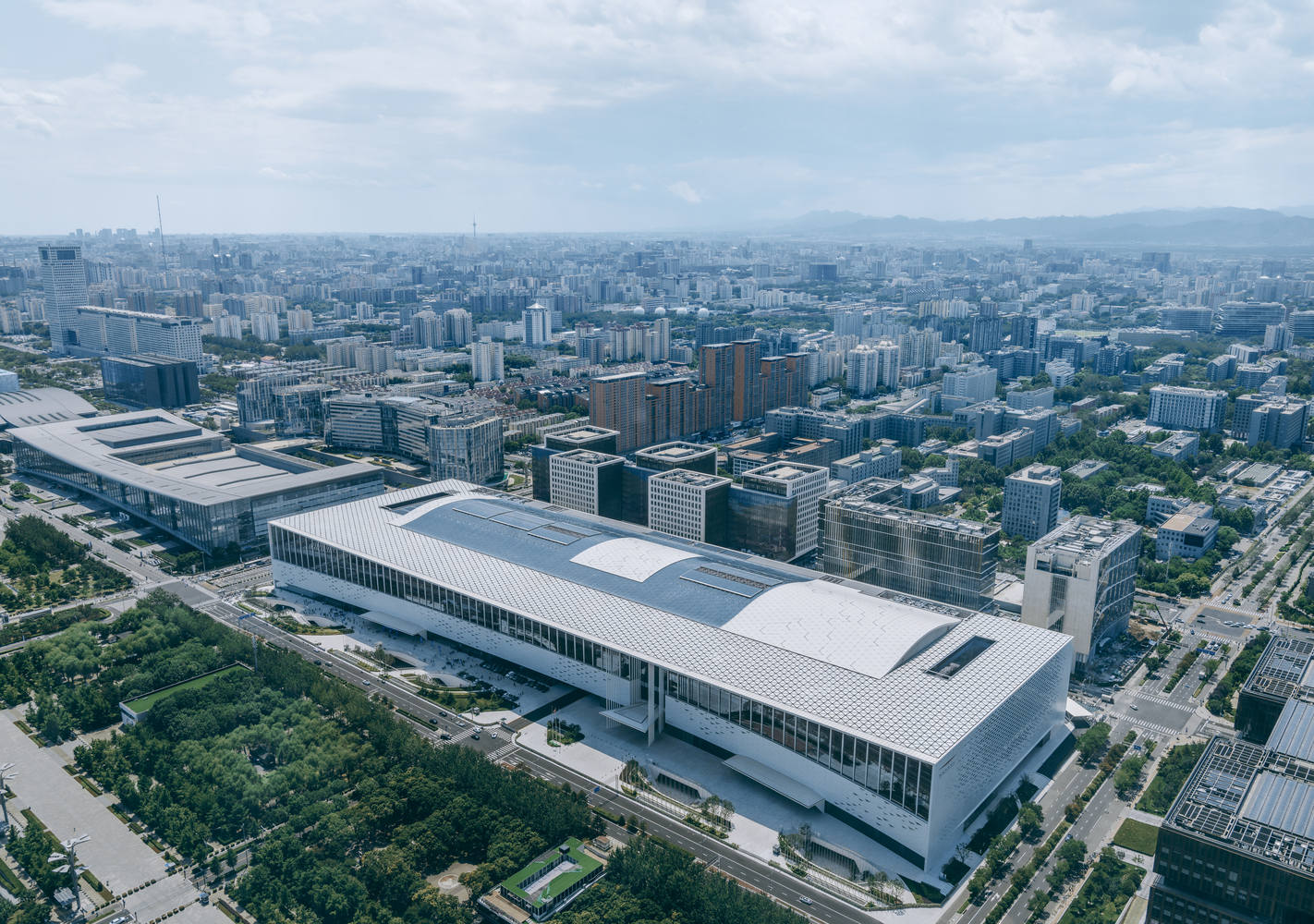
The China National Convention Center Phase II, designed by 2Portzamparc, has recently been officially put into use. As a convention center integrating exhibition and reception functions, Phase II aims to host future international conferences and heads of state summits. The building uses light, curved forms and a perforated facade to dissolve its overall massive volume, presenting an image of soaring birds. Beijing is structured around a central axis, established from the founding of the Yuan Dadu, running north-south through Tiananmen Square and the Forbidden City; after the Olympics, this axis extended north, linking the Bird's Nest, Water Cube, Olympic Park, and the first phase of the National Convention Center, forming the "Olympic Axis." Officially opening in 2025, the second phase injects new vitality into this axis; it is both an extension of the first phase’s functions and an enhancement of the national image.
由包赞巴克事务所(2Portzamparc)设计的中国国家会议中心二期(China National Convention Center Phase II)于近日正式投入使用。作为一座集展览与接待功能于一体的会议中心,国家会议中心二期旨在承办未来的国际会议及国家元首峰会。建筑以轻盈的曲线造型与多孔立面,消解了整体庞大的体量,呈现出群鸟展翅飞翔的意象。北京,以中轴为骨,以秩序立势。从元大都奠基之初,北京的中轴线贯穿南北,穿越天安门广场、紫禁城;在奥运之后,这条轴线继续向北延展,串联起鸟巢、水立方、奥林匹克公园及国家会议中心一期,形成“奥运中轴”。于 2025 年正式开放运营的国家会议中心二期,为这一轴线注入全新活力,它既是一期功能的拓展,也是国家形象的提升。
© 朱雨蒙
In the eyes of Christian de Portzamparc, Pritzker Prize laureate and founder of 2Portzamparc, Beijing and Paris share a clever spatial congruence. “Beijing's central axis runs 9 kilometers from the Forbidden City to the National Convention Center, which coincidentally echoes the axis in Paris where the Louvre is located: from the Louvre to the Arc de Triomphe and further to La Défense—also 9 kilometers”—where Portzamparc designed a large stadium. Along this axis composed of multiple landmark buildings, the new National Convention Center Phase II introduces a brand-new spatial language. Portzamparc stated: 'I wanted to use concave curves and light undulations to define an open gathering place on this continuous axis, a space that is solemn yet not heavy, grand yet not oppressive.' This new building is not just a light inflection point on the central axis, but also expresses a national posture that combines inclusive openness with cultural confidence through a contemporary architectural language.
在普利兹克奖得主、包赞巴克事务所创始人克里斯蒂安·德·包赞巴克(Christian de Portzamparc, CEO of 2Portzamparc)眼中,北京与巴黎在布局上巧妙投契。“北京的中轴线从紫禁城出发,穿越 9 公里抵达国家会议中心,这与巴黎卢浮宫所在的轴线形成一种巧合的呼应:从卢浮宫越至凯旋门,再到拉德芳斯新区同样 9 公里” —— 在那里,包赞巴克设计过一座大型体育场。在这条由多座标志性建筑所构成的轴线上,全新的国家会议中心二期也带来一种全新的空间语言。包赞巴克说:“我希望用内凹的曲线、轻盈的起伏,在这连续的轴线上定义一个开放的聚会场所,一个庄严但不沉重、宏大却不压迫的空间。”这座全新建筑,不仅是中轴线上的一次轻盈转折,也以一种当代建筑语言,展现了一种凝聚开放气度与文化自信的国家姿态。
© 朱雨蒙
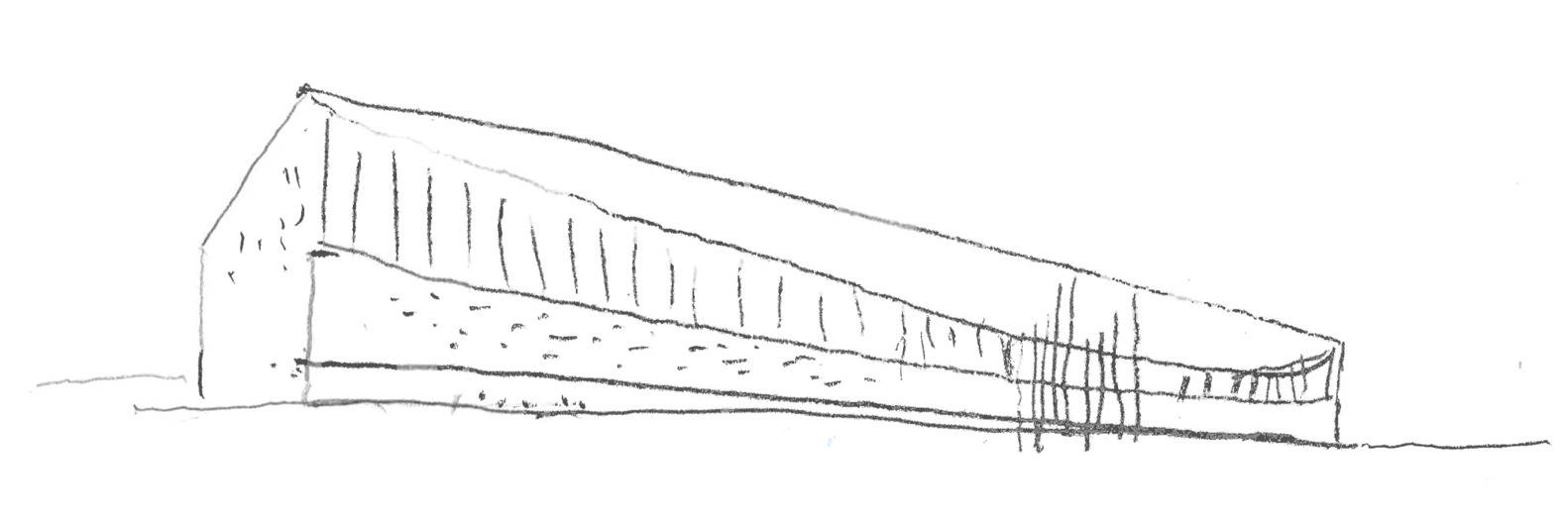
概念草图
400 Meters in a Square Inch
The entire National Convention Center Phase II spans approximately 400 meters from north to south, with a total construction area of about 419,000 square meters, including 256,000 square meters above ground and 163,000 square meters underground, making it the largest single building the firm has ever participated in designing in China and globally. Phase II is located at the northern end of the Olympic Axis, adjacent to the north side of Phase I, directly across the street. Its main building is a three-story convention center. Seven towers (super five-star hotel, business hotel, and 5A office buildings) are arranged on the west side, connected to the convention center via skybridges to form a complete supporting system. The main convention center building actually spans two city blocks, with an existing urban road passing through it, which the building spans over in an elevated manner, integrating it into the overall design.
The first floor features a large exhibition hall of approximately 20,000 square meters with a net height of 12 meters, a 3,000-square-meter "Welcome and Photo Hall" with a 26-meter clear height, and a main venue of approximately 8,000 square meters capable of accommodating 5,000 people for national ceremonies, meeting the needs of expos, large-scale exhibitions, and public events; the second floor houses multiple large, medium, and small meeting rooms and press conference halls. The third floor is the most distinctive: beneath a large glass dome, between two conservatory courtyards symbolizing East and West, the Summit Hall, Luncheon Hall, and Banquet Hall are arranged sequentially as individual structures. The two underground levels accommodate equipment rooms, underground exhibition halls, and a catering and commercial street area of about 6,000 square meters.
400 米方寸之间
整座国家会议中心二期南北跨度全长约 400 米,总建筑面积约 41.9 万平方米,其中地上 25.6 万平方米,地下 16.3 万平方米,是事务所迄今在中国乃至全球参与设计的最大单体建筑。国家会议中心二期坐落于奥运中轴线北端,紧邻一期北侧,与之隔街相望。其主建筑为三层会议中心,西侧则布置七座塔楼(超五星级酒店、商务酒店及 5A 写字楼),通过连桥与会议中心连接,构成完整配套体系。会议中心主体建筑实际横跨两个街区,一条既有城市道路穿行其中,建筑以架空形式跨过,被纳入整体设计中。
首层设有约 2 万平方米 12 米净高的大型展厅、约 3000 平方米通高 26 米的“迎宾合影厅”和一座可容纳 5000 人、举办国家级仪式活动的约 8000 平方米主会场,满足博览会、大型展示与公众活动的需求;二层布置多个大中小型会议室和新闻发布厅。三层最具特色,在大型玻璃穹顶之下,在两座象征东西方的温室庭院之间,峰会厅、午宴厅与宴会厅以单体建筑形式连续排布。地下两层容纳设备机房、地下展厅及约 6000 平方米的餐饮商业街区。
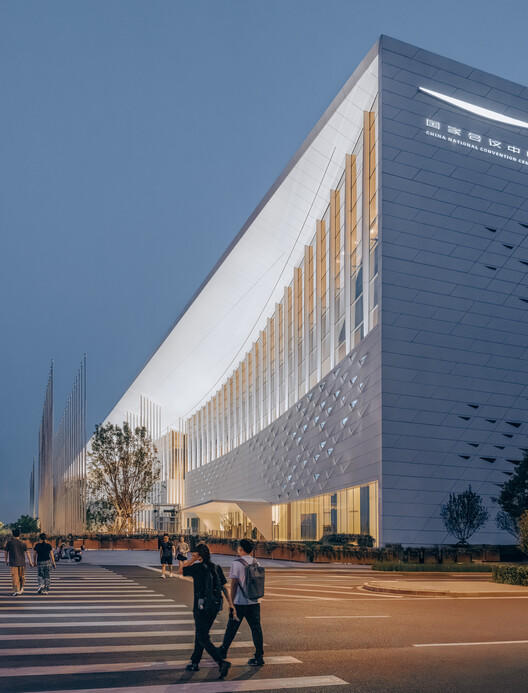
© 朱雨蒙
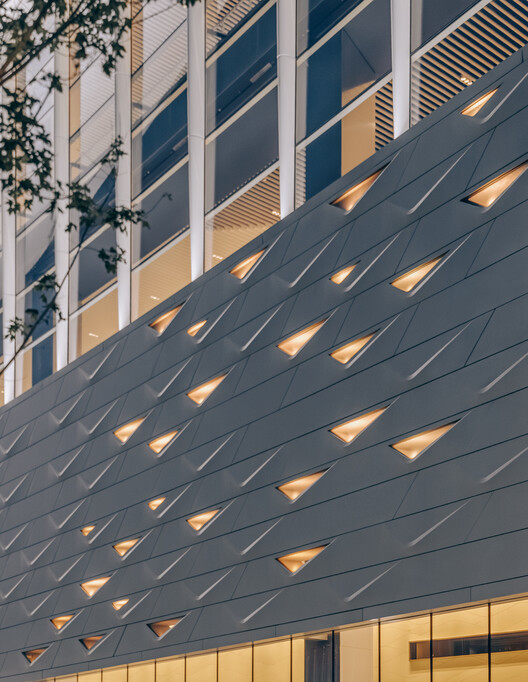
© 朱雨蒙
Roof: Eaves Reaching Skyward, Sheltering and Welcoming Guests
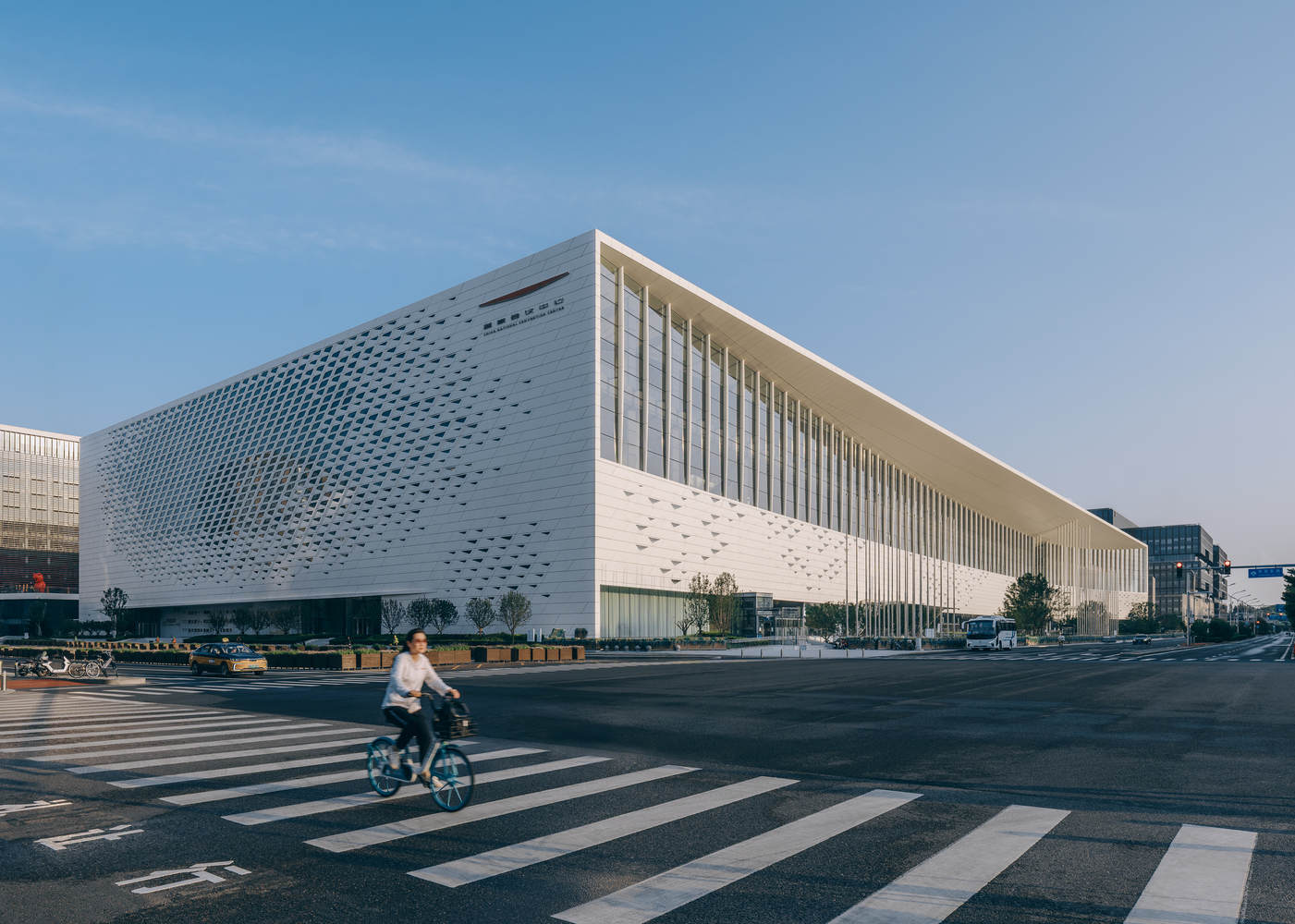
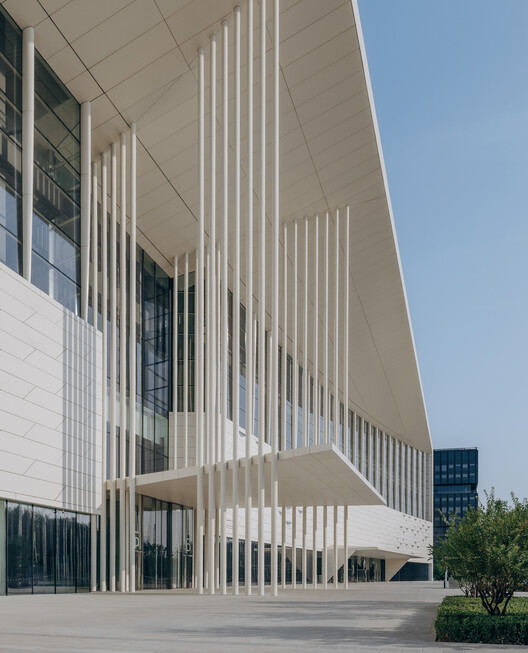
The main facade of the National Convention Center Phase II can be seen as a contemporary transformation of the traditional Chinese "flying eaves." Through concave curved facades and a simple, sloped geometric intersection, a horizontal eave running north-south is formed, under which the main facade gently recedes with an inward curve. The structural tension between the eaves and the facade causes both ends to curl slightly upwards, converging into a visual focal point. It symbolizes upward aspiration and progress, and also acts like a slowly unfolding invitation to greet guests. Portzamparc views the flying eaves as an architectural language expressing the spirit of Chinese place: protection and welcome, conveying the spirit of a gathering place. As he said, "There are few straight lines in traditional Chinese architecture. The curve at the entrance is like a shading eave, extending towards the sky, which is the philosophy of space."
屋顶:飞檐向天,庇下迎客
国家会议中心二期的主立面可视作对中国传统“飞檐”的一种当代转化。通过内凹的弧形立面和一个简洁斜面的几何拼接,构成一道横贯南北的屋檐,下方主立面以内凹曲线缓缓收回。屋檐与立面由此形成结构张力,使两端向上轻轻卷翘,凝聚为视觉焦点。它既象征向上与进取,也如一纸徐徐展开的邀请,迎接来客。包赞巴克将飞檐视为中国场所精神性的建筑语言:是庇荫,是欢迎,传达了聚会场所的精神。如他所言:“中国传统建筑中很少有直线。入口的曲线像是遮阳的屋檐,延伸向天穹,是空间的哲学。”
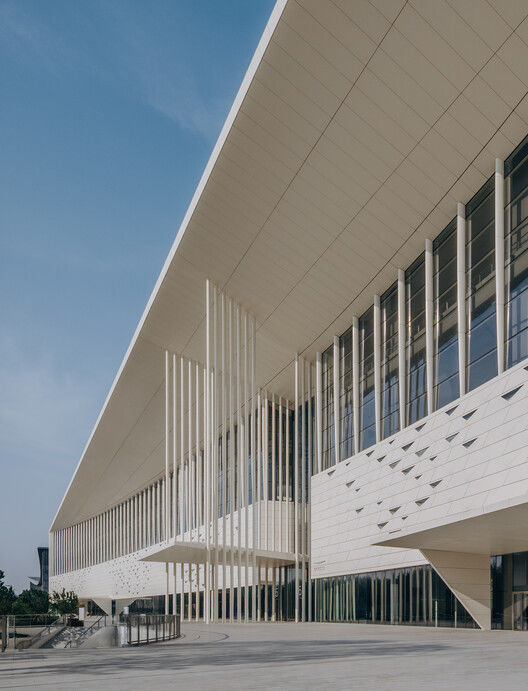
© 朱雨蒙
© 朱雨蒙
Facade: A Bas-Relief Scroll of Flying Birds
Beneath the flying eaves, the entire exterior facade resembles a giant bas-relief scroll of flying birds—the east facade is composed of large-scale white rhombic enameled steel panels, each measuring 7.5m × 1.2m. Among them, some panels feature three different sizes of triangular irregular windows. These openings are meticulously arranged, collectively forming the image of a flock of birds taking flight, while also ensuring daylighting and shading. The north and south facades continue this design language, using rhombic windows of different modules to meet the lighting and transparency needs of office areas. The overall curtain wall, through parametric design, creates an atmosphere resembling natural clouds and mist through the interplay of light and shadow, and the contrast between solidity and void. Portzamparc ultimately chose enameled steel panels as the main facade material due to their glossy surface, durability, and good self-cleaning properties. This not only meets the stringent requirements for durability and precision of a national venue but also echoes Eastern aesthetic traditions—enamel itself being a material rich in Chinese characteristics and collective memory. Facing the challenges of manufacturing the entire enameled steel facade, the 3D surface treatment of the bird windows, and their transportation and installation, the design team collaborated closely with the curtain wall consultants, and with the strong support of the owner, realized this "National Curtain Wall" after repeated modeling, prototyping, and debugging.
立面:浮雕飞鸟画卷
飞檐之下,整个外立面犹如一幅巨大的飞鸟画卷浮雕 —— 东立面由大尺度白色菱形搪瓷钢板构成,每块钢板达 7.5 米 × 1.2 米。其中,部分钢板开有三种不同尺度的三角异形窗,这些开窗精细排布,既在整体上构成一幅群鸟齐飞意象,也兼顾采光与遮阳。南北立面延续这一设计语言,使用几个不同模数的菱形窗,满足办公区域的采光和通透性。整体幕墙通过参数化设计,在光影交错与虚实对比之间,营造出如自然云雾缭绕般的氛围感。包赞巴克最终选择搪瓷钢板作为主立面材料,因其表面晶润、耐久和自清洁性能良好,不仅满足国家级场馆对耐久性与精度的严苛要求,也呼应了东方审美传统 —— 而搪瓷本身也是富有中国特征与集体记忆的材料。面对整个搪瓷钢板立面的制造、鸟窗三维曲面处理及其运输安装等挑战,设计团队与幕墙顾问紧密协同,在业主的大力支持下,历经反复建模、打样与调试,实现了这道“国家幕墙”。
© 朱雨蒙
© 朱雨蒙
Gate of Ceremony: The VIP Entrance
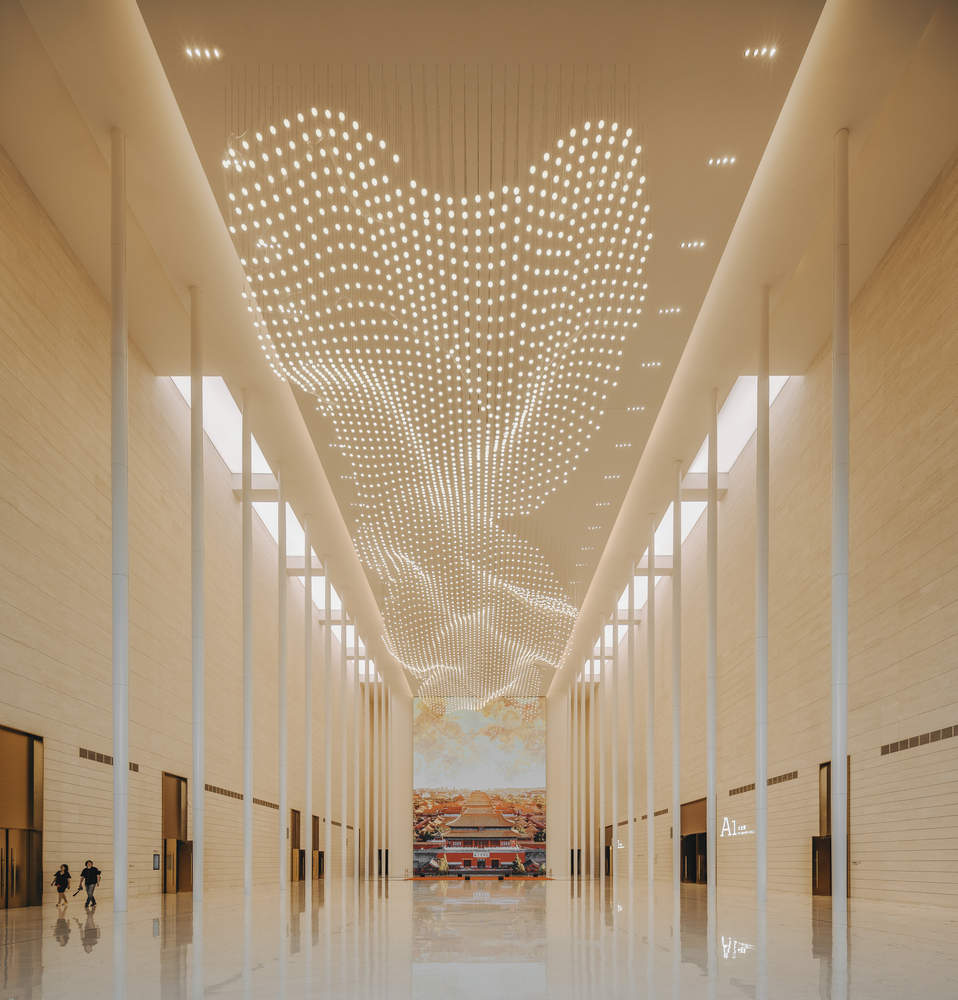
Within the light and transparent east facade, a 36-meter-high VIP entrance is specially set, resembling a drawn-back curtain. The entrance is located at the intersection of two curved walls, flanked by 12 colonnades that gradually converge inward, guiding the sightline to focus on the central full-height entrance. The entrance canopy is a 22-meter large cantilever, beneath which is an 8.5-meter high, 3-meter wide automatic sliding door—a challenge to structural limits that results in a solemn, reserved, and grand entrance space. Upon entering, one finds the 26-meter high "Welcome and Photo Hall," where 26 slender white decorative columns line both sides leading to a giant LED screen mural at the end. Hundreds of custom teardrop-shaped LED lights on the ceiling are arranged like flying birds, rippling like shimmering water, unfolding a flowing prelude of light and shadow between heaven and earth.
仪式之门:贵宾入口
在轻盈通透的东立面之中,特设一道 36 米通高的 VIP 入口,如一处被拉开的帷幕。入口处于两道弧形墙交汇之处,两侧各设 12 根廊柱逐渐向内收敛,引导视线聚焦于中间的通高入口。入口门顶为一座 22 米大悬挑的雨棚,下方则是 3 米宽、8.5 米高的自动平移门,这是一个对结构极限的挑战,也成就了庄重、内敛、大气的入口空间。进入其中,即为挑高 26 米的“迎宾合影厅”,26 根细长的白色装饰柱分列两侧引向尽头的巨型 LED 屏幕壁画,吊顶数百组定制水滴状 LED 灯如飞鸟排布、波光起伏,在天地下铺展出一幅流动的光影序章。
© 朱雨蒙
© 朱雨蒙
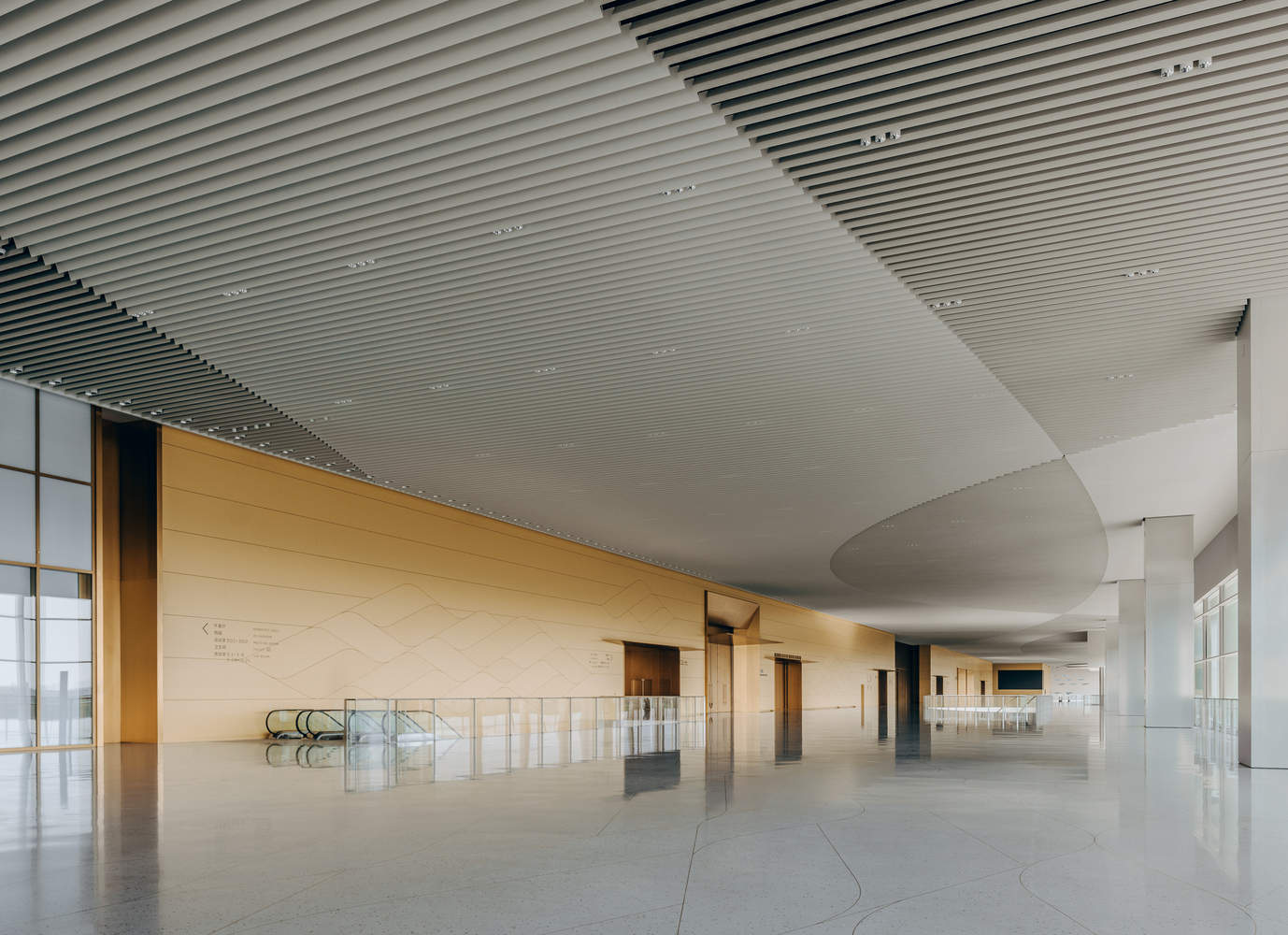
Foyer: A Place for Open Gathering
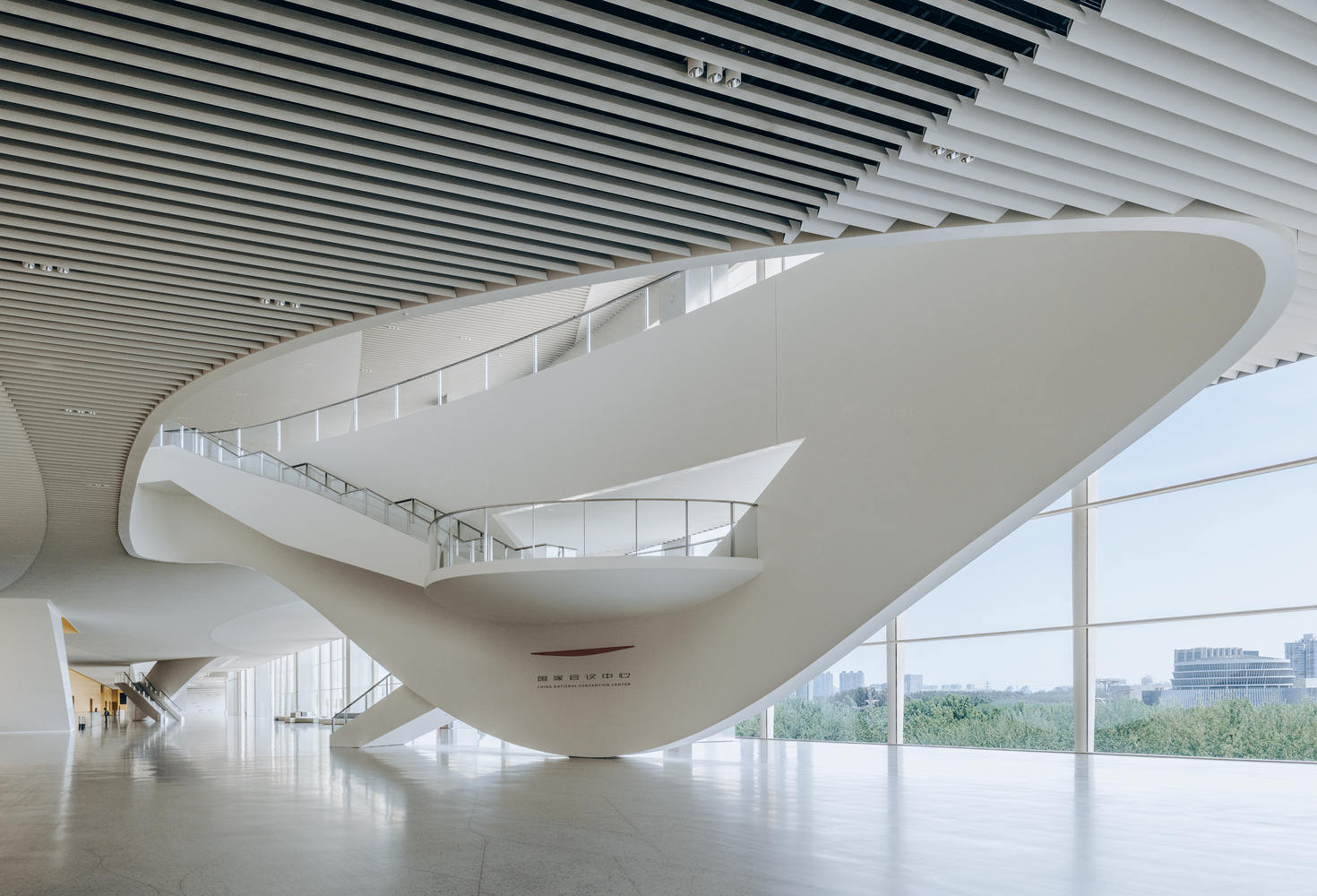
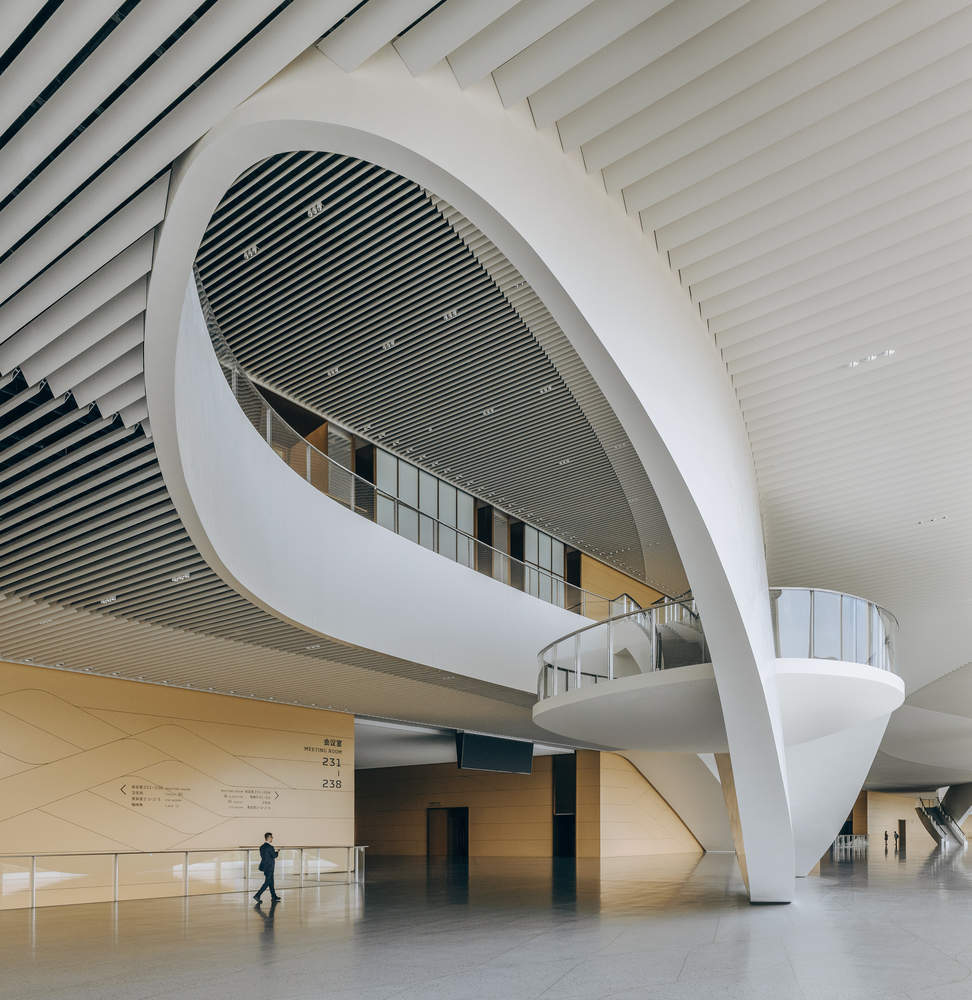
In Portzamparc's view, the National Convention Center not only serves national summit meetings but is also a global, diverse, and contemporary gathering place. Therefore, all three floors use the east facade, facing the Dragon Water System and the Olympic Axis, as an open foyer, creating a wide corridor that spans three floors with continuous clear height. The lower part of the first-floor foyer uses 6-meter high frameless glass curtain walls for ultimate transparency; the upper part features opaque curtain walls combined with bird-shaped openings, allowing for the natural flow of light and shadow indoors; the facades on the second and third floors are transparent glass curtain walls, with elliptical conical columns neatly spaced every 6 meters to enhance the sense of ceremony.
The foyer ceiling uses a custom grille system that absorbs sound and integrates equipment, while the curved grille pieces create a visual layered relationship of virtual and real. The ceiling on the second and third floors is divided by curves into shapes symbolizing the auspicious meaning of interlocked fish tails, forming a powerful whole with the cantilevered staircase winding upwards on the second floor. The stairs ascend like spreading bird wings, echoing the "flying bird" motif that runs throughout the building.
序厅:开放聚会的场所
在包赞巴克看来,国家会议中心不仅服务于国家级首脑会晤,更是一个世界性、多元性、当代性的聚会场所。因此,建筑三层均以面向龙形水系与奥运中轴线的东立面作为开放序厅,打造出贯通三层、连续通高的宽阔廊道。首层序厅的下半部采用 6 米高无柱玻璃幕墙,实现极致通透;上半部则为不透明幕墙,结合飞鸟形开窗,令室内光影自然流动;二三层立面为通透玻璃幕墙,椭圆锥形立柱每隔 6 米有致排列,增强仪式感。
序厅的吊顶采用定制格栅系统,吸声和整合设备之余,弧形格栅片也营造出虚实相生的视线层次关系。二三层的序厅天顶通过曲线分割形成如鱼尾相接的美好寓意之形,与二层盘旋而上的悬挑楼梯形成有力的整体。阶梯如展翅飞鸟之势旋升向上,与贯穿建筑始终的“飞鸟”意象呼应。
© 朱雨蒙
© 朱雨蒙
An East-West Intertextual World Garden
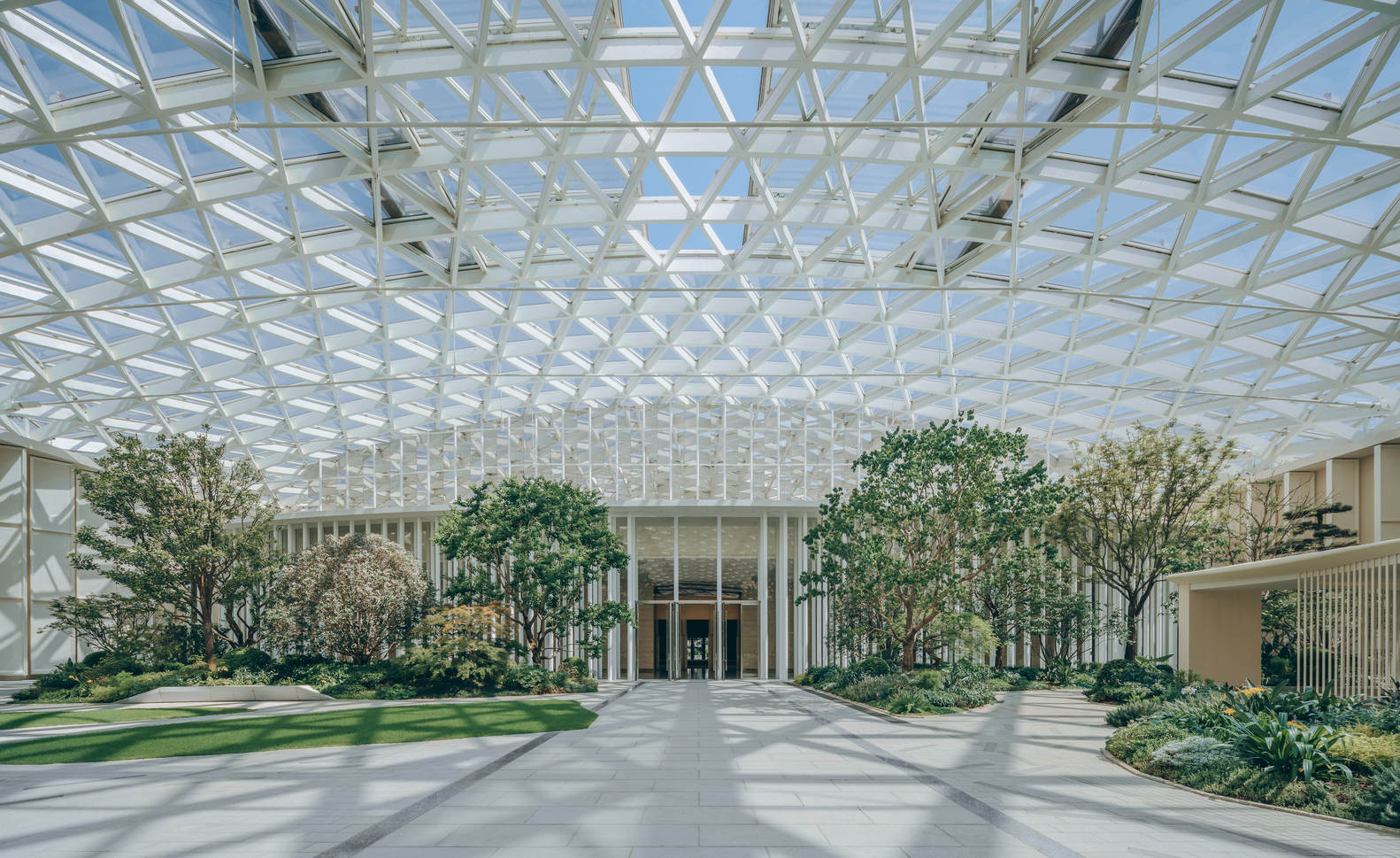
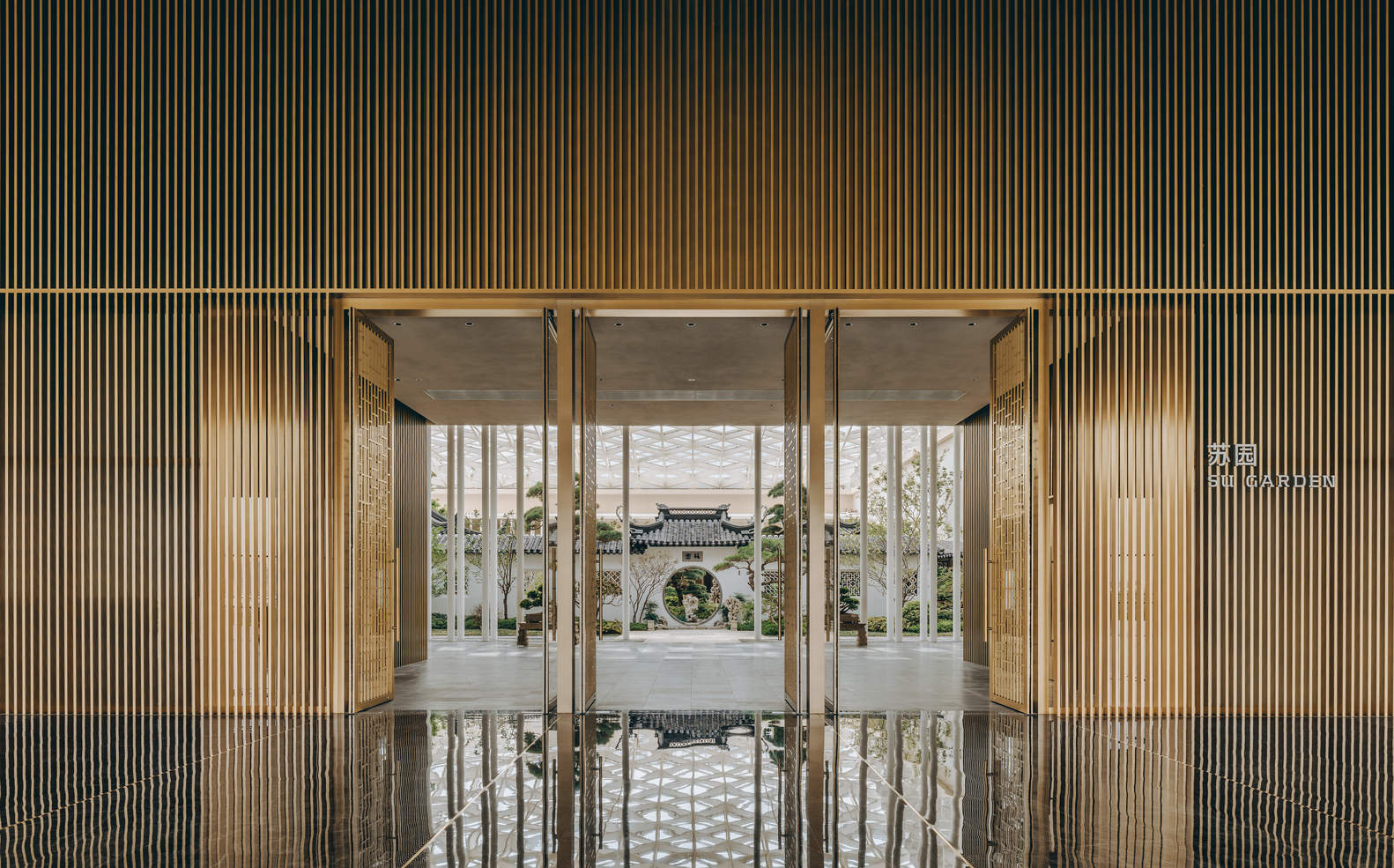
On the third floor, beneath a gigantic 3,000-square-meter operable glass dome, lie two built-in conservatory gardens—the "Su Garden" and the "Xi Garden"—which correspond and balance East and West. At the beginning of the design, 2Portzamparc proposed the concept of a "miniature world garden" to symbolize the diverse coexistence of the grand world.
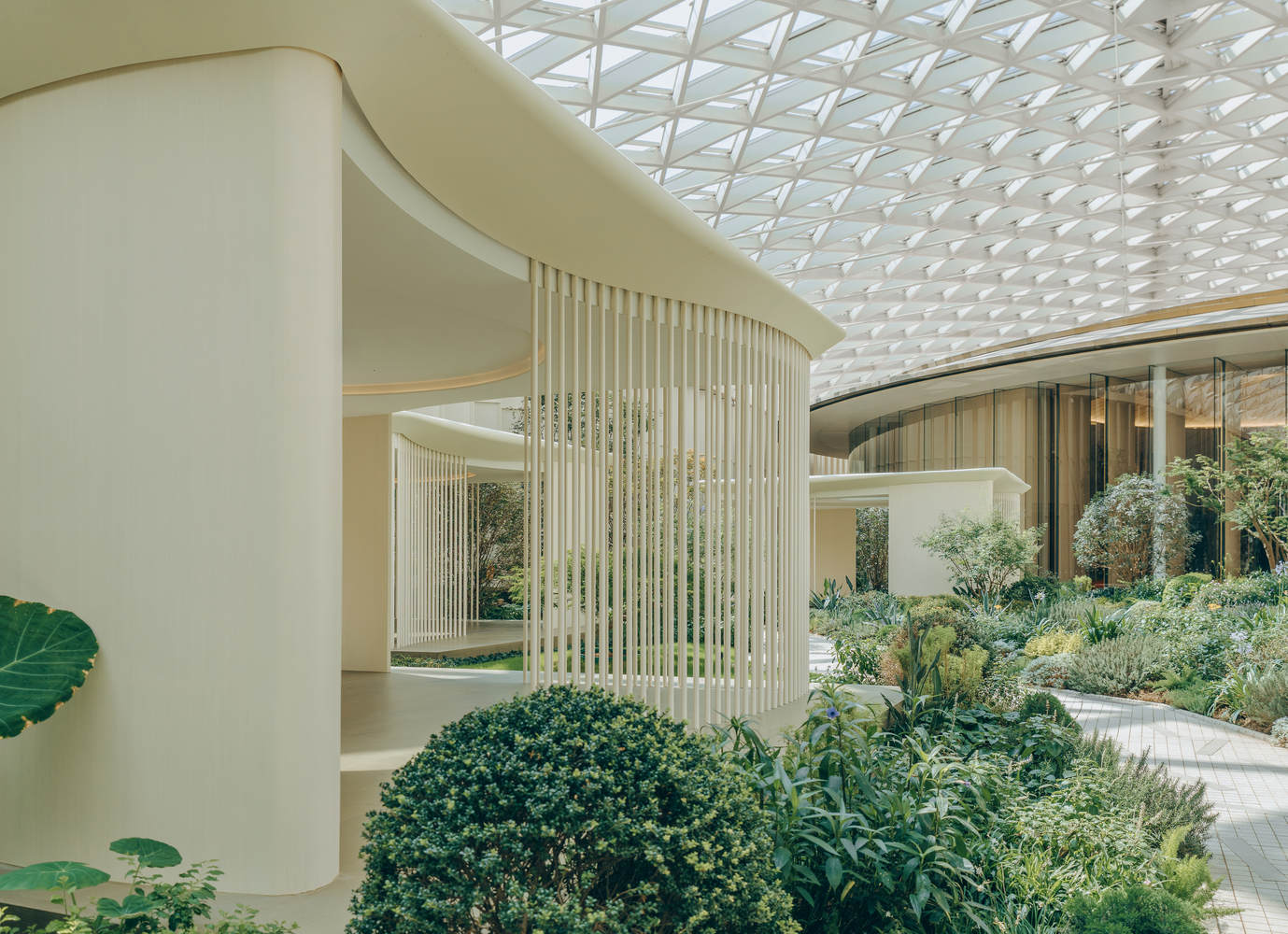
The "Xi Garden" was created by 2Portzamparc in collaboration with landscape architects they have long partnered with. Amidst vegetation arranged according to sun exposure, interspersing shade-tolerant and sun-loving plants, several pavilions are interspersed, serving as stopping points during a garden tour—the pavilions’ semi-open curved columns and enclosed structures ensure both privacy and transparency coexist. One side features a performance stage inspired by traditional Chinese opera stages, flanked by pavilions that also serve as backstage areas.
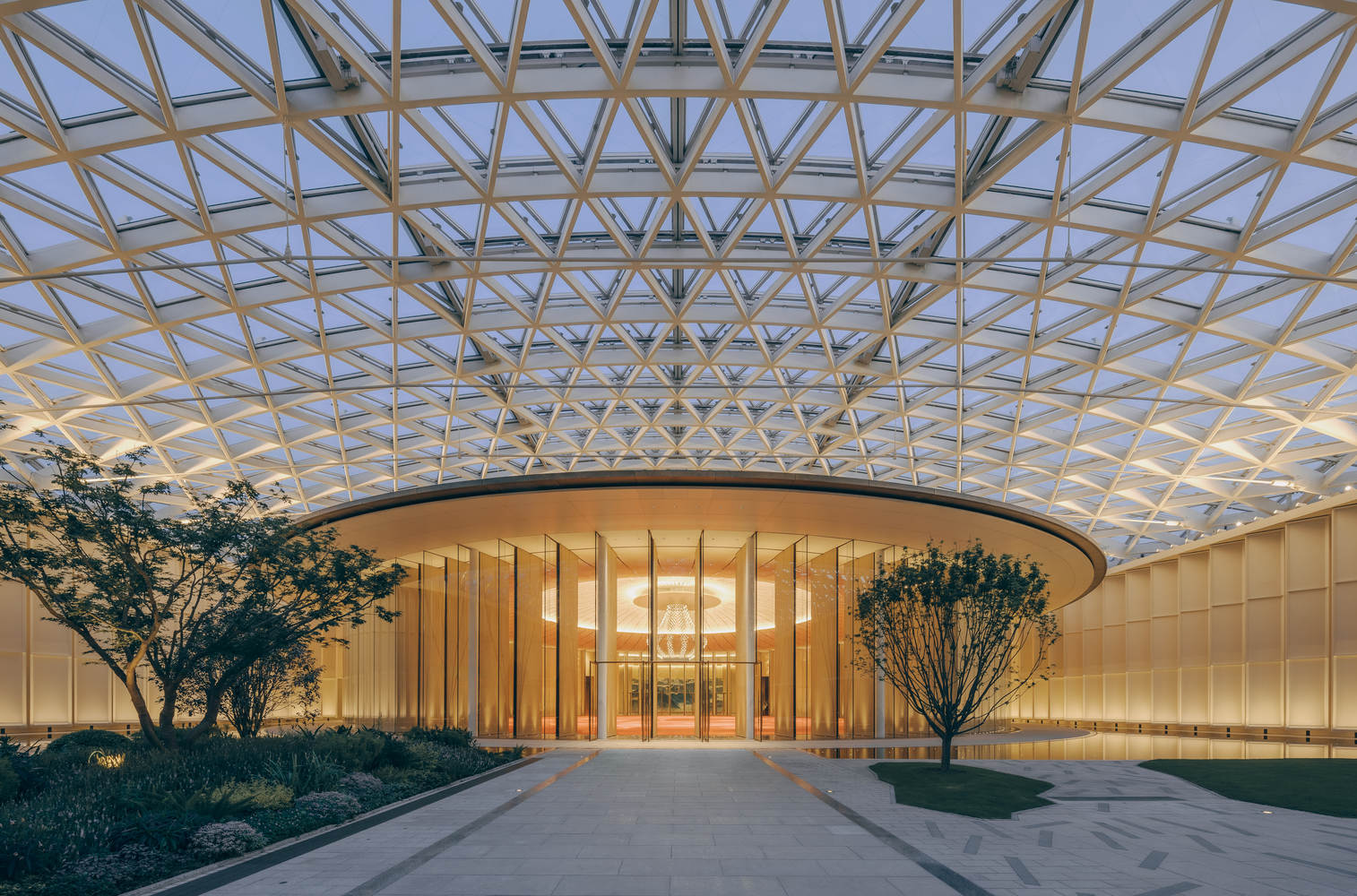
Moving forward along the landscape of the Xi Garden, a clear water surface quietly unfolds, upon which the circular-domed Luncheon Hall seems to gently hover. The Eastern wisdom of "round heaven and square earth" is presented in a modern design vocabulary. The Luncheon Hall adopts an inner and outer double-layered enclosure design: the outer layer is a full-height transparent glass curtain wall; the inner layer is an operable acoustic partition. This partition can be flexibly opened and closed, providing not only flexible spatial usage but also good acoustic and visual isolation. Between the two facade layers, multiple columns are orderly arranged to define a corridor space, enhancing the overall sense of layering and ceremony.
The glass dome covering the third floor is a sophisticated structural feat. Forming an arch from a triangular grid with curvature, the roof can open to both sides, allowing the "Su Garden" and "Xi Garden" to truly bathe in daylight. As Portzamparc stated, this curved surface is like "a stone arch formed by metal," light yet firm, bringing maximum freedom and expanse to the space below it.
东西互文的世界花园
三层,在一个 3000 平方米的巨型可开合玻璃穹顶之下,落定两个内置的温室花园——“苏园”(Su Garden)与“西园”(Xi Garden),彼此联袂对应,东西并茂。在设计伊始,包赞巴克事务所便提出“微缩世界花园”的理念,以象征宏大世界的多元共生。
其中,“西园”由包赞巴克事务所与合作多年的景观设计师携手打造。在依日照条件布置、耐阴与喜阳植物交错生长的植被之间,数座凉亭穿插其间,似庭园游览中的驻足节点 —— 亭体半开合的曲线廊柱与围合结构确保私密与通透并存。一侧设有取意古戏台的演艺舞台,左右设亭,亦作后台。
沿西园庭院景观向前,一方净澈水面悄然展开,圆顶午宴厅仿若轻盈悬浮其上。“天圆地方”的东方智慧,以现代设计语汇被呈现。午宴厅采用内外双层围合设计:外层为通高透明玻璃幕墙;内层则为可开合的活动声学隔断。隔断可灵活启闭,不仅提供了灵活的空间使用方式,还具备良好的声学与视觉隔离效果。在两层立面之间,多根立柱有序围合出环廊空间,增强了整体的层次感与仪式感。
覆于三层之上的玻璃穹顶,更是一项精妙的结构壮举。自承三角网格以曲率成拱,屋顶可向两侧开启,让“苏园”与“西园”真正沐于天光之下。如包赞巴克所言,这道曲面宛如“金属构成的一座石拱”,轻盈而坚定,为其下空间带来最大限度的自由与广阔。
© 朱雨蒙
Conclusion
The National Convention Center Phase II manifests a new posture of civilization—it pays homage to the city, respects history, and extends an invitation to the world. As Portzamparc understands this place, it is not just a modern functional building, but also a collective container for civilizational exchange, a new starting point that aggregates open spirit and cultural character.
结语
国家会议中心二期,是一种新的文明姿态的显现 —— 它向城市致意,向历史致敬,向世界发出邀请。如包赞巴克对这一场所的理解,这不仅是一座现代功能性建筑,也是文明交流的集体容器,是聚合开放精神与文化品格的全新起点。
© 朱雨蒙