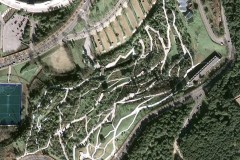
现代语境下的苏州园林意象重构:BIG设计的苏州当代美术馆(苏州MoCA)成功地将苏州数百年传承的园林精髓,以现代设计语言进行了深刻的提炼与重构。项目通过12个村落般的展亭汇聚在起伏的丝带状屋顶之下,是对传统苏州园林中“游廊”意象的创新演绎。这种布局不仅创造了灵活多变的展览空间,更在物理上和概念上构建了一个“由展馆和庭院交织的园林空间”,实现了建筑与景观的有机融合,使其成为金鸡湖畔一个具有当代文化地标潜力的场所。
流动的空间序列与第五立面表达:该项目最精妙之处在于其空间叙事性。通过玻璃走廊和廊道连接的展亭形成“如中国结般的构造”,为参观者规划了一条既互联又开放的流动路径。这种流线设计不仅优化了展览体验,更通过屋顶柔和起伏的曲线,形成了独特的“第五立面”。屋顶的钢铁瓦片轮廓与苏式瓦檐遥相呼应,从空中俯瞰时,呈现出与湖面景观鲜明对比的优雅几何形态,体现了对建筑在地性(Genius Loci)的深刻理解与现代转译。
环境适应性与可持续的公共界面:美术馆在设计中强调了建筑与自然环境的互动与边界消融。波纹曲面玻璃与暖色不锈钢立面,巧妙地映照了天空、水面和园林,模糊了人工与自然的界限。同时,通过灵活的流线系统(桥梁与地下隧道连接)适应季节和展览需求,并致力于达到中国绿色建筑二星级标准,整合了被动式遮阳和自然通风。景观设计上,从硬质铺装到水生植物的平滑过渡,成功地将美术馆无缝地融入滨水公共空间,体现了对可持续性和宜居性的承诺。
The Suzhou Museum of Contemporary Art (Suzhou MoCA) designed by BIG is about to open to the public. The 60,000 square meter museum, composed of 12 village-like pavilions gathered under a ribbon-like undulating roof, interprets the imagery of gardens inherited in Suzhou's city, architecture, and landscape over hundreds of years with a modern design language.
由 BIG 设计的苏州当代美术馆(苏州 MoCA)即将向公众开放。这座占地 60000 平方米的美术馆由 12 个村落般的展亭组成,汇聚在如丝带般起伏的屋顶之下,以现代设计语言诠释了苏州数百年来在城市、建筑与景观中传承的园林意象。
© Ye Jianyuan
Suzhou MoCA, designed by BIG in collaboration with ARTS Group and Front Inc. commissioned by Suzhou Yuanrong Development Group, is situated on the bank of Jinji Lake and is gradually becoming a new landmark for contemporary art, design, and public life in China. The museum is expected to officially open to the public in 2026.
在苏州圆融发展集团委托下,由 BIG 与 ARTS Group 及 Front Inc. 合作设计的苏州当代美术馆, 位于金鸡湖湖畔,正逐渐成为中国当代艺术、设计与公共生活的崭新地标。美术馆预计于 2026 年正式对外开放。
© Ye Jianyuan
The design of the museum is inspired by the landscape tradition of Suzhou gardens, especially reinterpreting the imagery of the "covered walkway" (Lang) to cleverly outline a flowing path. Ten interconnected pavilions converge under a single roof, whose soft, undulating curves depict the profile of traditional Suzhou eaves. The remaining two pavilions will span Jinji Lake and connect to the main building via walkways, scheduled for completion next year.
美术馆的设计灵感源自苏州园林的造园传统,特别是对“廊”的意象进行了全新解读,巧妙地勾画出一条流动的路径。10 个互相连通的展亭在一片屋顶下汇聚,屋顶柔和起伏的曲线描绘出苏式瓦檐的轮廓。其余两个展亭将于明年建成,横跨金鸡湖,并通过廊道与主建筑相连。
© Ye Jianyuan
"Suzhou is the birthplace of Chinese gardens. When designing the Suzhou Museum of Contemporary Art, we envisioned a garden space intertwined with pavilions and courtyards. The individual pavilions are connected by glass corridors and colonnades, forming a structure like a Chinese knot, interwoven to create a sculptural courtyard and exhibition space that is both connected and open. Passing beneath the Ferris wheel, the pavilions quietly extend like plant roots, linking the city with the lake. The final result is an artificial labyrinth interwoven with plants and artworks, where visitors can wander. Only from an aerial cable car can the logic of this complex structure be revealed. The soft curves of the roof outline an elegant silhouette by the waterfront, contrasting sharply with the open views of the lake. From above, the steel tiles of the roof delineate a unique 'fifth facade'." — Bjarke Ingels, Founder and Creative Director of BIG
“苏州是中国园林的发源地,我们在设计苏州当代美术馆时,构想了一个由展馆和庭院交织的园林空间。独立展馆通过玻璃走廊和柱廊相连,形成如中国结般的构造,交织构建出一个既互联又开放的雕塑庭院与展览空间。在摩天轮底部穿行时,展馆如同植物的根茎般悄然延展,将城市与湖泊连接。最终呈现的效果是一个由植物与艺术作品交织而成的人造迷宫,游客可以徜徉其中。唯有从空中缆车俯瞰时,才能揭示这一复杂结构的逻辑。屋顶柔和的曲线在水岸线旁勾画出一道优雅的轮廓,与湖面开阔的景致形成鲜明对比。从上空俯瞰,屋顶的钢铁瓦片勾画出一个独特的‘第五立面’。” —— Bjarke Ingels,BIG 创始人兼创意总监
© Ye Jianyuan
The museum's façade is constructed from corrugated curved glass and warm-toned stainless steel, reflecting the surrounding sky, water, and gardens, subtly blurring the boundaries between the architecture and the natural environment. The pavilions are connected via bridges and underground tunnels, providing the museum with a flexible flow management system that can be adjusted according to seasonal changes and different exhibition needs. The entire complex is composed of a series of courtyards and gardens, where visitors embark on a unique journey through a space integrating art, history, nature, and water views.
美术馆的立面由波纹曲面玻璃与暖色调不锈钢构成,映照出周围的天空、水面与园林,巧妙地模糊了建筑与自然环境的界限。各展馆通过桥梁和地下隧道连接,赋予美术馆灵活的流线管理系统, 可根据季节变化和不同展览需求进行调整。整个建筑群由一系列庭院和花园组成,游客将在这片融合艺术、历史、自然与水景的空间中,开启一段独特的旅程。
© Ye Jianyuan
Upon arrival, visitors are greeted by an open plaza in front of the visitor center. From here, they can choose to explore the exhibition halls or stroll along the surrounding walkways. Standing on the Suzhou Ferris wheel offers a panoramic view of the lake, while the walkways extend to the banks of Jinji Lake.
参观者到达美术馆时,首先映入眼帘的是访客中心前的开阔广场。从这里,游客可以选择深入展馆参观,或沿着环绕周围的步道漫步。站在苏州摩天轮上,可以俯瞰整个湖面,而步道则延伸至金鸡湖畔。
© Ye Jianyuan
Inside, natural light pours in through high clerestory windows and skylights, sketching dynamic patterns of light and shadow within the exhibition halls. Four of the museum's pavilions form the core viewing spaces, while the other pavilions house the grand entrance hall, a multi-functional hall, a theater, and a restaurant. A continuous circulation route guides visitors through the entire building, refining the viewing paths between individual pavilions.
馆内,自然光透过高侧窗和天窗倾泻而下,勾画出展厅内光影交织的动态画面。美术馆的四个展亭构成核心观展空间,其他展亭分别为宏伟的入口大厅、多功能厅、剧场和餐厅。一条贯穿全馆的动线引导参观者前行,并细化了各展馆之间的观览路径。
© Ye Jianyuan
The landscape design of the museum creates a welcoming public space along the Jinji Lake waterfront through a series of interconnected gardens. As visitors step towards the waterfront, the garden landscape transitions gradually from hard paving to vegetation cover, culminating in an arrangement themed around aquatic plants, showcasing a natural continuation from the museum to the land, and finally to the lake.
美术馆的景观设计通过一系列相互连接的花园,在金鸡湖畔创造了一个温馨宜人的公共空间。当 游客步入滨水区,花园景观从硬质铺装逐渐过渡到绿植覆盖,最终呈现以水生植物为主题的布局, 展现了从美术馆到陆地,再到湖泊的自然延续。
© StudioSZ Photo / Justin Szeremeta
Suzhou MoCA strives to achieve the two-star rating of the Green Building Evaluation Label in China, shaping a cultural landmark for the city through the integration of passive shading, natural ventilation, and the use of local building materials.
苏州当代美术馆力求达到中国绿色建筑评价标识二星级标准,通过整合被动式遮阳、自然通风和 本地建筑材料的使用,为城市塑造一座文化地标。
© Ye Jianyuan
As part of BIG's global cultural portfolio, Suzhou MoCA joins projects such as the Twist museum at Kistefos Sculpture Park in Norway, the Audemars Piguet Museum in Switzerland, and the LEGO House in Denmark.
苏州当代美术馆作为 BIG 的全球文化项目的一部分,加入挪威基斯特福斯雕塑公园的扭桥博物馆、 瑞士爱彼博物馆、丹麦乐高之家等项目之列。
© Ye Jianyuan