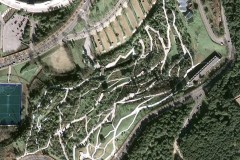
场地文脉的深度融合与激活:该项目成功地将建筑置于光明市深厚的非物质文化遗产(如光明白农乐、西道民谣)的文化脉络之中,并巧妙地与毗邻的纪行道文化公园景观相融。建筑入口直接连接公园诗歌小径,实现了文化与自然的无缝衔接,使建筑成为激活周边公共空间、引导市民体验传统文化的催化剂。这种“借景入室”和“以文促景”的设计策略,体现了建筑对地方精神的尊重与积极回应。
传统精髓的现代空间转译:建筑设计超越了对传统符号的简单模仿,而是高度凝练了韩国传统表演艺术中“音”与“舞”的核心精神。流畅的曲线屋顶和外墙动态,抽象地再现了农乐“上帽”(Sangmo)飘带的旋转之美,这是一种对无形文化动态的精准捕捉和空间化表达。同时,中央中庭设置的圆形天窗,不仅为有限的地块带来了开阔的采光和通透感,也模拟了传统集会空间的精神汇聚点,展现了高超的空间叙事能力。
材料的生命周期与空间叙事:建筑在材料运用上展现了对时间性和场所精神的深刻理解。碳化木饰面既呼应了传统木构的结构美学,又暗示了材料随时间推移而产生的自然老化(银灰色调),象征着文化的沉淀与传承的韧性。室内外材质的统一性,强化了建筑与环境的场所感。表演厅采用裸露砖墙,既实现了材质的对比,又巧妙地呼应了城市既有建筑的语言,实现了新旧文脉的对话,体现了成熟的设计思考深度。
Gwangmyeong City has long been a hub for intangible cultural heritage of significant artistic and academic value. Among these, Gwangmyeong Nongak—a traditional farmer's music passed down for over 450 years in the Soha-dong and Hakon-dong areas—and Seodo Minyo—a genre of Korean folk music originating from northwestern provinces such as Hwanghae-do and Pyeongan-do—are preserved and handed down by designated Human Cultural Heritage holders rooted in Gwangmyeong City. Furthermore, traditional customs such as Abang-ri Farming Songs and Abang-ri Tug-of-War, though not formally designated as cultural heritage, are still cherished and practiced by the local community.
光明市长久以来一直是极具艺术与学术价值的非物质文化遗产的汇聚之地。其中,光明白农乐 —— 一种在苏莱洞(Soha-dong)和河工洞(Hakon-dong)地区传承了超过 450 年的传统农民音乐,以及西道民谣 —— 一种源自黄海道和平安道等西北部省份的韩国民间音乐流派,均由扎根于光明市的指定人类文化财传承人加以保护和传承。此外,阿邦里耕作歌(Abang-ri Farming Songs)和阿邦里拔河(Abang-ri Tug-of-War)等传统习俗,虽未被正式指定为文化遗产,却仍深受当地社区珍视与传承。
© Han-ul, Lee, Narcillion
© Han-ul, Lee, Narcillion
For many years, Gwangmyeong City lacked a dedicated venue for training and performances related to intangible cultural heritage. To create a systematic space for preserving and nurturing traditional culture, Gwangmyeong City held a design competition for the Center for Intangible Cultural Heritage (now renamed Gwangmyeong City Center for Intangible Cultural Heritage). Our design proposal stood out three years ago, and the center officially opened in August 2024. With a total floor area of 997.13 square meters, featuring only one above-ground floor, the building skillfully merges traditional and modern aesthetic styles. Equipped with a performance hall, rehearsal rooms, and educational facilities, the center serves as a core venue for cultural transmission, public education, and community interaction.
多年来,光明市一直缺乏专门用于非物质文化遗产相关培训与表演的场地。为打造一个系统性的空间来保护和培育传统文化,光明市举办了光明非物质文化遗产中心(现更名为光明市非物质文化遗产中心)的设计竞赛。三年前,我们的设计方案脱颖而出,该中心于 2024 年 8 月正式开放。这座建筑总建筑面积为 997.13 平方米,仅有一层地上建筑,巧妙融合了传统与现代美学风格。中心配备有表演厅、排练室和教育设施,是文化传承、教育普及以及社区互动的核心场所。
© Han-ul, Lee, Narcillion
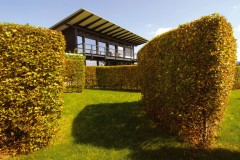
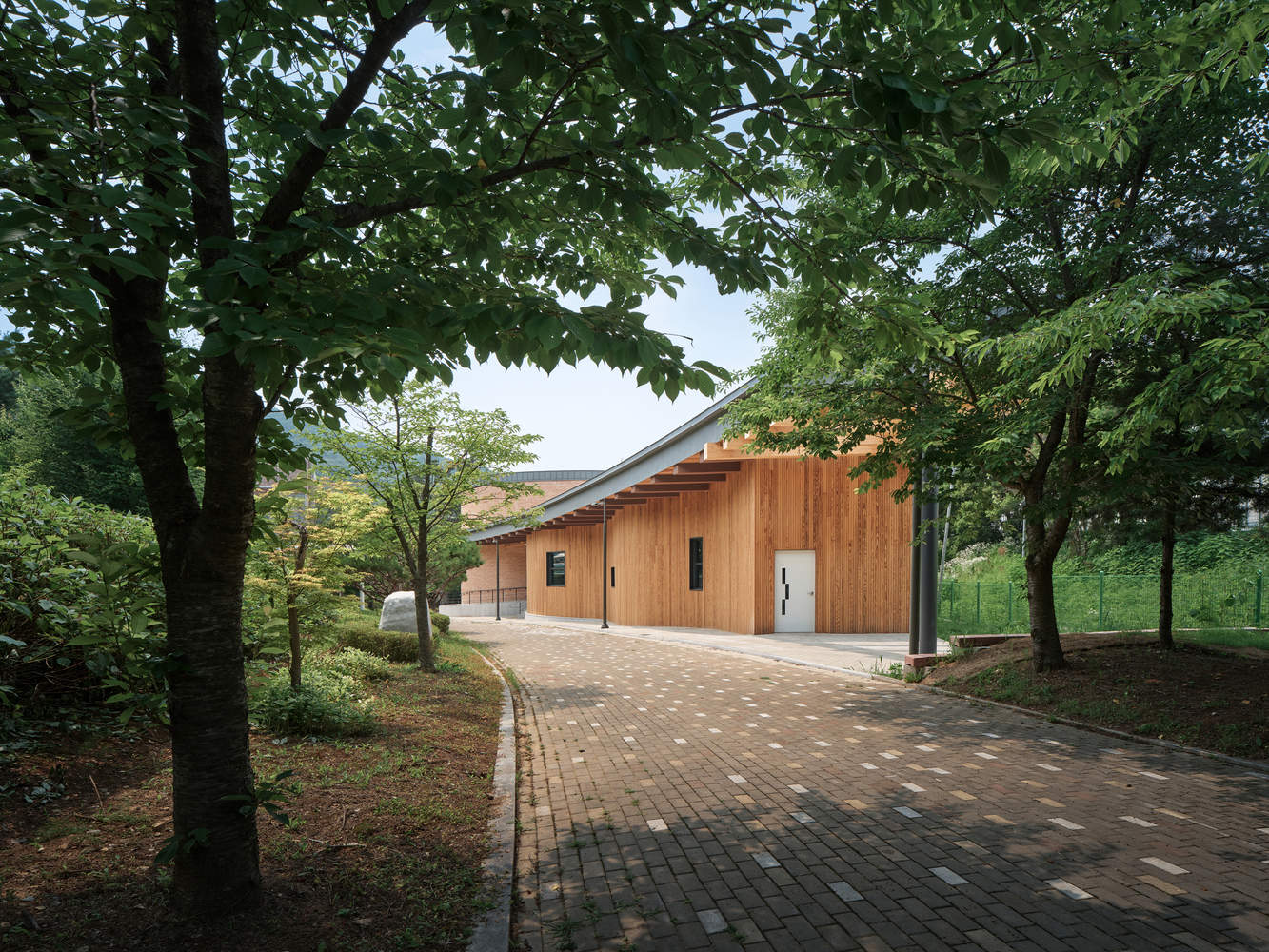
The center is situated adjacent to the Gihangdo Literature Museum, which is located within the Gihangdo Cultural Park named after one of Gwangmyeong City's beloved poets. This park is renowned for its lush forests and tranquil walking paths, making it a favorite retreat for citizens. The center’s entrance connects directly to the park’s poetry trail, enhancing accessibility and inviting visitors to encounter culture amidst nature. The site's landscape design extends naturally from the park, creating diverse visual and spatial experiences.
该中心毗邻纪行道文学馆,文学馆坐落于以光明市备受爱戴的诗人之一命名的纪行道文化公园内。该公园以其郁郁葱葱的森林和平静宜人的步行小径而闻名,是市民们喜爱的休憩之所。中心的入口直接与公园的诗歌小径相连,不仅提升了可达性,还邀请游客在自然之中邂逅文化。园区的景观设计从公园自然延伸而来,营造出丰富多样的视觉与空间体验。
© Han-ul, Lee, Narcillion
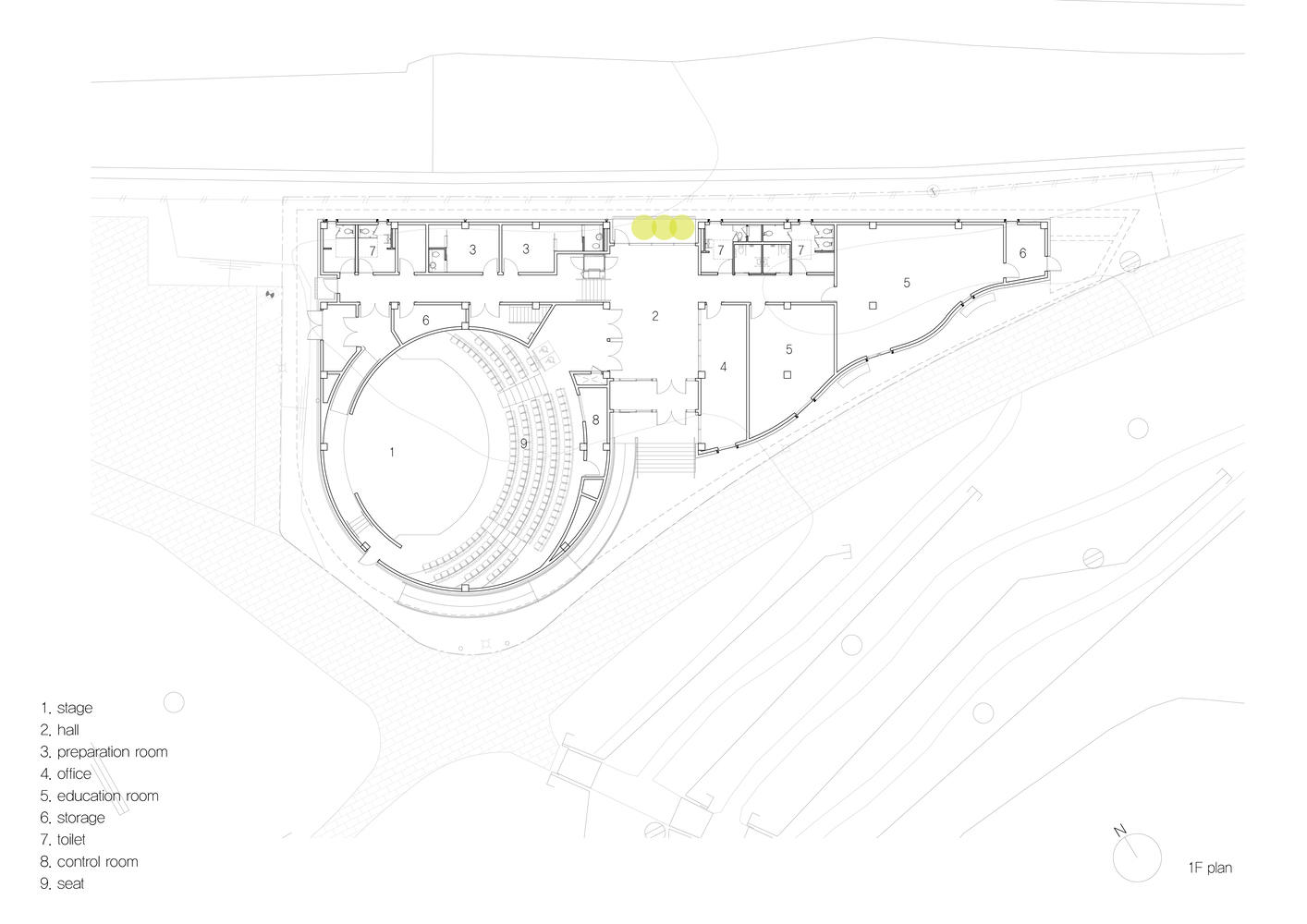
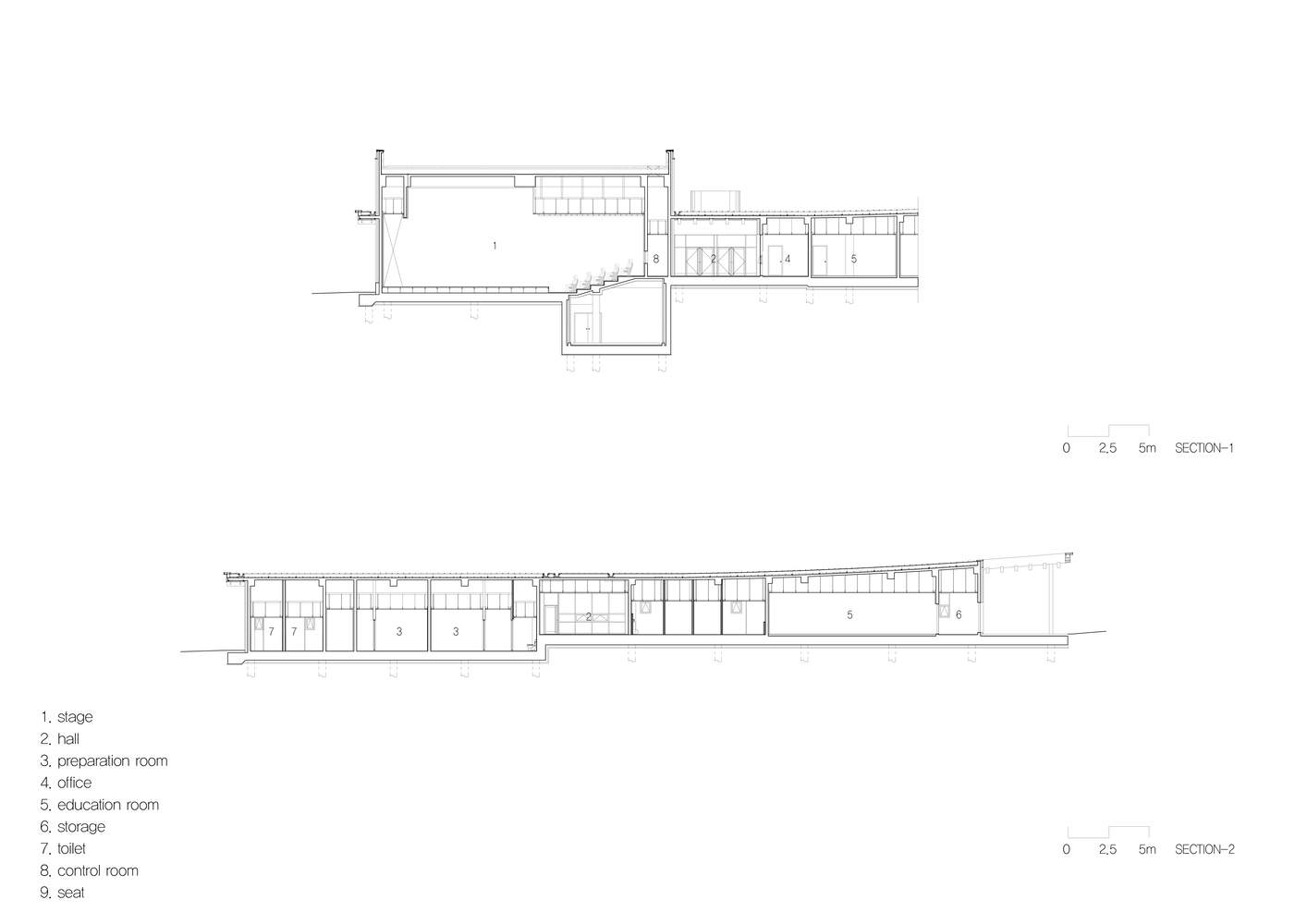
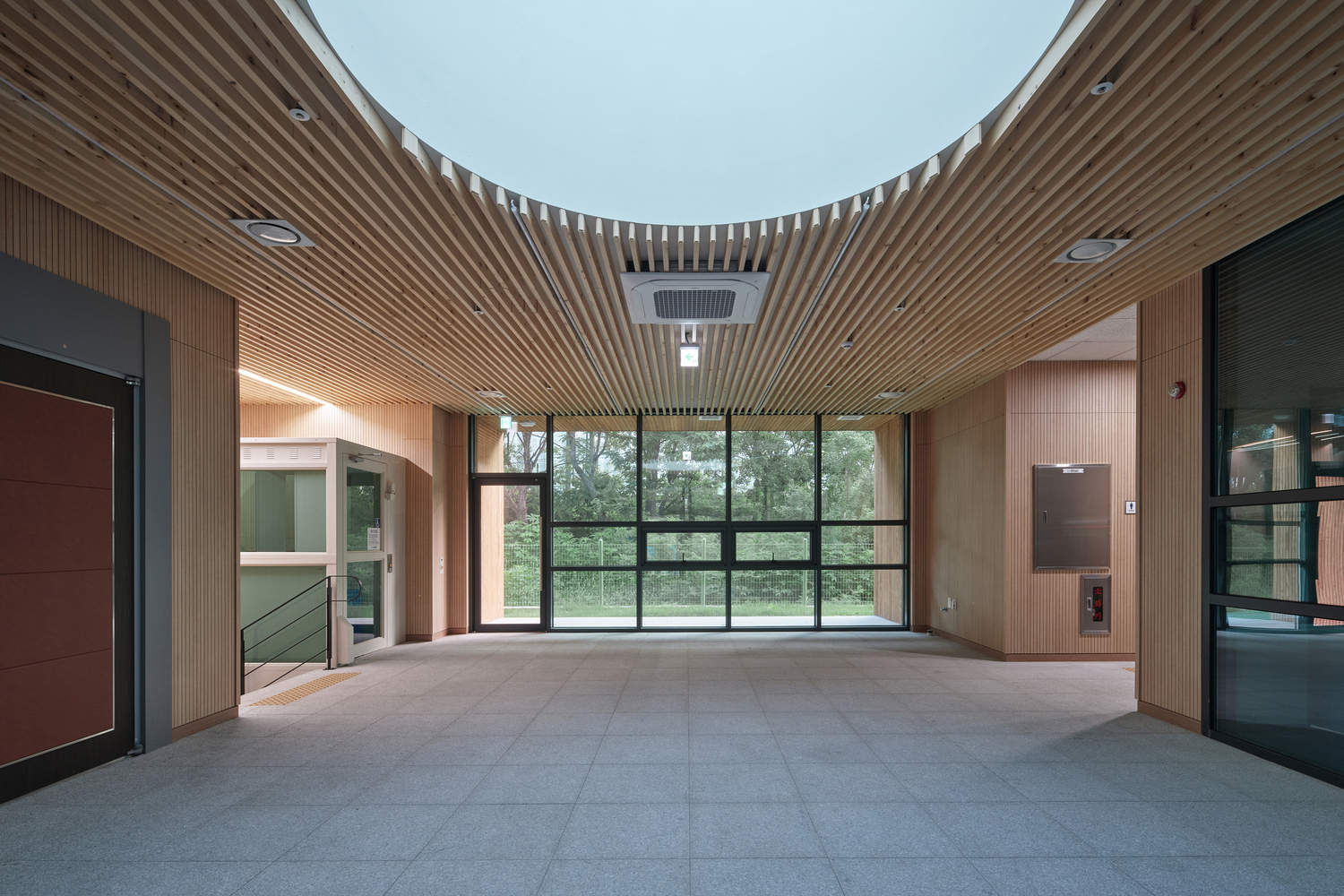
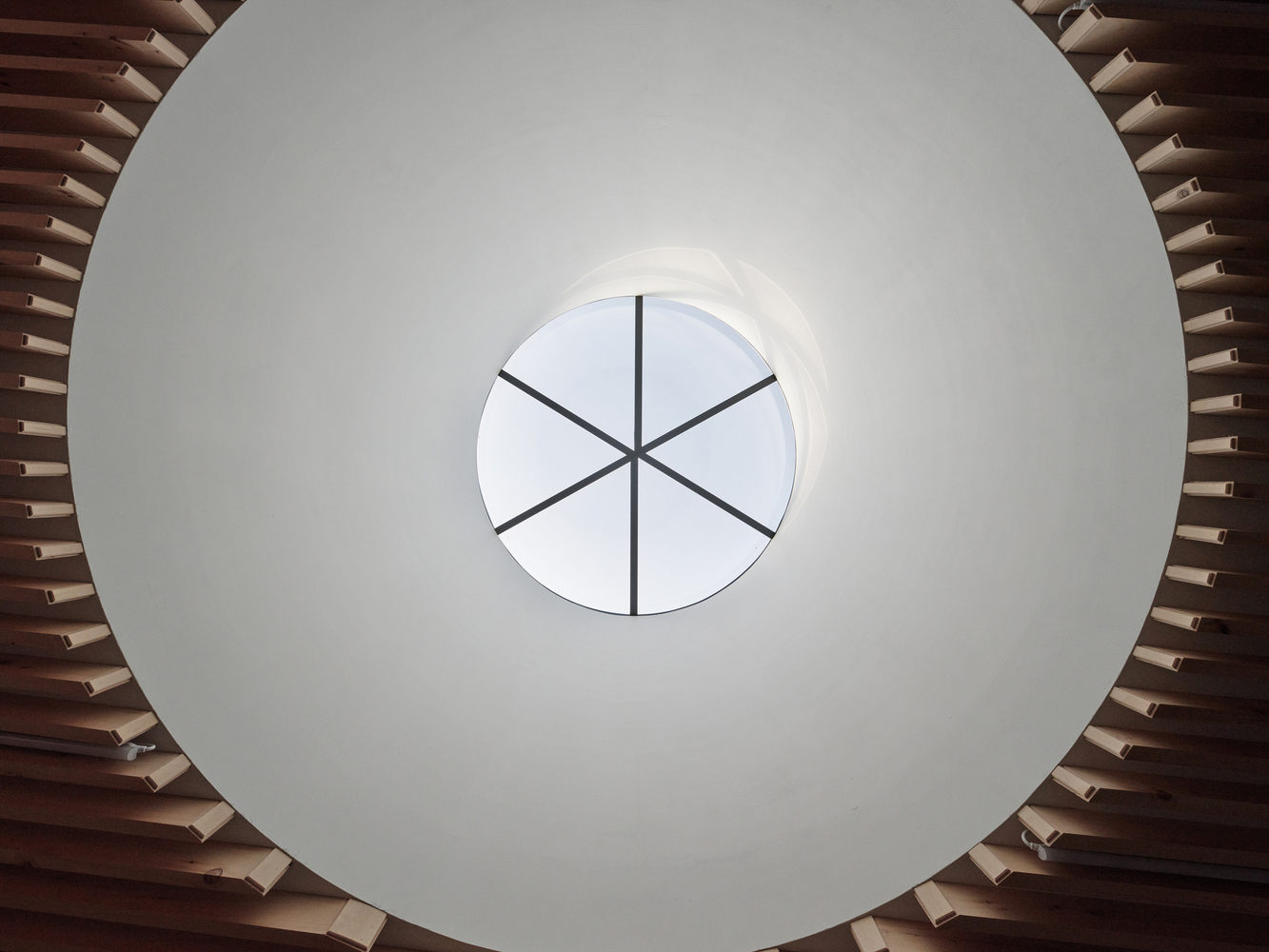
From the outset, the design challenge was to address the narrow triangular plot, the undulating topography, and the noise interference from the adjacent expressway, while simultaneously capturing the intangible essence of Korean traditional performing arts. The building's plan extends horizontally, with the performance hall occupying a corner of the site's curved edge. The central atrium serves as the core of the building: to the left are the performance hall and waiting area, and to the right are the rehearsal rooms, educational spaces, and administrative areas. The 150-seat auditorium features a compact semi-circular stage, allowing for an intimate and vibrant interactive experience between performers and the audience. A large circular skylight in the center of the atrium pours natural light downwards, creating a sense of openness despite the limited footprint and establishing intriguing spatial relationships.
自项目伊始,设计面临的挑战便在于如何应对狭长的三角形地块、起伏的地形以及邻近高速公路的噪音干扰,同时还要捕捉韩国传统表演艺术的无形精髓。建筑平面呈横向延展之势,表演厅占据场地曲边一隅。中央中庭作为建筑的核心,左侧是表演厅与候场室,右侧则是排练室、教育空间及办公区域。这座可容纳 150 名观众的礼堂设有一个紧凑的半圆形舞台,让表演者与观众得以共享亲密而热烈的互动体验。中庭中央的大型圆形天窗将自然光倾泻而下,尽管建筑占地面积有限,却营造出开阔通透之感,并构建出饶有趣味的空间关系。
First Floor Plan
Section
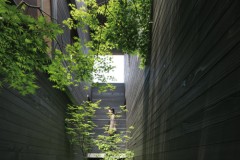
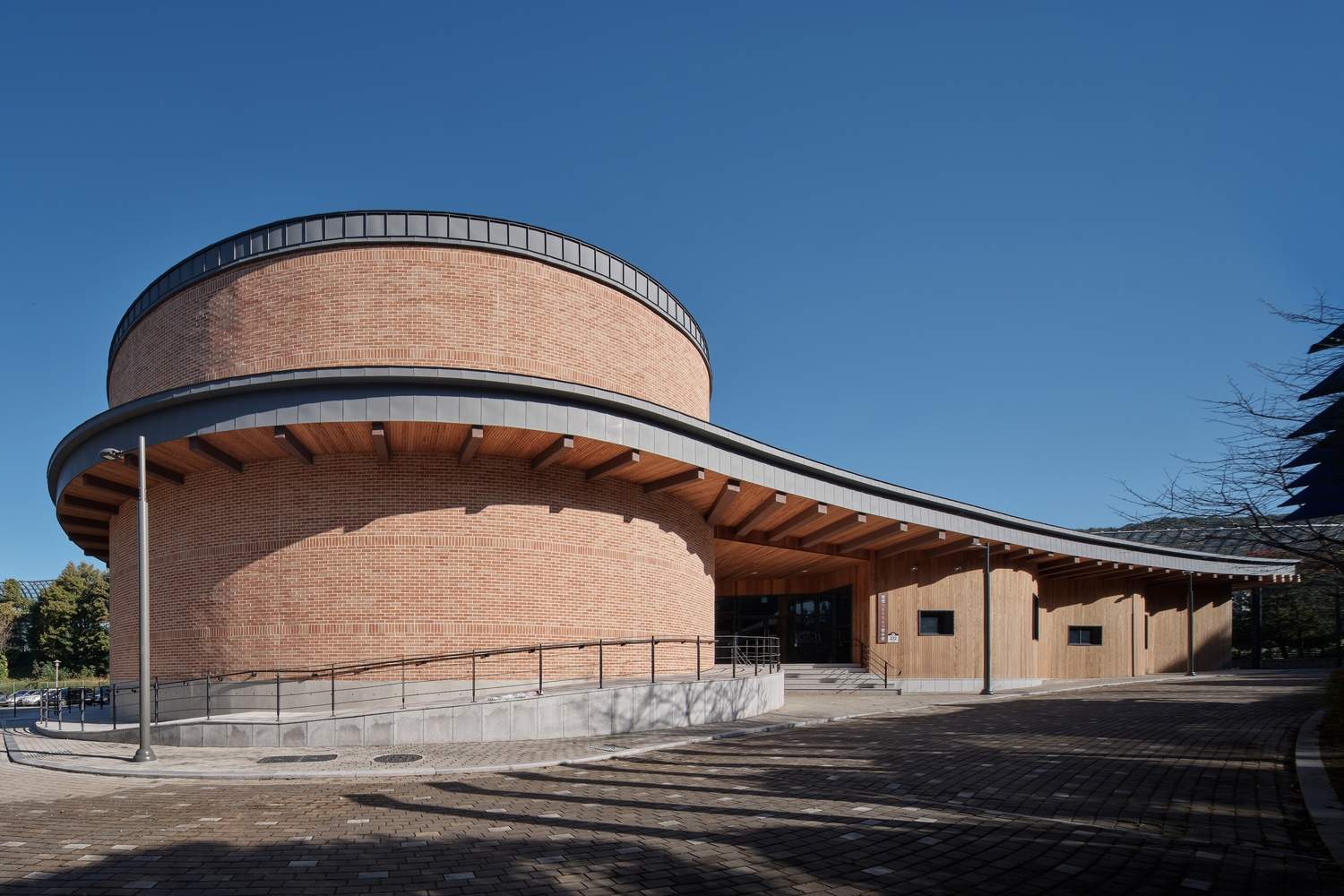
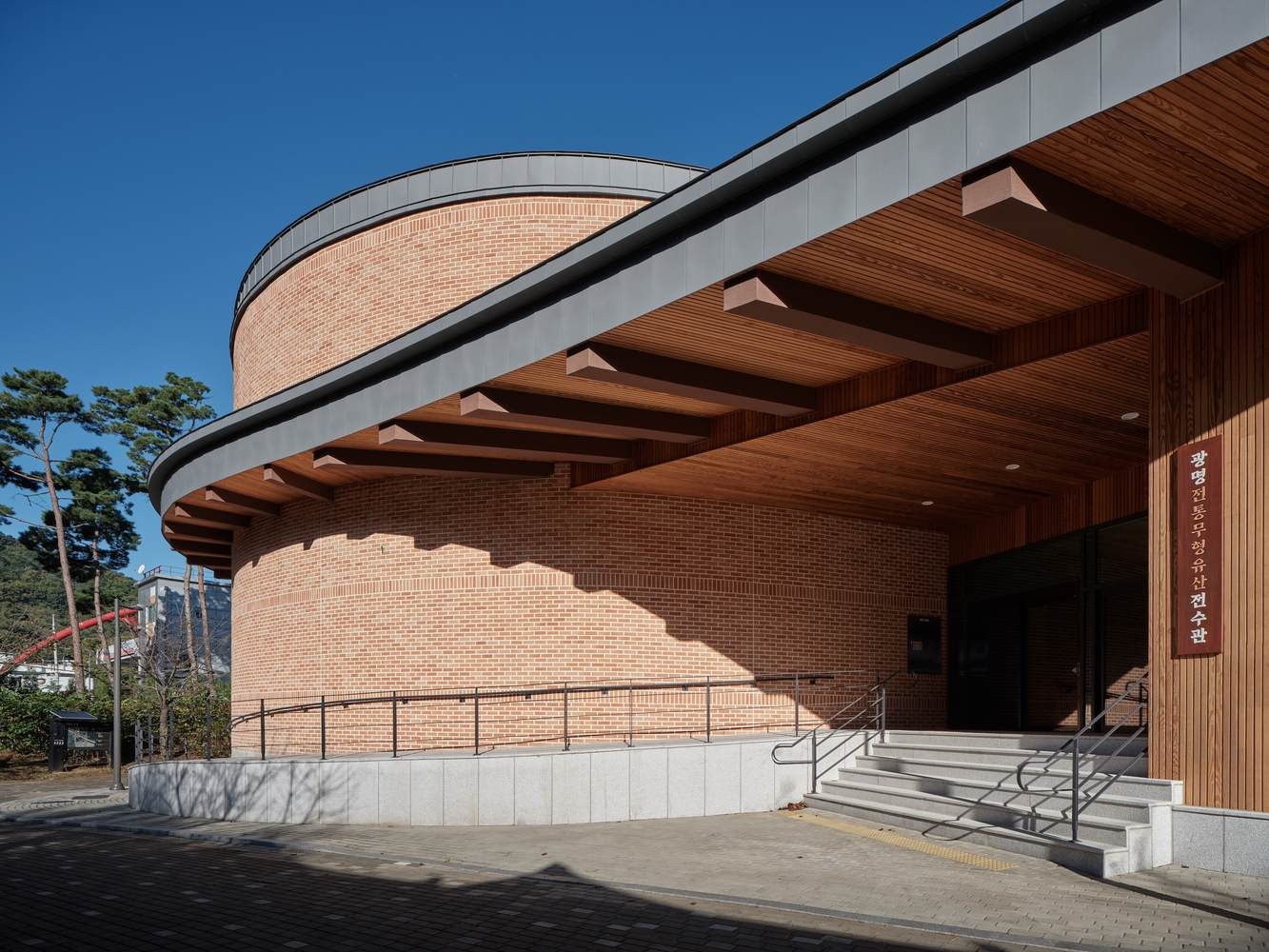
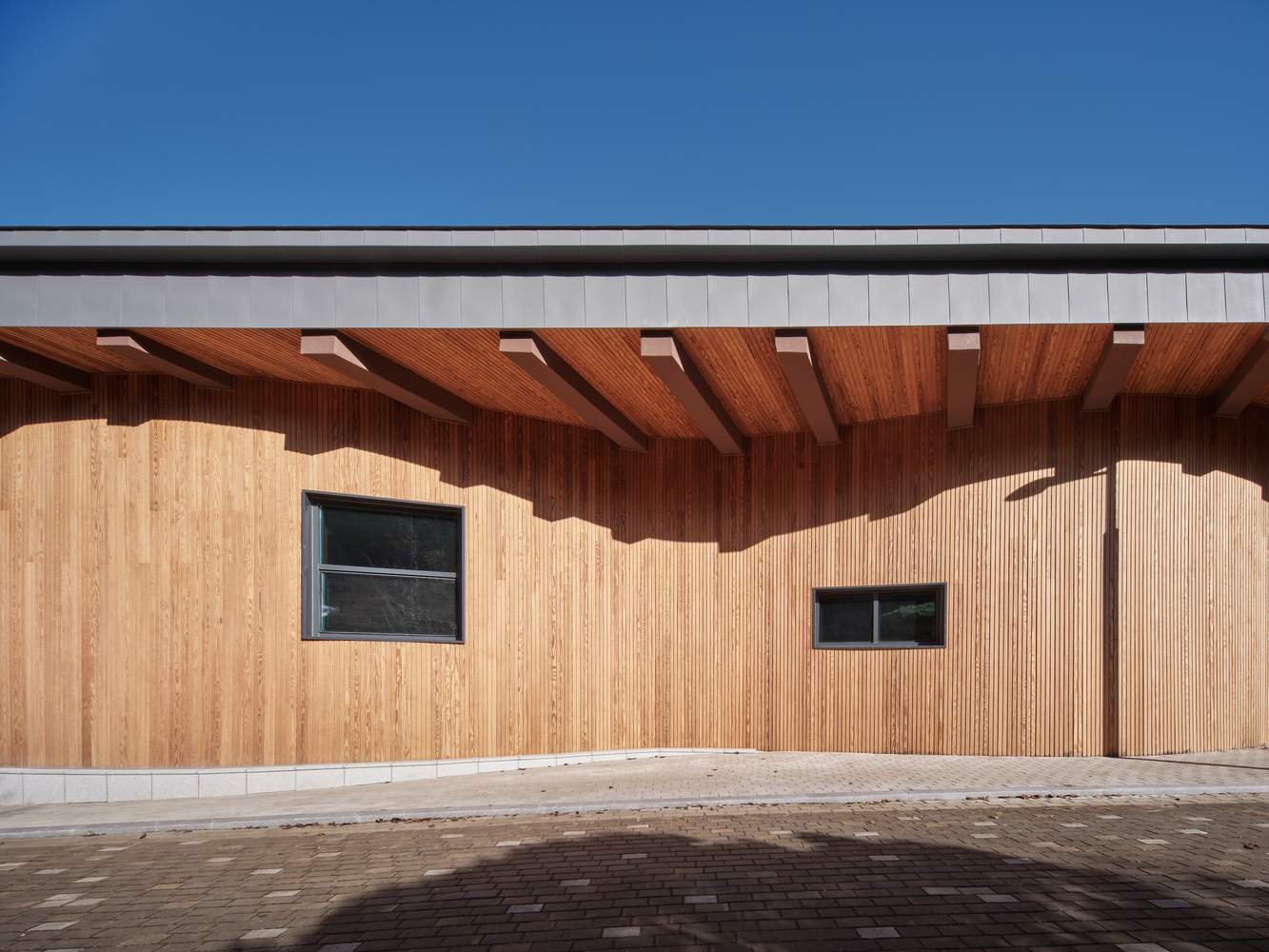
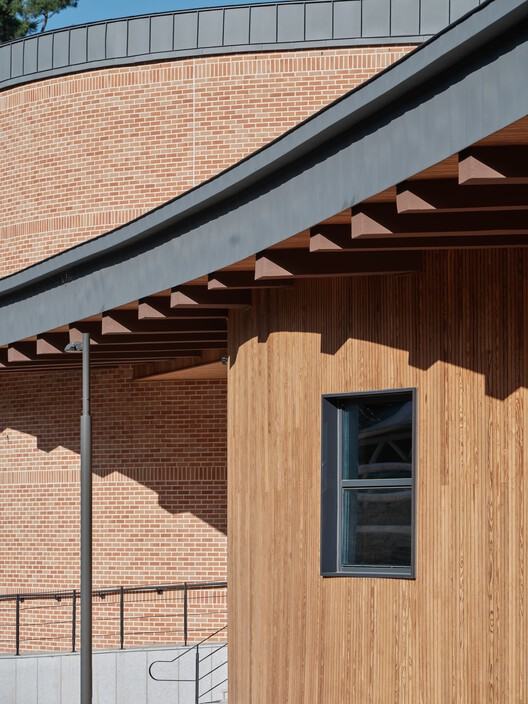
The building embodies the rhythm of 'eum' (sound) and the dynamism of 'mu' (dance), the core expressions of Korean tradition. The sweeping curved roof and vibrant exterior walls echo the dynamic rotation of the 'sangmo' (ribboned hat) worn by dancers during Nongak performances. Exposed rafters reinterpret the structural beauty of traditional Korean timber framing. The exterior facade is finished with charred wood cladding, a material that will quietly transform to a silver-grey hue over time, conveying a sense of quiet solemnity. The same material continues indoors, unifying the interior and exterior spaces with the surrounding landscape. In contrast, the performance hall features an exposed brick wall finish, a deliberate design choice to echo the material palette of the Gwangmyeong Art Center, thus reinforcing the city's architectural character. As time progresses, vines are expected to climb the walls, softening the building's outline and integrating it further into the park environment.
该建筑体现了韩国传统文化中“音(eum,即声音)”的韵律与“舞(mu,即舞蹈)”的动感这两大核心表达。流畅的曲线屋顶与充满活力的外墙,呼应着农乐表演中舞者所佩戴的“상모(sangmo,即飘带帽)”旋转舞动的姿态。外露的椽子则重新诠释了韩国传统木构建筑的结构之美。建筑外立面采用碳化木饰面,这种材料会随时间悄然转变为银灰色调,彰显出静谧而庄重的气质。同样的材质也延续至室内,使内外空间与周边景观浑然一体。与之形成对比的是,表演厅采用裸露砖墙饰面,这一设计有意呼应了光明艺术中心的材质调性,强化了城市的建筑特色。随着时间推移,藤蔓植物预计将攀爬满墙,柔化建筑轮廓,使其更进一步融入公园环境之中。
© Han-ul, Lee, Narcillion
© Han-ul, Lee, Narcillion
Today, the stage is set for the vibrant performances of Gwangmyeong Nongak and Seodo Minyo. Seodo Minyo narrates life's joys and sorrows with its melodious tunes, while Nongak overflows with the joyful spirit of farmers celebrating a good harvest. Within these intangible traditions, passed down through generations, lies a profound aesthetic beauty, and we share the responsibility of preserving and transmitting them. The Gwangmyeong City Center for Intangible Cultural Heritage aspires to be a place where people can feel, learn, and celebrate the timeless value of tradition—a space full of life, light, and abundance, much like a fully laden fishing boat brimming with the joy of returning home.
如今,舞台已准备好迎接光明农乐与西道民谣的活力表演。西道民谣以悠扬的旋律诉说着人生的悲欢离合,而农乐则洋溢着农民庆祝丰收的喜悦豪情。这些历经世代传承的无形传统中,蕴藏着深厚的美感,而我们共同肩负着保护与传承它们的责任。光明市非物质文化遗产中心立志成为一个让人们感受、学习并颂扬传统永恒价值的地方——一个充满活力、光明与丰盈的空间,宛如满载而归的渔船,洋溢着归家的喜悦。
© Han-ul, Lee, Narcillion