精神内核与遗产的深刻融合:多西静修所不仅是普利兹克奖得主巴克里希纳·多西在印度以外的首个建成作品,更是他生前构思的最后项目,承载了深厚的个人情感与精神意涵。建筑的设计灵感源于多西的梦境——两条交织的眼镜蛇,巧妙地转化为建筑螺旋上升的运动形态,象征着瑜伽哲学中潜藏的能量。这种将深奥的印度哲学与具体的空间体验相融合的设计手法,体现了多西一贯追求的物质与精神和谐统一的理念,是其建筑思想的有力延续与精神结晶。
沉浸式的感官体验与空间叙事:该项目成功地通过地下曲折的通道,创造了一种由内而外的沉浸式冥想体验。建筑师通过精心设计的声景——柔和的锣音与陶笛声的振动——引导访客进入冥想状态。终点的冥想室,以印度手工锤制的黄铜曼陀罗作为核心光源,其散射的光线与反光表面共同营造出静谧而深邃的宇宙感。这种注重过程体验和多重感官刺激的设计策略,使建筑本身成为一个引导精神探索的媒介。
可持续性与场所精神的平衡:静修所选用了安赛乐米塔尔捐赠的、由回收钢材制成的低碳排放XCarb®钢材,展现了对可持续性和环境责任的关注。钢材表面的可控腐蚀将形成自然铜绿,使其能够随着时间推移与维特拉园区的现有肌理和谐共存。静修所的落成也丰富了维特拉园区“多元立场、不求统一”的建筑理念,它以其独特的、根植于个人哲学的叙事方式,巧妙地融入了这一大师级建筑群落之中,成为园区内极具情感深度的一笔。
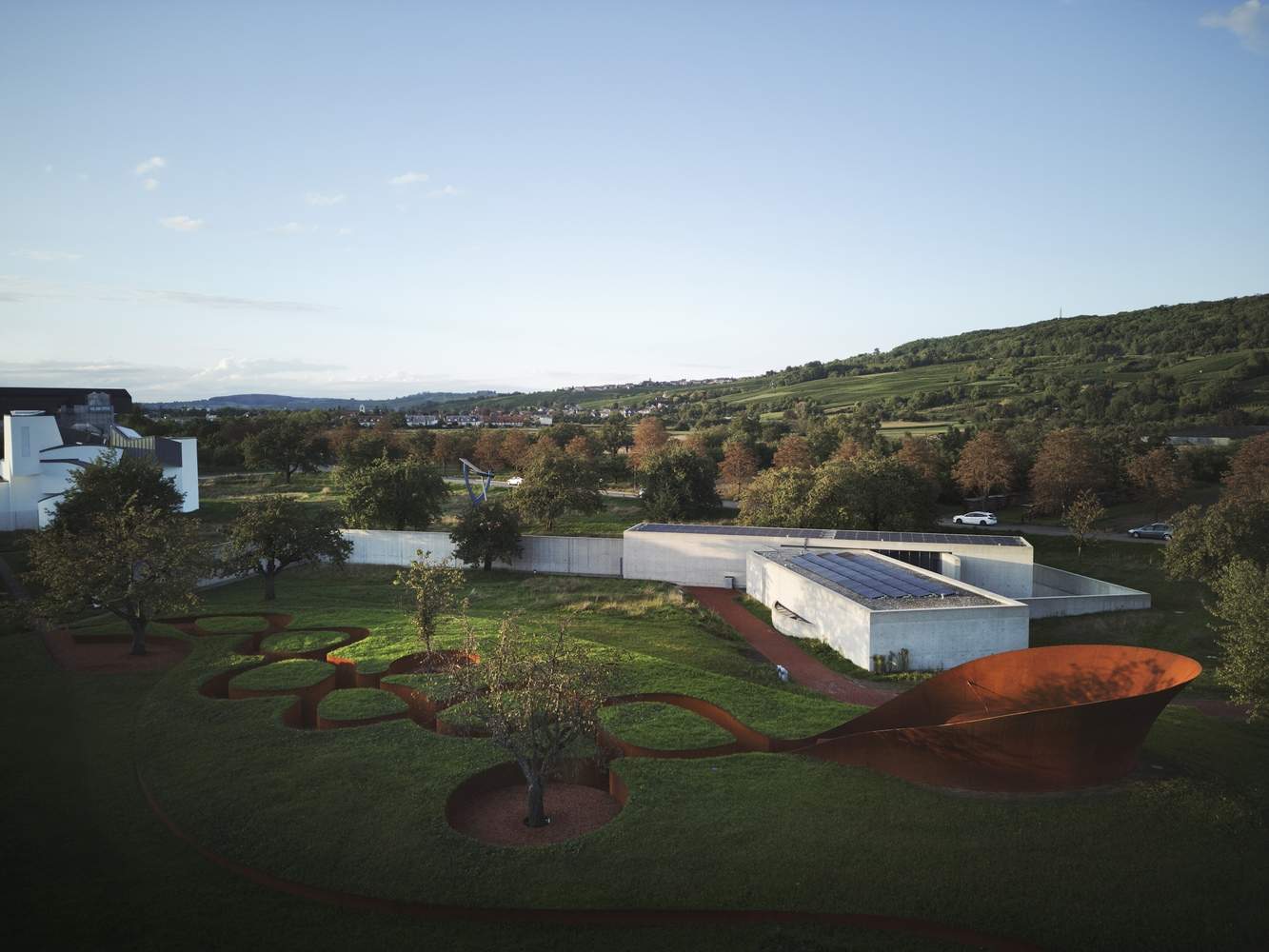
The Doshi Retreat, a new building with a highly personal and spiritual character, has been completed in the Vitra Campus in Weil am Rhein, Germany. Designed by Pritzker laureate Balkrishna Doshi together with his granddaughter Khushnu Panthaki Hoof and her husband Sönke Hoof of Studio Sangath, the retreat serves as a space for contemplation and meditation. This project is not only Doshi’s first built work outside of India but also the last project conceived before his passing in 2023.
德国莱茵河畔威尔(Weil am Rhein)的维特拉园区,随着多西静修所(Doshi Retreat)的落成,迎来了一处极具个人色彩与精神内涵的新建筑。该静修所由普利兹克奖得主巴克里希纳·多西与其孙女库什努·潘塔基·霍夫(Khushnu Panthaki Hoof)及其丈夫森克·霍夫(Sönke Hoof)主持的Studio Sangath共同设计,是一个供人沉思冥想的空间。该项目既是多西在印度以外的首个建成作品,也是他在 2023 年离世前构思的最后一个项目。
© Marek Iwicki
© Marek Iwicki
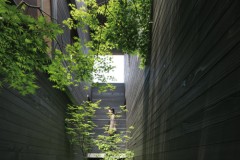
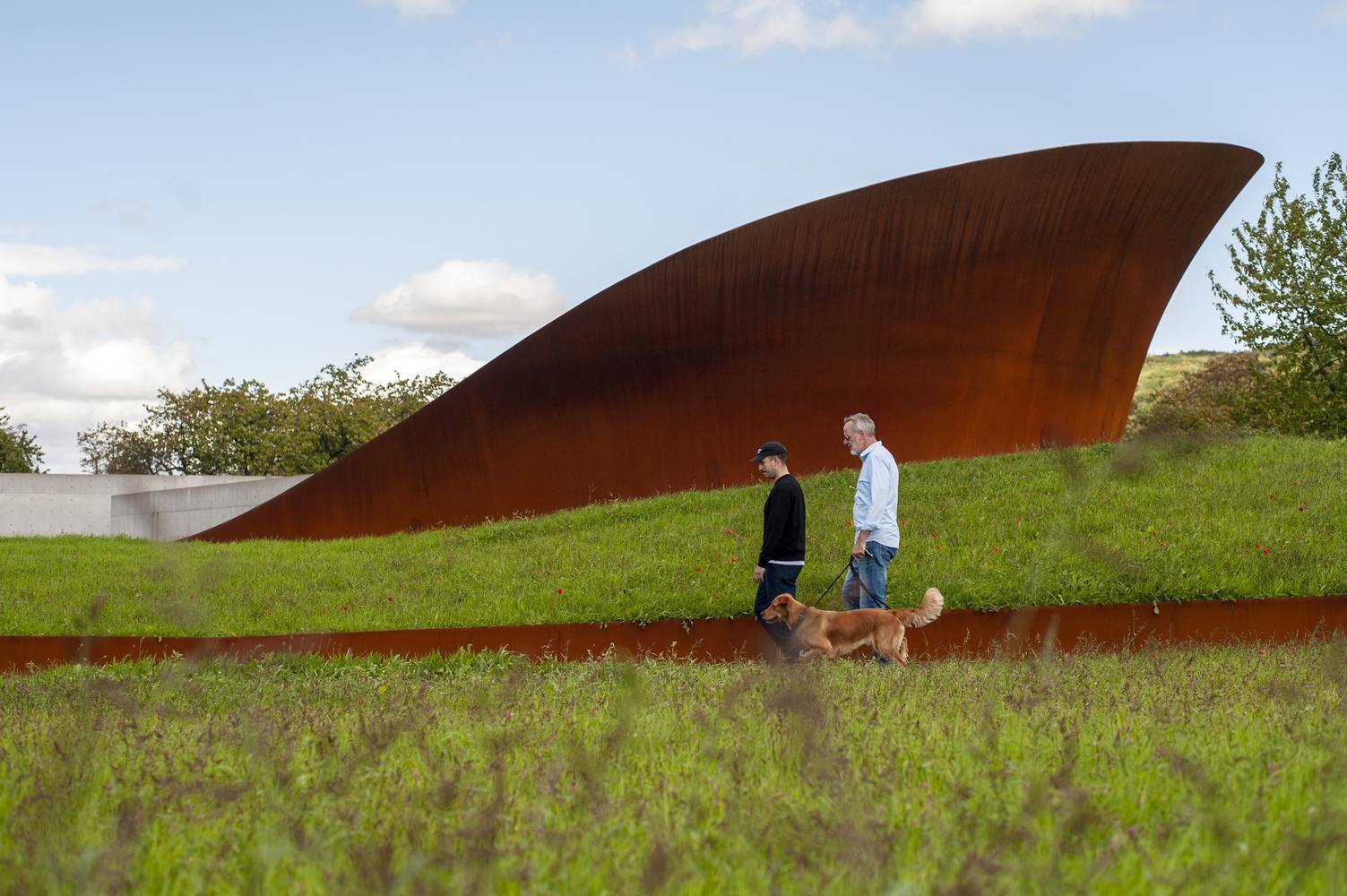
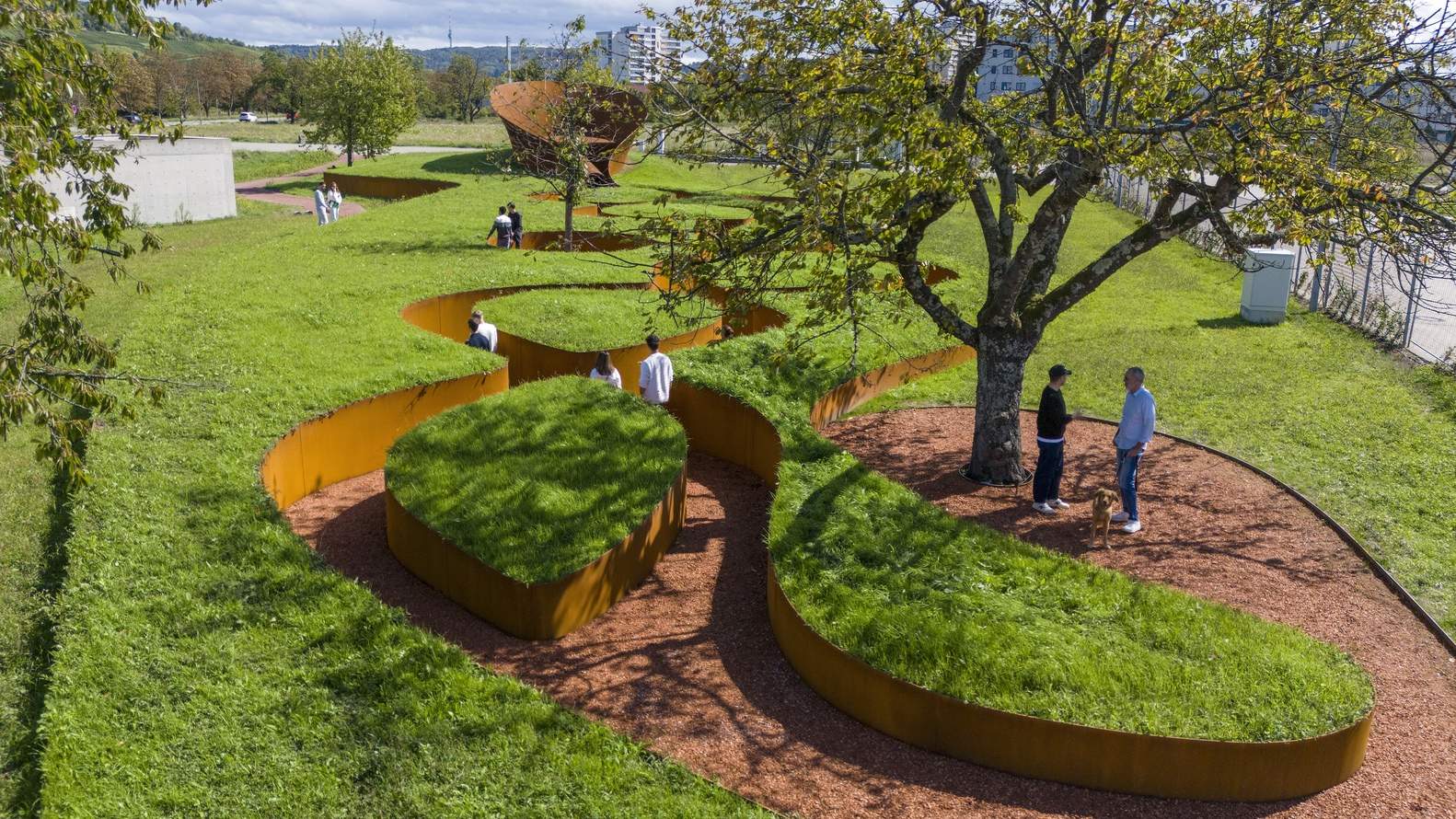
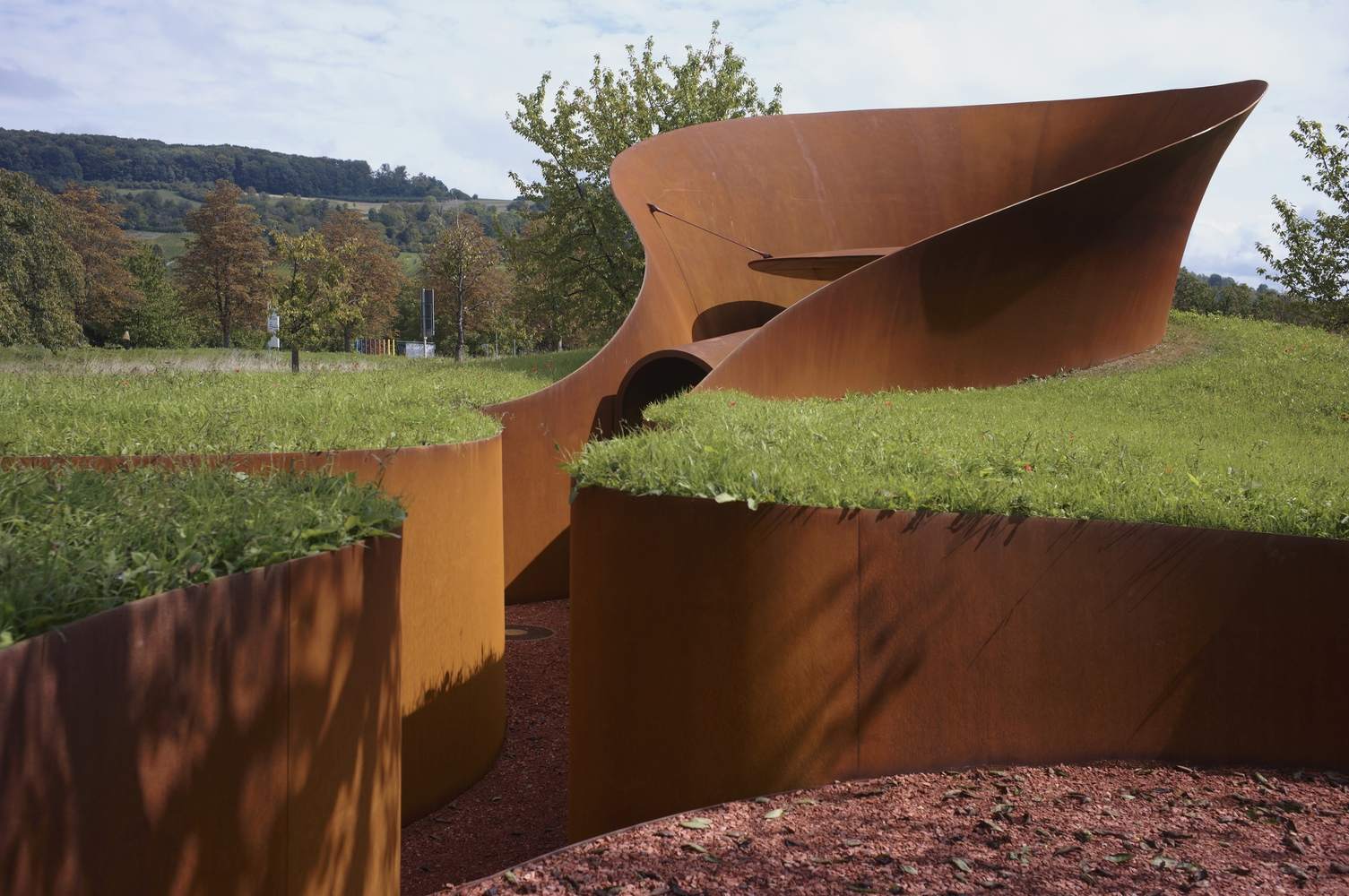
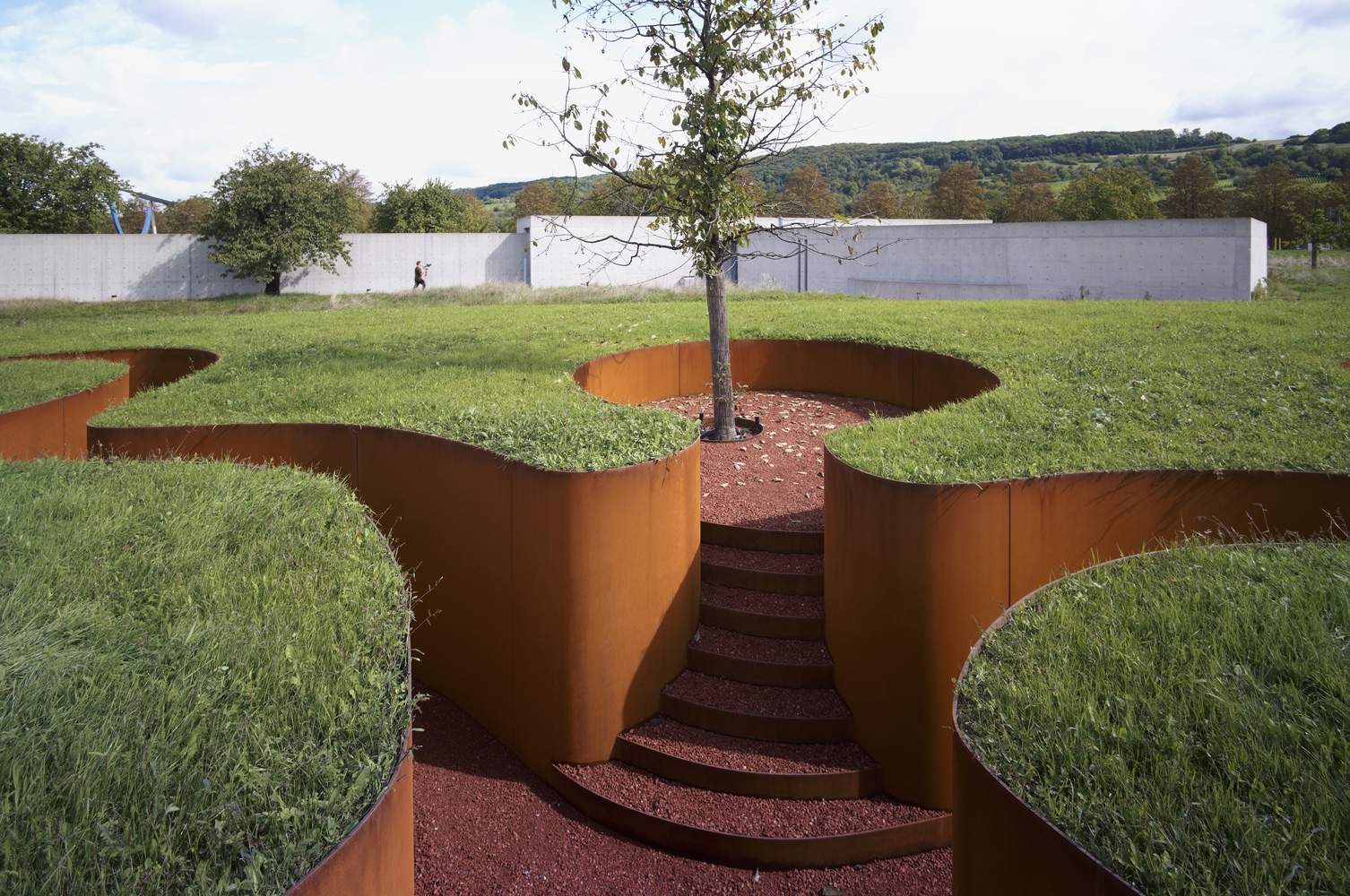
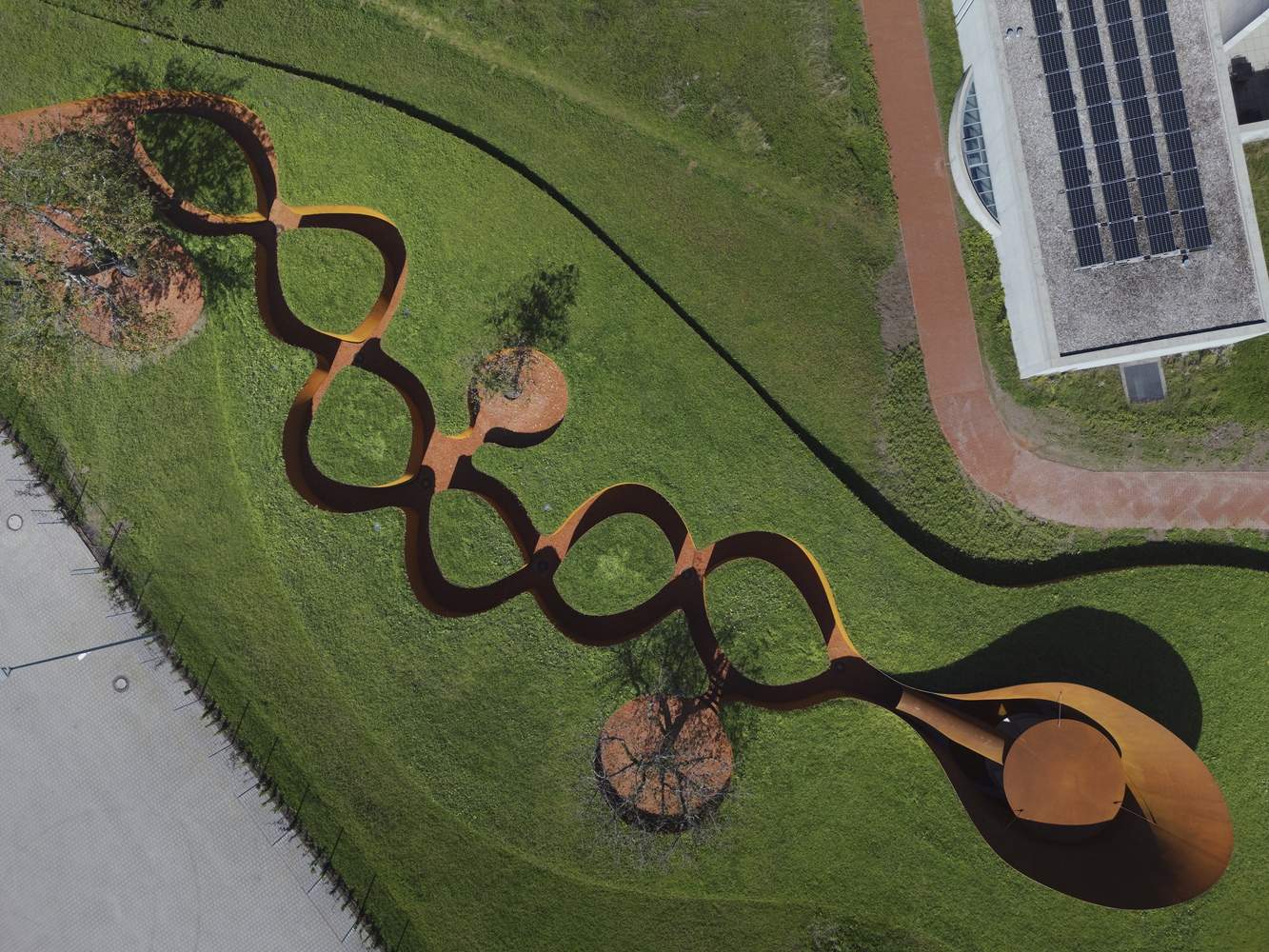
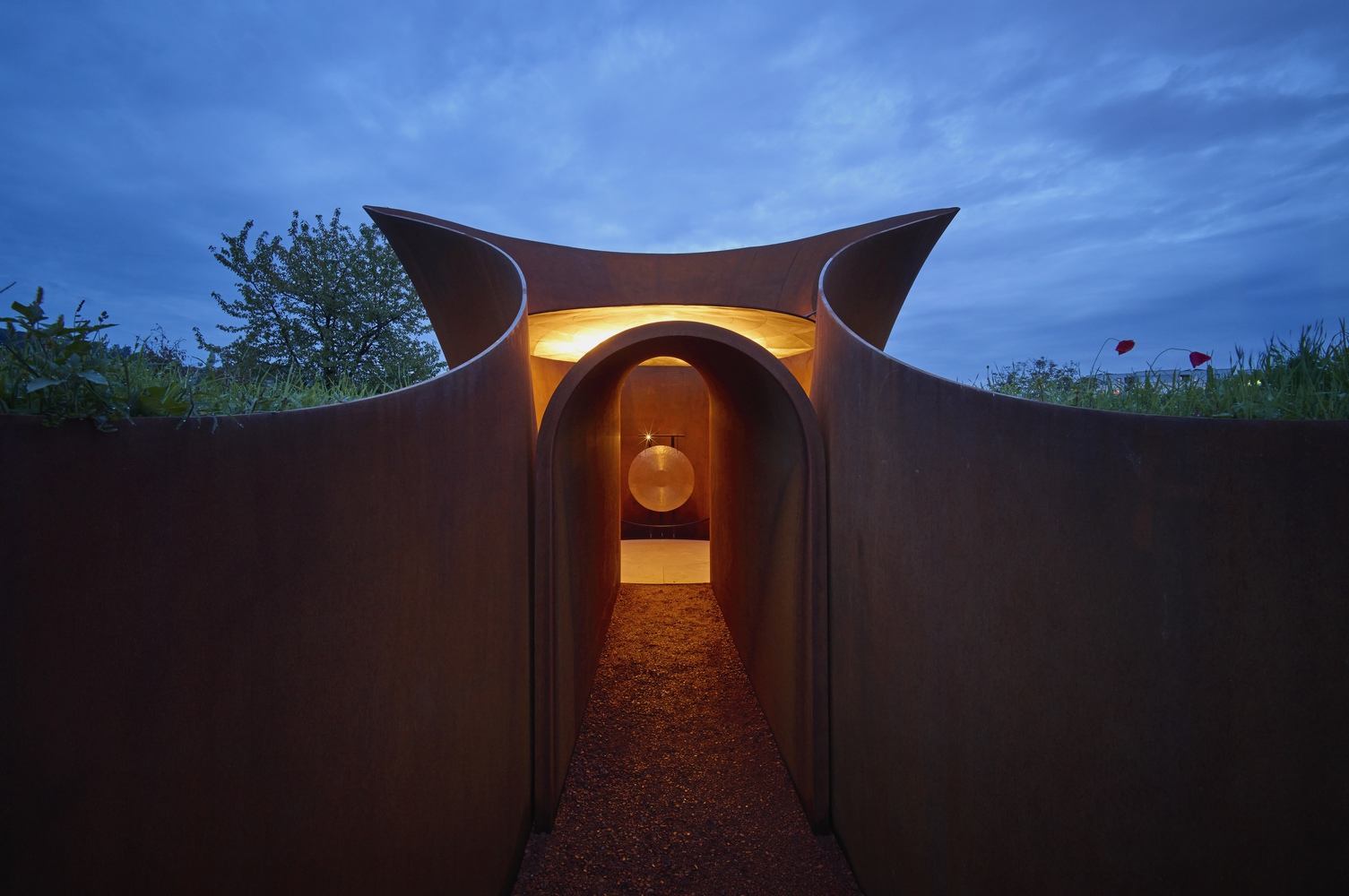
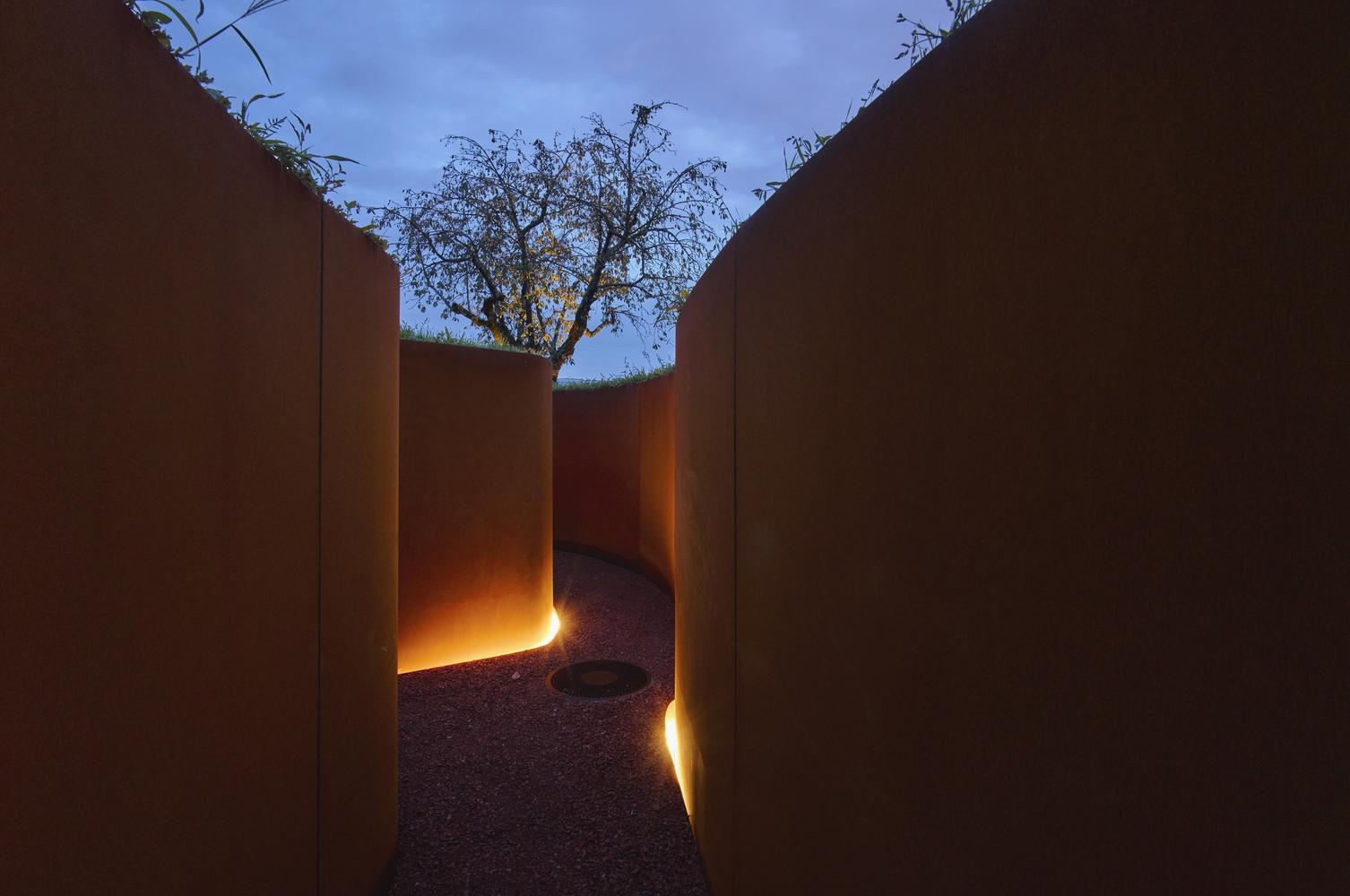
The steel retreat is conceived as a winding underground passage that guides visitors beneath the surface of the Vitra Campus, merging the spatial rhythms of Indian philosophy with meditation.
这座钢制静修所设计成一条蜿蜒曲折的地下通道,引导游客深入维特拉园区地表之下,将印度哲学与冥想的空间韵律融为一体。
© Julien Lanoo
© Julien Lanoo
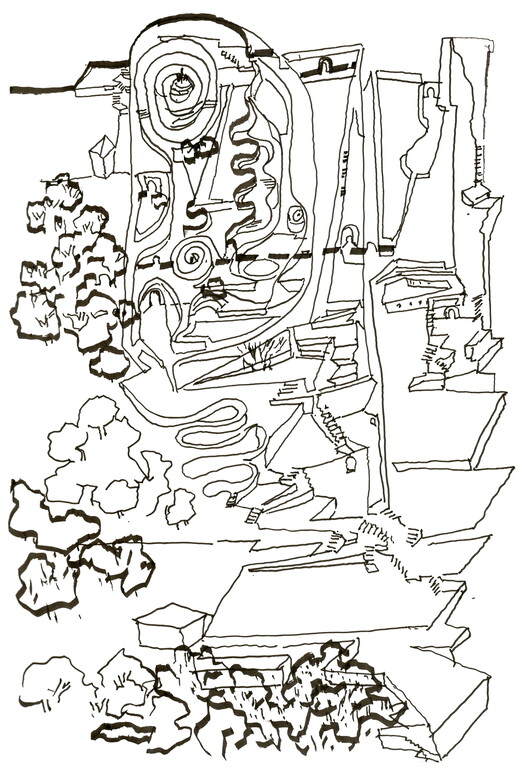
Along its curved walls, the soft sounds of gongs and ocarinas resonate in hidden corners. The building originates from a dream Doshi had of two intertwining cobras, an imagery poetically embodied in the spiraling movement of the architecture, which also symbolizes the coiled energy at the base of the spine in yoga tradition.
沿着其弯曲的墙壁,柔和的锣音与陶笛声在隐秘的角落回荡。这座建筑源于多西的一个梦境,梦中两条交织的眼镜蛇相互缠绕,这一充满诗意的意象在建筑螺旋式的运动中得以具象化,同时也象征着瑜伽传统中蛰伏在脊柱底部的盘绕能量。
草图
An in-ground acoustic system installed in recessed cavities emits layers of gong and flute sounds that accompany one’s journey through the space. This soundscape is experienced as vibration rather than music.
一套嵌入地面凹形腔体内的音响系统,散发出层层锣音与笛声,陪伴着人们穿梭于这个空间。这声音景观并非以音乐形式创作,而是作为一种振动被体验。
© Julien Lanoo
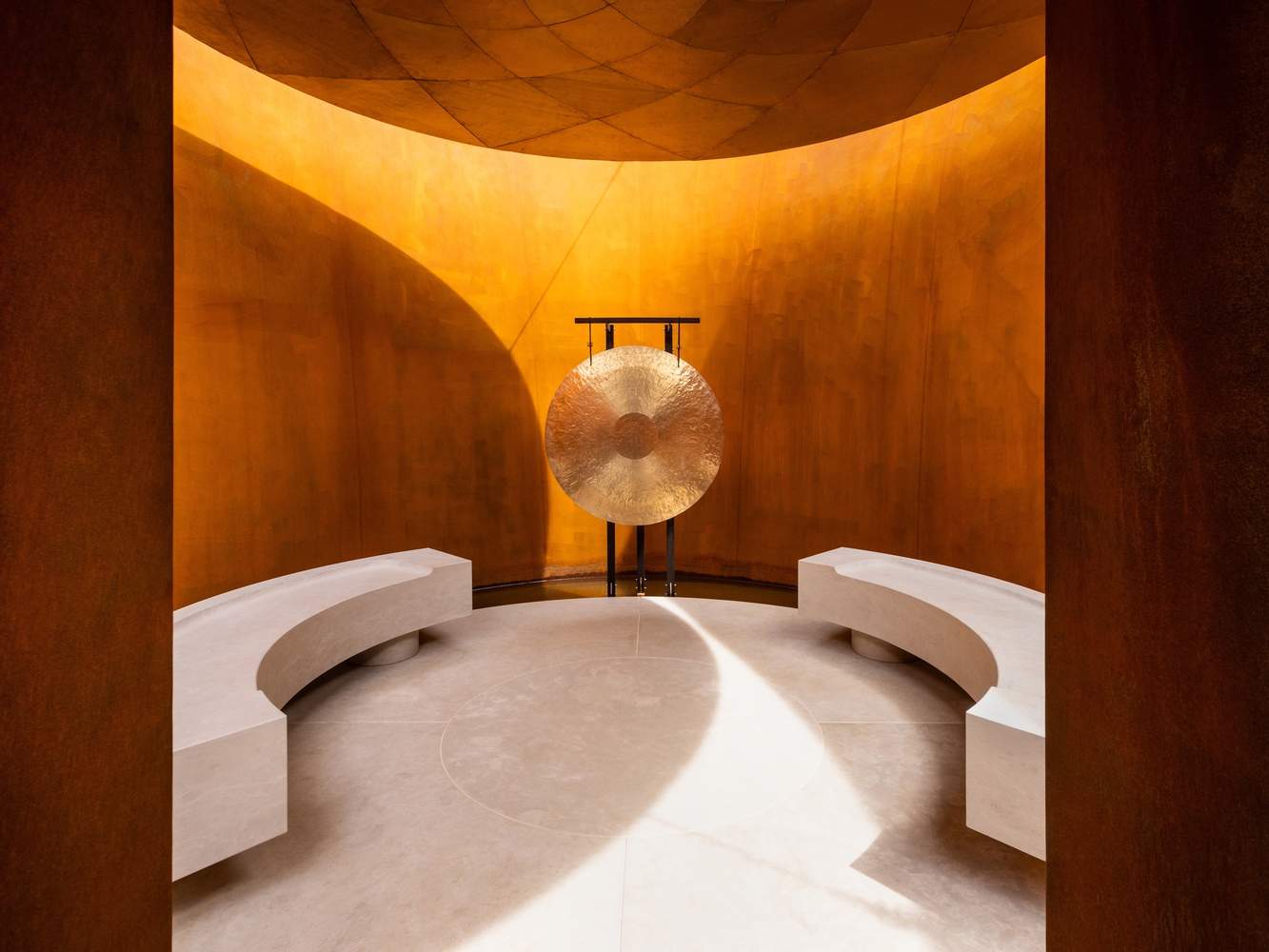
At the end of the passage, visitors encounter a meditation room illuminated by hand-hammered brass mandalas from India. Their reflective surfaces scatter light throughout the interior, cultivating an atmosphere of stillness containing the cosmos—a fitting metaphor for Doshi’s lifelong quest for the harmonious unity of the material and the spiritual.
沿着通道走到尽头,游客会遇到一个冥想室,室内由印度手工锤制的黄铜曼陀罗照亮。其反光表面将光线散射至室内各处,营造出一种静止而内蕴宇宙的氛围,恰如其分地隐喻了多西一生对物质与精神和谐统一的追求。
© Dejan Jovanovic
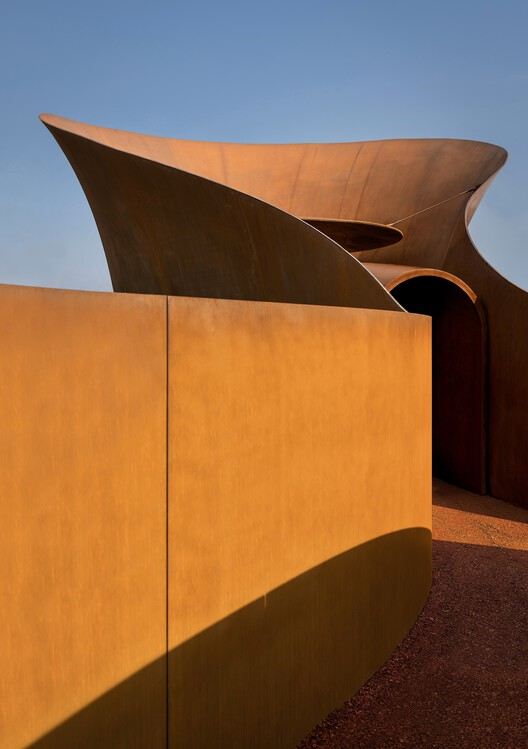
The Doshi Retreat is constructed using forged XCarb® steel—a low-carbon material made from recycled steel and produced using renewable energy, donated by ArcelorMittal. Over time, its surface will develop a natural patina through controlled corrosion, integrating with the sober tones of the surrounding landscape.
多西静修所采用锻造成型的 XCarb® 钢材建造,这是一种由回收钢材制成、使用可再生能源生产的低碳排放材料,由安赛乐米塔尔(ArcelorMittal)捐赠。随着时间的推移,其表面将通过可控腐蚀形成自然铜绿,与周围景观的沉稳色调融为一体。
© Dejan Jovanovic
Following Doshi’s passing, the studio continued to work in close dialogue with his concepts, carefully crafting the retreat. Together, they translated this conceptual rhythm into a physical form, weaving it into the fabric of the Vitra Campus.
多西离世后,工作室继续与他生前构想紧密对话,精心打造这座静修所。他们共同将这一概念韵律转化为实体形态,将其编织进维特拉园区的肌理之中。
© Julien Lanoo
© Julien Lanoo
Since the 1980s, Vitra has collaborated with world-renowned architects to build structures on its premises. This distinctive architectural ensemble brings together masterpieces by Tadao Ando, Frank Gehry, Nicholas Grimshaw, Zaha Hadid, Herzog & de Meuron, SANAA, and Álvaro Siza, among others. Regarding the Vitra Campus, architectural critic Philip Johnson once wrote: “Nowhere in the Western world have so many outstanding architects designed buildings in such close proximity since the Weissenhofsiedlung in Stuttgart in 1927.” While these individual buildings exhibit diverse styles, they harmonize with the surrounding environment. They embody a corporate philosophy that does not strive for a unified image but rather showcases diverse positions within an open framework of projects.
自 20 世纪 80 年代起,维特拉(Vitra)公司便开始与世界知名建筑师携手合作建造建筑。这片独具特色的建筑群落,汇聚了安藤忠雄(Tadao Ando)、弗兰克·盖里(Frank Gehry)、尼古拉斯·格里姆肖(Nicholas Grimshaw)、扎哈·哈迪德(Zaha Hadid)、赫尔佐格与德梅隆(Herzog & de Meuron)、SANAA)、阿尔瓦罗·西扎(Álvaro Siza)等大师的杰作。谈及维特拉园区,建筑评论家菲利普·约翰逊(Philip Johnson)曾写道:“自 1927 年斯图加特的魏森霍夫住宅区(Weissenhofsiedlung)以来,西方世界最杰出的建筑师们设计的建筑群,还从未如此集中地汇聚于一处。” 这些单体建筑彼此间风格迥异,却又与周边环境和谐相融。它们彰显了企业的一种理念:不追求统一的形象,而是在开放项目的框架内展现多元立场。
© Julien Lanoo