精简尺度下的空间延展与流动性:本项目在极度受限的占地面积(4550mm方格)和低廉成本的约束下,成功挑战了传统对“开阔”与“大气”的定义。设计通过巧妙的体量嵌入和面向四周的开放式开口,模糊了室内外的边界,将周边的自然景观(河流、绿地)引入内部,实现了连续的水平流动感。这种“小而敞”的策略,是成本控制与空间品质提升的典范,展示了对有限资源最大化利用的建筑智慧。
结构与功能的多维对话:项目将单一空间的功能需求与结构逻辑完美融合。中央旋转45度的立柱与对角梁的结构核心,不仅提供了必要的结构支撑,更超越了单纯的力学意义,成为空间划分和垂直连接的锚点。这种结构布局在紧凑平面内界定了四个相互关联的功能区,同时通过镂空层连接上下空间,营造出垂直维度的开阔感,体现了结构美学与空间叙事的高度统一。
适应性与场所精神的构建:“平屋亭(Hiraya)”的设计核心在于其多功能性和适应性,旨在成为一个容纳日常、梦想与聚会的场所。通过低矮的基座设计鼓励多姿态的停留(坐、卧、工作),建筑主动邀请使用者与场地环境产生更亲密、更具弹性的互动。这座建筑虽形式柔和,却在精准的框架内提供了一种静谧的自由,成功地在一个混合了人造与自然元素的复杂环境中,构建了一个自我完备且拥抱变化的微型宇宙。
This project was conceived as a small multi-functional pavilion and studio, with the initial design revolving around a simple question: how to create a sense of openness and grandeur within a limited footprint and at a low cost?
该项目构思为一座小型多功能亭阁与工作室,设计伊始便围绕一个简单问题展开:如何在占地面积有限且成本低廉的情况下,营造出开阔与大气的空间感?
© Yongbaek Lee
© Yongbaek Lee
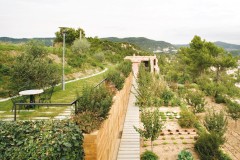
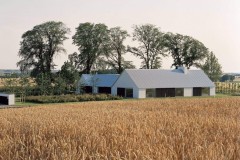
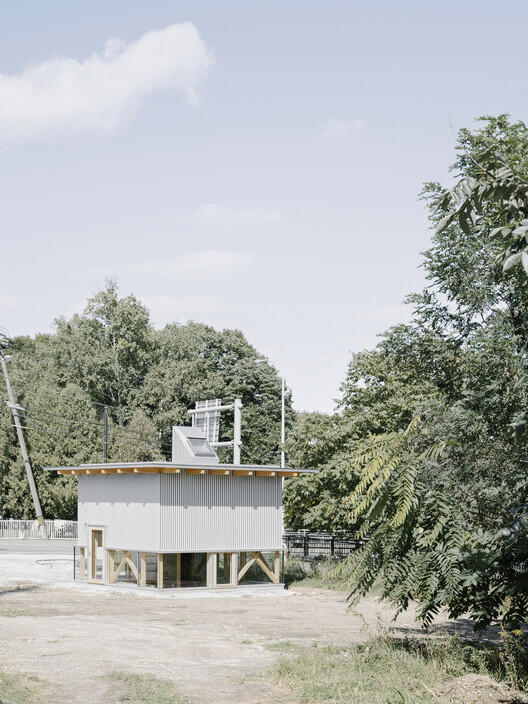
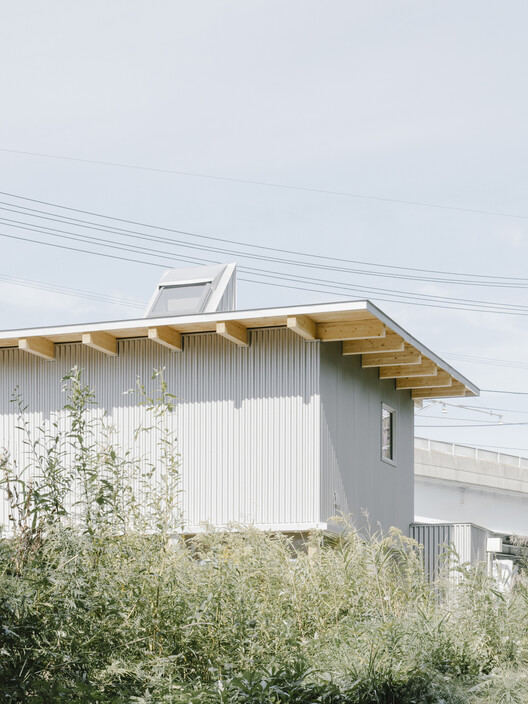
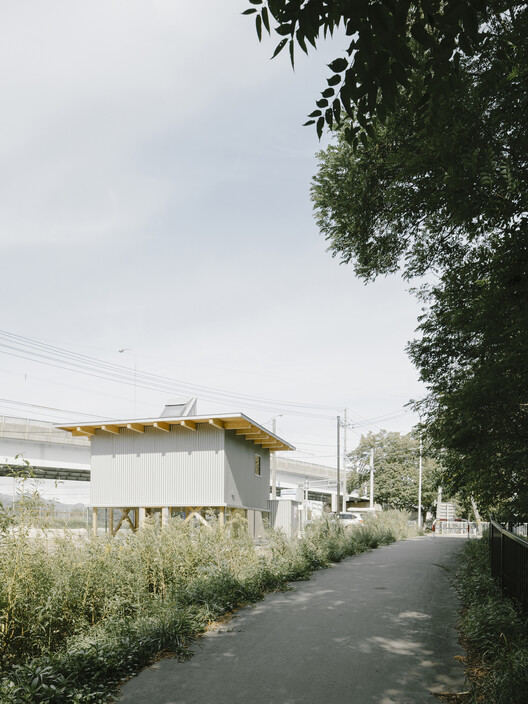
The site is situated on a narrow, gently sloping plot where distinctly different environmental elements converge: an artificial environment framed by elevated highways, transmission towers, and busy roads, juxtaposed with the reintroduction of nature via the Makomanai River, a bicycle path, and surrounding greenery.
该场地位于一块狭窄且坡度平缓的地块上,这里汇聚了截然不同的环境要素:高架公路、输电塔和繁忙道路勾勒出一个人造环境,而手稻川(Makomanai River)、一条自行车道以及周边的绿地则重新引入了自然的气息。
© Yongbaek Lee
© Yongbaek Lee
© Yongbaek Lee
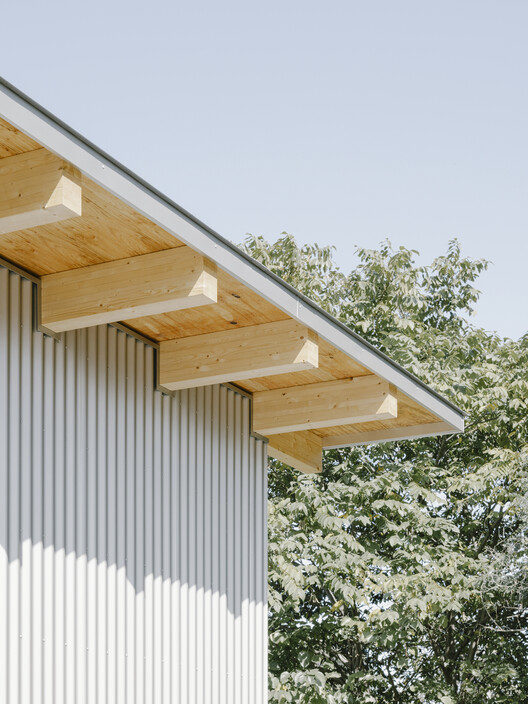
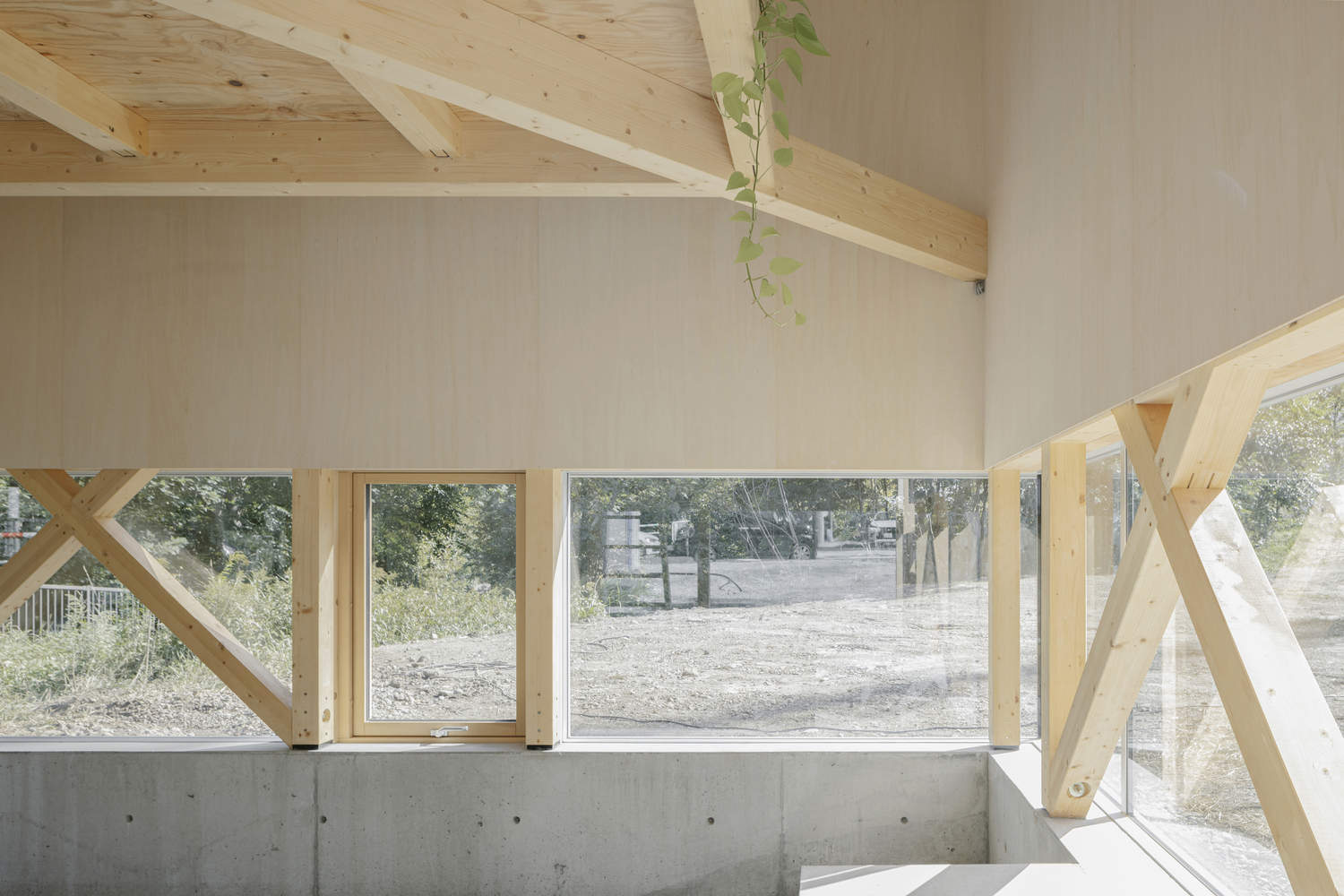
In this setting, the client desired a small multi-functional space that transcends traditional boundaries. Thus, Hiraya—a multi-functional pavilion—was conceived as a place for people to gather, converse, and share daily life and dreams. Considering user diversity and functional fluidity, we envisioned an architecture that could integrate into the world over time, possessing a soft yet resilient form that nurtures both the building’s lasting vitality and its adaptability to change.
在此环境中,客户希望打造一个小型多功能空间,突破传统定义的界限。于是,平屋亭(Hiraya)应运而生 —— 它是一座多功能亭阁,是人们聚会、交谈、共享日常生活与梦想的场所。考虑到用户多样性和功能流动性,我们设想打造一座能够随时间融入这个世界的建筑,它形式柔和却坚韧,既能滋养建筑的持久生命力,又能灵活适应变化。
© Yongbaek Lee
© Yongbaek Lee
© Yongbaek Lee
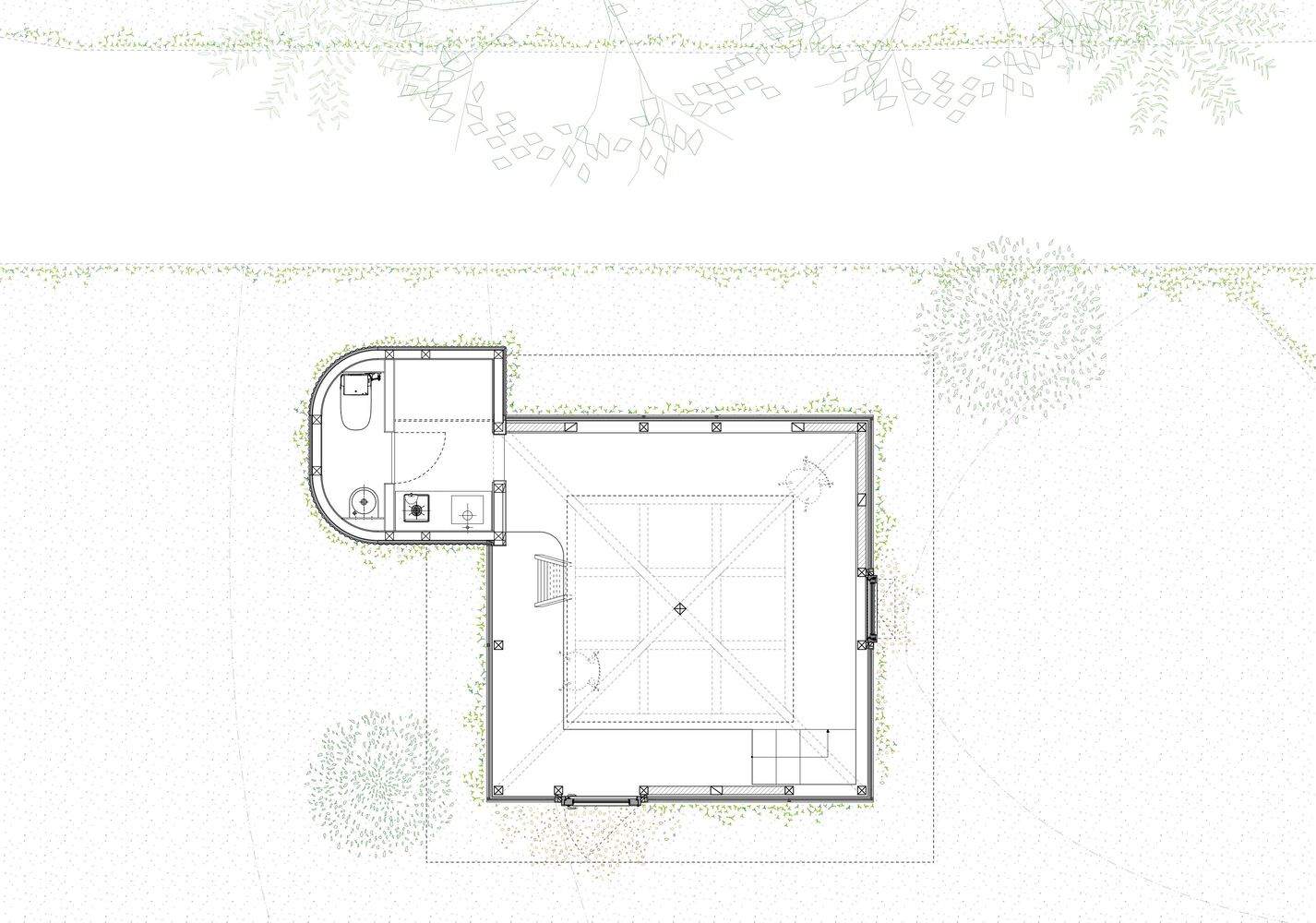
The building consists of a single 4550mm square space and a minimal service core. Within this extremely compact footprint, we explored how to achieve both openness and flexibility in the space under constraints of scale and cost.
该建筑由一个 4550 毫米见方的单一空间和一个极简的服务核心区构成。在这极其紧凑的占地面积内,我们探索了如何在规模和成本的限制下,实现空间的开阔性与灵活性并存。
© Yongbaek Lee
© Yongbaek Lee
© Yongbaek Lee
© Yongbaek Lee
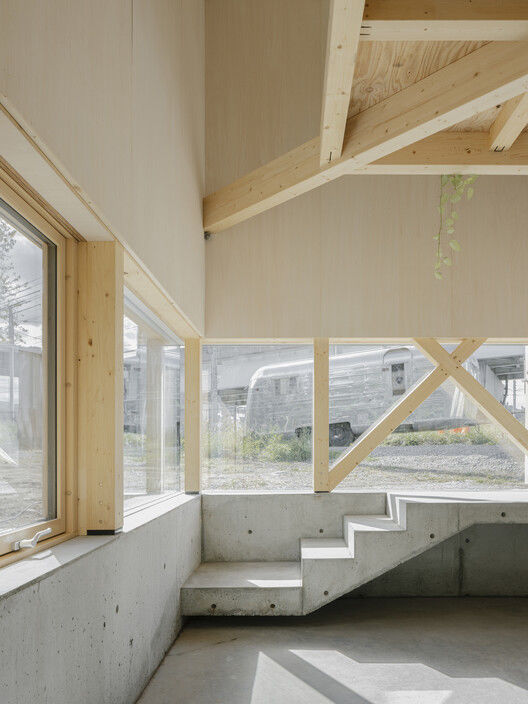
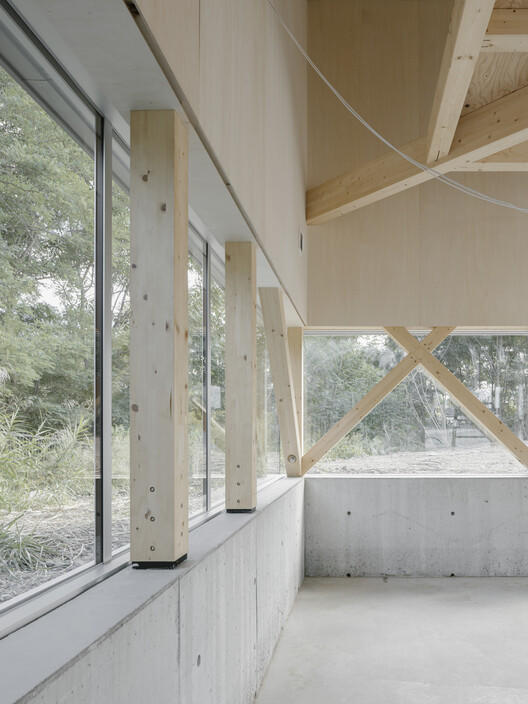
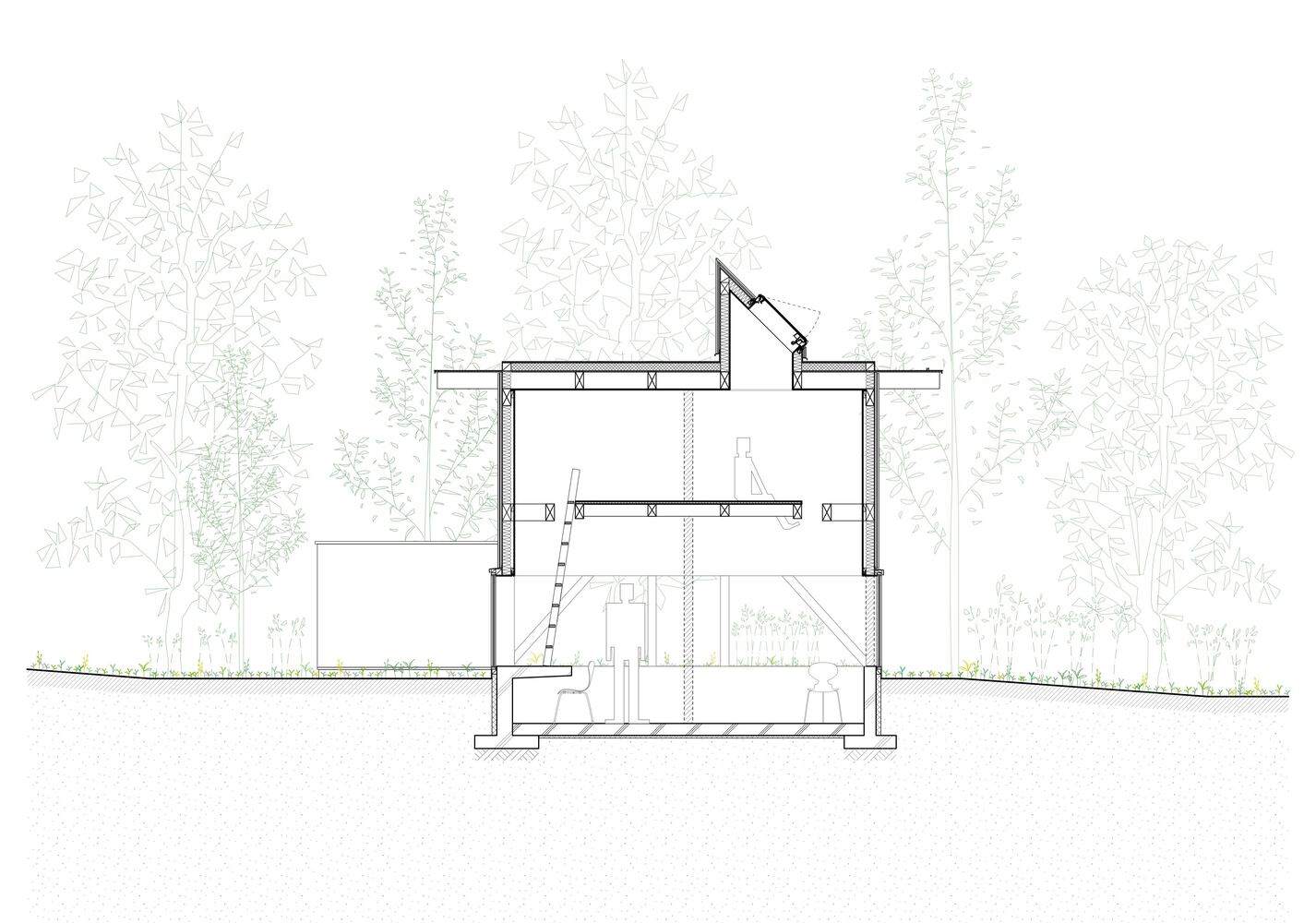
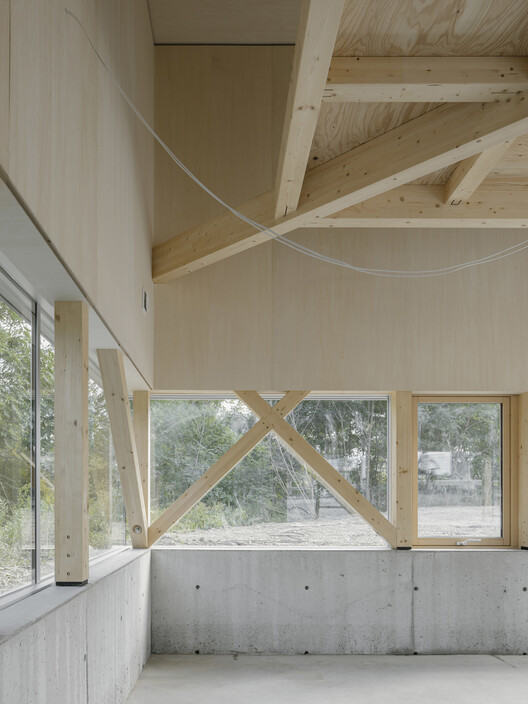
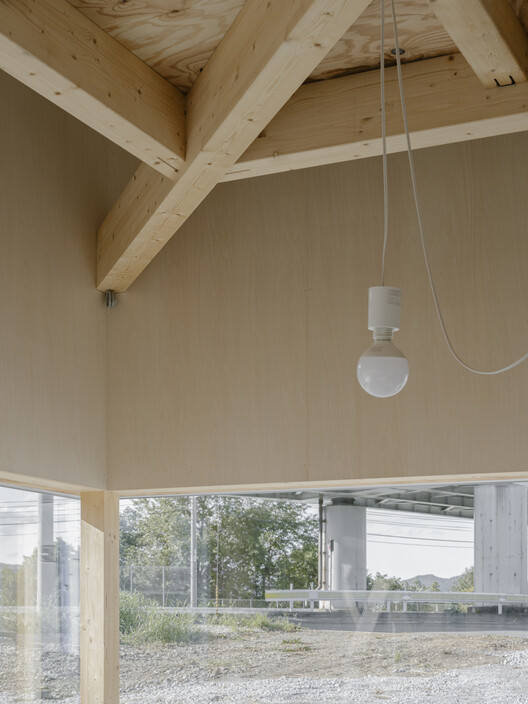
The structure is embedded 720mm underground, forming a plinth with openings on all four sides. This low plinth encourages various postures and activities, such as walking, sitting, working, and dining, while drawing the surrounding greenery inward to create a continuous horizontal flow.
建筑体量嵌入地下 720 毫米,形成一个基座,四面均设有开口。这个低矮的基座鼓励人们采取各种姿势和开展多样活动,如行走、坐卧、工作和用餐,同时将周边绿地引入室内,营造出连续的水平流动感。
© Yongbaek Lee
平面图
剖面图
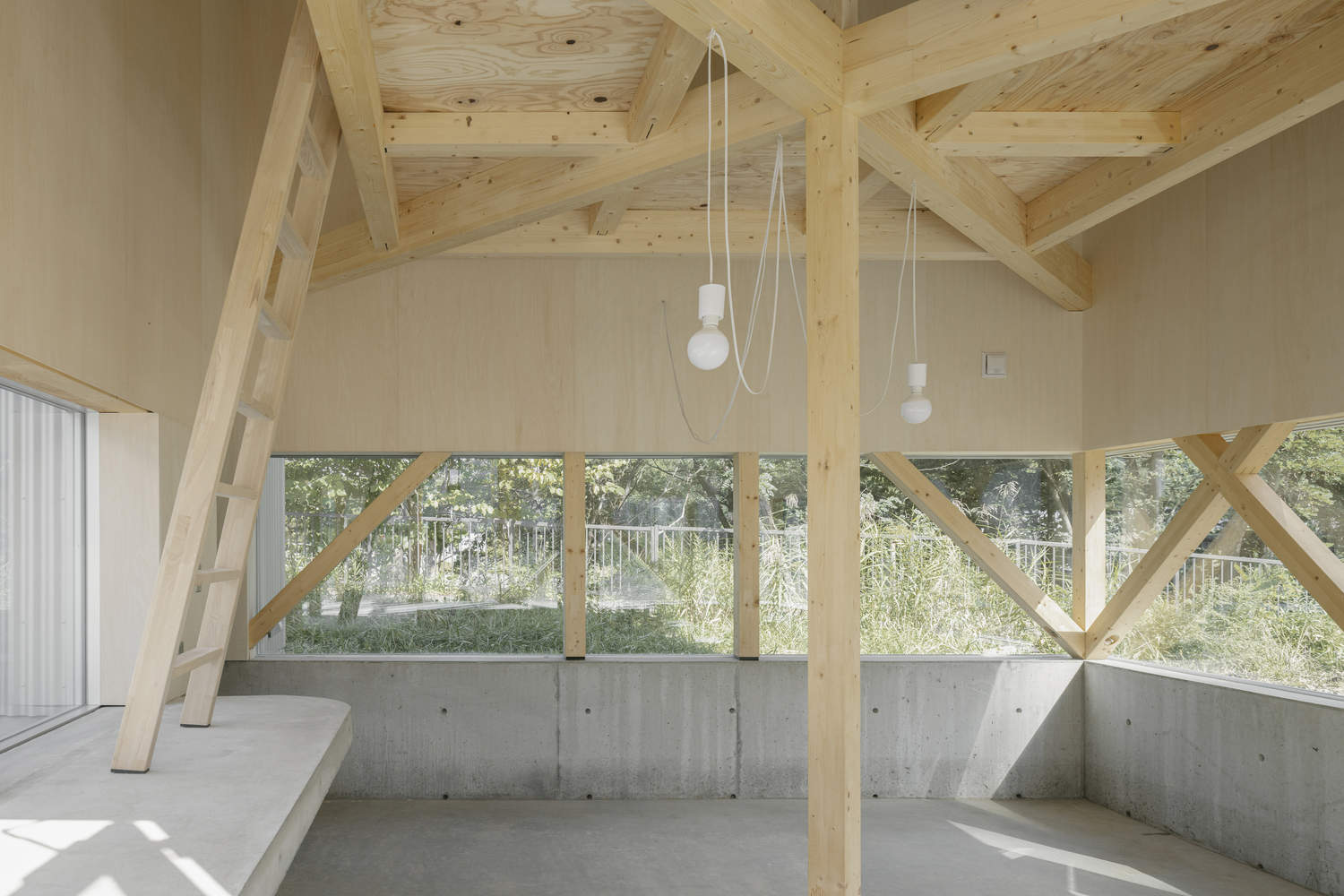
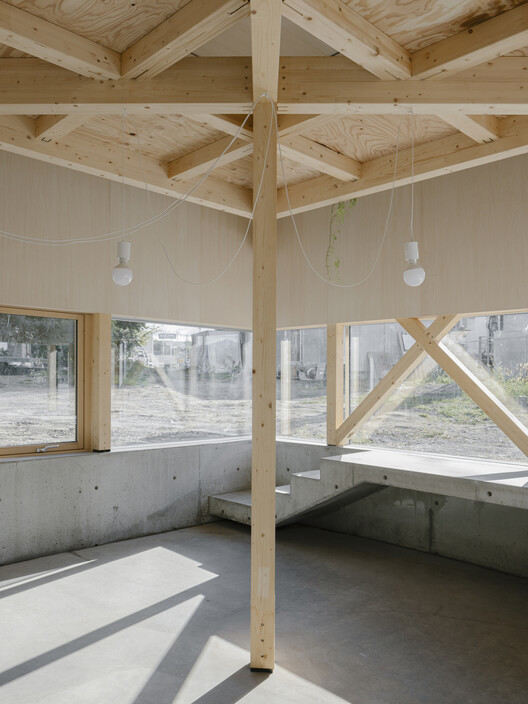
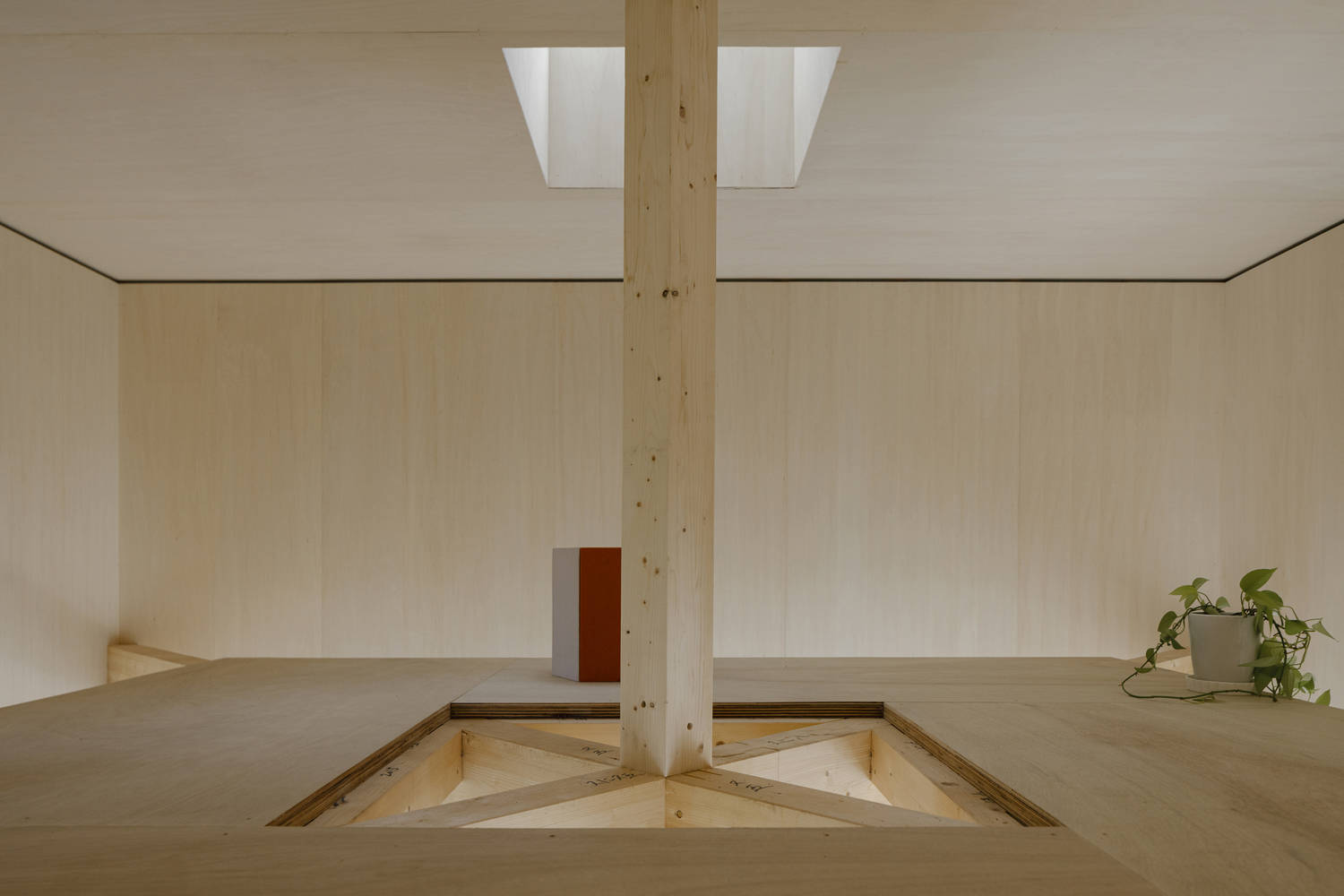
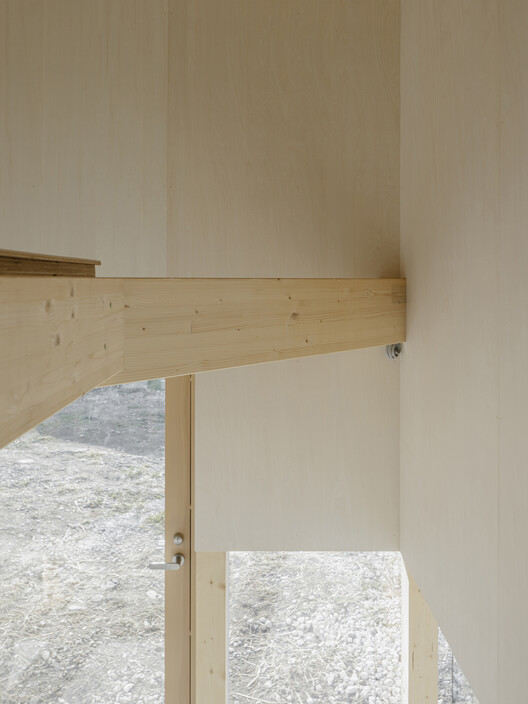
At the center of the space, a symbolic column rotated 45 degrees intersects with a diagonal beam that supports a small loft floor above. This sectional configuration connects the upper and lower spaces through continuous open areas on all four sides, expanding the sense of vertical openness.
空间中心,一根旋转45度的象征性立柱与一根对角梁相交,对角梁支撑起上方的一个小阁楼地板。这一剖面构成通过四面连续的镂空区域,将上下层空间连接起来,拓展了垂直方向的开阔感。
© Yongbaek Lee
© Yongbaek Lee
Although a 4550mm span could easily achieve a column-free space with just one beam, such a design would appear disproportionate here. Instead, the central column and diagonal beam act as an anchor, subtly dividing the compact floor plan into four areas that are both independent and interconnected.
尽管 4550 毫米的跨度只需一根横梁即可轻松实现无柱空间,但这样的设计在此处会显得比例失调。相反,中央立柱和对角梁作为锚点,巧妙地在紧凑的平面布局中划分出四个既独立又相互关联的区域。
© Yongbaek Lee
© Yongbaek Lee
© Yongbaek Lee
© Yongbaek Lee
In this ambiguous and changing environment, the Hiraya Pavilion forms a small, self-contained universe that embraces change, inspires interpretation, and offers serene freedom within a precise architectural framework.
在这个模糊多变的环境中,平屋亭形成了一个小型、自成一体的宇宙,它拥抱变化,激发人们的解读,并在精准的建筑框架内提供静谧的自由。
© Yongbaek Lee
© Yongbaek Lee