结构与意象的深度对话:“明月坞”项目成功地将一个基于诗意命题的抽象概念,转化为具有明确物质性和空间体验的建筑实体。设计师没有拘泥于对诗歌的直白复刻,而是以废弃花房为物质锚点,围绕“水、月、花、舟”等母题进行结构和空间的深度解构与重组。这种手法使得建筑在承载文化意蕴的同时,实现了场域的非日常化和体验的独特性,成功地将结构逻辑、材料特性与象征意义融为一体,营造出诗意与现实交织的场所精神。
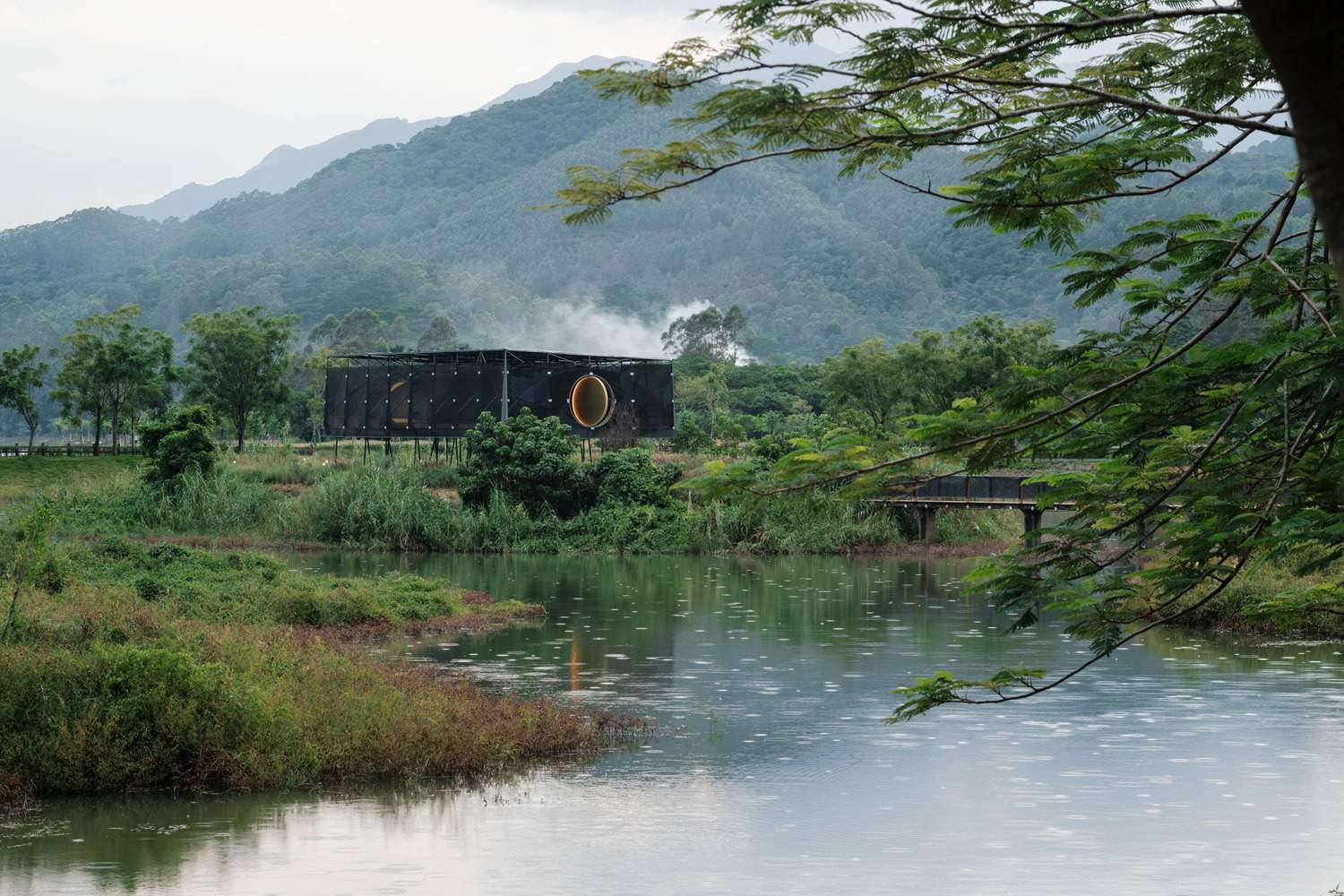
多尺度下的感知媒介:项目将“月”的概念巧妙地转化为一个可与观者互动的多功能媒介。在宏观尺度上,机械转动的“人造月轮”与真实月色、水面倒影形成多重映照,构成富有层次的景观序列。在中观尺度上,建筑轮廓勾勒出“水上月初升”的意境。在微观尺度上,它演变为可与人体互动的符号。这种对单一意象进行多尺度、多层次的渗透与转译,极大地丰富了访客的感知体验,是项目空间叙事的核心精髓。
结构延续与“船坞”形态的创新:建筑师在保留原有花房结构特征的基础上,通过增建二层结构,实现了功能拓展和景观视野的引入。二层混凝土楼板被塑造成漂浮的“舟”,与底层纤细的乱钢柱支撑形成强烈的对比,完美诠释了“船坞”的意象。此外,结构优化(如屋架上翻以增强抗侧力)与形态营造的紧密结合,以及利用深色耐力板营造的“墨镜”外观,都体现了对现有场地文脉的尊重与结构逻辑的巧妙转化。
Structural and Conceptual Dialogue: The project "Moon Dock" is a deep dialogue between structure, space, and imagery, initiated from the material starting point of an existing abandoned flower house, rather than a direct translation of the poetic theme "Smiling by the Vase in the Flower Dock." Through the abstraction and reorganization of motifs such as "water, moon, flower, and boat," it ultimately creates an overall, special, and non-daily experiential space.
“明月坞”是一个“命题作文”。项目以“花坞樽前微笑”为题,却并非对诗意进行直接转译,而是以岛上原有的一座废弃花房为物质起点,开启了一场关于结构、空间与意象的深度对话。通过对“水、月、花、舟”等母题的抽象与重组,最终营造出一个整体的、特殊的、非日常的体验场所。
© 陈颢
© 陈颢
© 陈颢
© 陈颢
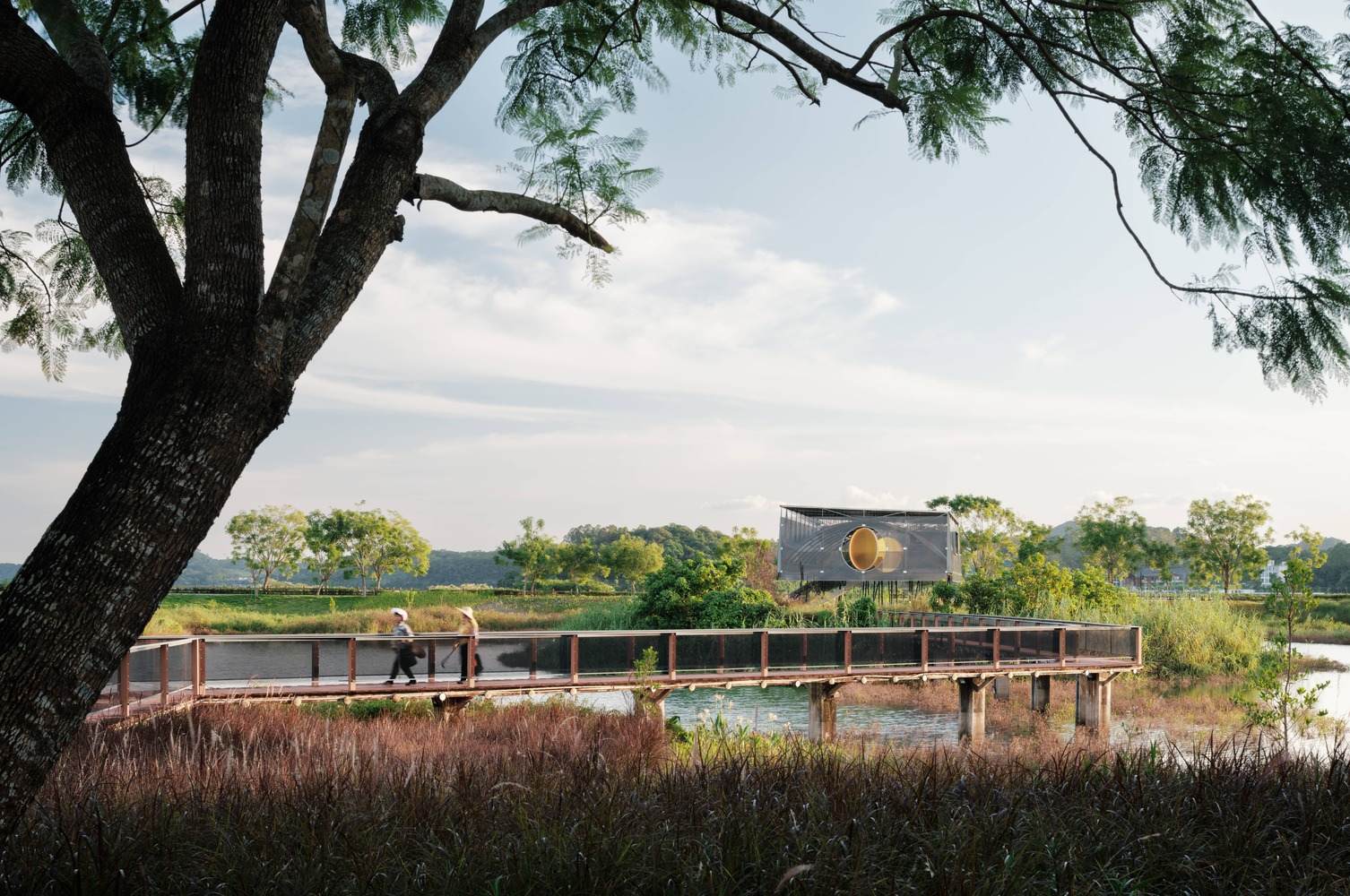
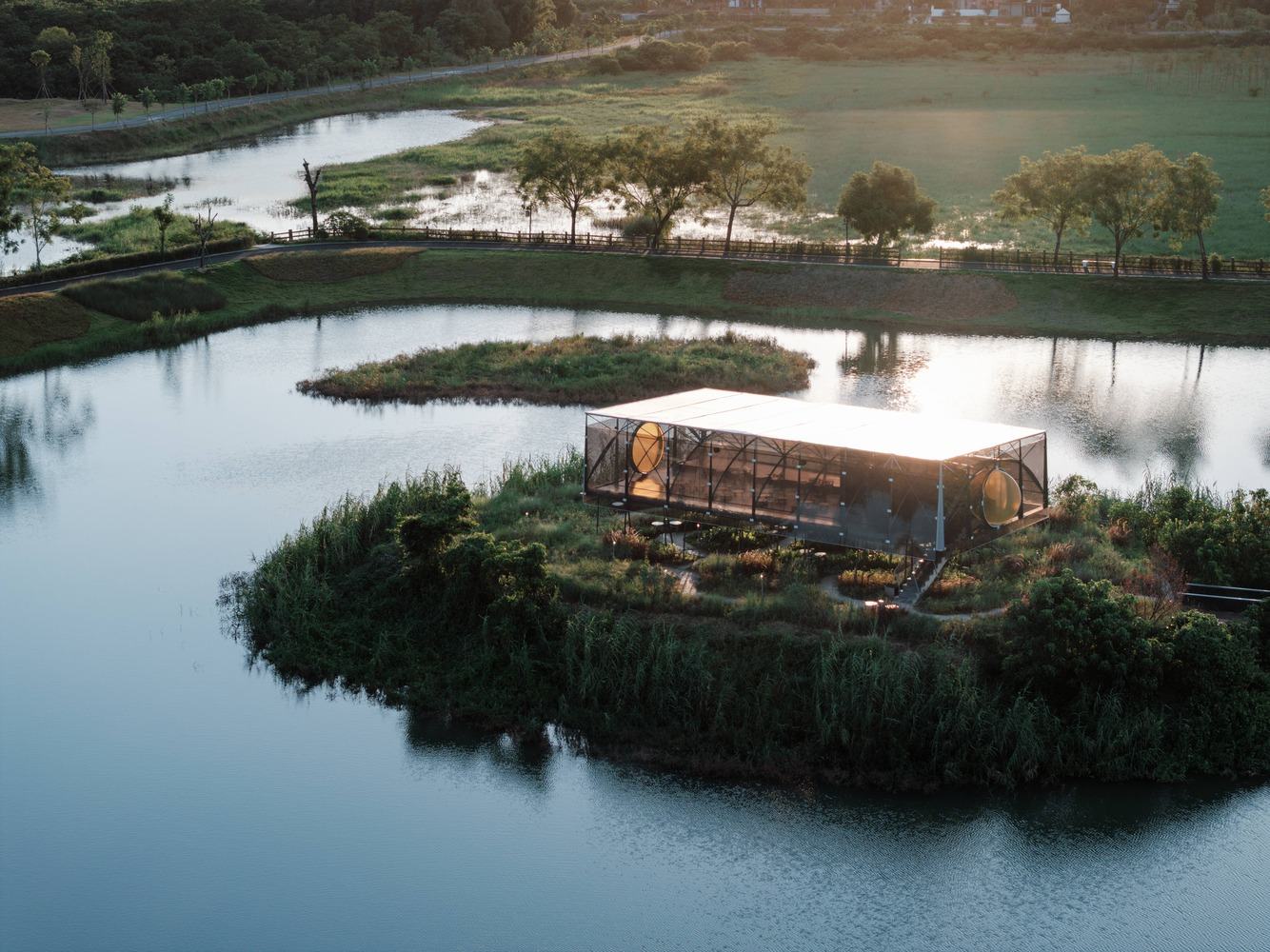
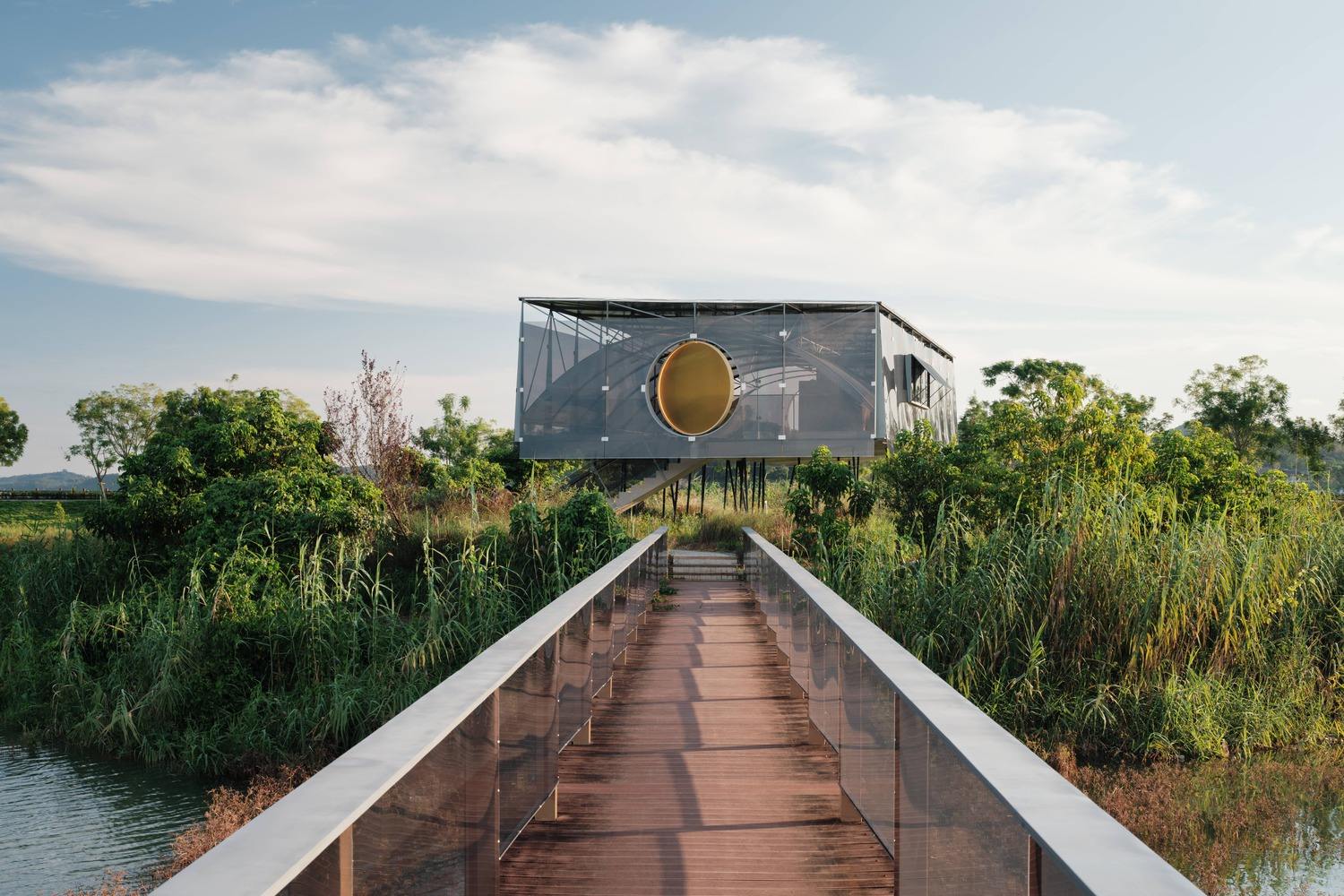
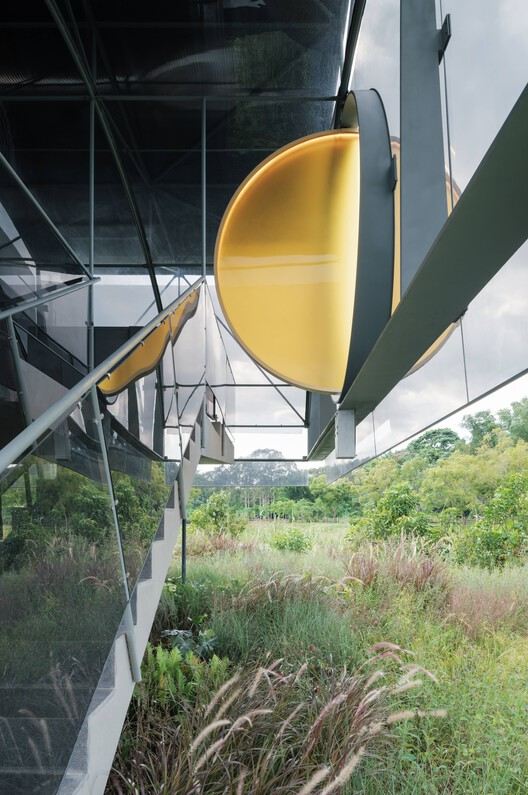
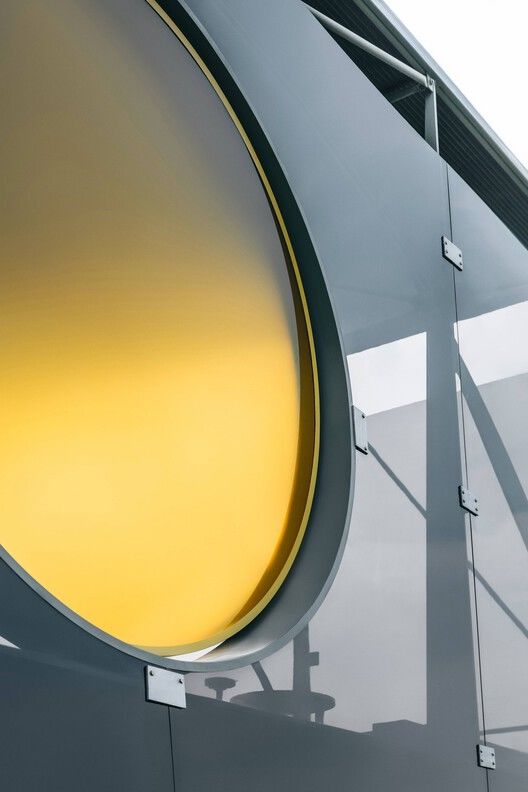
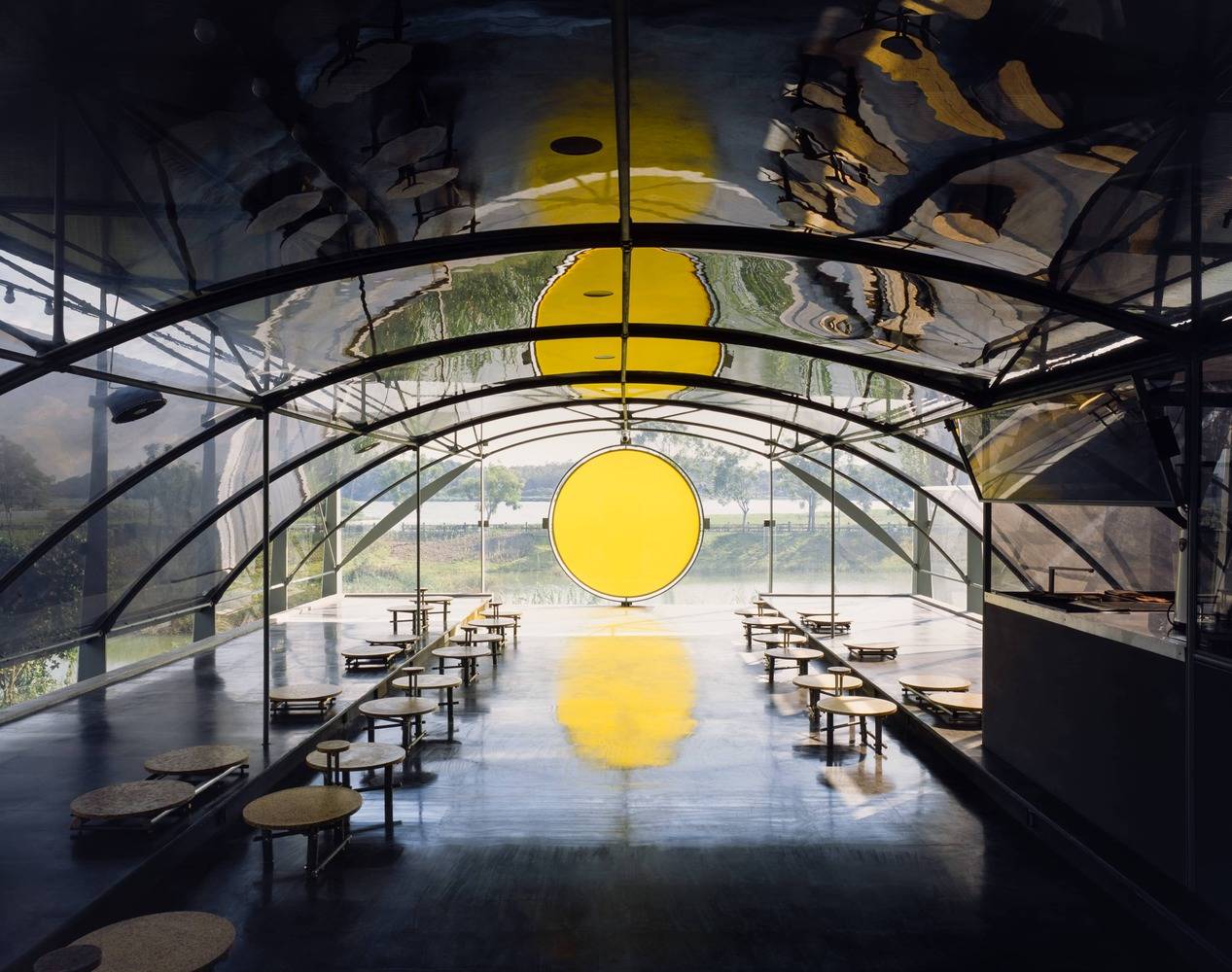
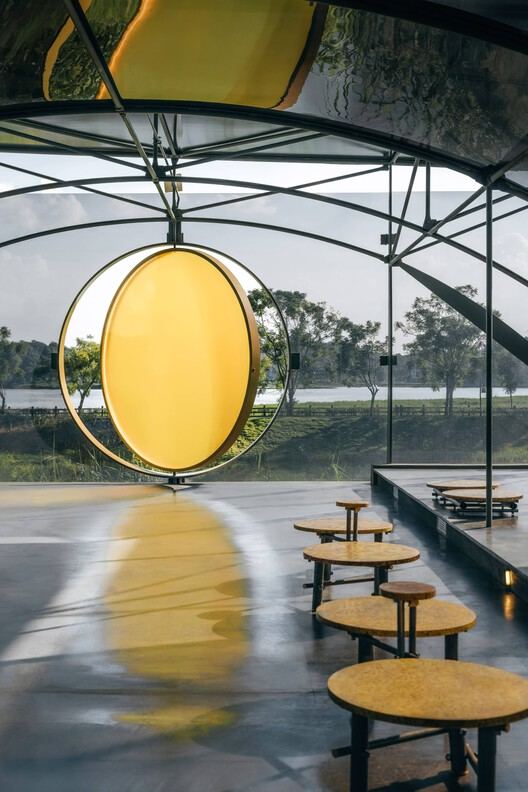
Water and Moon: The concept of the "Moon" originates from the pursuit of a scene involving drinking and poetry. In the design, it functions not only as a mechanically rotatable concrete device on the facade but also as a spatial medium connecting different scales of perception. When viewed from a distance, the artificial lunar wheel and the real moon reflect each other on the water surface; when walking slowly along the pond, the entire building outlines the silhouette of the moon rising above the water; upon entering, it transforms into a planar symbol that interacts with the body.
水月:
“月”的概念源于对“饮酒作诗”场景的追索。在设计中,它不仅是立面上一个可机械转动的具象装置,更成为串联不同感知尺度的空间媒介。远望时,人造月轮与真月在水面之上彼此映照;沿塘缓行,建筑整体勾勒出水上月初升的轮廓;步入内部,它又转化为一个可与身体互动的平面符号。
© 陈颢
© 陈颢
© 陈颢
© 陈颢
© 朱雨蒙
© 陈颢
Flower House: A significant starting point for the project was the retention of the structural quality, spatial language, and material effects of the original flower house. The original house featured a light structure composed of articulated nodes, exhibiting distinct characteristics of temporariness and agricultural architecture; its layered spatial construction—a flat top layer and an arched middle layer, covered with polycarbonate sheets and shading black gauze, respectively—shaped a unique translucency. Based on this concept, the new second-story structure continues the dimensions and node connection methods of the original components.
花房:
项目的重要出发点,在于保留原花房的结构质量、空间语言与材料效果。原花房由铰接节点构成的轻巧结构,呈现出鲜明的临时性与农用建筑特征;其层叠的空间构造 —— 顶层平整、中层起拱,分别覆以阳光板与遮阳黑纱 —— 则塑造出独特的半透明感。基于此理念,新建的二层结构延续了原有构件的尺寸与节点衔接方式。
© 陈颢
© 朱雨蒙
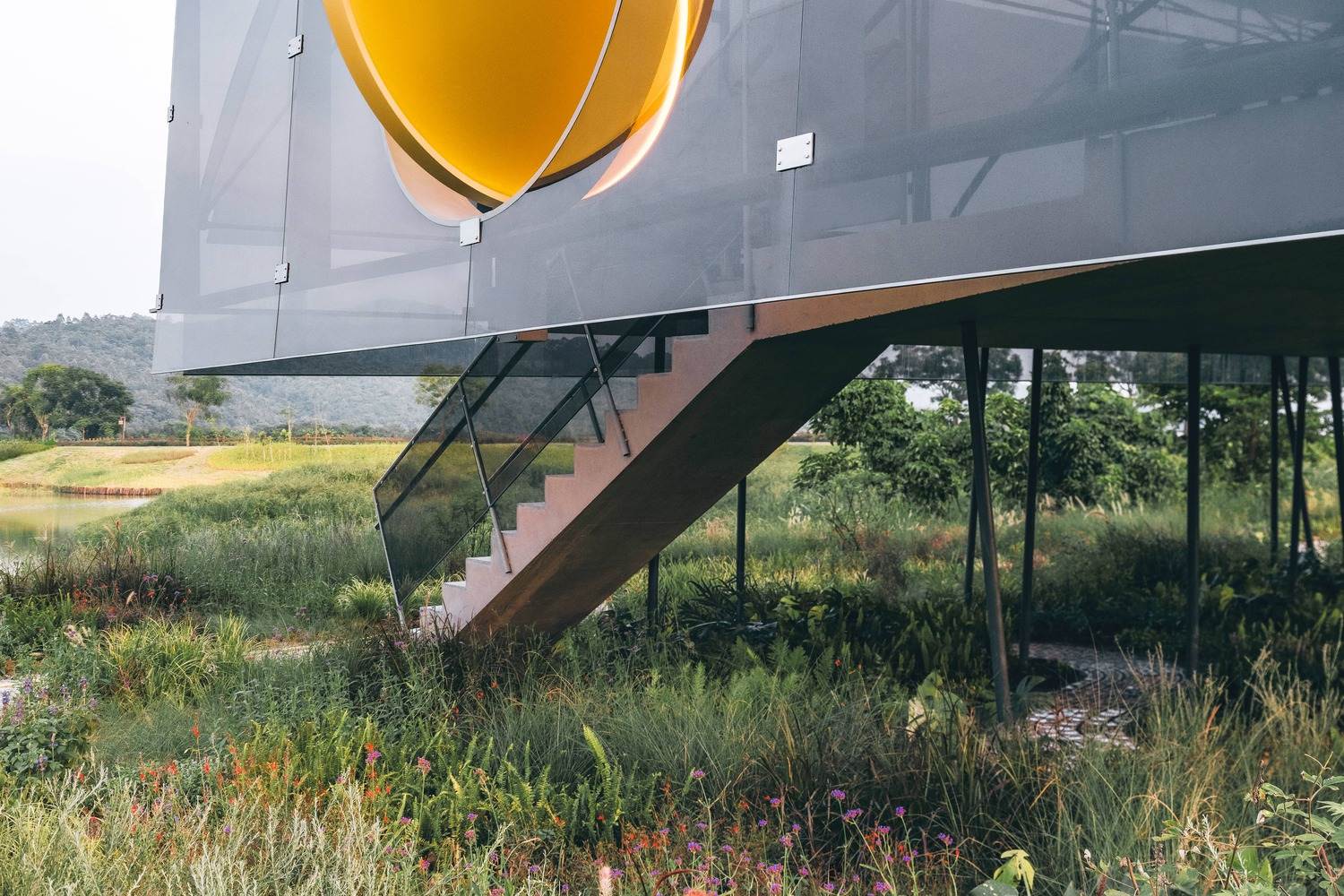
Ship Dock: To incorporate the view of the distant reservoir and free up ground space, the building was expanded from one story to two stories based on the original flower house’s first floor. The second-floor concrete slab acts like a raised ground, or a floating "boat."
船坞:
为将远方水库的景色纳入视野,同时释放出地面的空间,建筑由原花房的一层增至两层,二层混凝土楼板如同抬起的地面,又如同漂浮的“舟”。
© 陈颢
© 陈颢
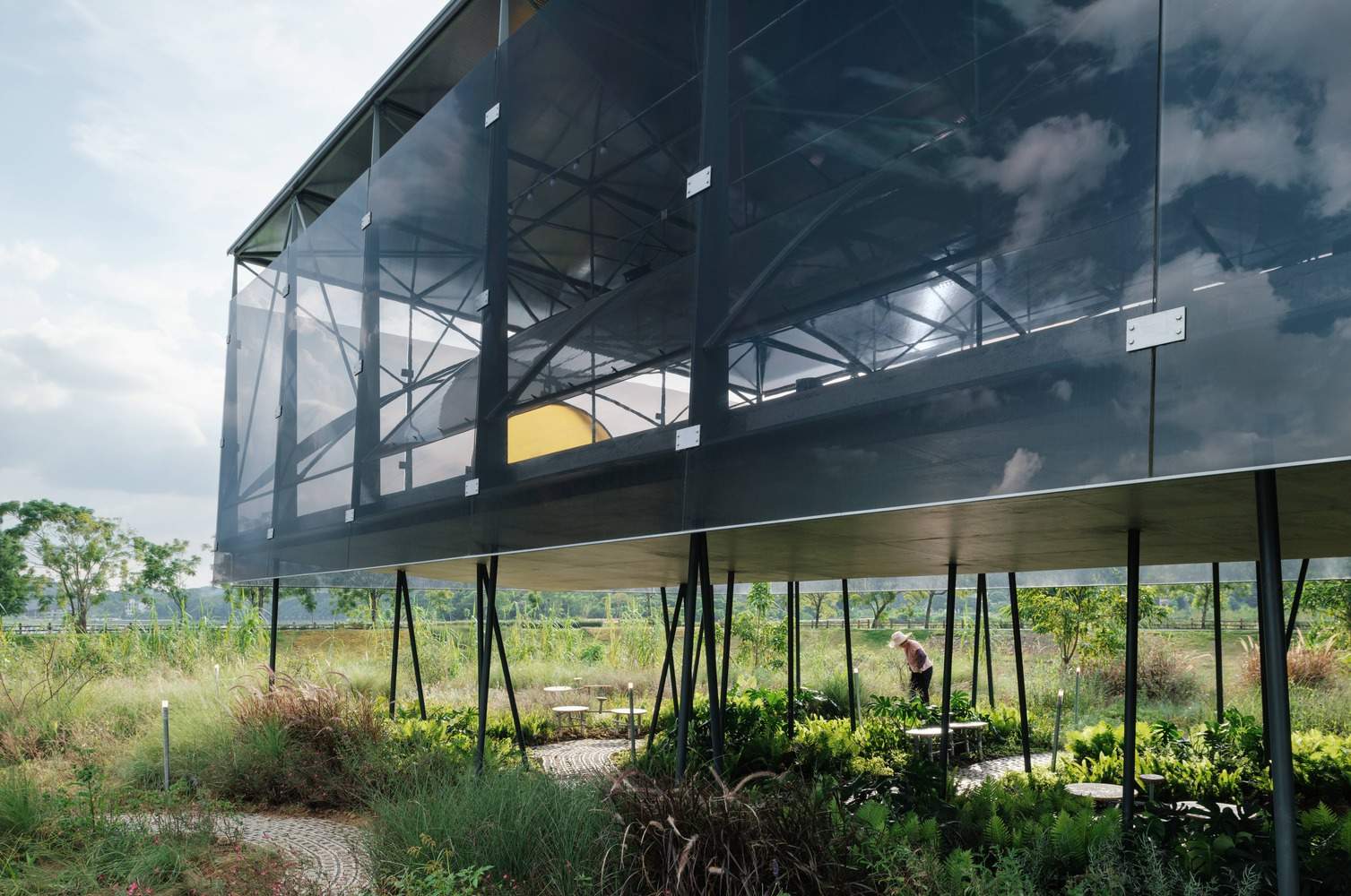
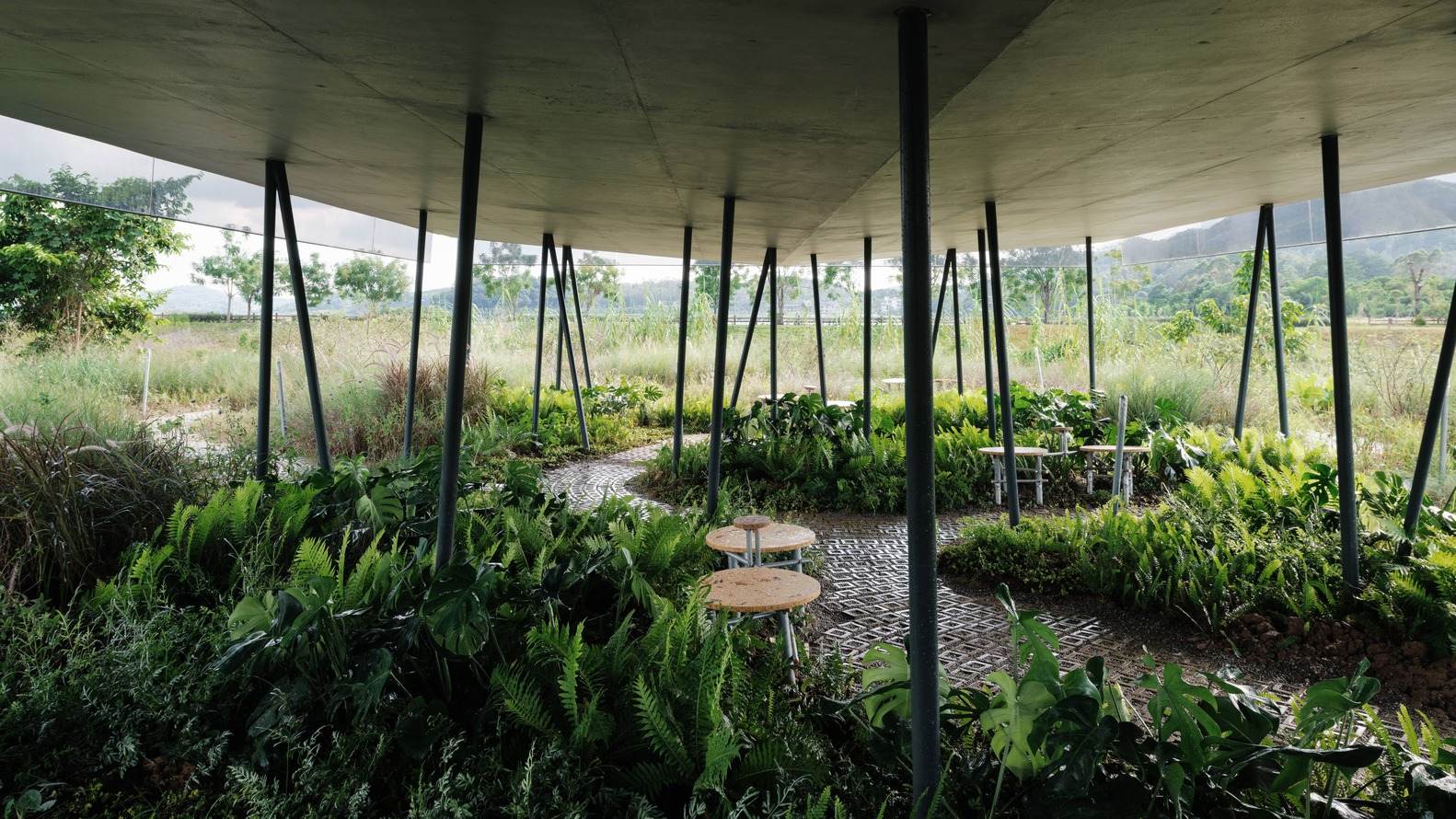
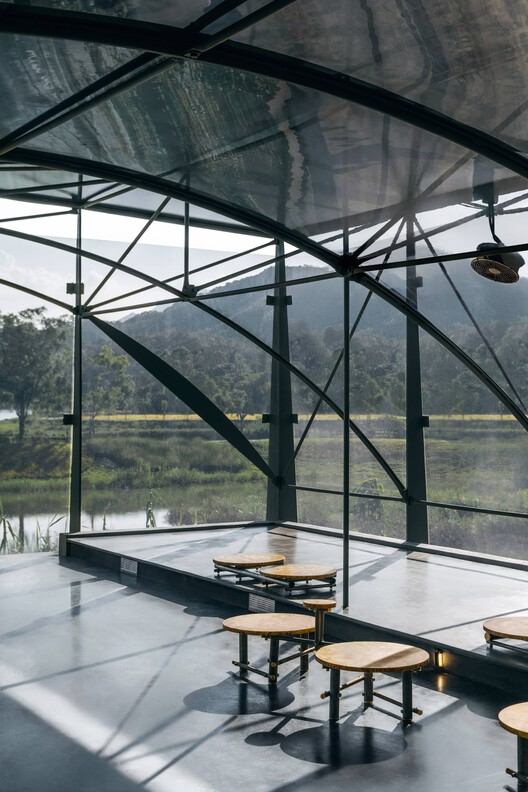
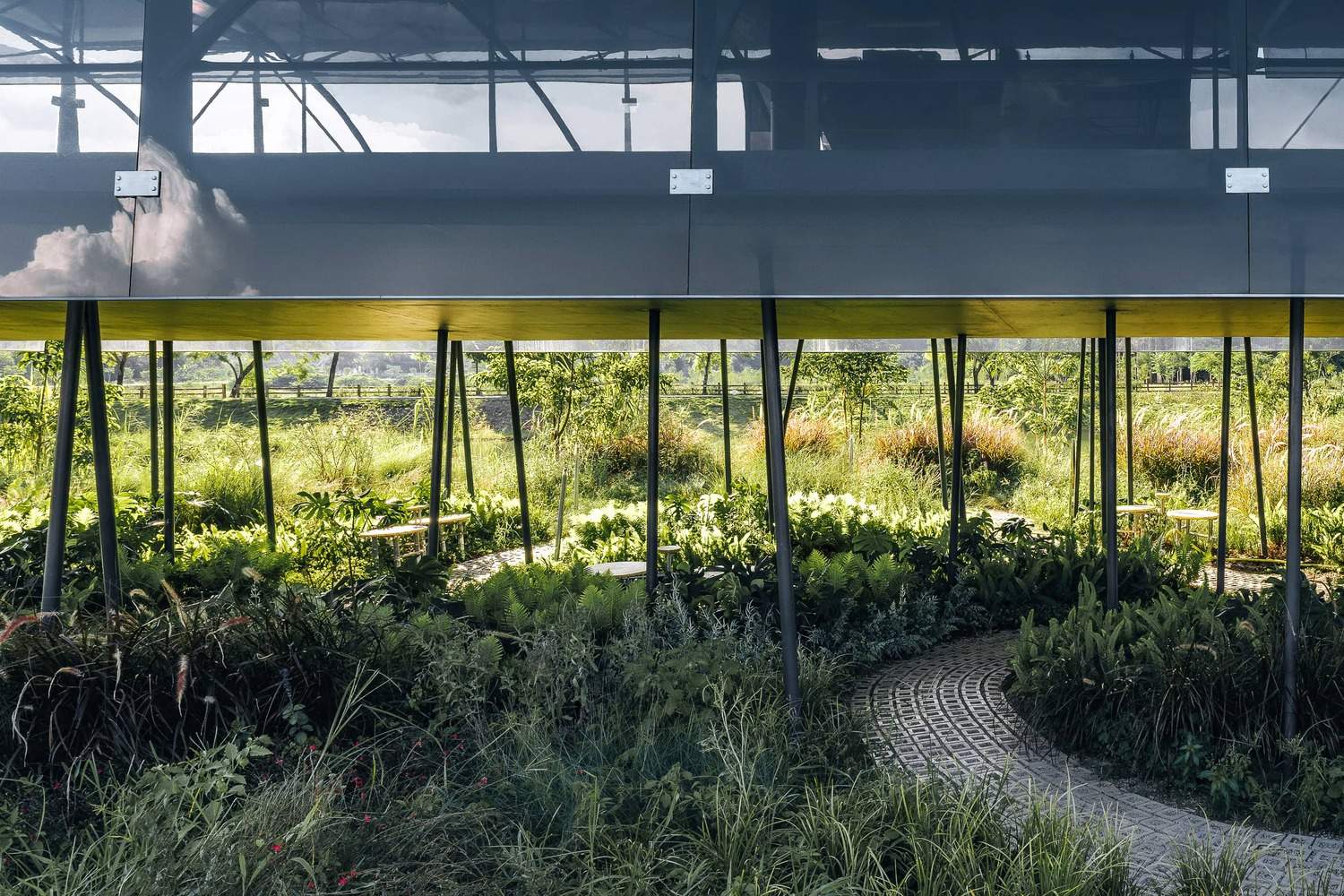
Inspired by temporary structures that elevate boats above the water during the dry season, the ground floor utilizes relatively dense, randomly arranged steel columns to create an ostensibly disordered support state, with utility lines concealed within localized A-shaped columns. The shallow V-shaped concrete slab of the middle layer visually reinforces the hull structure and contrasts sharply with the light upper level. The strategy of flipping the roof truss upward not only optimizes lateral resistance but also structurally strengthens the "ship dock" imagery.
受到在枯水季把船架高于水面的临时结构的启发,底层采用相对细密的乱钢柱,营造出一种看似无序的支撑状态,水电管线隐藏于局部 A 形柱中。中间层的浅 V 字形混凝土楼板,在视觉上强化了船体结构,并与轻盈的上层形成鲜明对比。屋架上翻策略,不仅优化了横向抗侧力,更在形态上强化了“船坞”的意象。
© 朱雨蒙
© 朱雨蒙
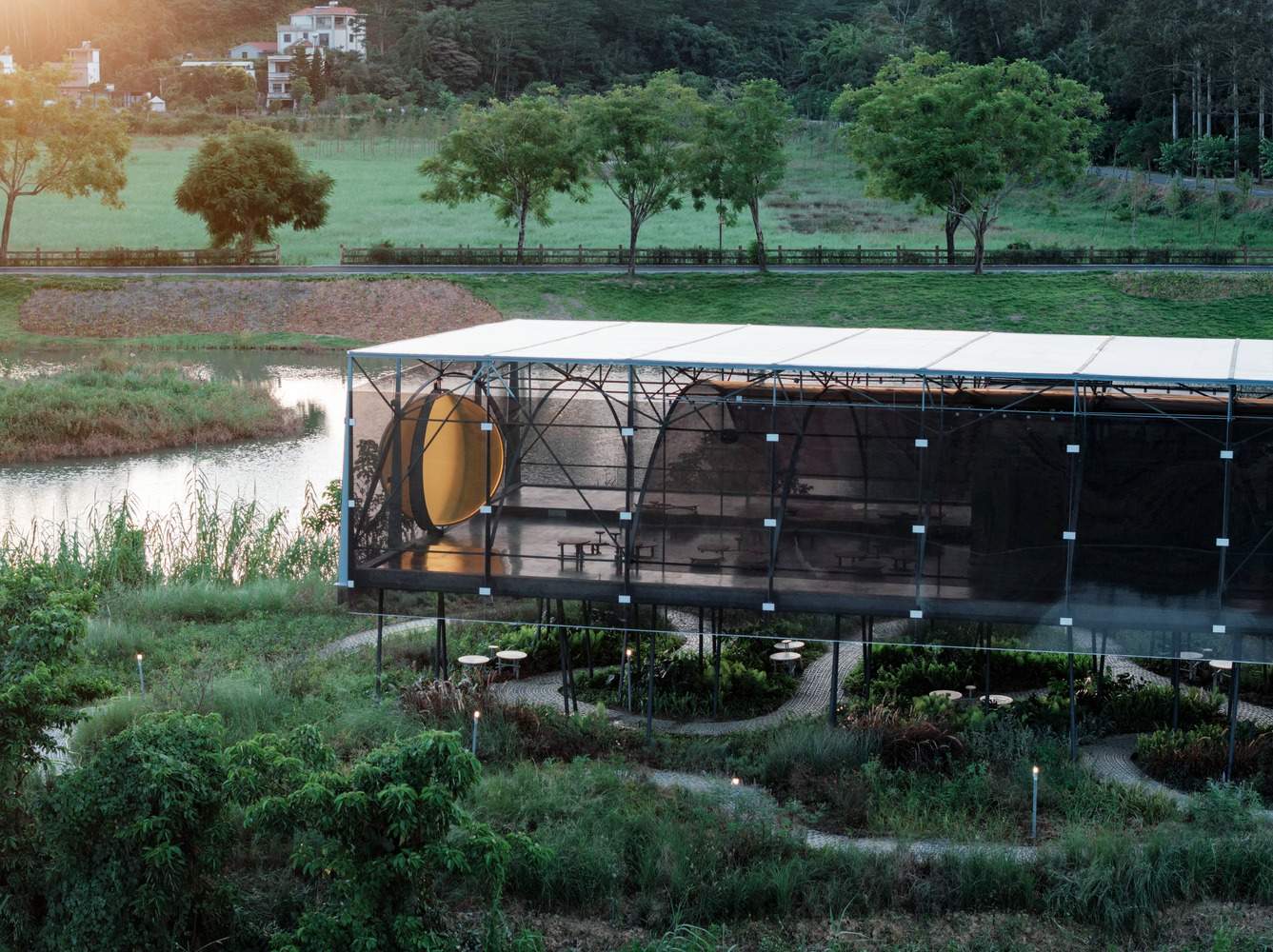
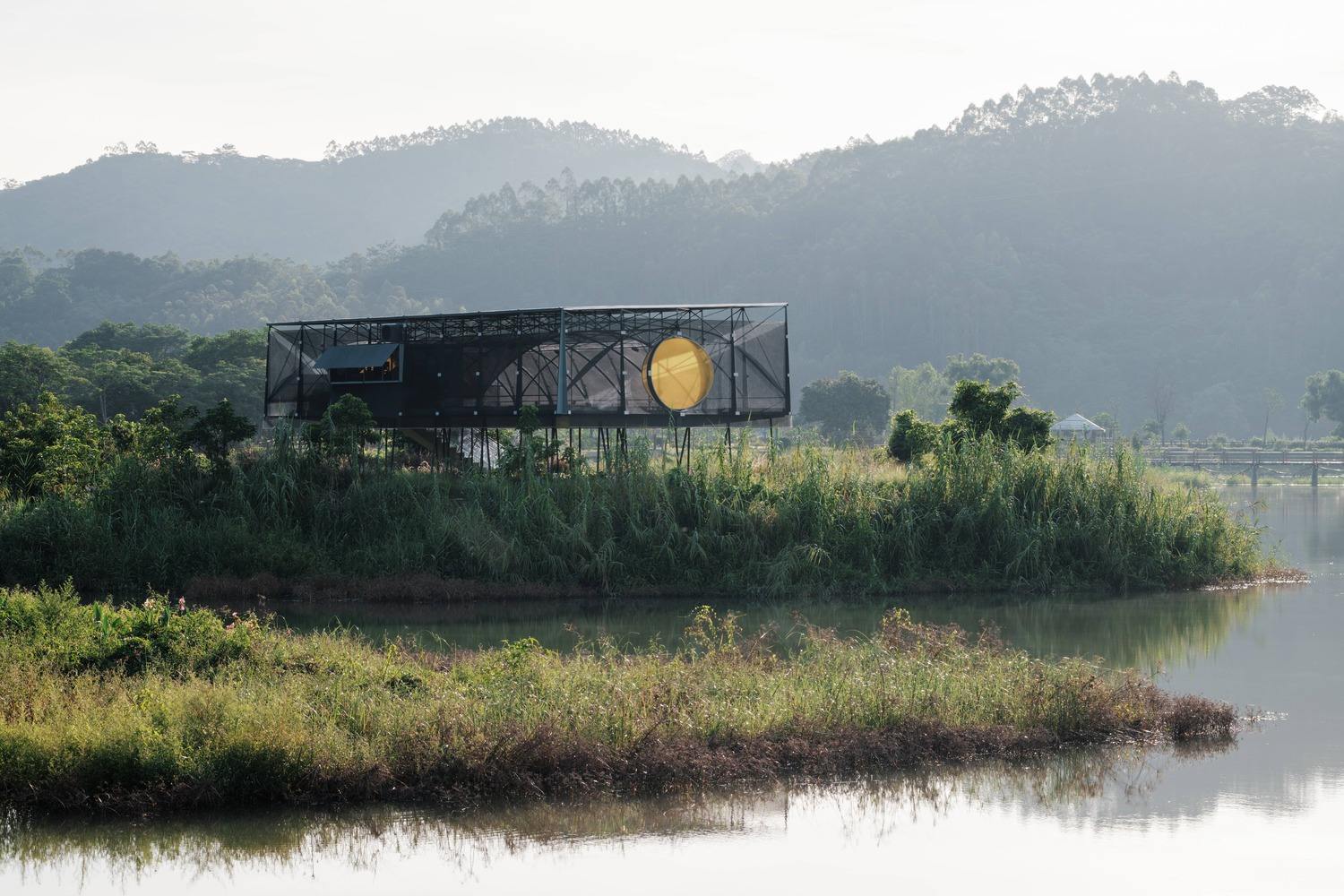
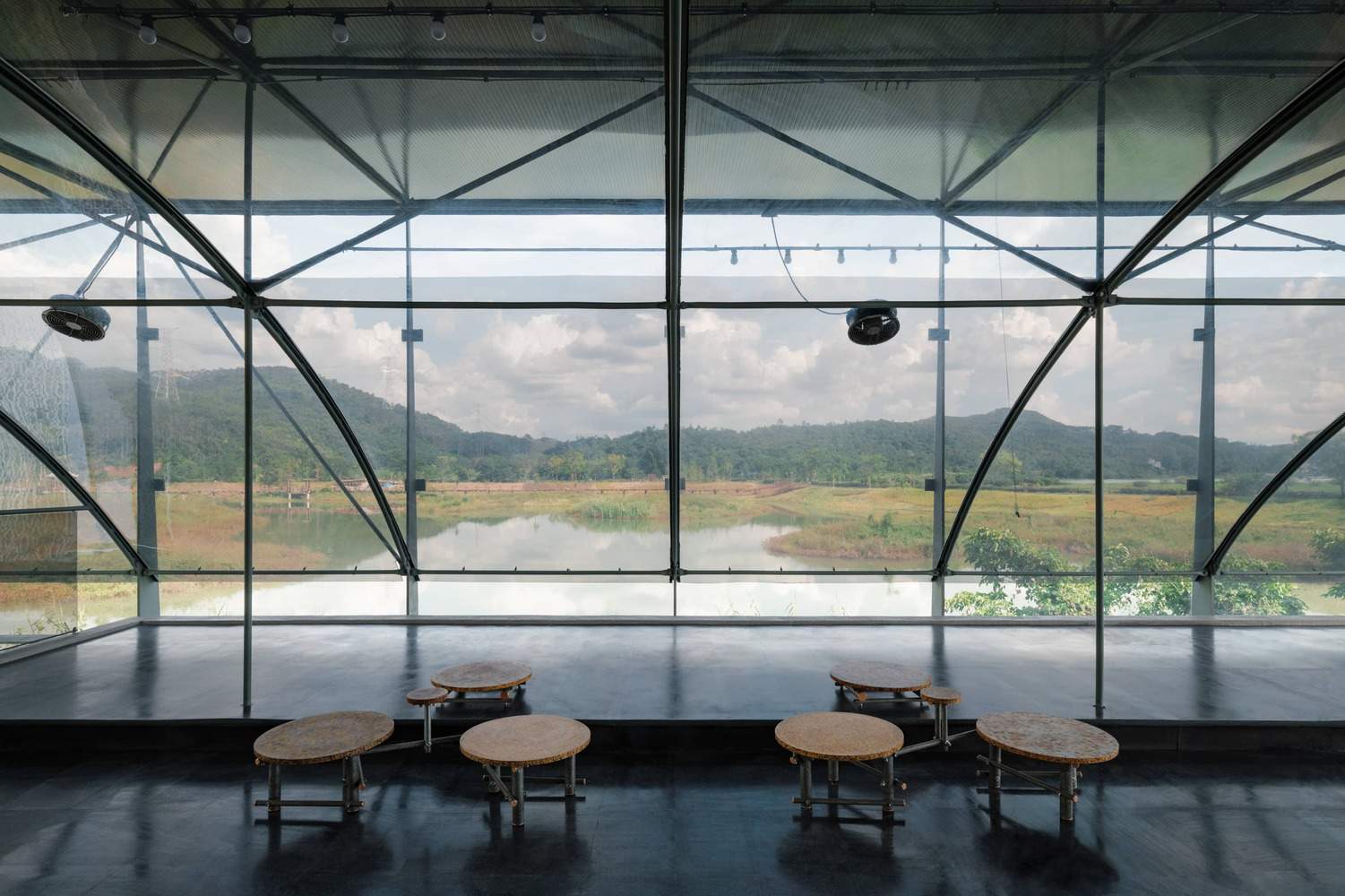
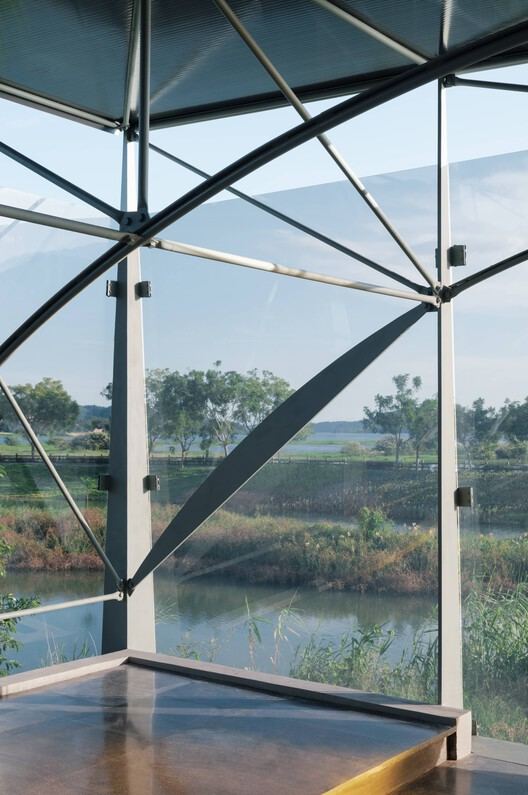
"Sunglasses": To continue the atmosphere of the original flower house and echo the agricultural landscape, the building's exterior is clad in dark endurance panels, appearing like a pair of sunglasses from a distance. This dark exterior contrasts the brightness of the moon during the day, while the interior presents a high degree of transparency, clearly revealing the complex structural layers. Steel components at different levels are distinguished by different colors, further reinforcing the visual hierarchy and supporting the overall expression of transparency.
“墨镜”
为延续原花房的氛围并呼应农业景观,建筑外覆深色耐力板,远观犹如一副墨镜。这种深色外观在白天衬托出月的明亮,而内部则呈现出高透的状态,使复杂的结构层次清晰可辨。不同层级的钢构件由不同颜色区分,进一步强化了视觉层次,辅助了整体的透明性表达。
© 陈颢
Analysis Diagram
© 朱雨蒙
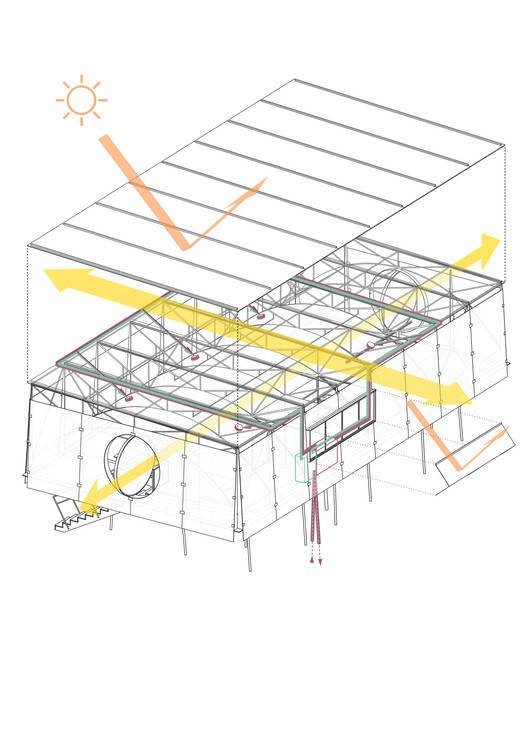
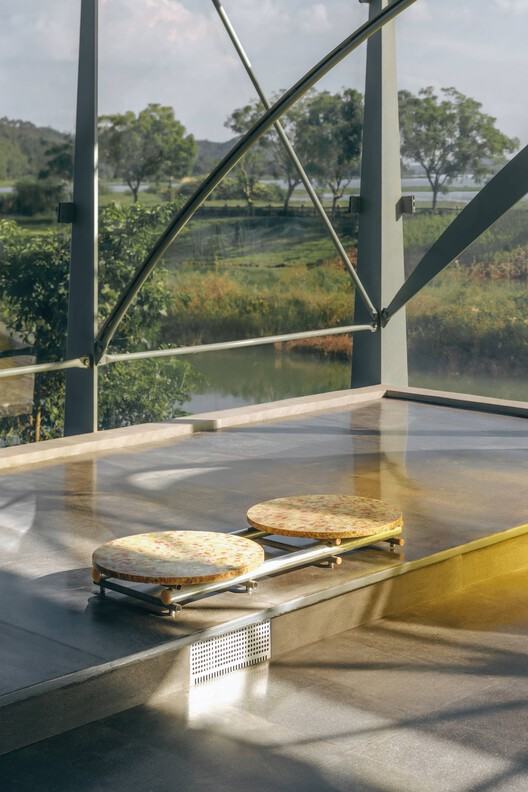
The translucency of the materials also brought thermal challenges. The design employed a combination of passive ventilation, shading covers, and mechanical misting fans. After software simulation and calculation by a sustainability consultant, these measures maintained the new interior space at ambient air temperature levels. Internal comfort remains highly dependent on air circulation.
材料的半透明性也带来了热工挑战。设计通过被动式通风、遮阳覆盖以及机械的水雾风扇等综合措施,经过可持续顾问的软件模拟和计算,将新的内部空间保持在气温水平。内部舒适度对空气流通的依赖度仍然是高的。
© 朱雨蒙
© 陈颢