文化意象与空间叙事的融合:本项目最精髓之处在于其对泰国“Bhumi”(土地/文化)概念的深刻诠释与空间化表达。建筑成功地将泰国古代建筑的标志性元素——如“Chom Hae”多层尖顶屋顶和藤席编织纹样——提炼并融入到当代设计语境中,实现了文化符号的现代化转译。通过缩小传统比例和精选材料色彩,建筑在传达泰国身份认同的同时,创造出一种轻松、愉悦且具有普遍吸引力的观展氛围。这种对文化遗产的尊重与创新性应用,是其建筑叙事的核心力量。
场地适应性与视觉策略的巧妙运用:面对世博会A13地块狭长、深远的场地限制,设计师采用了极具创意的“半山墙式”布局配合高反射墙体。这一策略不仅解决了场地限制带来的视野挑战,更通过反射墙在主入口处营造出完整的尖顶幻觉,极大地提升了建筑的可见性和视觉冲击力。同时,这种设计引导了清晰的参观流线,将游客从外部入口引向充满药用植物的庭院,深入室内空间,并最终导向后方的“宁静森林”景观,形成了一个完整的、沉浸式的体验循环。
技术创新驱动的可持续性与精确建造:该项目体现了先进技术在文化建筑实践中的应用。屋顶结构不仅在形态上呼应了泰国传统,更在能耗和资源利用上进行了精细化设计,通过调整坡度和天花板高度以匹配不同功能区的需求,实现了能源效率的最大化。更关键的是,设计团队利用数字工作流程(IRIS团队)和预制激光切割技术,实现了复杂模块化屋顶单元的精准组装,确保了传统形态在现代建造标准下的高效和精确实现,完美平衡了宏伟外观与可持续建造的内在要求。
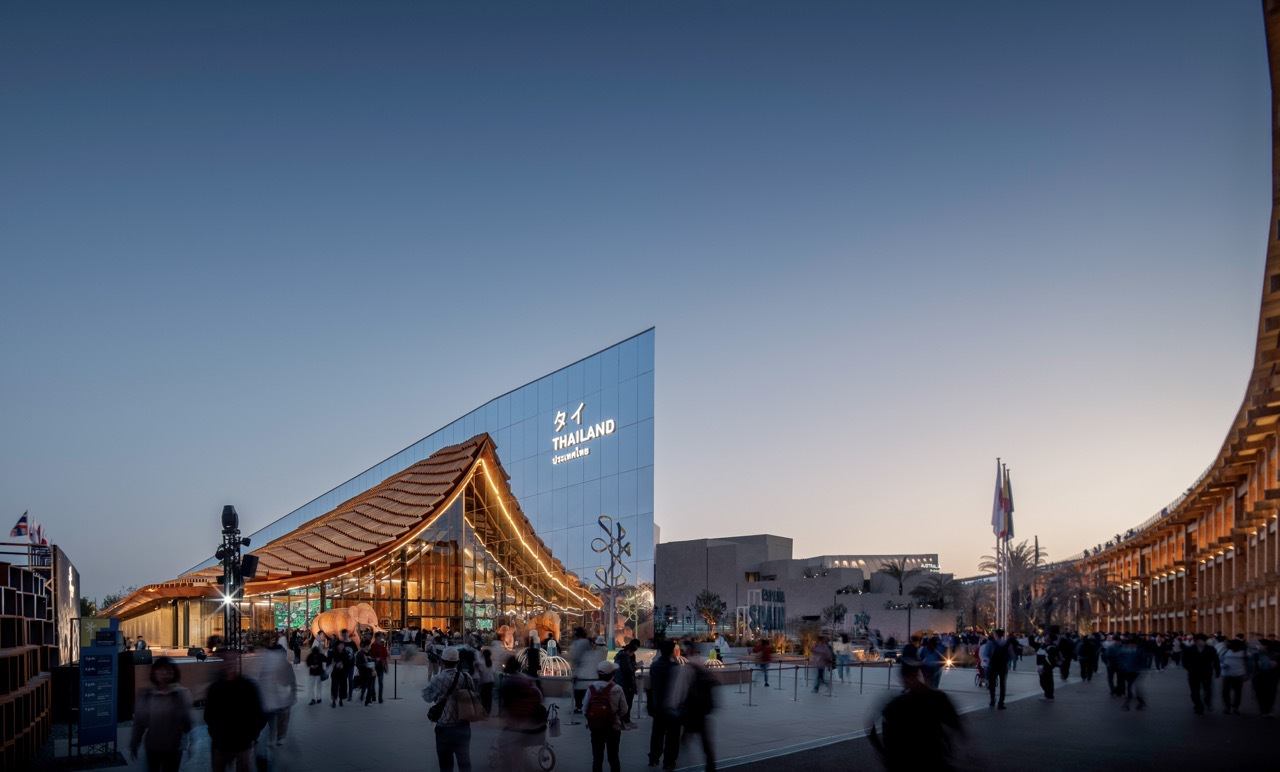
The Thailand Pavilion at Expo 2025 Osaka connects with the world under the core theme of “Bhumipiman – Land of Immunity,” allowing everyone to experience Thailand's "Bhumi" culture by feeling the atmosphere of this resource-rich land and the lifestyle that enhances immunity, ensuring the well-being of the Thai people, both physically and mentally. This building showcases Thailand's potential from the past to the present, building strong and sustainable connections with the wider world as it moves towards the future.
在 2025 年日本大阪世博会上,泰国馆以“Bhumipiman——免疫之地”这一核心主题,与世界相连,让每个人都能通过感受这片资源丰饶的土地氛围,以及有助于增强免疫力的生活方式,来体验泰国的“Bhumi”文化,使泰国人民身心康健。这座建筑展示了泰国从古至今的潜力,并与更广阔的世界构建起牢固且可持续的联系,携手迈向未来。
© DOF Sky|Ground
© DOF Sky|Ground
The pavilion was designed by A49 and was selected as the winning design in a national design competition by the Ministry of Public Health, Thailand. This outstanding pavilion stands out for its perfect fusion of cultural heritage and contemporary design, earning international recognition for its exceptional architectural quality.
该展馆由 A49 设计,在全国设计竞赛中荣获泰国公共卫生部评选的获奖作品奖。这座杰出的展馆因将文化遗产与当代设计完美融合而脱颖而出,其卓越的建筑品质赢得了国际认可。
© Nattakit Jeerapatmaitree
© Nattakit Jeerapatmaitree
The architectural design employs exquisite elements to showcase Thai characteristics, creating a relaxed and pleasant atmosphere for visitors, offering an interesting, comfortable, and relaxing exhibition experience that evokes pleasant memories shared by most people when visiting Thailand.
建筑设计运用精妙元素展现泰国特色,为游客营造出轻松愉悦的氛围,带来有趣、舒适且放松的观展体验,唤起大多数人游览泰国时共有的美好回忆。
Diagram
Ground Floor Plan
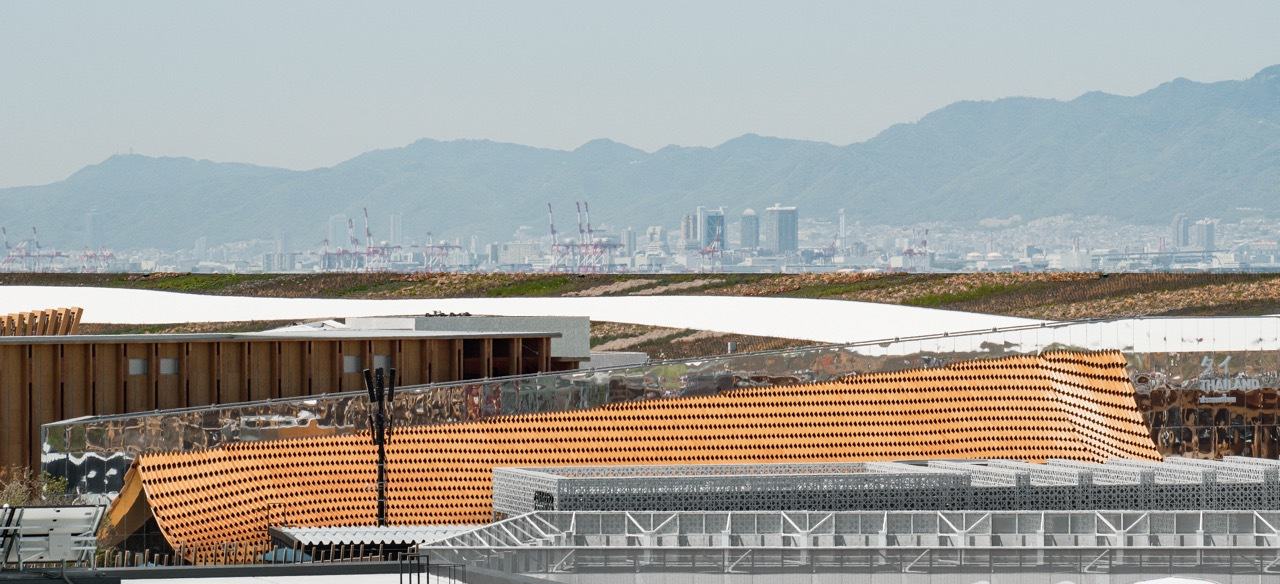
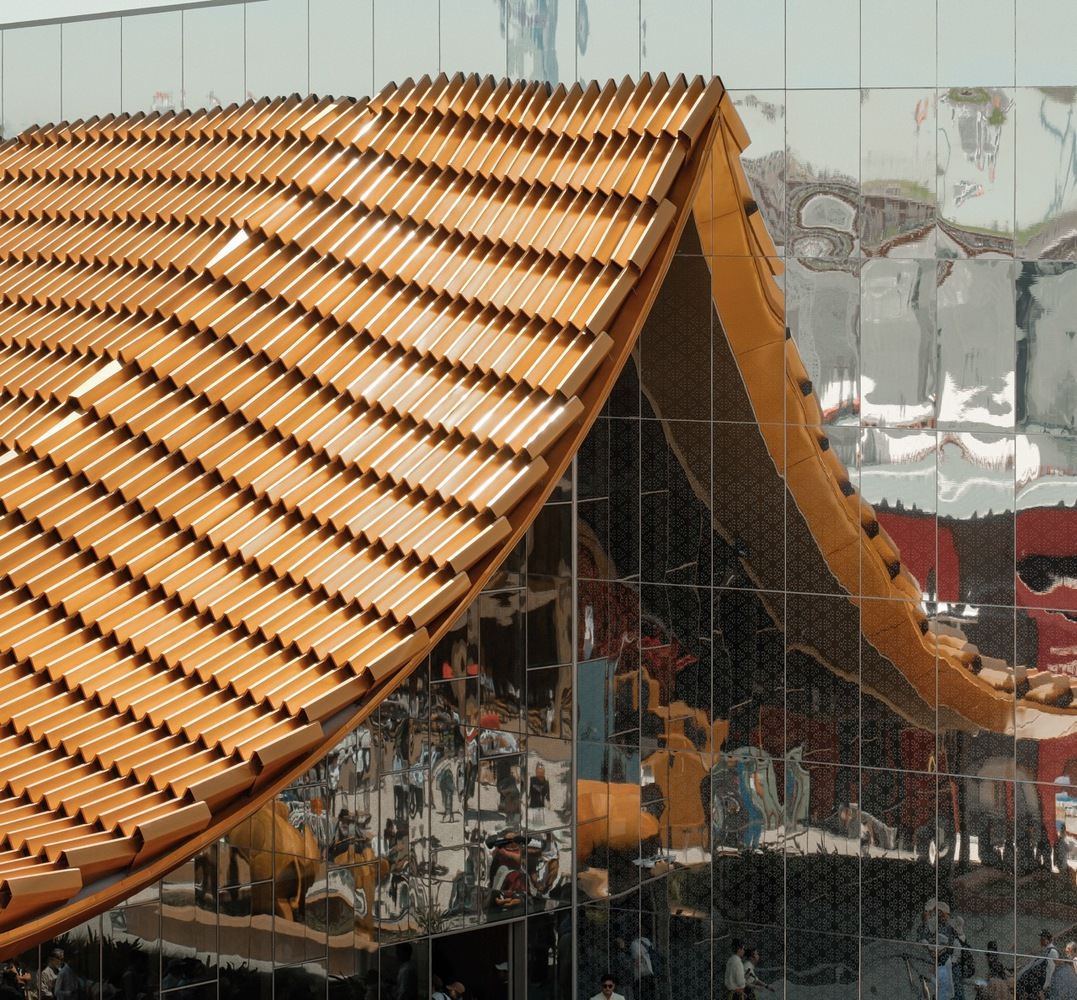
The design aims to embody and clearly communicate the Thai cultural identity in a way recognizable to people worldwide. It incorporates ancient Thai architectural elements, such as the multi-tiered, steeply pitched roof in the traditional "Chom Hae" style. The dimensions of the architectural elements have been scaled down to reduce the overall massing. Decorative patterns mimicking woven rattan mats are used to express the connection between the faith and wisdom of the Thai people, while colors and materials are carefully selected to reflect the subtlety of Thai design.
设计旨在以一种能被世界各地人们所识别的方式,体现并清晰传达泰国文化身份。设计中运用了泰国古代建筑元素,如具有多层特色设计的“Chom Hae”传统风格高坡度尖顶屋顶。建筑元素的尺寸有所缩小,以减小整体规模。采用模仿编织藤席图案的装饰纹样,表达泰国人民的信仰与智慧之间的联系,同时精心挑选色彩和材料,以体现泰国设计的精妙之处。
© DOF Sky|Ground
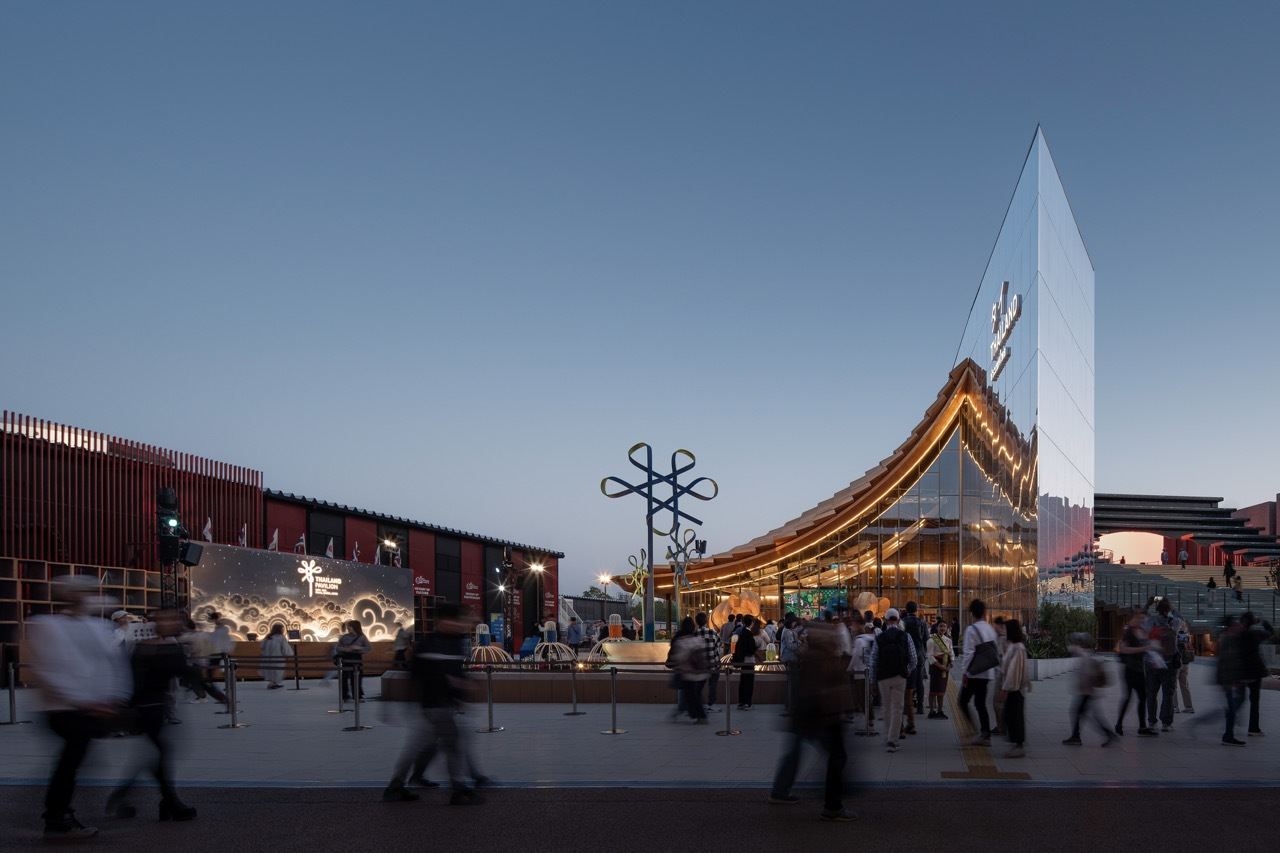
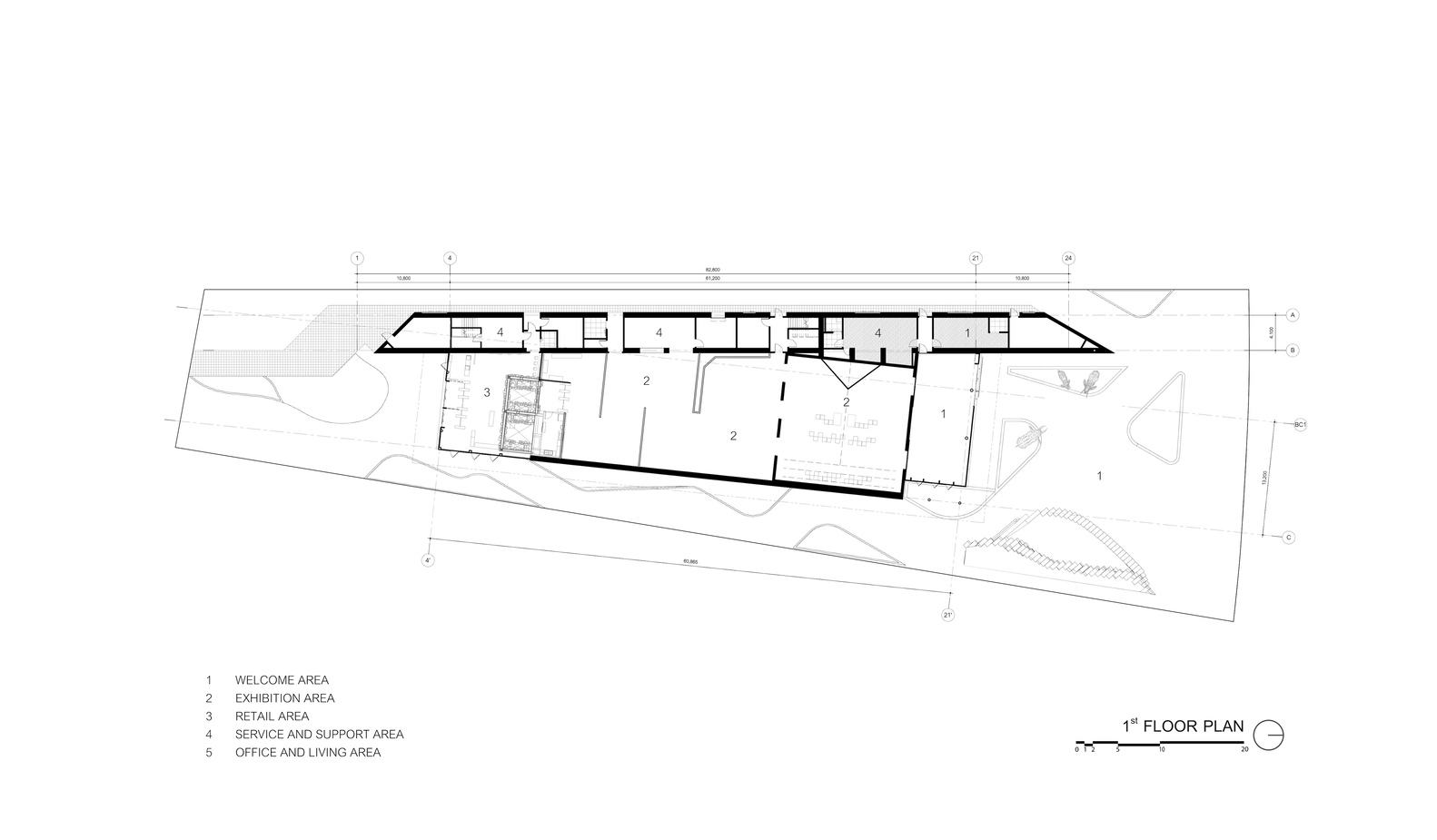
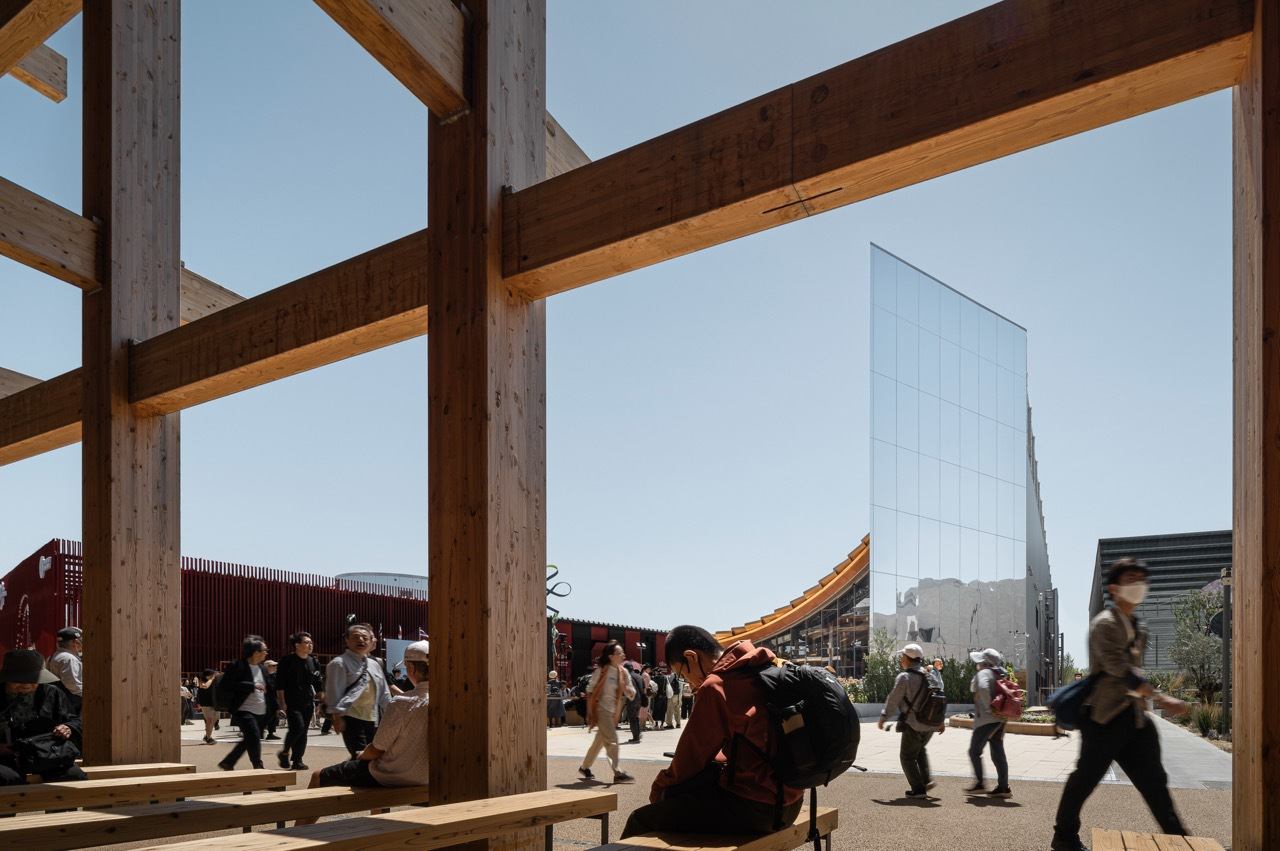
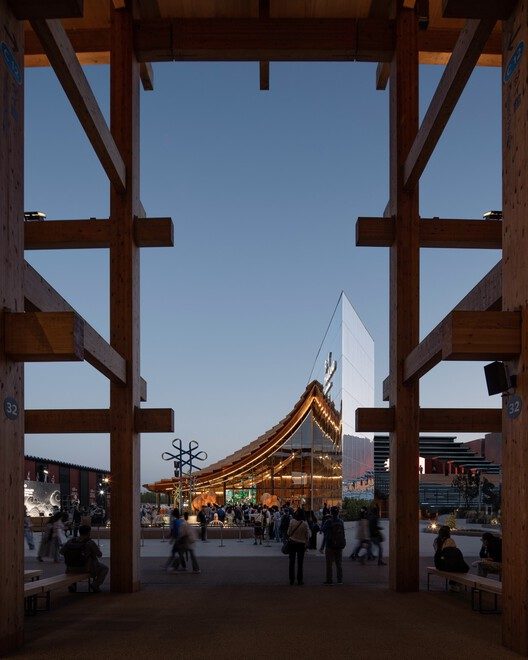
Located on Plot A13 within the "Connecting Lives" area of the Expo's master plan, the Thailand Pavilion occupies a rectangular plot with a narrow frontage and a depth exceeding one hundred meters. Therefore, the building is designed in a half-gable style, adjacent to a highly reflective wall that spans the entire plot length. From the main entrance along the primary visitor route, this design creates the illusion of a complete, peaked pavilion. This reflective effect guides visitors through an atmosphere filled with medicinal plants, transitioning from the courtyard into the indoor exhibition space, workshops, souvenir shop, and Thai food stalls, finally exiting at the rear of the building where visitors can enjoy a view of the large forest park—the “Serene Forest”—located in the center of the Expo Park.
泰国馆位于世博会总体规划中“连接生活”区域的 A13 地块,地块呈长方形,正面较窄,深度超过百米。因此,建筑被设计成半山墙式,旁边是一面贯穿整个地块的高反射墙。从主参观路线的主入口处看,这一设计营造出完整的尖顶展馆的错觉。这种反射效果引导游客穿过充满药用植物的氛围,从庭院进入室内展览空间、工作坊区域、纪念品商店和泰国美食摊位,最后从建筑后部走出,游客可在此欣赏到位于世博园中心的大型森林公园 —— “宁静森林”的美景。
© DOF Sky|Ground

© Nattakit Jeerapatmaitree
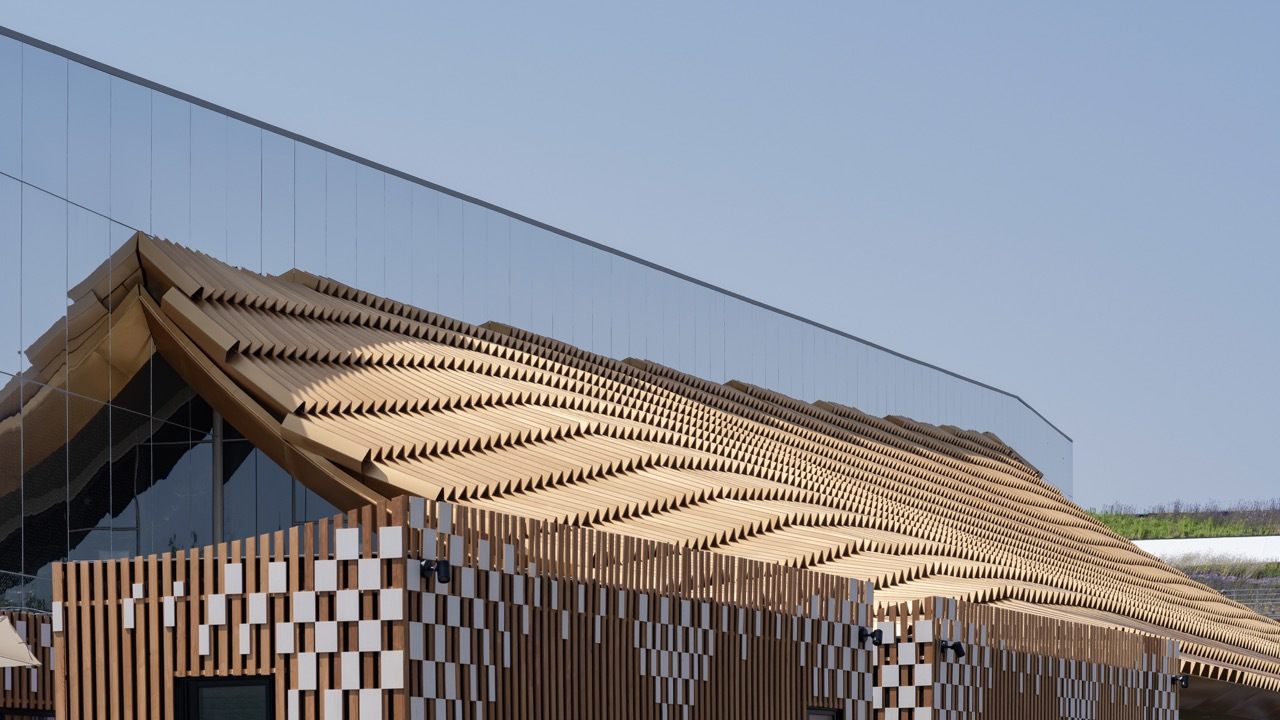
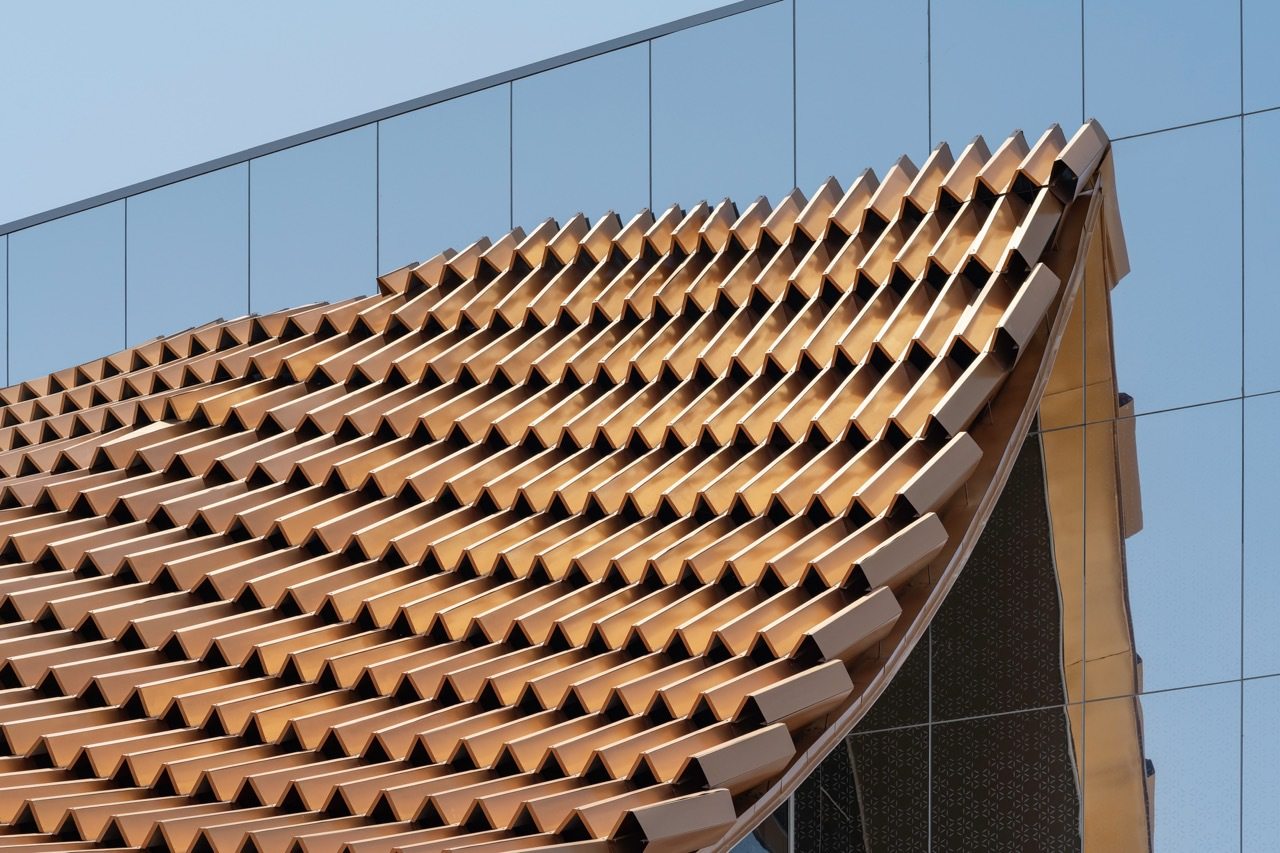
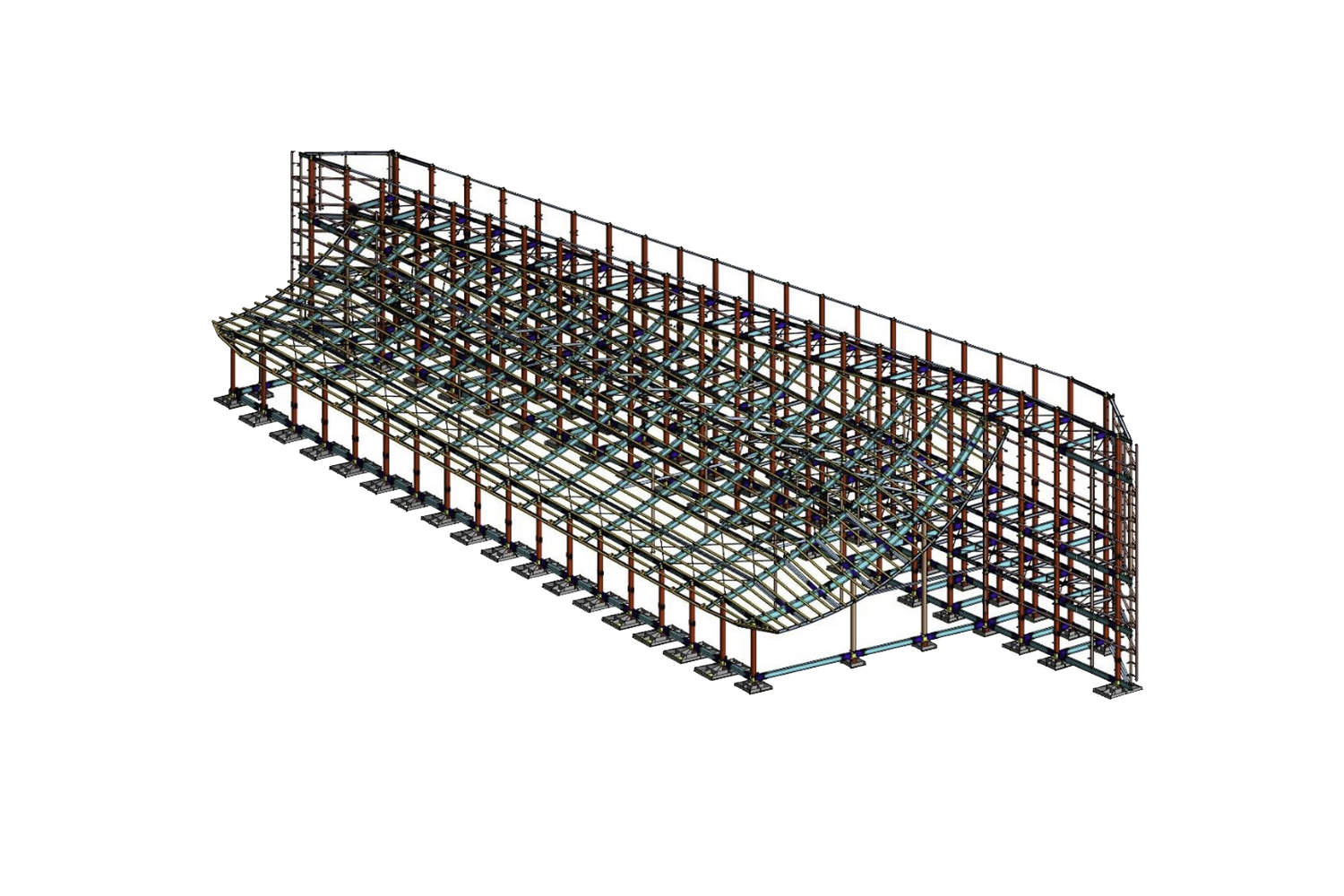
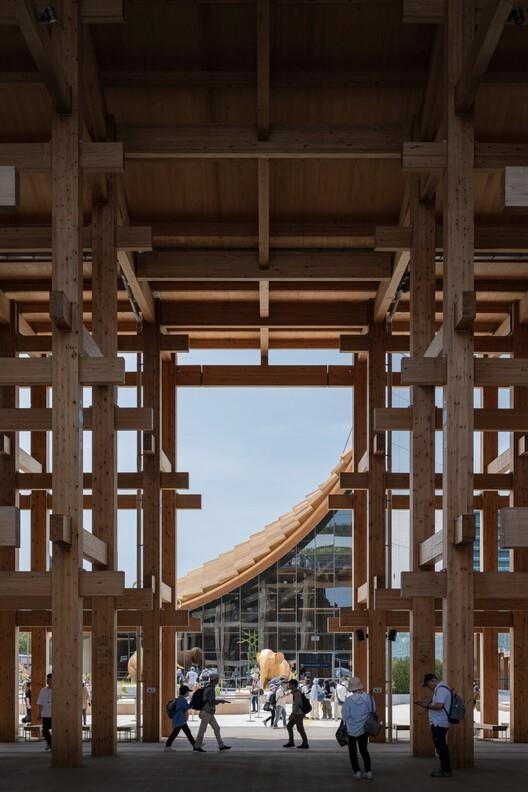
The roof design of the Thailand Pavilion integrates Thai architectural elements with modern materials and construction methods, aiming to maximize energy efficiency and minimize resource consumption. The slope of the roof and the height of the ceiling inside the pavilion are matched to the exhibition content being displayed and the visitor density in various areas. This spatial planning helps maximize the efficiency of energy and resource utilization. The roof elements are stepped, forming a smooth slope from the roof peak to the eaves and from front to back. Furthermore, visitors can experience the subtlety of Thai architecture by assembling and adjusting the sub-components that define the large roof proportion, making the roof appear grand yet harmonious.
泰国馆的屋顶造型融合了泰国建筑元素与现代材料和施工方法,旨在最大化能源效率,最小化资源消耗。展馆内屋顶的坡度和天花板的高度与展出的展览内容以及各区域的游客密度相匹配。这种空间规划有助于提高能源和资源利用效率,实现效益最大化。屋顶元素呈阶梯状,从屋顶顶点至屋檐底部,从前至后形成流畅的坡度。此外,游客还能通过组装调整大型屋顶比例的子部件,感受到泰国建筑的精妙之处,使屋顶显得宏伟而不失协调。
© Nattakit Jeerapatmaitree
The modular roof units of the pavilion evolved from traditional stepped, chamfered techniques, tailored for function, while advanced construction methods utilized preset modeling and computer-controlled laser-cut prefabrication for seamless, precise assembly, enhancing the building's connection with nature. This was made possible by the digital workflow adopted by A49’s IRIS (Integrated Research and Innovation) team, which integrated multiple parameters to achieve adaptive design solutions, blending contemporary innovation with Thailand’s unique traditional proportions.
展馆的模块化屋顶单元在传统阶梯式、切角式技术的基础上演变而来,功能上量身定制,同时先进的施工方法利用预设建模和计算机控制的激光切割预制技术,实现了无缝精准组装,增强了建筑与自然的联系。这一切得益于 A49的IRIS(综合研究与创新)团队采用的数字工作流程,该流程整合了多种参数,实现了适应性设计解决方案,并将当代创新与泰国独特的传统比例相融合。
© DOF Sky|Ground
The design of the Thailand Pavilion focused consistently on energy and social sustainability, based on various data analyses ranging from Thai architectural characteristics to the efficient use of interior spaces. The pavilion successfully represents the image of our country in line with the theme set by the host nation, and the design remains effective despite differences in topography and climate. This demonstrates to the world Thailand's potential and its "Bhumi" culture, proving that Thailand is rich in resources and ready to establish sustainable connections with global society in multiple dimensions, moving forward into the future together.
泰国馆的设计基于对泰国建筑特点到内部空间高效利用的多种数据分析,始终聚焦于能源和社会的可持续性。泰国馆遵循东道国确定的主题,展现了我国的形象,尽管地形和气候存在差异,但设计依然行之有效。这向世界彰显了泰国的潜力和“Bhumi”文化,证明了泰国拥有丰富的资源,并已做好准备,在多个维度上与全球社会建立可持续的连接,携手迈向未来。
© DOF Sky|Ground