城市文脉的当代重塑与地标对话:该项目成功地将博韦西地区剧院定位为战后城市重建历史脉络的延续与新核心。建筑通过10米至27米的高度变化,巧妙地融入城市肌理,同时以“世俗中殿”的宏大意象,与圣埃蒂安教堂和圣皮埃尔大教堂这两大地标形成富有张力的当代对话。设计在尊重历史高度的同时,通过抬高主体体量确立存在感,实现了克制与彰显的平衡,为城市天际线注入了富有文化意义的新元素。
“世俗中殿”的哲学空间营造:项目最精髓之处在于对“世俗中殿”概念的深刻实践,呼应了古罗马巴西利卡中市民集会的集体记忆。建筑布局延续了历史城市中“围合式空间”的传统,同时遵循“融合与导向”的核心原则,创造出围绕建筑展开的“博韦式新围合空间”。这种空间哲学不仅重塑了公共区域的互动性,更以温润而庄重的方式,完成了城市功能和精神层面的独特愿景补全。
沉浸式叙事与超现实的室内体验:室内设计摒弃传统剧院的刻板印象,营造出极具感染力的沉浸式环境。门厅采用类似皮拉内西风格的流动空间激发动态感;而主厅则蜕变为“暮色森林”意境,利用光影雕塑和受博韦挂毯启发的木质浮雕,结合超现实主义的蓝色穹顶,为观众创造了从自然边界到夏夜黄昏的诗意过渡。包厢与大堂的面对面布局,以及流畅的动线网络,共同升华为一座促进社区交流的“人民宫殿”。
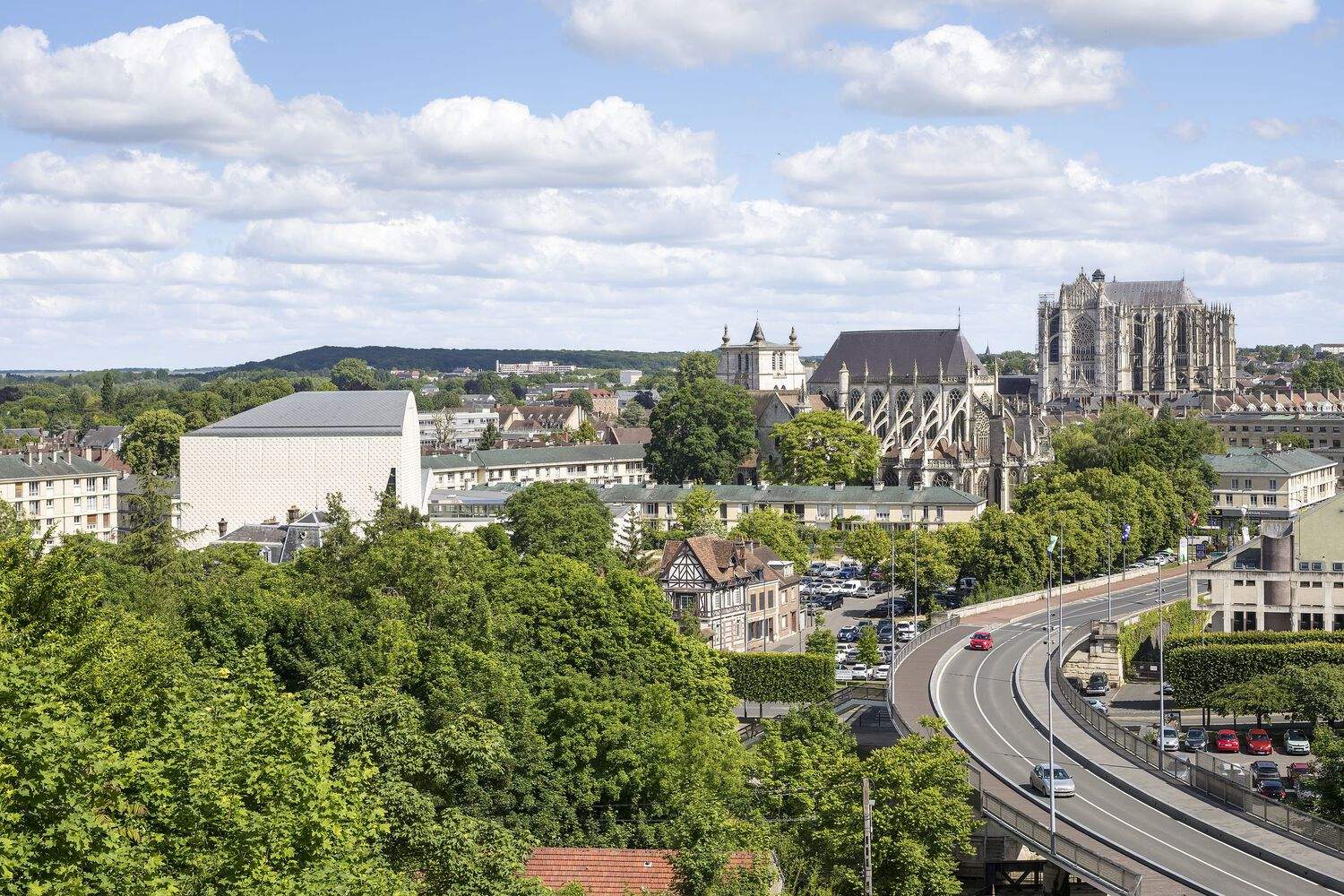
From the architect. The Beauvaisis Theatre, designed by AJC architects—François Chochon and David Joulin—continues the historical thread of post-war reconstruction in Beauvais, pointing towards the sky with the image of a "secular nave." With building heights ranging from 10 to 27 meters, it naturally becomes a new core participant in the urban dialogue, aiming to engage in an elegant conversation with Beauvais's two emblematic monuments: the nearby Saint-Étienne Church and the more distant Saint-Pierre Cathedral.
来自建筑师。AJC 建筑事务所——弗朗索瓦·肖雄(François Chochon)与大卫·朱兰(David Joulin)携手完成博韦西地区剧院设计。这座文化地标现已成为博韦市战后重建历史脉络的延续,以"世俗中殿"的意象直指苍穹。建筑高度从 10 米延展至 27 米,自然成为城市对话中的新核心参与者,旨在与博韦两座标志性古迹形成优雅对话:近处的圣埃蒂安教堂与稍远的圣皮埃尔大教堂。
© Nicolás Borel
© Nicolás Borel
© Sergio Grazia
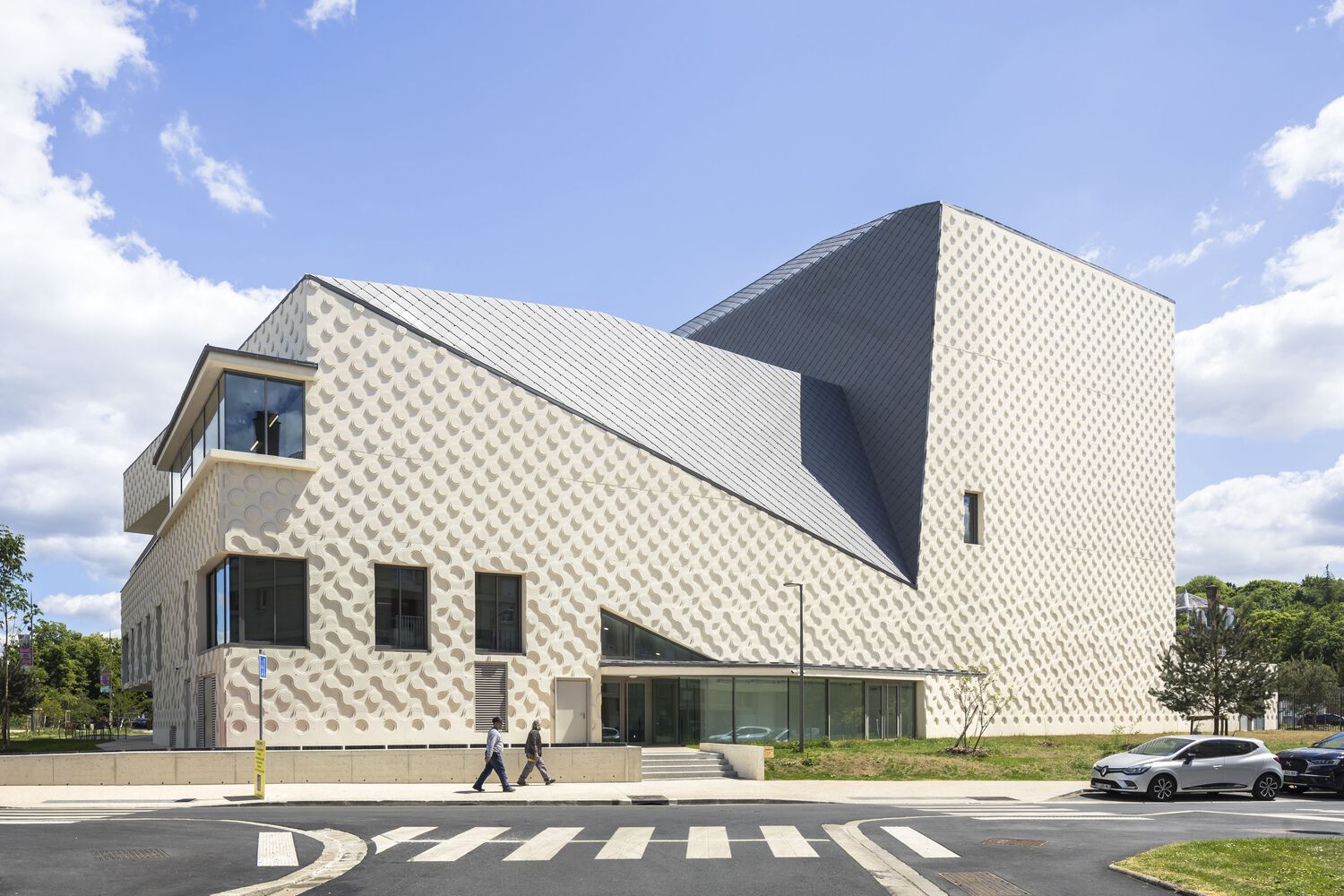
The theatre achieves a contemporary resonance with historical monuments through its uniqueness. To this end, the building restrains its height as much as possible to integrate softly into the surrounding neighborhood, while reinforcing its presence by elevating the main volume.
剧院以其独特性实现与历史名筑的当代共鸣。为实现这一目标,建筑在高度上尽可能克制,以柔和姿态融入周边街区,同时通过抬高主体体量强化存在感。
© Sergio Grazia
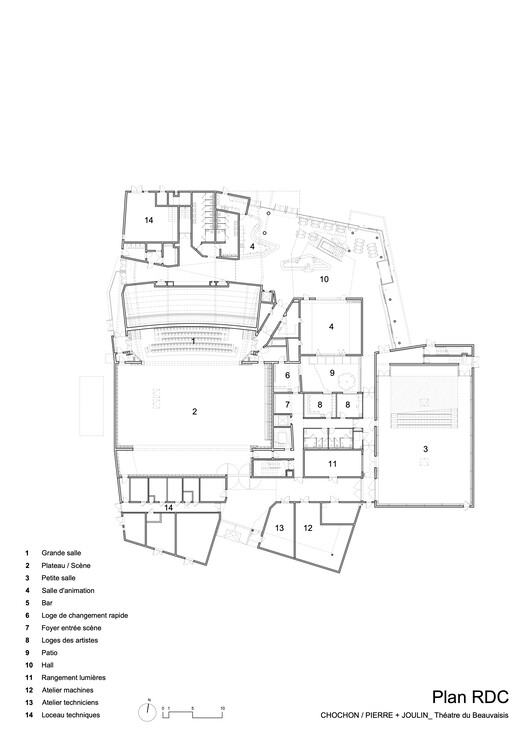
Ground floor plan
The image of the "secular nave" alludes to the spatial philosophy of ancient Roman basilicas—whose architectural form evokes the collective memory of citizens gathering for a common purpose. The dialogue between the city and architecture, initiated during the reconstruction period, alternates between proximity and distance: this layout continues the tradition of "enclosed spaces" found in historic cities such as Pisa in Italy or Orléans in France. The completion of the new theatre fills a distinctive and successful urban vision for the city in a gentle yet solemn manner.
“世俗中殿”的意象暗合古罗马巴西利卡的空间哲学 —— 其建筑形制唤起公民为共同目标聚会的集体记忆。重建时期开启的城市与建筑对话在亲疏之间交替:这种布局延续了如意大利比萨或法国奥尔良等历史城市中"围合式空间"的传统。新剧院的落成以温润而庄重的方式,为这座城市补全了独具特色且成功的城市愿景。
© Sergio Grazia
© Sergio Grazia
The image of the "secular nave" alludes to the spatial philosophy of ancient Roman basilicas—whose architectural form evokes the collective memory of citizens gathering for a common purpose. The dialogue between the city and architecture, initiated during the reconstruction period, alternates between proximity and distance: this layout continues the tradition of "enclosed spaces" found in historic cities such as Pisa in Italy or Orléans in France. The completion of the new theatre fills a distinctive and successful urban vision for the city in a gentle yet solemn manner.
“世俗中殿”的意象暗合古罗马巴西利卡的空间哲学 —— 其建筑形制唤起公民为共同目标聚会的集体记忆。重建时期开启的城市与建筑对话在亲疏之间交替:这种布局延续了如意大利比萨或法国奥尔良等历史城市中"围合式空间"的传统。新剧院的落成以温润而庄重的方式,为这座城市补全了独具特色且成功的城市愿景。
© Sergio Grazia
The project adheres to two core principles: integration and orientation. The location of the new theatre allows public spaces to unfold around the building, similar to the cloister of Saint-Étienne Abbey, thus giving rise to the "New Beauvaisian Enclosure."
项目遵循两大核心原则:融合与导向。新剧院的位置使公共空间如圣埃蒂安修道院的回廊般环绕建筑展开,由此诞生了"博韦式新围合空间"。
Section
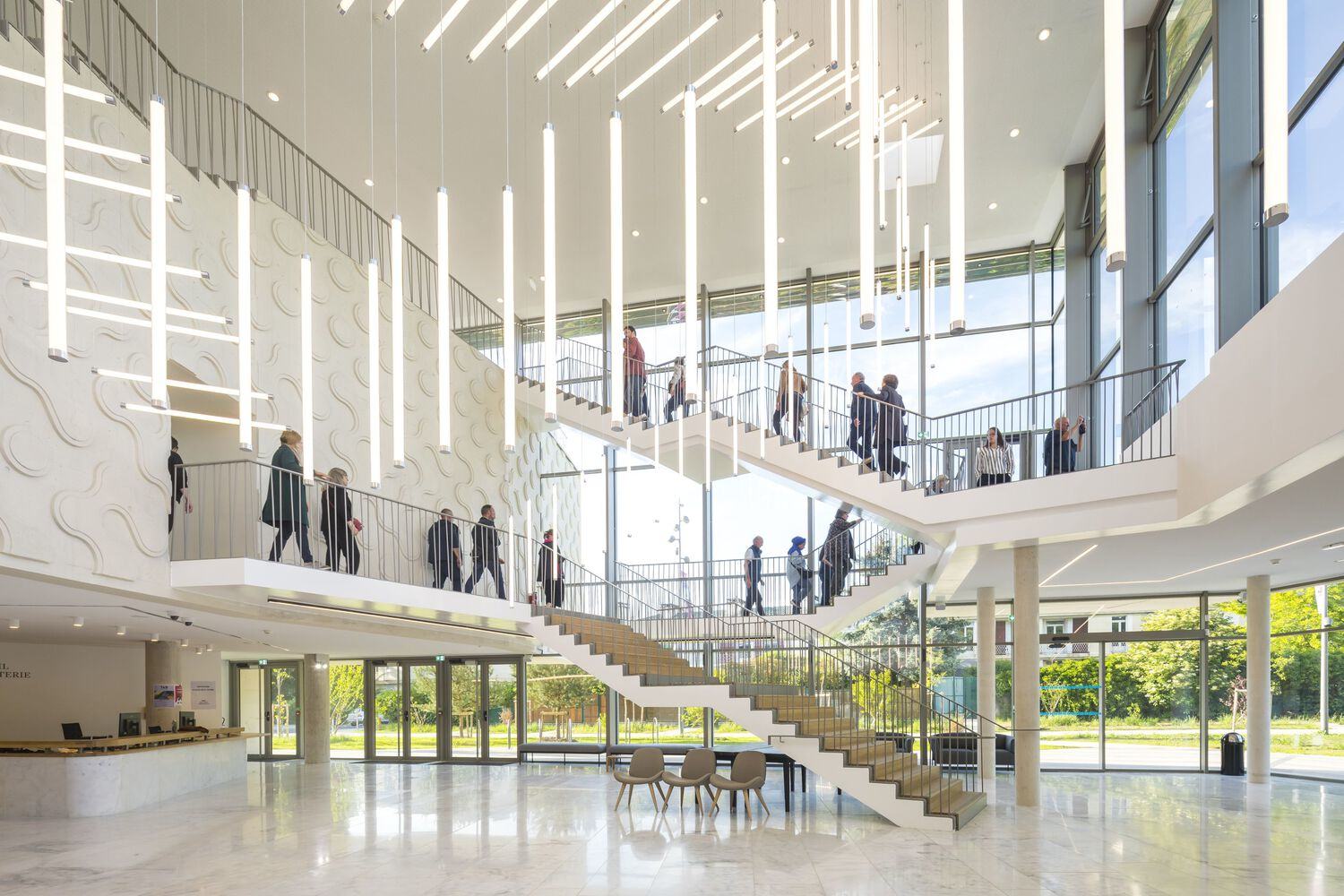
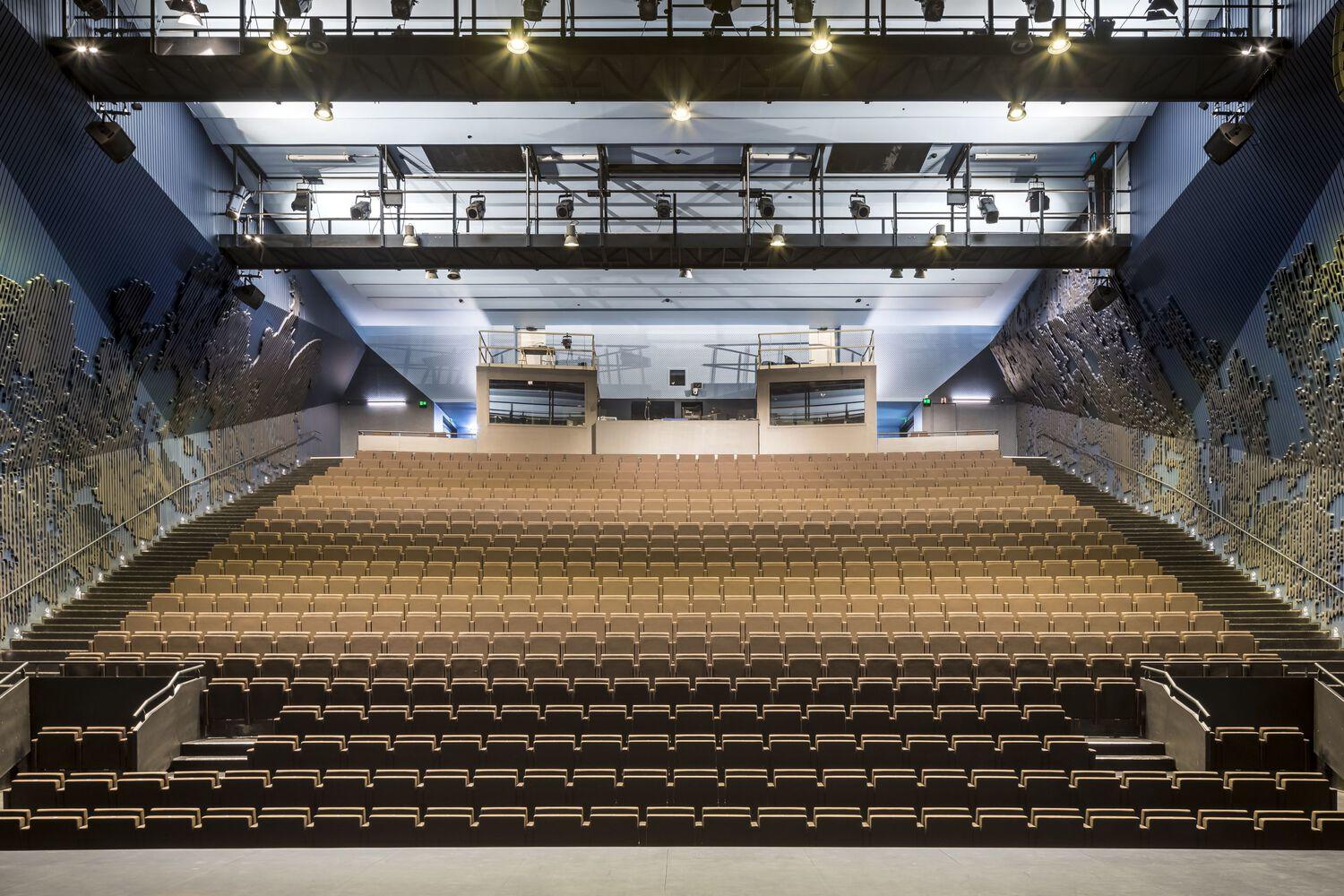
The foyer employs an architectural language akin to Piranesi’s style, stimulating a dynamic visitor experience through fluid spatial design. The interior design abandons the bourgeois character of traditional theatre halls, instead conjuring the atmosphere of a twilight forest: the main hall's light and shadow sculptures, resembling wooden reliefs inspired by the botanical motifs of Beauvais tapestries, give dark walls the visual effect of a forest clearing or interwoven foliage, while its surrealist blue dome evokes the sky at dusk on a summer night.
门厅采用近乎皮拉内西(Piranesi)风格的建筑语言,通过流动的空间设计激发访客的动态体验。室内设计摒弃传统剧院厅的布尔乔亚气质,转而营造暮色森林的意境:主厅光影雕塑如木质浮雕,灵感源自博韦挂毯的植物纹样,使深色墙面呈现林间空地或枝叶环绕的视觉效果,其超现实主义的蓝色穹顶则让人联想到夏夜黄昏的天色。
© Sergio Grazia
The face-to-face layout between boxes and lobbies reinforces the spiritual connection between artists and the audience, a relationship extended along a fluid path inspired by the Italian "corso." Ramps, terraces, and intersection areas form a convenient network of circulation, becoming places for free dialogue. The pursuit of social interaction is elevated here into a "People's Palace"—a shared space belonging to the community.
包厢与大堂的面对面布局强化了艺术家与观众的精神联结,这种关系沿着受意大利 "corso" 启发的流畅路径延伸。坡道、露台与交汇区域形成便捷的动线网络,成为自由对话的场所。对社交场景的追求在此升华为"人民宫殿"—— 一座属于社区的共享空间。
© Sergio Grazia