本土材料与生态责任的典范结合:该项目最显著的亮点在于其对本土可持续材料的深度整合与创新应用。建筑师巧妙地利用了竹子和泥土等当地可获取的材料,不仅大幅降低了环境足迹,更与基地所在的喜马拉雅山地环境达成了深刻的物质性对话。尤其值得称赞的是,项目通过在退化的河岸边人工种植竹林,构建了一个自我维持的生态再生系统,实现了从材料获取到生态修复的闭环,完美诠释了建筑作为环境积极贡献者的角色,超越了传统意义上的“绿色建筑”。
精神意境与结构创新的高度融合:设计成功地将藏传佛教的深层精神理念转化为具体的建筑语汇。冥想大厅高达16米的六层竹制屋顶桁架,不仅是南亚竹结构工程的壮举,其曼陀罗般的结构也象征着宇宙秩序,为修行者提供了强烈的象征性空间体验。此外,夯土墙带来的“呼吸感”和铜质屋顶向上的引导,都服务于提升修行者的专注力和灵性感受,使建筑本身成为一种有机的、能散发灵性气息的媒介。
精细化光线与气候的场所营造:建筑师对自然元素的操控达到了极高的精度,体现了对使用者体验的深度关怀。冥想大厅精心计算角度的镂空窗户布局,确保了从早到晚光线在地面上移动、变化,为冥想创造了动态而温和的光环境。同时,餐厅的弯曲竹结构如同拥抱的姿态,以及住宿区羊毛隔热墙体,都体现了对恶劣山地气候的细腻响应,确保了建筑在功能性上完全适配其静修避世的功能定位。
From the architect. The Mahamudra Meditation Center is situated on a quiet mountaintop about an hour away from Kathmandu. It is accessible by foot when the weather is dry, or by off-road vehicle. The center is the brainchild of the young Tibetan Buddhist master Chogyal Rinpoche, who inherits a lineage of esoteric Buddhism tracing back to the 12th century and is the torchbearer of this ancient tradition. Rinpoche believes that the time has come to make the knowledge previously guarded by Tibetan Buddhist masters accessible to the general public. He envisioned a place of learning where not only profound wisdom could be encountered, but where the architecture and the natural environment itself would exude a spiritual aura.
来自建筑师。Mahamudra冥想中心坐落于一座幽静的山巅之上,距加德满都约一小时路程。天气干燥时,人们可徒步前往,或乘坐越野车抵达。该中心是年轻藏传佛教大师秋吉仁波切(Chogyal Rinpoche)的智慧结晶,他承袭了一条可追溯至12世纪的密宗佛教传承,是这一古老传承的火炬传递者。仁波切认为,如今已到让普通民众接触那些以往由藏传佛教大师们守护的知识的时机。他设想打造一处学习之地,在这里,人们不仅能接触到深奥的智慧,而且就连建筑与自然环境也能散发出一种灵性气息。
© Chemi Dorje Lama
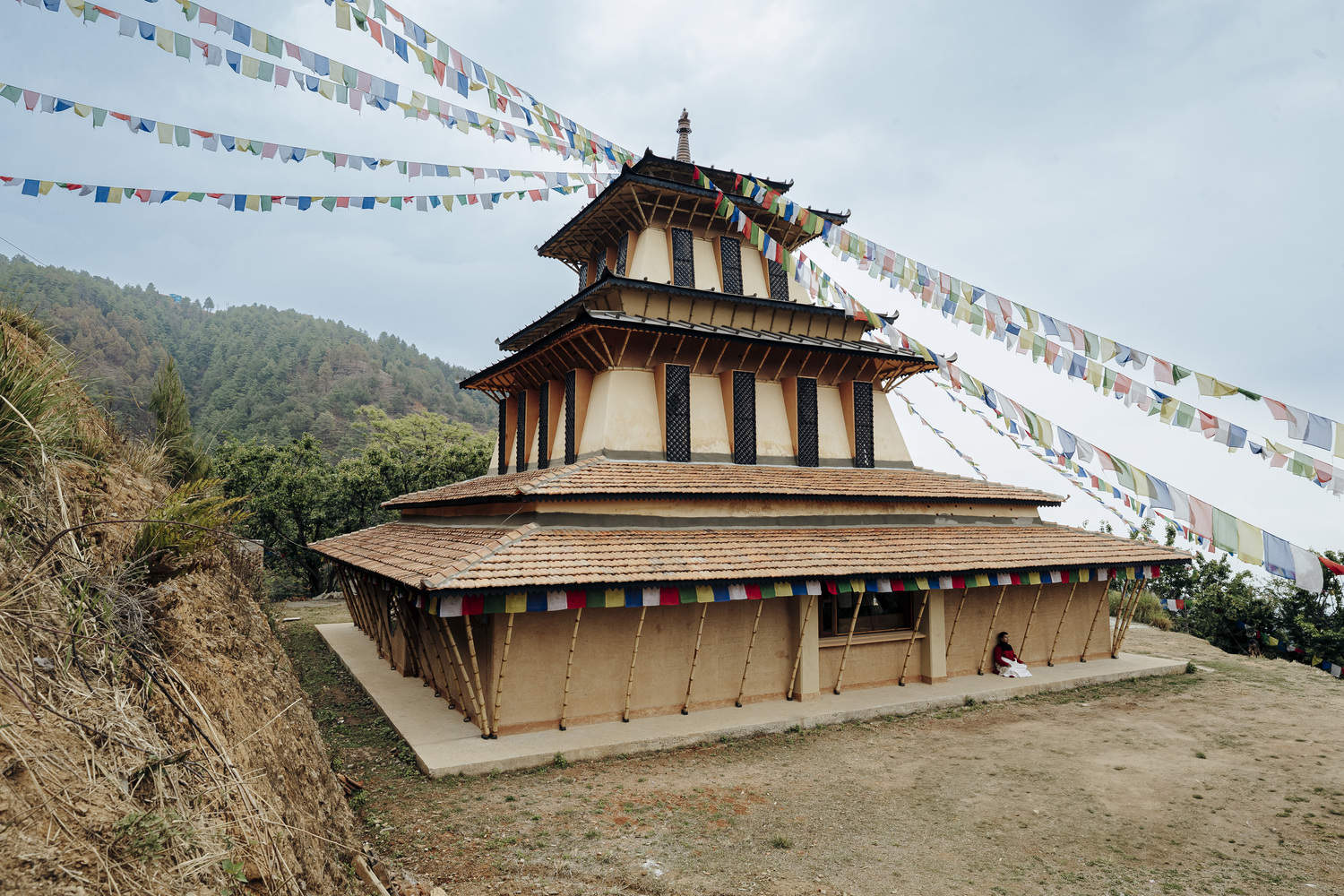
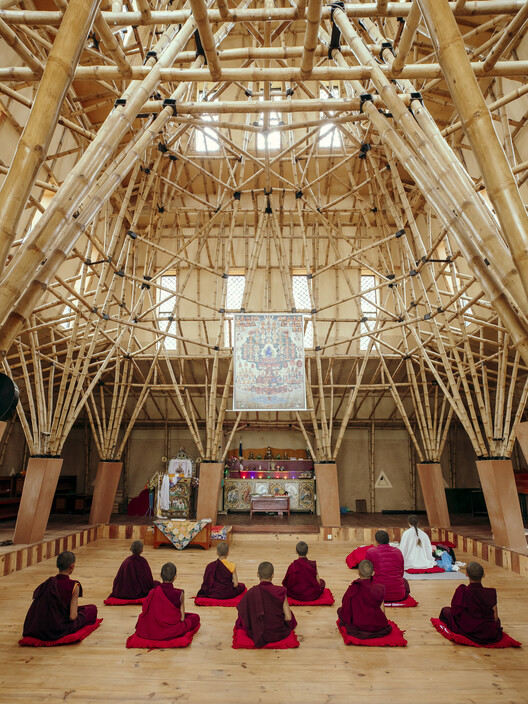
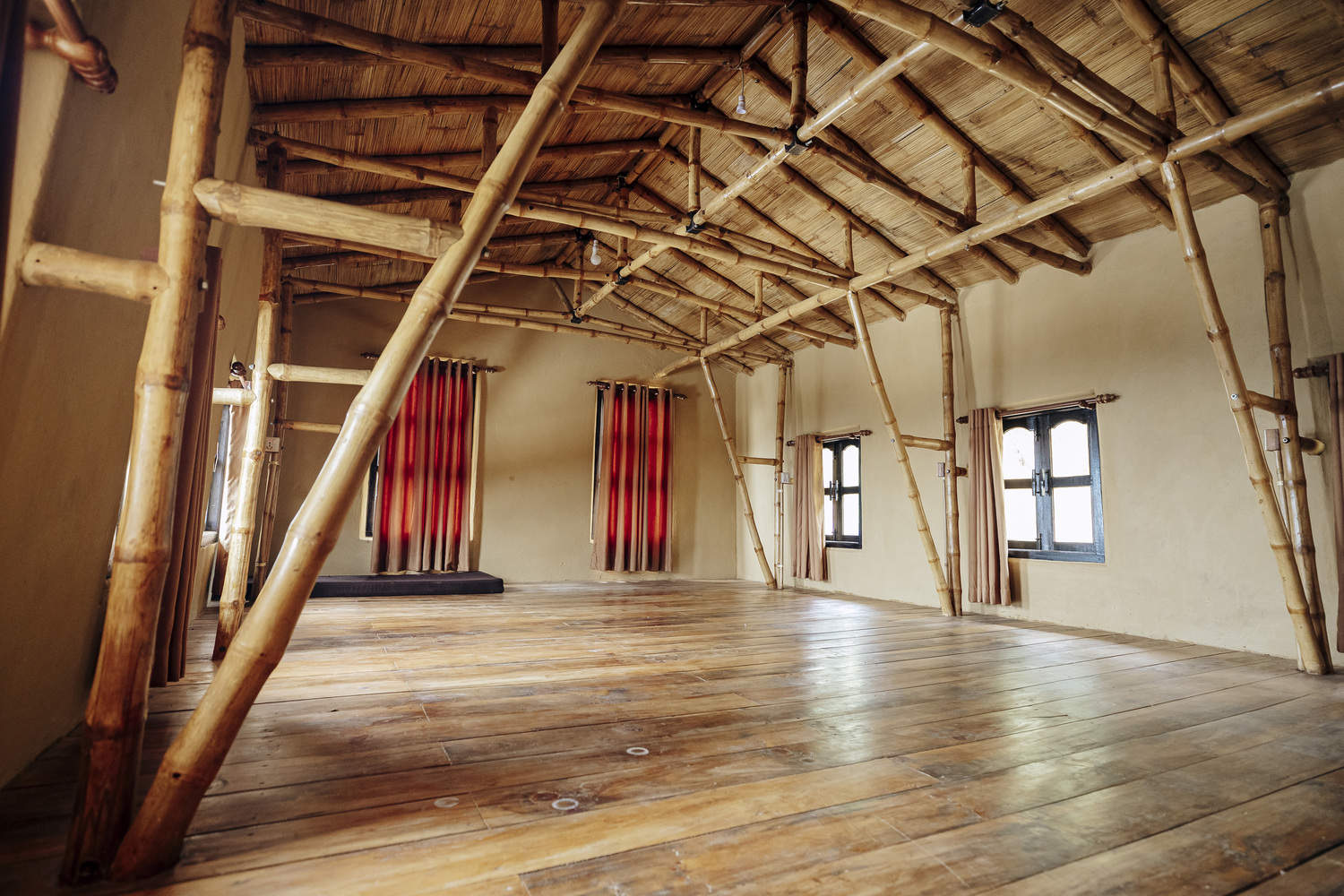
The meditation hall features a six-layered roof, supported by hand-crafted bamboo, forming a mandala-like truss structure that reaches 16 meters in height, making it one of the tallest bamboo structures in South Asia. The walls of the hall are built using rammed earth techniques, allowing them to 'breathe' freely, much like the practitioners meditating within.
冥想大厅由六层屋顶构成,这些屋顶由手工精制的竹子支撑,形成了一个形似曼陀罗的桁架结构,高达16米,堪称南亚最高的竹结构建筑之一。大厅的墙壁采用夯土工艺建造,如同在其中冥想的修行者一般,能自由“呼吸”。
© Chemi Dorje Lama
The building is organized in a square layout, and its soaring copper roof design is highly symbolic, intended to draw energy upwards towards the sky. The window placement is meticulously curated, with angles carefully calculated and highlighted by their openwork design, ensuring that the floor of the meditation hall is bathed in warm sunlight of varying intensity throughout the day.
这座建筑呈方形布局,其高耸的铜质屋顶设计颇具象征意义,旨在将能量向上引导至天际。窗户的布局经过精心策划,其角度经过细致计算,并采用镂空设计加以凸显,如此一来,冥想大厅的地板在一整天中都会沐浴在强度各异的温暖阳光之下。
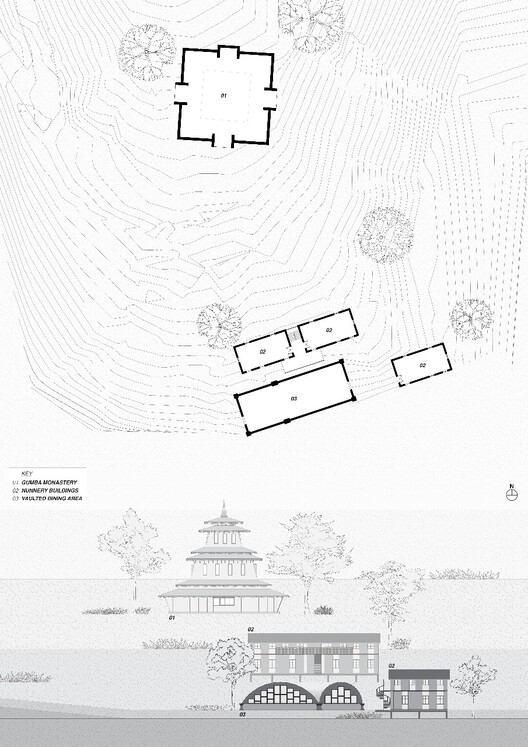
Floor Plan
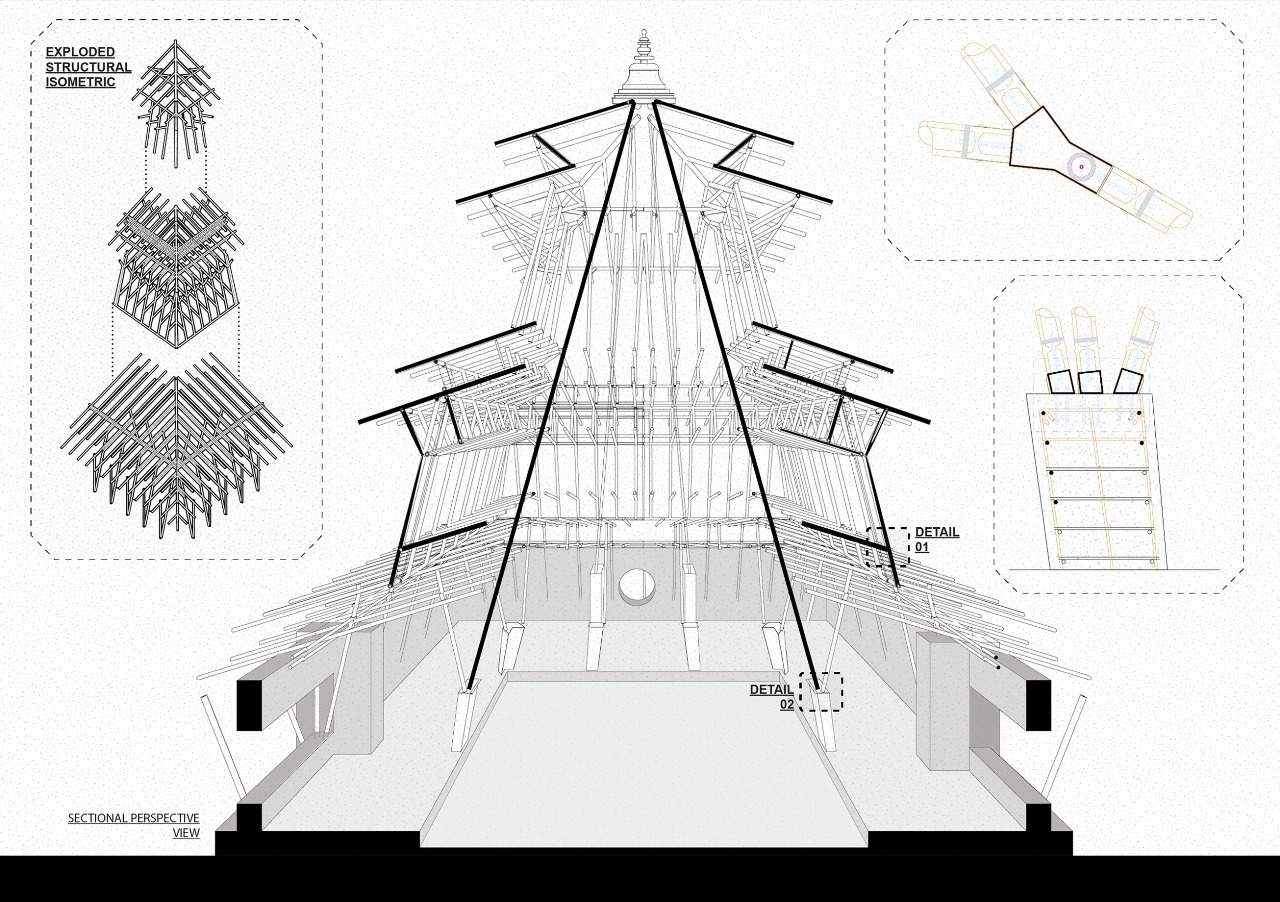
Cross Section
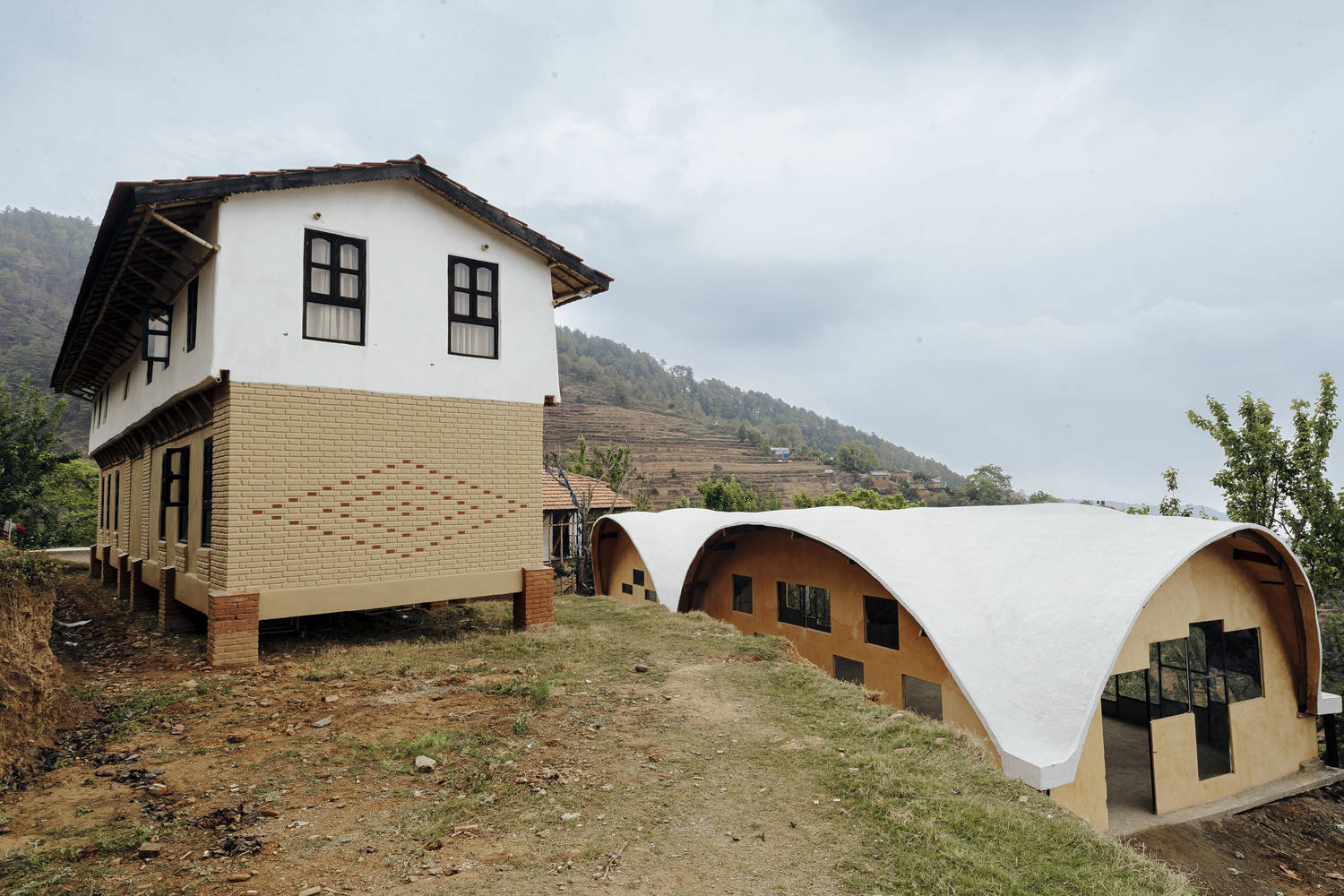
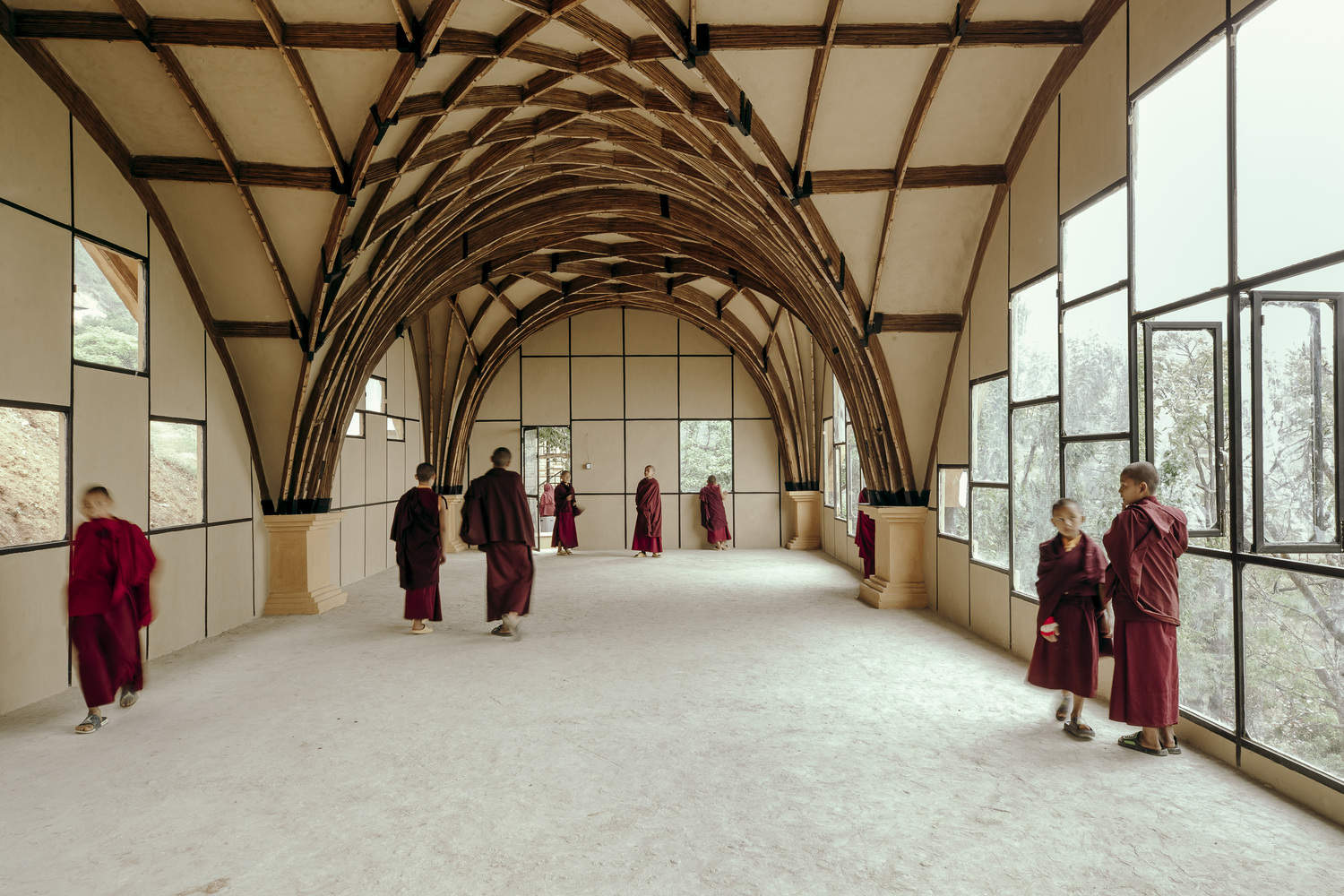
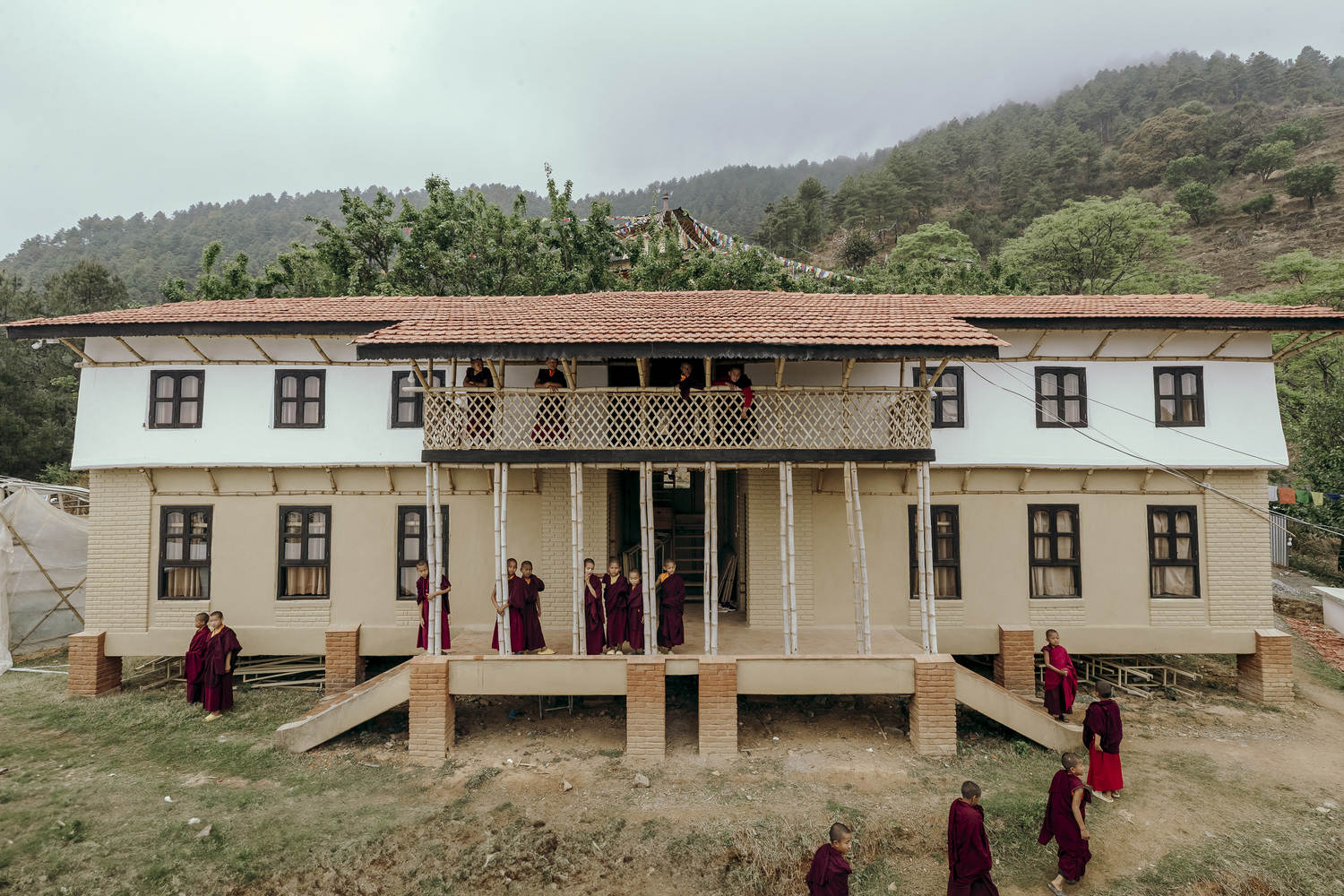
Similarly, the dining area is constructed from curved bamboo and wattle-and-daub walls. The curved bamboo seems to cradle the meditators, shielding them from the harsh mountain climate and rugged terrain. The accommodation walls are insulated with sheep’s wool and finished with an earth plaster, creating a healthy sanctuary for those spending days in quiet retreat in these serene mountains.
同样地,餐厅由弯曲的竹子和编竹夹泥墙搭建而成。蜷曲的竹子仿佛将冥想者环抱其中,为他们抵御此地严酷的山地气候与崎岖地形。住宿区的墙壁则采用羊毛隔热,并敷以泥土抹面,为在此幽静山中静修数日的冥想者营造出一个有益身心的庇护所。
© Chemi Dorje Lama
© Chemi Dorje Lama
© Chemi Dorje Lama
All structures are built using locally sourced materials such as bamboo and earth, minimizing the environmental impact. In fact, we have cultivated a bamboo forest on a degraded riverbank—an effort that not only revitalizes the riparian ecosystem but also ensures a stable supply of high-quality bamboo for our construction needs. This is a living example of an ecological regeneration system that is a win-win for both people and the planet.
所有建筑均采用竹子、泥土等本地取材的物料建造,对环境的影响极小。事实上,我们还在退化的河岸边开辟了一片竹林——此举不仅让河畔生态系统重焕生机,也确保了能稳定供应高品质的竹材,满足我们的建造需求。这是一个人与地球双赢的生态再生系统的生动范例。
© Chemi Dorje Lama