螺旋几何的象征意义与空间叙事:该项目以对螺旋几何形态的深刻着迷为设计基石,成功地将这一普遍存在于自然和人类历史中的形态,转化为对波兰创新精神和文化联结的有力象征。螺旋墙体的动态布局不仅提供了引人注目的多角度视觉效果,更巧妙地充当了空间导向工具,引导参观者循序渐进地体验展览,最终汇聚于核心的音乐厅。这种形式与功能的完美结合,展现了建筑师将抽象概念转化为可感知空间叙事的高超能力。
文化与材料的在地化交融:建筑在材质和细节上体现了对本土文化和在地条件的尊重与创新。核心音乐厅以波罗的海琥珀为灵感,并辅以模仿柳树枝条的金色幕帘,向肖邦的故乡景观致敬。更值得称道的是,建筑结构和覆层完全采用日本本地松木,并充分利用了当地木匠的精湛技艺,通过现代化手法重新诠释传统工艺。这种对材料的审慎选择,使得建筑在异国环境中既保持了波兰的身份表达,又实现了与东道主文化的深度对话与融合。
模块化策略与建造的敏捷性:面对紧迫的工期要求,项目采用了基于两种木质模块的创新建造逻辑。这种模块化策略展现了高度的工程智慧,它既确保了复杂、非标准的螺旋几何形态的精确实现,又保证了施工过程的灵活性和高效率。通过这种方式,设计得以在保持严格施工标准的同时,迅速有效地将复杂的概念落地,体现了当代建筑设计在应对复杂形式挑战时,对建造技术和施工管理的深刻理解与整合。
This project was inspired by a fascination with the geometry of the spiral. This shape has inspired humanity for centuries and is ubiquitous in nature, from protein molecules to galactic structures.
该项目的灵感源自对螺旋几何形态的着迷。这一形状数百年来一直启迪着人类,它在自然界中无处不在,从蛋白质分子到星系结构皆有其踪迹。
© Fernando Guerra | FG+SG
© Fernando Guerra | FG+SG
© Fernando Guerra | FG+SG
How, then, does this geometry represent Polish traits and its innate spirit of innovation? Poland's territorial borders do not impede the widespread circulation of innovative ideas that can influence distant regions, while also allowing knowledge acquired abroad to return to the gravitational center of our country. These intangible forces, which are of great importance for national development, are embodied in the dynamic form of the spiral walls, at the core of which lies the concert hall.
那么,这种几何形态如何代表波兰特质及其与生俱来的创新精神呢?波兰的领土边界并未阻碍创新思想的广泛传播,这些思想能够影响遥远的地区,同时也让在国外获取的知识得以回归我们国家的引力中心。这些虽无形却对国家发展意义重大的力量,在螺旋形墙壁的动态形态中得以体现,音乐厅便位于其核心位置。
© Fernando Guerra | FG+SG
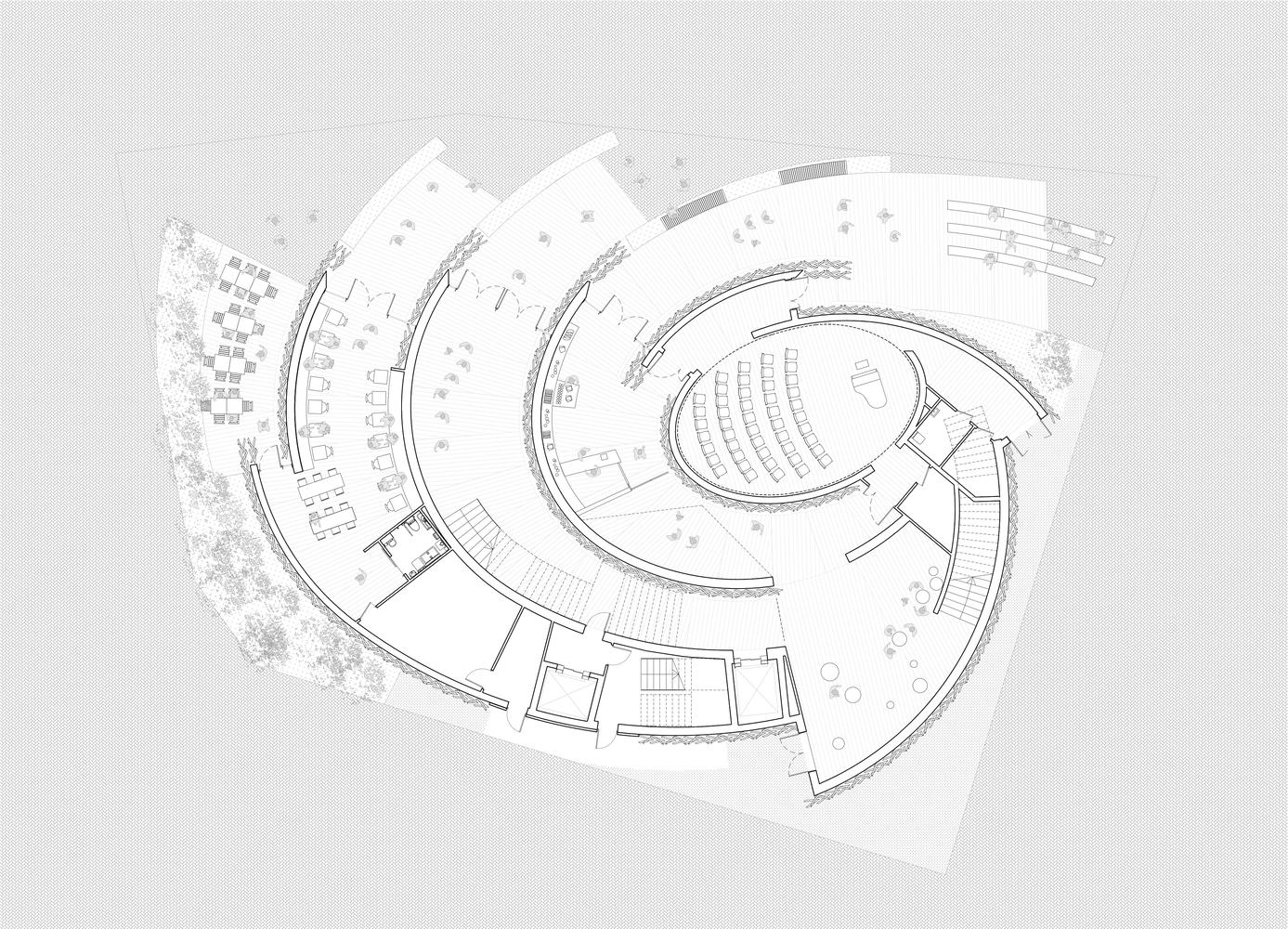
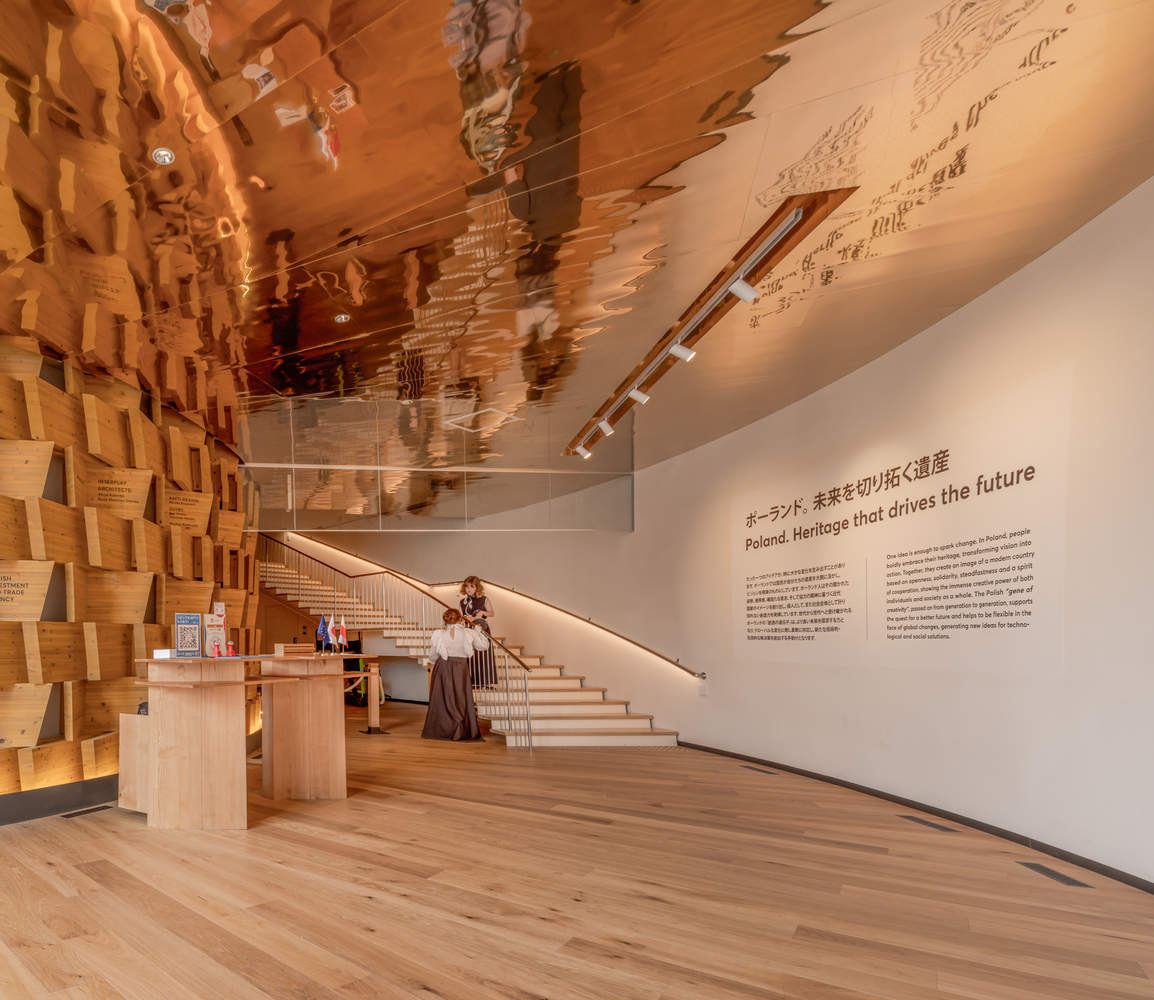
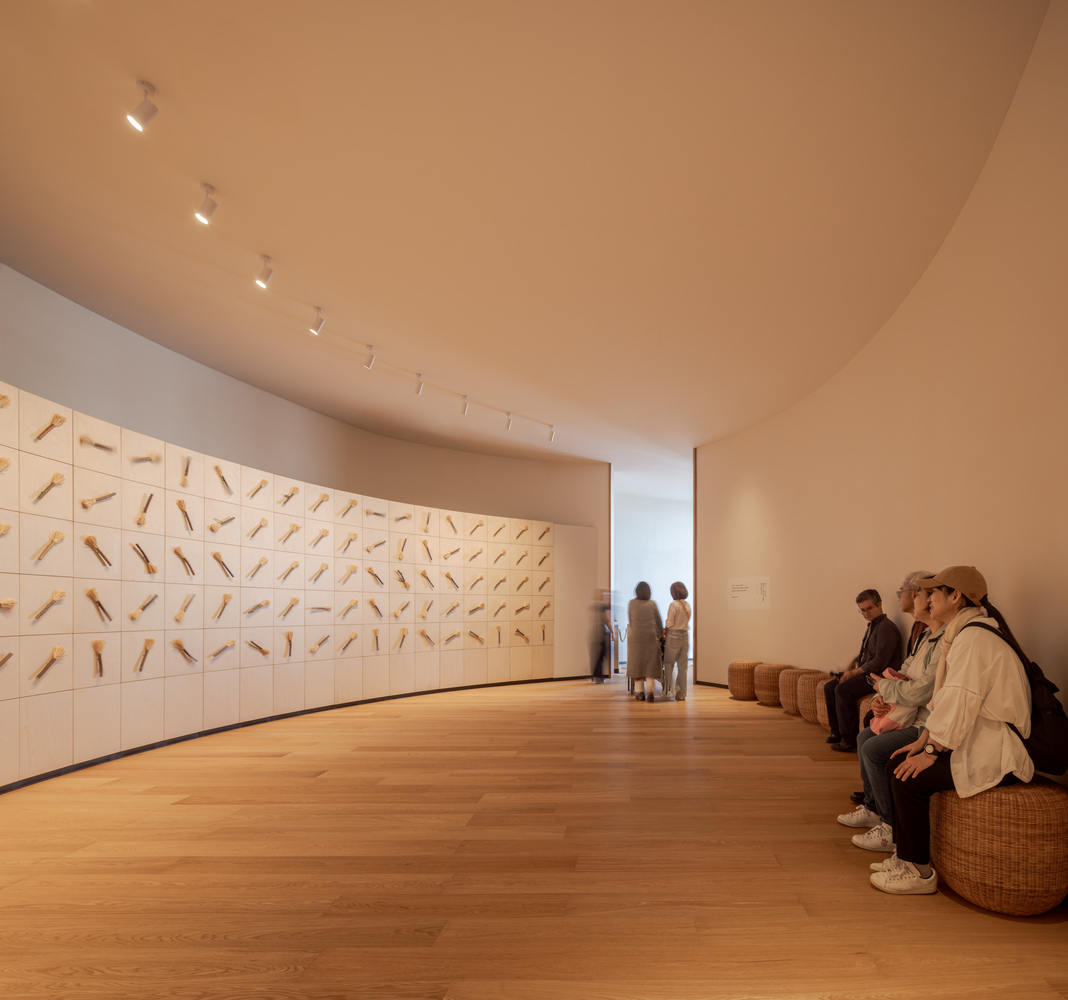
Formally, the Polish Pavilion is situated on a prominent corner plot with expansive exterior views, inspired by a spiral layout composed of overlapping curved walls of varying heights. This open and dynamic form meets the need to present a striking image from multiple angles, while the walls extending towards the surroundings invite visitors to explore. More than just a formal expression, the spiral geometry acts as a spatial tool, organizing the sequence of the exhibition and guiding visitors deeper into the exploration. As visitors naturally traverse the different spaces, they maintain a visual connection with the exterior thanks to the window design, ultimately arriving at the concert hall at the building's center—a warm and intimate oval space.
从形式上看,波兰馆坐落于一个显眼的街角地块,外部视野开阔,其设计灵感源自螺旋布局,由高度各异的重叠曲面墙构成。这一开放且富有动感的形态,满足了从多个角度展现醒目形象的需求,同时通过向周边环境延伸的墙体,吸引游客前来探索。螺旋几何形态不仅仅是一种形式上的表达,它还作为空间工具,规划着展览的顺序,引导游客逐步深入探索。游客在自然穿梭于不同空间时,得益于沿途窗户的设计,始终能与外界保持视觉联系,最终抵达位于建筑中心的音乐厅 —— 一个温暖而内敛的椭圆形空间。
© Fernando Guerra | FG+SG
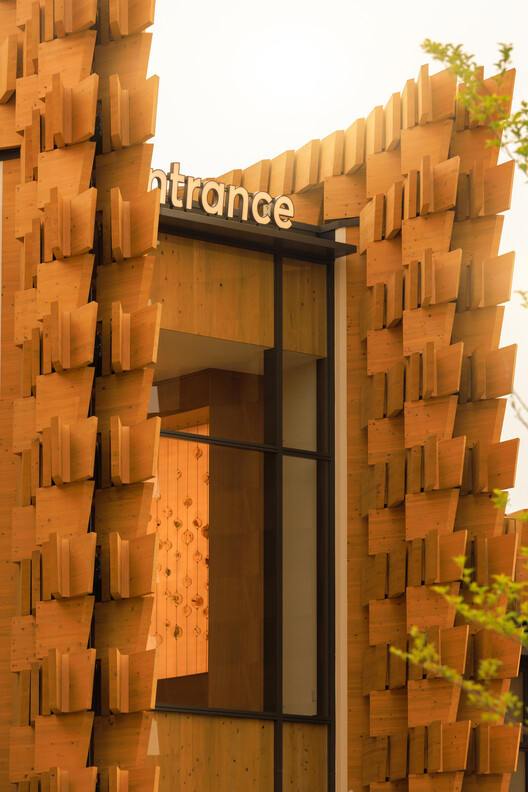
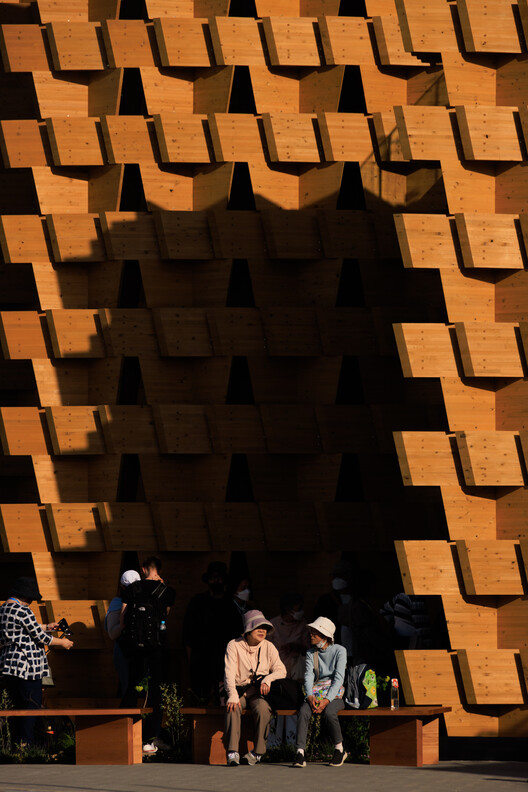
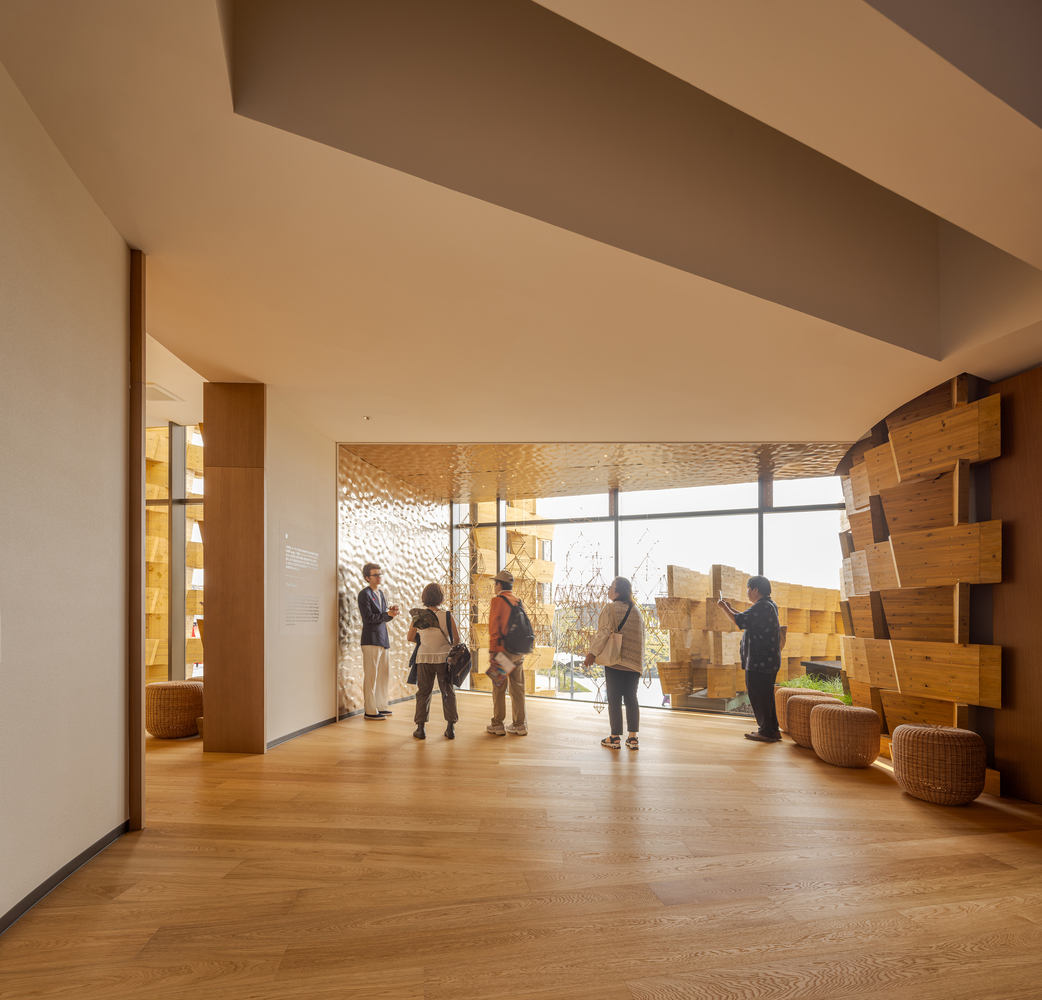
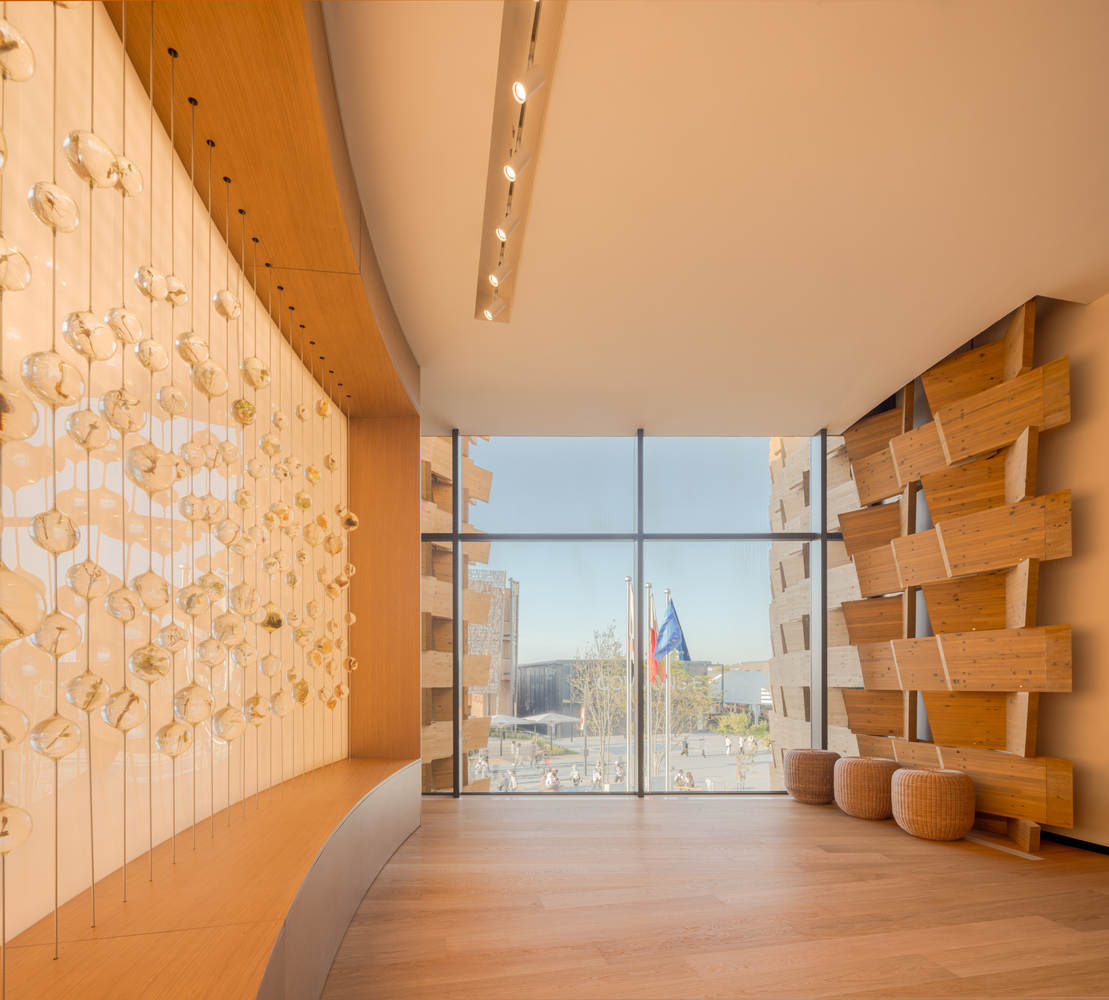
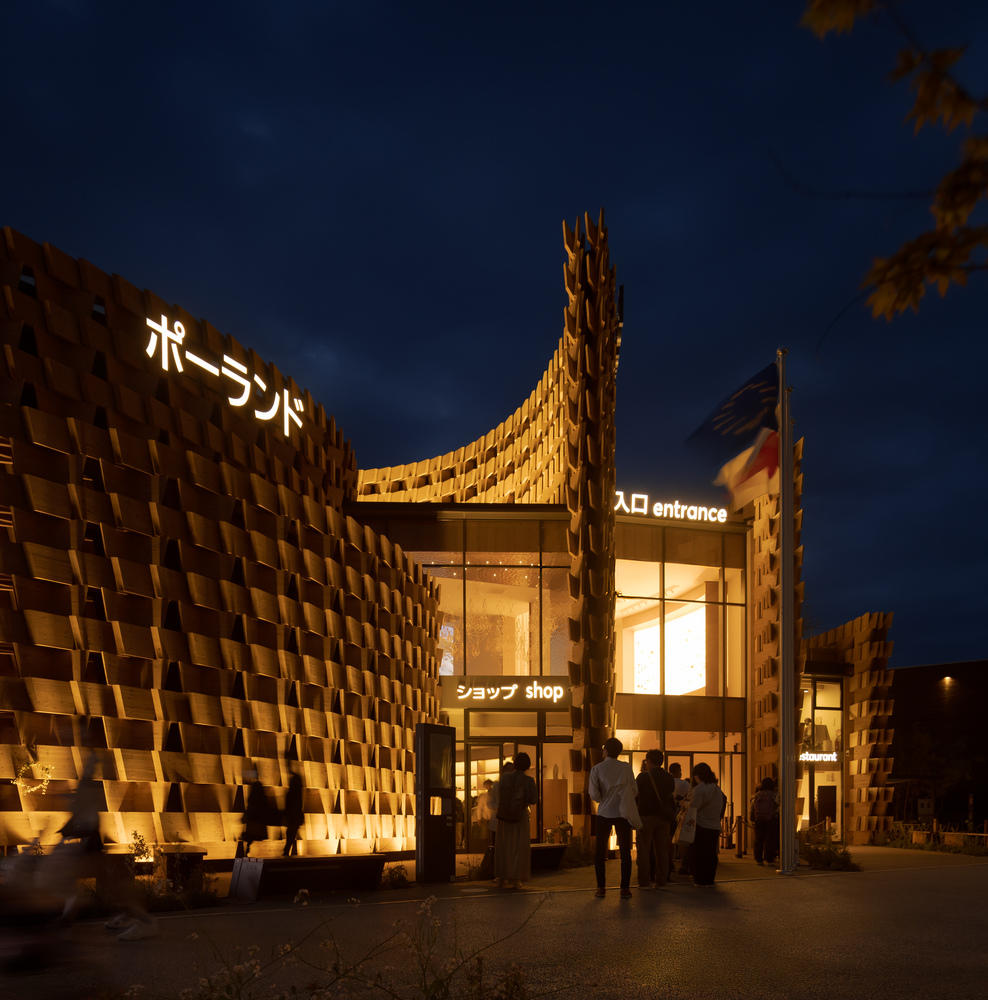
The concert hall is inspired by Baltic amber—a symbolic Polish material—and is surrounded by a golden chain curtain reminiscent of willow branches, paying homage to the landscapes that inspired Chopin. This curtain unifies the space, conceals the entrance, and creates an intimate atmosphere subtly enhanced by lighting. The structure and cladding of the pavilion utilize exclusively local Japanese pine, taking full advantage of the exceptional skills of Japanese carpenters. It incorporates traditional techniques reinterpreted through modern methods, resulting in a vibrant facade that transforms throughout the day with the play of light and shadow. Upon entering, the wood provides warmth, sensory comfort, and even a fragrant aroma.
这座音乐厅的灵感源自波罗的海琥珀 —— 波兰的象征性材料,其四周被金色链条幕帘环绕,让人联想到柳树枝条,致敬了激发肖邦创作灵感的风景。这幕帘统一了空间,隐藏了入口,并营造出一种由灯光微妙烘托的亲密氛围。展馆的结构和覆层均仅采用日本当地松木,充分利用了日本木匠的卓越技艺。它借鉴了通过现代方法重新诠释的传统技艺,打造出随着光影交错而全天候变幻的生动立面。步入馆内,木材带来温暖、感官上的舒适,甚至散发着芬芳的气息。
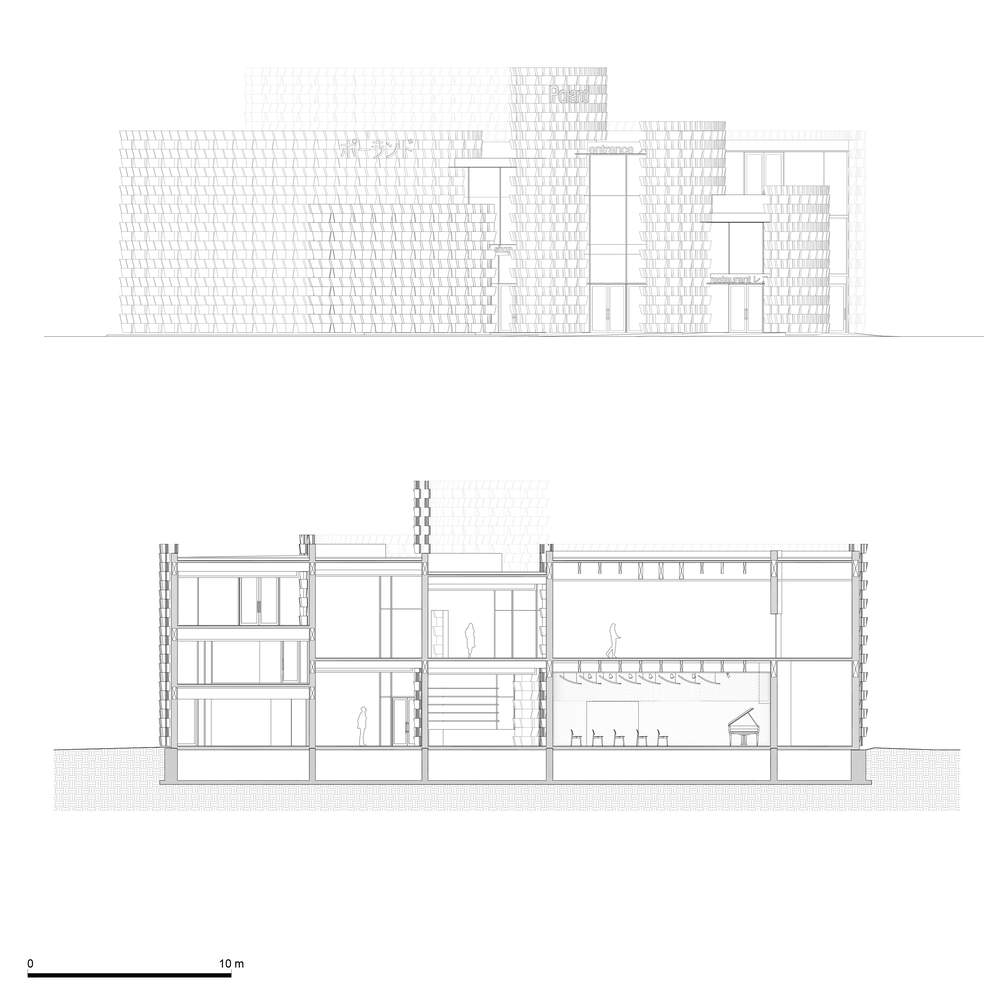
The pavilion’s construction was based on a modular logic using two types of wooden modules. This strategy ensured flexibility in adapting to the project's geometry while maintaining rigorous construction standards to meet the extremely tight deadlines.
展馆的建造采用了基于两种木质模块的模块化逻辑。这一策略既确保了适应项目几何形态的灵活性,又保持了严格的施工标准,以满足极为紧迫的工期要求。
© Fernando Guerra | FG+SG
© Fernando Guerra | FG+SG
Under the slogan "Heritage Driving the Future," the project engages in a dialogue between national identity and the local environment, between traditional craftsmanship and future-oriented forms.
该项目以“驱动未来的遗产”为口号,在民族身份与当地环境、传统工艺与面向未来的形式之间展开对话。
© Fernando Guerra | FG+SG