功能集成与场地回应:该项目巧妙地将教育、体育和员工住宿三大独立功能整合于一体,通过清晰的体量划分和流线设计,实现了各自独立运作的灵活性。建筑群对城市环境的回应性极高,将主要入口设置于新开辟的、免受车流干扰的步行区,为师生提供了安全、宁静的过渡空间。同时,员工宿舍通过面向主干道的设计,在功能上实现了与学校核心区域的物理和心理隔离,体现了对不同用户需求的细致考量。
可持续性与被动式设计策略:项目深度践行了优化设计阶段以节约技术的理念,将木材(MOB 结构)作为主要结构材料,大量使用本土资源,体现了对可持续性和低碳建造的承诺。通过优化建筑朝向以实现最大化的冬季得热,并结合电动百叶窗进行夏季遮阳,实现了对自然气候的积极响应。此外,广泛应用自然采光技术,包括天窗和光导管,显著减少了人工照明的能耗,使项目具备向“被动式建筑”标准迈进的潜力。
结构灵活性与主动框架概念:该设计精髓在于其“主动框架”和开放式规划的结合。通过精密的模数化网格(120厘米网格,30厘米倍数尺寸)指导下的干式木结构施工,保证了建造的精度和效率。更重要的是,预留的服务管道空间(主动框架)极大地提升了建筑的未来适应性,使得公用设施的维护和升级可以在不干扰核心教学空间的情况下进行,体现了前瞻性的设计思维,即在限制中寻找建筑的活力和持久性。
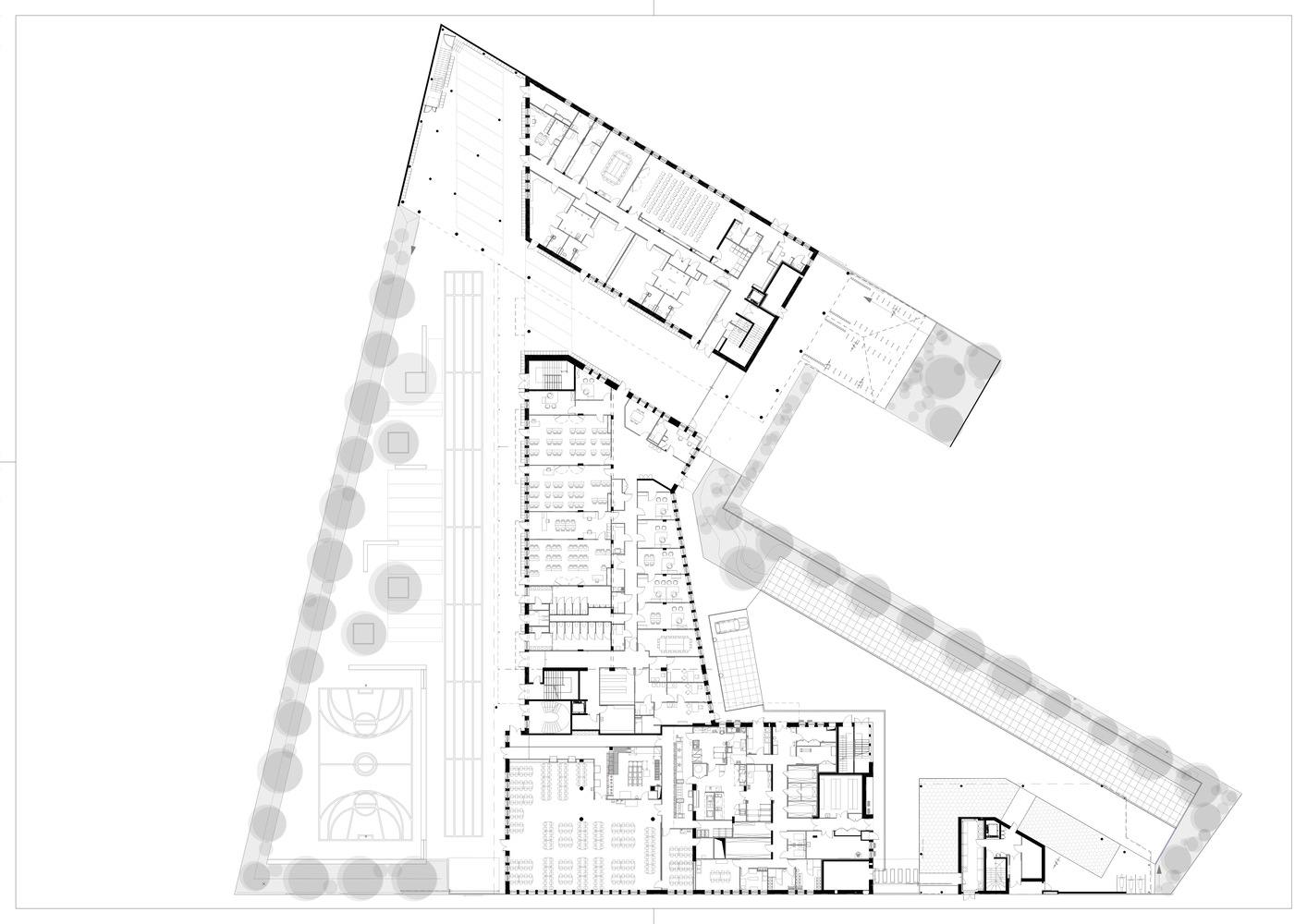
Located at the corner of Avenue Guy-Môquet and Rue du Colonel-Fabien, the project consists of three independent buildings that can operate autonomously. The main entrances for the educational building and the gymnasium are located on Mail Yvonne-Hagnauer, a pedestrian area recently opened by the city of Valenton between Rue du 8-Mai-1945 and Rue du Colonel-Fabien. This space, free from car traffic, offers a calm and secure environment for students and families. Six staff accommodations (T5 apartments, double or triple occupancy) are located to the north of the plot, connected to the nearby residential structures. Facing Avenue Guy-Môquet, they allow residents to disconnect from their professional environment.
位于 Guy-Môquet 大道和 Rue du Colonel-Fabien 街的拐角处,该项目由三座独立的建筑组成,可以独立运作。教育楼和体育馆的主要入口位于 Mail Yvonne-Hagnauer,这是瓦伦东市政府最近在 Rue du 8-Mai-1945 和 Rue du Colonel-Fabien 之间开放的一个步行区。这个空间不受汽车交通的影响,为学生和家庭提供了一个平静和安全的环境。六个员工宿舍(双人间或三人间的T5公寓)位于该地块的北部,与附近的住宅结构相连。他们面向 Guy-Môquet 大道,允许居住者与他们的职业环境断开联系。
© Nicolas Trouillard
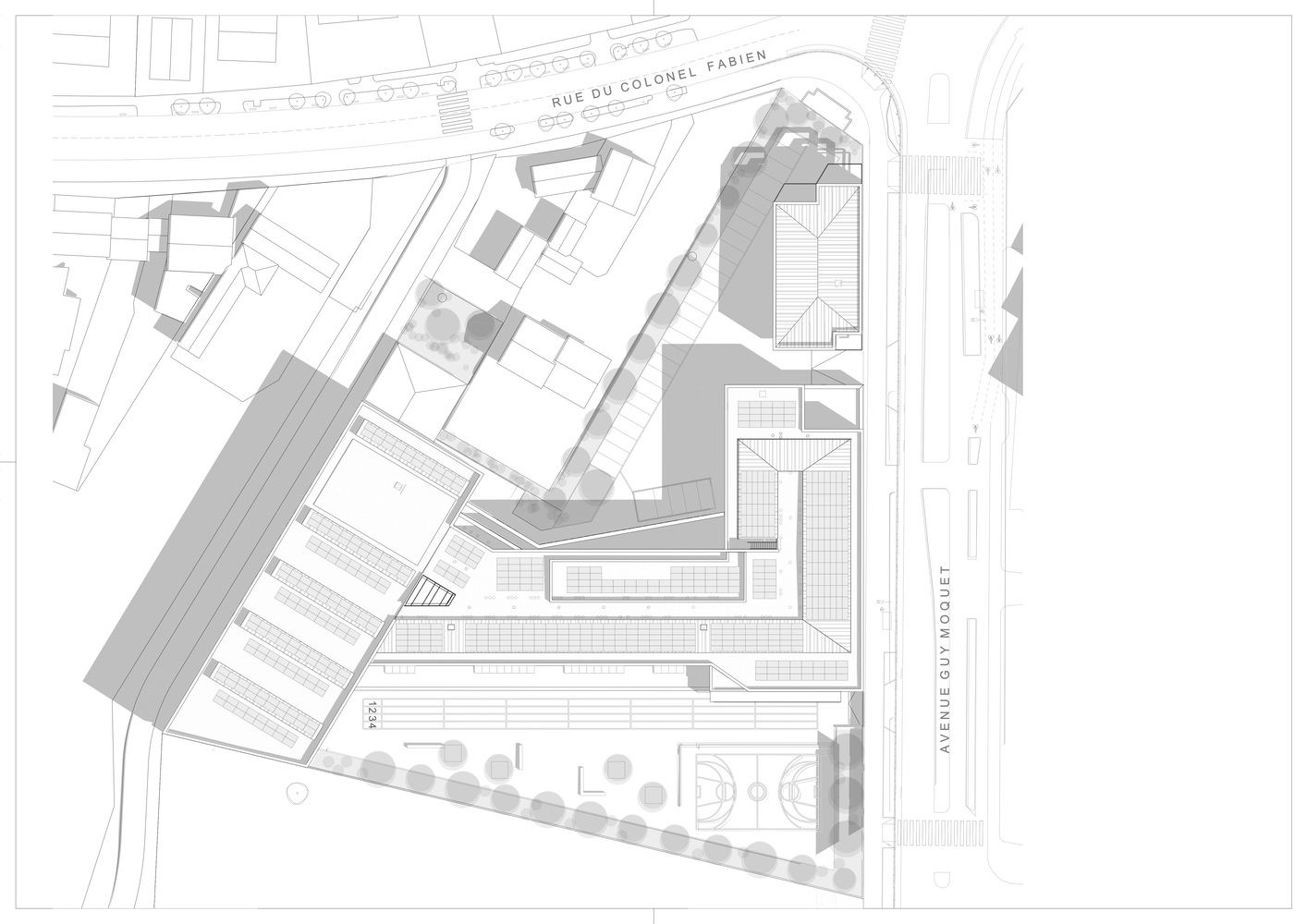
Master plan
总平面图
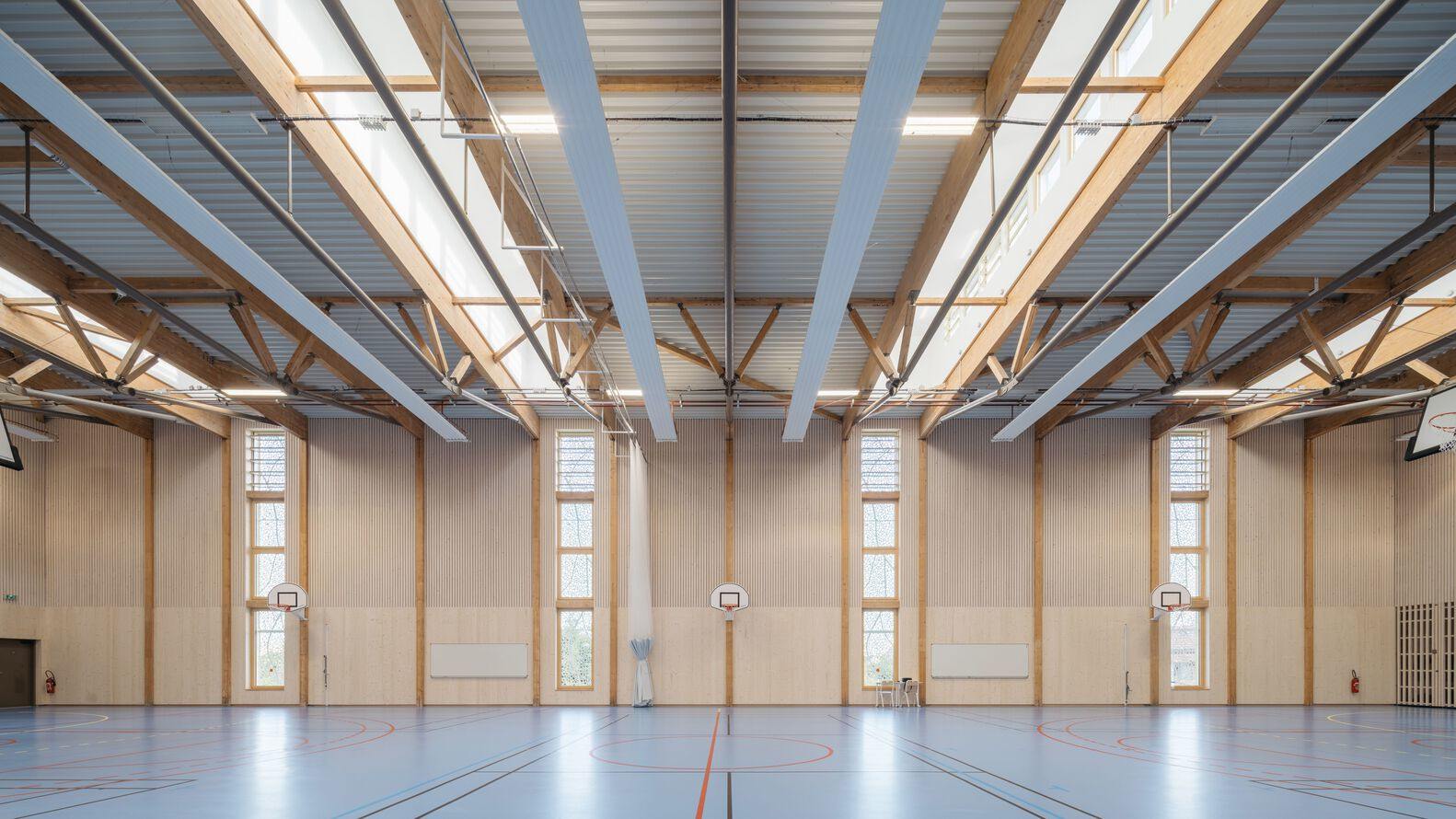
The gymnasium houses a collective sports field (for handball, basketball, etc.), a dance studio, and a 14-meter-high climbing wall. It offers various operating modes depending on the date, time, and users. It is also made available to associations and sports clubs outside school hours. The ground floor, directly accessible by students from the playground, hosts a multipurpose hall, changing rooms, and toilets. The first floor is dedicated to sports activities. It is composed of a wooden frame with tie beams at the ground floor and is lit by five rectangular roof lights facing northeast, extended by large openings on the northwest facade.
体育馆有一个集体运动场(用于手球、篮球等),一个舞蹈室,以及一个 14 米高的攀岩墙。根据日期、时间和用户提供各种操作模式。在课余时间,它也提供给协会和体育俱乐部使用。一楼是学生可以直接从校园进入的地方,设有多功能厅、更衣室和厕所。一楼是专门用于体育活动的。它由带有底层横梁的木质框架组成,并在西北立面上有高大的开口,由五个面向东北方向的长方形屋顶灯延伸。
© Nicolas Trouillard
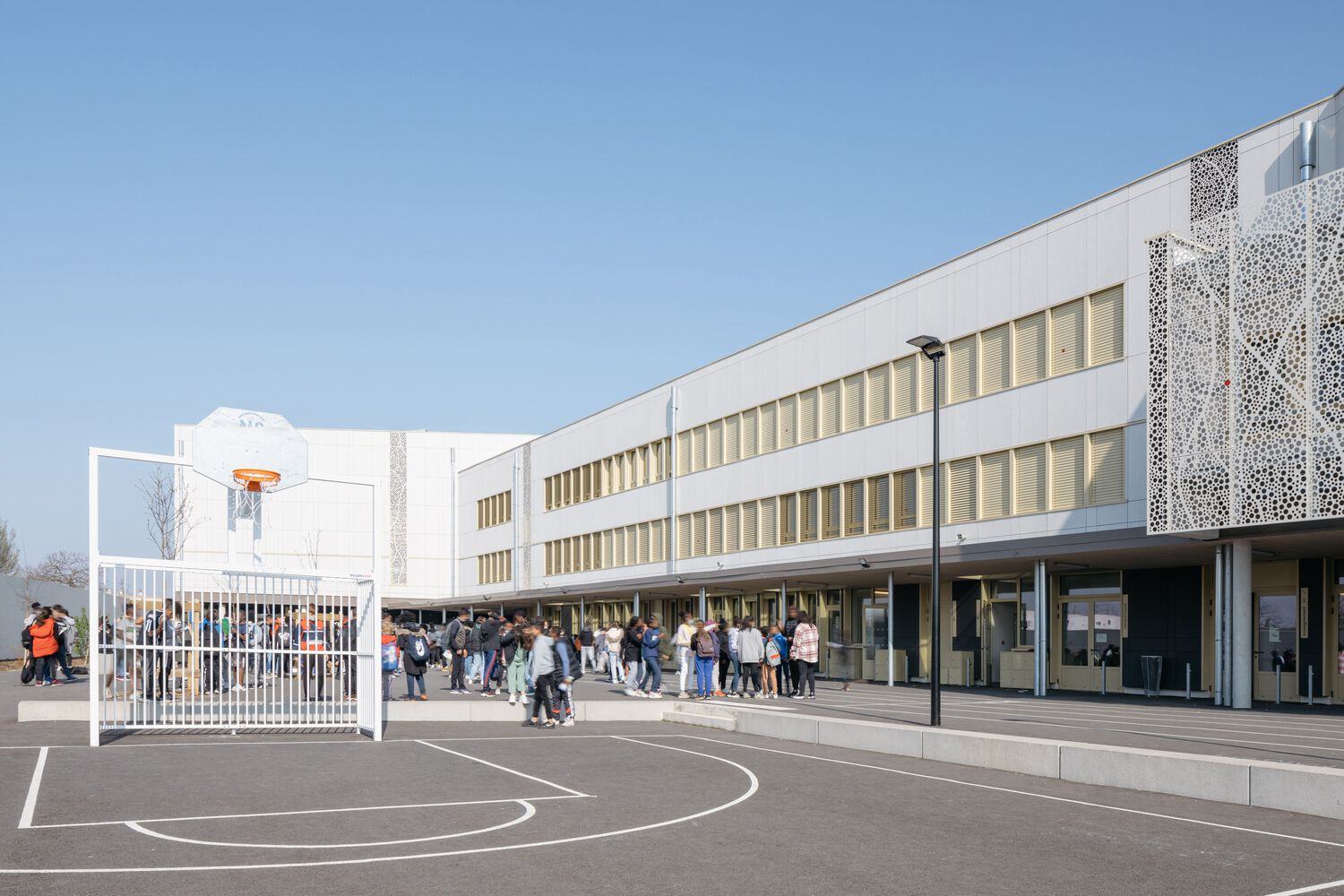
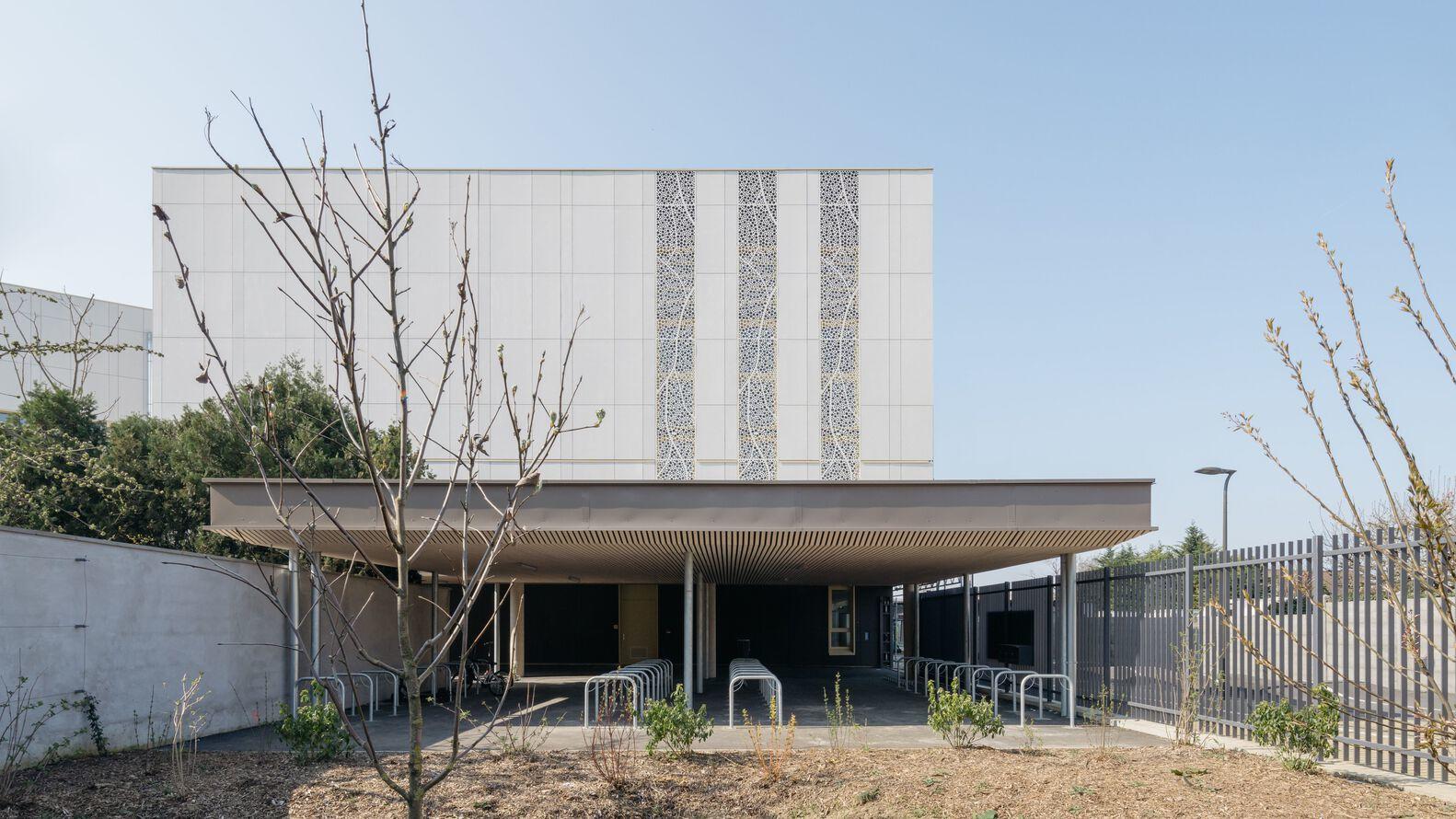
Secondary school students have a parking area for bicycles and mopeds, sheltered by a canopy next to the entrance gate. They enter the classrooms from the playground (as required by the project) via a covered walkway located under the teaching building. The south-facing orientation of the buildings allows for maximum solar gain in winter and protects classrooms from summer heat using motorized blinds (adjustable and tiltable slats). Most of the time, the playground is only shaded by vegetation. Internally, the dominant colors are white, wood, and raw concrete.
中学学生有一个自行车和机车的停放区,由入口大门边上的雨棚遮挡。他们从操场进入教室(项目要求),要穿过位于教学楼下的有顶棚的走道。建筑物朝南的方向允许最大限度的冬季太阳能增益,并通过电动百叶窗(可调节和倾斜的板条)保护教室免受夏季高温的影响。大部分时间,操场只被植被遮挡。在内部,主要的颜色是白色、木材和原始混凝土。
© Nicolas Trouillard
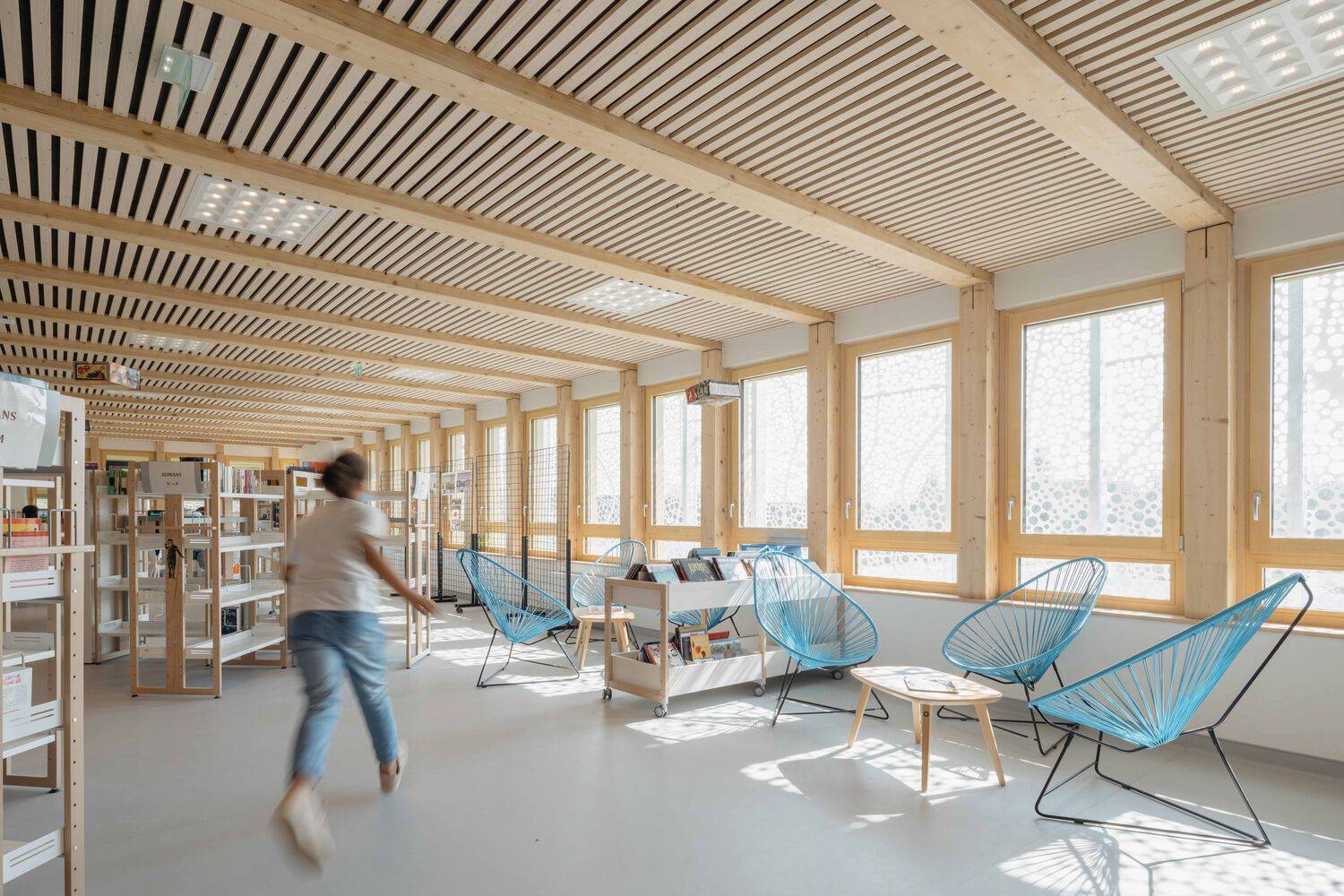
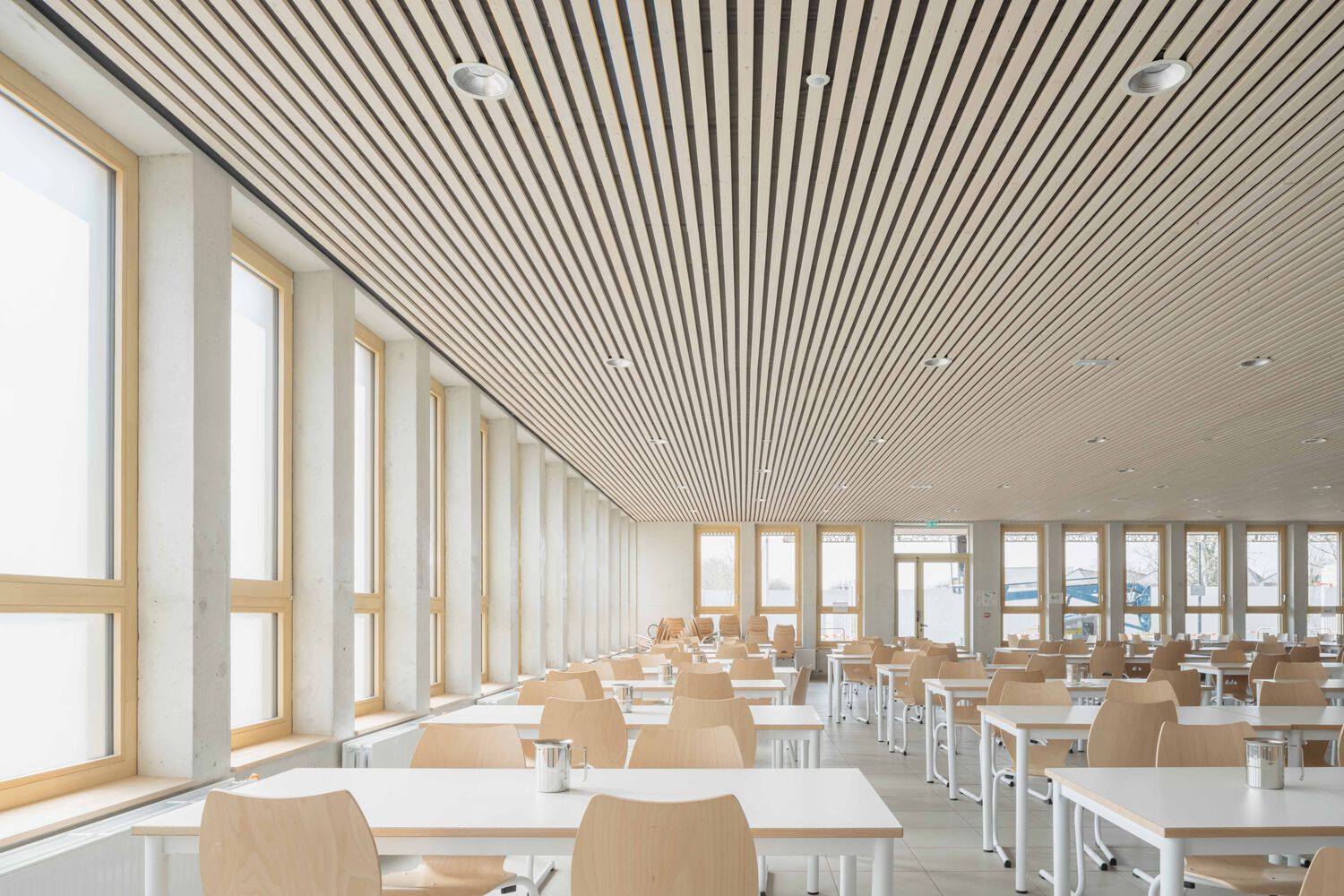
The subtle tones complement the bright spaces. Ample natural lighting is achieved through continuous triple glazing within wood-aluminum frames. More than one hundred light guides (stainless steel tubes, curved or straight) bring natural light to the rear of the central corridors and utility workshops (for art and science education).
淡雅的色调与明亮的空间相得益彰。通过木铝混合框架内的连续三层玻璃实现了充足的自然采光。一百多条光导管(不锈钢管,弯曲或笔直)为中央走廊和实用工作间(用于艺术和科学教育)的后部提供自然采光。
© Nicolas Trouillard
© Nicolas Trouillard
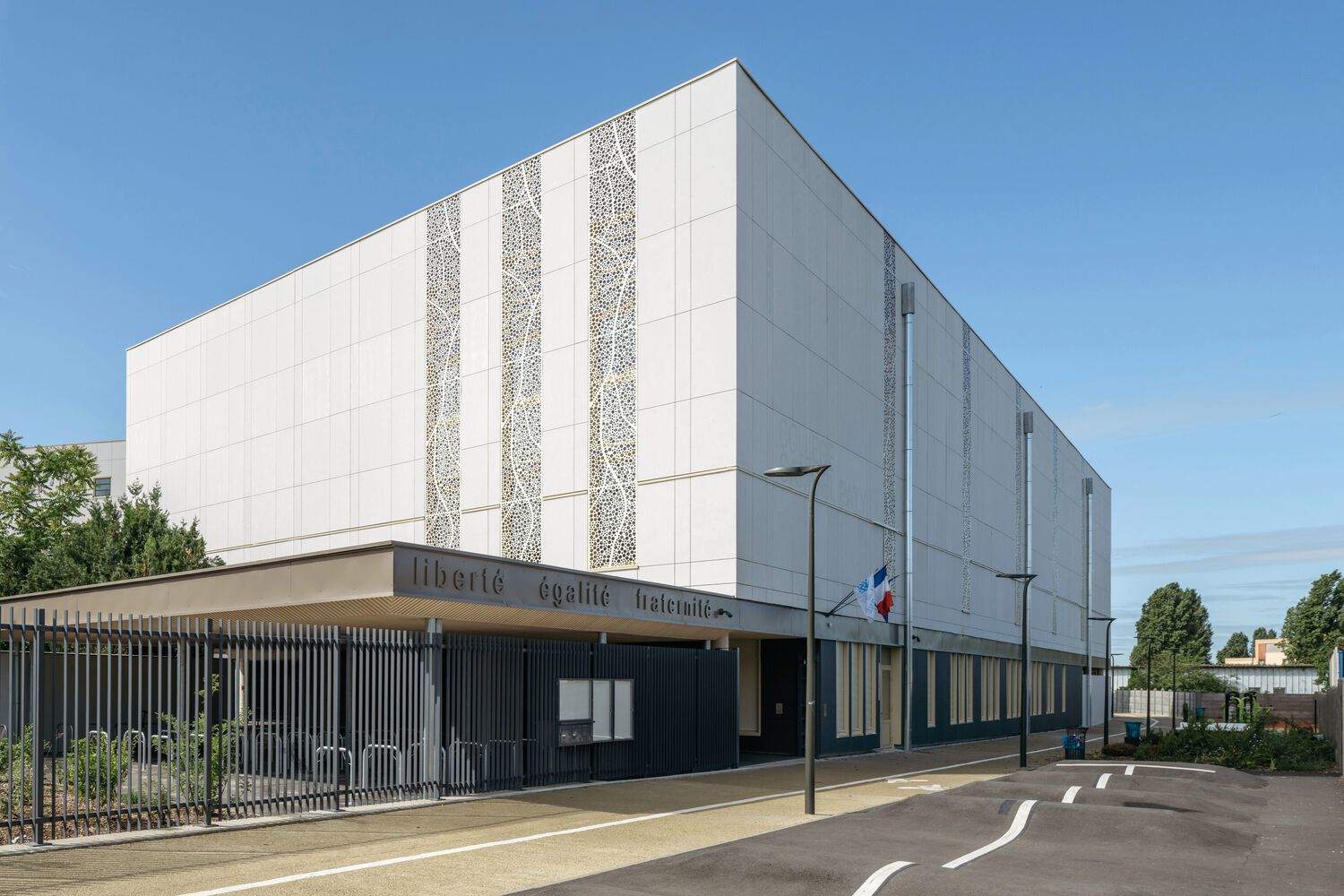
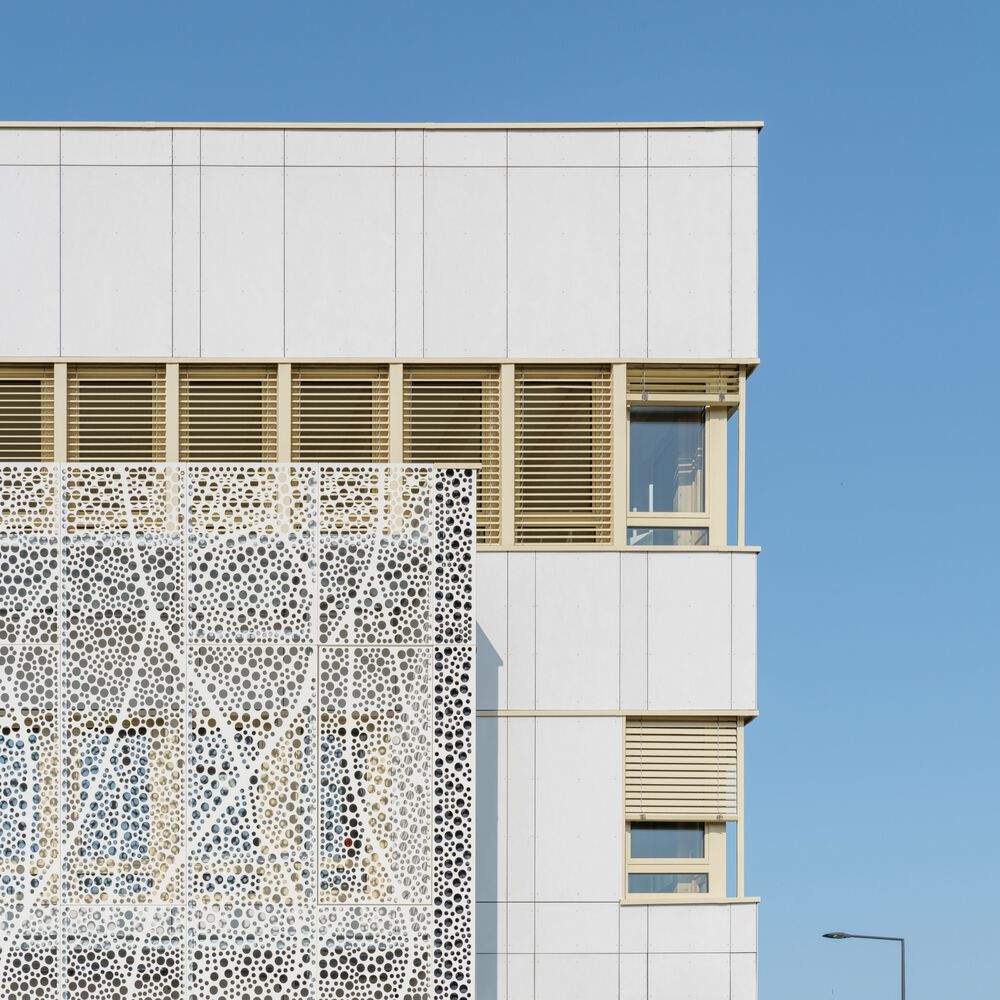
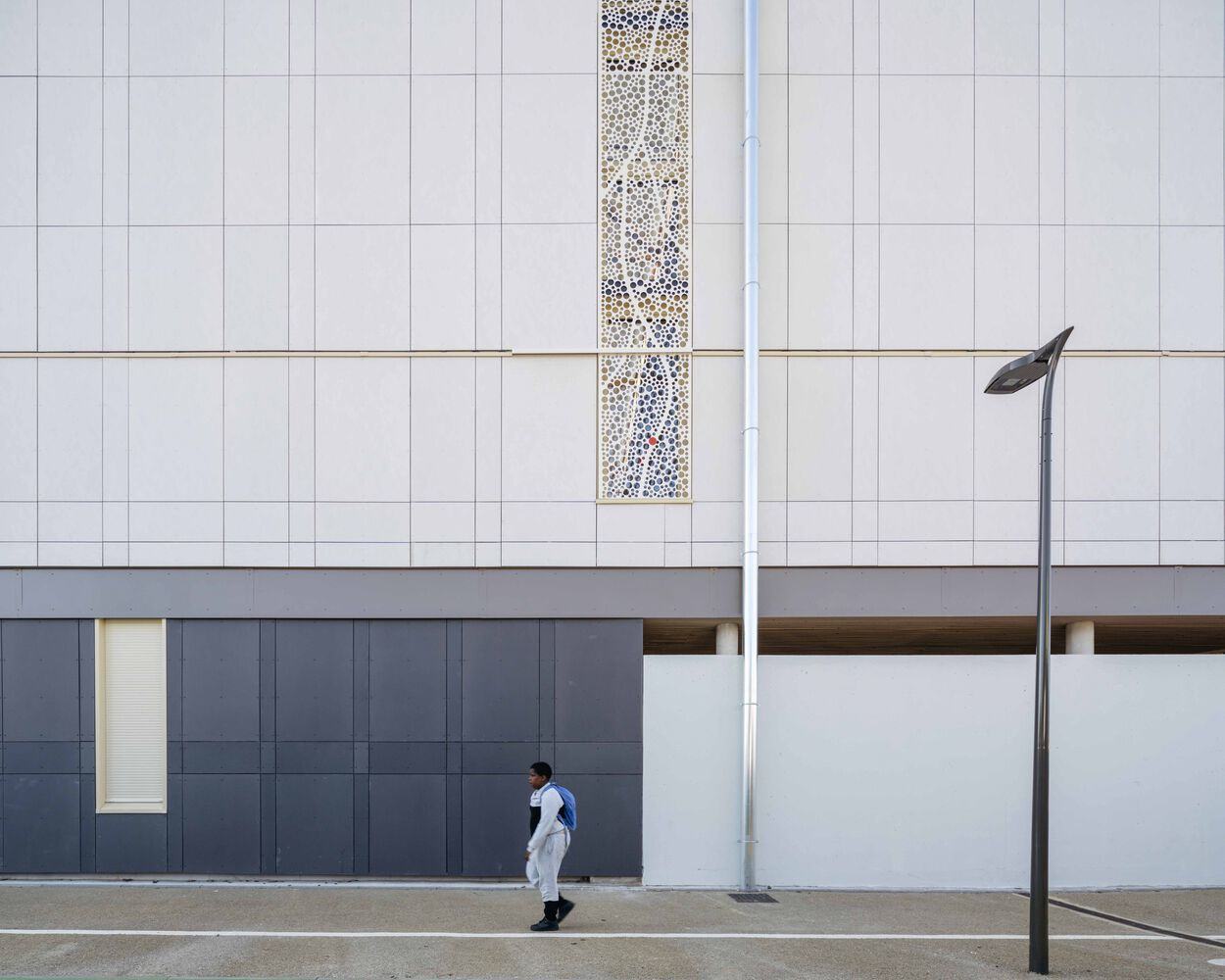
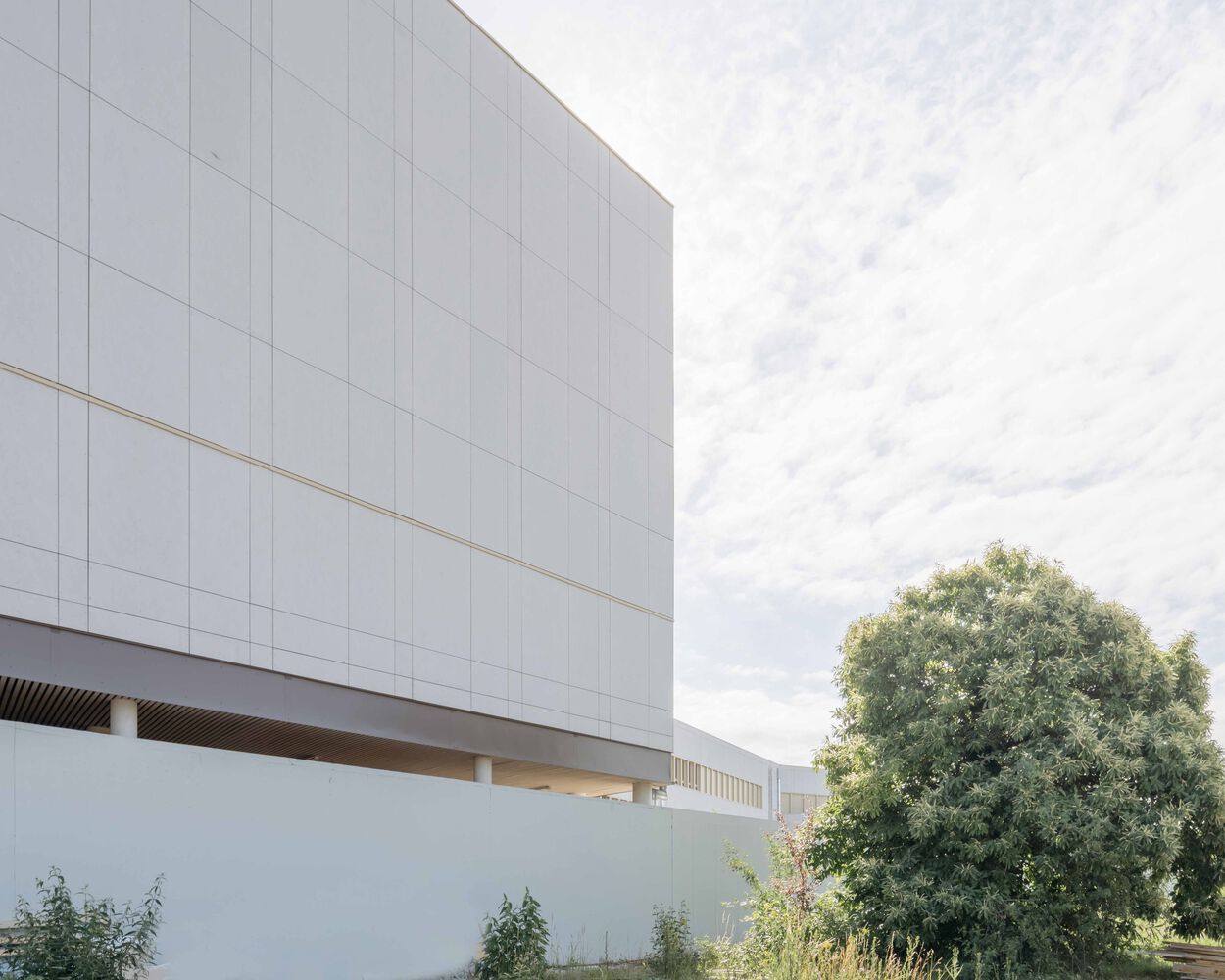
All exterior facades share the same design language, whether for the educational building, the gymnasium, or the staff housing. The color of the frames, windows, and blinds is off-white, echoing the wooden interiors. The infill of the MOB (wood frame) is clad with light gray fiber cement panels (Equitone). Steel sunshades, acting as shading devices, are installed in front of stairs and specific spaces (such as the library and the gymnasium) to create different lighting atmospheres, whose dynamics are guided by the time of day and the sun.
所有的外墙都有相同的设计语言,无论是教育楼、体育馆,还是工作人员的住所。窗框、窗户和百叶窗的颜色为乳白色,与木质内饰相呼应。MOB(木制框架)的填充物用浅灰色的纤维水泥板(Equitone)进行包覆。作为遮阳板的钢制遮阳板被安装在楼梯和独特的空间(如图书馆和体育馆)前面,以创造不同的照明氛围,其动力由一天中的时间和阳光引导。
© Nicolas Trouillard
© Nicolas Trouillard
© Nicolas Trouillard
Following standard practice, ARCHIPENTE anticipated the possibility of installing photovoltaic panels on the building's "fifth facade." The south-facing roof slopes, technical regulations, and structural dimensions were sized to accommodate the weight of the panels and their frames. Given the significant increase in energy prices, the department embraced the idea of producing its own electricity. A study has been commissioned for the implementation of a photovoltaic power station on the college's roof. The project will then meet the criteria for "Passive Building" certification.
按照惯例,ARCHIPENTE 预计在建筑的 “第五立面”安装光伏板的可能性。朝南的屋顶坡度、技术规定和结构尺寸都是为了适应面板及其重量。考虑到能源价格的大幅上涨,该部门已经接受了自己生产电力的想法。一项研究已经被批准在学院的屋顶上实施一个光伏发电站。然后,该项目将符合“被动式建筑 ”认证的标准。
Ground floor plan
首层平面图
Open plan, active frame
There are fundamentally two approaches to building energy-efficient buildings. The first involves relying on thick insulation and the efficiency of machines. The second involves optimizing the design phase, where money not spent on technology can be invested in material choices and space. In Valenton, the second approach was clearly favored. In this regard, wood is a great ally. The wood frame replaces the concrete structure and can accommodate most of the insulation within its framework. About 1,000 cubic meters of wood were used in the project, 85% of which came from France.
**开放式计划,积极的框架**
基本上有两种方法来建造节能建筑。第一种涉及到依靠厚厚的绝缘材料和机器的效率。第二种方法涉及优化设计阶段,考虑到不花在技术上的钱可以投资在材料选择和空间上。在 Valenton,第二种方法显然更受青睐。在这方面,木材是一个很好的盟友。木材框架代替了混凝土结构,可以在其框架内容纳大部分的绝缘材料。在该项目中,总共使用了约 1000 立方米的木材,其中 85%来自法国。
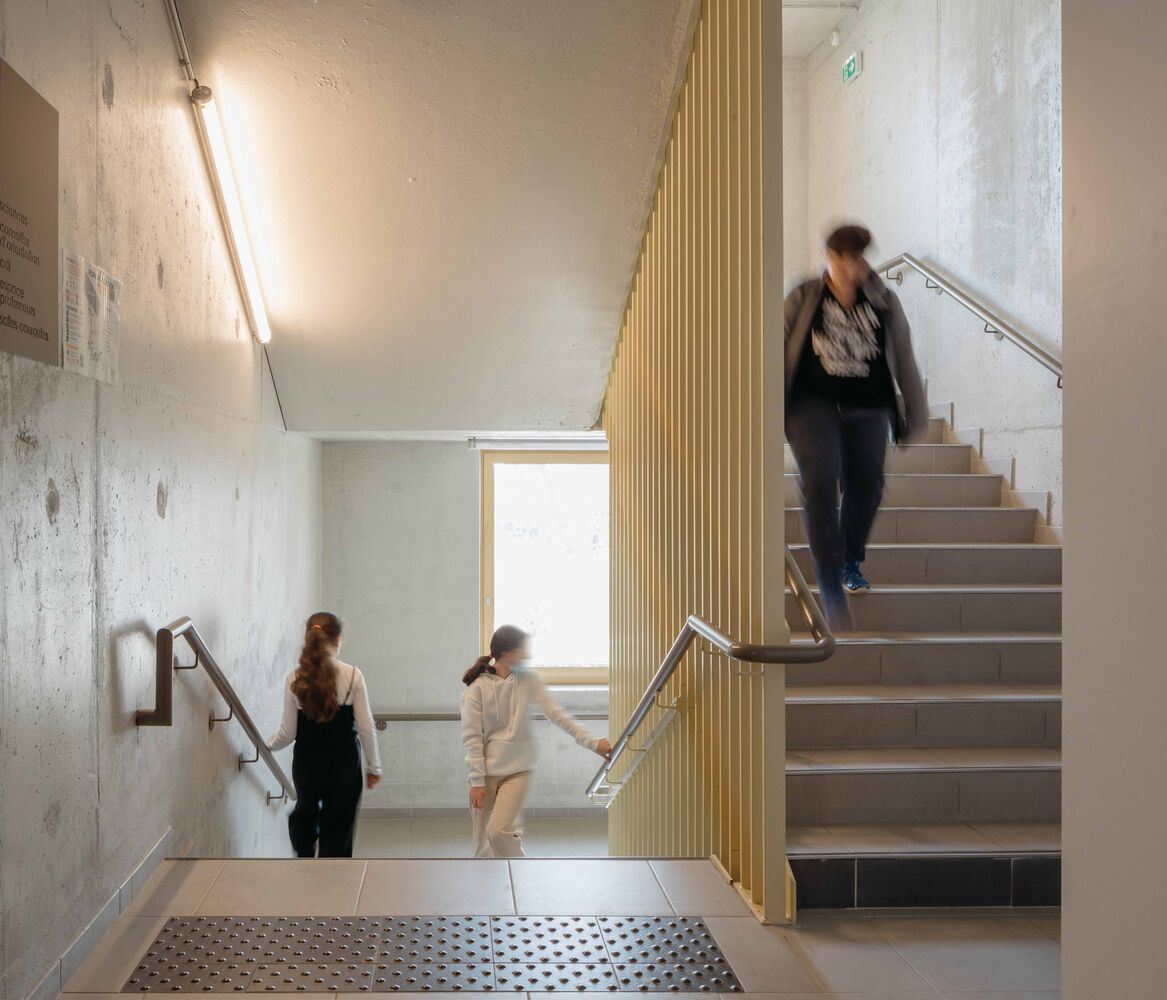
The floors, built using dry construction methods, required precise structural planning. All glulam frames are installed on a 120 cm grid, a dimension compatible with the standard widths of wood panels (or wood derivatives). As a result, all dimensions in the project are multiples of 30 cm (60 cm, 1.20 m, 2.40 m, 3.60 m, etc.). No partition walls impede the principle of open building, which allows for the flexibility of modifying divisions according to changing needs. The concrete core of the stairs and a few diagonal bracing elements are sufficient to stabilize the wooden structure.
使用干式建筑方法建造地板需要精确的结构规划。所有的胶合木框架都安装在 120 厘米的网格上,这个尺寸与木板(或木质衍生物)的标准宽度相一致。因此,项目中的所有尺寸都是 30 厘米的倍数(60 厘米、1.20 米、2.40 米、3.60 米,等等)。没有隔断墙阻碍了开放式建筑的原则,这使得根据不断变化的需求来修改隔断变得灵活。楼梯的混凝土核心部分和一些斜向支撑部件足以稳定木质结构。
© Nicolas Trouillard
ARCHIPENTE’s concept of the “active frame” is another valuable tool for the project’s flexibility. It involves reserving a series of long service ducts along the central corridors for the distribution of electricity and utilities. This strategy simplifies the spatial management of the double-flow ventilation system, reduces the height of the false ceilings, and allows access to technical components without disturbing the classrooms. This approach will be particularly advantageous when implementing the photovoltaic power generation system for the school. As the eminent Álvaro Siza emphasized, “It is when all constraints are integrated that architecture begins.”
ARCHIPENTE 设想的“主动框架”概念是项目灵活性的另一个有价值的工具。它涉及到在中央走廊的两侧保留一系列长的服务管道,用于分配电力和公用设施。这种策略简化了双流通风系统的空间管理,降低了假天花板的层高,并允许在不影响教室的情况下访问技术元件。在为学校实施光伏发电系统时,这种方法将特别有利。正如杰出的阿尔瓦罗-西萨所强调的,“当所有的限制都被整合时,建筑就开始了”。
Text provided by the architect
译者:刘若飞
© Nicolas Trouillard