文化与技术交融的整体设计:该项目成功地将深厚的地域文化遗产(如良渚遗址的传统轮廓和庭院结构)与尖端航空产业的前沿科技理念相融合。建筑材料的选择(矿物材料、钢材、玻璃和混凝土的融合)直观地反映了这种跨越历史与未来的对话。这种高度的文化敏感性和技术前瞻性,使其不仅是一个功能性的教育设施,更是一个具有深刻场所精神的标志性建筑群。
“飞檐屋顶”的结构与象征意义:作为校园的核心元素,全球最大规模的悬挑屋顶“The Flying Roof”是结构工程的杰作。其轻质张拉结构设计不仅体现了航空工程的效率美学——用最少材料实现最大覆盖,其优雅的凹形轮廓更象征着机翼或展翅的飞鸟,直接呼应了北京航空航天大学的航空主题。这个屋顶有效地将分散的行政、学术和研究功能整合到一个有机的整体之下,创造了强大的视觉焦点和场所凝聚力。
以人为本的多层次空间策略:总体规划采用清晰的双轴线系统,划分了核心的学术社交区与周边的功能区。尤其值得称道的是其对场地地形的精妙处理,通过自然地形层、低矮建筑层和悬浮屋顶层的三维分层,创造出一个无车化的、花园式的景观环境。宽阔的庭院和水道不仅美化了环境,更在中国南方气候下形成了宜人的微气候,极大地提升了学习、研究和社交的舒适度与品质。
Located in the Yangtze River Delta, the Beihang University Hangzhou International Innovation Institute is a brand-new international hub for aviation education and research. The institute serves a dual role as both an academic campus and a science and technology park, bringing together diverse groups such as students, researchers, and commercial enterprises in a vibrant environment.
坐落于长江三角洲的北京航空航天大学杭州国际创新研究院,是一个崭新的航空教育与研究国际枢纽。该研究院兼具学术校园与科技园区双重属性,将学生、研究人员及商业公司等多元群体汇聚于一个充满活力的环境之中。
© 田方方
© 田方方
© 田方方
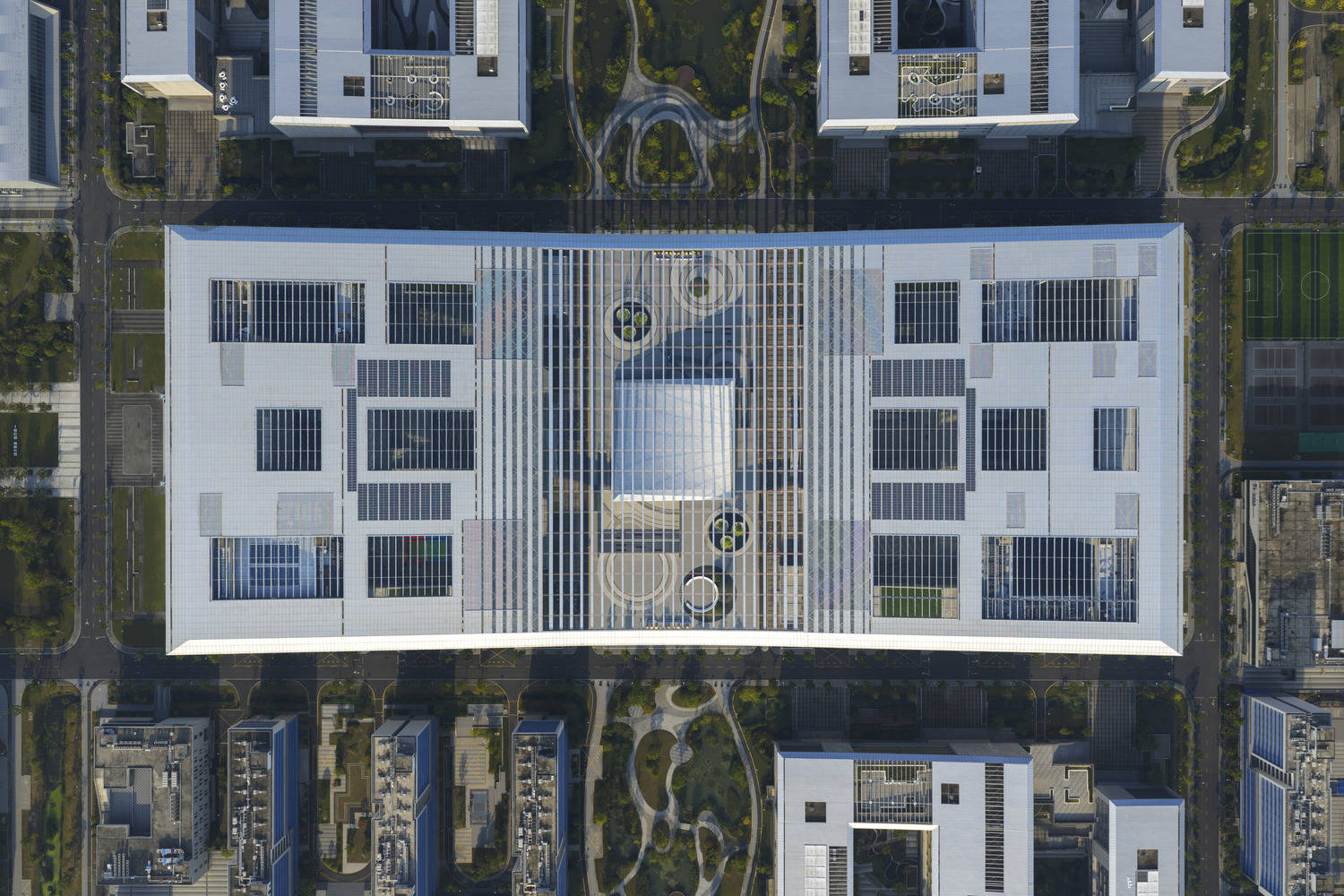
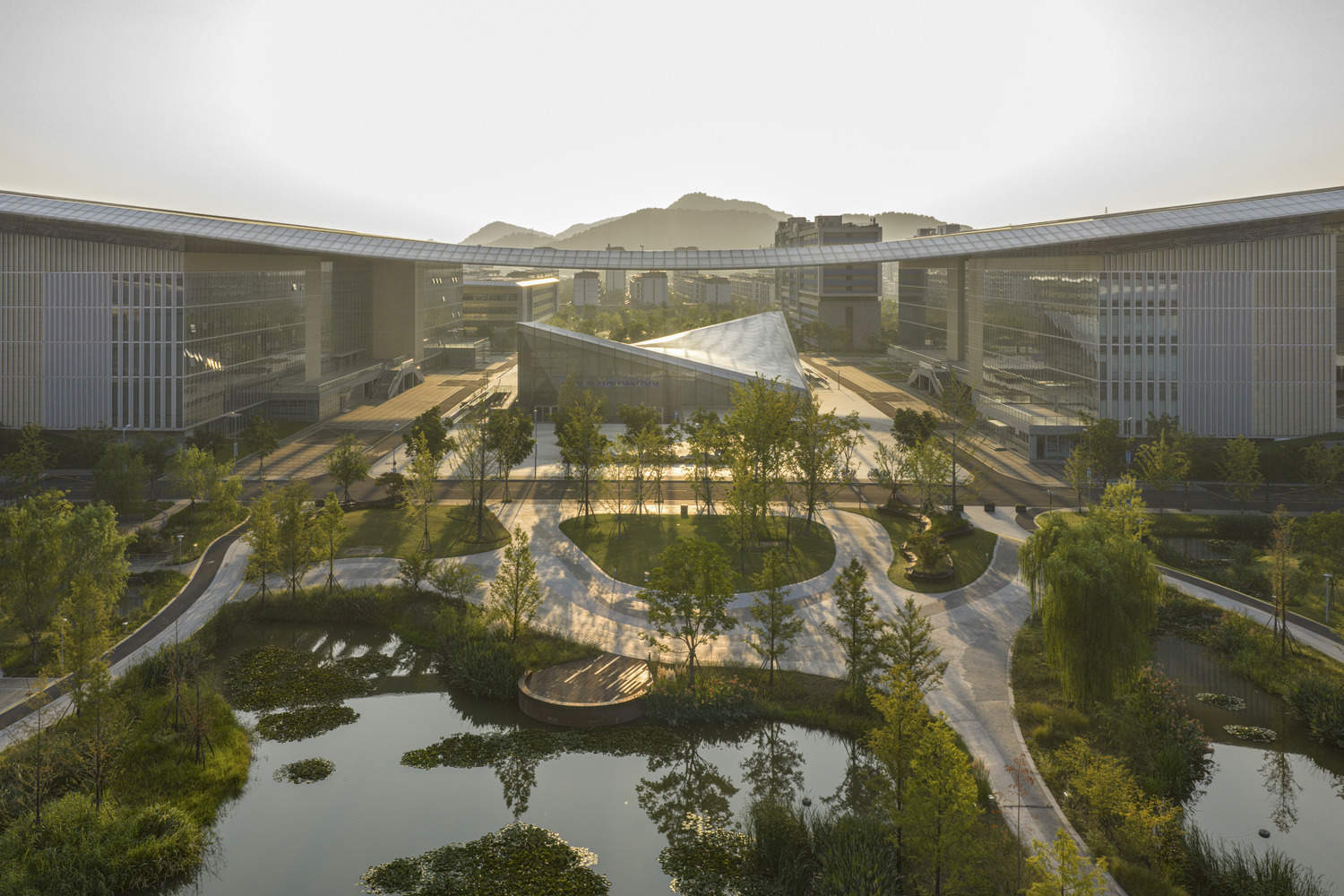
The overall planning is defined by two main axes: the north-south academic axis, centered around a complex of academic and social buildings sheltered under the "Flying Roof," and the east-west landscape axis, which traverses the entire site, connecting green spaces and pathways. At the campus periphery, the building complex delineates the areas for teaching buildings, residential blocks, and sports facilities.
总体规划由两条主要轴线界定:南北向的学术轴线以一组置身于“飞檐屋顶”(Flying Roof)庇护之下的学术与社交活动建筑群为核心;东西向的景观轴线则贯穿整个场地,连接起绿地与步道。校园边缘处,该建筑群由教学楼、住宅楼以及体育设施环绕勾勒。
© 田方方
© 田方方
Inspiration for the master plan and architectural design draws from the Liangzhu Neolithic site, a UNESCO World Heritage site, as well as the cutting-edge aviation industry. A clever fusion of mineral materials, steel, glass, and concrete allows historical heritage and modern aesthetics to interact. The urban master plan incorporates regional architectural traditions, including curved roof profiles and diversified courtyard-style building structures, integrating the project with the surrounding water features.
总体规划与建筑设计灵感源自联合国教科文组织世界遗产良渚新石器时代遗址以及尖端航空产业。矿物材料、钢材、玻璃与混凝土巧妙融合,让历史遗产与现代风尚交相辉映。城市总体规划融入了区域建筑传统,包括曲线形屋顶轮廓与多样化的庭院式建筑结构,使项目与周边水景融为一体。
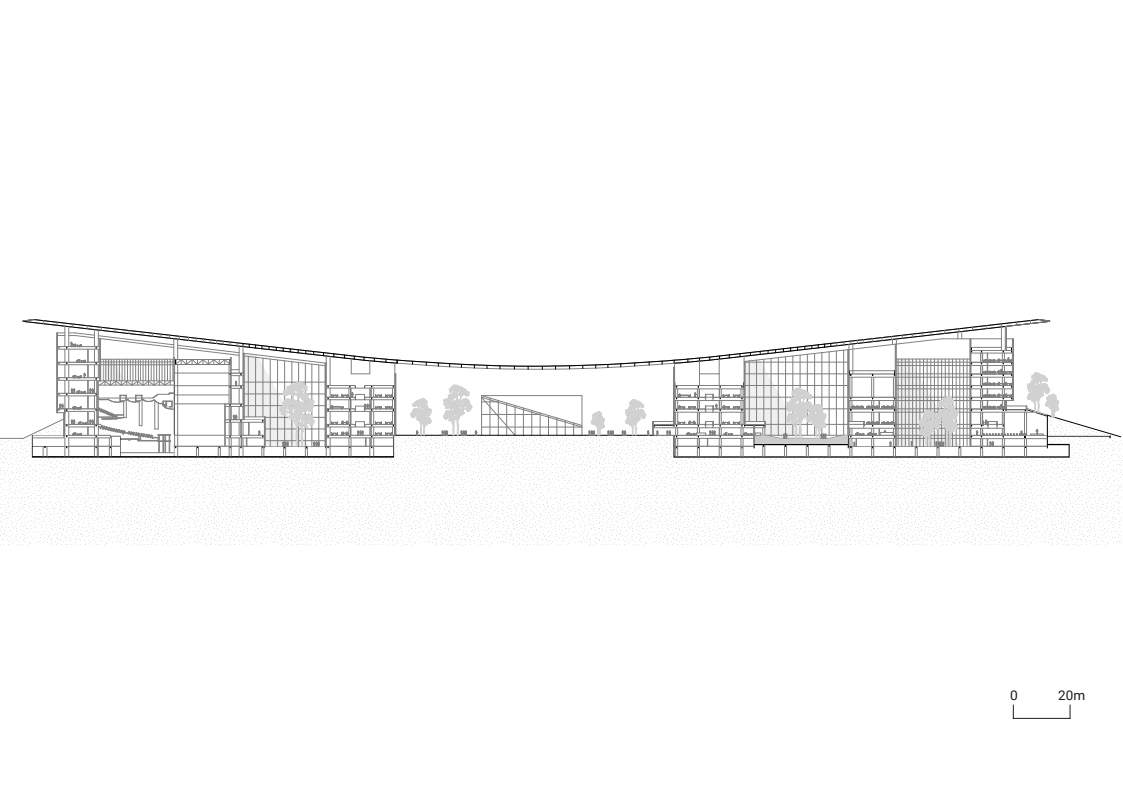
剖面图
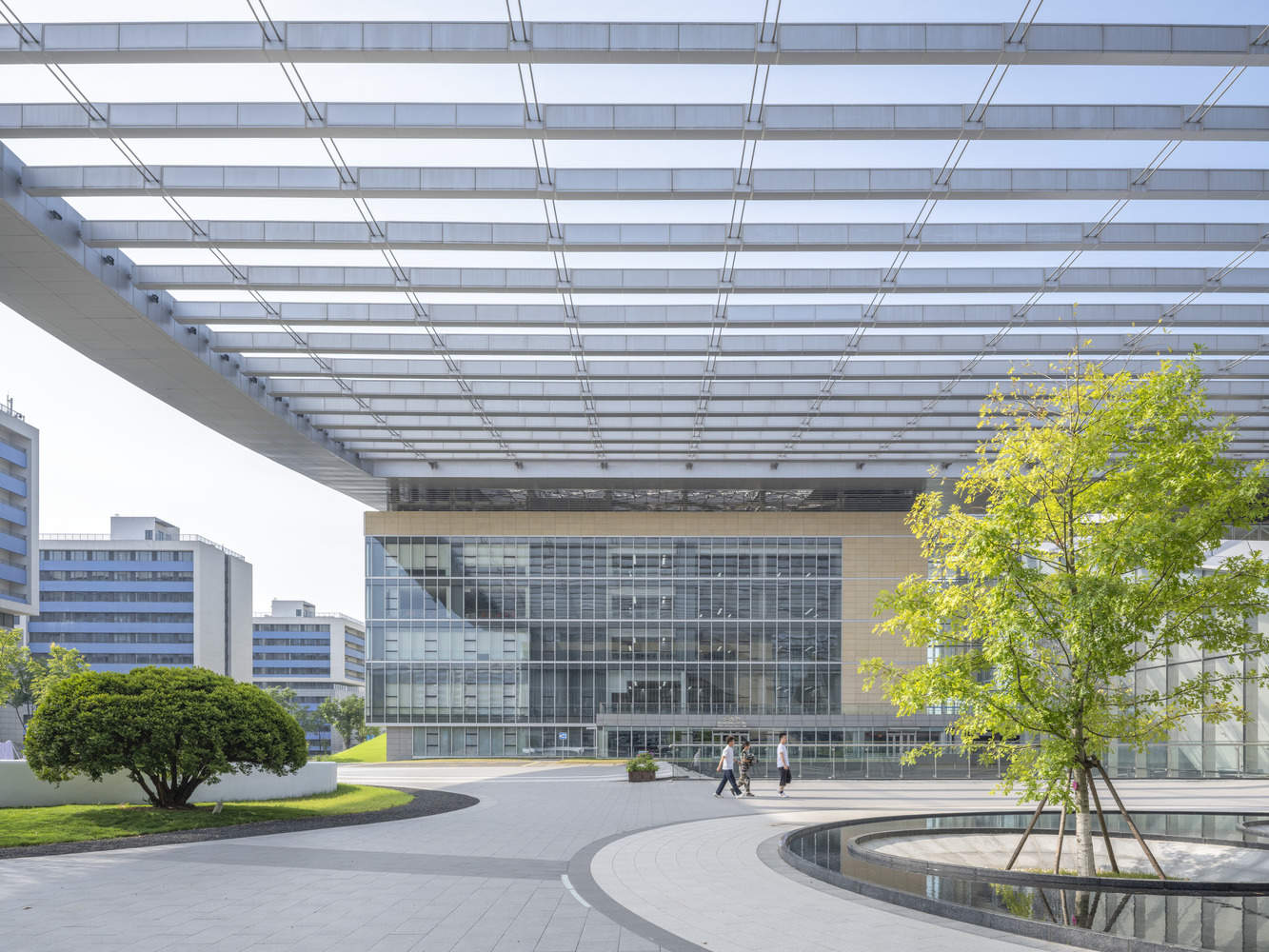
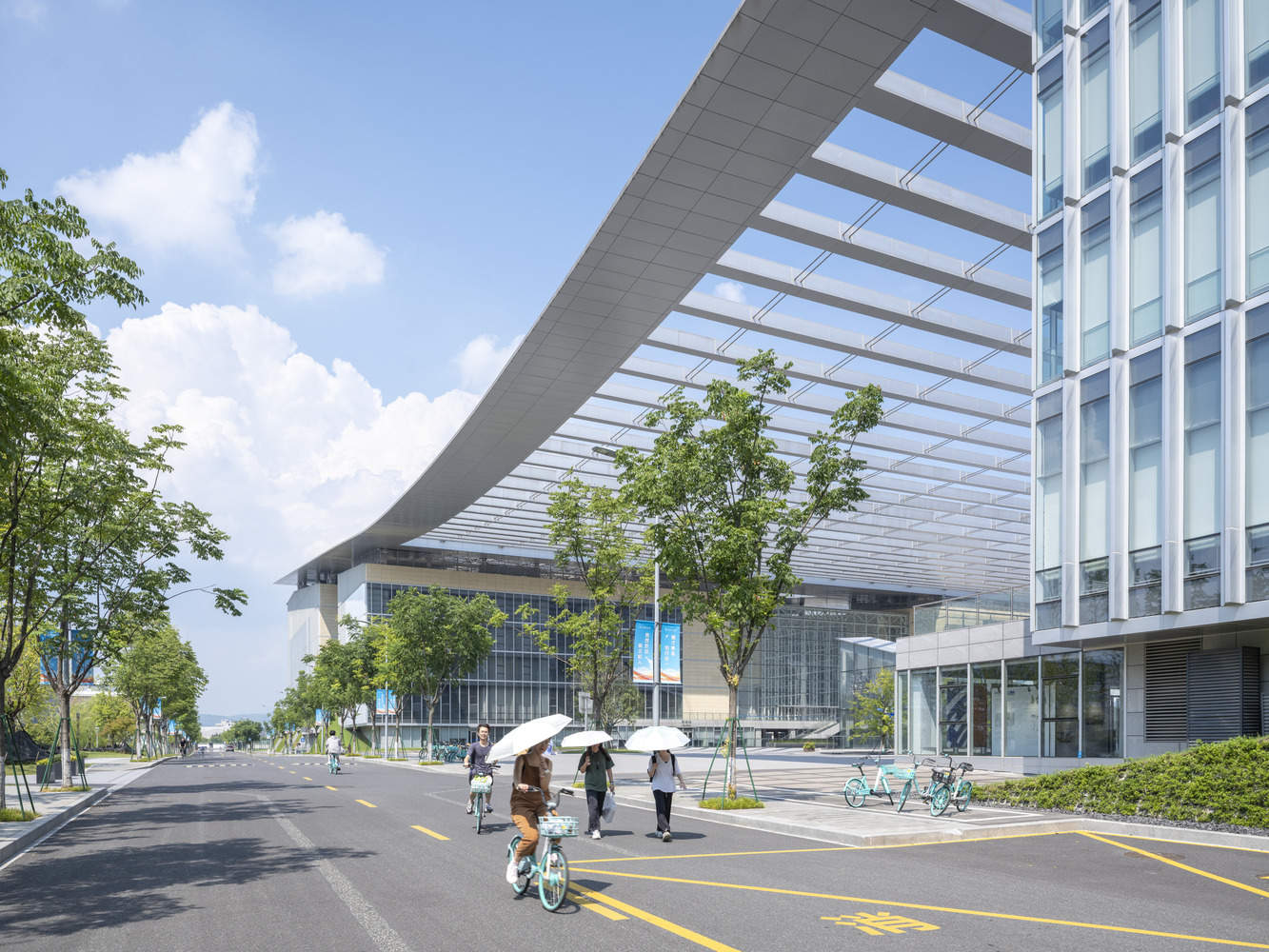
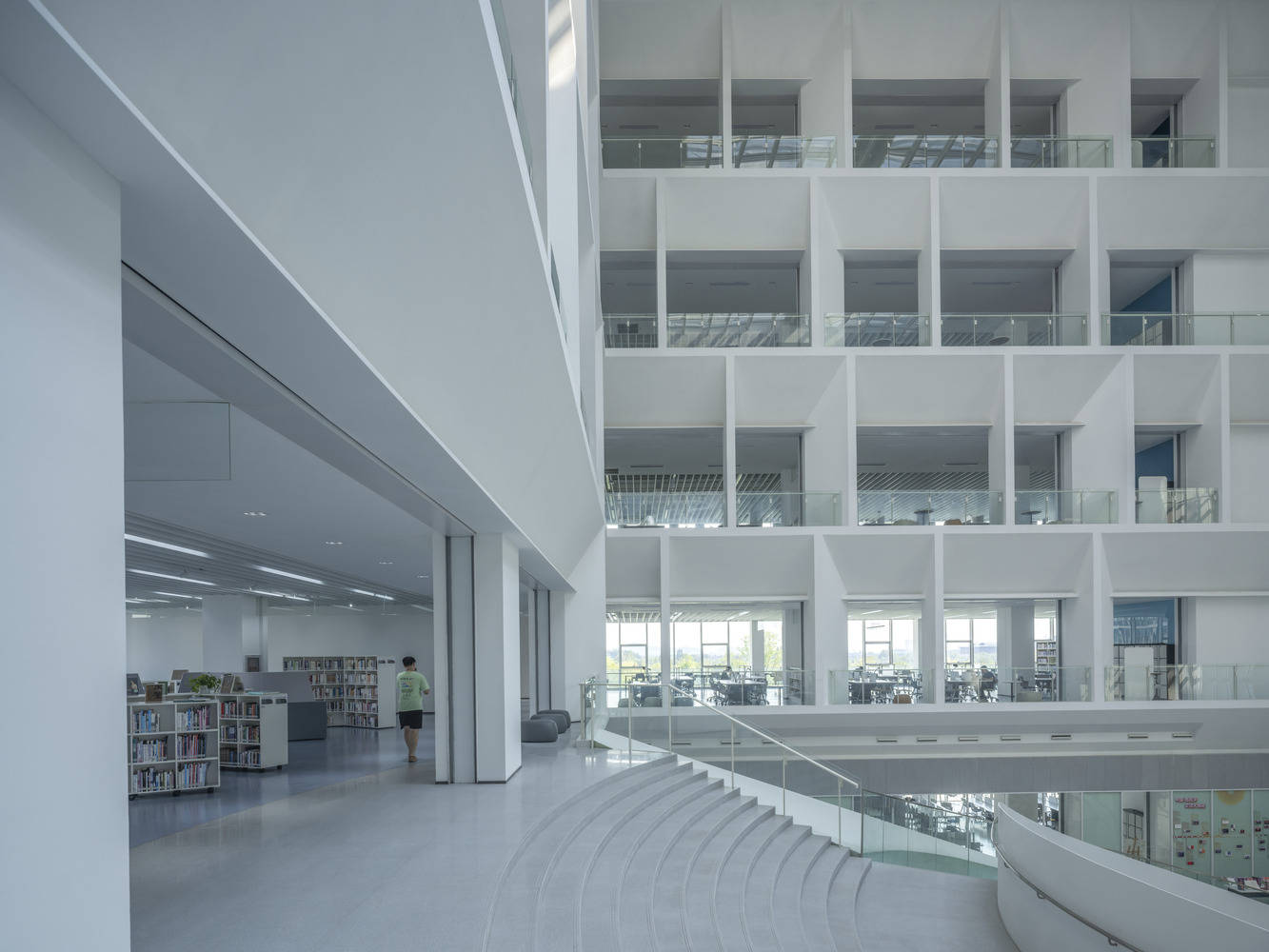
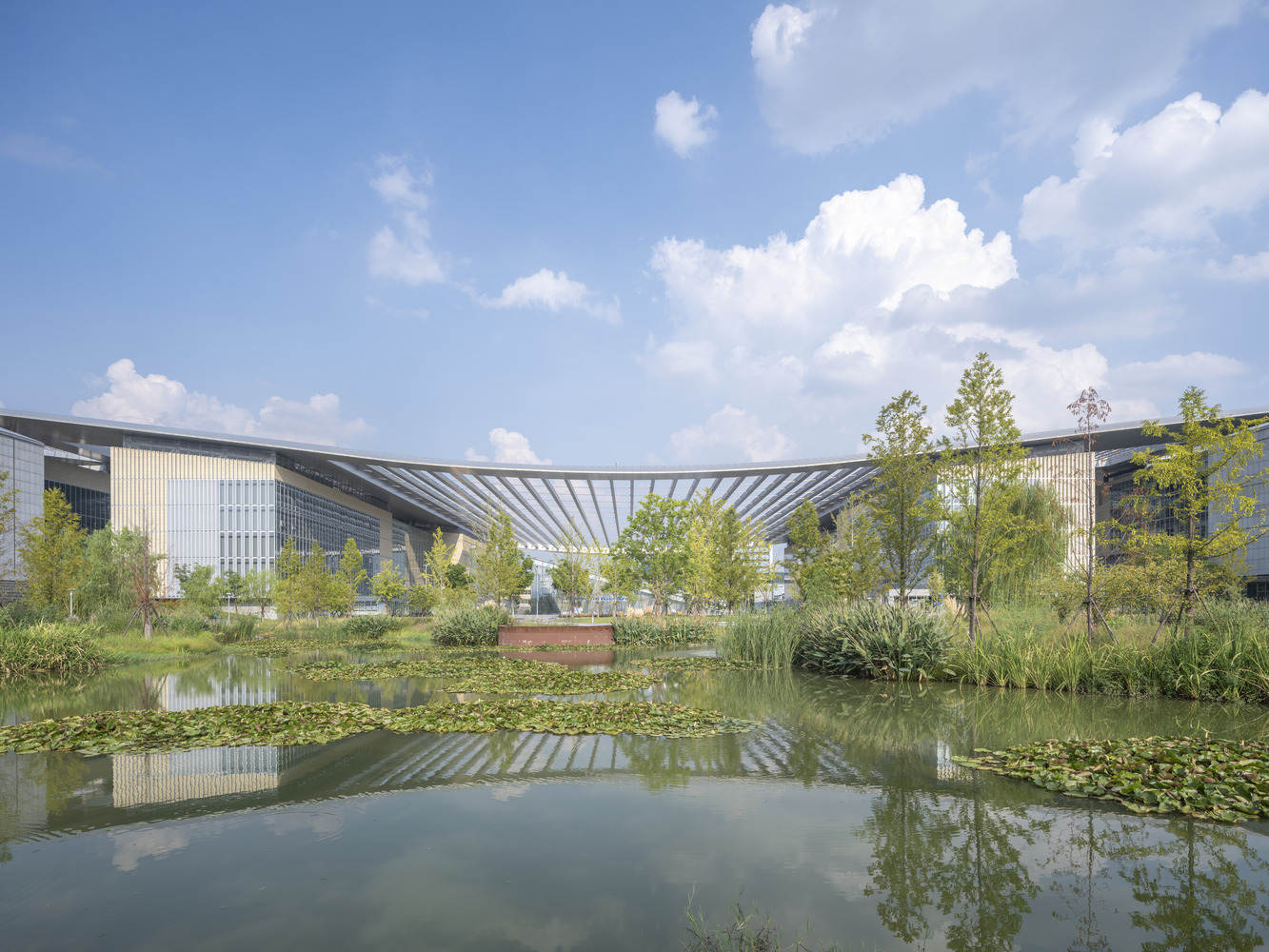
"The Flying Roof," one of the largest cantilevered roofs globally, is the core design element of the campus, hovering above the social center. Its elegant concave profile recalls the smooth lines of an aircraft wing or a soaring bird. Designed with lightweight tensile structures inspired by aerospace engineering, it achieves maximum coverage with minimal material. Spanning 395 meters in length and 168 meters in width, the roof gracefully floats above the administrative offices, library, research laboratories, classrooms, and concert hall, unifying these separate buildings into one organic entity. At the intersection of the two main axes, a vibrant plaza serves as the focal point for gathering and exchange, bringing the academic community together. Classroom designs offer high flexibility, allowing spaces to be easily repurposed for functions such as offices or laboratories.
“飞檐屋顶”(The Flying Roof)作为全球规模最大的悬挑屋顶之一,是校园的核心设计元素,它悬浮于校园社交中心之上。其优雅的凹形轮廓,令人联想到飞机机翼的流畅线条或展翅翱翔的飞鸟。这一轻质张拉结构的设计灵感源自航空工程,以最少的材料实现了最大范围的覆盖。该屋顶长 395 米、宽 168 米,优雅地漂浮于行政办公楼、图书馆、科研实验室、教室及音乐厅之上,将各栋独立建筑融为一个有机整体。在两条主轴线的交汇处,一座充满活力的广场成为聚会与交流的焦点,将学术群体汇聚一堂。教室设计高度灵活,可轻松调整空间用途,满足办公或实验室等不同功能需求。
© 田方方
© 田方方
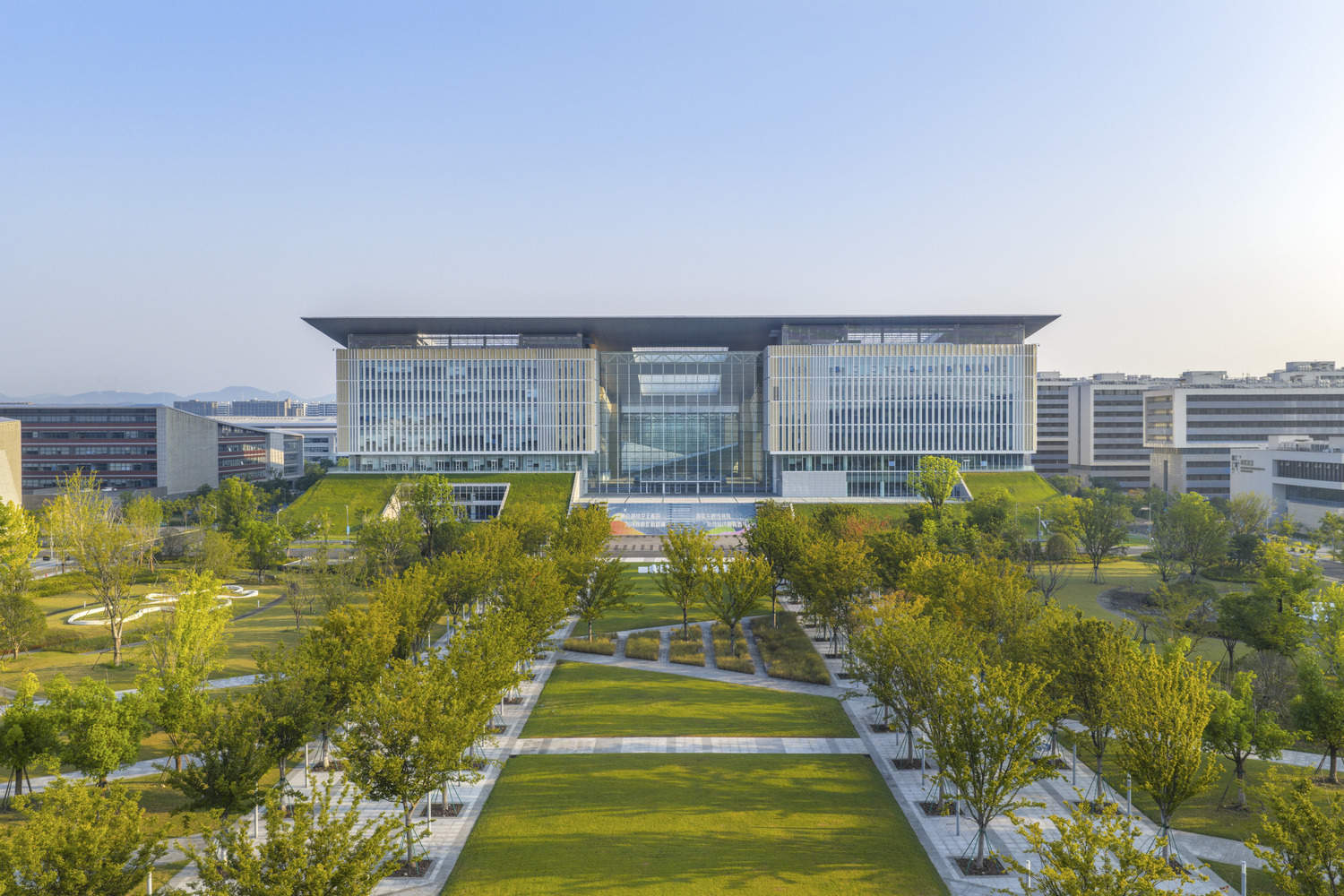
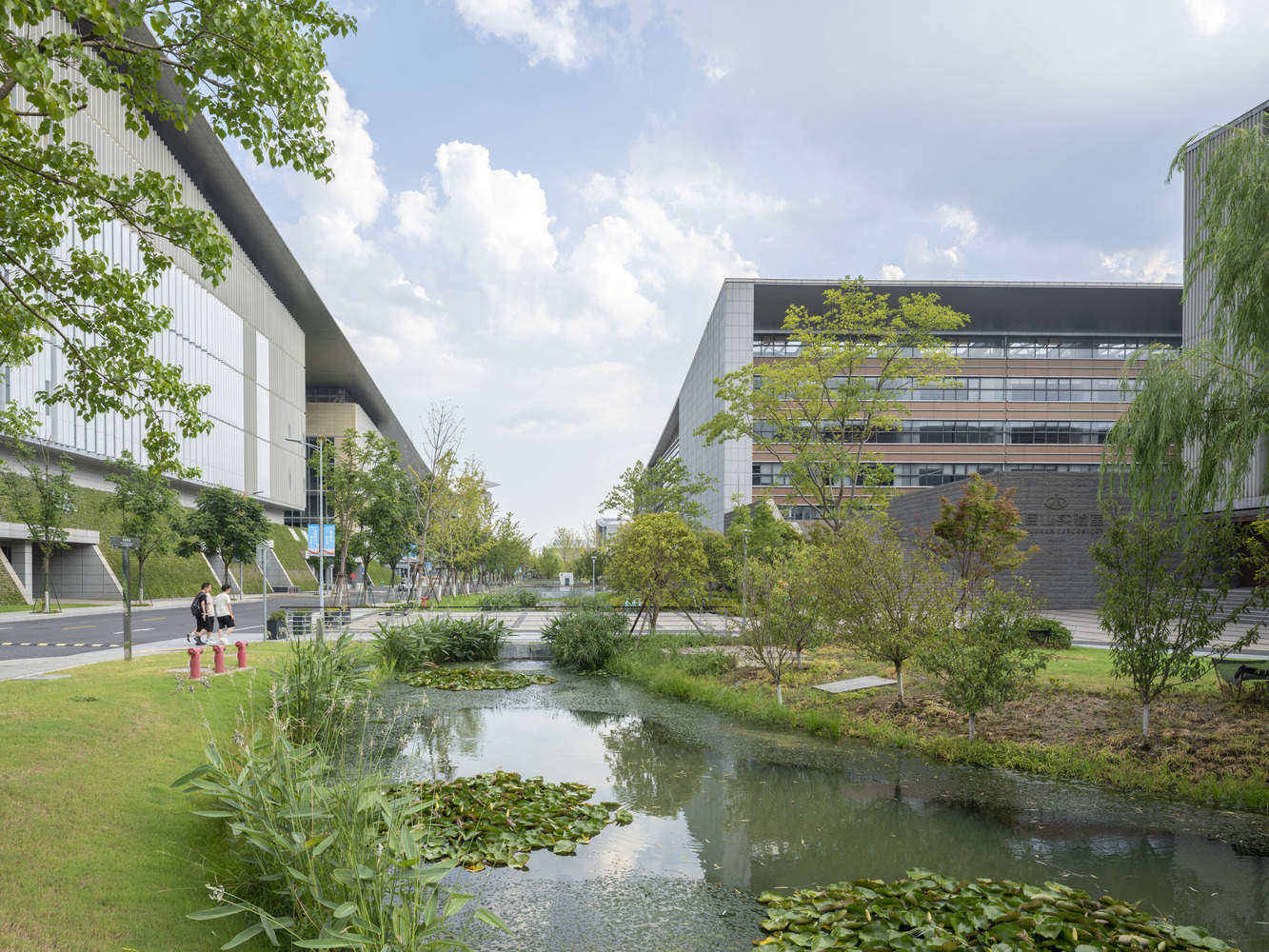
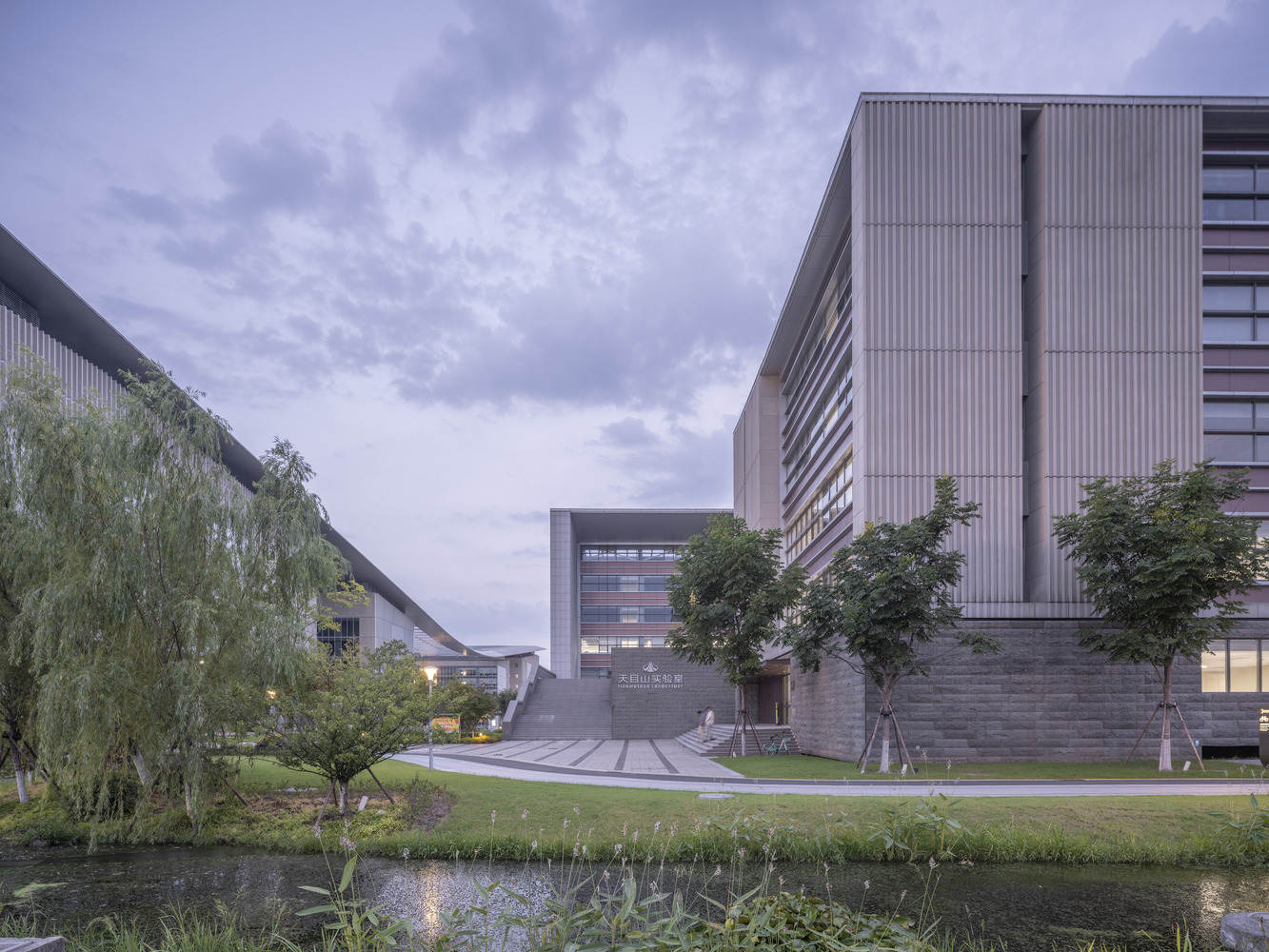
The site planning is divided into three horizontal layers: the natural topography layer, a layer of low-rise buildings winding along the terrain, and the overhead grid layer of the roof. This car-free area's lush landscape unfolds like a scroll painting, interweaving islands, canals, courtyard buildings, and winding paths. It resembles a leisure garden more than a conventional campus, subtly softening the transition between interior and exterior spaces. Under the humid subtropical climate of Southern China, the wide courtyards and waterways create a pleasant microclimate—a tranquil space for rest and relaxation, as well as an ideal setting for nurturing the mind and pursuing knowledge.
场地规划分为三个水平层面:自然地形层、沿场地蜿蜒展开的一系列低矮建筑层,以及悬浮其上的屋顶网格层。这片无车区域的葱郁景观宛如一幅画卷,岛屿、运河、庭院建筑与蜿蜒小径交织其间,与其说是校园,不如说更像一座休闲花园,巧妙地柔化了室内外空间的过渡。在中国南方湿润的亚热带气候条件下,宽阔的庭院与水道营造出宜人的微气候环境 —— 这里既是休憩放松的静谧之所,也是庇护身心、追求知识的理想之地。
© 田方方
The design of the Hangzhou International Innovation Institute underscores the striking contrast between the region's profound history and its bright future. Rooted in five millennia of cultural heritage, this campus beckons a new generation of innovators to drive the wave of technological advancement.
杭州国际创新研究院的设计彰显了该地区悠久历史与光明未来之间的鲜明对比。依托五千多年的文化积淀,这座校园正召唤着新一代的创新力量,推动着科技进步的浪潮。
© 田方方