场地与环境的深度融合:该项目最精髓之处在于其对周边自然环境的深度尊重与整合。项目地块紧邻草地、开阔田野及河流,建筑设计将自然景观提升为社区的核心识别元素,而非仅仅是背景。住宅楼与工坊自由地嵌入景观之中,并通过一条蜿蜒小径连接,这种设计不仅优化了功能流线,更重要的是,它将居民的日常通勤转化为每日与自然互动的过程,实现了人与环境的和谐共生,体现了高品质居住环境的构建哲学。
人性化与功能性并重的空间序列:该开发项目巧妙地平衡了生活区(住宅楼)与工作区(工坊)的需求,尤其关注残障人士的需求,提供了一个安全、支持性的环境。住宅楼的公共层采用优质材料(如橡木家具、抛光混凝土地面)营造出温馨而有代表性的氛围,而上层则通过开放连续的序列鼓励社区生活。工坊部分则以清晰的木结构和自然采光强调其功能性与坚固感。这种精心设计的空间序列,确保了社区的社会功能与个体的舒适体验能够无缝衔接。
可持续与结构清晰的设计表达:工坊建筑的设计是结构美学和可持续实践的典范。采用两层大厅式木结构,中央双层储物大厅作为功能核心,结构清晰可见。其标志性的单坡屋顶不仅引入了充足的自然光,为室内空间(包括上层)提供了优越的照明条件,更重要的是,它承载了大型光伏系统,体现了对能源自给和环境责任的承诺。室内山毛榉木框架和技术设施的结合,形成了一种直接、坚固的设计语言,强化了建筑的技术与人文关怀。
In the Borna Park, life and work are closely interwoven with the surrounding landscape.
在博尔纳公园,生活与工作与周边的景观紧密交织在一起。
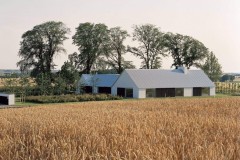
The site is bordered by meadows, open fields, and the tree-lined Pfaffneren River. Nature is not just a backdrop; it has become the distinctive identity of this community for living and working.
该场地四周环绕着草地、开阔的田野以及树木繁茂的普法夫内伦河(Pfaffneren River)。大自然不仅仅是一个简单的背景;它已然成为这个居住与工作社区的独特标识。
© Karina Castro
© Karina Castro
The new development comprises a residential building and a workshop designed specifically to meet the needs of people with disabilities. Together, they create a safe and supportive environment for the residents' daily lives.
这个新开发项目由一栋住宅楼和一个专为满足残障人士需求而设计的工坊组成。二者共同为居民的日常生活营造了一个安全且支持性的环境。
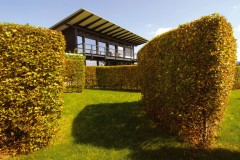
The two buildings stand freely within the landscape and are connected by a path that meanders through the spacious park. For the residents, the walk between the residence and the workshop is not only a necessary part of their daily routine but also an opportunity to have rich sensory experiences through the weather and nature every day.
这两座建筑自由地矗立在景观之中,通过一条蜿蜒穿过宽敞公园的小径相连。对于居民而言,往返于住宅与工坊之间的步行不仅构成了他们日常生活的必要部分,更让他们每日都能通过天气和自然获得丰富的感官体验。
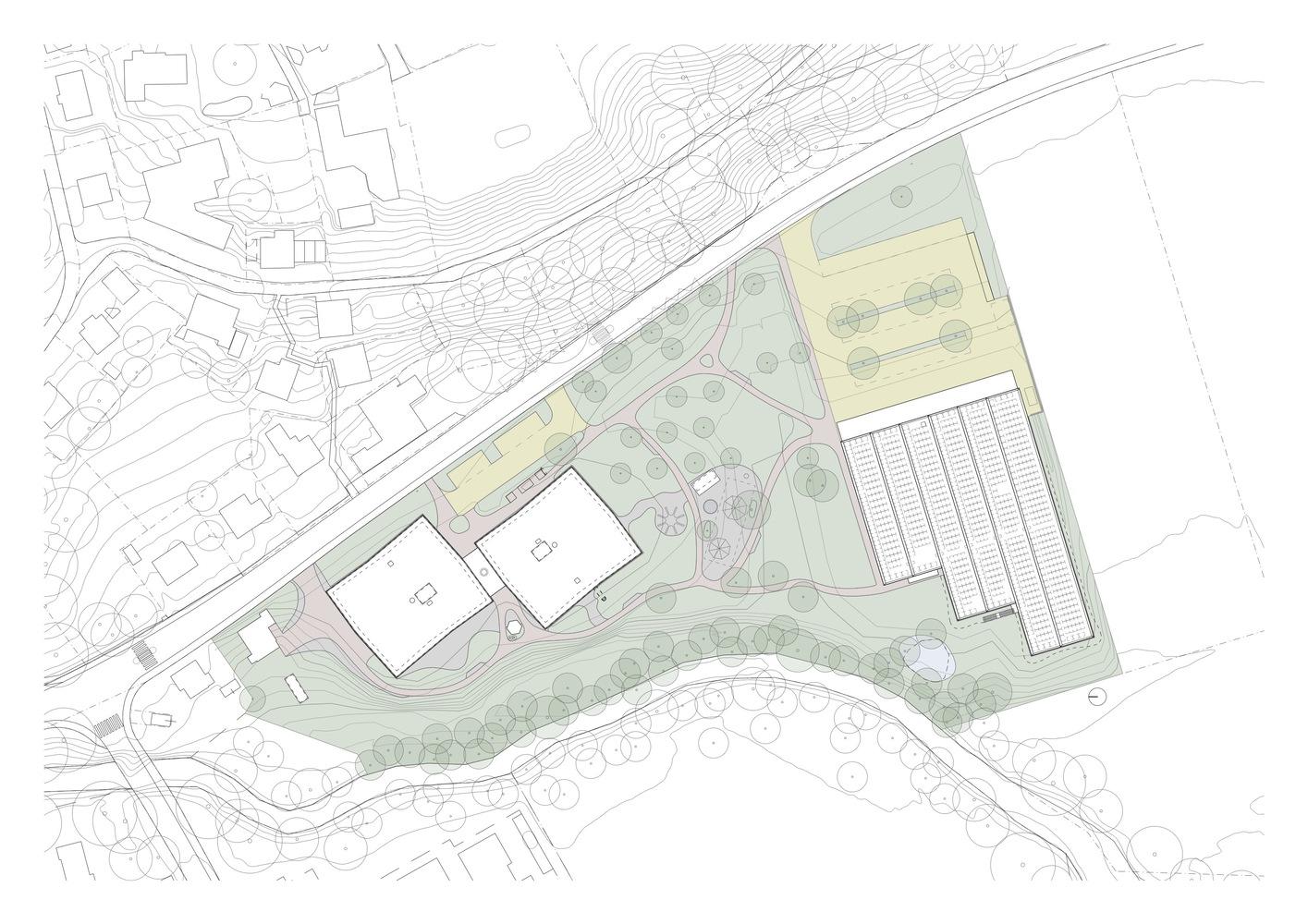
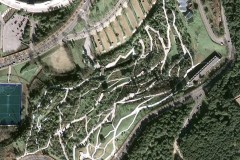
Site Plan
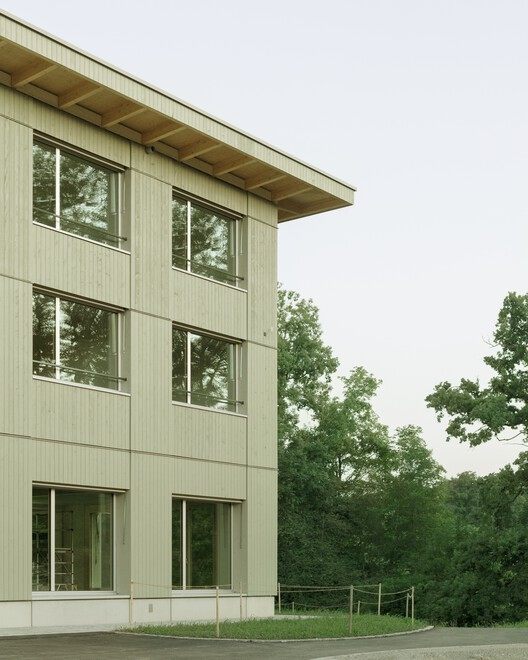
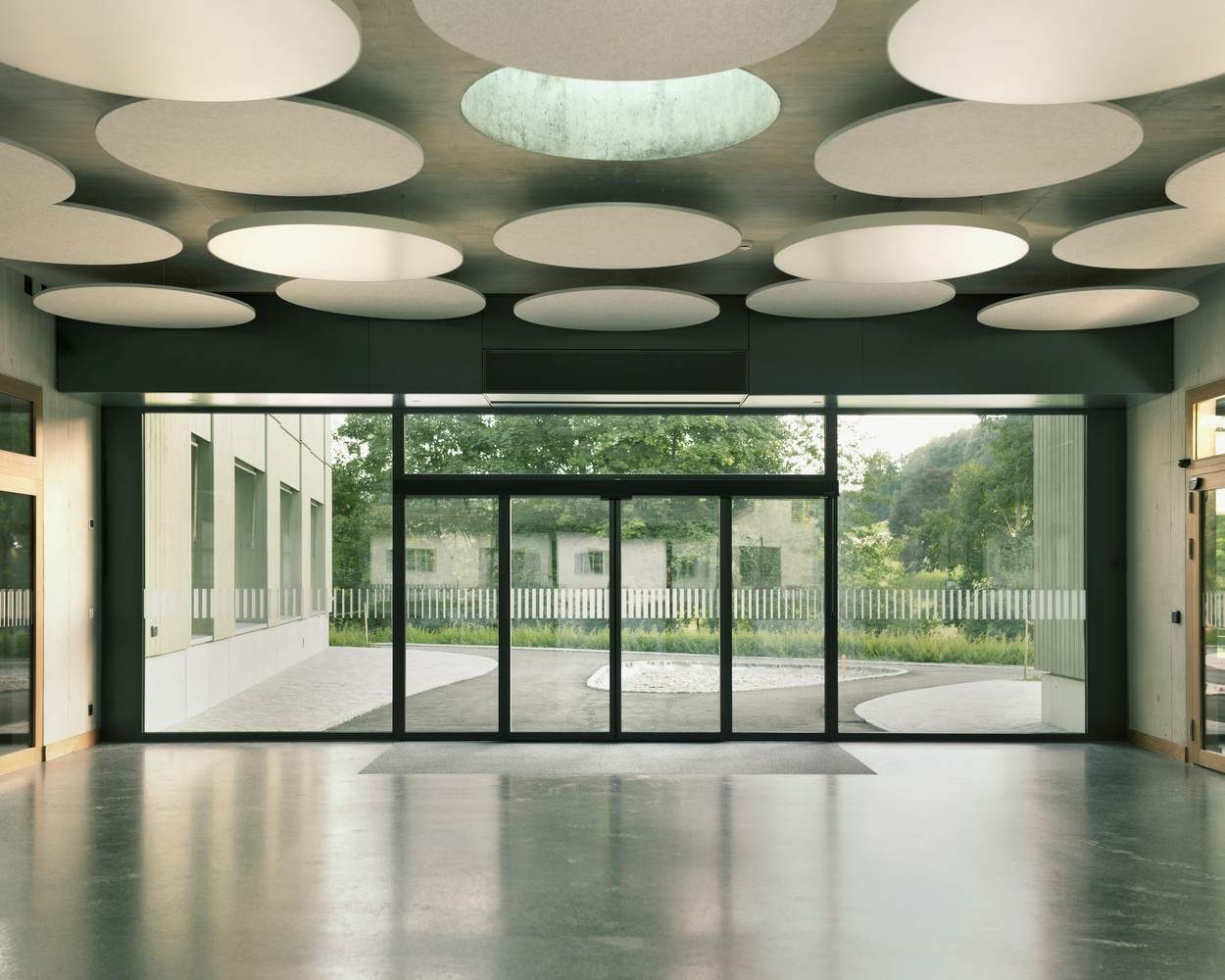
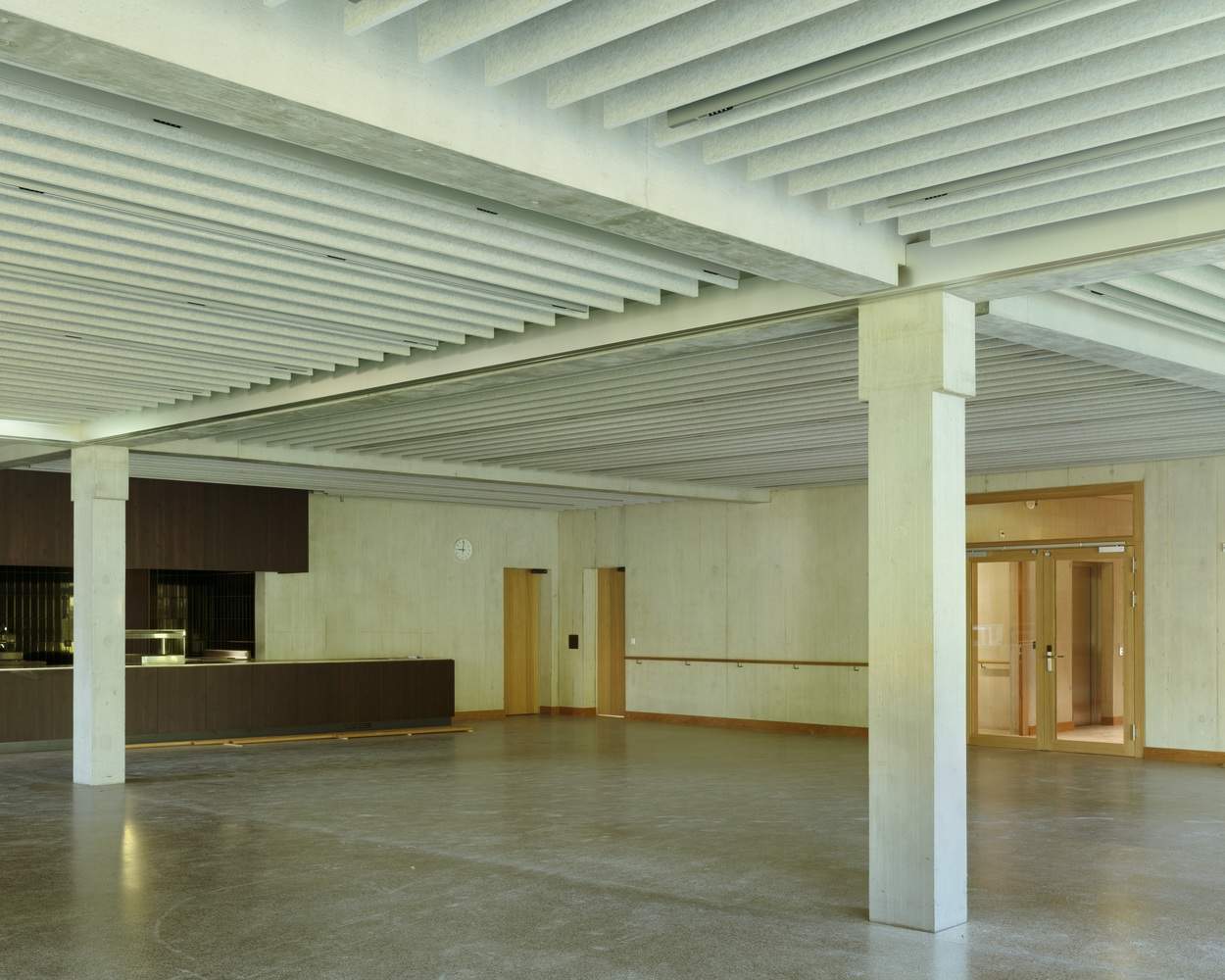
The residential building consists of two units connected on the ground floor and the basement level. The ground floor houses public and communal areas – including a dining room with a catering kitchen, a cafeteria, and administrative offices. Oak furniture, suspended acoustic elements, and polished concrete floors create an atmosphere that is both representative and pleasantly inviting.
住宅楼由两个单元组成,在地面层和地下层相连。地面层设有公共和共享空间 —— 包括配备餐饮厨房的餐厅、自助餐厅以及行政办公区。橡木家具、悬挂式吸音元素和抛光混凝土地面共同营造出一种既具代表性又温馨宜人的氛围。
© Karina Castro
© Karina Castro
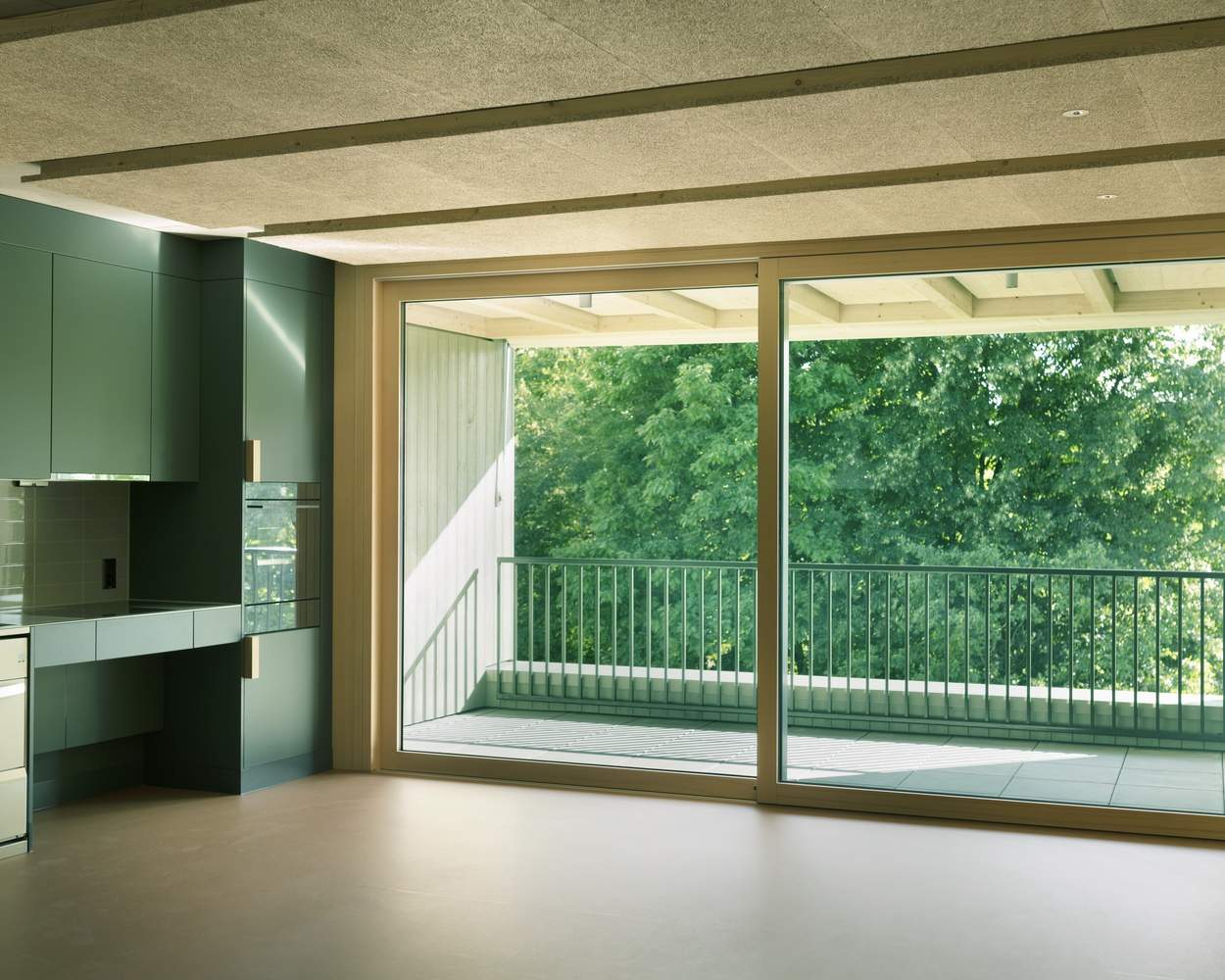
Upstairs, the residential areas are designed as an open, continuous sequence of spaces with comfortable living and dining areas. Community life thus becomes an indispensable part of everyday life.
在楼上,住宅区域被设计成开放、连续的空间序列,配有舒适的起居和用餐区。社区生活因此成为日常生活不可或缺的一部分。
Warm tones in the flooring and woodwork, combined with exposed wood and concrete surfaces, create a harmonious and welcoming atmosphere.
地板和木工制品采用温暖的色调,与裸露的木材和混凝土表面相结合,营造出一种和谐且温馨的氛围。
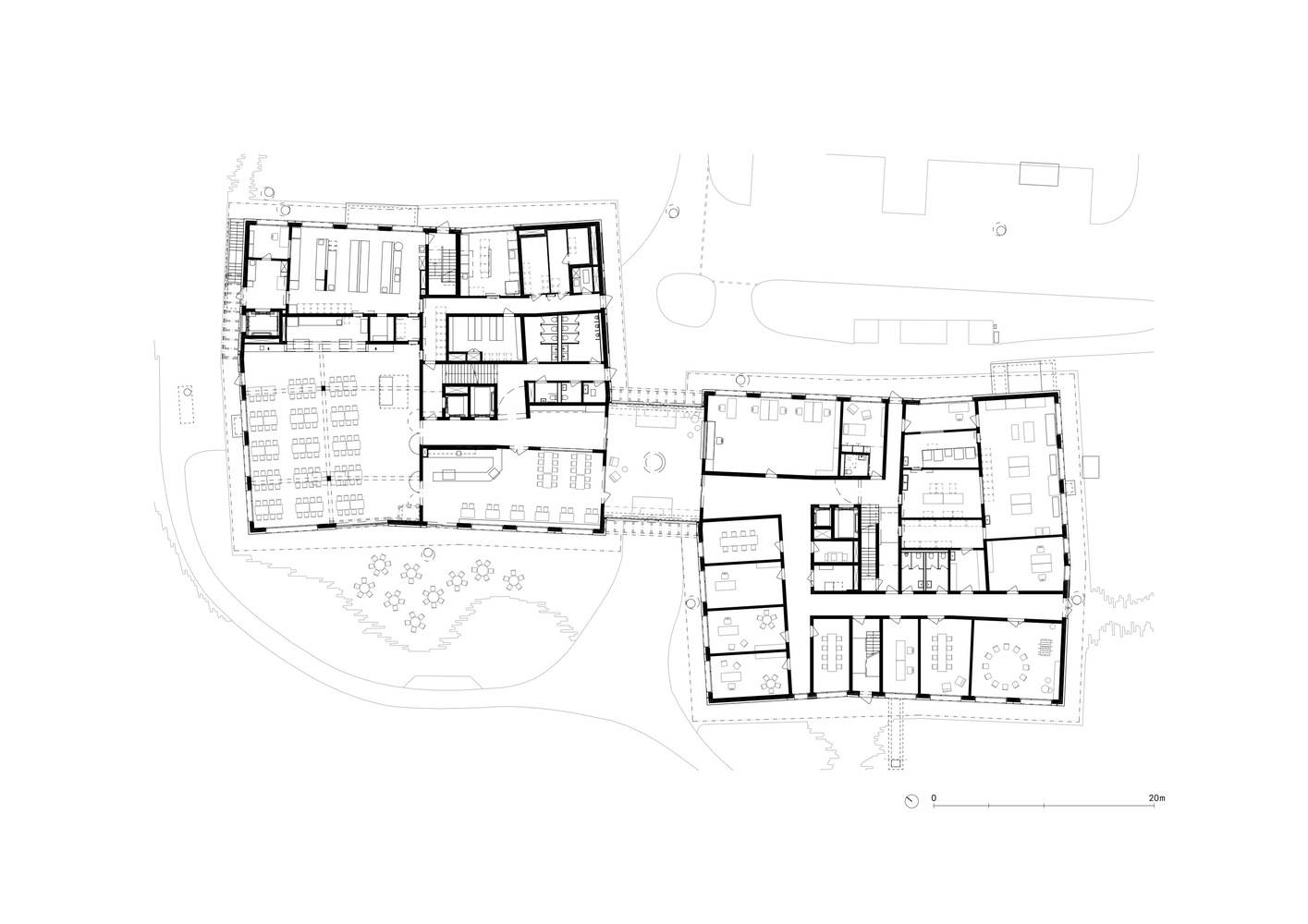
Residential Building Ground Floor Plan
© Karina Castro
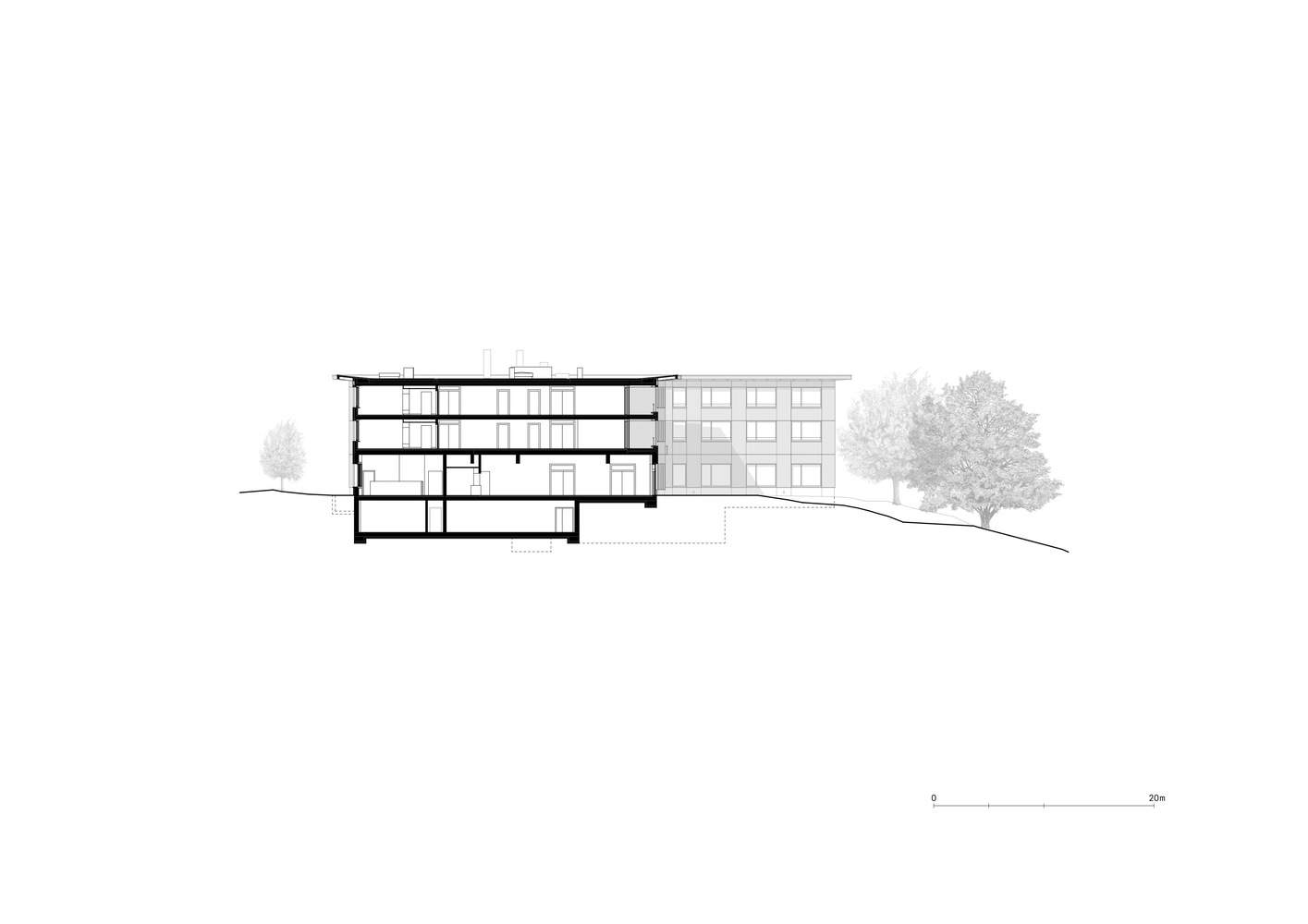
Residential Building Section
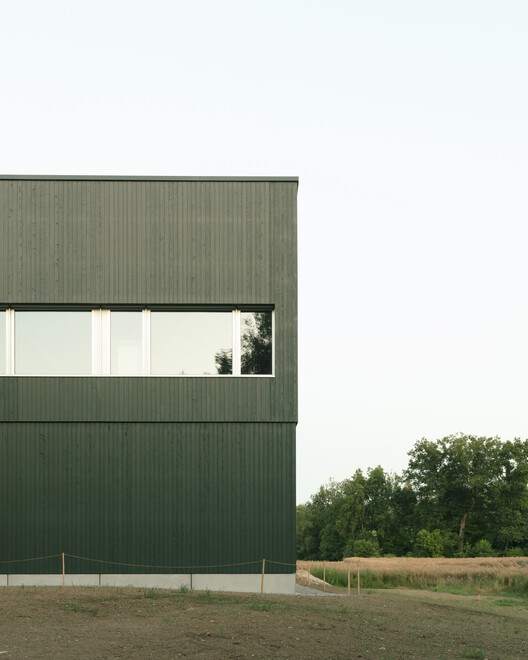
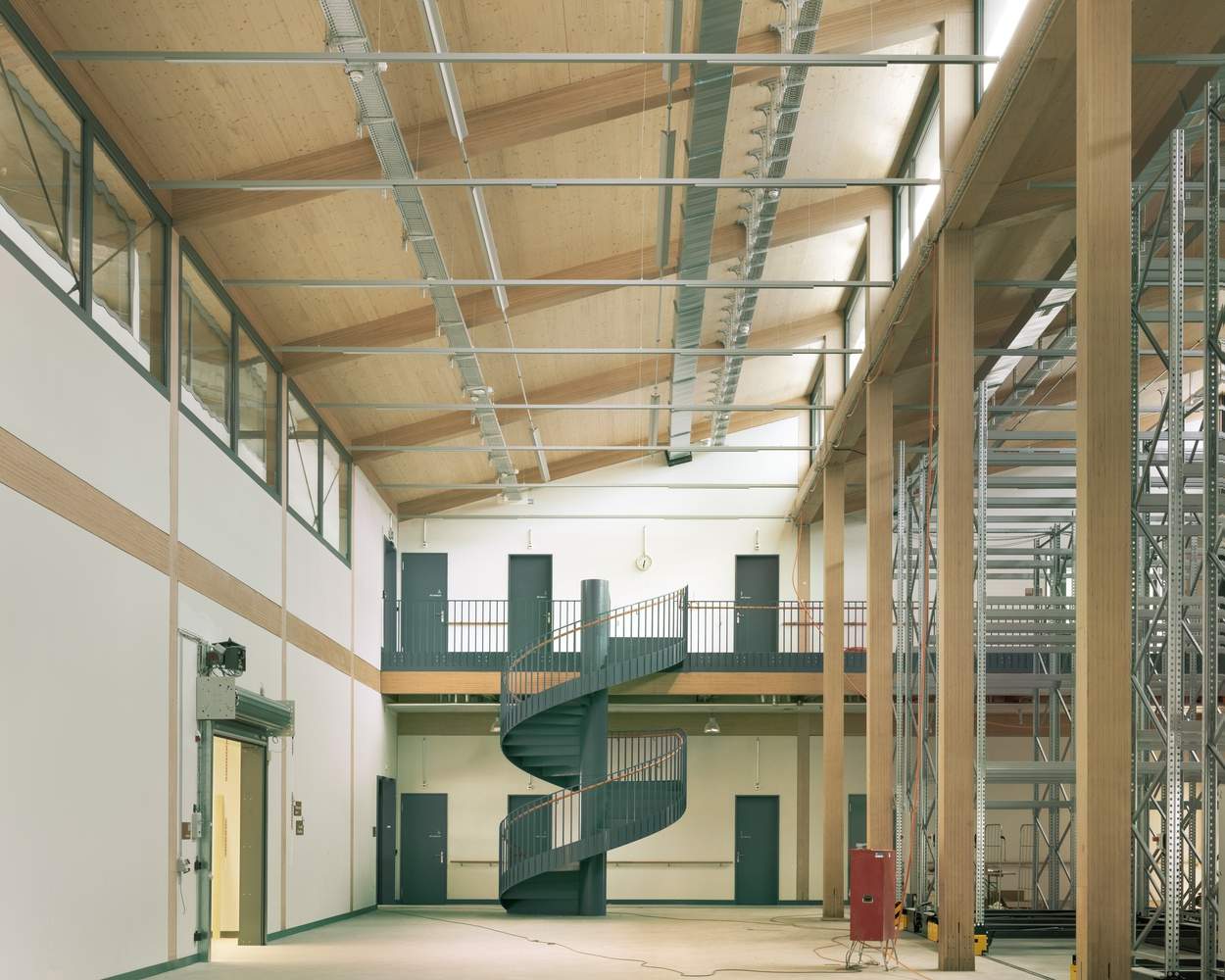
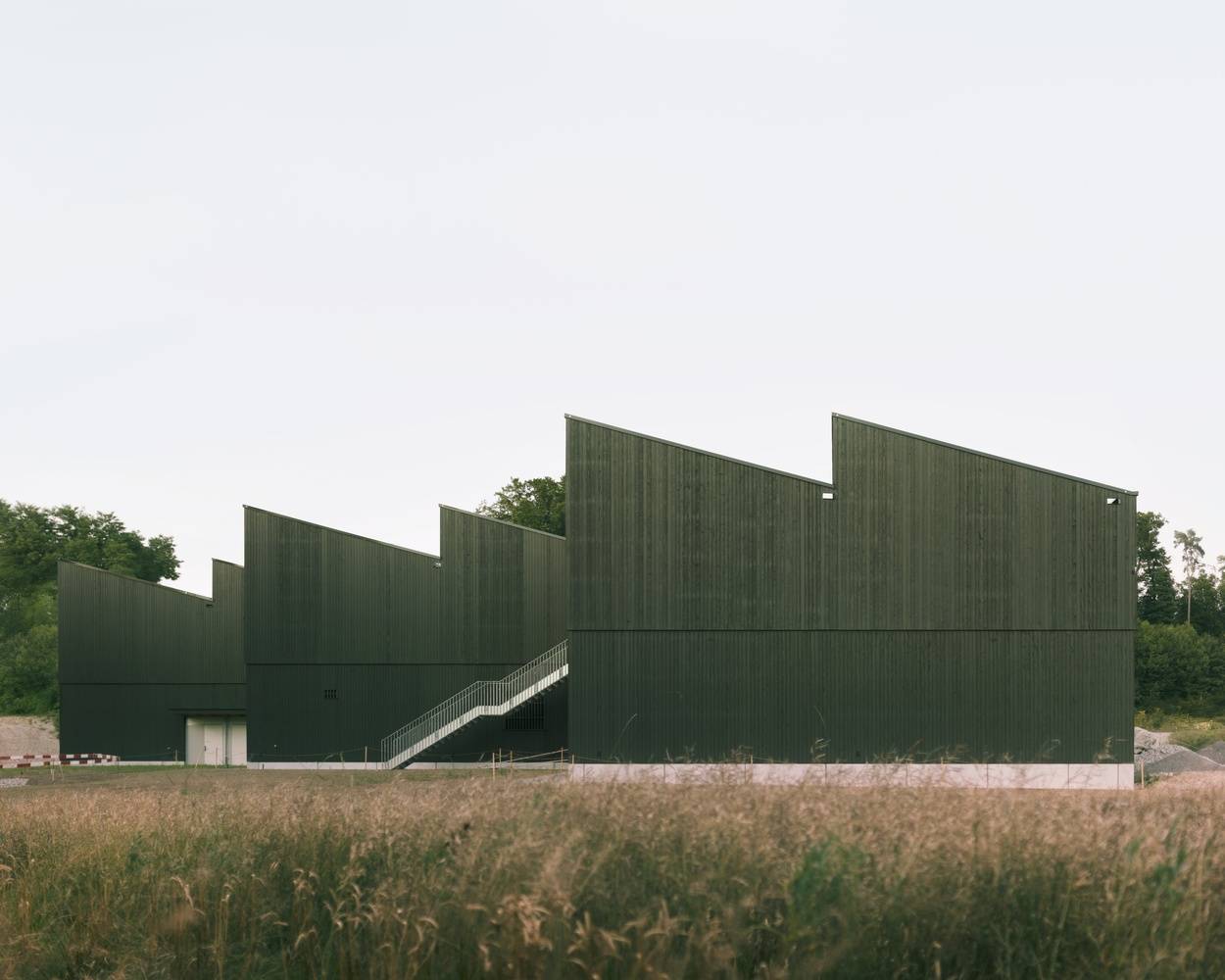
The workshop building features a two-story, hall-like timber structure. Its floor plan is divided into three functional areas, with a large, double-height storage hall in the center – which serves as a transitional zone between the different workshop areas from both an architectural and functional perspective.
工坊建筑则采用两层大厅式木结构。其平面布局分为三个功能区域,中央是一个大型双层高度的储物大厅 —— 从建筑和功能角度来看,它都充当着不同工坊区域之间的过渡地带。
The unique mono-pitch roof fills the hall and the upper floor with natural light and supports a photovoltaic system the size of a football field.
独特的单坡屋顶让大厅和上层充满自然光,并支撑着一个足球场大小的光伏系统。
© Karina Castro
© Karina Castro
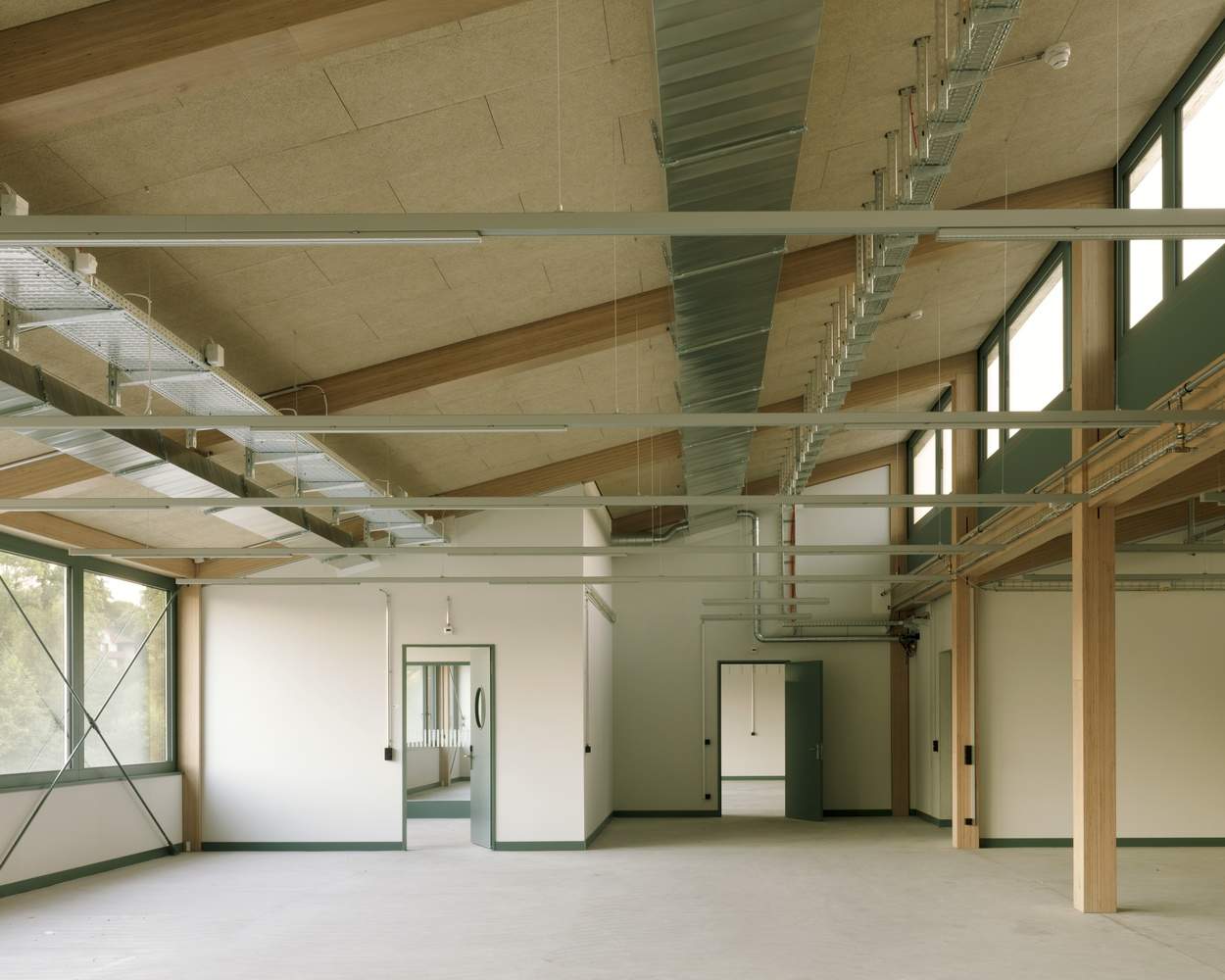
Inside the workshop, the structural framework of beech wood defines the spaces.
工坊内部,山毛榉木的结构框架界定了空间。
Combined with the openly routed technical installations, this creates a direct and robust visual effect.
与开放式布线的技术设施相结合,营造出一种直接而坚固的视觉效果。
Generous interior glass partitions establish multiple visual connections between the workshop areas, allowing the natural light from the mono-pitch roof to penetrate deeply indoors, while also providing optimal conditions for staff supervision.
宽敞的内部玻璃隔断在工坊区域之间建立了多个视觉连接,让单坡屋顶的自然光能够深入室内,同时也为工作人员的监督提供了最佳条件。
© Karina Castro