Gardener's House, San Diego Equestrian Club/Jos é Ignacio Valdivieso
园丁馆,圣地亚哥马术俱乐部 / José Ignacio Valdivieso
设计理念的精妙:“园丁馆”的设计巧妙地回应了场地特质和使用需求。项目以“凉爽的树荫”为出发点,巧妙地模拟了葡萄藤的自然形态,通过砖砌格栅墙来过滤阳光,营造出舒适的休憩空间。这种设计不仅尊重了原有场地中藤蔓的历史记忆,更重要的是,它将自然元素与建筑相结合,创造了一个既实用又具有诗意的场所。这种设计理念的转变,从简单的功能需求提升到对环境和使用者体验的关怀,展现了设计师对细节的精准把握和对建筑本质的深刻理解。
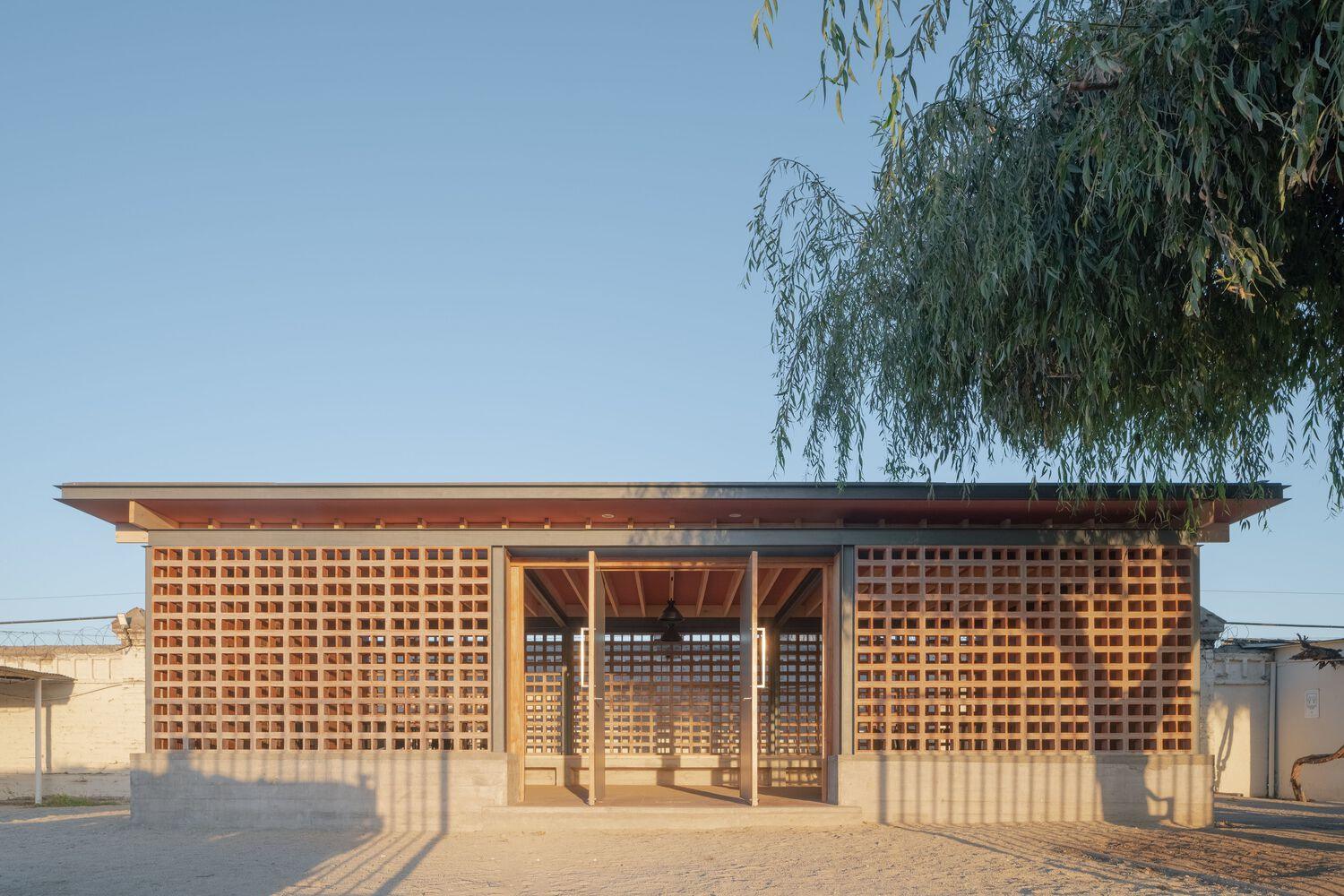
材料与建造的经济性:在预算有限的背景下,设计师选择了经济实用的红砖作为主要建筑材料。这种选择不仅考虑了材料的成本效益和当地可获得的特性,还巧妙地利用了红砖的模块化特点,简化了施工流程。砖砌格栅墙的设计既满足了遮阳和通风的需求,又为建筑带来了独特的光影效果,在节约成本的同时,提升了建筑的艺术性。这种对材料的精湛运用,体现了设计师在限制条件下寻求创新,化挑战为机遇的设计智慧,真正体现了“少即是多”的设计理念。
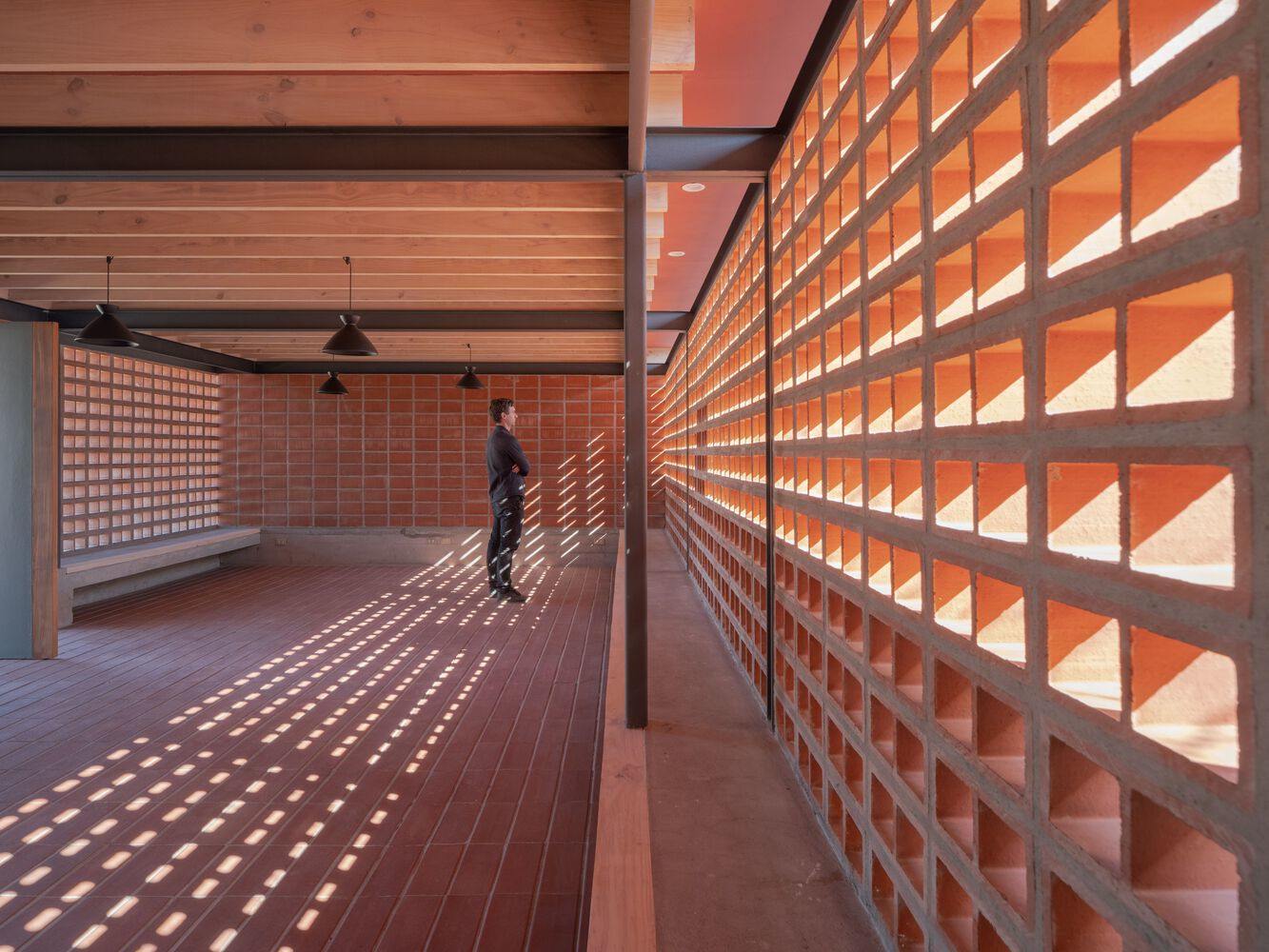
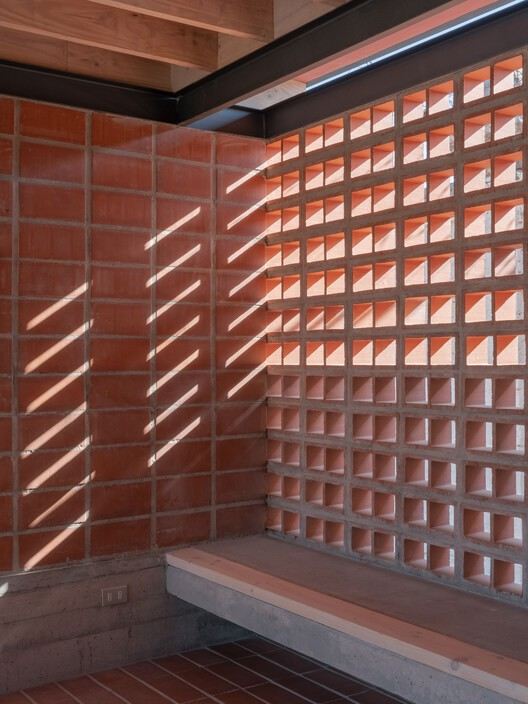
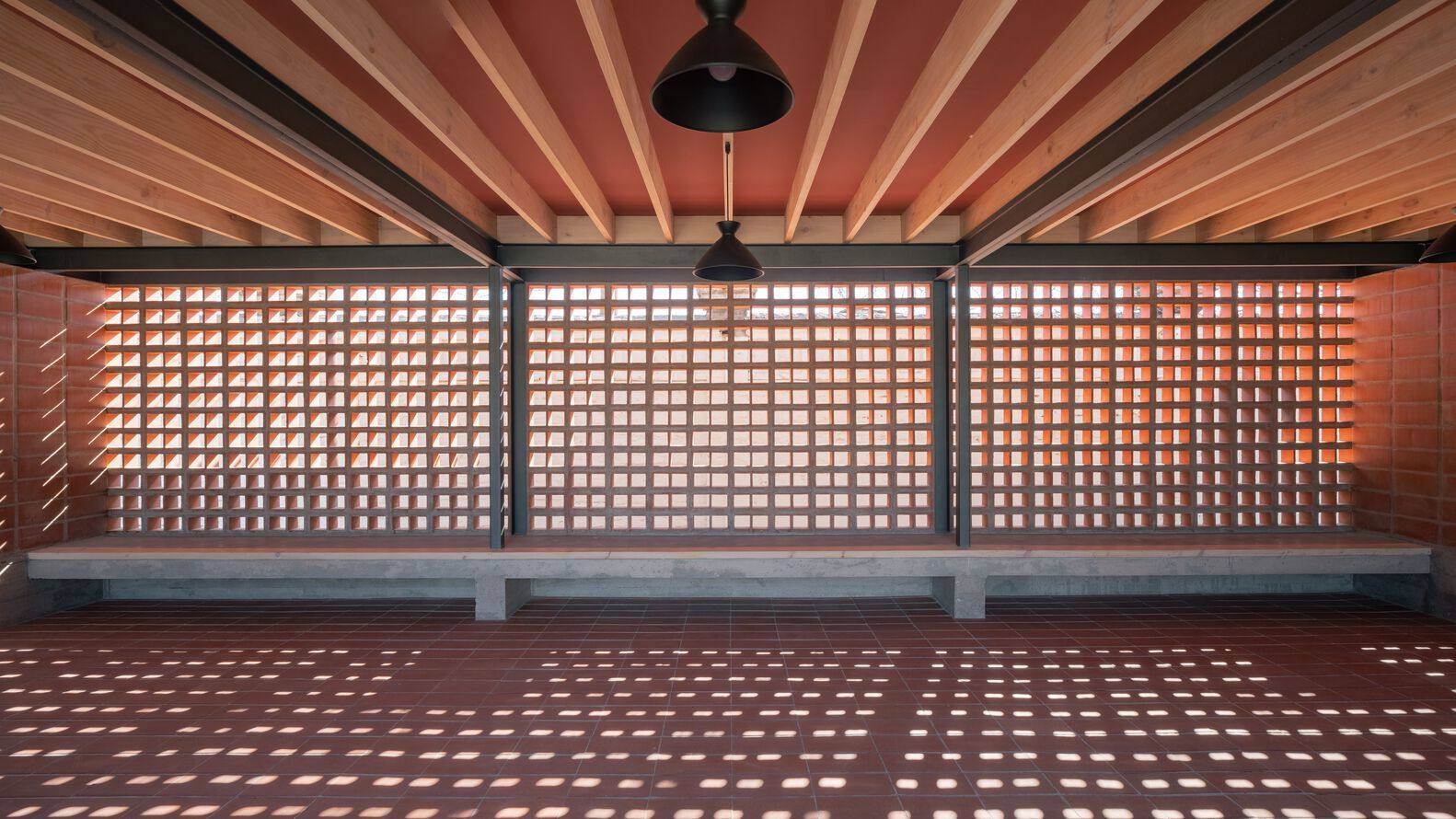
光影与空间的完美结合:“园丁馆”最引人入胜之处在于对光影的巧妙运用。通过砖砌格栅墙的开孔,自然光线得以在不同时间、以不同角度进入室内,创造出变幻的光影效果。这种设计不仅丰富了空间层次,也为使用者带来了独特的体验。光线成为建筑的“材料”,它赋予了建筑生命力,使之在一天中呈现出不同的面貌。这种对光线的敏感度,以及对空间和材料的精准掌控,使得“园丁馆”成为一个充满诗意和人文关怀的建筑作品。
© Estudio Ibañez
© Estudio Ibañez
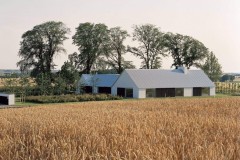
In addition to the extraordinary architectural heritage inherited from architect Josu é Smith Solar, the main feature that sets it apart from most race tracks in Latin America is the San Diego Racing Club, which boasts a magnificent 1200 meter long grass track where a team of 30 gardeners work every day, fully exposed to sunlight, stopping work at noon, resting and having lunch under the shade of trees.
除了从建筑师 Josué Smith Solar 继承的非凡建筑遗产外,它与拉丁美洲大多数赛道区分开来的原因是圣地亚哥赛马俱乐部的主要特征,其拥有宏伟的 1 200米长的草地赛道,一个由 30 名园丁组成的团队每天在那里工作,全天完全暴露在阳光下,中午停止工作,在树荫下休息和吃午饭。
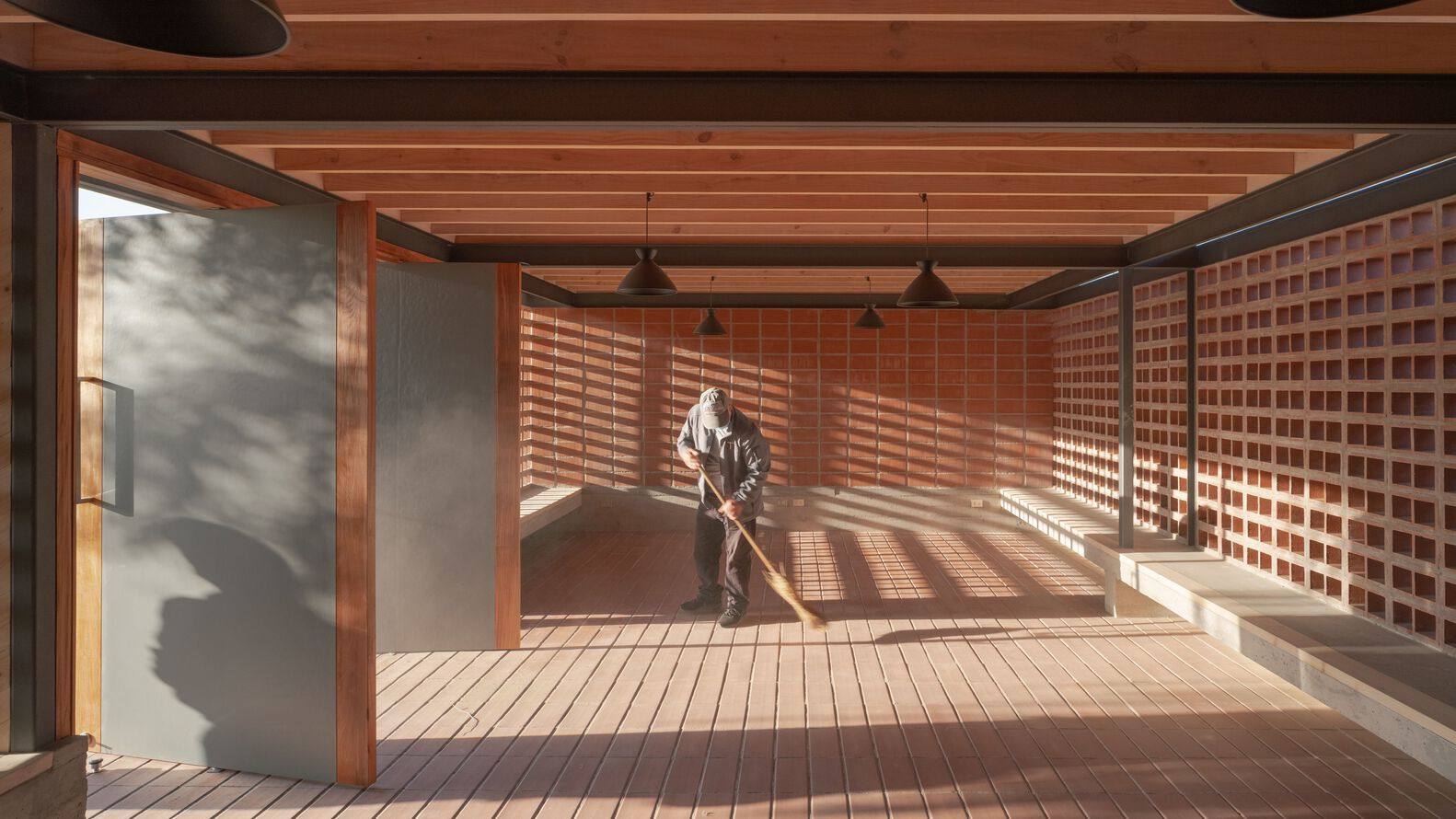
© Estudio Ibañez
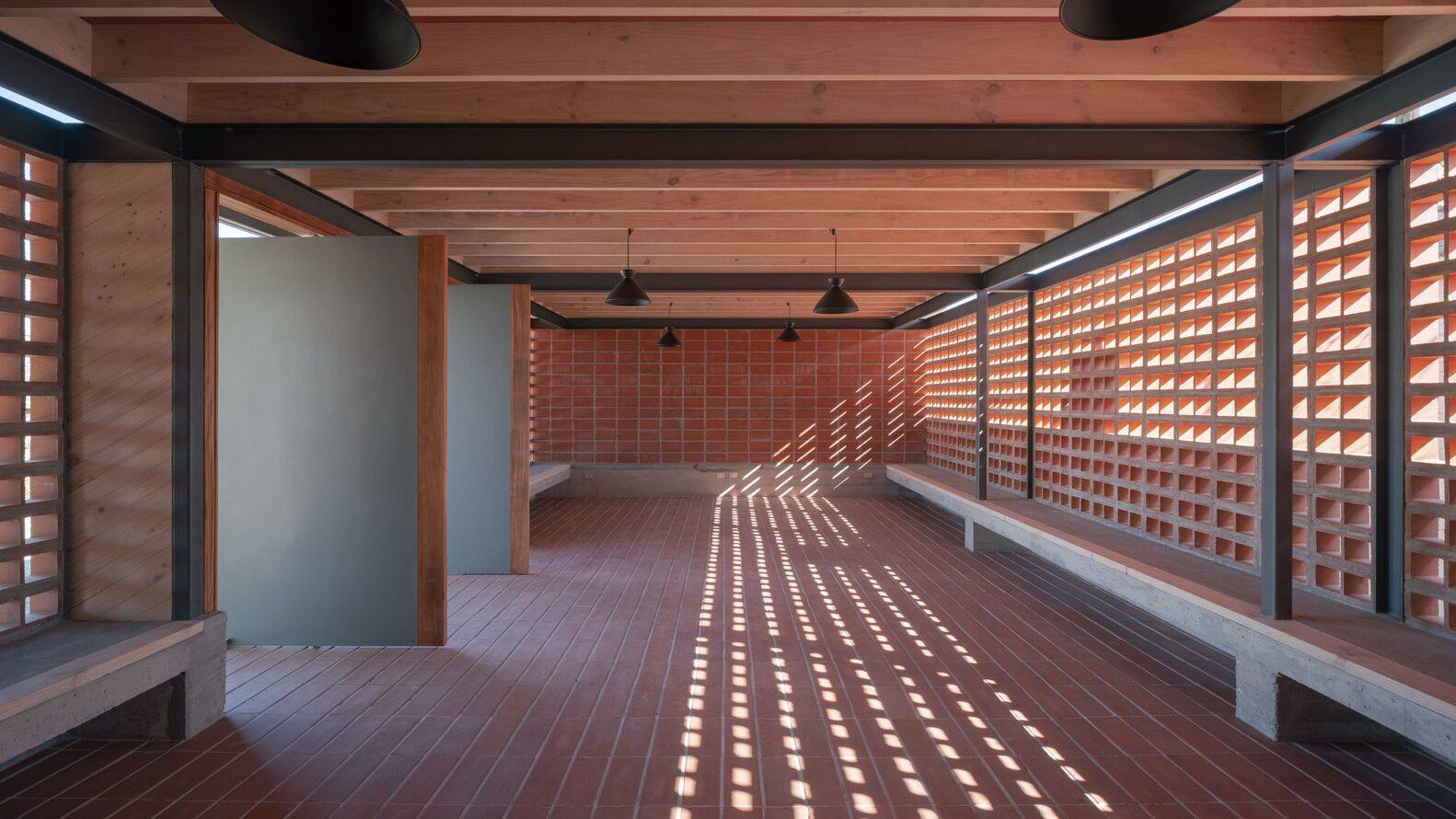
© Estudio Ibañez
In mid-2021, H í Pico Club commissioned us to design a lunch room for these track maintenance workers. Under the complex economic background, due to the popularity of COVID-19, the project must cope with strong budget constraints and also meet the high expectations of users, who ultimately hope to have a comfortable place for rest and lunch.
在 2021 年中,Hípico 俱乐部委托我们为这些赛道维护工人设计一个午餐室。在复杂的经济背景下,由于新冠大流行,该项目必须应对强大的预算限制,也要满足用户的高期望,他们最终希望有一个舒适的休息和午餐场所。
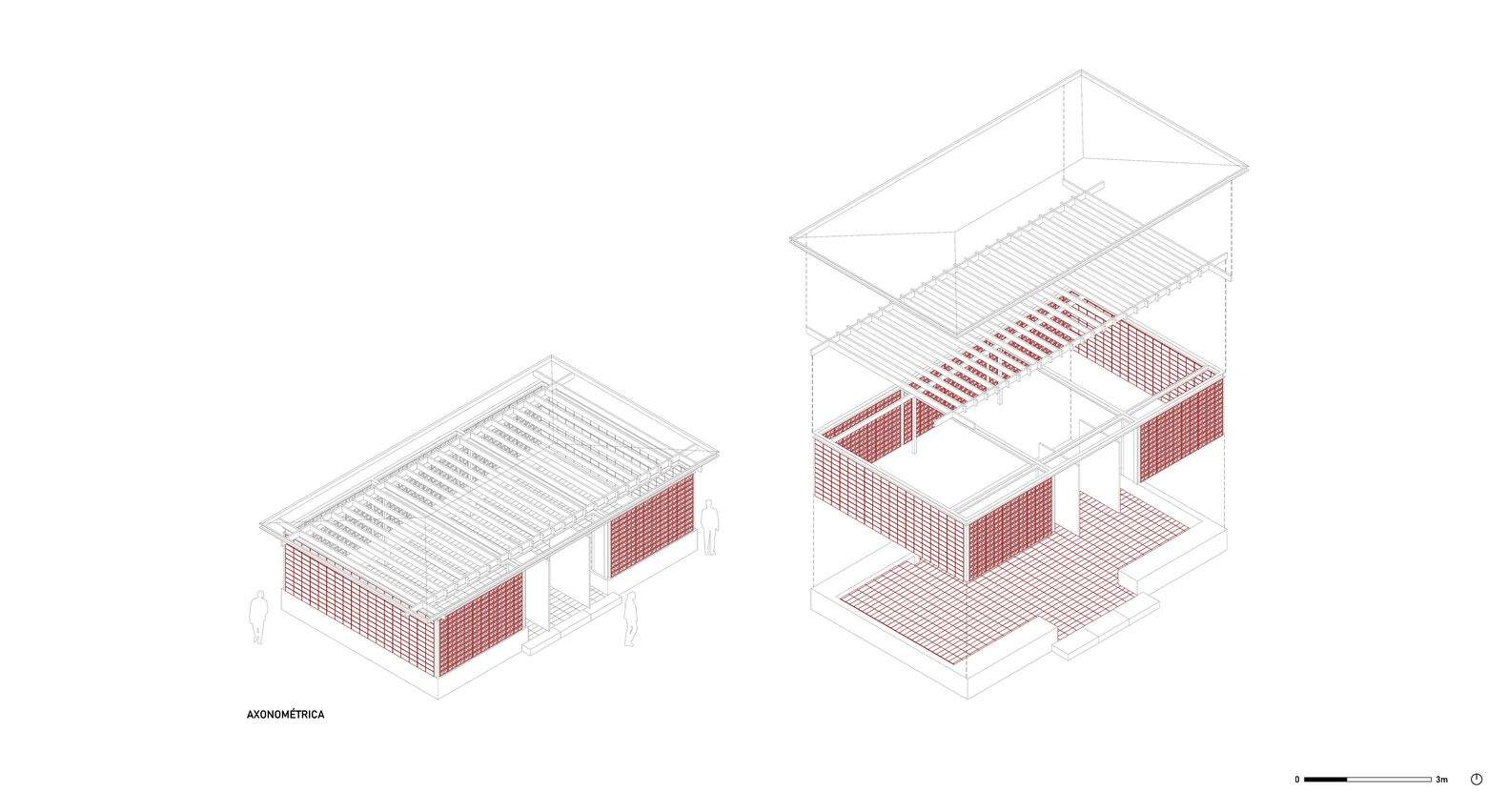
轴测图
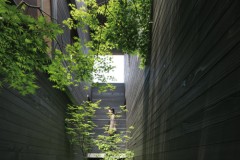
In the past, track maintenance workers rested under a vine here, which gave the place its name. Today, only memories and a dying old vine remain, almost unable to support itself on the ancient tree trunk. The idea of grapevine is understood as a leaf shade that is cool and soft, filtering direct sunlight and allowing natural light to pass between the leaves of the grapevine, serving as the starting point for this project.
过去,轨道维护工人们在这里的一棵藤蔓下休息,这个地方因此得名,今天只剩下记忆和一棵垂死的老藤蔓,它几乎无法支撑在古老的树干上。葡萄藤的想法被理解为一种叶子阴影,凉爽而柔软,过滤直射阳光,允许自然光在葡萄藤的叶子之间通过,作为该项目的起点。
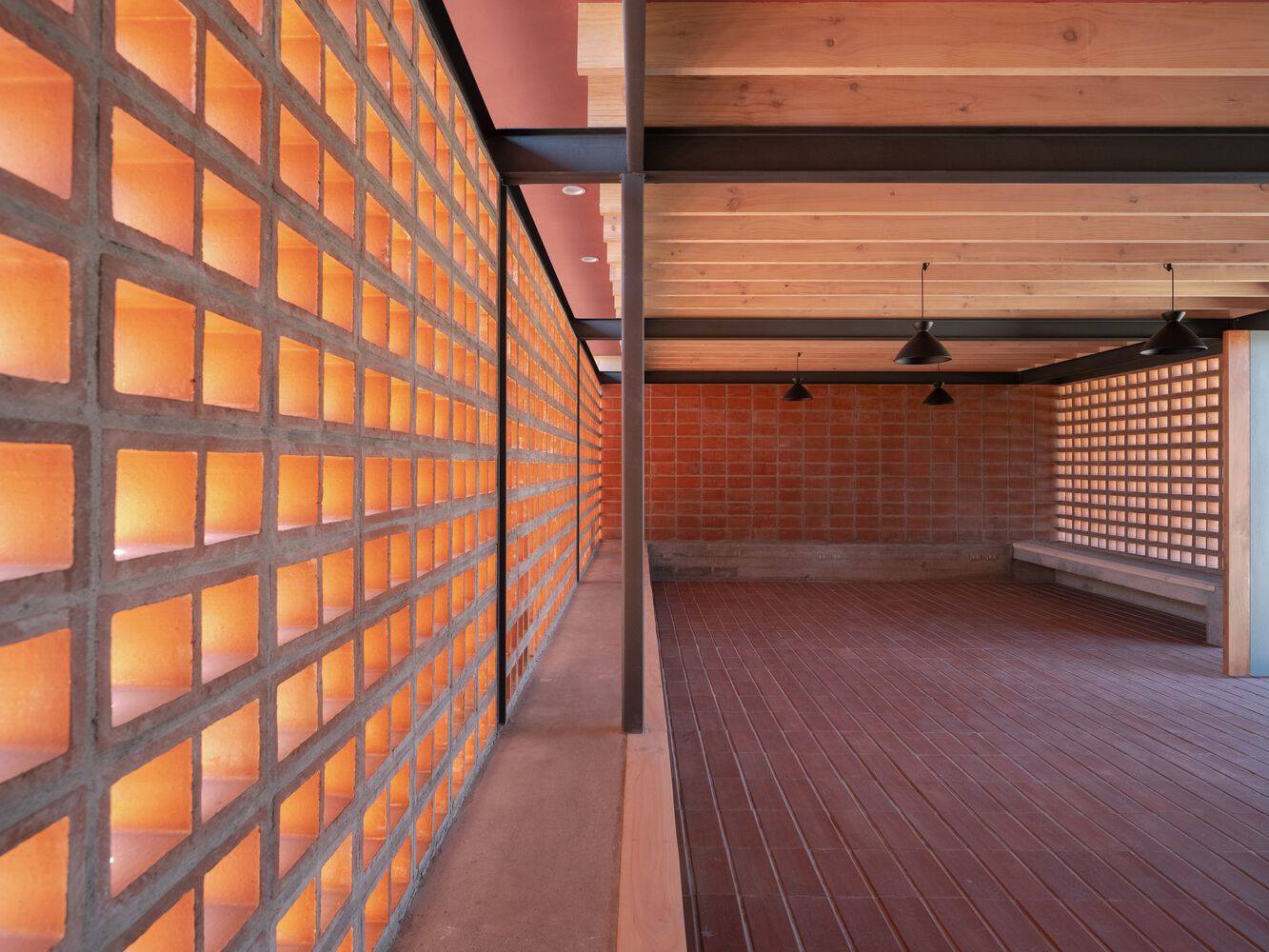
© Estudio Ibañez
© Estudio Ibañez
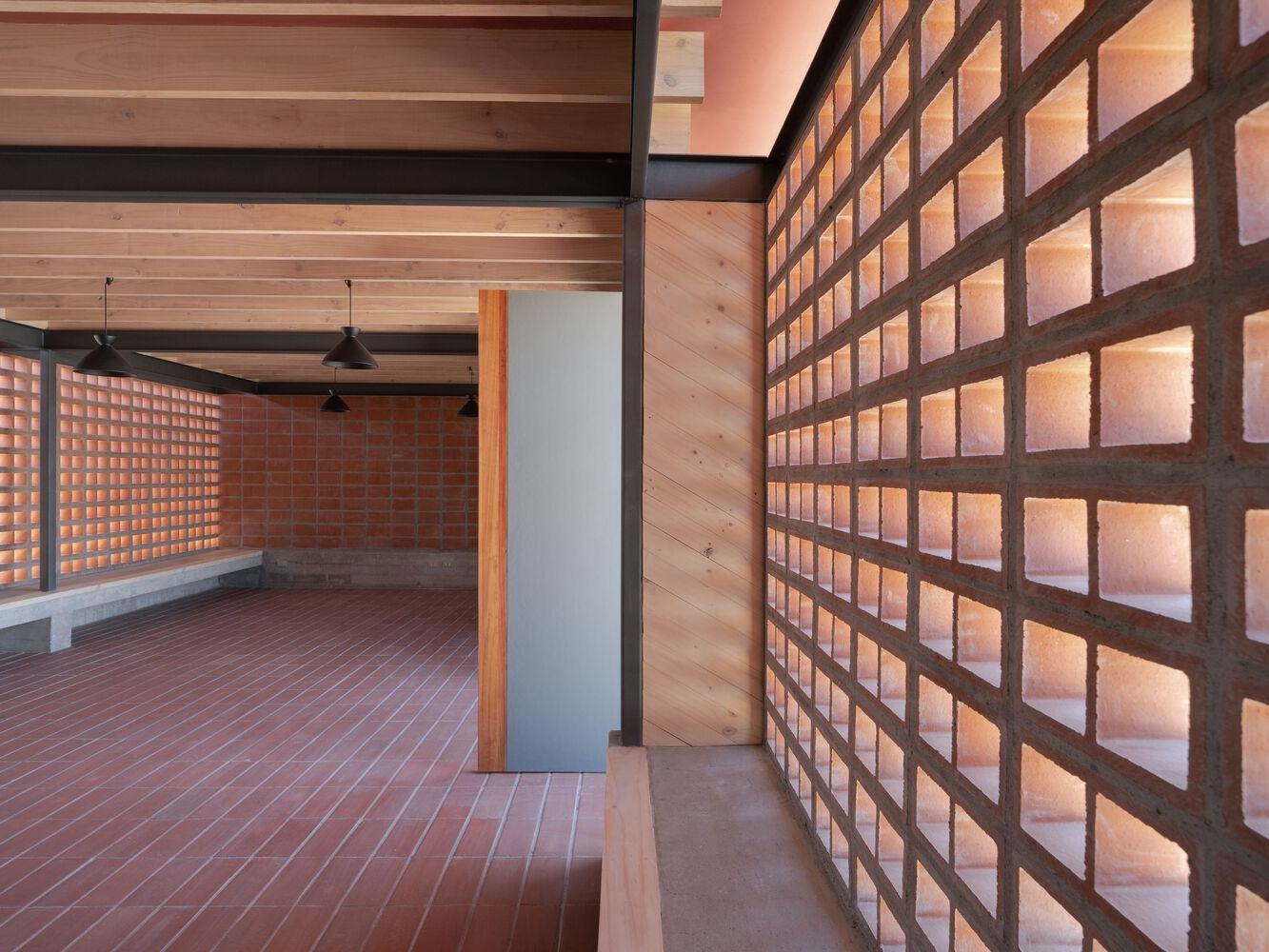
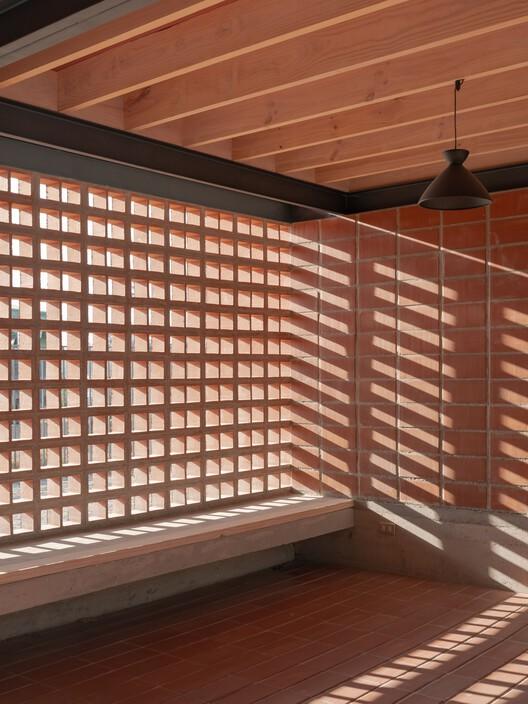
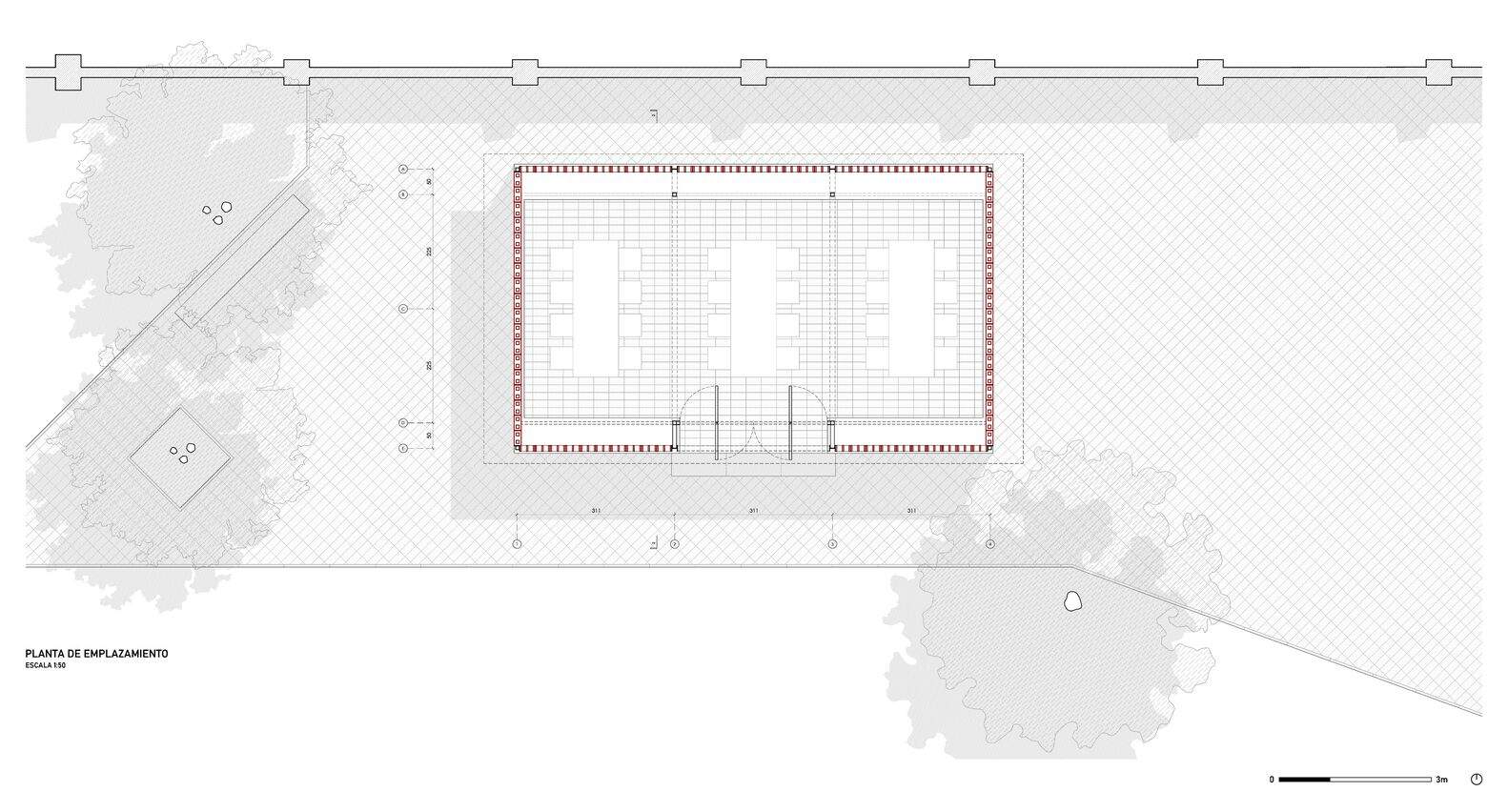
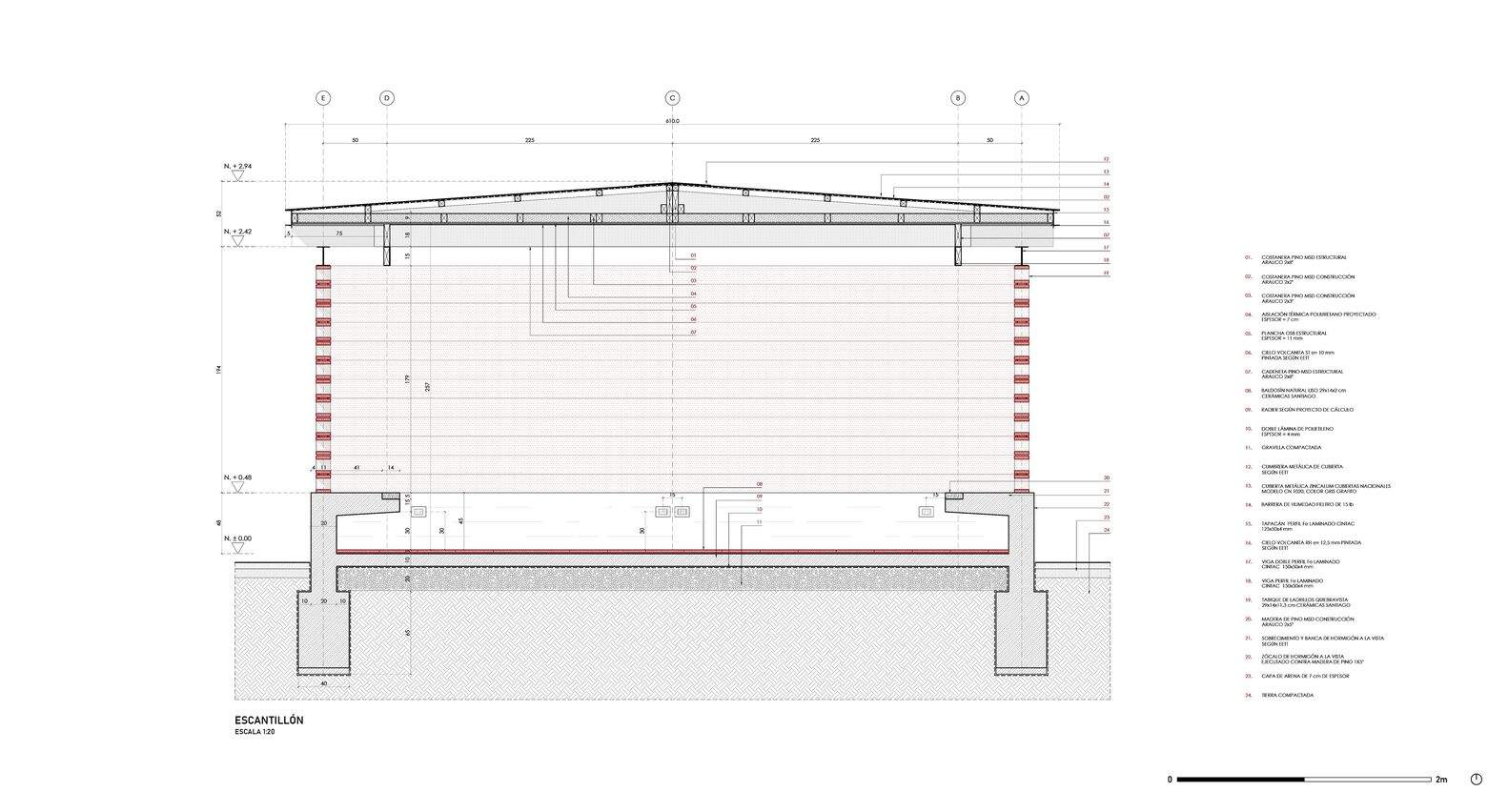
We believe that bricks are a cheap material that can be manufactured in Chile, thereby eliminating huge import costs, and at that time, goods from abroad had already multiplied fivefold. Its well-known construction techniques, resistance to the passage of time, and low maintenance costs seem to be the ideal choice for us to build this cool resting shade. Finally, bricks provide us with the versatility we are looking for to achieve a "holistic" structure, solving the entire building volume with a single primary material and eliminating projects that require specialized high cost labor. The project aims to build a cool shade that resembles vines, allowing filtered natural light to pass through and avoiding direct sunlight. We have envisioned a rectangular plan with a volume parallel to the track, and the construction sequence is very simple: a small pedestal with two concrete benches inside, and this small brick pavilion is built on top of it. The main facade - east-west - consists of two facing grid brick walls, while at both ends - north and south - the volume is completely enclosed by two opaque walls. The volume is completed by a brick pavement - the same size as the modules that make up the walls - and upper wooden beams that support the roof. Two 1.5-meter-wide revolving doors lead to the center of the exhibition hall, with three openings defining the passage: a larger central opening and two smaller horizontal openings.
我们认为砖是一种可以在智利制造的廉价材料,从而消除了巨大的进口成本,而当时来自国外的货物已经翻了五倍。其众所周知的建筑技术、对时间流逝的抵抗力以及低维护成本,对我们来说似乎是建造这种凉爽的休息阴影的理想选择。最后,砖为我们提供了我们正在寻找的多功能性,以实现“整体”结构,从而用单一的主要材料解决整个建筑体积,消除了需要专门的高成本劳动力的项目。该项目旨在建造一种凉爽的树荫,就像藤蔓一样,允许过滤的自然光通过,避免太阳的直射光线。我们设想了一个矩形平面图的体量,与轨道平行,施工顺序非常简单:一个小基座,里面有两个混凝土长凳,这个小砖亭就建在上面。主要的立面 - 东西 -由两个面对面的格子砖墙组成,而在两端 -北和南 -体量完全被两个不透明的墙封闭。该体量由砖路面完成 - 与构成墙壁的模块大小相同 - 以及支撑屋顶的上部木梁。两个 1.5 米宽的旋转门通向展馆的中心,通过 3 个开口定义通道:一个较大的中央开口和两个较小的横向开口。
© Estudio Ibañez
总平面图
剖面图
© Estudio Ibañez
The natural light entering through the grid wall at different times of the day is undoubtedly the most important material for this project. We can say the same thing about any construction project, but in this case, there are no resources to build this space, and the gaps in the grid bricks actually allow for the construction of these light walls, giving life to the Hipico Club gardener's new 'pavilion'.
在一天中的不同时间通过格子墙进入的自然光,无疑是该项目最重要的材料。我们可以对任何建筑项目说同样的话,但在这种情况下,没有资源来建造这个空间,格子砖的空隙实际上允许建造这些光墙,为 Hipico 俱乐部园丁的新“凉亭”赋予生命。
文字内容来自建筑师
译者:巢泽宇
© Estudio Ibañez