Dikland Hospital Revitalization/bureau Ira Koers
迪克兰德医院振兴 / bureau Ira Koers
项目设计理念的深度解读: 该项目最引人注目的地方在于其对时代背景和功能变化的深刻理解。设计师没有简单地进行翻新,而是深入研究了医疗保健模式的演变,特别是门诊治疗的增加和住院时间减少对医院空间的影响。通过保留原有的清晰路线,同时引入捷径和多样化的座位区,设计师巧妙地回应了新的需求,将原本作为快速通行区域的中央大厅,转化为一个更具活力和舒适性的公共空间。这种对空间利用的再思考,体现了设计师对项目所在的具体环境和时代背景的精准把握,并在此基础上进行了创新。
空间设计的巧妙之处: 项目在空间设计上展现出极高的专业水准,体现在对现有结构的巧妙利用和创新。设计师没有选择完全推翻重建,而是保留了建筑原有的框架,并在其基础上进行了精细的调整。比如,将自助餐厅、商店等服务设施安置在蓝色基座上,释放了更多的空间,为大厅创造了更开阔的视野。引入茂盛的绿植,不仅美化了空间,还为房间提供了隐私,并改善了上层空间的视野。红色电梯与红色岛屿平台的搭配,更是为空间增添了活力和趣味性,这些细节都体现了设计师对空间美学和功能性的完美结合。
可持续性和人文关怀的融合: 迪克兰德医院的改造项目不仅关注空间的美观和实用性,更体现了设计师对可持续性和人文关怀的重视。项目引入了大量的绿植,创造了宜人的室内花园,这不仅提升了患者和访客的体验,也改善了建筑的空气质量。通过设置新的堤坝和人行道,将室内花园延伸到室外,并结合停车场绿地、雨水收集系统等元素,体现了对环境的尊重和对可持续发展的思考。这种将自然融入建筑的设计理念,以及对患者舒适度的关注,都展现了设计师的社会责任感和对人文关怀的深刻理解。
+ Studio Roelof Mulder
© MWA Hart Nibbrig
© MWA Hart Nibbrig
From the architect. Roelof Mulde and Ira Koers envisioned a vision for the interior design of Dijklander Hospital located in Purmerend, a building designed by Jan Tennekes and meticulously maintained, as if transported back to the 1980s. They study the possibility of adjusting the space of this young historical heritage through careful consideration and admiration. Healthcare has undergone changes: more outpatient treatments are conducted in clinics, hospitalization is reduced, and there are fewer wards with beds.
来自建筑师。Roelof Mulde r和 Ira Koers 为位于 Purmerend 的迪克兰德医院 (Dijklander hospital) 的内部设计构想了一个愿景,这座建筑由 Jan Tennekes 设计,并得到了精心的维护,置身其中仿佛穿越到了 1980 年代。他们通过对这一年轻历史遗产的深思熟虑和钦佩来研究调整其空间的可能性。医疗保健已经发生了变化:更多的门诊治疗在诊所进行,住院治疗减少,带床位的病房也减少。
© MWA Hart Nibbrig
© MWA Hart Nibbrig
3D
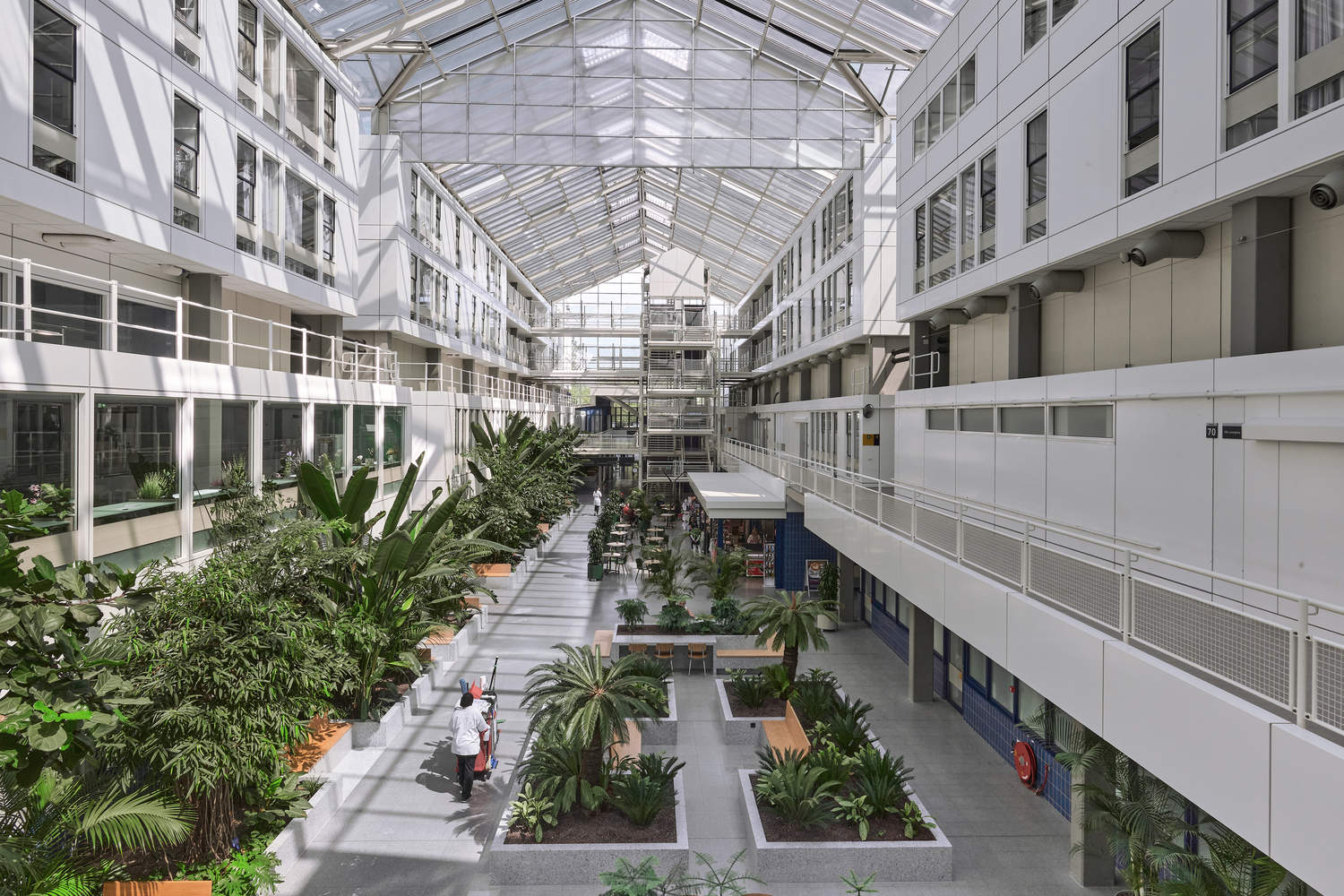
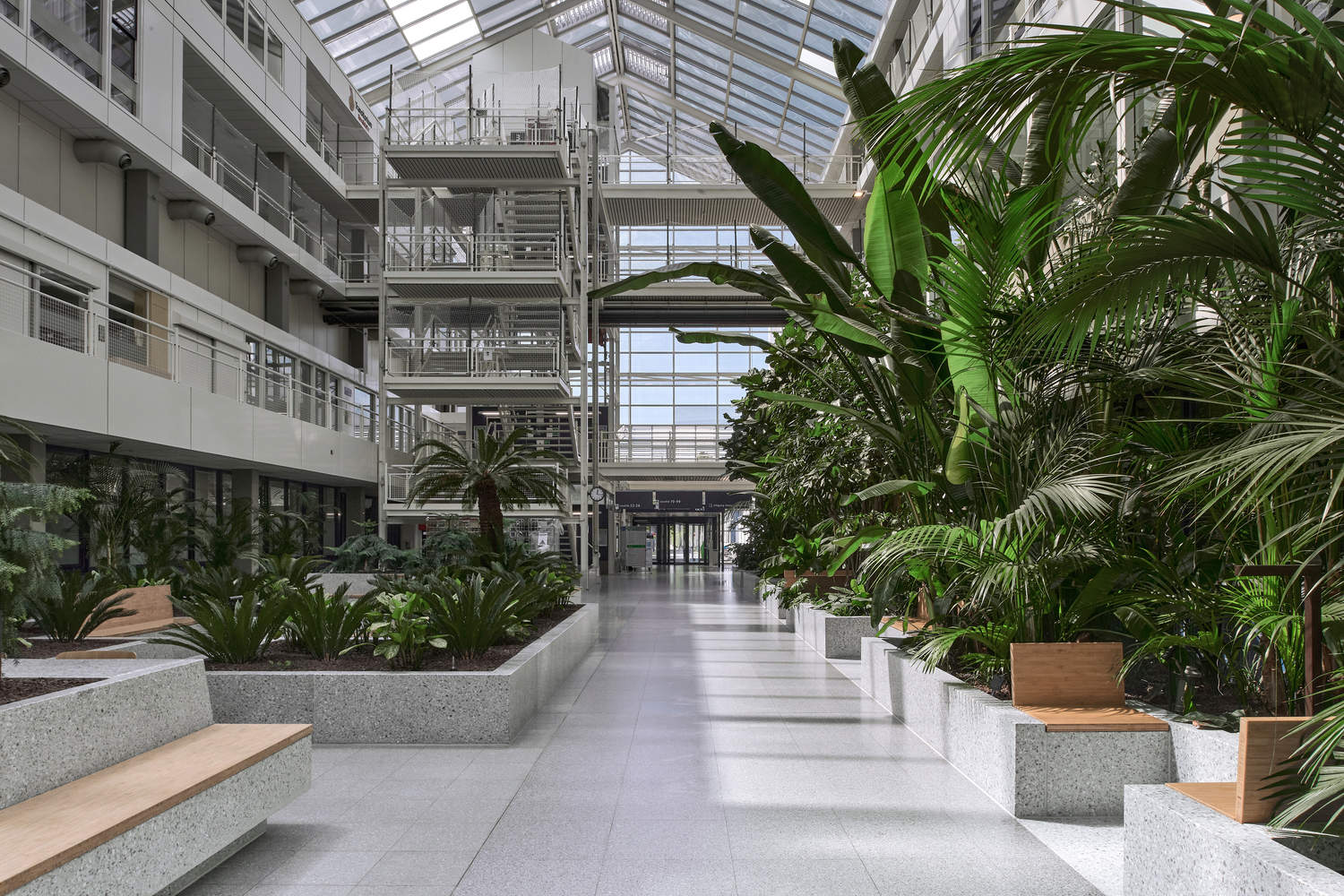
The central hall with sufficient lighting in the hospital has been significantly modified. The initial design was a spacious indoor street with streetlights, green belts, pavilions, mailboxes, and benches. A spacious area is arranged to quickly reach point B from point A, but not as a waiting place. However, today, due to digital appointments and applications, waiting for outpatient appointments or treatments no longer needs to be done in the ward itself, but can be done elsewhere in the building - a change that has spatial implications and offers possibilities. Here, the central hall has replaced the classic waiting room of the outpatient clinic.
医院采光充足的中央大厅已被大幅改动。最初的设计是一条宽敞的室内街道,有路灯、绿化带、亭子、邮箱和长椅。一个宽大的空间被布置成可以快速从 A 地到达 B 地,但不是作为一个等待的地方。然而,今天,由于数字预约和应用程序,等待门诊预约或治疗不再需要在病房本身进行,而是可以在建筑的其他地方进行——这一变化具有空间影响并提供了可能性。 在这里,中央大厅取代了门诊诊所的经典候诊室。
© MWA Hart Nibbrig
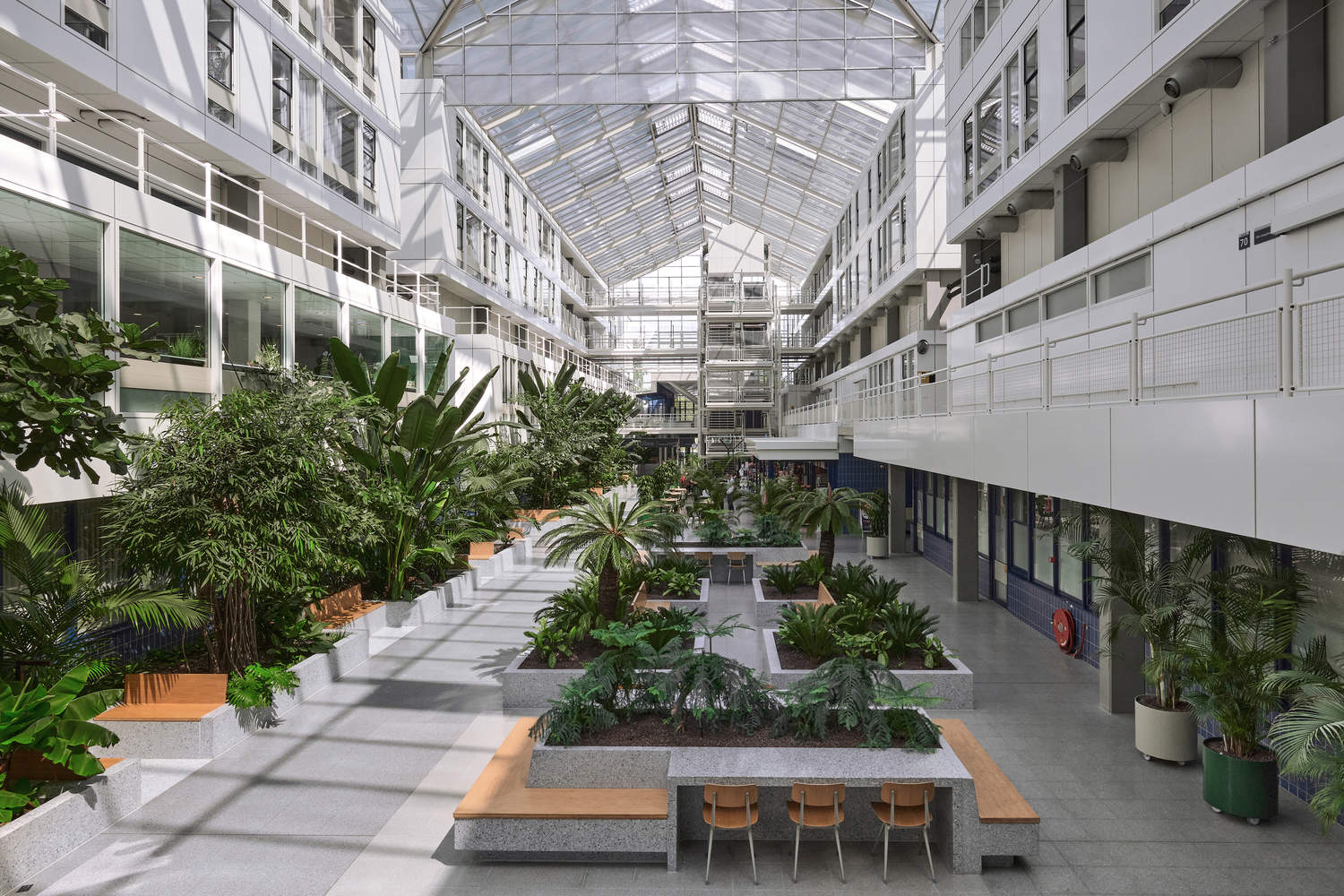
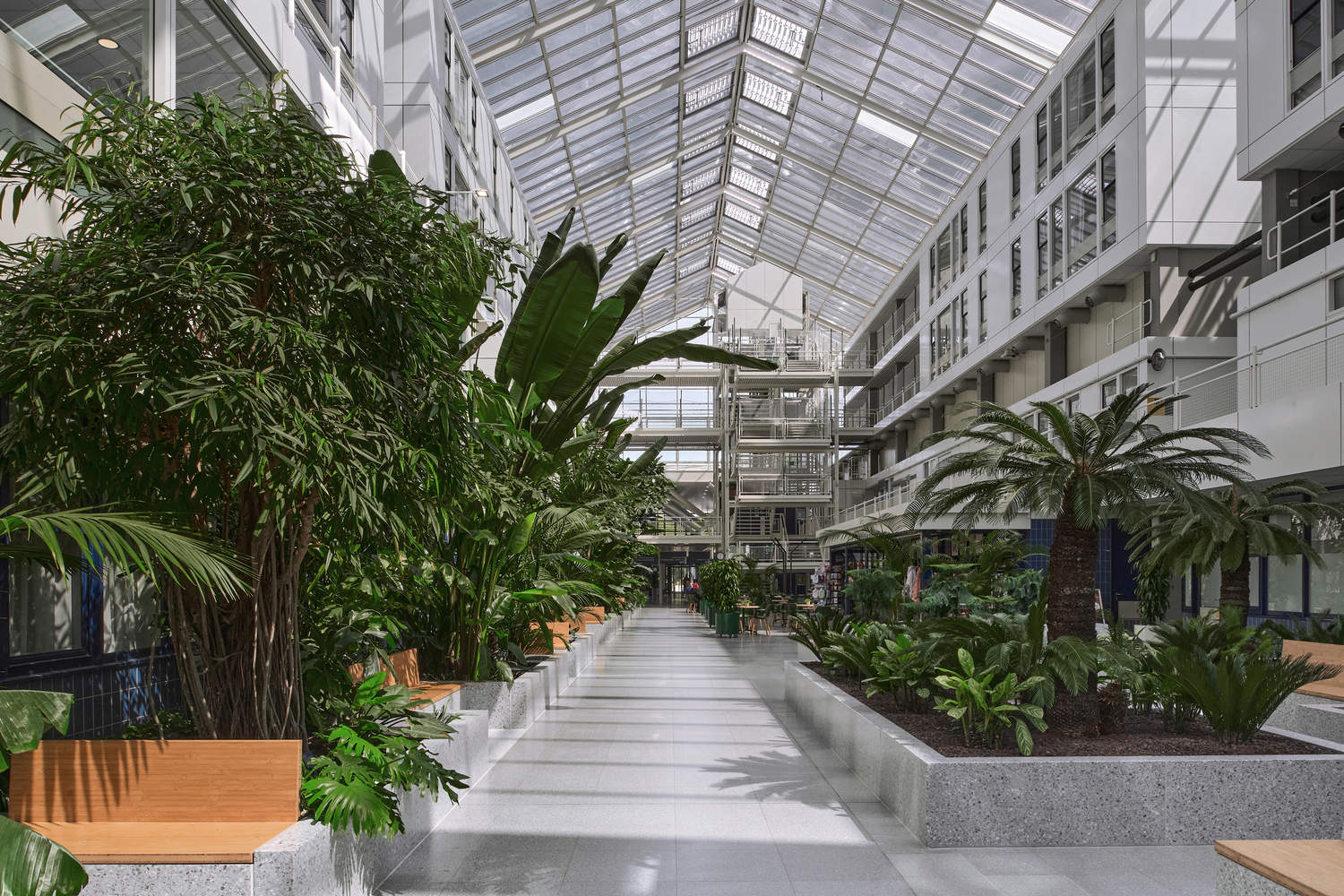
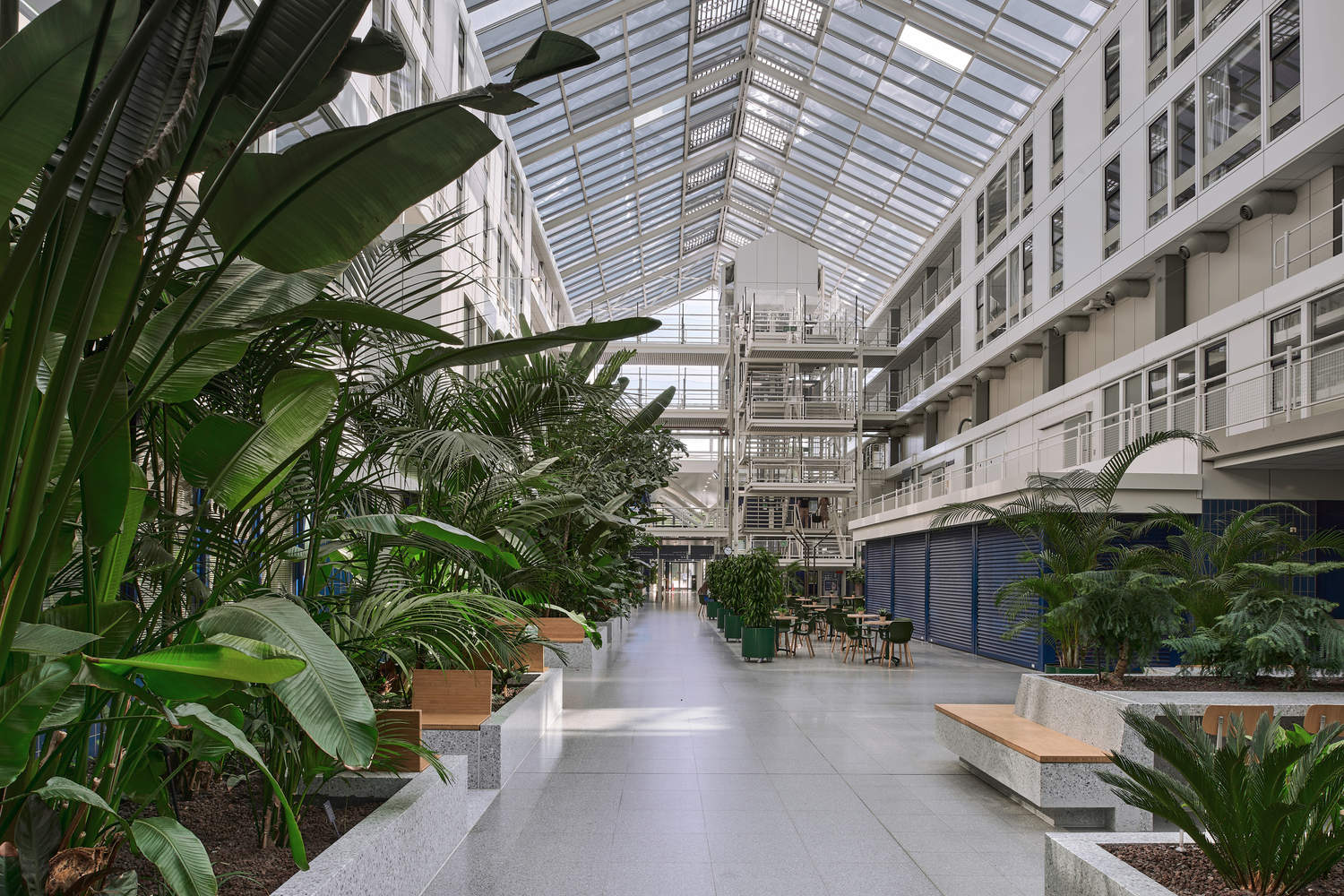
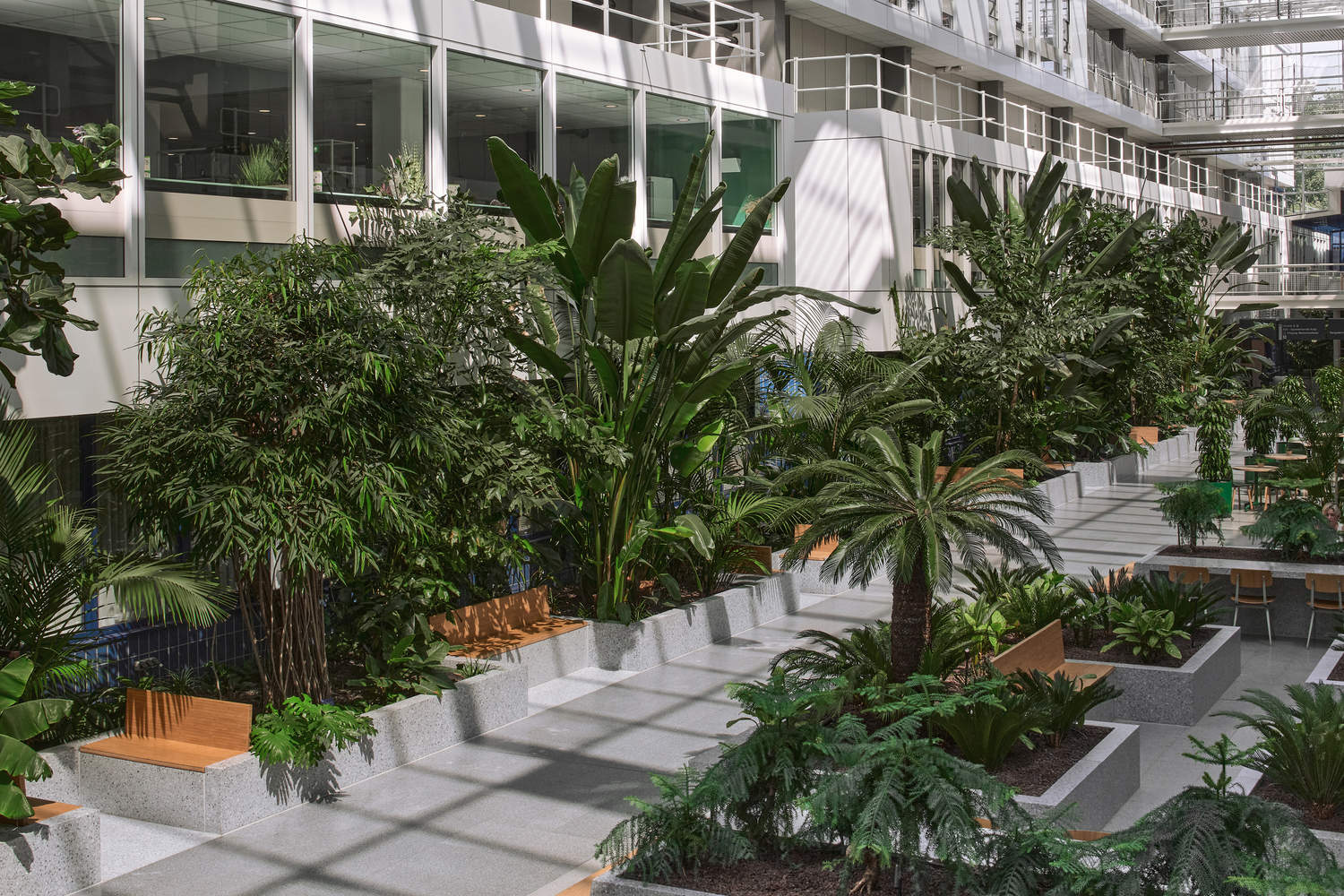
The new hall retains the original clear route, but adds shortcuts and offers various seats amidst lush green plants. By placing the self-service restaurant, shops, patient service points, and hair salon on blue pedestals on both sides of the lobby's exterior walls, space has been freed up.
新大厅保留了原有的清晰路线,但增加了捷径,在郁郁葱葱的绿色植物中设有各种座位。 通过将自助餐厅与商店、病人服务点和理发点安置在大厅两侧外墙的蓝色基座上,腾出了空间。
© MWA Hart Nibbrig
© MWA Hart Nibbrig
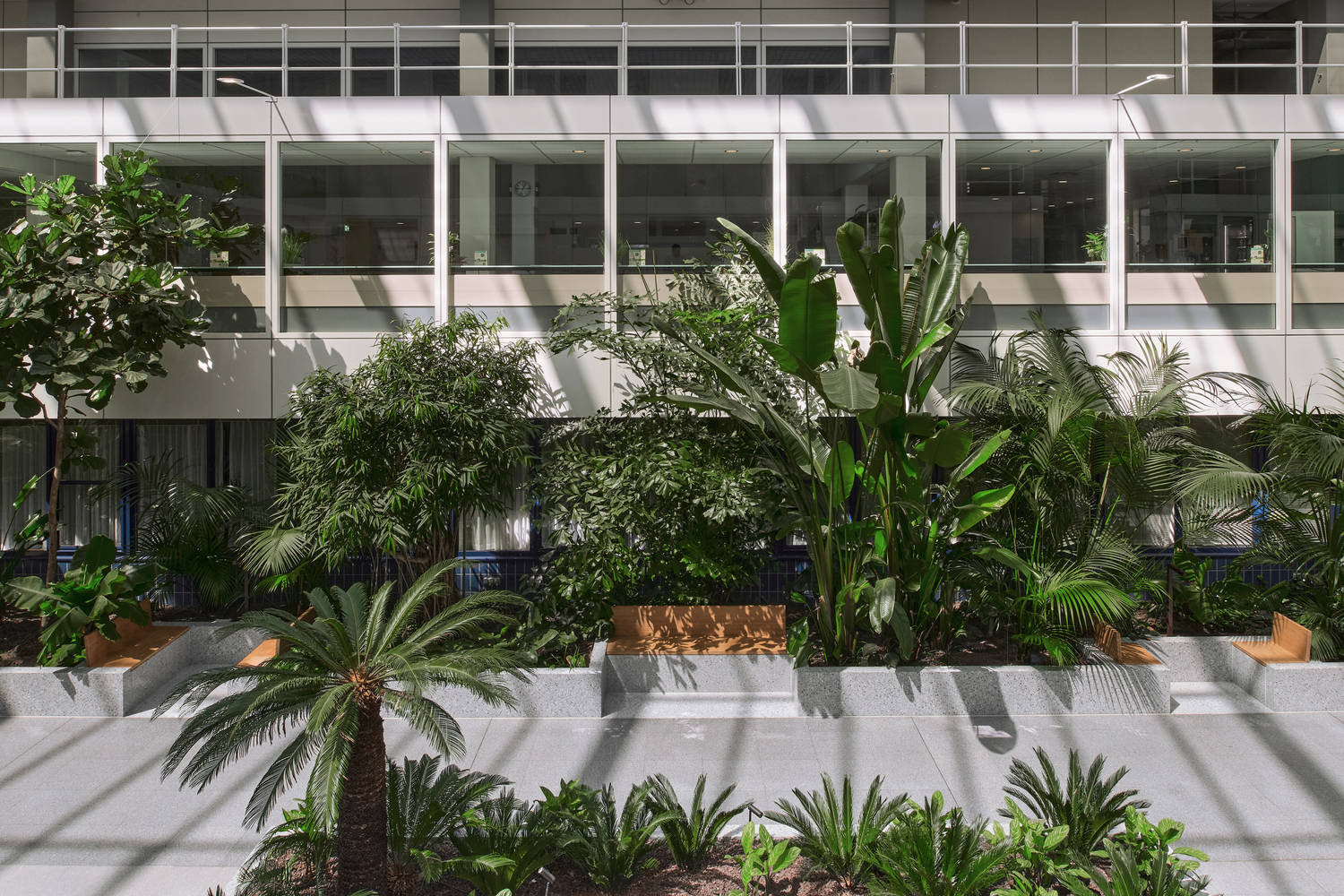
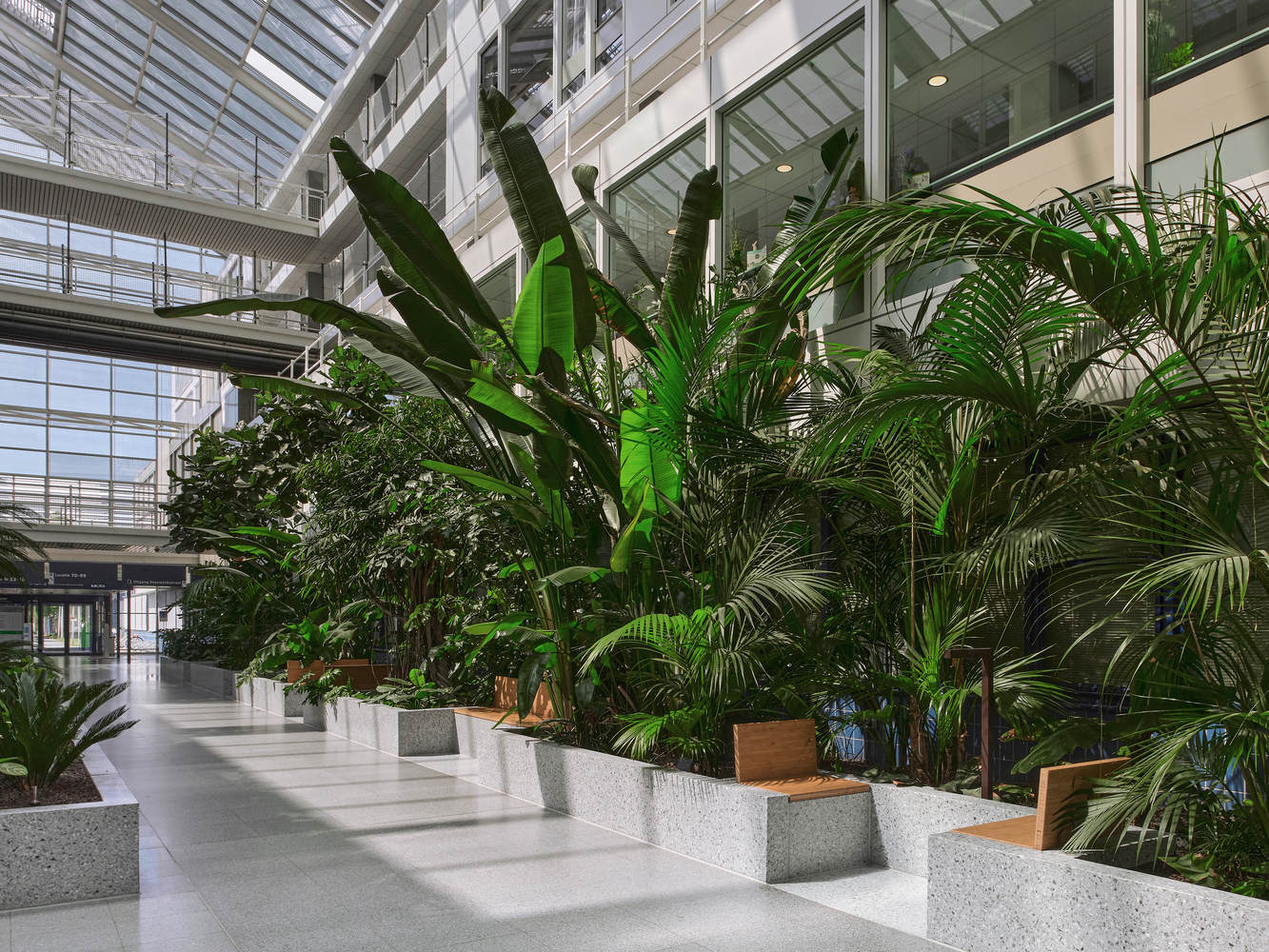
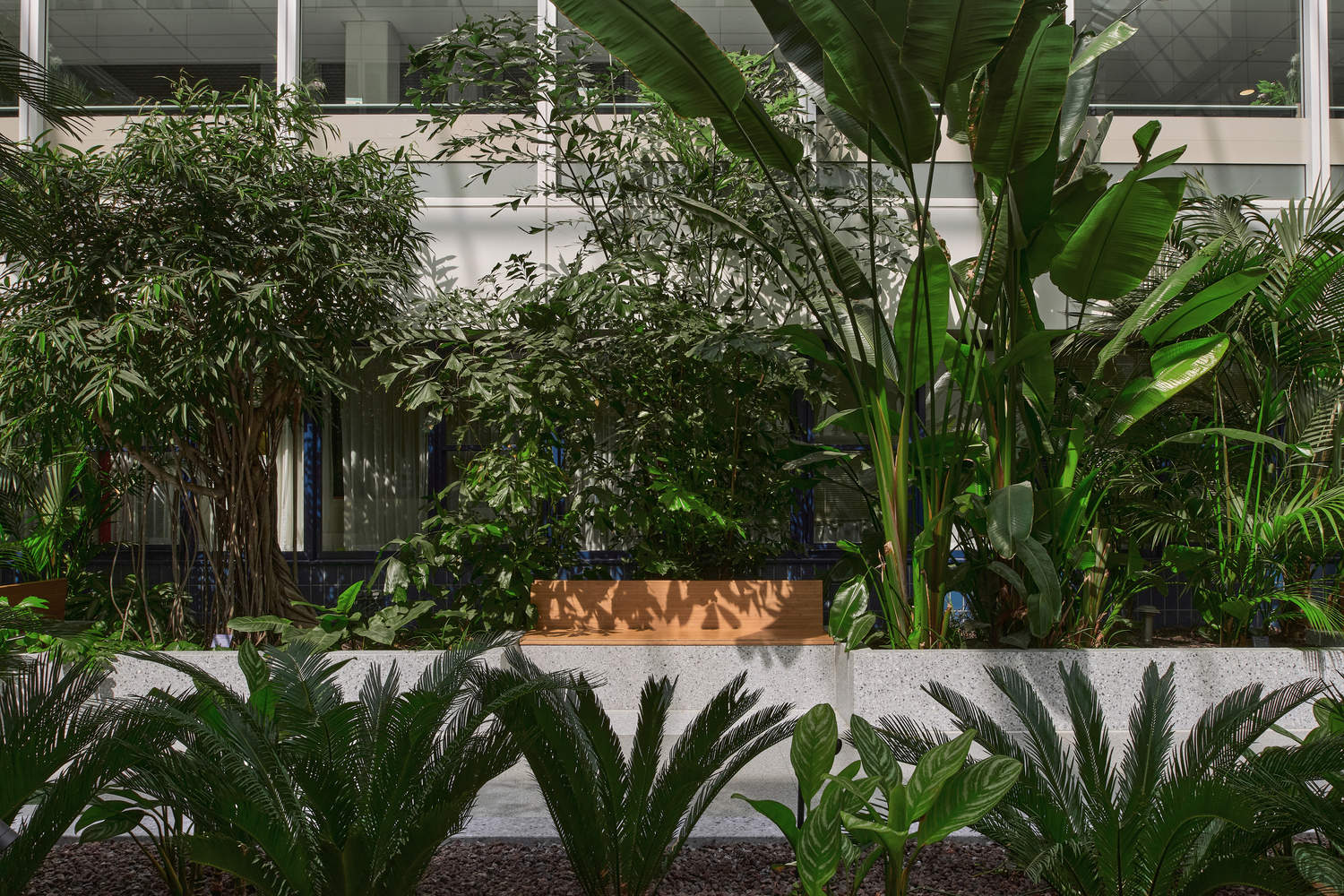
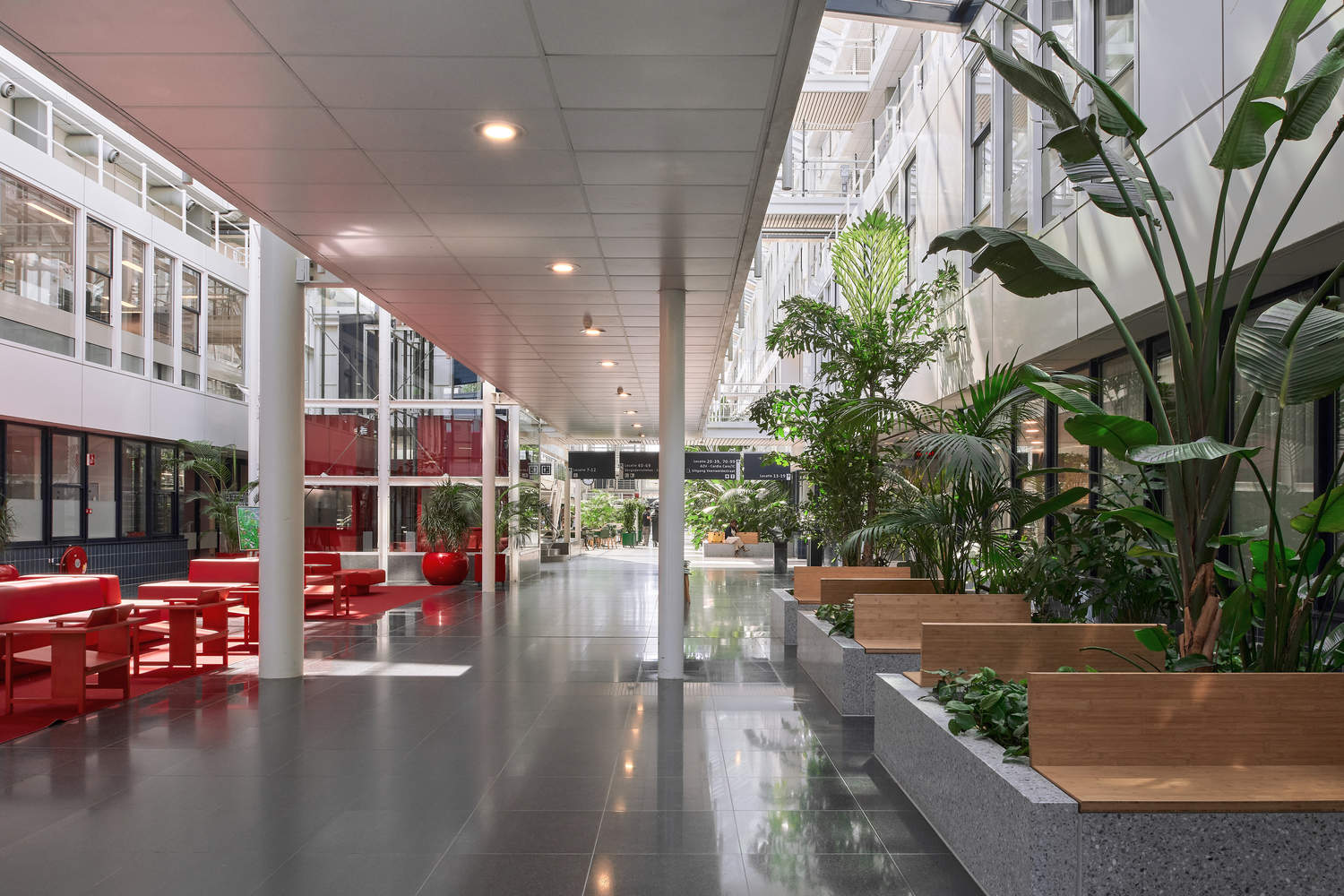
The sparse green plants on the facade have been replaced by lush leaves on the elevated bed with a terrazzo garden wall, and there are also bamboo chairs among the green plants. These vegetation provide privacy for the rooms facing the lobby and offer a view of indoor green plants for the upper floors. The existing red elevator is highlighted by two new red island platforms with sofas and concert grand pianos.
立面上原本稀疏的绿色植物被带有水磨石花园墙的高架床上茂盛的树叶所取代,绿色植物中还有竹椅。这些植被为面向大厅的房间提供了隐私,并为上层提供了室内绿色植物的视野。现有的红色电梯被两个带沙发和音乐会三角钢琴的新红色岛台所突出。
© MWA Hart Nibbrig
© MWA Hart Nibbrig
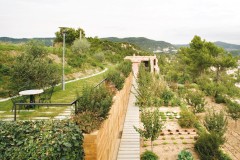
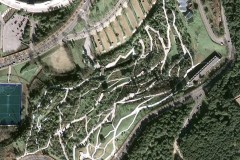
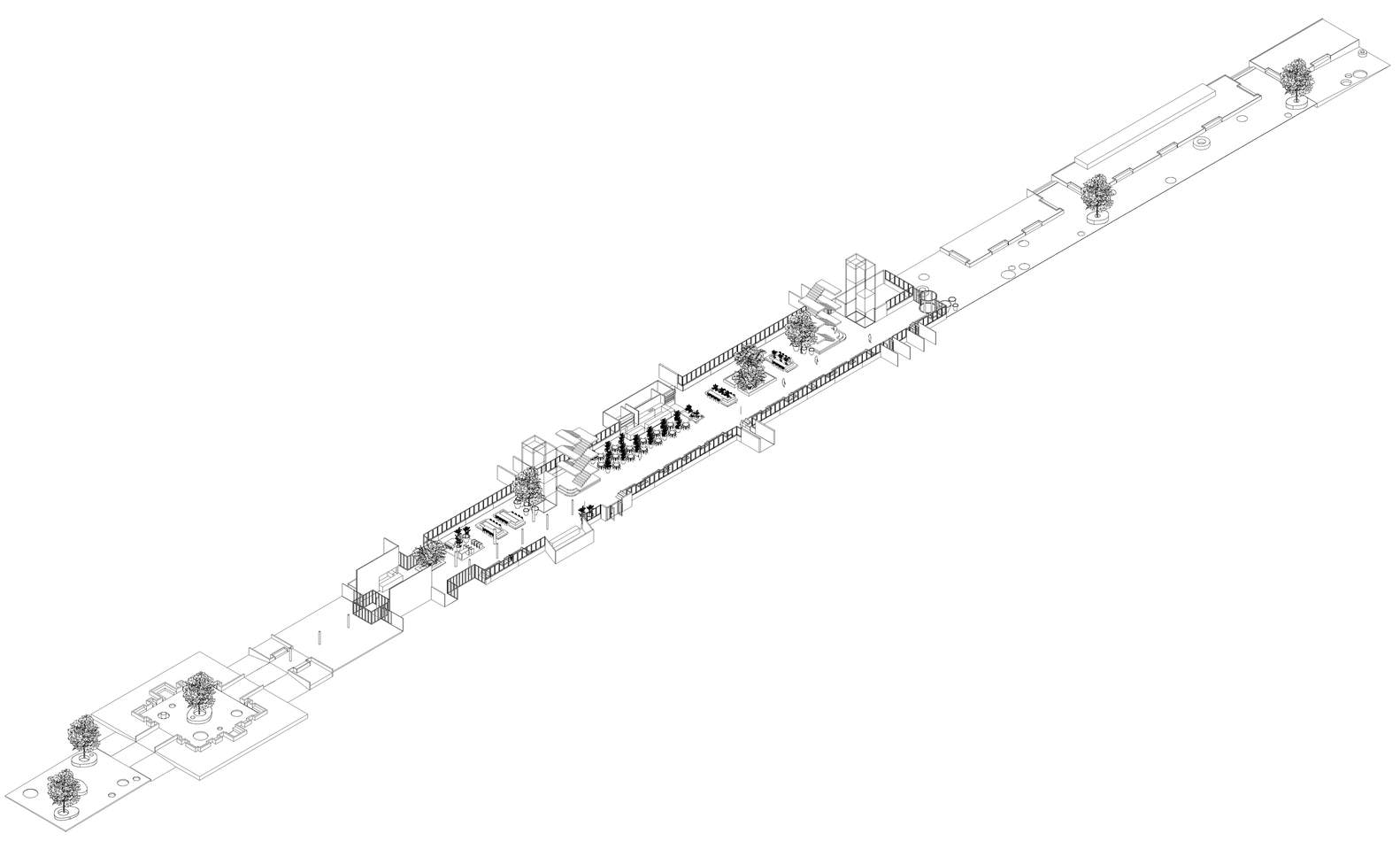
The new indoor garden extends to the outside through a newly raised embankment, with seats set in green plants that are the same as those in the lobby. Starting from the embankment, a pedestrian walkway winds between the green spaces in the parking lot, which absorb rainwater, under trees, and along the edges of the reed beds in Gors.
新的室内花园通过一个新加高的堤坝延伸到外面,在绿色植物中设置了与大厅内相同的座位。从堤坝开始,一条人行道在停车场的绿地之间蜿蜒,这些绿地吸收了雨水,在树下,并沿着戈尔斯的芦苇丛边缘。
文字由建筑师提供
译者:刘若飞
© MWA Hart Nibbrig