N1 Health Center/Kiltro Polaris Arquitectura+JC Arquitectura
N1 健康中心 / Kiltro Polaris Arquitectura + JC Arquitectura
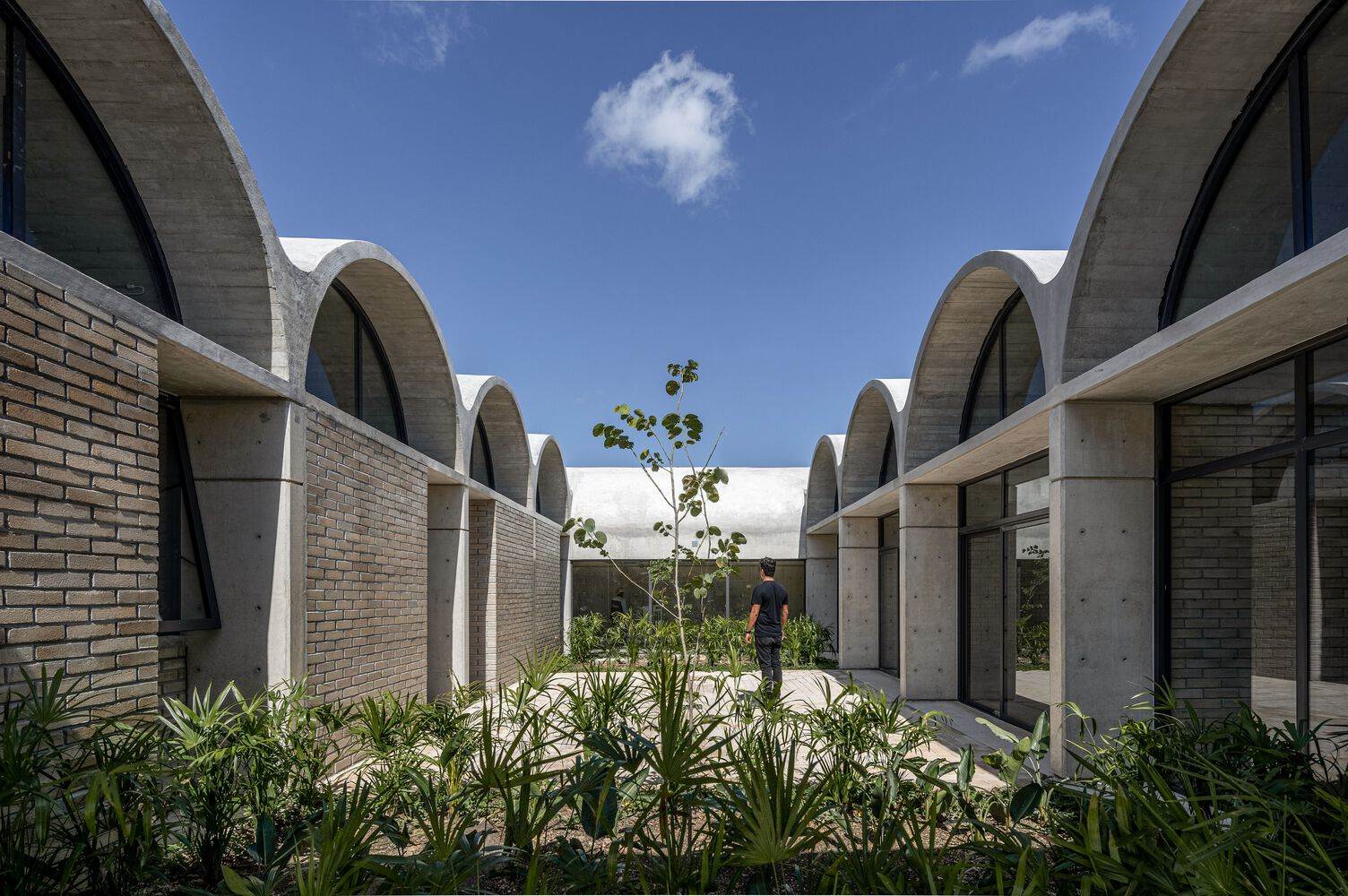
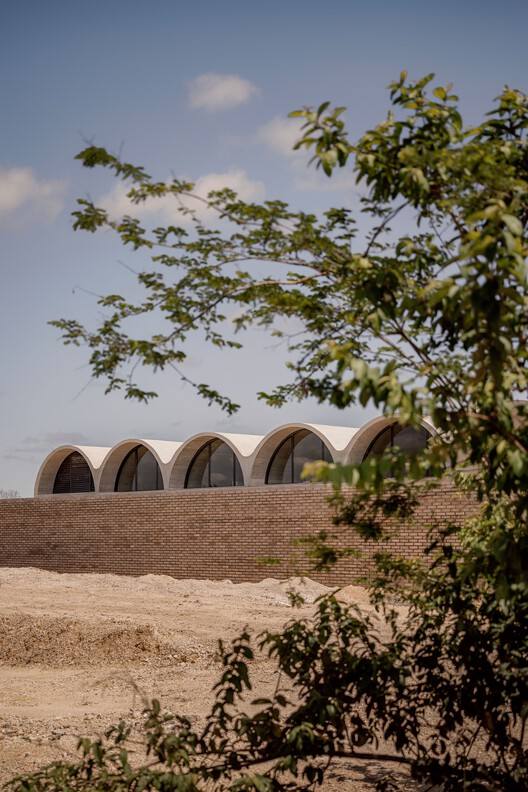
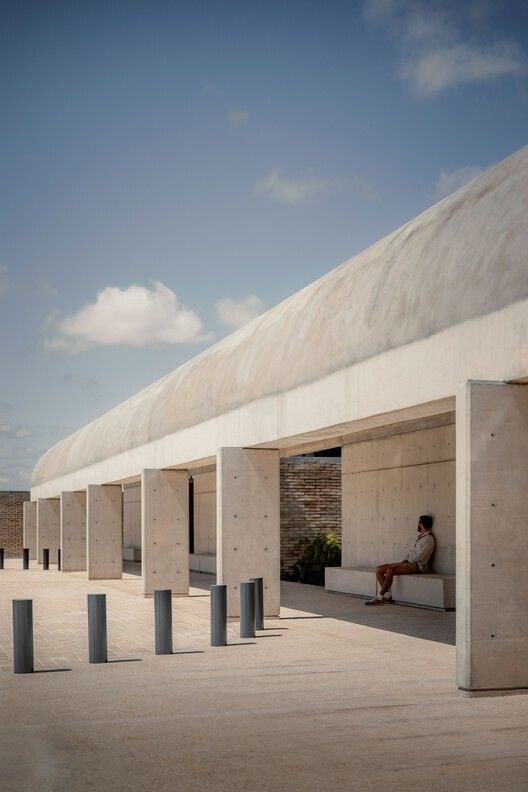
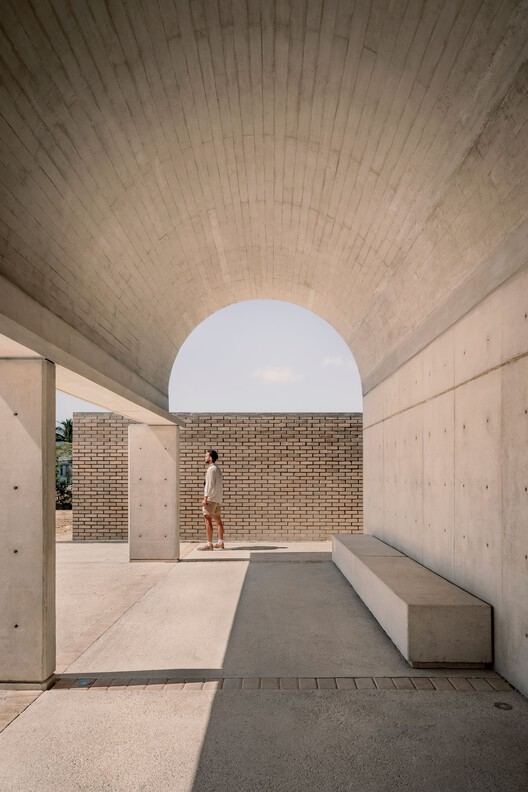
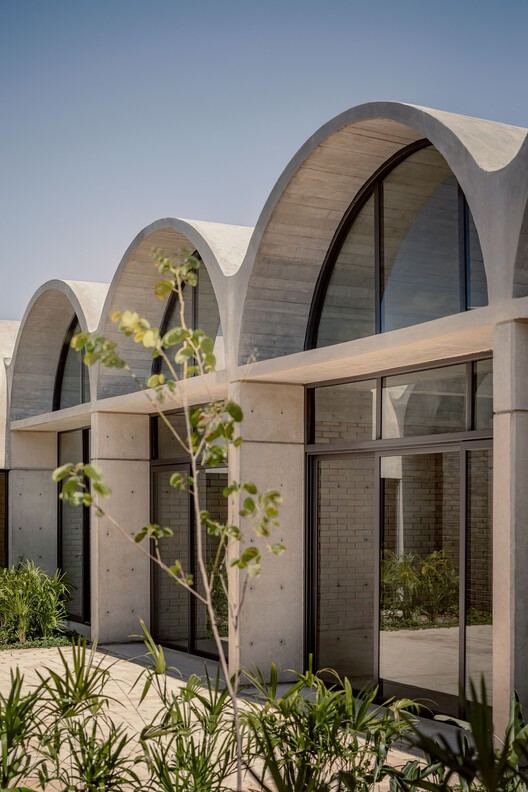
设计理念的巧妙运用:N1健康中心的设计展现了对当地环境和需求的深刻理解。项目选用了具有工业美学的生混凝土桶形拱结构,不仅在视觉上具有独特魅力,更重要的是,这种结构在功能上服务于设计。拱形结构提供了宽敞的空间,并形成了一系列多功能的“托架”,这些托架既是过渡空间,也是诊疗、行政等功能区域。通过巧妙的布局,设计者将空间划分为不同的功能单元,并利用这些单元创造出开放、通透、且具有良好通风和采光的医疗环境。这种设计回应了埃斯卡塞加市的铁路历史,同时赋予了建筑持久的生命力,使其能够适应城市不断变化的需求。
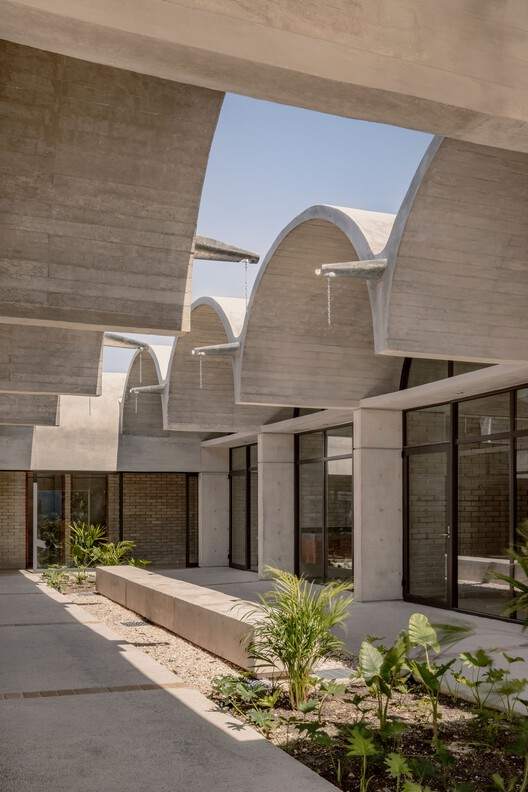
对自然元素的整合:项目对自然元素的整合是其另一大亮点。设计者巧妙地将庭院引入建筑结构,利用庭院实现雨水收集、自然采光和通风。这些庭院不仅提供了舒适的户外空间,也为建筑内部带来了自然光线和空气流通。这种设计策略降低了能源消耗,提升了建筑的可持续性。通过设置有顶的步道,设计者创造了连接所有房间的便捷通道,也为医护人员和患者提供了遮阳避雨的场所。整体而言,N1健康中心的设计不仅仅是一个医疗设施,更是一个与环境和谐共生的典范,体现了设计师对可持续建筑的深刻理解。
功能与形式的完美结合:N1健康中心的设计将功能性需求与建筑美学完美结合。建筑不仅满足了医疗机构的各项功能需求,如诊疗室、药房、行政区域等,还通过设计赋予了建筑独特的视觉语言。建筑采用的桶形拱结构,创造了开放、通透的空间感,也形成了独特的建筑形态。这种设计方法确保了建筑在满足功能需求的同时,也具有强烈的视觉冲击力。此外,设计中对材料的运用和细节的处理也值得称赞,例如生混凝土的使用,赋予了建筑朴素而坚实的质感。总体而言,该项目体现了建筑设计中功能、形式、和环境三者之间相互协调、相互促进的精髓。
© Cesar Béjar, Oscar Hernández
© Cesar Béjar, Oscar Hernández
Unlike many Mexican cities that initially served as colonial settlements, the city of Escarga was founded in the early 20th century as a settlement for the development of gum, rubber, and timber. One of the camps was named "Kil ó metro 47", which is the origin of the city, but engineer Francisco Esc á rcega M á rquez named the city. In order to expand the railway from Veracruz to the Yucatan Peninsula, Escasega was responsible for connecting Ferrosus, which later became the Southeast Railway, by land. It was not until 1990 that the farmland of the Escarga Commune became an autonomous municipality, and today it is a city in the Canton of Campeche. This city currently has a population of about 32000, and its advantage lies in its advantageous geographical location: the city is connected to the state of Tabasco (and its connecting route with the state of Veracruz); Chetumar, Eastern Quintana Roo Region; The hub of Merida in the northern state of Yucatan.
与许多最初作为殖民定居点的墨西哥城市不同,埃斯卡塞加市成立于二十世纪初,是作为开发树胶、橡胶和原木的定居点。其中一个营地被命名为“Kilómetro 47”,这是城市的起源,但工程师弗朗西斯科·埃斯卡塞加·马尔克斯(Francisco Escárcega Márquez)给这座城市起了名字。为了将铁路从韦拉克鲁斯扩展到尤卡坦半岛,埃斯卡塞加负责通过陆路连接后来成为东南部铁路的 Ferrosur。直到 1990 年,埃斯卡塞加公社的农田才成为一个自治市,今天是坎佩切州的一个城市。这座城市目前拥有约 32,000 人口,其优势在于其优越的地理位置:该市是连接塔巴斯科州比亚埃尔莫萨(及其与韦拉克鲁斯州的连接路线);东部金塔纳罗奥州切图马尔;和北部的尤卡坦州梅里达的枢纽。
© Cesar Béjar, Oscar Hernández
© Cesar Béjar, Oscar Hernández
Nearly 100 years after the establishment of the first settlement, with the city's famous railway tradition, through a federal investment plan, it is possible for Escarga to supplement and improve its urban infrastructure. In this context, along with six other intervention measures, N1 Health Center (N1 Health Center) has been introduced as a concrete structure that will serve the people living there. Although its purpose has been defined as a basic treatment clinic, N1 Health Center is considered a multifunctional, well ventilated, and well lit structure with the potential for multiple uses if necessary. Considering this, the building can continue over time and adapt to the constantly evolving needs of the city.
在第一个定居点建立近 100 年后,凭借该市著名的铁路传统,通过联邦投资计划,埃斯卡塞加有可能补充和改善其城市基础设施。在此背景下,与其他六项干预措施一起,N1 健康中心(N1 健康中心)被引入为一个明显的混凝土结构,将为居住在那里的人们服务。虽然其用途已被定义为基本治疗诊所,但 N1 健康中心被认为是一个多功能,通风良好和照明的结构,如有必要,具有多种用途的可能性。考虑到这一点,该建筑可以随着时间的推移而持续,并适应不断发展的城市不断变化的需求。
© Cesar Béjar, Oscar Hernández
© Cesar Béjar, Oscar Hernández
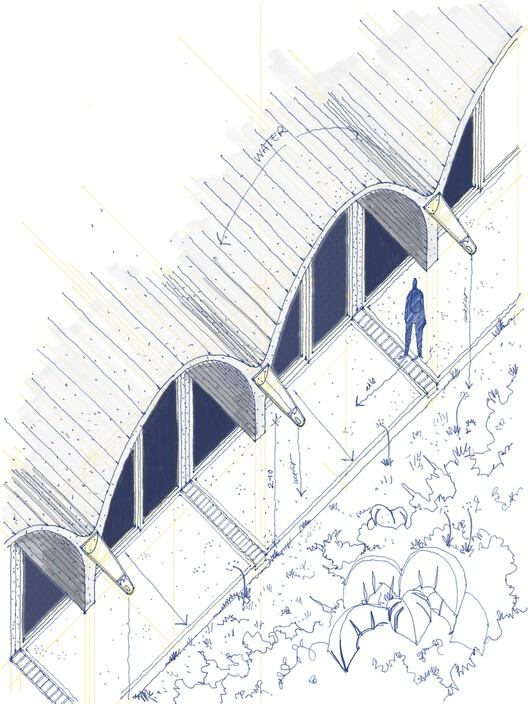
轴测图
© Cesar Béjar, Oscar Hernández
© Cesar Béjar, Oscar Hernández
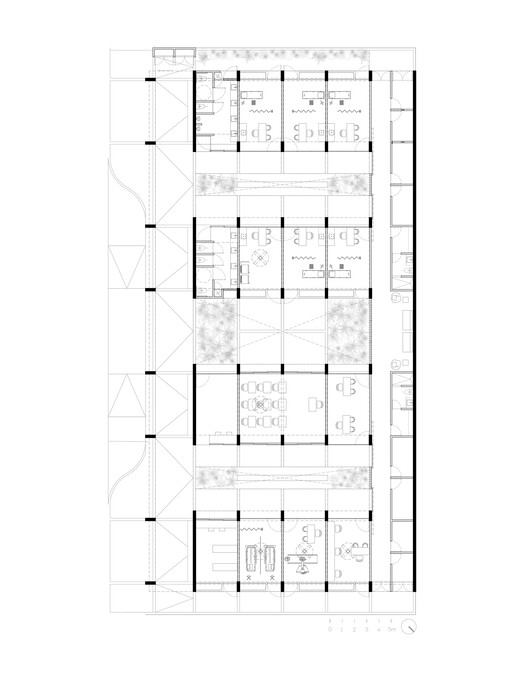
平面图
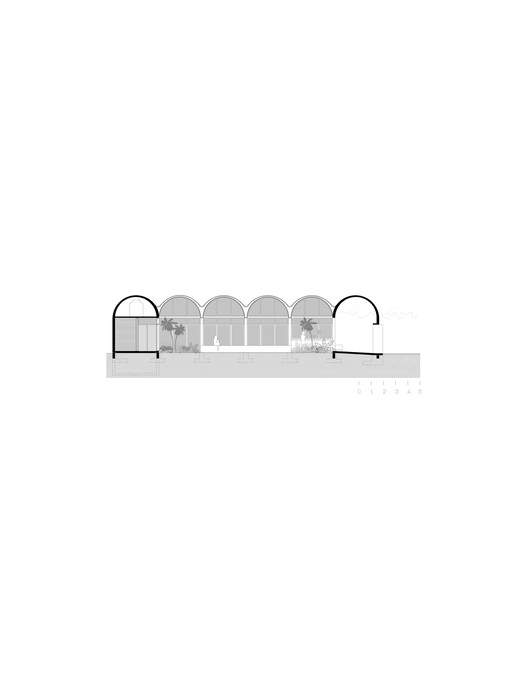
剖面图
© Cesar Béjar, Oscar Hernández
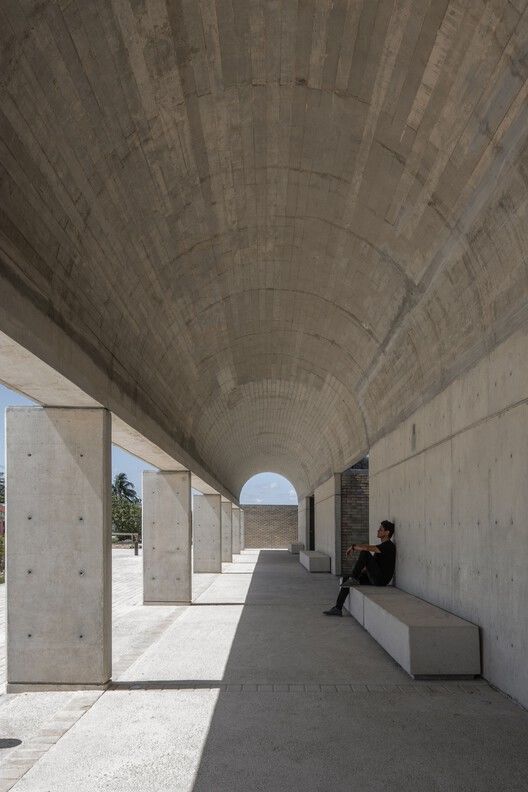
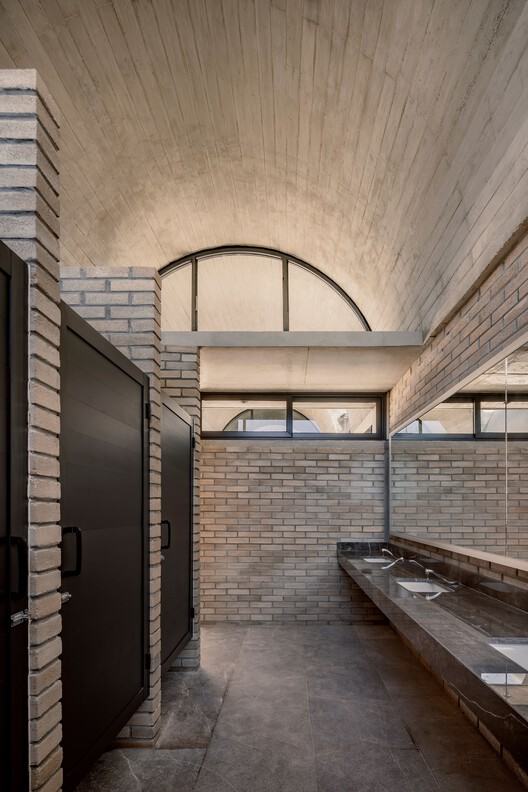
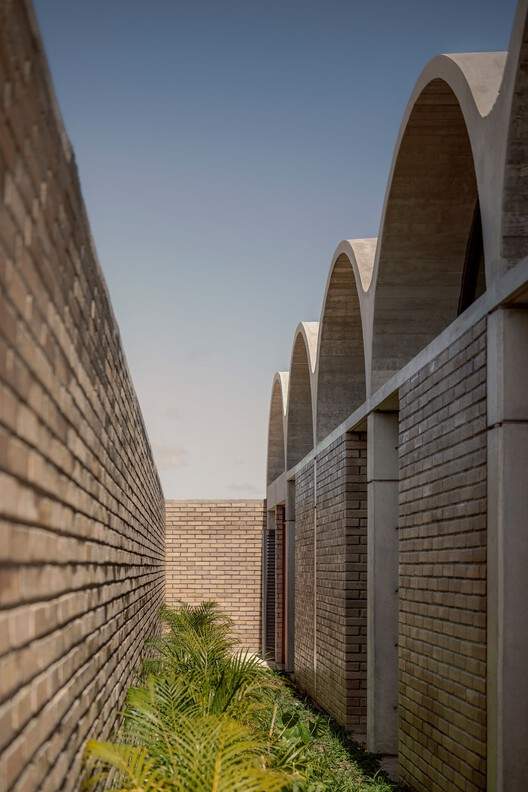
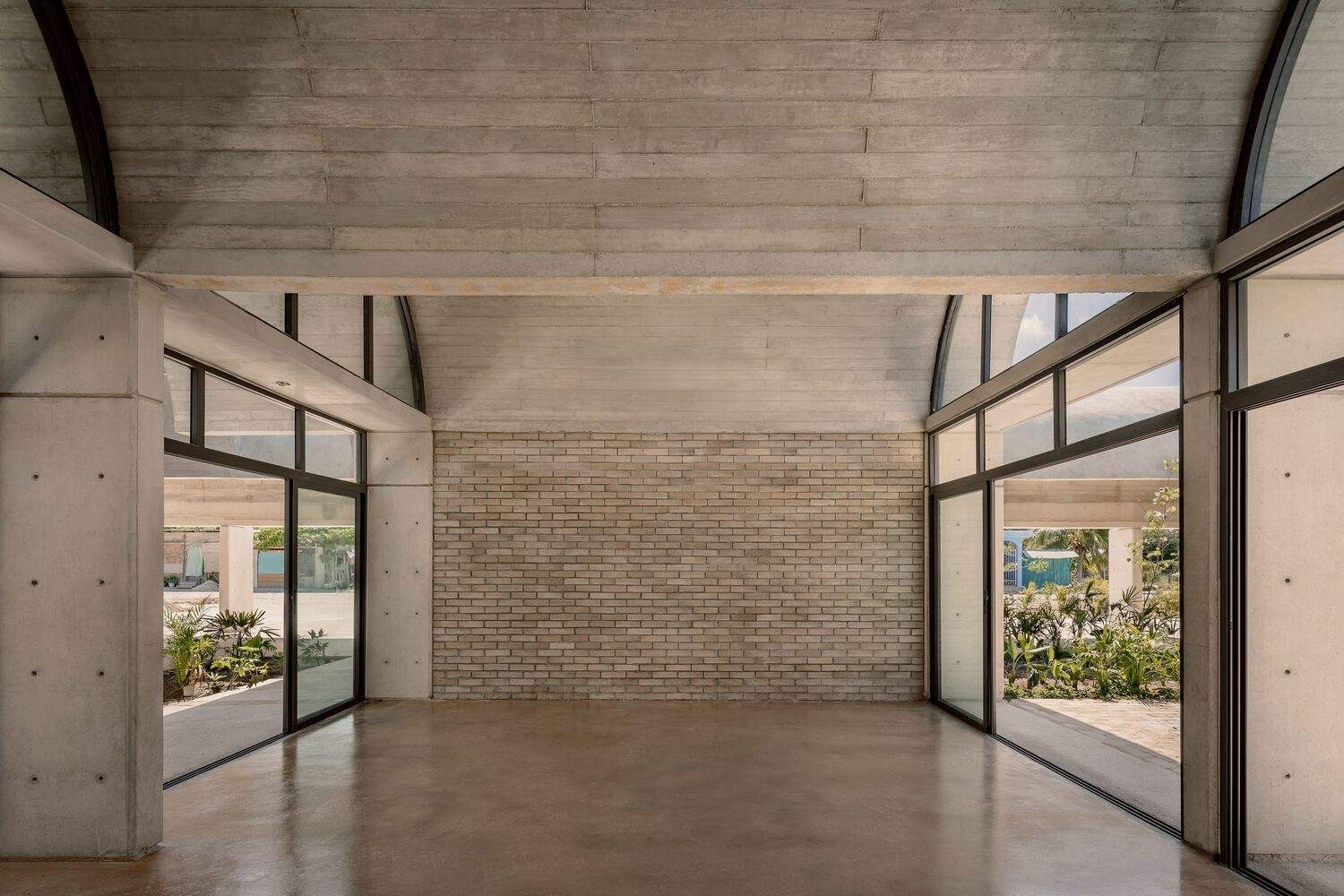
In terms of architectural planning, it has a series of structural brackets designed with raw concrete barrel arches. These shelves can have different uses and serve as transition areas (open halls), habitable spaces with clear purposes (doctor's offices, pharmacies, administrative areas, multipurpose rooms, treatment rooms, etc.), or as a service area connecting all rooms. The structural system of the entire project adopts six barrel shaped arches, which are interrupted by a series of courtyards. These courtyards allow for rainwater collection, natural lighting, covered walkways for staff and patients, and natural ventilation in all rooms. This is a clinic open to the city, providing basic medical services through a series of multifunctional shelves and a central courtyard.
在建筑规划方面,它有一系列使用生混凝土桶形拱顶设计的结构托架。这些托架可以有不同的用途,并用作过渡区(开放式大厅),具有明确用途的可居住空间(医生办公室,药房,行政区域,多功能室,治疗室等),或者作为一个连接所有房间的服务区。整个项目的结构系统采用六个桶形拱顶,被一系列庭院打断。这些庭院允许雨水收集,自然采光,工作人员和患者的有盖走道,以及所有房间的自然通风。这是一家向城市开放的诊所,通过一系列多功能托架和中央庭院,提供基本的医疗服务。
译者:巢泽宇
© Cesar Béjar, Oscar Hernández