Kunshan Public Health Center
昆山市公共卫生中心
项目概述:昆山市公共卫生中心项目,从设计理念上深刻地回应了疫情时代对公共空间的新思考。它不仅仅是简单的医疗设施建设,更是对“健康”更广泛定义的实践,将身心健康和社会交往融入设计之中。设计团队敏锐地捕捉到后疫情时代人们内心的压抑与恐惧,试图通过建筑语言传递关怀与希望。从入口的水杉林到景观桥的设计,无不体现着对环境的尊重和对人与自然关系的思考。这种设计理念的转变,赋予了项目更深层次的社会意义,使其超越了单纯的功能性需求,成为一个承载人文关怀的场所。
空间正义与人文关怀:该项目突出了“空间正义”的理念,强调建筑空间对社会关系的塑造作用。设计师没有仅仅关注建筑本身,而是深入思考如何通过空间设计来维护个体的尊严。通过对“空间正义”的探索,项目试图打破传统公共空间的僵化模式,创造一个更具包容性和人性化的环境。设计中融入了对人文精神的关注,例如通过圆形采光和拉斐尔绘画的构图,试图在冰冷的建筑中注入温暖,缓解人们在疫情下的精神压力。这种设计手法展现了对人的关怀,以及对地域文化的尊重和传承。
理性与创新的融合:项目在面对现实困境时,展现了设计师的专业素养和创新精神。在既定框架下,设计团队积极调整容错范围,并提供详尽的修改方案,力求在有限的条件下实现设计目标。同时,设计中也体现了理性与感性的平衡。例如,对建筑内部空间的重新塑造,以及对光线的巧妙运用,都展现了设计师对功能与美学的完美结合。此外,项目对地域文化的融入也恰到好处,无论是红砖十字的传统建造,还是数字技术实现的太湖石屏风,都为项目增添了独特的文化韵味。
/ 上海思域设计
© 宋毅
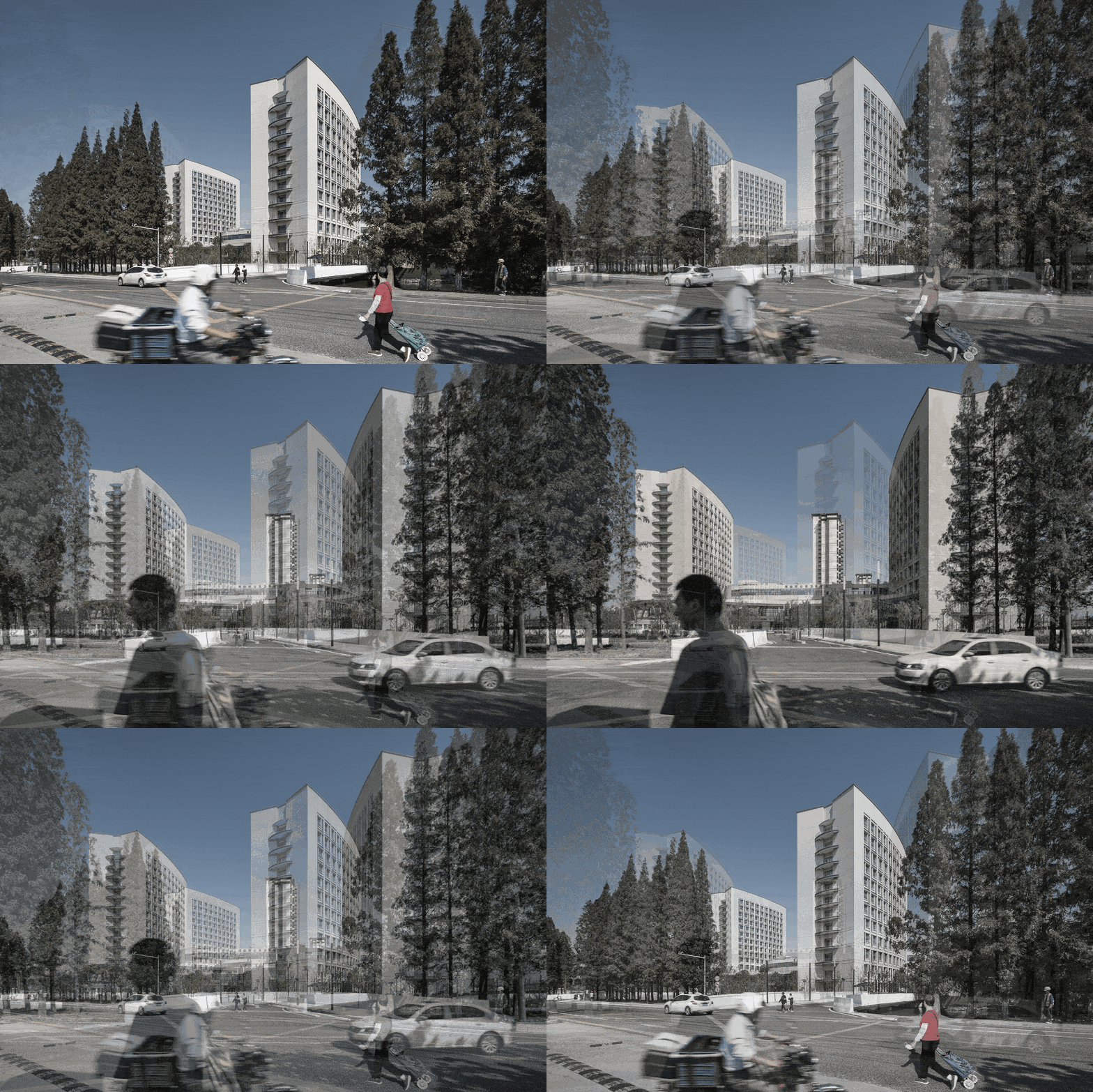
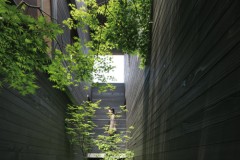
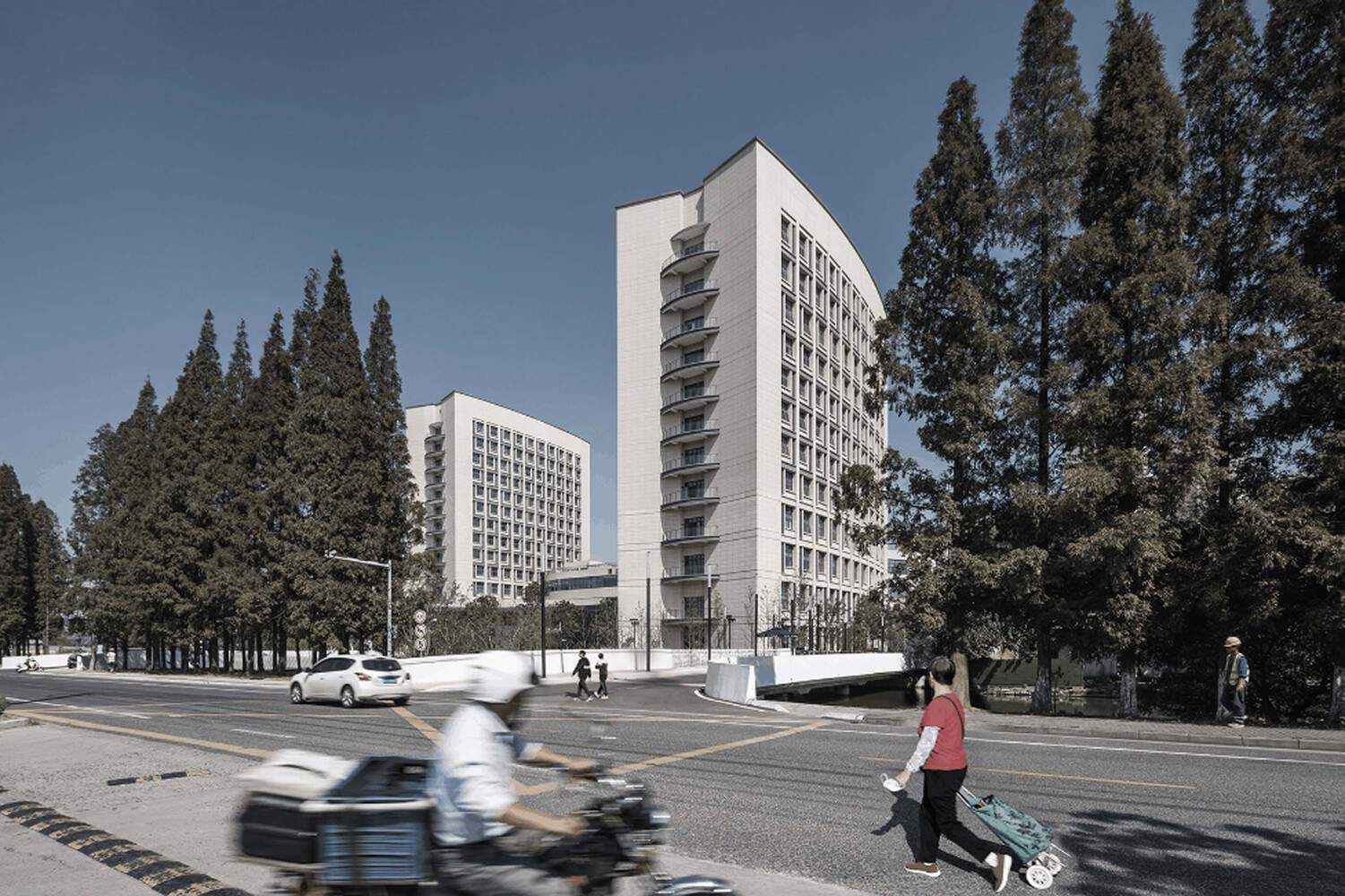
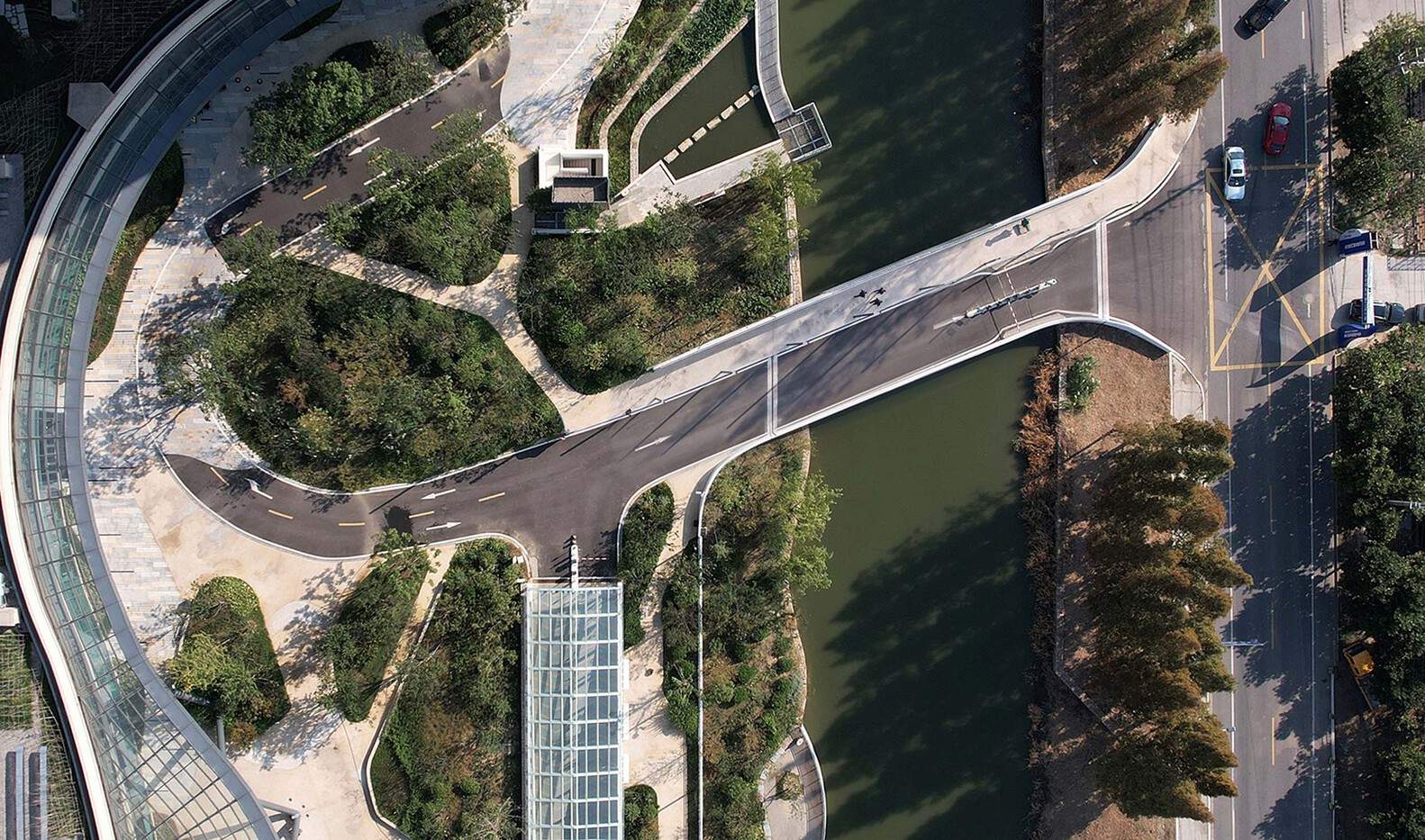
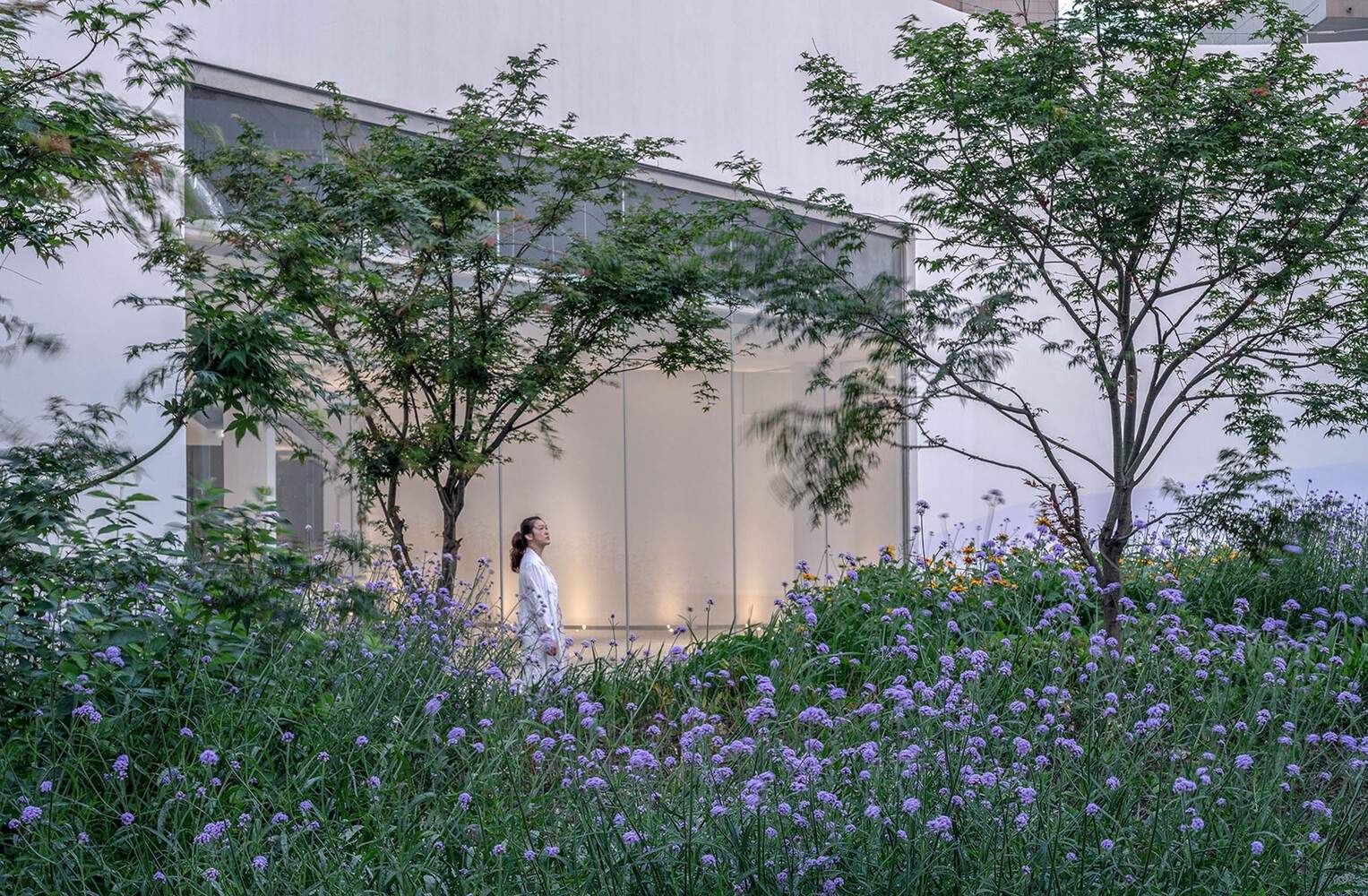
Health is a good state of physical, mental, and social interaction, not just the elimination of illness or weakness. ----Under the shadow of the World Health Organization, we have experienced a pandemic disaster that affects the fate of every individual and group in the world. Under the shadow, repression and fear have not dissipated for a long time. In the midst of adversity and hardship, besides lamenting and sympathizing with others, re examining individual life and social dignity from the perspective of design profession will also be a long-term thinking proposition. The rows of water fir trees on both sides of the main entrance of the building evoke a photograph by the famous architectural photographer H é l è ne Binet about the moss walls of Suzhou Lingering Garden. The expression of life is sometimes lush and verdant, sometimes small and humble... The entrance of the building is connected to the road through two newly erected landscape bridges, and looking through the cypress forest on the riverbank, under the epidemic, there is a familiar sense of time travel between reality and illusion, reminiscent of the Pamio Pulmonary Disease Sanatorium
健康是一种身体、精神以及社会交往的良好状态,而不仅仅是消除疾病或羸弱。----世界卫生组织
阴影之下
经历了一场关乎人世间每个个体与群体命运的疫情劫难,阴影之下,压抑与惶恐久久未能散去。困顿苦难之中,除了扼腕叹息、悲天悯人,从设计专业的角度重新去审视个体生命与社会尊严也会是一个长久的思考命题。建筑的主入口两侧的水杉树列让人想起著名建筑摄影师Hélène Binet一幅关于苏州留园苔藓墙的摄影作品。生命的表达方式有时候高大葱茏,有时候却是渺小低微……建筑入口通过新架设的两座景观桥与道路连接,透过河岸的水杉林望去,疫情之下,真实与恍惚之间,有种似曾相识的帕米欧肺病疗养院的时代穿越感(注:PaimioTuberculoslsSanatorium--AlvarAalto 1933)
© 宋毅
© 宋毅
Spatial Justice
After the 1960s, the field of social theory gradually began to shift towards scholars such as Michel Foucault and Henri Lefebvre, who focused on exploring the lack of spatial justice and attempted to apply the theory of spatial justice to practice.. From the perspective of architecture, "spatial justice" is a narrow implicit dimension of the concept of "justice" in political science. Spatial relationships are not only derived from social relationships, but also reverse solidify them. Therefore, architectural space should not avoid how to shape a just society when using space. As high-resolution content such as sociology and anthropology is gradually projected into design, we build space, and space shapes us at the same time. Dignity exists in various relationships constructed nearby, including the relationship between people and space.
空间正义
20世纪60年代后,社会理论领域逐渐开始转向以福柯(Michel Foucault)、列斐伏尔(Henri Lefebvre)等为代表的学者着重探讨了空间正义的缺失,并试图把空间正义的理论应用于实践。从建筑学的视域看来,“空间正义”是政治学意义上的“正义”概念狭义隐性向度。空间关系既是社会关系的衍生,又反向固化了社会关系,所以建筑空间应该无法回避空间使用时如何塑造一个正义的社会。随着社会学人类学等高分辨率的内容逐渐被投射到设计中,我们建造空间,空间同时塑造我们。尊严存在于附近所构建出的各种关系之中,当然也包括人与空间的关系。
© 宋毅
© 宋毅
Realistic dilemma
For a long time, functional public indoor spaces closely related to each individual in society, led by the government, seem to be collectively detached from professional vision.. The widespread existence of public health centers in urban and rural areas, as discussed in this article, is almost impossible to find in design publications and professional media. The pre-existing fixed concepts and spatial patterns have various explicit or implicit influences on the formation of a just space. Innovation in the paradigm of public space is often squeezed and tested under the premise of following a certain preset correct track and safe and secure concepts, sometimes even depending on the understanding and preferences of individuals with decision-making power. The fixed mode and established "standard answer" evaluation context are also one of the fundamental reasons why the appearance of most livelihood functional spaces has been difficult to change for a long time. At the same time, the management of most functional public spaces during their use often unconsciously falls into the same trap: after the project is completed, the walls are usually covered with various promotional slogans, posters, or notices, temporary exhibition boards are placed haphazardly in response to the situation, and rows of low red flowers and green leaves on the ground... everything seems to have become a common and customary standard for such government public functional spaces.
现实困境
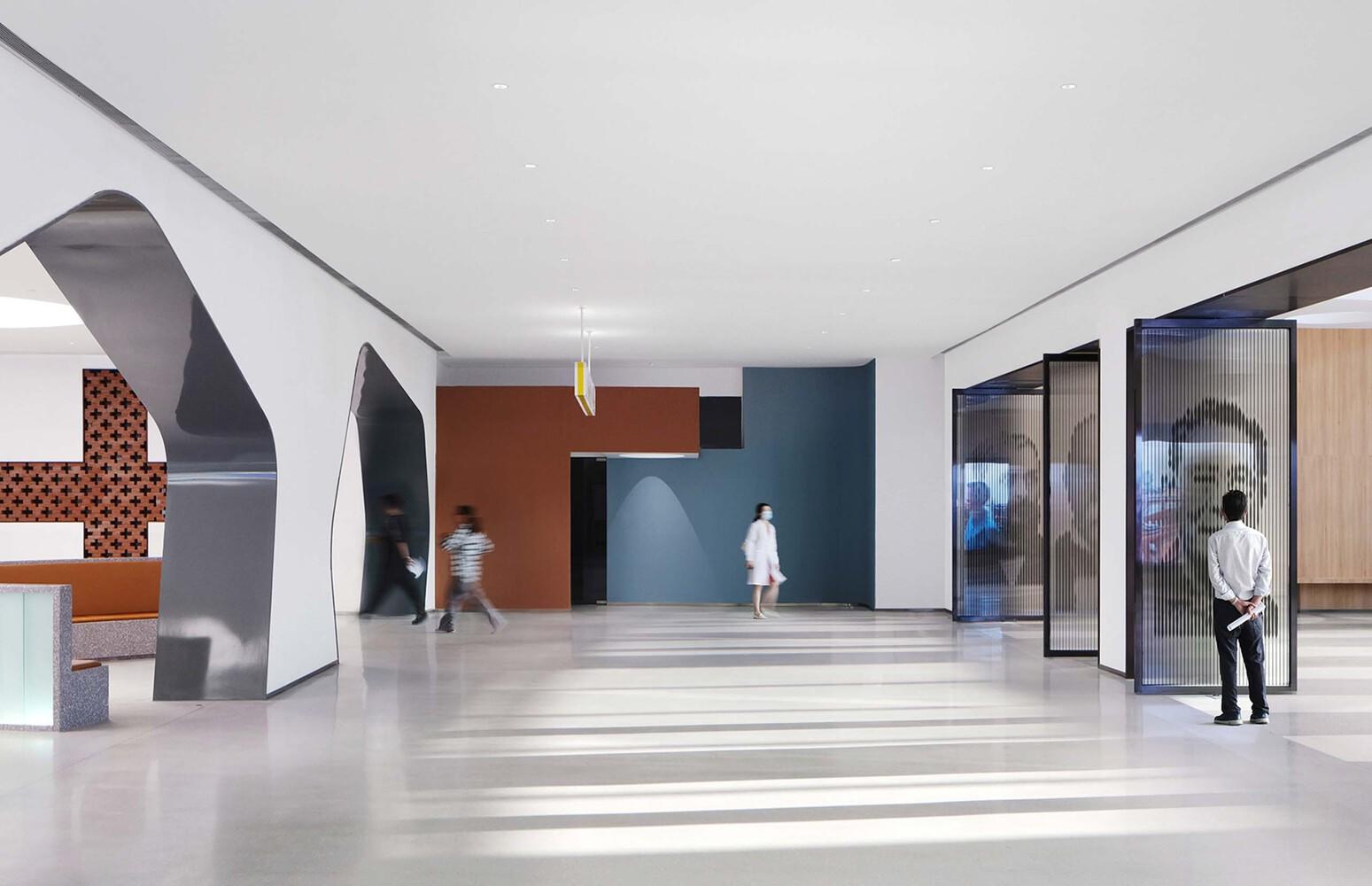
长期以来,政府主导的与每个社会个体关系紧密的职能性公共室内空间仿佛集体游离于专业视线之外。如本文探讨的广泛存在于城市乡村的公共卫生中心在设计刊物和专业媒体中几乎难寻踪迹。原有固化观念和空间模式预设对正义空间的形成有着各种显性或隐性的影响,在公共性空间范式上的创新常常被挤压在遵循某种预设的正确轨道并安全稳妥的观念前提下去试探,有时候甚至取决于拥有决断权的个人理解与偏好。固化模式和既定“标准答案”的评判语境也是大多数民生职能空间长期以来样貌难有改观的根本原因之一。同时大多数职能性公共空间在使用期间的管理上往往也不知不觉中会落入相同窠臼:项目建成通常过不了多久,墙上已是贴满各种宣传标语、海报、或通告,为了应时应景无序放置的临时展板、地面一排排低矮的红花绿叶植物……一切仿佛已经成了此类政府公共职能空间司空见惯、约定俗成的标配。
© 宋毅
© 宋毅
Collaborative Fault Tolerance and Rational Control
The period when we intervened in the design was when the local design institute had just completed the preliminary design of the building. At this time, the difficulty of the design work was to deal with the "existing" problems, how to coordinate the modification work already completed by other professions after the indoor function was implanted. In many cases, we became "troublemakers", and this kind of professional "overstepping" would lead to a large number of modifications and re approval work of drawings already completed by other professions. To this end, we have adjusted the fault tolerance range while controlling the economic feasibility of the project, and made a principle level classification for the content that needs to be modified. And provide detailed plans for architectural, structural, equipment, curtain wall, and landscape design changes and adjustments as much as possible, reducing the work pressure of peers, which also benefits from the coordination and support of the construction unit and the construction agency.
协作容错与理性控制
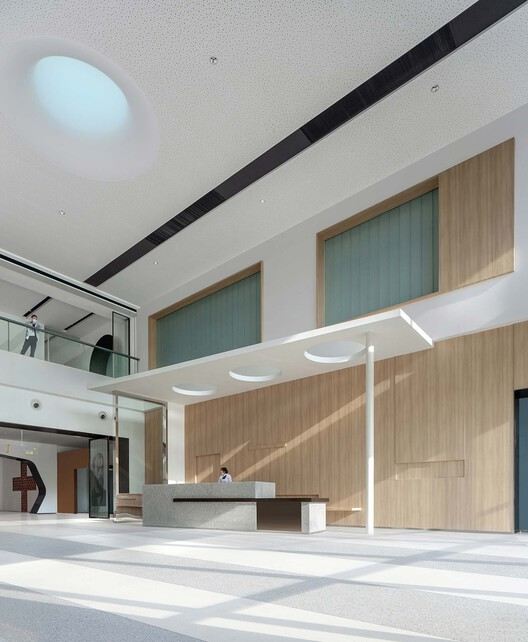
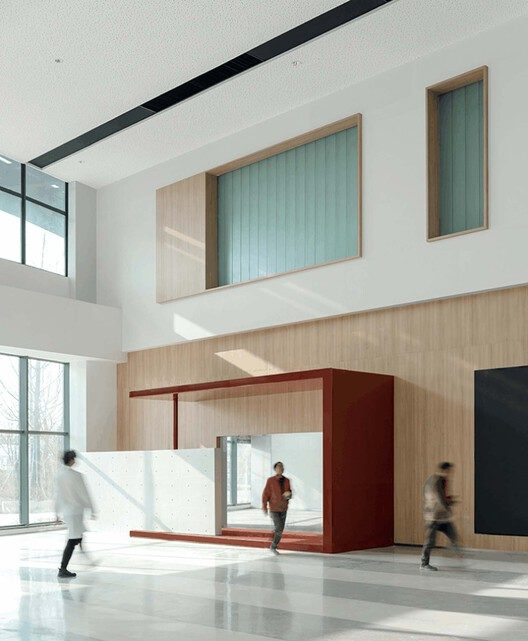
我们介入设计的时期是当地设计院刚完成建筑扩初设计,此时设计工作的难点在于对“既有”问题的处理,如何在室内功能植入后协调其他专业已经完成的修改工作,在很多时候,我们成了 “麻烦制造者”,这种专业上的“僭越”会导致其他专业大量已完成图纸的修改和重新报审工作。为此,我们在控制项目的经济性前提下,调整了容错范围,对需要修改内容做出原则性等级划分。并尽可能提供细致的建筑、结构、设备、幕墙、景观设计改动调整方案,减少同行工作压力,这些也得益于建设单位与代建单位的协调与支持。
© 宋毅
© 宋毅
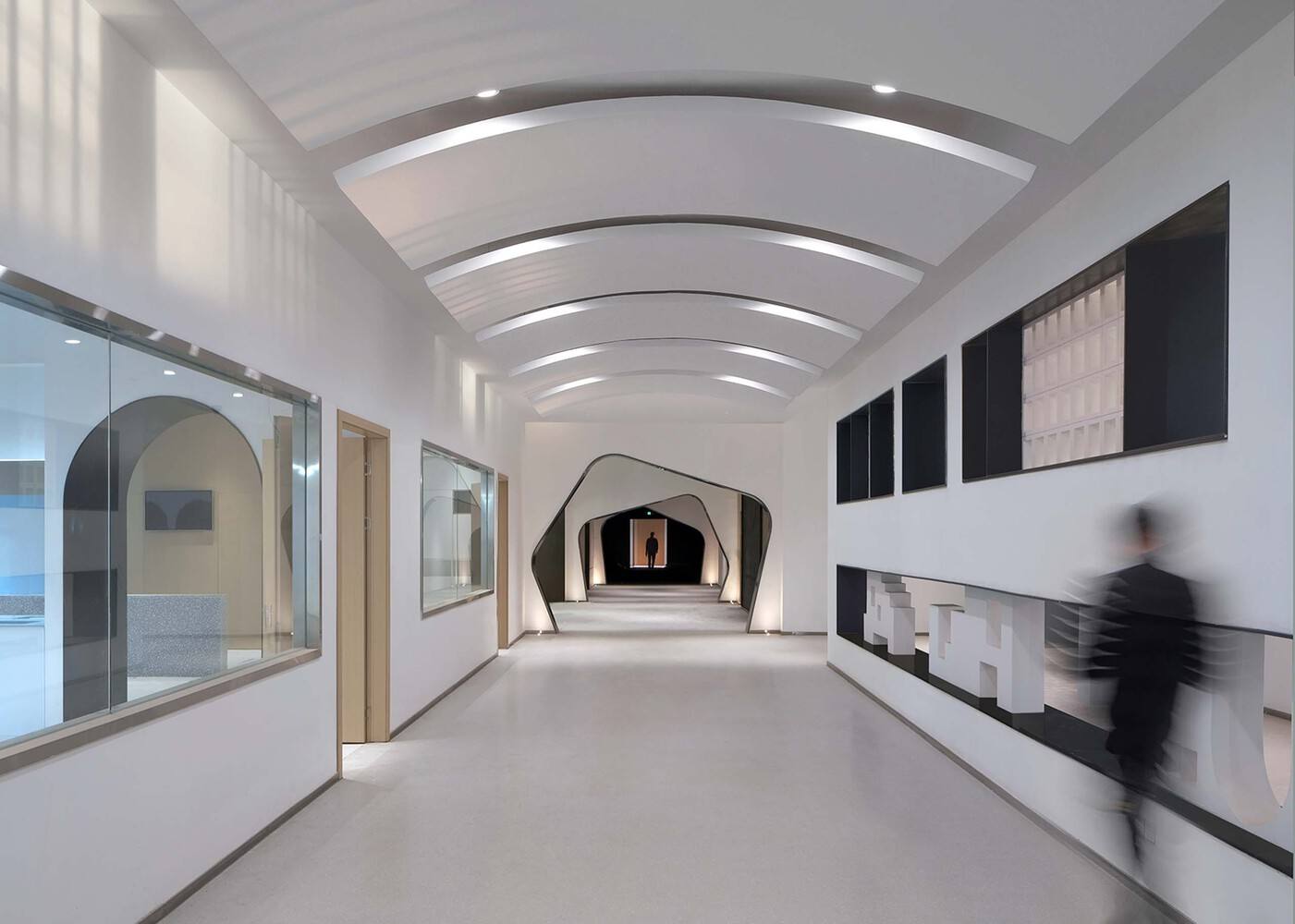
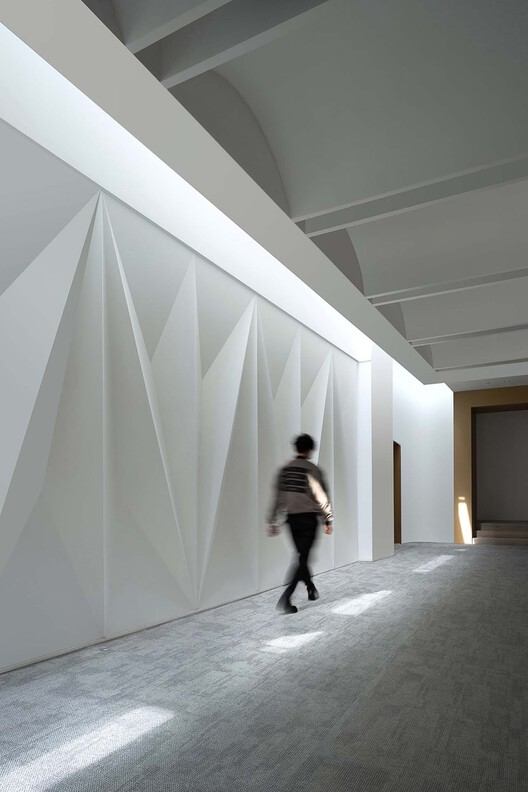
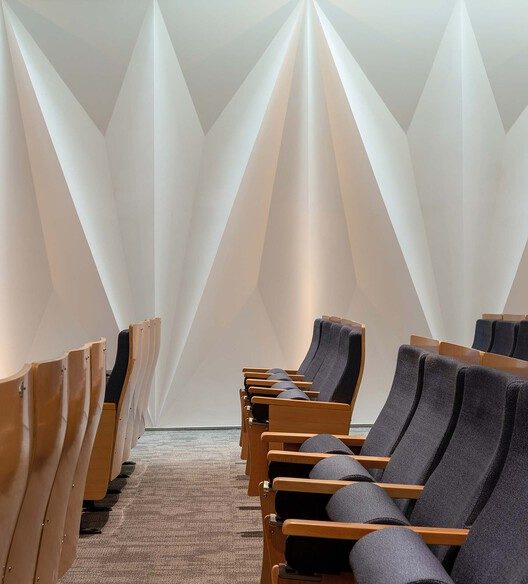
The functional nature of space and the characteristics of low-cost construction also determine that design thinking focuses more on the rational correspondence expression between spatial form and function: the change in the form of the entrance to the functional areas on both sides of the first floor hall originates from the hidden treatment of multiple fire doors facing the hall on the fire partition interface, as described in the famous garden designer Ji Cheng's "Yuanye" Xingzao Lun in the late Ming Dynasty - "Screen the vulgar and accept the refined". Through the transition of spatial flow lines through garden language, while eliminating visual barriers on the facade, it also endows each functional area with new spatial changes and recognizability; The multi-functional public health information release hall originally had no natural lighting. By redesigning and arranging the fan equipment covering the roof, a 400 wide area was created on both sides, adjusting the structure and opening the roof, forming a "canyon of light"; The anti curved ceiling design in the entrance hall of the North Tower is a rational response to the regional cultural form of local elevation reduction caused by the horizontal presence of large smoke exhaust ducts
空间的功能性质和低成本建造的特点也决定了设计思考更多着眼于空间形式与功能之间的理性对应表达:一层大厅两侧功能区入口的形式的变化源自对防火分区界面上多处防火门直面大厅的消隐处理,如明末著名造园家计成所著《园冶》兴造论所述--“俗则屏之,嘉则收之”,通过园林语言转折过渡空间流线,在消除立面视觉障碍的同时也给各个功能区域赋予了新的空间变化与可识别性;多功能公共卫生信息发布厅原本全无自然采光,通过将布满屋面的风机设备重新设计排布,两侧拾掇出400宽的地带,调整结构,打开屋面,形成“光的峡谷”;北塔楼门厅反弧形天花造型是由于大型排烟风管的横亘造成局部标高降低的地域性文化形式理性回应……
© 宋毅
© 宋毅
Humanistic Spirit and Regional Culture
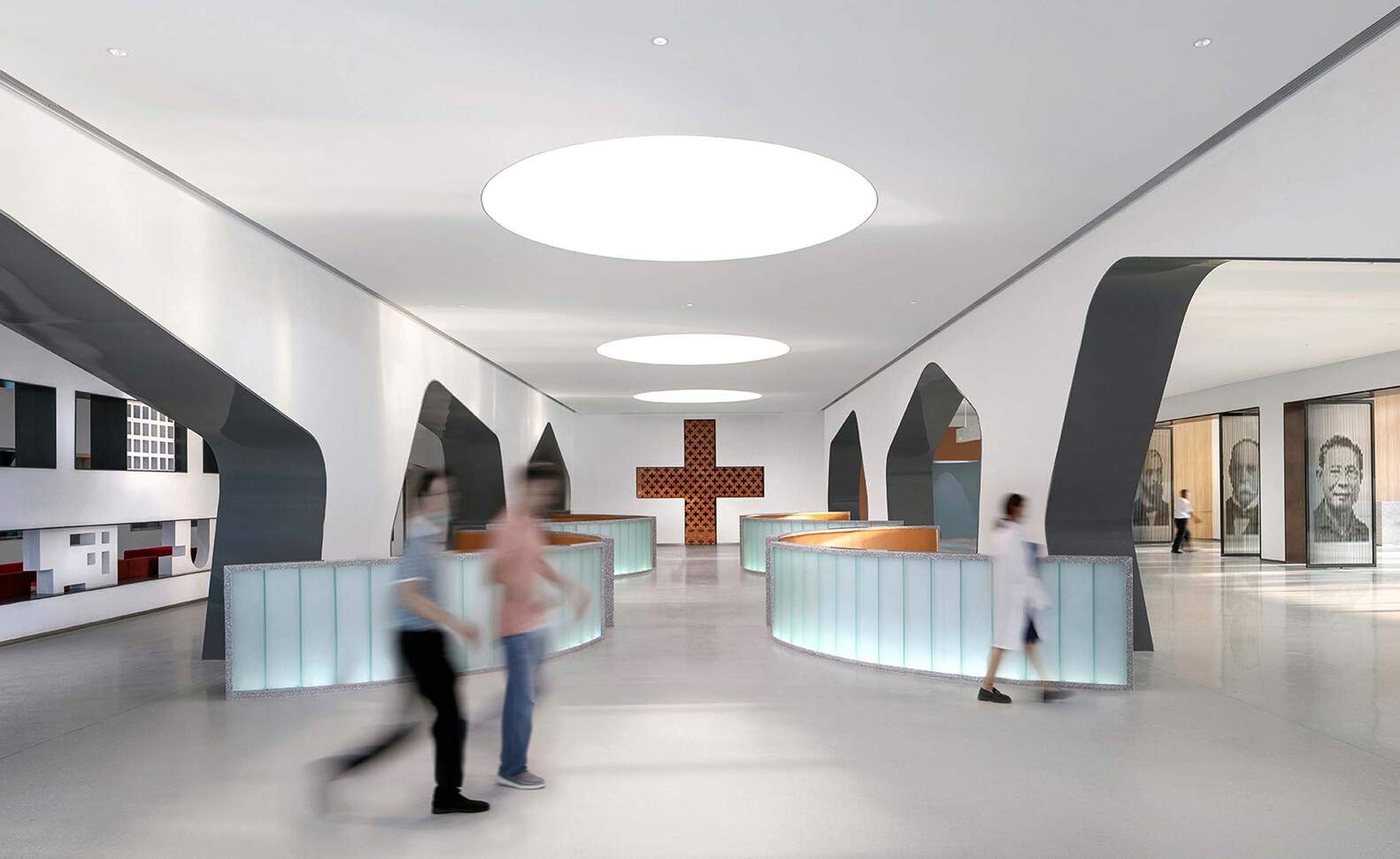
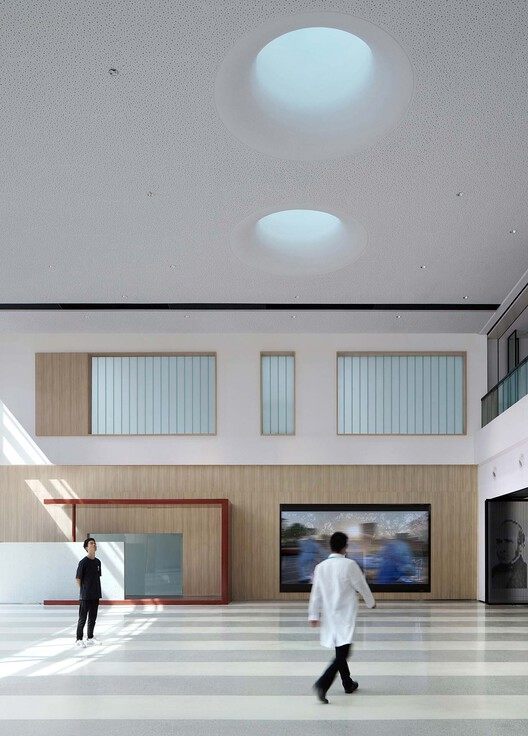
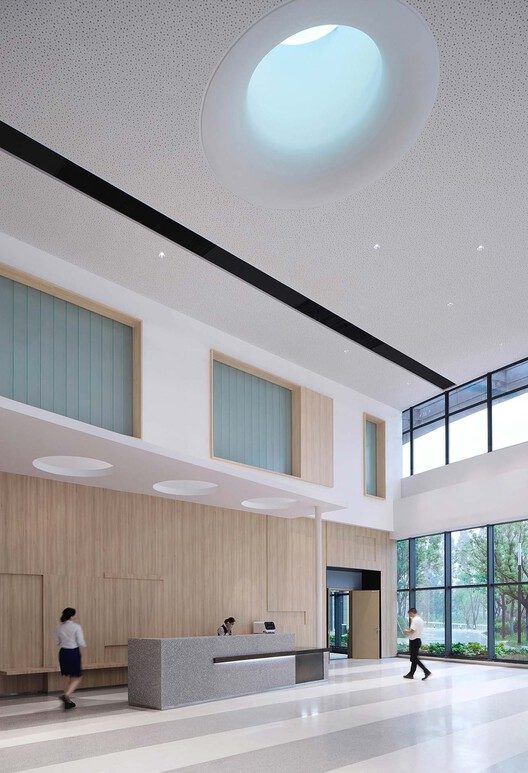
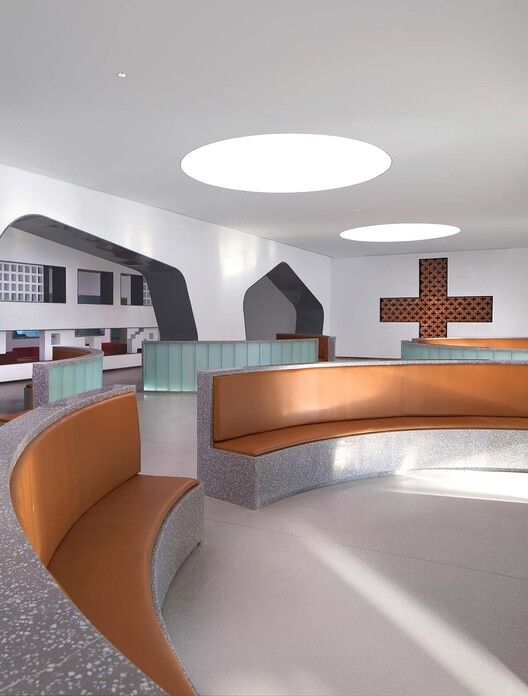
The project design process has undergone multiple major functional replacements and adjustments. To be precise, the quick response methods that change with the times in the later stage mostly come from intuitive design.. This is related to the individual's intuitive feelings since the outbreak of the epidemic, where certain spiritual needs have become a conditioned reflex reflected in the design. The core essence of humanism that emerged during the Renaissance was the care for human personality and the maintenance of human dignity. Looking back at the architecture and art of that time, language that was originally feared to be too metaphysical also became clear in meaning. Whether it is the circular lighting created by opening the structure at the top of the hall due to its excessive depth, or the local spatial form relationship derived from Raphael's painting "LIBERAZIONE DI S PIETRO", they are all intuitive attempts to resolve the coldness and solidification of traditional spaces with gentle empathy imbued with classical humanism.
人文精神与地域文化
项目设计过程中经历了多次重大功能的置换调整,准确来讲,后期随变而变的快速应对方法更多来自于直觉性设计。这和疫情发生以来个体的直观感受有关,某些精神性层面的需求变成一种条件反射映射到设计之中。文艺复兴时代产生的的人文主义(humanism)的核心本质是对人的个性的关怀,维护人类的人性尊严, 回溯到彼时的建筑和艺术,原本担心过于形而上的语言也变得意义清晰。无论是大厅因进深过大而在顶部打开结构新建的圆形采光,还是源自拉斐尔(Raffaello)绘画《解救》(LIBERAZIONE DI S PIETRO)构图的局部空间形式关系,都是试图用带有古典人文主义光辉的温柔共情去化解传统空间冷漠固化的直觉性尝试。
© 宋毅
© 宋毅
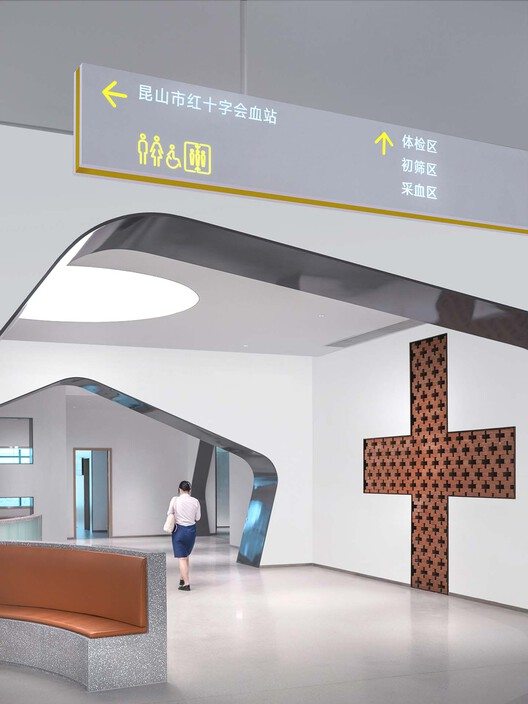
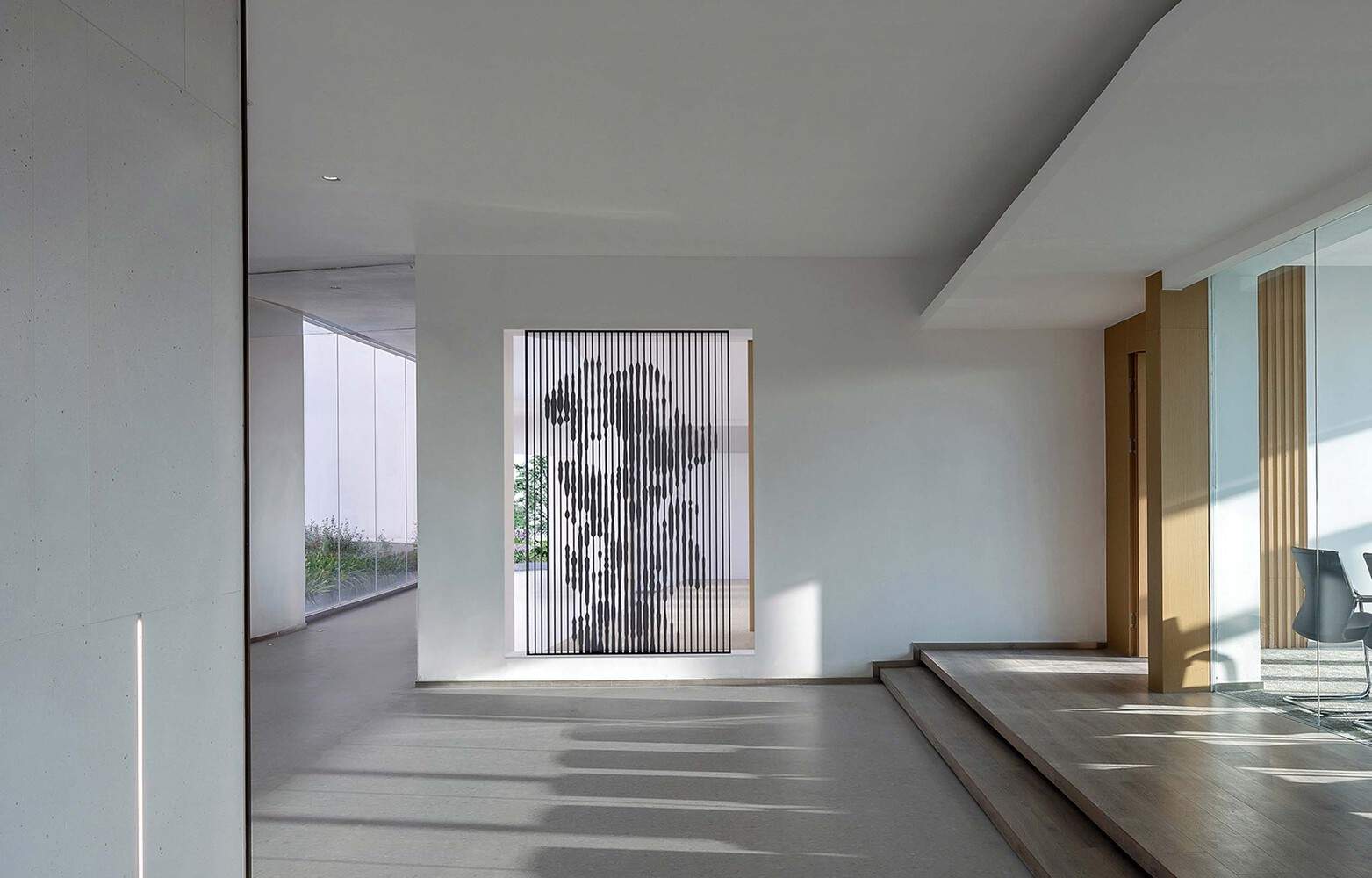
By combining the structural space itself and material selection to express the regional culture of the space in a moderate way, the isolated structural columns in the lounge area of the hall are re stitched into walls that open stone like doorways. The red brick cross has explicit traditional construction meanings from the masonry method to the properties of the materials themselves, and its functional fit with the Red Cross is self-evident. And the stone screen wind of the Taihu Lake Lake realized by digital technology is also a contemporary artistic reconstruction of regional cultural characteristics
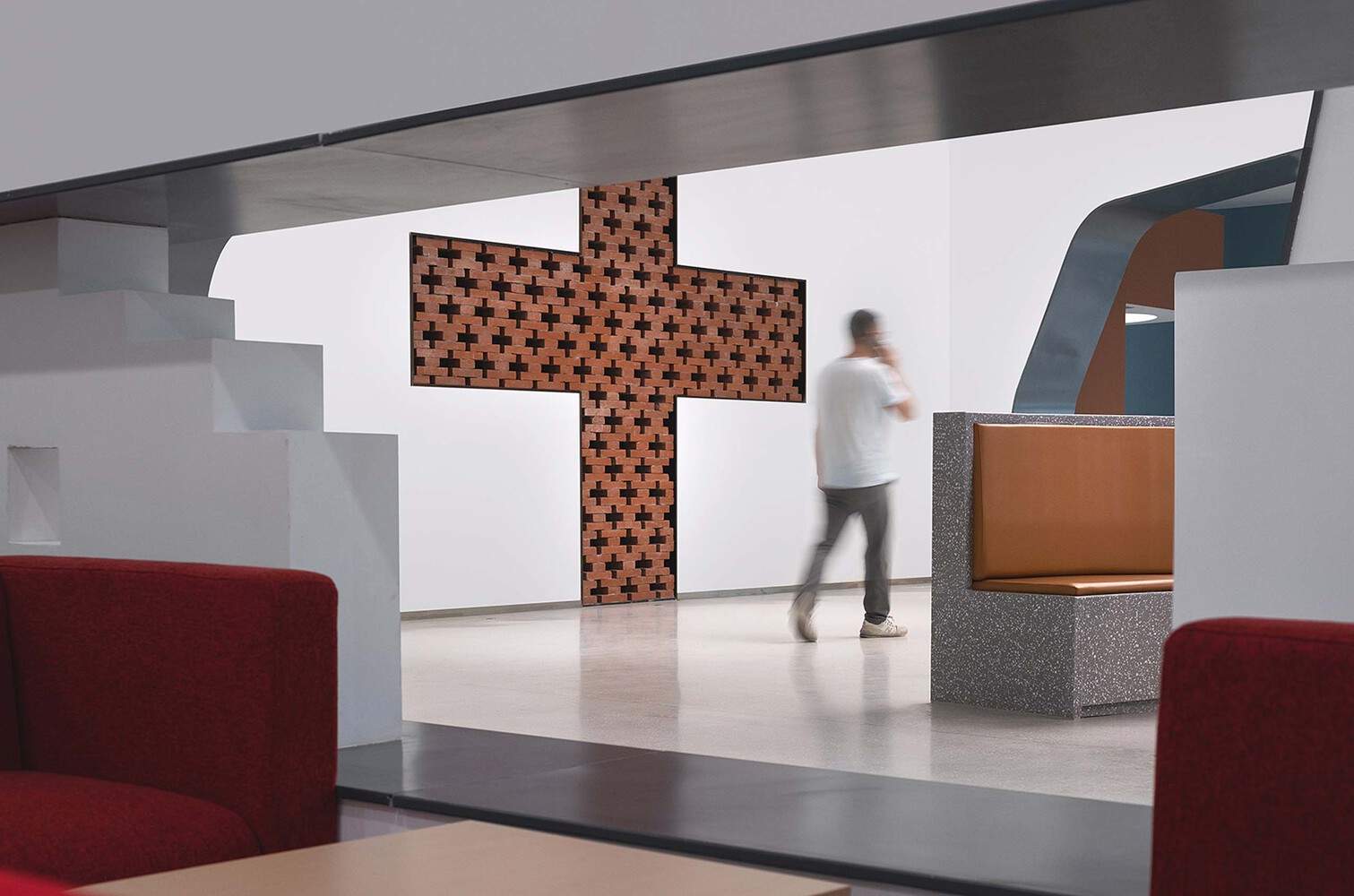
通过结合结构空间本身和材料的选择对空间地域文化做适度表达,大厅休息区把孤立的结构柱重新缝合为打开拟石门洞的墙,红砖十字从砌筑方式到材料本身的属性都具有显性的传统建造含义,同时对红十字会功能性的贴合不言而喻。而采用数字技术实现的太湖石屏风也是对地域文化特征的当代艺术化重构……
© 宋毅
© 宋毅
Afterword
Change is the biggest characteristic of this uncertain era. How to reshape the publicness of Hannah Arendt and Jurgen Habermas under public rational thinking in daily public life amidst uncertainty is particularly important for us who are deeply trapped in difficulties.. The Enlightenment tradition that is the foundation of modern society is created by rationality, freedom, fairness, and other values that serve as logical foundations and value scales. The value of design lies not only in expressing aesthetic aspirations and being fun and interesting, but also in thinking about how to break through the surface, respond clearly to the reality of society, and seek social respect and personal dignity that are related to each individual under spatial justice. Instead of passively expecting change from top to bottom, it is better to actively trigger transformation through bottom-up design practices.
后记
变化是这个不确定时代最大的特征,如何在不确定中日常公共生活中重塑汉娜·阿伦特(Hannah Arendt)和尤里根·哈贝马斯(Jurgen Habermas) 在公共理性运思之下的公共性,对深陷困境中的我们显得尤为重要。现代社会所根基的启蒙传统,是由作为逻辑基础和价值尺度的理性、自由、公平等所造就。设计在表达美学抱负和好玩有趣等等之外,更多的价值在于思考如何能够切入表象,清晰地回应这个社会的现实生活,寻找空间正义之下的关乎每个个体的社会尊重与个人尊严。与其被动期望由上而下的发生改变不如主动通过由下而上的设计实践去触动转变。
© 宋毅