Shanghai New Development Yifuhui Health and Wellness Town/GN Qicheng Design
上海新发展怡福荟康养小镇 / GN 栖城设计
项目亮点:该项目最引人注目的亮点在于其对城市边缘地带的重新定义和活力注入。建筑师将传统的“养老社区”概念拓展为“区域活力中心”,这体现了对社会福利、医疗和文化设施混合用地的深刻理解。这种转变不仅满足了未来居民的需求,更致力于为周边村民提供更多可能性,从而激活整个区域。项目在设计中,跳出了“居住区”设计的局限,采用了城市视角,并积极探索如何将“社区型管理”转变为“城市化服务”。这种对城市更新和社区活力的深刻思考,以及对公共空间、多元化功能和开放性的强调,使得该项目成为了一个具有前瞻性的典范。
设计精髓:项目的核心设计精髓体现在其对“Inside Out”内外穿插的空间策略的运用。通过横向的“T”型配套用地,将配套设施既融入社区内部,又面向城市界面开放,最大化了内外接触面,促进了社区内外居民的互动。此外,项目还强调了“独立与连接”的统一,将功能模块从建筑的整体性中解放出来,使其拥有相对独立的形态,直接面向公共空间。同时,通过“运动环”、“兴趣环”和“探索环”等环形动线的设置,加强了各功能区域之间的联系,营造了高效、便捷且充满活力的活动空间。这种既独立又连接,既开放又集中的设计理念,为社区注入了独特的活力。
空间创新:项目在空间营造方面展现了卓越的创新性,尤其体现在“非正式交流”的鼓励和“成长的可能”的预留。设计师通过一系列上下错位叠合的院落,创造了众多意想不到的零散小空间,激发了居民和访客对空间的探索和好奇。此外,项目还预留了大量“未定义”空间,例如“工作室”和“玻璃盒”,为未来的功能演变和使用者参与提供了可能性。这种对空间“容差”的保留,以及对空间使用者的信任,使得社区具有持续生长的潜力,并能够随着时间和需求的变化而不断演进,最终成为一个多元、开放、且充满活力的社区。
© Wenjun Liang
© Wenjun Liang
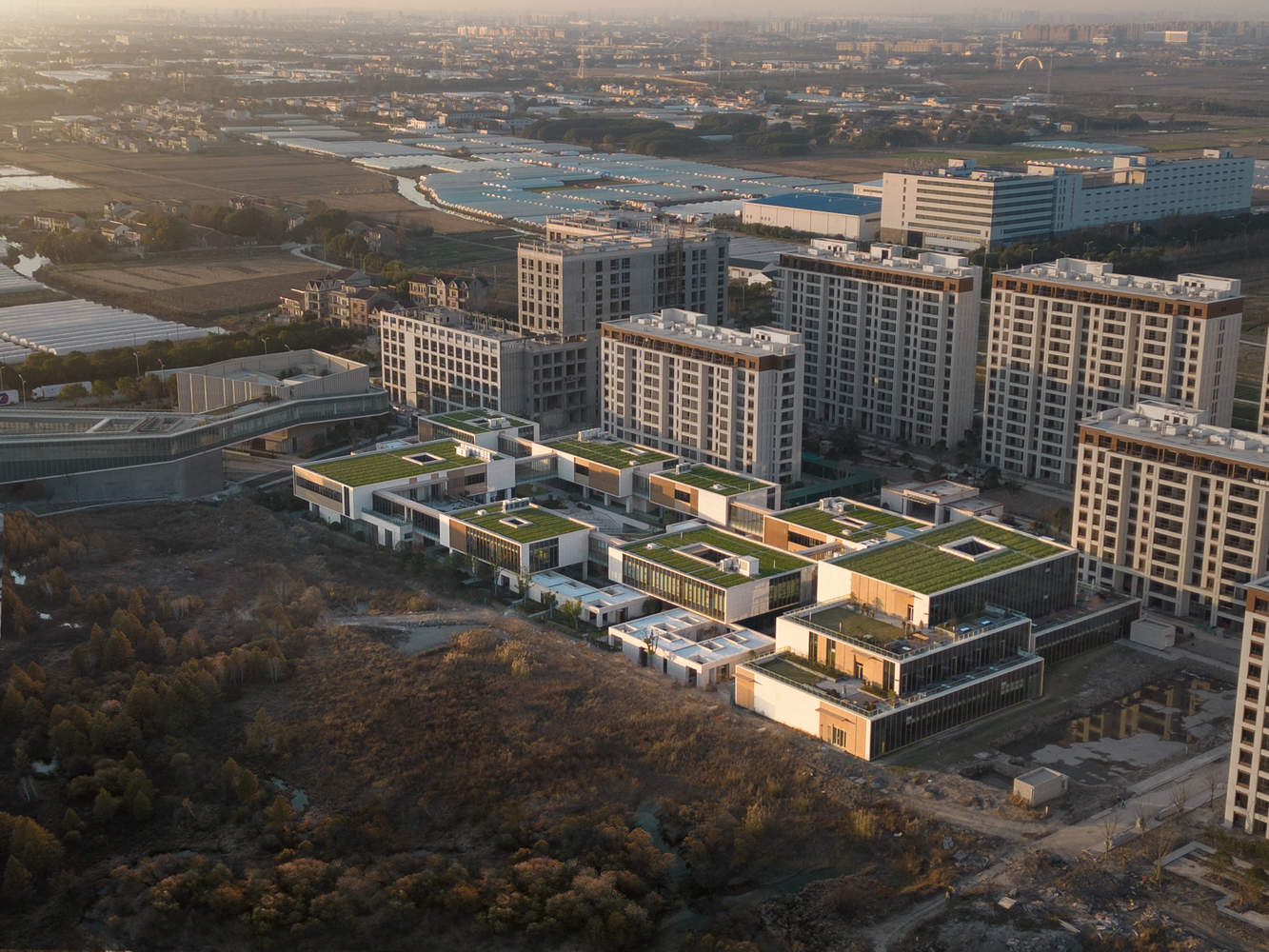
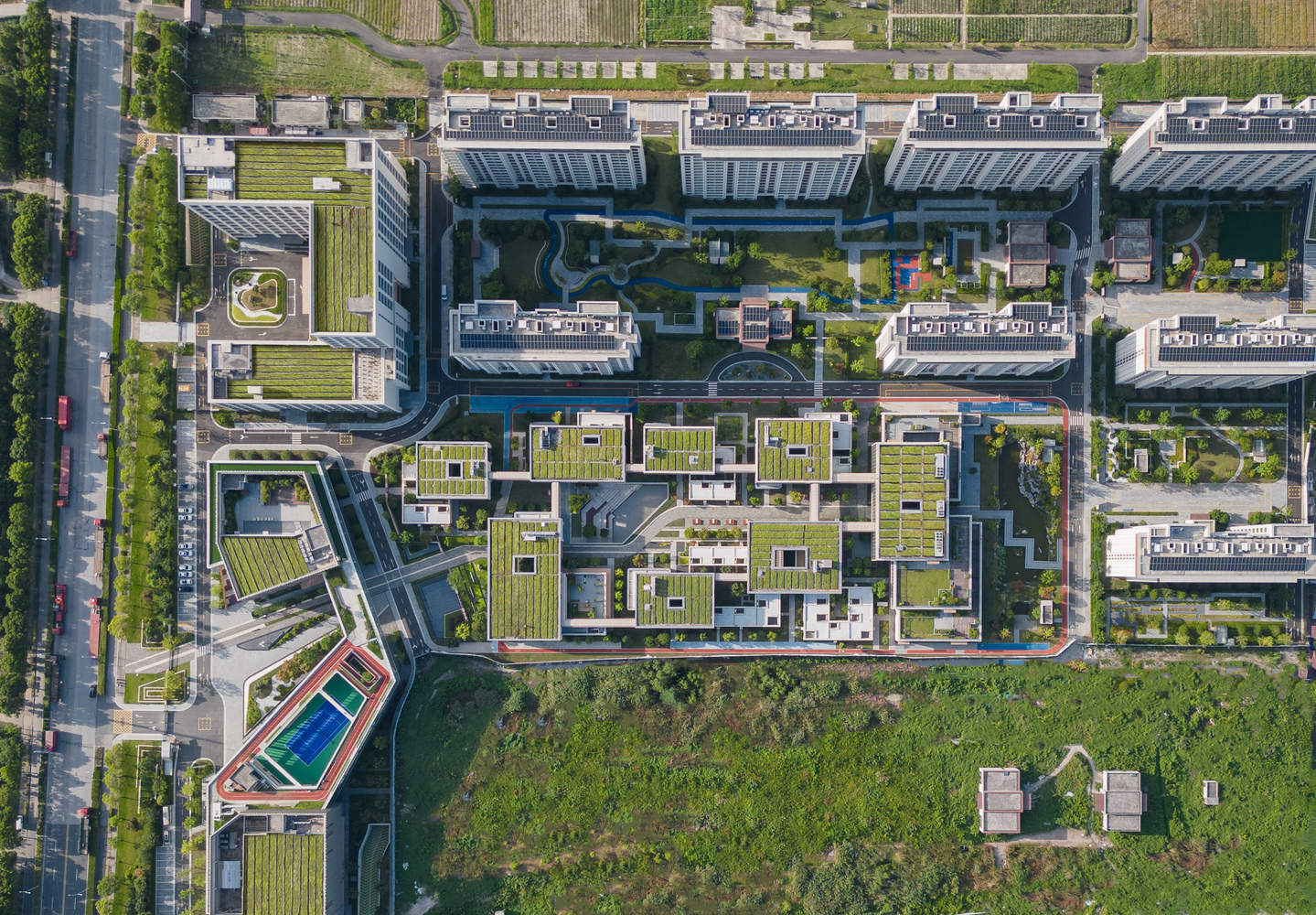
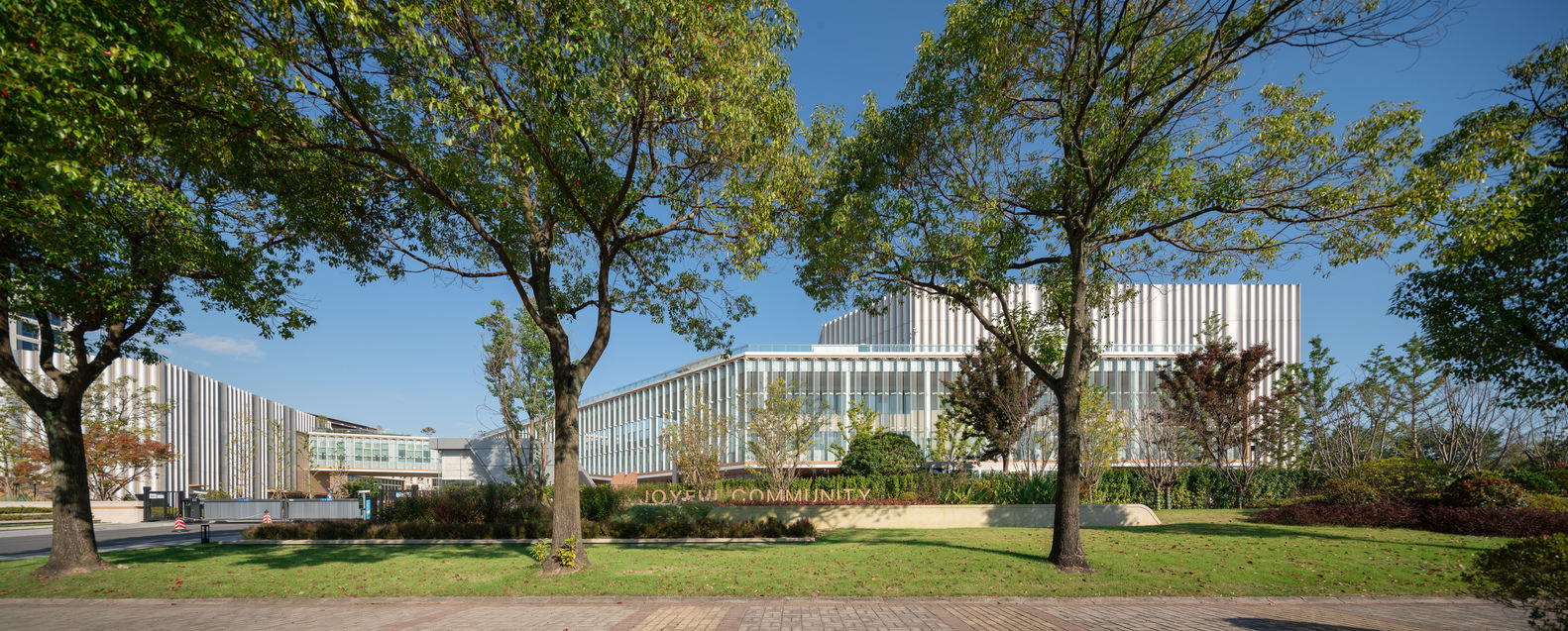
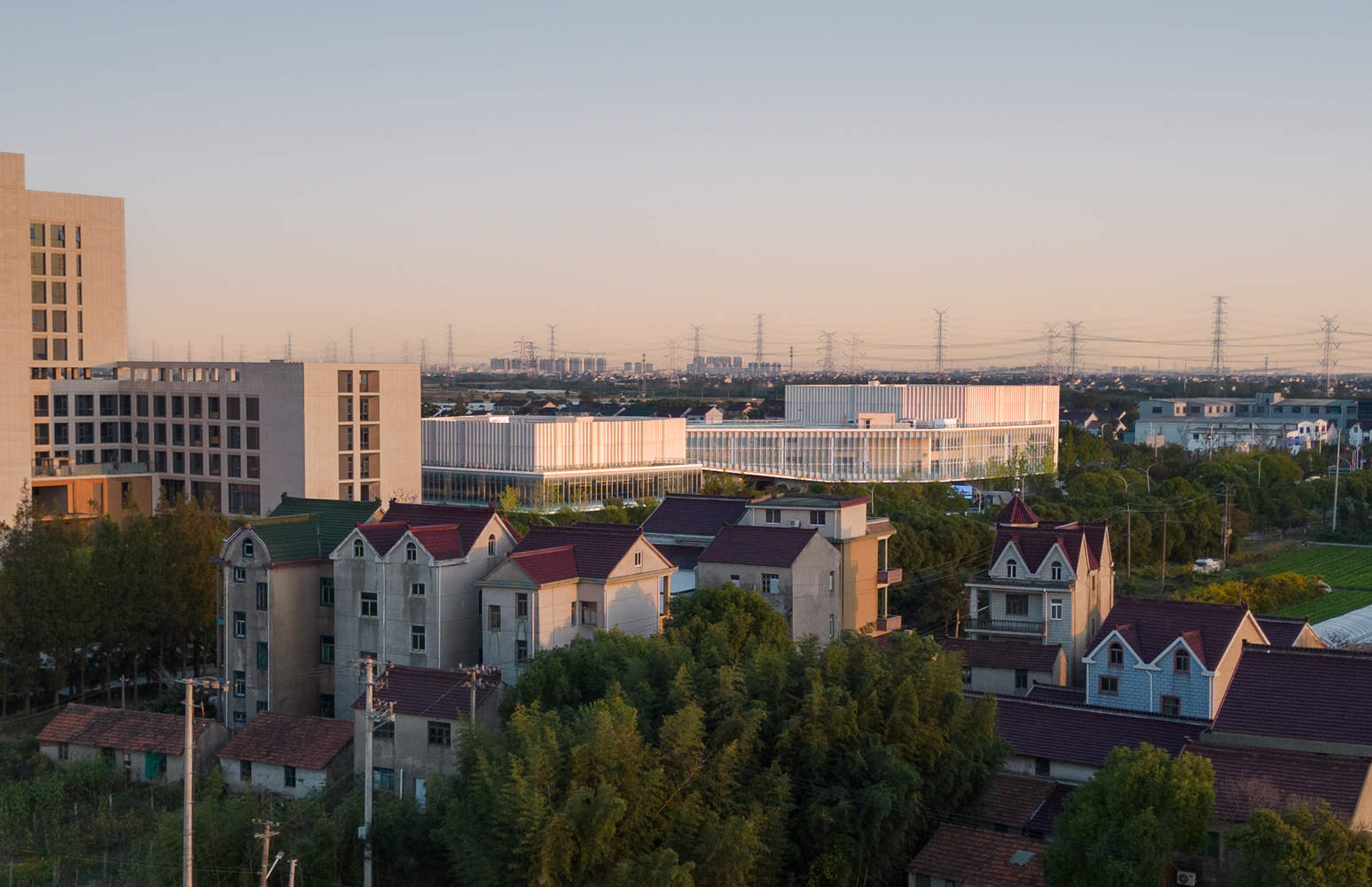
The project is located in Fengcheng Town, Fengxian District, about 30 kilometers away from the center of Shanghai. The surrounding area is a typical Chinese style "urban edge scenery" composed of scattered villages, large areas of farmland, and large-scale road networks. The project covers an area of 120000 square meters and has a building area of approximately 200000 square meters. The land was originally used for industrial purposes, but in the context of urban renewal, it has been converted into a mixed use land for social welfare, medical and cultural facilities. This indirectly reflects the government's support and policy response to our proposal of an open and diverse community. So, our discussion further evolved into: how to make the community more attractive, not only providing convenience for future residents, but also bringing more possibilities to a wider range of surrounding villagers, thus creating a center for this urban fringe. The idea of turning "elderly care communities" into "regional vitality centers" excites us greatly.
项目位于距离上海市中心约 30 公里的奉贤区奉城镇,周边由分散的村庄,大面积农田及大尺度路网组成的典型中国式“城市边缘风景”。项目占地 12 万㎡,建筑面积约 20 万㎡。地块原为工业用地,在城市更新的大背景下,转性成为社会福利,医疗及文化设施的混合用地,这从侧面反映出政府部门对我们提出的开放型多元社区想法的支持与政策响应。于是,我们的讨论进一步演变成为:如何让社区变得更加具有吸引力,不仅为未来的住户提供便利,也能为更大范围的周边村民带来更多的可能性,从而为这片城市边缘区创造一个中心。这个让“养老社区”成为“区域活力中心”的想法让我们兴奋不已。
© Wenjun Liang
© Wenjun Liang
Name Change - Shortly before the completion of the project, the operations team informed us that the project name had been changed from "Yifuhui Community" to "New Development Yifuhui Health and Wellness Town". This seemingly small change has left everyone deeply moved: we can see that operational and planning concepts are constantly approaching each other. In the design phase, we used the term 'small town' with the simple purpose of jumping out of the concept of 'residential area' design and observing problems from a city perspective. Correspondingly, there are more diverse architectural scales and forms of public spaces, more open traffic organization, and flexible grouping. It should be a diversified space that balances life, social, cultural, residential, and other functions, and even a "new landmark" within the regional scope. We continue to explore with the operators the possibility of transitioning from "community-based management" to "urbanization services", and how to make space and services support the development of rich communities. The operational challenges brought about by this are self-evident, fortunately, everyone firmly believes in the core of the project's "diversity+openness".
名称的改变 - 项目建成前不久,运营团队告诉我们,项目名称从“怡福荟社区”改成了“新发展怡福荟康养小镇”。这个看似微小的变化让大家感慨不已:我们看到了运营理念与规划理念在不断靠近。设计阶段我们用了“小镇”这个词,简单的目的是希望能从“居住区”设计的思路中跳出来,用城市的视角来观察问题。与之相应的,是更加丰富的建筑尺度与公共空间的形态,更加开放的交通组织以及灵活的组团划分。它应该是一个兼顾生活、社交、文化、居住等等功能的多元化空间,甚至是区域范围内的一个“新地标”。我们持续和运营方探讨如何从“社区型管理”向“城市化服务”转变的可能,如何让空间和服务支持丰富的社群发展。由此带来的对运营的挑战是不言而喻的,所幸的是大家对项目“多元+开放”的内核都深信不疑。
© Wenjun Liang
© Wenjun Liang
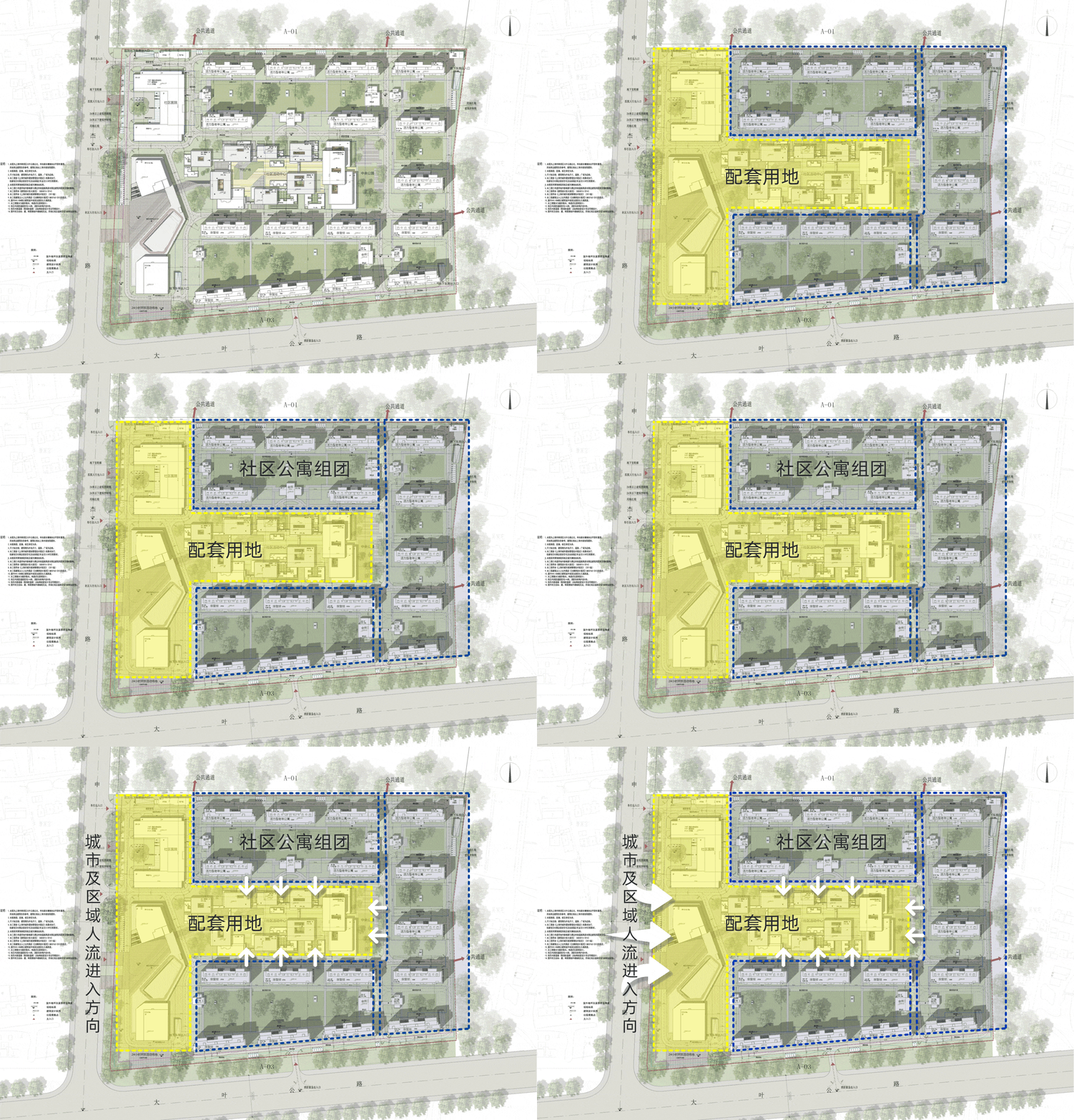
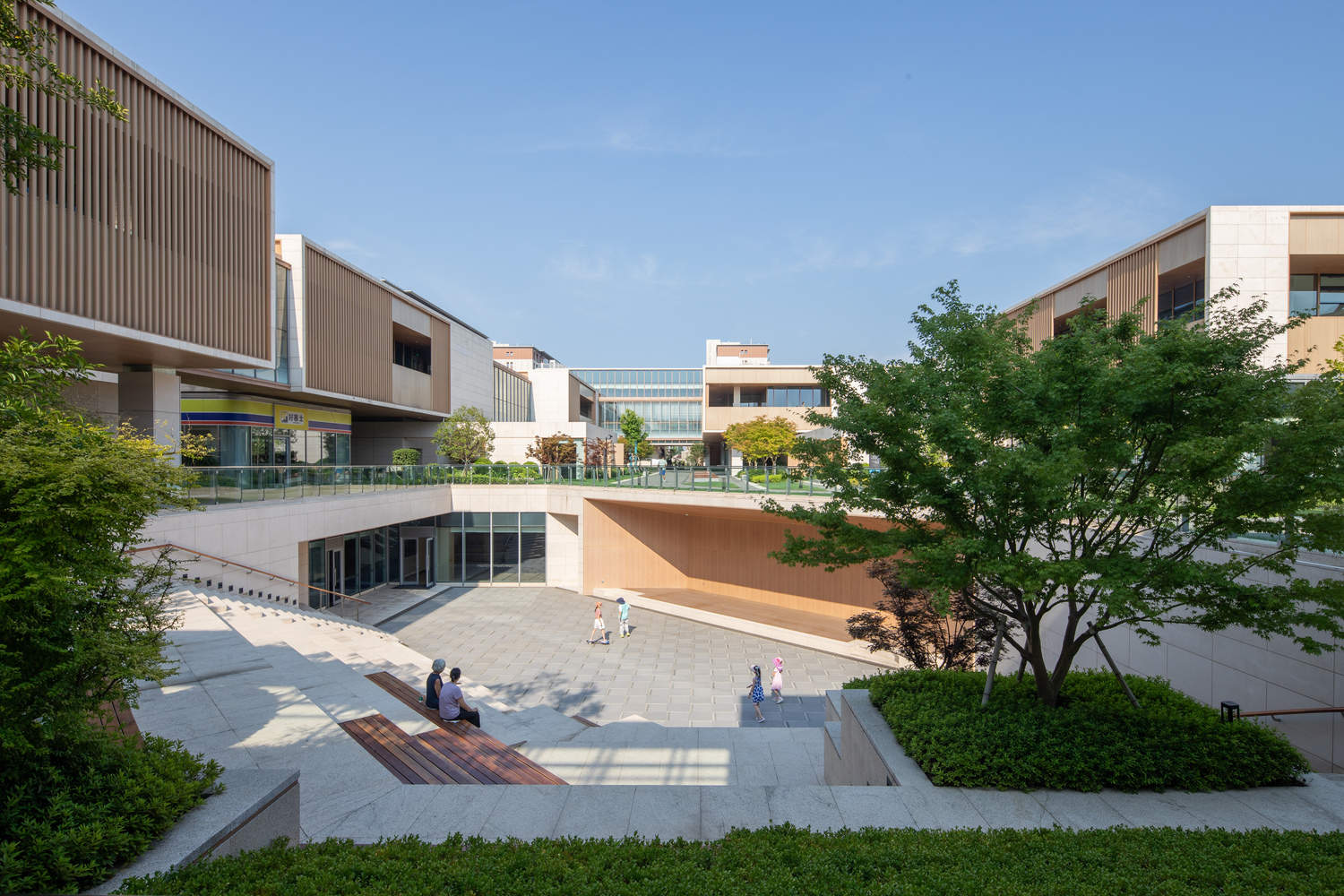
INSIDE OUT - The traditional placement of supporting spaces is nothing more than an "inward oriented" one located in the community center or an "outward oriented" one adjacent to the city. Our idea is to try a method of "inside out" interweaving inside and outside. The supporting land is in a horizontal "T" shape, expanding towards the urban interface while penetrating deep into the community, thus obtaining the largest external and internal contact surface, attracting external citizens and community residents to gather here. Another effect brought about by this is that each residential group has gained a certain degree of publicness, while also becoming more independent. Our envisioned state is that the management boundaries of future living areas will shrink to every residential cluster, allowing the remaining space to have the possibility of being open to the public. This discussion on the boundary between "public" and "private" is also a continuous issue in the project's progress, and it is believed that it will continue to be brought up again with the development of the community.
INSIDE OUT - 传统配套的空间落位不外乎位于社区中心的“内向型”或者贴临城市的“外向型”。我们的想法是尝试一种“Inside out”内外穿插的办法。配套用地呈横向的“T”型,面向城市界面展开的同时深入社区内部,从而获得对外和对内最大的接触面,吸引外部市民和社区居民在此处汇聚。由此带来的另一个效应,是各个居住组团获得了一定程度上的公共性,同时也变得更加独立。我们设想的状态是未来生活区的管理边界收缩至每一个居住组团,让剩余的空间都具有面向公众开放的可能性。这种对于“公”与“私”的边界的讨论也是项目推进中一个持续的议题,相信也将伴随着社区的发展不断会被重新提起。
© Wenjun Liang
© Wenjun Liang
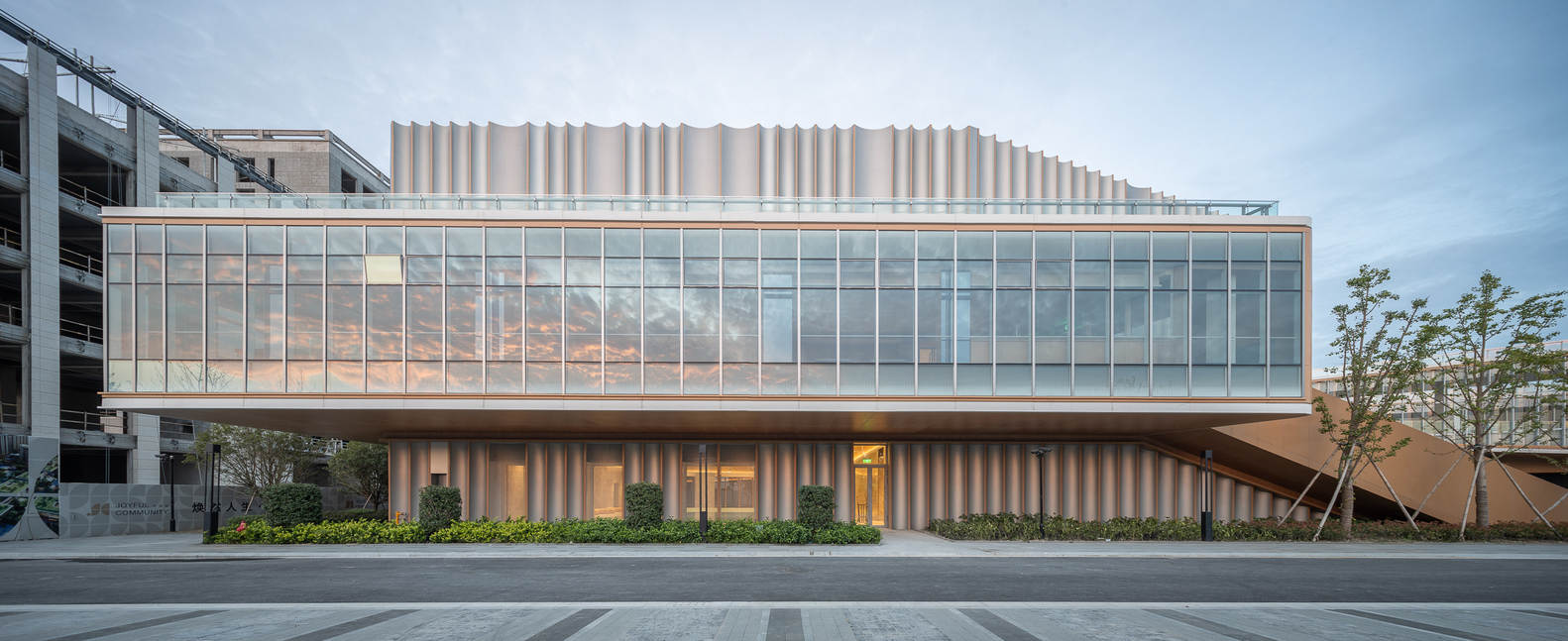
Independence and Connection - Whether it's directly facing the city's "cultural and sports comprehensive service building" or delving into the interior's "small town living room", we strive to liberate various functional modules from the "integrity" of the building, allowing them to have relatively independent forms and directly face public spaces (squares, streets, courtyards). The original intention of the design is to make them places with independent "addresses" and the possibility of independent development and change in the future. At the same time, the design also added three circular flow lines to connect them to each other: the "Sports Ring" of the "Comprehensive Service Building", the "Interest Ring" of the second floor of the "Town Center", and the "Exploration Ring" of the first floor. These "rings" with different spatial characteristics are not only efficient transportation spaces, but also important places for activities and communication.
独立与连接 - 无论是直接面向城市“文体综合服务楼”还是深入内部的“小镇客厅”,我们尽可能将各种功能模块从建筑的“整体性”中解放出来,让它们拥有相对独立的形体并直接面向公共空间(广场,街巷,庭院)。设计的初衷是希望它们成为拥有独立“地址”的场所,并在未来具备独立发展变化的可能。与此同时,设计还加入了三个环形动线将它们互相连接:“综合服务楼”的“运动环”,“小镇中心”二楼的“兴趣环”及一楼的“探索环”。这些具有不同的空间形态特征的“环”不仅仅是高效的交通空间,也是重要的活动及交流场所。
© Wenjun Liang
© Wenjun Liang
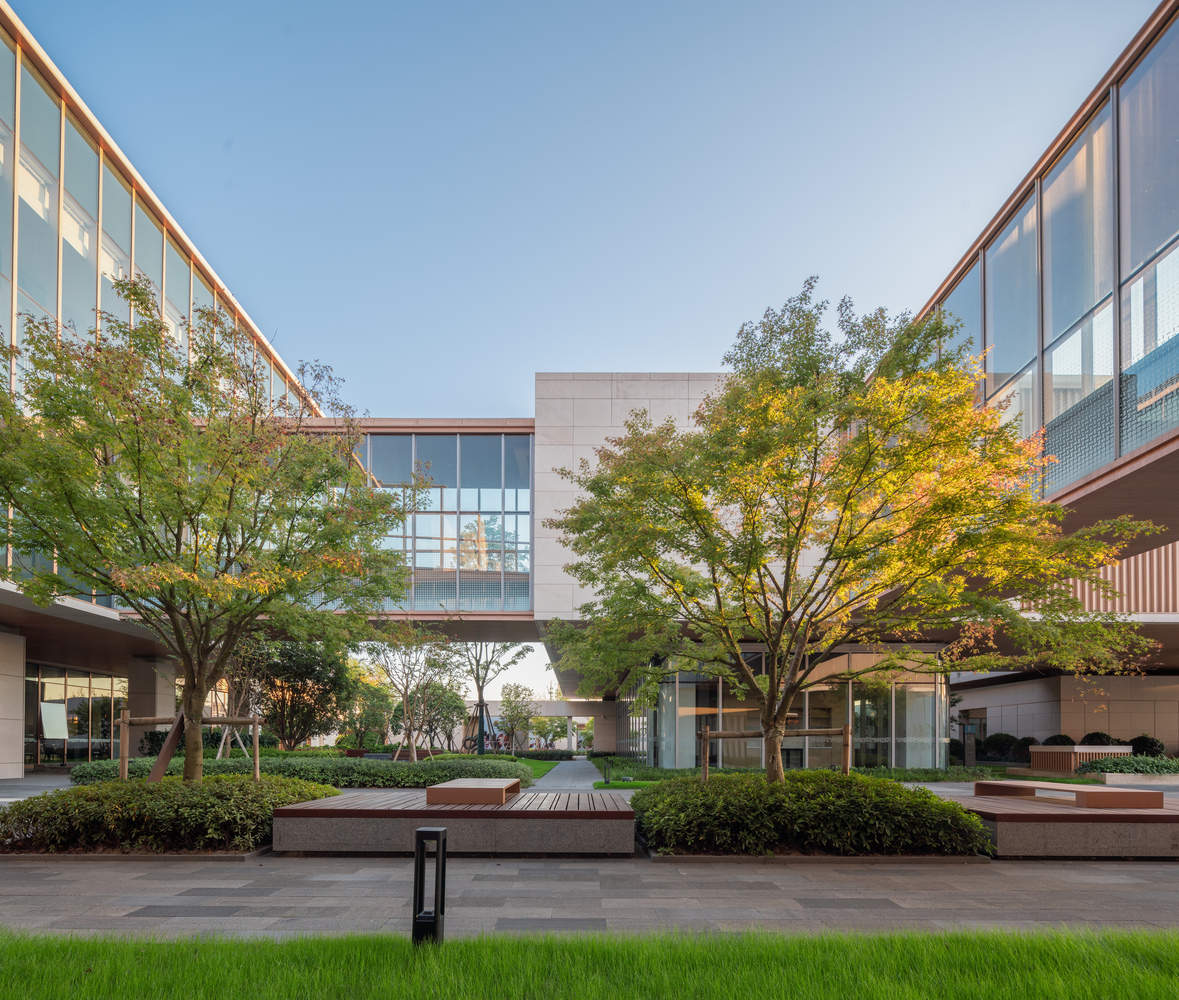
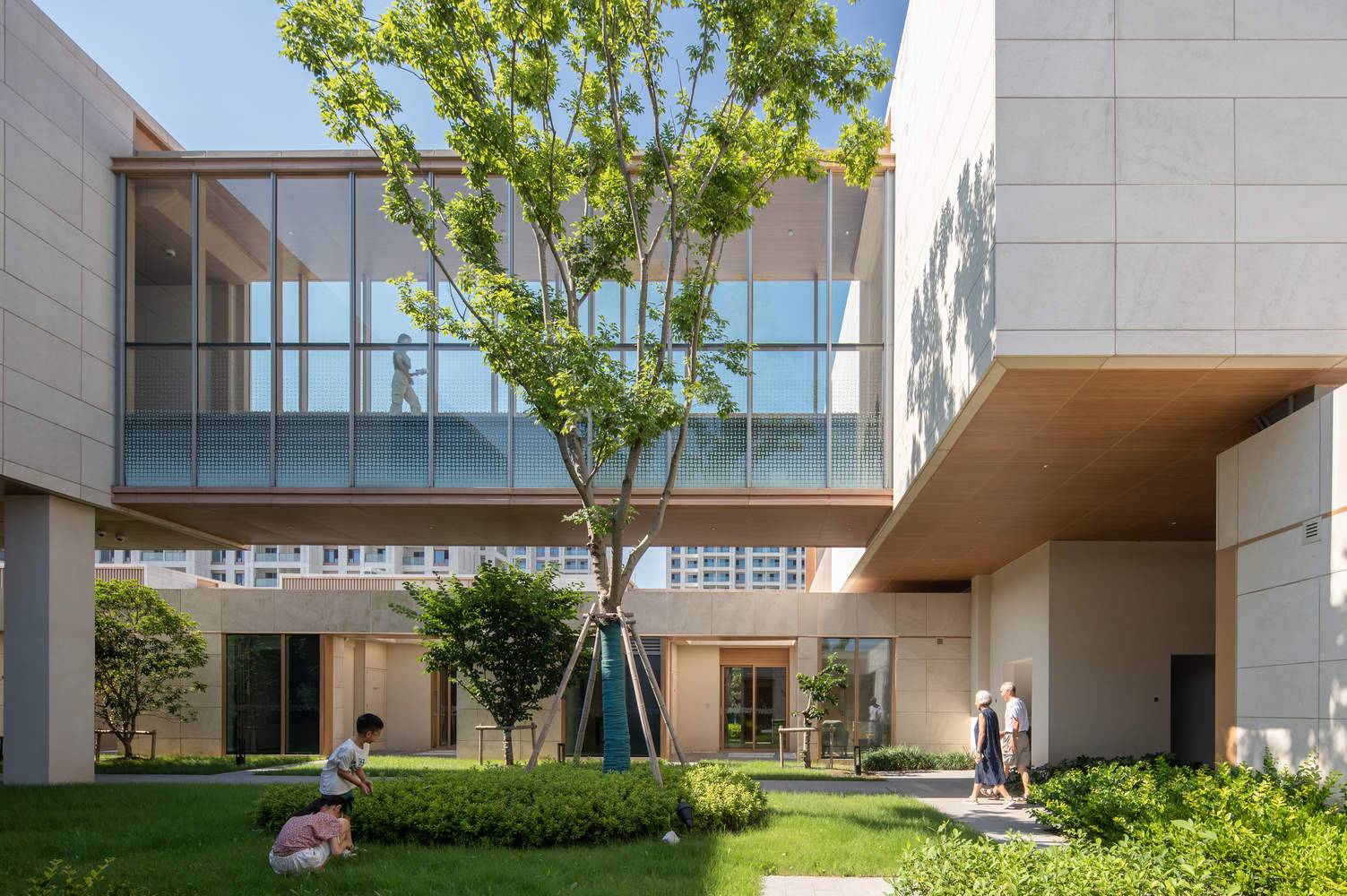
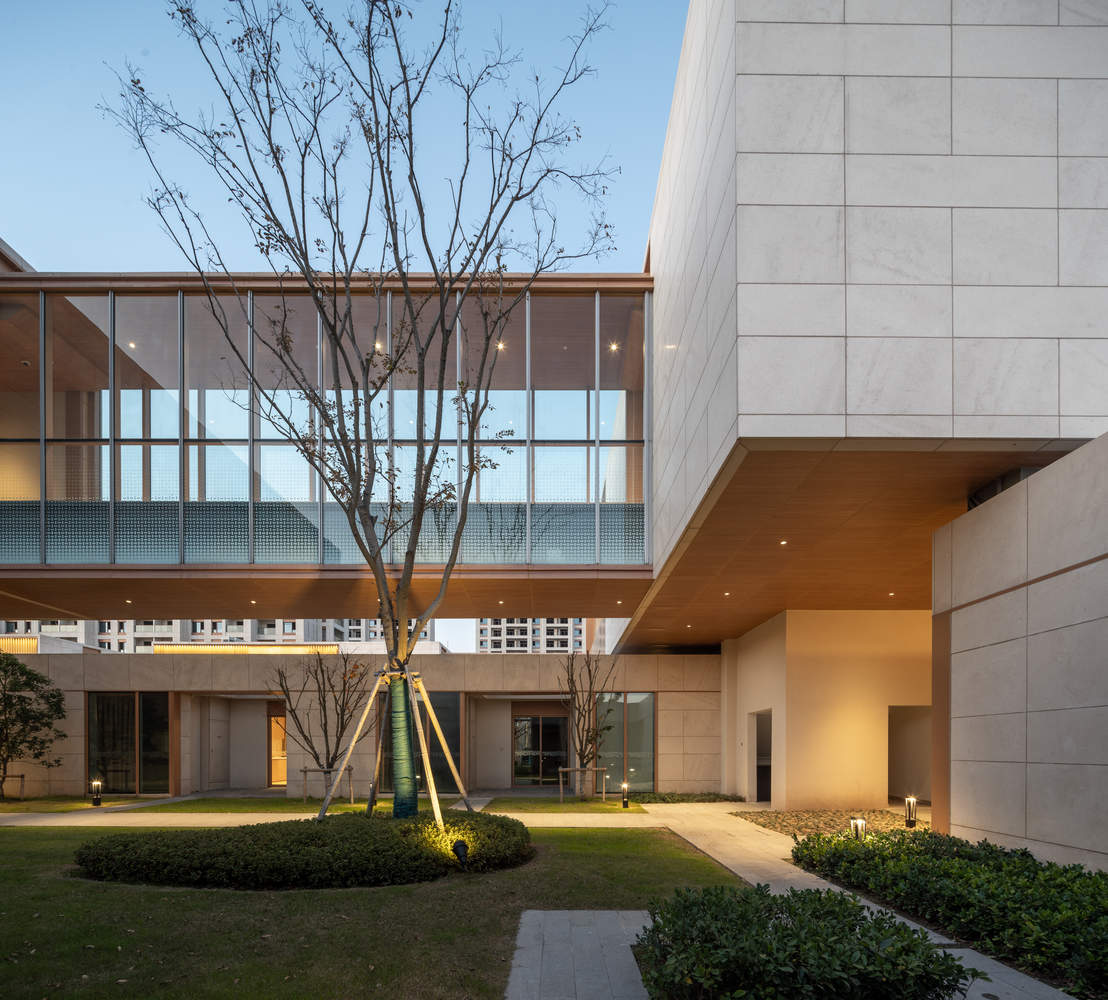
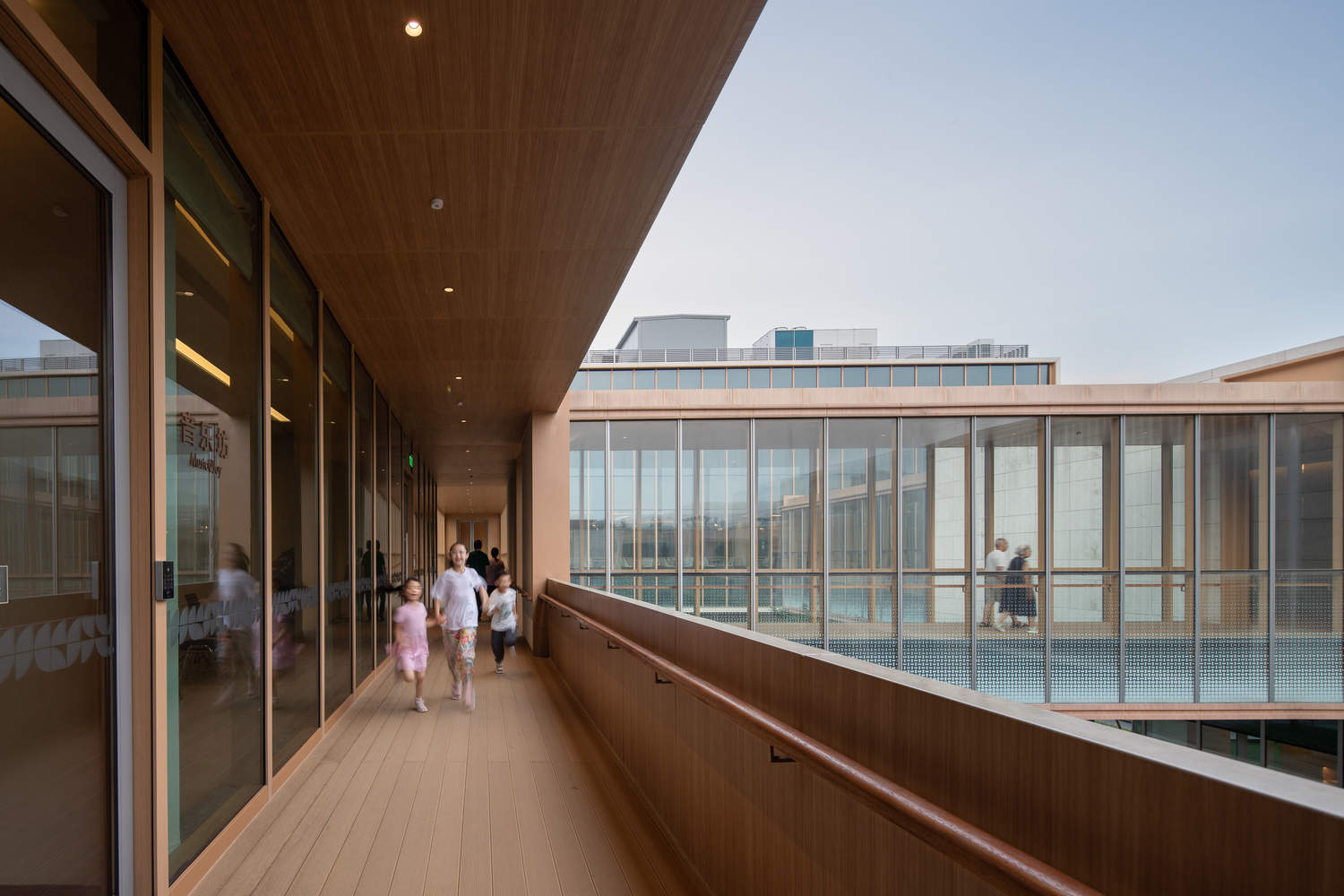
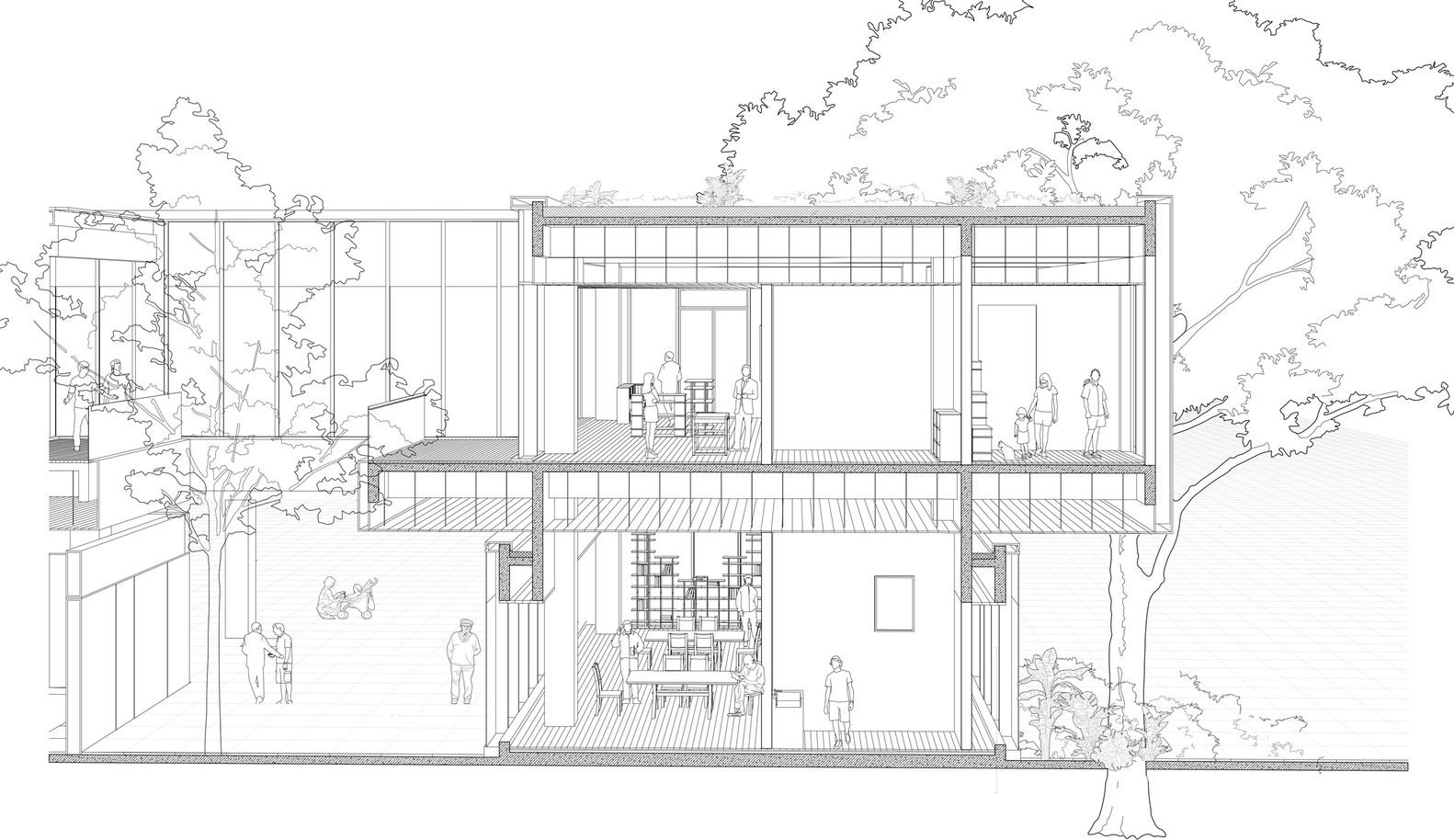
The comprehensive service building located at the main entrance facing the city carries a large number of cultural and sports functional formats. The transparent glass corridor connects the main buildings on the left and right sides of the building with a large horizontal span, achieving "barrier free" connectivity in both function and space, thereby forming a "sports ring". The glass corridor and balcony system located on the second floor of 22 boxes in the center of the town together form a loop that runs through the entire area. Similarly, these 22 boxes, ingeniously composed of two-story building floors and corridors, form a "wind and rain corridor" on the first floor of the supporting site in the town center, creating an interesting loop that runs through various courtyards of different sizes.
位于主入口面向城市人交流综合服务楼承载了大量文体类功能业态,通透的玻璃连廊以极大的横向跨度连接了左右两侧综合楼主体建筑,实现功能和空间上“无障碍”贯通,进而构成“运动环”。位于小镇中心 22 个盒子二层的玻璃连廊和走廊阳台体系,共同构成了一条贯穿整个区域的环线。同样是这 22 个盒子,由二层建筑楼板和连廊巧妙构成的“风雨连廊”,于小镇中心配套场地的一层,构建出一条贯穿在各个大小院子中的有趣环线。
© Wenjun Liang
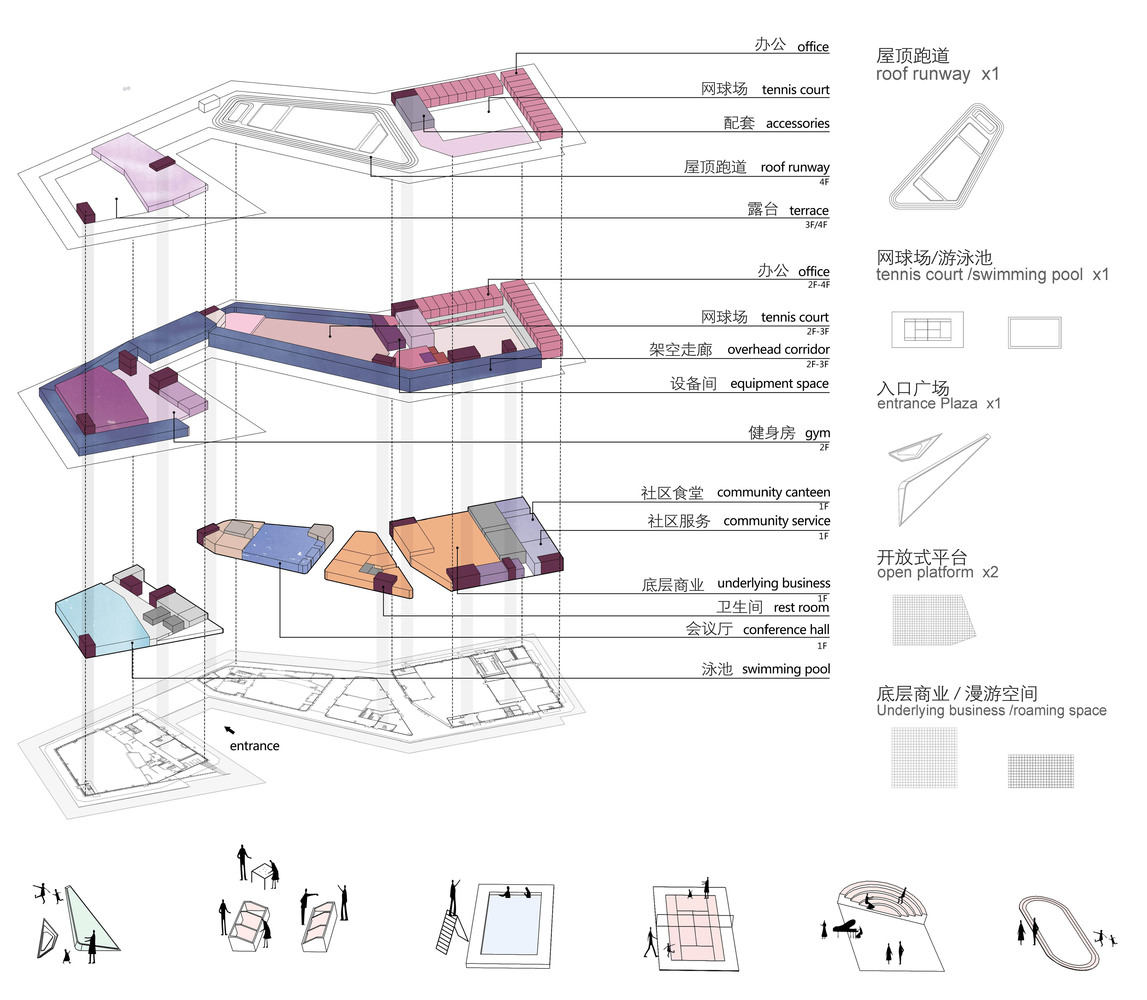
综合服务楼各楼层功能及运动环分析图
© Wenjun Liang
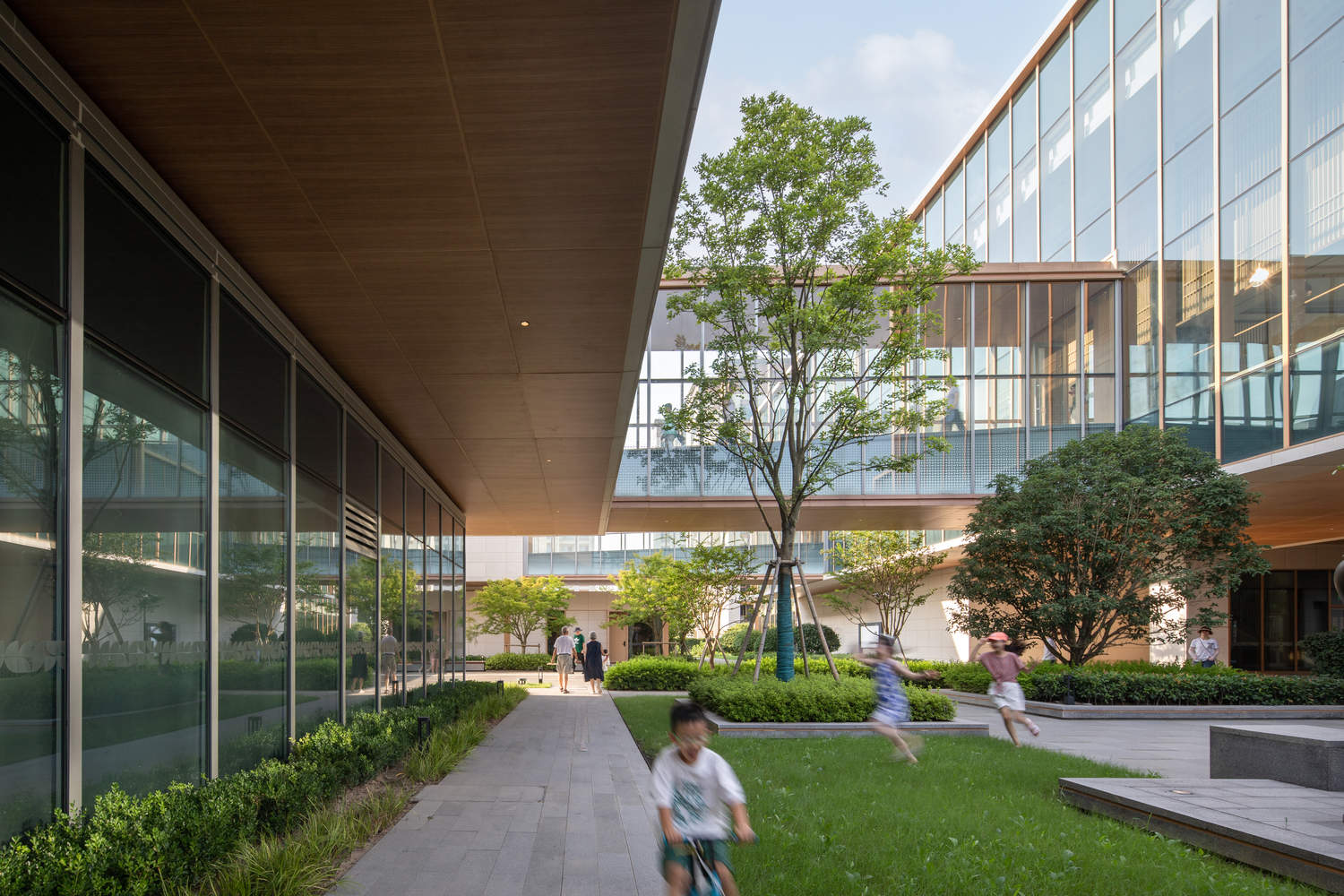
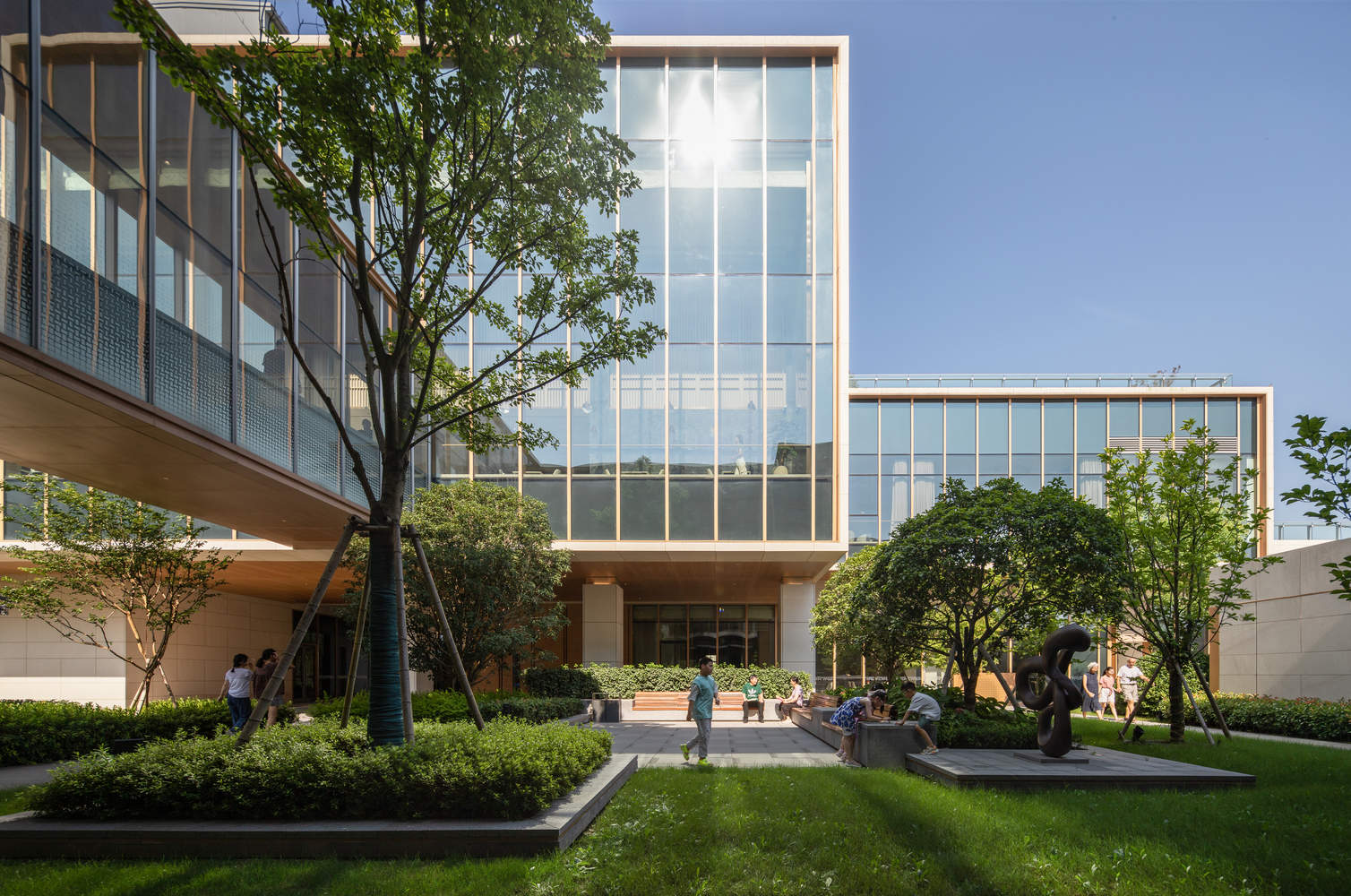
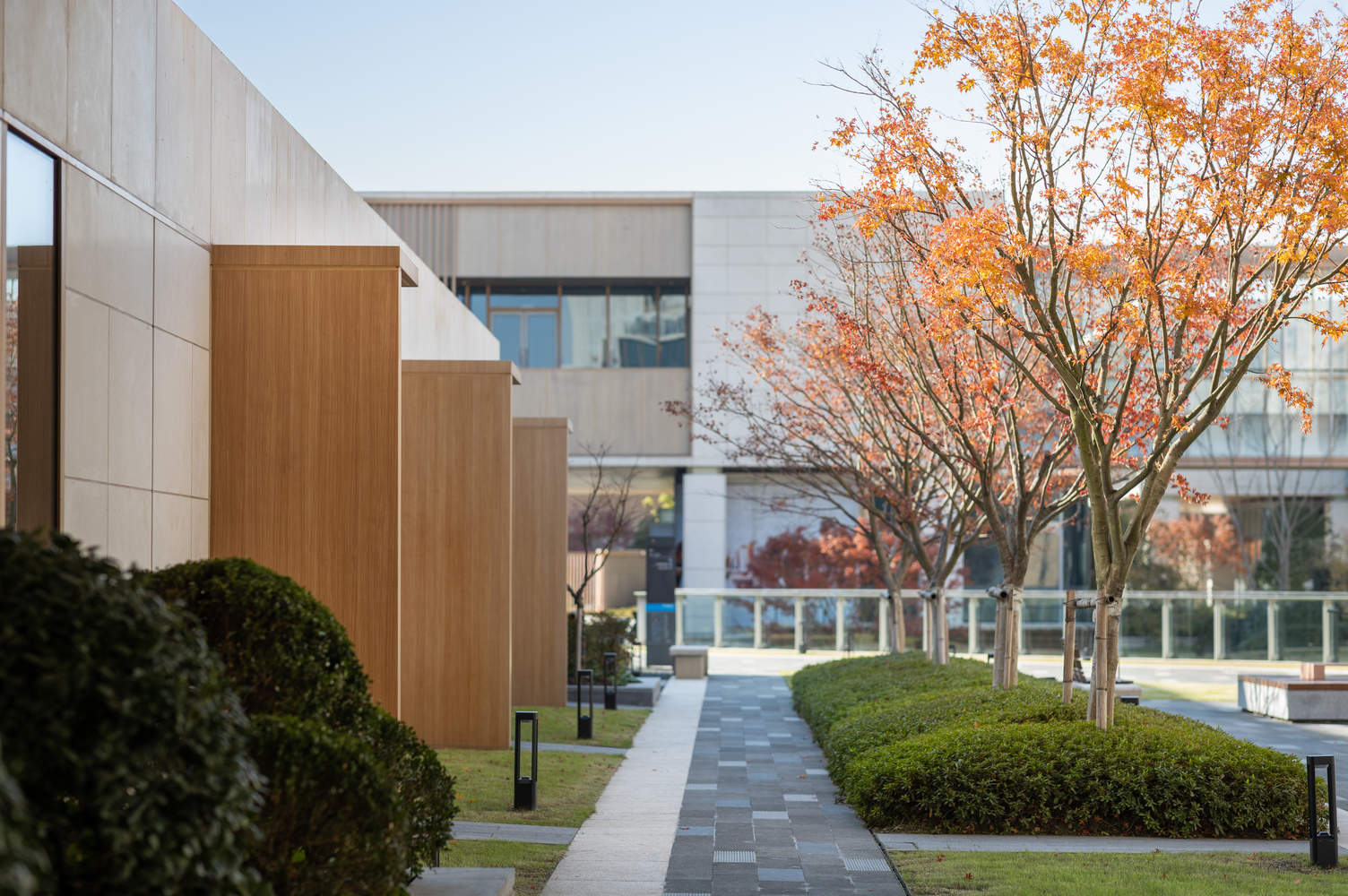
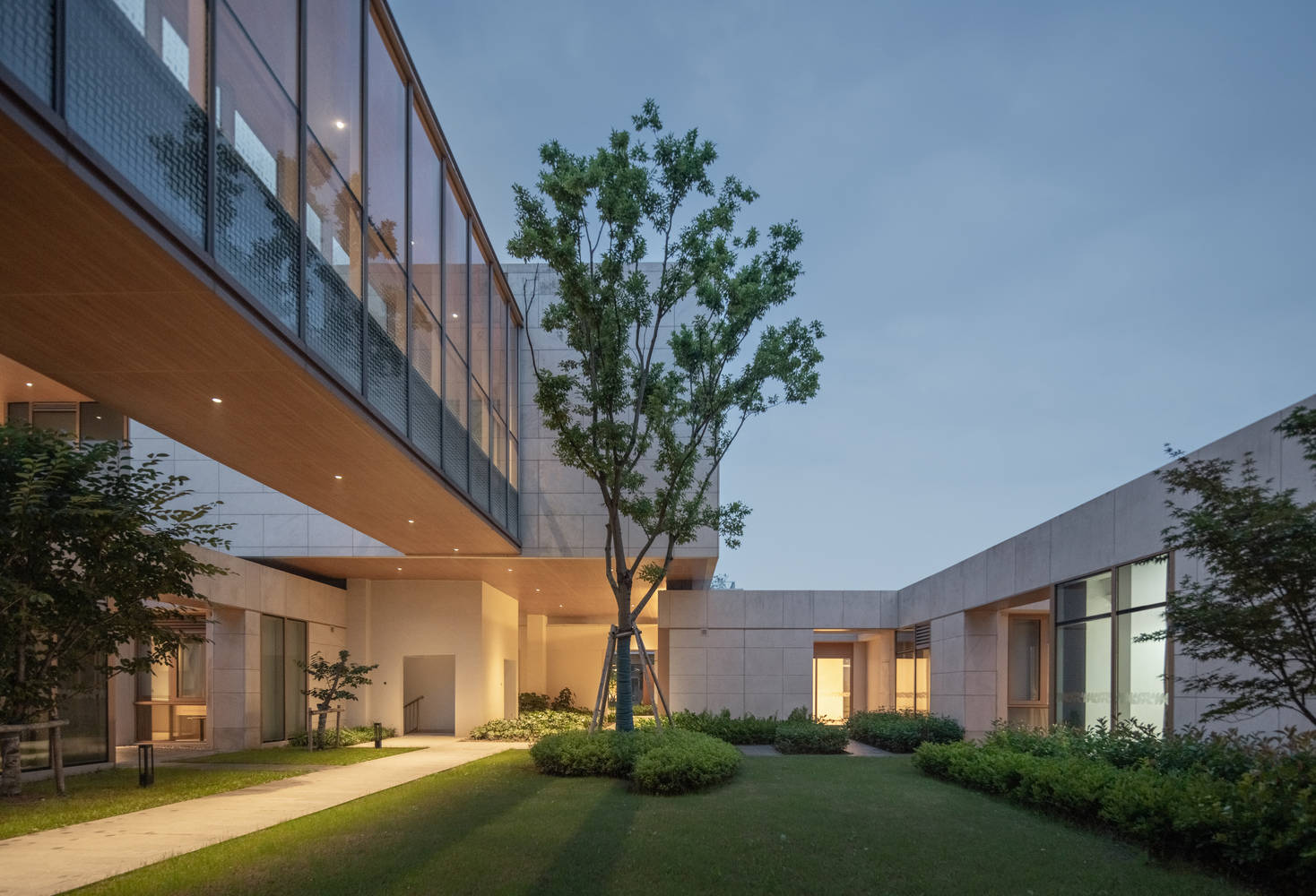
Informal communication - Friendly and comfortable social activities are often "informal" and often occur between "in between" or at the edge of space. They are a product of wandering and boredom, and also vary from person to person and time to time. The 'town center' in the project consists of a series of staggered and stacked courtyards. In the design process, on the one hand, we strive to achieve "precise" control of the scene, and on the other hand, we hope to leave a certain design "tolerance". In this way, numerous unexpected and surprising scattered small spaces were ultimately created within the site: they were either terraces at the corners, courtyards above street buildings, or courtyards traversed by paths... Many interesting corners and visual relationships were not discovered until they were completed, and we also hope that this curiosity about space can be passed on to future residents and visitors.
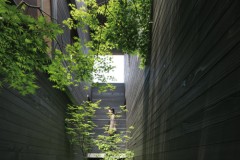
非正式交流 - 友好舒适的社交活动往往是“非正式“的,它们时常发生在“之间”(Inbetween)或者空间的边缘,是闲逛与无聊的产物,同时也是因人、因时而异。项目里的“小镇中心”,由一系列上下错位叠合的院落组成。在设计过程中,我们一方面想要努力做到“精准”控制场景,一方面又希望能够留出一定的设计“容差”。如此,最终在场地内产生了众多令人感到意外和惊喜的零散小空间:它们或是转角处的露台,或是过街楼上方的天井,或是被小径穿越的院落……许多有趣的角落、视线关系,直到建成后才被发现,而我们也希望这份对空间的好奇心,能够传递给未来的住户和访客们。
© Wenjun Liang
小镇中心剖面图
© Wenjun Liang
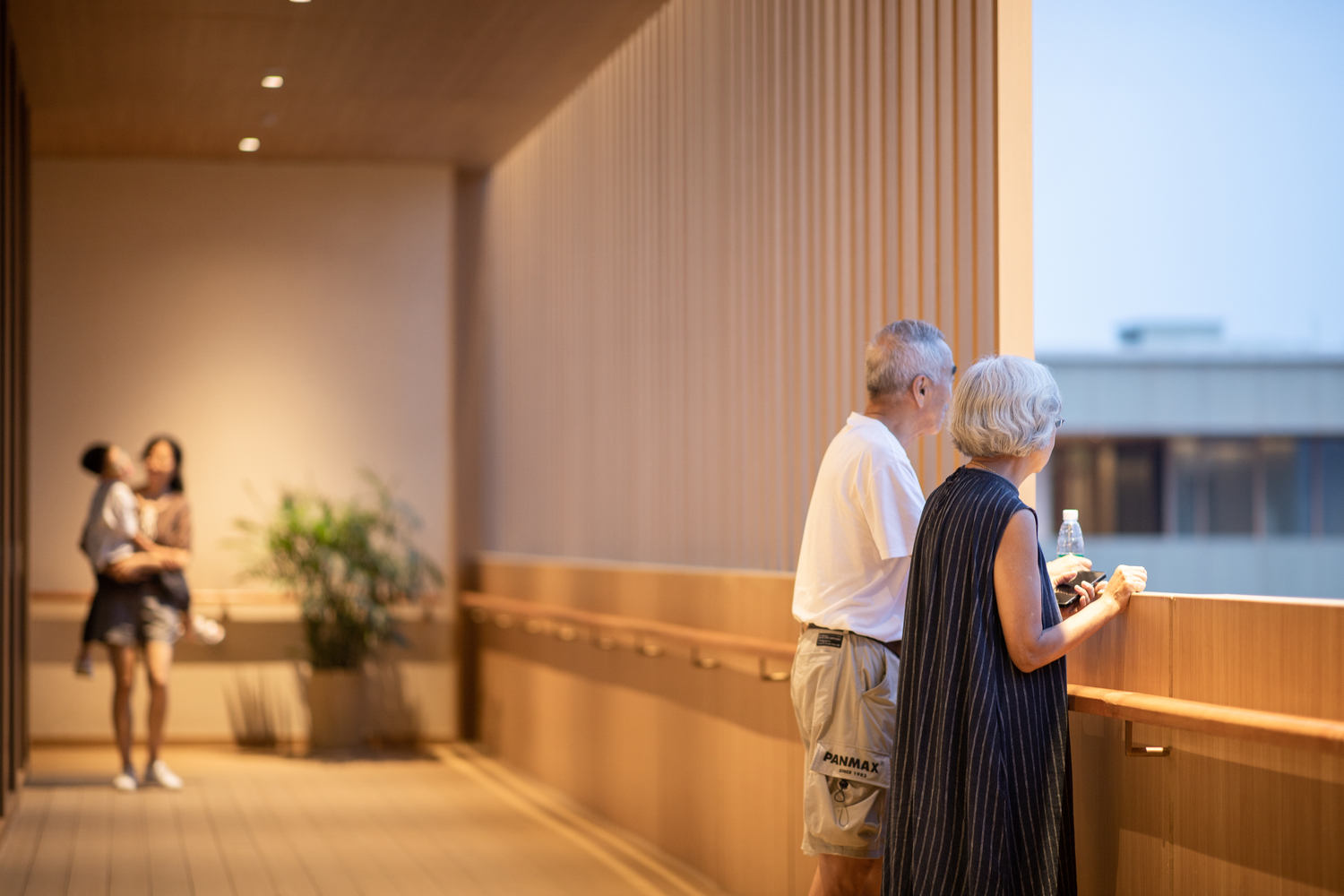
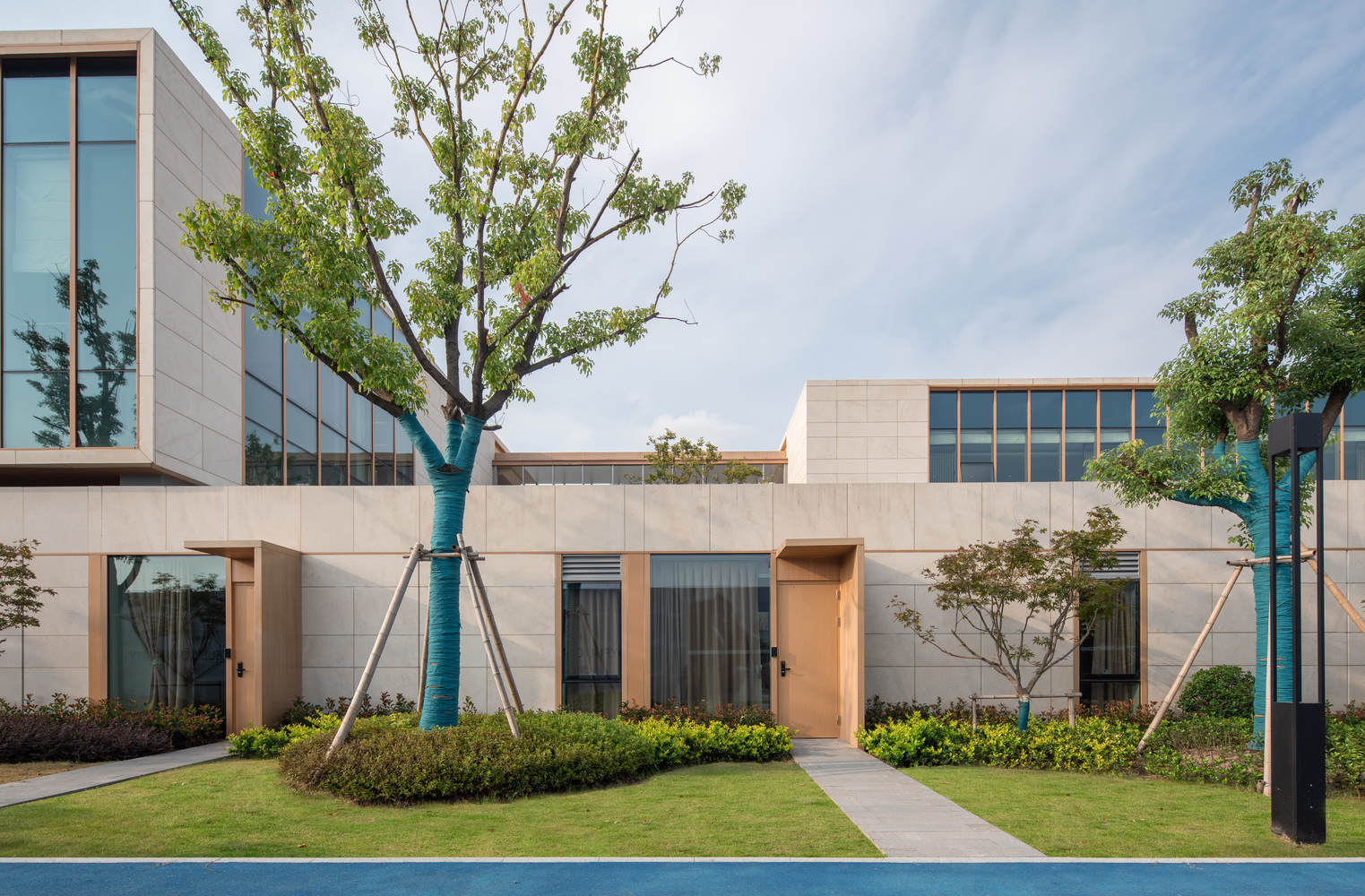
The possibility of growth - Just before writing this article, news from the operations team that the parent-child farm on the north side of the project has opened, and they are also preparing to hold Dunhuang and contemporary art exhibitions in the library. At the same time, they also hope that we can quickly settle in the artist studio in the town center... From the designer's perspective, we have always hoped that this is a community that can grow and achieve functional "metabolism" with the participation of many users. The first floor of the 'town center' is scattered with a batch of 'undefined' spaces, including 22 inward facing courtyard style 'studios' and transparent outward facing' glass boxes'. They can be flower shops or cafes, clubs or salons, or even guest rooms temporarily occupied by relatives visiting. The four meter wide corridor of the "Comprehensive Service Building" has also not been defined. The initial idea was to serve as an extension of adjacent functional spaces, but now the operators have more interesting ideas for it: an aerial gallery, a fitness loop... We are also happy to see users further create the space.
成长的可能 - 就在撰文前不久,来自运营团队的消息,项目北侧的亲子农场已经开放了,接下来还准备在图书馆办敦煌与当代艺术展,同时他们还希望我们也能尽快入驻小镇中心的艺术家工作室……从设计者的角度,我们一直希望这是一个可成长的社区,在众多使用者的共同参与下实现功能上的“新陈代谢”。“小镇中心”的一楼散落了一批“未定义”的空间,包括22个内向型的庭院式“工作室”以及透明外向的“玻璃盒”。它们可以是花店或咖啡厅,也可以是俱乐部或沙龙,甚至可以是亲属来探访时临时入住的客房。“综合服务楼”四米多宽的连廊同样未被定义,最初的想法是作为邻近功能空间的延伸,而现在,运营者们对此已经有了更多有趣的想法:空中画廊,健身环道……我们也乐于看到使用者们能够对空间进行进一步的创作。
© Wenjun Liang
© Wenjun Liang
Conclusion - The starting point of our design stems from a "dystopian" complex, and it seems to have entered another ideal of "utopia": a diverse, open, and growing community for all. And the realization of this ideal only truly begins from the moment the project is completed.
结尾 - 我们设计的起点源自一种“反乌托邦”情结,最后似乎又进入了另外一种“乌托邦”的理想:一个面向所有人的多元,开放,成长的社区。而这个理想的实现,从项目建成的那一刻才真正开始。