Hejia Village Elderly Home/Yumu Architecture
何家村老年之家 / 由牧建筑
设计理念的精妙: 整个项目最核心的亮点在于其对“在地性”的深刻理解和运用。设计师没有简单地复制传统乡村建筑的符号,而是深入研究了当地的建筑构成、元素和空间特点。他们敏锐地捕捉到何家村缺乏独特建筑传统的现状,并以此为出发点,通过“沿用、转译与重构”的手法,将村宅的“辅房+主楼”的典型组合转化为适应老年之家的新形态。这种设计策略不仅赋予了建筑亲切感,也巧妙地解决了项目在密集民宅中如何融入环境的问题。项目对乡村空间环境的深度解读,使得设计在形式上既熟悉又新颖,很好地回应了乡村建筑设计面临的挑战,体现了设计师的专业素养和对乡村文化的热爱。
空间设计的匠心独运: 老年之家的空间布局堪称巧妙,体现了设计师对老年人生活需求的细致考量。项目采用了“辅房+主楼”的组合,将辅房嵌入街边,形成过渡的半公共空间,为老年人提供了休憩和社交的场所。内部空间序列的设计更是亮点,通过“打开-半打开-封闭”的三个“房间”序列,为老年人创造了私密性递增的功能空间。二层健康中心与儿童活动室通过连桥相连,形成视觉互动,营造了“同一屋檐下”的开放氛围。这种空间组织方式,既满足了老年人的多样化需求,也创造了温馨、舒适的“家”的感觉,体现了设计师对人性化设计的深刻理解。
细节处理的独到之处: 项目在细节处理上体现了设计师对乡村建筑的深刻理解和对材料的精准运用。建筑的主体形象通过对当地元素的提取和重组,呈现出一种既熟悉又陌生的视觉效果。倾斜的墙面、轻盈的坡屋顶、底部的基座以及转角的长窗等细节,都借鉴了乡村住宅的特点,并在尺度和比例上进行了微妙的调整。室内设计以白墙和浅色橡木为基调,搭配暖色调的界面,营造出温馨舒适的氛围。这些细节上的处理,体现了设计师对建筑语言的精准把握,以及对乡村文化和老年人生活需求的深刻理解,使得整个项目在细节的雕琢上呈现出令人赞叹的品质,完美地实现了为老年人打造“家”的初衷。
© ArchNango
© ArchNango
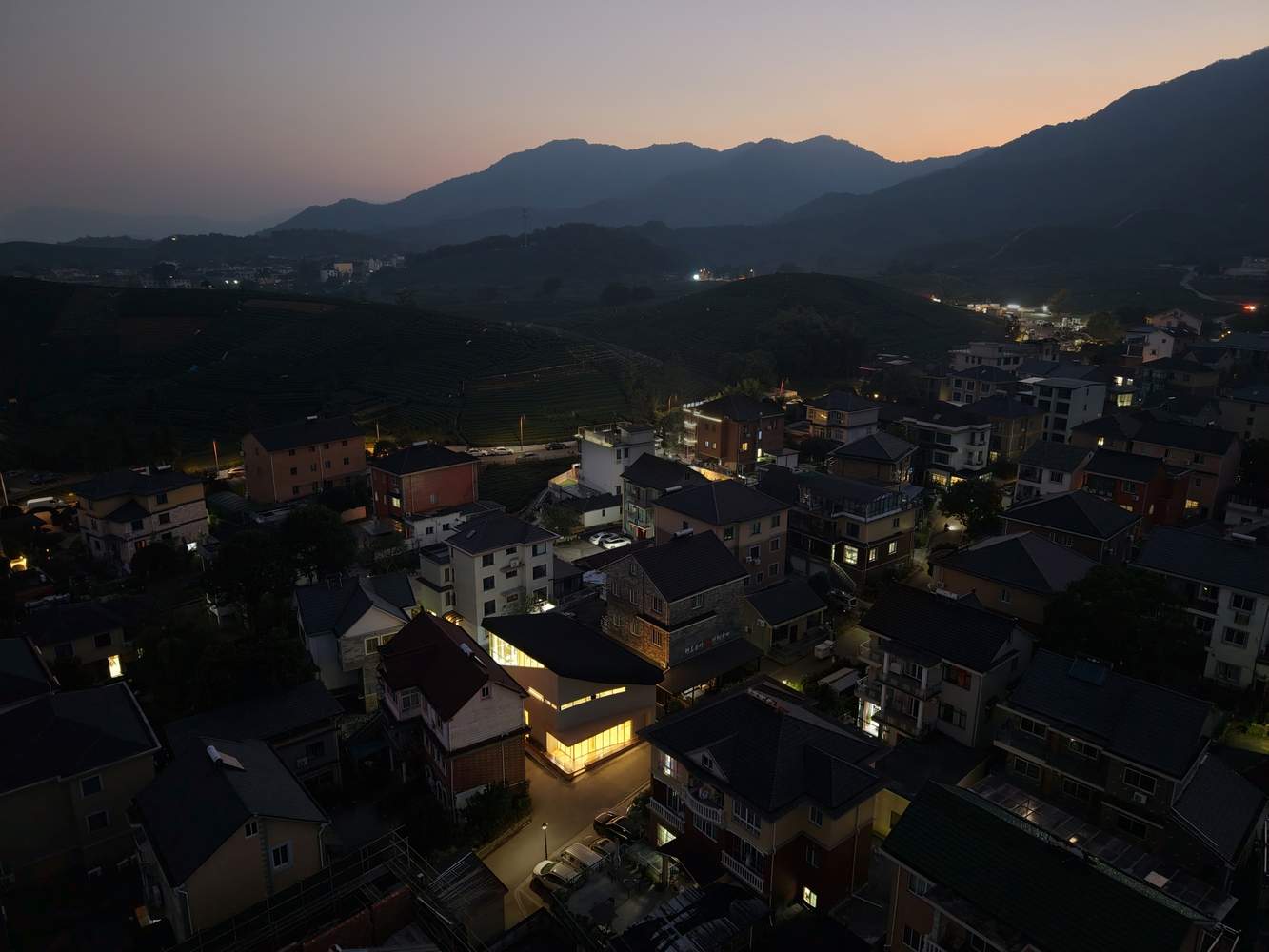
This project is the Hejia Village Elderly Home. Hejia Village is located in the southwest of Hangzhou, in the canyon area between Longwu Tea Mountain. The villagers mainly engage in tea cultivation and production. The elderly home is a small public space that provides leisure, entertainment, and health services for the elderly in the village. The project site was originally intended for residential use by villagers and is located in a dense cluster of residential buildings. Located north of the village's secondary road, adjacent to villagers' residences on both the east and south sides, and a small road on the west side connecting the secondary road with the village's main road. Compared with the original ecological countryside, the spatial environment of Hejia Village does not provide a symbolic image of local architecture, nor does it lack distinctive construction traditions and techniques. How to identify the spatial reality that characterizes the environmental characteristics in the blurry rural spatial environment has become the main design difficulty and breakthrough point of this project.
本项目为何家村老年之家。何家村地处杭州西南,位于龙坞茶山间的峡谷区域。村民主要以茶叶种植制作为业。老年之家是为村里老年人提供休闲娱乐、健康服务的小型公共空间。项目场地原为村民住宅用地,位于密集民宅群中。北临村庄次干道,东、南两侧毗邻村民住宅,西侧小路联通次干道与村庄主道。与原生态农村相比,何家村的空间环境不提供乡土建筑的符号化形象,也缺乏特色的建构传统与建造工艺。如何在面目模糊的乡村空间环境中,识别出表征环境特点的空间实相成为该项目主要的设计难点与突破口。
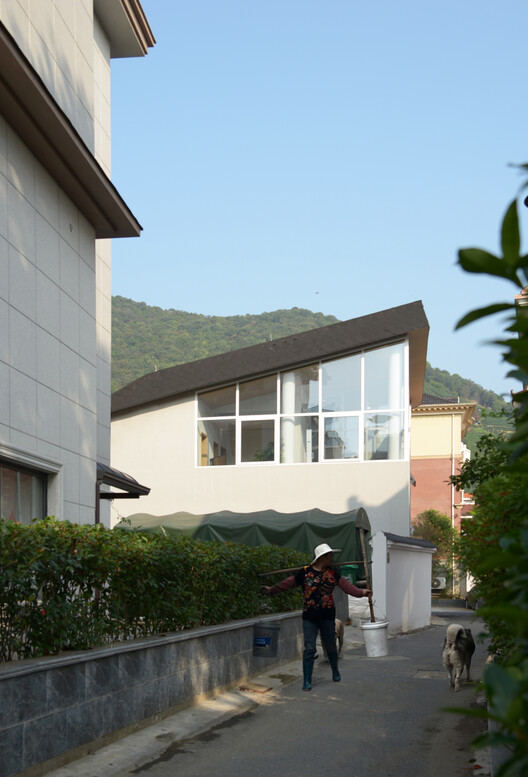
© 由牧建筑
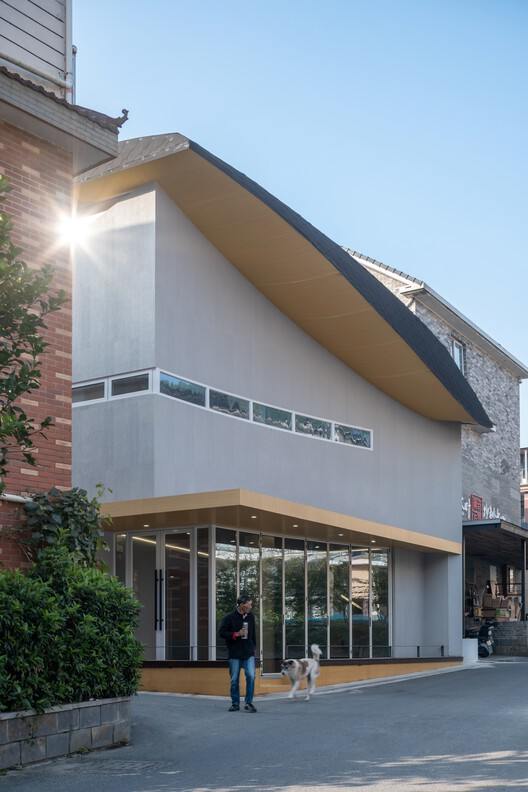
© ArchNango
Rural residential buildings, as the main type of buildings around the site, are the main focus of design research. The design aims to achieve rural expression and public shaping through the use, translation, and reconstruction of elements such as rural housing composition, elements, and space, as well as to create a sense of returning home for the elderly.
农村住宅作为场地周边主要建筑类型,是设计研究的主要落脚点。设计希望通过对农村住宅组成、元素、空间等要素的沿用、转译与重构,实现乡村性表达与公共性塑造,也为老年人塑造出回“家”感受。
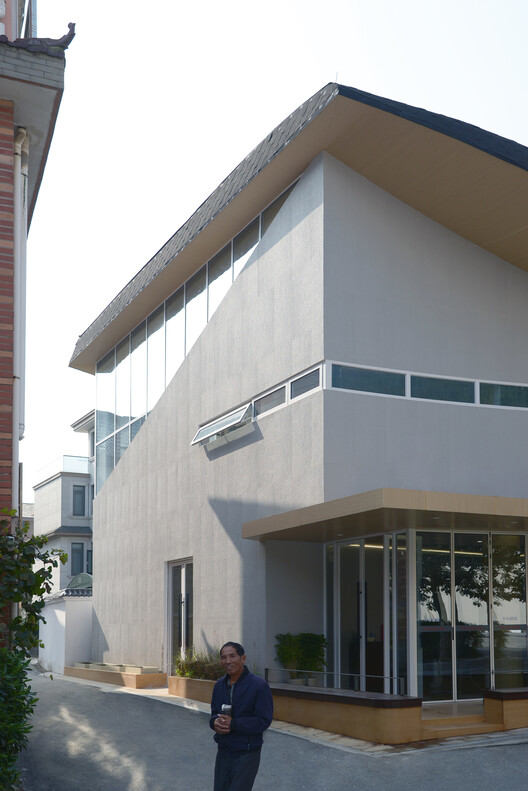
© 由牧建筑
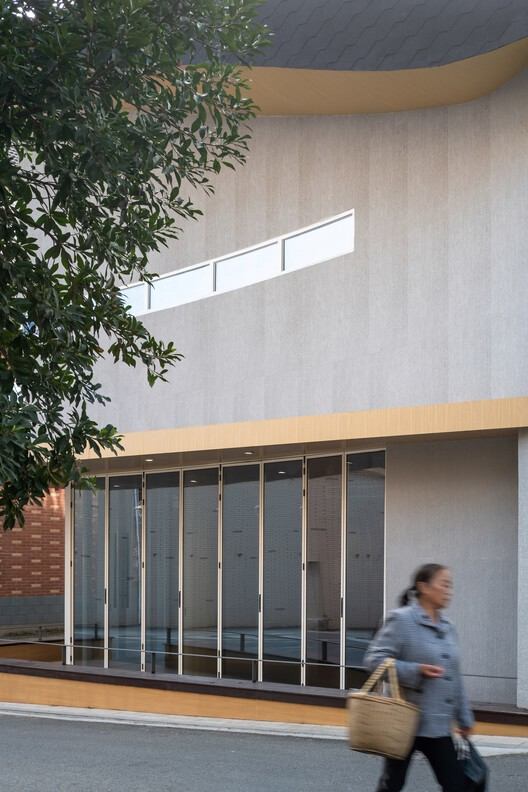
© ArchNango
Usage: The living space of villagers presents a spatial combination of "low rise auxiliary houses+multi story main buildings" in the surrounding villages along the street. The auxiliary house is a product of the villagers' production and lifestyle, mainly used for the storage, processing, and sales of tea; In today's changing economic landscape, some have also evolved into multifunctional spaces such as rest and reception.
沿用:村民生活的空间呈现
场地周边的沿街村宅多具有“低层辅房+多层主楼”空间组合特征。辅房为村民生产生活方式的产物,主要功能为茶叶的储藏、加工、销售;在经济方式发生变化的今天,部分也演化做休憩、会客等多功能空间。
© ArchNango
剖透视
© ArchNango
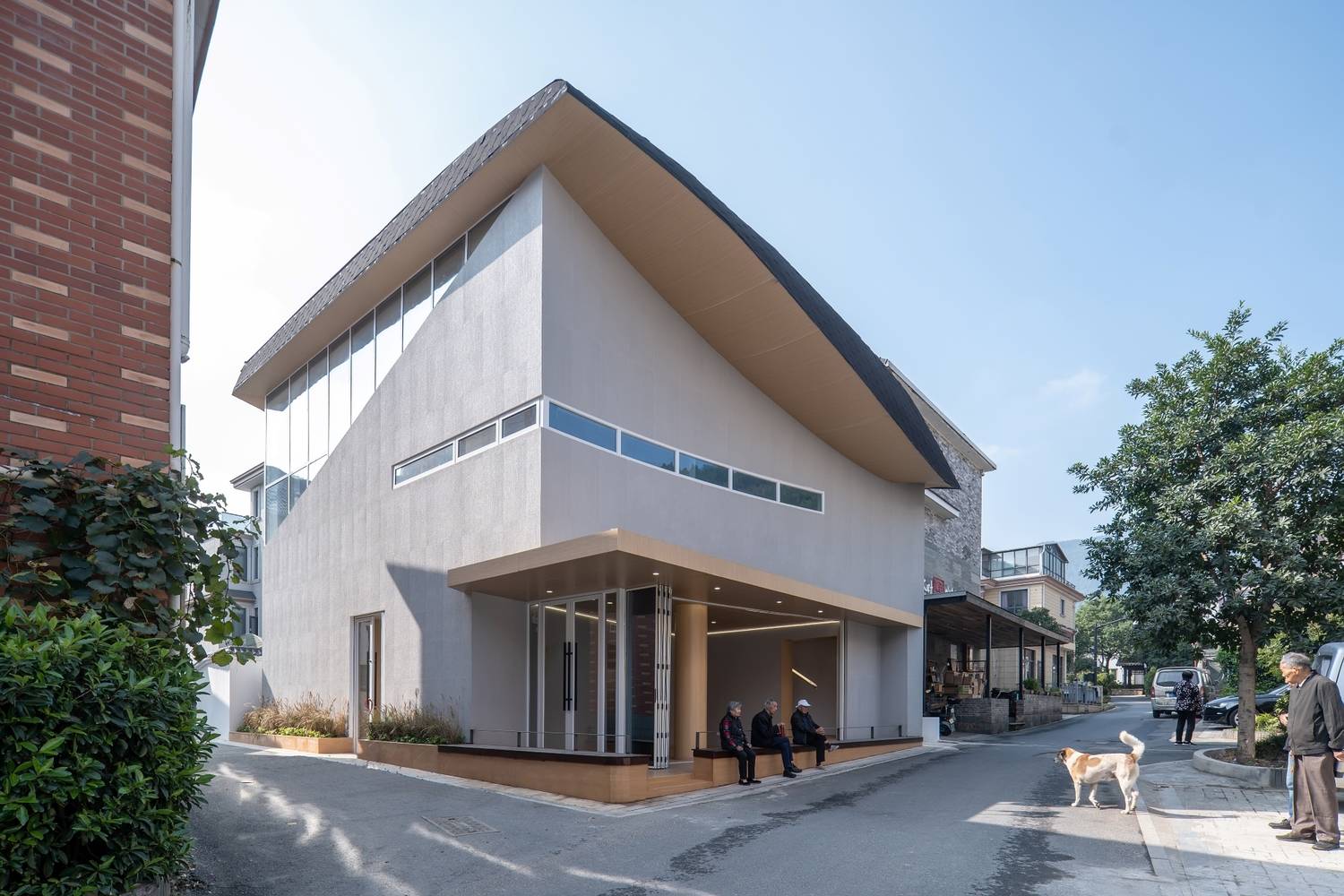
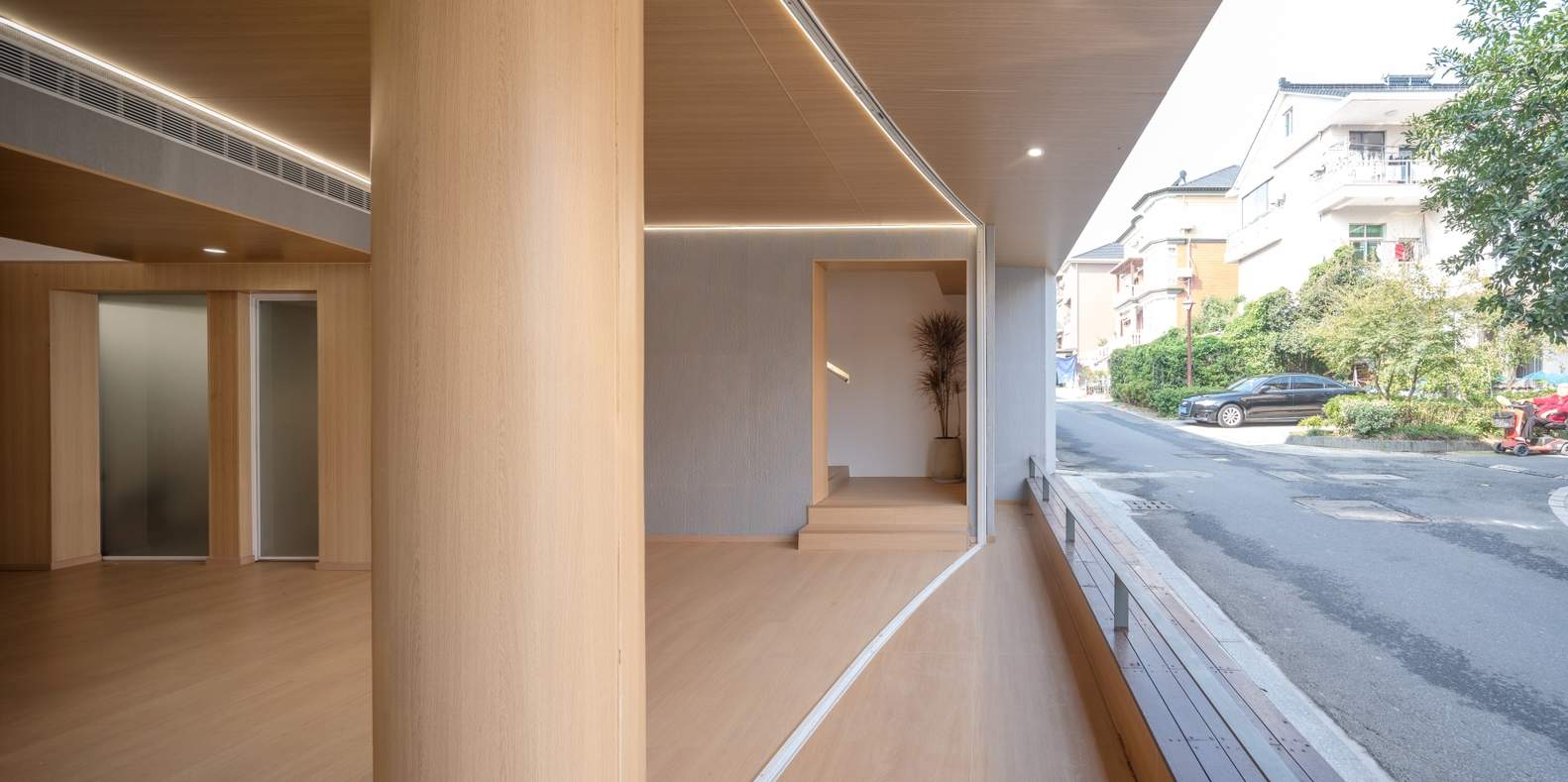
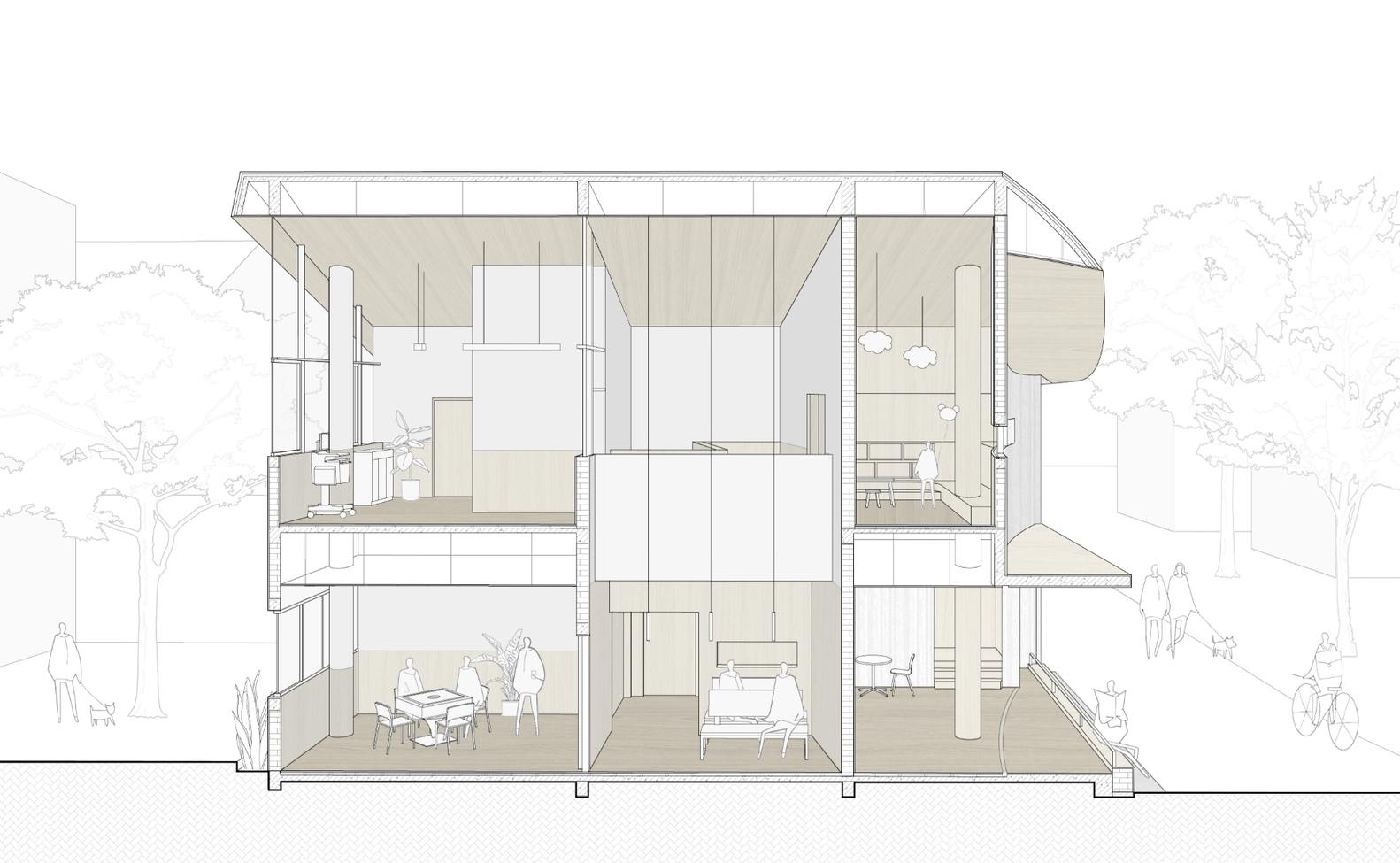
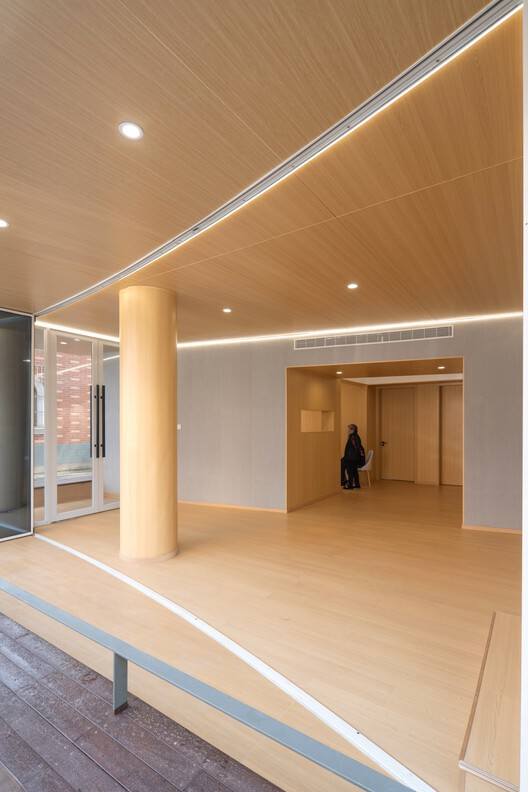
The design adopts the combination of "auxiliary room+main building" form, embedding the auxiliary room space that was originally placed alongside the main residential building into the street side of the main building, continuing the street interface, resolving tense road relationships, and forming a transitional semi public space. The image of the auxiliary room is supported by independent cylinders between the thin plate extending towards the street and the foundation formed by the seat enclosure. When the glass sliding door is fully opened, it presents as a public pavilion and gathering place, forming a daily background for pedestrians and elderly people to stop and gather.
设计沿用“辅房+主楼”形态组合,将原先与主体住宅并置的辅房空间嵌入到主体建筑靠街侧,延续街道界面,化解紧张的道路关系,形成过渡式半公共空间。辅房形象取用独立的圆柱支撑在延伸向街道的薄板与座椅围合成的基础之间,在玻璃移门完全打开时,呈现为公共的亭台与聚场,构成往来行人与老人停留聚集的日常背景。
© ArchNango
© ArchNango
Sculpture: Extraction and recombination of local elements
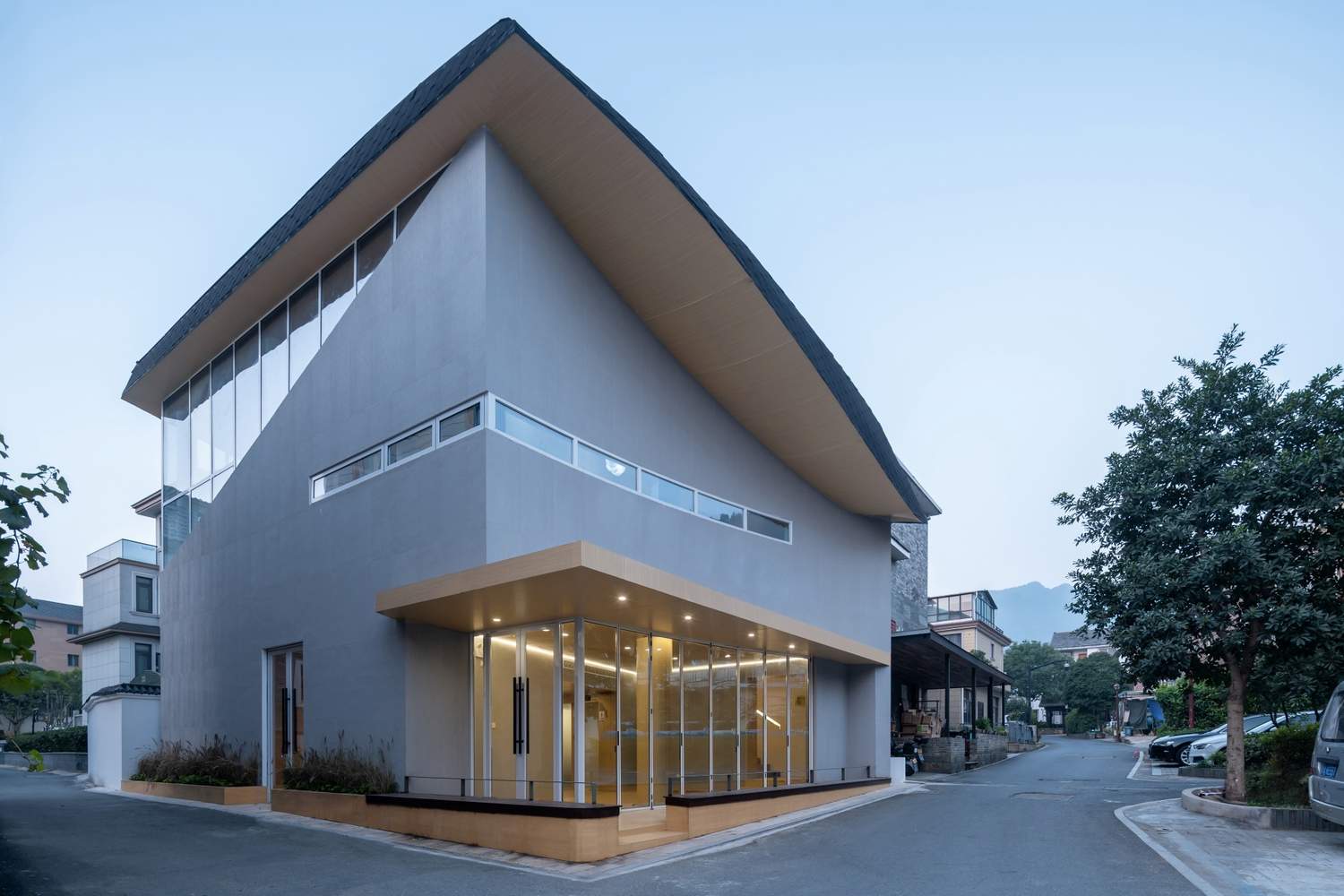
The main image of the elderly home comes from the extraction and recombination of local elements. The positive image formed by the combination of solid building walls and heavy sloping roofs creates a familiar feeling of a conventional village house for visiting villagers. The wall tilts downwards from the corner position and separates from the roof, strengthening the street corner momentum and opening a huge gap to the south of the second floor space, creating a sculptural and volumetric sense that exceeds the scale of residential buildings. The selected sloping roof takes the light form of tea leaves and slopes from the street corner towards the neighboring house, forming a soft site cover. The foundation at the bottom, long windows at the corners, and micro arc facades are all imitations of the architectural scale and terrain relationship techniques used to handle village houses. They attempt to capture a subtle balance between the complete image of public buildings and the daily scale of rural residences in a simple way.
雕塑:在地元素的提取重组
老年之家的主体形象则是来自于对在地元素的提取重组。以坚实建筑墙体与厚重坡屋顶的组合成的正面形象,为来访的村民塑造出常规村宅的熟悉感,而自转角位置墙体倾斜而下,与屋顶脱开,则强化出街道转角动势,也为二层空间向南打开巨大的隙口,创造出超越住宅尺度的雕塑性和体量感。挑出的坡屋顶取用茶叶的轻盈形态,自街角向邻宅倾斜,形成柔和的场地覆盖。底层的基座、转角处的长窗、微弧的正立面等形式,均来自对村宅处理建筑尺度、地形关系手法的拟仿,试图以质朴的方式,在公共建筑的完整形象与乡村住宅的日常尺度间捕捉到微妙的平衡感。
© 由牧建筑
© ArchNango
Transformation: Expansion and Variation of Rural Residential Space
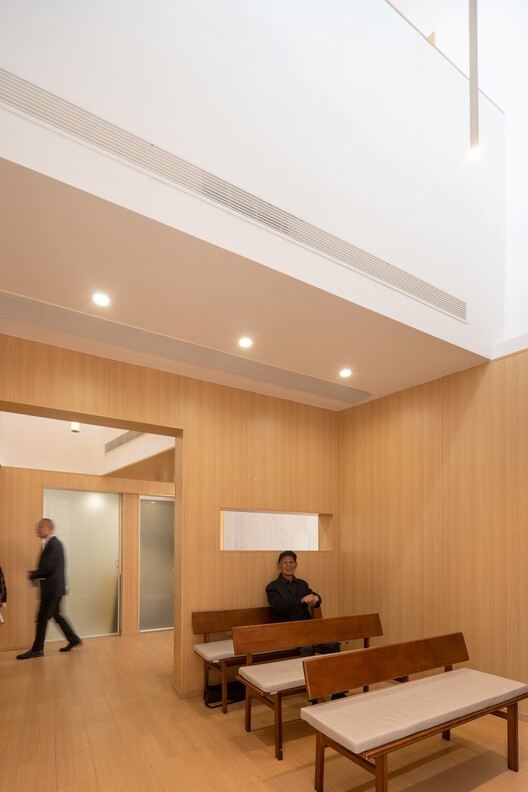
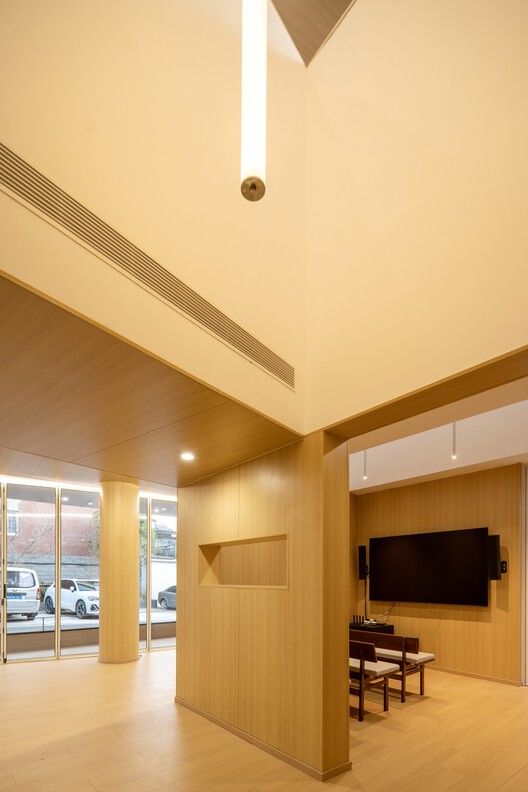
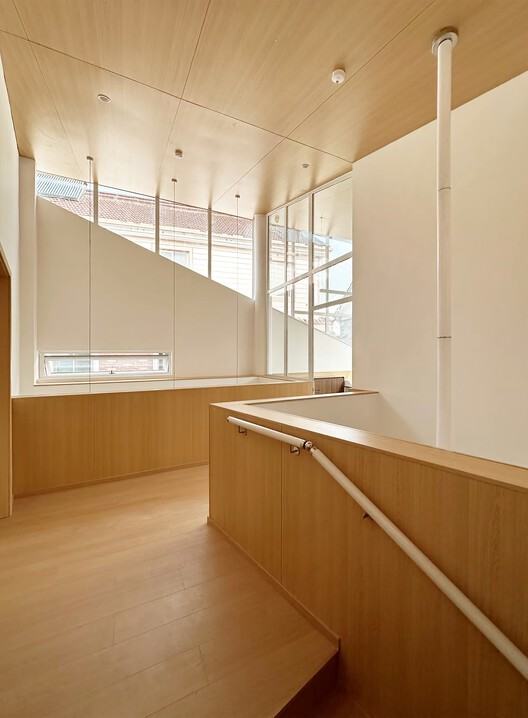
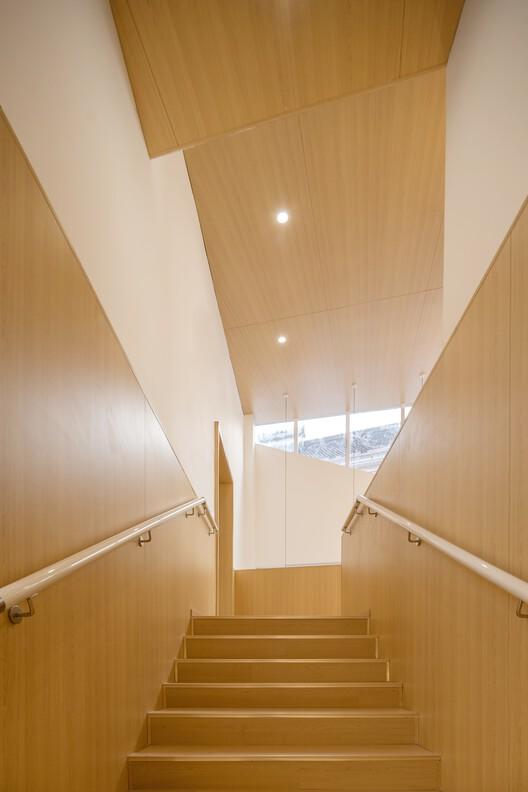
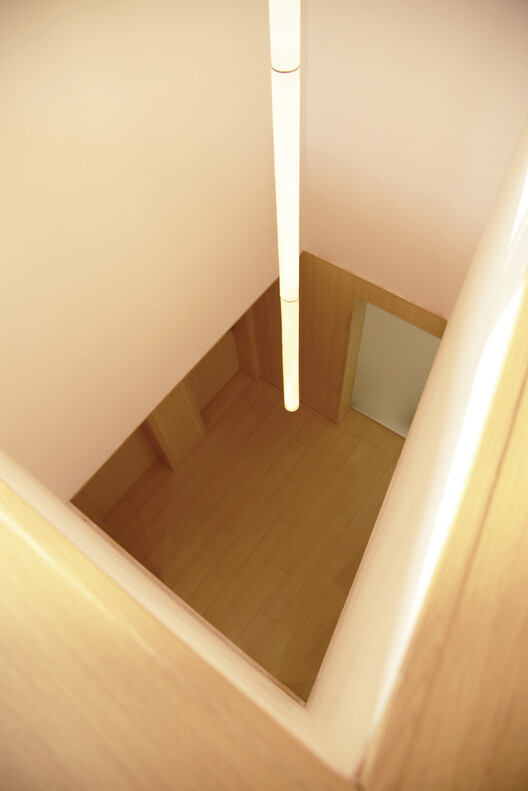
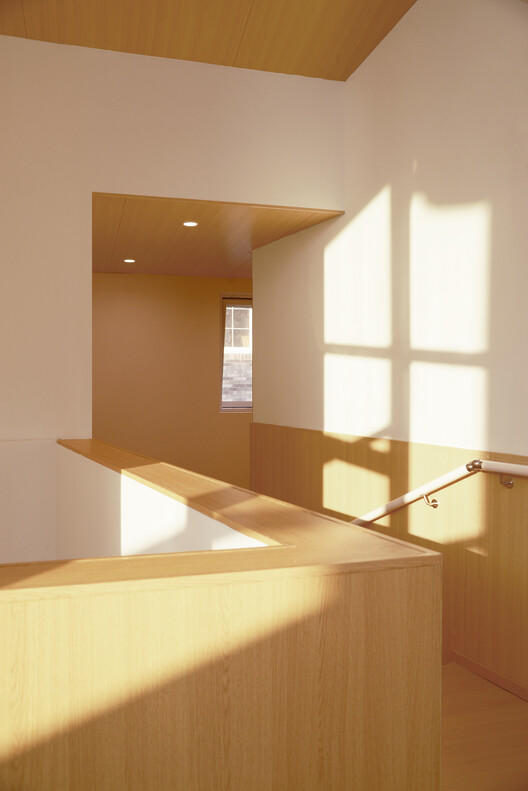
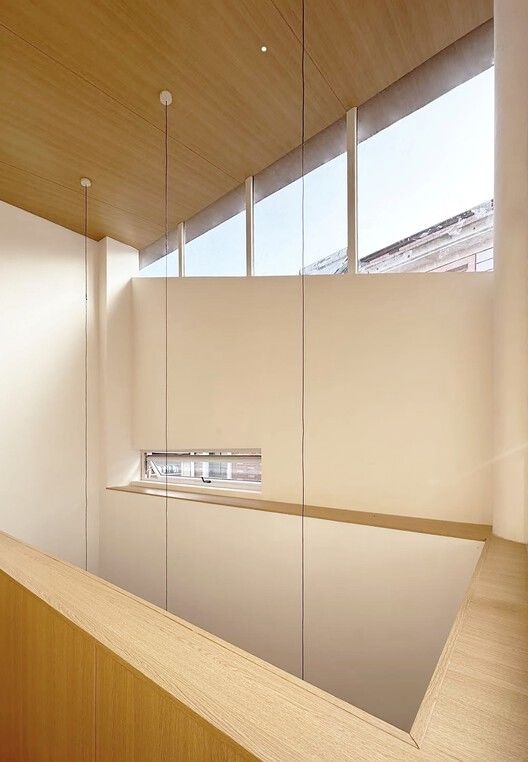
The interior of rural residences often follows a "corridor room" structure, forming an increasing sequence of intimacy from outside to inside and from bottom to top. And the design attempts to form a familiar yet unfamiliar public home by borrowing and transforming this sequence. The three interfaces of curved surface inclined surface straight wall from the outside to the inside are connected by openings, forming a sequence of three "rooms" that are open, semi open, and closed. This creates a functional space sequence with increasing privacy for the elderly to meet after meals, watch movies, gather together, and play chess and card games. The staircase turns upwards from the corner of the first floor and leads through the opening to the towering and bright second floor space. On the second floor, the health center is connected to the children's activity room through a bridge, creating a visual interaction with the first floor that connects from a height, creating an open feeling of "under the same roof". The overall interior is based on white walls and light colored oak, wrapped in warm color interfaces to create a warm and homely atmosphere for users.
变形:农宅空间的展开与变奏
农村住宅的内部往往以“走廊-房间”为结构,形成自外向内、自下而上的私密感递增序列。而设计试图通过对此序列的借用与变形,形成熟悉而陌生的公共之家。一层自外而内的弧面-斜面-直墙三界面,以洞口相连,形成打开-半打开-封闭的三个“房间”序列,为老人的饭后相遇、观影聚会、棋牌娱乐塑造出私密性递增的功能空间序列。楼梯自一层转角处转折向上,经由洞口导向高耸明亮的二层空间。在二层,健康中心与儿童活动室通过连桥相连,与一层自通高处形成实现视觉互动,营造出“同一屋檐下”的开放感受。室内整体以白墙与浅色橡木为基底,通过体块感暖色界面进行空间包裹,为使用者创造居家般的温馨氛围。
© 由牧建筑
© 由牧建筑
© 由牧建筑
Summary: Breakthrough in Symbolization and Typification of Rural Construction
The project attempts to break through the design framework of symbolic and typological rural construction, by identifying, extracting, and reconstructing the real local architectural reality, bringing unfamiliar but familiar faces to the gradually losing rural environment. Why do elderly people in the village create fresh but familiar "homes".
总结:突破符号化与类型化的乡建尝试
项目试图突破符号化、类型化的乡建设计框架,通过识别、提取、重构真实的当地建筑现实,给逐渐丧失特点的乡村环境带来陌生却熟悉的面孔,为何家村老人创造出新鲜却亲切的“家”。
© 由牧建筑