Hangzhou First Social Welfare Institute/Zhejiang University Architectural Design and Research Institute
杭州市第一社会福利院 / 浙江大学建筑设计研究院
设计理念的传承与创新:杭州市第一社会福利院的设计,从根本上体现了对历史文脉的尊重与传承。项目以北宋时期的“安乐坊”为灵感,延续了对弱势群体的关爱精神。这种精神内核贯穿于整个设计之中,体现在对特殊人群的细致关怀和对人性的尊重上。同时,项目在建筑形式上进行了创新,提取了良渚文化的玉琮元素,将传统文化符号融入现代建筑语言,实现了文化传承与设计理念的完美结合,为项目注入了独特的灵魂。
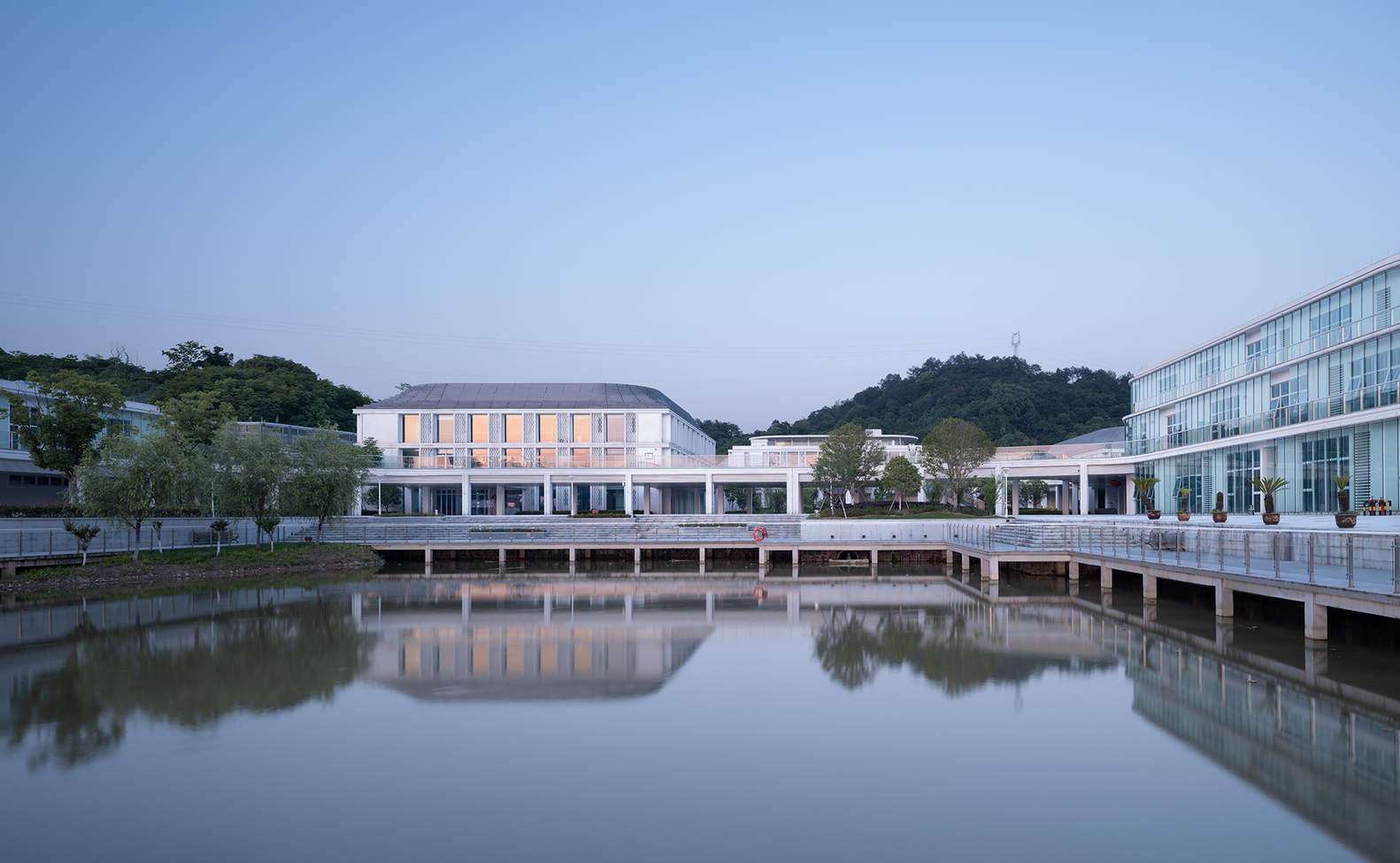
场地与建筑的和谐共生:项目选址于杭州余杭区的大观山果园,充分利用了原有的山水地貌,体现了建筑与环境的和谐共生。设计者在尊重场地原始地形的基础上,巧妙地利用层层台地,解决了高差问题,减少了土方工程量,降低了对环境的破坏。此外,设计还保留了山顶雨水汇集向西流的路径,并将其打造成“曲水流觞”的内部景观,营造出宜人的环境氛围,使建筑与自然融为一体,为居住者提供了舒适的居住体验。
人性化设计的细致关怀:该项目最引人注目的特点之一在于其人性化的设计关怀。设计者深刻理解服务对象的特殊需求,在建筑的各个方面都体现了对他们的尊重与关爱。例如,采用“院中院”的半开放模式,打破了传统福利院的封闭感;使用回字形平面布局,增强了安全感;在安全防护方面,采用通透的金属网和三层玻璃窗,让居住者拥有“景色自由”的权利。这些细节无不体现了设计者对特殊人群的关怀,使这个福利院不仅仅是一个居住场所,更是一个充满温暖和尊严的家。
© 赵墙
© 赵墙
In the fourth year of Yuanyou in the Northern Song Dynasty, there was a severe drought and famine in Hangzhou. At that time, Su Shi, the governor of Hangzhou, sympathized with the suffering of the people and self raised funds to establish a disease clinic called "Anle Fang". This was the first government run hospital in history and the predecessor of Hangzhou's first social welfare institution. For thousands of years, although Anle Fang has become history, the goodness of human nature contained in it has not been cut off, and it has been passed down for thousands of years to this day.
北宋元佑四年,杭州大旱,时疫饥馑。时任杭州太守苏轼体恤百姓疾苦,自筹资金创办病坊,名为“安乐坊”,这是历史上第一家官办民助医院,也是杭州市第一社会福利院的前身。气象千载,安乐坊虽已成历史,但其所含人性之善未曾断绝,跨越千年传承至今。
© 赵墙
The First Social Welfare Institute of Hangzhou is the only welfare institution in Hangzhou that is supported by the government and responsible for the placement of social "three no" individuals, orphans over 18 years old, and homeless beggars. Nearly 85% of the service recipients have mental, intellectual, and physical disabilities and lack the ability to live independently. The vast majority of service recipients will spend their entire lives here, and this is their entire world. We hope to create a new and caring home space for these special groups through humanized design care, so that they can receive lifelong nourishment, regain warmth and confidence in the world, and live with dignity and dignity.
杭州市第一社会福利院是杭州市唯一一家政府托底,承担社会“三无”人员、年满18周岁孤儿和查无着落流浪乞讨人员安置职能的福利机构,其中将近85%的服务对象存在精神、智力、肢体障碍,缺乏自主生活的能力。绝大部分服务对象都将在此终其一生,这里就是他们全部的世界。我们希望通过人性化的设计关怀,为这些特殊人群营造一个全新的、充满关爱的家园空间,使他们收获一生的滋养,重拾人世间的温情与信心,体面而有尊严地生活。
© 赵墙
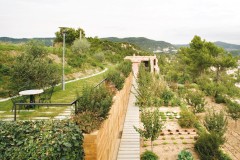
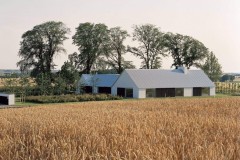
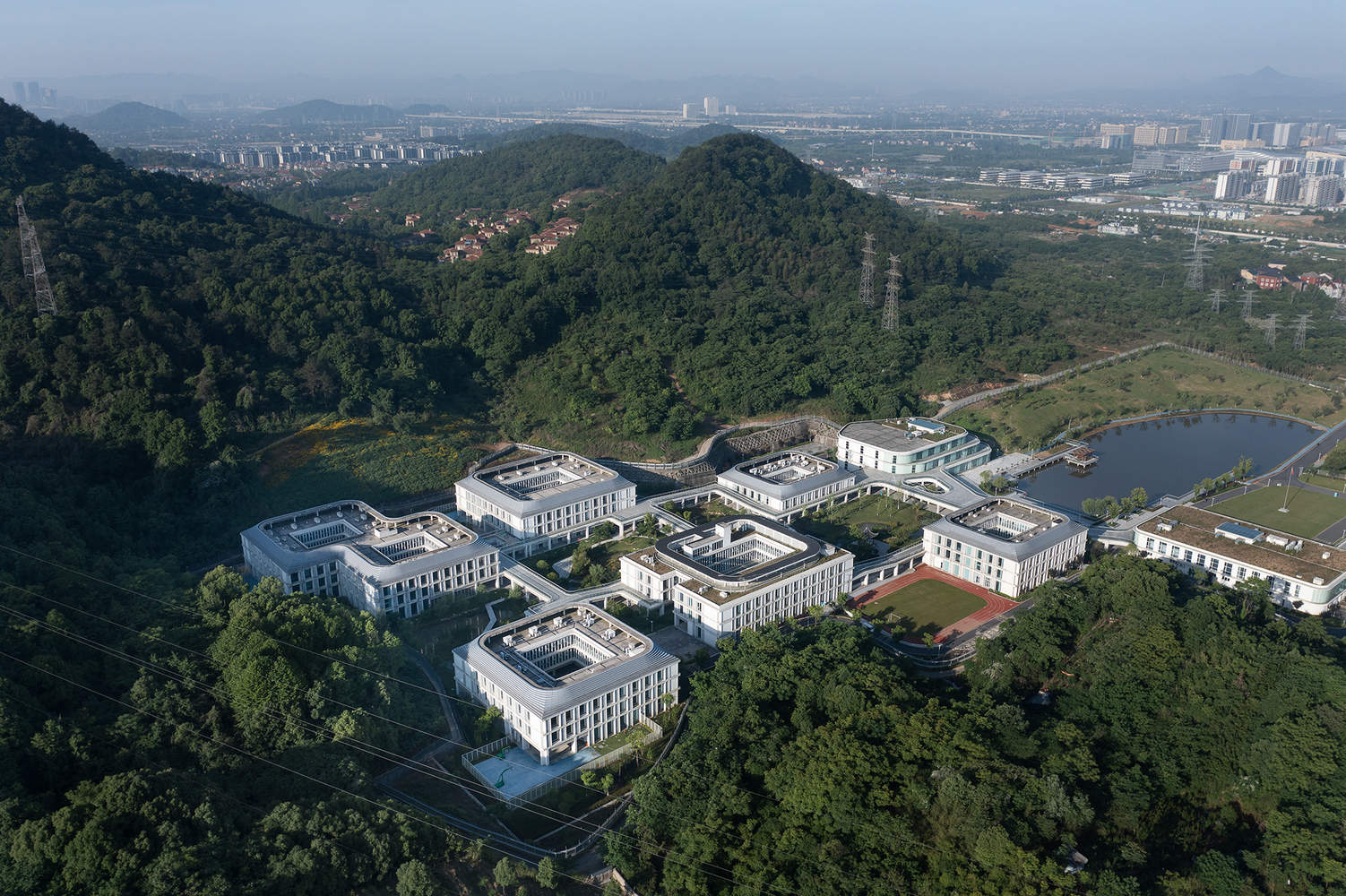
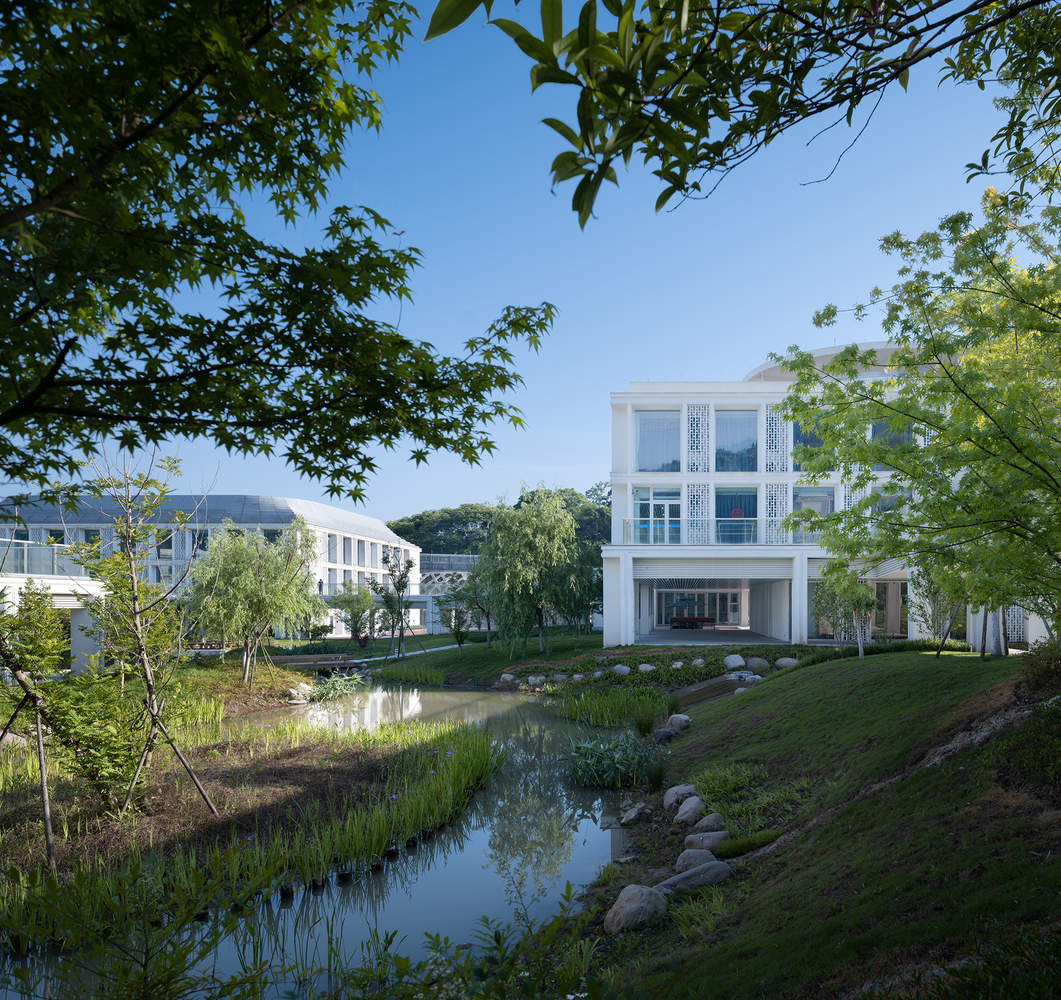
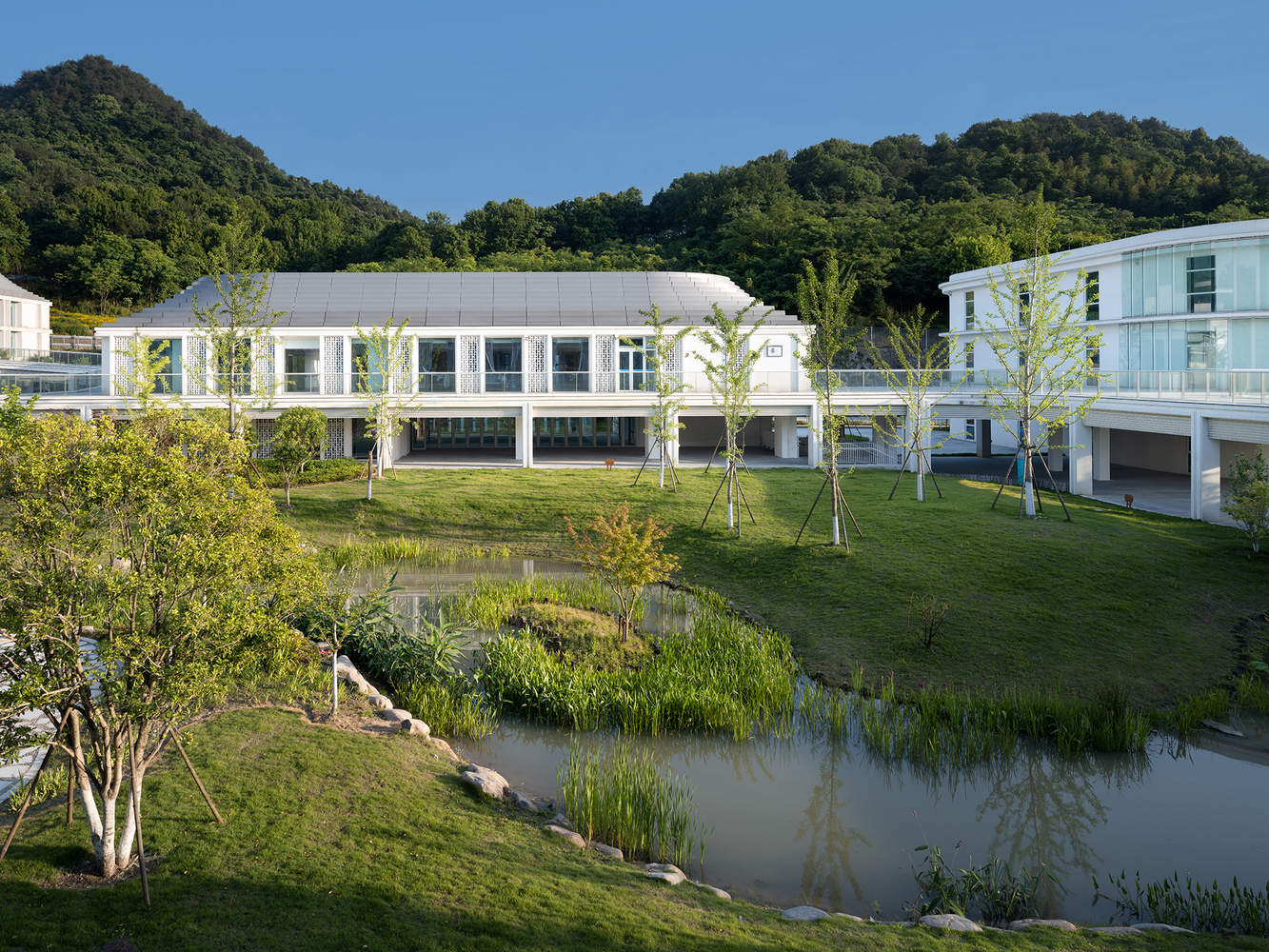
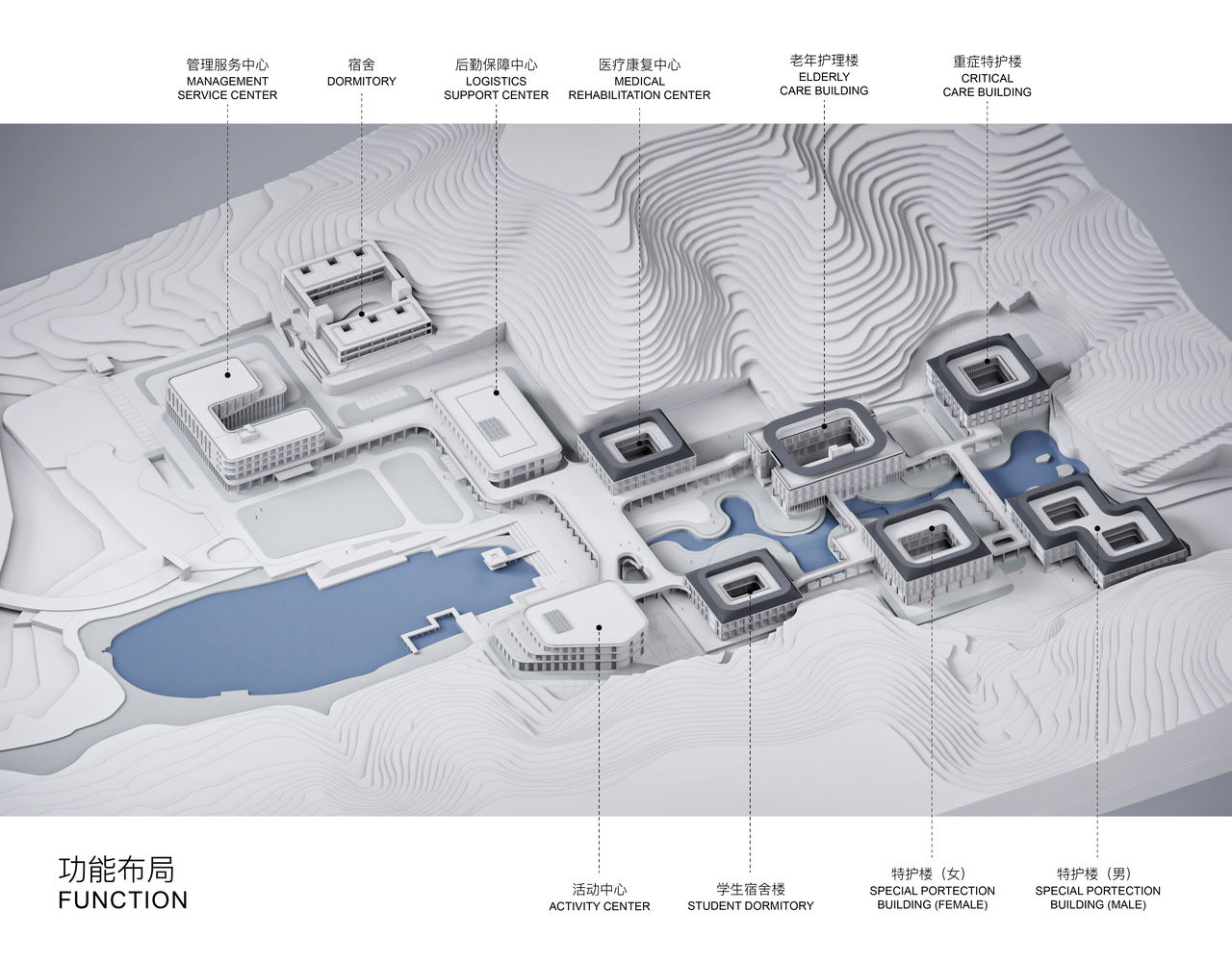
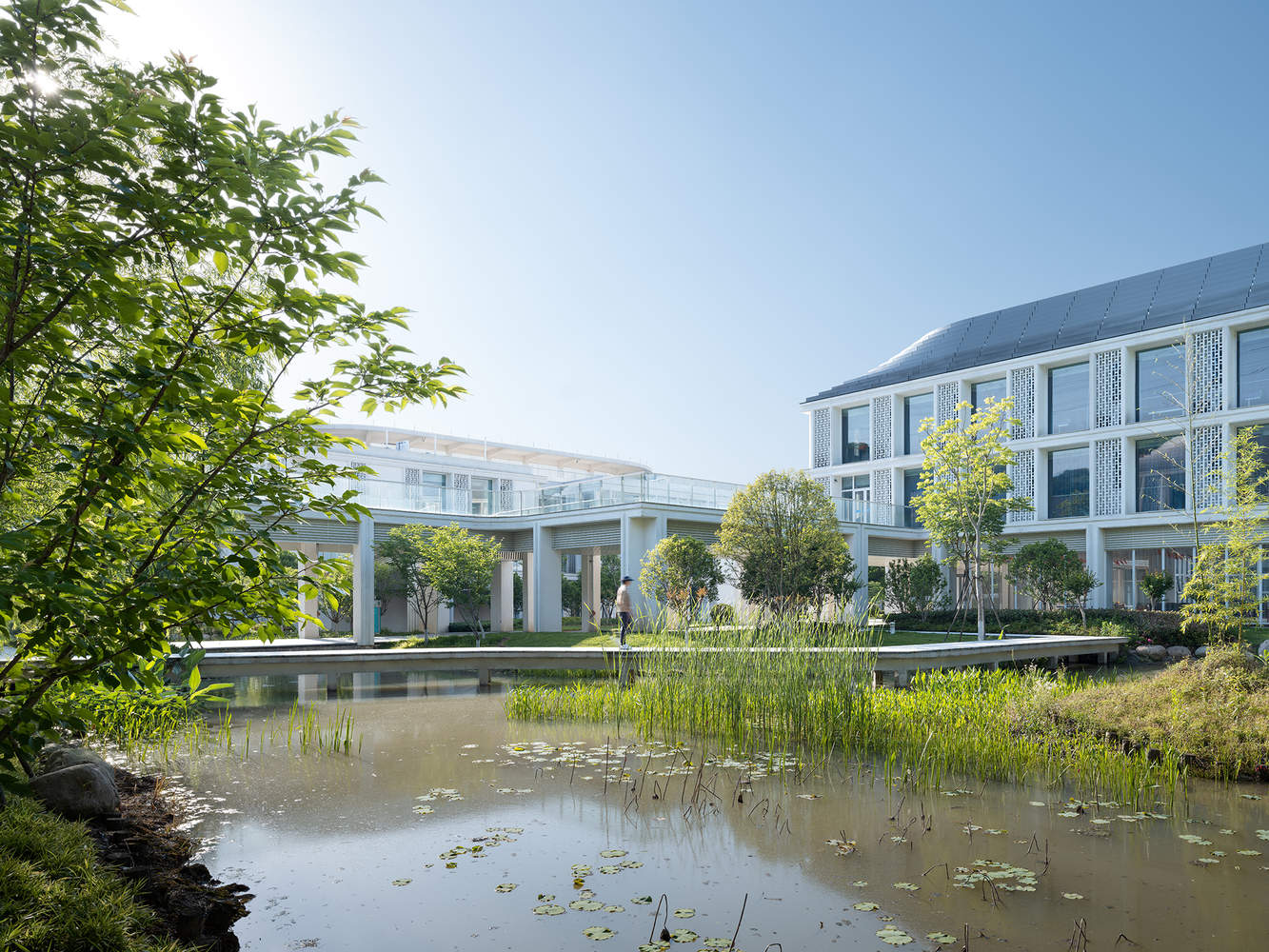
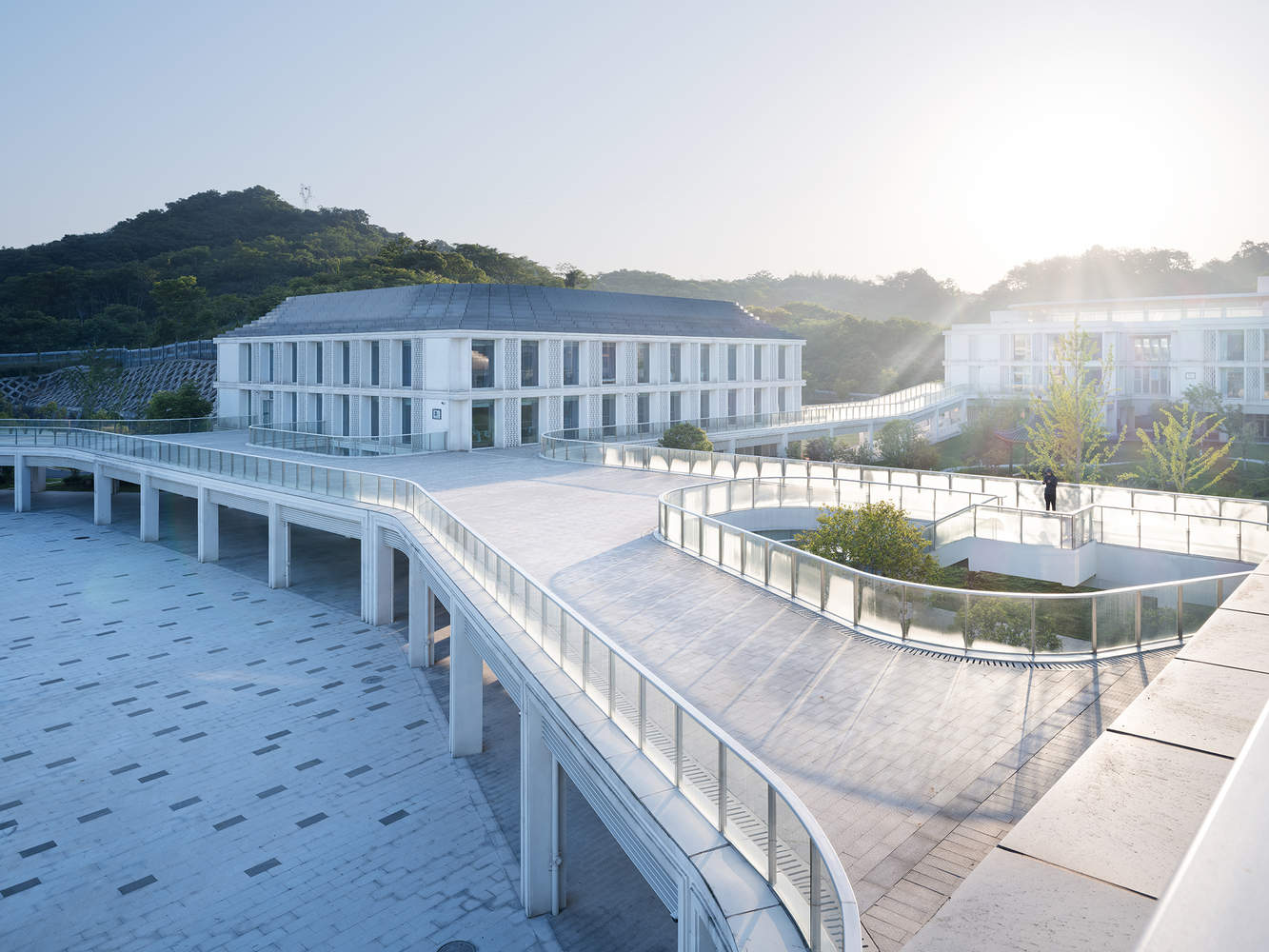
The project is located in Daguanshan Orchard, Pingyao Town, Yuhang District, Hangzhou. It is surrounded by mountains, with a shallow pond on the west side, green mountains and forests, and water lakes circling around, outlining its unique mountain and water features. Based on the terrain direction, the design respects the current situation of the site to the greatest extent possible, divides it into layers of terraces, solves the problem of height difference, controls earthwork excavation and transportation, and the unique terrain promotes unique architectural relationships and landscape environment. The west side of the site is adjacent to the external road, with an administrative office area arranged. The east side has better privacy and is used as a living area. The middle part communicates between individuals and the environment through public services, and the overall layout is divided into dynamic and static zones for easy management. In landscape design, the path of rainwater collecting from the mountain top and flowing westward is preserved, cleverly creating an internal landscape of a "meandering water flowing cup". Using water as a clue, the various clusters of streams stretch down smoothly, winding and flowing into the lake.
山形水势与地域文化
项目位于杭州余杭区瓶窑镇大观山果园,周遭山形环抱,西侧为一浅水塘,青山修林,水渚回环,勾勒其特有之山形水势。依据地势走向,设计最大限度尊重场地现状,分为层层台地,解决高差问题,节制土方挖运,独特的地形促成了特有的建筑关系和景观环境。场地西侧紧邻外部道路,布置行政办公区,东侧私密性较佳,作为生活区使用,中部则以公共服务沟通着个体与环境,整体布局动静分区,便于管理。在景观设计中,保留山头雨水汇集向西流的路径,巧妙地将其打造成“曲水流觞”的内部景观。以水为线索,串联起各个组团绵延的溪涧顺势而下,曲折尽致,汇入湖中。
© 赵墙
分析图
© 赵墙
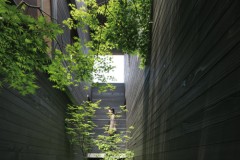
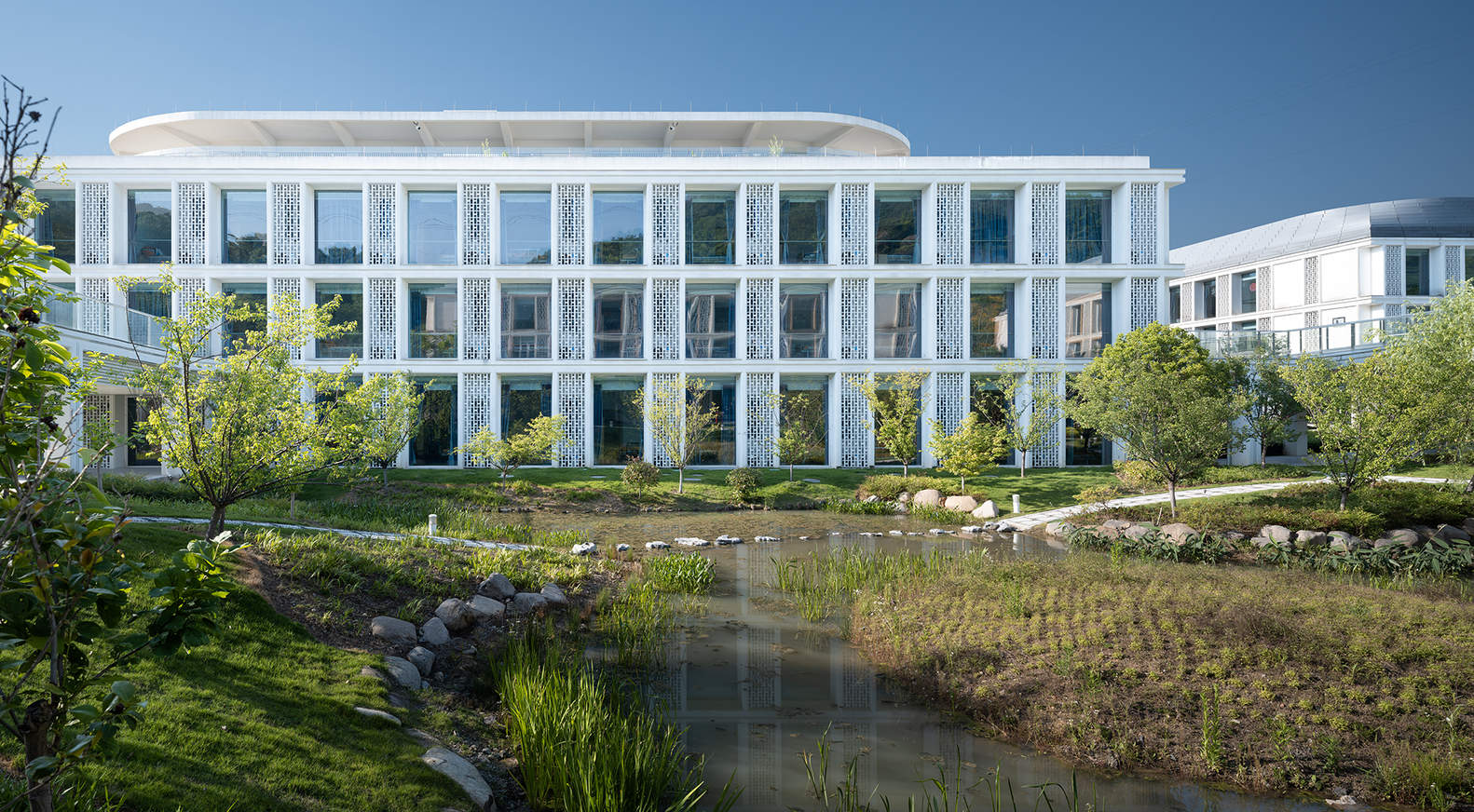
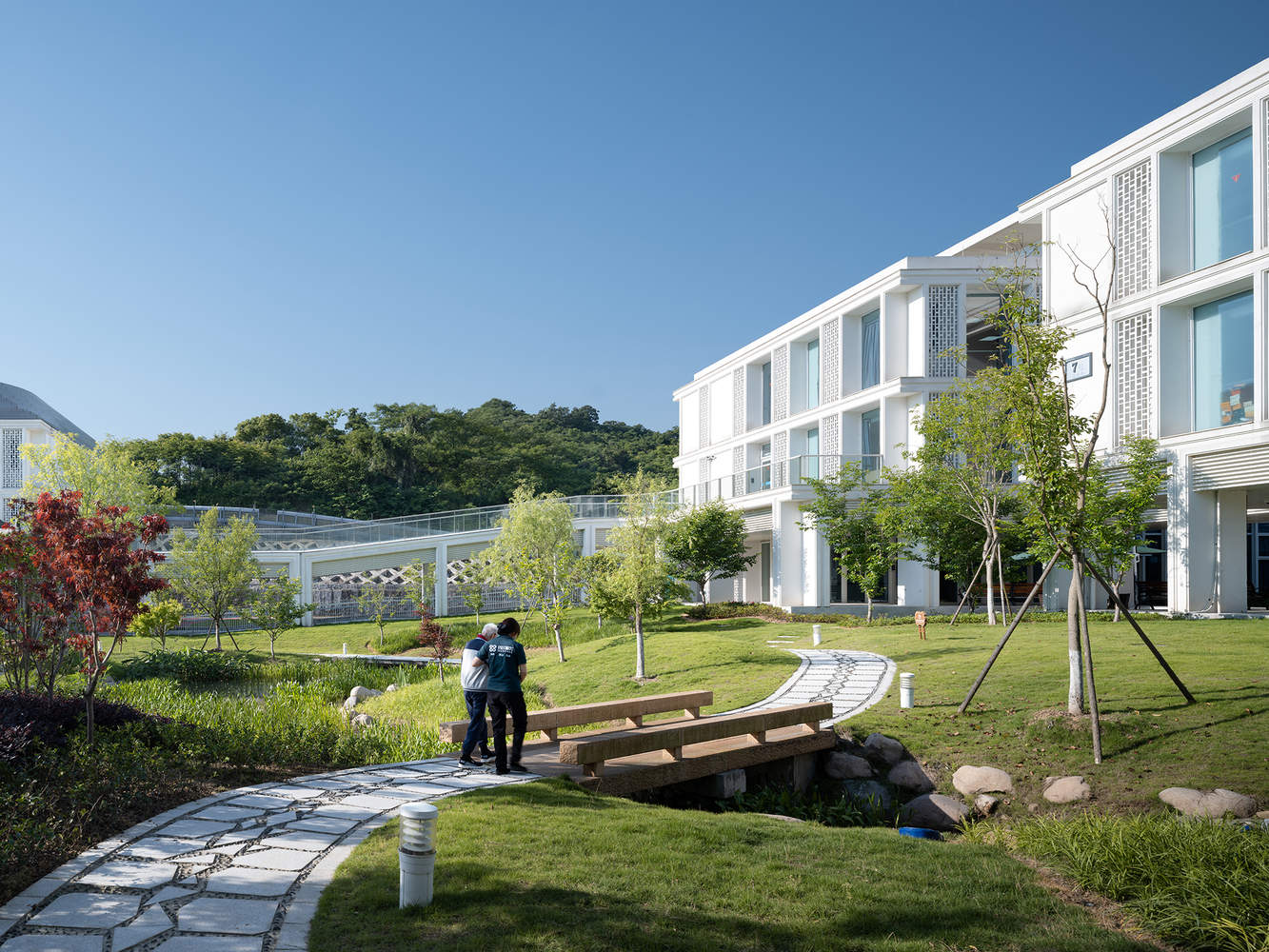
The Liangzhu culture is the cultural heritage of the region, and jade artifacts are the soul of the Liangzhu culture. The design aims to establish a connection between architecture and regional culture. The individual design of the building extracts the formal symbols of the inner circle and outer circle of the jade cong, and based on this, combines them to form a harmonious and unified group, scattered on the overlapping green mountains and stretching continuously. Drawing on the gardening techniques of classical gardens, the architecture appears to be dotted with ink while leaving blank spaces, interpreting Chinese classical architectural forms such as deep courtyards and water pavilions, depicting the imagery of landscape ink charm. The courtyard space of the building opens freely to the central landscape, allowing the imprisoned soul to return to a state of closeness to nature.
良渚文化为地块文化底蕴,而玉器又是良渚文化之魂。设计希望建筑与地域文化能够建立联系,建筑单体设计提取了玉琮内圆外方的形式符号,以此为基础,来组合形成和谐统一的群体,散落于叠映翠嶂,连绵舒展。借鉴古典园林的造园手法,建筑似点墨于留白之际,演绎着深院、水榭等中国古典建筑形式,描绘出山水墨韵的意象。建筑院落空间向中心景观自由开放,让禁锢的心灵回归亲近自然的状态。
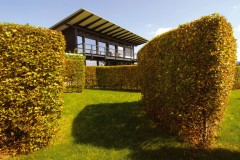
The tranquility of the water and the richness of the mountains, like vastness and mystery, are a noble response to the site, and also create a sense of landscape sentiment for the objects of use in it. Facing each other and hiding from each other, laying infinite foreshadowing for limited space. The form and layout of the architecture respect the original mountainous terrain, water flow, and regional culture of the site, and excavate the inherent beautiful scenery.
水之幽静,山之厚然,如旷如奥,是对场地的崇高回应,也为其间的使用对象营造着山水情怀。相望、相隐,为有限的空间埋下无限的伏笔。建筑的形式与布局,尊重着场地原有的山形水势与地域文化,挖掘出内在的佳境盛景。
© 赵墙
© 赵墙
Humanized Design Care
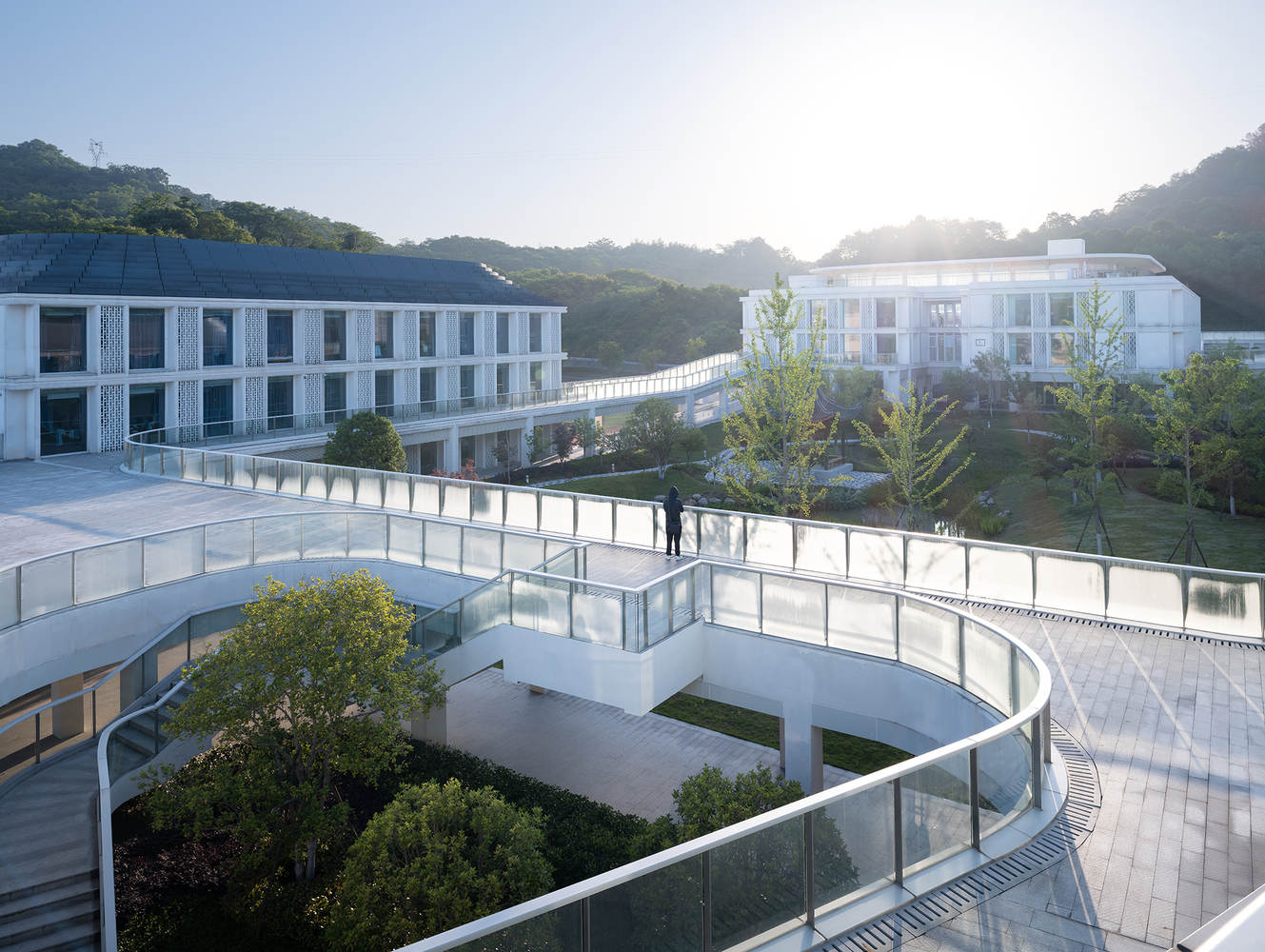
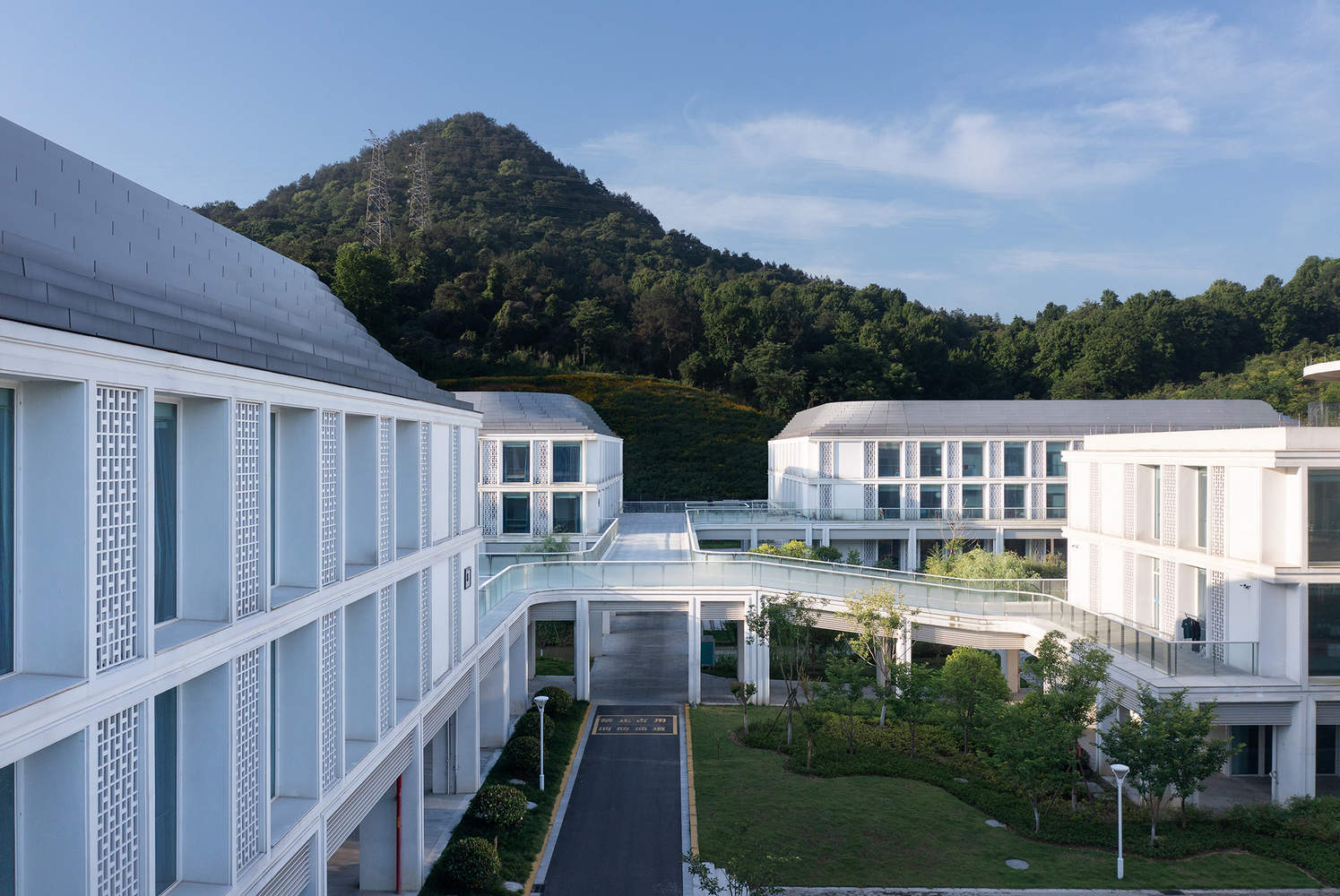
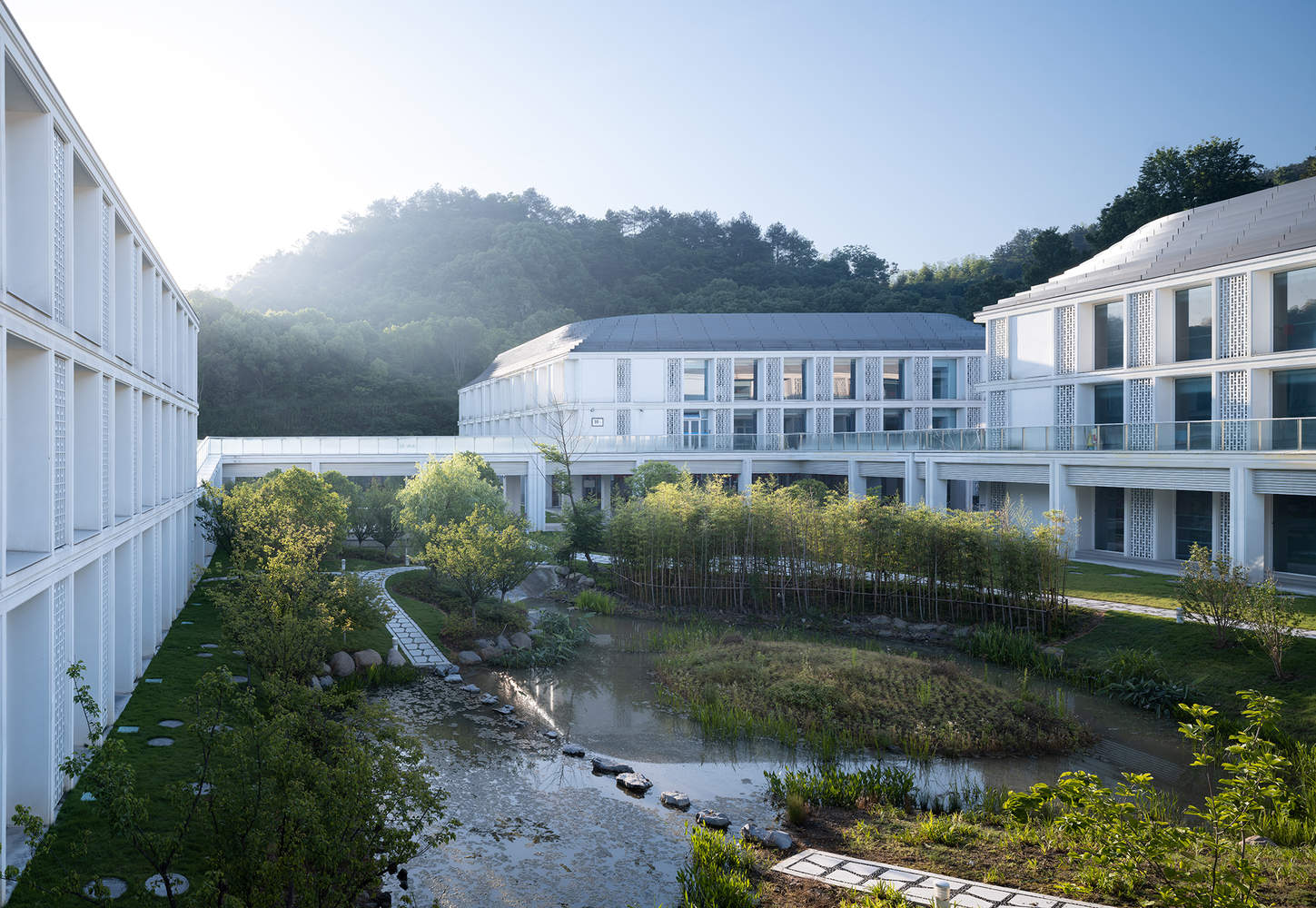
The garden style spatial layout provides an opportunity for humanized design care.. In terms of management mode, the design abandons the previous closed mode of solid wall enclosure and proposes a semi open mode of courtyard enclosure called "courtyard within courtyard". A management unit is formed by enclosing the courtyard as the center, with the bottom layer elevated and the internal and external environment permeable to each other. All individual buildings are connected by a long corridor, allowing for smooth passage through wind and rain, making it convenient for daily management and use.
人性化的设计关怀
园林式的空间布局为人性化的设计关怀提供着契机。在管理模式上,设计摒弃了以往实墙围合的封闭模式,提出了院落围合的“院中院”半开放模式。以院落为中心围合形成管理单元,底层架空,内外环境可相互渗透。所有单体建筑通过长廊连接在一起,通行风雨无阻,便于日常管理使用。
© 赵墙
© 赵墙
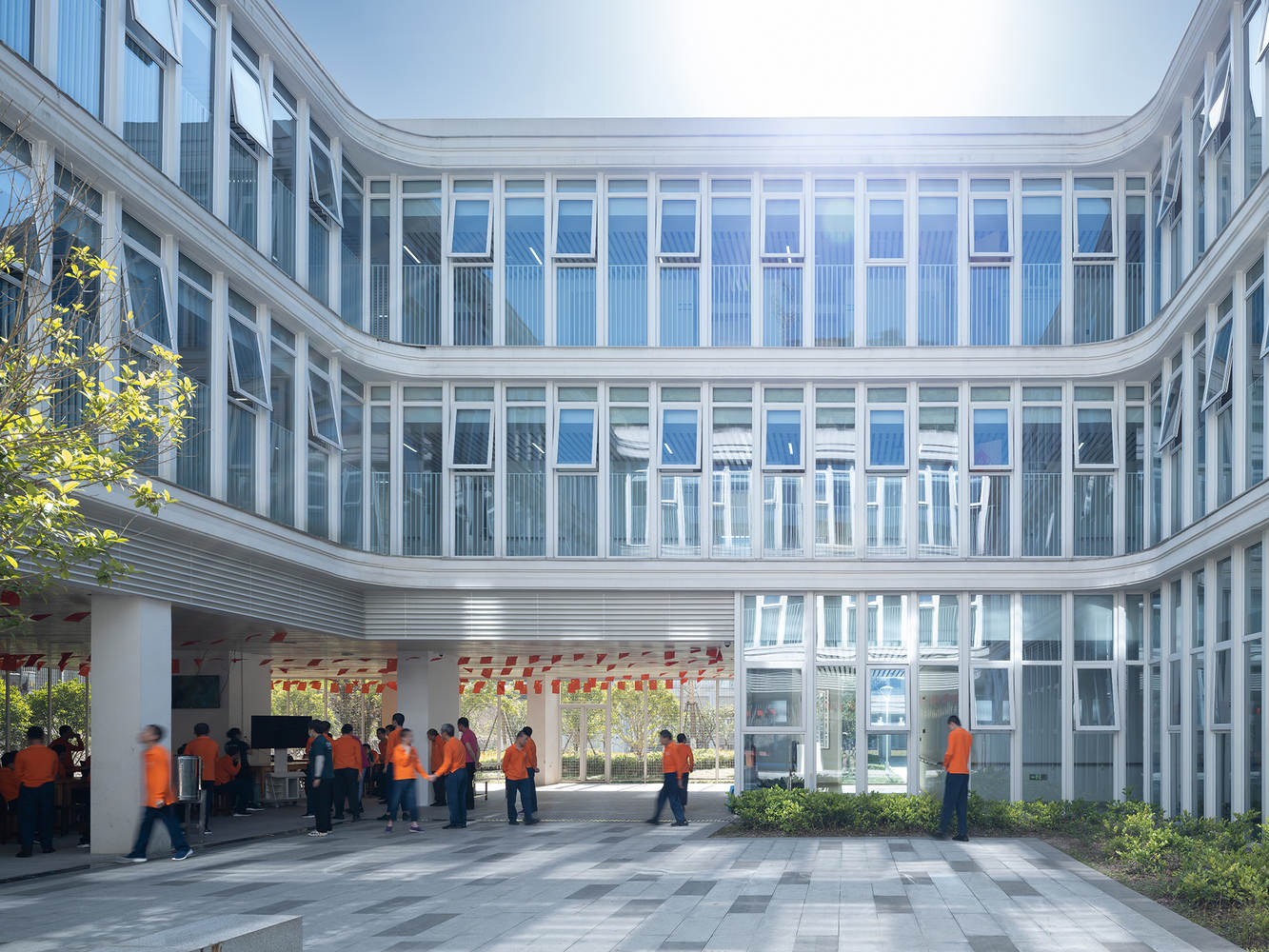
In the field of graphic research, a zigzag layout was adopted in the design. End of pipe walkways are prone to creating blind spots and management blind spots, which prevent timely detection of unexpected situations that may arise for service recipients. The circular corridor in the zigzag plane can effectively prevent special groups from losing their direction, improve their sense of safety when walking, and facilitate staff management.
在平面研究中,设计采用了回字形布局。尽端式走道容易形成视线死角和管理盲区,不能及时发现服务对象出现的突发情况。而回字形平面中环廊可以有效避免特殊人群迷失方向,提高行走时的安全感,也便于工作人员管理。
© 赵墙
© 赵墙
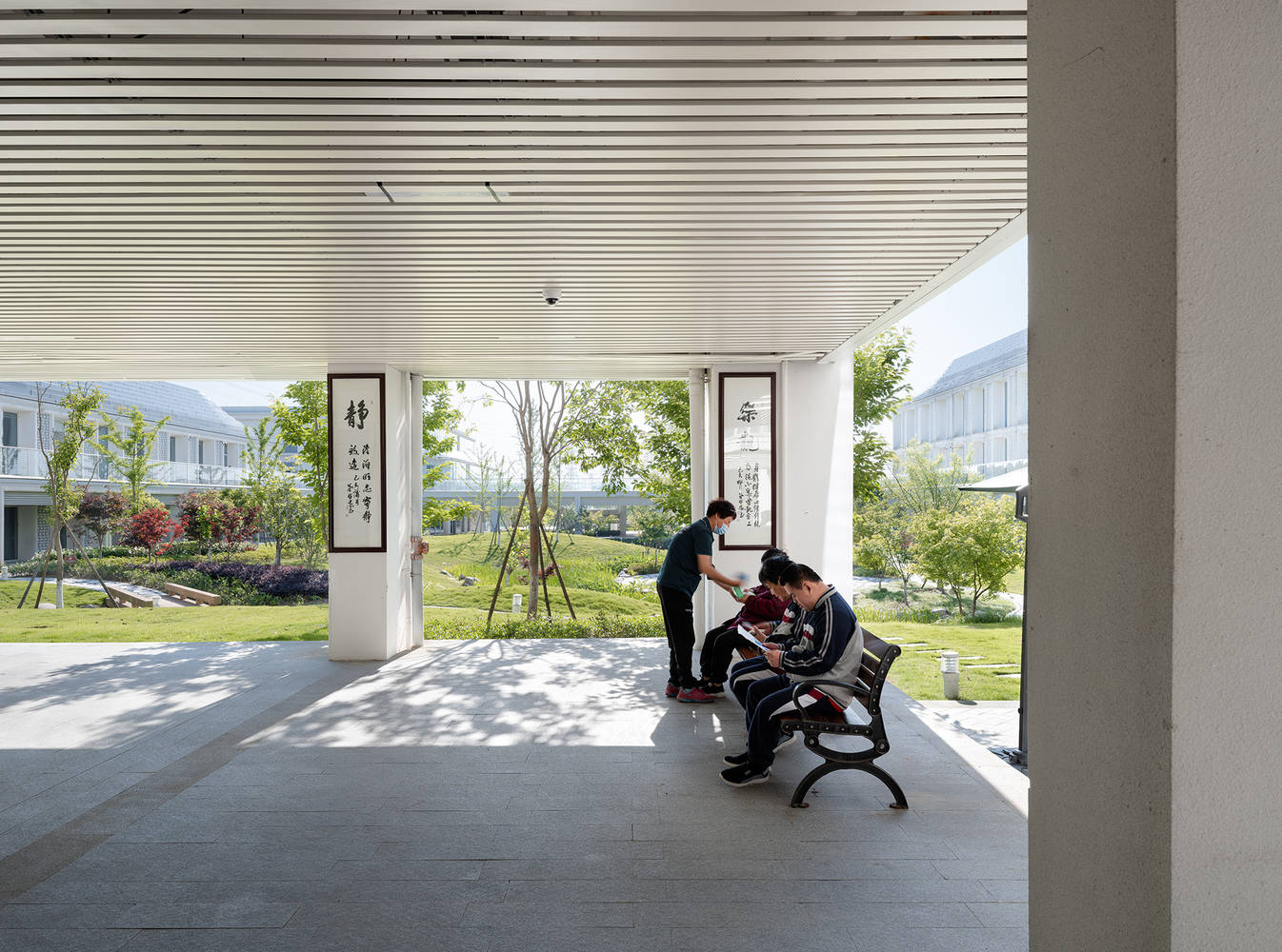
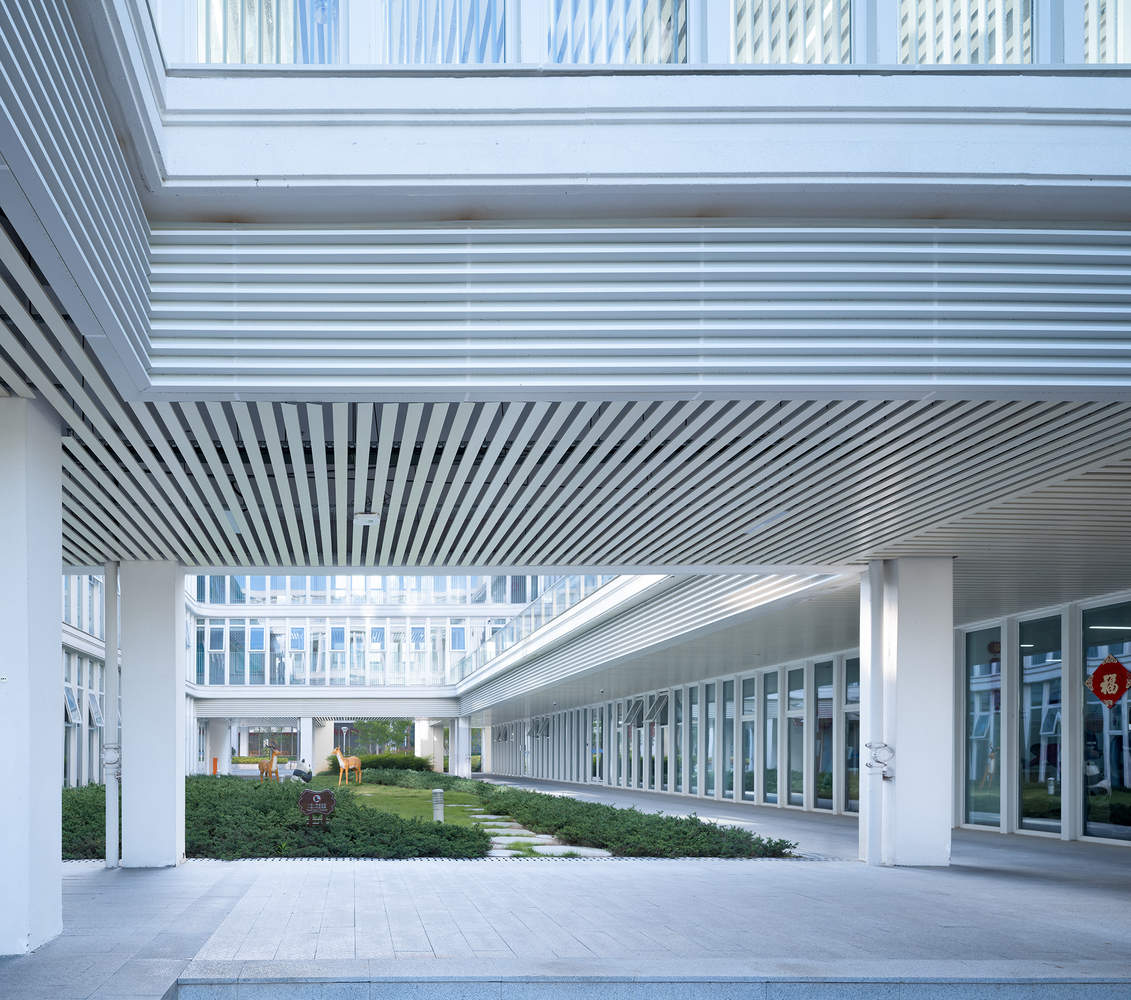
Considering the humid environment in mountainous areas, the main living quarters will be arranged on the second floor or above, and the living space will be arranged on the east, west, south, and three sides to ensure sufficient sunlight. The service and activity rooms will be arranged on the north side. The lower elevated level serves as a semi indoor activity space, combined with an outward expanding outdoor activity space, forming a diverse range of activity venues. Service recipients can engage in layered activities or centralized activities at the bottom layer to meet different usage and management needs, breaking the impression of closed and dull welfare homes.
考虑到山区环境潮湿,故将主要生活用房布置于二层以上,居住空间布置于东西南三面,保证有充足的阳光,服务及活动用房布置于北面。底下架空层作为半室内活动空间,加上向外拓展的室外活动空间,形成了多样的活动场地。服务对象既可以分层活动,也可以下到底层集中活动,满足不同的使用与管理需求,打破旧有福利院封闭沉闷的印象。
© 赵墙
© 赵墙
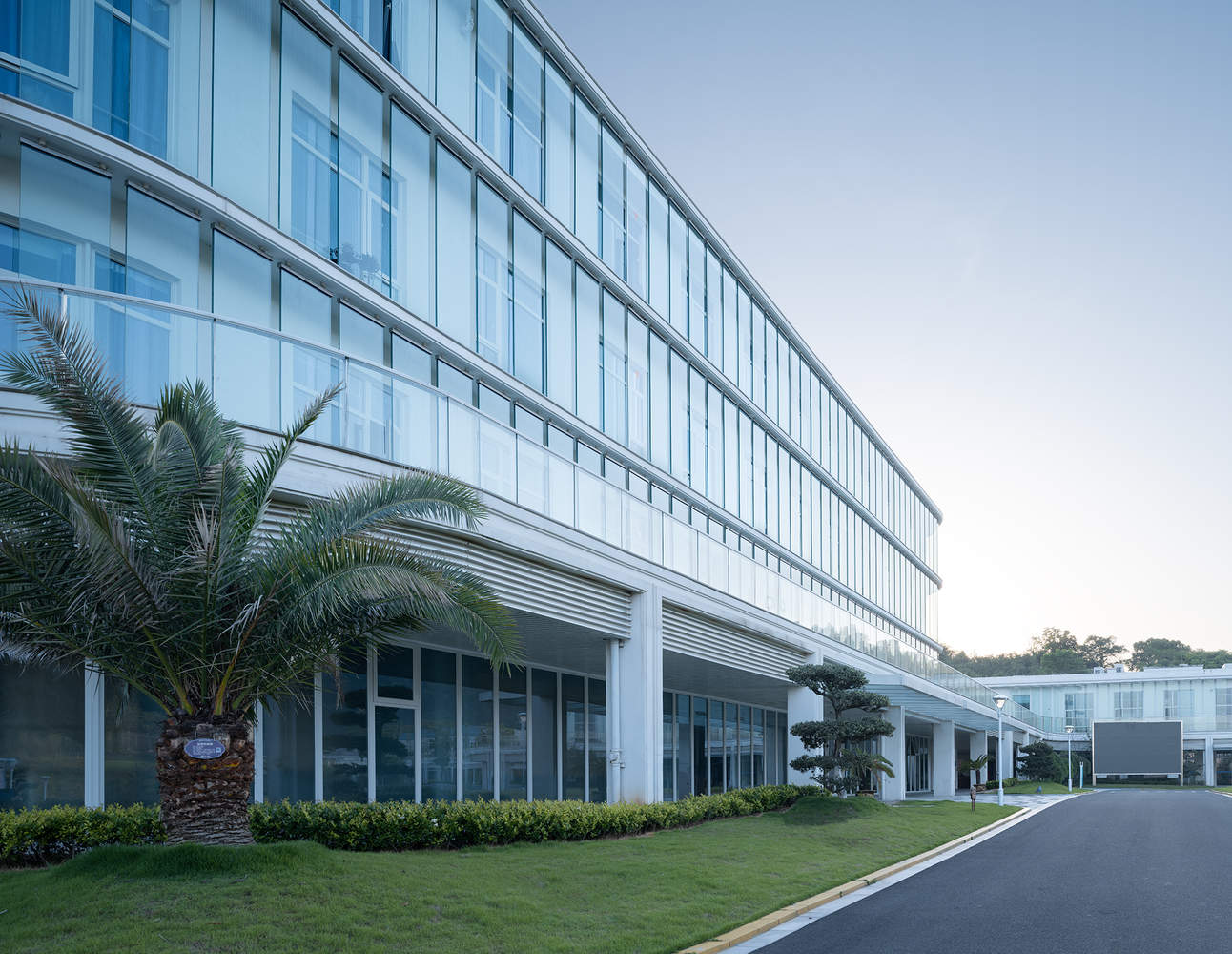
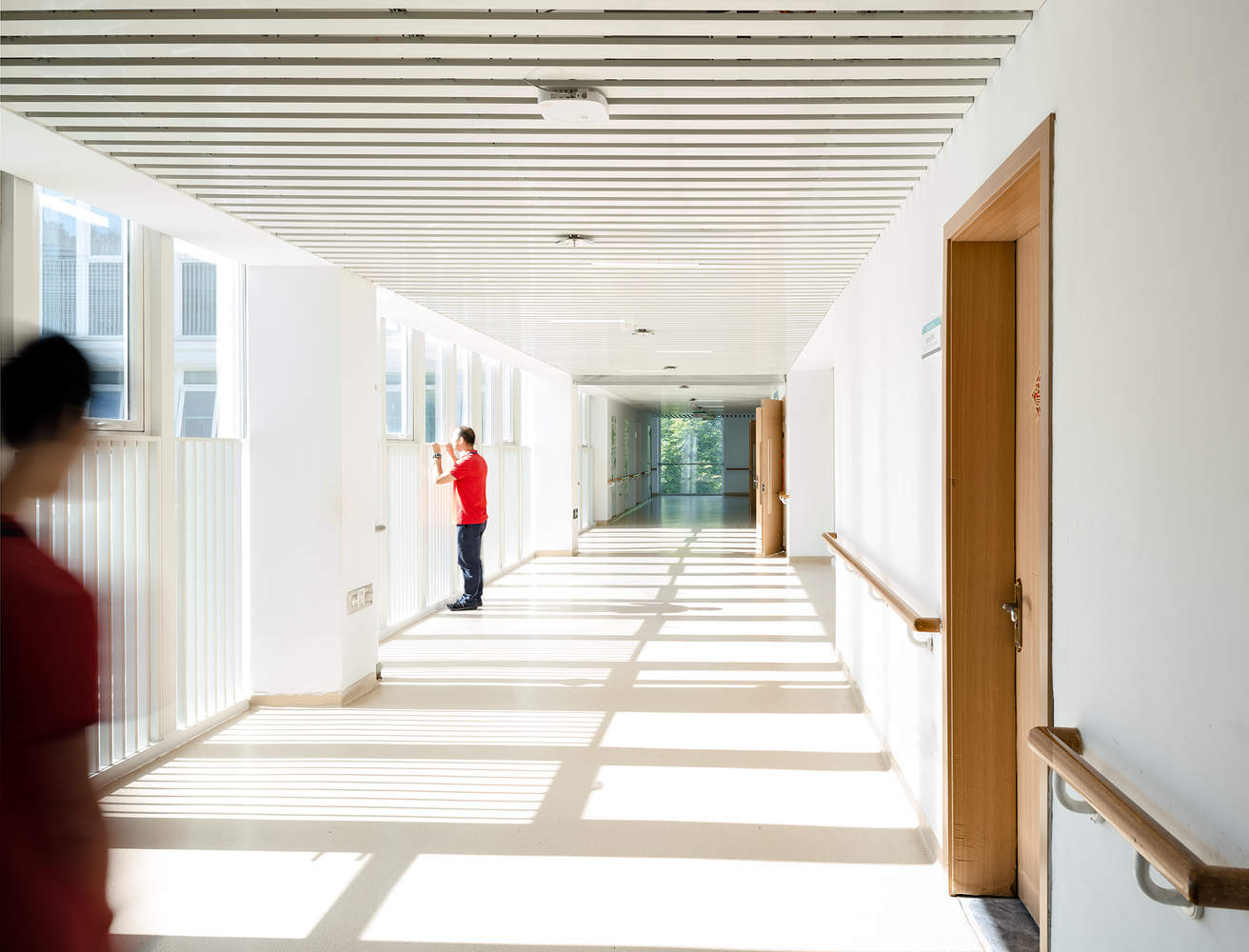
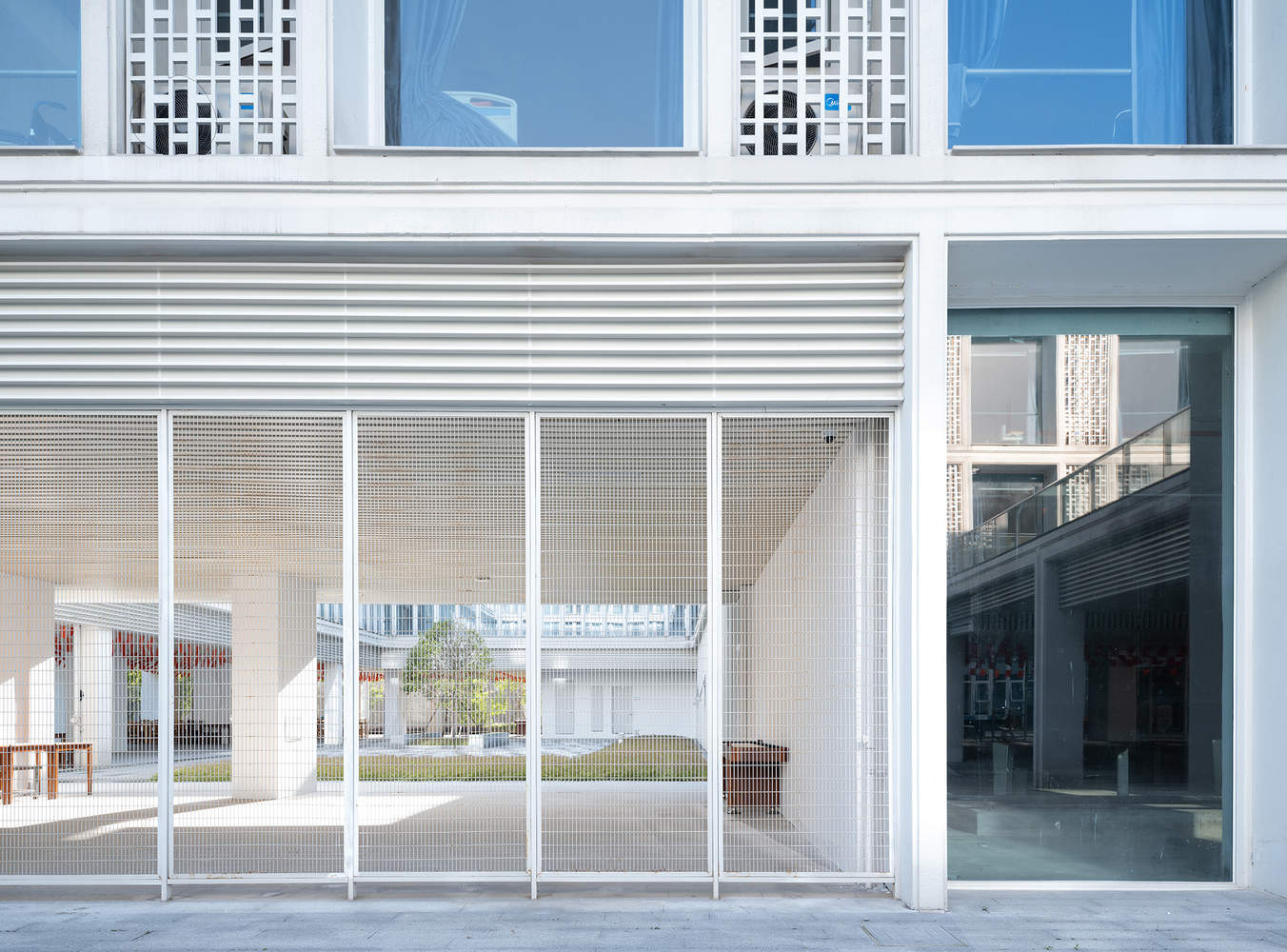
In terms of security protection, the design aims to change the deeply ingrained iron window marks of the past, allowing special groups to enjoy the right to "scenic freedom" in the room. The design abandons the iron railings in the living room and adopts three-layer tempered laminated insulated glass windows, which not only provide protection but also bring the best landscape view to the interior. Chinese style flower grilles are used as decorative components on the exterior of the glass opening fan to ensure safety protection. The bottom level elevated activity area adopts transparent metal mesh as a fence, fully ensuring unobstructed visibility and eliminating the sense of enclosure for special groups.
在安全防护方面,设计希望改变过往根深蒂固的铁窗印记,让特殊人群在房间内也能享有“景色自由”的权利。设计摒弃居室内的铁栏杆,采用三层钢化夹胶中空玻璃窗,它既能起到防护作用,又能为室内带来最好的景观视野。在玻璃开启扇外衬以中式花格栅,作为外立面装饰构件同时保证安全防护。底层架空活动区采用了通透的金属网作为围墙,充分保证视线上的通畅,消除特殊人群的封闭感。
© 赵墙
© 赵墙
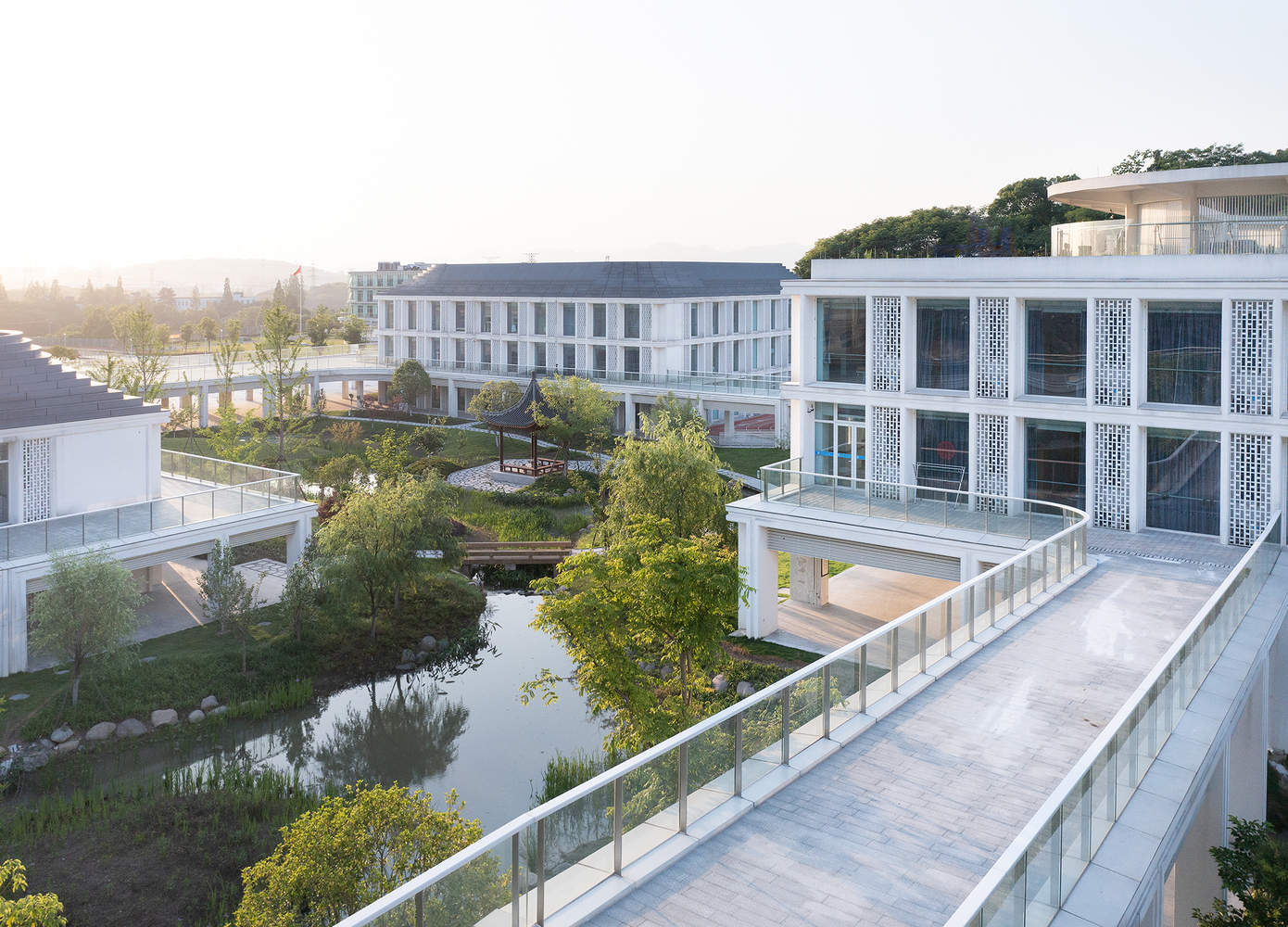
Conclusion
The level of care for special groups implies a high level of civilization development.. Although Anle Fang, which existed thousands of years ago, has passed away, the inherent goodness of its people is rippling with clear ripples. A floor is like a small street, and a building is like a small community. The First Social Welfare Institute of Hangzhou City takes humanistic care as the axis and embodies humanized design everywhere, completing a dialogue that transcends time and space. Jade is a beautiful stone. "Building a landscape nurtures the heart of jade, and every moment at dusk and sunset, everyone can see the light of humanity belonging to themselves from afar.
结语
对特殊人群的关怀程度暗示着一个文明发展的高度。千载之前的安乐坊虽已远逝,但其所含的人初性善却荡漾着清澈的涟漪。一个楼层就是一个小街道,一幢楼房就像一个小社区。杭州市社会第一福利院以人文关怀为轴,处处体现人性化设计,完成一场跨越时空的对谈。“玉者,美石也。”筑山水之境哺润玉石之心,每一刻黄昏落日之时,每个人都能遥见归属于自我的人性之光。
© 赵墙
© 赵墙