Shenzhen Traditional Chinese Medicine Hospital Guangming Branch/Meng Jianmin Team
深圳市中医院光明院区 / 孟建民团队
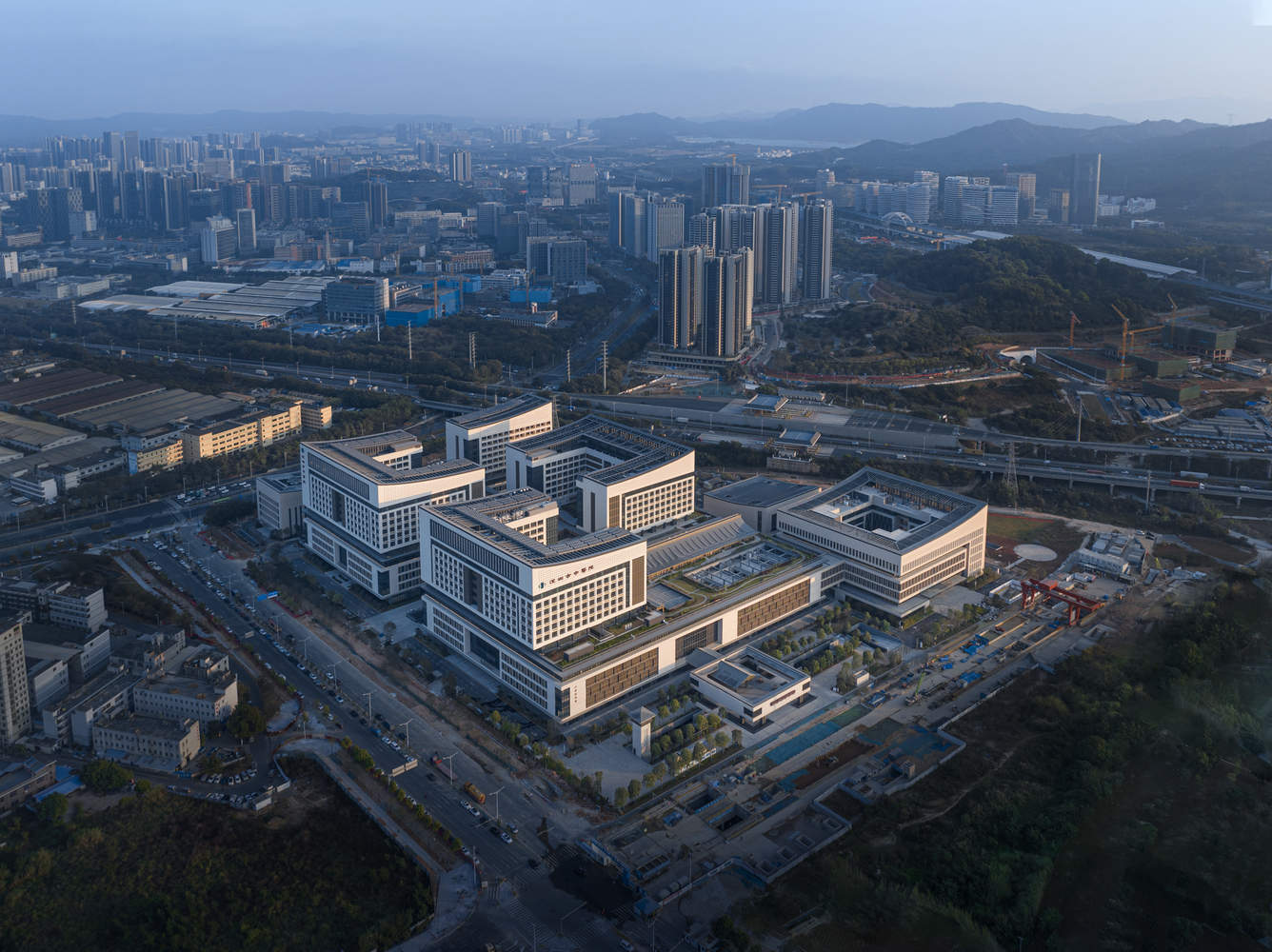
规划与技术的巧妙融合: 该项目在规划层面展现了卓越的应对复杂挑战的能力。面对场地内的市政道路、防洪渠、以及高速公路噪音等多重不利因素,设计团队并未退缩,而是巧妙地将这些限制转化为优势。通过将主要建筑沿场地边缘布置,有效避开了噪音干扰,同时在东侧打造中式花园,不仅美化了环境,更实现了与防洪渠及交通设计的协同,体现了对城市环境的深刻理解和对规划策略的精准把控。此外,分期建设的策略和人性化的交通设计也体现了设计师对未来医院发展及患者体验的周全考虑,展现了在技术层面解决复杂问题的能力。
文化与创新的完美结合: 该项目最引人瞩目的在于其将中医文化与现代建筑巧妙融合。设计团队深入挖掘了中国传统建筑的精髓,将“苑、园、院”的理念融入建筑布局,营造出“园中有园,院中有院”的独特空间意境。这种设计手法不仅赋予了建筑深厚的文化底蕴,也营造出虚实相生的空间体验。同时,通过“经络纵横,层层递进”的设计手法,将建筑内部空间与中医理论相联系,进一步强化了建筑的文化内涵。弧线坡屋顶和“格扇通花”的设计元素,则在细节上展现了现代东方韵味,体现了设计师对传统文化的深刻理解和创新性表达。
可持续与人性化的设计理念: 该项目在设计中充分考虑了可持续发展和患者体验。通过在住院街下方设置人性化立体交通系统,有效解决了交通拥堵问题,并为患者提供了更便捷的就医环境。建筑主体由架空屋顶花园分为上下两部分,创造了室内外空间的流畅连接,并结合深圳的海洋性气候特征,实现了建筑与自然的和谐共生。此外,模块化设计和可生长式功能体系,保证了医院未来发展的灵活性和可持续性。这些设计细节都体现了设计师对患者需求和未来发展的深刻思考,展现了以人为本的设计理念和对可持续发展的重视。
© 是然建筑摄影
© 袁小宜
There are two main clues for the design and creation of Guangming Campus of Shenzhen Traditional Chinese Medicine Hospital: one is the rational analysis and solution based on complex planning technology problems, and the other is the expression of architectural culture that combines traditional Chinese medicine and Chinese culture.
深圳市中医院光明院区设计创作主要有两条线索,一是基于复杂的规划技术问题的理性分析和解题,二是中医和中国文化相结合的建筑文化表达。
In terms of planning technology, this project has three design difficulties: 1. There are numerous unfavorable factors in the project site, such as municipal roads and flood control channels crossing the site, as well as noise interference from the Longda Expressway, which have a significant impact on the planning layout strategy;
2. Hospitals need to be constructed in stages, with each stage operating independently and interconnected. Ensuring a reasonable distribution of overall and staged medical resources is a challenge that the design needs to face;
3. Large hospitals pose a huge challenge to urban transportation, and how to improve peak traffic efficiency and provide a humanized travel experience is a key aspect of hospital planning and design.
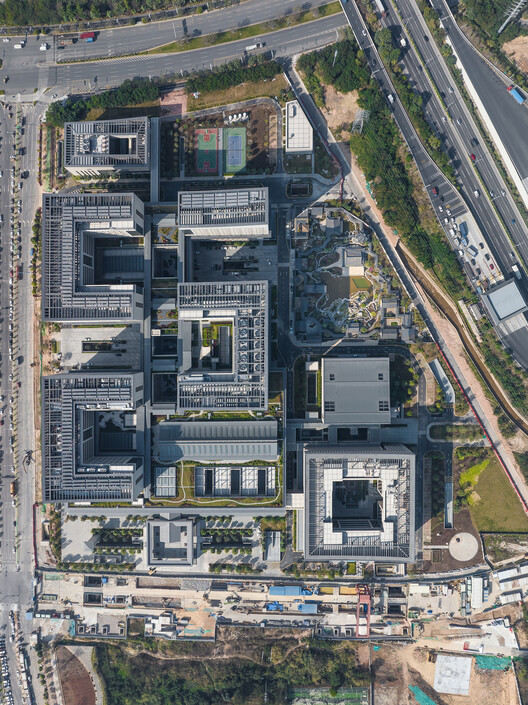
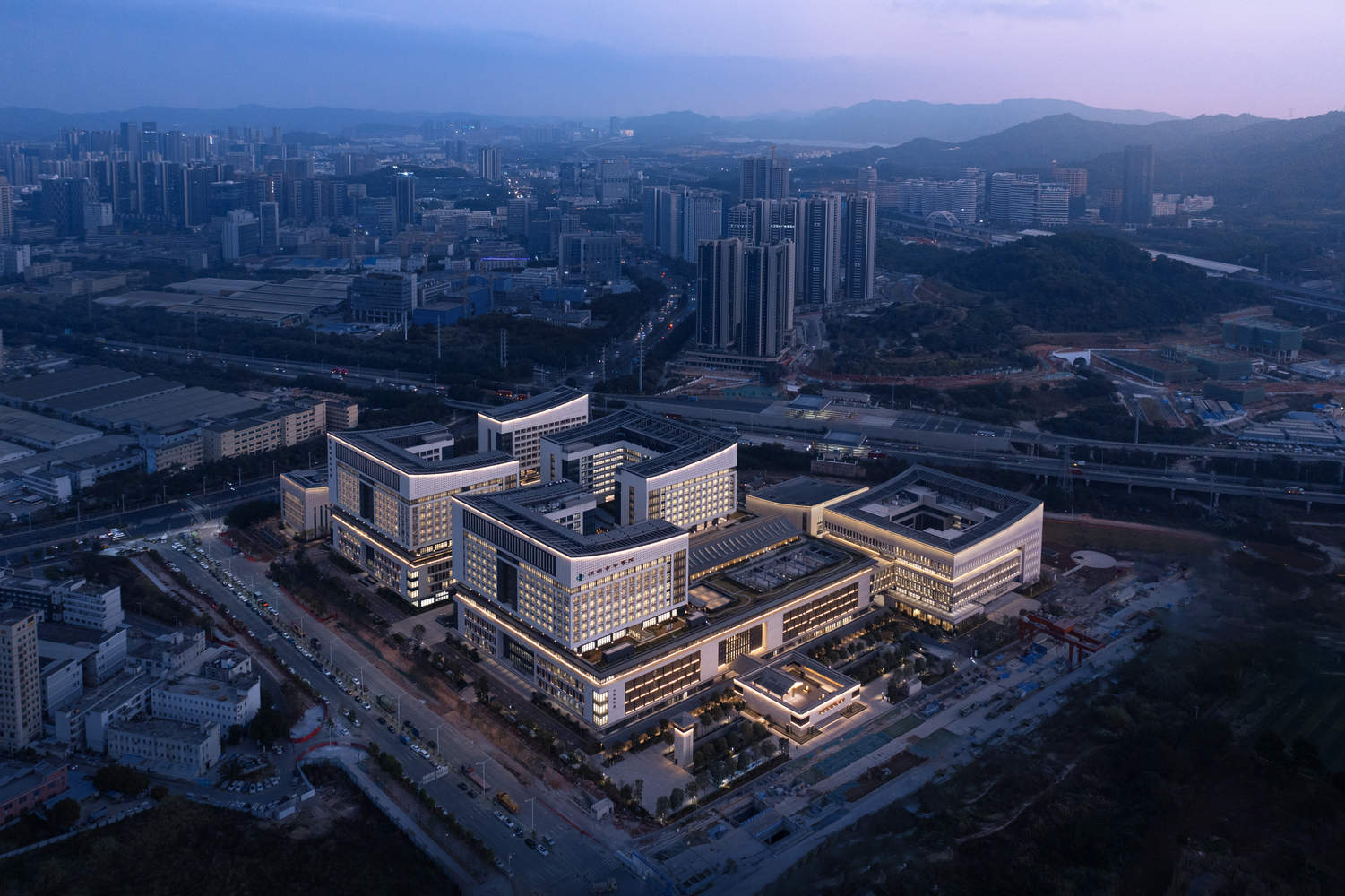
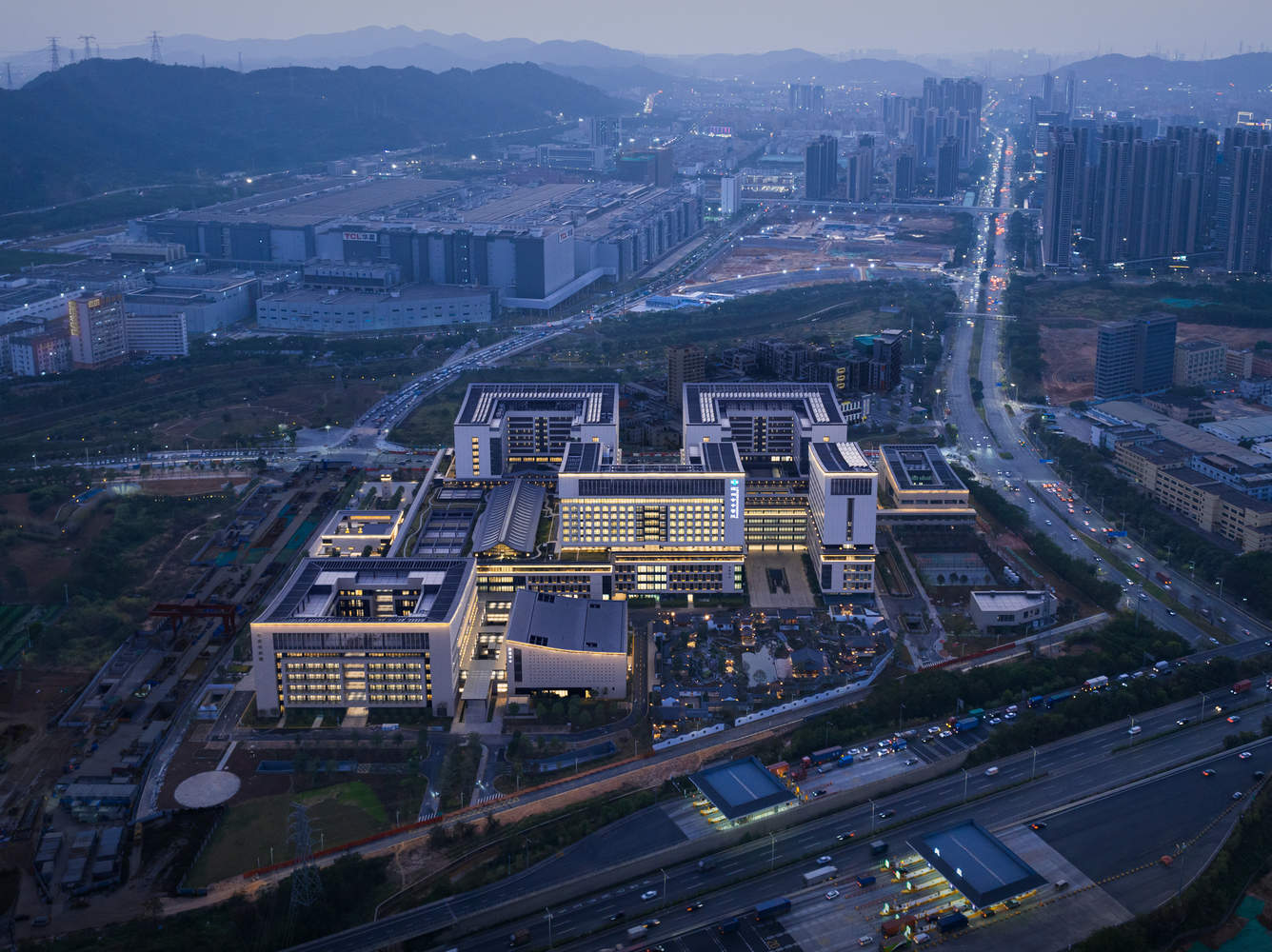
4. In terms of planning strategy, the main buildings will be arranged along the west and south sides of the site, away from the noise interference of highways, and a Chinese style garden will be designed on the east side. Combined with flood control channels and traffic design, the limitations of rivers and municipal roads will be transformed into advantages for hospital planning and layout.
在规划技术层面,本项目有三个设计难点:
1. 项目地块中存在众多不利因素,市政道路和防洪渠穿越场地,同时龙大高速公路的噪音干扰,这些因素对规划布局策略有着重大影响;
2. 医院分期进行建设,各期之间既需独立运作,又要互相联系,如何确保整体和分期医疗资源的合理分布,是设计需要面对的挑战;
3. 大型医院对城市交通提出巨大挑战,如何提高高峰期交通效率和交通出行的人性化体验是医院规划设计关键内容。
4. 在规划策略上,设计将主要建筑沿场地西侧、南侧布置,远离高速的噪音干扰,并在东侧设计中式花园,结合防洪渠和交通设计,将河道和市政道路的限制转化为医院规划布局的优势。
© 是然建筑摄影
© 是然建筑摄影
The design combines medical street with modular design, creating a versatile and flexible expandable functional system for a growing hospital. All future expandable functions can be easily integrated with existing systems and become part of the new system. The plan is to install a humanized three-dimensional transportation system on the underground level below the inpatient street along the main axis of the hospital. Taxis, ride hailing vehicles, and other stop and go vehicles will be introduced to the hospital for pick-up and drop off services, serving emergency, outpatient, and inpatient patients. This can not only avoid traffic congestion on urban roads caused by traditional vehicles dropping off passengers on the roadside, but also shorten the walking distance of patients and achieve a wind and rain free medical environment. In terms of architectural culture, how to express traditional Chinese medicine culture and traditional architectural culture through architectural design, while reflecting the future prospects of traditional Chinese medicine, is the main starting point for our project creation in the Guangming Campus of Shenzhen Traditional Chinese Medicine Hospital. The design involves systematic thinking from four aspects: planning layout, functional structure, spatial hierarchy, and facade design, to showcase the cultural characteristics of the new type of traditional Chinese medicine hospital architecture.
设计将医疗街和模块化设计相结合,创造了一个既变化丰富,又可灵活扩建的可生长式医院功能体系。所有将来可扩展的功能均可方便地与既有体系相融合,成为新体系的一部分。方案沿医院主轴线方向,在住院街下方地下一层设置人性化立体交通系统,将出租车、网约车等即停即走车辆引入医院落客接驳,服务急诊、门诊和住院病患,既可以避免传统车辆在路边落客造成的城市干道交通拥堵,又能缩短患者行走距离,实现无风雨医疗环境。在建筑文化方面,如何通过建筑设计表达中医文化和传统建筑文化,同时体现对未来中医的展望是我们在深圳市中医院光明院区项目创作中的主要出发点。设计从规划格局、功能结构、空间层次、立面造型等四个层面进行系统思考,展现新型中医院建筑文化特色。
© 是然建筑摄影
© 是然建筑摄影
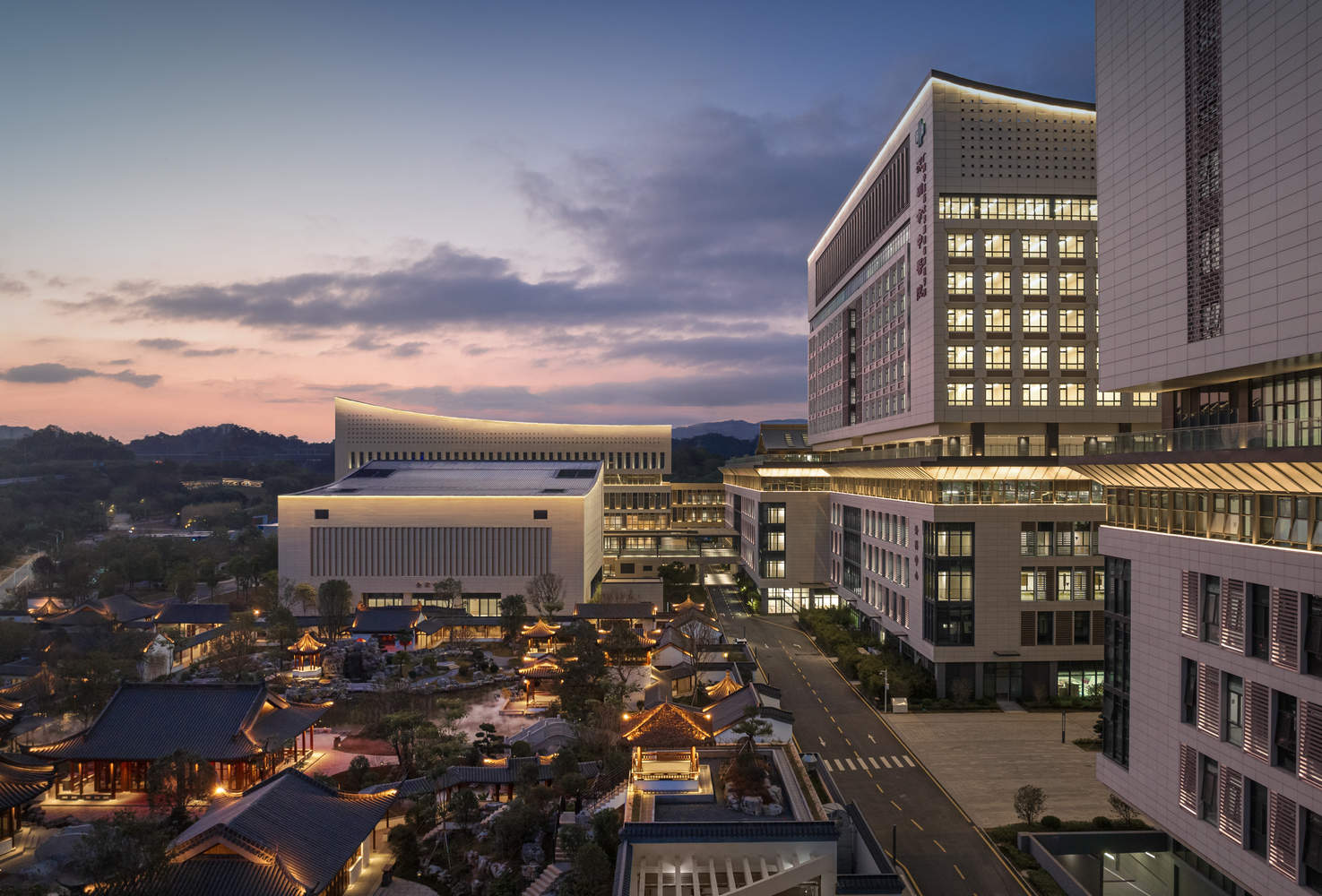
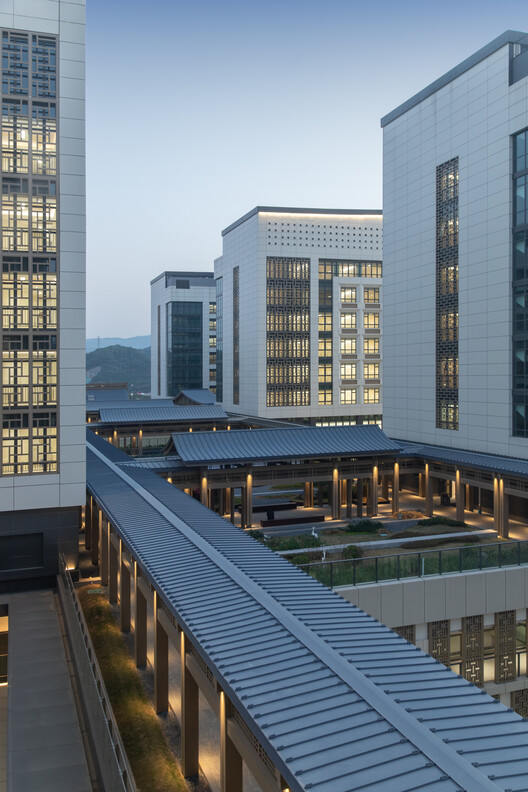
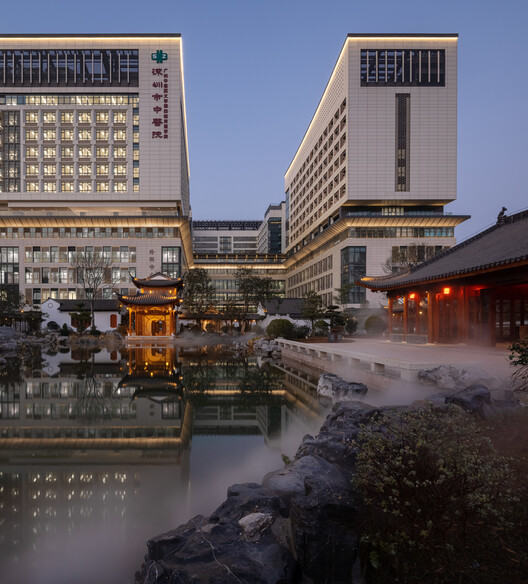
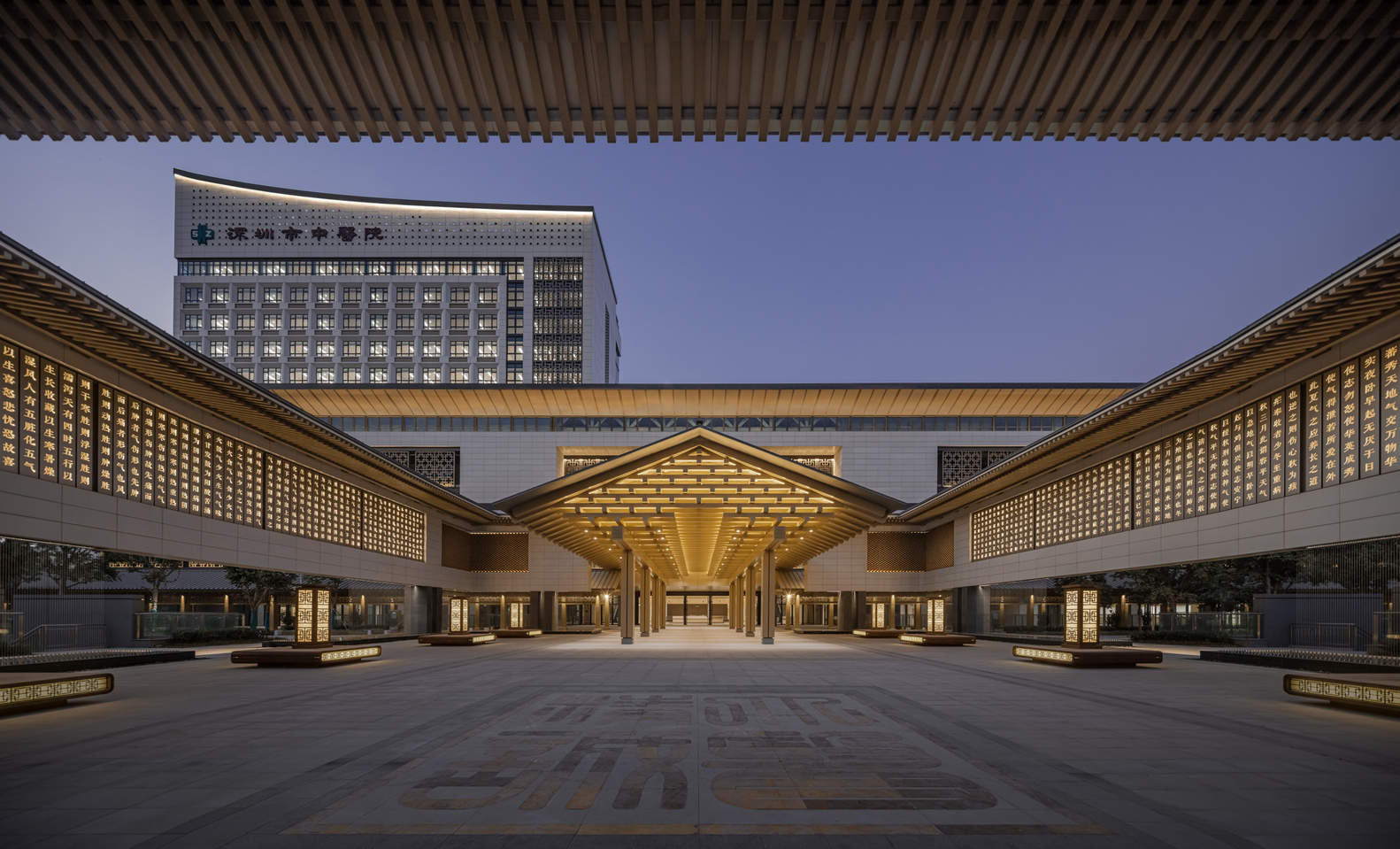
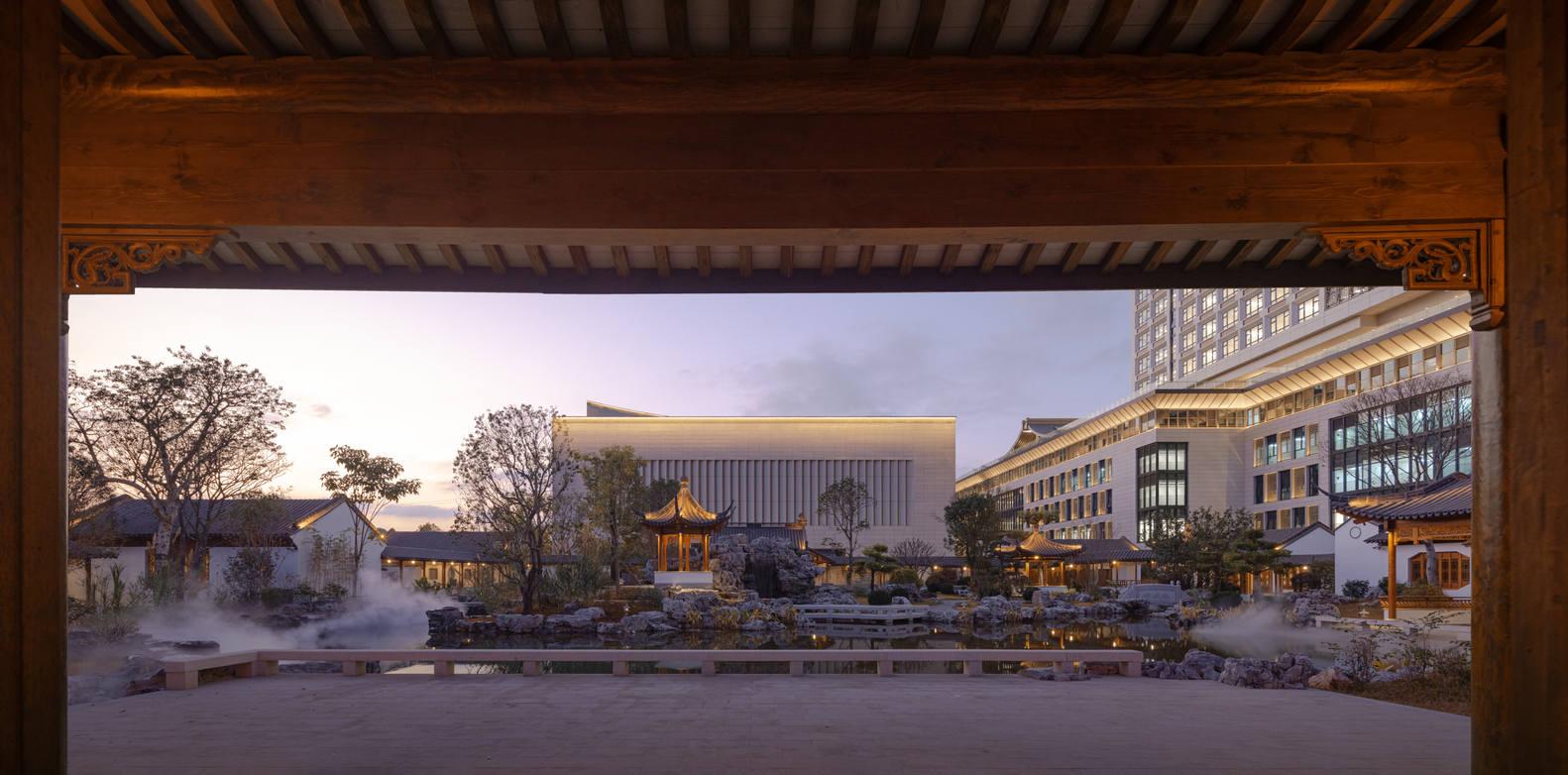
There is a garden within a garden, and a courtyard within a garden. Chinese architecture and gardens often depend on each other and coexist harmoniously. The plan follows the trend and shapes, arranging the buildings along the perimeter of the site and forming a garden system on the east side of the site. The design adopts a "concave" shaped volume as the architectural theme, with a series of "concave" shapes shifting with each other to form a continuous and dynamic semi enclosed spatial structure. At the same time, we will implant "garden", "garden", and "courtyard" into it, forming an overall layout of "garden within garden, courtyard within garden". The integration of "garden, garden, and courtyard" creates a Feng Shui pattern that combines reality and virtuality, and embraces yin and yang.
壹 · 苑中有园,园中有院
中国建筑与园林往往互相依存,和谐共生。方案因势随形、将建筑沿场地周边布置,并在场地东侧形成一个园林体系。设计采用“凹”字形体量作为建筑母题,一连串“凹”形体量互相错动,形成连续、动态的半围合空间结构。同时,我们将 “苑”“园”“院”植入其中,形成“苑中有园,园中有院”的总体布局。“苑、园、院”相融相接,浑然一体,营造出一种虚实并济、阴阳合抱的风水格局。
© 是然建筑摄影
© 是然建筑摄影
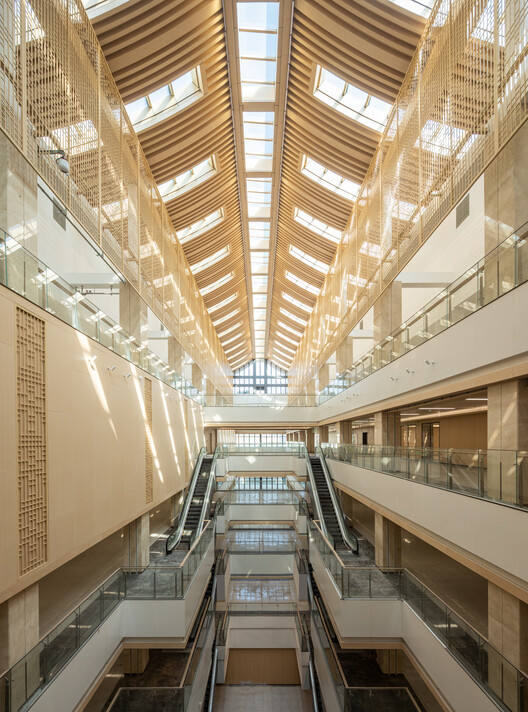
2. Meridians crisscross and progress layer by layer. Meridians are the channels through which the human body circulates qi and blood, connects organs, the surface of the body, and various parts of the body. The plan is based on the "ten" axis as the "meridian", running through the top and bottom to communicate internally and externally. The internal road network of each unit is a "network" that crisscrosses and unfolds layer by layer. The double axis of the "ten" character unfolds along Changzhen Road and Guangbu Road, and the space progresses layer by layer, forming a unique Chinese style spatial sequence. The medical function axis organizes outpatient and medical technology functions, and sets up functional facilities such as elevated plazas, courtyards, self-service, health lecture halls, and courtyards; The inpatient life axis organizes functions such as hospitalization, medical care and rehabilitation, and sets up courtyard style main entrances, outpatient halls, art galleries, traditional Chinese medicine lecture halls, courtyards, and other spaces. Multiple supporting service facilities and shared functions are implanted to provide high-quality services for the entire hospital.
贰 · 经络纵横,层层递进
经络是人体运行气血、联系脏腑、体表及全身各部的通道。方案以“十”字双轴为“经”,贯穿上下,沟通内外。各单元内部路网为“络”,纵横交错,层层展开。“十”字双轴分别沿长圳路和光布路展开,空间层层递进,形成独特的中式空间序列。医疗功能轴组织门急诊和医技功能,设置架空广场、中庭、自助服务、健康讲堂、庭院等功能设施;住院生活轴组织住院、医养康复等功能,设置庭院式主入口、门诊大厅、艺术画廊、中医大讲坛、庭院等空间,并植入多种配套服务设施和共享功能,为全院提供优质服务。
© 是然建筑摄影
© 是然建筑摄影
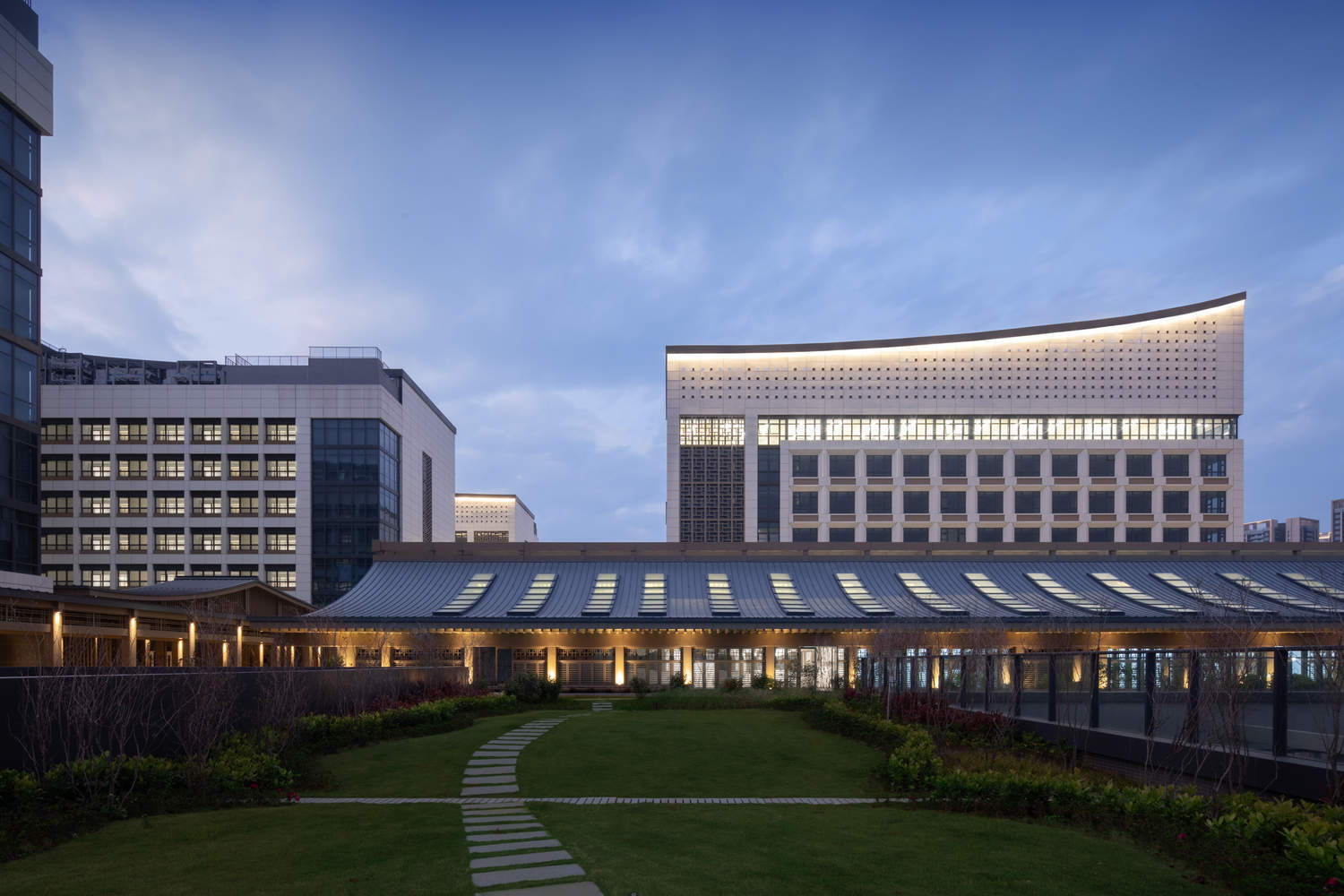
3. The interplay between reality and virtuality, blending and permeating. The main body of the building is divided into two parts, the upper and lower parts, by an elevated rooftop garden. The upper part is a three sided enclosed residential functional volume for hospitalization, elderly care, etc. The lower part includes outpatient and medical technology functions arranged in a large flat layout. The plan integrates the ground garden system and roof garden system into an interconnected whole by setting up a ground level elevated and elevated courtyard. Design in combination with the oceanic climate characteristics of Shenzhen to ensure the mutual flow and transformation of indoor and outdoor spaces. With the infiltration of green plants, architecture and nature complement each other, becoming a poetic place enveloped by nature.
叁 · 虚实相生,相融渗透
建筑主体由架空屋顶花园分为上下两部分。上部为三面围合的住院、养老等居住功能体量。下部为大平层布局的门诊、医技等功能。通过设置底层架空和通高庭院,方案将地面园林系统、屋顶花园系统整合为一个互相关联的整体。设计结合深圳海洋性气候特征,保证室内外空间互相流动、转化。伴随绿植的渗透,建筑与自然相映成趣,成为被自然包裹的诗性场所。
© 是然建筑摄影
© 是然建筑摄影
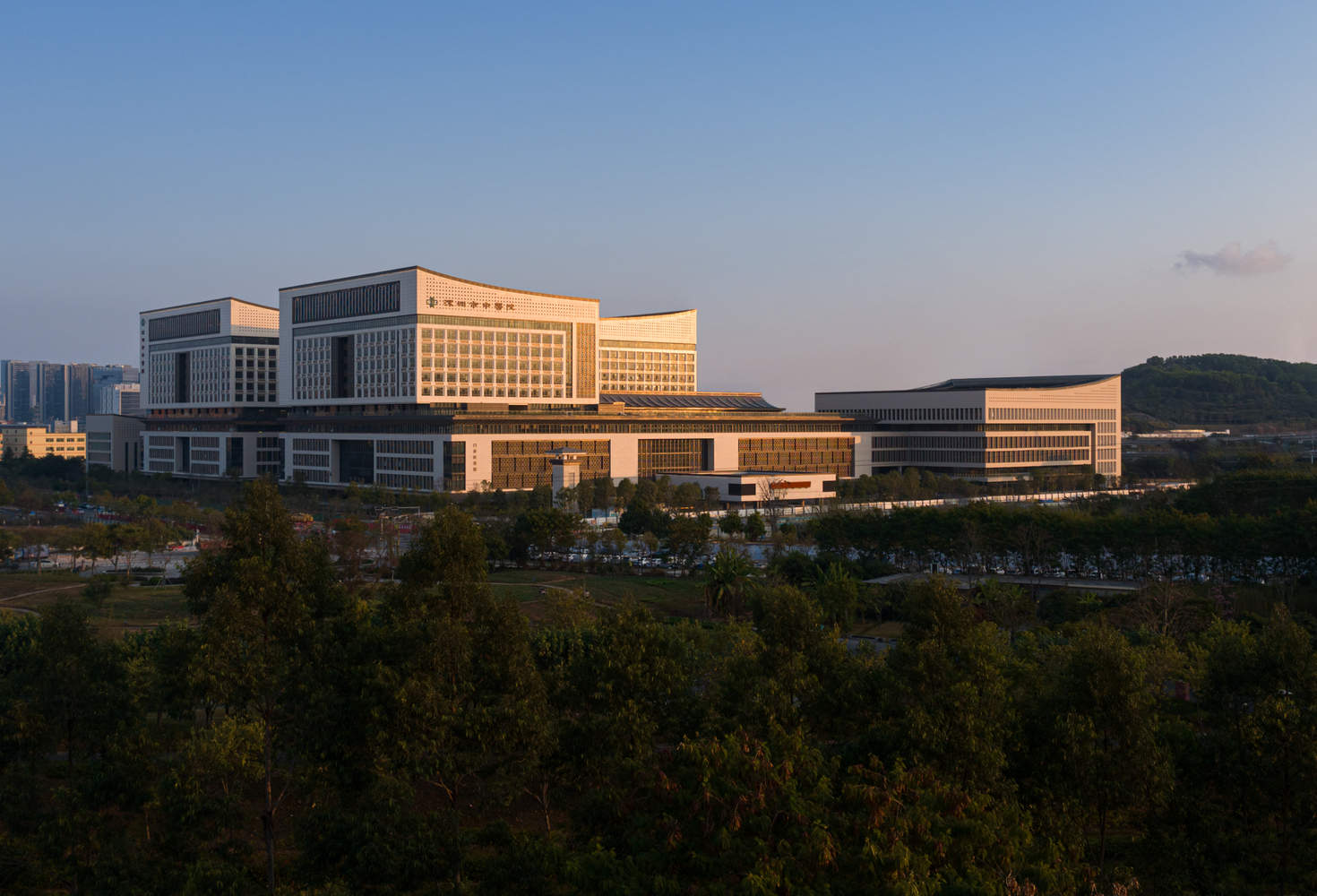
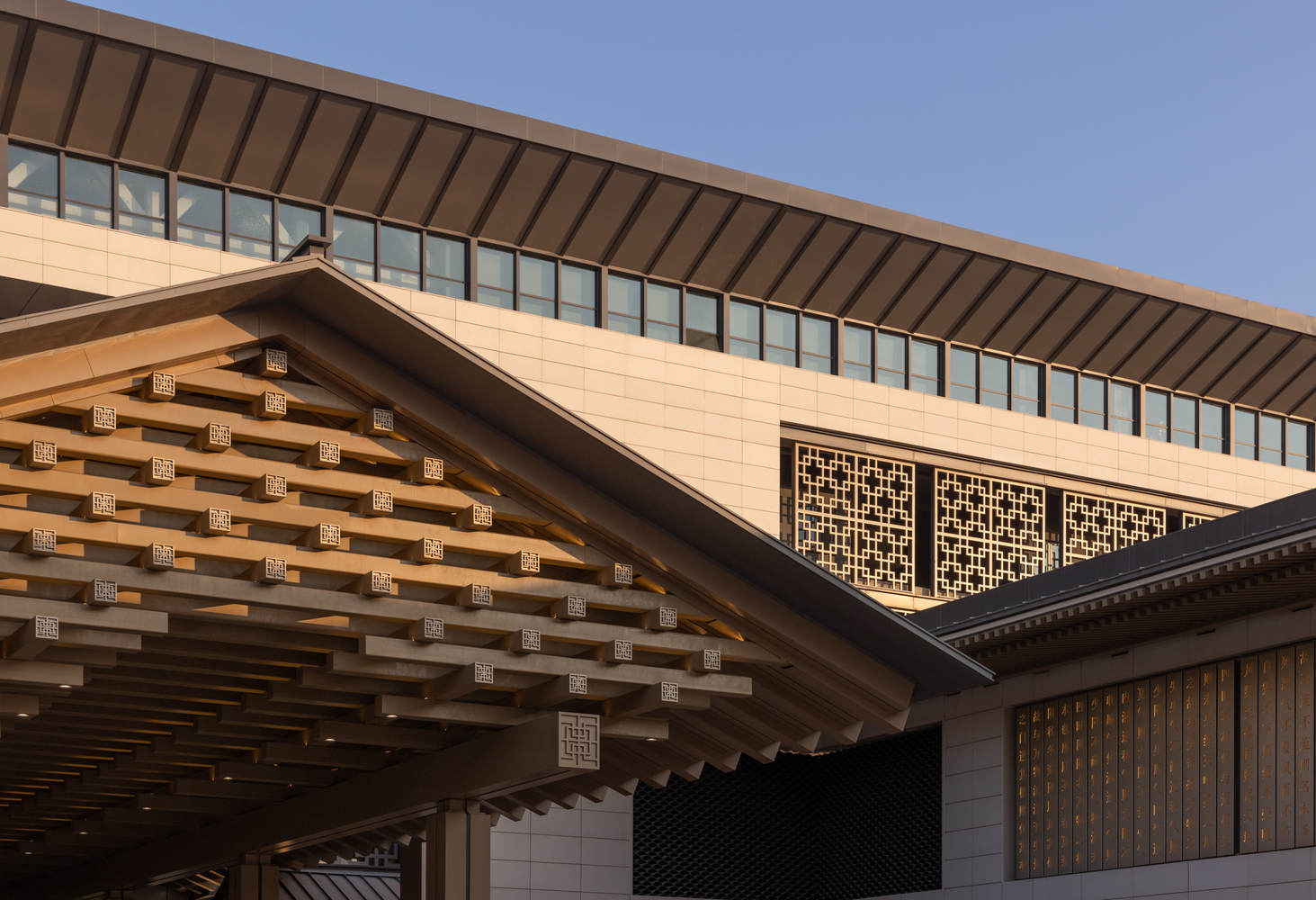
4. Inheriting and transforming, the curved sloping roof of the ancient and new architecture faces the central axis of the building, forming a landscape intention of flying eaves, upturned corners, and four waters returning to the hall. The design inspiration for the skin comes from the unique texture of "grid fan through flower", combined with modern materials and technology, presenting a modern oriental charm with a stretched long axis picture. By processing the space, texture, scale, and color, the plan establishes a harmonious, hidden, wonderful, and pleasant spatial order, creating a hospital building that is both new and modern.
肆 · 承转启合,与古为新
建筑弧线形坡屋顶统一面向建筑中轴,形成飞檐翘角四水归堂的景观意向。表皮的设计灵感源自“格扇通花”的独特肌理,结合现代材料和技术,以舒展的长轴画面展现出现代东方韵味。通过对空间、肌理、尺度和色彩的处理,方案建立起合、隐、妙、怡的空间秩序,创造出中而新、中而现代的医院建筑。
© 是然建筑摄影