Princeton University Art Museum New Building/Adjaye Associates
普林斯顿大学艺术博物馆新馆 / Adjaye Associates
设计理念与校园融合:普林斯顿大学艺术博物馆新馆的设计充分体现了建筑与校园环境的深度融合。Adjaye Associates巧妙地将新馆定位为“校园中的校园”,虽然规模是旧馆的两倍,但并未因此而突兀,反而巧妙地融入了校园的整体氛围。建筑师从普林斯顿的建筑遗产中汲取灵感,将建筑分割成九个相互连通的亭阁,这种设计手法既是对校园既有建筑风格的呼应,又营造出一种开放、通透的视觉效果。两条主要的“艺术步道”贯穿首层,将建筑与校园交通流线无缝连接,确保博物馆即使在闭馆后,也能与校园生活保持紧密的互动,体现了设计对校园整体性的尊重。
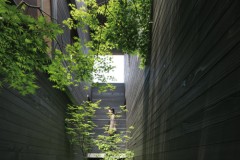
空间组织与景观设计:项目的空间组织充满创意,充分利用了场地优势。画廊被巧妙地布置成一系列相互穿插的空间,其中穿插着一些核心区域,这些区域框定了通往校园地标、景观和户外雕塑的视野,为参观者提供了丰富的视觉体验。建筑体量顺应场地的自然坡度,营造出露台、露天庭院等户外空间,增加了建筑与环境的互动性。景观设计方面,保留了麦考什步道旁的成熟树木,并尽可能地移植了重要的树木,引入了新的绿色露台,使博物馆与地形融为一体,进一步提升了建筑的整体环境品质。这种对景观的重视,使建筑不仅仅是一个展示空间,更是一个与自然对话的场所。
可持续性与材料细节:该项目在可持续性方面表现出色,获得了LEED金级认证。设计团队将可持续技术融入项目始终,体现了对环境保护的承诺。高能效的建筑围护结构、厚重的保温层和特殊设计的玻璃窗,提供了卓越的 thermal control,而湿度控制系统则确保了藏品的最佳保存环境。在材料选择和立面处理上,设计团队也精雕细琢,建筑外立面采用粗糙与抛光石材聚合板交替搭配,辅以青铜和三层玻璃窗,打造出层次丰富、通透且响应灵敏的建筑形态。室内,结构胶合木梁和温暖的材料则为主要空间带来了温馨感,这些细节都体现了对品质的极致追求。
© Richard Barnes
© Dror Baldinger
© Dror Baldinger
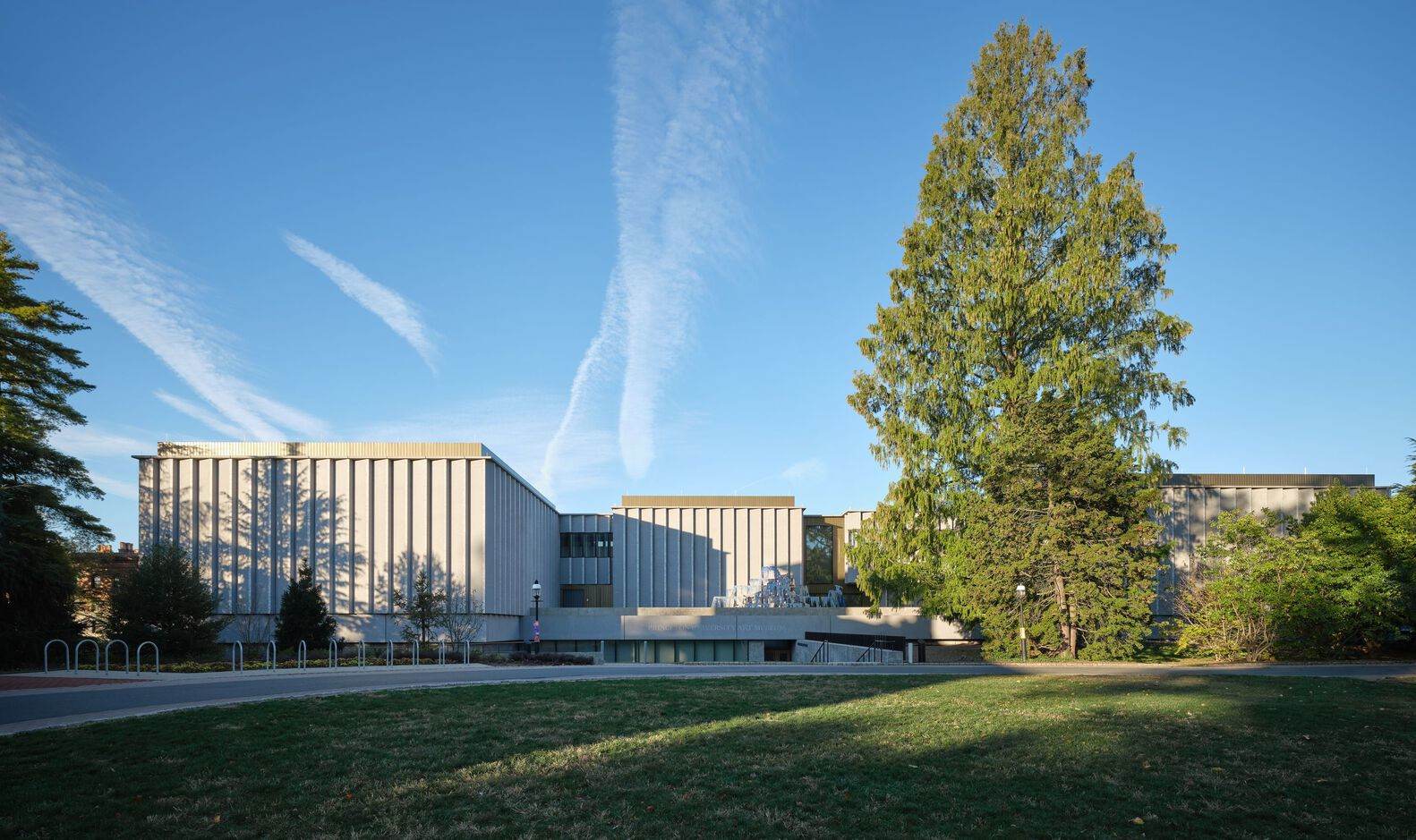
The Princeton University Museum of Art has a bold new location in the center of the campus, designed by Adjaye Associates with Cooper Robertson as the executive architect. The new building was conceived as a 'campus within a campus', with a scale twice that of the previous building, but still deeply rooted in its historical site, strengthening its core position in university life and its role as a cultural center for the wider community.
普林斯顿大学艺术博物馆在校园中心地带拥有了一个极具魄力的新馆址,该馆由 Adjaye Associates 设计,Cooper Robertson 担任执行建筑师。新馆被构思为“校园中的校园”,其规模是前馆的两倍,但仍深深扎根于其历史遗址,强化了其在大学生活中的核心地位以及作为更广泛社区文化中心的角色。
© Dror Baldinger
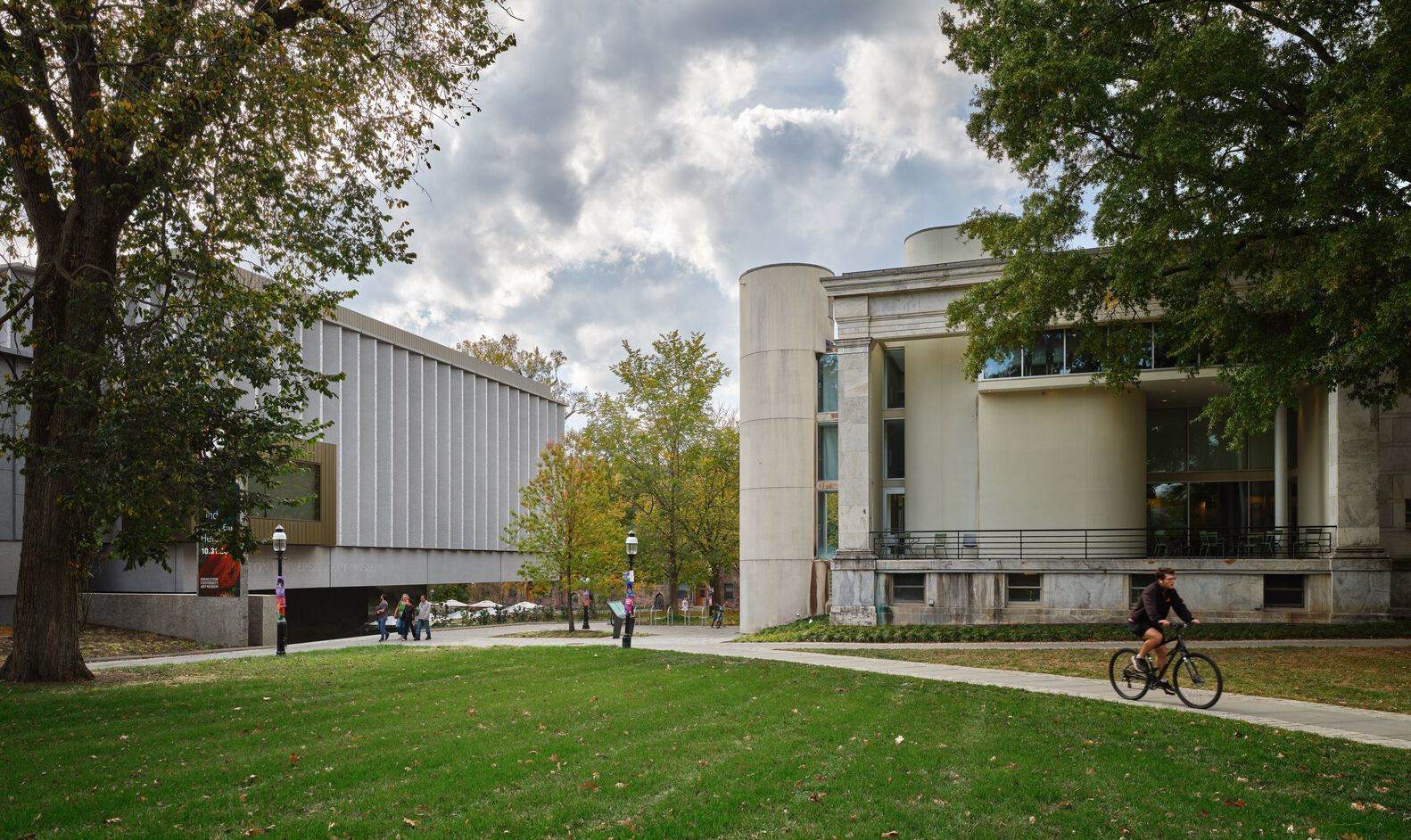
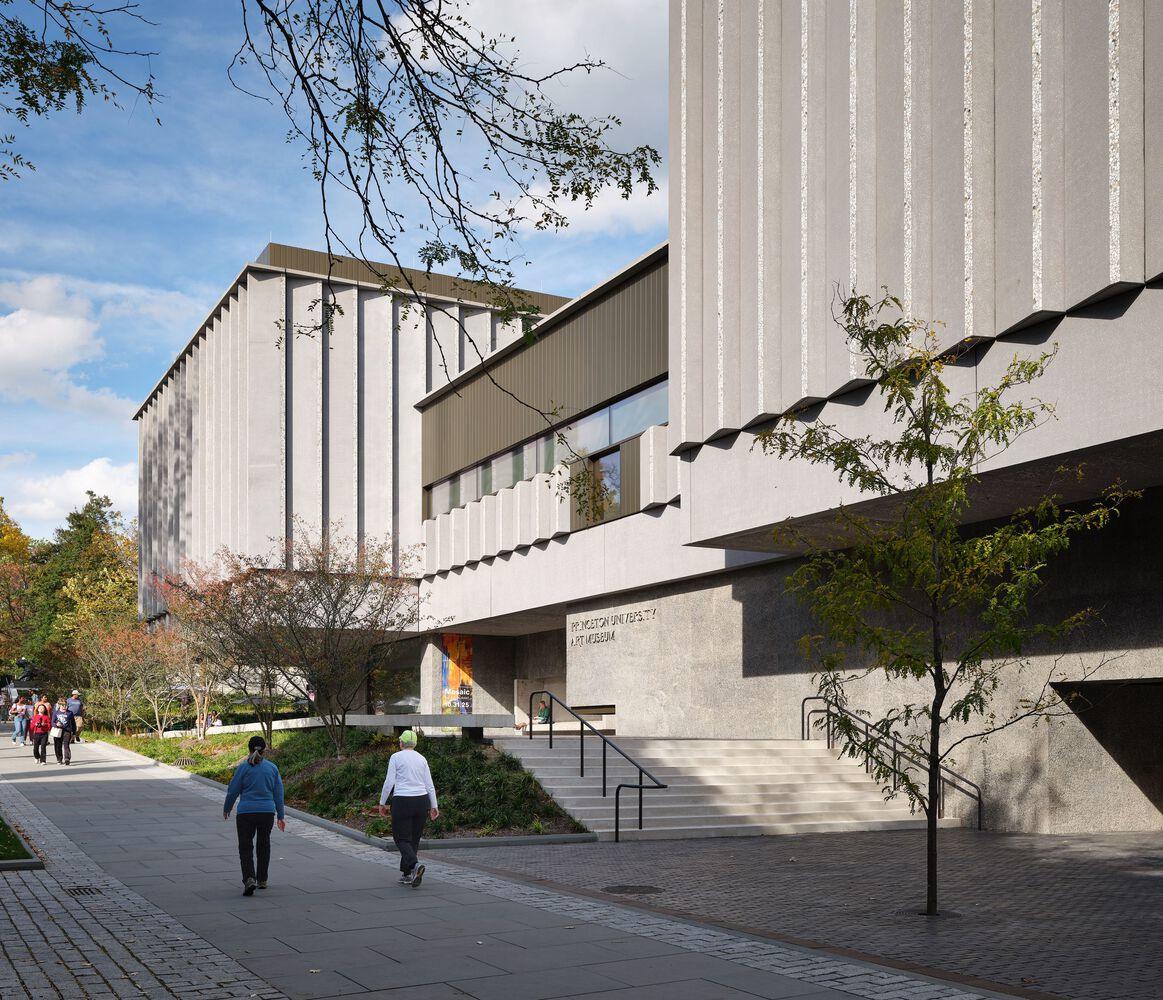
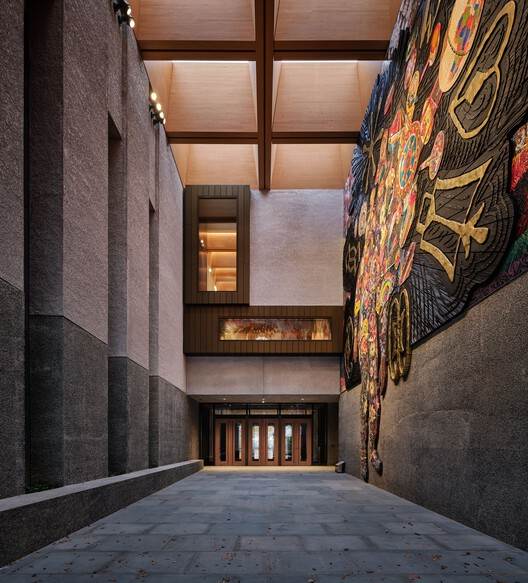
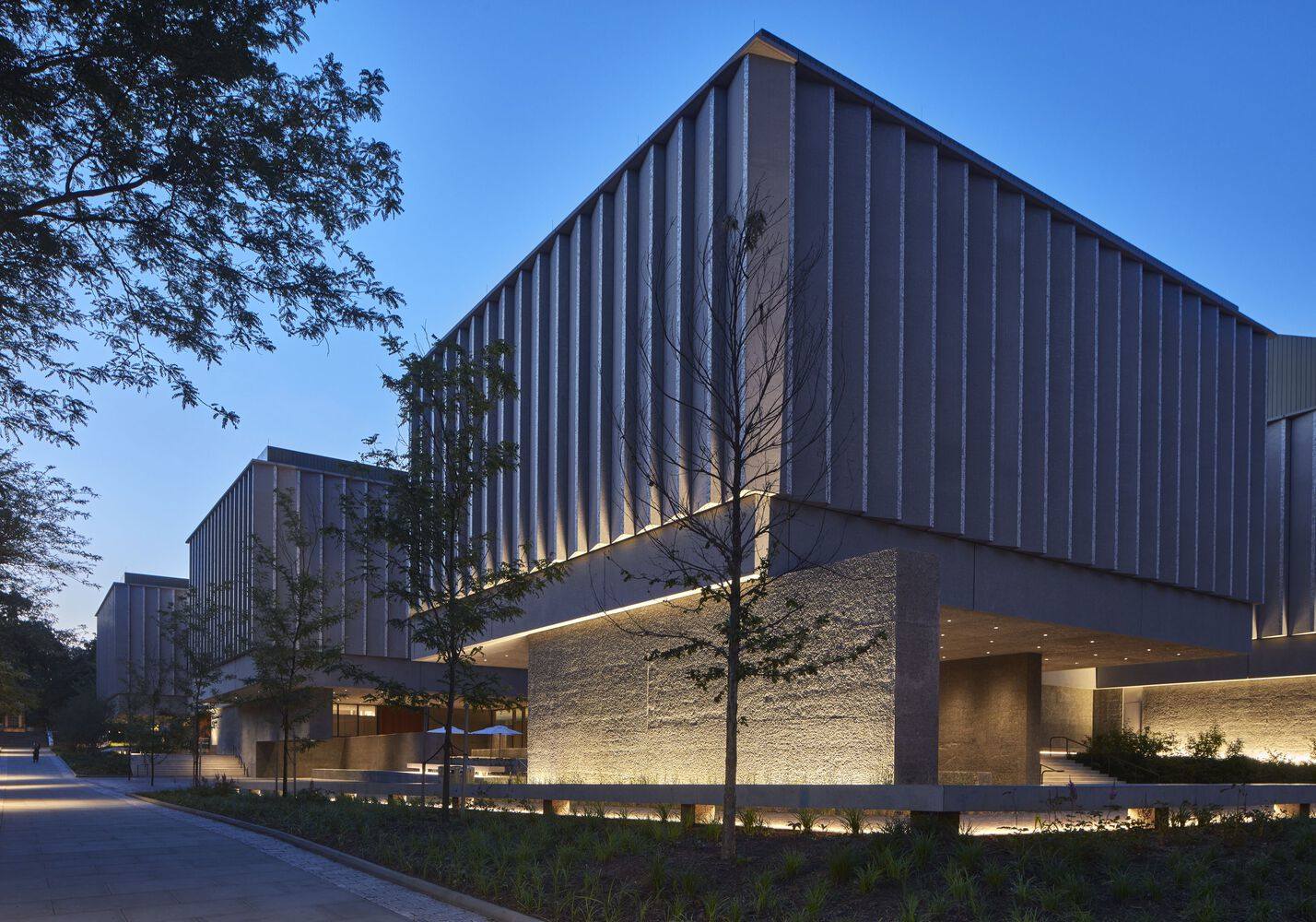
The new building is located on McCosh Walk, between Elm Drive and Chapel Drive, covering an area of 146000 square feet (13565 square meters) with three floors. Its design inspiration comes from Princeton's architectural heritage. The design of the new building conforms to the transparency of the campus, dividing the entire building into nine interconnected pavilions that echo the surrounding buildings. The museum is arranged around two main axes, north and south, and east and west, which are in line with the existing transportation routes, ensuring that even when the gallery is closed, it can still be closely connected to the daily life of university life. Two main 'art trails' run through the first floor, connecting the building to the existing campus traffic flow, allowing some areas of the museum to remain vibrant even after the gallery closes.
新馆位于麦考什步道(McCosh Walk)上,埃尔姆大道(Elm Drive)与教堂大道(Chapel Drive)之间,占地 146000 平方英尺(13565 平方米),共三层,其设计灵感源自普林斯顿的建筑遗产。新馆设计顺应校园的通透性,将整体建筑分割为九个相互连通的亭阁,与周边建筑相呼应。博物馆以南北和东西两大主轴为中心布局,与现有的通行路线相契合,确保即便在画廊关闭时,仍能与大学生活的日常紧密相连。两条主要的“艺术步道”贯穿首层,将建筑与现有的校园交通流线相连,使得博物馆的部分区域在画廊关闭后仍能保持活力。
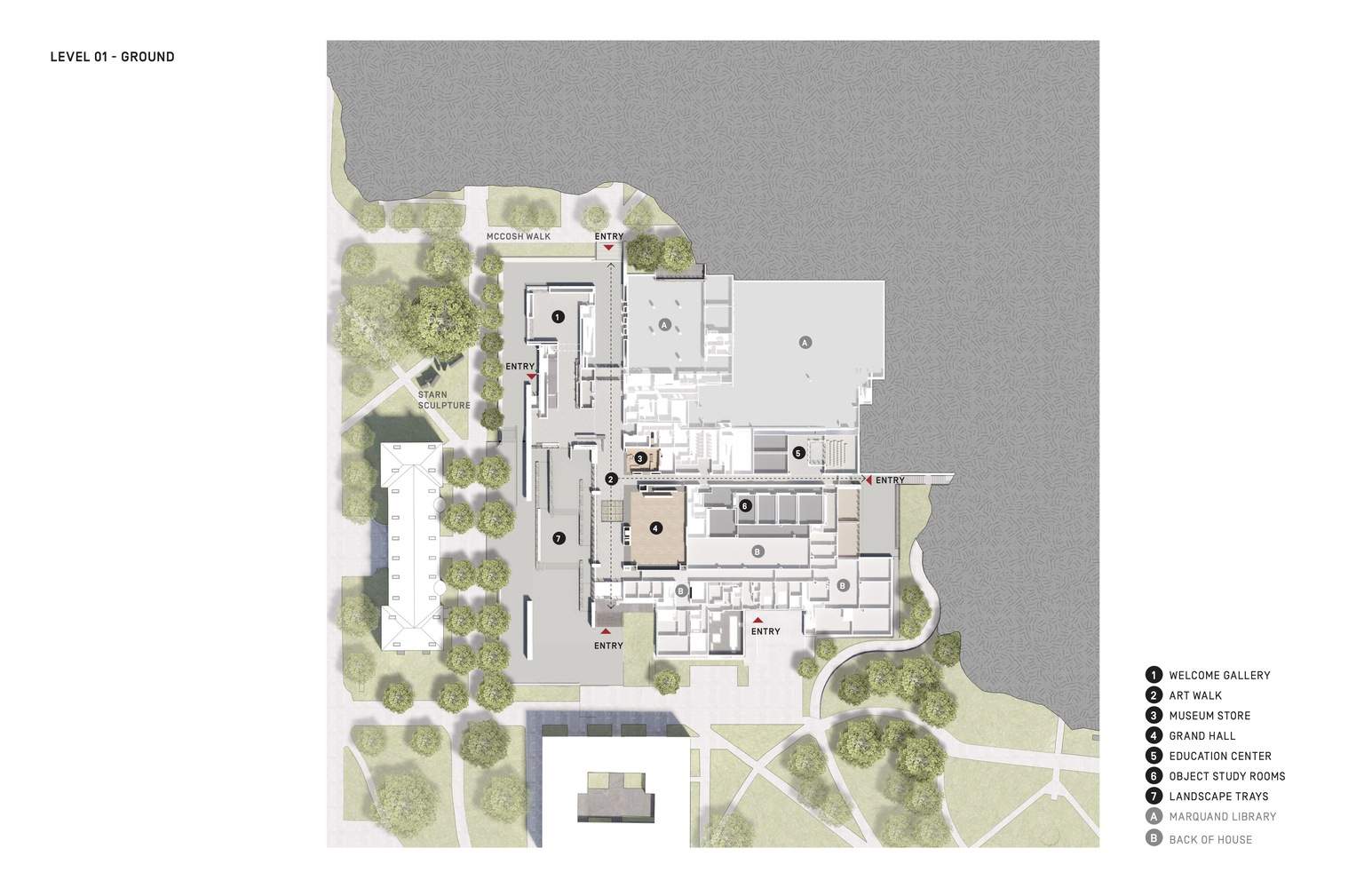
一层平面图
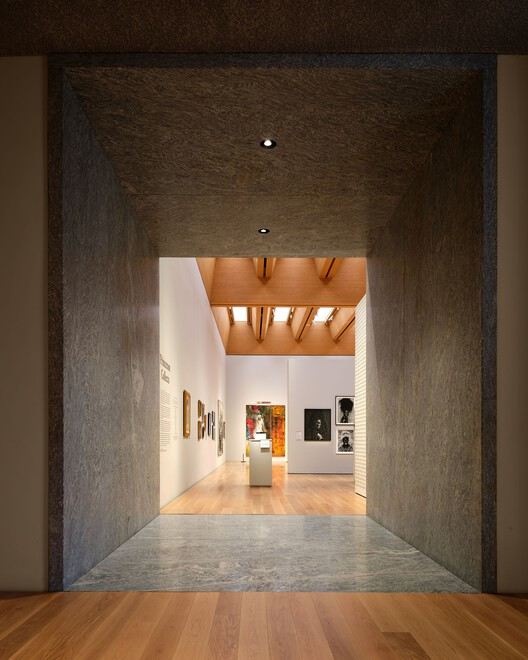
The gallery is arranged as a series of interwoven spaces, interspersed with a central area that frames the view to campus landmarks, landscapes, and outdoor sculptures. The building volume follows the natural slope of the site, gradually descending to create terraces, open-air courtyards, and outdoor gathering spaces that can accommodate 200 to 2000 people. The landscape design preserved the mature elm and beech trees along the McCosh Trail, transplanted important trees as much as possible, and introduced a new green terrace to blend the museum with the terrain.
画廊被布置成一系列相互穿插的空间,其间穿插着中间区域,这些区域框定了通往校园地标、景观及户外雕塑的视野。建筑体量顺应场地的自然坡度,逐级而下,打造出露台、露天庭院以及可容纳 200 至 2000 人的户外聚会空间。景观设计保留了麦考什步道旁成熟的榆树和山毛榉,尽可能移植了重要的树木,并引入了新的绿色露台,使博物馆与地形融为一体。
© Dror Baldinger
© Dror Baldinger
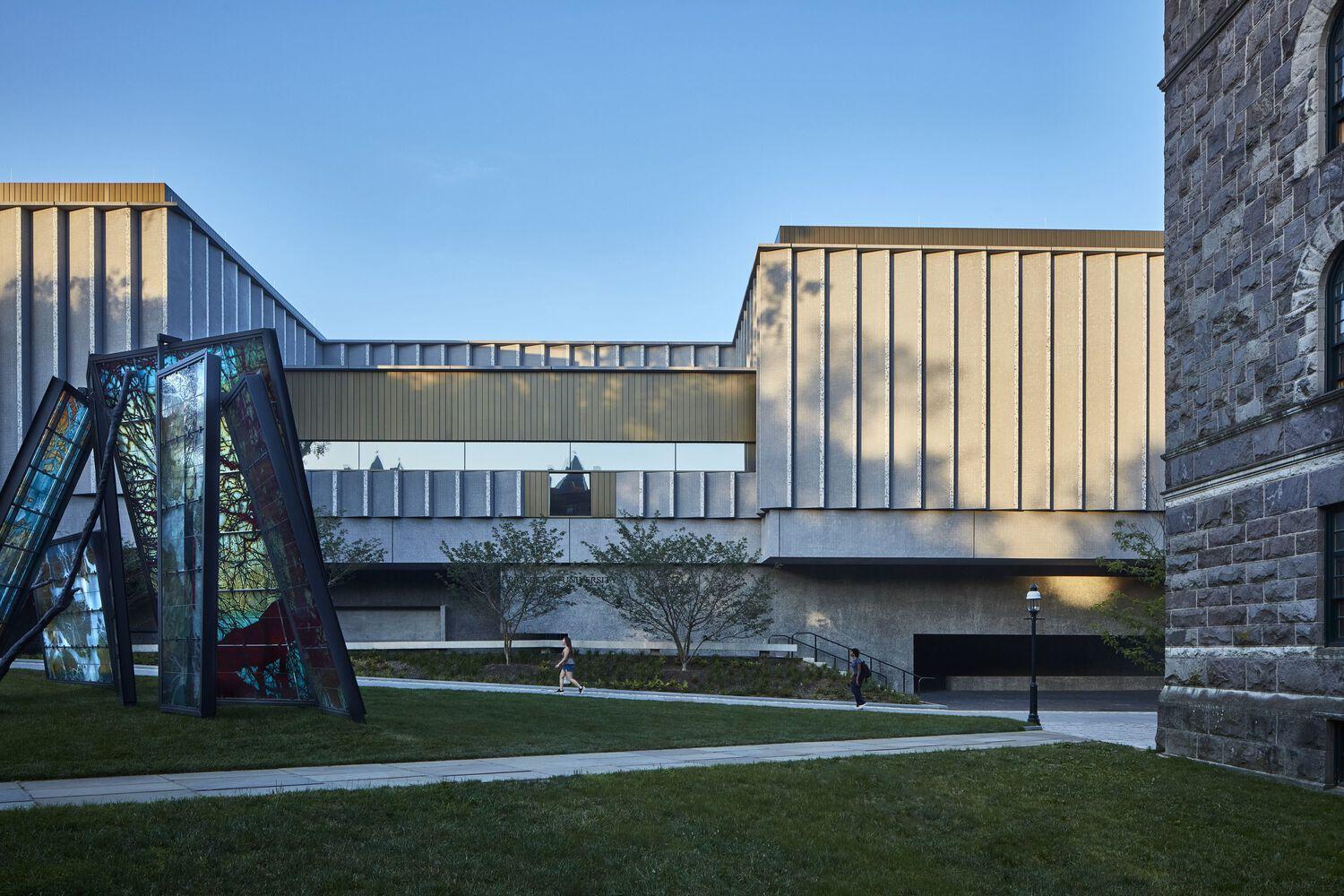
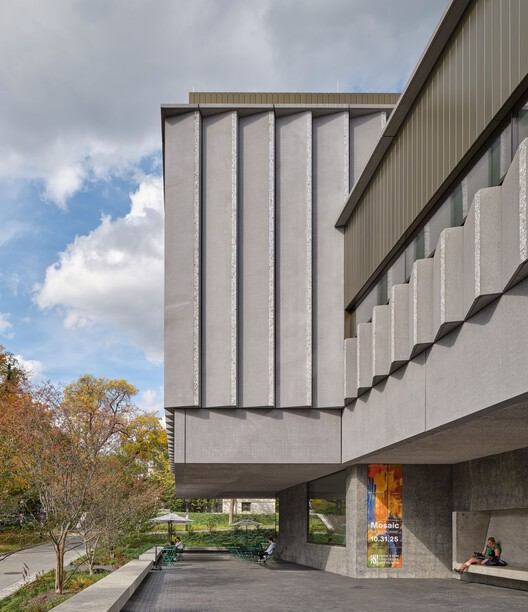
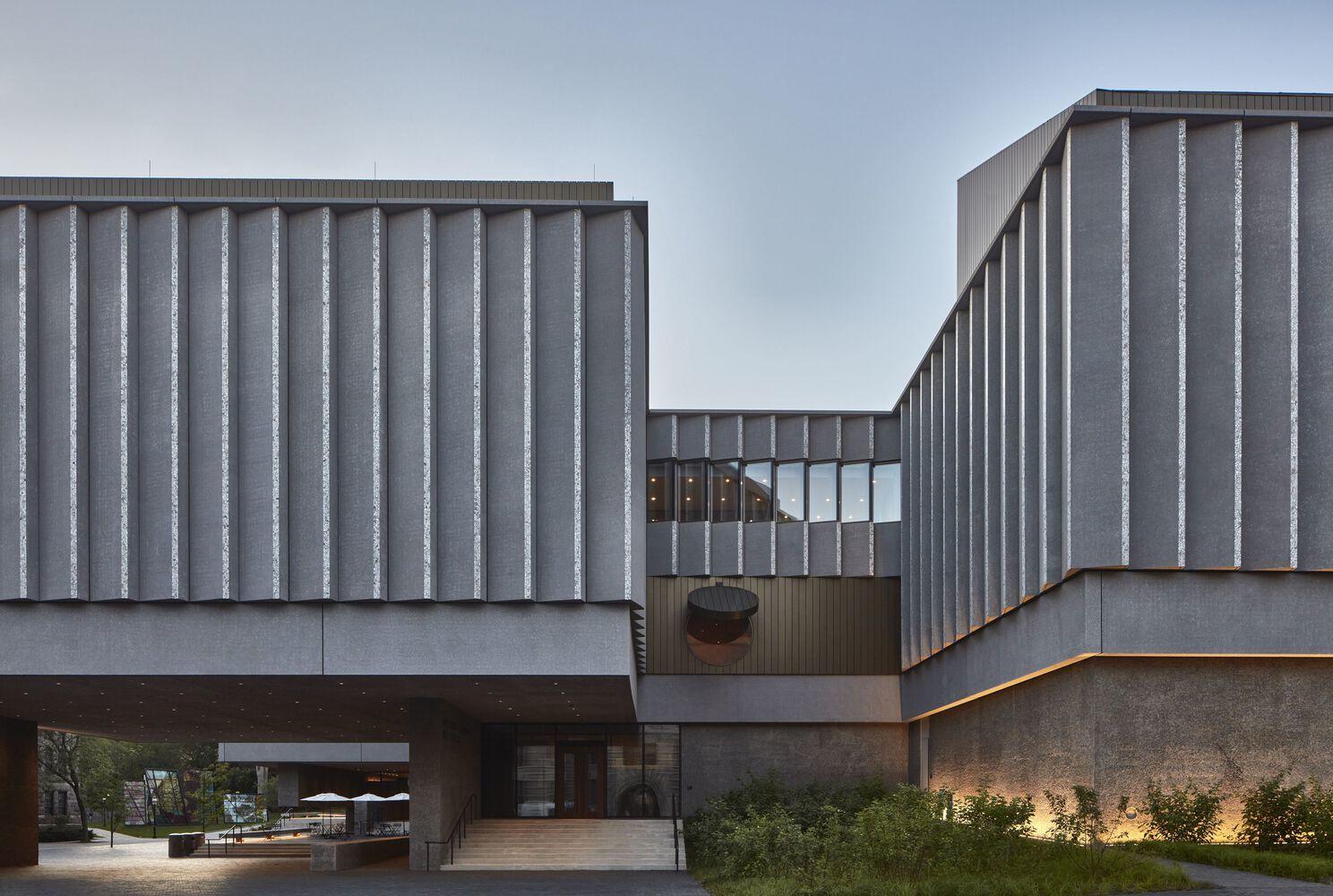
The design emphasizes transparency and participation, connecting art, landscape, and community closely through lens windows, lighting wells, and open circulation spaces. The material selection and facade treatment are carefully designed to capture light from all directions, making the building vibrant all day long. The exterior of the building adopts a combination of rough and polished stone aggregate panels, supplemented by bronze and three-layer glass windows, to create a layered, transparent, and responsive architectural form.
设计强调透明性与参与性,通过透镜窗、采光井和开放式的流通空间,将艺术、景观和社区紧密相连。材料选择和立面处理精心设计,以捕捉来自各个方向的光线,使建筑全天候焕发生机。建筑外立面采用粗糙与抛光石材聚合板交替搭配,辅以青铜和三层玻璃窗,打造出层次丰富、通透且响应灵敏的建筑形态。
© Dror Baldinger
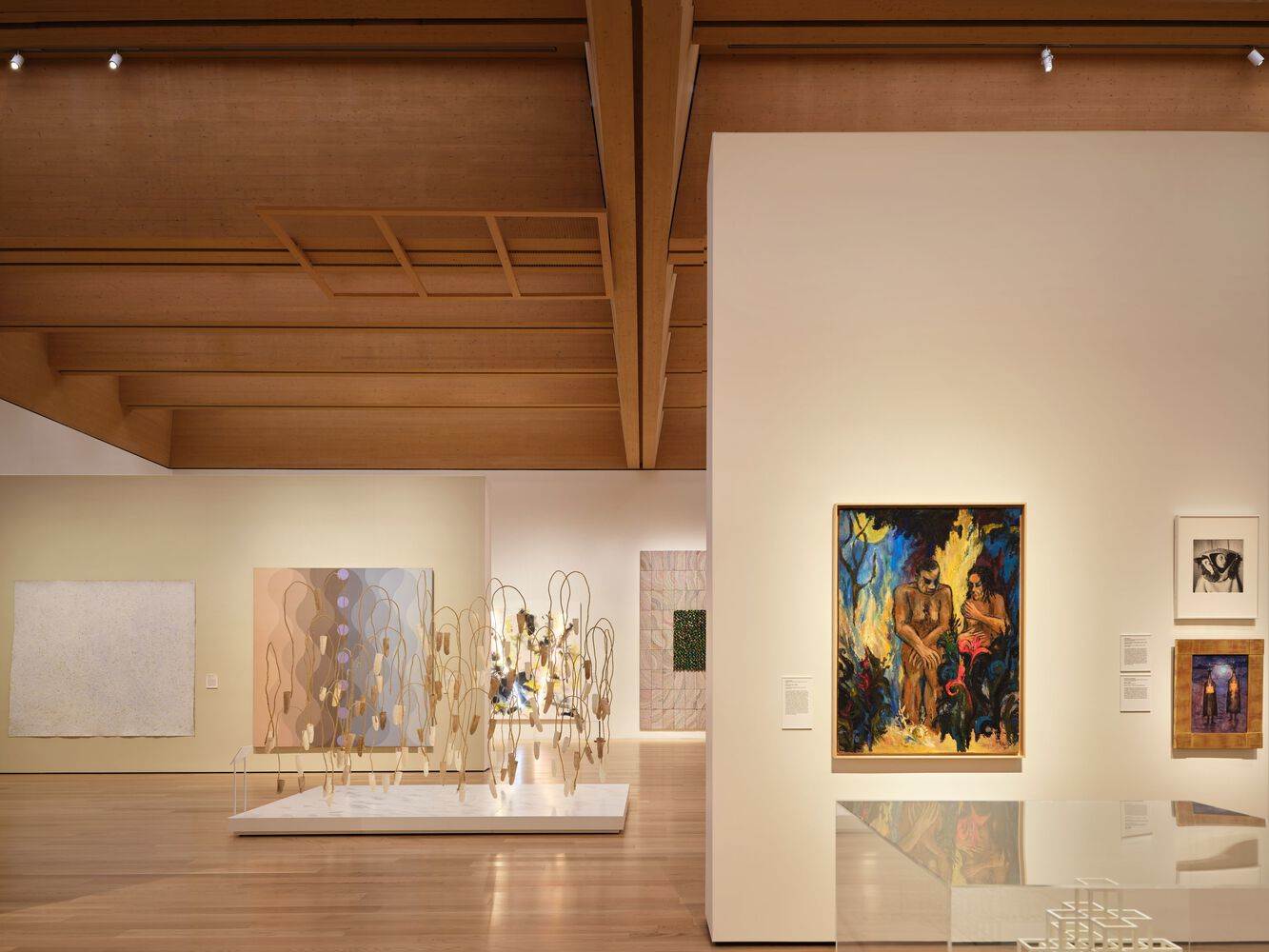
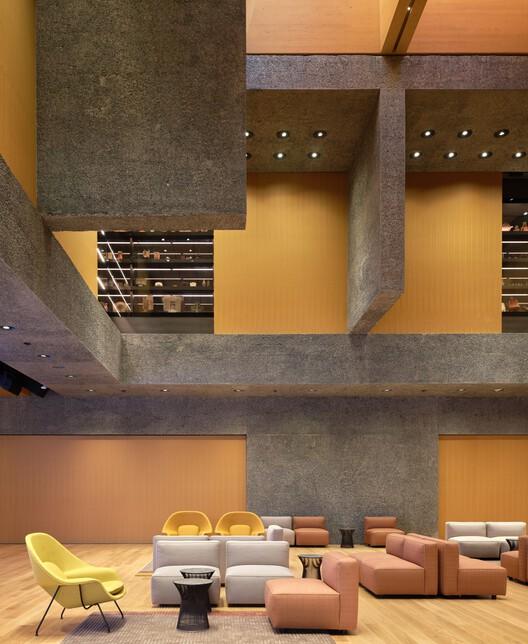
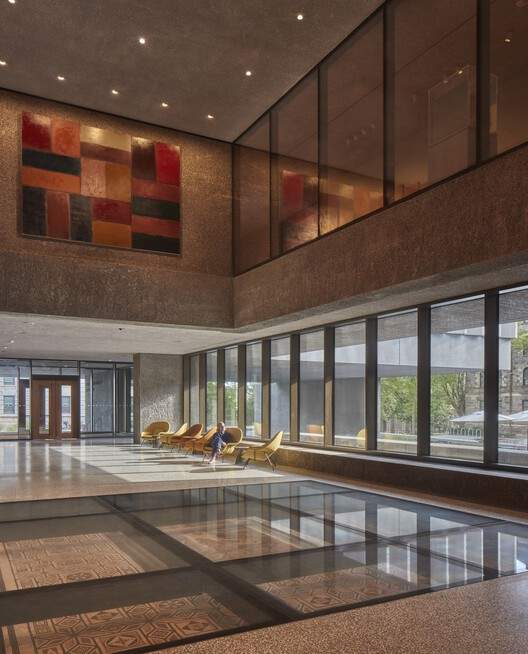
Internally, the structural glued laminated wooden beams and warm materials bring tactile and humanistic scale to the main spaces such as the entrance hall, building staircase hall, and lobby. The interior decoration, such as terrazzo and wood, is as meticulous as the facade, elevating the visitor experience in craftsmanship and eternity.
内部,结构胶合木梁和温暖的材料为入口大厅、大楼梯厅和大厅等主要空间带来了触感和人文尺度。水磨石和木材等室内装饰与立面一样精心,使访客体验在工艺和永恒感中得以升华。
© Dror Baldinger
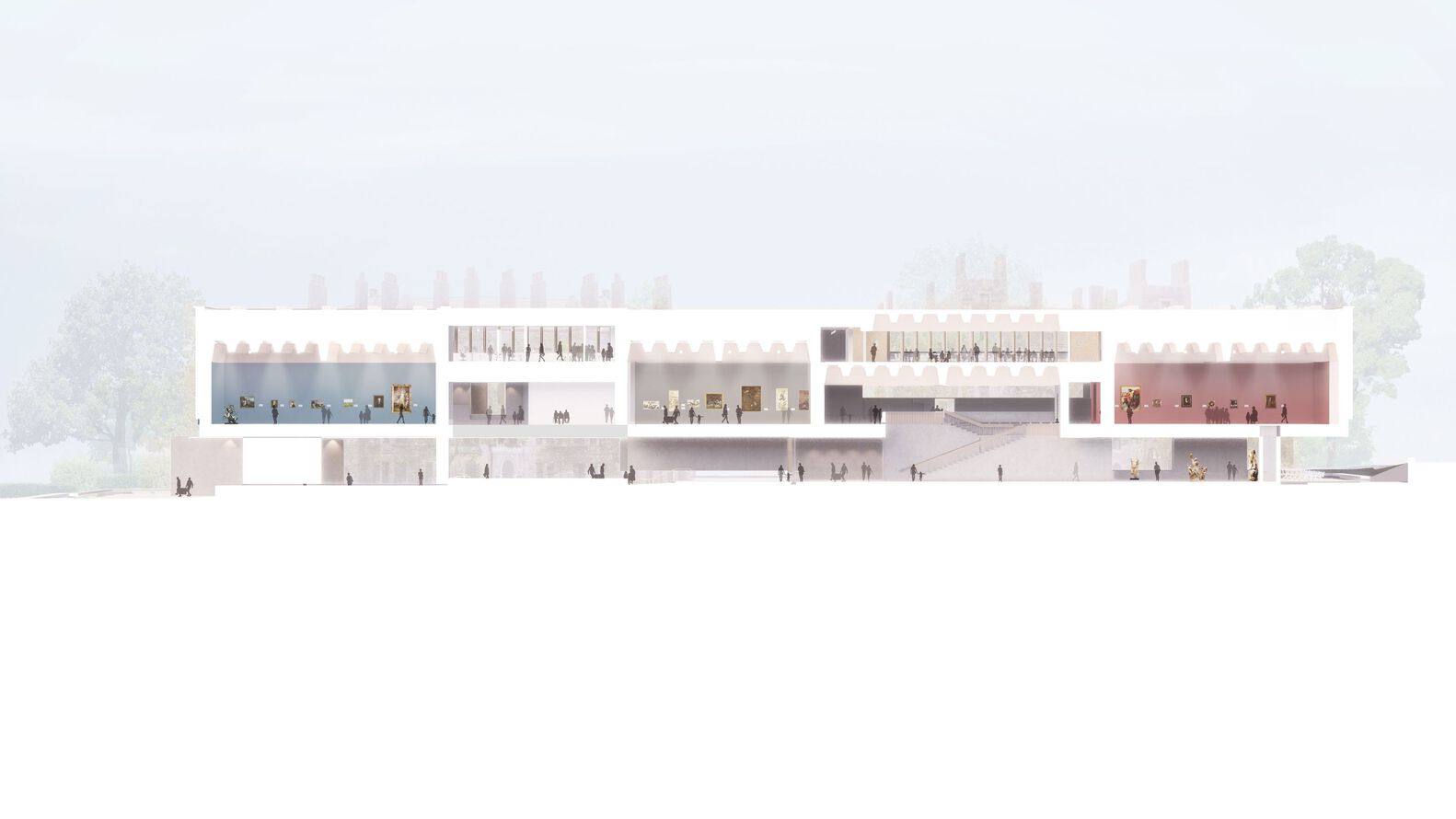
This design is a response to an ambitious curatorial vision that prioritizes culture, communication, and storytelling. 95% of the gallery space is located on the same level, bringing together Princeton's global collections, challenging traditional exhibition hierarchies, and disrupting conventional art history narratives.
该设计是对一项雄心勃勃的策展愿景的回应,该愿景优先考虑文化、交流和故事讲述。95% 的画廊空间位于同一层,将普林斯顿的全球收藏汇聚一堂,挑战了传统的展示层级,颠覆了常规的艺术史叙事。
© Dror Baldinger
© Richard Barnes
This layout promotes communication across geography, time, and culture. The visible storage space, diverse ceiling heights, and framed views allow visitors to have a glimpse of the works in the access area and outdoors, dissolving the traditional boundaries between museums and campuses.
这种布局促进了跨越地理、时间和文化的交流。可见的储藏空间、多样的天花板高度和框定的视野,让访客在通行区和室外就能一窥作品,消解了博物馆与校园之间的传统界限。
剖面图
The functions of museums support teaching, research, and creative practice at all levels. The first floor has public and educational spaces, including cultural relic research classrooms, "creative laboratories," seminar rooms, and lecture halls, while the upper floor has galleries, conservation studios, offices, and rooftop cafes with indoor and outdoor seating. The flexible hall can host lectures, performances, and community gatherings in various forms, expanding the role of museums as places for dialogue and communication.
博物馆的功能支持各级教学、研究和创意实践。首层设有公共和教育空间,包括文物研究教室、“创意实验室”、研讨室和演讲厅,而上层则设有画廊、保护工作室、办公室和带室内外座位的屋顶咖啡馆。灵活的大厅可举办讲座、表演和社区聚会,以多种形式配置,拓展了博物馆作为对话和交流场所的角色。
© Richard Barnes
The new building has obtained LEED Gold certification and complies with Princeton University's sustainable development plan to achieve zero carbon emissions by 2046. Sustainable technology has been integrated into the project from the early stages, achieving performance goals beyond current standards. The high-performance building envelope, thick insulation layer, and three-layer glass "lenses" with structural thermal bridges provide powerful thermal control, while humidity and humidity systems ensure optimal preservation conditions for the collection. The museum has also undergone zoning design for selective operation, allowing certain areas to be independently opened while minimizing energy use while maintaining the building's all-weather and nighttime activity.
新建筑获得了 LEED 金级认证,并符合普林斯顿大学到 2046 年实现零碳排放的可持续发展计划。可持续技术从项目初期就融入其中,实现了超越当前标准的性能目标。高性能的建筑围护结构、厚重的保温层和带有结构热断桥的三层玻璃“透镜”提供了强大的热控制,而湿度和湿度系统则确保了藏品的最佳保存条件。博物馆还进行了分区设计,以便选择性运营,使某些区域能够独立开放,在保持建筑全天候及晚间活跃的同时,最大限度地减少能源使用。
© Richard Barnes