Longtou Farming and Research Center/Extraordinary Architecture
塱头耕学+研学中心 / 非常建筑
项目亮点:整体规划与文化传承:该项目最令人称道之处在于其对场地文脉的深刻理解和对传统文化的巧妙融入。设计方案巧妙地借鉴了塱头村祠堂书室沿荷塘畔布局的传统,并通过打造“书院街”这一概念,为青少年营造了沉浸式的耕读文化体验。这种规划策略不仅尊重了当地的文化底蕴,更赋予了建筑独特的场所精神。项目与春阳台艺文中心的联动,形成了一个综合性的文博研学功能业态,为塱头古村的文旅发展注入了新的活力,体现了设计师对乡村振兴战略的积极响应和对可持续发展的深入思考。
项目亮点:材料选择与建造工艺:项目的另一大亮点在于对材料的精心选择和建造工艺的创新运用。设计师充分利用了当地历史文化背景,以红砖作为主要外立面材料,唤起村民对传统建筑的记忆,并与周边的古村落环境相协调。更令人惊喜的是,项目采用了窑变红陶砖,每块砖因烧制过程中的温差而呈现出不同的颜色,避免了工业制砖的单调性,为建筑注入了生机与活力。不同立面采用不同的砌筑工艺,使得立面更加丰富和有趣,体现了设计师对细节的极致追求和对现代工艺的巧妙运用,同时也兼顾了对传统建造技艺的尊重与传承。
项目亮点:空间设计与功能融合:项目的空间设计充分考虑了使用者的需求,特别是青少年群体的特点。敞廊、中庭和屋顶观景平台的设计,为学习、活动和交流提供了丰富的可能性。建筑内部的空间布局与各楼层功能需求完美契合,宿舍围绕中庭布局,开放流通,营造出社区般的归属感。屋顶观景平台不仅提供了开阔的视野,更是学生学习和交流的理想场所,实现了建筑功能与景观环境的完美结合。同时,二楼平台的悬挑设计和AB栋平台之间的大台阶,更强化了建筑与自然的联系,让学生可以亲身感受农耕文化与历史遗产的魅力。
© 田方方
© 田方方
Ancient Villages and Farming+
With the deepening of rural revitalization, a triangular waterfront plot adjacent to the Chunyangtai Art and Culture Center has been selected as the Langtou Farming and Research Center.. This project, together with the Spring Balcony, forms a comprehensive cultural and educational functional format, injecting new vitality into the cultural and tourism development of Longtou Ancient Village.
古村落与耕学+
在乡村振兴的深入推进下,毗邻春阳台艺文中心的一块三角形临水地块被选址为塱头耕学+研学中心。该项目与春阳台共同构成一个综合性的文博研学功能业态,为塱头古村的文旅发展注入了新的活力。
© 田方方
© 田方方
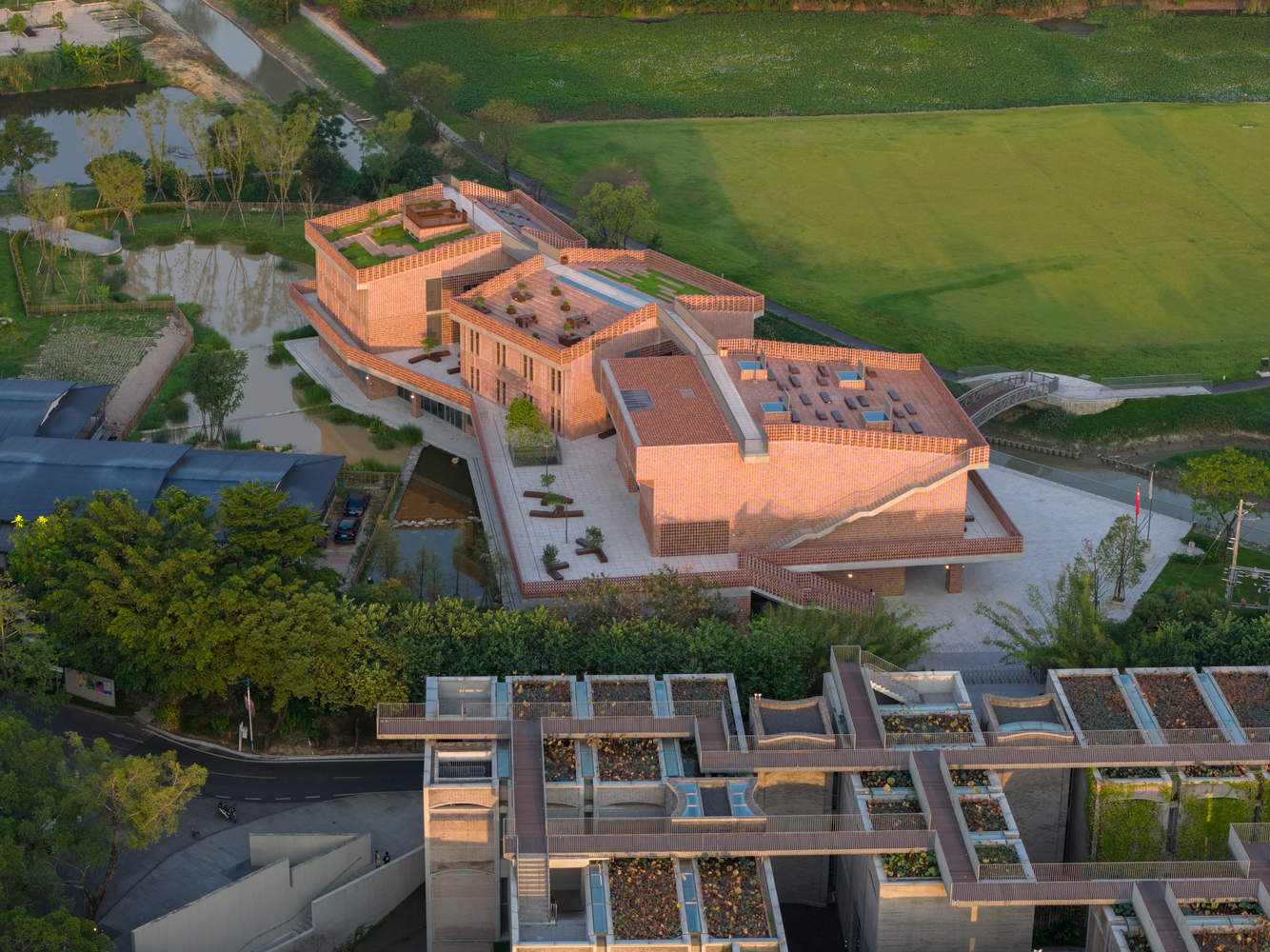
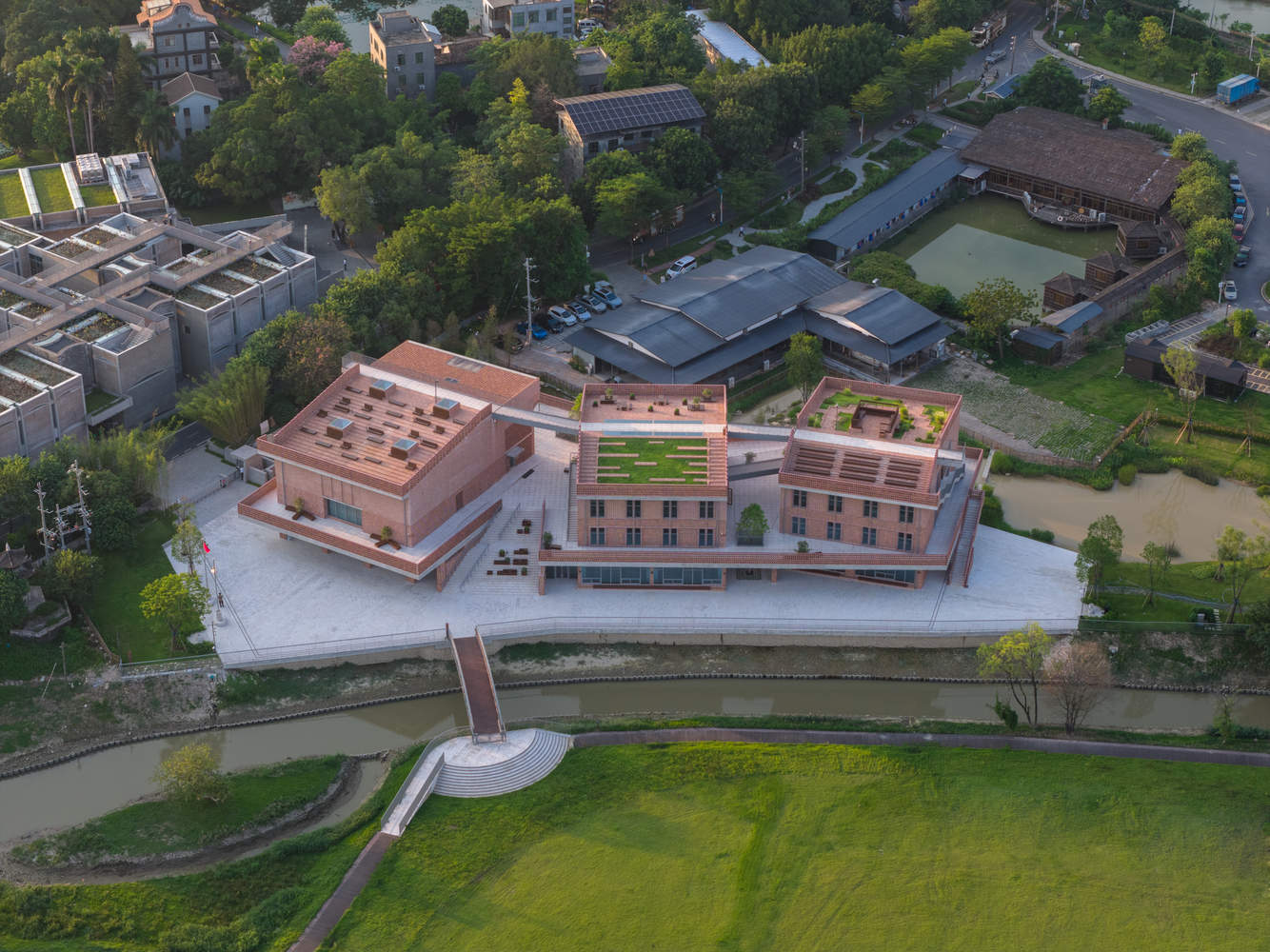
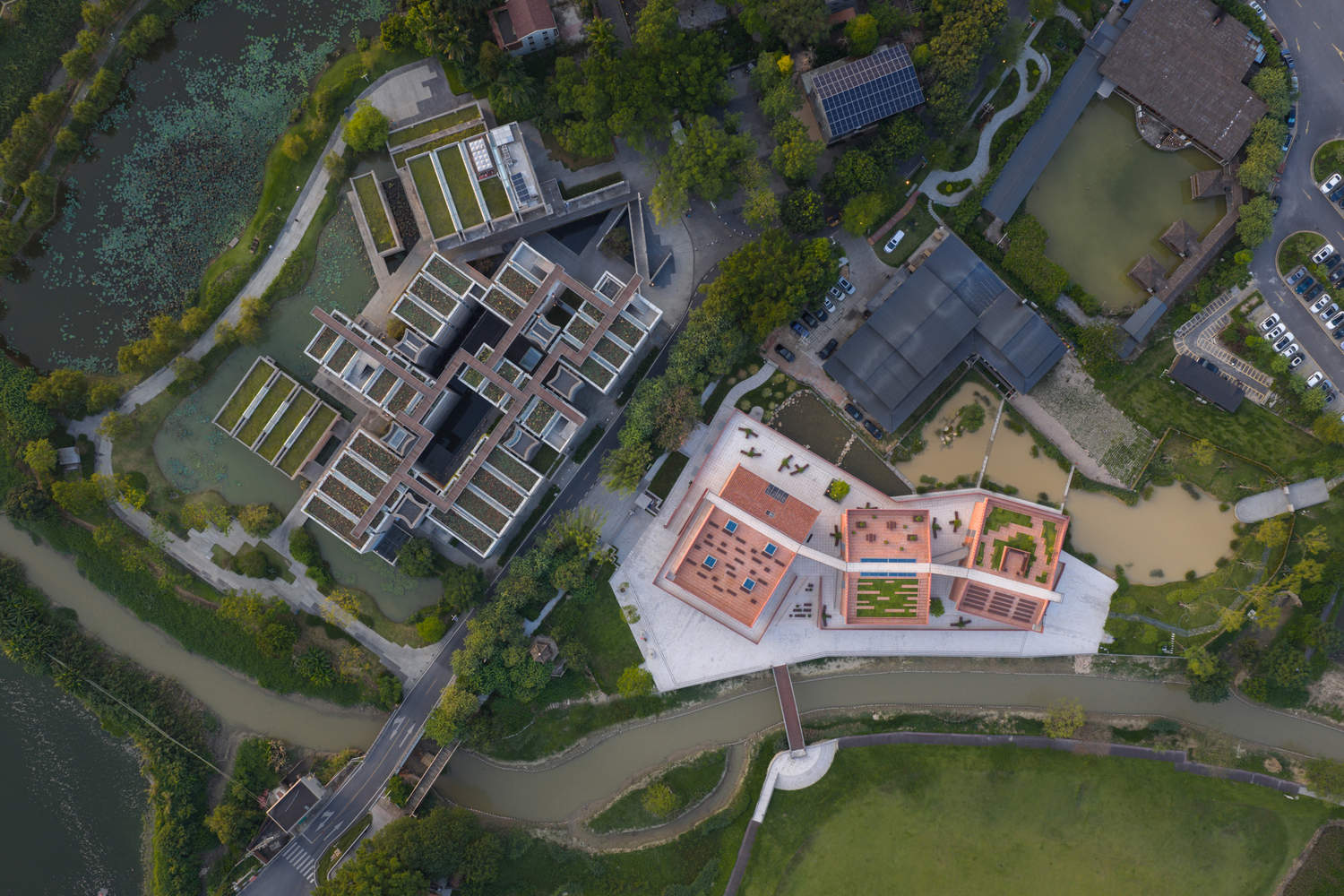
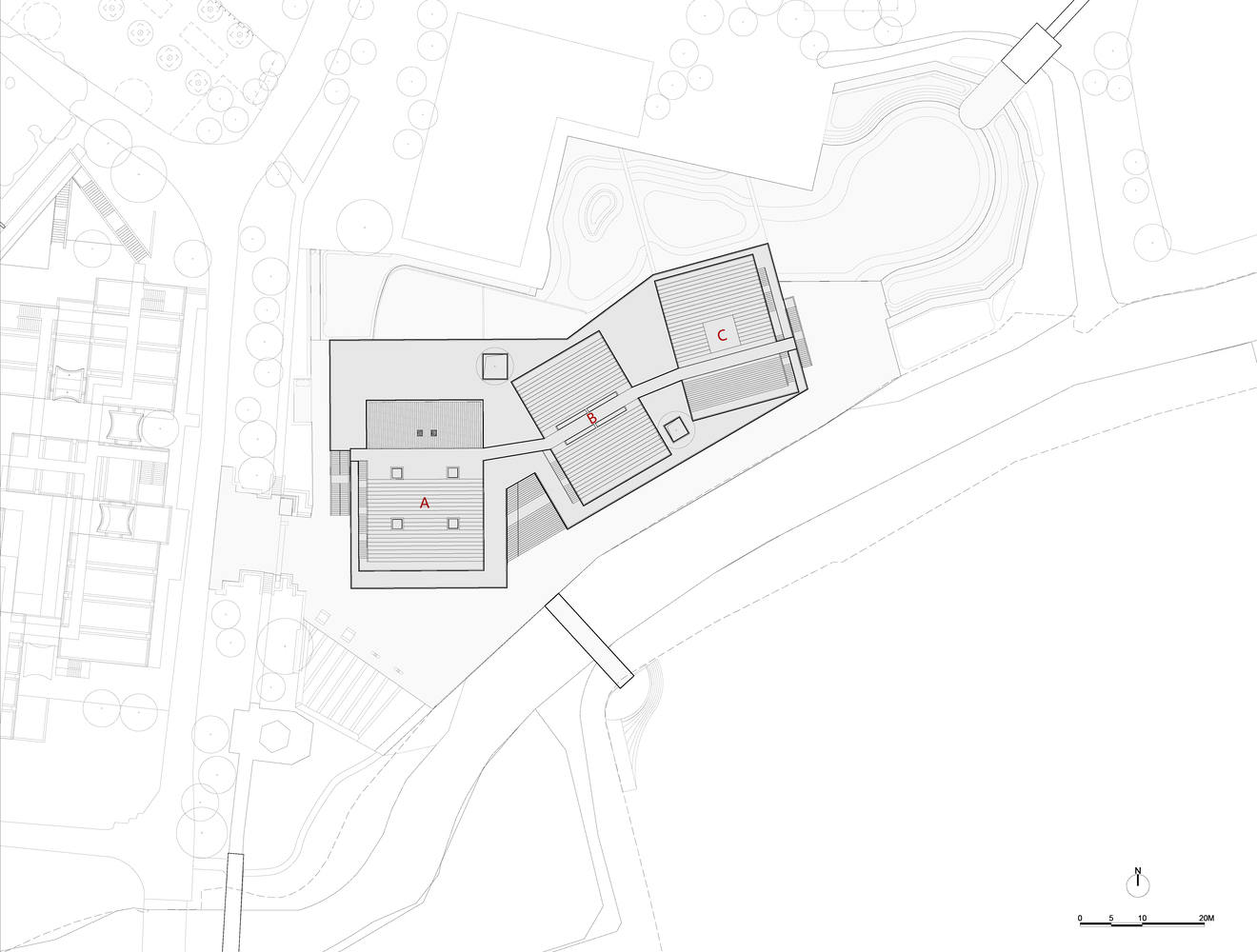
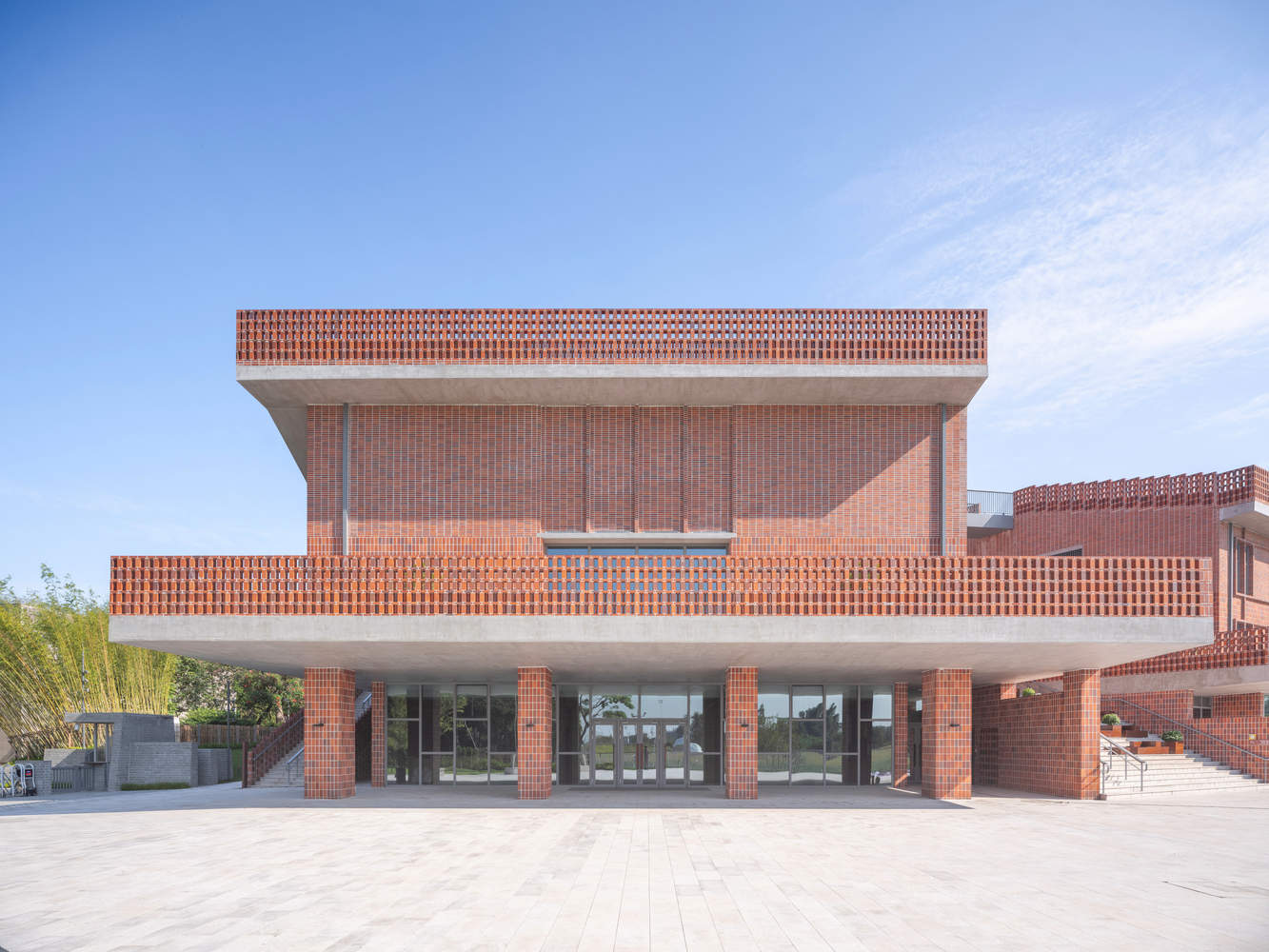
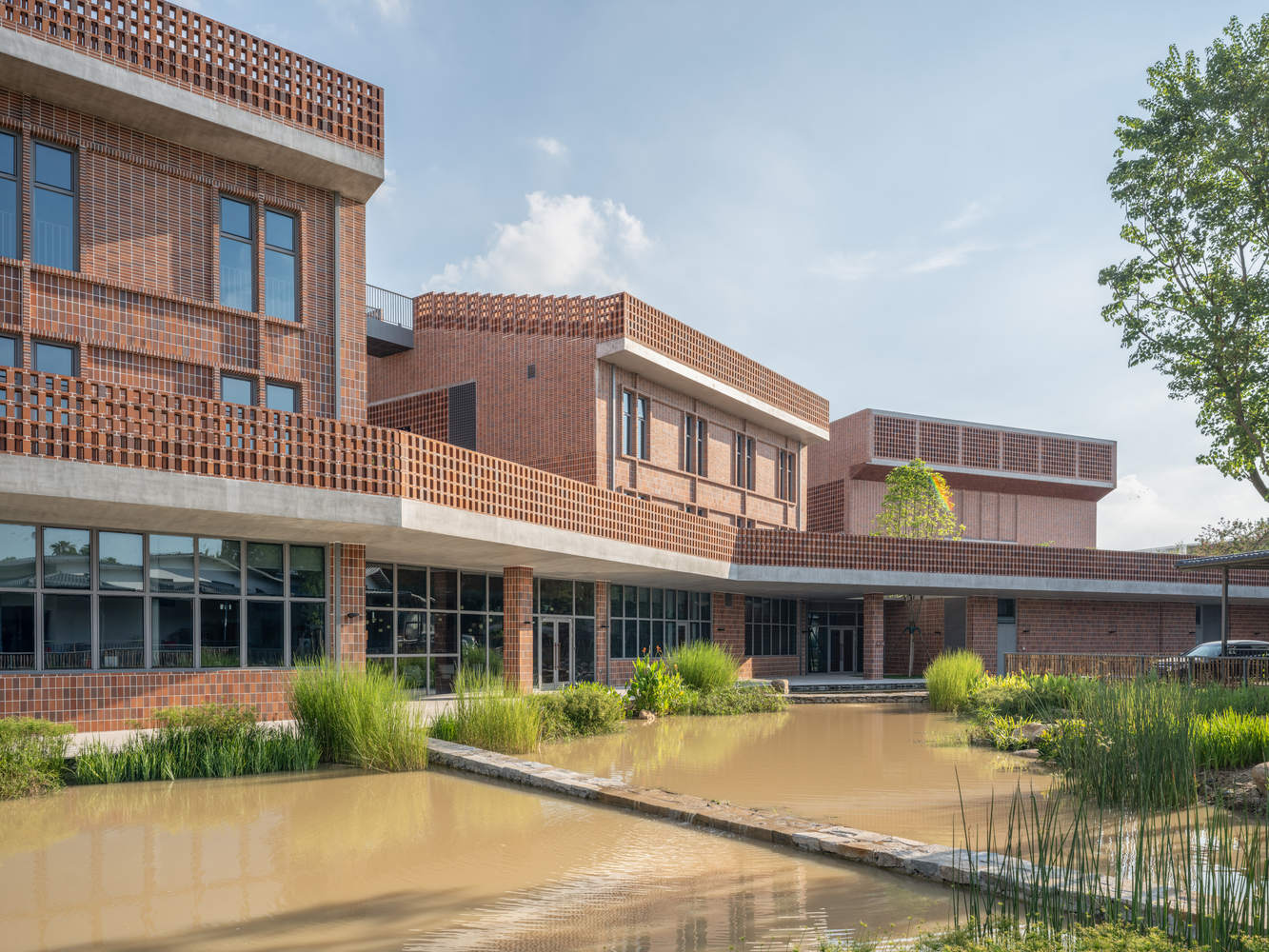
The overall plan of "Geng Xue+" draws on the traditional layout of the ancestral hall and study rooms along the lotus pond in Longtou Village, and showcases the cultural heritage of farming and reading to young people by creating a "Shuyuan Street". In order to coordinate with the architectural complex of Changtou Ancient Village, the Farming and Research Center adopted a strategy similar to the Spring Balcony: consisting of a small rectangular volume with three sloping roofs, following the trend of the south bank at a small angle.
耕学+的总体规划借鉴了塱头村祠堂书室沿荷塘畔布局的传统,通过打造“书院街”,向青少年展示耕读文化遗产。为与塱头古村建筑群相协调,耕学+研学中心采用了与春阳台相似的策略:由三个坡屋顶的小型矩形体量组成,以微小的夹角顺应南侧河岸的走势。
© 田方方
平面图
© 田方方
Red and Blue Bricks
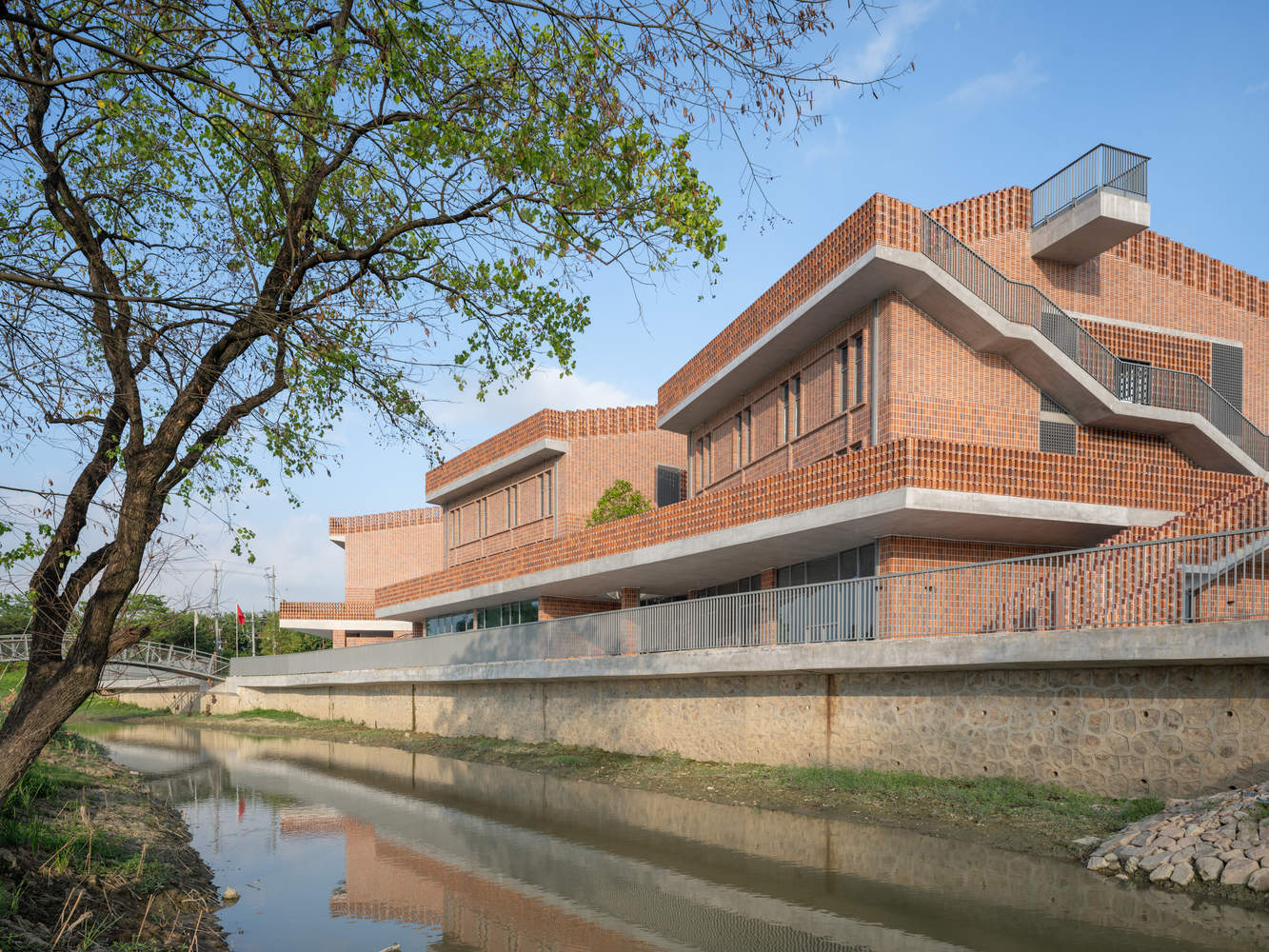
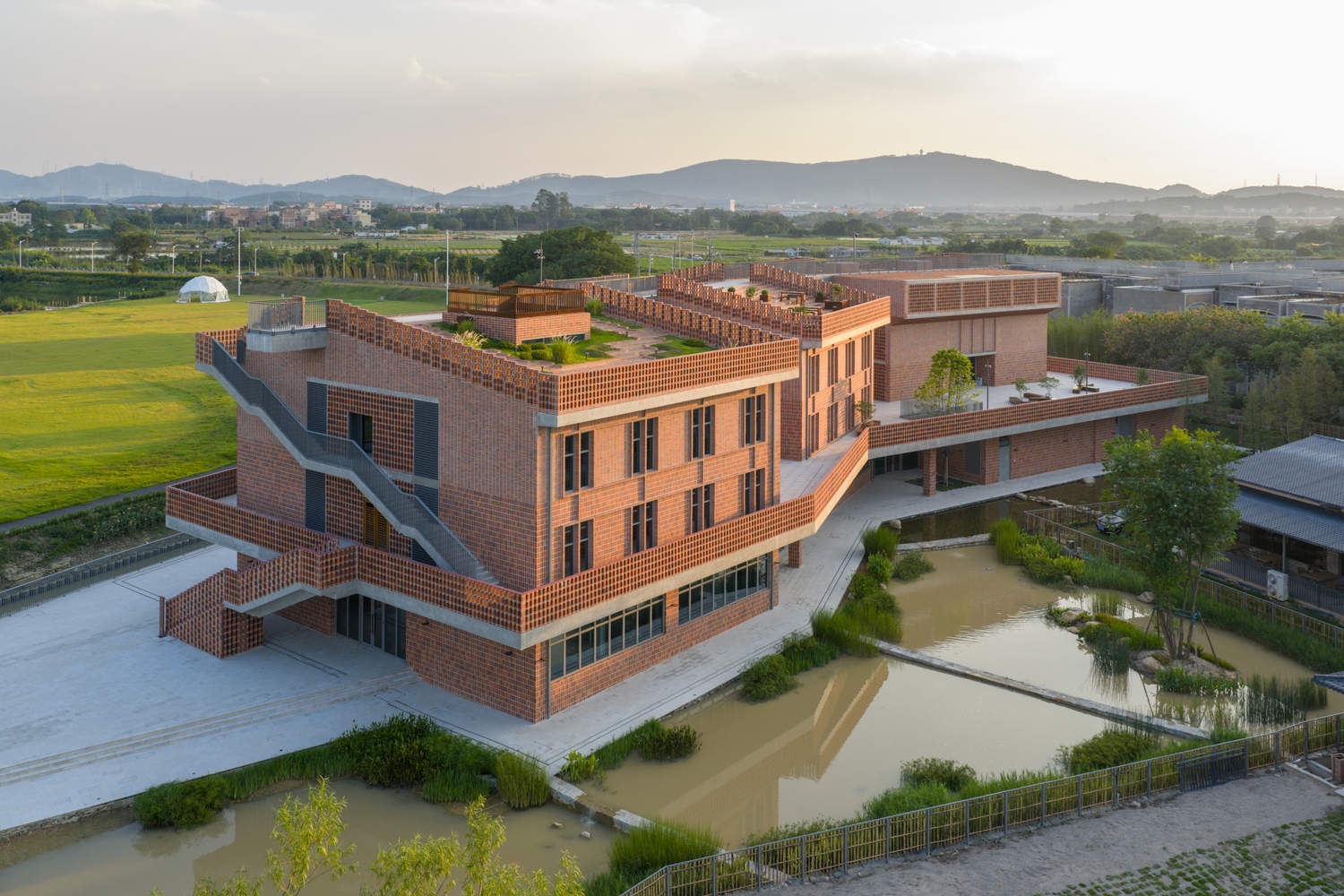
Research on materials in Longtou Village shows that with the evolution of history, red bricks are gradually replacing traditional blue bricks as the main building material in the area.. Farming+using red bricks as the main exterior material, while creating a pleasant traditional rural living atmosphere for children, also evokes villagers' memories of old bricks.
红砖和青砖
塱头村的材料研究中显示,随着历史的演进,红砖正逐渐取代传统青砖,成为当地主要建筑材料。耕学+采用红砖作为主要外立面材料,在为孩子们营造愉快的传统乡村生活氛围的同时,也唤起了村民对老砖记忆。
© 田方方
© 田方方
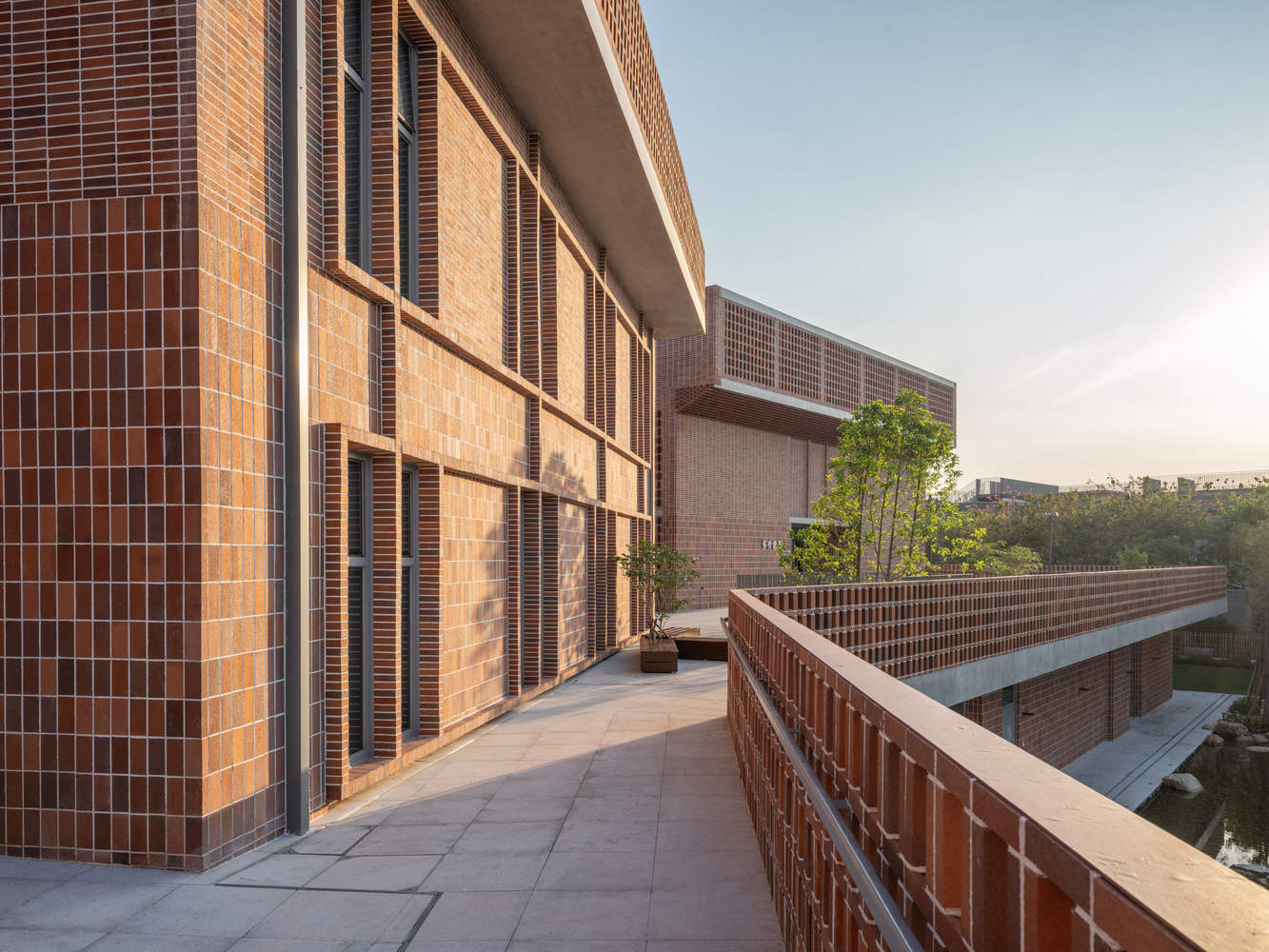
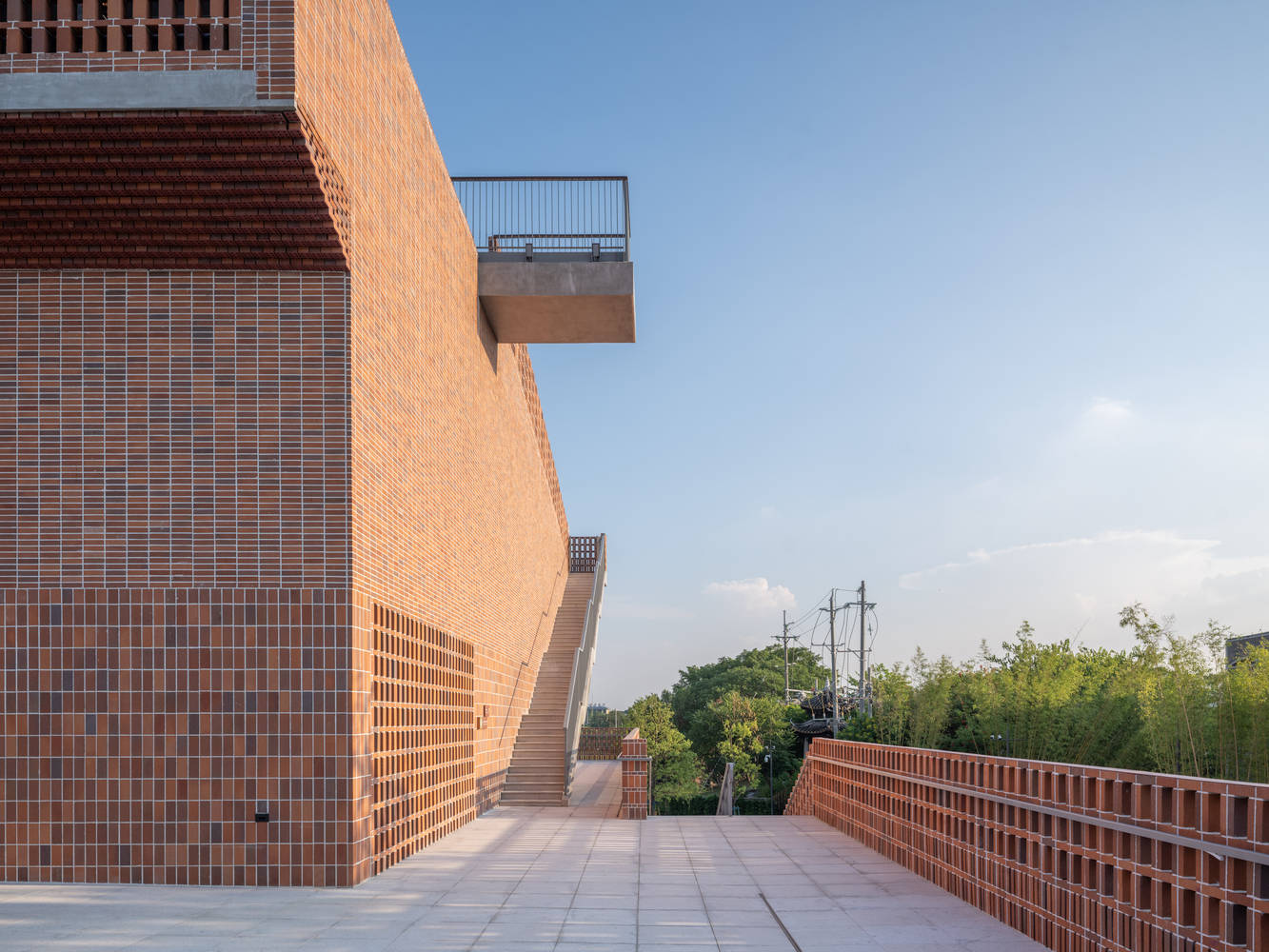
Thanks to modern technology, Gengxue+uses kiln turned red pottery bricks, each brick producing varying shades of color due to temperature differences during the firing process, effectively avoiding the homogenization problem of industrial brick making and injecting vitality into the building. Based on functional requirements, the masonry techniques used for different facades are also different, making the facades more diverse and interesting. All ceramic bricks are hollow bricks, with steel pipes inside and installed using a dry hanging method.
得益于现代工艺,耕学+采用的窑变红陶砖,每块砖因烧制过程中的温差而产生了深浅不一的颜色变化,有效规避了工业制砖的均质化问题,为建筑注入了活力。基于功能需要,不同立面采用的砌筑工艺也不尽相同,从而使立面更加丰富且具有趣味性。所有陶砖均为空心砖,内部穿钢管,采用干挂式做法安装。
© 田方方
© 田方方
The atrium and open corridor
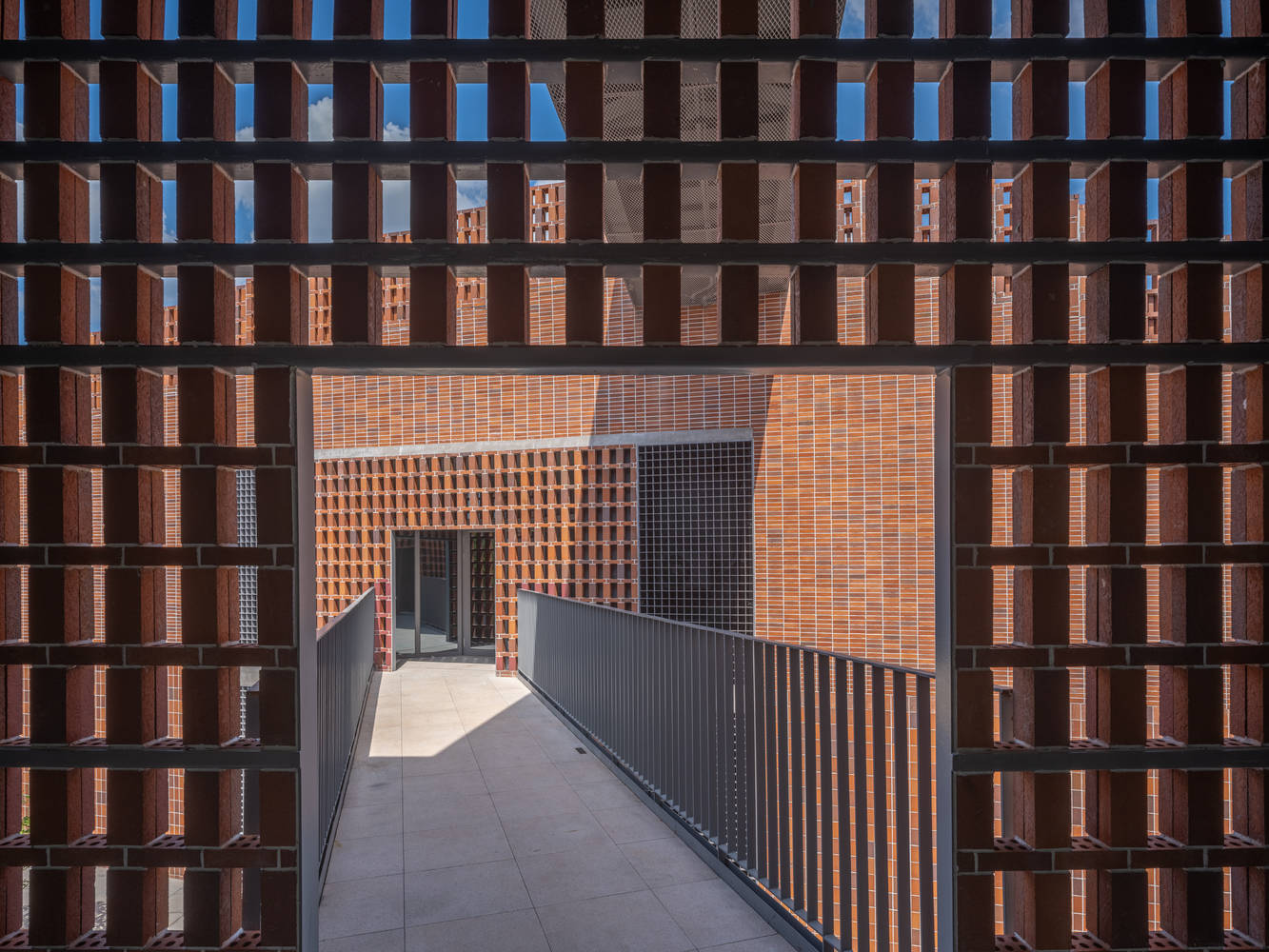
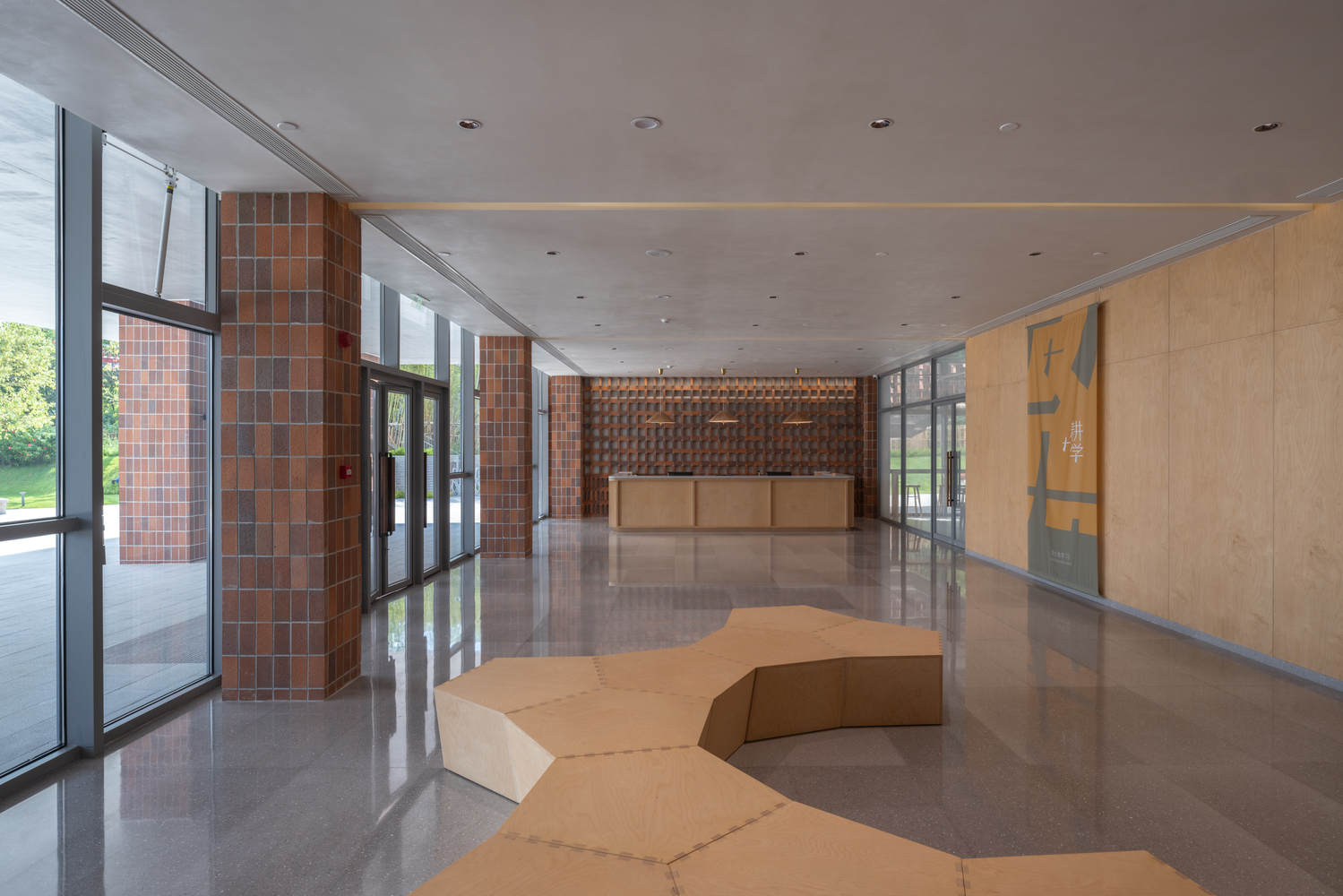
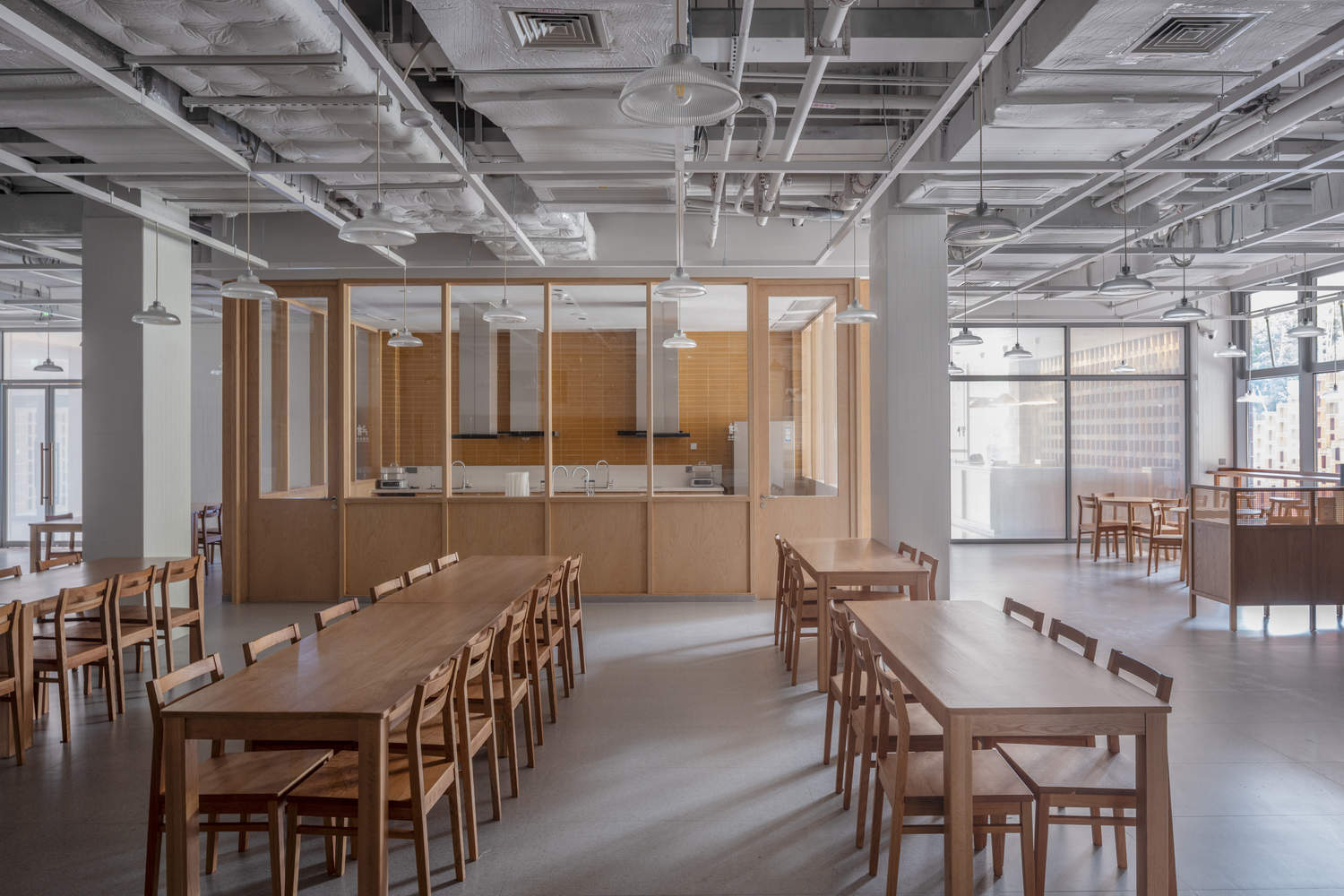
The open corridor and atrium space of the agricultural and research center are specially designed for the youth group, with dual functions of study activities and daily life.. The first floor is equipped with functional areas such as a foyer, classrooms, workshops, exhibition halls, restaurants, and kitchens, creating a sense of community like belonging. 2、 On the third floor, there will be a two-story high-rise multifunctional hall (also serving as a sports hall) and supporting dormitories.
中庭与敞廊
耕学+研学中心的敞廊与中庭空间专为青少年群体打造,兼具研习活动与日常生活的双重功能。首层设有门厅、教室、工坊、展厅、餐厅及厨房等功能区,营造社区般的归属感。二、三层设置两层挑高的多功能厅(兼体育馆)及配套宿舍。
© 田方方
© 田方方
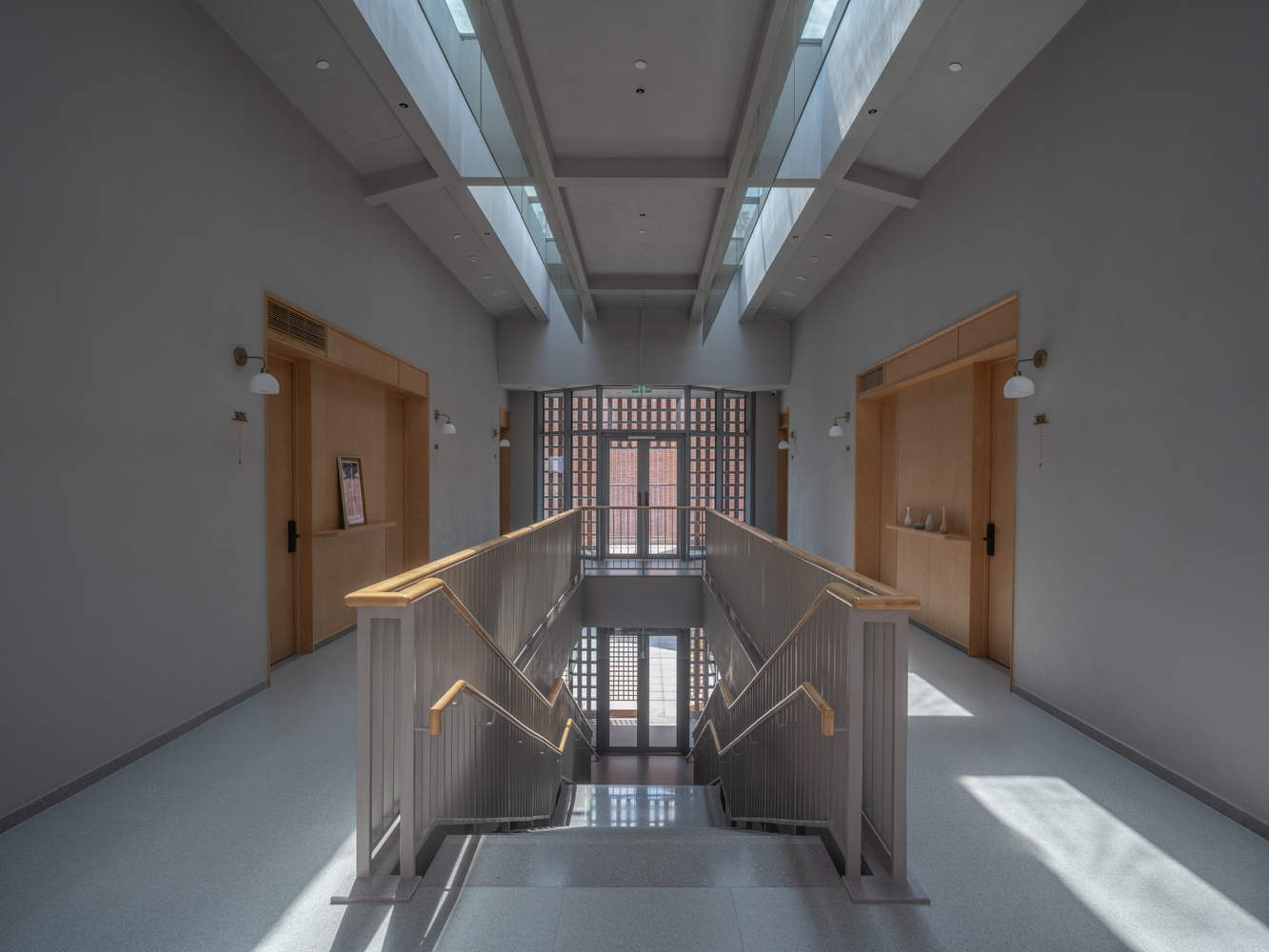
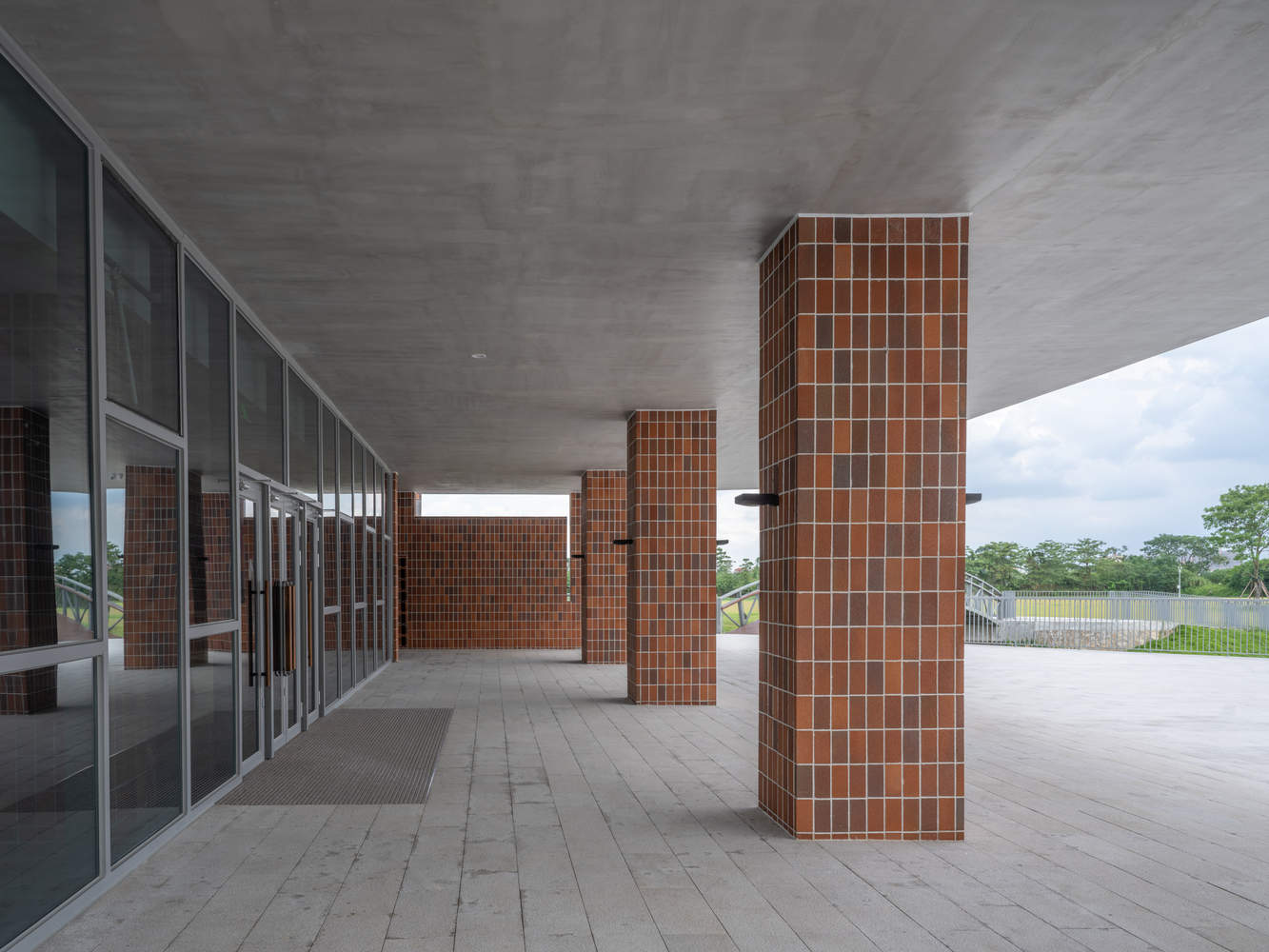
The indoor space form is in line with the functional requirements of each floor. 2、 The three story dormitory is arranged around the courtyard, connected to the public space on the first floor through a large staircase, creating an open and flowing spatial sense. The design prototype is derived from the internal spatial pattern of traditional residential buildings in Changtou Village. To facilitate the passage between the three buildings, the various areas on the first floor are connected by open corridors to ensure that teachers and students can freely access them.
室内空间形式与各楼层功能需求相契合。二、三层的宿舍围绕中庭布局,通过大楼梯与首层公共空间上下连通,营造出开放流通的空间感,该设计原型来源于塱头村传统民居的内部空间格局。为方便三栋建筑之间的通行,首层各区域通过敞廊串联,以确保师生可自由通达。
© 田方方
© 田方方
© 田方方
Stand and Countryside
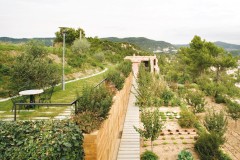
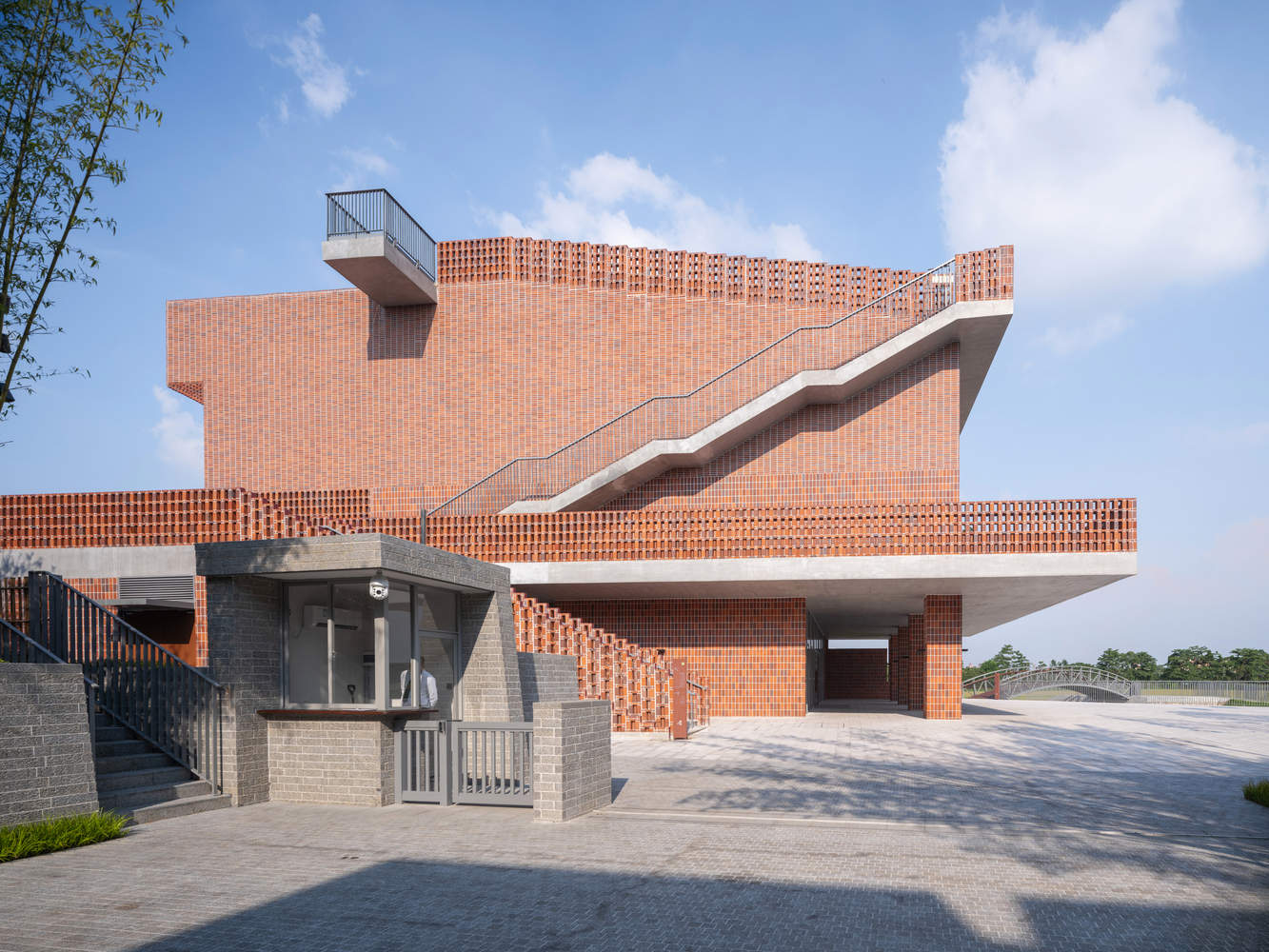
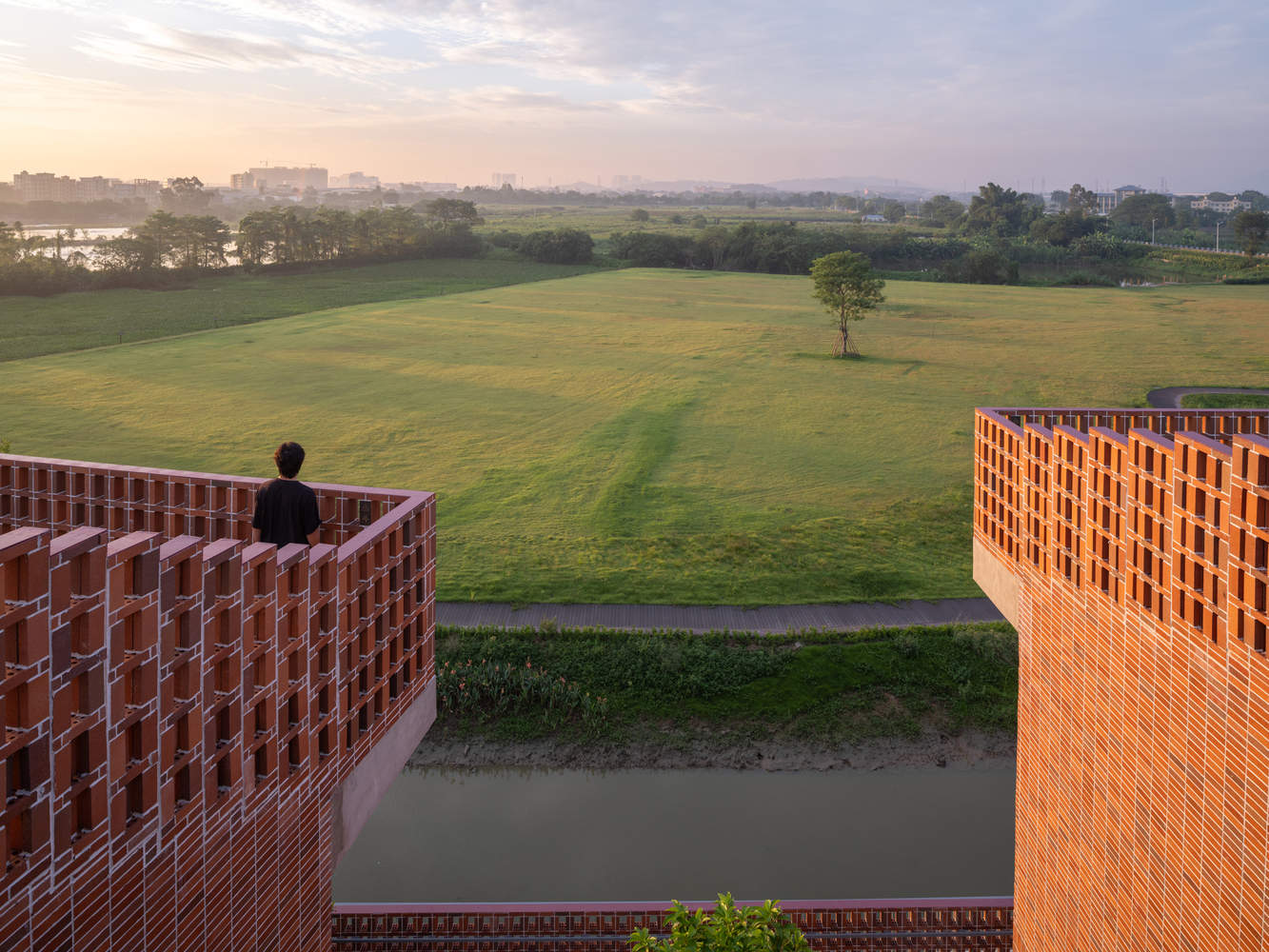
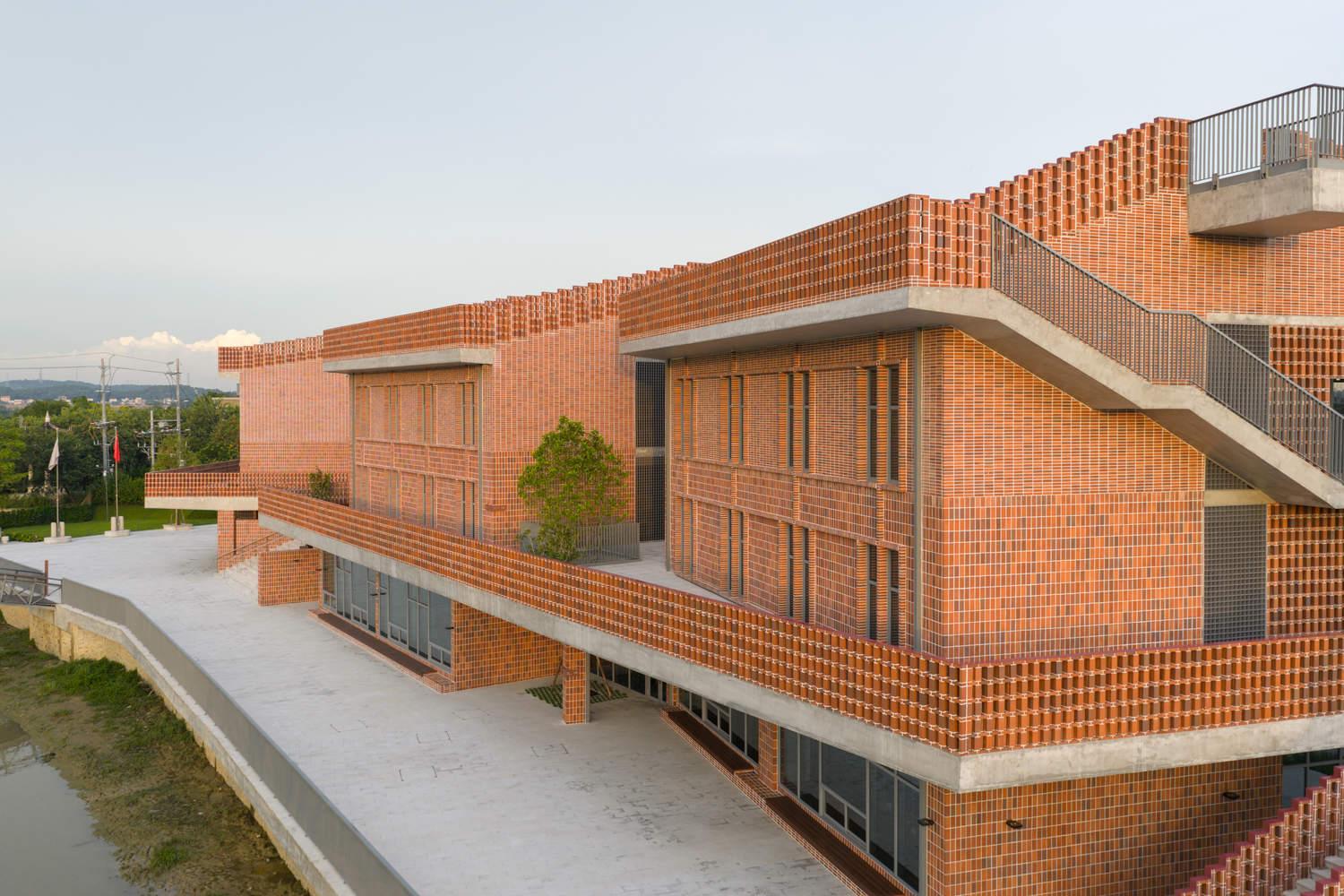
Another design highlight of the building is the five viewing platforms on the roof, which not only provide a panoramic view of the surrounding countryside scenery, but also serve as a learning and communication space for students.. Visitors can enjoy a panoramic view of both natural scenery and historical villages, allowing them to deeply experience the integration of natural ecology and regional agricultural civilization. The design of the second floor platform aims to provide diverse outdoor activity spaces, while its cantilevered structure provides shelter for the external area of the first floor, effectively resisting the impact of harsh weather. The large steps set between the platforms of Building AB have become an important passage connecting nature. Climbing down the steps and crossing the arch bridge, students can step into the rural land across the river and personally experience the agricultural culture and historical heritage passed down from their ancestors.
看台与乡野
该建筑的另一设计亮点在于屋面的五处观景平台,这里不仅可以全方位俯瞰周边乡野景色,更是学生们的学习和交流空间。来访者在此既可远眺自然风光,又能俯瞰历史村落,从而深度体验自然生态与地域农耕文明的交融。二楼平台的设计旨在提供多样化的户外活动空间,同时其悬挑结构为一楼外部区域提供遮蔽,有效抵御恶劣天气影响。AB 栋平台之间设置的大台阶成为连接自然的重要通道,拾级而下,跨过拱桥,学生们便可以踏入对岸的乡间土地,亲身去感受祖辈传承的农耕文化与历史遗产。
© 田方方
© 田方方