Irrawaddy Flower Garden Teaching Building Complex/Simple Architecture
伊洛瓦底花卉园教学楼群 / Simple Architecture
设计理念与社会责任:该项目最引人注目的地方在于其深刻的设计理念和社会责任感。建筑师并非仅仅为了建造教室,而是深入了解了缅甸移民子女的教育困境,以及当地实际情况,如资金、材料的可获得性。项目响应了缅甸政治动荡后对教室的迫切需求,体现了对弱势群体的关怀。设计者在有限的资源条件下,通过与当地社区的紧密合作,建造了经济实用、可持续且富有当地特色的建筑。这种设计理念超越了纯粹的建筑技术,将建筑视为解决社会问题的手段,并赋予了项目非凡的意义。
结构创新与材料运用:项目的精髓在于其在结构和材料运用上的创新。设计团队巧妙地利用A字形模块化构件,构建了简洁而高效的屋顶结构,既保证了建筑的坚固性,又为儿童提供了玩耍空间。竹竿嵌入隔断墙的设计,更是充分利用了当地材料,体现了可持续设计的理念。对二手柚木的利用,不仅降低了成本,也减少了对环境的影响。这种对当地材料的灵活运用和现场调整,展现了建筑师的创造力,也使得建筑与当地环境完美融合。项目是对“简单建筑”理念的完美诠释,在有限条件下创造出最大价值。
团队合作与环境友好:项目的成功离不开设计团队与当地工人的紧密合作。这种合作不仅促进了技术交流,也提升了当地社区的参与感和自豪感。在短短五周内完成建设,证明了高效的施工管理能力。此外,项目注重环境可持续性,大量采用当地材料,特别是二手柚木的使用,减少了对新材料的依赖,降低了碳排放,并体现了循环利用的环保理念。这种设计理念和实践,为类似学校建筑提供了可借鉴的范例,展现了建筑师对环境和社会的责任感。整个项目是一个小而精、充满人文关怀的建筑实践。
© Jan Glasmeier
© Oliver Giebels
首个教室建设项目
The Irrawaddy Flower Garden School is a school that provides education for children of Burmese immigrants, sponsored by the Thai organization "aid without borders". The school is located about five kilometers from the Thai Myanmar border and currently has a total of 185 students, covering various grades from daycare/kindergarten to eighth grade. After the latest military coup in Myanmar on February 1, 2021, the number of students enrolled in MLC (Migrant Learning Center) schools for Burmese immigrant children has continued to increase. Although most of these schools are registered with the Ministry of Education (MoE) in Thailand, the related financial support infrastructure projects have not been registered. This results in schools having to build temporary buildings, which are often very rudimentary, mostly unsustainable, and almost unusable for a long time. As a result, there is a problem of insufficient classroom numbers in schools, where students of different grades have to share classrooms or can only use kitchens or outdoor areas for teaching activities.
伊洛瓦底花卉园学校是一所为缅甸移民子女提供教育的学校,由泰国“无国界援助组织”资助开办。该校距离泰缅边境约五公里,目前共有 185 名学生,涵盖从托儿所/幼儿园到八年级的各个年级。2021 年 2 月 1 日缅甸发生最新军事政变后,入读这类缅甸移民儿童学校(MLC,Migrant Learning Center的缩写)的学生人数持续增加。尽管大多数此类学校已在泰国教育部(MoE)注册,但与之相关的财政支持基础设施项目却并未获得注册。这导致学校只能搭建临时建筑,这些建筑往往十分简陋,大多不可持续,几乎都无法长久使用。由此,学校出现了教室数量不足的问题,不同年级的学生不得不共用教室,或者只能利用厨房或室外区域来开展教学活动。
© Leo Huang
© Old Doors, New Ways
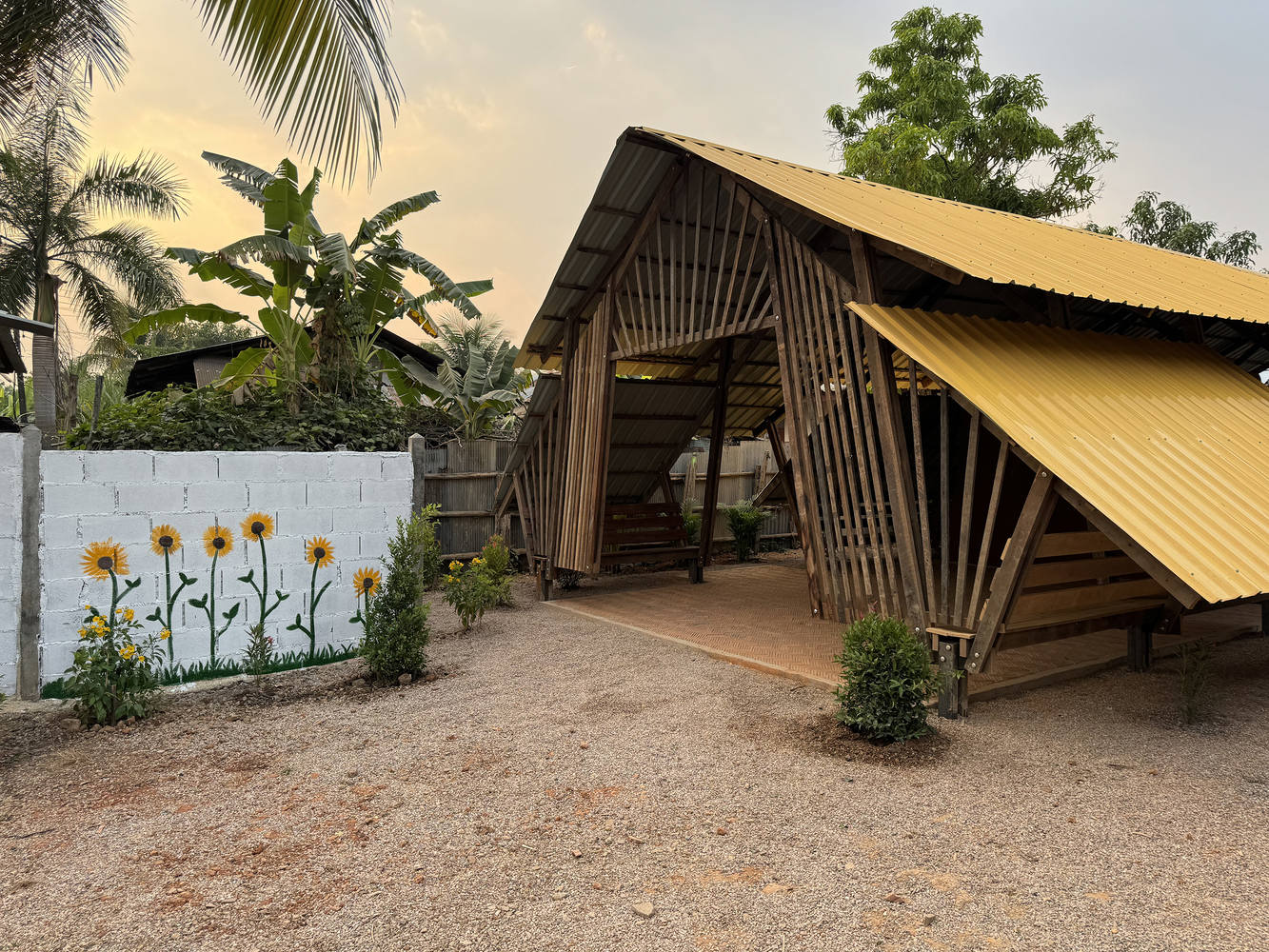
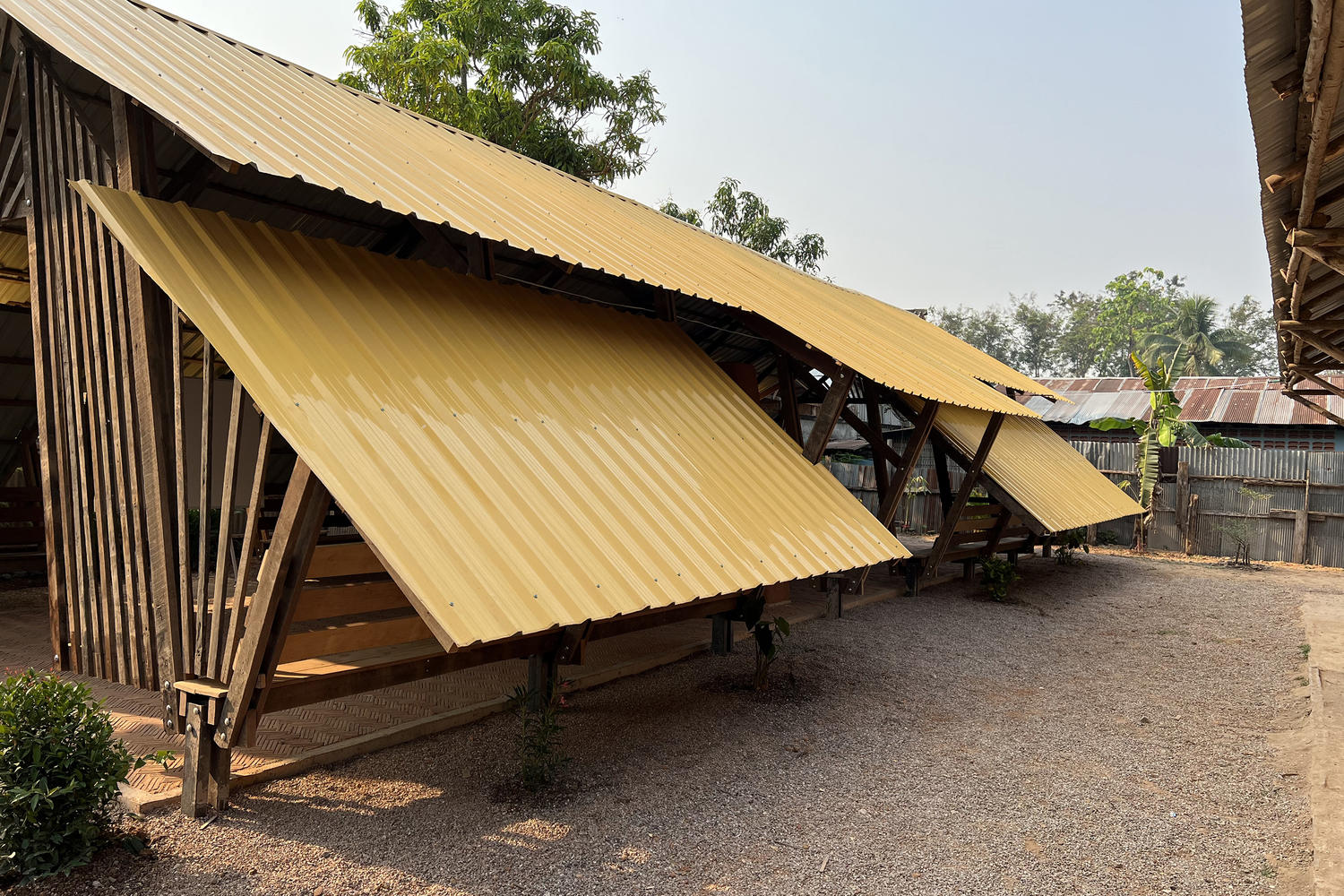
The first project in 2024 focuses on building two new classrooms. The project involved a small group of architecture students, young architects, and local workers, and took five weeks to complete on-site construction.
2024 年的首个项目聚焦于建造两间新教室。该项目由一小群建筑专业学生、年轻建筑师以及当地工人共同参与,在现场耗时五周完成了施工。
© Leo Huang
© Leo Huang
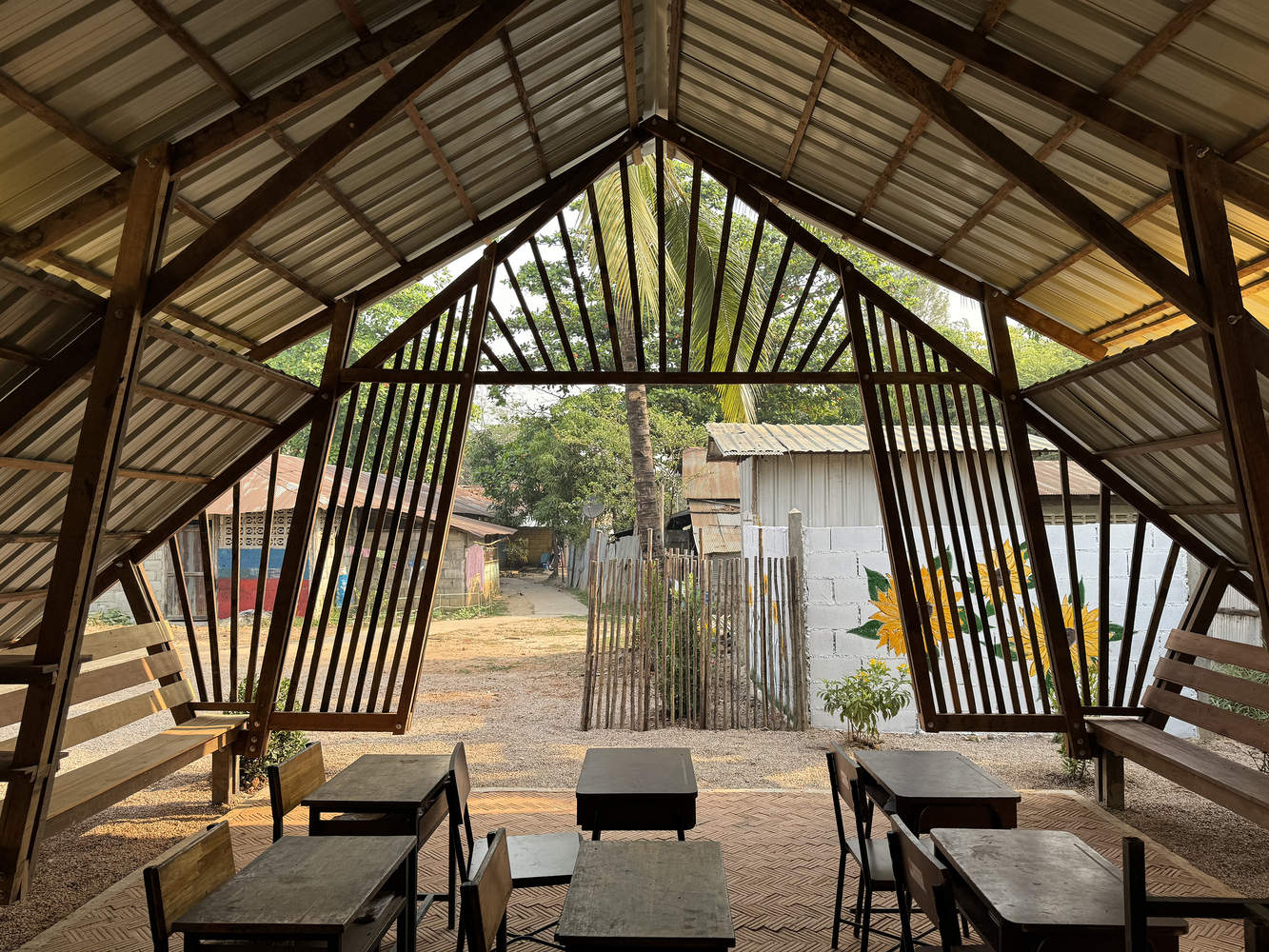
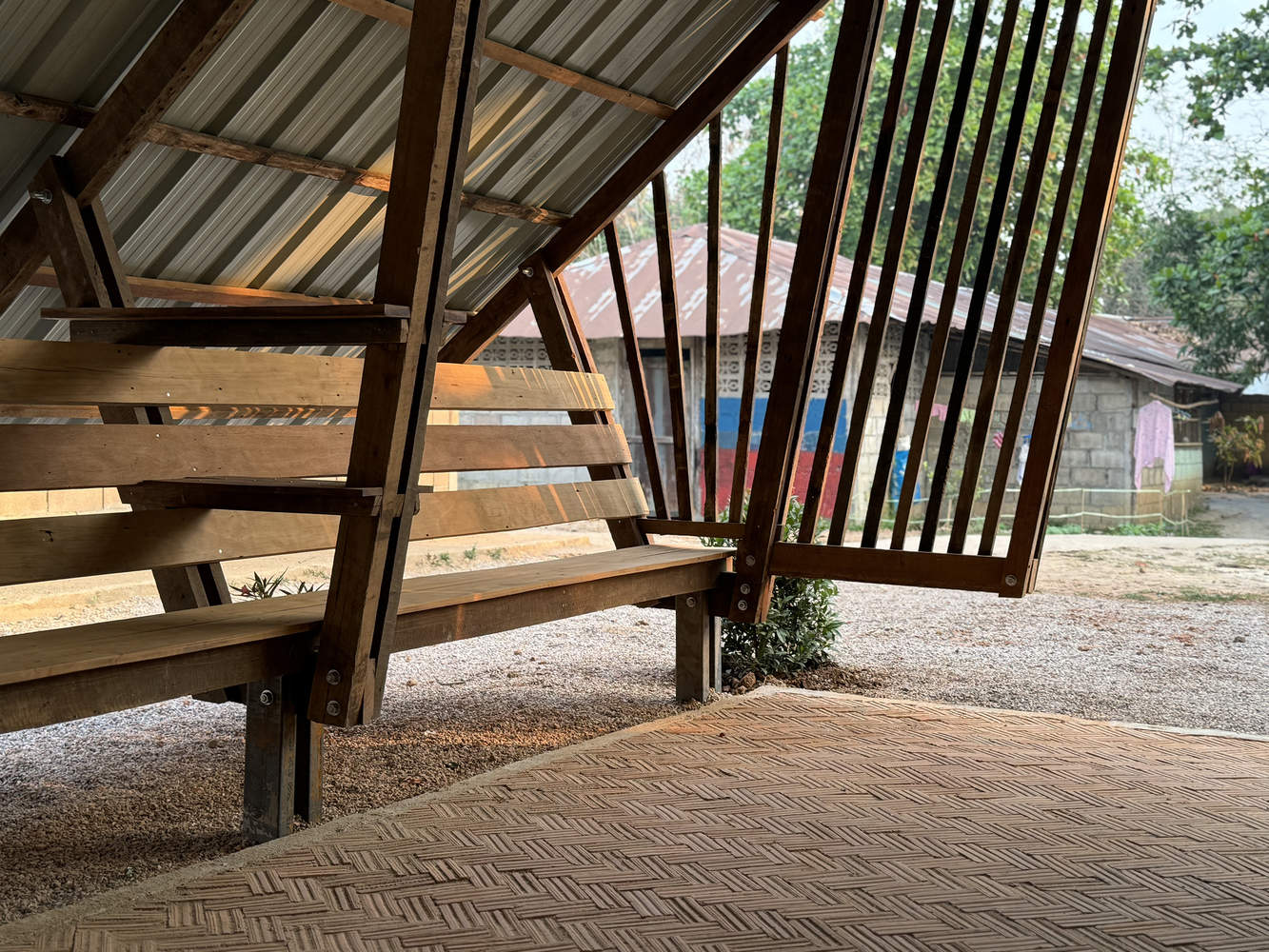
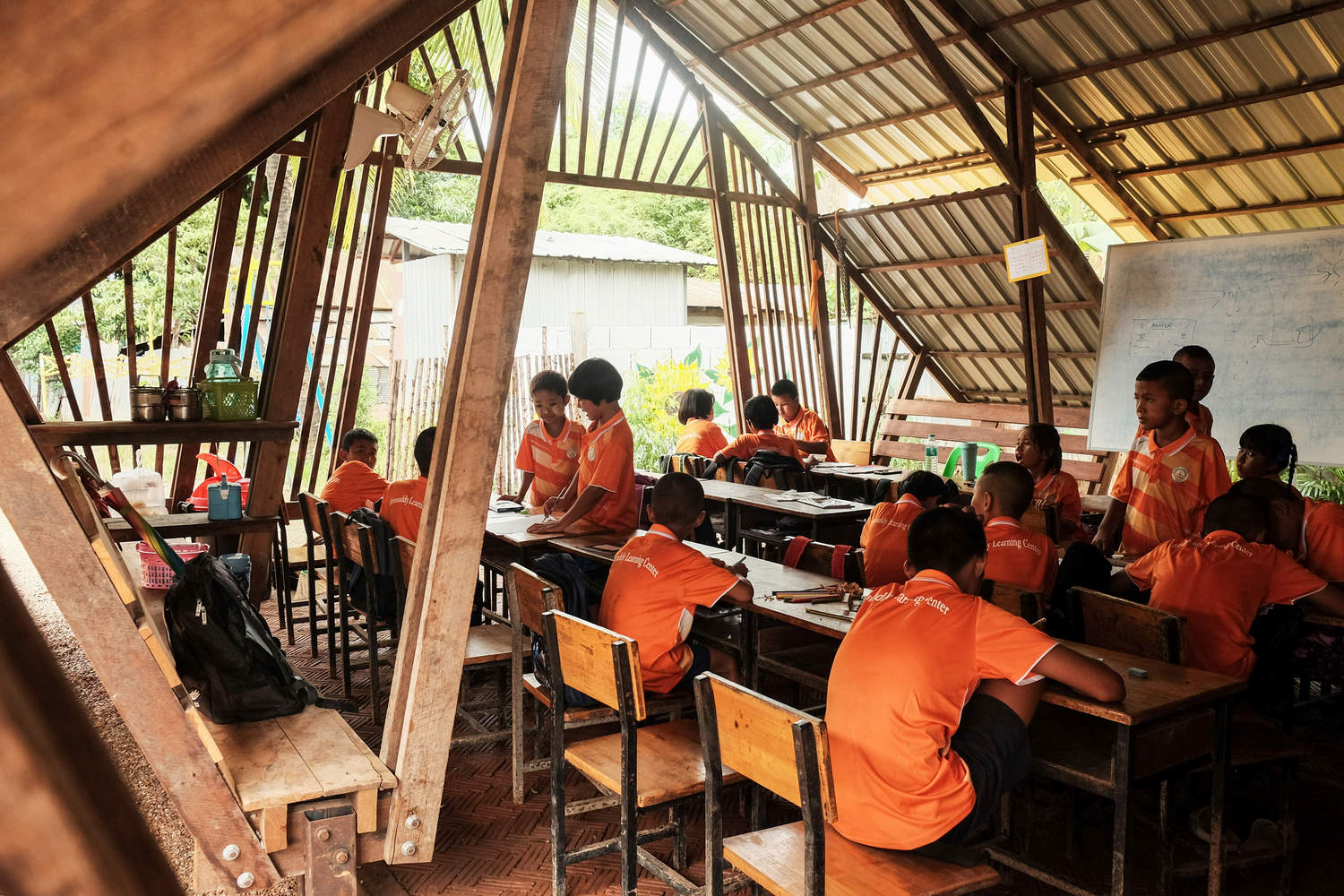
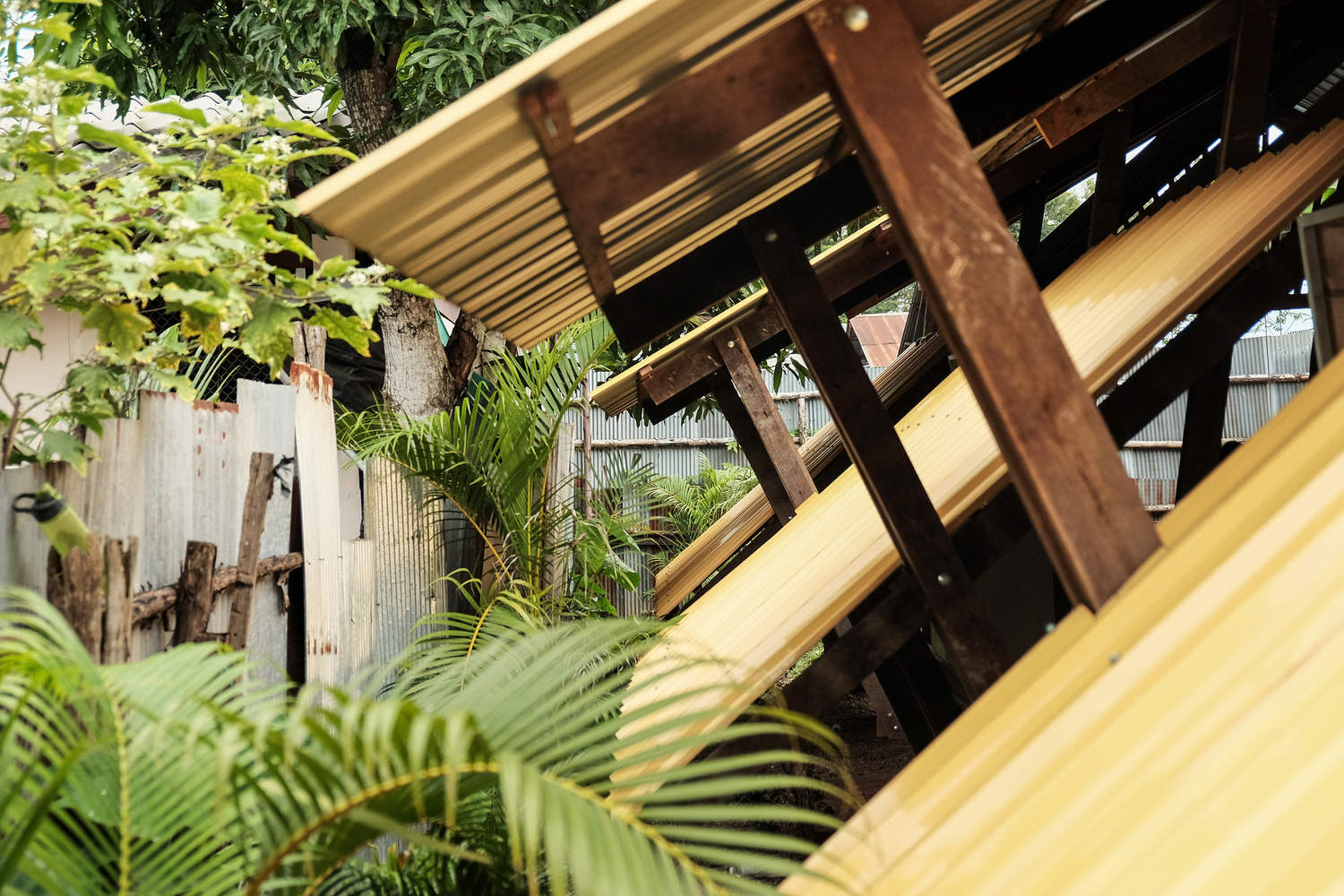
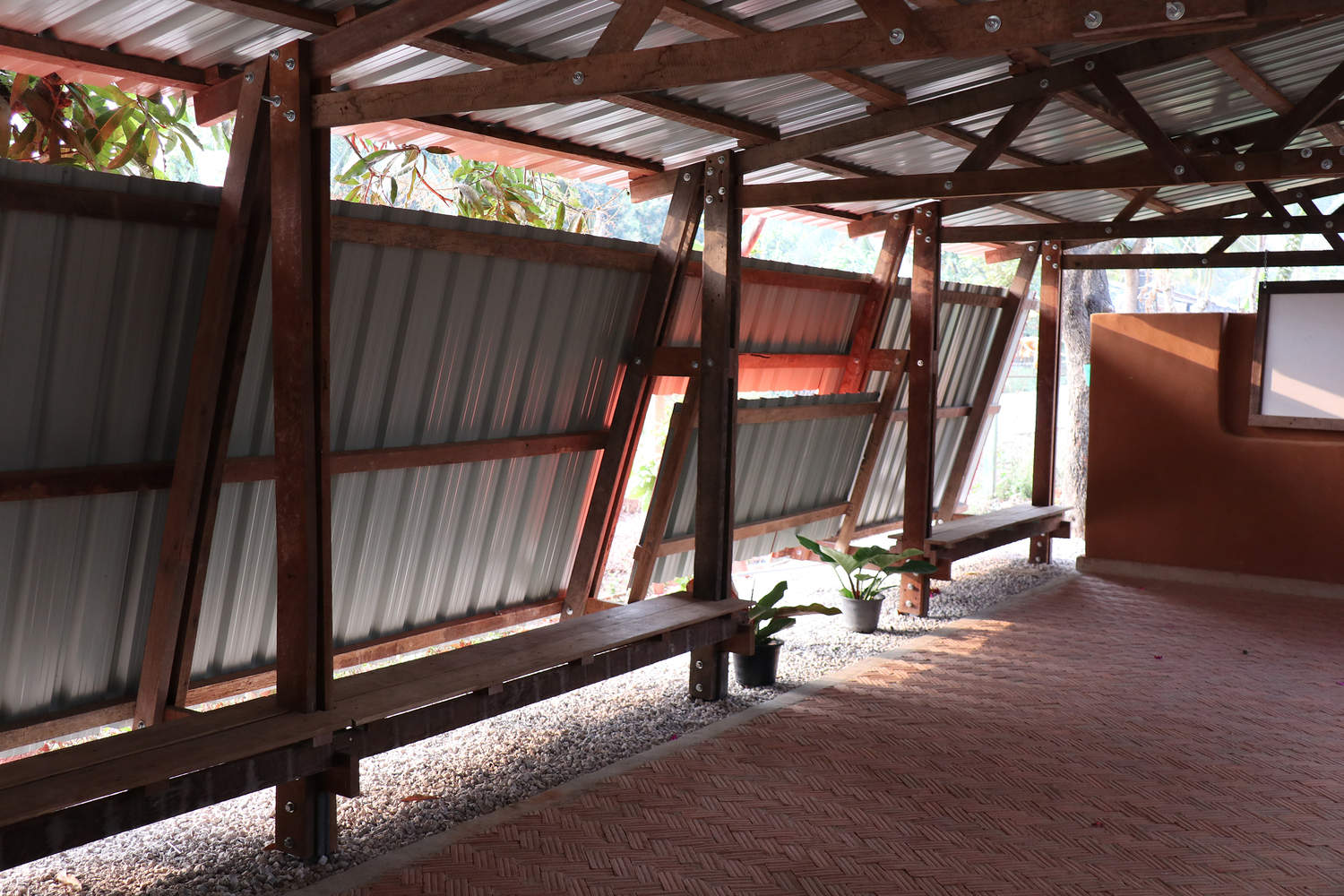
The design team has designed three types of A-shaped (herringbone) modular components to support the metal roof and build a framework structure for the lower and upper roofs. The spacing between the trusses also provides space for placing low stools, on which children can sit and play. The partition walls between classrooms act as physical barriers, helping to control noise levels. Bamboo poles are embedded in the partition walls, forming shelves on both sides of the classroom.
设计团队设计了三种类型的 A 字形(人字形)模块构件,用于支撑金属屋顶,为下层屋顶和上层屋顶搭建起框架结构。桁架之间的间距还为放置矮凳提供了空间,孩子们可以坐在上面玩耍。教室之间的隔断墙起到了物理屏障的作用,有助于控制噪音水平。隔断墙内嵌入了竹竿,在教室两侧形成了置物架。
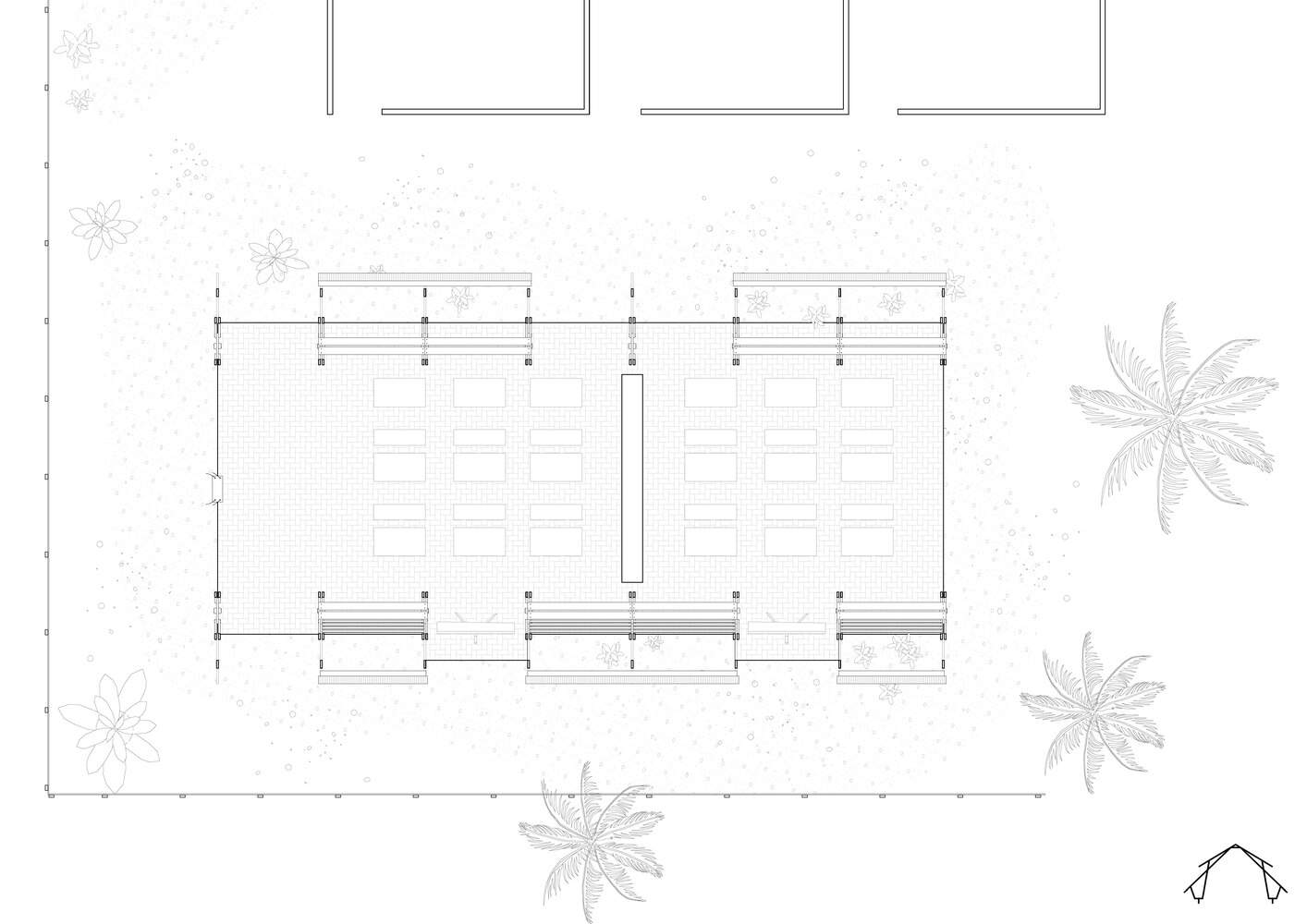
1st Project 平面图
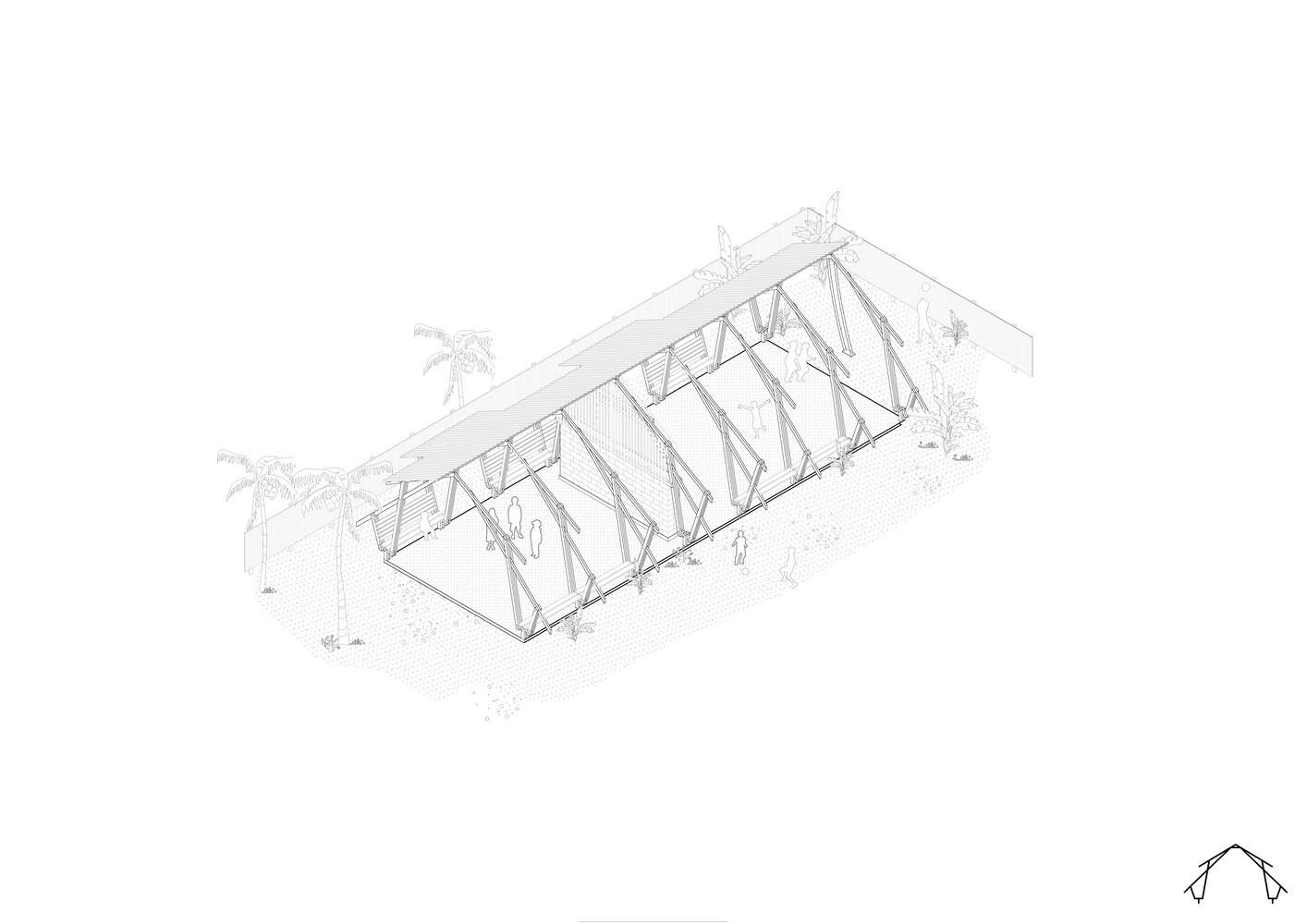
1st Project 轴测图
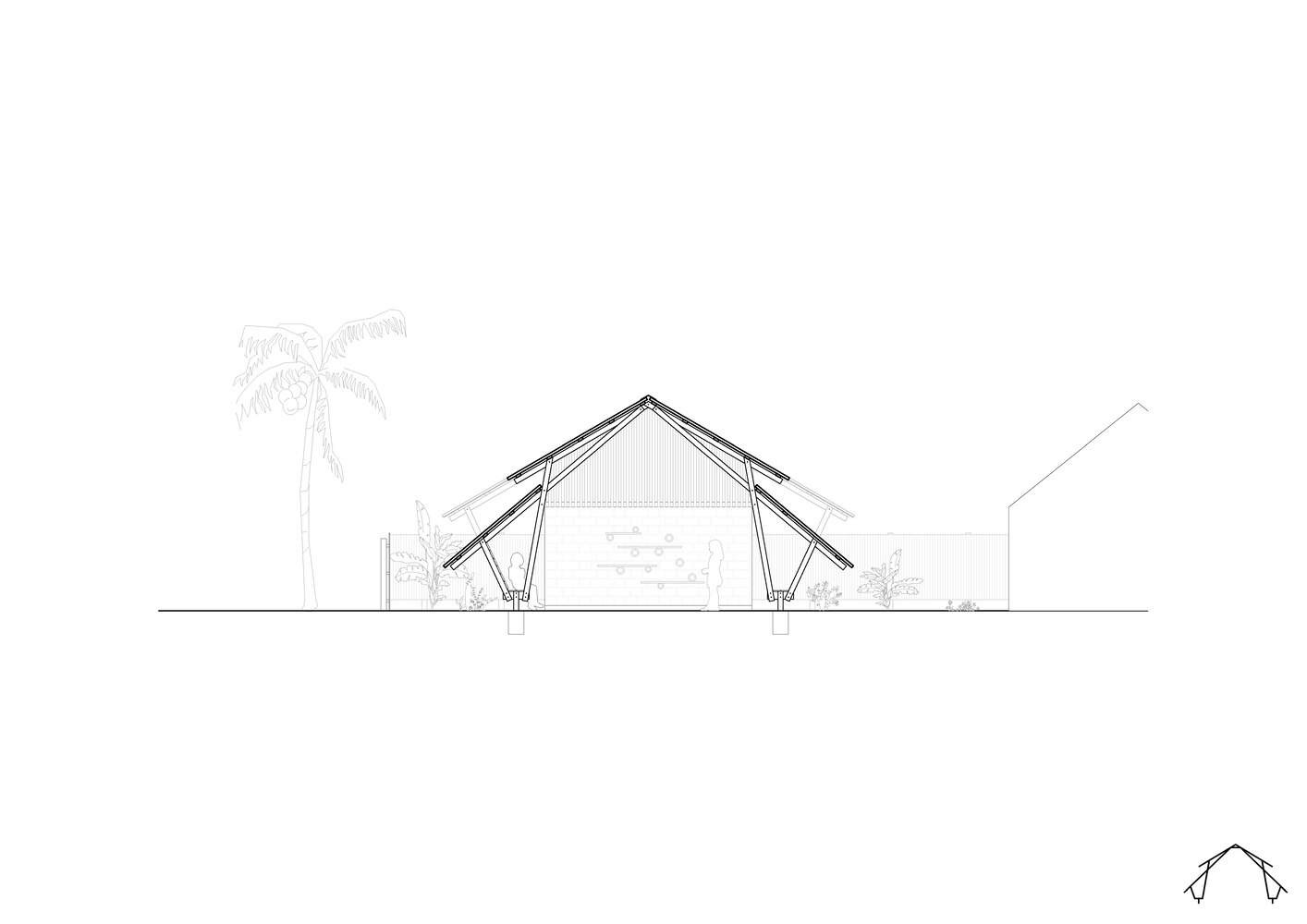
1st Project 剖面图
© Isabell
© Isabell
第二个教室建设项目
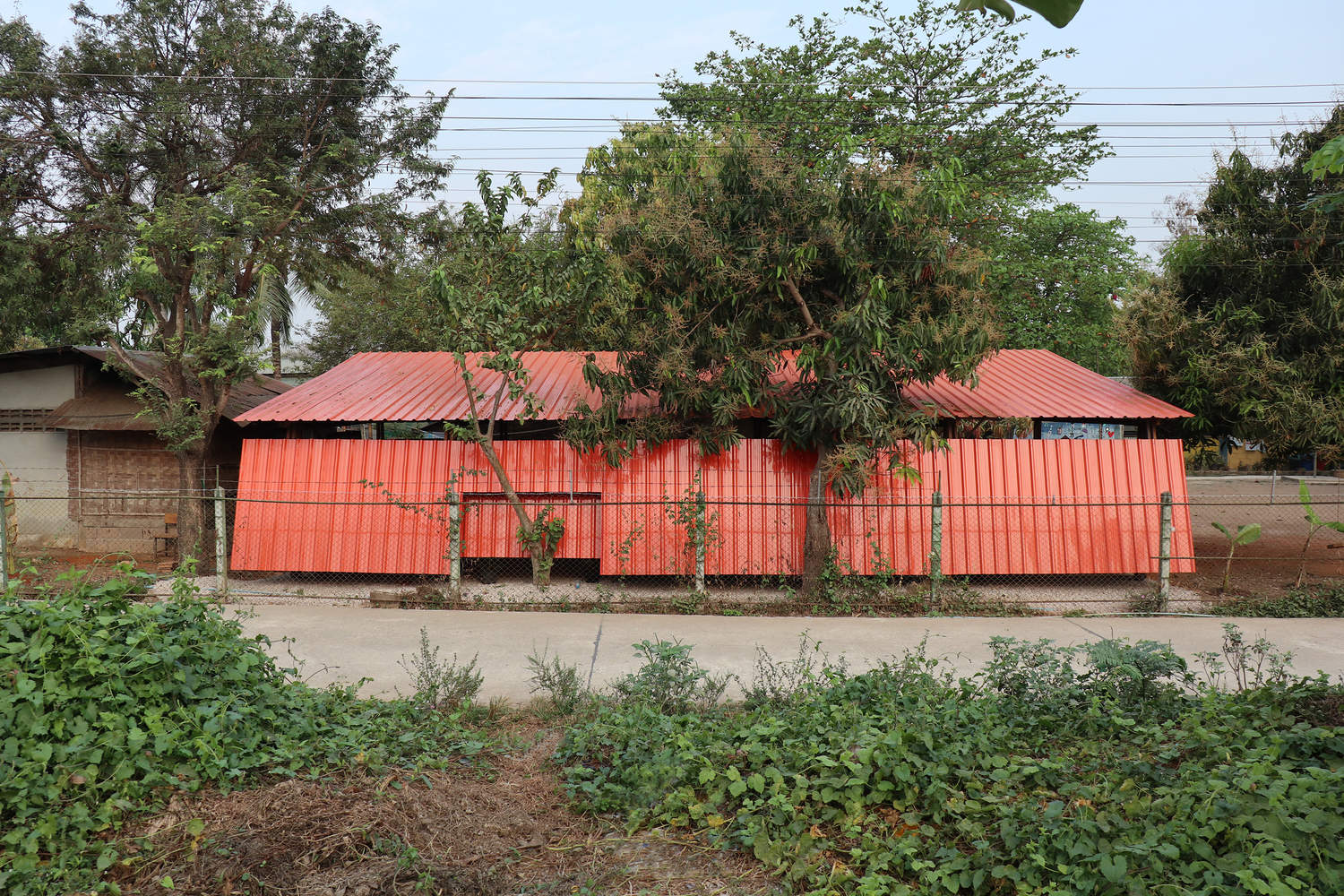
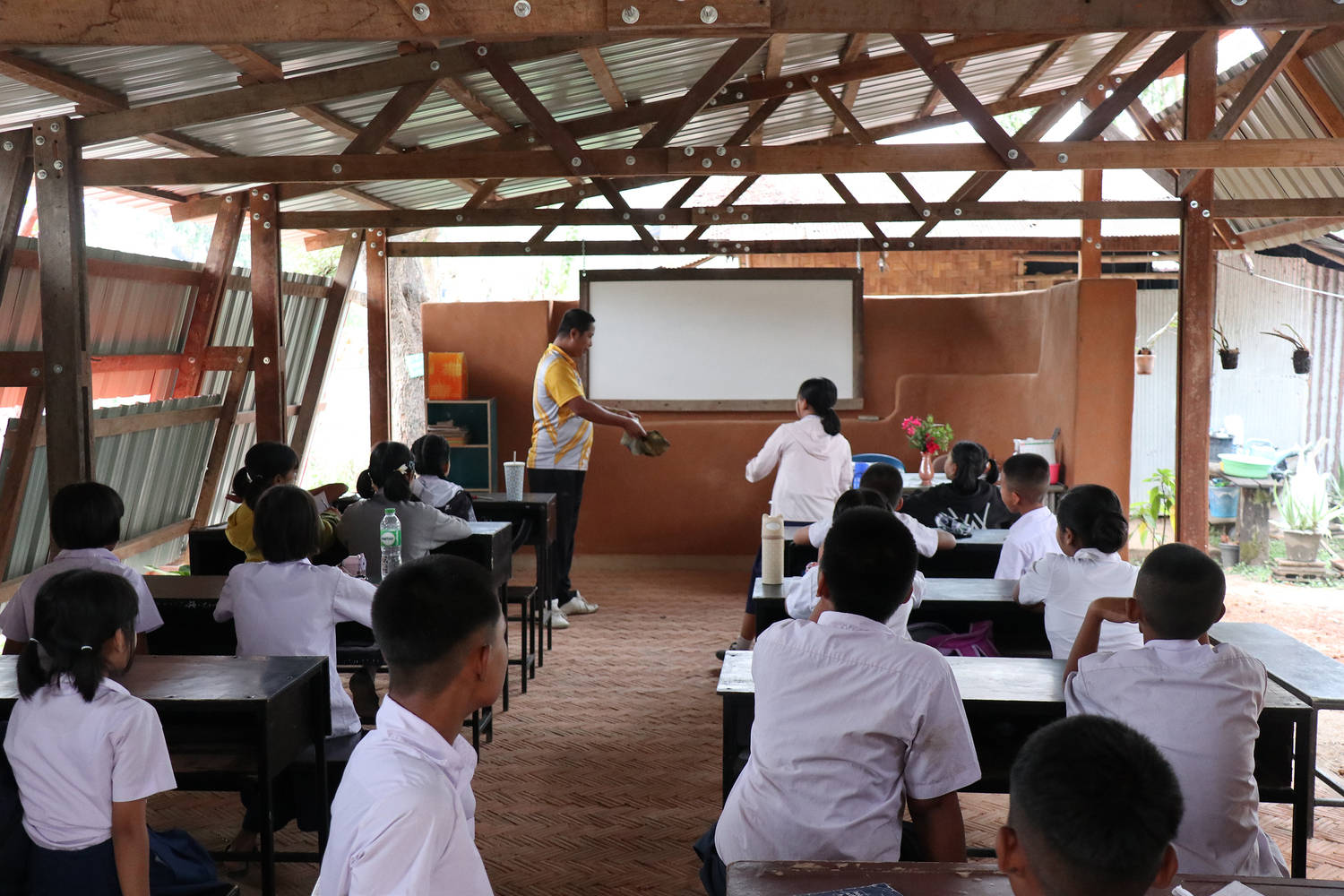
After completing the first classroom construction project in 2024, we returned to the school after a year to build a larger classroom building for the school's non formal education program. The demand for space this time is significantly different from previous construction projects. In non formal education programs, students of different grades gather in a larger space to learn English. The new classroom can accommodate fifty students. At the entrance, there is a small reception area inside the building for students to gather and use.
在 2024 年完成首个教室建设项目后,时隔一年,我们重返该校,为学校的非正规教育项目建造一栋更大的教室楼。此次对空间的需求与之前的建设项目大不相同。在非正规教育项目的课堂上,不同年级的在校学生齐聚在一个更大的空间里学习英语。新教室可容纳五十名学生。在入口处,建筑内设有一个小型接待区,供学生们聚集使用。
© Jan Glasmeier
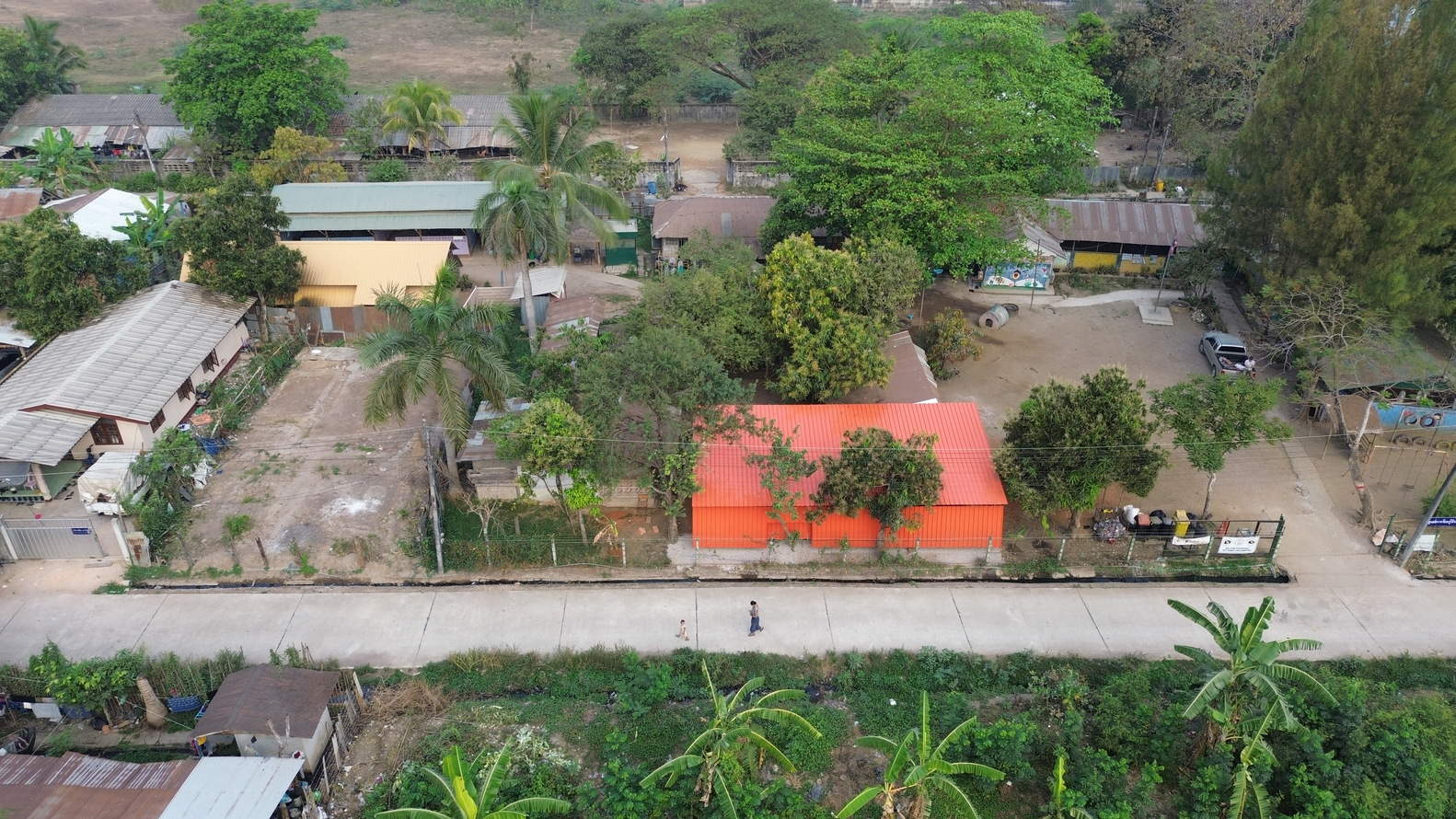
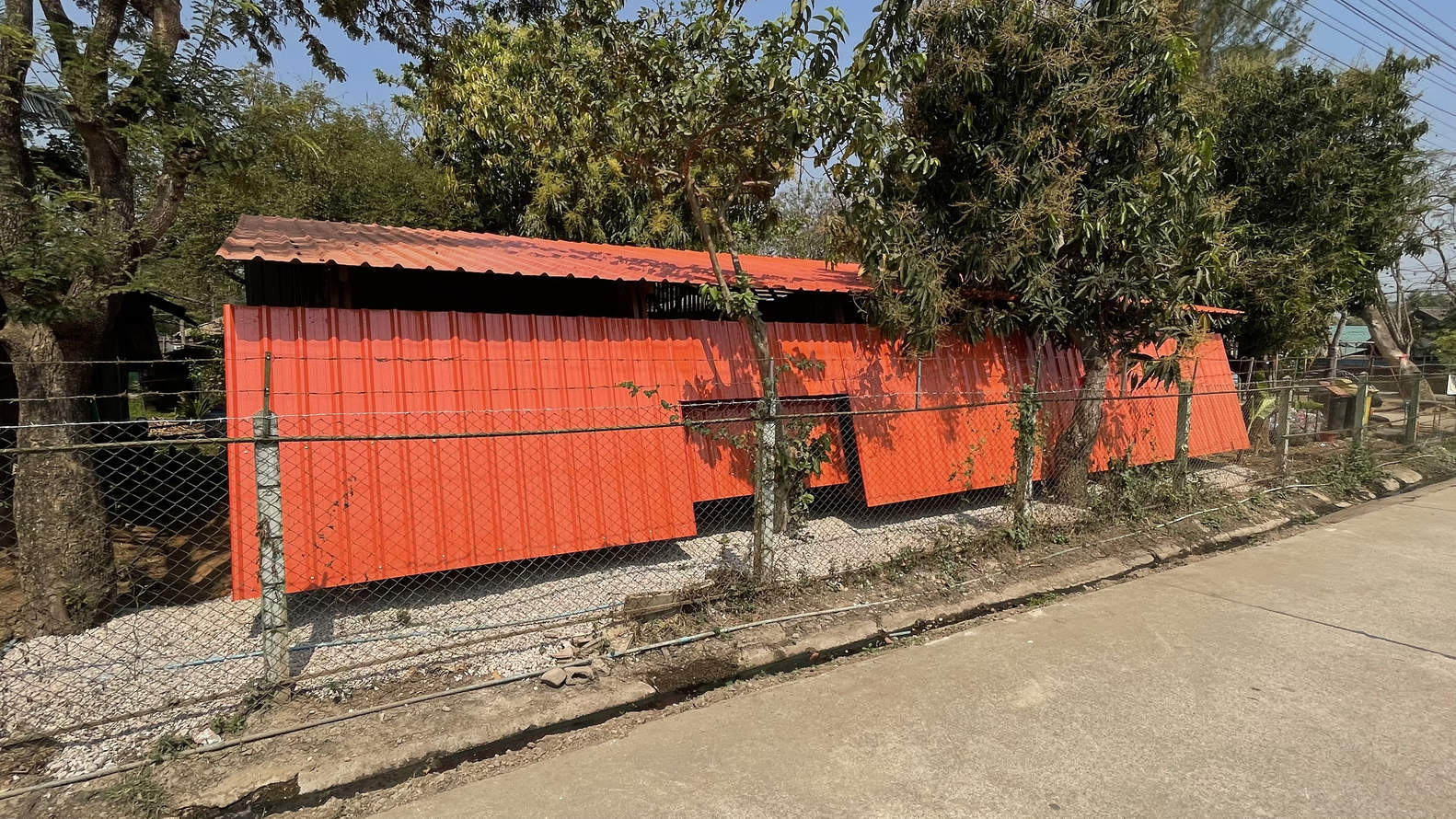
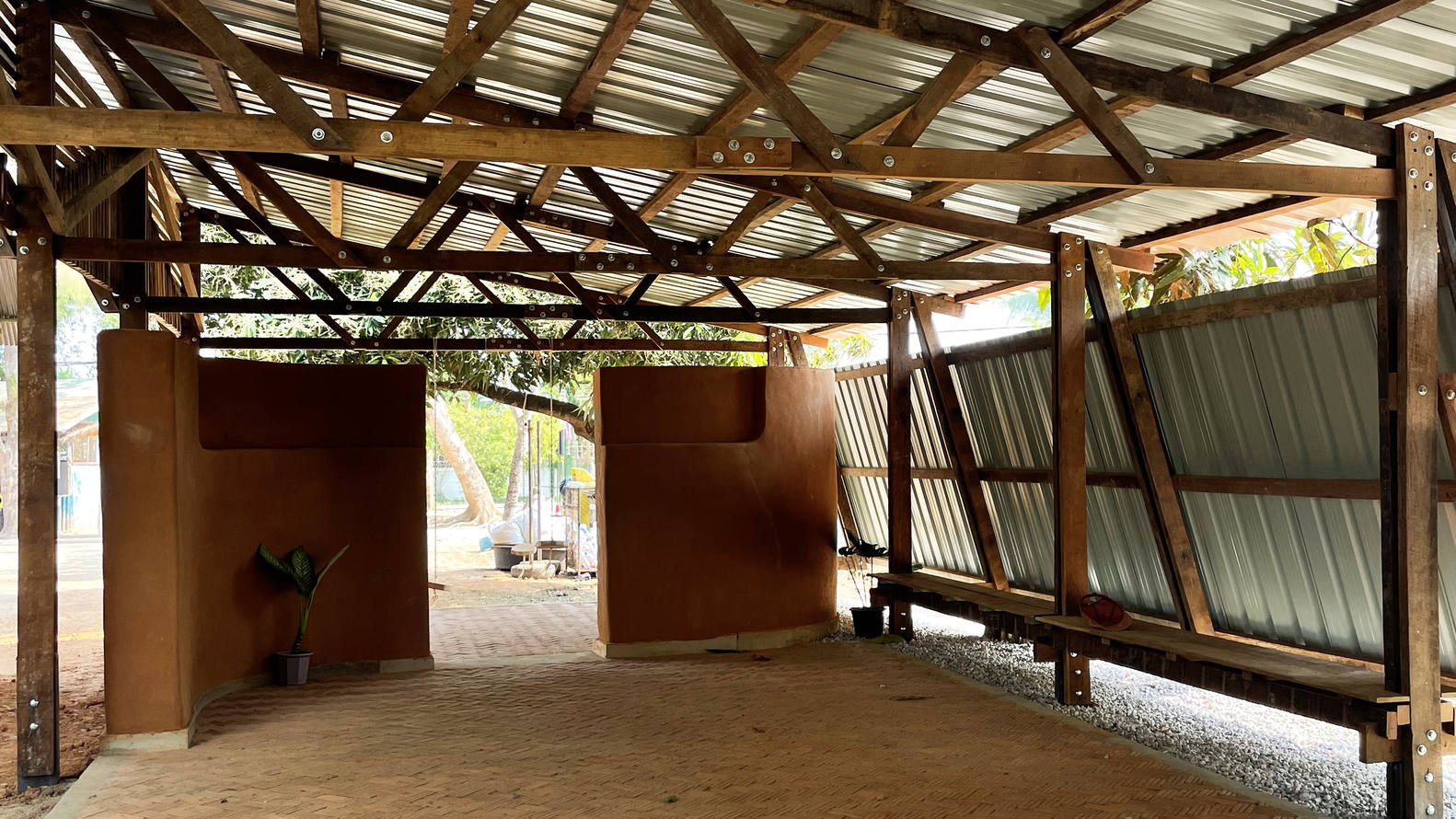
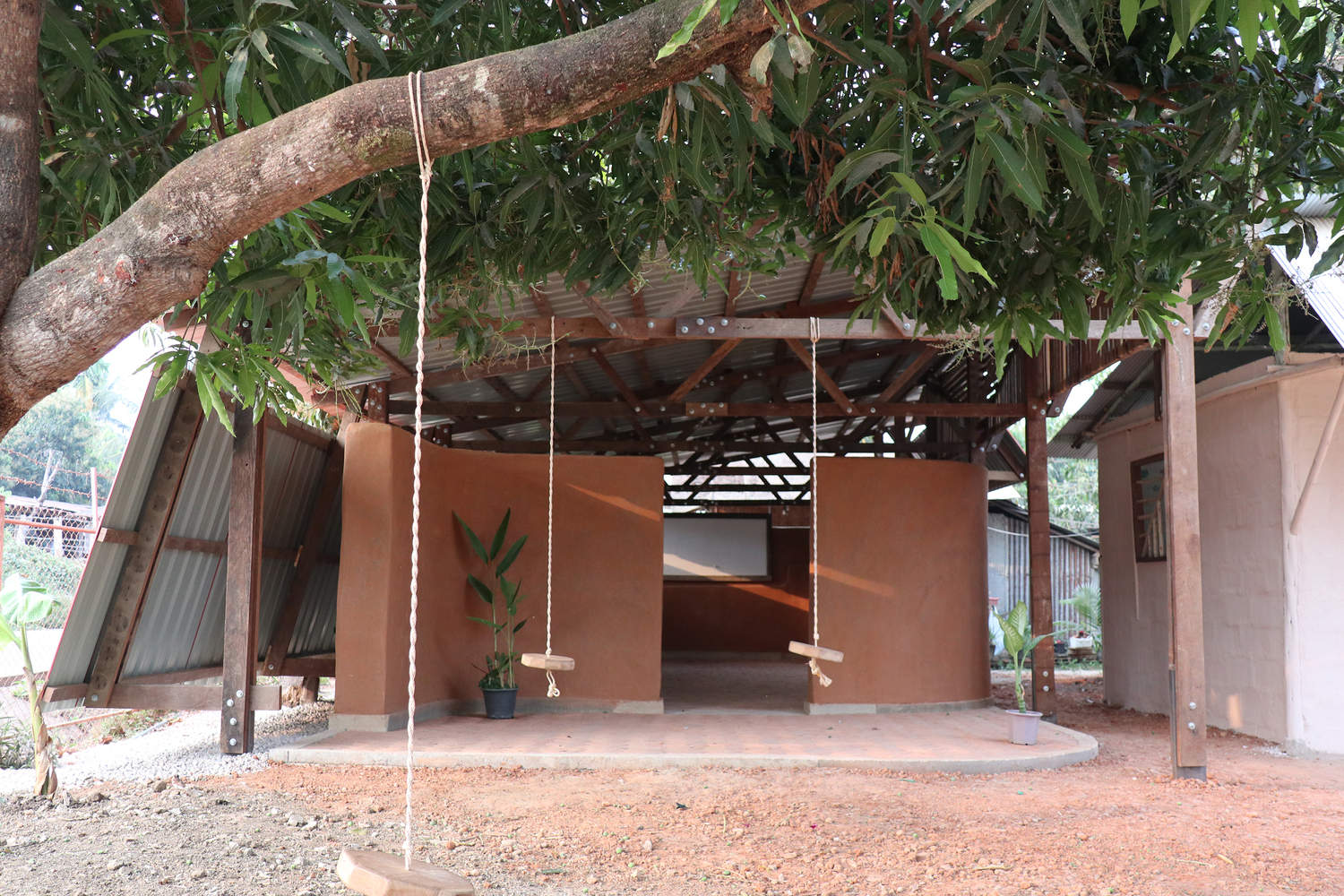
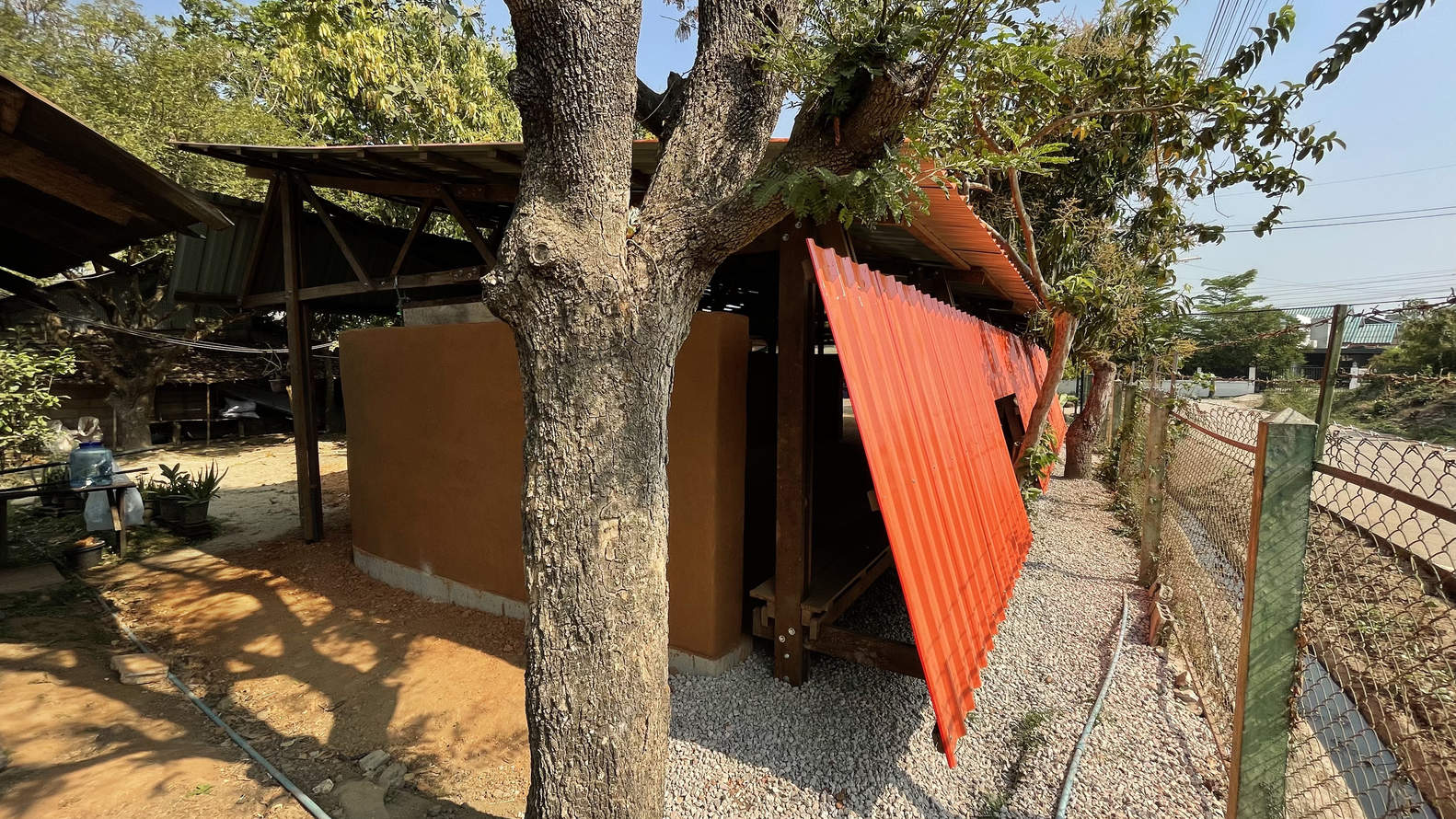
The construction site is located between the surrounding fence/public canal and an existing small office building, with complex and narrow terrain. Before starting the excavation work, we must first dig out the foundation of the old building. The tree roots and trees along the fence limit the width of the building to within 5.00 meters. Like the 2024 project, we were able to complete the classroom construction within five weeks.
该建筑场地位于周边围栏/公共运河与一座现有小型办公楼之间,地形复杂且狭窄。在开始挖掘作业前,我们必须先挖出旧建筑的地基。围栏沿线的树根和树木将建筑宽度限制在了 5.00 米以内。与 2024 年的项目一样,我们得以在五周的时间内完成教室建设。
© Jonathan Wiedemann
© Jonathan Wiedemann
© Jan Glasmeier
© Jonathan Wiedemann
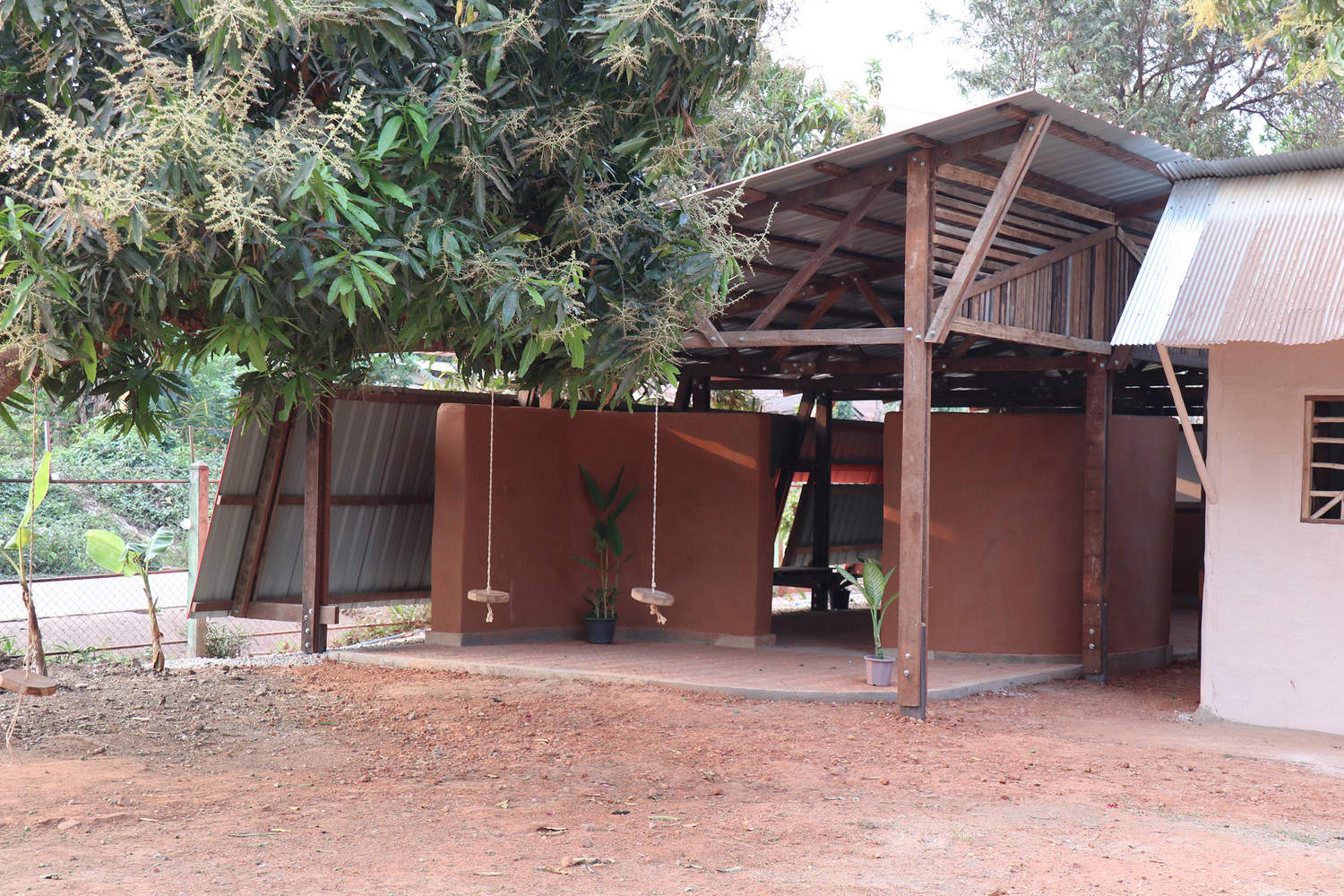
The architectural form adopted in this project is in stark contrast to the common types of buildings found in schools or workplaces due to differences in climate, culture, and construction methods. At the beginning of the project, we arranged a field visit to the school to observe how the curriculum was conducted. Subsequently, we drew inspiration from the site and analyzed how users utilize the space, forming the foundation of the design concept. The design and planning work was completed within the first few days. At the same time, we work closely with local workers to produce adobe bricks on site for wall construction. Through this collaboration, many new technologies and architectural knowledge have been exchanged and shared.
该项目所采用的建筑形式,与因气候、文化和建造方式差异而在学校或工作场所常见的建筑类型形成了鲜明对比。项目启动之初,我们安排了对学校的实地考察,以观察课程是如何开展的。随后,我们从场地中汲取灵感,并分析用户对空间的利用方式,以此形成了设计理念的基础。设计和规划工作在最初几天内便已完成。与此同时,我们与当地工人紧密合作,在现场制作土坯砖用于砌墙。通过这种合作,许多新的技术和建筑知识得到了交流与共享。
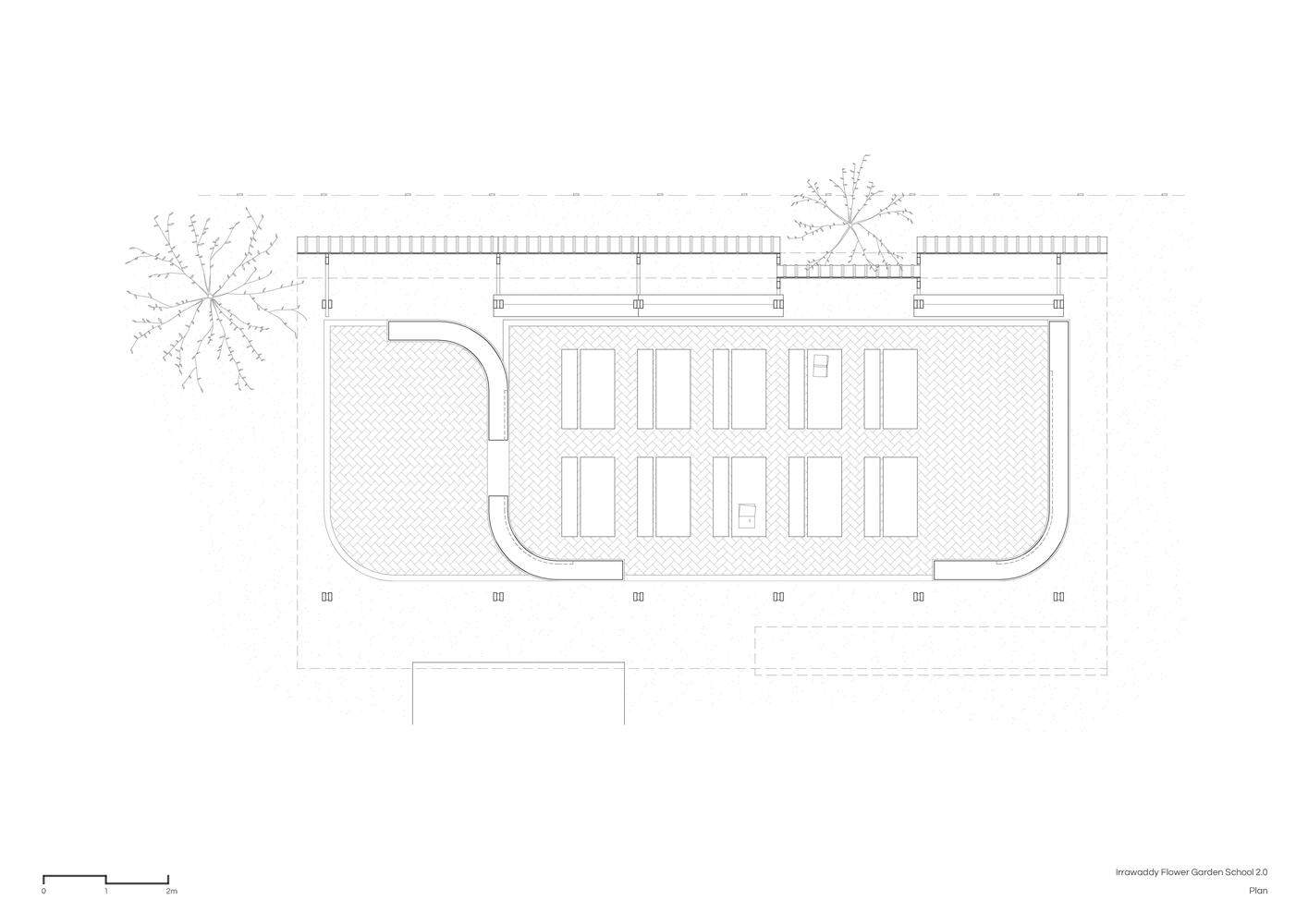
2nd Project 平面图
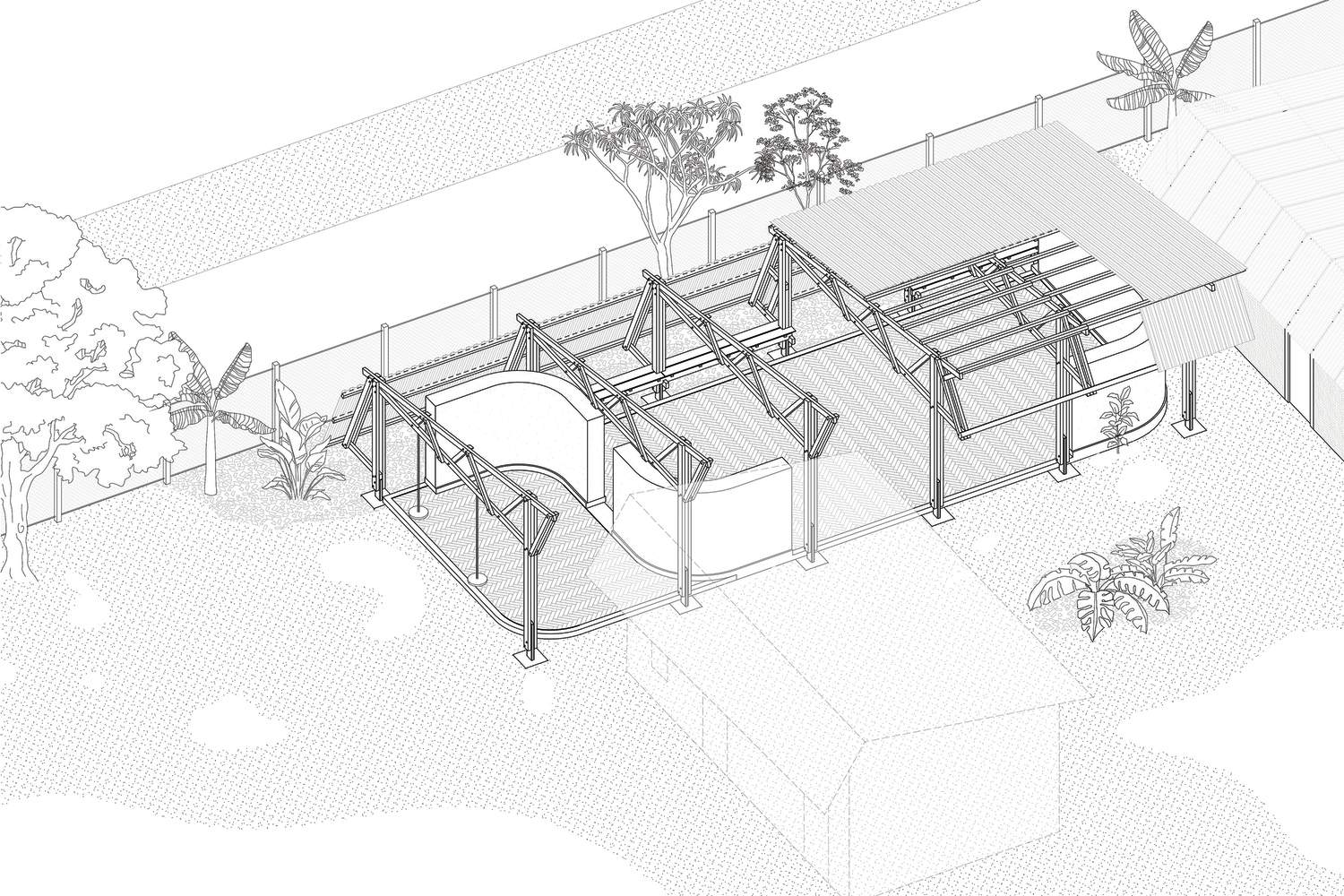
2nd Project 轴测图
Considering the need to build an environmentally sustainable building, most of the materials used in the project are sourced locally. For example, the wood used is second-hand teak purchased from a local timber company that recycles old wood. Due to the characteristics of recycled wood, these woods often come in different sizes. This means that the design must be modified or adjusted on-site to ensure that it still meets the overall design intent. In the end, the process of overcoming various limitations to make adaptive adjustments and achieve unique designs makes the results more satisfactory.
考虑到要建造一座环境可持续的建筑,项目所用的大部分材料均取自当地。例如,所使用的木材是从一家回收利用旧木材的当地木材公司购得的二手柚木。由于回收木材的特性,这些木料往往尺寸不一。这意味着设计必须现场修改或调整,以确保仍能满足总体设计意图。最终,克服种种限制进行适应性调整并实现独特设计的过程,让成果更令人满意。
© Jonathan Wiedemann
© Jonathan Wiedemann