Planning and Architectural Design of Jinsha Liquor Industry Cultural and Tourism Zone/Special Architecture
金沙酒业文旅区规划与建筑设计 / 殊至建筑
亮点一:该项目最引人注目的亮点之一在于其对场地微环境的精心营造。设计师充分考虑了金沙当地温润的气候条件,将其巧妙地融入到酿酒工艺中。通过构建兼具生态性和酿造适配性的微环境,项目为酿酒所需微生物群落提供了理想的“天然栖息地”。这种设计不仅保证了酱酒核心生产的质量,也赋予了建筑独特的生命力。此外,花园式酒厂的理念,也巧妙地将工业生产与生态景观融合,创造出一种令人愉悦的体验,打破了传统酒厂的刻板印象,实现了“生产生态化”与“体验美学化”的完美统一。
亮点二:项目的核心设计理念体现在其“网格与单元”的规划组织上,这种设计体现了高度的秩序性和灵活性。以“一分钟步行可达”为原则划分网格单元,既保证了人流的便捷性,又避免了空间疏离感。同时,网格内部采用“弹性适配”原则,满足多样化的功能需求。这种设计理念不仅体现了对酿酒工艺的深刻理解,也与金沙酒“12987”酿造工艺的科学性相呼应。这种设计策略使得空间规划本身成为酒文化的可视化表达,实现了“形式服务功能,功能承载文化”的统一。更重要的是,它为城市创造了一个充满活力、适合日常生活的空间。
亮点三:项目在建筑形态的设计上,巧妙地借鉴了场地历史遗存中“单层屋顶灰砖砖木结构民居”的元素,并结合不同的功能需求,运用“原型保留—抽象融合—水平延展—垂直堆叠”的设计手法,对建筑进行创新性的转译。这种设计手法在结构主义哲学框架下,整合了代谢派的有机生长理念与毯式建筑的网格分层控制方法,在地域性与现代性之间找到了完美的平衡。同时,通过对城市公共服务的融入,以及对酒文化进行创新性地呈现,该项目成功地将酒厂转化为一个充满活力、服务于城市文化生活的综合体,实现了“酒文化融入日常、酒厂成为城市名片”的愿景,具有深远的社会价值。
© 金伟琦/hypersity
© 金伟琦/hypersity
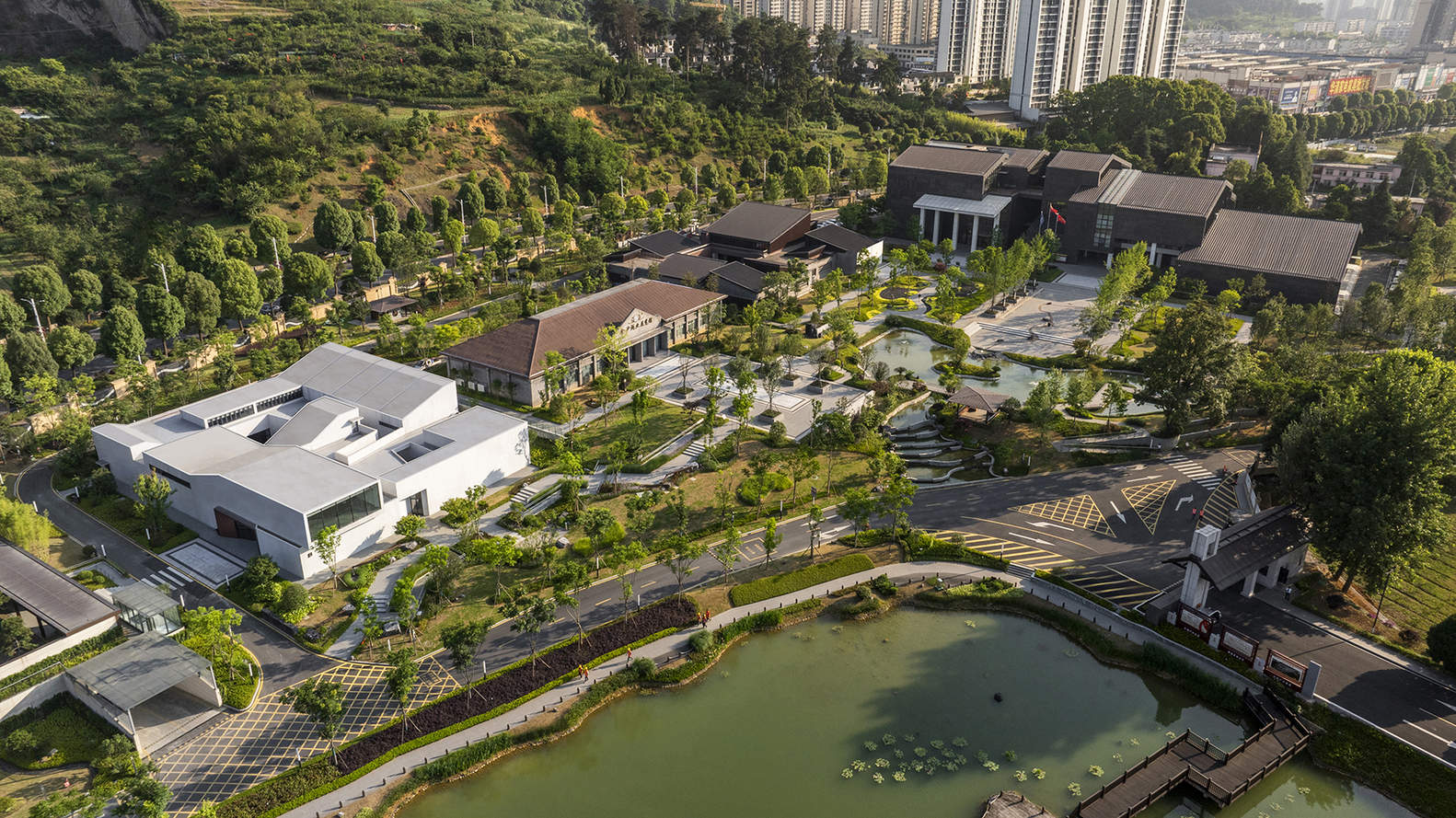
The project is located in Dashuiling, Jinsha County, Guizhou Province, upstream of the Chishui River Basin. It is adjacent to Huanghe Avenue to the south and the production area of Jinsha Distillery to the north. It is situated in the golden brewing belt at 27 ° N latitude, with an altitude of 800-1100 meters. The total land area is 95 acres (70 acres for Phase I and 25 acres for Phase II).
项目位于赤水河流域上游贵州省金沙县大水岭,南邻黄河大道、北接金沙酒厂生产区,地处北纬 27° 黄金酿酒带,海拔 800-1100 米,总用地 95 亩(一期 70 亩、二期 25 亩)。
© 金伟琦/hypersity
© 金伟琦/hypersity
The site was formerly known as the Dashui State owned Farm during the People's Commune period in 1963. It was once a self-sufficient model of "planting+breeding+processing", but later evolved into a shantytown. Now, Jinsha Liquor Industry takes the strategy of "deep integration of Baijiu production and cultural tourism experience" to promote the transformation of the brand from "selling liquor" to "selling lifestyle". The auditorium of the core relics supply and marketing club will be restored as a wine culture exhibition hall, and the scattered brick and wood buildings will also be improved.
场地前身为 1963 年人民公社时期的大水国营农场,曾是 “种植 + 养殖 + 加工” 的自给模式,后演变为棚户区。如今金沙酒业以 “白酒生产与文旅体验深度融合” 为战略,推动品牌从 “卖酒” 向 “卖生活方式” 转型,核心遗存供销社礼堂将修复为酒文化展览馆,散落砖木建筑也将提质。
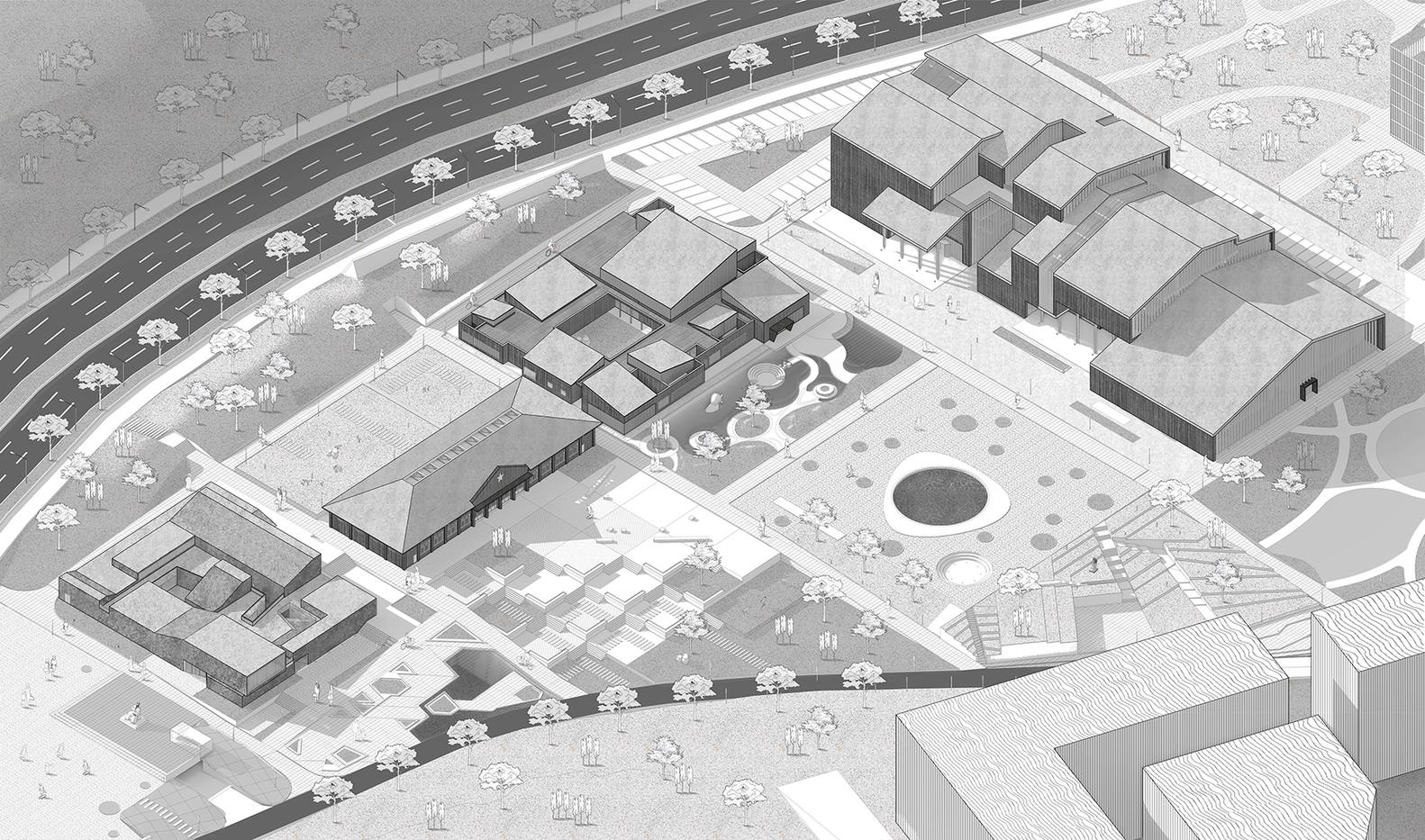
金沙酒业文旅区总轴测图
Grid and Units
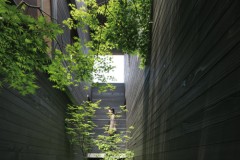
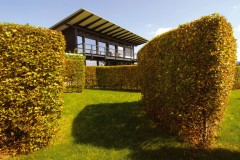
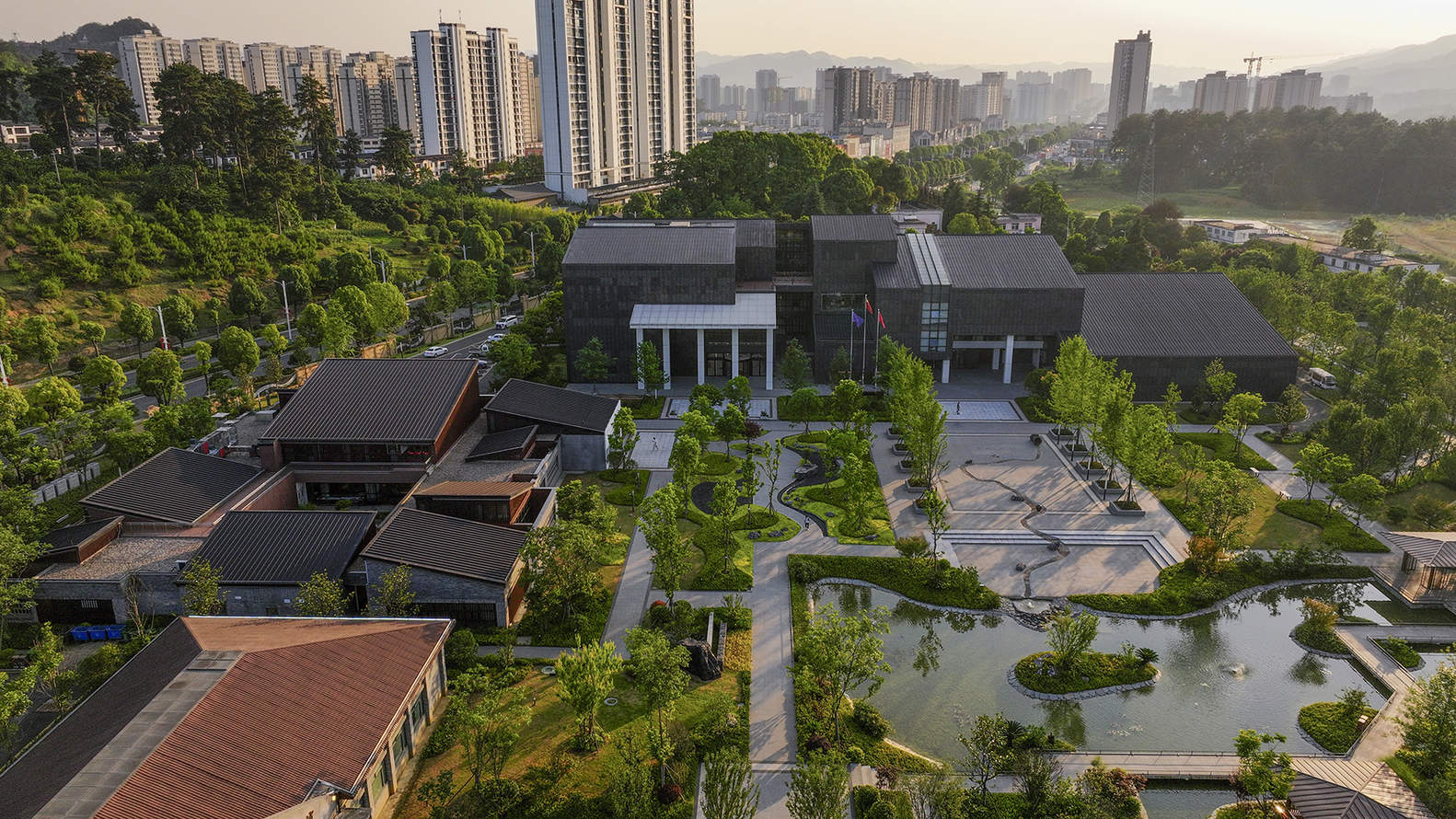
The site is positioned as a "comprehensive cultural and tourism complex in front of the factory", with a "garden style distillery" as the spatial foundation.. This positioning is not simply about landscape creation, but a functional design that is in line with the brewing rules of soy sauce. Based on the warm climate, suitable humidity and ventilation conditions in Jinsha, a microenvironment that combines ecology and brewing adaptability is constructed to provide a "natural habitat" for the microbial community required for brewing, with stable temperature and humidity and active microbial communities. This not only guarantees the microbial foundation for the core production of soy sauce wine, but also dissolves the industrial feel of traditional distilleries with lush green scenes, achieving the unity of "production ecology" and "experience aesthetics".
网格与单元
场地定位为 “厂前区综合性文旅综合体”,以 “花园式酒厂” 为空间基底。这一定位并非单纯的景观营造,而是与酱酒酿造规律契合的功能性设计。依托金沙当地温润的气候、适宜的湿度与通风条件,构建兼具生态性与酿造适配性的微环境,为酿酒所需微生物群落提供温湿度稳定、菌群活跃的 “天然栖息地”,既保障酱酒核心生产的微生物基础,又以绿意盎然的场景消解传统酒厂的工业感,实现 “生产生态化” 与 “体验美学化” 的统一。
© 金伟琦/hypersity
© 金伟琦/hypersity
Within the 70 acre core land area, a "control grid" is used as the spatial division organizational framework to construct a "clear and flexible" planning and control system, forming a complete logic from framework setting, functional adaptation to scene coverage. Firstly, clarify the standards for setting the grid scale, and divide the grid units based on the principle of "one minute walking distance", which not only ensures the continuity of flow lines between different functional areas for tourists, employees, and citizens, but also avoids spatial alienation caused by excessive scale, ensuring convenience of use. On this basis, the grid adopts the principle of "flexible adaptation" to layout differentiated functional groups, with each unit carrying fixed functions such as museums, wine making process demonstration areas, outdoor theaters, parent-child farmland, camping sites, etc., while reserving flexible space to support periodic activities such as wine culture exchange festivals and music carnivals, achieving "fixed functions not idle, temporary activities have carriers". The team also divides the grid cells based on group usage scenarios, allowing them to simultaneously meet diverse needs such as agricultural landscape cognition, craft visits, and historical exhibitions, avoiding the lack of spatial vitality caused by functional singularity.
70 亩核心用地范围内,以 “控制性网格” 为空间划分组织骨架,构建 “秩序清晰且充满弹性” 的规划控制系统,从框架设定、功能适配到场景覆盖形成完整逻辑。首先明确网格尺度设定标准,以 “一分钟步行可达” 为原则划分网格单元,既保障游客、员工、市民在不同功能区之间的流线连贯性,又避免因尺度过大导致的空间疏离感,确保使用便捷性。在此基础上,网格内部采用 “弹性适配” 原则布局差异化功能组团,每个单元分别承载博物馆、酿酒工艺演示区、户外剧场、亲子农田、露营场地等固定功能,同时预留灵活空间,可支撑酒文化交流节、音乐嘉年华等周期性活动,实现 “固定功能不闲置、临时活动有载体”。团队还以群体使用场景为划分逻辑,让网格单元能同步满足农田景观认知、工艺参观、历史展赏等多元需求,避免功能单一化导致的空间活力不足。
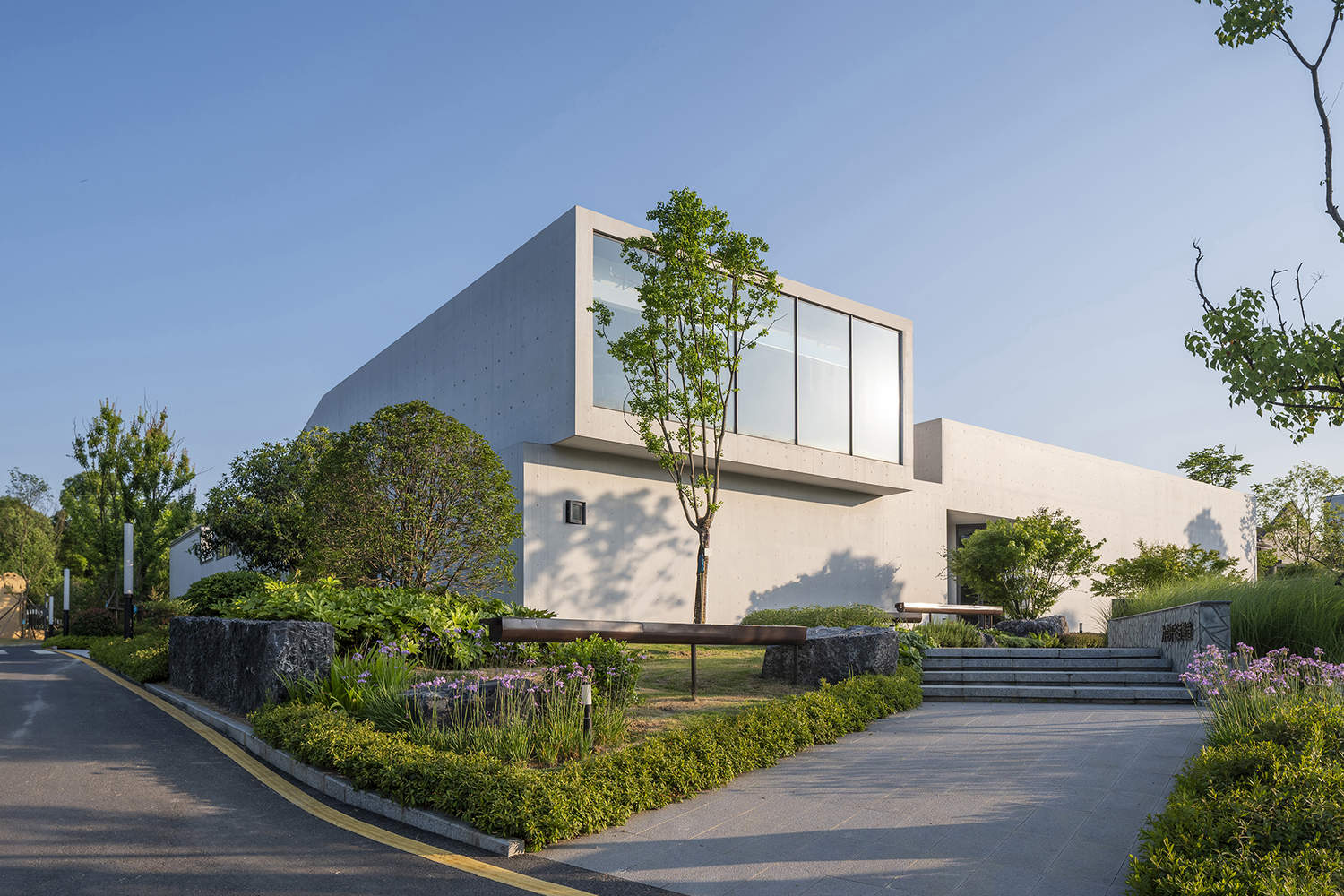
© 金伟琦/hypersity
In addition, this grid system also matches from the core of project culture. On the one hand, the individual buildings of the architectural complex are used as the basic constituent units of the grid, achieving "orderly complexity" through "small units, multiple combinations", which not only ensures the regularity of the overall space, but also stimulates vitality through the subtle differences in individual forms, ultimately fitting the core positioning of "city of vitality and place of daily life". On the other hand, the grid system metaphorically represents the scientific nature of the brewing process of Jinsha liquor "12987", echoing the rigorous process of "one year production cycle, two feeding, nine steaming and boiling, eight fermentation, and seven wine taking" with the sense of order of the grid. At the same time, through the flexible combination of functions within the grid, it calls for the coexistence of "rational process" and "emotional blending" in the brewing process, making spatial planning itself a visual expression of liquor culture, achieving the unity of "form serving function, function carrying culture".
此外,这一网格系统也从项目文化内核进行匹配。一方面将建筑群单体作为网格的基本组成单元,以 “小单元、多组合” 的方式实现 “有序复杂性”,既保证整体空间的规整性,又通过单体形态的微差异激发活力,最终契合 “活力之城・日常之所” 的核心定位。另一方面,网格体系隐喻金沙酒 “12987” 酿造工艺的科学性,用网格的秩序感呼应 “一年生产周期、两次投料、九次蒸煮、八次发酵、七次取酒” 的严谨流程,同时借网格内功能的弹性组合,呼应制酒工艺中 “理性流程” 与 “感性勾调” 的并存关系,让空间规划本身成为酒文化的可视化表达,达成 “形式服务功能,功能承载文化” 的统一。
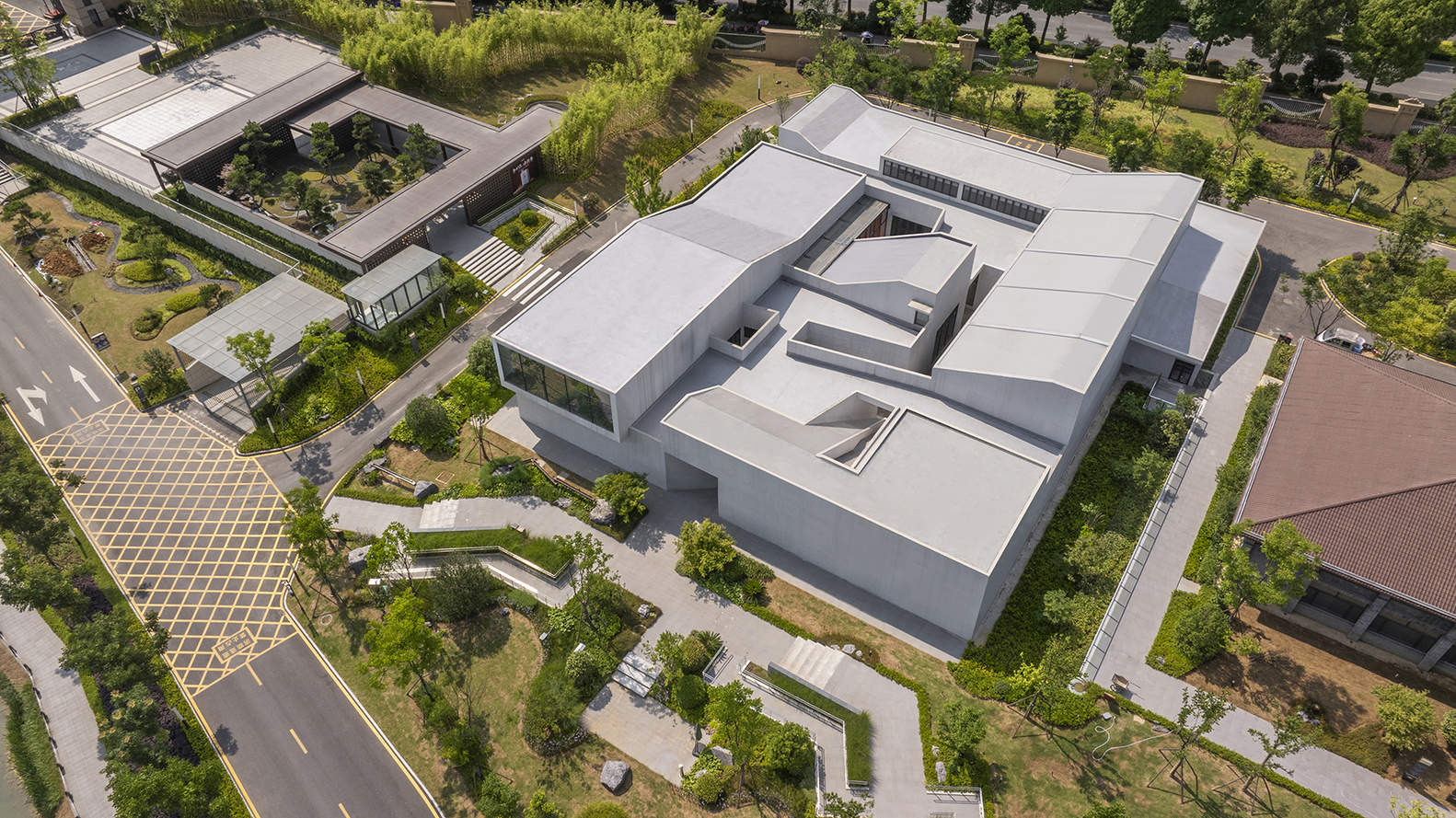
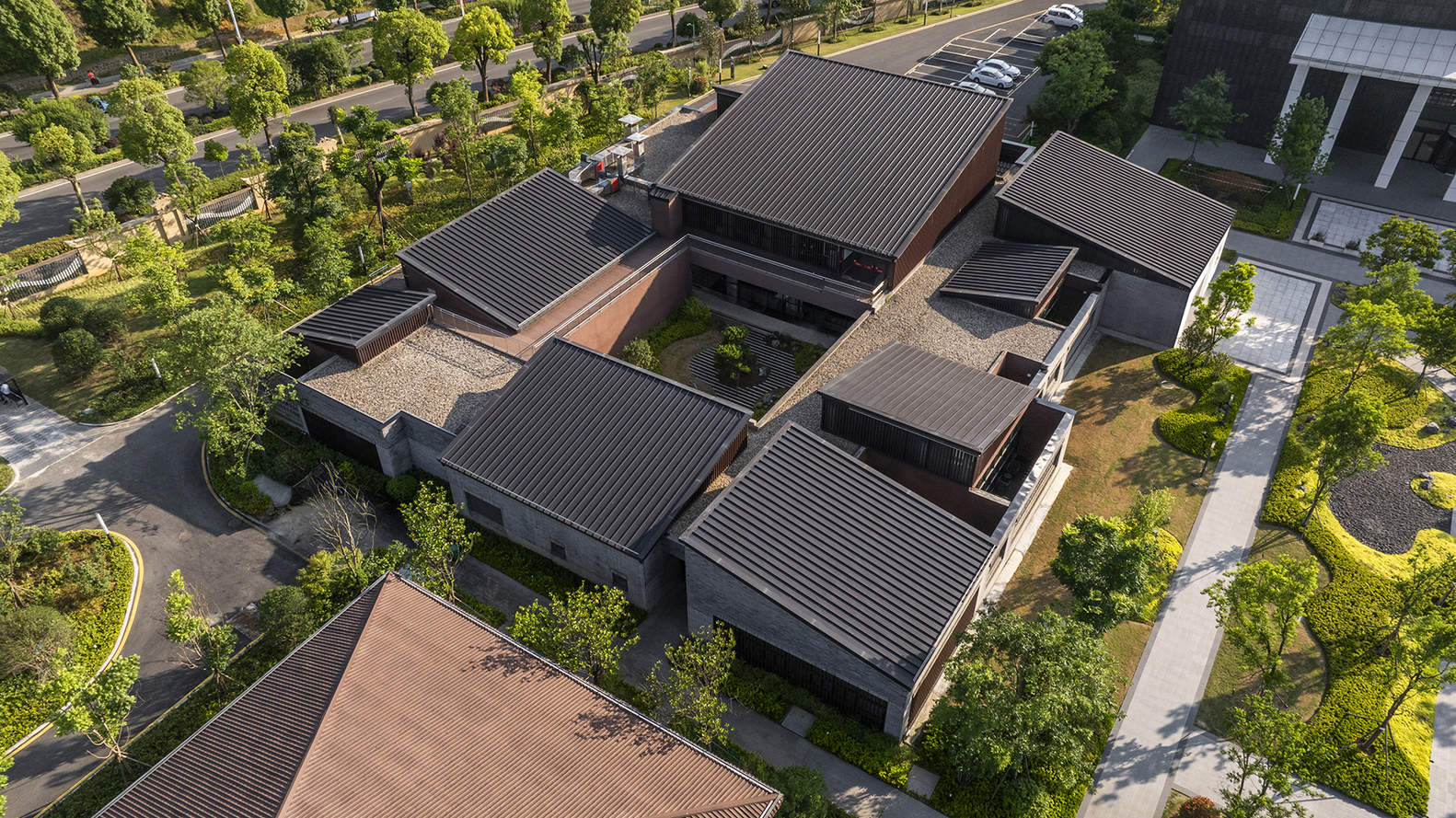
The park is equipped with four main functional buildings, namely Jinsha Liquor Industry Exhibition Center, Sauce Wine Museum, Jinsha Liquor Experience Center, and Jinsha Liquor Industry R&D Center. The functional design focuses on the "triple connection" and becomes a hub for connecting multiple needs. The first priority is to connect the production of the liquor industry with cultural experience. As a transitional buffer zone between the production area of the liquor industry and the cultural tourism experience area, a dedicated flow line is designed to achieve "production without interference and experience with depth". Tourists can observe light production processes such as raw material pretreatment and initial koji making through the transparent corridor, and then enter the cultural experience area to participate in tasting, blending and interaction, forming a closed loop of "production scene → experience specialization". The second is to connect industrial functions with urban public services, actively integrate them into the urban public system, and incorporate the green spaces, squares, and landscapes of the complex into the urban slow life experience system, breaking the traditional sense of boundaries of distilleries' "closed walls" and becoming an extension and supplement to urban public spaces. The third aspect is to connect the needs of enterprises with public values, and serve the brand communication of distilleries, such as strengthening the understanding of "mellow and soft sauce fragrance" through experiential scenarios, while also undertaking the function of urban cultural nodes, such as regularly holding public welfare activities such as sauce wine culture popularization exhibitions and intangible cultural heritage skill markets, to transform wine culture from "enterprise assets" to "urban cultural resources".
园区设置四栋主要功能建筑,分别是金沙酒业展示中心、酱酒博物馆、金沙酒体验中心、金沙酒业研发中心。功能设计聚焦 “三重衔接”,成为串联多方需求的枢纽。第一重是衔接酒业生产与文化体验,作为酒厂生产区与文旅体验区的过渡缓冲带,设计专属动线实现 “生产不干扰、体验有深度”,游客可通过透明廊道观察酿酒原料预处理、制曲初期等轻生产环节,再进入文化体验区参与品鉴、勾调互动,形成 “生产场景化→体验专业化” 的闭环。第二重是衔接产业功能与城市公共服务,主动融入城市公共体系,将综合体的绿地、广场、景观纳入城市慢生活体验系统,打破传统酒厂 “封闭围墙” 的边界感,成为城市公共空间的延伸补充。第三重是衔接企业需求与公众价值,服务酒厂品牌传播,比如通过体验场景强化 “醇柔酱香” 认知,同时承担城市文化节点功能,例如定期举办酱酒文化科普展、非遗技艺市集等公益活动,让酒文化从 “企业资产” 转化为 “城市文化资源”。
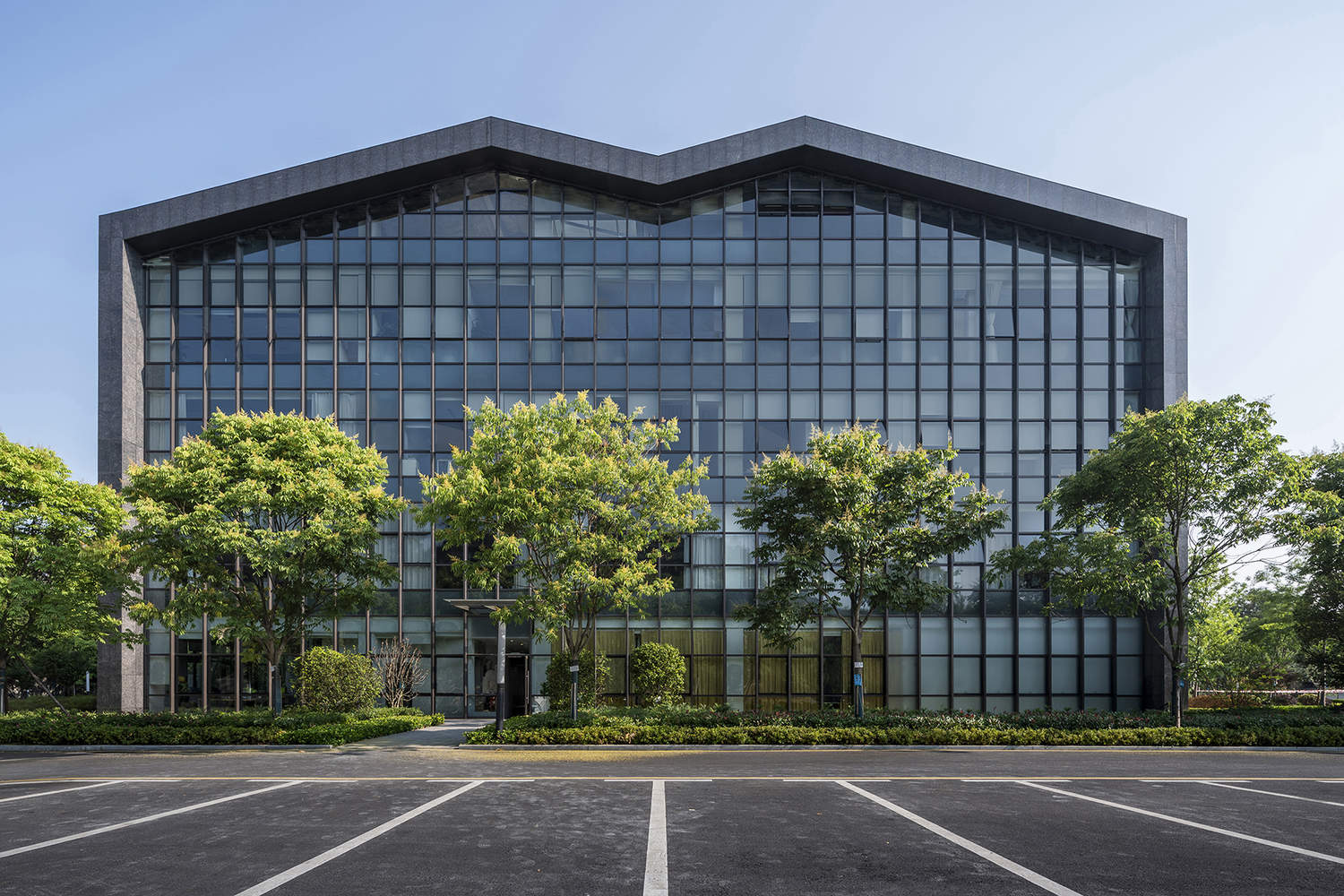
© 金伟琦/hypersity
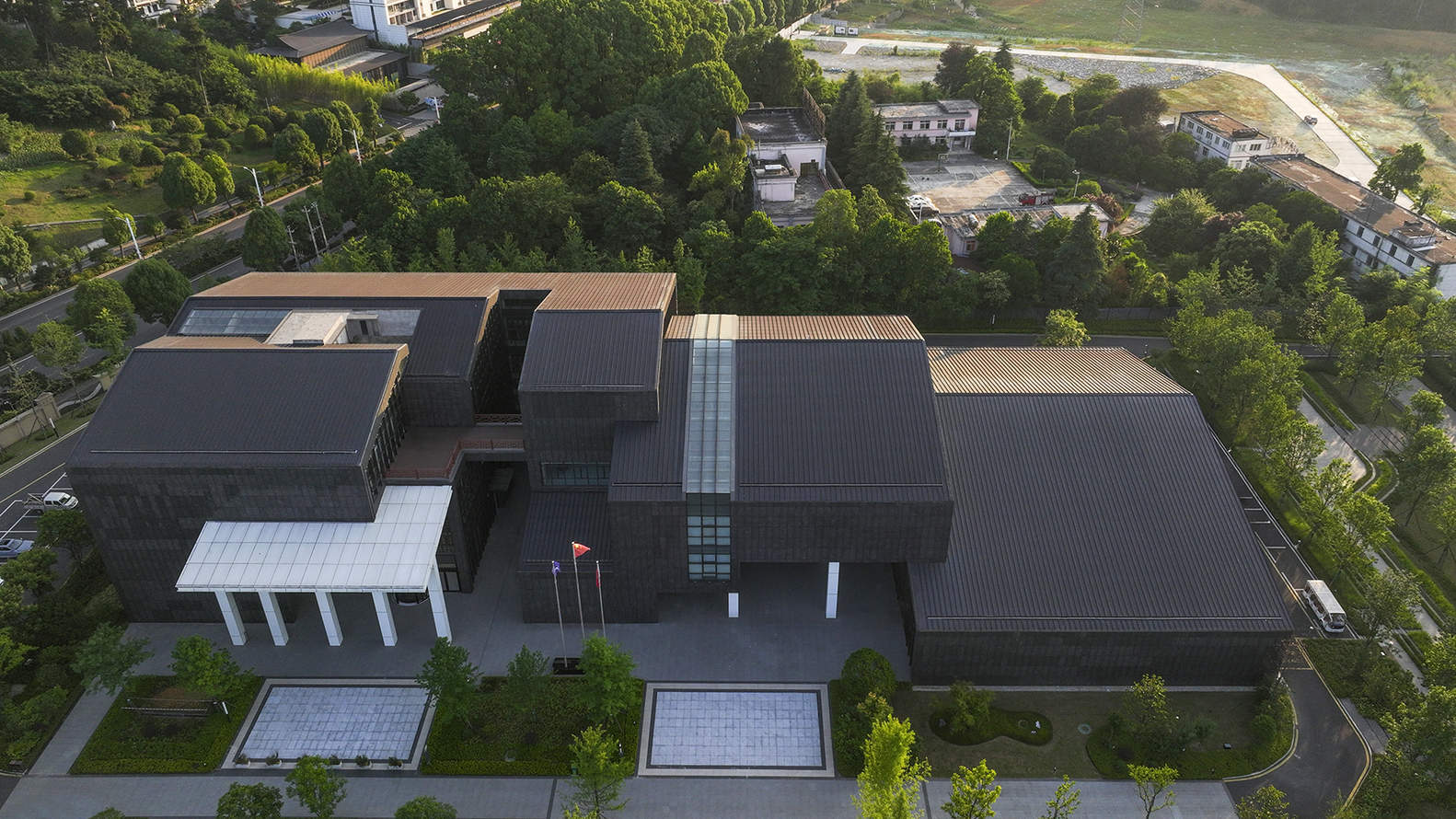
© 金伟琦/hypersity
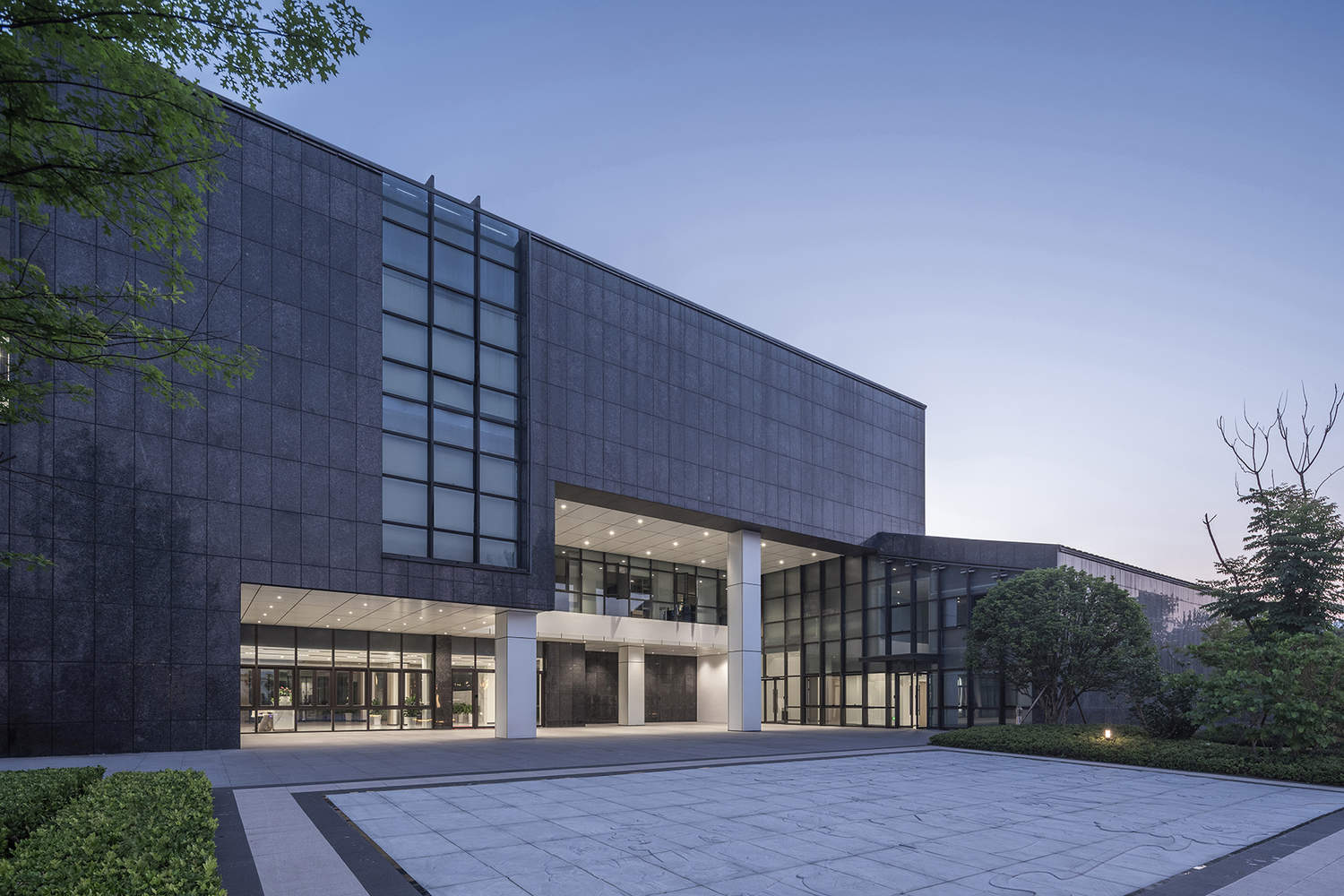
© 金伟琦/hypersity
Architectural form evolution based on historical prototypes
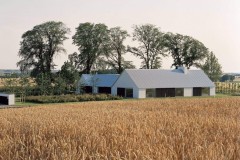
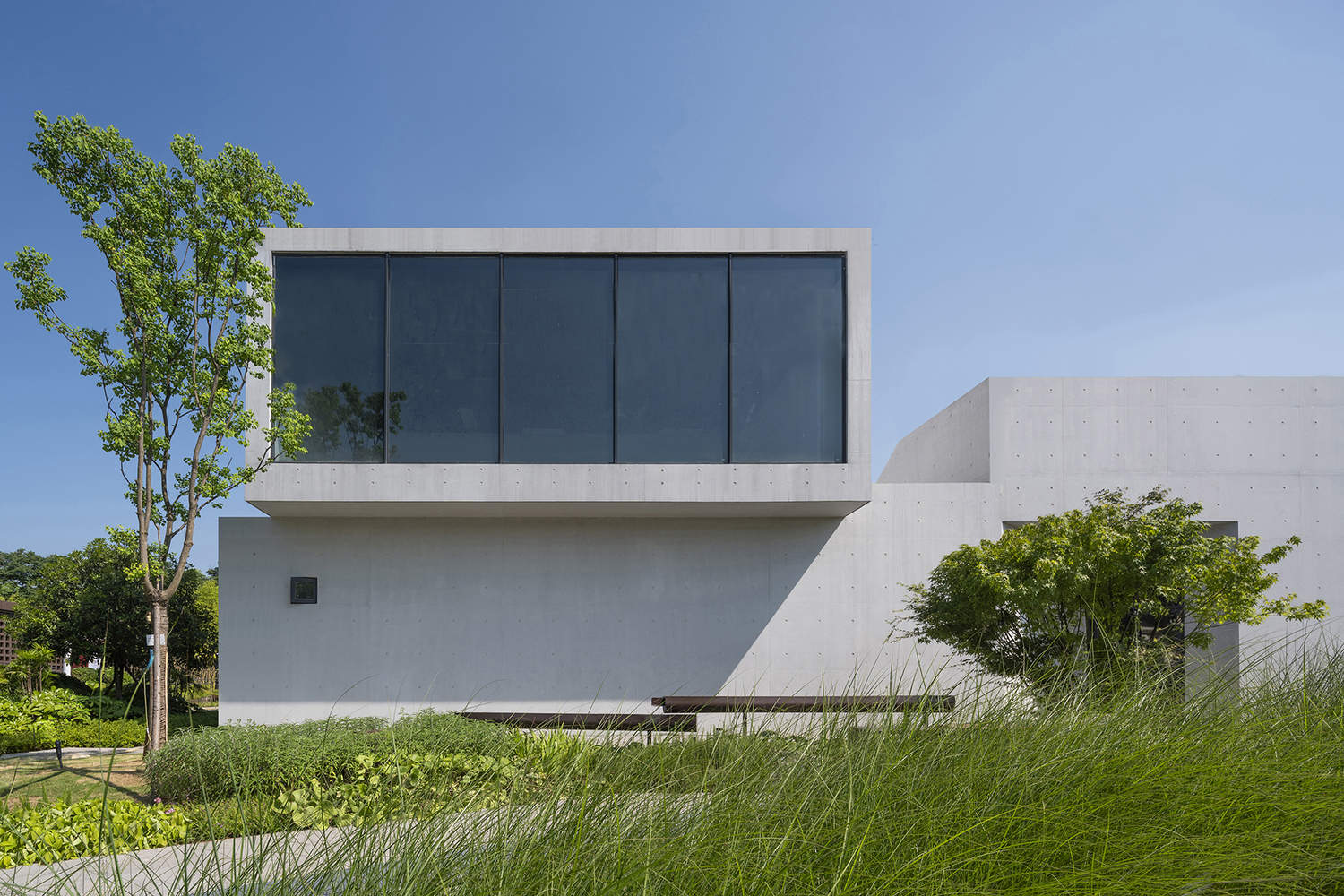
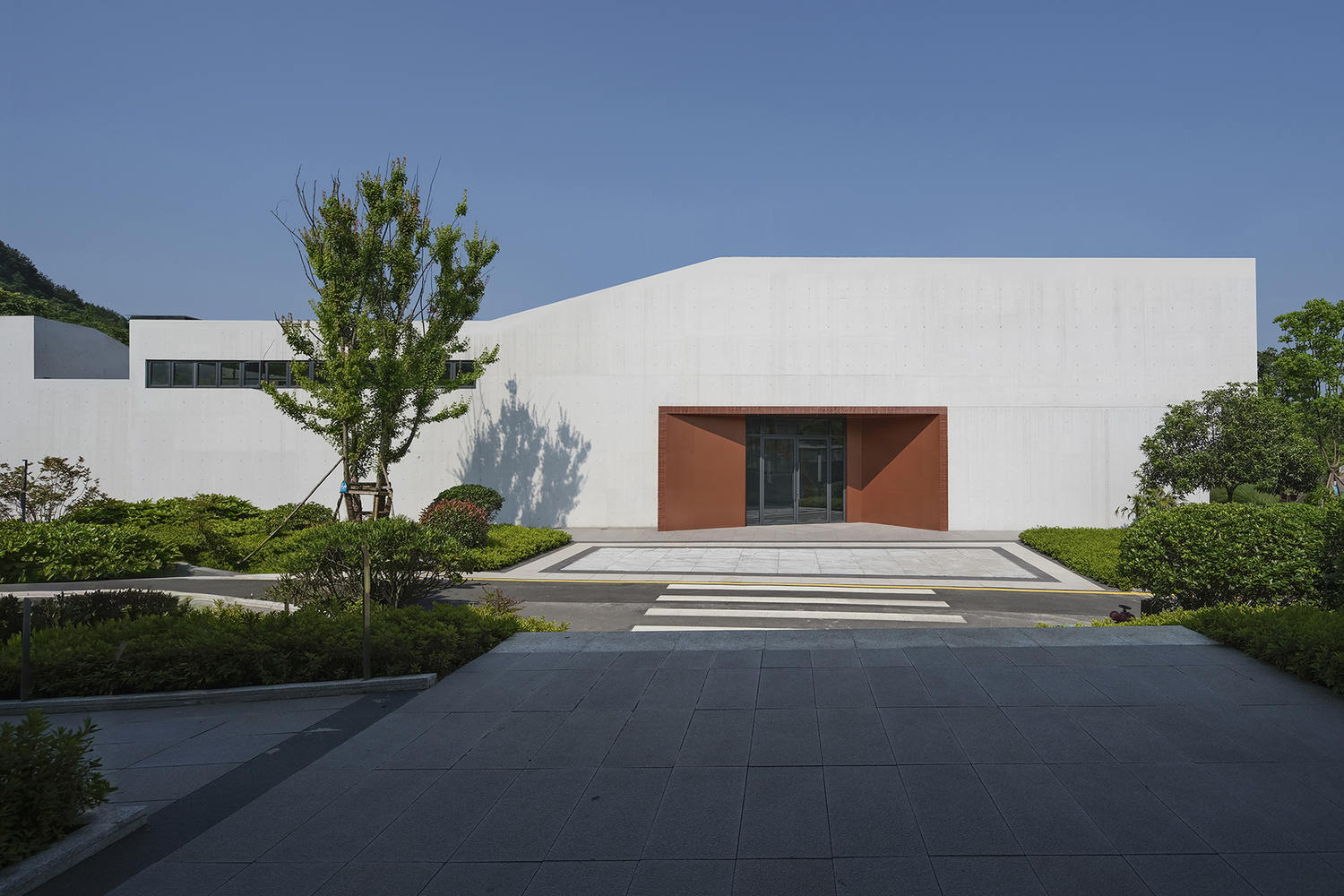
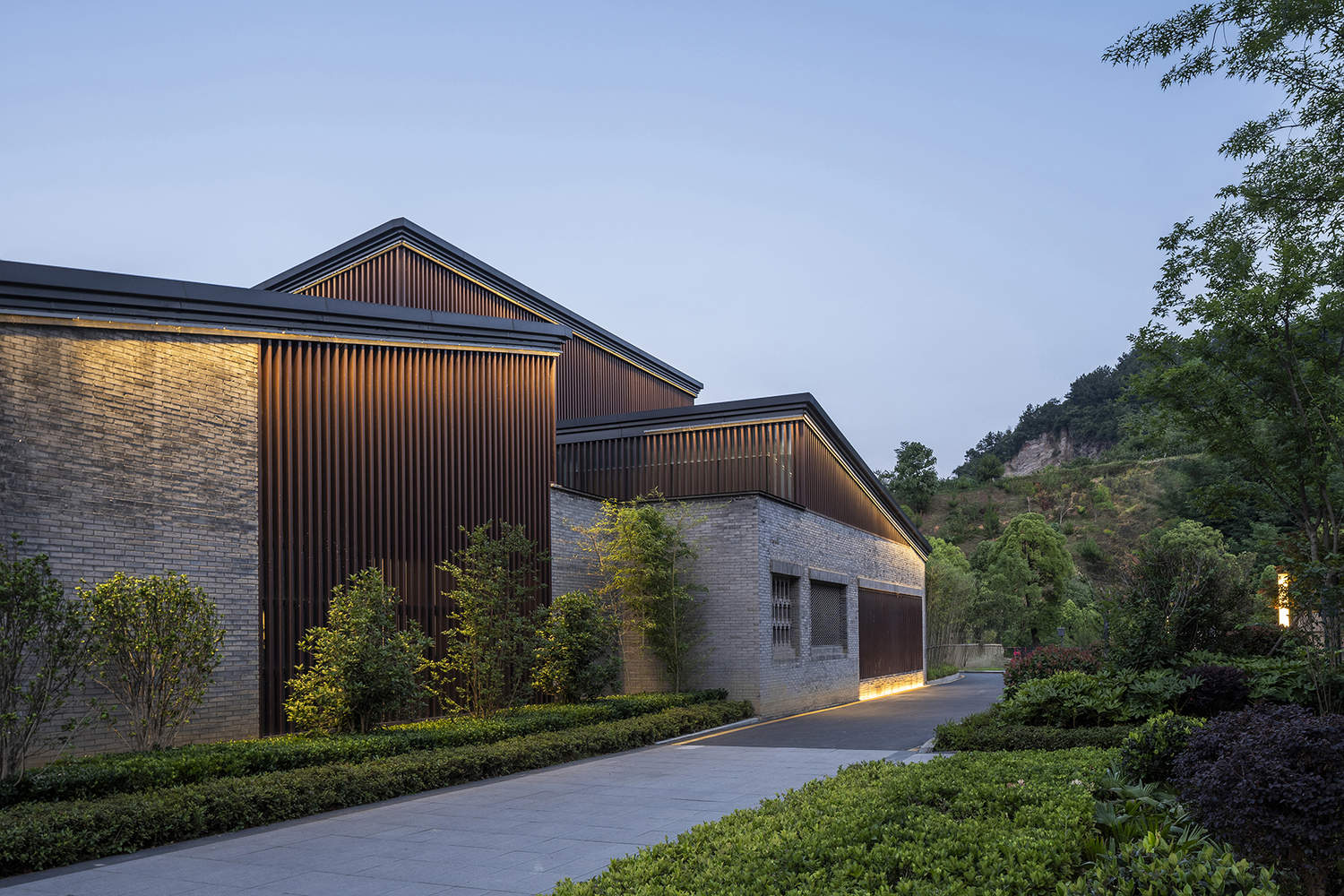
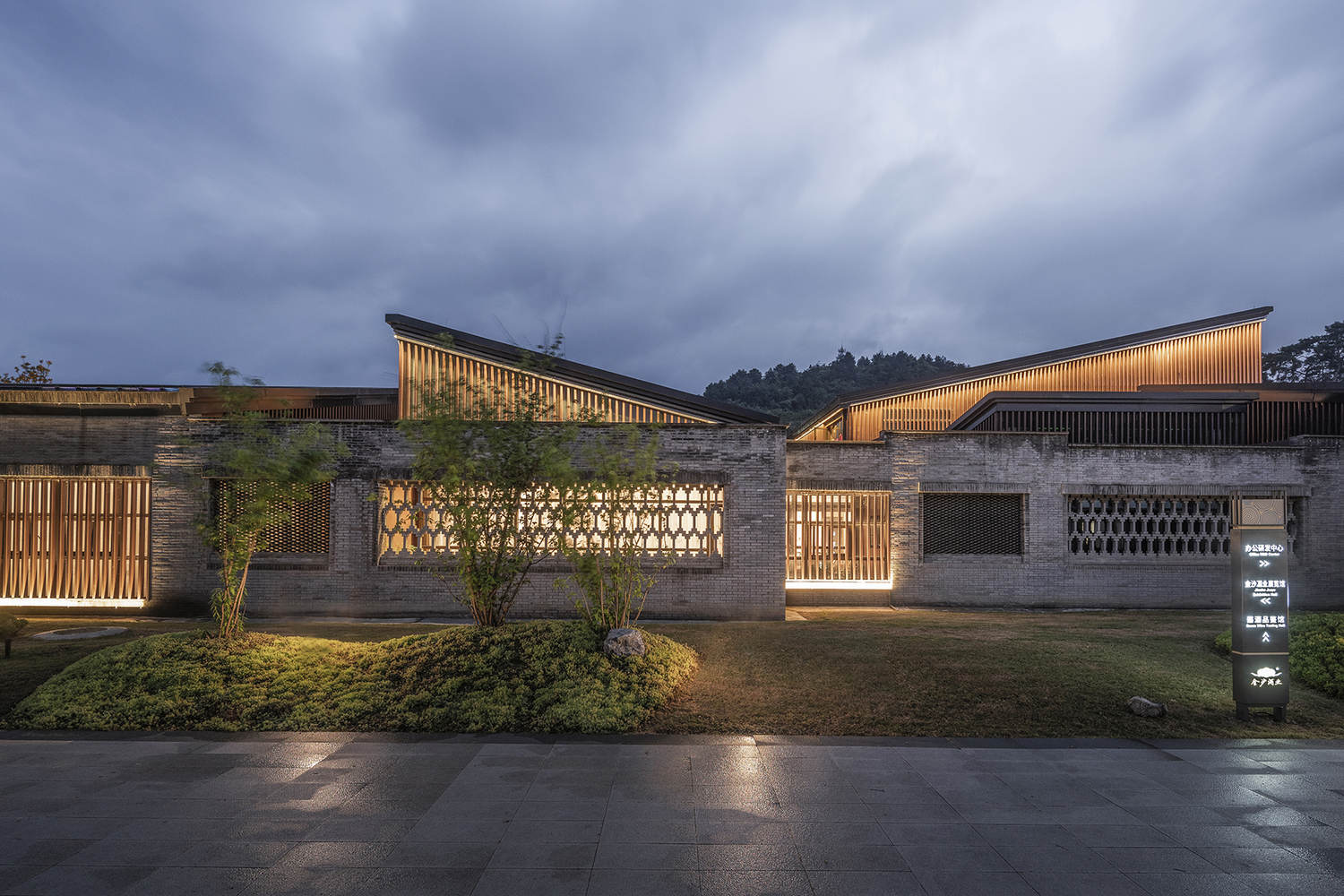
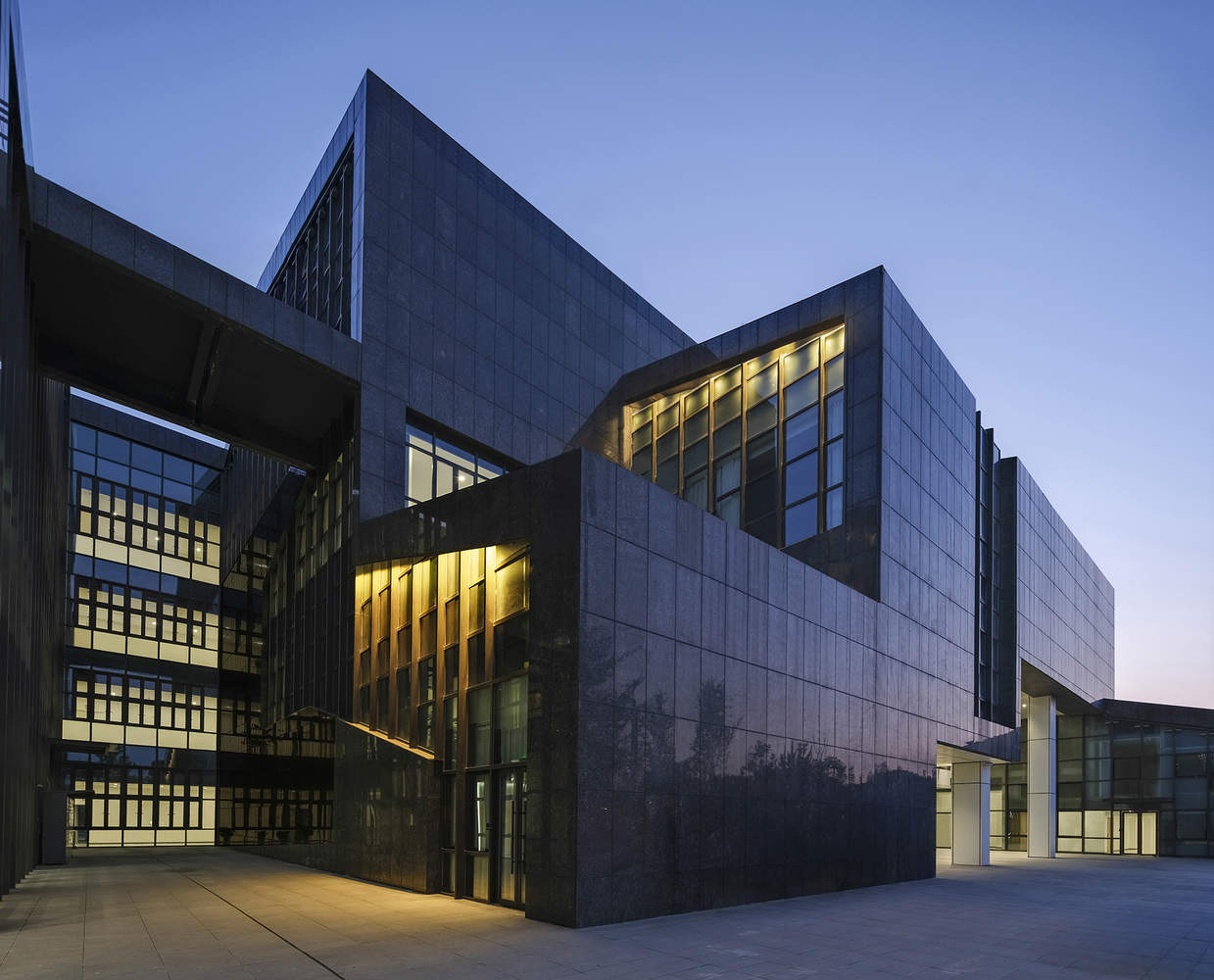
The architectural design takes the "single story roof grey brick wood structure residential building" in the historical relics of the site as the architectural prototype, and combines different functional requirements. Through the design technique of "prototype preservation abstract fusion horizontal extension vertical stacking", it translates four types of cultural and tourism buildings into daily use.. Designed within the framework of structuralist philosophy, it integrates the organic growth concept of the metabolic school with the grid layering control method of carpet style architecture. Individual buildings evolve in a horizontal extension and vertical stacking direction, transforming the traditional layout logic of settlements into three-dimensional combinations to achieve functional integration. In an "orderly and rich" state, it balances regionalism and modernity.
基于历史原型的建筑形态演化
建筑设计以场地历史遗存中 “单层屋顶灰砖砖木结构民居” 为建筑原型,结合不同功能需求,通过 “原型保留 — 抽象融合 — 水平延展 — 垂直堆叠” 的设计手法,对四种文旅建筑进行日常性转译。设计在结构主义哲学框架下,整合了代谢派的有机生长理念与毯式建筑的网格分层控制方法,单体建筑顺着水平延展、垂直堆叠的方向演化,把传统聚落的平面布局逻辑转化为三维立体组合以实现功能整合,在 “有序且不失丰富性” 的状态中,让地域性与现代性达成平衡。
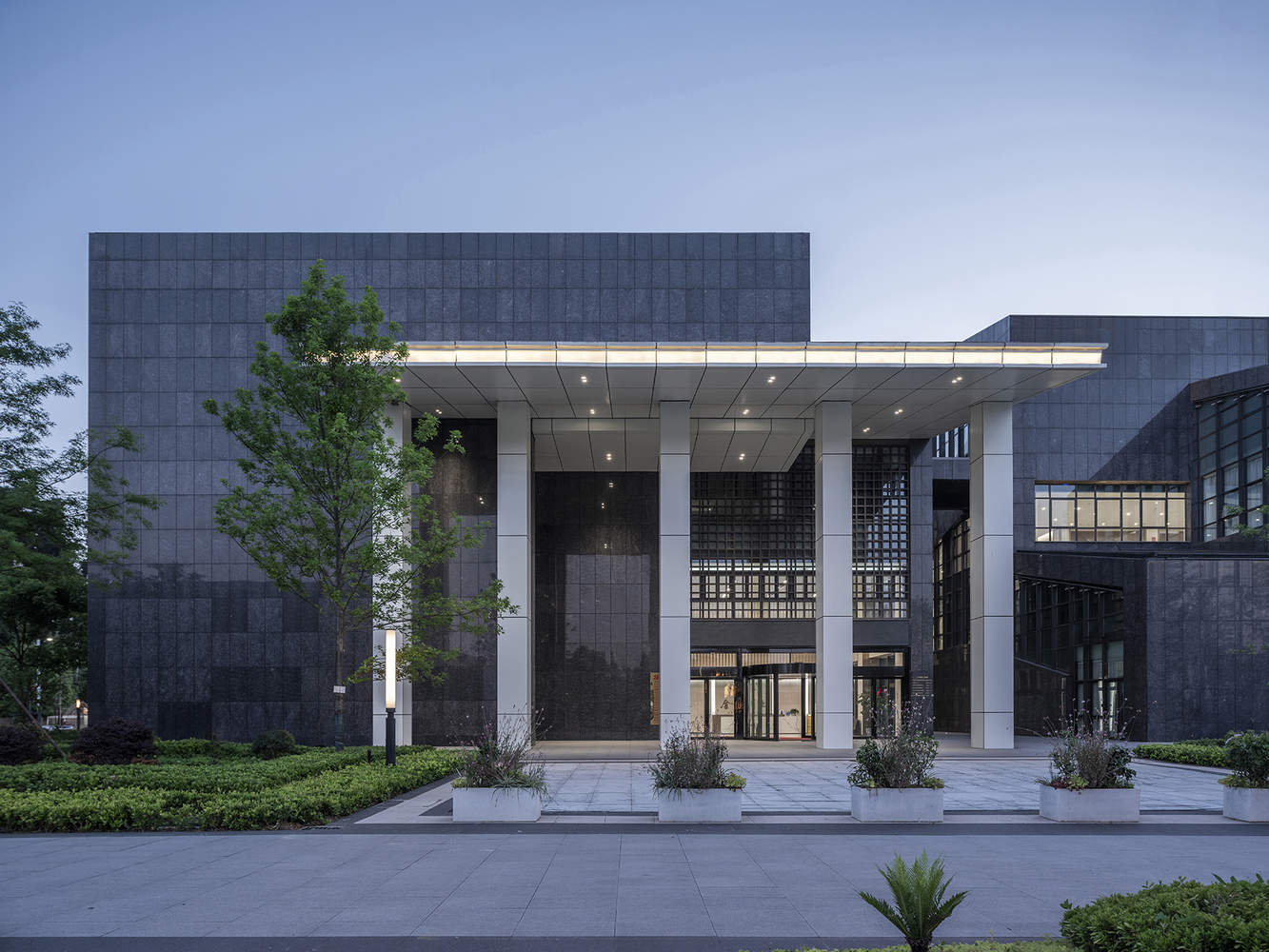
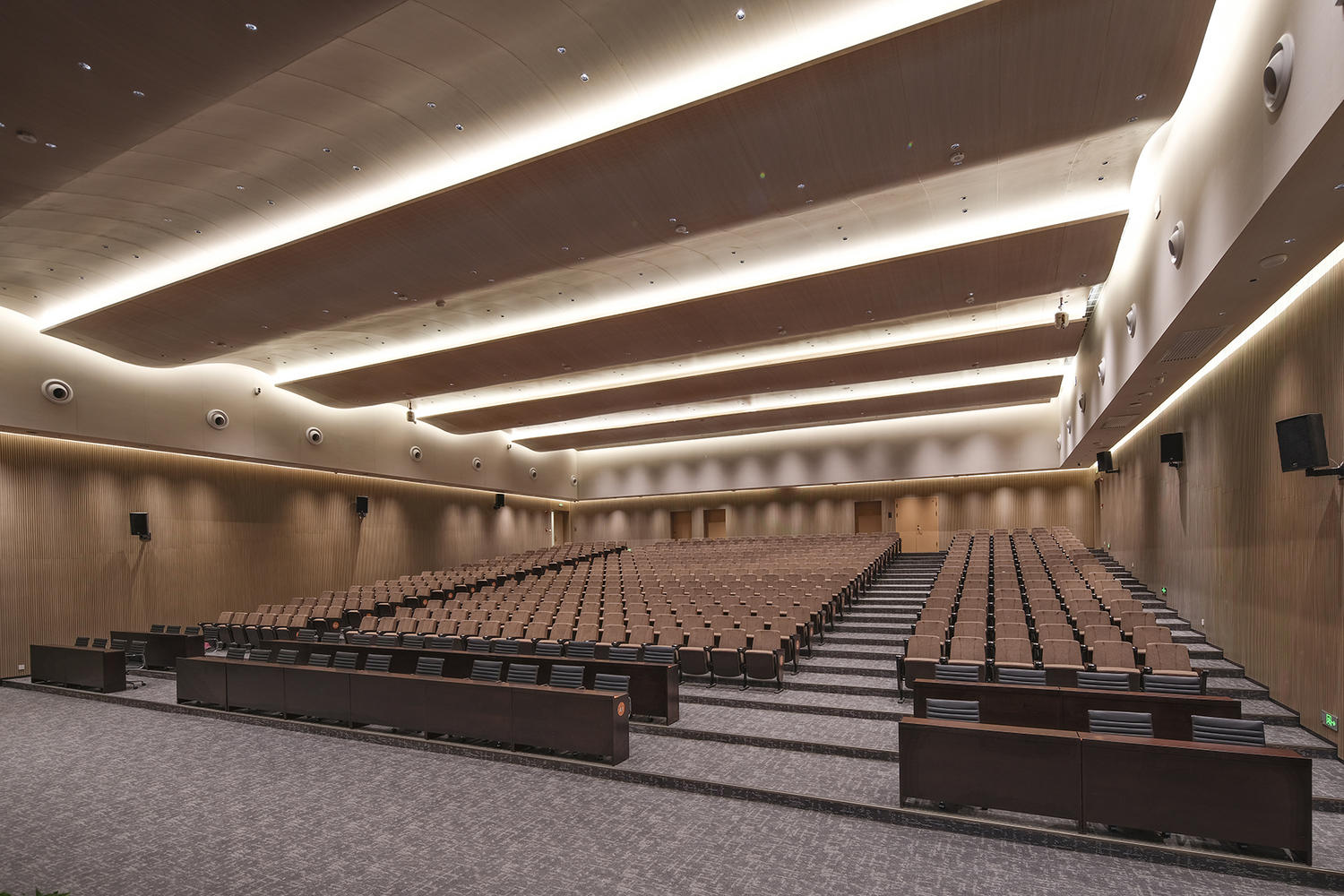
The exhibition hall will be restored to its historical style by restoring its old appearance; Museums use geometric reconstruction to create "indoor and outdoor boundaryless" exhibitions through corridors and courtyards; The experience center is arranged in a "large courtyard nested with small courtyards" layout; The R&D building is vertically stacked into a 'mountain shape', with an atrium and aerial corridor embedded to enhance team interaction.
展览馆 “修旧如旧” 恢复历史风貌;博物馆用几何重构,以连廊、庭院造 “室内外无界” 展陈;体验中心呈 “大合院嵌套小庭院” 布局;研发楼竖向堆叠成 “山形”,植入中庭与空中连廊,强化团队交互。
© 金伟琦/hypersity
© 金伟琦/hypersity
The Jinsha Liquor Industry Cultural and Tourism Complex has become a place that connects liquor production, showcases liquor culture, and provides daily leisure for people, covering various aspects from individual buildings to urban interfaces, from cultural narrative to technological implementation. On the one hand, combined with the brewing conditions in the upper reaches of the Chishui River, the historical relics in the site were reused. On the other hand, it establishes a connection between the wine industry, the city, and its citizens, becoming a "city living room" for daily leisure, revitalizing the advantages of wine making and historical relics in the upper reaches of the Chishui River. The essence of this positioning is to break the inherent cognition of "distillery=closed production area" and "cultural tourism=commercial check-in place", and make the site a composite space with "valuable production, warm experience, and contribution to the city". It provides an integrated brand display window of "production+experience" for Jinsha Liquor Industry, and supplements public leisure and cultural carriers for the city, ultimately achieving the long-term value of "integrating liquor culture into daily life and making the distillery a city business card".
金沙酒业文旅综合体成为衔接酒业生产、展示酒文化、供人日常休闲的场所,覆盖从单体建筑到城市界面,从文化叙事到技术实现的多方面。一方面结合了赤水河上游的酿酒条件,对场地内的历史遗存做了再利用。另一方面搭建起酒业、城市和市民之间的联系,成为日常休闲的 “城市客厅”,让赤水河上游的酿酒优势与历史遗存焕发新生。这一定位的本质是打破 “酒厂 = 封闭生产区”“文旅 = 商业打卡地” 的固有认知,让场地成为 “生产有价值、体验有温度、城市有贡献” 的复合型空间。它为金沙酒业提供 “生产 + 体验” 的一体化品牌展示窗口,又为城市补充公共休闲与文化载体,最终实现 “酒文化融入日常、酒厂成为城市名片” 的长远价值。
© 金伟琦/hypersity
© 金伟琦/hypersity
© 金伟琦/hypersity